An intense heatwave in France sees temperatures reach up to 33C
Simon Hamalienko Publishing Lead and Husna Anjum Senior Reporter
16:03, 26 Jun 2026
Tragedy struck in France after an 18-month-old baby was ‘forgotten’ in a hot car. It is the fourth child death in France following an intense heatwave.
The child died at La Timone Hospital in Marseille on Tuesday (June 23) as firefighters discovered him in the parking lot of Aix-Marseille University medical campus. DailyStar reports the baby was found unconscious and suffering from hyperthermia.
Advertisement
The child was taken to the emergency room at La Timone hospital in critical condition but medical staff were unable to save his life. According to reports by French publication BFM, the one of the child’s parents apparently forgot him in his car.
The parent reportedly works at the campus. Éric Berton, President of Aix-Marseille University, has spoken out about the tragedy on campus with “deep sadness”.
Éric Berton, President of Aix-Marseille University, said: “It is with deep sadness that we learned of the tragic news that occurred on the Timone campus. We extend our sincerest condolences to the family and loved ones of the victim.
“We also express our support to all those who witnessed or were affected by this tragic event.”
Advertisement
The incident is the fourth child death in three incidents across France this week. Two kids were found dead in a hot car after their mum reportedly “forgot”.
The children were discovered in the family vehicle, parked in the garage of a detached house in the Bois de l’Ubac area of Carpentras, France. Despite efforts to resuscitate them by emergency services, both children sadly passed away. A manslaughter investigation has since been launched.
A police source informed Le Parisien that the mother claimed to have “forgotten her children” while out shopping. A manslaughter investigation has been launched.
The other incident saw a boy, three, found dead by his parents on Wednesday (June 24) evening in Saint-Gratien, Val-d’Oise, as calls were made to emergency services at around 7pm..
Advertisement
The child was discovered in cardiac arrest in the family vehicle after the boy had told his parents he was going for a nap in his room.
It is believed the parents both thought he had been in his room before they frantically realised he was not there. Around 45 minutes later, he was found in the boiling car.
His mother reportedly let out a scream when he was found that caused a passing bus driver to stop his vehicle and come to try save the boy by performing CPR. He continued till emergency services arrived.
It is currently unknown as to how and why the boy had gotten in the car as police are now investigating.
Advertisement
Ensure our latest stories always appear at the top of your Google Search by making us a Preferred Source. Click here to activate or add us as your Preferred Source in your Google search settings.
Padel has captured the British sporting imagination. Combining aspects of tennis and squash, and played across a net but within a walled court, padel was invented in Mexico in 1969.
In the intervening half century, it cultivated a significant following in Latin America and Spain. Padel is the second most popular participation sport in Spain – behind football – with 6 million players. The professional padel circuit is now more than 20 years old.
Britain is late to the party. In 2019, the number of people playing padel in Britain was just 15,000. However, the Lawn Tennis Association, the national governing body for padel in Britain, recorded in May 2026 that 1 million people play padel across the country. Such growth is a stunning success story.
Advertisement
Yet, in certain quarters, padel’s rise has not been met with unbridled enthusiasm. There is unease in some tennis circles that padel could entice away a large proportion of recreational players. Even Novak Djokovic has voiced concern that padel threatens tennis at the club level.
Djokovic on why padel threatens tennis.
Padel’s appeal to club players
Djokovic makes the economic case that one tennis court can be converted into three padel courts, and three courts are more profitable than one. However, the threat runs deeper. Five structural features make padel attractive for club players.
the initial learning curve is less steep than in tennis – for example, padel points begin with an underarm serve
padel rackets are more forgiving to imperfect strokes than tennis rackets as they are made of fibreglass or carbon fibre and have no strings
less time is spent retrieving balls after errant shots because padel courts are smaller than tennis courts and enclosed by walls
the walls add unpredictability to shots, at least for beginners, and this uncertainty over the ball’s path creates a fun coordination challenge for players, and an entertaining spectacle for their opponents
padel is inherently social as it is played in a doubles format and the smaller court lends itself to a flow of conversation between partners and opponents alike.
The culture around padel also appeals to club players. Padel culture prizes informality, community and inclusion. Far from the hushed tones of tennis tournaments, padel events are more likely to play music while spectators recline on beanbags and socialise courtside. Racket throwing and gamesmanship are not just frowned upon – such conduct is viewed as decidedly odd. Padel is not simply a different sport to tennis, it offers a different way of doing sport.
The challenge of competitive padel
Among sceptics, however, concern about padel at the recreational level is often coupled with antipathy towards it at the competitive level. Alexander Bublik, men’s tennis world number 11, recently opined: “If you can’t play singles, you play doubles. If you can’t play doubles, you play padel.” However, the ease of starting a sport should not be confused with the difficulty of mastering it.
Advertisement
Highlights from female padel matches.
While padel combines skills from tennis and squash, it is not merely derivative. Padel requires its own distinct set of skills, strategies and physical attributes. Shots such as the vibora, bandeja and bajada are staples in padel, but do not exist in tennis. Learning to use the wall to attack and defend takes years to master.
Strategy in padel and tennis are also fundamentally different. In tennis, the primary objective is to hit the ball past your opponent. In padel, balls that fly past an opponent usually bounce off their back wall and hand them an attacking position. Padel matches are not determined by a dominant shot, such as a powerful forehand, so points often involve long tactical chess matches aimed at manoeuvring opponents out of position to create an opening or to elicit a short lob.
The historical case for padel
Aside from a concern for grassroots tennis and an aversion to competitive padel, traditionalists may object to padel merely as a challenge to the established order. However, lawn tennis is itself a relative newcomer compared to sports such as golf and cricket, which predate it by centuries.
Advertisement
Even in the history of racket sports, lawn tennis is a recent development. It is a descendant of what is now called “real tennis”, a sport developed by French monks in the 12th century, which involved playing over a rope and against the walls of a monastery. Originally played using one’s hand, strung rackets were introduced in the 16th century.
Lawn tennis evolved from real tennis in the late 19th century. Much like padel now, it enjoyed a period of global expansion in the 50 years following its creation.
Advertisement
Traditionalists should embrace padel because, first, padel preserves the real tennis challenge of playing over a net within walls that form part of the playing area. In this fundamental respect, padel is a truer descendant of real tennis than lawn tennis.
Second, while developments in racket and string technology have made volleying a dying skill in lawn tennis (at least in singles), attacking the net is the primary strategic objective in padel. Those who lament the demise of net play in lawn tennis should embrace padel as preserving the endangered art of meeting the ball before the bounce.
Padel is now a fixture in the British sporting landscape. With 35 million players globally and 100 national federations across five continents, it seems likely to feature in the Brisbane 2032 Olympics.
Lawn tennis and padel need not engage in a zero-sum rivalry in which one side’s winning necessitates the other’s losing. Of the 1 million people who play padel in Britain, approximately two-thirds also play lawn tennis.
Advertisement
Both sports attract their own specialists, but the grassroots need not be a battleground. Club players can enjoy both, and revel in how padel allows them to deepen their existing racket skills to tackle a fresh sporting challenge, to follow a more varied sporting diet and to belong to a vibrant new sporting community.
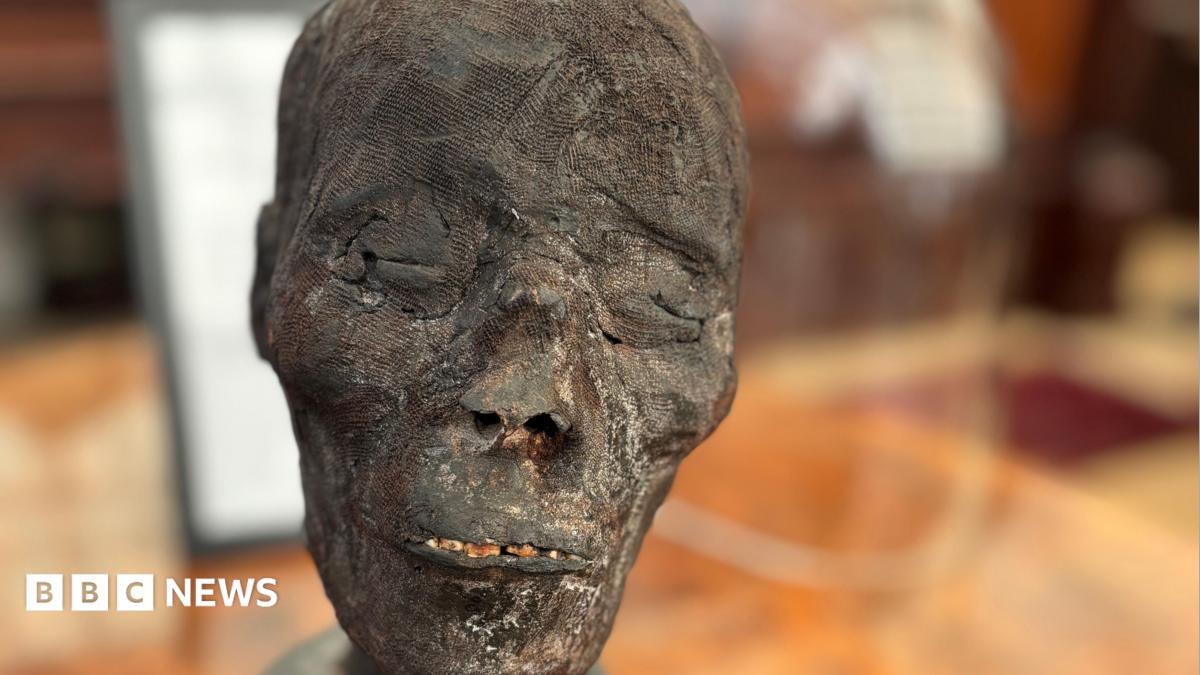
The auction house listing describes the Egyptian head as being radio-carbon dated to between 750 and 800 BC, adding that it came from a private collection.
It says the head was brought to the UK by a British soldier during World War One and it remained in the possession of the family for a century.
The Indonesian head has been carbon-dated to between 800 BC and 750 BC.
Lowry added that he believed there are thousands of these types of remains “in attics” around the UK, with “all sorts of people” also choosing to display them in their homes.
Advertisement
He added that people take “great pleasure” in their aesthetics and “wondering who was that person”.
Biers, who co-ordinates a task force which tracks how human remains are sold online, said there has been a spike in sales “since social media began”, but particularly in the last five years.
She said the ethical issues stem from how the remains were historically obtained.
“Murder, kidnap, people selling because they’re poor and they have no other way to feed their family so somebody wealthy comes along and says: ‘Well, I’ll buy that head or that body from you and take it back to London and then sell it at auction,’” she said.
Advertisement
Biers added that collectors have many uses for the remains, ranging from the ritualistic to some being turned into things like lamps and earrings.
“We’ve got all of this evidence of these horrific situations, like a child’s spine as the handle of a handbag being sold for over €6,000 (£5,174).”
Science journalist Patrick Pester, tracks the trade in human remains and said listings like this are not unusual
“I come across auctions like this every single day, and the vast majority are taking place online,” he said.
Advertisement
Pester said that tens of thousands of these skeletons remain in private collections or within the medical field, but the reality is that nobody knows how many are still out there.
Kevin Hollinrake, the Tory MP for Thirsk and Malton, hit out at the ‘unsustainable’ number of people claiming unemployment benefits in his constituency and called for the reinstatement of the two-child benefit cap to increase the budget of the Armed Forces.
The Conservative Party chairman added that 1,120 people in his constituency were claiming unemployment benefits, which he said was “not sustainable”.
Kevin Hollinrake MP.
The percentage of people aged 16-64 claiming unemployment benefits in Thirsk and Malton is two per cent, and in Scarborough and Whitby it is 3.1 per cent.
Mr Hollinrake said: “The threats we face are getting more and more serious. That is why I voted to demand the Government cuts welfare and gives our Armed Forces the backing they need to keep us safe.”
Advertisement
He added that there was “a consensus that our military is not ready for war” and that reinstating the two-child benefit cap would create savings for increased defence spending.
Readers took to The Press website to have their say.
Beyond Infinity said: “Oh, hooray, what the country needs is more vacuous slogans, right?”
Metalclog said: “The reality is, our Armed Forces cannot survive on a diet of government spin, over-the-horizon spending commitments and hollow rhetoric.”
Advertisement
Freeda said: “It’s more complicated than poor people out of work directly and solely affecting the military budget. A child benefit cap singles out women as the perceived burden of society.
“It would mean fewer potential military recruits being born, more people in debt, families fragmented and older people who have spent a lifetime forging support systems having to uproot and start from scratch.
“If a politician wants votes, don’t make the poor poorer or go against women! A country is judged on the bottom rung of that society’s standard of living, as well as military might and the wealthy.”
ChiefTired said: “Knew it was Hollinrake before I read the article.”
Advertisement
PsDsTsTsK said: “These are disgraceful comments from a Member of Parliament and entirely unbecoming of someone elected to represent the public.”
The Bear’s fifth and final season introduces another member of the family portrayed by a major guest star, so who is behind Cheese?
**Warning – this article contains minor spoilers for The Bear Season 5.**
Advertisement
The Bear Season 5 is finally here and will bring the hit FX and Disney+ series to a thrilling conclusion.
With time rapidly running out, Carmy (played by Jeremy Allen White) about to quit and a storm raging outside, the stakes have never been higher for the team of dedicated and stressed out chefs.
Joining the award-winning lead actor White is a stellar cast, including Ayo Edebiri, Ebon Moss-Bachrach, and Liza Colón-Zayas.
The series has also featured a number of guest stars, from Jamie Lee Curtis to Olivia Colman and even John Cena, with many of them expected to reappear in the epic finale.
Advertisement
Season 5’s second episode, titled Lamb, introduces yet another new member of the team in Terry Cheddario, nicknamed ‘Cheese’. So who plays her?
Who plays Cheese in The Bear Season 5?
Cheese is the niece of Nicholas Marshall (Brian Koppelman), whom everyone calls The Computer, a maths genius who becomes The Bear’s unofficial accountant to analyse where the restaurant is overspending.
In Season 5, Cheese tags along with Computer and Uncle Jimmy ‘Cicero’ Kalinowski (Oliver Platt) in an attempt to find a backer to sell the restaurant while the chefs battle through their toughest night of service yet.
Advertisement
She’s portrayed by actress Elsie Fisher, who is best known for her breakout role as teenager Kayla Day in Bo Burnham’s acclaimed directorial debut Eighth Grade.
In the film, Kayla is an anxious 13-year-old who struggles to find social acceptance in her last week of middle school before starting high school after the summer.
Fisher landed the role when she was just 13 herself and went on to win an incredible 17 major awards for her performance, including a Gotham Independent Film Award and a Critics’ Choice Movie Award.
Advertisement
She was also nominated for a Golden Globe and Independent Spirit Award.
Grab Disney+ for a cheaper yearly price before prices increase
This article contains affiliate links, we will receive a commission on any sales we generate from it. Learn more
Disney+ is raising prices from September 30 for its Standard tier of subscription, meaning if shoppers lock in now, they’ll avoid the price hike.
Although Eighth Grade was her first major on-screen role, it wasn’t her first experience in the mainstream as she previously portrayed Agnes in the first two Despicable Me films.
In more recent years, she has starred in Netflix’s 2026 comedy hit Roommates, portrayed Katie Harris in the third and fourth seasons of HBO’s acclaimed drama Barry, and landed a recurring role in the second season of The Summer I Turned Pretty as Skye.
The Bear Season 5 is available to stream on Disney+.
Ms Craig today launched her campaign to replace Andy Burnham as Metro Mayor after his departure to Westminster and announced plans to give free bus travel on the Bee Network to every 11 to 18-year-old in Bolton and the rest of Greater Manchester.
At a launch event in Bury, she was joined by Mr Burnham and Labour Deputy Leader Lucy Powell as 200 local supporters gathered to give her their full backing.
Mayor Campaign trail (Image: Labour Party)
Ms Craig outlined how she will extend the popular ‘Our Pass’ scheme from 16 to 18-year-olds to all 11 to 18-year-olds.
Advertisement
She said: “When Greater Manchester fought to take control of the buses… it wasn’t just about saying where a bus route goes. It was putting power and control back into the hands of local people. And we have seen what that does. We have seen that open doors and opportunities.
“And I have been talking to families that have been telling me how tight it is. I spoke to a mum who is making decisions and cutting back, not buying the stuff that she needed, not looking after herself, because she still had to pay for her kids’ bus fare to get them to school.
“I have spoken to young people who have said they are held back by lack of opportunity. How at the age of 15, getting around our city-region still costs too much.
“And I have spoken to 16 and 18-year-olds who have seen the great benefits that Our Pass has been able to bring.
Advertisement
“So that’s why I am proud to announce if I was elected as Greater Manchester’s Mayor, all bus travel for 11 to 18-year-olds will be free.
“This to me is the test. It is something that puts hundreds of pounds back into the pockets of ordinary people to make their life better. And it is something that opens the doors to tens and tens of thousands of young people across our city region that says this place is for you.”
The election for Greater Manchester will take place on Thursday, 30th July.
Stephen Morgan MP has welcomed the announcement that LGBTQ+ people will be protected from physical and psychological abuse to change who they are, as the government announces a landmark ban on abusive Conversion Practices in England and Wales, with the publication of the draft Conversion Practices Bill.
“Local people know about this connection, but we’ve always looked upon it as Cheadle’s best kept secret.”
Head through the impressive stone gates of Abney Hall Park off Manchester Road in Cheadle and it feels like you’re escaping to another time. Meander through the woodland until the trees separate out and a sweeping view of the majestic hall comes into sight.
Advertisement
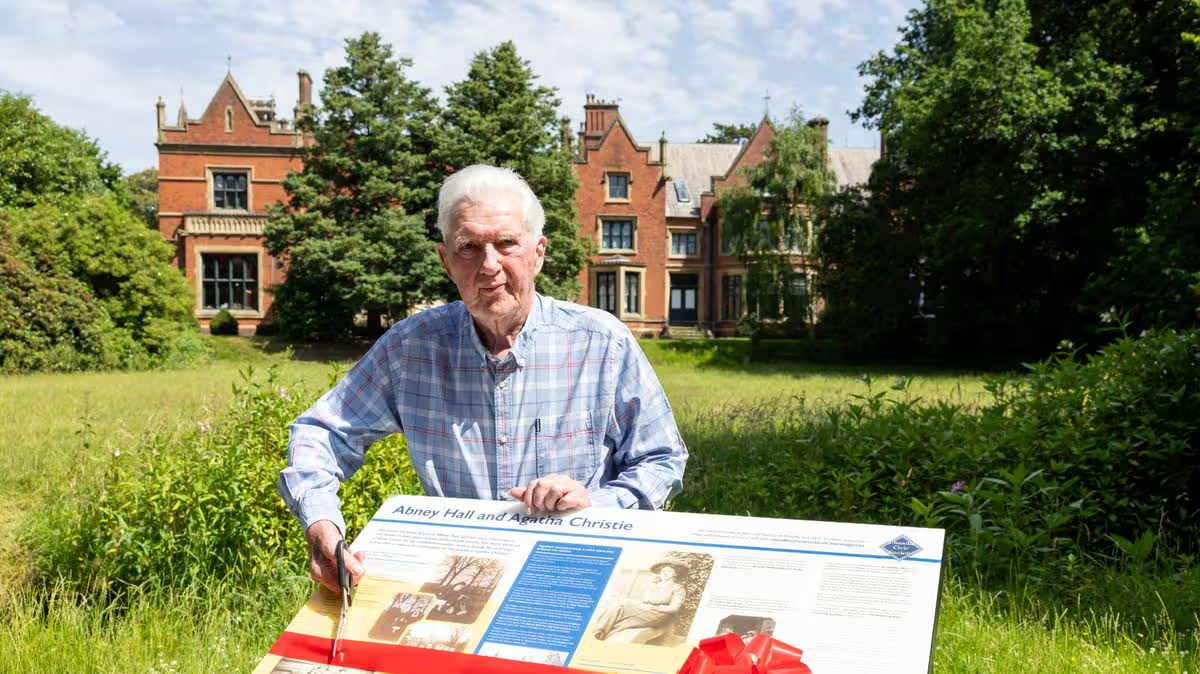
Now, a new information board has been added to this spectacular view, to allow visitors to learn about the fascinating role this hall played in the life of one of the world’s greatest authors – Agatha Christie. The board was unveiled this week by Agatha’s grandson Mathew Prichard, who has fond memories of playing in the hall as a child.
The world-famous crime writer’s older sister, Margaret ‘Madge’ Watts, lived in Cheadle for almost 50 years and Abney Hall was one of her homes in the village. It is said to be one of the main inspirations for the iconic ‘country house’ setting that features so prominently in Christie’s work and several of her books are dedicated to Abney Hall or members of her extended family in Cheadle.
Click here for the latest on Manchester’s food & drink scene, gigs and more in our CityLife newsletter
They include the 4.50 from Paddington which is said to be inspired by the layout of the grounds at Abney Hall; After the Funeral which Agatha dedicated to “good time at Abney” and The Body in the Library which Agatha dedicated to ‘Nan’ Watts who was a lifelong friend.
Advertisement
Agatha was said to have spent many joyful Christmases at the grand 19th century hall, an influence noted in Hercule Poirot’s Christmas and The Adventure of the Christmas Pudding, in which Agatha gives a detailed dedication to ‘the Christmases of her youth’ at Abney Hall.
The Information Board about Christie is part of the new Cheadle Heritage Trail, a project by Cheadle Civic Society that has been supported by the Northern Trains Community Project Fund, Manchester Airport’s Community Trust Fund and Jonathan Alcock & Sons Ltd and is designed to bring the village’s history to life.
Each board highlights the story of a place, building or person that has contributed to Cheadle’s story – from historic landmarks to memorable characters.
Advertisement
It includes: Cheadle Green, James ‘Scotch Bob’ Telford, Cheadle Hall, Brooklyn Crescent Park, Cheadle Primary School and the Alcock Family. An information board is also planned for St Mary’s Church on Cheadle High Street.
The unveiling of the Information Board about Agatha Christie is also the latest part of a year-long programme of free events organised by Cheadle Civic Society to celebrate the village’s connection with ‘The Queen of Crime’.
The line-up has included book clubs inside Abney Hall, walking tours, crime writers panel discussions and creative activities for children at the local library – all of which have been free of charge.
Advertisement
In September, as part of the national Heritage Open Days festival, Cheadle Civic Society will also be organising free tours of Abney Hall for people to learn more about the building and its famous ‘Christie connection’.
Andrew Frazer, chair of Cheadle Civic Society, said: “Local people know about this connection, but we’ve always looked upon it as Cheadle’s best kept secret.
“But we felt it was important that Abney Hall in particular and that relationship with Agatha was put on the map. We thought we could apply for a blue plaque, but we do things slightly differently in Cheadle, we thought we’d get a full interpretation board and from that grew this idea, well why don’t we have a full heritage trail.
Advertisement
He added: “The creation of a Cheadle Heritage Trail has been a long-held ambition of the Society and the inclusion of Agatha Christie and her connection to the village was always going to be a highlight.
“To be able to welcome Mathew to the home of his grandmother’s sister to unveil the Information Board about her is a real thrill and we’re very grateful to The Christie Archive Trust for sharing images from their collection to use on the board.
“Likewise, we’d like to thank Manchester Airport, Northern Trains and the Alcock family for their support in helping to make this happen.”
Mathew, from Wales, was actually born in Greater Manchester back in 1943, when his heavily pregnant mother was visiting Abney Hall. He was born in neighbouring Gatley and proudly reveals he supports Manchester United!
He has fond memories of playing as a child along the long gallery at the back of the hall with his toy trains. Now 83, he says: “I used to be the chairman of the Agatha Christie Limited company and so I know from my days of doing that, days like this are mercifully quite frequent because people are still so keen to celebrate their links with Agatha Christie.”
Agatha died in 1976 aged 85, but remains the best-selling fiction author of all time. Among Agatha’s gifts to her grandson was giving him the rights to one of her most famous works, The Mousetrap, the longest-running play in theatre history.
He recalls of the gift: “I was 9 at the time, it didn’t strike chords of being remarkable at that time. I didn’t come across it properly for another 10 or 12 years.”
Advertisement
In 1995 he set up a charitable trust with the ongoing royalties from the play, which has raised millions of pounds for arts organisations across the UK. He said: “The idea is that it raises money for artistic events that owe in some way or another their existence to The Mousetrap’s longevity.”
Welcoming Mr Prichard to Abney Hall alongside Cheadle Civic Society this week was Demi Fletcher from Bruntwood, who has held the lease on the Hall since 1976. Bruntwood has been supporting Cheadle Civic Society with their events this year, providing access for the local community to explore Madge’s home of nearly 25 years.
Sharon Johnson, head of commercial at Bruntwood, said: “Abney Hall is an important part of Cheadle’s history and we’re delighted to support the Cheadle Civic Society in helping more people discover its connection to Agatha Christie. It’s been great to welcome Mathew Prichard to the Hall and to see the story of both the building and the local area brought to life through the Heritage Trail.” Carolyn Watson, Northern’s director of stakeholder and community engagement, said: “We proudly support the Cheadle Heritage Trail as it’s a brilliant project which allows people to immerse themselves in the village’s rich history. The new information boards look fantastic and I’m sure lots of people will enjoy learning all about the history of the buildings, locations and people – including Agatha Christie – that are part of Cheadle’s story.”
Advertisement
Helen McNabb, a trustee of the Manchester Airport Community Trust Fund, said: “We were thrilled to attend the opening of this important community asset, which we have partially funded. Manchester Airport’s Community Trust Fund aims to ensure that local communities share in the benefits of having a major international hub on their doorstep and invests more than £100,000 every year into community groups and not-for-profit projects.”
Cheadle Civic Society has plans to extend the Trail in the future, with a number of additional locations in the village already identified as suitable for their own Information Boards.
Grammy-nominated star Teddy Swims is set to follow in the footsteps of The Cure this week as he takes to the stage at Blackweir Live tonight, Friday, 26 June. The singer is embarking on a string of outdoor concerts and festival appearances across the UK and Ireland throughout summer 2026, with a scheduled appearance at Cardiff’s Blackweir Fields among the highlights.
The American singer first came to prominence through his YouTube covers before going on to rack up a string of chart successes and sell-out international tours. Fans attending the concert can expect to hear hits like Lose Control, Guilty and The Door, as he will be joined on stage by his band Freak Freely, seamlessly fusing R&B, soul and pop.
Doors for the event will open at 5pm, as Teddy Swims will be joined by Jordan Rakei and Lauren Spencer Smith as his support acts for the gig. From superstar gigs to cosy pubs, find out What’s On in Wales by signing up to our newsletter here.
Advertisement
Having opened its doors last year, Blackweir has swiftly cemented its reputation as Cardiff’s foremost live music venue, born from a partnership between DEPOT Live and prominent UK promoters Cuffe and Taylor.
Nick Saunders, founder of DEPOT Live, said: “This is another huge headline show for Blackweir and Cardiff. Teddy Swims is an absolute vocal powerhouse who has enjoyed an incredible rise to success so we are thrilled to be adding him to our line up for 2026.
“What a glorious summer we are going to have in Cardiff!”.
We’ll be updating you throughout the day about everything you need to know in the lead up and during the gig. From road closures to weather changes, get the latest, here.
Heavyweight world champion Oleksandr Usyk says he will vacate all his belts but is not retiring.
The 39-year-old, who has an undefeated professional record of 25 wins, held the WBA ‘super’, WBC and IBF belts.
“This is a well-considered decision that I am confident will open new opportunities for me. This is not the end of the story. The continuation lies ahead,” he said on X.
He added in a video message: “I want to vacate all the belts that I currently hold to make them available for the guys next in line to fight for them.
Advertisement
“Friends, I’m leaving the belts but not the sport because I still have my last dance.”















































You must be logged in to post a comment Login