Frosterley marble is not a true marble at all, but a black carboniferous limestone studded with white fossil corals that lived 325 million years ago, and it has been cut and polished here since at least the 12th century, sent to churches, palaces and cathedrals across Britain and as far as Mumbai and Brisbane.
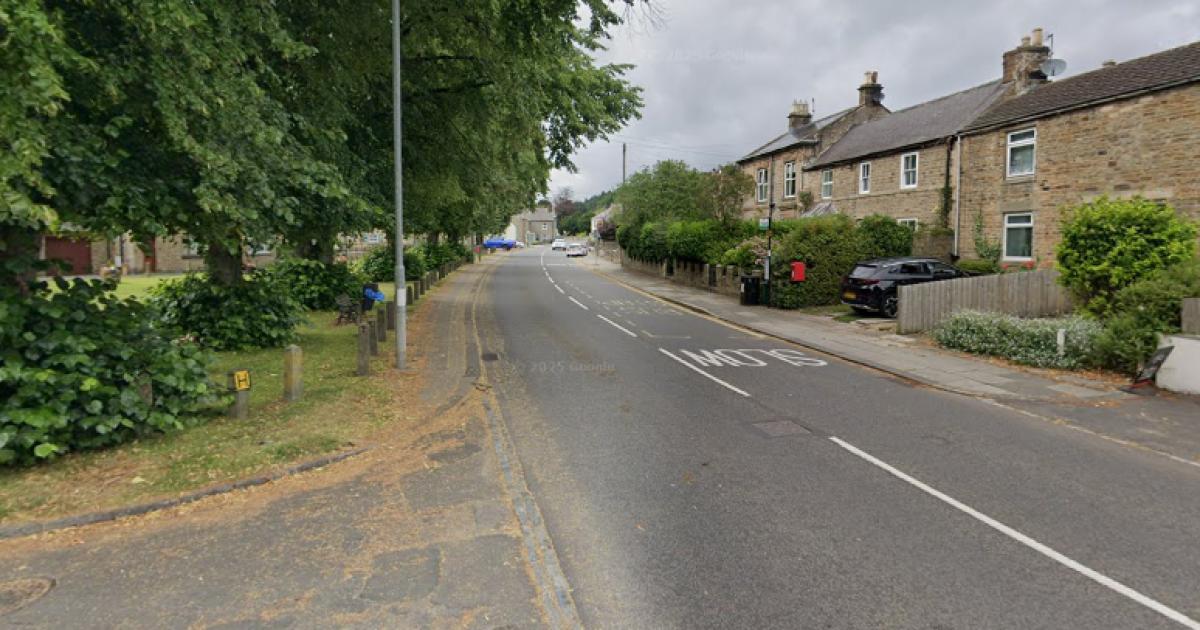
The village that produced it sits on the River Wear between Wolsingham and Stanhope, 18 miles west of Durham City, and it rewards a proper visit.
Getting there
Frosterley is on the A689 in lower Weardale, County Durham. The postcode for the village station and the Frosterley Inn is DL13 2SL.
St Michael and All Angels Church in Frosterley. (Image: SUBMITTED)
Free parking is available at Frosterley Station, with further spaces in the village centre.
Frosterley is also a stop on the Weardale Railway, an 18-mile heritage line running between Bishop Auckland and Stanhope, with steam and diesel services running on selected dates throughout the year.
Advertisement
What Frosterley marble actually is
Frosterley marble is carboniferous limestone laid down approximately 325 million years ago when this part of County Durham lay under a warm tropical sea.
The fossils of coral colonies, principally Dibunophyllum bipartitum, are preserved in the black matrix and when the stone is sliced and polished they glow white against the dark background with a beauty that has been prized by builders and church-makers for almost a thousand years.
A document from 1183 refers to “Lambert the marble cutter” of Stanhope, almost certainly a reference to the working of this stone.
Advertisement
It was used for the columns of Durham Cathedral’s Chapel of the Nine Altars from around 1350, for flooring and fonts in churches across the North East, for the chapel of St Peter’s at Auckland Castle, and for the base of the pulpit in St Thomas Cathedral in Mumbai. After the railways arrived in 1847, demand exploded and the stone travelled the world.
You can see the stone in its raw, unpolished form at the natural outcrop in the Bollihope Burn at Harehope Quarry, just outside the village, where the fossil-dense limestone is exposed in the riverbed.
There is also a large polished sample in the car park in the centre of Frosterley, and a piece at the railway station sculpted to mark the station’s reopening in 2004.
What to do
Frosterley Marble Walks — Durham County Council has mapped three waymarked walks starting from Frosterley Station, ranging from a short 1.3-mile circuit visiting the church and quarry sites, to a five-mile route with views across Weardale and a return alongside the Bollihope Burn.
A third five-mile route follows a quiet limestone valley with ancient yew trees and wildflowers.
Advertisement
Rogerley Mine — Just west of the village on the north side of the A689, Rogerley is the only mine in Britain operated commercially, solely for mineral specimens.
It is the world’s most celebrated source of Weardale fluorite, vivid green crystals that glow an intense purple in daylight due to the presence of rare earth elements in the rock.
Specimens from Rogerley sit in natural history museums worldwide, and the mine holds open collecting days for the public on selected dates each year.
Weardale Railway — The heritage line that stops at Frosterley opened on August 8, 1847, built specifically to extract limestone from the quarries here, and Frosterley was its original western terminus.
Advertisement
Today it runs heritage diesel and steam services between Bishop Auckland and Stanhope, and a journey up the dale on a clear day is one of the best ways to see the Weardale landscape.
Hamsterley Forest — A 5,000-acre forest about five miles east of Frosterley, Hamsterley has walking, cycling, running and play trails to suit all abilities, cycle hire, and is one of the best places for families in the Durham Dales.
The blue mountain bike trail runs nine miles through the forest and is well-suited to those building confidence on two wheels.
Open from evenings on weekdays and from noon at weekends, it is a reliable and welcoming option after a day on the fells.
For a wider choice of restaurants, Stanhope is two miles up the valley and Wolsingham three miles to the east, both with cafés and pubs serving food.
Worth knowing
St Botolph’s Chapel in Frosterley, excavated in recent years, has confirmed an 8th-century Saxon settlement connected with the monks of Monkwearmouth, the same community that produced Bede.
Advertisement
The village is also a small, linear settlement of stone terraces built for quarrymen, and its character still reflects that working past in a way that feels entirely unperformed.
England’s potential path through to the 2026 World Cup final has emerged after they secured their place as Group L winners.
Those goals shortly after the hour mark came as a huge relief for the travelling England fans, who had been watching another otherwise laboured display from their much-fancied team following the turgid midweek stalemate with Ghana in Boston that had served to dampen the early enthusiasm generated by a thrilling 4-2 victory over Croatia in Dallas.
There are also lingering fears around England’s ability to break down teams who sit in a low block and efficiency at containing the speedy counter-attacks that follow, though in Bellingham and Kane – who has overtaken Gary Lineker as his country’s leading all-time World Cup goalscorer – they have two superstar talents capable of winning any game, while Bukayo Saka and Marcus Rashford also impressed out wide as Tuchel made five changes for the final group-stage outing.
England will now return to their Kansas City training base before quickly moving on to Atlanta, where they will face DR Congo at 5pm BST on Wednesday (July 1) in the newly-created round of 32 at this first expanded 48-team tournament.
Advertisement
It could have been Senegal or potentially even Algeria, but DR Congo’s 3-1 win over Uzbekistan later on Saturday clinched them third place behind Colombia and Portugal in Group K and teed up a first-ever showdown with England.
Winning feeling: Harry Kane and Jude Bellingham both scored as England beat Panama 2-0 at the World Cup to top Group L
PA
England will certainly not be taking the threat of DR Congo lightly, but will be relieved not to have finished as runners-up in Group L, as, thanks to their subsequent goalless draw with Colombia, that would have meant a last-32 meeting with old rivals Portugal in Toronto on Friday.
Advertisement
Instead, Roberto Martinez’s side will meet Group L runners-up Croatia – who beat Ghana 2-1 – in one of the pick of the early knockout ties.
If England get past DR Congo, then a last-16 fixture will await at the famous Estadio Azteca in Mexico City in a game that will take place at 1am BST in the UK on July 6.
That would be against either Mexico or Ecuador, who meet at the same venue on Tuesday (June 30) in the last 32.
Potentially facing the co-hosts – who finished top of Group A with three wins and no goals conceded – at their high-altitude fortress where they have only ever lost twice, and not since 2013, already has England fans talking in fearful tones.
Advertisement
But don’t count out Ecuador, whose crucial late win over Germany to seal third place in Group E and the passionate celebrations of head coach Sebastian Beccacece was one of the highlights of the World Cup so far.
Get through both the last 32 and last 16 and record five-time winners Brazil could then await England in the World Cup quarter-finals in Miami on July 11, though the Selecao first have to face Japan on Monday after topping Group C. If they can do that, either Erling Haaland’s Norway or Ivory Coast will be their tough next assignment.
Record-breaker: Lionel Messi has started his sixth and final World Cup in phenomenal goalscoring form
Getty
Lionel Scaloni’s side meet surprise package Cape Verde in the last 32, a match they will be expected to win comfortably before battling either Australia or Egypt in the last 16.
Advertisement
They will be expected to get through either of those tests too, with one of Switzerland, Algeria, Colombia or Ghana then awaiting in the quarter-finals.
Les Bleus have Sweden in the last 32, with potentially Germany then to come in a massive Independence Day showdown in Philadelphia on July 4, providing Julian Nagelsmann’s side defeat Paraguay first.
Win that and France would be up against one of South Africa, Canada, Netherlands or Morocco in the quarter-finals, with Portugal, Spain, USA and Belgium among the list of possible semi-final opponents.
It said this would equate to almost double the average for the past four World Cups, making this year’s tournament the most polluting ever.
In 2023, a Swiss regulator said Fifa had “made false statements” by claiming that Qatar 2022 would be the first carbon-neutral World Cup in history by using investments in low-carbon initiatives to offset emissions.
In response to the ruling, Fifa said it is “fully aware that climate change is one of the most pressing challenges of our time and believes it requires each of us to take immediate and sustainable climate action”.
Infantino attended all 64 matches at the last World Cup in Qatar, where the eight stadiums used were separated by about an hour’s drive at most – but this year’s tournament spanning an entire continent presents a very different challenge.
Police said a scene is in place and there will be an increased police presence in the area today
08:11, 28 Jun 2026Updated 08:20, 28 Jun 2026
A man has been hospitalised with serious injuries after a stabbing at a rave near Cambridge. Two men have been arrested after the incident in a field where hundreds were attending a music event.
Officers were initially called to the rave in the early hours of Sunday morning (June 28) in a field on Dry Drayton Hill, between Dry Drayton and Madingley. Police attended and found around 400 people at the rave.
Calls then came in that a man had been assaulted suffering injuries consistent with stab wounds. Paramedics attended and the man in his 20s was taken to hospital with serious but not life-threatening injuries.
Advertisement
Officers, including armed police, searched the area. Two men were arrested in connection with the attack. A scene is in place and will remain for most of the day, with an increased police presence in the area.
A spokesperson for Cambridgeshire Constabulary said: “Anyone with any information is urged to report this to police online quoting incident number 115 of today, or call 101 if you do not have internet access.”
He told Sky News’ Sunday Morning with Trevor Phillips: “What Andy is saying is that this is one of the biggest economies on the planet, and yet we have some of the poorest regions in Europe in this country, and that is because of the grotesque regional economic inequality we have in this country.
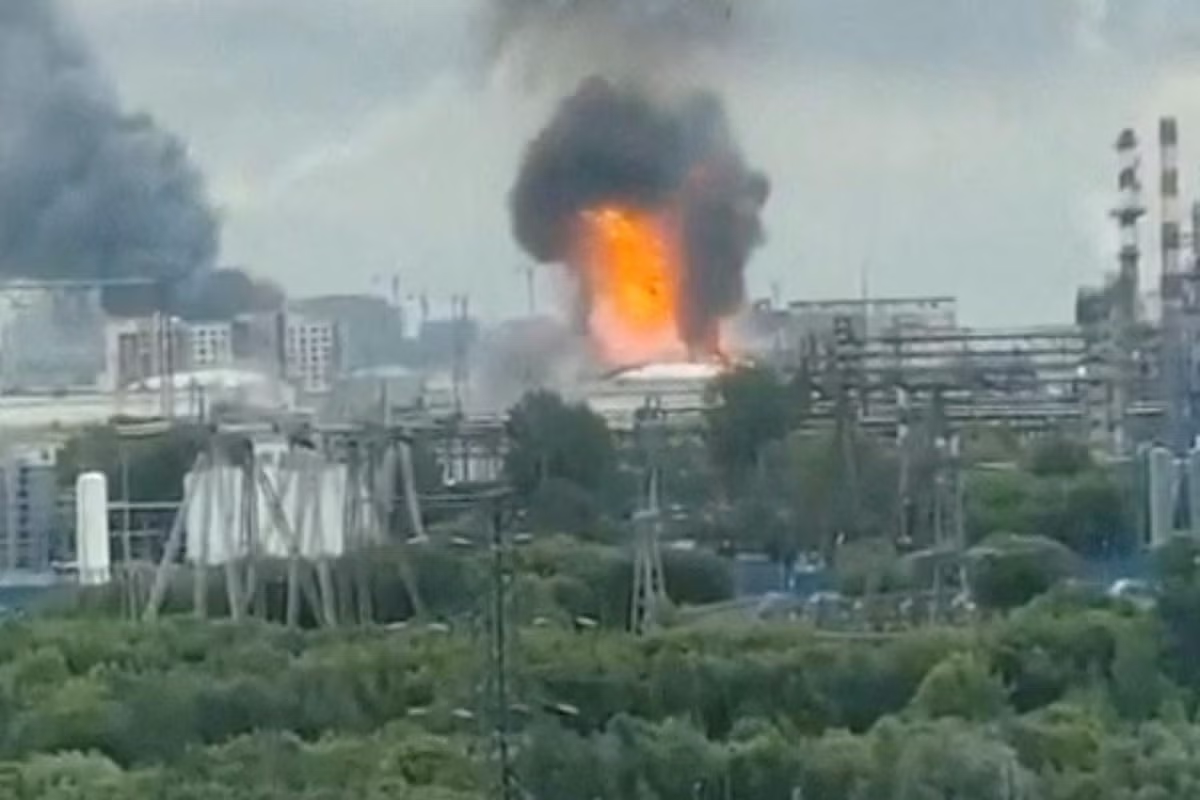
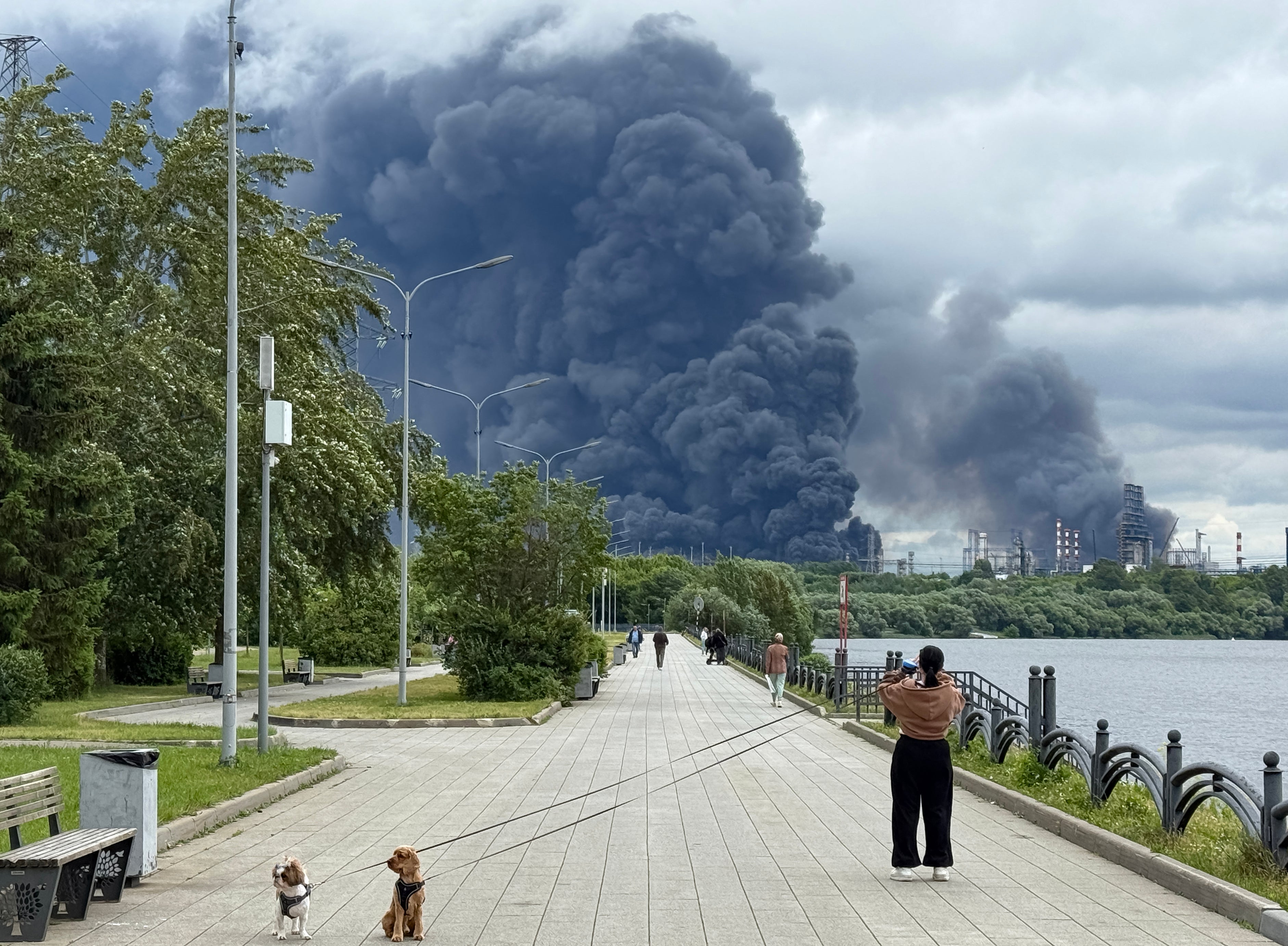
The explosion was so powerful that it sent the huge disc-shaped lid of an oil storage tank flying high above the city on a cushion of black smoke and flame.
Their successes have created debilitating shortages across Russia, from occupied Crimea to the eastern expanses of Siberia, giving Kyiv the upper hand as both sides weigh restarting peace talks.
Advertisement
The Independent looks at how Ukraine has mastered its long-range capabilites to devastating effect.
How has Ukraine’s drone campaign evolved?
Ukraine’s ministry of defence said in 2022 that it had the ability to hit targets some 630km away – about the distance between Kyiv and Tula. This year, it says its long-range weapons are destroying targets “at about a distance of 1,750km”.
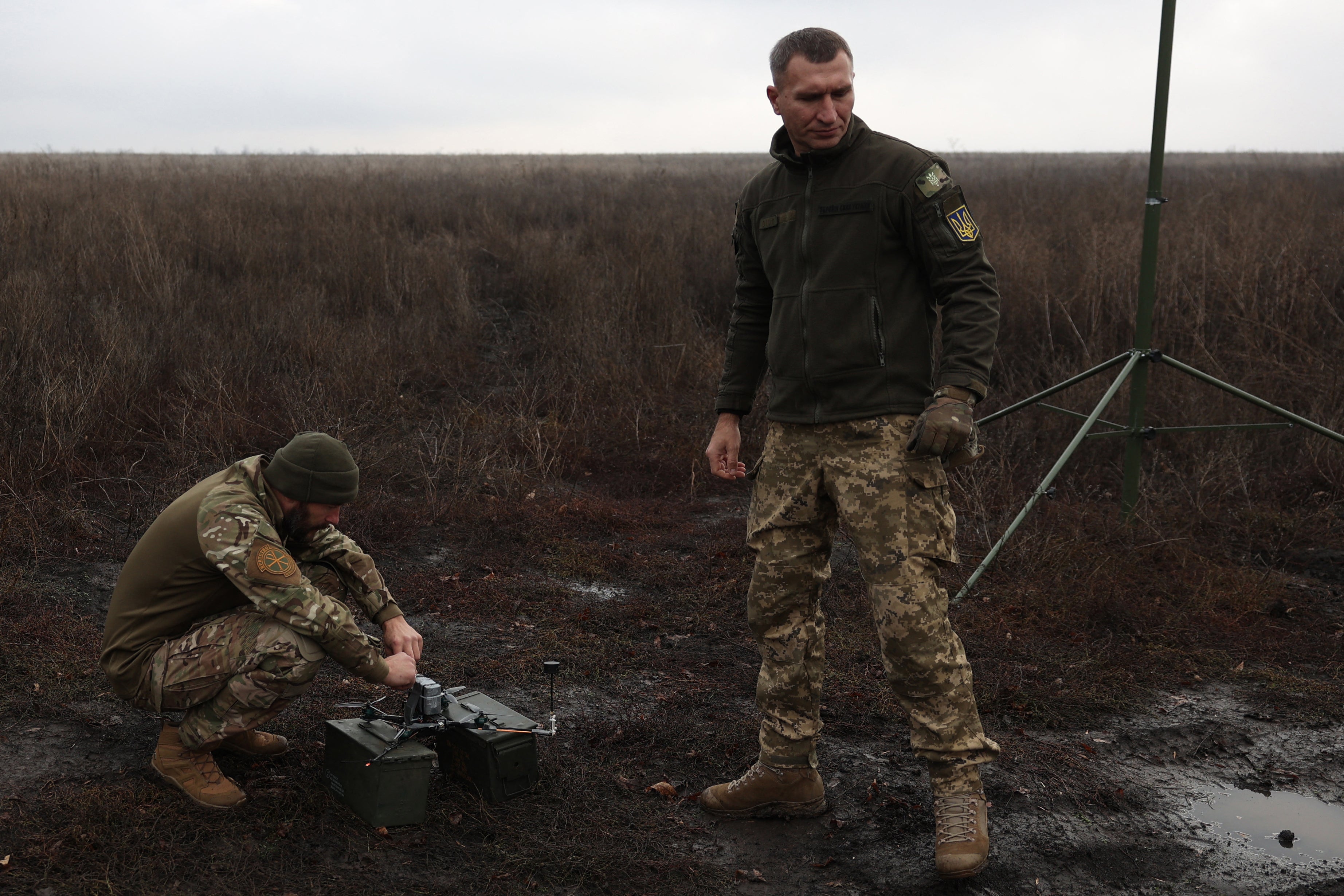
That evolution has been years in the making. On the frontlines, Ukraine and Russia have been moving in step to adopt and develop drones capable of delivering payloads of explosives several kilometres away without risk to the operator.
Advertisement
Ukraine’s use of drones has changed dramatically since the start of the war (pictured: operators in Donetsk in November 2023) (AFP/Getty)
Russia went into the war with a long-range advantage, hosting stockpiles of ballistic missiles and access to long-range Shahed drones as early as summer 2022. Those Iranian-made drones can travel up to 2,000km with a 50kg warhead.
That advantage gave Moscow the ability to thrash morale in Ukraine’s major cities, destroy warehouses full of munitions, and devastate energy infrastructure deep behind enemy lines.
But when its allies were hesitant to provide long-range weapons to hit back, Ukraine invested in its home-grown industry, learning from its experiences. That industry is maturing, and Ukraine is now advising in allies on how to fight a modern war.
Fire Point, maker of the FP-1 attack drone and the Flamingo cruise missile, is now planning to develop a European missile defence system. And the Pentagon is said to be considering buying Ukrainian drones and Electronic Warfare systems.
Read world affairs editor Sam Kiley’s dispatch from Ukraine on the start-up weapons industry – where homegrown missiles and drones are made from carbon printers and lawnmower engines – rising from the ashes.
Advertisement
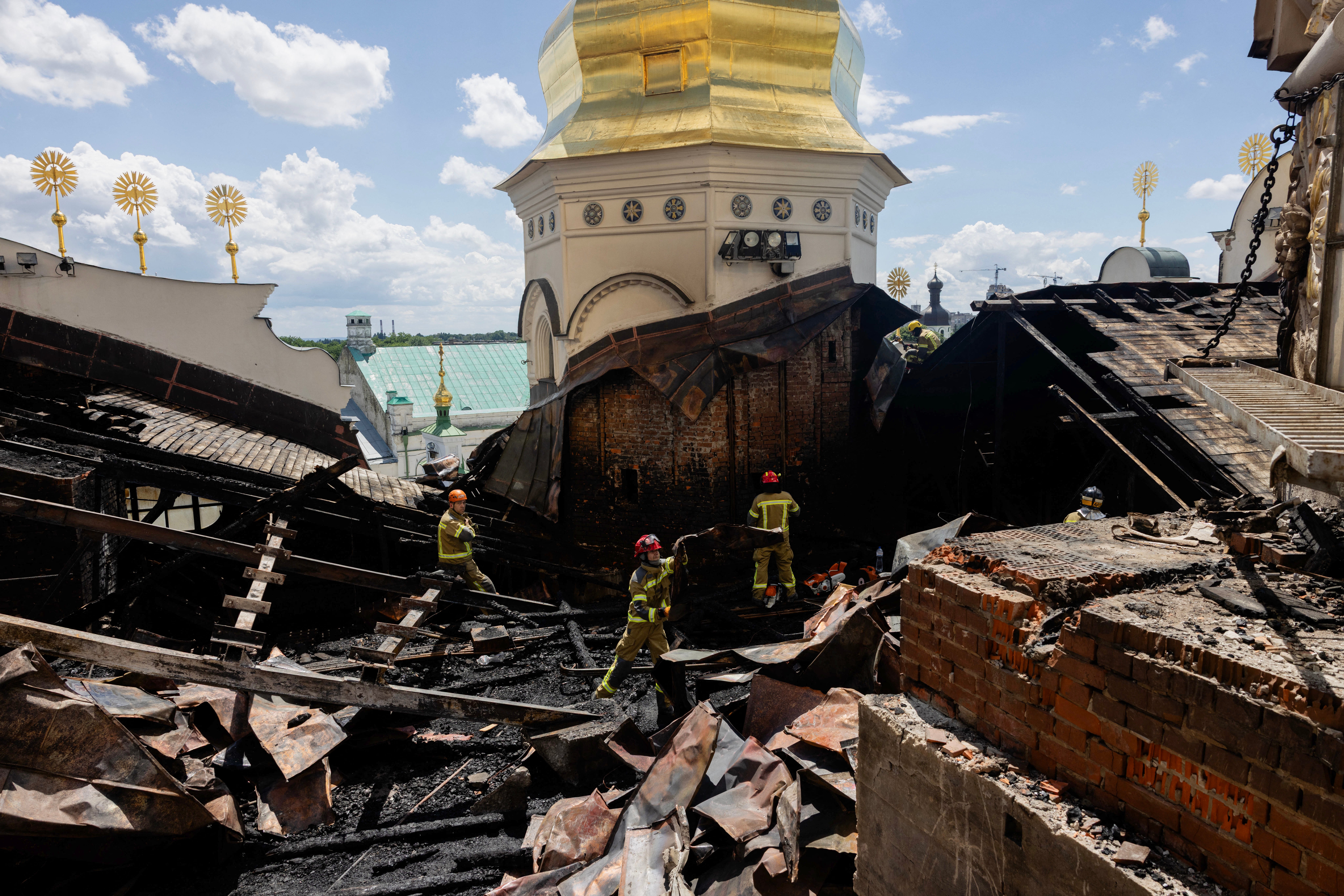
Ukraine launched its largest attack on Moscow in response to an attack on a cathedral in Kyiv (pictured, 15 June) (AFP/Getty)
According to the Baker Institute, a Texas-based think tank, Ukraine lacked the drone and missile capabilities for “sustained, long-range strikes” deep in Russia as late as 2025.
“Strikes on targets 1,000 or more kilometers into the territory of an adversary with capable air defense was considered, prior to Russia’s invasion, a domain in which perhaps only the US, Israel, China, and Russia possessed the requisite capabilities,”said Gabriel Collins, CES Lead, Energy and Geopolitics in Eurasia.
“The barriers to entry into long-range precision strike capabilities are considerably lower now. Ukraine’s national GDP before the war amounted to approximately one-fourth that of the Greater Houston area. Yet its combination of survival motivation, a talented and educated population, industrial base, and access to key imported components is culminating into a drone and missile complex — one that is highly capable and can credibly threaten key infrastructure assets up to 2,000 km from its borders.”
What has the impact been?
Kyiv says the strategy of targeting Russian energy facilities is aimed at sapping a key source of Russia’s war funds and showing Russians the four-year conflict started by Moscow is closer to home than ever. In these objectives, it has been effective.
Advertisement
The drone strikes in Moscow have brought the war back to Russia, piling pressure on Putin (18 June pictured) (AFP/Getty)
Analysts estimate that more than a fifth of Russia’s total refining capacity may have been knocked offline already, and the International Energy Agency (IEA) reported last week that Russian crude oil production dropped around 5 per cent year-on-year last month to 8.7m barrels per day due to the strikes.
“This level of disruption is unprecedented in the history of the Russia-Ukraine conflict,” the IEA said in its June report.
Grégoire Roos, director of the Europe, Russia and Eurasia programs at Chatham House, toldCNBC that the drone attack on the Moscow refinery last week was “the most interesting development over the past year”.
A drone footage shows fire and smoke rising from buildings, in what Ukrainian president Volodymyr Zelensky said was an attack on an oil depot in the city of Kerch (Reuters)
Roos agreed it showed off Ukraine’s confidence and the wider strategy of hitting Russia “where it hurts the most” by wiping out energy revenues. Those revenues are worth around 23 per cent of the federal budget and about 20 per cent of GDP.
Slowly, those revenues are coming down, in part as Russia is forced to sell at lower prices due to sanctions, but also due to disruption from Ukrainian attacks.
An analysis by the Centre for Research on Energy and Clean Air found that Russia’s revenues from oil, gas, coal and refined product exports totalled 193 billion euros in the 12-month period to February 24, 2026, down by 27 per cent from the comparable period pre-invasion.
Advertisement
Indirectly, businesses in Russia also suffer under the weight of higher energy prices, with prices then passed on to consumers. Gasoline in Russia that cost around $0.65 per litre just before the invasion cost $0.95 in May of this year. Inflation is officially at 5.6 per cent.
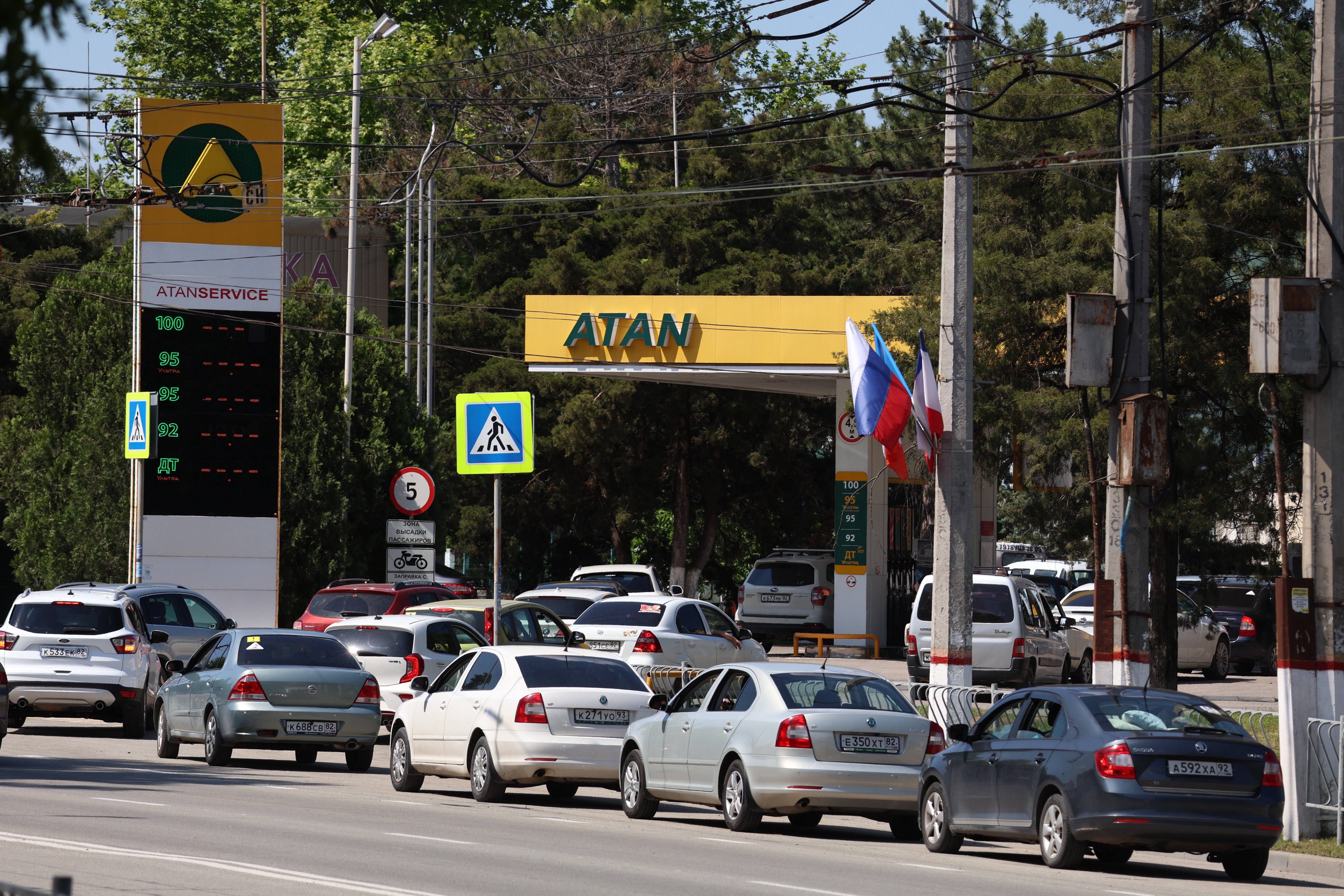
Cars line up at a petrol station in Simferopol, Crimea amid fuel shortages caused by Ukraine’s drone campaign (AP)
In recent weeks, restrictions on buying gasoline have been imposed in the central region, blamed on ‘temporary logistical difficulties’. Similar issues are reported in southern and western Russia. Social media is flooded with videos of cars queuing for petrol in occupied Crimea.
In Omsk oblast – which only in January celebrated the lowest fuel prices in Siberia – residents were concerned about how shortages would affect their lives, some 2,400km from the frontline.
As a ban on filling containers came in late on Monday, one told local outlet NGS55: “I don’t have a car; I used to ask my neighbor to buy me [gasoline] in a canister. Now I’m supposed to cut firewood with a hacksaw? Mow the grass with a mower? We’ve come to this. Beyond words.”
Labour deputy leader Lucy Powell made the claim on the BBC this morning
Labour’s deputy leader claims outgoing Prime Minister Keir Starmer “lost the dressing room” resulting in his resignation. Lucy Powell made the claim while talking to presenter Victoria Derbyshire on the BBC’s Sunday with Laura Kuenssberg this morning.
Advertisement
Asked why Labour was getting rid of the Prime Minister, the deputy leader said: “Well, look, I mean, I think it’s not me getting rid of him, but I want to focus really on the positive contributions that he has made, but as he said himself on the steps of Downing Street on Monday – we’re here in the middle of the World Cup, aren’t we?
“When the manager loses the dressing room, the manager often takes the decision that it’s the time for them to go, and I think that’s the decision that he has made.
Click here to get the biggest stories straight to your inbox in our Daily Newsletter
“But he has served our party well, and we do owe him a great deal of gratitude, and now it’s time for us to move on to a new phase, and that’s what we’ll be doing.”
Advertisement
Ms Powell was also asked whether Ed Miliband would be a good Chancellor amid reports he is Andy Burnham’s first choice. When asked whether she thought Mr Miliband would be good at running the Treasury, the Labour deputy leader said: “Yes I do actually, but actually I think this is a slightly distracting conversation, because I think we’ve all got a really important job to do.”
She added that the cost of living should be the focus and not “tittle-tattle” about Cabinet positions.
With Andy Burnham likely to be the next leader of the Labour Party following Sir Keir’s resignation, Ms Powell backed a woman lead Labour at some stage.
Asked whether she was disappointed that another man was set to take the top job, the deputy leader told the BBC’s Sunday With Laura Kuenssberg: “Well, look, I mean, actually, what I’ll also say is, I was working out this morning, I joined the Labour Party in the 1980s and actually in that time we’ve only, since Neil Kinnock, we’ve only had six leaders of the Labour Party. So we do generally keep leaders for quite a few years in the Labour Party.
Advertisement
“Of course, I’d like to see a woman leader at some stage, but this is a difficult job that brings a huge amount of exposure to your, to yourself, to your family, you know.
“It really is a relentless job, and I’m just glad that actually someone does want to do it. And I’m pleased that actually what it looks like is that we’re probably going to have just one candidate in Andy Burnham.”
She said earlier in the interview that speculation about Cabinet positions under a potential Burnham government was “unedifying”.
Hartlepool RNLI were called at 3.25pm by Humber Coastguard after an inflatable dinghy drifted out to sea at Seaton Carew.
Four volunteer crew members launched the RNLI boat at 3.40pm and soon were alongside two men who found themselves in difficulty.
The inshore lifeboat recovered the casualty, and another man who had swam out from the beach to help.
Volunteer crew members (left to right) Glen Pearson, James White, Jamie Northey and Mark Barke (Image: RNLI/Tom Collins)
The pair were handed over to the Hartlepool Coastguard team.
Advertisement
Hartlepool lifeboat operations manager Steve Pounder said: “A prompt response from the crew brought the incident to a successful outcome.
“An offshore wind can quickly blow inflatables out to sea. Please tether inflatable toys to prevent this situation, or don’t bring them to the beach.
“In this situation, it’s best to ring 999 and ask for the Coastguard and to keep the casualty in sight’.
Hartlepool RNLI inshore lifeboat helm Mark Barker added: “A quick launch from the Ferry Road boathouse meant we were on scene to recover the casualties who were both none the worse for their experience.
Advertisement
“We safely handed them over to the Coastguard team on the beach at Seaton Carew.”
The volunteer crew members then assisted a boat and its owner from Seaton Carew beach, which had suffered a mechanical failure, to a slipway near Hartlepool Marina.
The tool will scan data from thousands of properties and flag the ones most likely to deteriorate
Artificial Intelligence (AI) could be used to flag issues with council homes before “potential crisis hits”. Researchers at the University of Cambridge are developing a new AI tool alongside Cambridge City Council and South Cambridgeshire District Council.
Advertisement
It will scan data from thousands of properties and flag the ones most likely to deteriorate, as well as the residents “most likely” to be harmed. According to the university, the tool will combine three sources of data into a single risk score for each property.
The first source is satellite data and it includes systems that can detect heat loss from buildings using thermal imagery captured by satellites. The second source is conventional housing data such as construction type, Energy Performance Certificate (EPC) ratings, records of damp and mould, and repair histories.
The third source is what the researchers called ‘soft’ data including fuel poverty indicators, rent arrears, and accumulated logs of tenant contacts that councils already hold.
Researchers said the data, on a dashboard, would display a map of “risk hotspots”. They said it would not just flag buildings in poor condition, but highlight “where a vulnerable person lives in one”.
Advertisement
Head of housing at South Cambridgeshire District Council Peter Campbell said “at the moment we’re very much waiting for things to break before we act”. He believes that better data could make teams more efficient.
He added: “Quite often when things break, it’s not only the item itself that gets damaged, but also the damage caused by the break. For example, it’s not just the roof that needs replacing; it’s where the water has gotten in and damaged the rest of the property.”
“What we’re doing now is identifying people with whom we’ve had absolutely no contact and prioritising them for a home visit,” Mr Campbell continued. “But we don’t have the resources to do that for everybody, all the time.”
The researchers said that the project, called Predictive Risk Intelligence for Social housing Maintenance (PRISM) is not designed to make automated decisions about people’s homes or welfare. All alerts generated by the model would be reviewed by housing officers.
Advertisement
The project is designed as a proof of concept over 12 months. If it works, both councils said they hope it could serve as a template for social housing authorities elsewhere in the UK.
The system is being developed by Professor Ronita Bardhan and Dr Ramit Debnath from Cambridge’s Department of Architecture and the Centre for Human-Inspired AI (CHIA). Professor Bardhan said that “this is just a starting point”, but they hope “it can be replicated across different councils across the country”.
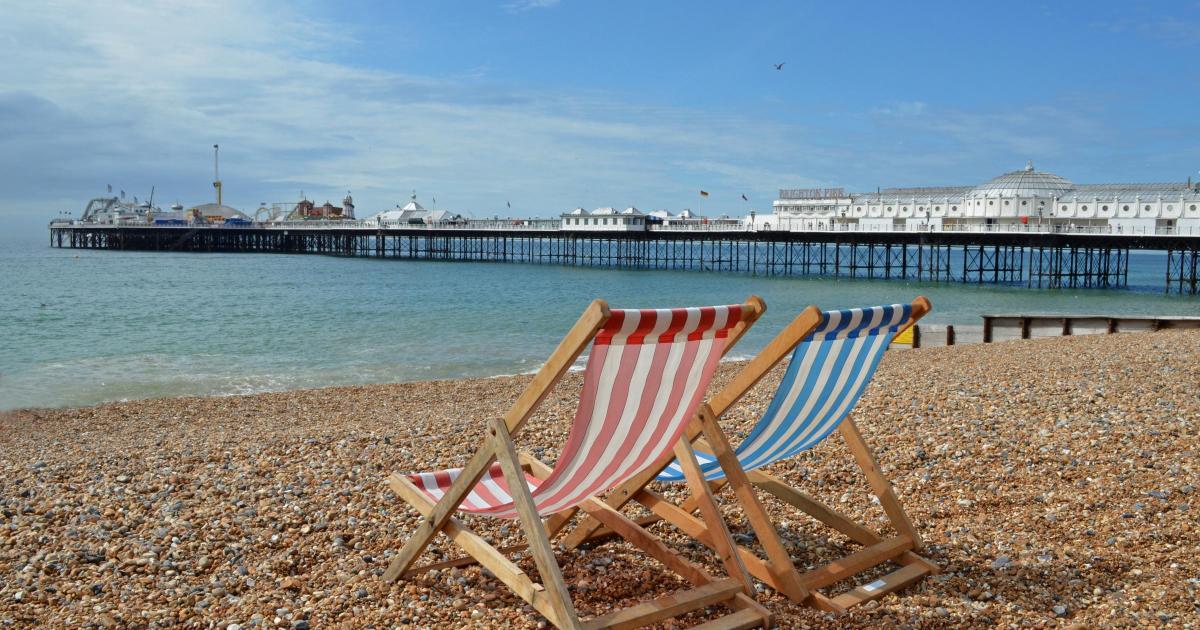
A warning has been issued to beachgoers that removing natural materials like sand and stones from beaches is illegal under the Coastal Protection Act 1949.
A tourist holidaying near Crackington Haven in Cornwall was once ordered to drive hundreds of miles to return pebbles taken from the beach.
And in 2018, the Metro reported on organised sand thefts, with JCB diggers used to extract large quantities from Hemsby beach in Norfolk for resale to builders.
Advertisement
Similar issues have been seen elsewhere.
In Devon, repeated thefts forced council gardeners to begin microchipping public plants.
The public is reminded that removing natural materials from beaches is against the law.
Why is it illegal?
Bans on seemingly harmless acts like this can be enforced by local councils, and can see offenders fined up to £1,000 as a penalty.
Advertisement
Yet while it may seem perfectly harmless, removing pebbles and other natural matter from the coast is in fact damaging to the environment.
As suggested by the name of the Act, and as stated in the introduction of the Act, taking natural material from a beach in the UK is illegal, in order to protect Britain’s beaches “against erosion and encroachment by the sea”.
Pebbles and other natural matter act as a natural sea defence against coastal erosion, which many experts warn has become even more of an issue due to climate change.
We were officially knocked out of the tournament on Saturday night after finishing third in Group C behind Brazil and Morocco.
The Tartan Army footsoldiers still out in Miami were left heartbroken as our World Cup dream finally ended last night before manager Steve Clarke handed in his resignation.
Advertisement
We were officially knocked out of the tournament on Saturday night after finishing third in Group C behind Brazil and Morocco, after days of waiting to see if our nations could do us a favour.
After claiming three points in the opening game against Haiti, we crashed out after Croatia’s 2-1 victory over Ghana saw us failing to finish among the top eight third-placed teams who progressed to the last 32 to join the 24 first and second-placed countries.
Shortly before the tournament, Clarke had penned a new four-year deal that would have taken him through to the next World Cup in 2030, as well as the home European Championships in 2028, and it would have seen him clock up 11 years in the job.
But in a bombshell statement in the early hours of Sunday morning, the 62-year-old penned a heartfelt farewell to his players, staff, and the Tartan Army.
Advertisement
Supporters who had travelled across the pond were left shocked at the news as they spoke to the Record after coming to terms with our elimination from the tournament.
Rio Carson, 19, who is from Glasgow but now lives on the Isle of Wight, travelled across to Miami with his dad Alan, 53, and his brothers Sol, 21, and Tao, 16.
Rio, who runs a window cleaning business, said: “I can’t deny Clarke has been a success but it is time for some fresh ideas. We were just on flight waiting to fly back to UK from Miami when the news broke.
Advertisement
“It quickly spread around the flight as the plane was full of Tartan Army. Most of us seemed relieved he had stepped down.
“We won’t ever forget those nights at Hampden which got us to the tournament. But after watching Scotland on the biggest stage it was obvious that change was needed.
“His interviews after the Brazil game gave the impression he was done with it. We have a lot to be grateful for – he got us back to the big stage three times and gave us all memories that will last a lifetime. He masterminded some massive qualifying wins v Norway, Spain and Denmark – but the time is right for change.”
Lee Barron flew out to Florida on Monday and the 38-year-old, from Perth, echoed those sentiments. He said: “I was shocked to hear the news, but after the Brazil game, hearing his reaction, it was maybe on his mind about throwing the towel in.
Advertisement
“I think he’s been successful – seven years, three tournaments qualified for. I’ve liked him throughout his term as manager, but I think it’s the manner of the defeat. In all three we haven’t performed well. We’re not wanting to be a country that’s just there to have a party and make up the numbers.
“I don’t think the players have helped him much either. They haven’t stepped up to the mark. Some of the responsibility has to land there too.
“I would have kept him in for longer. He’s been given a four year deal – but maybe he thought the time feels right. He’s been there for seven years, he’s done what he can with the players he’s got. He’s built a squad.
Advertisement
“A lot of them won’t see another tournament either because of their age, so he’s maybe looked at it and said it’s time to move on. But I’d just like to thank him, because he’s gave us some amazing opportunities – so cheers Steve!”
Speaking after our elimination from the competition was confirmed, Kian Halbert, a 25-year-old banker from Kilbirnie, and his brother Conor, a 21-year-old forklift driver, said the performance in this summer’s tournament wasn’t good enough.
Kian said: “I’m gutted. We’ve had a great time in America, but we should have performed better. After the Haiti game, we were happy we got the three points, but looking back we probably should have created more. I’m just gutted that we only got one goal in the whole tournament. It’s not good enough.”
Advertisement
Conor said: “We’ve had a great time here, except for Wednesday. You could see that, when we created chances, we looked a threat – but we never did that enough and we paid the price.
“That 1-0 win against Haiti never seemed like enough. Haiti scored more than us in the group. That says a lot. We didn’t deserve to go through. But we’ve never seen us in a World Cup in our lifetime, so we have to thank Steve for that. It has been an amazing trip.”
Aimee Ronnie, 19, and her sister Kaitlin, 21, are both from Glasgow and work for Next. Aimee said: “It’s been a pretty disappointing campaign. It’s a bit of a downer, but what can you do? We’re here, we’re having a party, we’re having a laugh. It’s still been great.
“The Scots have really taken over, but it’s really disappointing to go home this early. I was really hoping we were going through. I really thought we were going to do enough for the first time ever, so that’s disappointing.”
Meanwhile Hector Macleod, a 36-year-old who works for Scottish Water and is from Skye, has travelled across to America with his wife, 28-year-old wife Alex, who manages restaurants.
The pair had hoped to stay out longer if Scotland had got through, and Hector said: “I still had hope up until late on Friday night, but when the final whistle went against Egypt and Iran had got a draw, I knew that was it.
“We had booked to be out for another week or two. We had tickets up until the last 16, so we’re really disappointed. We’re going to extend our holiday to Puerto Rico for a few days then go home.
“It’s been a big let down. I was optimistic and thought we could top the group at the start. It’s probably our best ever chance to, so I just feel really let down.
“I don’t think Clarke was completely to blame. I don’t think the players have done enough when it’s got to the important games – it was the same with the Euros. When it matters they haven’t shown up. It’s still very raw, but we’ve had an amazing time. It’s been the trip of a lifetime. I didn’t think we could ever top Germany but this has been unreal.”
Innes Matheson, 13, has travelled over from Airdrie with his sister Eilidh, 9, and Lyle Randall, 12. Innes said: “I was expecting this, to be honest. 1-0 against Haiti was disappointing. I never thought we’d beat Brazil but we were unlucky against Morocco.
Advertisement
“I just hope we aren’t waiting too long to qualify for another World Cup because we’ve had a great time in Miami, but the football wasn’t good enough.”
Sandy Gray, a 72-year-old roofer, from Arbroath, and Duncan Pirie, a 32-year-old social worker, from Aberdeen, were sitting at the Bayfront Park area in Miami as they reflected on the news.
Duncan said: “It has just been incredible to be in Miami with my family. We are feeling deflated. We are devastated but we are still partying hard.
Advertisement
“I was four years old last time we made a World Cup, so this has been a huge moment for all of us. We have to thank Clarke for that.”
Sandy added: “We waited for 28 years, and it was gone in a heartbeat. I feel sorry for Clarke – and everyone else too – but hey-ho, we lived the dream. It has still been the trip of a lifetime.”
Get Daily Record Premium for just £1 per month in exclusive offer to celebrate the world cup. Click HERE.



















































You must be logged in to post a comment Login