

Crypto World
Sequencer Bug Triggers Two Base Network Outages in One Week

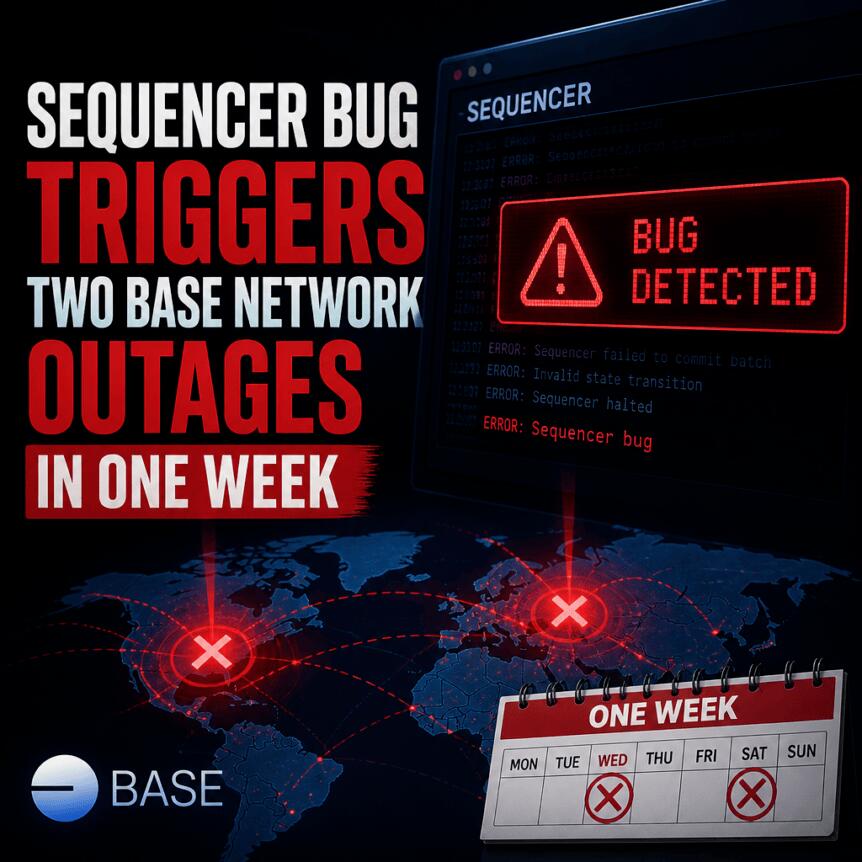
Coinbase’s Base layer-2 network suffered two block production outages last week, and the project’s engineering team has traced both issues to problems in its sequencer infrastructure. According to a Saturday post-mortem, a bug in the block-building process caused “stale journal state” to remain after an execution failure—preventing the network from progressing until operators applied fixes.
Because Base runs with a single sequencer, the incident underscores a structural risk familiar to many rollups: when sequencer logic fails, block ordering and forward progress can stall across the whole chain. Base experienced a first outage on Thursday lasting 116 minutes, followed by a second that lasted 20 minutes, with a complete halt of new layer-2 block production during both events.
Key takeaways
- Base’s engineering team linked the outages to sequencer block-building logic that left “stale journal state” after a transaction validation failure.
- Base operates a single sequencer, so a sequencer-level defect can halt the entire network’s block production.
- The second outage was worsened by a “race condition” after a system reset that prevented sequencers from catching up.
- Engineers say remediation took longer than expected due to infrastructure conditions, not the original bug.
- Planned follow-ups include more protocol “fuzz testing” and “graceful recovery” measures to reduce manual restarts.
What the post-mortem says went wrong
In the post-mortem, the Base engineering team explained that an invalid transaction reached the block builder and failed during execution—consistent with expected behavior. The failure, however, was followed by an unintended state-management outcome: the sequencer did not clear the journal state that records which accounts and storage slots were accessed during processing.
That journal state is critical to correct execution bookkeeping. If it persists when it should be cleared, later stages of block building can be forced into an inconsistent pathway, preventing the sequencer and validator nodes from moving past the problematic block. In this case, that’s what ultimately stopped progress on Base’s chain.
The post-mortem also points out why this is particularly disruptive on Base: the network uses a single sequencer. Unlike architectures that distribute sequencer responsibilities across multiple components, a single sequencer becomes a single point of failure for block production. The team’s analysis places the incident squarely in the sequencer layer, rather than the broader execution environment.
Two outages, one root process—and a second failure mode
Base mainnet halted block production twice over the Thursday–Friday window. The first incident lasted 116 minutes, while the second ran for 20 minutes. During both events, new layer-2 blocks stopped being produced, and the sequencer and validator nodes could not progress past the invalid block until sequencing was restored.
Engineers said they resolved the outages by patching the sequencers to ensure the journal state is properly updated during execution. However, they emphasized that the time required for mitigation exceeded expectations. The team attributed the delay to “infrastructure conditions unrelated to the original bug,” implying the remediation itself was more operationally complex than the underlying code fix.
Beyond the initial state-clearing issue, the post-mortem describes an additional complication after system reset: a “race condition” prevented the sequencers from catching up. This race condition, following the restart, is presented as the driver behind the second outage—meaning the chain did not simply fail once and recover, but experienced a follow-on stall tied to how components re-synchronized.
Why sequencer fragility matters to rollup users
While outages are never ideal, sequencer incidents carry a special weight for users because ordering is foundational to how rollups coordinate transactions. A centralized sequencer decides the order of transactions and packages them into blocks. When its block-building logic or recovery flow breaks, users can see cascading effects: delayed confirmations, stalled finality progress, and operational interruptions that can be difficult for end users to predict.
The Base team’s findings also resonate with a broader pattern across the rollup ecosystem. The post-mortem narrative aligns with earlier reporting that sequencer or sequencer-adjacent failures have triggered outages on other layer-2 networks as well, including Arbitrum, OP Mainnet, and zkSync Era. Those precedents help explain why developers and investors pay close attention to sequencer fault tolerance, restart behavior, and how systems handle invalid transactions under real-world conditions.
For Base specifically, the incident is likely to intensify scrutiny around resiliency and recovery mechanisms, given its “single sequencer” setup. In a centralized sequencer design, even small logical errors can have system-wide consequences if recovery pathways require manual intervention or are sensitive to timing.
What Base plans to do next
After identifying the immediate cause and applying patches, Base’s engineering team outlined improvements intended to reduce the likelihood of recurrence. Two steps are highlighted in the post-mortem: enhanced protocol “fuzz testing” and better “graceful recovery.”
Fuzz testing generally involves bombarding the system with large volumes of randomized inputs—including malformed or unexpected cases—to uncover edge-case failures that may not appear in standard testing. In this context, the goal is to better stress sequencer logic such that state-handling bugs—like improper journal state clearing—are caught earlier.
“Graceful recovery,” as described by the team, aims to ensure validator nodes don’t need manual restarts during future incidents. That matters because recovery time affects user experience and operational risk: the faster and more automatic the system can re-stabilize, the less time the network spends in a stalled state.
Base isn’t new to sequencer incidents
This isn’t Base’s first sequencer-related interruption. The post-mortem notes an earlier episode in September 2024 where block production stopped for 17 minutes, and another incident in August 2025 lasting around half an hour.
The network’s scale also makes these events more consequential. According to L2beat, Base is the second-largest layer-2 network by total value secured, just under $11 billion. With that level of capital and activity, sequencer reliability becomes more than a technical metric—it directly influences the perceived operational maturity of the chain.
As Base continues to grow, the industry will likely watch whether the promised improvements translate into faster, smoother recovery and fewer extended stalls. Even if the sequencer remains centralized, the fault-tolerance of its software pathways—especially around state management and reset behavior—can make a meaningful difference in how often outages cascade.
For now, Base users and builders should focus on how quickly engineering can validate the patched behavior under stress, and whether the planned fuzz testing and recovery upgrades reduce the chance of repeat failures—particularly those tied to invalid transaction handling and post-reset synchronization.



Coinbase CEO Brian Armstrong has responded after Zcash founder Zooko Wilcox criticized the exchange over alleged betting prompts inside the Coinbase app.
Summary
- Coinbase CEO backs user choice but warns high-risk products need careful in-app promotion rules.
- Zooko’s complaint turned Coinbase prediction markets into a debate over vulnerable users and app design.
- Coinbase’s broader product push adds betting-style markets while regulators argue over sports event contracts nationwide.
The exchange chief defended user choice, but said platforms should treat high-risk products with care when serving less experienced users.
Zooko criticizes betting prompts
Zooko said on X that he had spoken with a young and financially vulnerable Coinbase user. He claimed the app had started prompting that user to bet on sports and the price of Bitcoin.
He said the situation made him “ashamed” to be part of the crypto industry. His post quickly turned into a wider debate about how large crypto apps should promote prediction markets and similar products.
The criticism comes as Coinbase expands beyond spot crypto trading. Recent coverage of Coinbase’s pre-IPO perpetual futures described the firm’s push to combine crypto, stocks, prediction markets and futures inside one account.
That wider product strategy gives users more ways to trade. It also raises questions about how trading apps present risk, especially when products look simple inside a mobile interface.
Armstrong says adults should choose
Armstrong replied that he is “pro-freedom” and believes adults should be able to use their money as they choose, as long as they do not harm others. He also said there is no perfect line between investing and gambling.
The Coinbase CEO added that buying early Bitcoin, Zcash or stocks could also be described as gambling by some people. His point was that risk depends on the product, the user and the context.
Still, Armstrong agreed with part of Zooko’s concern. He said it does not feel right to “aggressively promote high-risk products to unsophisticated users.”
He also said there is a difference between making a product available and making it the main focus of an app. That distinction now sits at the center of the debate.
Prediction markets face regulatory pressure
Coinbase’s sports prediction markets page says the products are offered through Coinbase Financial Markets, a registered futures commission merchant. The page also warns that prediction contracts involve high risk and may lead to the loss of the full investment.
Sports event contracts remain a disputed area in the U.S. In related coverage, Kentucky sued Kalshi, Polymarket and partners tied to Coinbase, Robinhood and Webull, saying the products looked like sports wagering under state law.
The CFTC took the opposite view and argued that Kalshi and Polymarket fall under federal oversight as designated contract markets. The dispute now centers on whether sports contracts belong under federal derivatives rules or state gambling laws.
Former CFTC Chair Gary Gensler also weighed in through a court filing, saying sports prediction contracts do not qualify as swaps under U.S. derivatives law. That filing added another layer to the legal debate.
Coinbase weighs access and safety
Armstrong suggested that Coinbase could use clearer disclosures, AI-based financial literacy tools and more personal app settings. He said users could choose whether to enable or disable certain product groups during onboarding.
That approach would let users decide what they see without removing access for everyone. It would also give Coinbase a way to answer concerns about younger or less experienced users seeing betting-style prompts.
The debate shows how fast crypto apps are changing. Platforms no longer offer only coins and tokens. Many now offer event contracts, derivatives and other products that behave more like financial bets.
For Coinbase, the issue is not only whether users can access these markets. The next question is how strongly the app should promote them and what safeguards should appear before users place trades.


SecondFi says it remains on track to recover user assets after a Cardano wallet exploit drained about $2.4 million in ADA.
Summary
- SecondFi says its recovery plan remains on track while engineers test several secure return methods.
- The exploit drained 16 million ADA from 374 addresses through flawed wallet generation software code.
- Users now face fresh scam risks as fake recovery accounts target affected Cardano wallet holders.
The latest update comes as users wait for a wallet check tool and clear steps to move assets safely.
SecondFi says recovery work remains on track
SecondFi said its recovery process is still moving within the estimated two-week timeline. The team said engineers are working on several technical routes at the same time to choose the safest recovery method for affected users.
The project said it plans to release a tool by early next week that will let users check whether their wallet was affected. It also said it will later share a secure process that lets users move assets out of the platform.
SecondFi warned that no recovery step needing user action has started. It told users to leave wallets untouched until official instructions arrive and said it will never ask for private keys, seed phrases, wallet credentials or asset transfers.
The latest notice followed another warning about rising scam activity. SecondFi said fake accounts and impersonators have been targeting users after the exploit. It also told users not to deposit more funds into existing SecondFi wallets until further notice.
Exploit drained 16 million ADA from 374 addresses
The case began after attackers drained about 16 million ADA from 374 addresses between June 21 and June 23. The value stood near $2.4 million at the time of the reported theft.
SecondFi has linked the issue to its own Cardano wallet generation software. As crypto.news reported, the project said the problem was limited to its native Cardano web wallet generation software and that affected services had been paused.
EMURGO CEO Phillip Pon later said the company had completed a forensic review, checked wallet balances and found what he called a “clear recovery solution.” The company expects one week to build the recovery system and another week to test it before returns begin.
SecondFi also moved about 129 million ADA to an independent third-party custodian as an emergency measure. The company said it took that step to keep more assets away from attackers while it reviewed the breach.
Outside report questions wallet code
A report from Tibane Labs gave a more detailed account of the possible technical fault. The firm said the breach came from an unaudited third-party SDK that replaced EMURGO’s audited signing code on June 8.
Security researcher Taylor Monahan also criticized the wallet code, saying SecondFi “rolled their own crypto.” The comment added pressure on the project because Yoroi, now SecondFi, had served Cardano users for years before the rebrand.
The full cause still needs an official technical report from EMURGO or SecondFi. Until then, users only have public updates, outside analysis and the project’s recovery notices to follow.
Users wait for wallet checker and safe exit steps
SecondFi’s next key step is the wallet check mechanism expected by early next week. That tool should help users know whether they are part of the affected group before any recovery action begins.
The project has asked users to use only official channels and support tickets. That warning matters because wallet hacks often attract fake recovery links, phishing forms and accounts asking for seed phrases.
For now, affected users should not sign new transactions or move assets without official guidance. SecondFi says the recovery depends on the current state of compromised wallets, so early action may create more risk.
The case now tests whether SecondFi can return funds safely while explaining what failed. It also adds fresh concern for Cardano users as ADA trades near multi-year lows and wallet security remains under review.


Base has explained why its mainnet stopped producing blocks twice in two days.
Summary
- Base’s latest postmortem shows one sequencer bug caused two mainnet halts within two straight days.
- Funds stayed safe, but transaction queues overflowed as Base stopped producing new L2 blocks temporarily.
- The team plans stronger fuzz tests, load tests, monitoring, and recovery tools after the outage.
The Coinbase-backed Ethereum layer-2 network said both outages came from the same bug in its sequencer block-building logic.
The first outage began on June 25 and lasted about 116 minutes. The second began on June 26 and lasted about 20 minutes. Base said funds stayed safe during both incidents.
Sequencer bug stopped block production
In its official postmortem, Base said an invalid transaction failed during execution, as expected. The issue came after that failure, when stale journal state remained inside the block builder.
That stale state included accounts and storage slots touched by the failed transaction. When a valid transaction came next, the system used the wrong journal state and charged gas incorrectly.
This created a block with an invalid state transition. Other nodes could not accept the block, so the chain stopped producing new L2 blocks.
“The integrity of the chain was not compromised and all funds on Base were safe,” Base said.
The team added that block production resumed safely after mitigation.
Transactions queued during the halt
During the outages, users could not get new transactions included onchain. Base said transactions queued in the mempool while the chain waited for block production to recover.
The transaction pool later grew beyond what it could store. As a result, new eth_sendRawTransaction requests returned errors during the outage window.
The halt also affected sequencer and validator progress. Base said these nodes could not move beyond the invalid block until sequencing returned.
As previously reported, Base first flagged unhealthy block production on June 25 before engineers isolated a consensus problem tied to an invalid block.
Patch fixed stale state issue
Base said it fixed the main bug by applying a sequencer patch. The patch ensures journal state updates properly during execution after a failed transaction.
The team also found a second issue during recovery. Base said mitigation took longer because a race condition in the engine reset feature stopped sequencers from catching up after restart.
That second issue helped explain why the incident returned the next day. Base said the problem affected sequencers, not validator nodes, but it still slowed recovery.
The Base status page showed sequencing resumed on June 25. It also told ecosystem node operators to restart Base nodes if they were still stuck.
Testing and recovery changes planned
Base said it will strengthen protocol fuzz testing and load testing. These methods help teams find strange transaction patterns that may expose hidden bugs.
The team also plans better monitoring and operational checks. It said these changes should help engineers detect similar problems earlier and respond faster.
Base also wants to add graceful recovery to base-consensus. That change would make it easier for validator nodes to continue syncing after similar failures.
The outage came during a busy week for the network. Base also moved forward with its Beryl upgrade, which adds the B20 token standard and cuts the standard Base-to-Ethereum withdrawal period from seven days to five days.
The incident gives developers and users a clearer view of the weak point. Base has now named the bug, released a patch, and listed the tests it plans to improve.


Taiko says it is ready to bring its Ethereum layer-2 network back online after a June 21 security breach.
Summary
- Taiko says the attack path is closed after outside experts reviewed its latest security fixes.
- The restart plan will restore chain activity before reopening the bridge under withdrawal quotas.
- Recent bridge attacks show why projects now face close scrutiny over proof validation controls.
The project says the attack path is now closed, outside security experts have reviewed the fixes, and users will not lose funds.
The update marks a shift from emergency response to staged recovery. Taiko plans to restore the chain, back the bridge assets, reopen network activity and then unpause bridge operations under limits.
Taiko says attack path is closed
Taiko said the June 21 attack path has been closed after a review by independent security experts. The team said it now has a staged plan to restore the chain while protecting user funds and network stability.
The project said the first step will deploy the fixes and confirm the chain’s finalized state. Taiko also said the review must confirm there are no forged checkpoints or attacker claims still reachable.
The update follows an earlier warning after Taiko confirmed a compromise of its chain-state verification mechanism. As previously reported, the project had urged users to withdraw bridge funds and asked exchanges to pause TAIKO deposits while the team contained the issue.
Blockaid had linked the attack to flawed source-signal proof checks. The security firm said crafted message proofs were accepted on Ethereum without matching valid events on Taiko, allowing unauthorized releases from the ERC20 Vault.
Bridge backing comes before full access
Taiko said the second step will replenish the bridge so every L2 asset is backed 1:1. The team said users will be able to verify the backing on-chain.
This step matters because bridge users rely on the claim that assets on the L2 match assets held or locked elsewhere. If backing becomes weak after an exploit, users may lose trust in wrapped or bridged balances.
Taiko said the Security Council will handle key restart actions. The council will also submit the proposal that unpauses the bridge once the chain finalizes properly and the network remains stable.
The team said it will reopen the bridge with conservative withdrawal quotas. Taiko said it does not expect the limits to stop users from moving assets, but it will use them as an extra safety guard.
Network activity returns in stages
After the fixes and bridge backing steps, Taiko plans to bring network functions back online. Transfers, swaps and trading on L2 will return before the bridge fully opens.
That order gives the team time to watch the chain under normal activity before allowing free movement to and from the bridge. It also lowers the risk of a rushed restart after a security breach.
Taiko said, “No user will lose funds.” The team also warned users that there is no claim site and that the project will never contact users first through direct messages.
That warning targets phishing risks that often follow crypto exploits. Fake recovery links, support accounts and claim pages can lead users into signing harmful transactions or exposing wallet details.
Bridge security remains under pressure
The Taiko breach adds to a series of recent bridge security failures. A Verus Protocol bridge exploit drained more than $11.5 million after attackers used forged cross-chain transfer messages.
Axelar also disabled Secret Network bridge routes after a $4.7 million exploit. Aztec Connect later lost about $2.1 million after an old contract suffered a verification mismatch.
A separate report said cross-chain bridge exploits caused $28.6 million in May losses, or about 42% of the monthly total. That figure shows why bridge proof checks and recovery plans now face close review.
Taiko’s next test is execution. The project must restore activity, prove 1:1 backing, reopen withdrawals safely and keep users away from scam recovery channels.

Grayscale’s research head Zach Pandl says he expects Strategy (the publicly listed corporate Bitcoin holder) will likely have to raise the dividend rate on its flagship “digital credit” preferred stock, STRC, to meet near-term cash obligations. In an X post on Saturday, Pandl also argued that a Bitcoin sale—rather than dividend hikes—could help restore confidence in Strategy’s capital structure.
Still, Pandl’s own base case is unfavorable for investors focused on STRC’s stability: he projected a 50-basis-point increase that would add roughly $100 million in annual obligations over the next two years. The dispute comes as STRC continues trading far below its $100 par reference level, with Strategy’s broader financing choices now under heightened scrutiny.
Key takeaways
- Zach Pandl said he hopes Strategy sells at least $3 billion in Bitcoin to cover most cash obligations over the next two years, but he expects a STRC dividend increase instead.
- Pandl projected a 50-basis-point rise in STRC’s dividend rate, which he said would add about $100 million in annual obligations over two years.
- Strategy’s preferred dividend burden is about $1.2 billion per year, and STRC has recently traded materially below its $100 par value.
- An SEC 8-K filing shows Strategy bought 520 BTC for $34.9 million between June 15 and June 21, while cash reserves increased by $300 million to $1.4 billion.
- CryptoQuant argued Strategy should pause new Bitcoin purchases and focus on rebuilding cash reserves; Samson Mow countered that STRC has a “self-repairing mechanism” once the stock falls.
Dividend pressures collide with STRC’s discount
Pandl, head of research at Grayscale, said Strategy may need to adjust its approach to satisfy cash requirements tied to STRC. In his view, selling Bitcoin could cover most obligations over the next two years and potentially strengthen confidence in the company’s capital structure.
However, Pandl said he expects the opposite outcome. He predicted a 50-basis-point increase to STRC’s dividend rate—an adjustment he estimated would add approximately $100 million in annual obligations over two years. Pandl added that this scenario “probably does not help market confidence,” highlighting a key tension: even if the dividend is supported, the market may still interpret the change as further proof that cash needs are intensifying.
Strategy’s preferred dividend obligation is cited as approximately $1.2 billion annually, driven primarily by STRC. STRC is designed to trade near its $100 par value, but it has been sliding for weeks; on Friday it dropped as low as $71.25, a 28.75% discount to par. Strategy’s common stock, MSTR, also declined over the same period, closing Friday at $82.31, down 26.86% for the trading week.
What the SEC filing and cash math suggest
Strategy remains the largest publicly listed corporate Bitcoin holder, with its Bitcoin and financing activities closely watched by markets. According to Strategy’s latest 8-K filing with the US Securities and Exchange Commission, the company acquired 520 Bitcoin for $34.9 million between June 15 and June 21.
In the same filing, Strategy increased its US dollar reserve by $300 million to $1.4 billion. That figure implies roughly 14 months of dividend coverage, according to the reporting referenced in the article—down sharply from an earlier “seven-year cushion” that investors had previously pointed to as providing insulation.
CryptoQuant argued in a report released this week that Strategy should stop or pause further Bitcoin purchases and instead prioritize rebuilding cash reserves. The report also noted that cash reserves are down 38% in 2026, framing the current posture as increasingly stretched.
Strategy, for its part, said on Monday that it plans to continue replenishing its cash reserves to support the credit quality of its “digital credit” securities, suggesting the company views reserve maintenance as central to its financing strategy.
Calls to sell Bitcoin vs. “self-repairing” stock mechanics
CryptoQuant further suggested that Strategy does not have a direct obligation to sell Bitcoin to defend STRC’s market price. The analytics firm pointed to alternatives such as raising the dividend yield—an approach that could attract incremental demand while spreading the cash burden through a higher return on STRC for new buyers.
Samson Mow, a prominent Bitcoin advocate, took the opposite tack in an X post on Monday, arguing that STRC has a built-in “self-repairing mechanism.” His thesis is tied to Strategy’s financing behavior: once STRC trades below its $100 reference price, Strategy would halt new ATM (at-the-market) issuance, limiting the supply of new shares. In parallel, a lower stock price mechanically increases the yield for buyers relative to what they pay, which Mow said could draw in fresh demand and gradually pull the price back toward par.
Taken together, the debate frames a broader question for STRC investors: is the market discount primarily a cash-coverage issue that must be resolved with reserve rebuilding or asset sales, or is it a pricing mechanism that can correct without selling Bitcoin? The answer matters because dividend adjustments and cash actions affect not only yield, but also how markets interpret the credit durability of Strategy’s digital credit structure.
Why this dispute matters for investors right now
With STRC trading well below par and Strategy’s dividend burden running at roughly $1.2 billion per year, investor attention is shifting from long-term Bitcoin accumulation narratives to short- and medium-term capital structure credibility. Pandl’s comment that a dividend hike may not restore market confidence underscores why the market reaction to cash actions could be as important as the actions themselves.
Meanwhile, the SEC filing confirms Strategy is still buying Bitcoin while cash reserves are being replenished—an approach that may reassure some investors focused on the company’s operating plans, but also fuels skepticism from analysts who argue that cash reserve strength is slipping.
Readers should watch what Strategy does next with its reserve strategy and whether STRC’s discount narrows or widens alongside any dividend policy expectations. The key uncertainty is whether the company will lean more heavily on cash rebuilding and yield adjustments—or accelerate Bitcoin sales—before the next coverage milestone tightens further.

It almost feels inevitable at this point. It was hard to imagine 11 months ago, even 6 weeks ago, but the current landscape appears mostly dominated by the bears, and the psychological $1.00 level has come into focus.
Remember how XRP stood at $3.65 last July? Even the subsequent rejections and corrections that managed to drive it below $3.00 and eventually $2.00 seemed bad enough, but a breakdown below $1.00 was almost out of the question. However, such a probability is highly anticipated now, with BTC seemingly losing the $60,000 support.
XRP dumped to $1.01 on Thursday when the entire market crashed. The question is, and we asked ChatGPT about it, how low can the token go if that coveted support breaks?
Might Not Stop Soon
The popular AI solution warned that if $1.00 falls cleanly by the end of June or in July, it “may not stop at $0.99.” Instead, a decisively daily close below the round-numbered support will likely turn that level into resistance. If that’s the case, then the first downside target sits between $0.96 and $0.94. Although this could mark the “first wave of damage,” it won’t necessarily mean it’s the bottom.
The actual danger, though, comes if XRP loses $0.94. ChatGPT warned that the asset’s path to $0.90 will be wide open. If panic accelerates, the next precise downside zones are $0.87, $0.82, and $0.78, which align with some popular analysts’ views on the token’s potential bottom.
The worst-case scenario for XRP in July would be a crash to $0.65, ChatGPT said.
“That level matters because it sits far enough below obvious support to flush late buyers, liquidate leveraged longs, and reset sentiment completely. It would represent a 35% collapse from $1.00 and a nearly 40% drop from the current $1.05 area.”
On the Contrary
OpenAI’s solution outlined a different scenario in which the XRP bulls defend the $1.00 support and the broader market’s environment improves, or at least doesn’t deteriorate further. Ripple’s token would need to reclaim the first major resistance levels at $1.08 and $1.10 before it can receive some breathing room, as such a rebound would invalidate the bearish thesis of a plunge below $1.00.
However, until XRP indeed goes beyond $1.10 and closes above it, every bounce will appear less like recovery and “more like another chance for sellers to reload” and push it south to under $1.00 territory.
The post How Low Can XRP Go in July if $1 Support Falls? ChatGPT’s Worrisome Predictions appeared first on CryptoPotato.


Peter Schiff warned that a MicroStrategy collapse would damage Bitcoin far more than the FTX fallout.
The veteran gold advocate argued that Michael Saylor could end up remembered as a bigger villain than Sam Bankman-Fried. Schiff framed Strategy as a far more consequential test case than FTX.
Strategy’s Fall Could Dwarf the FTX Collapse
Schiff made the remarks on X. He said Strategy’s (formerly MicroStrategy) collapse portends consequences for Bitcoin far worse than those of FTX’s fall.
He added that anyone who defended Saylor publicly would have “a lot of explaining to do.”
Still, the comparison carries weight. FTX’s 2022 collapse wiped billions in customer funds and triggered a broad market selloff. Strategy’s exposure is larger and more direct.
The company holds more than 843,000 Bitcoin (BTC), roughly 76% of all BTC on public company balance sheets.
Strategy has faced serious pressure in 2026. Bitcoin price action has been unkind, with BTC trading well off its prior highs. The firm has accumulated roughly $14 billion in unrealized losses.
Strategy’s legal pressure has also intensified. The Rosen Law Firm is now probing whether executives made materially misleading statements across five linked securities.
Saylor Defends the Model
Additionally, Strategy’s preferred stock coverage window has shrunk from over seven years to roughly 14 months. Some analysts now question whether its debt-heavy model can survive a prolonged downturn.
Saylor has pushed back against such concerns. He has argued that liquidation risk does not appear until Bitcoin drops to $8,000. Saylor has pledged to refinance debt rather than sell BTC. Still, that position has not calmed critics who point to narrowing financial buffers.
Other prominent voices have echoed similar doubts. Billionaire Jeremy Grantham has used sharp language to describe Bitcoin as a speculative bubble with no fundamental anchor.
Schiff himself had predicted a death spiral in Strategy’s preferred stock structure months before these latest warnings.
Schiff Dismisses Bitcoin’s Proof-of-Work Argument
Schiff also challenged a claim on CNBC’s Squawk Box that Bitcoin derives value from proof of work. He rejected it as a logical fallacy, arguing that effort alone does not generate value.
He contrasted Bitcoin mining with gold mining. In his view, Bitcoin mining produces nothing tangible. Gold mining, by contrast, yields a physical commodity with direct industrial and commercial applications.
The post MicroStrategy’s Saylor Could Become a Bigger Villain Than FTX’s Sam Bankman-Fried? appeared first on BeInCrypto.
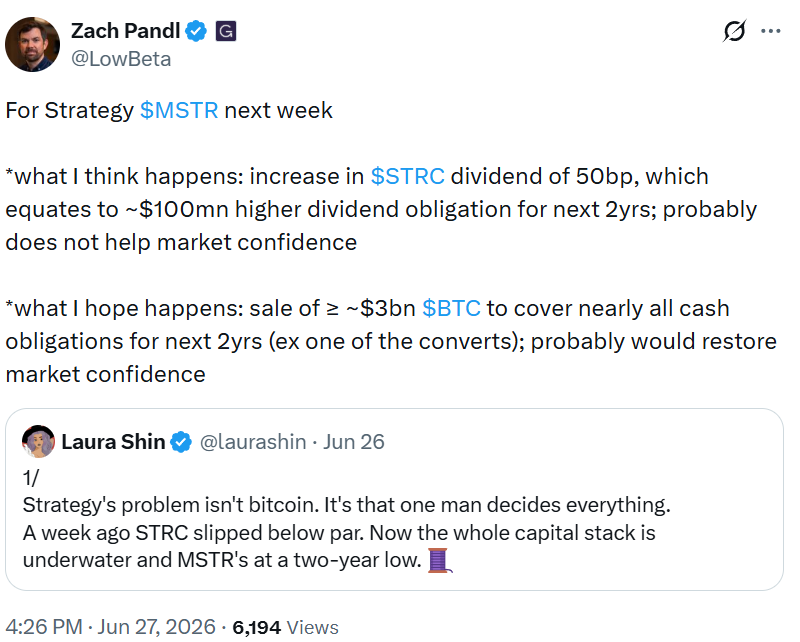
Zach Pandl, head of research at Grayscale, said he hopes Strategy will sell at least $3 billion in Bitcoin to cover most of the company’s cash obligations for the next two years.
In a Saturday X post, Pandl argued that the move may restore market confidence in the company’s capital structure.
Contrary to his hopes, Pandl said he expects a 50-basis-point increase to the dividend rate on Strategy’s preferred stock, STRC, adding roughly $100 million in annual obligations over two years. Pandl added that this scenario “probably does not help market confidence.”
Strategy faces an annual preferred dividend obligation of approximately $1.2 billion, driven primarily by STRC.
STRC is Strategy’s flagship “digital credit” preferred stock designed to trade near its $100 par value, but has been sliding for weeks. On Friday, it fell to as low as $71.25, a 28.75% discount to par. Strategy’s common stock MSTR fared little better and closed Friday at $82.31, down 26.86% throughout the trading week.
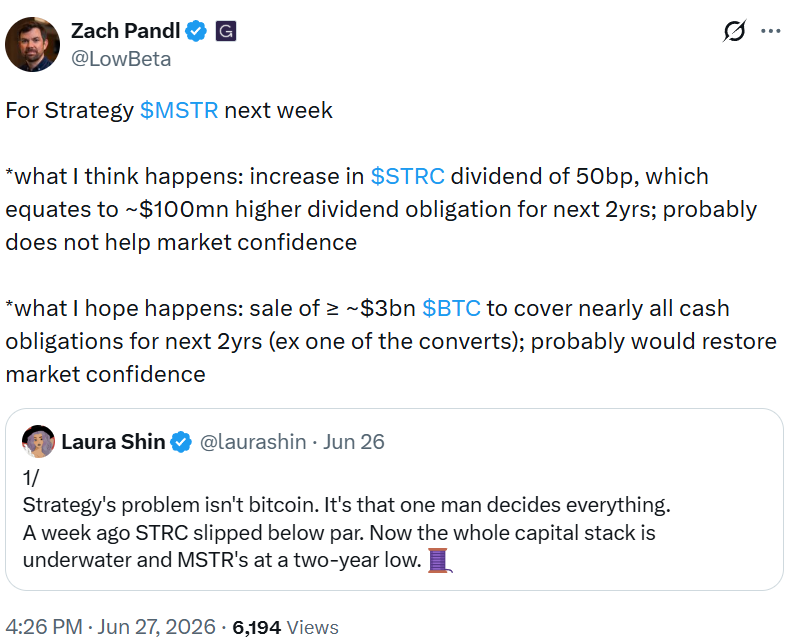
Pandl said he expects Strategy to raise STRC’s dividend rate but hopes the company sells Bitcoin instead. Source: Zach Pandl
Strategy’s cash reserve under pressure
Strategy is the world’s largest publicly-listed corporate Bitcoin holder, placing its 847,363 BTC stash and financing decisions under the industry’s microscope.
According to Strategy’s latest 8-K filing with the US Securities and Exchange Commission, it acquired 520 Bitcoin for $34.9 million between June 15 and June 21.
Blockchain analytics company CryptoQuant argued in a Tuesday report that Strategy should pause Bitcoin purchases and focus on replenishing its cash reserve, which is down 38% in 2026.
Related: Bitcoin doesn’t need Ethereum-style yield, says Strategy’s Michael Saylor
The 8-K filing also revealed that Strategy increased its US dollar reserve by $300 million to $1.4 billion. This leaves the company with roughly 14 months of dividend coverage, down sharply from what was once a seven-year cushion.
Strategy said on Monday that it plans to continue replenishing its cash reserves to support the credit quality of its “digital credit” securities.
Alternatives to a Bitcoin sale
CryptoQuant added that the company has no obligation to sell Bitcoin to support STRC’s price, because it can deploy other methods to defend its stock, such as raising the current 11.5% dividend yield.
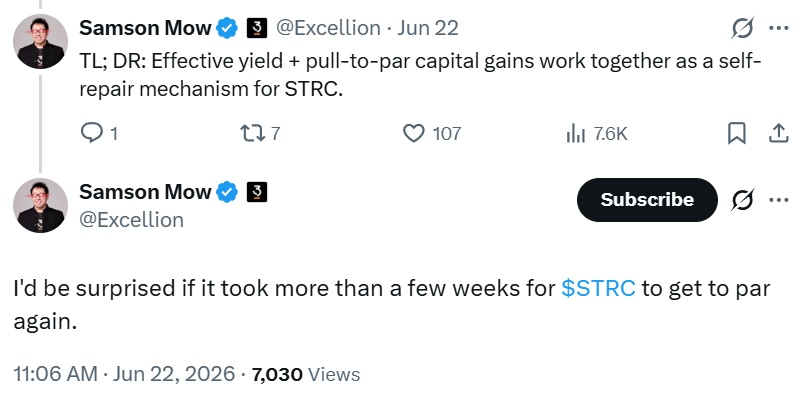
Bitcoin advocate Samson Mow argued in a Monday X post that STRC has a built-in “self-repairing mechanism.” Once the stock falls below its $100 reference price, Strategy halts new ATM issuance, cutting off the supply of fresh shares.
At the same time, a lower price mechanically boosts the yield for new buyers relative to what they paid, which Mow said should draw in fresh demand and pull the price back toward par over time.
Source: Samson Mow
Magazine: AI is banking the unbanked in Africa… faster than crypto
Key Takeaways
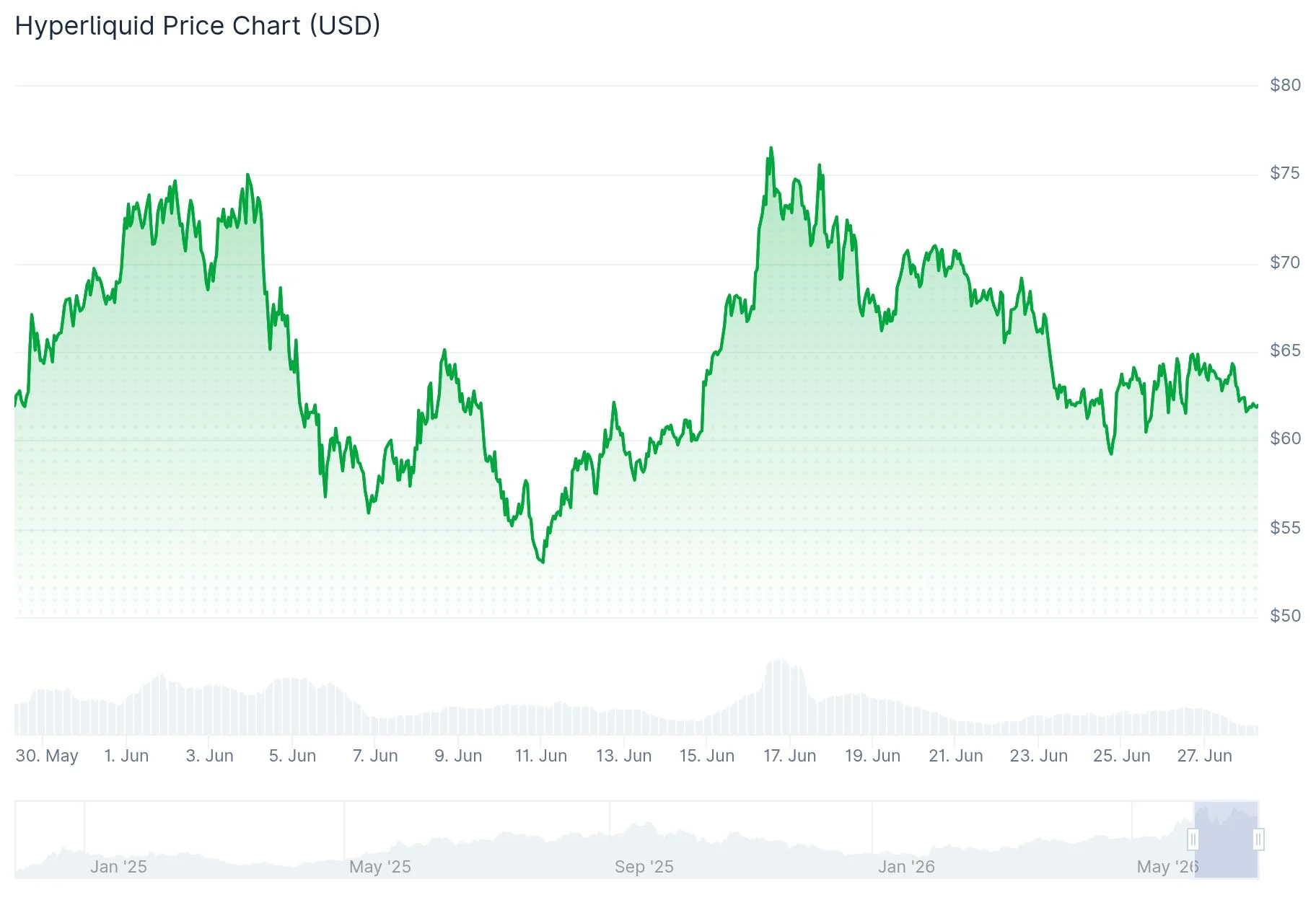
- HYPE is currently valued near $62 with a multi-billion dollar market capitalization
- Baseline scenario projects $100–$160, valuing HYPE as a decentralized exchange token
- Optimistic scenario envisions $250–$400 if Hyperliquid dominates on-chain derivatives trading
- Pessimistic scenario suggests $20–$35 amid competitive pressures, security incidents, and token dilution
- Weighted probability analysis points to approximately $145 by the year 2031
Hyperliquid stands out in a crowded cryptocurrency landscape by delivering tangible results. Unlike countless projects built purely on speculation, Hyperliquid has secured more than 40% of the decentralized perpetual futures market by mid-2026. This represents genuine market dominance backed by data.
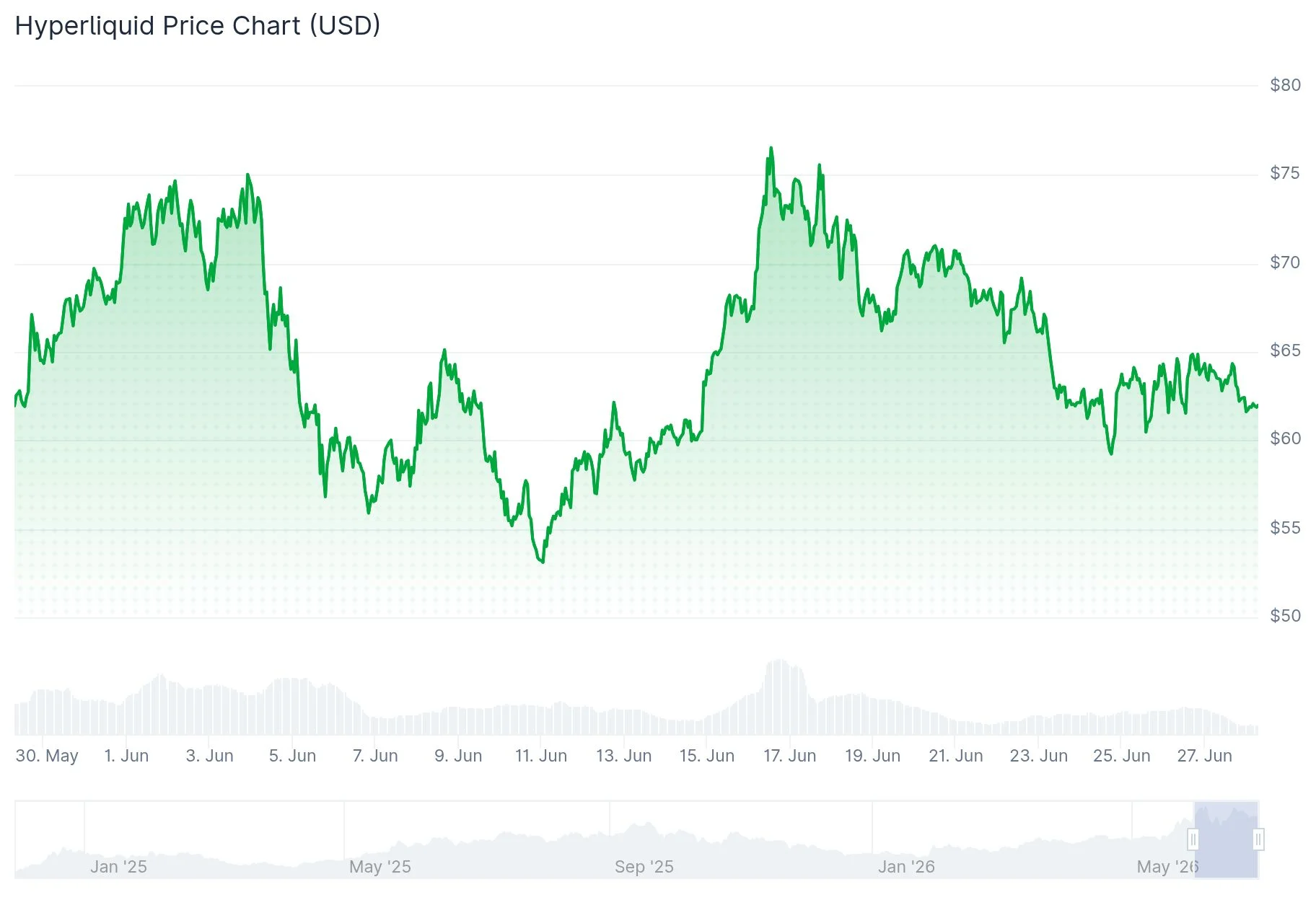
Currently trading near $62, HYPE’s valuation fundamentally depends on transaction volume, fee generation, and platform liquidity rather than empty promises.
The protocol handled transaction volumes in the hundreds of billions throughout the first quarter of 2026, with daily figures consistently reaching into the billions. These metrics mirror those of established centralized exchanges.
This performance explains why market observers increasingly compare HYPE’s valuation framework to traditional exchange tokens rather than standard Layer 1 blockchain assets.
Baseline Projection: $100 to $160 Range
The baseline forecast assumes Hyperliquid maintains its leadership position within decentralized perpetuals throughout the coming half-decade.
This scenario requires continued migration of traders toward on-chain platforms, sustained growth in cryptocurrency derivatives markets, and Hyperliquid’s ability to defend its market share. A valuation range of $100 to $160 would translate to a fully diluted market cap between $100 billion and $160 billion, calculated against the maximum token supply of 1 billion HYPE.
While ambitious, these valuations become reasonable if Hyperliquid evolves into essential infrastructure for cryptocurrency trading.
Reuters coverage indicates that cryptocurrency exchanges are positioning themselves for expanded U.S. perpetual futures offerings as regulatory frameworks crystallize. This regulatory shift could significantly expand Hyperliquid’s addressable market.
Optimistic and Pessimistic Scenarios
The optimistic projection places HYPE between $250 and $400. Achieving this requires Hyperliquid to dominate decentralized derivatives, successfully launch spot trading markets, attract significant institutional capital, and transform into a comprehensive on-chain financial infrastructure.
This scenario demands multiple favorable outcomes aligning simultaneously.
The pessimistic forecast settles between $20 and $35. Trading platform markets are intensely competitive. Centralized exchanges, dYdX, GMX, Solana ecosystem protocols, and emerging perpetual DEXs all compete for identical liquidity pools.
Security vulnerabilities represent substantial threats. The Financial Times documented a $280 million security breach at Drift, a rival decentralized derivatives platform. Such incidents can undermine confidence across the entire sector.
Token supply expansion creates additional downward pressure. The current circulating supply represents only a fraction of the 1 billion maximum HYPE tokens. Future unlock events occurring during periods of weak demand could significantly depress prices.
The probability-adjusted five-year projection estimates approximately $145 by 2031.
Hyperliquid commands over 40% of decentralized perpetual futures volume as of mid-2026, with daily trading consistently reaching billions of dollars.

Key Takeaways
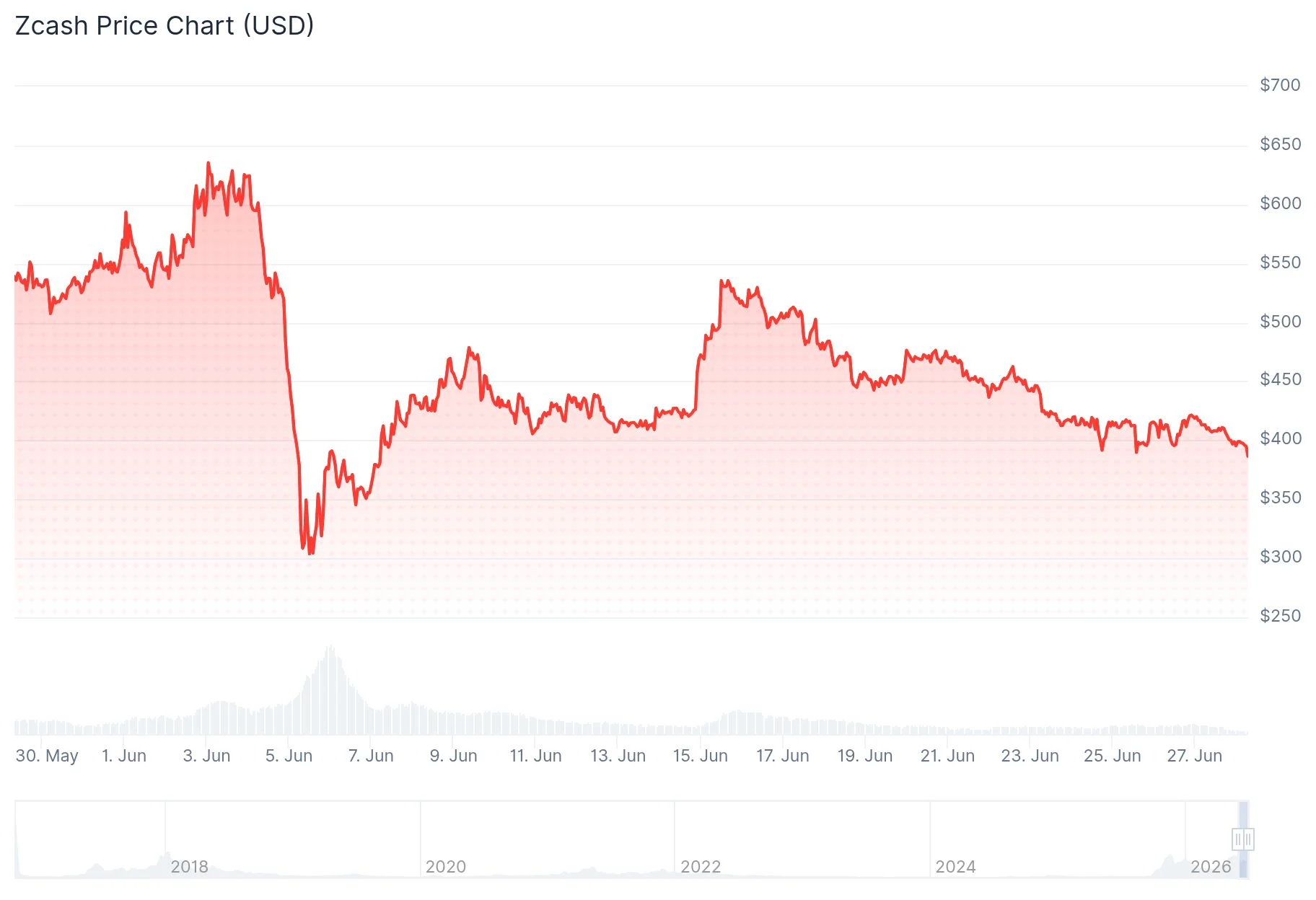
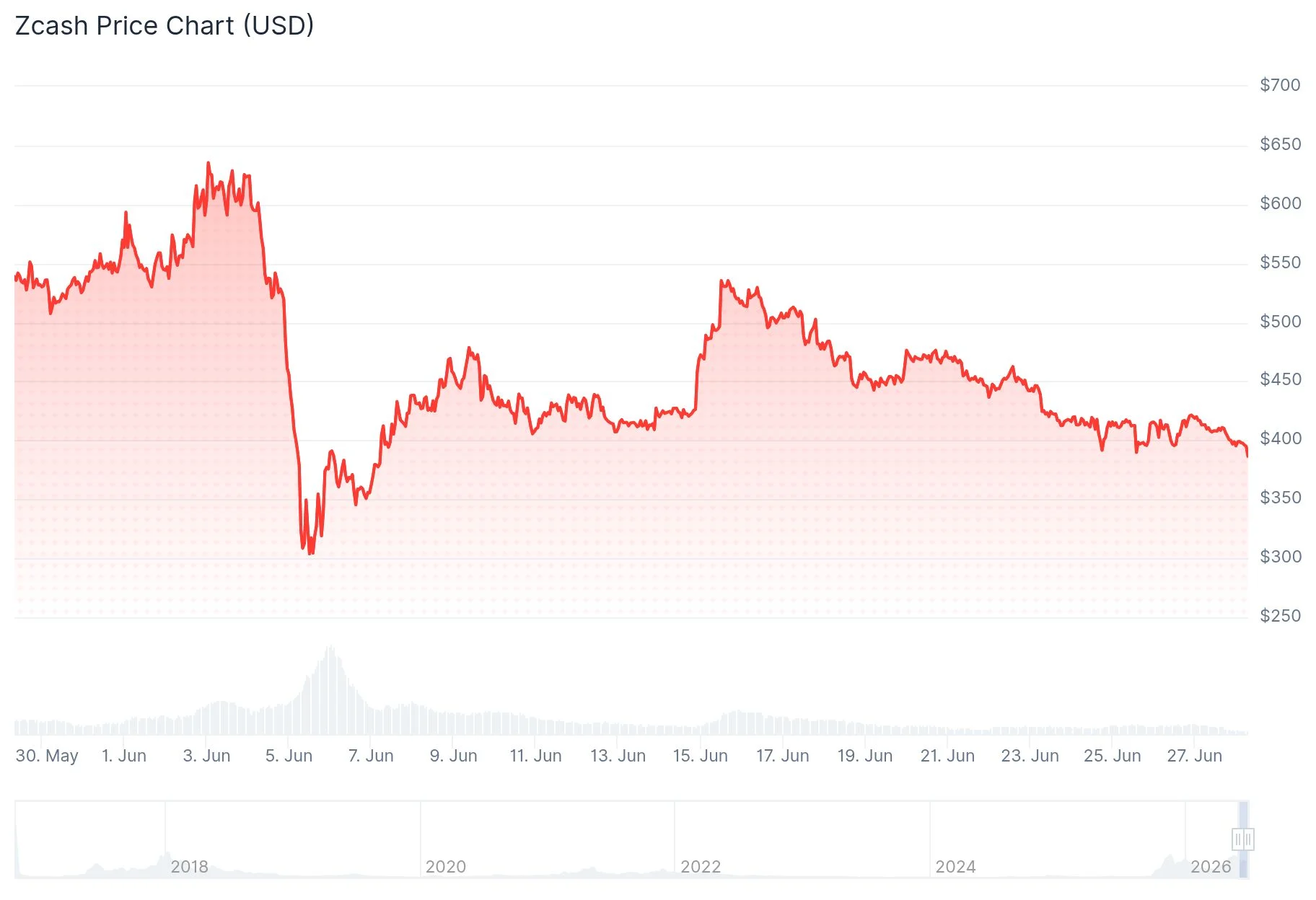
- ZEC is currently valued at approximately $388 with a total market capitalization approaching $6.7 billion
- The moderate scenario projects ZEC reaching $600–$1,000 by the end of 2031
- An optimistic scenario envisions $2,000–$3,500 should privacy features gain mainstream adoption
- A pessimistic outlook anticipates $120–$220 amid intensifying regulatory challenges
- Weighted average projection indicates approximately $850 as the target price for 2031
Introduced to the cryptocurrency ecosystem in 2016, Zcash emerged as a privacy-centric counterpart to Bitcoin. While Bitcoin operates with complete transaction transparency, Zcash enables users to conduct confidential transfers utilizing zero-knowledge cryptographic protocols.
This positions ZEC as a unique investment proposition. Rather than challenging platforms like Ethereum or Solana, it represents a strategic bet on whether financial confidentiality will resonate with cryptocurrency participants and corporate entities.
Presently trading at roughly $388, ZEC maintains a market valuation close to $6.7 billion, with approximately 16.7 million tokens currently circulating. Mirroring Bitcoin’s economic model, Zcash incorporates a maximum supply ceiling of 21 million coins alongside a halving mechanism that reduces mining rewards approximately every four years.
Industry observers from CoinDesk indicated that privacy-oriented cryptocurrencies such as Zcash and Monero were projected to maintain investor interest throughout 2026, despite ongoing challenges related to exchange removals and financial institution restrictions.
Moderate Projection: $600–$1,000 Range
The middle-ground forecast for ZEC through 2031 anticipates valuations spanning $600 to $1,000. This translates to a market capitalization between approximately $12 billion and $20 billion.
This pathway doesn’t demand that Zcash ascends into the top tier of cryptocurrency assets. It simply requires maintaining its status as the premier privacy-focused digital asset offering regulatory-compliant optional transparency features.
Three fundamental drivers support this trajectory: expanding privacy consciousness among users, sustained availability on major trading platforms, and robust technical foundations. Zcash’s Bitcoin-inspired monetary policy and proof-of-work consensus mechanism reinforce this projection.
Optimistic Projection: $2,000–$3,500 Range
Should privacy emerge as a central theme within cryptocurrency markets, ZEC could potentially climb to $2,000–$3,500. Such appreciation would elevate its market capitalization to the $40 billion–$70 billion territory.
Realizing this scenario requires widespread implementation of confidential transaction features, significant improvements in user interface design, and revitalized institutional participation in privacy-preserving technologies.
Additionally, Zcash would need market recognition as a “privacy-enhanced Bitcoin” rather than merely another aging alternative cryptocurrency.
Pessimistic Projection: $120–$220 Range
The downside scenario centers on regulatory enforcement. Privacy-focused cryptocurrencies currently face removal pressures across numerous jurisdictions, representing tangible rather than theoretical risks.
Should major exchanges impose restrictions or completely eliminate ZEC trading pairs, resulting in severely diminished liquidity, valuations could contract to $120–$220 by 2031.
Maintaining access to reputable trading venues constitutes one of the most significant threats to Zcash’s future market value.
Calculating probability-weighted outcomes across these three distinct scenarios yields an approximate target price of $850 for 2031.

Nearly 1 million bottles of heart and kidney medication recalled: FDA

2026 World Cup parlay, best bets: Top picks for South Africa-Canada Round of 32 knockout match on Sunday

Europe’s truck charging problem may disappear as Octopus and CATL plan a giant battery swapping network


-
 Sports5 days ago
Two goals and an assist by sheer aura: Cristiano Ronaldo just entered the World Cup chat
-

 Tech6 days ago
Microsoft accidentally kills epic Outlook email threads
-

 Fashion2 days ago
Weekend Open Thread: Staud – Corporette.com
-

 Politics2 days ago
The House | Manchesterism won’t survive the painful trade-offs unless it gets citizens on board
-

 Politics2 days ago
Potential 2028er World Cup attendee leaderboard
-

 Business2 days ago
Asia stock markets slide as tech shares slump
-

 Tech3 days ago
A Look At A Gaggle Of Transputer Boards
-
Crypto World4 days ago
Bitcoin (BTC) Dips Below $62K, Ethereum (ETH) Plunges 6% Daily: Market Watch
-
 Crypto World3 days ago
Dell (DELL) Shares Tumble Over 5% Following Analyst Downgrade to Hold
-

 Crypto World4 days ago
Securitize Wraps Roubini's SEC-Registered ETF as Dubai VARA Digital Security
-
Business4 days ago
Entergy settles forward sale agreements, raises $672 million in cash proceeds
-

 Crypto World1 day ago
Kraken's xStocks Opens Bending Spoons IPO Registration to EEA Retail
-

 Sports2 days ago
FIH Pro League: India defeat Pakistan 7-1, register biggest win of campaign | Other Sports News
-

 Crypto World2 days ago
RTX holders must register wallets before token distribution begins
-
 Crypto World2 days ago
Hyperliquid Named on Singapore MAS Investor Alert Register
-

 Sports3 days ago
India vs Bangladesh LIVE Score, Women’s T20 World Cup: Bangladesh Opt To Bat; India Enter ‘Do-Or-Die’ Stage As Semi-Final Race Heats Up
-
 Tech7 days ago
Signal’s Meredith Whittaker says AI chatbots ‘are not your friends’ and calls Copilot agents a backdoor
-
Crypto World2 days ago
The DATA Foundation Launches to Tackle AI’s Multi-Billion Dollar Training Data Bottleneck
-

 Crypto World3 days ago
Strategy (MSTR) has a 10-month cash runway for dividends, but retail investors are losing faith
-
 Crypto World2 days ago
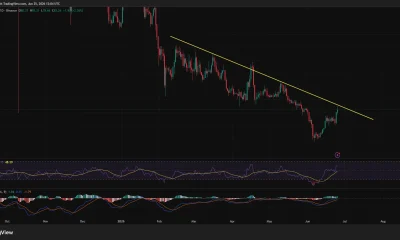
AAVE price tests 9-month trendline after 17% rebound as breakout hopes build
You must be logged in to post a comment Login