


Connect with us

Business

Ford overtaken by BYD as China reshapes global car industry

Published

on

Ford overtaken by BYD as China reshapes global car industry

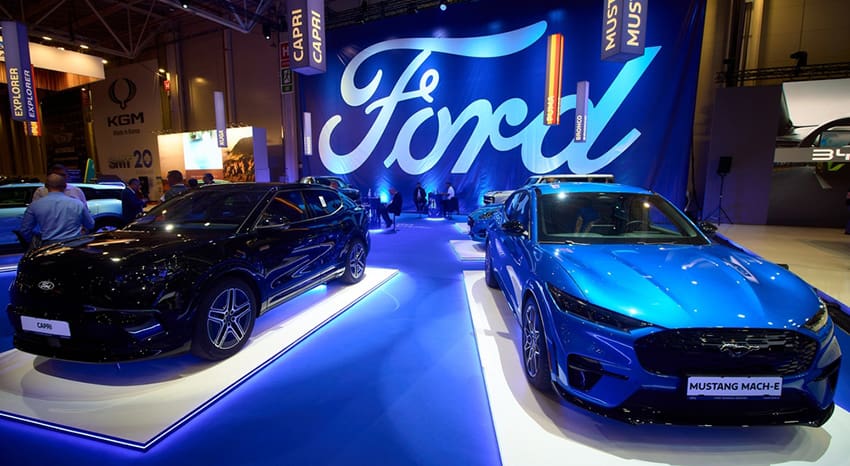
Ford Motor Company has been overtaken in global vehicle sales for the first time by Chinese electric car giant BYD, underscoring the dramatic shift under way in the global automotive industry.

Ford’s sales slipped 2 per cent last year to just under 4.4 million vehicles, while BYD sold 4.6 million, climbing to sixth place in the global rankings of car manufacturers.

The milestone is symbolic for an industry shaped by Ford’s legacy. Founder Henry Ford revolutionised mass car ownership with the Model T in the early 20th century. More than a century later, the company that defined industrial car production is being outpaced by a Chinese electric vehicle specialist.

BYD’s growth has been driven by its expanding portfolio of affordable, high-tech electric and plug-in hybrid vehicles. Among its best sellers are the SEAL U DM-i and the Dolphin electric city car, priced at under £19,000 in some markets.

In contrast, Ford has scaled back lower-cost small cars in Europe, phasing out the Ford Fiesta during the pandemic and pivoting towards higher-margin SUVs and crossovers. Its entry-level Puma now starts at more than £26,000.

Advertisement

Ford’s sales in the US rose, but the company has lost ground in Europe and China — markets where electric competition is intensifying.

Felipe Munoz, an independent automotive analyst, said the trend was widely anticipated. “BYD is still in expansion mode. Even if sales in China slow, it’s relying on exports to grow,” he said.

“Ford, meanwhile, remains heavily dependent on the US, where growth is modest, and has only a minor presence in China. Europe is also stagnant. This divergence is likely to continue.”

Western carmakers, including Ford, have struggled to navigate the electric vehicle transition. In December, Ford took a $19.5bn (£14bn) charge to scale back EV production, citing weaker-than-expected demand.

Advertisement

Munoz said Ford’s electrification strategy was complicated by its exposure to North America. “North American consumers are not enthusiastic about electric cars, and government support has been inconsistent,” he said.

Ford has attempted to regain a foothold in China through a joint venture with Jiangling Motors, launching an all-electric version of its Bronco SUV. However, its Chinese market share has fallen from nearly 5 per cent a decade ago to less than 2 per cent today.

“Let’s see how the Bronco Electric performs,” Munoz said. “But so far, nothing significant has changed.”

Despite global challenges, Ford remains Britain’s third-largest car brand. According to the Society of Motor Manufacturers and Traders, it sold about 119,000 vehicles in the UK in 2025, representing a 5.9 per cent market share, an 8 per cent increase on the previous year.

Advertisement

BYD, while still smaller in the UK, is growing rapidly. It sold around 51,400 cars last year, achieving a 2.5 per cent market share, but with sales rising almost sixfold.

At the top of the global league table, Toyota retained its crown for the sixth consecutive year with sales of 11.3 million vehicles.

For Ford and other Western manufacturers, BYD’s ascent signals more than just a ranking shift, it reflects a deeper rebalancing of power in an industry increasingly defined by electrification, cost efficiency and Chinese technological ambition.


Jamie Young

Jamie Young

Jamie is Senior Reporter at Business Matters, bringing over a decade of experience in UK SME business reporting.
Jamie holds a degree in Business Administration and regularly participates in industry conferences and workshops.

When not reporting on the latest business developments, Jamie is passionate about mentoring up-and-coming journalists and entrepreneurs to inspire the next generation of business leaders.

Advertisement

Continue Reading
Click to comment

Leave a Reply

Your email address will not be published. Required fields are marked *

Business

Almost 800 Lufthansa flights cancelled as pilots, cabin crew walk out

Published

on

Almost 800 Lufthansa flights cancelled as pilots, cabin crew walk out


Almost 800 Lufthansa flights cancelled as pilots, cabin crew walk out

Continue Reading

Business

BMW’s Swindon MINI factory strikes partnership with US logistics giant GXO

Published

on

Business Live

The plant produces key body components and sub-assemblies such as doors and bonnets

GXO is the new logistics manager at Swindon BMW

GXO is the new logistics manager at Swindon BMW(Image: Saul McSween)

Swindon’s MINI factory has announced a new partnership with global logistics giant GXO. BMW Group has appointed the US-headquartered company to manage operations at the site on Bridge End Road. The Wiltshire plant produces parts and panels for cars that are then assembled at its group facility in Oxford and at other international facilities within its network.

Under the new partnership, GXO will lead the warehouse operations of car parts in Swindon, making use of BMW Group’s supply chain.

“We’re excited to begin this new chapter with BMW Group at their facility in Swindon,” said Martin Cooper, managing director for technology and consumer goods at GXO UK&I. “We’ve seen great success applying smart logistics solutions across a range of industries, and we look forward to driving efficiencies, strengthening resilience and building a future-proof platform for growth for BMW Group.”

It is understood GXO will look to roll out “smarter processes” as well as upgrade technology and optimise the plant layout in a bid to boost efficiency. The idea, the company said, is to help the Swindon site to meet evolving production needs of the Oxfordshire factory.

Advertisement

The Swindon site, which employs 500 staff and spans 425,000 sq m, has been a cornerstone of UK automotive manufacturing since 1955.

It plays a vital role in the global production network for cars, manufacturing key body components and sub-assemblies such as doors, bonnets, tailgates and fenders for MINI vehicles, including the MINI Cooper 3 and 5 door hatch and the MINI convertible.

In 2024, GXO completed a £762m takeover of nearby Chippenham-based logistics group Wincanton. Last year, the Competition and Markets Authority (CMA) announced an investigation into the acquisition. According, to the UK government website, that investigation is still ongoing.

Malcolm Wilson, chief executive officer of GXO, previously said: “The combination of GXO and Wincanton will enhance GXO’s offering for customers across the UK and Ireland and bring presence in strategic verticals that will serve as a springboard for growth.”

Advertisement
Continue Reading

Business

ICON stock plummets after accounting investigation delays earnings

Published

on


ICON stock plummets after accounting investigation delays earnings

Continue Reading

Business

Howmet earnings beat by $0.09, revenue topped estimates

Published

on


Howmet earnings beat by $0.09, revenue topped estimates

Continue Reading

Business

Tangible raises $4.3m seed round to unlock scalable debt finance for hardtech firms

Published

on

growth of AI

Tangible, a fintech platform focused on helping hardtech companies access and manage structured debt financing, has raised a $4.3 million seed round as it looks to modernise how capital-intensive businesses fund growth.

The round was led by Pale Blue Dot, with participation from MMC, Future Positive Capital, Unruly, SDAC, Prototype Capital and Aperture. The funding will be used to scale Tangible’s team and deepen automation across its platform.

Hardtech companies, spanning sectors such as energy, transport, advanced manufacturing and compute infrastructure, are increasingly seen as central to tackling some of the biggest macroeconomic challenges of the coming decades. BlackRock estimates that $68 trillion of new infrastructure investment will be required by 2040 to meet global demand.

Yet despite renewed interest in physical innovation, financing remains a major bottleneck. Traditional venture capital models often struggle to support asset-heavy businesses, which typically require large amounts of upfront capital. As a result, many early-stage hardtech companies rely on expensive equity funding to finance capital expenditure, increasing dilution and, in some cases, threatening long-term viability.

At the same time, private credit, now a $3.5 trillion market, is increasingly well positioned to meet this demand. However, deploying debt capital efficiently into hardtech remains complex and resource-intensive, particularly for lenders reliant on bespoke documentation and manual processes.

Advertisement

Tangible was founded to address this gap. Its AI-powered platform standardises the data, documentation and ongoing reporting required by lenders, reducing underwriting time and costs while enabling founders to run structured debt facilities without building in-house finance teams.

Hampus Jakobson, general partner at Pale Blue Dot, said: “Most of the innovations shaping the future, from vehicles and data centres to robotics, are fundamentally physical, and they shouldn’t be financed by venture equity alone. Tangible opens up new financing options for hardtech businesses, and we strongly believe in the team’s vision to bridge this structural gap.”

William Godfrey, co-founder and chief executive of Tangible, said demand for physical assets was accelerating as governments and businesses push reindustrialisation, energy security and technological sovereignty. “As hardtech companies scale at speed, investors need modern infrastructure to deploy capital just as fast,” he said.

“Legacy processes based on bespoke documentation and manual coordination no longer cut it. Tangible provides the financial infrastructure that makes hardtech easier to diligence for institutional credit, allowing companies to raise asset-backed financing faster and with less friction.”

Advertisement

The company said the new funding would support the build-out of automation across collaboration, diligence and reporting workflows, helping to reduce transaction costs and shorten time-to-close for both founders and lenders.

For hardtech firms facing mounting capital pressures, Tangible is positioning debt as a viable alternative to either heavy dilution, or failure.


Jamie Young

Jamie Young

Jamie is Senior Reporter at Business Matters, bringing over a decade of experience in UK SME business reporting.
Jamie holds a degree in Business Administration and regularly participates in industry conferences and workshops.

When not reporting on the latest business developments, Jamie is passionate about mentoring up-and-coming journalists and entrepreneurs to inspire the next generation of business leaders.

Advertisement

Continue Reading

Business

Barbeques Galore Enters Voluntary Administration

Published

on

Barbeques Galore
Barbeques Galore
Barbeques Galore / Facebook

Barbeques Galore has entered voluntary administration.

This new development comes after the company failed to find a new buyer.

Details of Barbeques Galore’s Voluntary Administration

According to a report by ABC News, Grant Thornton has been brought in as voluntary administration, while receivers from Ankura have already been appointed.

Liquidity issues have also been cited as a reason for the company’s collapse.

CEO David White said that “Management was excited to turn around the business and move to the next evolution of the brand.”

Advertisement

“Considerable progress has been made in recent months, leading to significant improvements across the business and operations; however, ongoing liquidity challenges have led to the necessary restructuring of the business,” he explained.

Per a report by news.com.au, both the administrator and receivers believe that the company needs to be sold.

What Does This Mean for Employees, Franchises, and Customers?

As of writing, Barbeques Galore has 68 company-owned stores and 27 franchise stores across the country.

Franchises are not expected to be affected by the appointments and restructuring. However, the future of 500 jobs remains unclear.

Advertisement

It has been assured, however, that in-store and online orders that have already been paid for or partially paid for will be honoured.

For those who have purchased gift cards and still have not used them, these can only be used if the buyer spends twice the amount of the card’s value in cash.

Continue Reading

Business

Analysts divided over BHEL’s OFS for retail investors

Published

on

Analysts divided over BHEL's OFS for retail investors
Mumbai: Analysts are mixed about recommending retail investors to participate in BHEL‘s ₹4,422 crore offer for sale (OFS), with views split between caution over valuation and orderbook optimism. Brokerages broadly agree that investors with a medium to long term horizon may find merit in bidding in the share sale. Short term investors, however, are unlikely to see any immediate upside, with the OFS itself not expected to serve as a near term rerating catalyst.

The retail tranche of the two day share sale will open for bids on Thursday after the non retail portion was subscribed 2.3 times on Wednesday, the first day of the issue. Bids were placed for more than 22 crore shares against the 9.4 crore on the block, prompting the government to activate the green shoe option.

The stock fell 5.6% to ₹260 on Wednesday after the floor price was set at ₹254 per share compared with its Tuesday closing price of ₹276, implying an approximate 8% discount.

JM Financial said the floor price in the OFS valued the stock attractively, and maintained a buy rating with a target price of ₹355 per share, valuing the company at 30 times FY28 estimated earnings.

Advertisement

The government is offloading up to 5% of its stake in BHEL via the two day OFS. Post the stake sale, the government will hold 58.17% in the company.


“The OFS appears more of a divestment exercise than a fundamental rerating trigger,” said Divyam Mour, research analyst at Samco Securities. “While the offer appears optically attractive, valuation and execution realities warrant careful consideration. We recommend only staggered participation for long term investors.”
BHEL’s order book has swelled from ₹89,813 crore in FY21 to ₹2,19,600 crore in H1FY26, lifting its book to bill ratio to 7.2 times amid a revival in thermal and infrastructure capex, he said. “At a trailing P/E (Price to Earnings) ratio of 108 times, the stock is pricing in meaningful operating leverage, sustained order inflows, and structural improvement in profitability,” said Mour. BHEL shares have risen over 30% in the past year, as against the 17% advance in the BSE Capital Goods Index.

Vinod Nair, head of research at Geojit Investments, said the OFS is attractive for retail investors on a long term basis. “The stock is currently trading at a 1-year forward P/S (Price to Sales) of 2.2 times, near its three-year average. valuations remain compelling. We maintain a positive long-term stance on the stock,” he said.

Continue Reading

Business

Green light for $70m lifestyle resort in Two Rocks

Published

on

Green light for $70m lifestyle resort in Two Rocks

A development assessment panel has approved an over-50s lifestyle resort proposal for the northern end of the Perth metropolitan area, with the first stage to cost $70 million.

Continue Reading

Business

Mattel Shares Drop 28% After Toy Maker’s Holiday Sales Sputter

Published

on

Mattel Shares Drop 28% After Toy Maker’s Holiday Sales Sputter

Mattel MAT -24.98%decrease; red down pointing triangle shares plunged as much as 28% in late trading after the toy maker said an anticipated surge in holiday sales came up short, and it issued a lower-than-expected profit forecast for 2026. 

The shortfall in sales in the critical weeks before Christmas prompted the maker of Barbie dolls and Hot Wheels cars to step up discounts, it said, putting a squeeze on profit margins. Both sales and profit came in below Wall Street expectations for the fourth quarter.

Copyright ©2026 Dow Jones & Company, Inc. All Rights Reserved. 87990cbe856818d5eddac44c7b1cdeb8

Continue Reading

Business

Aeris Resources Limited (ARSRF) Aeris Resources Limited, – M&A Call – Slideshow

Published

on

OneWater Marine Inc. (ONEW) Q1 2026 Earnings Call Transcript

Aeris Resources Limited (ARSRF) Aeris Resources Limited, – M&A Call – Slideshow

Continue Reading

Trending

Copyright © 2025