
TL;DR
Firmus and DayOne will build a 360MW Nvidia DSX AI Factory in Batam, Indonesia, with 170,000 chips and up to $30B in expected offtake over six years.



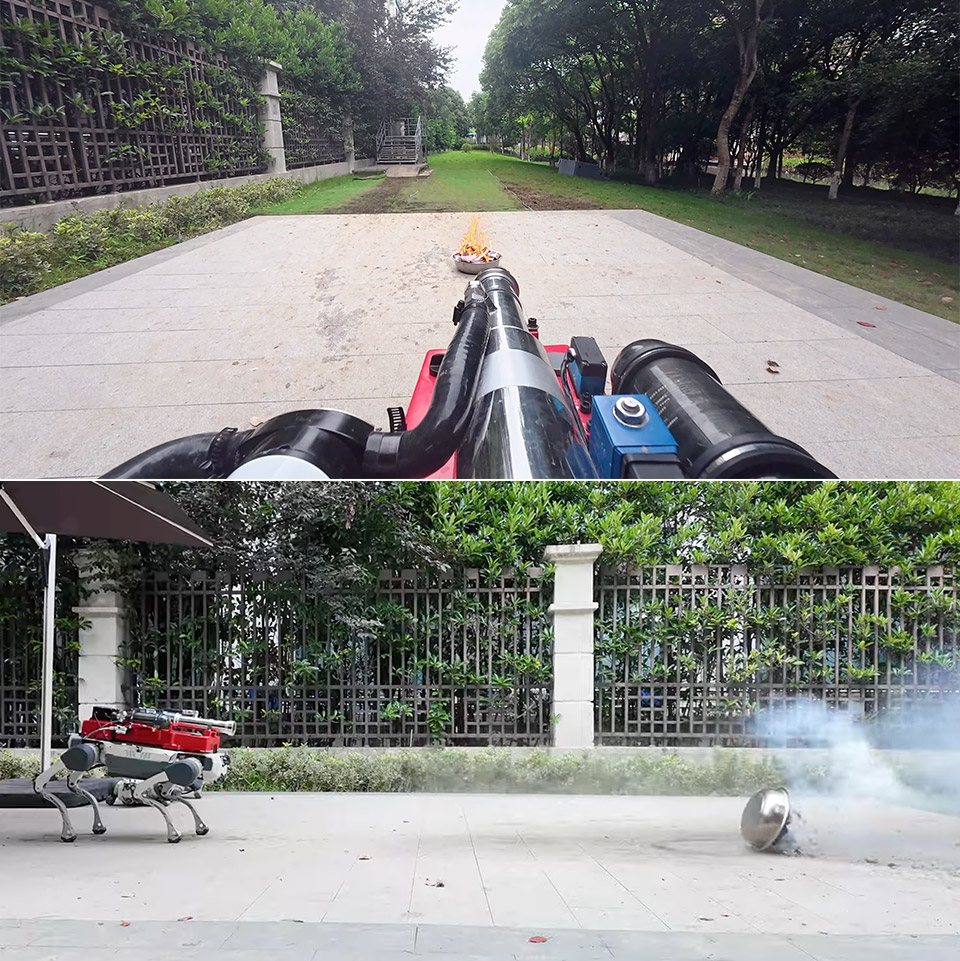
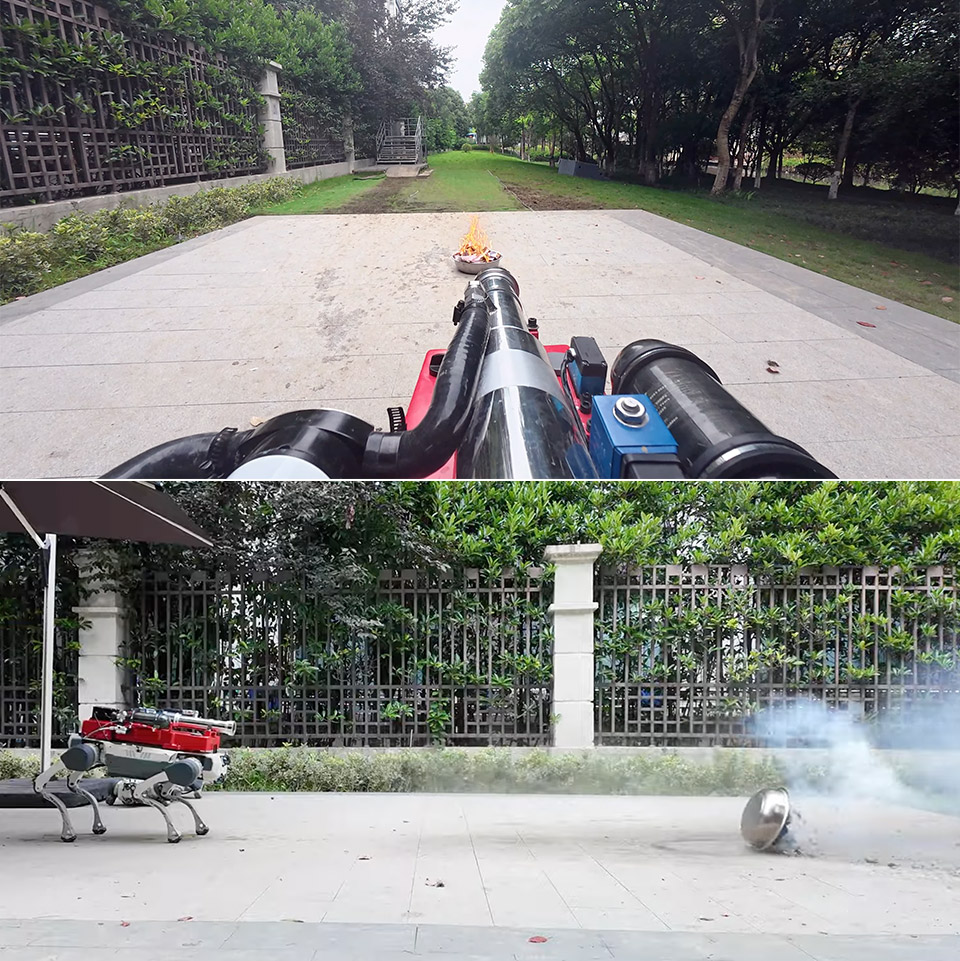
DEEP Robotics built its latest firefighting tool around the X30 quadruped platform and gave it a high-pressure pulse water cannon. The result lets crews attack flames in places too unstable or toxic for people to enter right away. Instead of rolling in with heavy hoses and facing immediate danger, operators stay back and direct precise bursts of water or foam while the robot handles the close work.
Recent demo footage has surfaced, showing the machine moving across an outdoor patio, getting into position, and then releasing a thick cloud of fine suppressant on a small controlled fire. The spray mist spreads quickly and visibly slows the flames without interfering with people close. The same capability applies to larger industrial situations where smoke, heat, and structural dangers make direct human entrance time-consuming and risky.

The X30 base is already pretty tough when it comes to tackling rough terrain. It can easily ascend industrial stairs with 45-degree slopes, step over obstacles taller than 20 centimeters, and maintain balance on slippery metal grating, loose gravel, wet surfaces, and muddy factory floors. That important because a fire scene may contain collapsed scaffolding, spilled materials, or flooded areas, and this robot is equipped to handle them. The firefighting version carries the additional weight of the cannon system, yet it travels with the same smooth stability.
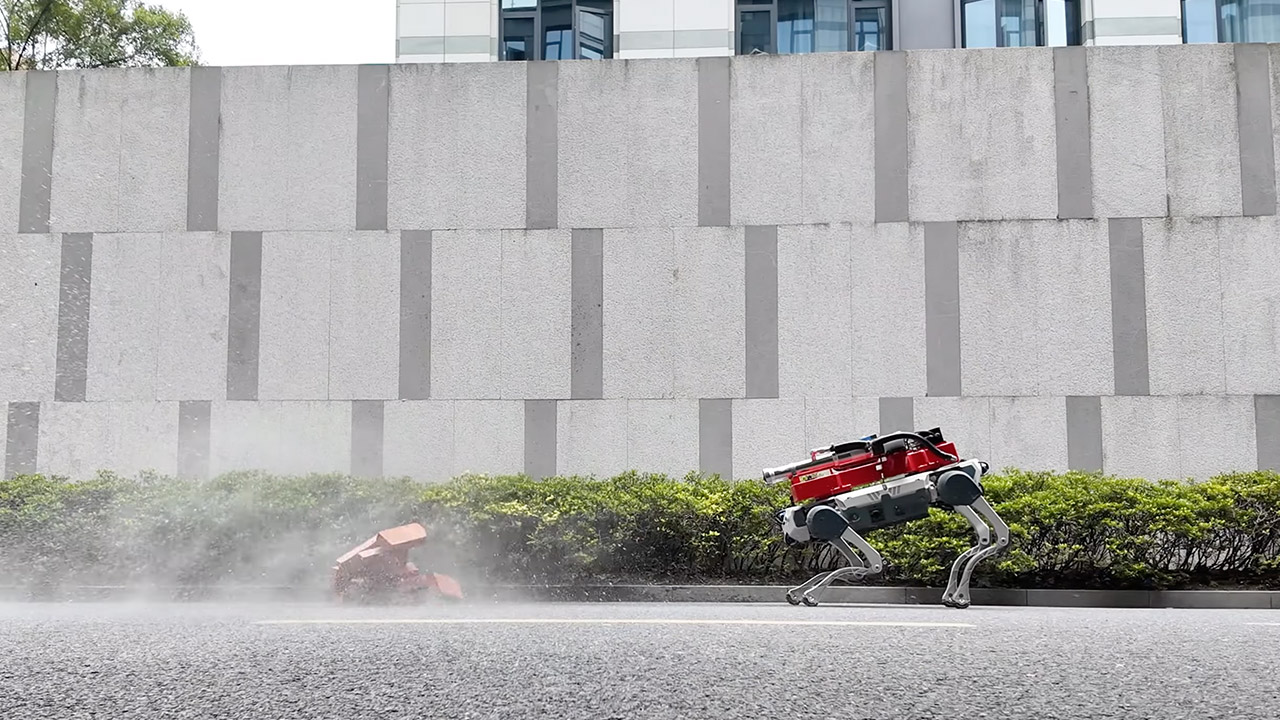
Even when visibility is reduced to zero, the sensors provide the operator with a pretty clear view. The LiDAR generates 3D maps in real time, while the depth cameras, infrared imaging, and high-resolution vision sensors all work together to allow the robot to navigate, detect heat sources, and avoid new threats as conditions change. Dual-spectrum cameras cut straight through the smoke, and gas detection offers an extra layer of protection against chemical or hazardous-material fires. All data is sent back to the command point via low-latency lines, and in some cases, drones or other robots provide additional viewpoints.
The power comes from batteries that last longer than previous generations, ranging from 2.5 to 4 hours depending on the load and how much it moves. The system has a quick-release feature that allows staff to swap out the pack in seconds without the use of any equipment, allowing them to keep the operation rolling even when one unit is required to remain stationary for an extended period. The entire system has an IP67 classification, so it can withstand dust and a little water spray without shutting down.
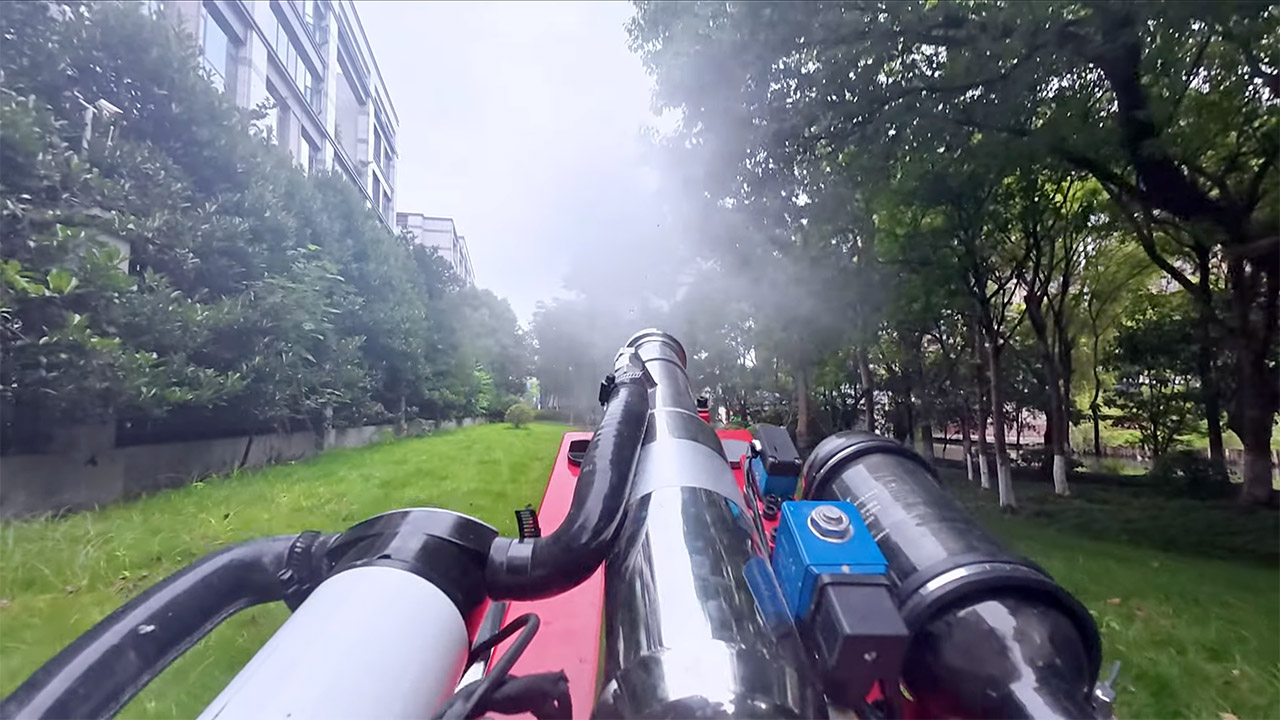
The pulse delivery method on the cannon itself represents the most significant departure from traditional firefighting gear. It doesn’t employ a continuous stream that soaks everything in its path; instead, it produces quick, intense bursts or a fine micron-level mist. According to technical specifications, a single liter of water can produce almost 1700 liters of fast-moving pulsed mist. This fine substance absorbs heat quickly, gets between the fire and the oxygen surrounding it, and can penetrate into narrow spaces or around barriers far better than a solid jet. The operator may alter the patterns and angle remotely, allowing them to tailor the spray to the unique situation, whether it’s a wide-area suppression or a targeted hit on a particular hotspot.
The wireless cannon configuration has a range of 60 meters, with some setups providing coverage of up to 120 degrees. This keeps the robot and its operators away from the “death zone,” which is where temperatures and structural collapse hazards are highest. There does appear to be a linked hose option in certain demos, which allows them to maintain a continuous flow from a hydrant or a tender while the robot moves forward. In each case, the goal is to provide effective suppression while keeping the public at a safe distance.


Firmus and DayOne will build a 360MW Nvidia DSX AI Factory in Batam, Indonesia, with 170,000 chips and up to $30B in expected offtake over six years.
Firmus Technologies, an Australian AI infrastructure company valued at $5.5 billion, will build its first data centre in Indonesia through an eight-year partnership with Nvidia. The 360-megawatt Nvidia DSX AI Factory campus in Batam, an island just off the coast of Singapore, is being developed with Singapore-based DayOne and is set to go live in Q1 2027.
Firmus will access up to 170,000 Nvidia AI accelerator chips through 2027 and 2028 via a revenue-sharing and credit-support agreement. The company expects $25 billion to $30 billion in committed offtake agreements during the first six years of the partnership, according to Bloomberg.
The Batam project will be a multi-tenant facility for AI-native customers, unlike Firmus’s Australian projects, which focus on hyperscaler clients. Co-CEO Tim Rosenfield told Bloomberg that market volatility around AI stocks is “largely irrelevant” to how the company is building its business. “We’re building our business based on demand that we’re seeing from customers and contracts that we’re closing,” he said.
Firmus began as a Bitcoin mining operation in Tasmania in 2019. It raised $505 million in April at a $5.5 billion valuation in a round led by Coatue Management and backed by Nvidia. The company has a pipeline of data centre projects across Australia and Singapore, including a deal with CDC Data Centers to develop up to 1.6 gigawatts across Australia by 2028. Asia-Pacific data centre investment has been accelerating sharply, with Blackstone-backed AirTrunk committing $30 billion to India alone.
Rosenfield declined to comment on IPO plans, though the company is widely expected to list this year. The deal adds to Nvidia’s expanding DSX programme, which partners with data centre operators to deploy GPU infrastructure on a revenue-sharing basis rather than requiring upfront purchase. For Indonesia, the campus positions Batam as a regional AI compute hub, leveraging its proximity to Singapore’s financial and tech ecosystem. Demand for AI compute across the region is so intense that even Google has resorted to renting GPUs from SpaceX.

Chinese AI systems “have matched the performance of Anthropic’s powerful model Mythos in some cybersecurity scenarios,” reports the Wall Street Journal.
They call it “a development poised to reset the global tech race and pressure the White House in its overhaul of U.S. AI policy.”
Security researchers said that a new AI model, released this month by China’s Zhipu AI, also known as Z.ai, can match the latest U.S. models when it comes to finding security bugs, although it still lags behind Anthropic’s and OpenAI’s products in other tasks. Overall, the capability gap between top U.S. models and those built by Chinese companies has narrowed significantly, and use of Chinese AI systems has surged as businesses seek to rein in runaway costs. A host of companies, including Microsoft, are weighing how they can offer Chinese models on their platforms, a development that is set to alter the balance of power among tech companies…
Unlike models from Anthropic or OpenAI, Zhipu’s GLM-5.2 is open-weight. That means it can be downloaded and run on hardware operated by anybody and can be modified and used without supervision. Open-weight models are ideal for users who want unfettered access to systems they control, but they are also ideal for hackers, who can run them in the shadows. GLM-5.2 has ranked as one of the 10 most-used AI models, according to data from OpenRouter, a company that provides access to more than 400 AI models. In some benchmarking tests, according to the cybersecurity company Semgrep, GLM-5.2 bested Anthropic’s Claude Opus 4.8 model, which was released in May. When given further instructions, Opus 4.8 and GLM-5.2 can match Mythos in bug-finding ability, according to researchers…
“Banning Fable while selling chips China needs to develop its own version is a gift to China,” said Saif Khan, a distinguished technology fellow at the Institute for Progress think tank who worked on export restrictions in the Biden administration. The U.S. needs to maximize the use of Mythos and comparable models to harden its cyber defenses while it can, he added. Among the Mythos 5 and Fable 5 users that had lost access before Friday’s decision to restore Mythos 5 access for some trusted entities: the National Security Agency, which had been testing the tools and found them impressive in trials, according to people familiar with the matter… “It is incentivizing companies across the globe to use cheaper but very capable Chinese open-weight models, while at the same time undermining the U.S. AI industry,” said Niels Provos, a researcher who led security teams at Google and Stripe. “I don’t understand it.”
Thanks to long-time Slashdot reader schwit1 for sharing the article.
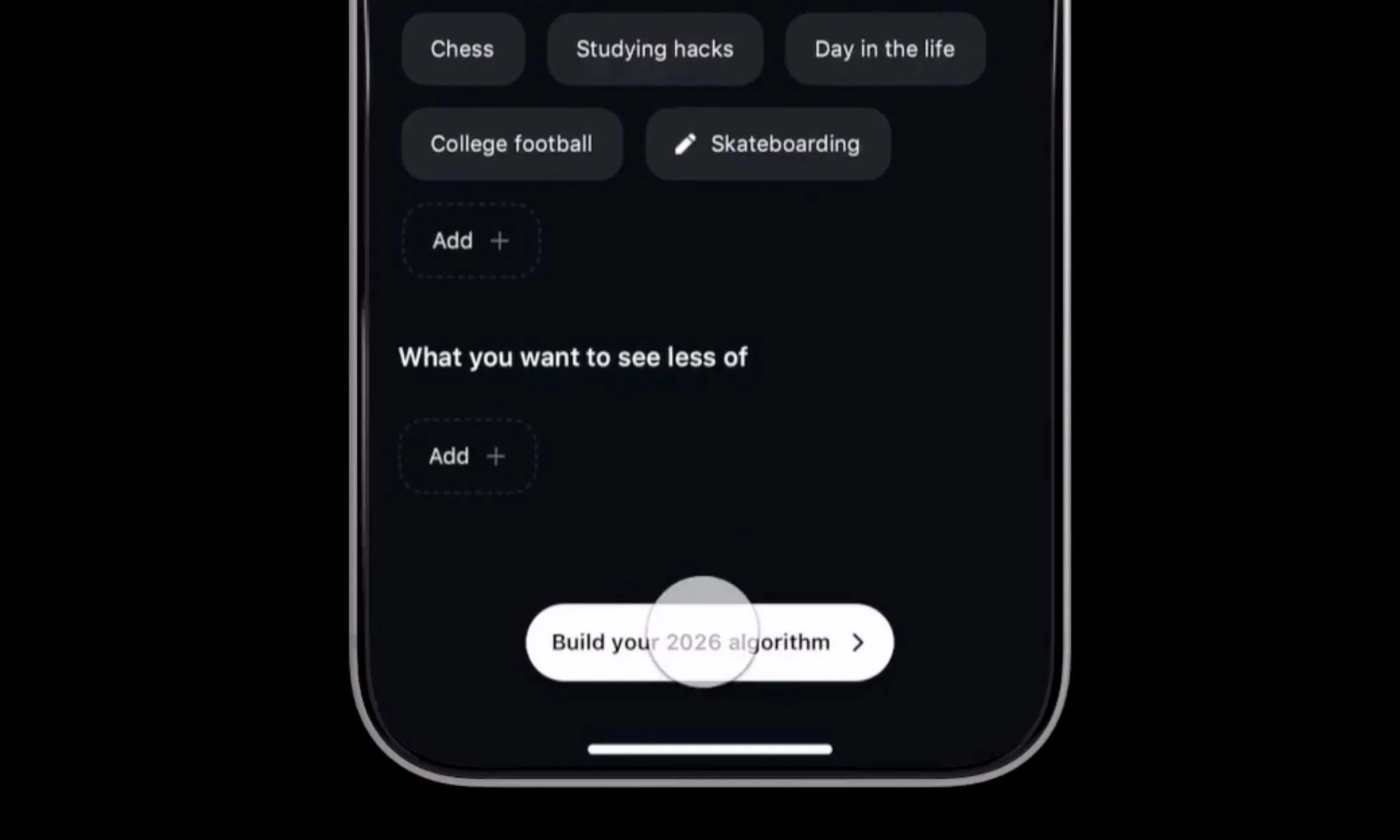
We have all had an Instagram feed go off track. A random Reel catches your attention for a moment, and before long, the app starts serving up the same kind of content again and again.
Instagram already has a way to fix some of that through Your Algorithm, a feature that lets users adjust the topics shaping their recommendations. Now, the company wants to make that tool easier to reach while people are actually using the app.
Instagram head Adam Mosseri has previewed new shortcut-like features that could bring Your Algorithm closer to the main feed and Reels. The changes could make it faster to correct repetitive recommendations, add fresh topics, or reshape a feed without digging through settings.
Instagram has been working on improving users’ algorithms and giving them more control over recommendations since last year. It recently expanded those controls to the main feed, allowing users to view and edit the topics Instagram thinks they are interested in.

Mosseri’s preview shows how Instagram may bring those controls closer to the places where recommendations actually appear. One version lets users pull down on the main feed to open Your Algorithm. Another shows the same control appearing after a swipe up from a Reel.
Instagram is also testing buttons under Reels that let users tell the app whether they want to see more videos like the one they are watching. In practice, recommendation tuning could become more immediate, since users would be able to correct the algorithm while browsing instead of opening settings later.
Your Algorithm could also become a more active tool for changing what appears in the feed. Users would not have to rely only on likes, pauses, searches, and watch time to steer recommendations over time.

Mosseri’s preview suggests users may be able to type what they want to see more often, such as positive content, fitness clips, travel videos, or recipe ideas. Instagram would then recommend related topics that users can choose from and add to their feed.
The feature could help users fix recommendations thrown off by accidental clicks on the fly, add new interests, and refresh a feed that has become too repetitive.
The new models will launch with the M5 Pro and M5 Max, according to Mark Gurman.
Apple may be skipping over the M6 generation of its Pro and Max chips, but that doesn’t necessarily mean it’s pushing back the release of its rumored touchscreen laptop. According to Bloomberg‘s Mark Gurman, the new MacBook will launch with the high-end M5 chips that came out earlier this year. The 14-inch and 16-inch models are still expected to be released between the end of 2026 and early 2027, as Gurman has previously reported. The next iteration of the touch MacBook will get the M7 chips not too far down the line.
According to Gurman, who spoke to sources with knowledge of the plans, the M7 versions are already in the advanced testing stage and could arrive by the end of 2027. The touchscreen MacBook will reportedly usher in a slew of changes on top of the touch display. That includes bringing over the Dynamic Island interface from the iPhone, an OLED screen and “an updated industrial design,” Gurman reports.
Apple is expected to introduce its M7 chip in early 2027, followed a few months later by the M7 Pro and Max. Gurman has also reported that we may see the M7 Ultra in 2028.


Yuri Zaporozhets of QRV Systems is a busy chap. He’s built a new RISC-V-based personal computer, a mainframe on an FPGA, and rewritten QNX – twice.
Seemingly every month or two, The Reg FOSS desk gets an email telling us about some astonishing project that he has just got working. We’re delighted to see that his most recent one, a new OS called QSOE, is winning some attention in the FOSS world at present.
But first, we thought we could tell a more complete story of how he got here by describing some of his previous projects.
(By way of a disclaimer, we feel that we should say up front that he does use Anthropic’s Claude LLM to help. To his credit, he does clearly state this.)
At the end of 2025, Zaporozhets wrote to tell us about his GateMate Personal Computer. The GateMate PC is something similar to a fairly high-end late-1980s IBM PC-compatible, but instead of a 286 or 386 CPU, it has a 25 MHz RISC-V core.
He told us the main inspiration for the GateMate PC: “The very first computer I saw in my life: an IBM PS/2 Model 30, in 1992. It also started in text mode.” We worked on a few of those, and they were not great machines. The GateMate machine should easily outperform the later, faster Model 30-286. He also acknowledges another project: “the NeoRV32 softCPU by Stefan Nolting is great.”
It has a VGA port that can output 80×30-character text in what back then we used to call Hi-Color, 8 KB of ROM containing a BIOS, and – although it’s still in the early stages – its own OS, which he calls GMDOS. The characters are double-byte ones using UCS-2 Unicode.
The GateMate gets its name from the host hardware because the design is mostly software: it’s implemented on an inexpensive FPGA board, the €50 Olimex GateMate A1-EVB (that’s about £42 or $57). Its video controller is an original design, and he has added extra RAM: the machine has 8 MB of additional PSRAM on two chips, via a QSPI interface.
He blogged about the project, from receiving the board last August to getting a PLL working, to getting video out of it.
The Olimex GateMate board can do a lot more, though – which leads us to his next project.
Also implemented on the same FPGA board is Zaporozhets’ miniature mainframe, the System/359. This isn’t a clone of the IBM System/360 mainframe series, the machines that introduced the idea of different computers being software compatible – it’s more of a tribute to it. For starters, the S/359 is a little-endian machine, while the S/390 is big-endian.
So it’s not binary-compatible with the mainframe architecture, but it’s similar. He started the project in January, and later that month, writing about its assembler, said: “GMS/359 keeps what’s beautiful about S/360 – the channel I/O model, the clean instruction formats, the PSW concept – while quietly modernizing the rest. Little-endian bytes. Opcode-first encoding. PC-relative addressing. No more base register juggling. The ‘/359’ isn’t a typo. It’s a declaration: inspired by, not compatible with.”
Zaporozhets told The Register: “There is a working assembler with the POWERFUL macroprocessor – from NASM. I was a NASM contributor from 1999 to 2004 and maintained its RDOFF2 part. Now RDOFF2 is removed from NASM 3.0, but it continues to live in my asm359 project.
“Currently the processor can execute the simple IPL; channel I/O controller works (PS/2 kbd, UART, SYSINFO, even crypto processor (!)). Once I finish the PSRAM module, I will start working with SYS1.NUCLEUS.”
So we can take it that as well as RISC-V and FPGAs, he has some familiarity with low-level systems design. His next project was with an OS that a lot of folks admire: QNX.
Although Zaporozhets wrote to us about this back in March, he also went public with it in a Reddit post: QNX 6.4 kernel ported to RISC-V; petition to BlackBerry to relicense old QNX sources under Apache 2.0.
QNX has an on-again-off-again relationship with FOSS. QNX has been around since the 1980s, as we reported when the company made QNX 8 non-commercial freeware in 2024. In that article, we mentioned that QNX published the source code of an earlier version back in 2007. Back then, QNX was self-hosting and had its own desktop environment – we showed a screenshot of its Neutrino GUI in our roundup of non-Linux PC OSes back in 2013, and GUIdebook has a whole screenshot gallery.
The next year, that QNX 6.4 source code was mirrored from SourceForge over to GitHub, and it’s still there. Zaporozhets took this long-obsolete codebase and ported it to RISC-V, targeting his own FU740 “workstation.” It’s not the whole OS, just “the kernel, the process manager, the C library, the runtime linker.” And the license is very restrictive: you can study it and compile it, but not redistribute it.
He started this effort over Christmas 2020. “The timing made sense in a particular way. RISC-V had matured. The toolchains were stable. The original QNX sources were 32-bit ILP32, targeting x86, ARM, MIPS, SH, and PPC – no 64-bit port existed, let alone RISC-V. Doing the LP64 transition and the architecture port in a single effort seemed like exactly the kind of large, difficult, satisfying project that a long holiday lockdown invites.”
But after the initial effort, it languished for five years. When he came back to it, he ended up with a substantial rewrite. He calls the result QRV.
In March, he described this in a blog post, QRV Operating System: First Publication. As he puts it: “For clarity: QRV is not a patch on the original QNX sources. It is a ground-up reworking of the 32-bit ILP32 codebase into a 64-bit LP64 system for RISC-V, with deliberate simplifications.”
By the end of April, QRV v0.27 could boot to multi-user login. A month later, he declared the project finished with version 0.43: “This is the last development post for QRV. The project set out to port QNX Neutrino 6.4 to RISC-V 64-bit, run it on real hardware, and explore what it would take to bring a clean microkernel architecture to a modern open ISA. Those goals are met. v0.43 is the final release.”
Where next? Well, as the QNX kernel is not truly open source, then the only path forward is to switch to another kernel, one that is truly FOSS. Well, we say “one”… ¿Por qué no los dos?
The result is QSOE: “QSOE ships in two variants that share one userspace and one build system. QSOE/N runs on Skimmer, a microkernel written from scratch for this project (SMP by design); QSOE/L runs on seL4 as its kernel.”
As The Register covered back in 2014, Secure Embedded L4 is a formally verified microkernel OS. We have written about other OSes that use it before: in 2022, we described the new Neptune OS project, which is a combination of seL4, ReactOS, and Wine. Then, in 2025, we looked at Ironclad, which combines seL4 with the C-based Gloire and an Ada layer.
There are some very serious precedents for building around seL4, but QSOE doesn’t stop there: it also has its own homegrown kernel, called Skimmer, that’s designed for multiprocessor machines. Zaporozhets has been working in this area for a long time. On the QSOE site, he mentions his effort to build a free QNX-like operating system back in 2003. It’s still online – it is called RadiOS.
In How QSOE started, he describes the inspiration: as a fallback option, a Plan B, if his petition to BlackBerry did not succeed. We sympathize. When we wrote about QNX 8, we got nothing useful back from the company either.
Instead, he took all he learned from writing RadiOS and building QRV – via the GateMate PC and mini-mainframe – and did it himself instead. Now he has released QSOE version 0.1. It’s under the Apache 2.0 license, and its source code is on GitLab. He also has a new development blog.
Yes, Claude may be involved, but he was already developing these ideas 20 years before ChatGPT launched. ®

Looking for a different day?
A new Quordle puzzle appears at midnight each day for your time zone – which means that some people are always playing ‘today’s game’ while others are playing ‘yesterday’s’. If you’re looking for Sunday’s puzzle instead then click here: Quordle hints and answers for Sunday, June 28 (game #1616).
Quordle was one of the original Wordle alternatives and is still going strong now more than 1,400 games later. It offers a genuine challenge, though, so read on if you need some Quordle hints today – or scroll down further for the answers.
Enjoy playing word games? You can also check out my NYT Connections today and NYT Strands today pages for hints and answers for those puzzles, while Marc’s Wordle today column covers the original viral word game.
SPOILER WARNING: Information about Quordle today is below, so don’t read on if you don’t want to know the answers.
• The number of different vowels in Quordle today is 3*.
* Note that by vowel we mean the five standard vowels (A, E, I, O, U), not Y (which is sometimes counted as a vowel too).
• The number of Quordle answers containing a repeated letter today is 1.
• No. None of Q, Z, X or J appear among today’s Quordle answers.
• The number of today’s Quordle answers starting with the same letter is 2.
If you just want to know the answers at this stage, simply scroll down. If you’re not ready yet then here’s one more clue to make things a lot easier:
• S
• C
• C
• P
Right, the answers are below, so DO NOT SCROLL ANY FURTHER IF YOU DON’T WANT TO SEE THEM.

The answers to today’s Quordle, game #1617, are…
After a spell of very difficult games it feels as if we are being given an easy ride.
This is the first time in ages I can remember two words as similar as CRACK and CRANK.
After my bad run I am not complaining.

The answers to today’s Quordle Daily Sequence, game #1617, are…
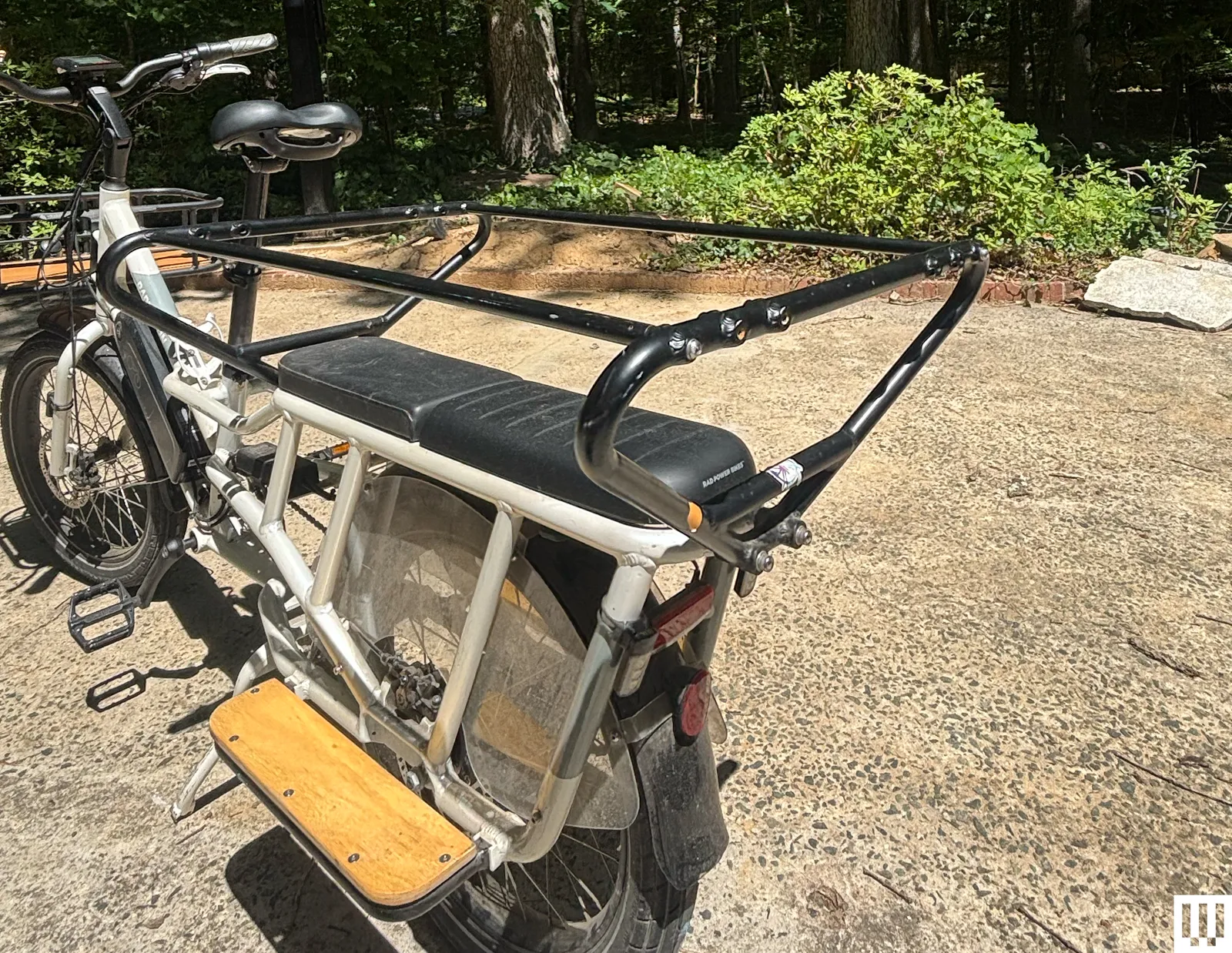
When my wife and I bought our first ebike—a Radwagon 4 by the Seattle-based Rad Power Bikes—four years ago, we did so to replace one of our two family cars. For in-town trips of 5 miles or less, we figured we could (and should!) use the bicycle. At the time, our kids were very young, so we needed a bike capable of safely carting them around and also handling whatever we were hauling on a given day.
The Radwagon answered those needs; the direct-to-consumer company allowed me to configure the bike to suit my exact needs during the ordering process. I selected a front basket, a rear pad seat for my son, and a Thule Yepp 2 Maxi seat to secure my then-toddler daughter. I also bought a few safety lights and a bell from my local bike shop (more on those accessories below).
Once the bike arrived and was assembled, my wife and I used it to tote our kids all over town. We rode to and from school and daycare, playdates, and doctor’s appointments; made quick grocery runs; and went anywhere else we needed to go that was relatively close to home.
On any given day, the front basket continues to function as a cornucopia holding whatever we might need for the task or errand at hand. On a recent trip to a nearby playground, my ebike’s basket held the following: a small soccer ball, my wife’s small shoulder bag, my bike lock and cable, two bottles of water (in addition to a third bottle of water in the bike’s bottle cage), three baseball caps, two baseball gloves, one baseball, a small tin lunch box full of snacks, and two binders full of Pokémon trading cards. The basket has also successfully transported two large grocery bags or three smaller ones, and, on one occasion, a small guitar amp I found at our local thrift store.
The bike is still useful and functional, but my family’s needs have changed since we bought it. My now-4-year-old daughter is too big to fit in her Yepp seat, and my now-8-year-old son is a bit too self-conscious to be seen on the back of his dad’s big ebike. (Not to mention, he’s now strong enough to ride all over town on his own bike.)
With my kids outgrowing the beloved family ebike, I’ve been thinking about its next iteration as a serious cargo schlepper—a Grocery Getter, if you will—and how I can set it up to haul as much stuff as possible. Ebikes now make up a huge category, serving mountain bikers and commuters, folding and cruising to fit various needs. There are strategic ways to maximize your ebike’s capabilities for each of those purposes, but here I’m going to stick to outlining the two I know best: carting a family (the Family Wagon) and hauling lots of stuff (the Grocery Getter).

Photograph: Michael Venutolo-Mantovani
If you use your ebike to transport your kids, you’ll want comfortable, safe, and age-appropriate seating for them.
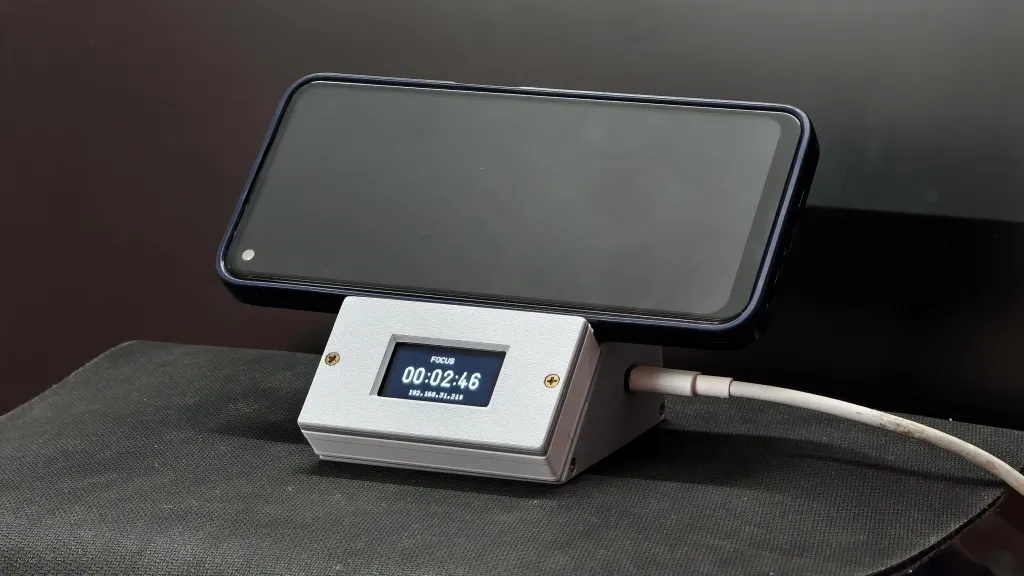
Sometimes, it’s hard to stop picking up your phone every few minutes to check on notifications and scroll endlessly through the slop of the day. [PushpendraC2] has been working on a solution to this problem that would ideally discourage such behavior — a nifty little smartphone stand!
The concept is straightforward enough—the smartphone stand uses a simple tactile button to determine if your smartphone is sitting on the little 3D printed shelf, or not. However, the smarts inside do a bit more than that, too. An ESP32-S3 is charged with monitoring whether the smartphone is sitting in place, and starts counting “focus time” while it’s there. If the phone is picked up, the OLED display on the shelf starts ticking down a 5-second timer to encourage you to put it back. If you don’t, the focus time is reset and you lose your streak.
It’s also possible to tap a touch sensor on the device which sets a reminder timer, prompting you to put your phone back after a set period of time, between 2 to 30 minutes. A buzzer will then start going off to prompt you to put the phone down. If you want to track the devices impact, you merely need to log in to the web server hosted by the ESP32, which shows your current focus session time, along with a heatmap of your daily productivity.
It’s a simple idea, but one that uses a few neat psychological hooks to encourage compliance and behavioral change. We’ve featured similar projects in this vein before, No surprise, as phone addiction is a problem experienced by many.

Welcome back to TechCrunch Mobility, your hub for the future of transportation and now, more than ever, how AI is playing a part. To get this in your inbox, sign up here for free — just click TechCrunch Mobility!
A quick heads-up to readers: I will not publish an issue next week due to the July 4th holiday. I will see you all the following week.
A series of stories this week highlight the continued — and apparently growing — scrutiny of Tesla’s automated driving system known as Full Self-Driving (Supervised). A fatal crash involving a Tesla that struck a home in Texas and killed a 76-year-old woman gained national attention after the driver told police that Autopilot — the company’s basic driver-assistance system, which has since been discontinued — was engaged at the time of the crash.
Ashok Elluswamy, vice president of AI software at Tesla, shared a different account of the crash, claiming on X that the driver manually overrode “self-driving by pressing the accelerator all the way to 100% of the accel pedal in this residential area.”
His comments suggest the vehicle was equipped with FSD (Supervised), and not Autopilot, but without an independent investigation we don’t know for sure. But we might, eventually.
The National Highway Traffic Safety Administration (NHTSA) and the National Transportation Safety Board (NTSB) have now opened investigations into the crash.
Meanwhile, Tesla settled a lawsuit connected to a fatal 2023 crash involving a vehicle using FSD (Supervised). This crash is part of a different NHTSA investigation into Tesla FSD focused on whether the system could “detect and respond appropriately to reduced roadway visibility conditions,” such as “sun glare, fog, or airborne dust.”
All of this attention comes as Tesla positions itself as an AI and robotics company. FSD (Supervised) is currently the most visible, revenue-generating product tied to that branding.

A reader who has shared tips with us before alerted me to a research report on Waymo and its growing fleet of Ojai robotaxis. For a refresher, Waymo struck a supplier deal with Zeekr, the brand owned by China’s Geely Holding Group, to provide it with an electric vehicle designed to operate as a robotaxi.
The minivan-like robotaxi was designed in Sweden and is manufactured in China. (These vehicles don’t contain any vehicle communication modules; current U.S. policy bans Chinese-connected vehicle technology.) Once it gets to the U.S., Waymo takes over and adds in its self-driving system. The Ojai is equipped with Waymo’s sixth-generation system — including 13 cameras, four lidar sensors, six radar units, and an array of external audio receivers.
The New York-based research firm MoffettNathanson did a bit of gumshoeing to figure out how serious Waymo’s Ojai program is. The firm examined Bill of Lading documents, which are detailed receipts of shipped goods that are filed with the U.S. government. The company counted Zeekr vehicle labels CM1e or CME, the company’s label for Waymo-bound vehicles.
MoffettNathanson, which shared its report with TechCrunch, discovered that Waymo is on pace to import 3,156 vehicles into the U.S. this year, about 300 vehicles per month.
Got a tip for us? Email Kirsten Korosec at kirsten.korosec@techcrunch.com or my Signal at kkorosec.07, or email Sean O’Kane at sean.okane@techcrunch.com.

Aseon Labs, a Silicon Valley startup developing mobile pods that can autonomously inspect, clean, and charge robotaxis, raised $10 million in a seed round led by Crane Venture Partners. Other participants included Y Combinator, Uber co-founder Garrett Camp’s venture firm Expa, Robin Hood Ventures, and Founders Capital.
CaoCao and May Mobility, an autonomous vehicle technology startup, partnered to jointly explore commercializing robotaxi services in international markets, beginning with Europe.
Elroy Air, the autonomous heavy-cargo drone startup, plans to go public through a merger with blank-check firm Columbus Circle Capital Corp II. The deal is valued at about $1 billion.
Partly, a company that creates AI tools for the automotive repair supply chain, raised $50 million in a Series B round led by DST Global Partners.
Spiro, an African electric vehicle and clean energy infrastructure platform, finalized a $55 million investment from NewTrails Capital, a Chinese growth-stage fund.
Terawatt Infrastructure, a company that provides EV charging for fleets, including for Waymo and other autonomous and electric fleets, set up a five-year senior secured credit facility that could allow it to borrow as much as $300 million from banks. The proceeds will support the acquisition and development of charging depots, the company said.

Companies like Tesla and Zoox could get a boost from the U.S. Department of Transportation, which has proposed changes to federal vehicle regulations that would allow companies to skip the inclusion of brake pedals in “vehicles designed to be driven exclusively by automated driving systems.”
Lucid Motors is laying off 18% of its workforce, or around 1,500 employees, and cutting the second shift of EV production at its factory in Casa Grande, Arizona. Reminder: The layoffs come just four months after the EV maker cut 12% of its staff. CEO Silvio Napoli said the cuts are part of an effort “to simplify the company, sharpen execution, and position Lucid to become more competitive over time.” In this pursuit to simplify, what will Lucid give up?
Lyft CEO David Risher posted a blog that got my attention. In it, he laid out the company’s multi-sensor safety standard for autonomous rides. The upshot: Autonomous vehicles that use one type of sensor can’t go on the Lyft network. I reached out to the company and they confirmed what this seemed to imply — vehicles like the Tesla Cybercab and Tesla robotaxis that use FSD (Unsupervised) won’t qualify since they only use cameras. The rules don’t apply to advanced driver-assistance systems, by the way. So all of those humans who drive Tesla vehicles on the Lyft app are not affected.
OpenAI hired away Uber India president Prabhjeet Singh to be its first managing director.
Polestar, the Swedish electric vehicle manufacturer owned by Chinese automotive giant Geely, can no longer sell its new cars in the U.S. market. The imported vehicles are restricted by a U.S. government law that bans Chinese connected car technology.
Samsara, the fleet management company, is rolling out business-card-sized sticky tracking labels to solve cargo theft.
Slate Auto’s radically simple electric truck starts at $24,950. Would you pay $25K for a two-seater truck with a 205-mile range, hand-crank windows, no infotainment system, and gray composite material finish (owners can order customizable wraps for the vehicle)? And climate tech reporter and in-house battery expert Tim De Chant explains why Slate changed the battery in its cheap EV truck.
Uber is facing a lawsuit by shareholders that accuse the board and management of putting profits ahead of compliance and safety, decisions that have exposed the company and its shareholders to risk.
Waymo has set up an entity in Germany, which German news outlet Frankfurter Allgemeine Zeitung first reported. The company registration filing makes it pretty clear that it’s gearing up to launch a robotaxi service in the country. However, this doesn’t mean it’s imminent, insiders tell me. Meanwhile, Waymo has dropped its waitlist in Nashville, a move that opens up its service to the public.
Zoox gave its custom-built robotaxis a makeover as it prepares for commercial service and larger-scale production at its Hayward, California, facility.
When you purchase through links in our articles, we may earn a small commission. This doesn’t affect our editorial independence.


offbeat
Requiring driverless vehicles to keep human brake controls impedes innovation, the NHTSA says
If a self-driving car is going to stop, it may need to stop itself. US vehicle safety regulators are proposing to let robotaxi designers get rid of brake pedals, calling regulatory requirements for manually operated methods of stopping driverless vehicles a barrier to innovation.
The US National Highway Traffic Safety Administration (NHTSA) published a notice of proposed rulemaking on Friday to modify federal brake safety standards for light vehicles by eliminating the requirement for vehicles equipped with automated driving systems (ADS) and no manual controls to have foot-operated service brakes or manually operated parking brakes.
The NHTSA argues the controls themselves could pose a safety risk by allowing passengers to intentionally or unintentionally override an ADS. Existing braking performance requirements would remain in place, the agency said, even as brake pedals and handbrakes are on the chopping block.
“Regardless of the manner of brake control application, the brake systems must be capable of safely stopping the vehicle, as already required by the standard,” the agency said in its proposal. “This rulemaking would remove unnecessary regulatory burdens and costs with no negative impact to vehicle safety.”
The NHTSA would keep existing stopping-distance requirements for robotaxis, thankfully, but said standardized methods for testing driverless vehicles may need further development. Vehicles equipped with ADS that still have steering wheels and other manual controls, as well as cars equipped with driver-assistance systems such as Tesla Autopilot, Ford BlueCruise, and similar technology, will still need to have brake pedals, naturally.
A number of automakers and driverless taxi operators (Tesla, Waymo, Amazon, etc.) have been developing vehicles that lack manual controls, but current FMVSS still require them to have a brake pedal. That’s simply not safe, says the NHTSA.
“The inclusion of a manually operated driving control that directly overrides ADS operation could pose a safety risk through intentional or unintentional misuse by a vehicle passenger,” the proposal argues. All people in a driverless taxi, it continues, are passengers who “should also not be expected to perform driver functions such as engaging the parking brake.”
In other words, despite the NHTSA’s admission in the proposal that ADS tech “is still maturing and many of the potential benefits are yet to be realized,” the agency is prepared to remove mandatory brake pedals and handbrakes from ADS-only vehicles, even as robotaxis and driver-assistance systems continue to generate safety headaches, from Waymo vehicles entering flooded roads and running over dogs to fatal crashes involving Tesla’s Autopilot, without requiring a standardized method for passengers to tell the vehicle to stop.
It doesn’t want to completely eliminate manual overrides, mind you, but the agency isn’t going to force automakers to conform to any one method of giving passengers the ability to stop their driverless car.
“It is NHTSA’s expectation that if these controls are removed, passengers will still be provided with a means to direct an ADS-operated vehicle to come to a stop, though how a passenger would indicate they wanted the ADS-operated vehicle to stop would likely vary by manufacturer,” the NHTSA said.
The NHTSA has frequently butted heads with automakers deploying controversial driver-assistance technology, like Tesla, but the agency was gutted during Tesla CEO Elon Musk’s time heading up the so-called Department of Government Efficiency, with the cuts falling particularly hard on staff responsible for regulating self-driving vehicles.
Comments on the proposal are being accepted through July 27, but the docket number for the proposal (NHTSA-2026-0728) does not yet appear on the web portal for registering support or dissent. ®






Two goals and an assist by sheer aura: Cristiano Ronaldo just entered the World Cup chat


Microsoft accidentally kills epic Outlook email threads


Weekend Open Thread: Staud – Corporette.com


The House | Manchesterism won’t survive the painful trade-offs unless it gets citizens on board


Potential 2028er World Cup attendee leaderboard


Asia stock markets slide as tech shares slump


A Look At A Gaggle Of Transputer Boards
Bitcoin (BTC) Dips Below $62K, Ethereum (ETH) Plunges 6% Daily: Market Watch

Dell (DELL) Shares Tumble Over 5% Following Analyst Downgrade to Hold


Securitize Wraps Roubini's SEC-Registered ETF as Dubai VARA Digital Security
Entergy settles forward sale agreements, raises $672 million in cash proceeds


Kraken's xStocks Opens Bending Spoons IPO Registration to EEA Retail


FIH Pro League: India defeat Pakistan 7-1, register biggest win of campaign | Other Sports News


Coinbase, Circle Deepen Crypto Stock Losses Despite Resilient S&P 500


RTX holders must register wallets before token distribution begins

Hyperliquid Named on Singapore MAS Investor Alert Register


Bluekit phishing kit adopts browser-in-the-middle for login theft


India vs Bangladesh LIVE Score, Women’s T20 World Cup: Bangladesh Opt To Bat; India Enter ‘Do-Or-Die’ Stage As Semi-Final Race Heats Up
The DATA Foundation Launches to Tackle AI’s Multi-Billion Dollar Training Data Bottleneck


21Shares Cuts 2026 Crypto Forecasts as Institutional Demand Rises

You must be logged in to post a comment Login