Connect with us
DAPA Banner

Business

VestoFX.net Review: Is This Trading Platform Any Good?

Published

on

VestoFX.net Review: Is This Trading Platform Any Good?

In this VestoFX.net review, we take a detailed look at what the platform offers, how it works, and what traders can expect when using it for CFD trading across multiple global markets.

The goal is to explain the platform in clear, simple language so everyday traders can understand whether it fits their trading style and experience level.

VestoFX.net Review: What Is VestoFX.net and Who Operates It?

VestoFX.net is an online CFD trading platform designed for traders who want access to multiple asset classes through one account. The platform focuses entirely on Contracts for Difference (CFDs), allowing traders to speculate on price movements without owning the underlying assets.

Advertisement

This website (www.vestofx.net) is operated by Fairmont Financial Services (PTY) LTD, a South African investment firm.

The company is authorized and regulated by the Financial Sector Conduct Authority (FSCA) of South Africa and operates under Financial Service Provider (FSP) license number 51766.

VestoFX.net Review: What Markets Can Traders Access?

One of the main highlights in this VestoFX.net review is the range of CFD markets available. The platform brings together several popular asset classes that appeal to traders worldwide.

Advertisement

Traders can access CFDs on:

  • Cryptocurrencies
  • Forex currency pairs
  • Commodities such as metals and energy products
  • Shares of selected companies
  • Global indices

All instruments are traded strictly as CFDs, allowing traders to focus on price movements rather than ownership.

VestoFX.net Review: How Does CFD Trading Work on the Platform?

CFD trading on VestoFX.net enables traders to speculate on whether an asset’s price will move up or down. Instead of purchasing the asset itself, traders open positions based on price changes.

The platform supports trading in both rising and falling markets.

Advertisement

Tools such as stop-loss and take-profit features are available to help traders manage positions more effectively.
VestoFX.net Review: Is This Trading Platform Any Good?

VestoFX.net Review: How Does the Trading Platform Operate?

VestoFX.net provides a web-based trading platform that can be accessed from different devices. The interface is designed to be straightforward, making it easier to monitor markets and execute trades.

Key platform features include real-time charts, trade execution tools, account balance tracking, and market monitoring features. The layout avoids unnecessary complexity, which may appeal to both new and experienced traders.

Advertisement

VestoFX.net Review: How Can Traders Register an Account?

The registration process on VestoFX.net begins with creating an online account. Traders are required to complete a questionnaire during sign-up.

This questionnaire collects information about trading experience, financial background, and understanding of CFD products. Completing it accurately is part of the onboarding process before funding the account and accessing live trading.

VestoFX.net Review: What Account Types Are Available?

Advertisement

VestoFX.net offers four distinct trading account options, structured to suit a wide range of traders, from those just entering the CFD market to highly experienced participants.

The Basic Account is designed for beginners and requires a minimum deposit of $250. It features floating spreads starting from 3.0 pips on EUR/USD, 3.4 pips on GBP/USD, and 3.3 pips on USD/JPY.

This account allows new traders to begin with a relatively low initial commitment and includes one free withdrawal, making it a practical starting point.

The Gold Account is aimed at traders with more market experience and comes with a minimum deposit requirement of $25,000. Compared to the Basic Account, it offers improved trading conditions, with spreads starting from 2.7 pips for EUR/USD, 3.1 pips for GBP/USD, and 3.0 pips for USD/JPY.

Advertisement

Gold account holders also receive one free withdrawal per month, supporting more frequent trading activity.

For traders looking for more advanced conditions, the Platinum Account requires a minimum deposit of $100,000. This account provides tighter spreads, beginning at 2.1 pips for EUR/USD, 2.5 pips for GBP/USD, and 2.4 pips for USD/JPY.

In addition, Platinum traders benefit from three free withdrawals each month, offering greater flexibility in managing funds.

The VIP Account is structured for professional traders seeking premium trading conditions. With a minimum deposit of $250,000, this account offers the most competitive spreads, starting at 1.6 pips for EUR/USD, 2.0 pips for GBP/USD, and 1.9 pips for USD/JPY.

Advertisement

VIP account holders enjoy unlimited fee-free withdrawals, supporting high trading volumes and active fund movement.

Overall, these account options allow traders to choose a structure that aligns with their experience level, trading activity, and financial objectives, while progressively offering tighter spreads and more flexible withdrawal benefits at higher tiers.

VestoFX.net Review: What Can Traders Invest In Using These Accounts?

All account types provide access to the same core CFD markets, including crypto, forex, commodities, shares, and indices. Differences between accounts relate to trading conditions and platform features rather than market availability.

Advertisement

This setup allows traders to diversify their CFD trading activity across multiple asset classes within one platform.

VestoFX.net Review: Who Is the Platform Designed For?

VestoFX.net is built for traders from around the world, including Switzerland, UAE,Saudi Arabia, Malaysia, Kuwait, Singapore. Its multi-asset CFD structure may appeal to traders who prefer managing different markets from a single account.

With multiple account options, the platform supports traders at different experience levels and trading volumes.

Advertisement

VestoFX.net Review: Is This Trading Platform Any Good?

VestoFX.net Review: What Are the Key Strengths and Limitations?

Strengths include:

  • Access to multiple CFD markets
  • Clear account type structure
  • Regulated operator under the FSCA

Limitations to consider:

  • Only CFD trading is available
  • Trading conditions depend on the selected account type

This balanced overview helps set realistic expectations.

VestoFX.net Review: Final Thoughts on the Platform

This VestoFX.net review presents a CFD trading platform focused on providing access to crypto, forex, commodities, shares, and indices through a single interface. The platform emphasizes clarity, structured onboarding, and multiple account choices.

Advertisement

Rather than offering unnecessary extras, VestoFX.net focuses on core CFD trading functionality, making it a platform worth exploring for traders seeking multi-market exposure.

FAQs

Is VestoFX.net suitable for beginners?
Yes, the Basic account and simple platform layout support new traders.

What markets are available on VestoFX.net?
CFDs on crypto, forex, commodities, shares, and indices.

Advertisement

Do traders own assets on VestoFX.net?
No, all trading is done through CFDs only.

Can traders from Switzerland use the platform?
Yes, traders from Switzerland and many other countries can register.

Are multiple account types available?
Yes, Basic, Gold, Platinum, and VIP accounts are offered.

Advertisement
Continue Reading
Click to comment

You must be logged in to post a comment Login

Leave a Reply

Business

Oil slides 4% to below $100/bbl as Middle East uncertainty keeps markets on edge

Published

on

Oil slides 4% to below $100/bbl as Middle East uncertainty keeps markets on edge
Oil fell over 4% on Wednesday, reversing earlier gains as ongoing Middle East tensions rattled markets, even amid reports that the U.S.-Israeli conflict with Iran could be easing.

The June Brent contract dropped 4.35% to $99.45 per barrel by 7:05 am GMT, while May U.S. WTI crude slipped 3.99% to $97.34 per barrel.

Prices rose earlier on Wednesday but turned lower as uncertainty over the Middle East conflict ‌prompted investors to ⁠lock in ⁠gains.

“The dip is likely due to a lull during Asian hours with profit taking amid signals from the U.S. that the war may come to a conclusion in the near term,” said Emril Jamil, senior analyst at LSEG.

Advertisement

Brent futures for June delivery settled down more than $3 on Tuesday following unconfirmed media reports that Iran’s president was ready to end the war.


President Donald Trump told reporters on Tuesday that the U.S. could end the military campaign within two to three weeks and that Iran does not ⁠have to ‌make a deal to end the conflict, his clearest declaration yet that he wants to wind down the month-long war.
Still, even if the conflict ends, infrastructure damage is likely ⁠to keep supplies tight, analysts say. Oil prices will depend on how quickly supply chains normalize afterwards, said Priyanka Sachdeva, senior market analyst at Phillip Nova.

“Even if it starts to de-escalate, the flow of tankers won’t resume right away … shipping costs and insurance, tanker movement will take time to return to normal,” Sachdeva said, adding that the actual damage to oil infrastructure could only be assessed afterwards.

Trump has indicated he could end the war before reopening the Strait of Hormuz, a key route through which 20% of global oil and liquefied natural ‌gas trade flows, according to a Wall Street Journal report.

“Even with diplomatic channels reportedly still active and intermittent comments from the U.S. administration predicting a short end to the conflict, the combination of limited tangible ⁠diplomatic progress, continued maritime attacks and explicit threats against energy assets keeps supply risks skewed to the upside,” LSEG analysts said in a note.

Advertisement

OPEC oil output dropped 7.3 million barrels per day in March compared with the previous month, a Reuters survey showed on Tuesday, illustrating the impact of forced export cuts because of the closure of the strait.

Meanwhile, U.S. crude oil output fell by the most in two years in January following a severe winter storm that knocked production offline in large swathes of the country, data from the Energy Information Administration showed on Tuesday.

Continue Reading

Business

UBS reiterates Chevron stock Buy rating on Microsoft power deal

Published

on


UBS reiterates Chevron stock Buy rating on Microsoft power deal

Continue Reading

Business

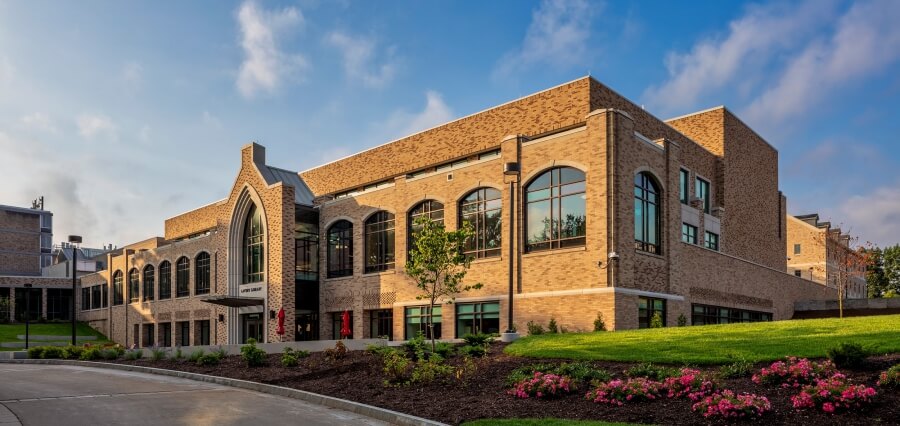
HOLT Architects Transforms Lavery Library Into a Modern Student Success Center

Published

on

HOLT Architects Transforms Lavery Library Into a Modern Student Success Center

When HOLT Architects began reimagining Lavery Library at St. John Fisher University, the assignment was not to refresh a dated academic building. It was to redefine what that building meant to campus life.

Constructed in 1975, the Lavery Library represents the characteristics of that period. As it was mostly concrete and constructed to keep the books stored (and not experience the students) there was an inward look at how the building was constructed which led it to having an internal nickname as a “book fort.” Students would enter the building to get their books and leave; The services were during their stay and spread throughout the building and days. Very little natural light was allowed inside. No circulation was promoted between the major campus areas.

The next 50 years of leadership from the university asked a completely different question: What type of project will allow the students to have the support to perform at their highest level? From this question we were able to change the idea of working on the library to the creation of a Student Success Center and demonstrate access to the services; visibility for all incoming students; the inclusion of all students.

Repositioning a Campus Landmark

The renovation of Lavery transforms the structure’s role in relation to the campus fabric as it now connects key areas of campus rather than serve as a barrier. HOLT Architects incorporated two primary entrances: one facing LeChase Commons and an elevated entrance facing the South Quad to work as throughways rather than dead ends.

Advertisement

The new universally accessible exterior route replaces previously risky 20-foot staircases with a direct link between Upper Quad and Commons, creating a fully accessible connection for the first-time creating dignified, equitable access to the entire property.

Internally, the renovation optimises vertical circulation through a strong social staircase with an intuitive orientation throughout the building, creating continuous movement throughout the various levels. Rather than appearing as a series of disconnected spaces, the renovation creates an open, clear connection to what a student will see on their way to what they want.

Adaptive Reuse as Strategy, Not Compromise

Rather than demolish the 1975 structure, HOLT embraced adaptive reuse. The building’s robust concrete frame was preserved, conserving significant embodied carbon and minimizing construction waste. The decision reflects a growing recognition within higher education design: sustainability is often most effective when it begins with what already exists.

Preserving the structure required strategic intervention. Mechanical chases that once occupied the perimeter walls were relocated inward, freeing the building’s edges for glazing and daylight. High-performance envelope upgrades and new glazing systems enhance energy efficiency while transforming the interior experience.

Advertisement

This approach allowed the design team to respect the building’s permanence while redefining its purpose. The heavy concrete frame remains, but its character has shifted. Transparency replaces opacity. Light replaces enclosure. The architecture acknowledges its past without being constrained by it.

The project serves as an example of how to incorporate modern solutions and designs with existing historical elements through adaptive reuse. This project shows that preservation and innovation can co-exist, and adaptive reuse can now be seen as an innovative approach instead of just looking back at the past.

From Repository to Academic Hub

The most visible transformation is programmatic. Lavery no longer functions primarily as a repository for books. Through the consolidation and right-sizing of collections, prime perimeter zones were freed for student use. Seating increased by approximately 20 percent without expanding the building’s footprint.

That increase is not simply quantitative. The renovation diversifies how students can inhabit the building. Open collaboration areas coexist with enclosed group rooms. Technology-rich classrooms sit alongside a dedicated silent reading room. Lounge seating, carrels, group tables, and social stair seating support different learning modes, durations, and comfort levels.

Advertisement

The design combines both “we” areas for collaboration and “me” areas for study – providing areas for engaging in group conversation or areas that allow for quieter concentration. Individual students can select the environments that align with their energy levels and work styles throughout their day. The spaces are meant to accommodate different methods of studying, so there isn’t just one way to be successful academically within this building.

Daylight is central to this shift. Once scarce, it now defines the interior character. New entrances and expanded glazing draw light deep into the floor plates. Transparent tutoring rooms and visible circulation paths allow students to see activity and support in motion. The building communicates openness before a word is spoken.

A Concierge Model for Student Success

At the heart of the renovation is a concierge-style Student Success Desk. Advising, tutoring, accessibility services, career planning, and research support are co-located in a single, highly visible hub. Services that were once fragmented or hidden are now centralized and daylit.

An organizational move to a new space has both logistical and psychological implications. When academic support is provided at a distance (e.g., in offsite offices), there may be a perception of stigma associated with accessing that support. When academic support is provided centrally on campus in light-filled spaces and in close proximity to day-to-day activity throughout the campus, academic support is readily accepted as the norm.

Advertisement

Librarians are repositioned as teaching partners, with offices distributed throughout the building rather than isolated behind closed doors. Their presence reinforces the idea that research, advising, and mentorship are integrated aspects of student life, not ancillary services.

University leadership has described the project as the physical embodiment of Fisher’s supportive culture. The architecture expresses that culture in concrete terms. Students encounter support not as a destination they must seek out, but as an ever-present resource woven into their path.

Removing Physical and Psychological Barriers

The renovation addresses inclusivity at multiple scales. The new accessible campus connection eliminates a long-standing physical obstacle. Interior circulation is intuitive, with clear sightlines and vertical links that reduce confusion.

Transparency does additional work. Glass-walled tutoring rooms and visible service points remove the ambiguity that often discourages students from asking for help. When support is visible, it signals availability. When students can see peers engaging with services, help-seeking becomes normalized.

Advertisement

Even the redistribution of space reflects this philosophy. Perimeter daylight zones are prioritized for student occupancy, while deeper interior areas house support functions. The message is subtle but clear: students come first.

Native landscaping and stormwater strategies extend the ethos of care beyond the building envelope. Sustainability and equity operate as parallel commitments rather than competing priorities.

Architectural Thought Leadership in Practice

HOLT Architects has built a reputation across New York State for integrating high-design aesthetics with functional and sustainable solutions. At Lavery, that reputation translates into a project that is as strategic as it is spatial.

The firm resisted the temptation to treat the building as obsolete. Instead, it recognized the latent value in the existing structure and amplified it. Adaptive reuse preserved embodied carbon. Envelope upgrades improved performance. Reorganization unlocked space for students. The design demonstrates that thoughtful intervention can extend a building’s relevance by decades.

Advertisement

The project’s impact has been recognized with the Jeffrey J. Zogg Build New York Award from the Associated General Contractors of New York State. The award underscores not only construction excellence but also the broader civic value of the transformation.

Of course, there is also an increasing recognition of the nature of the space being occupied on a daily basis. Lavery is now operating as a civic commons, or an academic hearth, where the community, connection, and learning all come together. Students walk through Lavery on their way to their respective quads. Students also hang out on the social stair and meet with advisors in the glass-fronted offices; they also study in daylight that previously did not exist.

A Model for the Next Generation of Campus Libraries

Higher education institutions across the country are grappling with similar questions. What is the role of a library in an era of digital resources? How can campus buildings embody commitments to accessibility and inclusion? How can sustainability goals align with budget realities?

The Lavery renovation offers one answer. Rather than abandoning the library typology, it expands it. The building retains its intellectual core while integrating academic and career support into a unified framework. It shifts from storage to service, from isolation to integration.

Advertisement

By preserving the concrete frame, HOLT Architects demonstrated that sustainability begins with stewardship. By opening the façade and reorienting circulation, the firm reinforced that architecture shapes behavior. By centralizing student services, the design team affirmed that physical space influences institutional culture.

What was once described as a “book fort” is now a forum for learning and connection. The transformation is architectural, operational, and symbolic.

For St. John Fisher University, Lavery stands as a commitment made visible. For HOLT Architects, it represents a model of adaptive reuse that balances preservation, sustainability, and forward-thinking design. And for the students who move through its light-filled spaces each day, it serves a simpler purpose: a place where success is supported, accessible, and expected.

Advertisement
Continue Reading

Business

Jamie Dimon says US must ‘finish’ Iran conflict to protect economy

Published

on

Jamie Dimon says US must 'finish' Iran conflict to protect economy

JPMorgan Chase CEO Jamie Dimon is calling for a decisive end to the conflict with Iran, saying the U.S. must “finish this thing” to protect the global economy and remove the threat to the region.

Dimon appeared on “Fox & Friends” Tuesday, saying American strength depends on decisive action in the Middle East and embracing the artificial intelligence revolution.

Advertisement

“It’s much more important that this be successfully completed than what the market does,” Dimon said. 

Threats to Middle East oil flows have added uncertainty to markets, as the United States, Israel and Iran continue to exchange strikes. On Tuesday, Iran struck an oil tanker off the coast of Dubai and continues to block shipments in the vital Strait of Hormuz.

JAMIE DIMON WARNS OF PRE-FINANCIAL CRISIS PARALLELS, SAYS SOME PEOPLE DOING ‘DUMB THINGS’

Jamie Dimon leaves Capitol after meeting with Senate Republicans on economic policy.

Jamie Dimon, CEO of JPMorgan Chase, departed the U.S. Capitol after attending a Senate Republican policy luncheon on Sept. 17, 2025, in Washington, D.C. (Graeme Sloan/Bloomberg via Getty Images / Getty Images)

Dimon said Americans should be hoping the United States wins the latest conflict and acts to “clean up the straits,” minimizing future threats to the U.S. and its allies.

Advertisement

“These people have been doing something bad for 47 years. They’ve been killing people. They’ve been killing Americans,” Dimon said. 

“I think people are surprised to find out they had a ballistic missile and go 3,000 miles. These are bad people, and they needed to be stopped,” he added. 

Dimon advocated for the country to “finish this thing,” warning that if the U.S. fails to act, the cycle of threats will continue.

TRUMP SUES JPMORGAN CHASE AND CEO JAMIE DIMON FOR $5B OVER ALLEGED ‘POLITICAL’ DEBANKING

Advertisement
U.S. Navy sailor signals helicopter launch on aircraft carrier flight deck.

A U.S. Navy sailor signaled the launch of an MH-60R Sea Hawk helicopter from the flight deck of the USS Gerald R. Ford on Feb. 28, 2026, at sea, as part of Operation Epic Fury. The operation followed a joint U.S.-Israeli strike on Iran that killed Su (U.S. Navy via Getty Images / Getty Images)

Beyond the battlefield, Dimon noted that a vital part of U.S. security is embracing AI capability and fixing a lagging defense industrial base. He singled out the U.S.’s inability to double or triple its supply of rockets if needed, noting it is a major area of concern.

JAMIE DIMON SAYS US HAS ‘BECOME LIKE EUROPE’ ON DEFENSE, AND IT’S HOLDING THE COUNTRY BACK

Dimon discussed his $1.5 trillion Security and Resiliency initiative, which lends and invests money to companies researching areas tied to national security, including drones, space and rare earths. 

He also spoke about the changes he sees on the horizon as the country adapts to the introduction of artificial intelligence. Dimon compared the AI shift’s importance to that of tractors and electricity. 

Advertisement
Bank executive speaks to an audience during a conference focused on business and innovation.

Jamie Dimon, chief executive officer of JPMorgan Chase & Co., speaks during the America Business Forum in Miami, Nov. 6, 2025. (Eva Marie Uzcategui/Bloomberg via Getty Images / Getty Images)

GET FOX BUSINESS ON THE GO BY CLICKING HERE

“AI, in the long run, is [going to] be unbelievable. Just like fertilizer was and tractors and the internet and electricity, it’s [going to] cure cancers,” he said.

“My guess is our grandkids will be working three and a half days a week. They’ll live to 100. They won’t have all our diseases. That’s good,” Dimon added. 

Continue Reading

Business

Thailand Tightens Data Centre Regulations Amid Rapid Market Growth

Published

on

Thailand Tightens Data Centre Regulations Amid Rapid Market Growth

Thailand is set to implement stricter licensing regulations for data centers as the industry experiences rapid growth alongside mounting concerns over potential exploitation by criminal networks.

Key Details:

  • Thailand’s data centre market is projected to grow from 470 billion baht (2025) to over 2.02 trillion baht by 2031, an average annual growth rate of 27.71%.
  • The NBTC (National Broadcasting and Telecommunications Commission) is proposing upgrading data centre licences to Type 3, the same category used for telecommunications operators, enabling deeper oversight of customers and infrastructure.
  • Key concerns include data centres potentially being exploited by call centre gangs, money launderers, and grey capital networks for cybercrime and cross-border fraud.
  • New measures would also introduce zoning controls to regulate electricity and water consumption.
  • Seven data centre projects worth over 96 billion baht have already received BOI approval, with major investors including True Internet Data Centre, Gulf-Singtel-AIS, and operators from Singapore, Japan, and Europe.
  • In 2025 alone, 36 investment promotion projects worth 728 billion baht were submitted, reflecting Thailand’s emergence as a regional hub.
  • The NBTC stressed the new rules are “not intended to block investment” and will be open for public consultation before finalisation.

Why It Matters:
As Thailand rapidly becomes a regional data centre hub, balancing economic growth with robust regulatory oversight is critical to preventing digital infrastructure from becoming a channel for organised crime and illicit financial flows.

Advertisement

Discover more from Thailand Business News

Subscribe now to keep reading and get access to the full archive.

Advertisement

Continue reading

Continue Reading

Business

Markets are nervous, but Main Street isn't: Wells Fargo CEO flags economic disconnect

Published

on

Markets are nervous, but Main Street isn't: Wells Fargo CEO flags economic disconnect

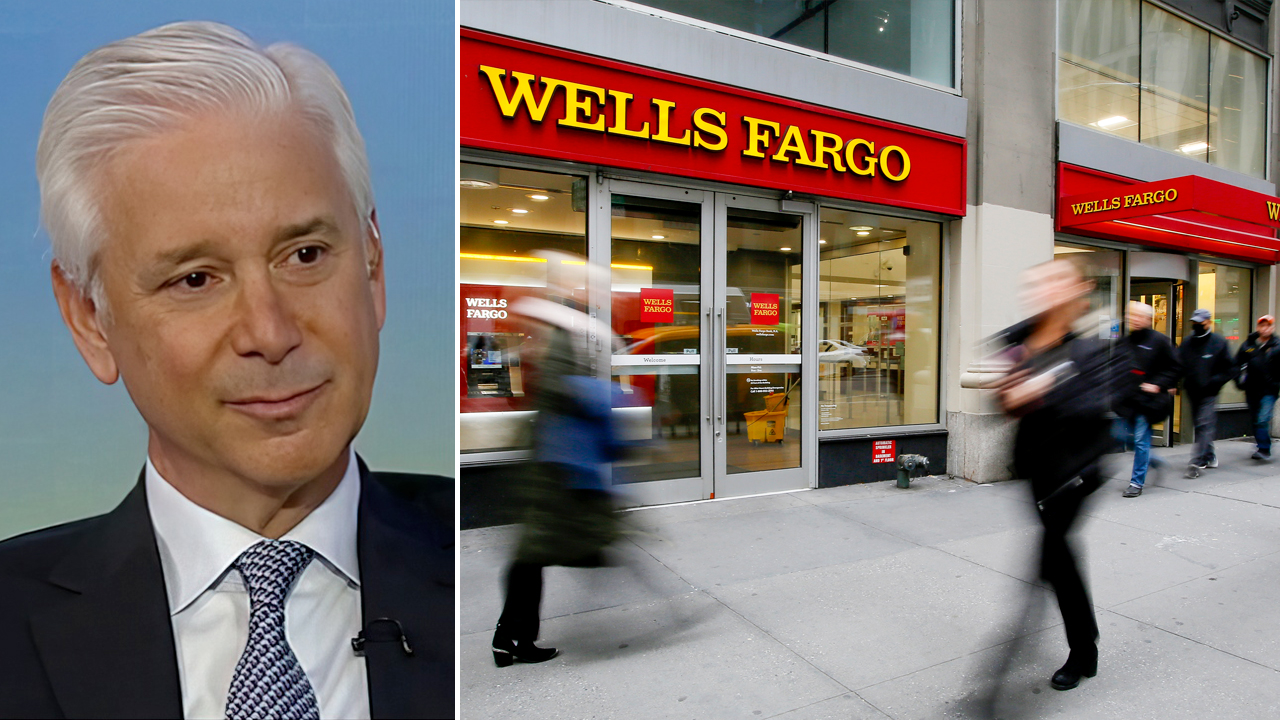
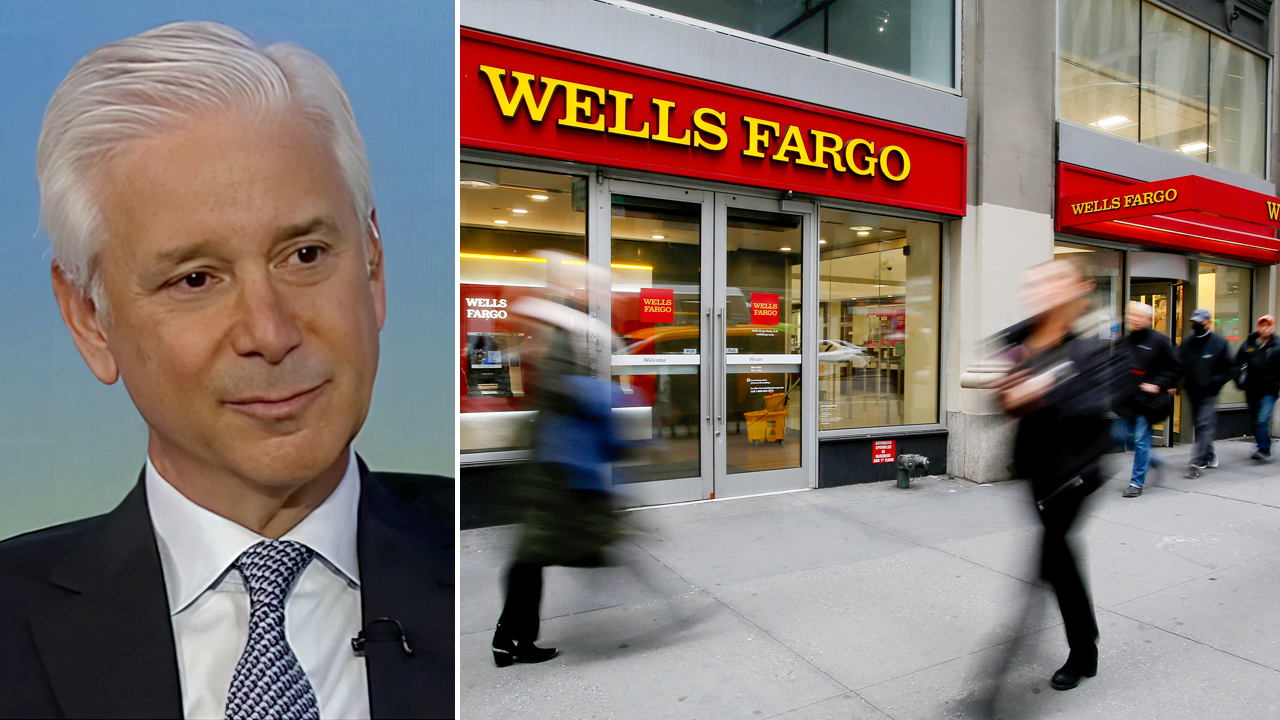
Despite a 50% spike in oil prices and an escalating conflict involving Iran, Wells Fargo CEO Charlie Scharf reports a disconnect between market volatility and real-world economic health.

“So, separate out the pure economy from markets and what people are nervous about in terms of what the future holds. The economy is still extremely strong. When we look at it, consumers are still spending, even with the increases in oil prices. They’re spending 20, 30% more on oil, but they haven’t stopped spending on everything else,” Scharf told FOX Business’ Maria Bartiromo on Tuesday.

“When you just look at the health of the consumer and the health of the businesses that we serve, which is pretty broad across the country, things are in really good shape now,” he continued. “That’s different than the markets, right?”

U.S. gasoline prices on Monday topped $4 a gallon nationwide, adding pressure to household budgets as oil markets surge in response to the lingering Iran conflict. Fuel markets have been particularly sensitive to disruptions tied to the Strait of Hormuz, a critical corridor for global crude shipments, where Iran has effectively restricted traffic, tightening supply expectations.

Advertisement

JAMIE DIMON SAYS U.S. HAS ‘BECOME LIKE EUROPE’ ON DEFENSE, AND IT’S HOLDING THE COUNTRY BACK

Further gains at the pump are possible if crude prices continue to rise, analysts say.

Meanwhile, investors are hesitant to take on any risk as the Middle East conflict rages on, with Reuters reporting a liquidity crunch amplifying “wild” price swings and widening spreads, leaving traders struggling to find buyers.

Scharf acknowledged a sense of “fragility” in the indices, but insisted that delinquencies remain low and wages continue to grow.

Advertisement

“It does feel like there is a fragility or a nervousness in the markets which you don’t yet see in the economy, which, depending on how long the war goes on, will either turn out to be OK or there could be a trigger which could make things a little bit worse,” he said.

One concern he does hold for Main Street America is the Trump administration’s proposed 10% credit card interest rate cap, which he fears could lead to a “crunch” for those who need credit most.

“I think the president is right to focus on affordability,” Scharf started. “I personally don’t think that that is the best solution… I’m much more concerned with, is it the right answer for helping Americans who are in need, and does it actually help extend more credit or extend less credit? And my fear is that it actually hurts the extension of credit.”

GET FOX BUSINESS ON THE GO BY CLICKING HERE

Advertisement

Looking ahead through the rest of the year, Scharf feels “very good” about Wells Fargo’s overarching growth trajectory, also touching on opportunities in artificial intelligence (AI) infrastructure.

“It’s going to be trillions of dollars, whether it’s $3 [trillion] to $5 trillion that’s going to be needed to build out the infrastructure,” the CEO said. “The hyperscalers have a huge advantage. You know, those who control these large language models that continue to be on the forefront continue to invest. People are going to pay for that.”

READ MORE FROM FOX BUSINESS

FOX Business’ Bradford Betz contributed to this report.

Advertisement
Continue Reading

Business

Cal-Maine Foods Sales Sink on Lower Egg Prices

Published

on

Cal-Maine Foods Sales Sink on Lower Egg Prices

Cal-Maine Foods CALM 0.62%increase; green up pointing triangle logged lower profit and sales in its fiscal third quarter, hurt by materially lower egg prices compared with historic levels seen in the prior year.

Still, the declines weren’t as steep as Wall Street had expected, as Cal-Maine continues to diversify its sales mix by expanding the scale and geographic reach of its egg business and investing to support the growth of our prepared foods business.

Copyright ©2026 Dow Jones & Company, Inc. All Rights Reserved. 87990cbe856818d5eddac44c7b1cdeb8

Continue Reading

Business

Warning Iran war 'shock' could push up mortgages for 1.3m homeowners

Published

on

Warning Iran war 'shock' could push up mortgages for 1.3m homeowners

Higher energy prices could lead to higher borrowing costs for homeowners, the Bank warns.

Continue Reading

Business

'The Australian way': PM seeks to calm nation on fuel crisis

Published

on

'The Australian way': PM seeks to calm nation on fuel crisis

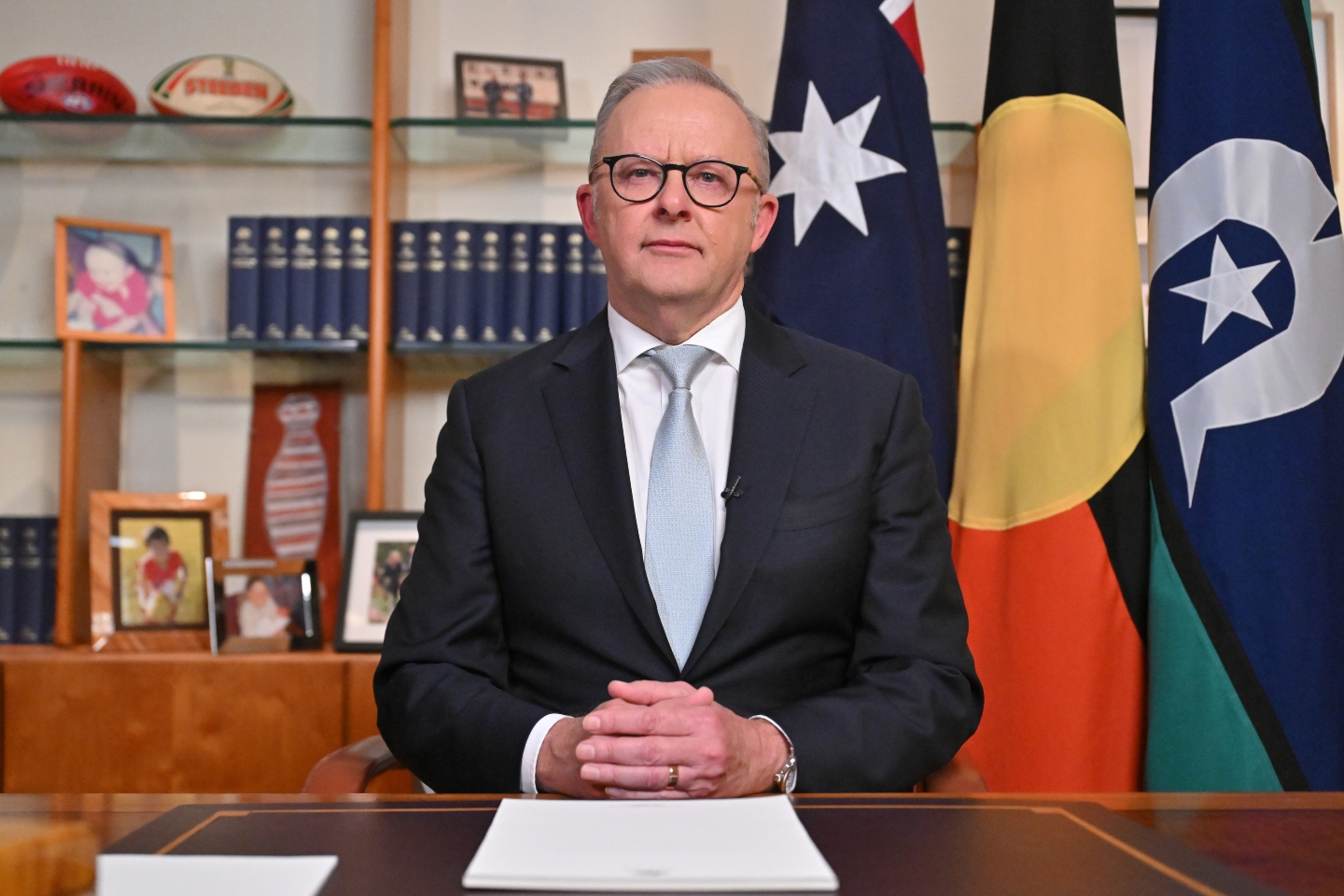
The Prime Minister has addressed the country, calling for calm in the face of uncertainty surrounding the war in Iran, while warning the situation could worsen.

Continue Reading

Business

Lonza: Structural Growth Intact, CHI Exit Strengthens Focus, Recent Weakness Reinforces Entry Opportunity

Published

on

Incyte: An Undervalued Healthcare Gem

Lonza: Structural Growth Intact, CHI Exit Strengthens Focus, Recent Weakness Reinforces Entry Opportunity

Continue Reading

Trending

Copyright © 2025