

Politics
An outpouring of ‘sticks and stones’ outrage can’t hide Badenoch’s palpable hits

It’s ironic to think, at the end of Keir Starmer’s premiership, that his problems began almost at the start of it.
One of my first editorials for ConservativeHome on the man who became known in our office as ‘the adenoidal overlord’ was; that in politics, it’s not the suits, the flat, the glasses, the tickets. It’s not the U-turns – forced largely by the Conservative opposition, or his own backbenchers. It’s not the Chagos Islands, the collapsed China spy trial or the limp cave in on their spy-hub embassy, it’s not Mandelson, a rack of ministers resigning, or the missing-in-action Defence Investment Plan.
I mean, all of these were the fuel he kept throwing on his own political pyre, but the really toxic thing that inhabited all of these moments and kept it burning was the hypocrisy.
The four years of camping on the nearest bit of moral high ground he could find, to claim the Conservatives were just bad people, who once he replaced all would be well. The failure to spot that if you offer change you meant change for the better not what you delivered, which is worse. The self awarded ‘country before party’ badge tarnished by hurling people under buses because in the end it was his job first.
The surviving Cabinet, those ‘un-resigned’ but now resigned to his fate, and possibly their own, gushed about his ‘legacy’ online, and cheered in the House of Commons yesterday, whilst they simultaneously horse-traded via Louise Hague, one of the first who had to resign, for a job with the MP who would be PM, or just beg via mobile to cling to the one they’ve currently got.
And Kemi Badenoch knew people don’t like watching a man being kicked when he’s down. So she didn’t.
Instead she went for those who cheered him to the rafters but had – and I’m sorry it is a well known and widely accepted rhetorical leitmotiv for betrayal not really a trigger to public violence – ‘stabbed him in the back’.
Tulip Saddiq the anti-corruption minister who had to resign after she and her auntie were accused of corruption, took to her feet after PMQs and railed how language matters. How it can extend to actions outside parliament where women particularly can feel threatened. I would never dismiss such concerns, nobody should feel unsafe, but it was odd coming from a woman, who threatened a pregnant producer who worked for Channel 4 outside Parliament, for asking her difficult questions about her aunt.
Politics is a brutal game, everyone knows that, but hard words from a despatch box are nothing to watching Labour MPs and front benchers rallying for their leader having just told him it was time to pack it in because he was so unpopular.
It was hypocrisy to cry foul over some of Kemi Badenoch’s barbs – she is known for not sugarcoating things, calling Bridget Phillipson ‘incompetent’ and ‘a spiteful class warrior’ – and then claiming this was some form of ‘new low’
New low?
What? Compared to Angela Rayner branding the entire Tory Party ‘scum’? David Lammy describing the ERG group of Tory Brexiteers ‘Nazis’? John McDonnell asking why Esther McVey shouldn’t be ‘lynched’? Bridget Phillipson branding Nick Timothy a ‘racist’? Ed Davey calling Boris Johnson a ‘traitor’?
What is low behaviour is the collective amnesia of Labour MPs, clearly corralled into shaming Kemi Badenoch over PMQs. It didn’t just extend to the mask-slipping revelation that it would seem because they are the ‘good guys’ it’s ok if you insult ‘the bad guy’ Tories but is outrageous the other way around. Worse they even ignored what Badenoch had actually said.
Apparently according to Keir, who like his Prime Ministerial predecessor Rishi Sunak, seems to have come out of his shell since he chucked it all in, it was because Badenoch had had a go at Phillipson’s working class story. It is a social mobility success story, all power to her for getting where she did, growing up as it happens, under the Tories.
However nobody mentioned her roots. Just Labour. And as Kemi said later online:
‘”I grew up on a council estate” is not an excuse for failure’
Quite apart from the fact, lots of Tories aren’t from a posh background, and plenty of Labour politicians have used independent schools to educate their kids, their howl of indignation ignored the fact – very deliberately – that a poll has come out where 0 per cent of NEU teachers said Philipson was doing a good job and 72 per cent were negative about her performance, and that many a parent of children in independent schools think her VAT on fees, was class-war inspired spite.
I’ve met scores of parents who’ve had to move out of schools that they paid for -whilst rightly paying tax to educate other kids- who are neither posh nor that well off but made a free choice. They could have had cars, or a nicer house, or holidays, or for that matter designer suits and glasses but they chose instead to invest their money in their children’s education and taken from them all because the education secretary thinks that’s morally wrong. Some of them I’ve spoken to weren’t even Tories. They might be now.
And Bridget Phillipson could have weathered any such criticism if it had actually raised the money to pay for all the teachers she claimed it would – but it hasn’t. Numbers are down, and though she shook her head at this being raised, no amount of statistical jiggery-pokery posted later to prove otherwise passes real scrutiny. The online ‘community note’ squad quickly posting why the government numbers are bogus.
Kemi in many ways was doing – not to Starmer, but those that have moved him on – something she’s there to do: tell the truth. And yes, the truth hurts.
As for the man of that moment, Keir Starmer, it’s a bit off to talk about yourself having ‘good grace’, twice, when a stack of allied whisperers has been telling lobby journalists that he’s angry, hurt and feels betrayed, and that he doesn’t really rate Andy Burnham, the man of the moments to come.
I have a lot of criticisms of Boris Johnson but one thing he was absolutely right about, when the herd moves, it moves. The Makerfield sheep pen is filling fast, all at the blink of a lashed eye.
Big Al Carns, and disingenuous Darren Jones are not going to stop the ‘naughty boy’ from being the Labour Messiah, but if any of them think he’s going to produce miracles they’re mistaken. The challenges, and they are huge, are the same for Burnham as they were for Starmer.
Kemi Badenoch may have a sharp tongue sometimes, but I look around, sometimes not even at the Tory benches, and think, yes, you are uncomfortable because she’s just saying what you yourself have been thinking.
Will Andy Burnham forcing some of the architects of Labour’s current problems into lesser jobs – or no job at all -be considered spiteful for doing so?
I doubt it. For some it will be richly deserved.

Politics
The House | Jacqui Smith: “A Million Young People Not Earning Or Learning Is A Moral Outrage”
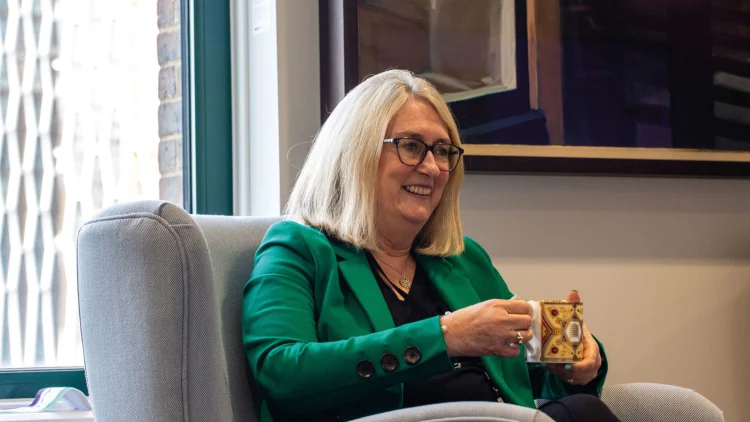
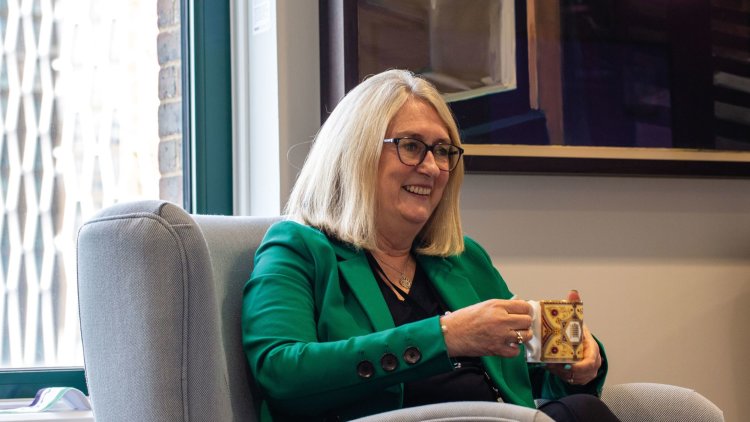
Photography by Louise Haywood-Schiefer
10 min read
Skills minister and Labour veteran Baroness Smith talks to Matilda Martin about her party’s leadership troubles then and now, plus what can be learned from the Milburn review of young people and work
Jacqui Smith was the first serving minister to use the past tense when talking on the record about Keir Starmer’s premiership. “I would have been very happy for him to continue,” she said on that Monday morning before the podium appeared outside No 10. It was the final confirmation, if any were needed, that the Prime Minister would soon be confirming he was on his way out.
This is far from the first time Baroness Smith of Malvern, 63, has borne witness to serious political turbulence. Having first been elected to Parliament in Tony Blair’s 1997 landslide, it fell to her as his chief whip in 2006 to tell the prime minister he had a problem: the party’s demands for a ‘timetable’ were growing.
Sitting down with The House hours before Andy Burnham’s Makerfield victory, the education minister – now forming part of a Labour government from the House of Lords – reflects on this familiar territory.
“I’m now in my 12th year as a minister,” she says, adding up time served under both New Labour and Starmer. “I’ve been around the block a bit, and I have seen turbulence. I understand that governments go through difficult times.
“In those cases, usually the best thing to do is to focus on the change that brought you both into politics and into government, to get on with delivering it, and to spend less time worrying about the personalities involved.”
Perhaps unrealistic but not surprising from a minister described first and foremost as “loyal” by those who have worked with her over the years. She was immediately appointed as Gordon Brown’s home secretary when he took office, for example, despite having been labelled as one of “Blair’s babes”.
Asked what she makes of the recent intervention by her former boss, she shoots back: “Which one of my former bosses?” Tony Blair inspired a summer of essays when in May he published a 5,000-word thesis offering advice to the party he once led.
“Tony’s interventions are always welcome from me. He is, and was, both a phenomenal boss and an era-defining prime minister. But… this is probably a time to buckle down, get on with changing the country and spend less time writing essays.”
Smith left government in 2009 amid the expenses scandal, which included the revelation that she had – in error, she said – claimed back money for two pornographic films bought by her (now former) husband. “I had some high-profile problems in the last government, both personally and politically,” Smith admits at one point, unprompted.
In 2010, she lost her Commons seat to the Conservatives but went on to rebuild her reputation outside the Palace walls, co-hosting a weekly LBC show and – following a path well-trodden by former politicians – competing in Strictly Come Dancing in 2020.
When Smith became skills minister in July 2024, she was returning to the department where her ministerial career first began back in 1999.
She recalls bringing her sons with her, who were tiny at the time, and how the glass-walled offices were a playground of sorts for them. Her boys are now more than six feet tall.
Much has changed over the decades, not least the lives of young people like Smith’s sons. The recently published review of another former New Labour minister, Alan Milburn, exposes the depth of the crisis of Britain’s almost one million young people not in education, employment or training. If these “Neets” were to form a city, he writes, it would be larger than Leeds, Glasgow or Cardiff.
“The fact that we’ve now got a million young people who are not earning or learning is a moral outrage and it’s also an enormous waste of economic talent,” says Smith.
The report observes that the rise of AI is likely to create further pressure at the bottom end of the labour market. What is this government’s plan to protect young people from the harms of the AI revolution?
Smith points to the work of the government’s ‘AI alliance’ and ‘AI champions’ who are looking at entry-level jobs and identifying “where those challenges might be and what more we need to do in order to support young people into them”.
“If you hollow out your entry-level jobs in any area of employment, you’re building up problems for the future, because then you don’t have the pipeline that you need,” she says, adding that this is something employers “get”.
Does it worry her that companies are cutting jobs for young people because of AI? While Smith is careful to point out that there are a range of factors contributing to the changing labour market, she adds: “I know it worries young people, because I talk to them about it…
“That’s why it’s quite important for us to keep saying: whatever the challenge is, your opportunities are likely to be better if you’ve been able to go through high-quality courses, whether higher education, apprenticeships, or other skills routes.”

The Neet generation is also, Milburn highlights, generally unhappy. “Young people lead complicated lives,” Smith says. “There is a lot going on in the world with which they have to put up.”
She takes the opportunity to lay the blame at the door of her predecessors: there is less for young people to do and enjoy, she claims, “partly because of the way that some of the things that we previously put around education got hollowed out by the last government”.
When Labour took power in 2024, it was braced for a host of problems. One of those it did not anticipate, or perhaps want to deal with, was the financial crisis inherited in the university sector.
Universities have often found themselves on the front lines since 2024. The proposal of a levy on international students in the immigration white paper blindsided the sector, although sources stress that the alternatives available were far worse.
The narrative that some universities run courses that offer no benefits to their students is also one that has permeated all major parties. At Labour conference in 2025, Starmer announced that the party’s old ambition for half of young people to go to university was being decisively abandoned – “I don’t think that’s right for our times,” he declared – and the government sought to push apprenticeships and other vocational courses.
“I’ve been around the block a bit, and I have seen turbulence. I understand that governments go through difficult times”
The question of apprenticeships versus universities is one that has played out in many governments, and Smith finds herself jostling with a higher education (HE) sector that often questions whether she even likes them. Smith, of course, would contest this characterisation of her approach.
Whitehall has reportedly considered introducing new national minimum standards, such as a pass in GCSE English, to access student loans – a move that would lock some people out of the opportunity to enrol in higher education. Smith refuses to comment directly on the reports but says she wants those accessing higher education to “genuinely benefit from it”.
She also stands by decisions not to tackle the Plan 2 student loan system, taking the party line that there are other priorities within government that had to take precedent. She insists, however, that she has been “continuing to think about what more we can do to make that system of repayment better and fairer for those who are in it”.
Another high-profile story in the HE sector has been the debate around free speech. In April, the University of Sussex won a case against the regulator Office for Students (OfS) in the High Court, overturning a £585,000 fine handed down last year for failing to uphold free speech. Among other things, the judge found that the OfS decision to issue the fine was biased against Sussex.
Two months later, Smith is adamant that she supports the OfS and its operation. She is also clear universities should not interpret the ruling as a sign all is well on the free speech front: “It’s important that that court case isn’t seen as a suggestion that there is nothing that universities need to be thinking about when it comes to freedom of speech.”
When The House speaks to Smith, Starmer has not yet resigned but Labour MPs are already contemplating life under Andy Burnham’s leadership.
“I sat in the cabinet with Andy Burnham,” the minister says. “I’ve known Andy for a long time. I know what a talented politician he is. He’s been on a journey, and I’m glad he’s coming back to Westminster.” She does not approve of him instigating a leadership change, however.
While numerous names have been thrown around as potential successors to Starmer in recent months, none of those considered frontrunners have been women. Infamously, Labour is yet to elect a female leader. Is Smith, the first female home secretary and currently an equalities minister, embarrassed by that?
“No, I’m not embarrassed,” she claims. “We’ve got an enormously strong team, of which, frankly, quite a lot of the best performers are women.”
Many of her female colleagues in the party are embarrassed, and were furious about the Peter Mandelson revelations, which some said typified a deep-rooted misogyny in Labour. Does she believe Starmer did enough to tackle the so-called ‘boys’ club’ in No 10?
Smith pauses before answering. “I don’t think, while we’ve got the sorts of inequality that we have across society and in politics, anybody’s ever taken enough action. A lot of my political life, and one of the elements of my role now, is about how we tackle that in politics. I’ve been around long enough to see quite a lot of improvements in the way that women are treated in politics, but there’s still more that needs to change.”
Predictably, she is clearer when it comes to Reform UK’s shortcomings on women’s rights. Nigel Farage’s party has explicitly pledged to repeal the Equality Act 2010 on “day one”, which Smith says “scares” her.
“It would be a massively backward step but I’m afraid it sums up the approach of Reform, which is to identify a problem and decide who’s to blame for it, rather than to identify a problem and think about how you solve it.”
Does she think working in politics as a woman has become easier over the last two decades? It’s a question Smith seems keen to reflect on: “There are more women in Parliament, far more than when I was first elected in 1997… There are more women doing a wide range of jobs. Those are all really important developments.
“But what I also note is, I had some high-profile jobs in the last government, [but] both personally and politically, I never faced the level of abuse and intimidation that politicians face now, and in the week when we’re remembering…” she breaks off.
“Sorry,” she says, pausing to gather herself. “When we’re remembering the death of Jo Cox, who was a good friend of mine… that is something that worries me about the environment in which, all politicians actually – but the evidence suggests particularly women and particularly women of colour – now have to try and operate in the public sphere and in elected democracy.
“There are women who think twice about coming into a political career,” Smith continues, “and that’s a terrible loss of their talent – but it’s an undermining of our democracy as well.”
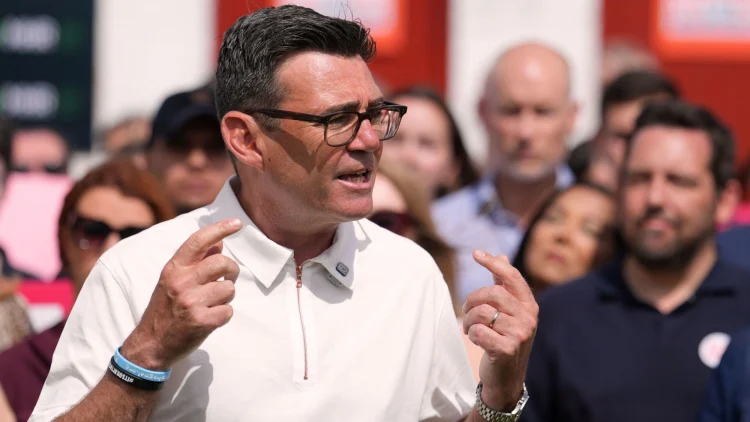

Burnham speaking to supporters after the Makerfield by-election (Associated Press/Alamy)

4 min read
During months of speculation about his return to Westminster, the presumptive prime-minister-in-waiting, Andy Burnham, has made comments that have raised concerns about how his programme would fare with the bond markets.
In particular, his explicit diagnosis of privatisation (of essential utilities above all else) as one of the “four horsemen” of UK economic decline and his more ambiguous comments about how he would remedy it. So, what would a fiscally responsible approach to public ownership actually look like?
Before answering that question, it’s worth noting some fiscally relevant aspects of the set-up we already have. First, the UK’s infrastructure investment needs are immense, and will be funded by billpayers and taxpayers regardless of ownership status. Private ownership may keep spending off the government’s books in the short term, because consumers pay exclusively through their bills. But these high bills squeeze the spending power of those customers and restrict economic production, reducing taxable economic activity. The public purse is affected either way.
Secondly, Britain’s privatised utilities already depend heavily on public support (directly to companies or indirectly through their trading partners or households; explicitly or implicitly through bailout provisions). The £2.7bn cost of the 2021to 2022 energy “supplier of last resort” bailout programme is one example. Another is the nearly half of rail and bus operating expenditure funded by public subsidy. If the state is expected to absorb losses when things go wrong, there is a strong case for it sharing in the profits when things go right – socialising the upside, not just the risk. That is fairer, fiscally safer and creates better incentives.
Finally, public ownership is not inherently a threat to the government’s finances. Borrowing to buy or build productive assets that generate reliable revenues is not obviously riskier than relying on private owners to do the same.
The biggest potential savings come from the fact that governments can borrow more cheaply than private companies. This can have outsized benefits in highly capital-intensive industries like water or energy networks, and this is not speculative – existing policy already revolves around minimising this key parameter. A rough calculation suggests that bringing National Grid Electricity Transmission’s cost of capital much closer to the risk-free rate could lead to savings in the region of 20 per cent. Water is even more capital-intensive. Public ownership could close a large part of this gap, turning savings into lower bills, fiscal consolidation or greater investment than otherwise.
The bigger obstacle is not economics but the government’s fiscal rules. These dictate that “public sector net financial liabilities” (known as PSNFL) must be forecast to fall – something Burnham will likely keep to avoid any penalty from constant rule changes.
If the state is expected to absorb losses when things go wrong, there is a strong case for it sharing in the profits when things go right
Unlike the previous “public sector net debt” rule, this one allows debt to rise as long as it is offset by rising financial assets. However, publicly owned commercial enterprises like Transport for London and their assets are treated as non-financial assets in the accounts, and thus cannot be accounted for in terms of their net value for the purpose of the rules around borrowing to invest. A strategic approach is needed – carefully targeted and sequenced.
The priority should be finding parts of the system where public ownership can expand at low cost. The renationalisation of expiring train operating franchises and the National Energy System Operator are illustrative. The former acquired bargaining power against the real money pit in the rail system – the rolling stock leasing companies – by making the state the sole buyer of trains and carriages, while the latter’s control over co-ordinating the grid has untapped potential. Special administration or routine renewals of licensing, franchises and price controls also provide natural opportunities to minimise legal complication and fiscal expense.
Importantly, the debt rule permits bond-financed stakes up to the ownership threshold that separates public from private sector, and financing lending through bonds to any such private entity. This allows borrowing to acquire (minority) stakes in or lend to companies as long as they remain in the private sector.
The government should look at ways of using cheap public finance to build up ownership stakes over time, and at how payback periods for publicly acquiring shares can be accelerated through refinancing debts. Given the importance of sound commercial governance, these stakes should sit within a public corporation, not within Whitehall. Designated public financial institutions like the National Wealth Fund can be enlisted to support the process.
There is no one-size-fits-all approach, and the larger policy package in which it sits also matters. But clearly Britain’s current model of privatised essential services is not protecting the public finances. In many cases, it is actually jeopardising our fiscal sustainability. Any programme of public ownership will start from that fundamental reality.
Chris Hayes is chief economist at Common Wealth think tank


3 min read
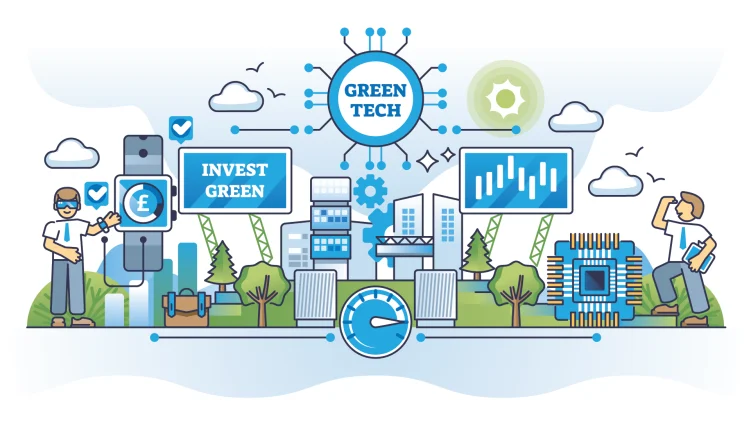
Britain can lead the world in climate technology. However, Edward Morello, Chair of the ClimateTech APPG, highlights that without faster policy action and better access to fi nance, promising CleanTech fi rms will continue to grow elsewhere
Climate change is an issue I feel very strongly about, prior to being elected I spent nearly a decade in renewable energy finance. While I am deeply alarmed by the potential devastating consequences of inaction; I am at my heart an optimist. I believe that with concerted effort we can avoid the worst ravages caused by global temperature increases. I also believe that British innovation can be at the forefront of tackling the threat.
The UK is blessed with a thriving and vibrant clean technology sector that spans data, AI, greenhouse gas removal, solar, wind, heat, geothermal, tidal and many more areas. We have world-class universities spawning cutting-end spin-outs, a huge wealth of talent and genius, as well as expertise in manufacturing and engineering.
We should be the go-to place for other countries that want the next generation of climate technology
We should be world-leaders in the industry of the future, and best in class in a range of subject areas. We should be the go-to place for other countries that want the next generation of climate technology, and the model they aspire to in their own domestic industries.
Yet all is not well in the sector. In meeting after meeting UK businesses tell me they are struggling to attract funding at the startup stage, and finance for the scale-up phase is almost non-existent. Increasingly those companies are looking to become US or EU firms in order to grow.
The issues are not the lack of capital in the market. Investors are sitting on more money than ever before. But speed of deployment and of achieving returns is faster in other markets. Money goes where it can make money fastest. And right now, the investment environment is more attractive in the US and Europe.
The problem is political. Time and again investors reference policy and regulatory uncertainty in the UK, the speed of government decision making, and the lack of support for vital sectors or particular technologies as reasons not to back British businesses.
Carbon removal companies and their investors are still awaiting the government’s response to its own Independent Review of Greenhouse Gas Removals report. The Net Zero Innovation Portfolio, which distributed £1.3bn in innovation grants and delivered £3 in follow-on funding for every £1 invested, was abolished at the last spending review. Its significantly smaller replacement, the CleanTech Innovation Challenge, is yet to award any money. The British Business Bank seemingly only backs businesses in this space that are already established and perfectly capable of raising private finance.
To rebuild investor confidence the government should start by speaking more about the potential for British CleanTech startups, follow up warm words with rapid action on regulatory frameworks and standards, and earmark easy-to-access funding streams for British businesses looking to start and scale in Britian.
As Chair of the ClimateTech APPG I want to shine a light on these issues because it is not just important for the sector, but for the future of the UK. These are the businesses and industries of tomorrow. They have huge employment potential and will deliver significant returns for the Exchequer. Even for those not motivated by a desire to save the planet, that should be reason enough to support British climate technology.

4 min read
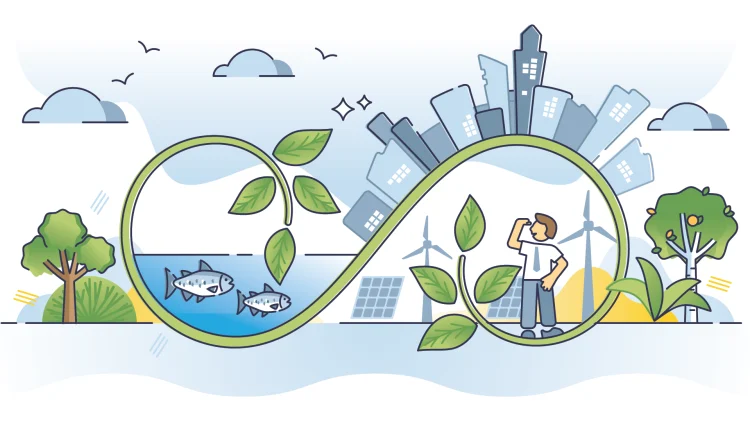
Net-zero is not a burden but Britain’s best route to lower bills, greater energy security and a cleaner, fairer future – if politicians match the urgency of the crisis, warns Green Party Westminster Leader Dr Ellie Chowns
Despite the near-constant misinformation being churned out by bad-faith actors, there remains a clear scientific consensus when it comes to the climate crisis: namely, that climate breakdown is here and getting worse, and that our window to change course demands not only that we act, but that we act with urgency.
Net-zero is the pathway by which we do so – but current action to achieve it is simply not going far enough, despite the countless benefits it offers. The case for climate action is not purely an environmental one; it is about a wholesale transition to an energy system that is cleaner, more secure and more affordable for families across Britain for generations to come.
Take the question of energy security. The UK’s dependence on foreign oil and gas leaves us dangerously exposed to shocks far beyond our control, as we are seeing currently in the wake of the US/Israeli war on Iran. When conflict abroad drives up global fossil fuel prices, the effects are felt at home almost immediately in energy bills, inflation and the cost of doing business. This is utterly unsustainable: a country with our resources should not be at the mercy of international fossil fuel markets.
The solution is to invest at scale in clean renewable energy: wind, solar, storage, proper insulation and clean heating. Every turbine we build, solar panel we install and home we retrofit limits Britain’s exposure to future energy price shocks and strengthens our national security. This is evidenced by the Climate Change Committee (CCC) itself, which reports that the costs of achieving net-zero by 2050 are lower than the costs of a single fossil fuel price spike like we saw in 2022.1
Clean power is the cheapest power, and investing in energy efficiency is one of the most effective ways to bring bills down. Warm, well-insulated homes use less energy in the first place, and green technology like solar panels and heat pumps mean they cost less to run when the heat does need to be turned on. Ensuring all new buildings meet zero-carbon standards from the outset will avoid locking in higher costs for decades to come, while simultaneously lowering emissions.
Fundamentally, the cost of delaying action is rising. Climate breakdown is already causing real damage – look at the costs that flooding and heatwaves already impose on our communities, infrastructure and public services. The longer we wait, the higher the bill becomes. The CCC has found that without additional adaptation, the cost of climate change could rise to the equivalent of around 1–5 per cent of GDP per year by 2050 – or in other words, up to an estimated £260bn annually.2
But the argument for going further and faster on climate change mitigation is not just about avoiding disaster – it’s about creating opportunity as well. Speeding
up progress on renewables can create skilled jobs in the clean energy sector, improve air quality, reduce fuel poverty and restore the UK’s glorious nature and wildlife. It offers the basis for a more resilient and prosperous economy that genuinely works for British families, underpinned by clean energy and efficient systems.
The UK has everything it needs to stand as a global leader on the path to a cleaner, greener, fairer future – abundant resources, technical expertise, public support. What we are missing is the political ambition and will to match.
This demands sustained investment, clear policy direction and the political integrity to face down misinformation and vested interests which may seek to delay progress. It demands treating climate action as an opportunity, rather than a burden, as we work to achieve net-zero with the urgency the challenge requires.
References
- Climate Change Committee; Cost of Net Zero by 2050 less than a single fossil fuel price shock. https://www.theccc.org.uk/2026/03/11/cost-of-net-zero-by-2050-less-than-a-single-fossil-fuel-price-shock-ccc/
- Climate Change Committee; A Well-Adapted UK. https://www.theccc.org.uk/publication/a-well-adapted-uk/
Politics
Politics Home Article | Wylfa can set the standard for delivering major energy infrastructure



3 min read
With Wylfa set to host the UK’s first new SMRs, Llinos Medi, Plaid Cymru Spokesperson for Energy Security and Net Zero, writes that major energy infrastructure succeeds only when governments, developers and communities work in partnership
The confirmation on 13 November 2025 that Wylfa on Ynys Môn would host the first fleet of Small Modular Reactors (SMRs) marked more than a milestone in UK energy policy. It signalled a once-in-a-generation opportunity to revitalise the island’s economy, and to demonstrate how a major infrastructure project can be delivered successfully when governments, developers and communities work together.
The opportunity is clear. Three SMRs at Wylfa could generate up to 3,000 local jobs at the height of construction and sustain hundreds more over the long term.
Outside of direct jobs, local businesses and supply chains could also benefit hugely from their involvement in the project. Once operational, the reactors are expected to power the equivalent of around three million homes, strengthening the UK’s energy security for decades to come.
But the benefits extend beyond economics and energy.
A new nuclear development at Wylfa has the potential to reinforce the island’s linguistic and cultural identity. For members of the nuclear workforce who left Wales for opportunities elsewhere, this project could offer a pathway home.
With thoughtful planning, the use of the Welsh language can be embedded throughout both construction and operation, making a powerful statement that major projects can strengthen, rather than dilute, local culture.
Yet the success of this first-of-its-kind development will depend on one principle above all: partnership. With the initial three reactors scheduled to begin generating power in the middle of the next decade, and the possibility of up to five more in the future, delivery must be collaborative and grounded in local experience to maximise the project’s full potential and to guard against any unwanted outcomes.
That means developers and the UK government must work hand in hand with the people of Ynys Môn. The island’s long relationship with nuclear energy is an asset, not an afterthought. Our communities have over 65 years of nuclear heritage from the previous Magnox nuclear project at Wylfa; developers and the government should draw from this deep well of knowledge to set the project up for success.
It also means working hand in hand with Anglesey County Council, whose Energy Island Programme has already laid the groundwork for the project by bringing together public, private and third-sector partners to position the island as a hub for clean energy innovation.
As the former leader of the council, I have firsthand experience of its commitment to enabling responsible development and ensuring that planning processes support, rather than hinder, strategic investment.
There will also need to be close collaboration with the Welsh government, as well as the area’s colleges and universities, such as Coleg Llandrillo Menai and Bangor University, which are already doing fantastic work in equipping local people with the skills they need to be a part of the workforce to deliver and sustain the project.
North Wales already has the institutions and talent; what is needed now is alignment and direction from the UK. The strong existing partnerships between Anglesey County Council
and the local education sector must be used to ensure that the pipeline of local skilled workers, engineers and scientists is ready to feed into delivering three SMRs at Wylfa.
If the UK government, the developers and our island community move forward together, Wylfa can become a shining example of how the UK can deliver major energy infrastructure with respect for people, place and a commitment to spreading prosperity fairly.



5 min read
AI will revolutionise the state. But how will we power it? Ethan Dodds, Political Campaign Manager at Total Politics, suggests we must stop treating AI and energy policy as competing priorities
In an ageing society, the demands on public services will only grow, just as the pool of working-age taxpayers shrinks. If the state is to survive this demographic shift, it must do more with less.
That is the key offer of AI. From accelerating cancer diagnoses in the NHS to freeing up frontline police time and automating fraud detection, the benefits of AI are already making a difference.
But a narrative has emerged in Westminster that threatens to stall this progress. Seizing the benefits of this technology requires immense compute capacity, and the data centres that provide it require a connection to an already gridlocked electricity network. This has created a new dividing line in UK politics: do we prioritise data centres or renewable energy projects for a grid connection?
This is the wrong debate. Britain can, and must, pursue both.
New renewables will provide the clean, sovereign energy needed to kickstart the AI boom that will transform public services, while AI will help manage an increasingly complex modern grid, ease demand spikes and get shovels in the ground more quickly for new renewables. The net-zero transition and the tech revolution are not competing priorities, but two sides of the same coin.
A grid fit for the future
Britain’s energy architecture was designed for a long-gone era, built to manage a stable, predictable baseload of electricity from coal and gas. Today’s system is greener but vastly more complex. Wind and solar power fluctuate with the weather, creating mismatches between where power is generated and where it is needed.
Human operators, however skilled, cannot manage this complexity alone, and certainly not with the legacy technology currently at their disposal. Here, AI could be game-changing. Machine learning systems can predict demand hours in advance, forecast drops in renewable generation before they occur and identify transmission bottlenecks before they cause outages.
The net-zero transition and the tech revolution are not competing priorities, but two sides of the same coin
It can also help reduce demand spikes to ensure there is enough clean power to go around. By encouraging businesses and households to shift consumption away from peak periods, we can reduce our reliance on expensive, polluting gas-fired power stations that are switched on when energy from renewables is unable to meet demand. The result will be lower bills for consumers and a lower carbon footprint.
If we want an energy system that is both clean and reliable, we must modernise our infrastructure. By harnessing the benefits of technologies like AI, we can transform our grid from a relic of the nineteenth century into a system fit for the twenty-first.
Unblocking the connections queue
The notorious 15-year connection delays plaguing the grid are not just a problem for data centres. They also threaten the transition to clean power.
To hit the government’s 2030 clean power targets, renewables need to come online at a pace Britain has consistently failed to manage. Right now, the connections queue is the single biggest obstacle – clogged up, in part, by speculative applications from ‘phantom’ projects that have no serious prospect of ever being built. Automated screening systems that rapidly audit the queue and flag unviable applications will free up space for genuinely shovel-ready infrastructure.
Furthermore, by harnessing digital twins – virtual replicas of physical grid infrastructure – network operators can stress-test the system under different scenarios before a single brick is laid. This would dramatically shorten planning timelines, reduce cost overruns and give investors the certainty they need to commit funding to the infrastructure Britain desperately needs.
The wider carbon dividend
Critics of AI tend to concentrate on what data centres consume. That is the wrong focus.
The International Energy Agency has pointed to AI as one of the most significant tools available for cutting emissions across heavy industry, transport and commercial buildings – sectors that account for far more global carbon than data centres themselves.
Across these areas, AI is already delivering measurable gains. Smart monitoring systems are finding thermal inefficiencies in manufacturing plants. AI-managed traffic systems are cutting congestion, reducing idle time and fuel waste. And in agriculture, AI tools are optimising fertiliser use and lowering associated emissions.
Taken together, these efficiency gains are likely to outweigh the electricity consumed by the data centres that enable them. Restricting compute capacity in the name of carbon reduction would therefore be a strategic mistake. It would limit the deployment of the most powerful decarbonisation tools available to the UK’s highest-emitting sectors, while doing little to address the underlying constraints of an outdated energy grid.
Future-proofing the net-zero transition
If Britain wants a clean energy system that works, it must embrace the technologies that make it possible. If we stick with the status quo, renewable energy projects will take longer to build, the grid will continue to fail, and already squeezed households will pay the price through higher energy bills.
The net-zero transition and the AI revolution are, at their core, the same project: building an economy powered by abundant, clean electricity and the smart systems capable of managing it. The countries that recognise that first and align their industrial strategies accordingly will reap the rewards. Will Britain be one of them?



The latest issue of The House magazine includes a special report to celebrate Net Zero Week 2026, bringing together the voices of industry experts and policymakers to explore how net-zero can be achieved in a way that is both economically viable and politically deliverable
What was once a broad consensus on the need for climate action has now shifted into a more complex and politicised debate. While legally binding targets remain in place, policymaking is increasingly shaped by debates over affordability and the financial burden placed on consumers, alongside issues of energy security, public support and economic competitiveness.
Government cannot deliver the transition alone. Progress depends on sustained collaboration between policymakers, industry, skills providers and society. Published ahead of Net Zero Week 2026, this supplement brings together policymakers and industry leaders as they aim to move the debate forward, by showing how net-zero can be achieved in a way that is both economically viable and politically deliverable.
From consumer flexibility and fairer electricity pricing to offshore wind, nuclear, hydrogen, clean ports, AI and climate technology, this supplement reflects both the scale of the challenge ahead and the breadth of solutions already taking shape.
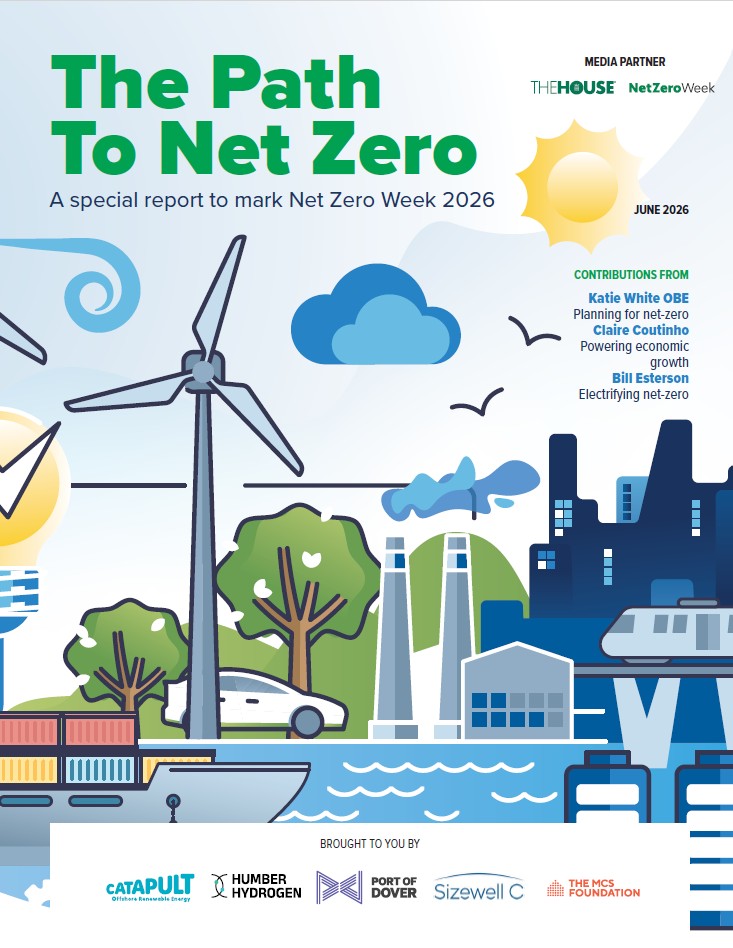 Bill Esterson, Chair of the Energy and Net Zero Committee, makes the case that energy security and electrification are routes to growth and net-zero; Claire Coutinho, Shadow Energy Secretary, argues for a greater shift towards nuclear power, the removal of the carbon tax and continued North Sea development; Kim McGuinness, the Mayor of North East England, calls for a place-based approach that turns net-zero into economic opportunity; and Minister for Climate, Katie White OBE outlines how the government’s Carbon Budget 7 can support a cleaner, more secure and resilient future for Britain.
Together, these contributions offer ideas and highlight practical choices that will help shape Britain’s next chapter. Together, they make the case for an energy transition that is not only necessary, but achievable.
You can read the full report here.


5 min read
The Climate Change Act showed what long-term planning can deliver in our fight to achieve net-zero. Now, the Minister for Climate, Katie White, believes the government’s Carbon Budget 7 can help plan further towards a cleaner, more secure and resilient future for Britain
Three dates tell the story of Britain’s climate journey: 2008, 2026 and 2040.
The first is 2008. I was in my early twenties, travelling the country for Friends of the Earth, helping campaign for what became the Climate Change Act. Most days were a mixture of early trains, community halls, church halls and endless cups of tea. We’d meet MPs in Westminster offices, organise public meetings and make the case that Britain needed to think beyond the next election cycle and start planning for the decades ahead.
What started as a job I thought I’d do for a year quickly became something much bigger. The campaign went on to become one of the most supported in Parliament’s history, securing backing from MPs across political parties and across the country.
Britain itself felt very different then. The best-known electric car on the road was probably the G-Wiz, a tiny vehicle with a range of less than 50 miles that looked more at home on a golf course than a motorway.1 If you spotted solar panels, you tended to point them out. Britain had around 2.9GW of onshore wind capacity, just 3 per cent of our country’s total electricity capacity.2 Coal generated around a third of our electricity.3 The idea that Britain could one day run predominantly on clean power rather than dirty fuels wasn’t yet a reality. It was just a vision of the future.
The Climate Change Act helped turn that vision into a plan, which brings me to the second date: 2026.
Fast forward nearly twenty years and I have the privilege of serving as Climate Minister, genuinely my dream job. This year, we’re setting Carbon Budget 7. I appreciate that “Carbon Budget 7” sounds less like something that could transform a country and more like the sort of document capable of curing insomnia. But it may be one of the most important documents most people will never read. At its heart, Carbon Budget 7 is Britain’s plan for the years 2038 to 2042. It asks a simple question: if we know where we want to get to, what do we need to build now to make it happen?
If you want proof that long-term planning works, you only need to look around Britain today.
As I said, when the Climate Change Act was passed, Britain had around 2.9GW of onshore wind. Today, we have over 15GW.4 What was once a handful of turbines has become a cornerstone of our energy system.
In 2008, Britain had just 22MW of solar power installed.5 Today, there is over 21GW of capacity.6 Solar has gone from something you occasionally spotted on a roof to something woven into everyday life.
And that G-Wiz? Today, there are more than two million zero-emission vehicles on Britain’s roads.7 Electric cars have gone from novelty to normal in less than two decades.
When people talk about climate action, they often picture targets, graphs and technical reports. What I see is one of the biggest upgrades to Britain’s infrastructure and economy in modern history.
Which brings me to the third date: 2040. For some people, 2040 sounds a long way off. But the child starting primary school this September will be in their early twenties. The decisions we make over the next few years will continue to shape their lives.
That is why I often say I want to be a minister for the future. Politics spends too much time talking about the next news cycle. My job is to think about the next generation.
If you want proof that long-term planning works, you only need to look around Britain today
By 2040, Britain could look fundamentally different. For example, under the Climate Change Committee’s balanced pathway, offshore wind capacity could reach 88GW and solar power 82GW.8 Around half of homes could be heated by heat pumps instead of gas boilers, protecting billpayers, reducing pollution and reducing our dependence on imported fossil fuels.
The exciting thing is what that means in practice. Cars that charge while you sleep. Homes heated without burning gas. Cleaner air for our children. Energy generated here in Britain rather than bought from abroad. And when global crises hit, families less exposed to the price shocks that have caused so much hardship in recent years. The prize is a country that is cleaner, more secure and more resilient.
The real significance of Carbon Budget 7 is not the number in its title. It is that it asks the same question campaigners, MPs and our communities were asking back in 2008: what kind of future do we want to build?
References
- Top Gear; Fail of the century #9: Reva G-Wiz. https://www.topgear.com/car-news/fail-century/fail-century-9-reva-g-wiz
- Parliament UK; The Economics of Renewable Energy – Economic Affairs Committee. https://publications.parliament.uk/pa/ld200708/ldselect/ldeconaf/195/19506.htm
- GOV.UK; Digest of UK Energy Statistics (DUKES): renewable sources of energy. https://www.gov.uk/government/statistics/renewable-sources-of-energy-chapter-6-digest-of-united-kingdom-energy-statistics-dukes
- RenewableUK. https://www.renewableuk.com/our-work/onshore-wind/
- ScienceDirect; Towards improved solar energy justice: Exploring the complex inequities of household adoption of photovoltaic panels. https://www.sciencedirect.com/science/article/pii/S0301421522000933
- Solar Power portal; UK surpassed two million solar installations in March, government figures show. https://www.solarpowerportal.co.uk/solar-installations/uk-surpassed-2-million-solar-installations-in-march-government-figures-show
- Energy & Climate Intelligence Unit; 2 million EVs registered across UK: comment. https://eciu.net/media/press-releases/2-million-evs-registered-across-uk-comment
- Climate Change Committee; The Seventh Carbon Budget. https://www.theccc.org.uk/publication/the-seventh-carbon-budget/
Sean Houlston was the Conservative Parliamentary Candidate in the Runcorn and Helsby 2025 By-election and Widnes and Halewood at the 2024 General Election and is a senior leader at the business body, the National Federation of Builders.
Britain’s economic debate often begins from the assumption that if only government regulated a little more, inspected a little more and intervened a little more, many of our economic challenges would begin to resolve themselves. The Employment Rights Act is perhaps the latest example of this thinking, representing one of the most significant expansions of employment regulation in recent decades.
The difficulty is that Britain does not currently suffer from a shortage of employment law.
What Britain suffers from is weak economic growth, sluggish productivity and declining business confidence.
The latest forecasts suggest the economy will grow by around one per cent this year, hardly the sort of performance associated with a thriving, dynamic economy. More worryingly, GDP contracted by 0.1 per cent in April after a modest period of growth, illustrating just how fragile Britain’s economic recovery remains.
At the same time, Britain continues to wrestle with a productivity problem that has persisted for two decades. Productivity growth, arguably the single most important driver of rising living standards, increased by just 0.4 per cent over the past year. Before the financial crisis, annual productivity growth averaged around two per cent. Today, Britain produces around 18 per cent less per hour worked than the United States.
These are not abstract economic statistics. They help explain why wages have struggled to rise as quickly as many would like, why public finances remain under pressure and why governments of all political colours find themselves searching for ways to stimulate growth.
Against that backdrop, policymakers should be asking a straightforward question: what would encourage employers to recruit more people, invest more money and expand more quickly?
Instead, much of the current debate appears focused on how many additional obligations can be placed upon those already doing so.
The Employment Rights Act introduces a wide-ranging package of reforms covering dismissal protection, statutory leave, sick pay, tribunal access, enforcement powers, guaranteed hours and trade union rights. Supporters will rightly argue that many of the individual measures are designed to strengthen protections for workers. Viewed in isolation, several of these reforms may appear entirely reasonable.
The problem is not necessarily any individual measure. The problem is the cumulative effect.
Businesses do not experience regulation as a series of neatly separated policy announcements. They experience it as a growing collection of obligations, compliance requirements, liabilities and administrative processes that must all be managed simultaneously while continuing to win work, serve customers and remain commercially viable.
The Government’s own impact assessment estimates that the legislation could impose around £5 billion of additional costs on businesses each year. For large corporations with extensive legal and human resources departments, such costs may be manageable. For small and medium-sized businesses, the firms that account for the overwhelming majority of private sector employment, the calculation is very different.
These are the companies that employ local people, support apprenticeships, train the next generation of skilled workers and create opportunities in communities across the country. They are also the companies most likely to think carefully before creating an additional role if the risks associated with employment continue to increase.
Employment legislation influences behaviour long before it influences outcomes.
Employers do not wait until a tribunal claim arrives before considering risk. They consider it when drafting budgets, reviewing business plans, deciding whether to take on an apprentice or assessing whether expansion is commercially sensible.
When regulation becomes more complex and employment becomes more expensive, businesses rarely stop hiring altogether. Instead, they become more cautious about who they hire, when they hire and whether they hire at all.
This should concern policymakers because Britain is already facing significant labour market challenges. Nearly one million young people are now classified as not being in education, employment or training. At a time when the country should be focused on bringing more people into productive work and developing the skills needed for future economic growth, increasing the costs and risks associated with recruitment seems an odd direction of travel.
The irony is that the people most likely to be affected are often those with the least experience. Established employees with proven track records generally remain attractive hires. It is the school leaver, the apprentice, the graduate and the individual attempting to re-enter the workforce who frequently represent the greatest perceived risk when employers become more cautious.
This matters because Britain’s productivity problem will not be solved in Whitehall.
Productivity rises when businesses invest in technology, equipment, innovation and people. Every pound spent navigating additional bureaucracy is a pound that cannot be invested elsewhere. Every hour spent managing compliance is an hour that cannot be spent growing a business. At a time when productivity growth remains stubbornly weak and economic growth forecasts remain subdued, policymakers should be looking for ways to encourage investment rather than regulate it further.
There is also a broader question about the direction of travel. Britain’s labour market has historically been successful because it balanced flexibility with protection. Workers enjoyed substantial rights while employers retained sufficient flexibility to respond to changing economic conditions and fluctuating demand. That balance was never perfect, but it broadly reflected the interests of both employees and employers.
Increasingly, however, policy appears to be moving in one direction. The assumption underpinning much modern employment legislation seems to be that employment relationships are primarily characterised by imbalance and exploitation, requiring ever greater intervention from the state. Yet the overwhelming majority of businesses are not seeking to exploit workers. They are seeking to win customers, deliver projects, remain profitable and create opportunities.
At a time when Britain faces sluggish growth, persistent productivity challenges and increasing international competition, the priority should be reducing barriers to investment, encouraging entrepreneurship and strengthening confidence among job creators. Instead, we appear determined to add further complexity to the very organisations upon which economic growth depends.
None of this is an argument against workers’ rights. Strong employment protections and economic success are entirely compatible. However, there is an important difference between sensible protections and excessive regulation, just as there is a difference between supporting workers and burdening employers.
Britain cannot regulate itself into prosperity any more than it can tax itself into competitiveness.
If we are serious about raising living standards, increasing productivity and creating opportunities for the next generation, then we must recognise a simple truth: businesses create jobs when they are confident about the future, and confidence rarely flourishes beneath an ever-growing mountain of red tape.
Politics
Shaun Bailey: Behind the statistics of Khan’s failure to deliver new homes are Londoners struggling to cope with the shortage
Lord Bailey is a member of the London Assembly and a former candidate for Mayor of London.
Every month, millions of Londoners are forced to perform the same painful calculation. The wages come in, and before anything else can be considered, the rent or mortgage must be paid. Then come the bills, the food shop, the travel costs, the children’s needs, and the rising cost of just existing in London. It eats people up, and it stunts their development. Increasingly, it is getting more and more out of hand and putting a greater burden on people.
I know what housing insecurity feels like. I know what it is to be homeless and to worry about where you are going to sleep. That experience never leaves you. It teaches you that stable housing is not just about bricks and mortar. It is about dignity, safety, health, family, opportunity, and peace of mind. If a secure home can transform a person’s life, the absence of one can destroy it.
That is why I was proud in May to host my second annual London Housing Conference, bringing together people from across the housing sector to speak honestly about the crisis facing our city. We heard from construction firms, council leaders, Members of Parliament, landlords and housing associations. Their message was clear: London is being held back by high costs, insecure finance, excessive regulation, a weak economy and a planning system that too often makes building homes harder, not easier. And whilst this plays out, our Mayor is hitting send on glitzy press releases claiming that everything is fine and that, in fact, housing is coming along at record rates.
Sir Sadiq Khan has let London down. Under his tenure, housing starts have collapsed, and completions have failed to match the scale of the crisis. His own Affordable Housing Programme promised 35,000 homes, yet only around 2,600 have been completed, and fewer than half have even been started. The failure has become so serious that his own Government has had to place the programme under special measures.
Now, I would support any Mayor of London, from any party, who was serious about building the homes London needs. This issue is bigger than politics. It is about people’s lives. It is about whether London remains a city of opportunity or becomes a city where only the wealthy can put down roots.
But this Mayor has failed spectacularly. He could have done more to unlock brownfield land owned by the Mayoralty. He could have used housing funds more creatively to bring empty homes back into use. He could have worked with builders, boroughs and housing associations to make difficult sites viable. He could have listened when the sector warned that unrealistic demands would stop homes being built.
You cannot play politics with people’s homes. You cannot claim success while families are stuck on waiting lists, councils are buckling under temporary accommodation costs, and young Londoners are priced out of the city they grew up in.
In the coming months, I will bring together the findings of this year’s London Housing Conference and set out practical recommendations for the Mayor and the Government. Every statistic in London’s housing crisis represents a real person. A real family. A real struggle. Behind every failed target is a child without a permanent bedroom, a worker priced out of their community, or a parent wondering how they will make the rent next month.
London is the greatest city in the world. But it cannot remain so if ordinary Londoners cannot afford to live here. Our Mayor has failed them, and now the responsibility is on all of us to get London building again.

Teyana Taylor Shares Question She Asked Amid 2026 BET Awards

Man shot dead at World Cup fan zone in US

Warriors Eye LeBron James and AD While Kawhi Leonard Drama Intensifies Even Further


-
 Sports6 days ago
Two goals and an assist by sheer aura: Cristiano Ronaldo just entered the World Cup chat
-

 Tech7 days ago
Microsoft accidentally kills epic Outlook email threads
-

 Fashion3 days ago
Weekend Open Thread: Staud – Corporette.com
-

 Politics3 days ago
The House | Manchesterism won’t survive the painful trade-offs unless it gets citizens on board
-

 Politics3 days ago
Potential 2028er World Cup attendee leaderboard
-

 Business3 days ago
Asia stock markets slide as tech shares slump
-

 Tech4 days ago
A Look At A Gaggle Of Transputer Boards
-
Crypto World5 days ago
Bitcoin (BTC) Dips Below $62K, Ethereum (ETH) Plunges 6% Daily: Market Watch
-
 Crypto World4 days ago
Dell (DELL) Shares Tumble Over 5% Following Analyst Downgrade to Hold
-

 Crypto World5 days ago
Securitize Wraps Roubini's SEC-Registered ETF as Dubai VARA Digital Security
-
Business5 days ago
Entergy settles forward sale agreements, raises $672 million in cash proceeds
-

 Crypto World2 days ago
Kraken's xStocks Opens Bending Spoons IPO Registration to EEA Retail
-

 Sports2 days ago
FIH Pro League: India defeat Pakistan 7-1, register biggest win of campaign | Other Sports News
-

 Crypto World2 days ago
Coinbase, Circle Deepen Crypto Stock Losses Despite Resilient S&P 500
-

 Crypto World3 days ago
RTX holders must register wallets before token distribution begins
-
 Crypto World3 days ago
Hyperliquid Named on Singapore MAS Investor Alert Register
-

 Tech1 day ago
Bluekit phishing kit adopts browser-in-the-middle for login theft
-

 Tech2 days ago
Russian hackers now target Signal backup recovery keys
-

 Politics7 days ago
Wes Streeting abandons leadership bid and backs Burnham
-

 Sports4 days ago
India vs Bangladesh LIVE Score, Women’s T20 World Cup: Bangladesh Opt To Bat; India Enter ‘Do-Or-Die’ Stage As Semi-Final Race Heats Up
You must be logged in to post a comment Login