Re-establishing pre-2016 UK-EU links will lead to transport and communications networks working smoothly again.
11:03, 29 Jun 2026Updated 11:08, 29 Jun 2026
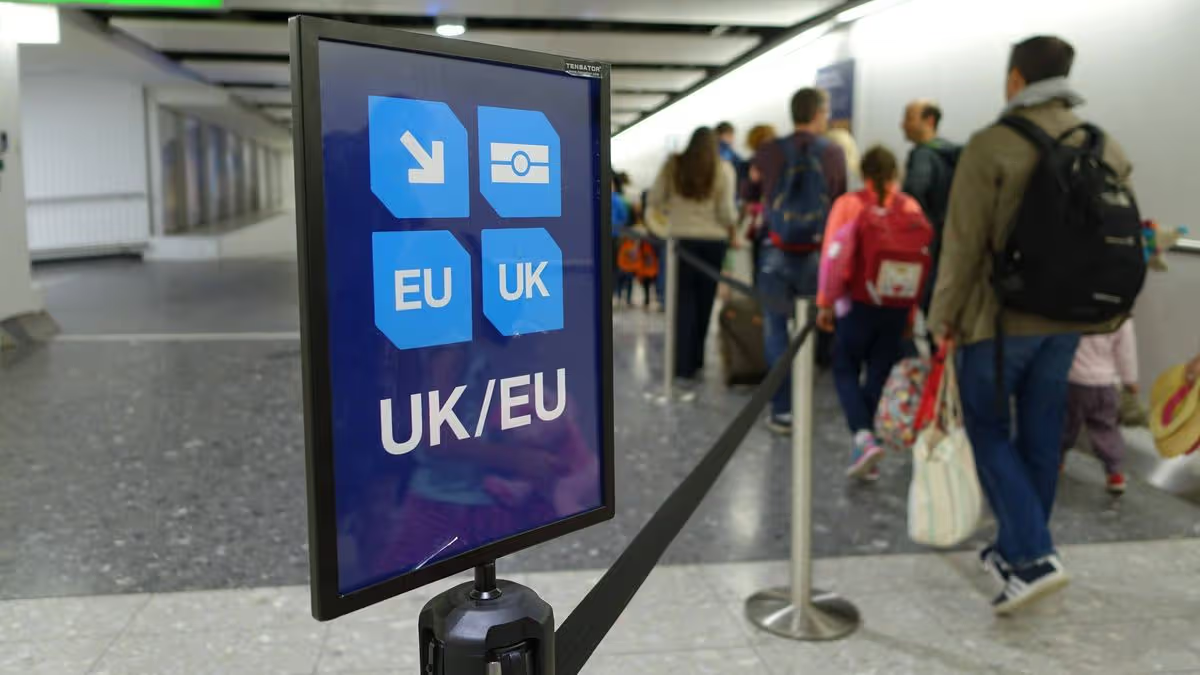
Brexit has impacted how we travel with the EU.(Image: Getty )
It is now a decade since we voted by a narrow margin to leave the European Union (EU), when 53% voted to leave and 47% to remain.
No point blaming anyone else as Wales voted by the same ratio. The effects of that catastrophic decision on Britain’s freight and logistics sector – moving goods for import and export – are still being felt.
From 31 January 2020 (when the final Brexit date was enacted by the Westminster parliament) the political relationship between the UK and the EU changed totally. However, the economic and logistics links continued with the EU still the UK’s largest and geographically nearest trading partner.
It is not just trade but tourism, investment, supply chain movements, economic growth and inter-supply of energy that relate to the movement of people and goods on a significant scale.
For the UK economy to grow, it will need stronger links in trade, investment, transport and logistics. The Schengen area, with more than 450 million people across 25 EU member states and four non-EU countries, includes some of the world’s wealthiest consumers.
Transport is a key consideration for inward investors who need to move goods efficiently or enable managers to travel easily between dispersed sites on reliable, predictable routes.
Transport forms the fundamental trading infrastructure When connections between economies are difficult or burdened by unnecessary obstacles, the efficient movement of goods services and people is compromised, competition weakens and business (and the total economy) growth becomes harder to achieve. This has been understood since the Romans built straight roads to move goods and increase Rome’s wealth, while the Roman Army helped establish and protected trade routes.
As under the Roman regime the economies of EU member states and of the UK continue to be connected through integrated supply chains. Such supply chains require long-term investment to achieve predictable journey times particularly for just-in-time (JIT) operations. Such investments are justified financially at airports, seaports, and railway operations such as the Channel Tunnel.
The Channel Tunnel (paralleled by ports investment) has been essential to the UK as an island nation serving as it does one of the busiest people and goods routes. It is also a major engineering and political accomplishment of our time.
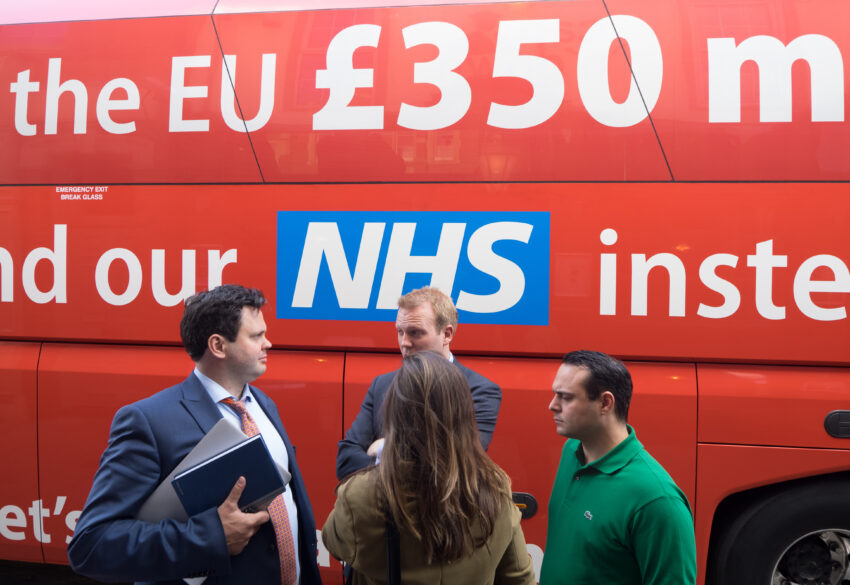
The ‘protecting our borders’ claim by Brexiteers was always unrealistic. Their propaganda failed to identify that the EU would also introduce constraints on inward movements. The Schengen area has new regulations illustrated by this summer’s delays for British travellers as a new entry/exit system is introduced.
Car design is dictated by international construction regulations determined by the biggest markets. These make specifications to the smallest detail. In its most simple form indicator switches must be on the left of the steering wheel to be sold in the EU. No manufacturer will put them elsewhere. The market for right hand drive cars is fortunately large enough to enable construction of right-hand drive cars.
There have been practical difficulties arising from the fragmentation of European logistic routes. Irish imports and exports to the EU have changed their routes with more direct movement via French ports resulting in fewer Irish trucks on the A40/A48/M4 corridor .
Two-thirds of ‘EU’ laws are still in place. The fast-track process to repeal these laws ended on June 23. Now each regulation incorporated into a UK act of parliament must pass through the slower Westminster repeal process.
The previous system allowed goods to cross borders freely, without checks, certificates, or delays. It has now been replaced by the EU-UK Trade and Cooperation Agreement. British firms exporting to Europe must prove where goods are manufactured, retest products already certified as safe in the UK, and complete paperwork that was unnecessary before 2021.
Food exporters now incur border inspections and comply with separate EU and UK rules adding £54m to annual costs. Between 2021 and 2024, border checks cost exporters £4.bn. Large firms, especially those shipping in bulk, are better able to absorb these costs than smaller businesses, many of which have withdrawn from the EU market.
If the UK is to have anywhere near a level playing field in the EU market compared with Schengen countries, there must be a gradual programme of barrier reduction with improved supply chain flows aimed at economic growth on both sides of ‘La Manche.’
Hopefully, a growing recognition will arise in both London and Brussels that re-establishing pre-2016 UK-EU links will lead to transport and communications networks working smoothly again.
Professor Stuart Cole CBE is Emeritus Professor of Transport (Economics and Policy), University of South Wales.

























































You must be logged in to post a comment Login