

Crypto World
Arthur Hayes reveals $2.2M Synapse bet as SYN price jumps



Arthur Hayes has revealed a $2.2 million investment in Synapse’s SYN token after backing its Hypercall options DEX, helping drive the token as much as 26% higher on Monday.
Summary
- Arthur Hayes disclosed a $2.2 million SYN purchase after backing Synapse’s Hypercall options DEX.
- Hayes said Hypercall could challenge Deribit as he seeks asymmetric exposure to the Hyperliquid ecosystem.
- SYN surged as much as 26%, while falling futures open interest pointed to profit-taking after the rally.
According to a June 29 post on X by BitMEX co-founder Arthur Hayes, he sees Hypercall, an options decentralized exchange built by the Synapse team and settled on Hyperliquid, as a credible challenger to crypto options exchange Deribit.
Explaining why he backed the project, Hayes wrote that he still wanted exposure to the Hyperliquid ecosystem but was looking for a more asymmetric opportunity.
“I still want to be long the Hyperliquid ecosystem but I need some asymmetry. It’s time for an options dex to properly take on Deribit. Hypercall, owned by SYN, is that challenger.”
On-chain data from Arkham later showed Hayes purchased 6.16 million SYN tokens worth about $2.2 million from Flowdesk. The purchase came shortly after his public endorsement and coincided with a sharp rally in the token.
Hayes has pointed to tokenomics behind the investment
Alongside his endorsement of Hypercall, Hayes shared a post by crypto investor Duncan, writing, “DYOR – but I found this pretty compelling.”
In the thread Hayes reposted, Duncan argued that SYN offered an attractive risk-reward profile because it had an estimated fully diluted valuation of about $81 million, no venture capital unlock overhang, roughly 88% of its supply already circulating, and listings on major exchanges including Binance and Kraken.
Duncan also compared SYN with Hyperliquid’s HYPE during its early rally, calling it one of the most asymmetric investment opportunities he has seen in crypto. According to Duncan, Hypercall also expands the utility of the SYN token through revenue mechanisms such as buybacks.
The endorsement comes only days after Hayes reduced exposure to several other digital assets. As previously reported by crypto.news, he exited positions in Worldcoin, Zcash, NEAR and Hyperliquid after arguing that higher energy prices, large artificial intelligence IPOs and political uncertainty could weigh on crypto markets.
More recently, he also sold 6,000 Ethereum at a loss despite having accumulated nearly $10.6 million worth of ETH in the preceding days, even as other large investors continued buying around a key support zone.
Traders lock in profits after the rally
As per data from crypto.news, Synapse (SYN) price initially climbed about 26% following Hayes’ comments before giving back part of those gains as traders took profits. Even after the pullback, the token remained up more than 1,100% over the past month, having outperformed much of the crypto market during a period of heightened volatility.
Derivatives data suggested the rally was followed by profit-taking. SYN futures open interest fell 13% during the previous four hours to $31.98 million, although it remained about 5% higher over the past 24 hours.
Exchange-level data showed the largest declines in open interest occurred on Binance, where it dropped roughly 15%, followed by more than 14% on Bitget and around 10% on MEXC. The reduction in outstanding positions indicates that some traders used the surge in liquidity after Hayes’ endorsement to close positions rather than open new leveraged bets.

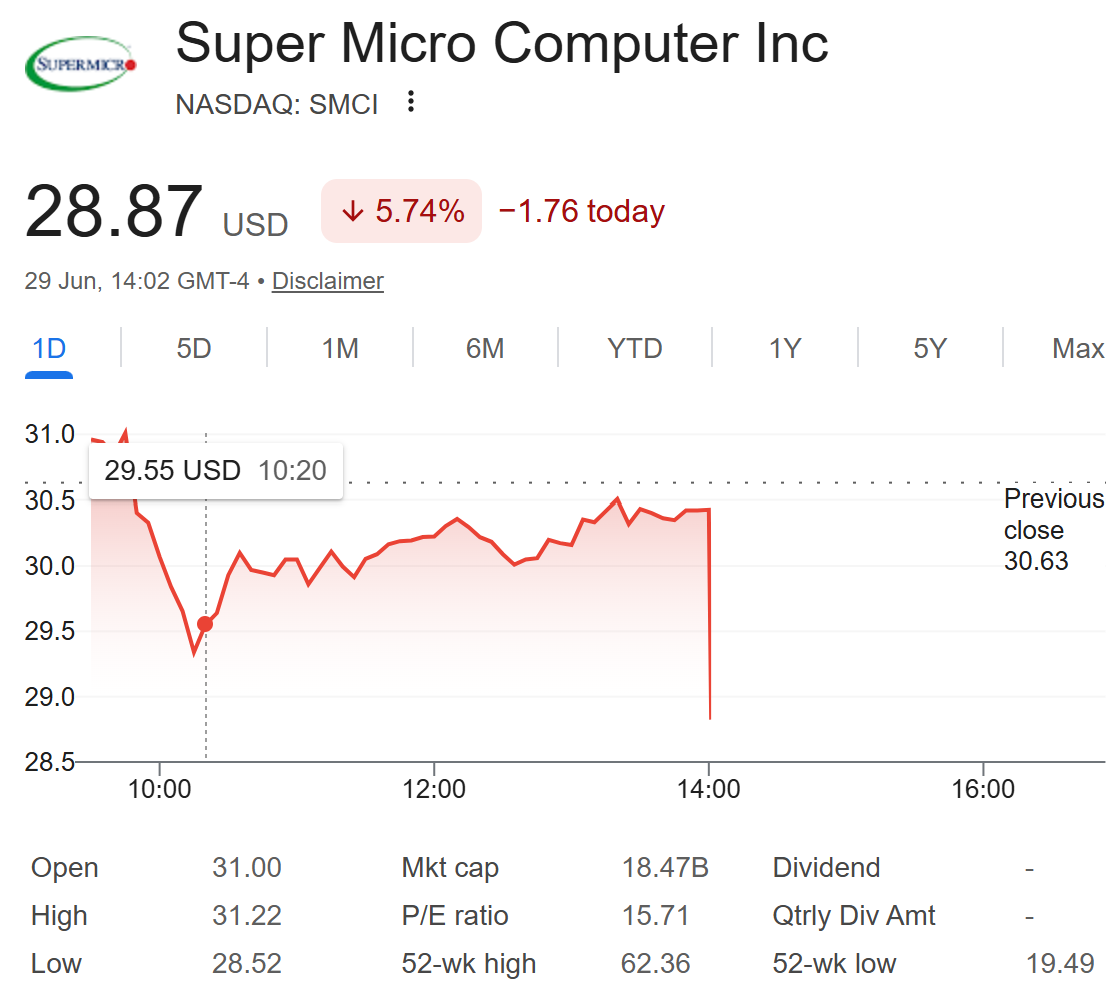
Super Micro Computer Inc.’s Taiwan office was raided Monday as authorities expanded their investigation into alleged smuggling of Nvidia AI chips into China using the company’s servers.
SMCI shares fell sharply on the news. Taiwan’s Keelung District Prosecutors Office searched the residences of six individuals and premises of three affiliated companies, including Super Micro’s local operations. Prosecutors also summoned individuals for interviews.

Targeted Companies Confirm Searches
Distributor Albatron Technology confirmed it was searched in a regulatory filing and reported no material financial or operational impact. Data center operator Chief Telecom was also among the sites visited.
Follow us on X to get the latest news as it happens
Building on Prior Action
Bloomberg reported the Monday operation, which extends May 2026 raids by the same office, covering 12 locations and leading to the seizure of approximately 50 high-end Super Micro servers containing restricted Nvidia chips. Those actions targeted document falsification related to exports.
Super Micro has previously stated it is cooperating with Taiwanese authorities and was not charged as a company in earlier phases of the probe. The company did not immediately respond to requests for comment on the latest developments.
U.S. Controls Drive Regional Enforcement
The case reflects sustained U.S. pressure to restrict advanced AI semiconductors to China over national security concerns. Taiwan, a critical hub for semiconductor manufacturing and server assembly, does not yet treat AI chip exports to China as a standalone crime.
Authorities currently rely on laws covering document falsification. Taipei is actively considering legislation to criminalize such exports directly, which would provide stronger enforcement tools.
What’s Next
The latest raids highlight tightening scrutiny on downstream distribution in the AI supply chain. Further updates from prosecutors or Super Micro could clarify scope and potential charges.
For investors, the developments add to compliance risks even as demand for AI servers remains strong. SMCI’s stock reaction shows how regulatory headlines continue to influence sentiment in the sector.
The post Taiwan Raid Hits Super Micro Office, Slamming SMCI Shares appeared first on BeInCrypto.
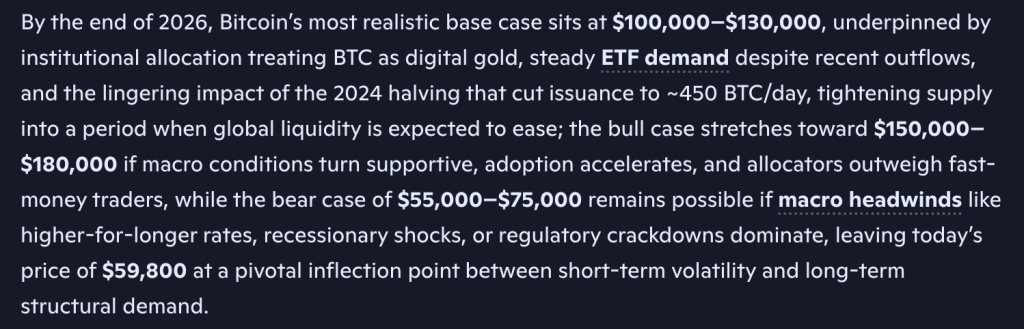
Microsoft Copilot AI just laid out a full spectrum view on Bitcoin price prediction that frames today’s price as standing at a genuine fork in the road. The model predicts a realistic base case of $100,000 to $130,000 by the end of 2026, with a bull case stretching to $150,000 to $180,000 if the right conditions line up.
The bull case leans on a few durable forces rather than a single short term spark. Bitcoin trades near $59,800 today, and the model frames that as a pivotal inflection point between near term volatility and long term structural demand.
Institutional allocation continues treating bitcoin as digital gold, a framing that has only grown stronger as more traditional capital looks for an inflation resistant store of value.
ETF demand remains steady even through recent outflows, which suggests the underlying buyer base has not actually walked away despite choppy headlines.

The lingering impact of the 2024 halving still matters too, since issuance dropped to roughly 450 BTC per day, tightening supply right as global liquidity is expected to ease going forward.
If macro conditions turn genuinely supportive, adoption accelerates faster than expected, and longer term allocators end up outweighing fast money traders chasing short term swings, the model sees that combination stretching price toward the $150,000 to $180,000 range.
The bear case is just as plausible given where things stand today. If macro headwinds like higher for longer interest rates, a recessionary shock, or fresh regulatory crackdowns end up dominating the landscape instead, the model sees bitcoin staying contained in a $55,000 to $75,000 range for an extended period.
That would mean a much longer wait for the structural bull case to play out, with price essentially churning sideways while those headwinds resolve one way or another.

Don’t Miss Out on Our $1,000 USDT Airdrop on ByBit
Bitcoin Price Prediction: BTC Stands At The Exact Fork Copilot Is Describing
The daily chart shows Bitcoin at $59,887 after a long decline from highs near $128,000 set back in October. That drop has been a grinding, persistent downtrend, broken up by a relief rally into May that topped out close to $83,000 before rolling over into the current stretch of weakness.
Price has spent the last several weeks consolidating in the high $50,000s to low $60,000s, which lines up almost exactly with the $59,800 level called out as the pivotal point in this prediction.
That kind of tight, extended consolidation right at a psychologically important number often signals a market waiting for its next real catalyst rather than committing in either direction.
Immediate resistance sits near $64,000, a level price has tested and failed at multiple times recently, with a much heavier ceiling further up near $76,000 where the May rally eventually lost steam.
Support holds in the $58,000 to $59,000 zone, the same area price is currently testing on this very candle. The broader structure remains a clear downtrend stretching back to October, with lower highs and lower lows defining nearly the entire move.
Momentum on the daily candles looks tired rather than decisive, with small, choppy candles clustering near the lows instead of showing strong directional conviction either way.
Given how directly current price lines up with the inflection point in this prediction, the next decisive break above $64,000 or below $58,000 looks like the signal that determines which half of this base to bull range actually starts to play out.
Discover: The Best Token Presales
You Might Like What Copilot AI Predicts About LiquidChain
The rotation is already happening. Most people will only see it in hindsight.
Large-cap crypto is not failing. It is capped. Bitcoin, Ethereum, and XRP have been pressing against the same resistance bands for weeks. The macro tailwinds keep getting delayed.
The institutional inflows keep getting pushed to next quarter. Holding assets where the upside depends on catalysts you cannot control is not a strategy. It is waiting.
A capital that has navigated enough cycles does not wait at resistance. It moves before the destination becomes obvious.
Early-stage infrastructure plays operate on different math entirely. A small enough market cap means a modest rotation produces dramatic price movement. The asymmetry exists because the market has not priced in what is being built yet. That gap between current valuation and what the project is actually worth is where the returns come from.
Multi-chain fragmentation costs DeFi real money every single day. Bitcoin, Ethereum, and Solana run completely isolated liquidity systems with no native way to connect them. Every user moving value between ecosystems absorbs that cost directly in fees, slippage, and failed transactions.
LiquidChain collapses all 3 networks into a single execution layer. One deployment. Full ecosystem access. No cross-chain tax on every interaction.
The market has not found this yet. That is the entire point.
The presale is at $0.01454 with just over $840,000 raised. Ground floor is not a marketing phrase here. It is a description of where this actually sits in its lifecycle.
Execution is unproven. Adoption is unknown. Those risks are real and worth naming directly. Established assets offer a smoother ride toward a ceiling that is already visible. This offers an earlier seat at a table that has not been set yet.
Explore the LiquidChain Presale
The post Microsoft Copilot AI Predicts Incredible Bitcoin Price by End of 2026 appeared first on Cryptonews.
Crypto World
Tom Lee blames bitcoin, ether weakness on quarter-end rebalancing as Bitmine (BMNR) buys $43M ETH


Bitmine Immersion Technologies (BMNR), the largest Ethereum treasury company, bought 27,084 ether (ETH) last week, extending its accumulation streak despite another slide in crypto prices.
The purchase, worth roughly $43 million based on ETH’s current price of around $1,580, lifted Bitmine’s holdings to 5.7 million ETH, according to a Monday company update. The stash is worth about $8.9 billion and represents roughly 4.7% of Ethereum’s circulating supply, nearing the firm’s 5% goal.
The company also held 206 bitcoin, $555 million in cash and marketable securities and stakes in Beast Industries and Eightco Holdings, bringing total crypto, cash and investment holdings to $9.8 billion.
The latest acquisition was the smallest purchase since early May, down from 52,203 ETH the previous week and well below the 126,971 ETH batch earlier this month, suggesting the company is dialing back its buying pace after months of aggressive accumulation. Bitmine nevertheless remains one of the few large digital asset treasury firms still consistently adding to its crypto holdings while many peers have paused purchases amid the market downturn.
Crypto weakness
Chairman Thomas “Tom” Lee pointed to quarter-end rebalancing behind the latest bout of weakness in crypto markets with investors cutting their losses as we enter the second-half of the year.


Prediction-market operators have increasingly moved to own more of their trading infrastructure, setting the stage for an acquisition wave across crypto exchanges, sportsbooks, brokerages and trading venues, according to Bernstein.
Summary
- Bernstein expects prediction markets to enter an acquisition phase as platforms consolidate trading infrastructure.
- Robinhood, Coinbase, DraftKings and Cboe are expanding in-house prediction market capabilities.
- Bernstein warns regulatory disputes between federal and state authorities could slow industry consolidation.
According to a research report published by Bernstein on Monday, the sector is entering a period of operational consolidation as consumer-facing platforms bring together distribution, brokerage, exchange and clearing functions under one roof instead of relying on outside providers.
The analysts wrote that “every consumer platform that matters has merged the front and back end of the prediction-market stack,” arguing that businesses once separated across financial trading, crypto and sports betting are now competing within the same market.
Consumer platforms are taking control of trading infrastructure
Recent product launches and acquisitions illustrate the trend outlined by Bernstein. Robinhood now routes major FIFA World Cup prediction contracts through Rothera, the exchange it jointly owns with Susquehanna, while DraftKings has introduced DKeX and redirected trading volume away from infrastructure supplied by CME and Crypto.com.
Coinbase has also expanded its presence by acquiring The Clearing Company and launching its own event contracts, a move Bernstein cited as another example of platforms assembling every part of the prediction-market business.
Instead of paying third parties for execution, clearing or exchange services, companies that own the full trading stack can keep more of the fees generated by customer activity. Bernstein said acquisitions may therefore become the fastest way for platforms to obtain licenses, reach new users or add missing infrastructure rather than building those capabilities internally.
Outside the crypto sector, traditional financial exchanges have also begun entering the market. Last week, Cboe Global Markets introduced Cboe Predicts, launching binary option contracts tied to the Mini-S&P 500 Index (XSP). Cboe said the products operate as security options under the existing U.S. regulatory framework for listed options, allowing traders to take yes-or-no positions on where the index finishes.
Large technology companies are also exploring the space. Meta has reportedly assembled a team to develop Arena, a prediction-market application expected to compete with platforms including Polymarket and Kalshi. According to reports, Arena will rely on a points-based system similar to video games instead of real-money wagering.
Regulatory disputes could slow dealmaking
While Bernstein sees economic incentives for consolidation, the firm warned that regulation remains one of the biggest obstacles to larger transactions.
The report said combinations involving crypto exchanges, brokerages, sportsbooks and derivatives venues could improve profitability by reducing dependence on external providers.
At the same time, Bernstein cautioned that such deals may attract antitrust scrutiny while intensifying debate over whether sports event contracts should be treated as financial derivatives or gambling products.
Regulatory disagreements are already emerging across the U.S. Bernstein noted that Minnesota has enacted what the Commodity Futures Trading Commission described as the first outright ban on prediction markets, while Illinois has passed legislation requiring platforms to obtain a state license before offering sports event contracts.
Kalshi has challenged both measures, arguing that exchanges regulated by the CFTC fall under the agency’s exclusive jurisdiction rather than state gambling authorities.
According to Bernstein, the commercial logic behind consolidation remains intact, but many of the largest acquisitions may prove difficult to complete until courts and regulators establish where federal derivatives oversight ends and state gambling regulation begins.


Pump.fun, the Solana-based memecoin launchpad that has generated more than $1.1 billion in lifetime fees, has repurchased over $400 million of its PUMP token, with the running total crossing that mark in recent days, according to the company's onchain dashboard. The tracker showed cumulative… Read the full story at The Defiant


Ethena said its yield-generating “synthetic dollar” token will be integrated into BlackRock’s (BLK) Aladdin risk management platform as the crypto protocol is deepening its relationship with traditional finance firms.
The Monday announcement sent Ethena’s governance token ENA (ENA) up about 8% on the day as investors welcomed another high-profile institutional partnership.
Aladdin is BlackRock’s portfolio construction and risk management platform used by banks, insurers, pension funds and asset managers overseeing more than $20 trillion in combined assets.
Ethena also said BlackRock’s tokenized money market fund, BUIDL, will serve as the primary reserve asset for a forthcoming white-label product.
The firms also unveiled a $100 million liquidity facility that will allow eligible holders of BlackRock’s tokenized Treasury fund, BUIDL, to exchange their holdings for USDC, USDtb and other supported stablecoins outside traditional market hours, and convert those assets back into BUIDL.
“We believe stablecoins and tokenized real-world assets to be inextricably linked,” Robert Mitchnick, BlackRock’s head of digital assets, said in a statement. “This liquidity facility enables a level of frictionless interoperability that is core to the unique utility that tokenizing treasury funds makes possible.”
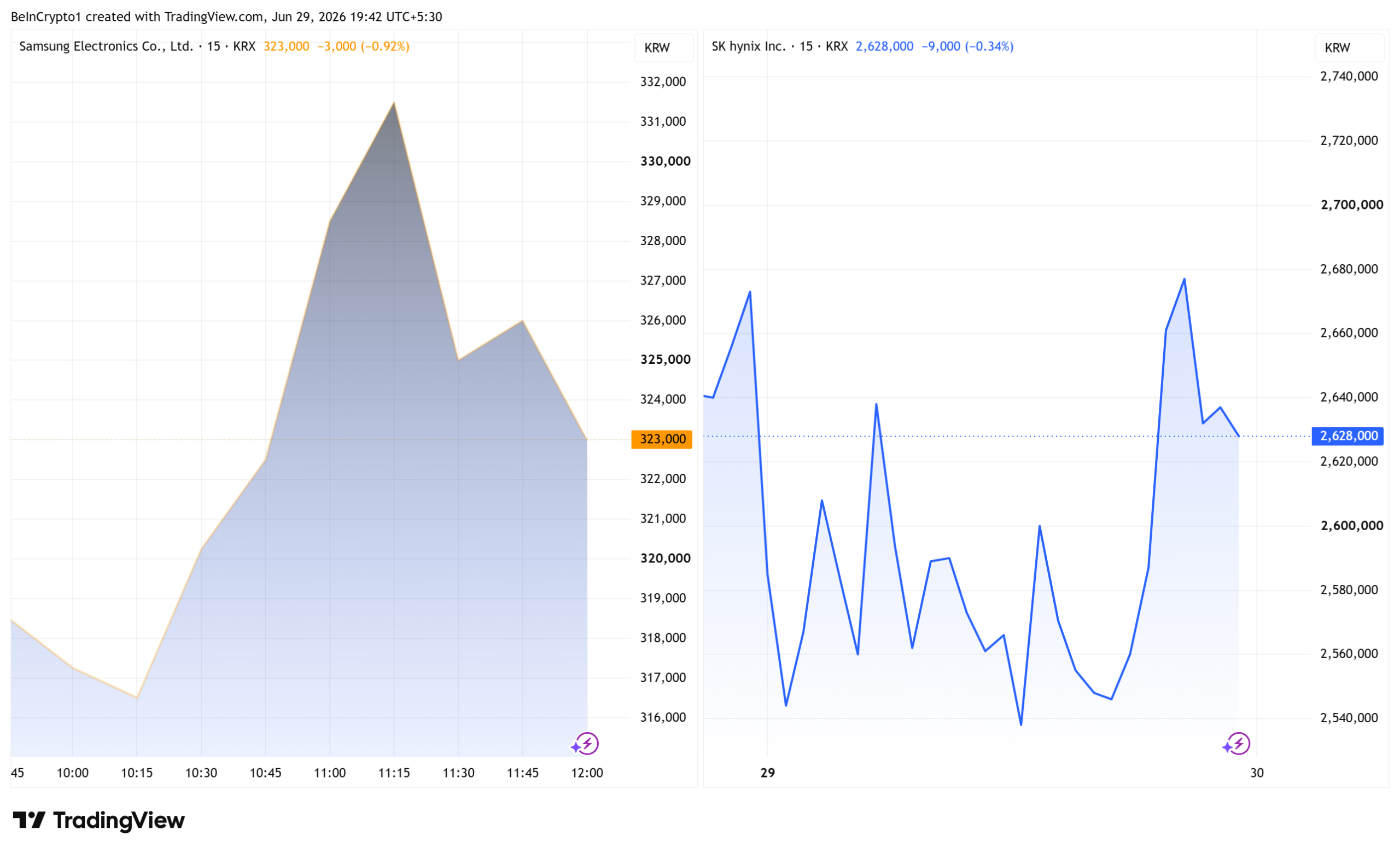
Almost every phone and laptop runs on memory chips called DRAM. A US lawsuit says the three firms that make almost all of them keep prices high by limiting supply.
This is not the first accusation against them. Days later, the same firms unveiled a $650 billion spending plan and blamed the shortage on the AI boom.
DRAM Lawsuit Revives Old Cartel Claims
In 2005, Samsung admitted it fixed memory prices and paid a $300 million fine. It was the second-biggest penalty of its kind in US history. Some bosses went to prison. The new lawsuit says the companies later reinstated those same people in their jobs.
The new case is in a California federal court. The buyers suing include 14 people and three small computer shops. One of their law firms, Hagens Berman, won the payout from the original case years ago.
Here is the trick the lawsuit describes. Chips made for AI computers sell for far more than ordinary memory. Plaintiffs say the firms shifted factories toward AI memory chips and let everyday supplies run short. Ordinary memory prices then jumped about 700% in four years.
Shoppers cannot just buy elsewhere. These three firms (Samsung, SK Hynix, and Micron) make about 90% of the world’s DRAM. Building a new factory costs more than $15 billion and takes years.
Record AI Spending Lands Days Later
The lawsuit landed just before a big show. On June 29, Samsung Group promised about $650 billion of spending over 10 years. SK Group added its own similar chip plan.
The companies say the spending proves demand is real, not a scheme. Samsung and SK Hynix will each build two new factories. Together, they account for about 80% of the specialized memory that powers AI.
Micron made the same defense for an odd choice. In December, it closed its popular Crucial brand after 29 years, just as prices were peaking. Analysts still debate Micron’s AI bet.
“Micron has made the difficult decision to exit the Crucial consumer business in order to improve supply and support for our larger, strategic customers in faster-growing segments,” said Sumit Sadana, EVP and Chief Business Officer at Micron.
Follow us on X to get the latest news as it happens
Plaintiffs see it differently. Why quit a popular business when profits are highest, they ask, unless the aim is to keep supply tight?
What Comes Next for Memory Prices
Investors were not impressed. Samsung stock fell 5.3% and SK Hynix dropped 3.4%. Apple has already raised some prices to cover higher chip costs.

The squeeze is not ending soon. The bank Jefferies expects memory prices to rise about 50% this quarter and 40% the next. It sees no real relief before 2028.
Winning will be hard. Two earlier versions of this lawsuit failed. Courts ruled that rising prices alone do not prove the firms planned it together.
This time, the plaintiffs say they have more. They point to the same companies, the same product, and some of the same bosses once sent to prison.
The post Memory Chip Giants Face Lawsuit Over 700% DRAM Price Spike appeared first on BeInCrypto.


The growth case rests on a simple dynamic: as bitcoin ownership broadens and prices rise, holders increasingly want to borrow against appreciated collateral for tax efficiency, working capital or lifestyle needs, while lenders gain comfort underwriting overcollateralized loans secured by a highly liquid asset.
The bitcoin lending industry was reshaped by the failures of Celsius, BlockFi, and Genesis during the 2022–2023 crypto credit crisis. While each firm had different business models, they shared common vulnerabilities: maturity mismatches, excessive leverage, concentrated counterparty exposure and the rehypothecation of customer assets.
Their collapses underscored the importance of conservative underwriting, transparent risk management, and fully collateralized lending-principles that have become the foundation of the next generation of BTC-backed lenders, the SVB report said.
Landmark transactions, including Ledn’s $188 million asset-backed security, the first bitcoin-collateralized deal to receive an investment-grade rating from a Nationally Recognized Statistical Ratings Organization, underscore growing confidence in BTC-backed credit structures, according to SVB.
While bitcoin-backed loan rates still generally range from 7.5% to 16% annual percentage rate (APR), well above comparable traditional financing, SVB expects increased participation from banks and private credit funds to narrow spreads over time. Early signs are already emerging, including Strike’s recently announced 7.5% rate on term loans larger than $5 million, backed by a $2.1 billion credit facility from Tether.
Crypto World
Ukraine transfers $8.3 million in seized crypto amid potential plans for strategic reserve


“This is the first time that seized crypto assets have actually been handed over to state management,” the statement reads. The funds came from wallets controlled by a member of an alleged international hacker group, the office said.
However, fund management involves custody of the digital assets, not ownership. The USDT sits in a wallet ARMA controls but has not been formally confiscated, a step that requires a conviction. ARMA already manages seized homes and cars, yet has no record of taking crypto onto its books.
Investigators accused the group of attacking people and companies in Europe and the U.S., stealing private data, demanding ransoms and laundering proceeds in Ukraine through real estate, cars and other high-value property.
Four suspects, including the alleged organizer, have been detained and remain in custody, the statement adds, and have not yet been convicted. Investigators estimate the damage from the group’s activities at more than $100 million.
Authorities have so far seized assets worth over $11.1 million, including homes, apartments, cars, $1 million in cash and virtual assets equal to more than $8.3 million.
The blog comes as the Senate races to advance the Digital Asset Market Clarity Act before lawmakers break for their August recess. While the bill cleared the Senate Banking Committee, negotiators are still trying to resolve several contentious issues, including ethics rules for senior government officials with crypto ties, liability protections for decentralized finance developers, stablecoin yield provisions and concerns from Senate Agriculture Committee Democrats.
Industry groups remain optimistic that the legislation can reach the Senate floor in July, but analysts have warned that failing to pass it before the August recess would sharply reduce its chances of becoming law this year.
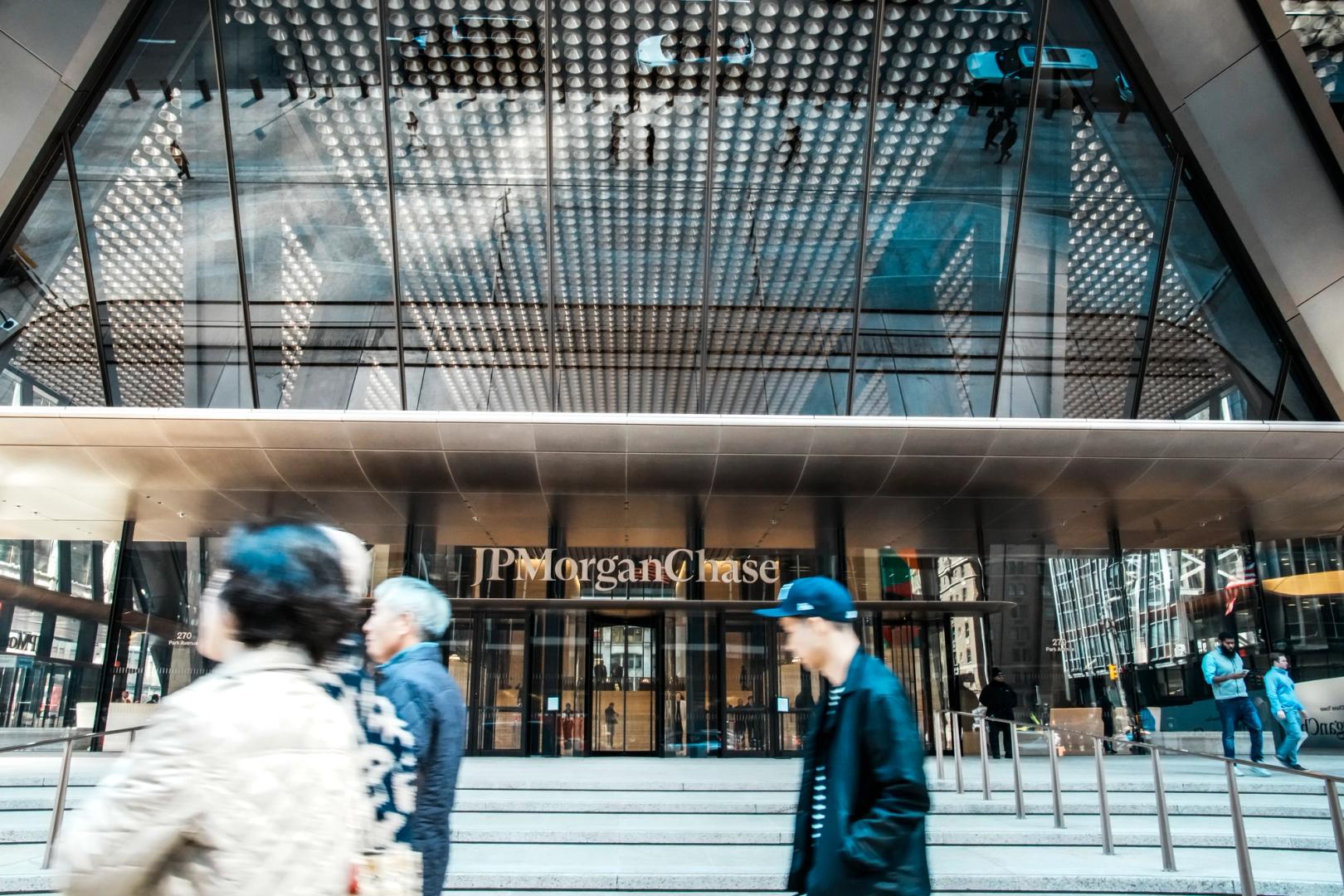
In JPMorgan’s view, assets that function like securities should continue to follow securities laws regardless of whether they are issued on a blockchain. Likewise, decentralized trading platforms that serve as exchanges or brokers should be held to the same standards for market integrity, disclosure and customer protection.
JPMorgan also devoted considerable attention to stablecoins, an area where many banks see both commercial opportunity and competitive pressure. While stablecoins and tokenized deposits could improve payment efficiency, the executives warned against allowing products that resemble bank deposits to operate outside the capital, liquidity and consumer protection rules that apply to banks. Features such as rewards or cashback for holding balances, they wrote, could lead consumers to assume they have protections that may not exist, increasing the risk of rapid withdrawals during times of market stress.

Henry Cavill’s New R-Rated Action Thriller Officially Sets Release Date in 1 Month

CBL & Associates Properties: Playing With Fire (NYSE:CBL)

Taiwan Raid Hits Super Micro Office, Slamming SMCI Shares


-
 Sports6 days ago
Two goals and an assist by sheer aura: Cristiano Ronaldo just entered the World Cup chat
-

 Fashion3 days ago
Weekend Open Thread: Staud – Corporette.com
-

 Politics4 days ago
The House | Manchesterism won’t survive the painful trade-offs unless it gets citizens on board
-

 Politics4 days ago
Potential 2028er World Cup attendee leaderboard
-

 News Videos24 hours ago
MAJOR BITCOIN & MARKET UPDATE!!!! (MUST WATCH ASAP!!!)
-

 Business3 days ago
Asia stock markets slide as tech shares slump
-

 Tech4 days ago
A Look At A Gaggle Of Transputer Boards
-
Crypto World6 days ago
Bitcoin (BTC) Dips Below $62K, Ethereum (ETH) Plunges 6% Daily: Market Watch
-
 Crypto World4 days ago
Dell (DELL) Shares Tumble Over 5% Following Analyst Downgrade to Hold
-

 Crypto World2 days ago
Coinbase, Circle Deepen Crypto Stock Losses Despite Resilient S&P 500
-

 Crypto World6 days ago
Securitize Wraps Roubini's SEC-Registered ETF as Dubai VARA Digital Security
-
Business6 days ago
Entergy settles forward sale agreements, raises $672 million in cash proceeds
-

 Crypto World3 days ago
Kraken's xStocks Opens Bending Spoons IPO Registration to EEA Retail
-

 Sports3 days ago
FIH Pro League: India defeat Pakistan 7-1, register biggest win of campaign | Other Sports News
-

 Tech2 days ago
Russian hackers now target Signal backup recovery keys
-

 Crypto World3 days ago
RTX holders must register wallets before token distribution begins
-

 Tech2 days ago
Bluekit phishing kit adopts browser-in-the-middle for login theft
-
 Crypto World3 days ago
Hyperliquid Named on Singapore MAS Investor Alert Register
-

 Crypto World4 days ago
Bitcoin Sparks $600M Hourly Liquidations With $65,000 Set To Become Resistance
-
 Crypto World4 days ago
AAVE price tests 9-month trendline after 17% rebound as breakout hopes build
You must be logged in to post a comment Login