

Business
Ford VP says AI tools lacked training to replace veteran engineers


Ford’s limited-edition Super Duty Proud to Honor package features patriotic styling, with a portion of proceeds supporting Blue Star Families. (Credit: Ford Motor Company)
Ford has rehired experienced human engineers to help address the shortcomings of artificial intelligence (AI) tools meant to tackle quality issues in the automaker’s production processes.
The hiring push helped Ford top the JD Power 2026 U.S. Initial Quality Study (IQS) for the first time since 2010 amid improvements in the quality of its new vehicles, and follows some hard-learned lessons about the ability of AI to replace human knowledge in production processes.
“Artificial intelligence is a fantastic tool, but it’s only as good as the information you use to train it,” Charles Poon, Ford’s vice president of vehicle hardware engineering, said on a press call Wednesday, according to a report by Bloomberg.
“Over prior years, we didn’t pay as much attention as we should have to the experience of our most knowledgeable engineers that have been with us through many product cycles,” he said.
FORD TEAMS UP WITH OUTDOOR OUTFITTER FILSON TO LAUNCH NEW BRONCO SUV

Ford rehired veteran engineers to help guide AI systems that weren’t sufficient to improve production quality on their own. (Jim Young/AFP via Getty Images)
“Mistakenly, we thought that by just introducing artificial intelligence and ingesting the design requirements that we had, that would produce a high quality product,” Poon said.
He also noted that the AI tools lacked the training and expertise that veteran technicians have, and many of the company’s veteran technicians left Ford before their knowledge could be used to improve the performance of the AI tools.
“We recognized that for us to enhance some of our automation and machine learning and artificial intelligence tools, we needed to ensure that they were trained by the most experienced individuals,” Poon said.
FORD CEO SAYS ‘CUSTOMER HAS SPOKEN’ AFTER EV SHIFT DRIVES MAJOR QUARTERLY LOSS
| Ticker | Security | Last | Change | Change % |
|---|---|---|---|---|
| F | FORD MOTOR CO. | 14.13 | +0.02 | +0.14% |
The Detroit giant said that it has hired about 300 veteran engineers to work in its vehicle engineering division in the last few years.
“Free from daily production schedules, these engineers now act as internal auditors, running mandatory weekly design reviews to hunt for and eliminate potential failure points before blueprints ever reach the factory floor,” Ford said in a release.
Ford Chief Operating Officer Kumar Galhotra said that the experienced engineers and technical specialists were “at the heart” of the company’s efforts to improve production quality by addressing process issues before they’re incorporated into workflows.
FORD RECALLS MORE THAN 255,000 FOCUS VEHICLES OVER ENGINE STALL RISK

Ford CEO Jim Farley said the quality improvements are helping Ford’s bottom line. (Nic Antaya/Getty Images)
Ford CEO Jim Farley told Bloomberg TV that the shift is helping improve the company’s financial performance, with spending on warranty coverage and recalls coming down, which in turn is boosting the automaker through cost reductions.
JD Power’s 2026 IQS not only placed Ford at the top of the list for the first time in 16 years, but it also ranked the Ford F-150, Ford Mustang and Ford Super Duty at the top of their respective segments for the second straight year.
GET FOX BUSINESS ON THE GO BY CLICKING HERE
Additionally, the Ford Escape, Ford Explorer, Ford Expedition and Ford Maverick also ranked among the top three in their segments – which meant that seven of the company’s top 10 models ranked in the top three of their categories.
FOX Business reached out to Ford for comment.


Form 424B5 Realty Income Corp For: 30 June

Dole: Pricing Tailwinds And Discounted Valuation Create A Buying Opportunity
Form 4 La-Z-Boy Inc For: 30 June

Discovering where your ancestors came from can be an emotional journey, but it also has the power to change your practical daily life.
Many families who left Europe during the difficult years of the twentieth century passed down stories of their homeland to their children and grandchildren. For those with roots in Northern Europe, these stories can open the door to a valuable second passport. The Republic of Latvia provides a clear legal pathway for the descendants of its former citizens to recover their original nationality.
However, trying to understand foreign immigration laws can feel completely overwhelming. Many people get stuck trying to decipher old family timelines, dealing with confusing government rules, or worrying about whether they have to learn a difficult new language. If you have a parent, grandparent, or great-grandparent who lived in Latvia before the mid-1940s, you might already have a legal claim to a European passport. Securing your latvian citizenship by descent allows you to keep your current passport while gaining the freedom to live, work, and study anywhere in Europe. This comprehensive guide simplifies the legal rules, documentation requirements, and application steps so you can confidently reclaim your family heritage.
What Is Latvian Citizenship by Descent?
Latvian nationality law is based on a traditional legal principle called Jus Sanguinis, which simply means the right of blood. Under this framework, citizenship is passed down directly through family bloodlines rather than being determined by the country where you were born. The official rules are set by the national Citizenship Law, known in Latvia as Pilsonības likums, which protects the rights of the global diaspora to maintain their legal connection to the country.
The application process is treated as a formal restoration of nationality instead of a standard immigration application. Because you are reclaiming a status that historically belonged to your family, the government does not require you to move to Europe, pay local taxes, or give up your current nationality. The central authority in charge of reviewing these claims is the Office of Citizenship and Migration Affairs, which is commonly referred to as the PMLP. The officers at this department review historical records to verify that your ancestral lineage remains unbroken under international legal standards.
Determining Your Eligibility: Who Qualifies Under Latvian Law?
The legal system organizes ancestry claims into specific categories based on the exact dates and historical reasons your family left the country. To determine if you have a valid claim, you must look at your family tree and find out where your relatives were living during the interwar independence years. The foundation for every single claim is proving that your ancestor was a recognized citizen of Latvia on or before June 17, 1940.
The Forced Exile Pathway (1940–1990 Timeline)
The most common path to citizenship applies to descendants of individuals who were forced to leave their homes due to war and political danger. You qualify under the exile rules if your direct ancestor was a legal citizen on June 17, 1940, and fled the country between that date and May 4, 1990, to escape the devastating Soviet occupation or the Nazi regime.
This specific rule was created to support the global Latvian diaspora who lost their homes but kept their cultural identity alive overseas. If your parents or grandparents had to live in European displaced persons camps after World War II before settling in countries like the United States, Canada, the United Kingdom, or Australia, you likely fit this category. The law allows descendants of these exiles to register their citizenship easily without any requirement to drop their current passport.
Descendants of Pre-War Interwar Citizens
Not every family left the Baltic region because of the outbreak of war or subsequent geopolitical occupations. Some families chose to emigrate voluntarily during the peaceful interwar years between 1918 and 1940 for economic reasons, marriage, or new career opportunities. If your family left during this earlier peacetime window, you can still reclaim your legal rights based on the continuous historical existence of the state.
For this group of applicants, the process focuses heavily on showing that your relative maintained active citizenship before they boarded a ship or crossed the border. Because these families left voluntarily rather than fleeing as refugees, the government checks older civil registers and population surveys to ensure the citizenship was never formally given up under older international agreements.
Dual Nationality Regulations for European Union Citizens
Getting a second passport is a major benefit, but you always have to make sure that your home country allows you to hold two nationalities at the same time. The European Union framework values open borders and global mobility, and Latvia updated its national laws to match this modern reality. According to current regulations, Latvia fully permits dual citizenship for individuals who hold passports from specific approved countries.
These permitted countries include all twenty-seven member states of the European Union, EFTA countries, and NATO member states. This means if you are currently living and working in a country like Germany, Ireland, or France, you are legally allowed to hold both passports. You will never be asked to renounce your birth country’s passport during the application process or after your approval.
A Clear Look at Required Documents: Putting on Your Research Glasses
The single biggest reason applications get delayed or rejected is a lack of clear documentation. Since government workers in Riga cannot rely on family stories or memories, you need to put on your research glasses and collect physical, undeniable proof of your heritage. Your main goal is to build an unbroken chain of paper certificates connecting your current legal identity back to the original records of your ancestors.
Tracking down these old records can feel frustrating, especially if your family lost their original papers during their long migration journeys. Fortunately, historical data is safely stored across several public archives in Riga. If you are missing key files, you can request official research assistance from the Latvian State Historical Archives or the central Civil Registry Department, which hold millions of nineteenth and twentieth-century records.
Vital Records and Archival Evidence You Must Gather
To assemble a successful application dossier, you must collect official, certified documents for every single generation in your family line. A complete document package typically requires the following items:
- Your current valid passport or state identification card.
- Your official birth certificate displaying the full names of your parents.
- Marriage certificates for yourself, your parents, and your grandparents to track any changes in family surnames.
- The original pre-war passport, birth certificate, or military draft records of your qualifying ancestor.
If your family does not own any original papers from before the war, a certified archive extract issued directly by the state repositories in Riga can serve as a full legal replacement.
Navigating the Apostille Process and Official Translations
Any document issued by a government outside of Latvia must go through an official legalization process before the immigration department will accept it. Most international records are verified with an apostille stamp under the guidelines of the international Apostille Convention. However, there is a helpful rule that benefits applicants who live inside the European single market. Public documents issued by other European Union countries are usually exempt from the apostille requirement due to regional paperwork simplification laws.
After you collect and legalize all your family records, you must have them accompanied by a certified Latvian translation. These translations must meet the exact legal standards set by the official Cabinet of Ministers Regulations. Every single translation must feature a formal declaration from a professional translator, including their signature, stamp, and the exact date the work was completed.
Step-by-Step Application Guide with the PMLP
Once your documents are organized, checked for errors, and translated, you are ready to begin the formal submission process. All ancestry applications are routed to the main headquarters of the migration department in the capital city of Riga for a thorough legal review.
To get started, you must accurately fill out the official application forms. Adult applicants must use Form Number 21, which must be completed entirely in the Latvian language. You must sign the paperwork and attach your clear identification copies, your translated family certificates, and your confirmation receipt for the state processing fees.
If you are currently living inside the European Union, you can send your complete application package directly through the mail to the main office in Riga. Alternatively, you can book a personal appointment at the nearest embassy or consular office in your home country. If you want to check the specific document submission rules for your local region before scheduling a visit, you can visit De Civitate to access updated guidebooks and local tools.
The time it takes for the department to review your file depends on how complicated your family tree is and the category you apply under. For standard historical exile applications, the law states that officers should issue a decision within four months from the day they receive a complete file. If you are applying under the older pre-war citizen category, the deeper archival check means the review process can take up to one full year.
When the office grants your approval, they will send a formal notification to your address or email. The department then enters your details into the national population register and issues you a unique personal identity number. Once you have this number, you can visit any diplomatic mission to order your physical biometric passport and national identity card.
Overcoming Common Hurdles: Mismatched Names and Legal Rules
The most common problem that causes stress for applicants is finding spelling variations across different family documents. When families moved to new countries after the war, foreign border officials frequently misspelled, shortened, or changed traditional Baltic names to make them sound more familiar. For example, a traditional surname like Bērziņš was often changed to Berzins or altered entirely on immigration records in Western Europe.
If your family papers contain minor spelling differences, the reviewing officers can generally accept them as long as the birth dates and geographical locations line up perfectly. For major name changes, you will need to provide an official name change deed or a notarized statement proving that the different names belong to the exact same person. To stay updated on changing document rules and name policies, you can read the latest legal guides on https://latviancitizenship.eu/.
Another common worry for many applicants is whether they need to speak a new language to qualify. While standard immigrants must pass a difficult language and history exam to move to the country, the law gives a total exemption to individuals who claim their citizenship through direct ancestry or exile paths. You do not need to know how to speak, read, or write the language to successfully claim your passport.
Frequently Asked Questions About Latvian Ancestry Passports
Can I apply for Latvian citizenship through my grandparents?
Yes, you can. The legal framework allows you to trace your lineage back through multiple generations. You are eligible to apply if your parent, grandparent, or great-grandparent was a legal citizen of the country before June 17, 1940.
Does Latvia allow dual citizenship with all European Union countries?
Yes, it does. The modern updates to the national nationality laws explicitly permit dual citizenship with all twenty-seven member states of the European Union. This allows you to obtain your Baltic passport without putting your current nationality at risk.
Do I need to pass a Latvian language test to qualify?
No, you do not. Applicants who meet the qualifications through the direct ancestral descent pathway or the historical exile rules are fully exempt from all language and history examinations.
Can I pass citizenship to my children?
Yes, once your own citizenship is officially approved and registered, you can easily register your children as citizens, securing a permanent European heritage for the next generation.
Conclusion: Your Path to Restoring Your Baltic Heritage
Reclaiming your historical heritage is a deeply meaningful way to honor the challenges your ancestors faced while building a secure foundation for your family’s future. Gathering old certificates and dealing with government ministries takes patience, but the final reward is an official connection to your roots and a passport that grants you full living, working, and travel freedoms across the European continent.
By collecting your documents carefully and following the official steps, you can complete the process smoothly and reclaim your rightful place in the European community.


The smoothies feature protein and probiotics and are free from dairy.
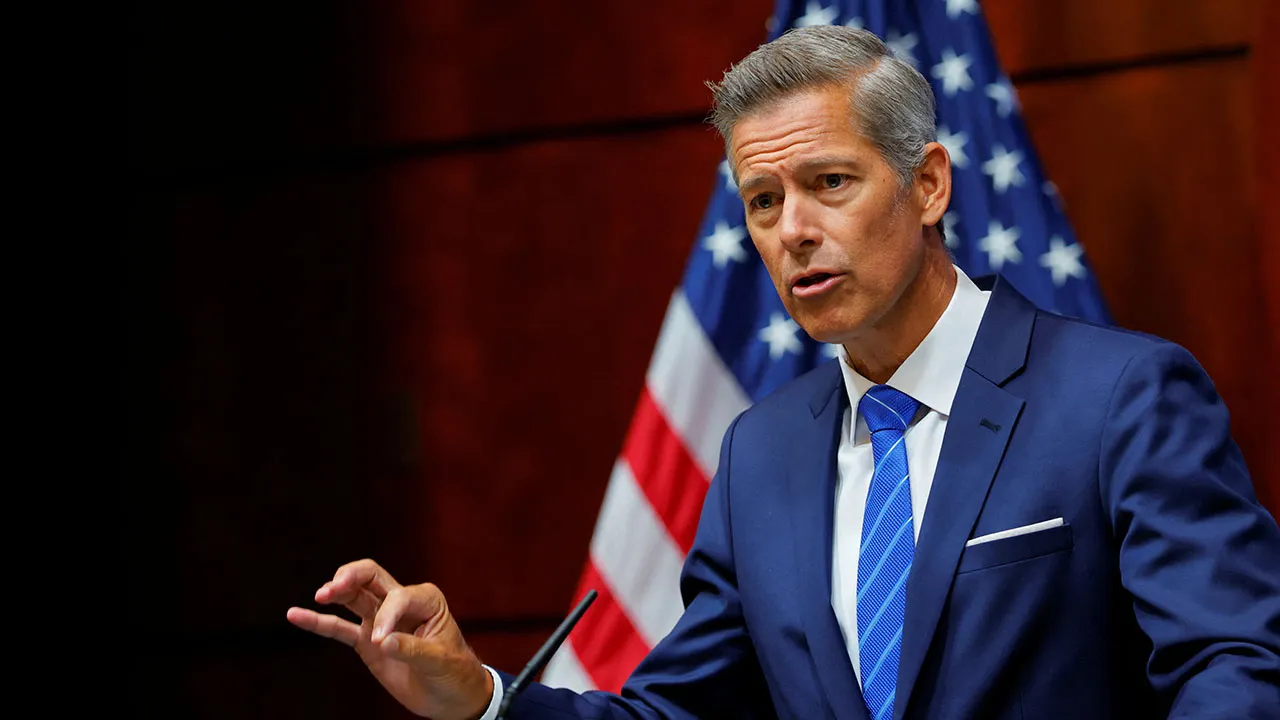
Boom Supersonic CEO Blake Scholl joins Varney & Co. to discuss the House passing a bill to permit supersonic passenger flights over the US. He explains their boomless technology and private funding, aiming for passenger flights by end of decade.
The Department of Transportation on Tuesday announced that regulators are moving toward enabling civilian supersonic flights over the continental U.S., which have been banned for decades due to sonic booms.
The Federal Aviation Administration (FAA) proposed a rule that sets a noise-based certification standard for supersonic aircraft and signaled that it will propose another rule later this year covering landing and takeoff noise standards for supersonic aircraft.
Taken together, the FAA’s regulatory moves will give guidance to aircraft manufacturers so they can finalize designs and bring civilian aircraft capable of flying at supersonic speeds into service for travelers.
“Restoring supersonic flight over land isn’t just about speed, it’s about unleashing American innovation and ushering in a Golden Age of Travel,” said Transportation Secretary Sean Duffy.
FASTER-THAN-SOUND PASSENGER FLIGHTS COULD SOON RETURN TO US SKIES AFTER KEY HOUSE VOTE
Transportation Secretary Sean Duffy announced the proposed rules to enable supersonic civilian flights over the U.S. (Reuters/Brian Snyder)
“Thanks to President Trump’s leadership, we are working at lightning speed to safely enable the next quantum leap in aviation technology and deliver an exciting new way to fly to the American flying public,” Duffy added.
The FAA is planning to finalize both rules by mid-2027.
Supersonic flights travel at speeds at or above Mach 1, flying at about 770 miles per hour or more. By contrast, commercial airliners generally fly between 550 and 600 miles per hour, giving supersonic aircraft a speed edge that can reduce travel times.
NASA ASTRONAUTS COULD SOON WEAR PRADA AS LUXURY LABEL UNVEILS NEW GEAR FOR ARTEMIS IV

The FAA aims to finalize the rules by mid-2027. (Justin Sullivan/Getty Images)
Civilian flights in the U.S. have been prohibited from operating at speeds above Mach 1 over land in the U.S. under an FAA rule meant to protect the public from the impact of sonic booms, which can present noise issues at ground-level and may damage windows.
Technological advancements have led to a new flight technique called Mach cutoff, which the FAA explained uses the aircraft design, atmospheric conditions, speed and altitude to work together to make the sonic boom bend and refract up into the atmosphere – significantly reducing the ground-level impact in the process.
US IS ‘AHEAD’ OF CHINA IN SUPERSONIC JET AIRCRAFT, SAYS BOOM SUPERSONIC CEO

The Concorde was a commercial airliner capable of supersonic flight, though it was phased out of service in 2003. (STF/AFP via Getty Images)
“Advances in aerospace engineering, materials science, noise reduction, and new operational concepts will eliminate the old sonic boom,” said FAA Administrator Bryan Bedford. “This means we can ultimately repeal the ban from the 1970s on supersonic flight over U.S. territory while minimizing noise impacts to residents in communities along the route and near airports.”
While the newly proposed regulations would apply to domestic supersonic flights, the FAA is also working with its regulatory counterparts from around the world to develop frameworks that could enable supersonic aircraft to serve international flights.
GET FOX BUSINESS ON THE GO BY CLICKING HERE
A year ago, President Donald Trump signed an executive order that called for the FAA to secure safety aviation agreements with foreign aviation regulators to allow for the safe international operation of supersonic aircraft.
Ford’s limited-edition Super Duty Proud to Honor package features patriotic styling, with a portion of proceeds supporting Blue Star Families. (Credit: Ford Motor Company)
Ford is recalling more than 741,000 vehicles across the U.S. after a transmission defect that can damage the parking system and increase the risk of a vehicle rolling away was linked to 24 allegations of property damage and nine alleged injuries.
The recall affects 741,195 vehicles, including certain 2018-2021 Ford Expedition and Lincoln Navigator SUVs, 2020-2021 Ford Explorer and Lincoln Aviator SUVs, and 2021 Ford F-150 pickups, according to the National Highway Traffic Safety Administration (NHTSA).
The agency said the vehicles may experience a transmission problem during certain shifts while in motion that can damage the transmission’s parking mechanism.
FORD IN DEEP WATER AFTER SWEEPING RECALLS HIT EVERY MODEL SINCE 2020 – WITH ONE EXCEPTION
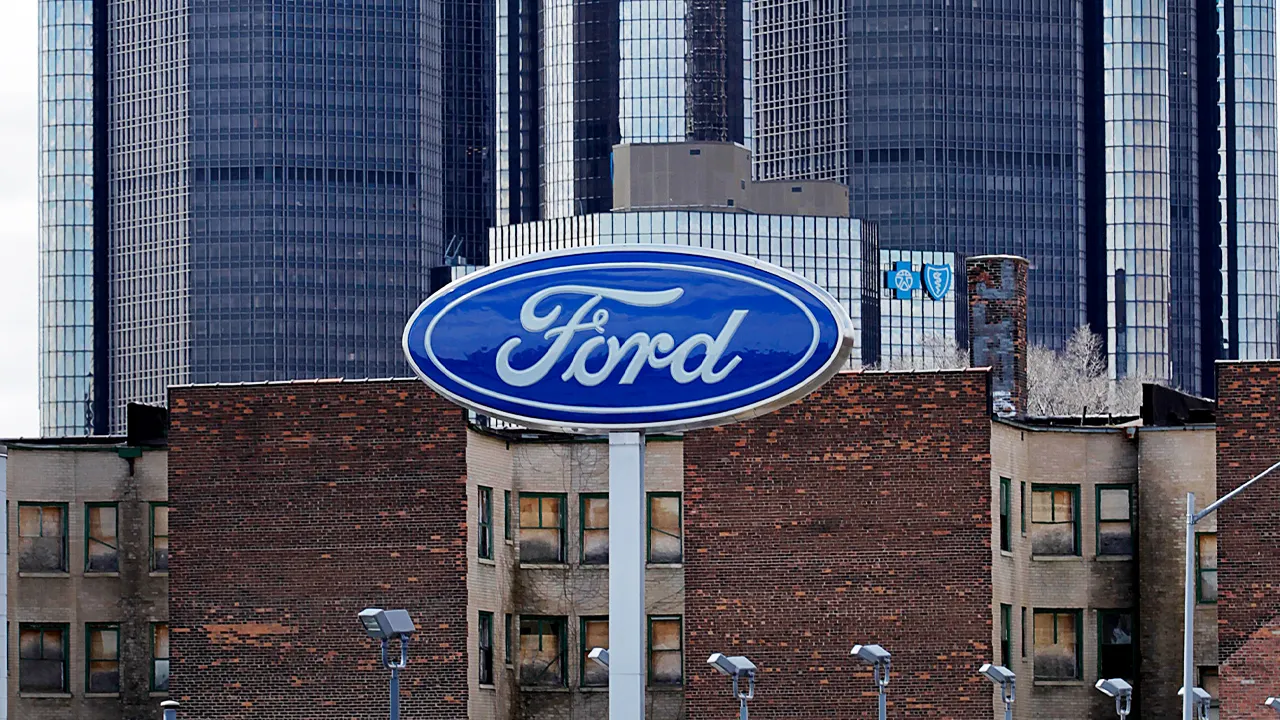
Ford Motor Co. signage is displayed outside a dealership in Detroit, Mich. (Jeff Kowalsky/Bloomberg via Getty Images, File / Getty Images)
If that happens, the transmission may no longer hold the vehicle in place after it is shifted into “Park” unless the parking brake is applied, increasing the risk of a crash or injury.
Ford said the issue stems from a transmission valve body separator plate that can restrict fluid flow to the park valve, allowing the parking mechanism to briefly engage while the vehicle is still moving. Drivers may notice a wrench warning light, and in some cases the electronic parking brake may automatically engage.
| Ticker | Security | Last | Change | Change % |
|---|---|---|---|---|
| F | FORD MOTOR CO. | 13.91 | -0.12 | -0.89% |
Ford said the reported incidents include two allegations involving emotional injuries.
To address the issue, dealers will update the vehicle’s powertrain control module software, inspect the transmission for damage and replace any damaged components free of charge.
FORD RECALLS MORE THAN 615,000 VEHICLES OVER WIPER AND DRIVESHAFT DEFECTS
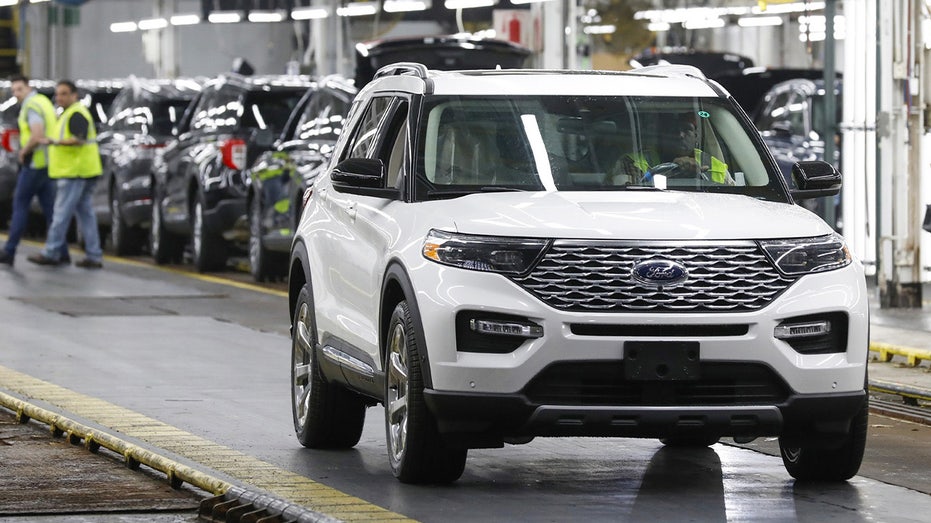
A Ford Explorer at the Ford Chicago Assembly Plant. (Jose M. Osorio/Chicago Tribune/Tribune News Service via Getty Images, File / Getty Images)
Ford expects to begin mailing interim notification letters to owners on Aug. 3.
A permanent repair is not expected to be available until April 2027, when the company plans to begin notifying owners that the remedy is available.
The recall is the latest in a string of safety actions that have put Ford under increased scrutiny in recent years.
In 2025, the automaker set a record for the most recalls issued by a single manufacturer in a single year, topping 150 safety recalls — nearly double the previous record of 77 set by General Motors in 2014.
Ford said the increase reflected a more aggressive strategy of identifying and addressing potential safety issues before they result in major incidents or widespread complaints.
FORD RECALLS MORE THAN 412,000 VEHICLES OVER SUSPENSION ISSUE
Workers assemble cars at the Ford Assembly Plant in Chicago. (Jim Young/AFP via Getty Images, File / Getty Images)
“The increase in recalls reflects our intensive strategy to quickly find and fix hardware and software issues and go the extra mile to help protect customers,” the company said in a 2025 statement. “Ford has more than doubled its team of safety and technical experts in the past two years and significantly increased testing for failure on critical systems in current Ford vehicles such as powertrains, steering and braking.”
CLICK HERE TO GET FOX BUSINESS ON THE GO
Between 2020 and 2026, nearly every Ford model was recalled at least once, from SUVs and pickups to commercial vans and the Mustang. The lone exception was the Ford GT supercar, which was discontinued after the 2022 model year.
FOX Business has reached out to Ford for comment on the recall and will update this story if a response is received.
Owners with questions can contact Ford customer service at 1-866-436-7332 or the NHTSA Vehicle Safety Hotline at 1-888-327-4236.
FOX Business’ Bonny Chu contributed to this report.

The indexes ended higher for the day as well on Tuesday, with technology among the biggest sector gainers in the S&P 500. Optimism over signs of progress in efforts to bring the Iran war to a lasting halt has helped stocks recently despite continued military tensions. For the month, the S&P 500 fell 1.1%, the Dow rose 2.5%, and the Nasdaq declined 2.8%.
Iran and the U.S. on June 17 signed a memorandum of understanding aimed at ending the four-month-old conflict. But exchanges of fire over the weekend have tested that agreement, and a Qatari official said on Tuesday that top U.S. envoys who have arrived in Doha will not hold a high-level meeting with Iran.
“We’ve had a great first half of the year, certainly better than most expected,” said Oliver Pursche, senior vice president and advisor for Wealthspire Advisors in Westport, Connecticut.
“In spite of all the geopolitical stuff, the U.S. economy is performing well and corporate earnings are strong.”

After a strong first-quarter earnings season for S&P 500 companies, investors are looking forward to second-quarter results in the coming weeks.
According to preliminary data, the S&P 500 gained 55.97 points, or 0.75%, to end at 7,498.38 points, while the Nasdaq Composite gained 374.62 points, or 1.45%, to 26,194.76. The Dow Jones Industrial Average rose 116.17 points, or 0.22%, to 52,298.91. Weakness in heavyweight technology shares has weighed on the market in recent weeks. Strategists at BofA said cyclical, value-oriented sectors such as energy and financials could be the better bet heading into the second half.
Worries about possible interest rate hikes have weighed on the market. Traders are pricing in at least one rate hike by the Federal Reserve by the end of 2026, according to data compiled by LSEG.


US judge blocks Trump’s limits on student loan forgiveness

A rendering of American Airlines planned Provisions grab-and-go lounge at New York’s John F. Kennedy International Airport
American Airlines
American Airlines is planning to open a new grab-and-go lounge at New York’s John F. Kennedy International Airport by the end of this year, its first new facility at the airport in more than four years as it continues its fight for high-paying customers to close a profit gap with Delta Air Lines and United Airlines.
The new lounge, a 3,700-square-foot space, will include a barista bar with hot and iced coffee drinks as well as hot and cold food travelers can grab.
Airlines have been adding more of these short-visit lounges in recent years to give credit card holders and big spenders access to spaces without crowding larger airport clubs. United announced its first in late 2022, for Denver International Airport.

Airlines and credit card companies alike have raised the entry requirements or scaled back on freebies like guest passes to avoid overcrowding.
American opened the first of its grab-and-go lounges, which it calls Provisions, at Charlotte Douglas International Airport in North Carolina, last year.
American operates out of JFK’s Terminal 8, which is shared by its Oneworld Alliance partners, Japan Airlines, Alaska Airlines, British Airways and others.
It has a trio of high-end lounges for business-class travelers, first-class passengers and other frequent flyer elites for long-haul trips, which the airline opened there in 2022. It also operates an Admirals Club there that is used more for lounge membership customers. American hasn’t updated its New York space lately like it has with those in other cities like Chicago and Austin, Texas.
Form 424B5 Realty Income Corp For: 30 June

Bitcoin ETFs Just Posted Their Third-Worst Week Ever And BTC Can’t Hold $60,000

France – Sweden live: Les Bleus begin knockout campaign against Blagult





-

 Fashion4 days ago
Weekend Open Thread: Staud – Corporette.com
-

 Politics5 days ago
The House | Manchesterism won’t survive the painful trade-offs unless it gets citizens on board
-

 Crypto World19 hours ago
Strategy authorizes up to $1.25B in Bitcoin sales under new capital plan
-

 Politics5 days ago
Potential 2028er World Cup attendee leaderboard
-

 Business5 days ago
Asia stock markets slide as tech shares slump
-

 News Videos2 days ago
MAJOR BITCOIN & MARKET UPDATE!!!! (MUST WATCH ASAP!!!)
-

 Tech5 days ago
A Look At A Gaggle Of Transputer Boards
-

 Crypto World7 days ago
Securitize Wraps Roubini's SEC-Registered ETF as Dubai VARA Digital Security
-
Crypto World7 days ago
Bitcoin (BTC) Dips Below $62K, Ethereum (ETH) Plunges 6% Daily: Market Watch
-
 Crypto World5 days ago
Dell (DELL) Shares Tumble Over 5% Following Analyst Downgrade to Hold
-

 Crypto World3 days ago
Coinbase, Circle Deepen Crypto Stock Losses Despite Resilient S&P 500
-
Business7 days ago
Entergy settles forward sale agreements, raises $672 million in cash proceeds
-

 Crypto World4 days ago
Kraken's xStocks Opens Bending Spoons IPO Registration to EEA Retail
-

 Business18 hours ago
Australia treasurer says alleged access of prime minister’s bank data ’incredibly concerning’
-

 Sports4 days ago
FIH Pro League: India defeat Pakistan 7-1, register biggest win of campaign | Other Sports News
-

 Crypto World5 days ago
Bitcoin Sparks $600M Hourly Liquidations With $65,000 Set To Become Resistance
-

 Tech3 days ago
Bluekit phishing kit adopts browser-in-the-middle for login theft
-

 Tech3 days ago
Russian hackers now target Signal backup recovery keys
-
 Crypto World4 days ago
Hyperliquid Named on Singapore MAS Investor Alert Register
-

 Crypto World6 days ago
Ripple and SBI launch RLUSD in Japan after JFSA approval
You must be logged in to post a comment Login