
Crypto World
Strategy Plan Sparks Debate as MSTR and STRC Stocks Jump


TLDR
- Strategy introduced a new capital framework that allows potential Bitcoin sales to raise liquidity.
- Strategy stocks MSTR and STRC recorded strong gains before easing in premarket trading.
- Benchmark reaffirmed a Buy rating and said the new model improves capital flexibility.
- Strategy shifted from pure Bitcoin accumulation to a more active balance sheet management approach.
- The company authorized up to $1.25 billion in Bitcoin sales, representing a small portion of holdings.
Strategy drew mixed reactions after unveiling a revised capital framework, even as its stocks posted strong gains. Analysts supported the changes, but some market participants questioned the long-term impact on Bitcoin holdings. The update introduces flexibility, yet it shifts Strategy away from its previous accumulation-only stance.
Strategy Gains Analyst Backing as Stocks Rise
Benchmark Equity Research reaffirmed a Buy rating on Strategy’s Class A stock MSTR with a $570 price target. The firm stated that the revised capital framework improves financial flexibility and strengthens balance sheet management. As a result, Strategy attracted renewed attention from institutional analysts.
Meanwhile, Strategy’s MSTR shares climbed 12.6% to about $92.70 during Monday trading sessions. At the same time, STRC preferred shares rose 12.2% to approximately $83.70, reflecting strong investor response. However, both Strategy stocks moved slightly lower in Tuesday premarket trading activity.
Benchmark analysts stated that Strategy no longer operates as a one-direction Bitcoin accumulator. Instead, Strategy now manages both assets and liabilities through an active capital structure approach.
They added, “Strategy is now an active manager of both sides of its capital structure.”
Strategy authorized potential Bitcoin sales worth up to $1.25 billion under its updated capital framework. This amount equals about 21,082 BTC based on current market prices, according to available data. The allocation represents nearly 2.5% of Strategy’s total holdings of 847,363 BTC.
Previously, Strategy relied mainly on issuing equity or debt to raise capital for operations. However, the new framework allows Strategy to access liquidity through direct Bitcoin sales when required. This shift reflects a broader approach to managing financial obligations and market conditions.
Strategy has executed Bitcoin sales before despite its long-term accumulation narrative. The company sold 32 BTC in May 2026 and previously sold 704 BTC in 2022. Later, Strategy repurchased a similar amount, maintaining its overall exposure to Bitcoin.
Strategy Plan Divides Market Participants
Investor Simon Dedic suggested the update could signal a local bottom for Strategy’s recent market performance. He added that some selling pressure likely reflected preparations for liquidity adjustments ahead of the announcement. His comments indicated partial confidence in Strategy’s revised approach.
Trader Scott Melker acknowledged that Strategy responded to investor concerns by increasing flexibility and cash reserves. However, he stated, “Only time will tell” whether the framework restores confidence in Strategy’s long-term outlook. His remarks reflected uncertainty about the sustainability of the changes.
Arca CIO Jeff Dorman argued that Strategy may need to sell between $2 billion and $3 billion in Bitcoin. He stated that such sales could remove persistent market overhang linked to Strategy’s large holdings.
Meanwhile, Ripple CEO Brad Garlinghouse said, “Financial engineering doesn’t drive long-term value,” criticizing Strategy’s approach.


An analyst argues XRP could help Japan escape its yen carry-trade trap without triggering a disorderly global sell-off, though the proposal faces substantial practical obstacles.
The idea targets liquidity efficiency rather than debt, and that distinction matters enormously.
The Prefunding Problem XRP Claims It Could Solve
The yen carry trade involves borrowing cheap yen to fund higher-yielding assets abroad.
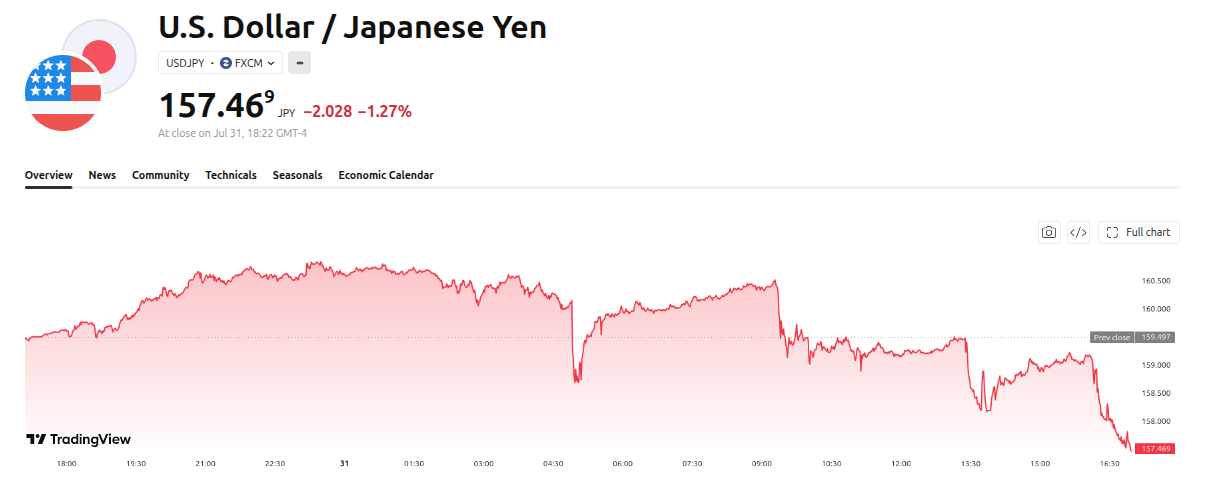
Years of ultra-low rates pushed the currency toward multi-decade lows near 157 against the dollar.
Both governments recently intervened. Washington bought yen for the first time in nearly 30 years, joining the Bank of Japan to stabilize the currency.
The underlying dilemma persists. Japan must either tolerate a weaker yen or risk destabilizing its enormous bond market through aggressive rate hikes or forced capital repatriation.
Follow us on X to get the latest news as it happens.
Crypto analyst EGRAG CRYPTO outlined an alternative in a detailed thread. His argument centers on payment infrastructure, not monetary policy.
The starting point is prefunding. Japanese institutions park capital in foreign currencies across correspondent banks to ensure payments clear, immobilizing capital that could support the domestic economy.
XRP would function as a neutral bridge asset. A payment moves yen into XRP, crosses the ledger in seconds at near-zero cost, then converts into the destination currency, or reverses for repatriation.
Finality arrives in three to five seconds. That speed sharply reduces counterparty risk, settlement delays, and the need to keep permanent foreign balances idle abroad.
The proposed benefit follows logically. On-demand liquidity, rather than permanent prefunding, would allow Japanese banks and corporations to retain more capital in yen.
“…XRP cannot eliminate the interest-rate differential that created this incentive. However, it could help reduce a different source of structural yen weakness: the need for Japanese institutions to maintain large foreign-currency balances for international settlement…,” EGRAG CRYPTO said on X.
Export revenues, investment income, and remittances could be converted back faster and more cheaply. That continuous settlement flow might gradually support the currency without liquidating hundreds of billions in Treasuries.
Is the XRP Proposal Actually Viable?
Freed working capital could also help. Domestic capacity to absorb Japanese government bonds would improve as the Bank of Japan steps back from its bond-buying program.
The analyst limits his own expectations, and reasonably so. XRP would serve as a transactional bridge, not a reserve currency or legal tender, with exposure lasting only seconds.
“Its contribution would be infrastructural. XRP could improve how money moves, how quickly transactions settle and how efficiently institutions use liquidity. That could give Japan more room to manage its monetary transition. But technology cannot substitute for economic policy…,” the crypto analyst noted.

That framing sidesteps the harder question. Prefunding is a symptom of Japan’s imbalances, not its cause, and faster settlement does nothing to close the interest-rate gap that drives capital abroad.
The technical claims themselves hold up. The XRP Ledger’s speed and cost advantages are documented. Whether that inefficiency matters at this scale is another question.
Japan’s carry trade involves trillions in cross-border positions, while prefunded balances represent a far smaller slice.
The list of prerequisites grows quickly. Deep XRP-to-yen liquidity, clear regulation, licensed providers, custody solutions, and banking integration would all need to arrive first.
None of that exists today. No large-scale Japanese integration is underway, and XRP’s volatility sits awkwardly alongside the stability such flows demand.

Central bank interest offers thin support. The Bank of Japan has explored tokenized settlement through Agorá, but never endorsed XRP, and its research points toward central bank infrastructure instead.
What Comes Next for the Yen?
Washington told several banks to stand ready for further action. Japan’s top currency diplomat said the support went beyond psychological backing, while South Korean authorities reportedly sold dollars alongside Tokyo. The Bank of Japan held short-term rates at 1% on Friday, as expected.
Policymakers warned underlying inflation could exceed the target, signaling further hikes without committing to timing.
Traders now watch one level closely. SBI FX Trade advisor Yuji Saito said the key question is whether authorities keep pushing until the dollar breaks below 155 yen.
Commerzbank expects roughly semiannual hikes, placing the next move around December.
Markets currently price that path, though stronger data could pull it forward.
Subscribe to our YouTube channel to watch leaders and journalists provide expert insights.
Coming sessions will hinge on intervention risk and Fed expectations rather than settlement technology.
Thin liquidity amplifies every move, and even the possibility of official buying keeps traders defensive.
The post Analyst Claims XRP Could Ease Japan’s Yen Crisis: Is It Realistic? appeared first on BeInCrypto.

July was a very eventful month for the company behind XRP, and we will explore some of the major developments, such as growing the stablecoin business, institutional infrastructure, and the XRP Ledger ecosystem, which saw a major milestone that included AI agents.
This article will focus primarily on Ripple, not the native token or its price moves. If you are more interested in XRP, then you should check this article.
RLUSD Enters New Markets
Although this was technically announced at the end of June, it became a major news story in early July. Ripple expanded the reach of its dollar-pegged stablecoin RLUSD by becoming one of the first partners to integrate OpenUSD. It said that the move reinforces the team’s commitment to multichain infrastructure supporting institutional adoption across the entire crypto industry.
In addition, Japan’s Financial Services Agency (JFSA) approved RLUSD for use in the country through SBI VC Trade. The two developments marked another step in what Ripple has been trying to do for years: to position RLUSD as a regulated stablecoin for global payments and tokenized finance.
The company joined the 4th of July celebrations in the United States by highlighting the Giving4th campaign. It donated RLUSD to nonprofits as part of its broader effort to showcase real-world stablecoin utility.
Earlier this week, one of the execs behind the stablecoin at Ripple noted that RLUSD had launched on the four largest exchanges in South Korea – Upbit, Bithumb, Korbit, and Coinone.
The asset continues to grow in terms of usage and market capitalization, with the latter reaching $1.6 billion on August 1.
Expanding Enterprise Infrastructure
The company also introduced a platform designed to help financial institutions issue, manage, and redeem RLUSD more effectively, called Ripple Mint. The launch complements its growing payments ecosystem and reflects the firm’s increasing focus on serving banks, fintech firms, and enterprise clients entering the cryptocurrency space.
Separately, Ripple announced a strategic investment in Notabene, a company specializing in compliance and payment infrastructure. The collaboration aims to improve regulated cross-border payments while supporting broader adoption of Ripple’s stablecoin.
Once again in July, Binance extended support for RLUSD by providing new promotions for the asset and increasing its visibility across the platform.
AI Activity Rises on the XRPL
Data provided by on-chain analytics resources indicated on July 22 that the XRP Ledger had surpassed 1.4 million transactions initiated by AI agents. According to analysts and experts, this highlights the growing experimentation with autonomous applications and machine-to-machine payments.
Although the sector remains in its early stages, the milestone demonstrates that developers are increasingly exploring the XRPL for use cases beyond traditional payments and token transfers.
The post July’s Biggest Ripple (XRP) Stories: RLUSD Expansion, AI, and Institutional Adoption appeared first on CryptoPotato.


Galaxy Research raised its estimate of Bitcoin drained from addresses linked to the Coldcard firmware flaw to 1,367.05 BTC, worth about $88.6 million, on Aug. 1.
Summary
- 1,367.05 BTC was drained across 4,585 addresses in three suspected Coldcard attack waves, Galaxy reported.
- July 30’s first wave removed 1,082.65 BTC from 1,196 addresses in just 41 minutes total.
- Firmware updates fix new seed generation but cannot repair vulnerable seeds created on earlier releases.
The research unit identified 4,585 affected addresses across three suspected attack waves, replacing its earlier estimate of 1,082.65 BTC from 1,196 addresses.
The revised figure means the $70.2 million estimate reported after Galaxy’s first analysis is no longer current. Galaxy described the total as its “estimated observed size,” leaving open the possibility that further transactions could be found. The company has not proved that every address came from a vulnerable Coldcard seed.
Galaxy raises Coldcard estimate after third wave
Galaxy’s first mapped wave occurred between 1:10:20 a.m. and 1:51:26 a.m. UTC on July 30. It traced 1,082.65 BTC from 1,196 addresses across blocks 960,183 through 960,191. The transactions appeared about 30 hours before Coinkite issued its initial public advisory.
A second wave on July 31 drained 76.16 BTC from another 1,478 addresses. Galaxy later identified a third wave that removed 207.7294 BTC from 1,912 addresses. Together, the three groups brought the observed total to 1,367.05 BTC across 4,585 addresses.
The first wave used the same 30 satoshis per virtual byte fee and transactions without change outputs. Those traits helped researchers identify the related movements onchain. Galaxy warned that later attacks might use different patterns, making the complete loss harder to measure.
Three waves used different transaction patterns
Galaxy said the first two waves shared collector addresses, destination types and derivation-path behavior. The events also occurred about 27 hours apart. Those similarities suggested one operator may have conducted both sweeps, although the blockchain cannot establish the attacker’s identity.
The third wave behaved differently. Funds from each victim moved to separate pay-to-witness-script-hash destinations, while several victims were grouped into each sweep transaction. The activity also checked only the default derivation path. Galaxy said it was confident each wave represented one operator, but would not claim that one attacker controlled all three.
Therefore, descriptions of a single hacker remain an inference rather than a confirmed fact. Galaxy called the third group “what we suspect are hacks of Coldcard-generated addresses.” The wording reflects the limits of onchain attribution.
Coinkite said a series of firmware integration errors prevented the intended hardware random-number generator from contributing properly to seed creation. A MicroPython software fallback supplied predictable output after a March 2021 code change. Block’s independent technical report described the same random-number-generator path and said active exploitation was underway.
Coinkite estimated about 40 bits of effective search space for affected Mk2 and Mk3 seeds. Later Mk4, Q and Mk5 models included extra secure-element entropy, but the company estimated roughly 72 bits rather than the intended 128 bits. These figures remain technical estimates and may change as testing continues.
The affected Mk2 and Mk3 range covers firmware 4.0.1 through 4.1.9. Seeds created on Mk4 and Mk5 before standard version 5.6.0, and Q seeds created before version 1.5.0Q, are also affected. Separate fixed Edge releases are available.
Existing seeds require migration, not only updates
Coinkite released hotfixes for every affected model and said it takes “full accountability” for the bug. However, installing new firmware only corrects future seed generation. It cannot add entropy to a recovery phrase that already exists.
The official Coldcard advisory tells users to install the fixed firmware, generate a completely new seed, verify its backup and receiving address, and send a small test transaction before moving the remaining balance. Users should keep the previous backup until the migration is confirmed.
Coinkite said seeds created with at least 50 fair, independent and private dice rolls are not considered exposed by this issue alone. A strong, unique BIP-39 passphrase adds another barrier, but the company still advises migration. Short, reused or predictable passphrases may not provide adequate protection.
However, the 594.48 BTC sweep identified by AnchorWatch’s Rob Hamilton. In related coverage, a later technical review examined how the firmware build error weakened Coldcard seeds for more than five years.
Coinkite’s investigation remains open, and the company has promised a formal technical review. Galaxy may also revise the observed loss again if new address patterns emerge. Until those reviews are complete, $88.6 million is the latest public estimate, not a final confirmed total. No verified Bitcoin price reaction has been attributed to the Coldcard incident so far.
Trump Media has sold another 2,628 Bitcoin (BTC) worth roughly $165 million, deepening losses on a treasury it assembled near record prices.
The disposal arrived as the company switched on Truth API, a paid feed selling institutions faster access to President Donald Trump’s Truth Social posts.
A Treasury Bought High, Sold Low, and Locked the Rest
Lookonchain, an on-chain analytics account that tracks large wallet flows, puts total sales at 7,281 BTC.
Trump Media originally bought 11,542 BTC for about $1.37 billion, averaging $118,522 a coin.
The company’s own quarterly filing supports that entry price. It listed 9,542.16 BTC against a $1.13 billion cost basis on March 31, plus 2,000 BTC pledged against options.
Those exits have averaged $74,855, far below cost. Lookonchain estimates the combined realized and paper shortfall at roughly $555 million.
What remains is not free to move. The same filing shows 4,260.73 BTC pledged against convertible notes, with restrictions lifting no later than maturity on May 29, 2028. That block closely matches the balance Lookonchain implies is left.
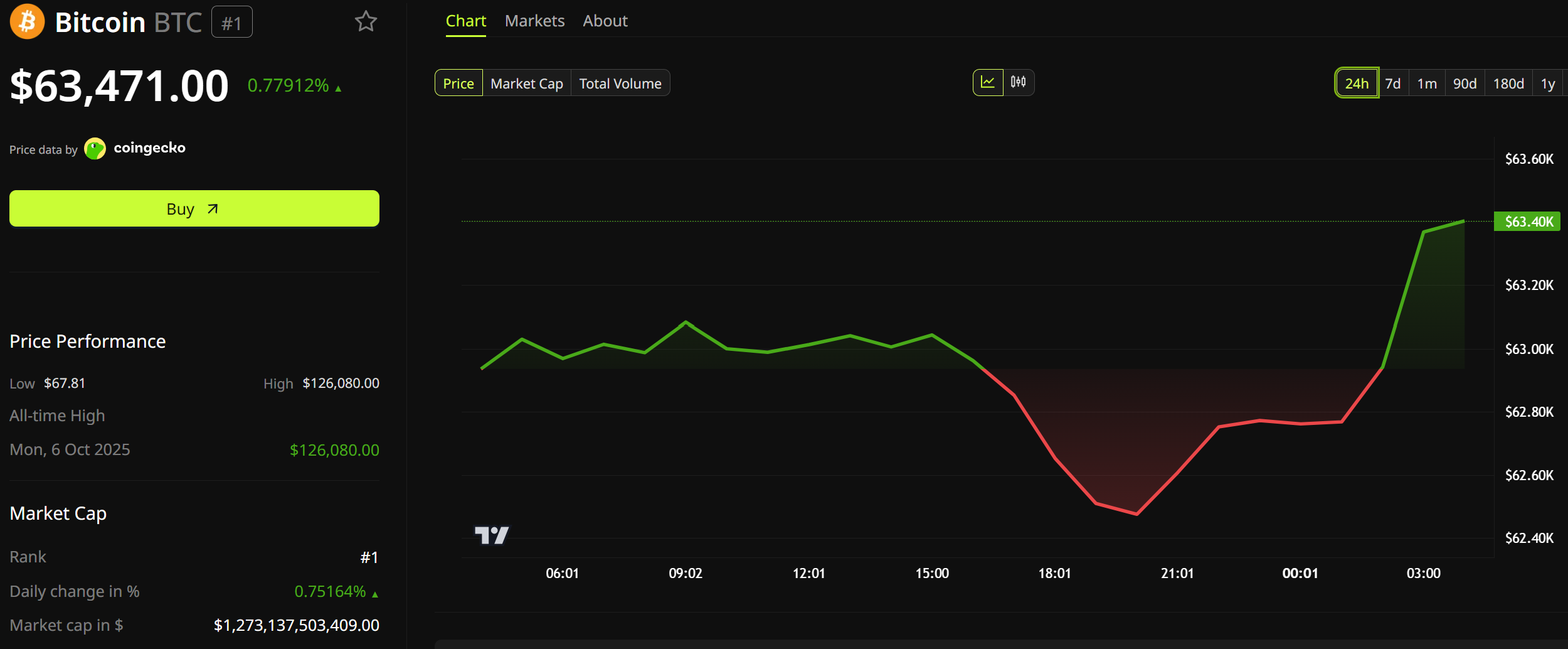
Meanwhile, Bitcoin trades near $63,471, roughly half its October 2025 record of $126,080.

A $243.96 million mark-to-market hit on digital assets helped drive a $405.9 million quarterly net loss, the same math that has soured corporate Bitcoin bets elsewhere.
Truth API Turns Presidential Posts Into Revenue
Truth API opened to institutional customers on August 1 as the company’s first data licensing product.
Reported pricing reaches $100,000 a month, falling to $60,000 under a three-year commitment.
Follow us on X to get the latest news as it happens
Scale explains the appeal. Trump Media booked $871,200 of revenue in the first quarter, up 6% from a year earlier.
One subscription at list price would generate $1.2 million a year.
“Markets already move on Truth Social posts… Truth API delivers a direct, licensed, real-time feed of the platform’s most market-moving Truths,” Kevin McGurn, Interim Chief Executive Officer of Trump Media, in the company’s release.
The feed covers the 10 highest ranking Truth Social accounts and delivers posts in milliseconds.
Those posts already carry weight. In July, Trump’s statement that the memorandum of understanding with Iran had collapsed sent Bitcoin sharply lower within minutes.
Warren and Schiff Want an SEC Investigation
Senators Elizabeth Warren and Adam Schiff wrote to Securities and Exchange Commission (SEC) Chair Paul Atkins on July 28.
They asked for an immediate probe into whether the product breaks securities law.
“This appears to be an outrageous abuse of the President’s office for his personal benefit that undermines everyday investors and the integrity of our markets,” Warren and Schiff, in their letter to the SEC.
The senators put Trump’s stake at about 41%. They cited his June 10 post praising Citigroup by ticker at the opening bell, after which the bank outperformed a falling market.
That request now sits with an agency led by a Trump appointee.
For now, the Trump family crypto empire is monetizing political proximity faster than it can exit a Bitcoin position it is no longer free to sell.
The post Trump Media Sells More Bitcoin as Truth Social Plans Subscription Fees appeared first on BeInCrypto.


Russia will extend its regional crypto mining ban to Moscow, the Moscow Region and parts of Kursk Region from Aug. 15, 2026.
Summary
- August 15 restrictions cover Moscow, Moscow Region and nine designated territories within Russia’s Kursk Region.
- Resolution 936 bars cryptocurrency mining and mining-pool participation through December 31, 2032, citing grid risks.
- Mining demand already totals one gigawatt in Moscow’s power system, according to regional energy officials.
The prohibition will remain in force through Dec. 31, 2032, under Government Resolution No. 936.
Prime Minister Mikhail Mishustin signed the measure on July 25. The government published it on the official legal information portal on July 31. It amends Resolution No. 1869, the December 2024 order that established territorial mining restrictions.
Russia crypto mining ban covers mining pools
The decree prohibits digital currency mining and participation in mining pools across Moscow and the entire Moscow Region. In Kursk, it applies to the Belovsky, Bolshesoldatsky, Glushkovsky, Korenevsky, Lgovsky, Rylsky, Sudzhansky and Khomutovsky municipal districts, plus the city of Lgov.
The measure expands a regional list rather than creating a nationwide mining ban. Resolution No. 936 adds Moscow, Moscow Region and the designated Kursk territories as entries 14 through 16 in the existing restriction order.
Power capacity concerns drove the expansion
The Energy Ministry’s explanatory material warned that operating without a year-round restriction could create “risks of a shortage of power capacity” as energy-intensive mining facilities connect to regional grids. Moscow Region energy authorities had requested the ban before the government adopted it.
Regional officials estimated that mining consumes about one gigawatt within the Moscow power system. Meanwhile, data-center capacity in Moscow and the surrounding region could reach 3.6 gigawatts by 2032, equal to 17% of the system’s maximum load, according to figures reported by Interfax. The 2032 figure remains an official projection rather than measured current demand.
Kursk officials sought restrictions in eight districts and Lgov amid concerns about pressure on local electricity infrastructure. The final decree adopted the same locations included in the earlier government proposal.
Russia has widened regional restrictions since 2025
The new order extends a policy that followed Russia’s legalization of cryptocurrency mining in 2024. Authorities subsequently introduced regional restrictions to manage electricity shortages and seasonal demand.
Existing rules cover several North Caucasus republics and other territories through March 15, 2031. The government also imposed year-round restrictions across parts of Buryatia and Zabaykalsky Krai from April 1, 2026. The Russian Energy Ministry said those restrictions cover 20 areas of Buryatia and 31 areas of Zabaykalsky Krai.
As previously reported, a Russian power-industry commission supported the Moscow and Kursk proposal in May. That recommendation moved the plan toward Cabinet approval while lawmakers considered separate penalties for unregistered mining.
Russia had introduced a mining registry intended to identify unregistered operators and equipment. The system supports a broader policy that permits registered mining while targeting unauthorized facilities.
Miners face an Aug. 15 shutdown deadline
Mining businesses operating in the newly restricted areas must stop local activity by Aug. 15 or move their equipment. The deadline falls 15 days after the decree’s July 31 publication. The restriction covers pool participation as well as direct cryptocurrency mining.
The prohibition is scheduled to expire after Dec. 31, 2032, unless the government amends the order. The decree does not provide an official estimate of the mining capacity affected or the amount of equipment that must relocate.
Therefore, claims that the Moscow ban will materially alter Bitcoin’s global hash rate remain unverified. The next confirmed development will be the restriction’s implementation on Aug. 15 and any later enforcement guidance issued by Russian energy or regional authorities.
Smaller Bitcoin transfers have reached levels not seen since the collapse of cryptocurrency exchange FTX amid an ongoing suspected Coldcard hack.
Bitcoin transfers below 1 BTC climbed to their highest daily level since November 2022 on Friday, with 39,600 BTC moved, according to data shared by CryptoQuant head of research Julio Moreno on Saturday.
The figure was just 300 BTC below the 39,900 BTC transferred on Nov. 16, 2022, days after FTX filed for bankruptcy. “The Bitcoin plebs had not moved this amount of BTC in a day since the FTX collapse,” Moreno said, adding that he was encouraged to see users “taking action.”
As the suspected Coldcard hack continues to unfold, the incident has become a broader test for Bitcoin self-custody, reigniting debate over whether users are better protected by controlling their own funds or relying on third-party platforms.
Incident ongoing as Galaxy tracks three attack waves
The surge in small Bitcoin transfers came as researchers continued to uncover new victims of the suspected Coldcard hack, which first surfaced in late July and appeared to remain active at the time of publication.
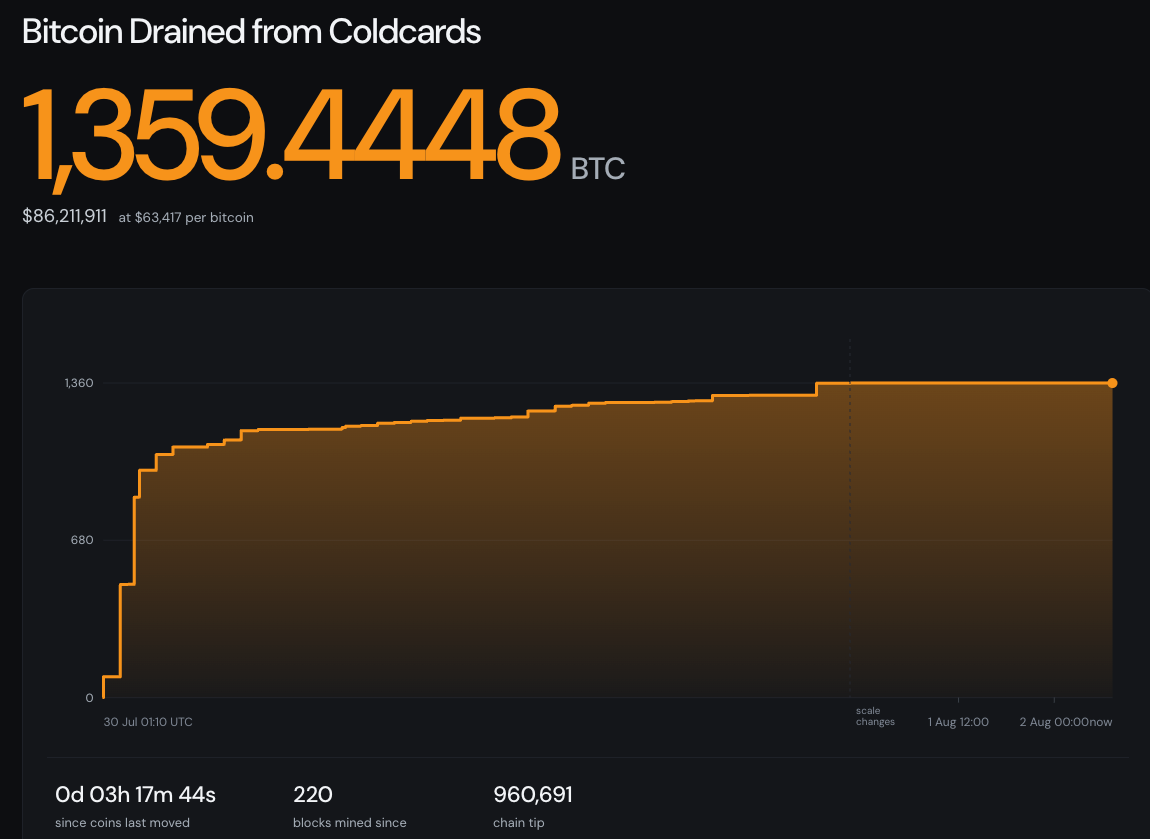
Galaxy Research, the research arm of crypto investment company Galaxy Digital, reported Saturday that the latest identified wave drained an additional 207.7 BTC, worth about $13.2 million. The theft brought estimated losses to 1,367 BTC ($88.6 million) across 4,585 addresses.
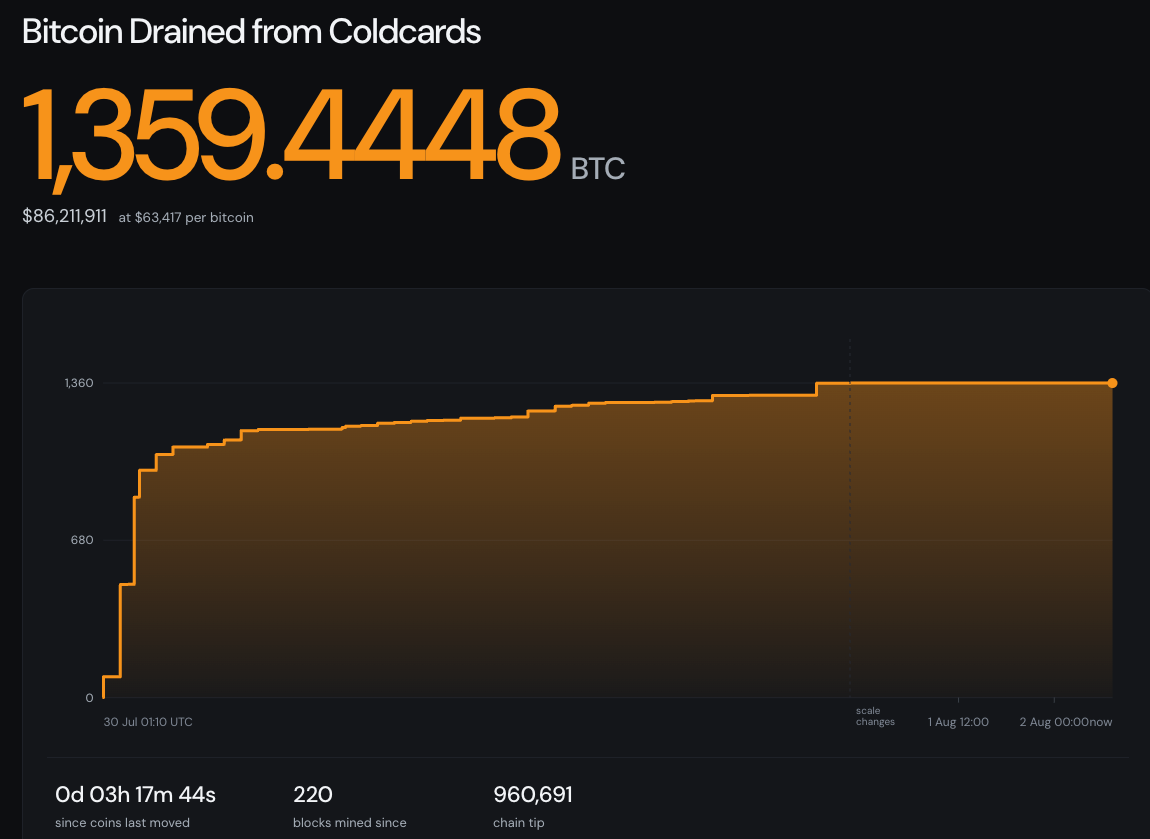
Bitcoin drained from Coldcard wallets. Source: Coldcard Watch
Alex Thorn, Galaxy Digital’s head of firmwide research, warned in an X post on Sunday that the attack was still ongoing and urged users to move funds from Coldcard-generated addresses immediately if they had not already done so.
Thorn said his team continued to identify new victim and attacker addresses, adding that reports from users had helped researchers and authorities track stolen funds.
Coldcard incident reignites self-custody debate
The suspected Coldcard hack has reignited debate over the risks and benefits of Bitcoin self-custody, a core principle of crypto that allows users to control their funds without relying on third parties.
Nick Neuman, CEO of Bitcoin security company Casa, pushed back against claims that “self-custody is over,” arguing that its distributed nature gave users time to react. He estimated that potentially 10 times more Bitcoin was protected through self-custody than was stolen and identified in the attack so far.
Related: SecondFi to wind down after $2.6M ADA theft linked to wallet flaw
The debate also drew responses from traditional finance supporters. Eric Balchunas, senior ETF analyst at Bloomberg, argued that Bitcoin exchange-traded funds (ETFs) provide a safer and more convenient alternative for many users, pointing to the long operating history of the ETF industry. Others pushed back, saying the Coldcard incident was a failure of one wallet provider rather than a failure of self-custody itself.
Magazine: A quantum roadmap would push Bitcoin much higher: Charles Edwards


Minnesota’s statewide crypto ATM ban took effect on Aug. 1, 2026, stopping operators from offering virtual currency kiosks after residents reported nearly $1 million in related scam losses.
Summary
- 134 complaints produced nearly $1 million in reported Minnesota crypto kiosk losses across three years.
- August 1 rules require every Minnesota crypto kiosk offline, with public removal due December 31.
- 2025 FBI data recorded 222 Minnesota kiosk complaints and more than $4 million in losses.
Governor Tim Walz signed Senate File 3868 on May 5 after the measure cleared the state legislature.
The law covers machines that exchange cash, bank credit or another virtual currency for crypto. It does not prevent Minnesotans from buying, selling or holding digital assets through lawful online services. The ban took effect as scheduled, with physical removal due by year-end.
Minnesota crypto ATM ban stops kiosk transactions
Under the enacted Minnesota law, businesses may no longer install, operate, maintain or make a crypto kiosk available for use anywhere in the state. Existing machines had to stop processing transactions by Aug. 1, although operators have until Dec. 31 to remove them from locations visible or accessible to the public.
The Minnesota Department of Commerce said it is working with licensed money-service businesses to secure compliance. Assistant Commissioner Sara Payne said the department can take enforcement action, including legal sanctions and civil penalties, against operators that continue offering kiosk transactions. The public and retailers may also report machines that remain operational.
The state had about 350 licensed kiosks operated by roughly eight to 10 companies when the Senate approved the measure in April. The new rule focuses first on whether a machine is available for use, not whether its cabinet remains temporarily inside a store.
Scam losses pushed lawmakers past earlier safeguards
The Minnesota Department of Commerce recorded 134 crypto kiosk scam complaints from 2023 through 2025, with reported losses approaching $1 million. In 2025 alone, the department counted 70 cases, more than $540,000 in losses and an average loss of nearly $6,800 per transaction.
Officials said many schemes involved fake family emergencies, romance scams or criminals impersonating government and law enforcement personnel. Victims were often told to withdraw cash, find a kiosk and scan a QR code controlled by the scammer.
Commerce Commissioner Grace Arnold gave residents a direct warning: “If someone is telling you to act quickly and send money through a kiosk … it’s a scam.”
Minnesota had introduced licensing, transaction limits, disclosures and other kiosk safeguards in 2024. However, state officials said scammers adapted by coaching victims through warning screens and arranging deposits to avoid existing protections.
FBI data shows broader scope than state complaints
Separate FBI data recorded 222 Minnesota complaints involving crypto kiosks in 2025, with adjusted losses of $4.07 million. Those figures are not directly comparable with the state’s 70 cases and $540,000 total because the agencies use different reporting systems and complaint scopes.
The FBI also cautioned that its loss totals may include other transaction methods used in the same scam. Nationwide, the agency received 13,460 kiosk-related complaints involving $388.98 million in adjusted losses during 2025. More than half of the complaints involved people older than 50.
Minnesota’s action forms part of a wider state crackdown. Tennessee banned crypto ATMs from July 1, while Georgia imposed transaction limits, warnings and some refund requirements. Indiana had already adopted a statewide prohibition. In related coverage, Delaware and New Jersey lawmakers advanced similar proposals.
The next binding date is Dec. 31, 2026. By then, operators must remove publicly visible or accessible machines. Kiosk-only operators must also pay customers any money or crypto still held or owed because of earlier transactions, unless another lawful access method remains available.
Customers may request payment in U.S. dollars at market value or transfer to a chosen crypto wallet. A wallet transfer must occur within 30 days of the request and be recorded on the relevant blockchain. Operators must retain proof for the Minnesota commerce commissioner.
The state has taken a different approach to regulated financial institutions.Another Minnesota law effective Aug. 1 allows banks and credit unions to provide crypto custody under risk-management, cybersecurity and notice requirements.
Commerce will now test whether operators disable every kiosk, complete removals and process required customer payouts before year-end. Residents can file complaints with the department when they find a machine that remains available for use.


Decentralized exchange spot trading rose to about 24% of centralized exchange volume in July 2026, according to The Block’s current DEX-to-CEX data series.
Summary
- July’s DEX-to-CEX spot ratio reached about 24%, according to The Block’s current data series estimate.
- DefiLlama’s trailing data ranked Solana, BNB Chain and Ethereum among the largest spot ecosystems globally.
- Robinhood Chain added July activity after Uniswap deployed four protocol versions from its first day.
The reading was described as the strongest shown in the current series and continued a broader rise in onchain market share since 2024.
The Block calculates the measure by dividing monthly DEX volume by volume on a selected group of centralized exchanges. Its dashboard includes the top 30 decentralized exchanges by volume from DefiLlama. Therefore, the figure does not mean DEXs handled 24% of combined spot trading. It means DEX activity equaled roughly 24% of the covered CEX total.
DEX spot volume ratio reaches about 24% in July
The July figure followed a faster expansion that began in 2025. The ratio remained below 10% for much of 2024 before rising as traders increasingly used permissionless markets for memecoins, newly issued assets and products unavailable on large centralized platforms.
However, the reading also came during a weaker period for centralized spot trading. Talos reported that total exchange spot volume fell 28% quarter over quarter to $2.32 trillion in the second quarter of 2026. Lower CEX activity can lift the ratio even when DEX volume does not reach an absolute record.
Current DefiLlama data shows that activity remains spread across several networks. Its Aug. 2 trailing 30-day rankings listed Solana at about $49.86 billion, BNB Chain at $31.04 billion, Ethereum at $28.84 billion and Base at $22.38 billion in spot DEX volume. Robinhood Chain added another $14.48 billion over the same rolling period.
New chains and wider token access supported onchain trading
Robinhood Chain was one of July’s clearest new sources of DEX activity. Uniswap Labs announced that Uniswap v2, v3, v4 and UniswapX went live on the network on July 2, one day after its public mainnet launch. The deployment supported crypto assets and Robinhood Stock Tokens through Uniswap’s web app, wallet and API.
CoinDesk Data later estimated that Robinhood Chain averaged about $690 million in daily DEX and aggregator volume over a seven-day period. Activity peaked at $943.6 million on July 11, while Uniswap accounted for about 99.5% of the network’s seven-day DEX volume.
The stock tokens were available in more than 120 countries but were not offered to U.S. users. Early trading also included memecoins rather than being limited to tokenized equities and other real-world assets.
As crypto.news reported, Robinhood Chain drove a sharp increase in Uniswap activity and passed $1 billion in cumulative swap volume during its first ten days. However, the role of speculative tokens makes sustained activity more important than launch-week totals.
Other ecosystems entered July with established onchain liquidity. Solana DEX volume exceeded $800 billion during the first part of 2025, while Jupiter remained a major routing layer for trades.
The “record” description needs a methodology caveat
The claim that July produced the “highest level since tracking began in 2019” requires qualification. The Block’s current chart supports the reported July reading, but older reports from the same publisher described higher figures under earlier versions of its data.
In June 2025, The Block reported that DEXs reached 25% of CEX spot volume during May. One month later, it reported a 29% ratio for June. Both historical figures are above July 2026’s roughly 24% reading.
The difference may reflect historical data revisions, changes in the exchanges counted or adjustments to volume filtering. However, the public description on the current dashboard does not explain why its historical readings differ from the publisher’s earlier articles.
A separate CoinGecko study used a different group of exchanges. It placed DEX spot share at 24.5% in June 2025 before the measure returned to about 13%–14% by January 2026. CoinGecko linked the earlier peak partly to Binance Alpha 2.0 routing trades through PancakeSwap.
CoinGecko’s top-20 exchange coverage and The Block’s current top-30-DEX methodology are not directly interchangeable. July can therefore be described safely as the highest reading in the current cited series. Calling it an uncontested market-wide record would go beyond the available methodology disclosures.
What comes next for the DEX-to-CEX ratio
The August reading will show whether the ratio can remain near one-quarter of covered CEX volume after July’s new-chain activity settles. Traders will also watch whether Robinhood Chain retains its early volume and whether Solana, BNB Chain, Ethereum and Base maintain their current pace.
Absolute volume will matter alongside market share. A rising ratio caused mainly by falling CEX activity would describe a different market structure from one driven by growing DEX liquidity, more users and deeper trading pools. Changes to protocol coverage or the exchanges included in the calculation could also revise historical readings.
No verified token-price move can be attributed solely to July’s ratio. The data shows where spot trades occurred, not why individual assets moved. The next completed monthly datasets should provide a clearer test of whether July marked a durable change or a temporary peak connected to new products and network launches.


South Korea’s five major won-based crypto exchanges recorded 560.3 billion won, about $367 million, in net stablecoin outflows to overseas platforms in June 2026.
Summary
- 18 consecutive months of stablecoin outflows ended June with 560.3 billion won leaving South Korea.
- June transfers sent 2.7625 trillion won overseas and returned 2.2022 trillion won to Korean exchanges.
- Reported uses include overseas derivatives, RWA products, DeFi and staking services unavailable on Korean exchanges.
The figure extended the country’s uninterrupted outflow run to 18 months.The figures came from Financial Supervisory Service data submitted to People Power Party lawmaker Lee Jong-wook and reported by Yonhap News on Aug. 2. Upbit, Bithumb, Coinone, Korbit and Gopax sent 2.7625 trillion won in stablecoins abroad during June. They received 2.2022 trillion won from overseas exchanges.
South Korean stablecoin outflows reach 560.3 billion won
The latest monthly total continued an uninterrupted net-outflow streak that began in January 2025, when the available data series started. Every month since then, stablecoin withdrawals to foreign exchanges have exceeded deposits returning to the five Korean platforms.
June’s net outflow rose from 477.1 billion won in May but remained below January’s 1.1429 trillion won. The monthly figures show persistent outward movement despite substantial changes in the amounts transferred.
The gap also remained large during the second quarter. Between April and June, net stablecoin outflows reached 1.6872 trillion won. During the same period, Korean retail investors recorded 1.6185 trillion won in net sales of overseas stocks, according to Korea Securities Depository figures cited by Yonhap.
In June alone, overseas stock purchases exceeded sales by $472.54 million, or about 722 billion won using the month’s average exchange rate. Stablecoin net outflows therefore equaled 77.6% of Korean investors’ net overseas stock purchases. However, the comparison does not prove that both flows involved the same investors or strategies.
Overseas derivatives appear to drive stablecoin demand
The report said the transferred stablecoins are “believed to be used mainly” for products unavailable on domestic exchanges. These include crypto and equity derivatives, tokenized real-world assets, decentralized finance services and staking products.
Some overseas platforms offer futures and other leveraged products linked to cryptocurrencies and major Korean stocks, including Samsung Electronics, SK Hynix and Hyundai Motor. However, the FSS figures track transfers between exchanges rather than each wallet’s final activity. The proposed connection to specific products remains an estimate, not a transaction-by-transaction finding.
The overseas shift comes as domestic trading activity has weakened. Crypto.news reported that trading volume across the five major won exchanges fell 54.6% year over year during the first half of 2026. Lower local activity provides context, although the available data does not establish it as the cause of the overseas transfers.
Investor protection pressure meets delayed legislation
Lee called for faster safeguards, saying investors were “being left defenseless against high-risk derivatives on foreign exchanges.” He asked the government to review its investor protection and management framework as more funds move offshore.
South Korea is already working on broader digital asset rules. At a March 4 Virtual Asset Committee meeting, the Financial Services Commission discussed exchange internal controls, security standards, strict compensation duties and possible rules for stablecoin issuers. The commission said it planned further consultations before legislation moved forward.
However, the details remain unsettled. In January, the FSC cautioned that major provisions covering stablecoin issuers and ownership structures had not been finalized.
More recently, as crypto.news reported, the regulator told lawmakers it intended to prepare a consolidated Digital Asset Basic Act covering stablecoins, exchanges, disclosures and operational controls.
The next monthly exchange data will show whether July extended the outflow streak to 19 months. Regulators may also face pressure to distinguish ordinary cross-border transfers from flows connected to leveraged derivatives, DeFi and other higher-risk services.
For now, the June figures document movements between Korean and overseas exchanges. They do not identify individual users, destination platforms or final investments. Any policy response will depend on further regulatory reviews and progress on the Digital Asset Basic Act.
Bitcoin’s price dipped to another multi-week low at just over $62,000 on Saturday evening but rebounded to $63,500 on Sunday morning after US President Donald Trump said he had canceled the planned attacks against Iran.
Most larger-cap alts have turned green with minor increases, led by Cardano’s native token, which has jumped by 9%.
BTC Returns to Over $63K
The business week began on a more positive note after last weekend’s de-escalation in the Middle East. Bitcoin had remained above $64,000, and then it tapped $65,600 on a couple of occasions on Monday. However, it couldn’t continue upward, and uncertainty ahead of the FOMC meeting led investors to de-risk by offloading BTC, which resulted in a massive drop to $62,800.
Volatility remained high before and after the event, with the asset going up and down between $63,000 and $65,000. It rocketed to just over the upper boundary on Friday morning, where it was rejected once again.
The subsequent leg down was even more painful as bitcoin dipped to $62,400 for the first time in over two weeks. It managed to rebound to $63,000 on Saturday before it dropped once again to $62,100 (on most exchanges). The situation improved on Sunday morning after US President Trump canceled planned attacks against Iran, and BTC jumped to $63,500.
Its market cap has reclaimed $1.270 trillion, while its dominance over the alts remains below 57% on CG.

ADA Soars
Most larger-cap alts have turned green in the past day. XRP has defended the $1.05 support, which has been described as a major support level by analysts that can propel the next rally. SOL is up by 1%, and so is HYPE. ETH, TRX, DOGE, RAIN, and ZEC have marked minor increases.
Cardano’s native token has become today’s top performer, surging by 9% to $0.185. XLM, DOT, AVAX, NEAR, PEPE, and WLD have marked gains of up to 4%.
The total crypto market cap is up by $40 billion since yesterday’s low and is up to $2.250 trillion on CG.

The post Cardano Rockets by 9%, Bitcoin Reclaims $63K After War De-Escalation: Weekend Watch appeared first on CryptoPotato.

Tourist plane crash at Peru’s Nazca Lines kills all 13 on board | News World

Analyst Claims XRP Could Ease Japan’s Yen Crisis: Is It Realistic?

Tom Cruise’s Forgotten $286 Million Sci-Fi Epic Is Quietly Becoming a Global Streaming Sensation


-
 Sports7 days ago
Commonwealth Games boxing: Jadumani Singh seals dominant 5-0 win over Pakistan’s Sumama Rehman to enter quarter-finals | Commonwealth Games News
-

 Business4 days ago
Why Trees Belong on the Risk Register
-

 Fashion2 days ago
Weekend Open Thread: Wit & Wisdom
-

 Tech6 days ago
Intel is reversing course and bringing hyper-threading back to its server chips
-

 Politics1 day ago
Meta enters AI-training agreement with far-right ‘propaganda rag’ Newsmax
-

 Politics6 days ago
Luke Littler dismantles Gerwyn Price to retain title in Blackpool
-

 Crypto World18 hours ago
MicroStrategy Post-Earnings CLARITY Act Push Could Add New Catalyst for Its Stock
-

 Politics5 days ago
The Part of the Electric Transition Nobody Wants to Discuss
-
 Entertainment5 days ago
‘Stargate’ Creator’s New Sci-Fi Series Returns for Season 3 Tomorrow
-

 News Videos7 days ago
BITCOIN JUST ENTERED THIS CRITICAL ZONE…
-

 Business4 days ago
Major shareholder moves on Canyon
-

 Politics7 days ago
Spain sweeps the board at 2026 World Cup with individual awards
-

 News Videos3 days ago
Bitcoin Enters the 3rd Stage of the Bear Market
-

 Crypto World1 day ago
XRP Ledger v3.3.0 brings five institutional features
-

 Crypto World4 days ago
Kraken Enables Retail Access to Jersey Mike’s IPO via Tokenized Shares
-

 Tech5 days ago
New macOS Sequoia & Sonoma security updates for older Macs
-

 News Videos5 days ago
Claude: Build Financial Dashboards in Minutes (2026)
-

 Politics3 days ago
Luke Littler’s dominance sparks GOAT debate
-

 Sports2 days ago
Seema Kaliramna Wins Discus Throw Bronze, Takes India’s CWG Medals Tally To 17
-

 Business4 days ago
Johnson & Johnson agrees to $5.5B settlement over talc cancer claims
You must be logged in to post a comment Login