The coastal town of Caraballeda in La Guaira is one of the hardest hit areas by the twin Venezuela earthquakes, where high-rise tower blocks have been reduced to a sea rubble.
Scores of rescue workers, many of them family members, are still desperately searching for their loved ones among the destruction.
The BBC’s Latin America correspondent Will Grant speaks to a 15-year-old boy looking for his brother.
Burnt out by the apps, Angela Garwood has taken her quest for love offline, and embarked on a series of ‘in real life’ dating events in a bid to foster a real connection
Bad dates, countless ghostings, weeks of messaging men who had zero intention of ever meeting. My digital dating CV includes a man who forgot to mention he was in a relationship, one who wanted to bring a friend along for “moral support”, and another who failed to inform me that he lives in Florida. Perfect.
What once felt thrilling now feels transactional. According to the Ofcom Online Nation 2024 report, the UK’s 10 leading dating apps saw a decline of 16% overall. Tinder lost 23% of its UK user base, Bumble dropped by 26%, and Hinge fell by 9%. The swipe economy is wobbling. Gen Z are nostalgic for a pre-app era they never experienced, and millennials like me are craving the way we used to fall in love – accidentally, in person.
Advertisement
Dating apps are engineered to keep us hooked. But like any compulsion, the high fades and what remains is fatigue.
Advertisement
So where are all the singles going? Increasingly, offline. Anti-app events are booming – from dog walking dates to bookshop gatherings – promising chemistry over compatibility filters. Reports by event organisers Original Dating and The Inner Circle, suggest that conversion rates to first dates from live events can exceed 60%, compared to around 14% on apps. In the name of research, and romance, I logged off and stepped out.
Speed dating
I arrived at the bar in Oxford feeling nervous but open-minded. The host, Leo, greeted us warmly. Before the timer even began, I’d struck up a promising chat with a cute guy at the bar, who, by the time the first bell rang, had mysteriously vanished. Not the strongest start.
Each date lasted eight minutes. With some it felt like seconds, others much longer. As a writer, I’m professionally nosy and happy to ask the questions, but one date had to be prompted to ask a single thing about me, while another crossed his arms so tightly I wondered if he was bracing for impact.
Yet there was something undeniably refreshing about it. Eye contact, laughter (I chuckled with almost everyone) and the childlike awkwardness of two humans attempting connection without a screen.
Advertisement
Speed dating, invented in the late-’90s by Rabbi Yaacov Deyo in Los Angeles, fell out of fashion when apps took over. Now it is resurging. Eventbrite reported triple the number of London speed dating listings in 2022 versus 2021.
‘You can’t swipe your way to connection. You feel it in the room. Within minutes of meeting someone face to face, you know more than you would after weeks of messaging,’ says Andrew Summersgill, founder of events organisation Original Dating
Advertisement
“Dating apps have turned love into a numbers game,” says Andrew Summersgill, founder of Original Dating. “You can’t swipe your way to connection. You feel it in the room. Within minutes of meeting someone face to face, you know more than you would after weeks of messaging.”
He’s right. Nuance returns in person – voice, posture, warmth – even the mildly excruciating exchanges felt more honest than the carefully curated profiles.
No potential partner emerged from my eight-minute carousel. But I left uplifted, reminded that attraction is physical and unpredictable.
Score: 7 out of 10
Advertisement
Singles night
If speed dating is structured, then singles night is chaos with cocktails. On a Thursday evening in a packed bar, the atmosphere was optimistic, if slightly disorganised. Knowing everyone was single created a rare permission slip. You could approach anyone without second guessing their relationship status.
James Ormerod, head of London events at organiser Thursday, says demand is surging. “People are getting bored of the toxic and draining culture of dating apps and want to go back to basics and find genuine connections the old-fashioned way, in real life. We’re trying to bring the joy back into dating.”
Joy is one aspect. Liquid courage is another. Two glasses of wine and one margarita in, my eyes quickly landed on a tall, handsome man in an age-appropriate navy half-zip jumper. Women hovered nearby like determined satellites. I decided to circle back later.
Advertisement
Instead, I found myself chatting to several enthusiastic twentysomethings who could be likened to overexcited puppies. Endearing, but not quite what I had in mind. Eventually, I reached Navy Half Zip. Polite, well dressed… and incredibly dull. Husband material he was not.
One singleton told me that he preferred the format where everyone was open to being approached. “Which is just not the case on a normal night out,” he said.
There is truth in that. The openness is liberating but so is the alcohol, which can blur judgement as easily as it softens nerves. If meaningful connection is the aim, meeting at your sharpest might serve you better than meeting at your tipsiest.
Score: 6 out of 10
Advertisement
‘These events attract people who value effort and depth, and are open to meeting without hiding behind a screen,’ says Jess Evans, founder of events organisation Bored of Dating Apps
The house party
The Bored of Dating Apps (BODA) house party felt different from the start. Floral ‘90s carpets, a bookshelf concealing a secret room, clusters of guests in their late-20s to early-40s. It felt playful.
Advertisement
“The unifying factor isn’t age but mindset,”says founder Jess Evans. “These events attract people who value effort and depth, and are open to meeting without hiding behind a screen.”
Evans launched BODA in Liverpool in 2022. It has since expanded to London and New York. “So many brilliant people were starting to believe something was wrong with them because of an algorithm,” she says. “I wanted to bring back the electricity of walking into a room and not knowing who you might meet.”
That electricity was tangible. I repeatedly bumped into Amir, who I mentally nicknamed Sexy Hair Man. With his crisp white shirt, designer jeans and immaculate locks, he wasn’t someone I would have swiped right on. But he turned out to be surprisingly easy to talk to.
I wanted to bring back the electricity of walking into a room and not knowing who you might meet
“Why are you wearing that piece of thread around your neck?” I teased, pointing at his barely there scarf. “It’s fashion!” he protested. “Are you going to mention this in your article?” Absolutely.
Advertisement
Later, I met another guy who I wouldn’t have matched with online. Dylan, dressed in an All Saints T-shirt and trainers, made me laugh within seconds. He said he liked my energy, which I credited to the apple juice I’d been diligently drinking in my decision to remain sober for the evening.
“It’s hard being exotic,” he joked as we discussed our apparently ambiguous ethnicities, me being half-Filipino, half-English and him Irish and Sierra Leonean. We have since messaged. Drinks are planned.
The house layout helped too. Multiple rooms meant you could gracefully exit a flat conversation and vanish. BODA enforces a no ghosting and respect-the-rejection policy post-event, which adds a layer of accountability often missing online.
Not every interaction sparkled. “There’s a bed in here…” said one man, half-smiling. Indeed there was. And cheerio.
Advertisement
Score: 8 out of 10
Illustrations by Alex Tait
Be part of the solution
At Positive News, we’re not chasing clicks or profits for media moguls – we’re here to serve you and have a positive social impact. We can’t do this unless enough people like you choose to support our journalism.
Advertisement
Give once from just £1, or join 1,800+ others who contribute an average of £3 or more per month. Together, we can build a healthier form of media – one that focuses on solutions, progress and possibilities, and empowers people to create positive change.
Three other people suffered minor injuries in the blaze
A 13-year-old boy and 19-year-old male are in a ‘serious condition’ after a fire ripped through a house in Blackpool.
Advertisement
The blaze broke out at the home on Redcar Road in the town at around 9.37am on Tuesday morning (June 30). Five fire engines and a command support unit were dispatched to the scene, with crews deploying breathing apparatus, hose reels and a jet to tackle the fire.
Police and fire crews remain on the scene as investigations are carried out into the cause of the blaze. Police said the boy and teenager are in a ‘serious condition’, reports Lancs Live.
Click here to get the biggest stories straight to your inbox in our Daily Newsletter
Three other people suffered minor injuries. A Lancashire Police spokesperson said in a statement: “We received a report of a house fire on Redcar Road at 9:37am today. We, along with our fire service colleagues, remain at the scene.
Advertisement
“Two people: a 19-year-old man and a 13-year-old boy have been taken to hospital in a serious condition. Three others suffered minor injuries.
“We remain in the early stages of our investigation. At this time we ask people to avoid the area and allow the emergency services to work.
“We will bring you an update when we are able to, but in the meantime, please remember that there are families involved in this, so we ask that you avoid speculating online or otherwise.”
A spokesperson for the Lancashire Fire and Rescue Service stated: “At 9:29am on 30th June 2026, five fire engines from Blackpool, Fleetwood and Lytham, along with the command support unit from Hornby, an aerial ladder from Preston, attended an incident on Redcar Road, Blackpool. The incident involved a domestic building.
Advertisement
“Firefighters wore breathing apparatus and used two hose reels and one jet. Two causalities were rescued from the building and handed into the care of North West Ambulance Service. Crews remain in attendance.”
Three flights have been cancelled at Manchester Airport as of Wednesday morning
09:18, 01 Jul 2026Updated 09:18, 01 Jul 2026
Summer is one of the busiest times of year for travel with holidaymakers seeking out beach escapes and sun-filled citybreaks, and families jetting off abroad to make the most of the school break.
While heading abroad is exciting, there are things you need to remember when flying such as your passport, any visas that are required at your destination and allowing enough time to get to the airport. This year there are some changes in place when it comes to visiting the European Union.
It has now rolled out the Entry/Exit System, which requires third-country nationals such as Brits to provide their fingerprints and photographs at the EU border, creating a digital record. While this doesn’t require travellers to complete anything beforehand, many airlines are urging passengers to allow extra time for the checks and it’s important to keep your eye on any updates while at the airport.
Advertisement
Click here to get the biggest stories straight to your inbox in our Daily Newsletter
The European parliament has also announced changes to rules this summer relating to compensation, child seating and flight prices. One of the key changes will impact families flying with Ryanair.
From last week families can now sit together free of charge on the budget airline and will find out their seat allocation after they have checked in for their flight. Alternatively, adults who want to reserve a seat can pay a discounted fee to select one seat and have up to four children sitting beside them free of charge. You can find out more about it here.
Advertisement
When you are due to fly it’s important to monitor the status of your flight closely as last-minute changes can occur. Schedules can be disrupted due to numerous factors including bad weather, staffing issues or strike action.
Below are the latest cancelled and delayed (by more than 30 minutes) flights from Manchester Airport today, Wednesday, July 1, according to FlightRadar24.com, as of 9am.
Delayed flights
9am Swiss flight LX391 to Zurich, estimated departure 11.45am
9.05am Jet2 flight LS1713 to Zakynthos, estimated departure 10.25am
9.25am TUI flight BY2336 to Pafos, estimated departure 11am
12.10pm Virgin Atlantic flight VS73 to Orlando, estimated departure 12.50pm
2.50pm easyJet flight U22071 to Rhodes, estimated departure 3.45pm
2.55pm Qatar Airways flight QR28 to Doha, estimated departure 3.40pm
5.25pm TUI flight BY2368 to Palma de Mallorca, estimated departure 6.44pm
7pm easyJet flight U22049 to Madrid, estimated departure 8pm
7.35pm easyJet flight U21776 to Nice, estimated departure 9.07pm
Cancelled flights
The 11am KLM flight KL1032 to Amsterdam is cancelled
The 5.50pm Air France flight AF1169 to Paris is cancelled
The 8.55pm Aer Lingus flight EI3329 to Dublin is cancelled
Weinstein has had a plethora of health issues while in prison (Picture: Reuters)
In 2024, he was taken to the same hospital unit after ‘suffering from a lack of adequate medical care and enduring deplorable and inhumane conditions on Rikers Island’.
That hospital trip was attributed to an ‘alarming’ blood test result, his lawyer said.
He has denied all allegations against him, and was previously handed a 23-year prison sentence in 2020 – this was overturned by the Court of Appeal in a shocking development.
‘I know I was unfaithful, I know I acted wrongly, but I never assaulted anyone,’ Weinstein told the court earlier this year.
Advertisement
‘The isolation is unbearable. My body is failing,’ he added, describing Rikers jail, where he’s been held for two years, as ‘a slow march toward death’.
In 2024, it was revealed that he had been diagnosed with chronic myeloid leukaemia, a form of bone marrow cancer.
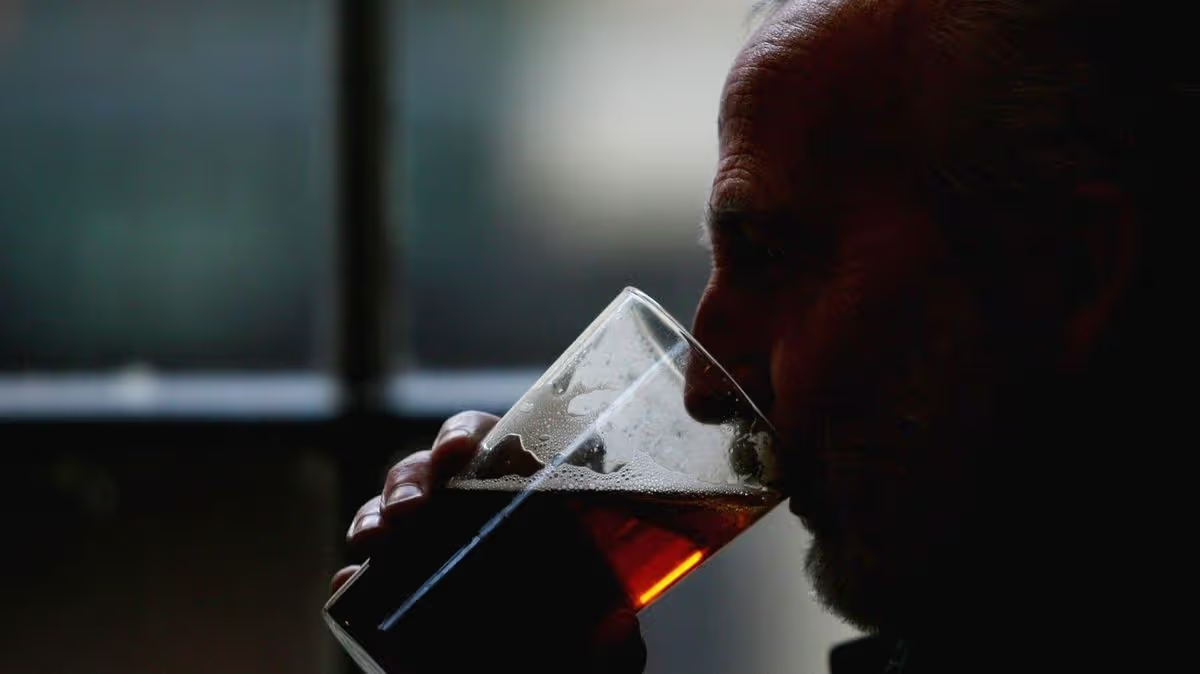
Drinkaware aims to reach 200,000 potentially problem drinkers in Scotland by 2030.
Football clubs are being urged to join the battle to bring interventions to 200,000 Scots who are unwittingly drinking their way to an early grave.
Advertisement
The SPFL and Rangers were key participants in a summit that seeks to nail down the most effective ways of reaching those who are drinking to excess without realising it.
The new initiative, led by leading alcohol charity Drinkaware aims to identify up to two million risky drinkers in the UK by 2030 – and help them to turn their lives around by facing up to the problem.
Industry leaders gathered at Rangers FC’s stadium for a roundtable summit, where the priority group was those drinking more than recommended low risk levels on a regular basis.
MP Dr Zubir Ahmed – a transplant surgeon – called for earlier interventions that will reach the one in five drinkers who put themselves at risk without knowing it.
Advertisement
At the summit at Ibrox, Ahmed said: “As an NHS transplant surgeon for more than twenty years, I have seen what happens when the conversation about risky drinking comes too late – patients arriving when the damage is already irreversible.
“Eight million people in the UK are drinking at risky levels, many without recognising it. That is the challenge Drinkaware’s new strategy is designed to meet, and I am proud to be part of that conversation.”
Drinkaware CEO Karen Tyrell said: “We’ve made real progress over the last 20 years, with people across the UK drinking less and more staying within low-risk guidelines. But there is still more to do. By working together, we can reach people earlier, support healthier choices, and reduce alcohol-related harm.
Advertisement
“With one in five adults drinking at increasing risk levels, Drinkaware is encouraging anyone concerned about their drinking to take its free Drinking Check, which provides personalised feedback on whether their drinking could be affecting their health.”
Michael Beeson, Head of Partnerships at Drinkaware, said: “Football clubs have a unique role at the heart of their communities, creating trusted spaces that can encourage earlier conversations about alcohol.
“Through partnerships like our Walking Football and Netball programmes with Hearts FC and Heineken UK, we’re bringing people. together for free, inclusive sessions that combine social activity with simple, practical tools like our Drinking Check.
“This highlights the real power of charities, football clubs and industry working together – an approach that will be critical to achieving our shared ambition of two million fewer risky drinkers in the UK by 2030.”
This new target has been developed with industry partners and stakeholders and aligns closely with the focus on prevention and early intervention in Scotland’s Alcohol and Drugs Strategic Plan.
Advertisement
Participants explored how trusted settings outside traditional healthcare, including football clubs, peer support groups and local community organisations, can play a greater role in encouraging earlier conversations and intervention.
Attendees included the SPFL Trust, Rangers FC, Heineken, Scottish Alcohol Industry Partnership, Community Alcohol Partnerships and The Wise Group.
Founded in 2006 by the UK Government, the devolved administrations and the alcohol industry, Drinkaware is funded by unrestricted voluntary donations from more than 120 organisations.
Advertisement
These include UK alcohol producers, retailers, supermarkets, venues, restaurant groups and sports associations.
The Chief Medical Officers’ guideline for both men and women advises that it is safest to drink less than 14 units a week on a regular basis.
If you regularly drink as much as 14 units per week, it is best to spread your drinking evenly over 3 or more days rather than in one binge.
Despite this, many still prioritise to sell new garments and place responsibility on consumers through care labels and instructions to ensure extend use and minimise clothing waste. Our research shows that although some retailers offer care products and repair services, these options are often hidden and secondary in retail stores. This is a missed opportunity. We also found that consumers want practical support to maintain and repair clothing in ways that extend lifespans and reduce environmental consequences.
Extending lifespan is not only about buying secondhand or reselling; how clothes are washed, repaired, stored and worn also matters. This means that even without retail support, there are steps you can take today.
Here are five ways to extend the life of your clothes through everyday care:
1. Rethink your washing habits
While care labels contain information on what washing machine and tumble dryer programmes are suitable for garments, using these machines less often helps to preserve the textiles. Instead of machine laundry, try to air and re-wear items.
When it comes to denim or clothes from a charity shop, leaving them in the freezer for a couple of days can help to refresh the garment. For small stains, spot cleaning by hand is another option.
Advertisement
2. Know which materials you’re wearing
Garments and textiles are complex: fibres, structure, colour and design all change how clothes get used and looked after. Learning more about textiles can enable you to treat your garments better and make smarter purchases.
Products such as brushes, lint rollers and sweater combs can refresh your garments with minimal effort. However, results depend on the material. For instance, de-pilling is more successful on 100% wool garments than on synthetic blends.
Denim doesn’t need to be washed as often as you might think. nblx/Shutterstock
Stain removal depends on what the textile can handle, what various cleaning products do, and the type of stain. You can find information online in many languages.
As a result, downsizing and decluttering are popular. However, viewing your wardrobe less critically can help you rediscover forgotten favourites and unlock the potential of the garments you already own. Holding on to clothes not currently in use can be a smart choice. Future changes in fashion, your body or your taste can make you regret discarding old favourites. Assessing what you wear, what you never wear, and why can also help you avoid new purchases and make more successful ones.
Advertisement
Slow fashion content creators share tips on social media like “define your style in three adjectives” pinpointing the attributes you should look for in garments and outfits, or colour analysis that helps identify the tones and colours that suit you best. These methods can be useful to identify and recognise the clothes that bring real joy.
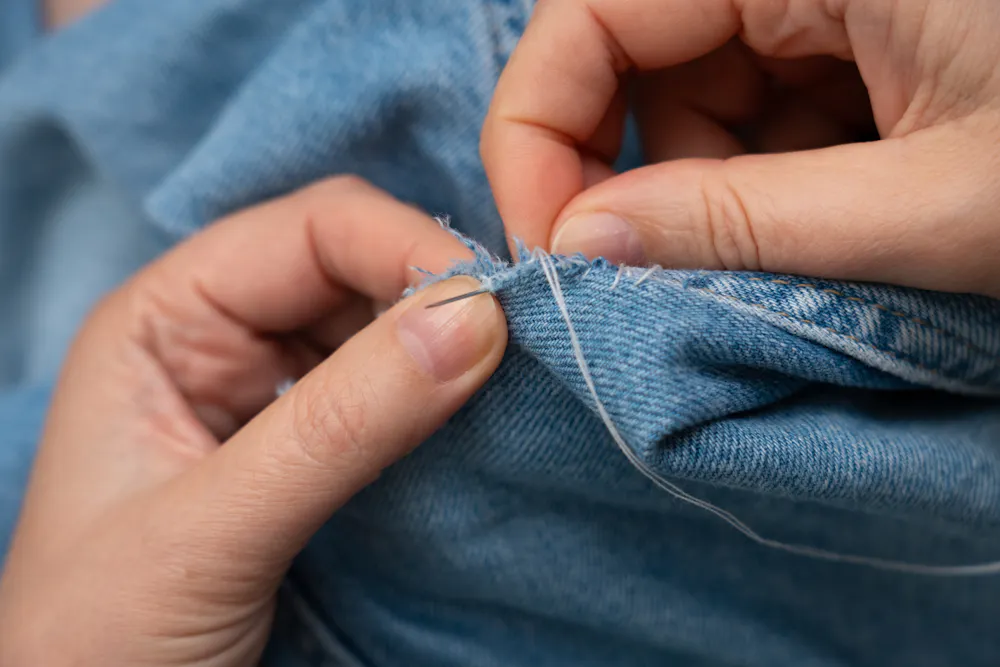
Learning to enjoy sewing repairs is a brilliant way to make your clothes last longer. Artem Stepanov/Shutterstock
4. Learn to repair and upcycle
You might know how to close a hole or replace a button, but how about darning socks, repairing knitted sweaters or hemming trousers? In our research, we found that even if consumers care about their clothes and want to extend their life, lack of repair skills can be a hindrance. However, the growing popularity of public repair workshops provide an opportunity to exchange repair skills and connect with a like-minded local community. Look for repair cafes via your local library, for example.
5. Choose retailers that prioritise aftercare
Fashion brands need to normalise extended use, and present garments as repair and care-worthy.
A few retailers have started to recognise the need to help consumers enjoy their clothes for longer and offer genuine after care. Look for brands and retailers that offer repair services, accessible original parts, patches and even repurposing and tailoring. This could encourage brands to provide more than just environmental messages on care labels or low-quality repair kits for hard-to-repair products.
Advertisement
The goal is to normalise caring for old products and make aftercare a core part of the retail industry, not an optional extra.
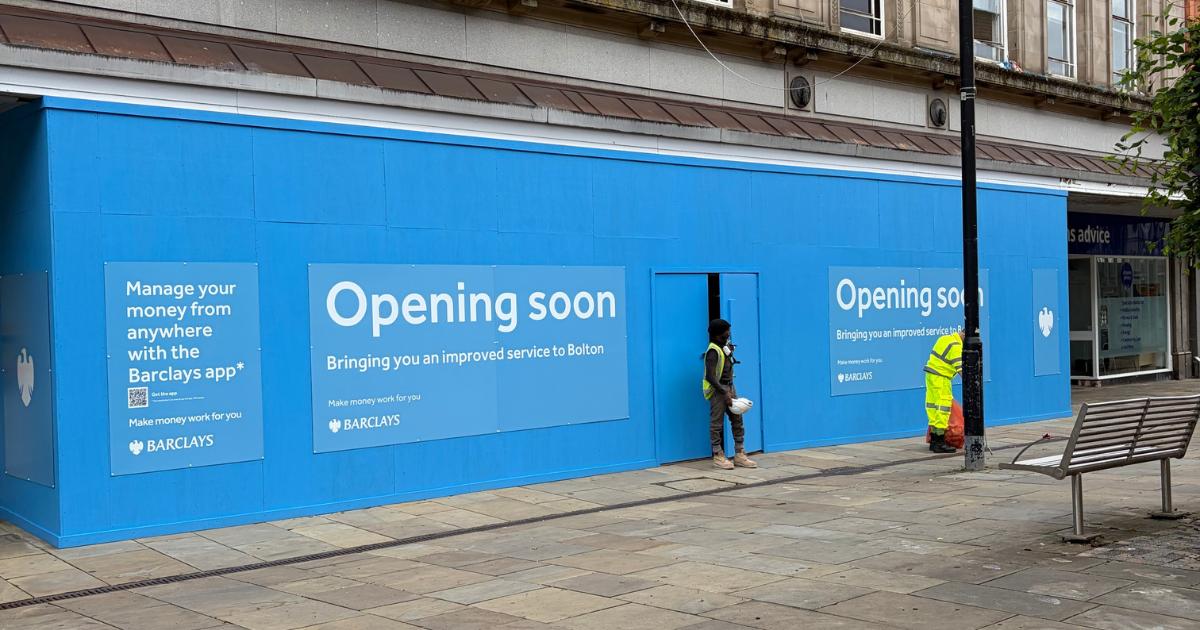
Blue boardings have been installed around the future branch at Victoria Plaza on Oxford Street, telling customers the bank will soon be “bringing you an improved service to Bolton.”
Planning officers said the redesigned frontage would improve the appearance of the unit while preserving the character of the Bolton Town Centre Conservation Area.
No objections were received during the consultation process and highways officers raised no concerns.
Advertisement
A separate application for illuminated signage at the premises remains under consideration by Bolton Council.
The latest progress on site suggests work is continuing ahead of the branch opening, although an opening date has not yet been announced.
Magnet described the stores as “underperforming” and said the closures were part of a company voluntary arrangement (CVA) to help secure the group’s finances.
The CVA is designed to address “property costs that are no longer sustainable.”
Sophie Rose, chief executive of Magnet Group, said: “This is a difficult decision and not one we have taken lightly, particularly where colleagues may be impacted.
Advertisement
“But taking this action now is the right thing to do for the long-term health of Magnet Group.”
The Darlington-based firm sells the likes of kitchen cabinets, worktops, built-in and freestanding appliances, sinks, and taps
Which Magnet Kitchens stores will be closing?
Magnet will shut stores in the following locations:
Andover, Hampshire
Birmingham Minworth, West Midlands
Blackburn, Lancashire
Bridgwater, Somerset
Brighton, East Sussex
Colwyn Bay, Wales
Dorking, Surrey
Farnborough, Hampshire
Ramsgate, Kent
Romford Trade, Greater London
Stirling, Scotland
Stockton, County Durham
Watford, Hertfordshire
Weymouth, Dorset
York Trade, North Yorkshire
The retailer has not shared details on when the above stores will close.
Magnet also did not confirm how many jobs could be affected, but said employees would be offered support and alternative roles where possible.
The company reassured customers that the majority of its 159 stores will continue to operate as normal.
Advertisement
Magnet also confirmed that any customer orders affected by the closures will be transferred to the closest alternative store.
The CVA plan will be overseen by Natasha Harbinson, Will Wright and Chris Pole from advisory firm Interpath, subject to creditor approval.
Ms Rose said: “It allows us to deal with property costs that are no longer sustainable and protect the stronger parts of our estate.”
UK retailers that have closed or entered administration in 2026
It has been a tough year for the UK high street, with several retailers entering administration and others announcing widespread store closures.
Major high street retailers LK Bennett and Claire’s both closed all their stores in April, having previously fallen into administration.
Advertisement
Quiz also revealed that it will be closing its 37 remaining stores by the end of June, after falling into administration in February (for the second time in 12 months).
Other retailers have been forced to close stores this year, including:
Iguanas Holdings Limited, which runs 47 Las Iguanas restaurants across the UK, and Poundstretcher are also in danger of collapsing into administration if restructuring plans aren’t agreed, having “fallen into financial difficulties”.
UK delivery company Yodel is set to be phased out over the coming months after being acquired by InPost.
Advertisement
However, it’s not been all bad news for the UK high street, with several major brands announcing new store openings for 2026, including Aldi, M&S, and Superdrug.
Plus-size clothing brand Evans has also returned to the UK high street in 2026 after closing all its stores and concessions in December 2020.
Do you have a Magnet Kitchens store closing near you? Let us know in the comments.
Shoppers urged to check ham products from Tesco Finest and Lidl Deluxe ranges after the Food Safety Authority of Ireland issued a recall
Olivia Beeson UK & World News Reporter
05:30, 01 Jul 2026
Leading supermarkets Tesco and Lidl have withdrawn products from sale due to potential contamination with listeria monocytogenes.
Both retailers have issued the recall affecting items from their premium own-label collections.
Advertisement
Ham products from Tesco Finest and Lidl’s Deluxe range have been pulled by the Food Safety Authority of Ireland (FSAI) because of the possible health threat.
Products manufactured under the Brady Family brand are also included in the alert.
All products covered by the recall:
Advertisement
Brady Family Wood Smokes Real Irish Ham 6 Slices – pack size 80g – batch code 235417.
Brady Family Hand Crumbed Real Irish Ham 6 Slices – pack size 80g – batch code 235880 and 235765.
Lidl’s Deluxe Triple Oak Smoked Carved Irish Ham 5 slices – pack size 130g – batch code 235461.
All affected products carry a use-by date of 16 July.
Point-of-sale notices will be displayed in stores.
Shoppers have been urged not to consume the affected items and to throw them away.
Listeria monocytogenes can cause mild flu-like symptoms, or stomach-related issues including nausea, vomiting, and diarrhoea.
Advertisement
Cold meats are especially vulnerable to contamination with listeria bacteria. Additional at-risk foods include smoked and cured fish, shellfish and mouldy cheeses such as camembert and brie.
According to the NHS website, the majority of those infected with the bacteria experience no symptoms whatsoever, or merely mild indicators including a high temperature, vomiting, aches and pains, chills or diarrhoea.
Those facing elevated risk include expectant mothers, newborns and individuals with compromised immune systems.
The likelihood of complications also rises with advancing age.
Advertisement
Parents are urged to dial 999 or attend A&E if youngsters display more serious symptoms including a severe headache and stiff neck, discomfort looking at bright lights, seizures, sudden confusion or sleepiness, and a rash that does not fade when a glass is rolled over it.
Most infections from the bacteria can be treated at home through rest and adequate hydration.

























































You must be logged in to post a comment Login