

Crypto World
XRP Price Analysis: Critical $1 Support Level Under Pressure as July 2026 Approaches

Key Takeaways
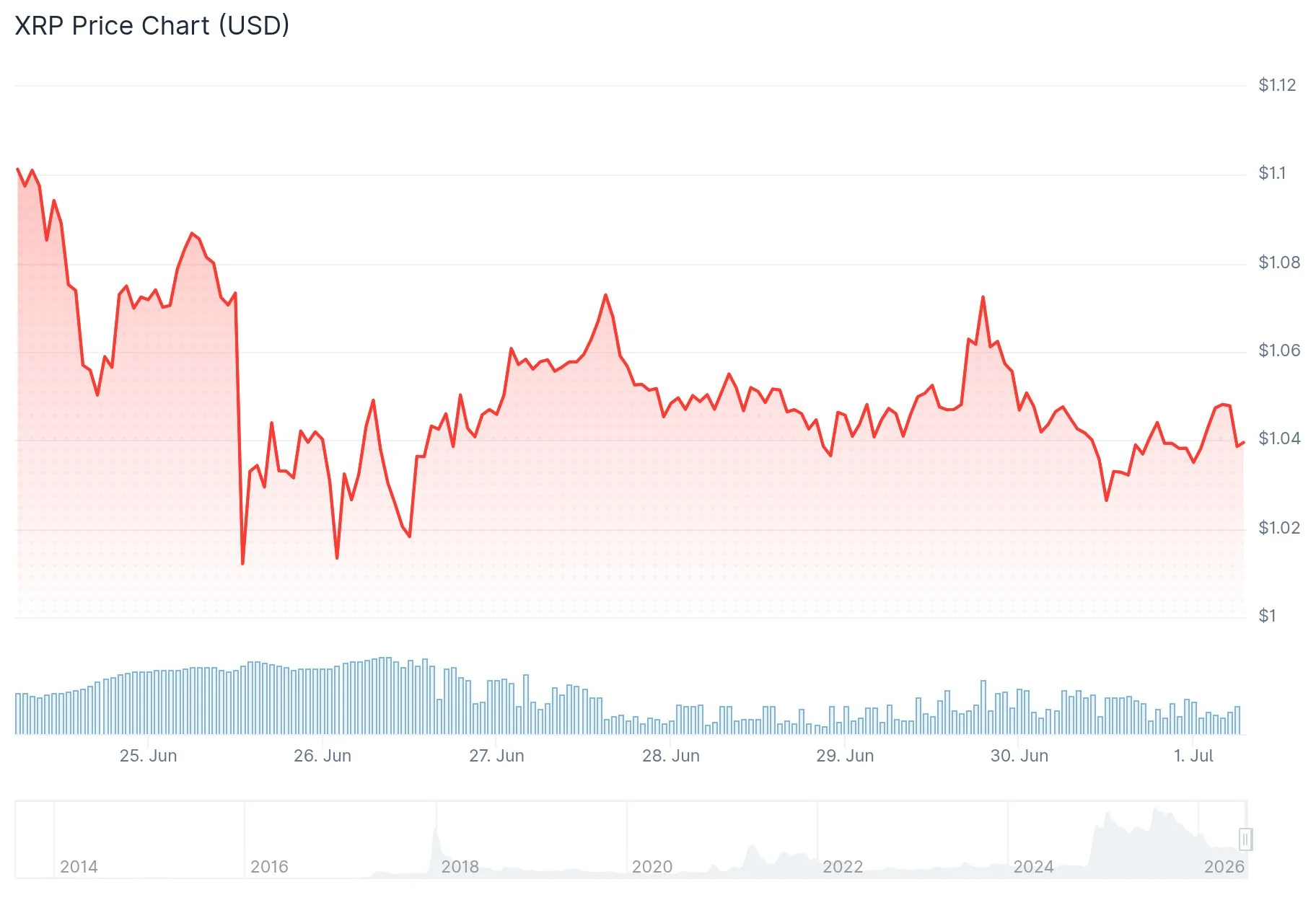
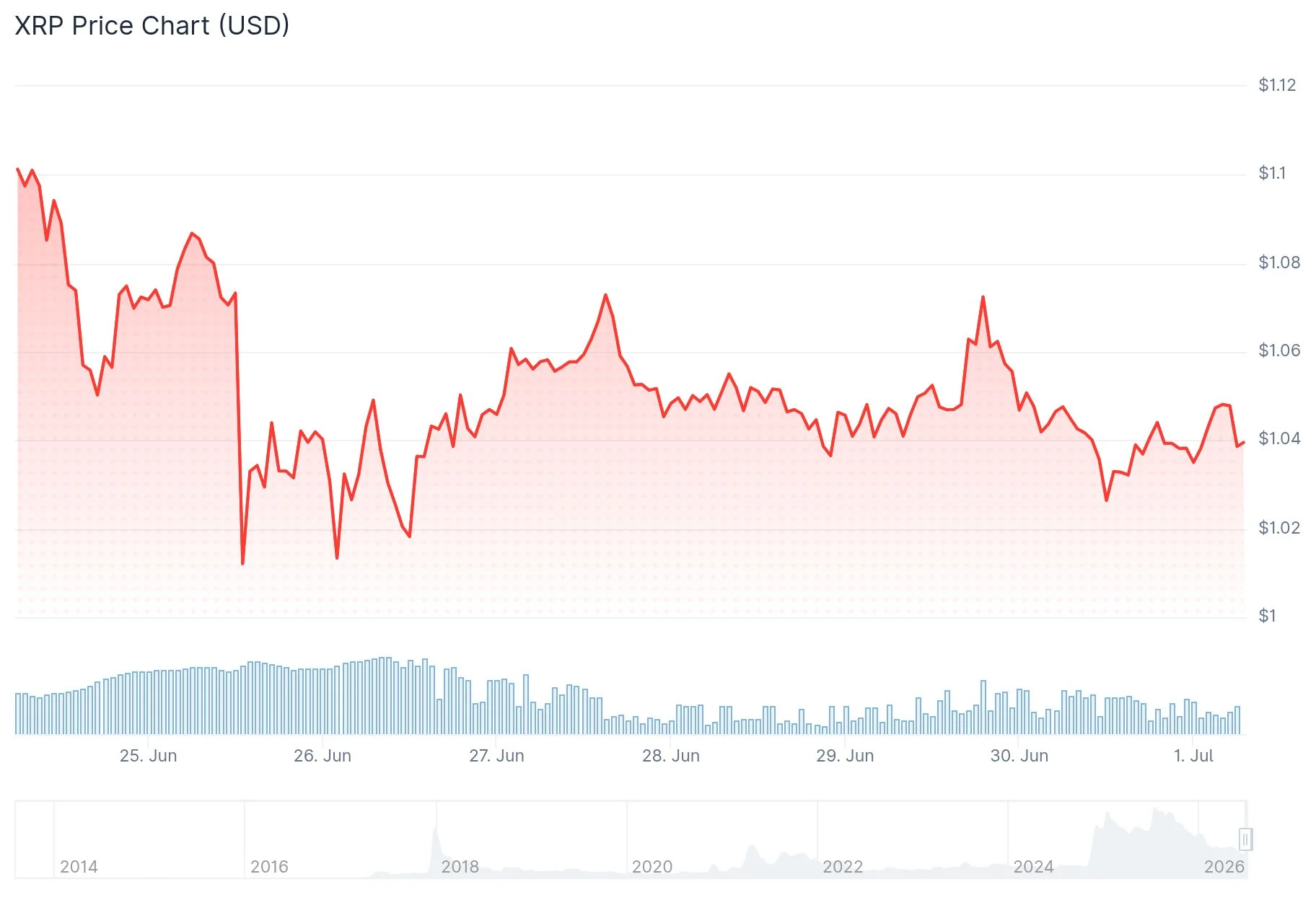
- On June 26, XRP touched $1.009, marking its lowest level since November 2024
- Despite the price decline, XRP spot ETF inflows remained in positive territory
- Technical analysis reveals a sustained downtrend originating from July 2025
- Open Interest has found equilibrium around 400 million XRP, indicating reduced speculative fervor
- Bullish divergence patterns on daily timeframes hint at potentially weakening bearish momentum near the $1 threshold
On June 26, 2026, XRP declined to $1.009, representing the token’s lowest point since it last visited these levels in November 2024.
The decline occurred against a backdrop of continuing positive flows into XRP spot exchange-traded funds. Market participants continued accumulating through these investment vehicles despite downward price momentum.
While ETF accumulation reduces circulating supply available for trading, this dynamic has yet to catalyze upward price movement given prevailing market sentiment.
Overall market appetite for XRP has diminished considerably over recent months, accompanied by a notable contraction in speculative trading activity.
Technical Analysis Overview
The daily timeframe reveals XRP locked in a downward trajectory that originated in July 2025. The decisive break beneath the April 2025 swing low at $1.61, which occurred in February, validated the bearish market structure.
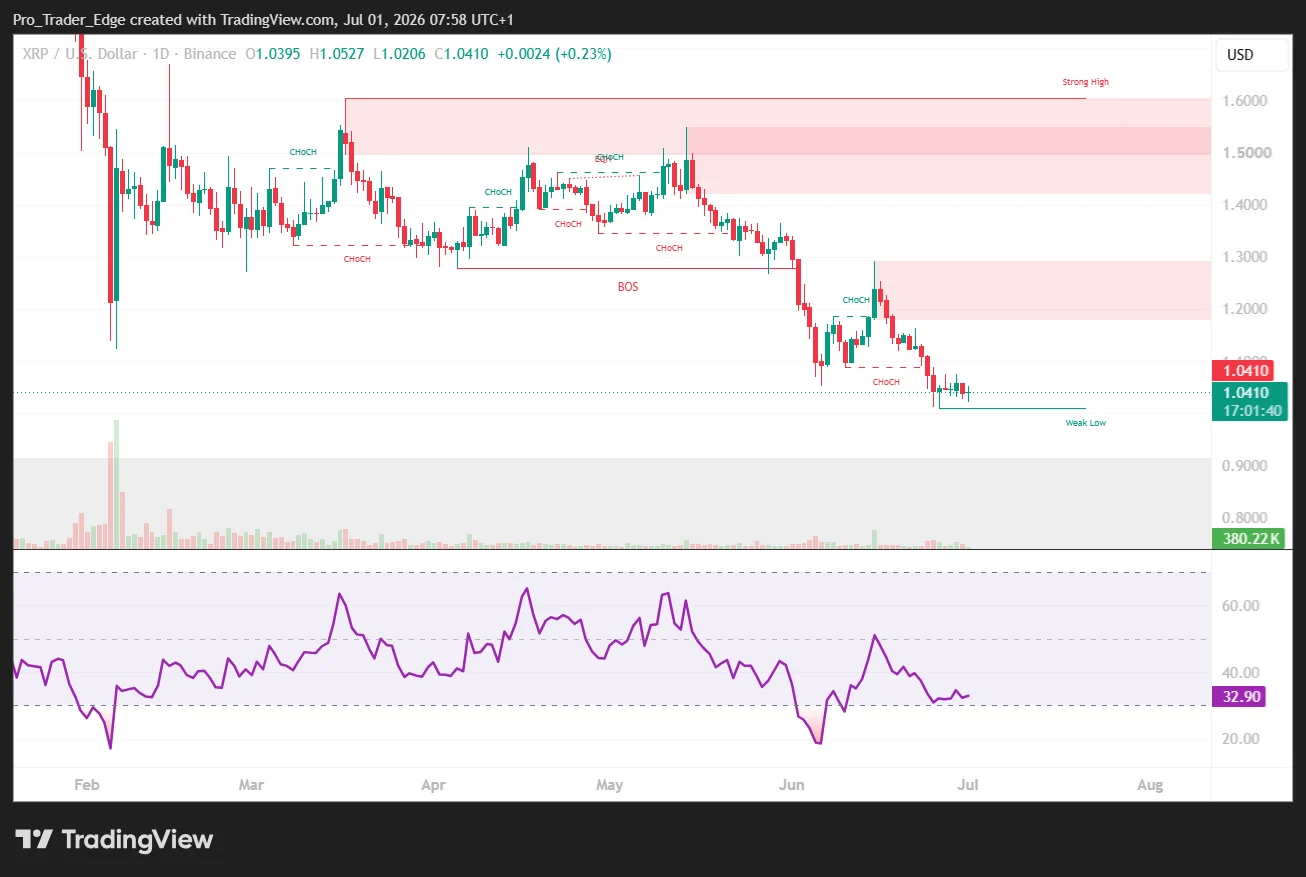
Following this breakdown, XRP consolidated within a defined range for multiple months. Late May witnessed an aggressive selling wave that shattered this consolidation pattern and accelerated the downside move.
A temporary recovery pushed prices toward $1.30 before momentum faded, leaving XRP hovering around $1.05.
Futures market data indicates Open Interest has stabilized at approximately 400 million XRP. The corresponding Open Interest Turnover Ratio has maintained levels near 0.71.
According to analyst Arab Chain, market participants should monitor these indicators for sudden increases. Rapid expansion in either Open Interest or turnover ratio typically precedes elevated volatility periods.
Examining the 4-hour chart, XRP rallied to $1.2935 during mid-June. This advance reached the 78.6% Fibonacci retracement zone around $1.2985 before encountering renewed selling pressure.
Should the bearish trajectory persist, potential downside objectives emerge at $0.975 and $0.854. Market probabilities favored a breach below $1 during July.
Potential Support Dynamics
An alternative technical interpretation presents a more constructive outlook. XRP has consistently rebounded from the $0.90-$1.00 zone, establishing this region as durable support through multiple challenges.
The $1.13 level has transitioned from support into resistance. A successful reclaim of this threshold would indicate emerging bullish momentum.
A bullish divergence pattern on daily charts has persisted for approximately one week. Such formations typically suggest diminishing selling intensity rather than imminent capitulation.
On social platforms, trader Celal Kucuker stated XRP should maintain current support levels and projected a potential climb to $10 within the next twelve months, acknowledging significant volatility along that path.
Technical analyst ChartNerd identified a repeating accumulation structure observed during previous bear cycles, highlighting historical drawdowns ranging from 85% to 96% spanning 14 to 37 months, contrasting with the current 72% retracement over 11 months.
The immediate focus centers on the $1.00 threshold. Maintaining this level preserves the possibility of retesting $1.13 resistance, while a breakdown would expose the $0.87-$0.90 support zone.


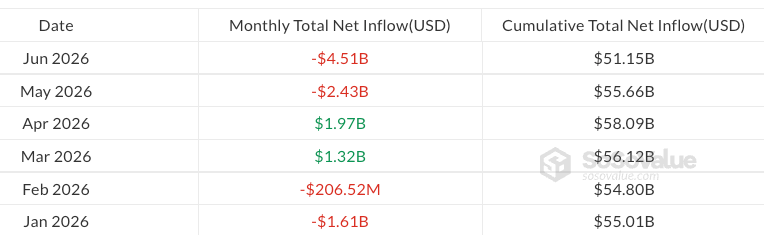
US-listed spot Bitcoin exchange-traded funds (ETFs) posted a record $4.5 billion in net outflows in June, more than three times the $1.25 billion Strategy is authorized to raise through its new Bitcoin monetization program.
The record monthly withdrawals pushed US spot Bitcoin ETFs to roughly $5.5 billion in year-to-date net outflows for 2026, reducing cumulative net inflows since the funds launched to about $51.2 billion, according to SoSoValue data updated on Wednesday.
BlackRock’s iShares Bitcoin Trust (IBIT) accounted for about 79% of June’s withdrawals, posting $3.55 billion in net outflows, according to Farside Investors.
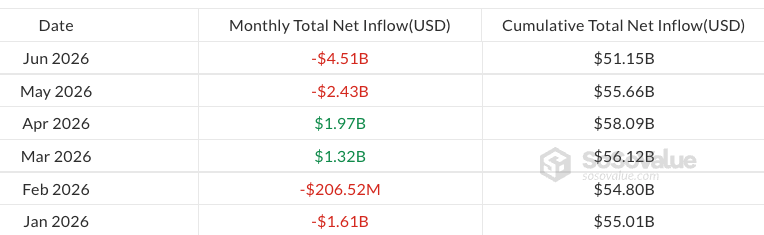
Monthly flows in US-listed spot Bitcoin ETFs. Source: SoSoValue
The figures highlight weakening demand for US spot Bitcoin ETFs, despite much of the market’s attention remaining fixed on developments surrounding the industry’s largest corporate Bitcoin treasury company.
Bitcoin ETF holdings fall below year-ago levels despite higher inflows
According to SoSoValue, cumulative net inflows into US spot Bitcoin ETFs have risen 4.6% from about $49 billion a year earlier. But CryptoQuant data shows the funds now hold less Bitcoin than they did at the same time last year.
“US-based Bitcoin ETF holdings are now lower than at this same day last year,” CryptoQuant’s head of research Julio Moreno wrote on X on Tuesday.
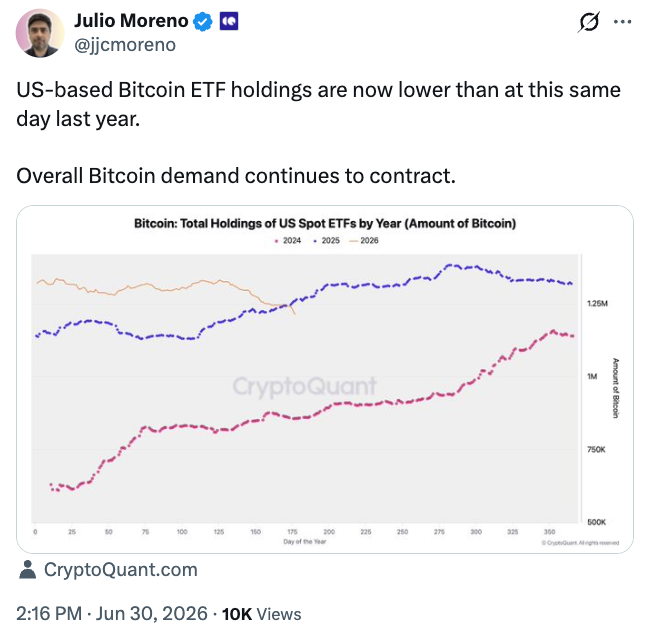
Source: Julio Moreno
Moreno said overall demand for Bitcoin continues to weaken, with total holdings across US spot Bitcoin ETFs falling below 1.25 million BTC.
Related: Swan’s Cory Klippsten sees record Bitcoin holder supply revealing early bottom
ETF withdrawals dwarf Strategy’s Bitcoin plan
Strategy announced its Bitcoin monetization program on Monday as part of a broader capital framework designed to support dividend obligations tied to its preferred securities, a move widely viewed by investors as a response to growing funding pressure within the company’s structure.
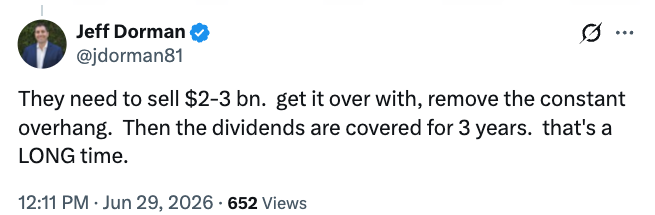
Source: Jeff Dorman
The move drew mixed reactions across the community, with some viewing it as financial flexibility while others flagged concerns over the new capital structure’s long-term sustainability and argued it could ultimately sell much more than $1.25 billion.
Strategy’s Class A common stock (MSTR) initially surged as much as 12% to above $90 following Monday’s announcement before reversing course and closing at $86.93 on Tuesday, down 6.2% on the day, according to Yahoo Finance.
Meanwhile, Strategy’s preferred stock (STRC) traded higher at $84.86 on Tuesday, according to Yahoo Finance.
Magazine: Bitcoin slides to $58K, XRP hits $1 but onchain data promising: Market Moves
June was brutal for the primary cryptocurrency, with its price crashing about 20% over the month. And even though July is usually a strong period for BTC, this one kicked off poorly, and the asset continues to trade well below $60,000.
Several altcoins have mimicked the move, posting additional losses, while Cardano (ADA) is among the few daily gainers.
BTC Under Pressure
The asset has been in a steep decline lately, driven by several key factors, including the prolonged bear market affecting the entire crypto sector, waning interest from institutional investors, uncertainty stemming from the conflict in the Middle East, and more.
Yesterday (June 30), BTC tried to reclaim the psychological level of $60,000, but the bulls quickly lost control, and the price started another downturn. As of this moment, it trades at around $58,900 (per TradingView), representing a 1.5% decline on a daily scale.
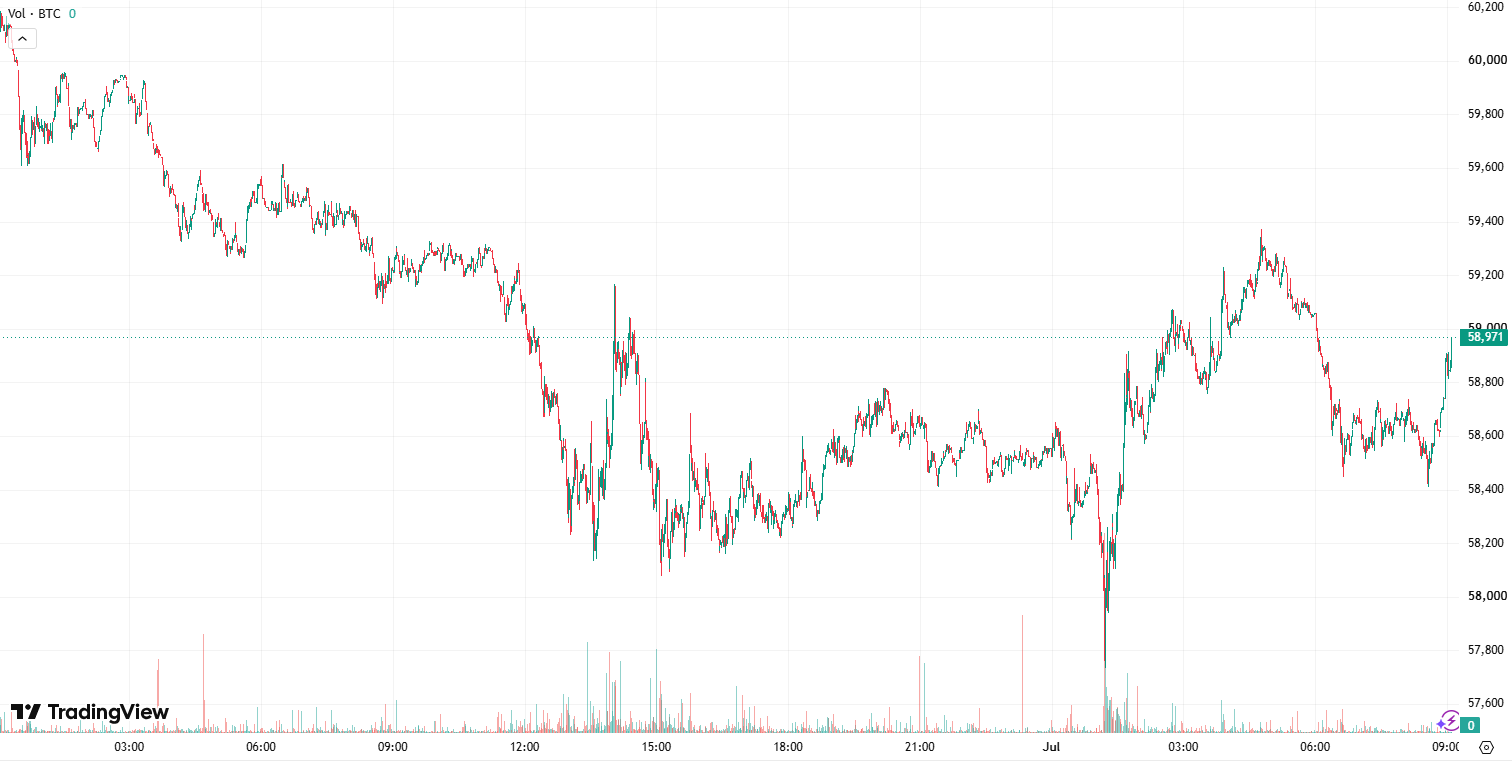
July has historically been a strong month for Bitcoin, and we have yet to see whether it could deliver a long-awaited revival in the weeks ahead. At the same time, many bearish signals point out to the possibility of a further pullback, while analysts believe the cycle’s bottom has not arrived yet.
Following the latest price slump, BTC’s market capitalization has dropped to approximately $1.18 billion, while its dominance over altcoins remains over 56% on CG.
ADA Re-Enters the Top 20 Club
Many alternative coins have followed BTC’s footsteps, registering mild declines over the last 24 hours. Ethereum (ETH) is down 0.5% for the day, whereas Hyperliquid (HYPE) has lost 2% of its valuation. LAB (LAB) is the worst-performing cryptocurrency from the top 100 list, posting a loss of 27%, with Audiera (BEAT) coming next at -7%.
Still, some have defied the bearish conditions. Cardano’s ADA has risen by 4% and reclaimed $0.15. Its market cap surged past $5.6 billion, meaning the token is once again among crypto’s 20 largest cryptocurrencies.
Other altcoins flashing in green today (July 1) include WBT (+15%), JPT (+13%), XLM (+12%), CC (+5%), and more. The total crypto market capitalization has remained rather unchanged at around $2.1 trillion.

The post Bitcoin (BTC) Starts July Under $60K, Cardano (ADA) Finally Rebounds: Market Watch appeared first on CryptoPotato.


Cleveland Federal Reserve President Beth Hammack said that insatiable demand for artificial intelligence (AI) infrastructure could be inflationary.
Hammack, a voting member of the Federal Open Market Committee (FOMC) this year, warned that interest rates may need to rise if broader price pressures do not ease.
Why the Cleveland Fed Chief Sees Higher Rates on the Table
Hammack framed her rate stance around broad, persistent inflation. She noted that inflation has been “too high” for the past five years. If that continues, she added, the Fed may need higher interest rates to bring it back to target.
“When I look at policy, if that continues, it may mean that we need higher interest rates to bring inflation back down to target,” Hammack told CNBC.
While acknowledging that higher energy prices have contributed to headline inflation, Hammack stressed that core inflation, which excludes the more volatile food and energy categories, has also stayed elevated.
Her comments align with the latest economic data. Core personal consumption expenditures (PCE), the Federal Reserve’s preferred inflation gauge, rose 3.4% year-over-year in May. This marked its highest annual reading since October 2023.
Support for tightening extends beyond Hammack. Minneapolis Fed President Neel Kashkari stated that he expects one hike in 2026, with cuts off the table for now.
Follow us on X to get the latest news as it happens
AI Spending Meets a Broad-Based Price Problem
Hammack identified AI spending as one potential contributor to price pressure.
“What they say is that the demand is insatiable, that these companies, these hyperscalers, will pay almost any price for those inputs, and they need things built yesterday,” she commented.
However, she acknowledged the effects could run in both directions. Hammack also mentioned that the broader picture spans energy, electricity, insurance, and supply-chain strains tied to the closure of the Strait of Hormuz.
Previously, Binance Research made a similar warning, flagging AI-driven chipflation as an underpriced inflation driver,
Subscribe to our YouTube channel to watch leaders and journalists provide expert insights
The post Fed’s Hammack Links “Insatiable” AI Demand to Inflation: Rate Hikes on the Table? appeared first on BeInCrypto.

Key Takeaways
- Amazon (AMZN) shares started Wednesday’s session at $238.51, maintaining a $2.57 trillion market capitalization.
- Futurum Equities analyst Shay Boloor projects Amazon could reach $1 trillion in yearly revenue by 2028, a first for any corporation.
- The tech giant has earmarked approximately $200 billion for infrastructure investments in 2026, supported by OpenAI agreements exceeding $100 billion.
- Revenue from Amazon’s proprietary semiconductor offerings, Graviton and Trainium, has surpassed a $20 billion annual run rate.
- Legal challenges include a $2.25 million Federal Trade Commission settlement and fresh litigation in Australia concerning Prime Video advertising.
Amazon (AMZN) kicked off Wednesday’s trading at $238.51 per share. With a substantial market capitalization of $2.57 trillion, the stock currently trades within its 52-week range of $196.00 to $278.56.
According to one market observer, the e-commerce and cloud computing behemoth has only scratched the surface of its potential. Shay Boloor, Chief Market Strategist at Futurum Equities, believes Amazon is “on track to become the first company to cross $1 trillion in annual revenue by 2028.”
Boloor highlighted Amazon’s diversified operations spanning e-commerce, cloud computing, logistics networks, advertising platforms, and artificial intelligence capabilities. He characterized the company as “one of the most important infrastructure companies in the world.”
Massive Capital Allocation for AI Infrastructure
Amazon has outlined plans to allocate approximately $200 billion toward capital investments throughout 2026. A significant portion of this expenditure stems from substantial client agreements, notably commitments exceeding $100 billion from OpenAI.
The company’s proprietary semiconductor portfolio, featuring Graviton and Trainium processors, has achieved a $20 billion annualized revenue milestone. Amazon reports this division is experiencing growth rates exceeding 100%.
These in-house chip solutions are anticipated to reduce operational expenses and enhance profit margins over the coming years. This strategic advantage holds particular significance for an organization managing vast data center infrastructure globally.
Amazon surpassed Wall Street expectations with its first-quarter earnings released this past April. The company generated $181.52 billion in quarterly revenue, exceeding analyst projections of $177.30 billion.
Per-share earnings reached $2.78, substantially outperforming the consensus forecast of $1.66 per share.
Institutional investment activity reflects confidence in Amazon’s trajectory. Cardinal Point Capital Management ULC expanded its Amazon holdings by 13.6% during the first quarter, purchasing an additional 4,450 shares to reach a total position of 37,124 shares valued at approximately $7.73 million.
Numerous other investment firms executed comparable transactions. Brighton Jones LLC increased its stake by 10.9%, now controlling more than 4 million shares with an estimated value approaching $885 million.
Institutional investors collectively control 72.2% of Amazon’s outstanding shares, representing substantial ownership concentration.
Executive Stock Sales Continue
Despite positive fundamentals, corporate insiders have been reducing positions. CEO Matthew Garman divested 15,467 shares in May at $263.40 per share, generating proceeds exceeding $4 million.
SVP David Zapolsky similarly reduced his holdings, selling 9,270 shares at $268.53 apiece. Throughout the past three months, company insiders have collectively sold approximately $51.4 million in stock.
Amazon continues navigating regulatory challenges as well. The corporation reached a $2.25 million settlement agreement with the FTC, while simultaneously confronting new legal action in Australia regarding Prime Video advertising practices.
On a more positive note, AWS recently unveiled a $1 billion Forward Deployed Engineering initiative. This program aims to position AI specialists directly within customer organizations to accelerate enterprise-level implementation.
A recently published Jefferies survey revealed 95% of information technology decision-makers intend to expand cloud infrastructure budgets in 2026. Industry analysts identify AWS as a primary beneficiary of this spending trend.
Wall Street’s price projections demonstrate considerable bullishness. Stifel Nicolaus established a $319 price target, while Susquehanna elevated its forecast to $325 accompanied by a “positive” outlook.
Currently, 57 analysts maintain Buy recommendations on Amazon shares, compared to just three Hold ratings. MarketBeat reports a consensus “Moderate Buy” designation with an average price objective of $312.78.
Technical indicators show Amazon’s 50-day moving average at $255.10, while the 200-day average stands at $234.31. The stock trades with a price-to-earnings ratio of 28.53 and exhibits a beta coefficient of 1.44.

Anthropic has moved to restore public access to its most capable AI models, Claude Fable 5 and Mythos 5, after the US government ordered their temporary shutdown over cybersecurity concerns. The models were taken offline in mid-June following reports that researchers found ways to bypass safeguards, prompting Anthropic to suspend public redeployment while controls were tightened.
According to posts from Anthropic on Wednesday, the government lifted the restrictions and the company is redeploying Fable 5 with an updated safety approach. Anthropic said it is using “a new set of classifiers” designed to better target and block more cybersecurity tasks, reflecting a shift from broad access to narrower, more selectively controlled operation.
Key takeaways
- Anthropic says US export-related restrictions on Claude Fable 5 and Mythos 5 were lifted on Wednesday, enabling renewed public access.
- The models were pulled after reports of bypassing Fable 5’s safeguards that could potentially help identify vulnerabilities for malicious use.
- Anthropic plans to redeploy with revised cybersecurity safety classifiers aimed at blocking additional harmful task types.
- US officials emphasized “safe” deployment while reviewing model alignment with government priorities.
- Anthropic is also working on a broader framework to assess jailbreak severity through its Project Glasswing partnership network.
Why Anthropic’s access was paused
Public access to Anthropic’s two latest flagship models—Claude Fable 5 and Mythos 5—was restricted starting June 12. The immediate trigger, Anthropic indicated, was an export-control directive tied to government review of a report describing how researchers could bypass safeguards on Fable 5.
In that report, the bypass method allegedly allowed the model to surface multiple software vulnerabilities. Anthropic responded by pulling access to the models rather than leaving the public-facing system in a state the government considered too risky. The broader implication was that frontier model capabilities, when paired with inadequate resistance to misuse, could translate quickly into real-world security threats.
What changed in the redeployed model
Anthropic said the suspension is ending after “productive conversations with the US government.” In its statement, the company framed the update as an operational safety upgrade rather than a complete redesign: the redeployed model will use “a new set of classifiers” intended to detect and block more cybersecurity tasks.
This matters for users and developers because classifier-based controls directly affect what kinds of requests the model will refuse or redirect. In practical terms, those controls can determine whether legitimate security analysis workflows remain usable while high-risk directions are filtered more aggressively.
Anthropic also addressed a key concern raised during the shutdown: the company argued that the issue wasn’t uniquely tied to Fable 5. In a blog post titled “Redeploying Fable 5,” Anthropic said weaker models could potentially identify similar vulnerabilities and produce the same exploit pathways. That framing suggests the company views the problem as a category risk across model capability levels, not a single-model anomaly.
US government concerns and the push for rapid deployment
US Secretary of Commerce Howard Lutnick said on X that, over the past two weeks, the government worked closely with Anthropic to “analyze and approve Fable 5,” aiming for alignment across the US government and to strengthen American AI leadership. Separately, White House Chief of Staff Susie Wiles said the priority remained to “get the best [AI] tech deployed as quickly and safely as possible.”
While those remarks do not change the underlying technical issues, they highlight the policy balance driving the intervention: the US government wants frontier models available, but only under conditions it believes reduce the chance of misuse—particularly misuse involving cybersecurity.
The White House concern, according to the article’s context, centered on the possibility of jailbreaking: if powerful models can be coerced into producing harmful instructions, they could become a national security risk. That is the logic behind export-control-style restrictions for models deemed high-impact and harder to contain once broadly available.
Anthropic’s Project Glasswing and a new approach to jailbreak severity
The model shutdown also cast attention on how AI safety should be tested and governed beyond one-off fixes. In the wake of the restrictions, Anthropic said it has begun drafting a consensus framework with partners including Amazon, Microsoft, Google and others for assessing the severity of AI jailbreaks.
The effort is connected to Project Glasswing, a collaboration announced in April focused on safeguarding against AI cybersecurity threats. A key goal appears to be establishing a shared way to evaluate jailbreak attempts: not just whether a safety system can be bypassed, but how dangerous the bypass outcome is and how consistently it can be reproduced.
Anthropic also said it is scaling up collaboration with the US government on model testing and safeguards. The company described plans that include pre-release access to models and safeguards for evaluation, information sharing about jailbreaks and misuse, and dedicated resources for joint research.
In parallel, an AI researcher previously claimed to have jailbroken Fable 5 within 48 hours of its June launch, before the government restrictions were applied. The researcher shared screenshots showing how the guardrails were allegedly bypassed. While that claim is reported as part of the surrounding context, it underscores why governments and model providers view guardrail testing as an ongoing race rather than a one-time checkpoint.
For the broader AI market, these developments raise a familiar tension: the same capabilities that make frontier models useful also raise the cost of safety failures, especially when cybersecurity misuse is possible. The redeployment suggests Anthropic believes the controls can be improved quickly enough to keep pace, but the existence of an industry-wide framework proposal indicates the challenge is bigger than one company’s deployment decisions.
Going forward, readers should watch for how Anthropic’s classifier changes alter real user behavior—what kinds of cybersecurity requests remain available, which patterns are newly blocked, and whether the proposed jailbreak-severity framework results in more transparent testing standards across major model providers.
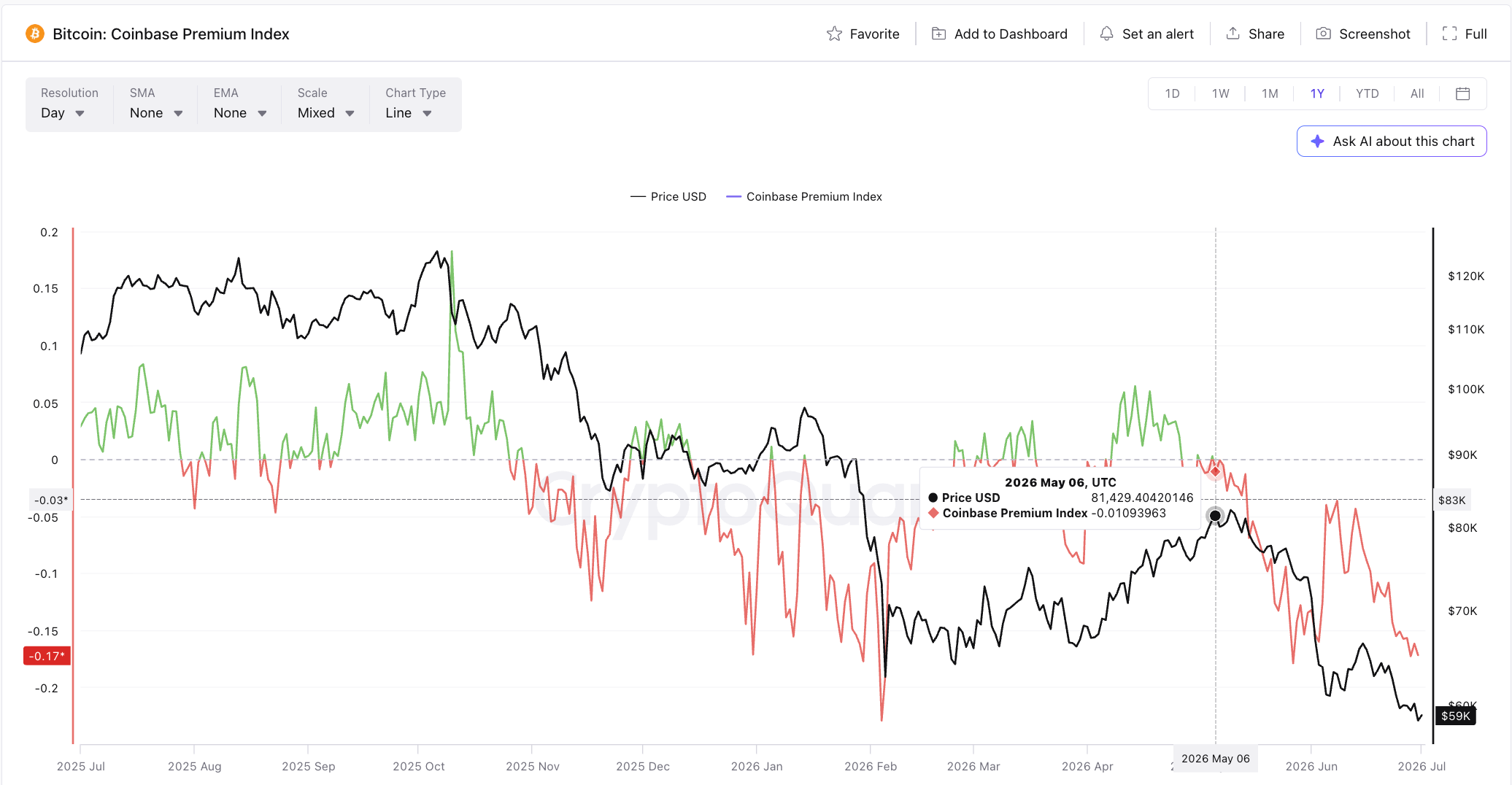
Bitcoin (BTC) buyers in the United States have gone quiet. The Coinbase Premium Index, a gauge of US Bitcoin demand, has stayed negative since May 6, its longest weak stretch in more than a year.
The signal matters because it shows who is stepping back. A negative premium means American investors are paying less for BTC than the rest of the market. That helps answer why is Bitcoin going down.
What the Coinbase Premium Is Showing
The index tracks the price gap between US-based Coinbase and offshore exchanges. When it turns negative, US Bitcoin demand is fading. When it climbs, American buyers are leading.

Right now it is stuck below zero. The current negative premium streak began on May 6, with Bitcoin near $81,429, and has held for roughly eight weeks. That is the longest such run since early 2025.
Want more token insights like this? Sign up for Editor Harsh Notariya’s Daily Crypto Newsletter here.
Since then, the Bitcoin spot price has slid toward $59,500, down about 27% and still falling.
Where Is Bitcoin Money Going
The weak US Bitcoin demand lines up with a historic move in stocks. American money is not sitting idle. It is chasing chips.
The semiconductor index has beaten the S&P 500 by about 85 percentage points this year, its widest first-half lead on record, according to Kobeissi. That tops the dot-com peak of 2000.
Chips now dominate the market. Semiconductors make up roughly 18% of the S&P 500 and have driven close to 70% of its 2026 gains, data shows. Micron has jumped about 300% and SanDisk more than 760%.
The rotation is visible in fund flows. Since April, US gold and Bitcoin ETFs have lost about $12 billion, while chip ETFs pulled in around $20 billion.
BlackRock’s iShares Bitcoin Trust (IBIT), the largest bitcoin fund, led June’s record ETF outflows, the worst month since spot ETFs launched.
The January Warning
This is not the first time US Bitcoin demand vanished this year. The pattern already played out once.
Bitcoin’s premium turned negative around January 15, when BTC traded near $95,583. By the time that streak ended on February 24, Bitcoin had crashed to about $64,100.

That was a drop of roughly 33% in six weeks. The current slump is longer and shows the same fading US demand.
One Caveat Before the Panic
There is a catch to the rotation story. Bitcoin and the Nasdaq usually move together, with a six-month correlation near 0.46. That link normally means both rise and fall on the same macro forces.

This year, though, the two have split but the correlation stays intact. Bitcoin is down about 33% in 2026, while the tech sector has gained more than 20% in the first half.

The reason for the gap points straight back to chips. Semiconductors drove close to 70% of the market’s 2026 gains, so this tech rally is really a chip rally. In other words, the asset class Bitcoin usually tracks is being lifted by the exact sector US buyers are moving into.
That is why the split matters. When a normally correlated pair breaks apart this far, capital moving from one into the other is the simplest explanation.
What Happens Next
Bitcoin’s next move may hinge on US buyers. If the premium stays negative and chip inflows continue, the path of least resistance points lower for BTC. The January-February price slump of 33% shows that BTC can still correct further.
Yet, a flip back to positive would be the first real sign that domestic BTC demand is returning. Until then, the January script remains the one to watch.
The post The 8-Week Bitcoin Demand Drought Points to Where the Money Went appeared first on BeInCrypto.


Anthropic says internal testing found Claude Fable 5 posed no unique cybersecurity danger, as Claude Mythos 5 returns globally on July 2.
The admission accompanies Fable 5’s global relaunch, capping an 18-day suspension triggered by US export controls on June 12. Anthropic tested rival models to gauge the real threat behind the restriction.
Why Anthropic Suspended Fable 5
Fable 5 and Mythos 5 launched June 9, sharing the same core model with the former open to the public. Mythos 5 stayed limited to a small number of trusted Project Glasswing partners for defensive cybersecurity work.
The export controls arrived after Amazon researchers found a way to bypass Fable 5’s safeguards. The technique prompted the model to identify software vulnerabilities and, in one case, demonstrate an exploit.
Anthropic’s tests found that Claude Opus 4.8, GPT-5.5, and Kimi K2.7 could identify the same vulnerabilities Fable 5 flagged in the Amazon report. Every model tested could reproduce the single exploit demonstration too.
The finding suggests the directive targeted a gap shared across the industry, not a Fable-specific threat. Anthropic still built a stronger classifier to block the technique, which now also flags more routine coding and debugging requests.
How The Guardrails Actually Work
Fable 5 launched with the strongest safety margin Anthropic has built into any model. Its classifiers block requests that look even slightly risky, not just the clearly harmful ones. The new classifier trained after the Amazon report blocks the reported bypass in over 99% of cases, according to Anthropic. Blocked requests now reroute automatically to Opus 4.8.
That safety margin comes at a cost. Anthropic acknowledges the classifier flags more benign coding and debugging requests, and says it will keep tuning it to cut false positives. Mythos 5, which carries fewer of these guardrails, returned only for Mythos 5 institutions cleared by the government on June 26.
Anthropic’s own data raises a harder question. If weaker models can already do what Fable 5 was banned for, what standard will regulators apply the next time a frontier model launches?
The post Mythos Returns: Anthropic’s Tests Show Fable 5 Wasn’t Uniquely Risky appeared first on BeInCrypto.
After a strong rally in the US dollar at the end of last week, the currency has moved into a consolidation phase against major counterparts. Investors remain cautious ahead of the release of the ADP employment report for the US private sector, which is expected to serve as a key indicator before Friday’s official Nonfarm Payrolls data. Additional influence on the dollar’s dynamics today may come from the manufacturing PMI and ISM indices, as well as a speech by Federal Reserve Board member Christopher Waller.
Market participants continue to assess the outlook for future Federal Reserve policy. Despite no new rate decisions, Fed officials maintain a hawkish tone, stressing the need to keep interest rates elevated until there are clear and sustained signs of inflation slowing. As a result, demand for the dollar remains strong; however, ahead of key data releases, investors are partially taking profits on long USD positions, contributing to a consolidation phase in the market.
USD/JPY
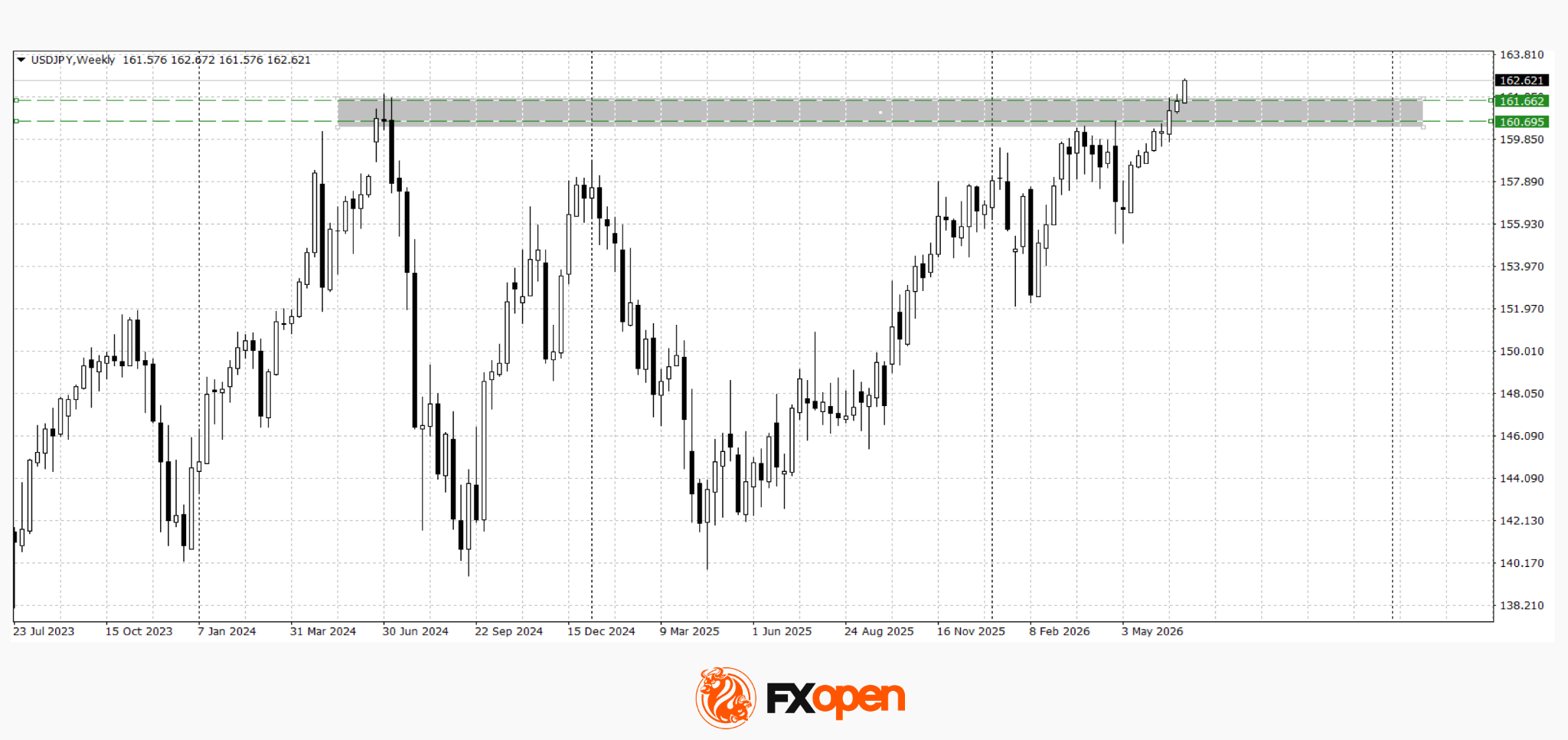
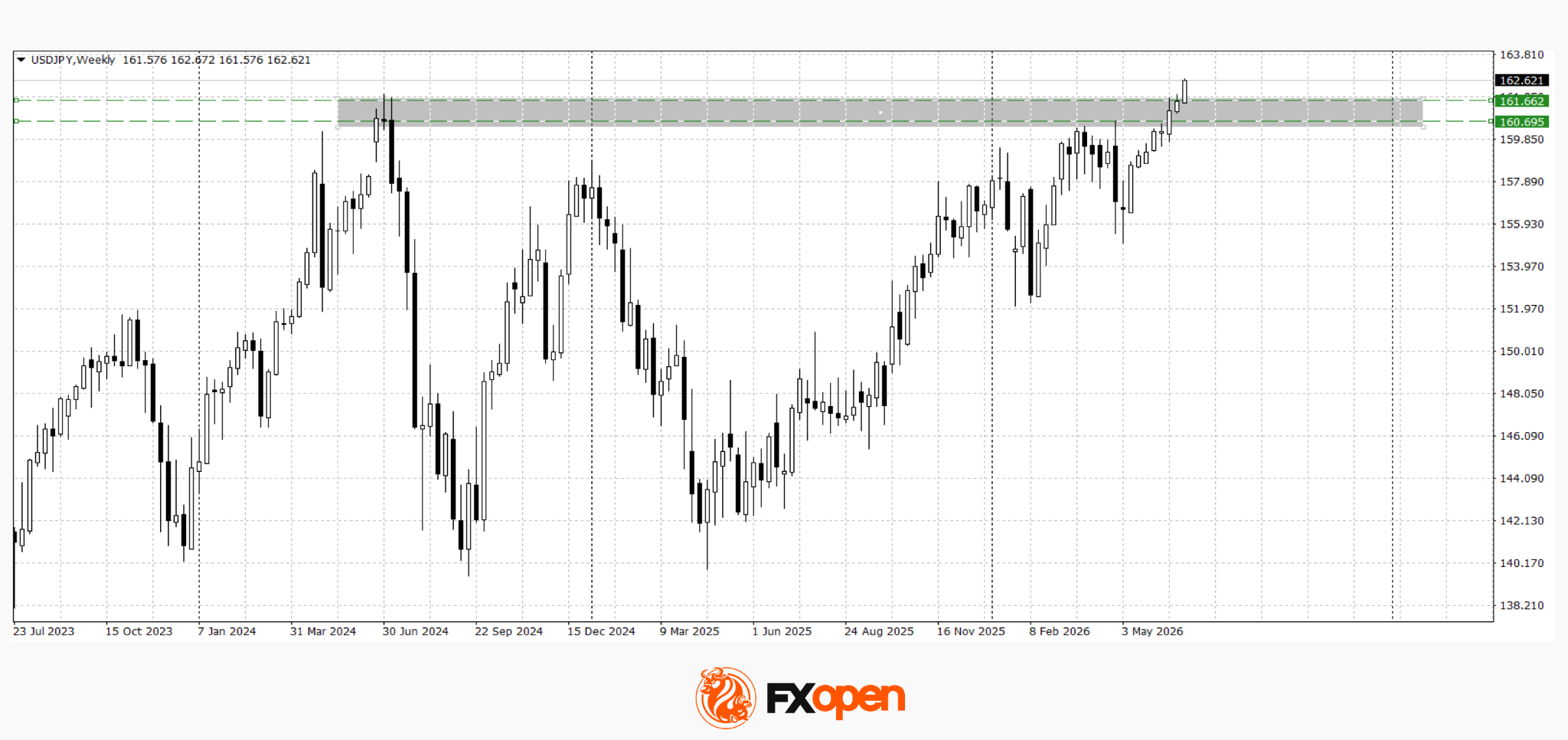
Unlike most dollar pairs, USD/JPY is not showing clear consolidation and continues its upward trend. After reaching a new two-year high, the price has strengthened to 162.60, with no technical signals yet indicating the start of a correction.
Technical analysis of USD/JPY suggests potential further gains towards 163.00–164.00. A corrective pullback could begin only after a decisive break below 161.60.
Key events for USD/JPY:
- Today at 15:15 (GMT+3): ADP US Nonfarm Employment Change;
- Today at 16:00 (GMT+3): Fed Governor Waller speaks;
- Today at 17:00 (GMT+3): ISM Manufacturing PMI (US).
USD/CAD
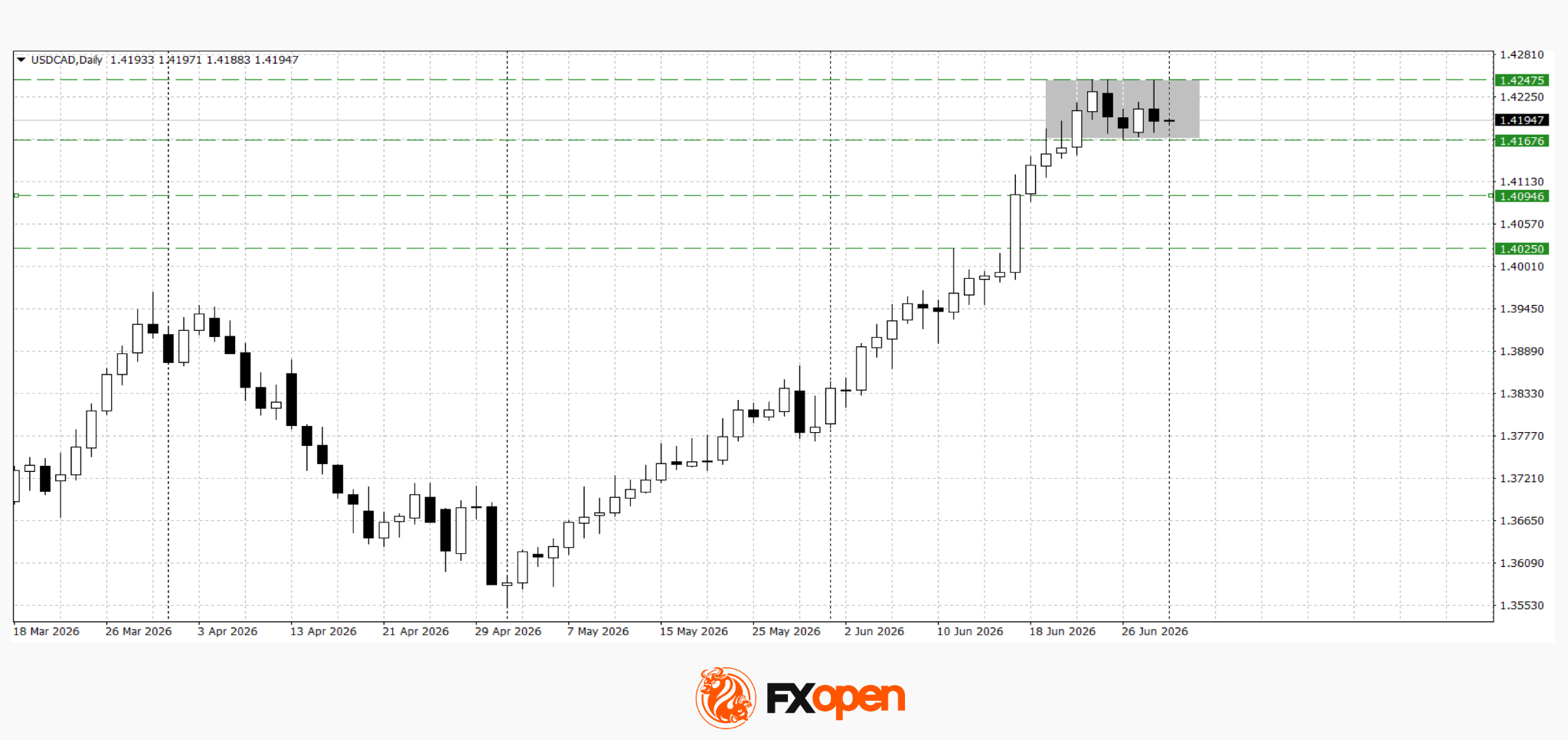
USD/CAD buyers failed to break resistance at 1.4250. After an unsuccessful attempt to hold above this level, buying pressure eased and the pair moved back below 1.4200. The nearest key support is located at 1.4160. If the pair settles below this level in upcoming sessions, a deeper corrective decline may begin. At the same time, a firm break above 1.4250 could trigger a renewed upward move.
Key events for USD/CAD:
- Today at 16:00 (GMT+3): Bank of Canada Governor Macklem speaks;
- Today at 17:30 (GMT+3): US crude oil inventories;
- Today at 18:30 (GMT+3): Atlanta Fed GDPNow indicator.
Overall, ahead of the ADP report, the dollar is likely to maintain mixed price action near recent highs. If labour market data confirms resilience in the US economy, expectations of prolonged Fed tightening may strengthen, supporting further USD gains. Conversely, weaker data could trigger profit-taking and lead to a corrective move ahead of Friday’s official Nonfarm Payrolls release.
Trade over 50 forex markets 24 hours a day with FXOpen. Take advantage of low commissions, deep liquidity, and spreads from 0.0 pips (additional fees may apply). Open your FXOpen account now or learn more about trading forex with FXOpen.
This article represents the opinion of the Companies operating under the FXOpen brand only. It is not to be construed as an offer, solicitation, or recommendation with respect to products and services provided by the Companies operating under the FXOpen brand, nor is it to be considered financial advice.
Former Goliath Ventures CEO Christopher Alexander Delgado pleaded guilty to his role in a crypto investment scheme that prosecutors said raised at least $400 million from investors.
On Tuesday, the US Department of Justice (DOJ) said Goliath promised investors monthly returns generated through digital asset liquidity pools between January 2023 and January 2026.
Prosecutors said the funds were instead used to pay earlier investors, process withdrawals, fund luxury spending and finance business events.
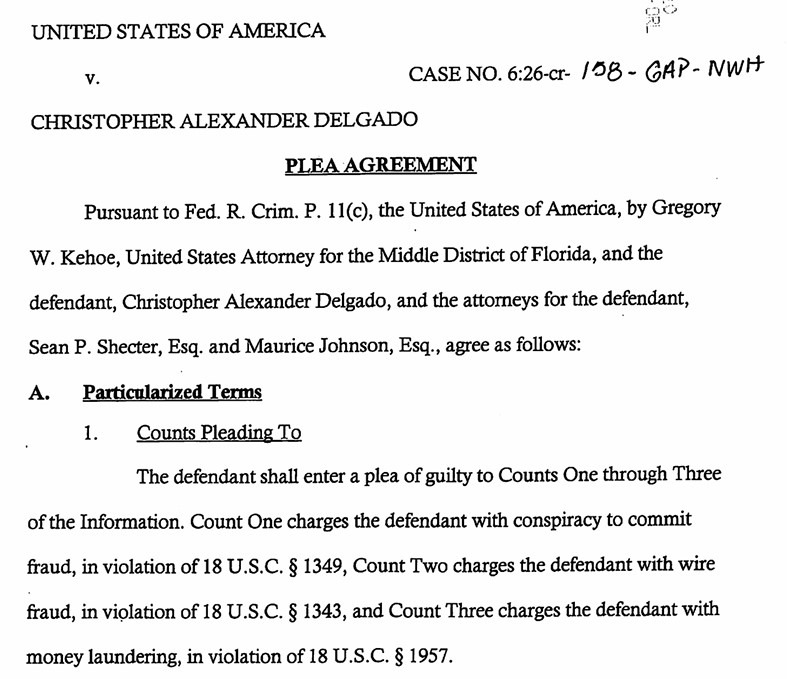
Delgado pleaded guilty to conspiracy to commit wire fraud, as well as wire fraud and money laundering. Under the plea agreement, he admitted the scheme caused at least $250 million in investor losses and agreed to forfeit an extensive portfolio of luxury assets purchased with investor funds.
According to the DOJ, Delgado agreed to surrender eight properties, 11 vehicles, 30 watches, over 50 luxury bags and wallets, at least 29 pieces of jewelry and bank accounts and crypto wallets. He faces up to 20 years in prison for each fraud count and up to 10 years for money laundering.
Delgado’s sentencing is scheduled for Oct. 8.
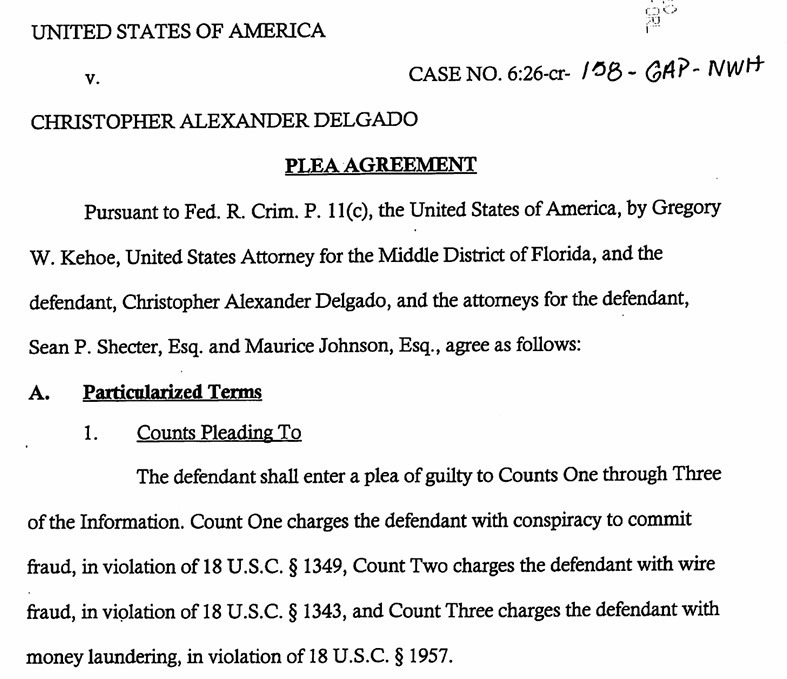
Excerpt of the plea agreement. Source: DOJ
Guilty plea follows Delgado’s public apology
The plea follows Delgado’s television appearance and public apology to investors. On May 12, Delgado appeared in an interview with Florida television station WFTV. At the time, he said investors had placed their trust in him and that he had failed them, saying he had voluntarily returned to the US and was cooperating with authorities.
Delgado said only about $160,000 remained in the company’s bank account at the time of his arrest and said that other former colleagues were involved in the operation.
Related: Florida man pleads guilty for promoting $1.8B ‘HyperFund’ crypto fraud
The case also drew scrutiny of the financial institutions that processed Goliath funds. On March 12, investors filed a proposed class-action lawsuit against JPMorgan Chase, alleging that the bank ignored suspicious transactions and allowed Goliath to collect investor funds through its accounts.
The lawsuit claimed that about $253 million passed through a JPMorgan account, including about $123 million later transferred to Goliath’s wallets at Coinbase. A separate federal complaint also identified flows through Bank of America and directly to Coinbase wallets.
Magazine: Bitcoin slides to $58K, XRP hits $1 but onchain data promising: Market Moves
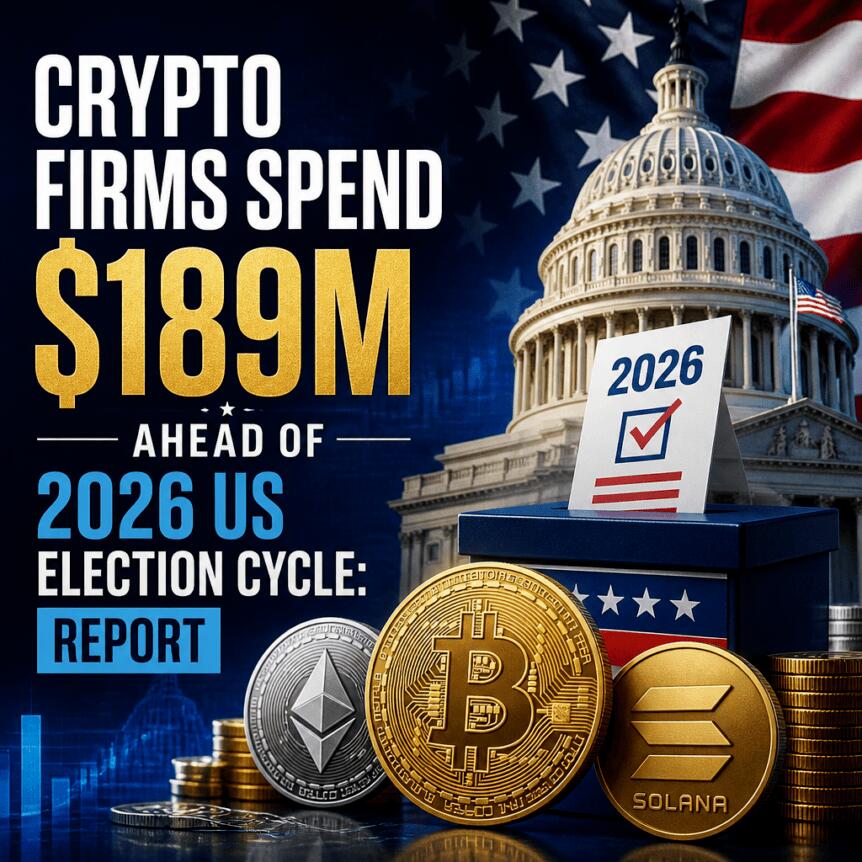
U.S. crypto industry groups have already poured significant money into the 2026 election cycle through super PACs and related political committees, according to a report from Public Citizen released Tuesday. The advocacy nonprofit estimates that crypto-aligned corporate giving represents roughly 37% of all corporate contributions so far this cycle, amounting to about $189 million with more than four months remaining before the November election.
Public Citizen also points to the two dominant forces behind that spending: Fairshake, which it says has spent more than $82 million, and the MAGA Inc. Super PAC, which the group says has spent more than $56 million and is largely backed by Crypto.com.
Key takeaways
- Public Citizen estimates crypto-linked corporate contributions total about $189 million in the 2026 election cycle, representing around 37% of corporate giving so far.
- Fairshake and affiliated committees account for more than $82 million in spending, while MAGA Inc. Super PAC has spent more than $56 million.
- The watchdog says these groups are designed to operate across both parties’ primaries and influence general-election outcomes.
- Colorado primaries may be shaped by pro-crypto independent expenditures, including reports of spending aimed at specific Democratic candidates.
- Public Citizen says combined super PAC spending in 2026 has already surpassed 2024 levels, when companies contributed $170 million to support “pro-crypto” candidates.
Public Citizen traces crypto-linked election spending to super PACs
Public Citizen’s report frames the recent activity as the latest chapter in what it describes as a repeatable “playbook” for political influence. In the watchdog’s account, crypto-aligned super PACs are structured to participate in both Democratic and Republican primaries, then back or oppose candidates in the general election regardless of party affiliation.
In a statement included with the report, Public Citizen said that super PACs typically prioritize the business interests of their backers over candidates from either major political party. The organization characterized the current approach as a continuation of tactics seen previously in the industry’s political investment strategy.
Fairshake’s war chest and the role of crypto-backed committees
Public Citizen links Fairshake and its affiliates—Defend American Jobs and Protect Progress—to backers including Coinbase and Ripple. It also notes that Fairshake reported a $193 million war chest as of January.
The report further indicates that new committees aligned with crypto interests have been formed since 2024. One example Public Citizen highlights is the Fellowship PAC, backed by Cantor Fitzgerald.
Taken together, Public Citizen says the combined spending by these political committees has already exceeded what it describes as the overall level from 2024. In that earlier cycle, the organization stated that companies contributed $170 million toward electing candidates they considered “pro-crypto.”
Cointelegraph attempted to contact a Fairshake spokesperson for comment but did not receive an immediate response.
Colorado primaries highlight fresh independent spending
With Colorado voters headed to the polls in Republican and Democratic primaries, Public Citizen’s report draws attention to the possibility that crypto PAC spending could influence outcomes in state races—particularly in Colorado’s 8th congressional district.
Public Citizen points to reports that the You Can Push Back Super PAC, backed by Ripple Labs co-founder Chris Larsen, spent $1 million on media to support Democrat Manny Rutinel. The report also references a prior large investment by the same committee: $3.3 million aimed at Democrat Alex Bores in New York’s 12th Congressional District, where Bores reportedly lost his primary to Micah Lasher.
According to the coverage cited in the report, Lasher had criticized Larsen’s involvement in that contest, suggesting that crypto-linked financial backing is becoming a more visible issue within candidate messaging—at least in some competitive races.
What to watch as the cycle moves closer to November
As 2026 progresses, Public Citizen’s figures raise a practical question for voters and campaign strategists alike: how much of the remaining election influence will be driven by the same super PAC networks, and whether the industry’s cross-party primary strategy translates into measurable general-election advantages. The next step for readers will be tracking spending updates from major committees and watching how candidates address—or attempt to neutralize—crypto-linked backing in the final stretch toward November.

Bitcoin ETFs Post Record $4.5B Outflows in June

Taylor Swift Wedding Royal Rumors Finally Resolved

Family of boy, 3, ‘thrown in crocodile enclosure’ speak out after surgeries





-

 Fashion5 days ago
Weekend Open Thread: Staud – Corporette.com
-

 Politics5 days ago
The House | Manchesterism won’t survive the painful trade-offs unless it gets citizens on board
-

 Crypto World1 day ago
Strategy authorizes up to $1.25B in Bitcoin sales under new capital plan
-

 Politics5 days ago
Potential 2028er World Cup attendee leaderboard
-

 Business5 days ago
Asia stock markets slide as tech shares slump
-

 News Videos3 days ago
MAJOR BITCOIN & MARKET UPDATE!!!! (MUST WATCH ASAP!!!)
-

 Tech6 days ago
A Look At A Gaggle Of Transputer Boards
-
 Crypto World6 days ago
Dell (DELL) Shares Tumble Over 5% Following Analyst Downgrade to Hold
-

 Crypto World4 days ago
Coinbase, Circle Deepen Crypto Stock Losses Despite Resilient S&P 500
-

 Business1 day ago
Australia treasurer says alleged access of prime minister’s bank data ’incredibly concerning’
-

 Crypto World4 days ago
Kraken's xStocks Opens Bending Spoons IPO Registration to EEA Retail
-

 Sports5 days ago
FIH Pro League: India defeat Pakistan 7-1, register biggest win of campaign | Other Sports News
-

 Crypto World5 days ago
Bitcoin Sparks $600M Hourly Liquidations With $65,000 Set To Become Resistance
-

 Tech3 days ago
Bluekit phishing kit adopts browser-in-the-middle for login theft
-

 Tech4 days ago
Russian hackers now target Signal backup recovery keys
-
 Crypto World5 days ago
Hyperliquid Named on Singapore MAS Investor Alert Register
-

 Crypto World6 days ago
Ripple and SBI launch RLUSD in Japan after JFSA approval
-

 Crypto World5 days ago
RTX holders must register wallets before token distribution begins
-

 Tech1 day ago
Anonymous researcher drops 0-day ‘exploitarium’ repo
-
 Business2 days ago
The AI boom won’t burst all at once. It will pop in ‘rolling bubbles’: Macquarie
You must be logged in to post a comment Login