




Connect with us
DAPA Banner
DAPA Coin
DAPA
COIN PAYMENT ASSET
PRIVACY · BLOCKDAG · HOMOMORPHIC ENCRYPTION · RUST
ElGamal Encrypted MINE DAPA
🚫 GENESIS SOLD OUT
DAPAPAY COMING

Business

AeroVironment Reports Higher Fourth-Quarter Profit As Revenue More Than Doubles

Published

on

AeroVironment Reports Higher Fourth-Quarter Profit As Revenue More Than Doubles

AeroVironment AVAV 18.76%increase; up pointing triangle reported a higher profit as revenue more than doubled during the fiscal fourth quarter.

The drone maker on Monday reported a profit of $63.2 million, or $1.25 a share, for the quarter ended April 30. That compares with a profit of $16.7 million, or 59 cents a share, a year earlier.

Copyright ©2026 Dow Jones & Company, Inc. All Rights Reserved. 87990cbe856818d5eddac44c7b1cdeb8

Continue Reading
Click to comment

You must be logged in to post a comment Login

Leave a Reply

Business

Lamborghini reveals new Urus performance hybrid SUV after ditching EVs

Published

on

Lamborghini reveals new Urus performance hybrid SUV after ditching EVs

The Lamborghini Urus SE Performante.

Courtesy Lamborghini

Lamborghini on Wednesday revealed a new hybrid performance model of its Urus SUV, as the Italian auto manufacturer continues to lean into gas-electric vehicles after abandoning plans for pure EVs.

Advertisement

The Urus SE Performante features a more aggressive exterior design, including a larger grille and hood scoops, as well as interior improvements compared with current models of the SUV.

Lamborghini is calling the new Urus SE Performante the “fastest Super SUV in the world,” capable of reaching 0-100 kph, or roughly 0-60 mph, in 3.3 seconds and hitting a top speed of 312 kph, or 194 mph.

The vehicle is a plug-in hybrid electric vehicle, which means it has a gas-powered engine as well as a plug to charge a battery pack for improved electric performance. It is powered by an electric motor and a 4-liter twin-turbo V-8 engine, delivering 812 horsepower and roughly 738 foot-pounds of torque, Lamborghini said.

“It is very important. It’s a game changer,” Lamborghini CEO Stephan Winkelmann told CNBC.

Advertisement

The interior of the Lamborghini Urus SE Performante.

Courtesy Lamborghini

Lamborghini, which is owned by Volkswagen AG, said it would release pricing for the Urus SE Performante closer to the vehicle arriving for U.S. customers. The 2026 Urus SE starts at about $250,00 to $280,000, depending on the model.

The Urus has been crucial to Lamborghini’s success since its introduction nearly a decade ago. The vehicle represents about 50% of the brand’s global sales annually, according to Winkelmann, with total Lamborghini sales nearing 11,000 vehicles last year.

Advertisement

The reveal of the new performance PHEV comes months the company confirmed plans to scrap EVs to continue focusing on hybrid models. Winkelmann declined to comment on if Lamborghini would return to gas-only models, but said “never say never” when asked about such vehicles by CNBC.

Lamborghini canceled its EV plans before rival Ferrari revealed its first all-electric vehicle, the Luce, in late May. The Luce was met with intense backlash.

Winkelmann previously declined to comment directly on the Luce or the responses it has received, but said “innovation is paramount” to success. However, he said innovation should not be made for innovation’s sake or forced upon customers.

“By observing the market … we saw that the acceptance curve [of EVs] for our type of customers is not increasing, and that therefore we decided to move away from a full-electric car into a plug-in hybrid,” he said.

Advertisement
Why Ferrari and Lamborghini are taking different paths on EVs
Choose CNBC as your preferred source on Google and never miss a moment from the most trusted name in business news.
Continue Reading

Business

Refunds: Hidden Tricks – BBC

Published

on

Refunds: Hidden Tricks - BBC

Struggling to get a refund?

Rebecca Wilcox reveals the tricks some companies use to avoid paying up, from giving you the runaround to making the process so complicated you give up. Plus, how to use your consumer rights to fight back.

To watch this with subtitles go to BBC iPlayer and search for Morning Live from 01/07/2026

Continue Reading

Business

Accenture: Nowhere To Hide

Published

on

Accenture: Nowhere To Hide

Accenture: Nowhere To Hide

Continue Reading

Business

Plans for 7,000 new homes near Taunton Racecourse

Published

on

Business Live

Taylor Wimpey says sections nearest Blackdown Hills will be ‘safeguarded from inappropriate development’

Artist's impression of new 'Taunton garden village' of 7,000 homes near Taunton Racecourse. CREDIT: Taylor Wimpey. Free to use for all BBC wire partners.

Artist’s impression of new ‘Taunton garden village’(Image: Local Democracy Reporting Service / Taylor Wimpey)

A major housebuilder has confirmed it will be submitting proposals for 7,000 homes as part of a new ‘Taunton garden village’ under the emerging Somerset Local Plan.

Advertisement

The Somerset County Gazette reported in 2019 the Crown Estate had offloaded 1,200 acres of “productive farmland”, known as the Orchard Portman estate, to major developer Taylor Wimpey for the relatively modest sum of £12.5m.

Somerset Council recently launched the initial round of public consultation on its new Somerset Local Plan, which will ultimately determine where new housing and employment sites are allocated through to 2045.

Taunton resident David Orr condemned the plans in late June, arguing that they would lead to 9,000 new homes being constructed in an unsustainable location near Taunton Racecourse and cause permanent harm to the Blackdown Hills national landscape (formerly area of outstanding natural beauty, or AONB).

Taylor Wimpey has now confirmed it will be progressing with the proposals – albeit with the total number of homes being scaled back to around 7,000 – and has provided assurances that the sections closest to the Blackdowns will be safeguarded from inappropriate development.

Advertisement

The bulk of the Orchard Portman site lies to the east of the racecourse, spanning the parishes of Orchard Portman, Stoke St Mary and West Hatch.

A small portion of the proposed development directly overlaps the boundary of the Blackdown Hills, wrapping around the existing Netherclay and Thurlbear woodland.

Taylor Wimpey submitted the site for consideration in the new Local Plan in February 2025, as part of the ‘call for sites’ (whereby developers, landowners and land promoters were invited to submit possible locations for development, to be assessed and narrowed down by the council’s planning department).

A draft vision for the development was circulated to local parish councils in the autumn of 2025, with several key organisations offering encouraging initial responses – among them Bishop Fox’s School, King’s College, the Somerset NHS Foundation Trust (which runs Musgrove Park Hospital) and the Somerset Chamber of Commerce.

Advertisement

Only a partial masterplan for the site has been made public thus far, suggesting the development could feature a farm shop, an amphitheatre and a woodland trail.

A spokesperson for Taylor Wimpey said: “Our proposals for the new Taunton garden village include around 7,000 modern, energy-efficient and sustainable homes alongside schools, healthcare facilities, community spaces and infrastructure needed to create a self-sustaining community.

“We are working with a wide range of local stakeholders to shape the best version of this new community, including local schools, care home operators, the NHS, local charities, business partnerships, wildlife groups and Somerset Council.

“We are promoting the new garden village through the council’s Local Plan process and will continue to work with local stakeholders and communities as those plans evolve.”

Advertisement
Partial masterplan of new 'Taunton garden village' of 7,000 homes near Taunton Racecourse. CREDIT: Taylor Wimpey. Free to use for all BBC wire partners.

Partial masterplan of new ‘Taunton garden village’ of 7,000 homes near Taunton Racecourse(Image: Local Democracy Reporting Service / Taylor Wimpey)

The current masterplan for the site (which has not been made public) includes a new primary and secondary school (including new special needs provision), a ‘healthcare hub’, a neighbourhood hub with a “dedicated mass transit route to the town centre”, commercial and office space, and affordable homes – including specialist children’s homes.

Taylor Wimpey has committed that “more than half of the site” will be retained as green space for “sport, recreation, food growing, equestrian use, children’s play and biodiversity enhancement” – and they will not construct homes within the boundary of the Blackdown Hills.

The consultation is running until July 24 and a summary of responses will be published in early November. The second round of consultation (including further details of proposed development sites) is anticipated to start in September 2027.

The third and final round of public consultation is presently scheduled to take place in March 2028, after which the Local Plan will be submitted to the Planning Inspectorate (which may hold additional public hearings if deemed necessary).

Advertisement

If all proceeds smoothly, the new Local Plan will be formally adopted on March 16, 2029.

Continue Reading

Business

Energy bills: What is happening to gas and electricity prices?

Published

on

A woman with shoulder-length blonde hair talks into a microphone

Since 1 April, charges related to the insulation scheme – called the Energy Company Obligation – have been scrapped, and for three years, renewable energy projects will be 75%-funded by general taxation instead of a levy on energy bills.

Before the changes, energy bills in England, Scotland and Wales included additional charges to help fund insulation for low-income households, and subsidise green energy projects such as wind farms and solar panels.

Nearly everyone in England, Wales and Scotland will benefit from this cut, although the amounts will vary between households.

However, the cost of maintaining and strengthening energy network infrastructure like power lines, cables and gas pipes is rising.

Advertisement

In December 2025, Ofgem said it had approved a £28bn investment to improve the electricity and gas grids in Great Britain.

It said this will strengthen the energy supply, and better shield customers from volatile energy prices. It will also reduce Britain’s dependence on gas.

Customers will pay part of the cost of the upgrade, through an additional £108 added to energy bills by 2031.

These charges started to appear from April 2026, adding about £6 a month to the bill for a typical household covered by the energy cap.

Advertisement

In April, the government also announced separate plans to change the way electricity is priced to ensure that household energy bills are less vulnerable to spikes in gas prices.

It also wants customers to benefit more from the cheaper running costs of renewable energy sources like wind and solar power.

The government has not said how much bills might fall but believes savings could be “significant”. It said the changes could be in place by spring 2027.

Advertisement
Continue Reading

Business

What I'm Watching In July: Rate Hikes, Testimony, And AI Volatility

Published

on

What I'm Watching In July: Rate Hikes, Testimony, And AI Volatility

What I'm Watching In July: Rate Hikes, Testimony, And AI Volatility

Continue Reading

Business

At Close of Business podcast July 1 2026

Published

on

At Close of Business podcast July 1 2026

Ella Loneragan speaks with Nadia Budihardjo about her feature diving into the speculation surrounding a WA university merger.

Continue Reading

Business

Lower crude, easing FII selling brighten market outlook; large-cap financials offer better value: Kunal Vora

Published

on

Lower crude, easing FII selling brighten market outlook; large-cap financials offer better value: Kunal Vora
A sharp decline in crude oil prices, improving earnings visibility and signs that foreign institutional investor (FII) selling may be losing steam have significantly improved the outlook for Indian equities, according to Kunal Vora from BNP Paribas India . While near-term earnings may reflect the temporary disruptions caused by higher commodity prices and currency movements, he believes the broader market setup has become considerably stronger over the past few weeks.

Speaking to ET Now, Vora said investors should focus less on whether foreign money returns aggressively and more on whether the intense selling pressure witnessed in recent months begins to ease. In his view, domestic institutional flows remain strong enough to support the market as long as earnings continue to grow.

Market Conditions Improve as Crude Retreats
The fall in crude oil prices to the $70-75 per barrel range has emerged as one of the biggest positives for the Indian economy. According to Vora, softer crude supports corporate earnings, strengthens the fiscal position, eases pressure on foreign exchange reserves and improves the interest rate outlook.While weather remains a key risk, particularly with concerns over El Niño and rainfall deficits, he believes those risks are relatively smaller than the challenges posed by elevated crude prices earlier this year.

“Compared to where we were two months back, the market construct is looking better. Crude at $70-75 is a big relief. It has positive implications for earnings, forex, interest rates and the government’s fiscal position. The reasons for FII selling have reduced, valuations have become slightly more attractive and the earnings outlook is improving,” he said.
Earnings May Be Weak, But Pain Could Be Temporary
The upcoming earnings season is expected to capture the impact of the recent spike in crude prices and currency fluctuations. However, Vora cautioned against interpreting one weak quarter as a longer-term trend.
He believes sectors such as consumer staples and automobiles could witness temporary margin pressure, but expects those headwinds to fade during the second half of FY27.
“This quarter will reflect the problems we saw last quarter. I would not extrapolate them into a long-term trend. The impact on consumption-oriented sectors will be visible, but it is likely to be short-lived. Our FY28 earnings outlook has not changed materially because this looks like a temporary phenomenon rather than a structural headwind,” he said.

Private Banks Continue to Top the Preference List
Financials, particularly frontline private sector banks, remain among Vora’s highest-conviction investment ideas.

Advertisement

After a subdued FY26, he expects earnings growth of 15-18% for leading private lenders during FY27. Attractive valuations across price-to-earnings and price-to-book metrics further strengthen the investment case.

“Private sector banks continue to remain one of our preferred sectors. We expect earnings growth of 15% to 18% in FY27, while valuations remain supportive. Heavy FII selling has weighed on the sector, but if that pressure eases, banks should benefit from improving flows,” he said.

Domestic Money Can Carry the Market
Vora believes investors are placing too much emphasis on the return of foreign portfolio investors. Instead, he argues that simply reducing the pace of FII selling could be enough for domestic investors to sustain the market.

He pointed out that India witnessed unprecedented foreign selling over the past few months, making any moderation in outflows a meaningful positive.

Advertisement

“India does not really need FPI money to come back in a big way. What we need is a lack of selling. If incremental FII selling eases, domestic money can continue doing the heavy lifting,” he said.

Consumption, Telecom Also Offer Attractive Opportunities
Besides financials, Vora remains constructive on consumption stocks, especially consumer staples, following the recent GST rate cut. He believes improving demand and pricing power could support earnings after the temporary crude-related impact fades.

Telecom is another sector he favours because of its consistent pricing power and the possibility of another tariff hike over the coming quarters.

“Consumer staples have become attractive after the GST rate cut. Telecom also continues to offer strong pricing power, and we expect tariff hikes over the coming quarters,” he said.

Advertisement

On the other hand, he believes pharmaceuticals, utilities and automobiles may underperform due to expensive valuations, easing defensive demand and possible margin pressures.

IT Faces Structural Questions Despite Attractive Valuations
While valuations in IT services have corrected meaningfully and dividend yields have become increasingly attractive, Vora believes the sector continues to grapple with long-term uncertainty stemming from artificial intelligence.

He does not expect widespread degrowth, but says investors are increasingly questioning the industry’s long-term growth assumptions.

“We do not expect the sector to start degrowing, but terminal growth assumptions have changed because of AI. This has become more of a value call and a hope that growth eventually bottoms out,” he said.

Advertisement

He also highlighted the broader implications of a slowdown in IT hiring, noting that the sector remains one of India’s largest employers and a significant contributor to wage growth.

Premium Valuations Are a Structural Feature
Addressing concerns over India’s valuation premium relative to global markets, Vora argued that higher multiples are not unique to IT but reflect a broader characteristic of Indian equities.

Strong domestic liquidity and sustained investor participation have allowed Indian stocks to command premium valuations across sectors.

“Indian valuations across sectors are higher than global peers. That is a structural feature of our market and not unique to IT. I do not expect that premium to disappear,” he said.

Advertisement

Large Caps Offer Better Value Than Mid and Small Caps
Although mid- and small-cap stocks have delivered exceptional returns, Vora believes valuations have become stretched after sustained domestic inflows and relatively lower FII ownership.

He now sees stronger value emerging in large-cap companies.

“Midcaps and smallcaps have become much more expensive relative to largecaps. We currently see better value in the large-cap space, while some froth remains in the broader market,” he said.

Focus on Earnings Rather Than Foreign Flows
Looking ahead, Vora expects market returns to broadly track corporate earnings rather than be driven by large foreign inflows. He believes India can continue delivering respectable returns if earnings growth remains in the low-to-mid teens and foreign selling gradually subsides.

Advertisement

“We are banking on domestic money to drive the market, not FIIs. If earnings grow in the mid-teens and FII selling eases, returns should broadly follow earnings even without large foreign inflows,” he said.

Continue Reading

Business

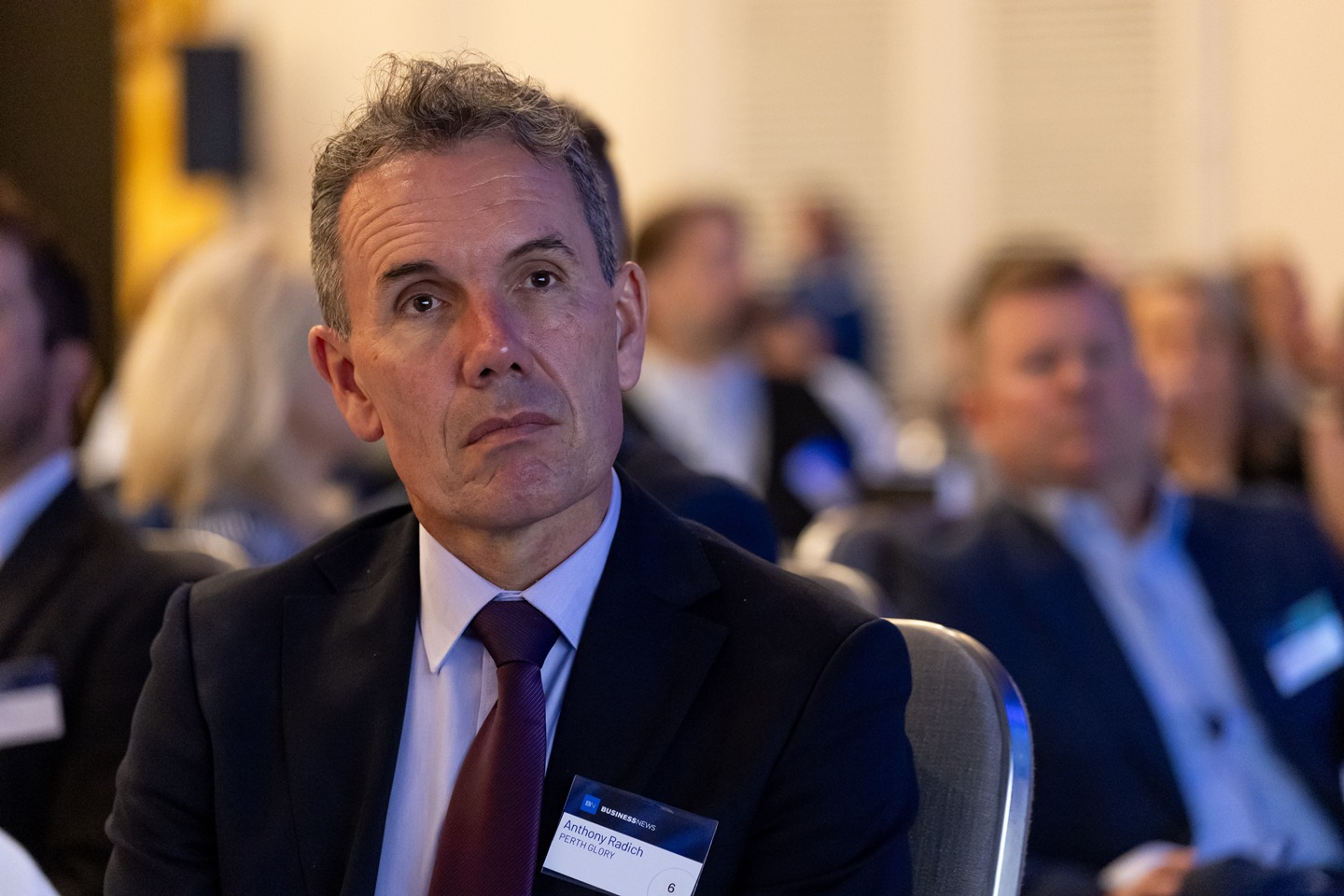
Radich resigns as Perth Glory chief

Published

on

Radich resigns as Perth Glory chief

Perth Glory’s chief executive Anthony Radich is leaving the club after four years at the helm of the A-League soccer club.

Continue Reading

Business

Romesh Ranganathan ‘gutted’ as his South East bakery chain shuts down

Published

on

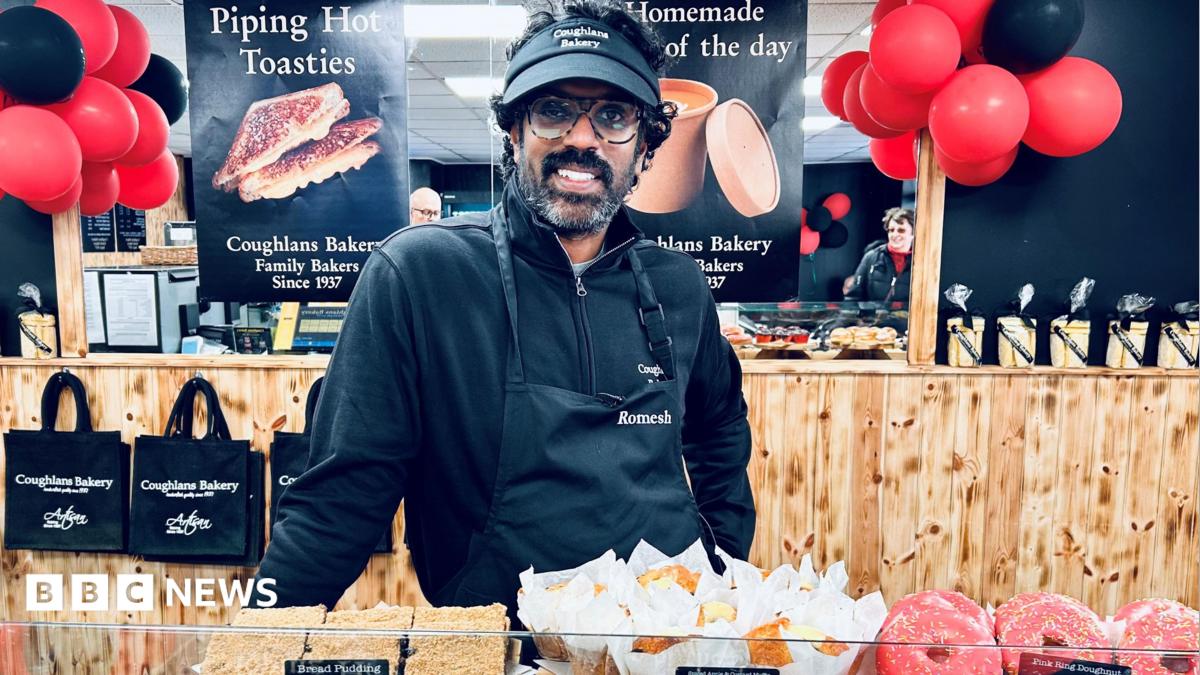
Romesh stood behind a counter of baked goods. He is wearing an apron and black cap and is smiling directly at the camera. There are red and black balloons behind him

Comedian Romesh Ranganathan said he is “gutted” after the 89-year-old bakery chain he part-owns shut down.

Coughlans Bakery – which operates a chain of shops across Kent, Surrey, West Sussex and south London – announced it had ceased trading on Tuesday after it went into voluntary liquidation.

Ranganathan, best known for his deadpan stage style, became its co-owner in 2024, describing it as “the partnership of the century”.

Managing director Sean Coughlan blamed the closure on the government’s decision to increase national insurance contributions for employers in April last year, along with high business rates.

Advertisement

Posting on social media, he described the rates as having “absolutely smashed local business”.

He added that, combined with the spike in fuel prices following the conflict in the Middle East, they had cost the company an extra £20,000 a week.

Coughlan said Crawley-born stand-up Ranganathan, who is vegan and initially became a supporter of the business because of its range of plant-based products, had been “amazing”.

“I feel like we’ve absolutely let him down. Everything he’s done, it’s been from the heart,” he added.

Advertisement

Ranganathan reposted Coughlan’s video to his 1.4m followers online, with the caption: “Gutted isn’t the word.”

Continue Reading

Trending

Copyright © 2025