Connect with us
DAPA Banner
DAPA Coin
DAPA
COIN PAYMENT ASSET
PRIVACY · BLOCKDAG · HOMOMORPHIC ENCRYPTION · RUST
ElGamal Encrypted MINE DAPA
🚫 GENESIS SOLD OUT
DAPAPAY COMING

Tech

Budget Samsung Galaxy M47 is official with Snapdragon chip and a huge battery

Published

on

Samsung has quietly expanded its mid-range lineup with the Galaxy M47. While it shares plenty with the recently launched Galaxy A27, there’s one upgrade that immediately stands out. It has a much larger 6000mAh battery.

The new handset has officially launched in India. It pairs that bigger battery with the Snapdragon 6 Gen 3 chipset and a 120Hz AMOLED display. Additionally, Samsung offers its promise of six years of Android and security updates. For buyers after a phone that prioritises longevity over flashy extras, the M47 looks like one of Samsung’s more compelling budget options.

The battery is arguably the headline feature. At 6000mAh, it’s larger than the Galaxy A27‘s cell and supports 45W wired charging. Samsung has also included bypass charging. This powers the phone directly from the charger instead of the battery when plugged in. It’s a feature that’s becoming increasingly common on gaming phones. It helps reduce heat during long gaming sessions while also limiting battery wear.

Elsewhere, the Galaxy M47 closely mirrors the Galaxy A27. It sports a 6.7-inch Super AMOLED display with a Full HD+ resolution, a smooth 120Hz refresh rate and Corning Gorilla Glass Victus+ protection. A 12MP selfie camera sits inside the centred punch-hole cutout.

Advertisement

Underneath, Samsung has paired Qualcomm’s Snapdragon 6 Gen 3 with either 6GB or 8GB of LPDDR5X RAM. There is also 128GB or 256GB of UFS 3.1 storage. On the back, there’s a familiar triple-camera setup. This setup consists of a 50MP main camera, a 5MP ultrawide and a 2MP macro sensor.

Advertisement

Software is another area where Samsung continues to stand out. The Galaxy M47 ships with One UI 8.5 based on Android 16. The company is committing to six generations of Android OS upgrades as well as six years of security patches. That’s a level of long-term support that still isn’t common at this price point.

The Galaxy M47 is available in Rogue Red and Blaze Blue. Pricing starts at INR 22,999 (roughly $243 / €214) for the 6GB RAM and 128GB storage model. Open sales begin on July 4 via Amazon India.

Advertisement

Source link

Continue Reading
Click to comment

You must be logged in to post a comment Login

Leave a Reply

Tech

Cinder City becomes the first PC game to recommend 64GB of RAM, and at the worst time

Published

on


Games are getting bigger, more hardware-intensive, and less well-optimized. The end result is usually more high-end GPUs being required for “standard” gameplay, but Cinder City asks for just an RTX 4060 (8GB). What’s unusual, however, is the staggering 64GB of RAM it recommends.
Read Entire Article
Source link

Continue Reading

Tech

Hide My Email has a year-old issue that still hasn’t been fixed

Published

on

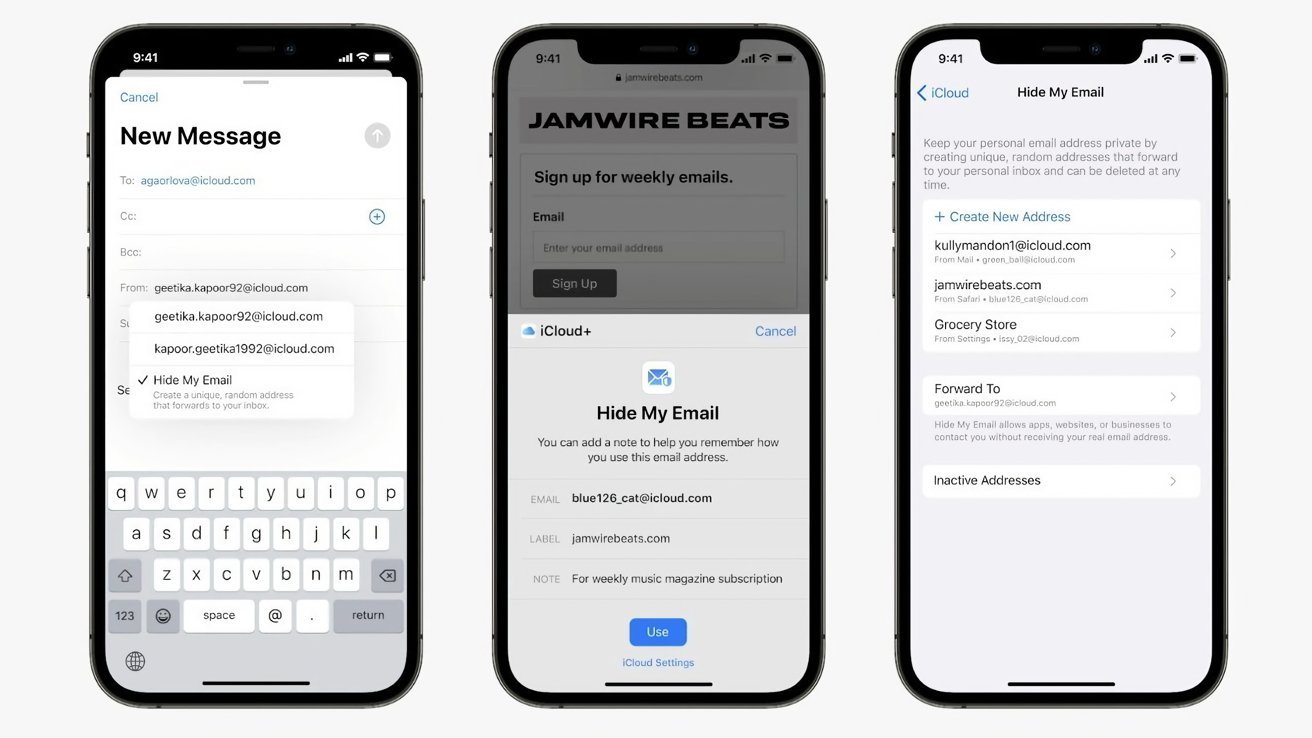
A vulnerability was discovered in Apple’s “Hide My Email” that allows an attacker to work out your real email address. It’s not been fixed for over a year.

Hide My Email has been a great help for Apple users who need to communicate with services and companies, but don’t want to provide their real email address. Spam, as ever, continues to be a problem requiring solutions like this.

However, while it is capable of thwarting your typical spammer or marketing-happy small business, it’s not foolproof. As a report from 404Media reveals, it’s a feature that can be beaten.

The exact nature of the vulnerability hasn’t been detailed, due to the lack of action by Apple to fix it. Testing on Monday by the report verified that it is still a problem.

Advertisement

EasyOptOuts co-founder Tyler Murphy discovered an issue with Hide My Email in June 2025, and responsibly reported it to Apple as well as the publication. Twelve months later, and the problem still exists.

Murphy explains that the issue was reported and instructions to replicate it where provided to Apple. He doesn’t know why it hasn’t been fixed, but also didn’t feel comfortable waiting to discuss the problem any longer.

“Hide My Email users deserve to know that it may be possible for attackers to discover their hidden email addresses,” he declared.

There are free websites accessible to the public that link email addresses to other personal details, he adds. Anyone relying on Hide My Email may find themselves at risk of being identified on them.

Advertisement

Under Investigation

While Apple hasn’t yet fixed the hole in Hide My Email, it is certainly aware of the problem. One month after Murphy contacted Apple, it confirmed it was looking into the issue.

In March 2026, Apple said it had “addressed the reported issue in a recent system change.” However, Murphy discovered the hole hadn’t been plugged.

Again, more information was provided to Apple, which replied a month later saying it was doing more checks.

Apple updated Murphy in May, insisting it was “still investigating” the problem. It also wished for Murphy to hold off disclosing the problem until after the investigation concluded.

Advertisement

Murphy wrote back, proposing that Apple could stop selling access to Hide My Email until a fix was available, as a means to limit the number of users at risk.

By the end of May, Apple said that it would be addressed in a security update “expected in the coming weeks.”

After being alerted by Murphy, the publication contacted Apple multiple times, but did not get a response.

Questionable changes

While it is unknown exactly when and how the vulnerability will be fixed, it may end up accompanying other changes to the service. These are changes that have questionable value to its users.

Advertisement

A June 15 developer notice warned that the email domains used for Sign In with Apple and Hide My Email will be updated in the future. The intention is for email providers and developers to update their systems in advance of the changeover.

The changes basically mean that newly-generated relay email addresses for Hide My Email will change from the domain iCloud.com to private.icloud.com. Sign In With Apple currently creates relay addresses ending with privaterelay.appleid.com, and will change to the private.icloud.com version.

The problem here is that there’s nothing stopping a website or newsletters from blocking email addresses using private.icloud.com, forcing them to sign up with another legitimate account.

For Hide My Email at least, the change removes the source ambiguity protecting the service and its users.

Advertisement

Source link

Continue Reading

Tech

Oppo’s Air 5s are AirPods 4 rivals with ANC

Published

on

Oppo has unveiled the Enco Air5s, the brand’s first semi-in-ear earbuds with Active Noise Cancellation, placing them in direct competition with Apple’s AirPods 4 with ANC.

The open design that gives semi-in-ear earbuds their comfortable fit has traditionally been a poor fit for effective noise cancellation, since it leaves more room for ambient sound to leak through.

Oppo’s Real-time Adaptive Noise Cancellation addresses that limitation by adjusting noise reduction based on fit, ear canal shape and surrounding sound, all processed through an 800kHz sampling rate for faster response to changing conditions.

Alongside that adaptive system, the Enco Air 5s also include a Tailored Voice-Canceling System built to suppress vocal frequencies and reduce nearby conversations, a feature aimed at noisy environments such as crowded cafés.

Advertisement

Each earbud weighs just 3.9 grams, a figure Oppo credits to its Excimer Craftsmanship finishing process, which combines a shimmering surface with a smooth touch while keeping the overall build ultra-lightweight. Complementing this is the Ergonomic Semi-in-Ear Fit, intended to conform more closely to natural ear contours and reduce friction during extended wear.

Advertisement

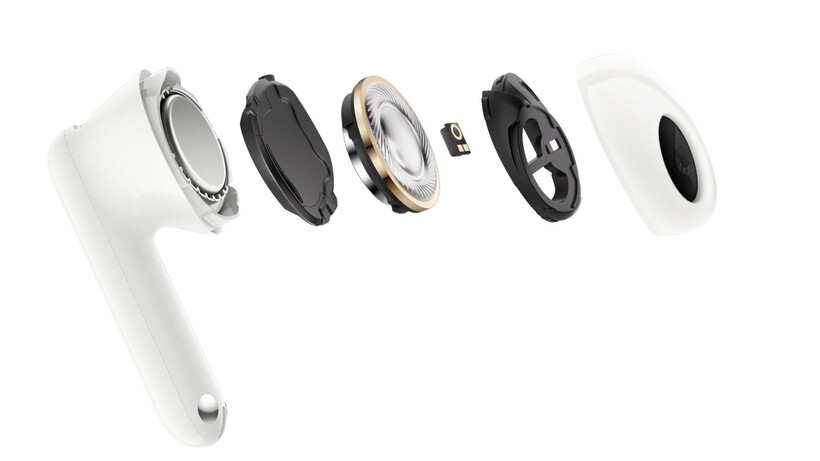
Sound comes from a newly customised 12mm dynamic driver built around a Copper-Clad Aluminum Wire coil, paired with an Acoustic Cavity Design that Oppo says delivers crisp highs, impactful bass and clear vocals. An upgraded 10-band Custom EQ allows listeners to fine-tune low, mid and high frequencies, while Adaptive Sound Enhancement compensates for sound leakage in real time.

Oppo Enco Air5s breakdownOppo Enco Air5s breakdown
Image Credit (Oppo)

Connectivity is Bluetooth 6.0 alongside Oppo’s own Smart Bluetooth system, with Dual Connection Across Systems letting users switch between paired devices without manually reconnecting.

Beyond standard pairing, the earbuds introduce AI Translate, supporting face-to-face translation for situations such as ordering food or attending meetings abroad, alongside Slide Volume Control for hands-free adjustment without touching a connected phone.

Advertisement

Battery life reaches up to 48 hours with the charging case, with Oppo stating the cells retain over 80 percent capacity after 1,000 charge cycles, a claim backed by TÜV Rheinland certification.

Advertisement

The Enco Air 5s will launch in Lunar White, Midnight Black and Starlight Purple finishes, though Oppo has not confirmed pricing or release dates beyond noting that details will follow through official local market announcements.

Advertisement

Source link

Continue Reading

Tech

Terminus Is A Text Only Phone Because Telephony Is Dead Anyway

Published

on

This may say more about us than the current state of the telephone network, but unless your Grandma is still kicking, how many phone calls do you take that are actually worth picking up? Around here it’s one variety of scam or another, with the odd cold-calling salesperson to round it out.

So when we saw [Bolan Xu]’s texting-only TERMINUS cell phone project, it took but a minute to decide that, yeah, we wouldn’t miss the telephone part of the phone very much either.

The trade-offs are immense when compared to your smartphone; there’s no voice, no web browser, no social media, and no camera. But on the flip side there’s also no spyware and no annoying spam calls. Besides, he’s built a QWERTY keyboard onto this thing, and that does seem to be what most of us miss in this era of black rectangles.

Advertisement

In terms of electronics, its rocking a tiny OLED display for you to read your messages on, driven by an ESP8266. When WiFi is available the plan was to bridge over the internet in an SMS version of VOIP, but [Bolan Xu] ended up installing a cellular modem in it anyway.

As you can tell from the skeletal case, this is very much a prototype, but it is a promising project. We’ve seen ESP-based phones before, but they tend to be a bit smarter, and run on ESP32 instead of the more modest ESP8266.

Advertisement

Source link

Continue Reading

Tech

AI agents need context everywhere they run, even where the cloud can’t follow

Published

on

The competitive edge in enterprise AI is shifting to context: which platform can give an agent the right memory, the right retrieval and the right data at the moment of decision.

Couchbase on Tuesday announced its AI Data Plane, combining persistent agent memory, real-time context retrieval and an enterprise-managed MCP server in a single operational platform. 

Couchbase’s roots are in caching and high-transaction databases — an architecture the company argues makes it better suited for agent memory than vendors that came to the problem from search or analytics. The AI Data Plane runs identically across cloud, on-premises and disconnected edge environments, extending agent memory and local vector search to devices with no network connection.

“How do you make sure that the intelligence that you get out of these models are the ones that databases specialize in?” Gopi Duddi, CTO at Couchbase, told VentureBeat. “How can you get that value out of storage systems, which are still going to be databases?”

Advertisement

What the AI Data Plane delivers

The AI Data Plane packages three components designed to replace the fragmented stacks most enterprises are currently running.

Agent memory: A unified persistence layer for conversational context, structured operational data and vector embeddings. Couchbase says the guardrails are what distinguish it from standalone memory services: token constraints per session, time-to-live limits on stored memories and metering controls that cap compute consumption per agent session.

Enterprise MCP server: An enterprise-supported self-managed server for standardized model-context protocol integration, shipping as part of the platform rather than requiring a separate service.

Agent catalog: A function-level catalog of discoverable agent tooling built by Couchbase. Duddi distinguished it from metadata catalogs like Databricks Unity or AWS Glue — describing it, in his words, as closer to a glorified MCP that surfaces agent functions as callable tools within the platform.

Advertisement

Memory-first architecture takes agent context to the disconnected edge

The lineage of Couchbase and its core architectural foundation is what Duddi says gives it an edge when it comes to context.

“We were a cache before we became a database,” Duddi said.

Writing to memory is 10x faster than writing to disk, Duddi said — a speed advantage he argues separates Couchbase from NoSQL databases that layer memory workloads on top of disk-based storage.

Couchbase isn’t the only data technology that has its roots in a caching layer. Redis similarly is rooted in cache and also recently announced an agentic AI context layer. Duddi argued that Couchbase is different in that it maintains an ACID (Atomicity, Consistency, Isolation, and Durability) compliant database which matters for transactional workloads. Couchbase also has a long history across multiple deployment modalities.

Advertisement

That architecture extends to the edge through Couchbase Lite, the platform’s on-device runtime. It runs SQL, full-text search and vector search locally without a network connection, using a proprietary sync mechanism to replicate bidirectionally back to cloud or between edge nodes when connectivity returns. The target environments are retail floor operations, field service, industrial deployments and regulated settings where agent data cannot leave the device.

Duddi cited hotel reservations as an early example: multiple agents serving customers concurrently, each pulling local context and running vector search on-device, with shared session memory synchronizing centrally. The practical benefit is token efficiency. Rather than every agent independently retrieving and processing the same data, the platform caches shared context so concurrent sessions draw on it without burning tokens repeatedly.

VB Transform · July 14–15 · Menlo Park · Agentic context layers

Your agents are only as good as the data they can reach.

Advertisement

Sessions at Transform cover the RAG architectures powering agentic systems at scale — including how enterprises are connecting agents to live genomics, clinical, and enterprise data.

See the full agenda →

Agora’s view from production

Agora, a platform that helps developers embed real-time voice, video and conversational AI into enterprise applications, has run Couchbase in production since February 2024.

The initial use case was its Signaling product, managing channel setup and state synchronization for live calls. Expanding into conversational AI agents brought stricter requirements: memory-first architecture, full JSON support for storage and query, cross-datacenter replication for high availability and enterprise-grade vendor support.

“Couchbase was the best fit based on these criteria,” Patrick Ferriter, SVP of Product at Agora, told VentureBeat.

Advertisement

Agora is now extending that relationship to support context retrieval for conversational AI agents.

“This will simplify the architecture and deliver enterprise grade RAG with predictable lower latency required for conversational AI use cases,” Ferriter said.

For data professionals trying to figure out the best approach to context, there is no one answer. On platform selection, Ferriter was direct.

“It depends on the preference and goals of the organization, including timing,” Ferriter  said. “If they want something enterprise grade and optimal for immediate production and scale vs. having to optimize and maintain an open-source solution with community support. We wanted the former and that is why we looked at an expanded partnership with Couchbase.”

Advertisement

Competitive context: following the right trend

The context layer has become a crowded space in 2025.

Oracle put a memory core in its database back in March providing a context layer. Redis added a context layer in May as did vector-native database vendor Pinecone.  

“Couchbase is following this trend, not setting it, but it’s the right one to follow,” Devin Pratt, Research Director for AI, Automation, Data and Analytics at IDC, told VentureBeat. “Its real edge is reach, running the same platform from cloud to edge to mobile, which is how enterprises actually operate. The test now is to scale against bigger names.”

For teams navigating the vendor landscape, Pratt’s framing is direct. “Match the tool to the workload. Consolidate where it makes sense, use a specialized engine like a graph database where relationship-heavy reasoning earns it, and let governance drive the call rather than treating memory as plumbing,” Pratt said.

Advertisement

Source link

Continue Reading

Tech

NIH unveils world’s largest genomics-health database

Published

on

The US government has just handed scientists the largest map of human health ever assembled. It pairs more than half a million genomes with real medical records, and it arrives as the programme behind it faces deep budget cuts.

The database comes from All of Us, a research programme run by the National Institutes of Health. On June 30, 2026, the NIH released data from more than 747,000 participants. That makes All of Us the world’s largest integrated store of genomes and electronic health records. It links 535,000 whole genome sequences to nearly 482,000 medical records. No rival can match that depth and breadth.

The scale is the point. To tailor a treatment to one person, researchers first need patterns drawn from many. All of Us bundles genomes with doctors’ notes, diagnoses, and test results. It adds health surveys, wearable data from devices like Fitbits, and even local air quality. The trove now holds more than 1.3 billion genetic variants. The eventual goal is one million volunteers.

Built for the people usually left out

What sets All of Us apart is who is in it. More than 86 per cent of participants come from groups long overlooked in medical research. That includes racial and ethnic minorities, older adults, women, people with disabilities, and rural residents. Participants span all 50 states.

Advertisement

That matters because the current gold standard does not manage it. The UK Biobank, the field’s leading repository, holds records for about 500,000 people. Almost all are of white European ancestry. Findings from such data often fail to carry over to other groups. All of Us has already helped uncover gene variants that cut the risk of kidney disease in people of African ancestry. A narrower database would miss that kind of result.

Advertisement

“One of the most exciting components is its sheer diversity,” said Alicia Martin. She is a statistical geneticist at the Broad Institute who uses the data to build risk-prediction tools. It offers a way, she said, to understand not just who is at risk of disease, but who will respond to which treatment.

The data layer for AI medicine

This is also raw material for artificial intelligence. Modern drug discovery and diagnosis lean on large, clean datasets. A genomic-plus-clinical trove at this scale is exactly what the new wave of AI research tools and science-specific models are hungry for. Claims that AI can already outperform doctors run well ahead of the evidence, but better data is what would narrow the gap. The release even opens what the programme calls its multiomics era, adding protein and RNA data for thousands of participants.

The payoff is already visible. All of Us data has fed more than 1,400 peer-reviewed papers from some 23,000 researchers. It helped build a genetic test that predicts inherited risk across eight cardiovascular conditions. It backed a low-cost prostate cancer model now in a trial of 5,000 veterans, and early work on catching disease before it starts, including Alzheimer’s. The programme has returned more than 733,000 personalised DNA results to participants. Access is free, so a researcher at a rural university gets the same data as one at a top institute.

A national treasure, and a target

The timing is bittersweet. The milestone arrives just as All of Us loses ground on funding. Its budget has been cut by 72 per cent since 2023. One of its main funding streams, the 21st Century Cures Act, is set to expire at the end of this fiscal year. More than 50 medical organisations have written to Congress warning that much of what has been built could be lost.

Advertisement

NIH Director Jay Bhattacharya called the database “a national treasure” and a foundational platform for investigators at every career stage. Both things are true at once. The resource is more valuable than ever, and its future is less certain than ever. That tension is sharper still while other governments pour money into research and computing infrastructure.

The privacy question underneath

A store of half a million genomes tied to medical records is also one of the most sensitive datasets ever built. All of Us shares it only with registered researchers, through a controlled cloud workbench. It leans on the trust of the people who volunteered. That trust is the quiet foundation of the whole project, and it is worth as much as the genomes themselves. As AI makes it easier to draw conclusions from health data, guarding that trust will only get harder.

For now, the headline is simple. Scientists have never had a health map this large, or this representative of who people actually are. Whether the country keeps paying for it is the next question, and the answer will decide how much of the promise turns real.

Advertisement

Source link

Continue Reading

Tech

Apple's fight with Epic over App Store fees reaches the Supreme Court

Published

on


The justices have agreed to hear Apple’s appeal against a lower-court ruling that found the company in contempt of a 2021 injunction from US District Judge Yvonne Gonzalez Rogers.
Read Entire Article
Source link

Continue Reading

Tech

Acer’s 1,000Hz gaming monitor is real, expensive, and stuck waiting on a launch date

Published

on

Acer’s 1,000Hz gaming monitor has moved from announcement to Amazon listing. The XV273U F5 is priced at $699.99, giving competitive players a real number to weigh before one of the fastest displays headed to North America actually ships.

Availability is still the problem. Amazon lists the monitor as temporarily out of stock, and Acer has previously pointed to a Q4 North America launch window instead of a firm release date.

The bigger question is whether the fastest mode deserves the attention. The XV273U F5 is a 27-inch QHD monitor first, and its most extreme refresh rate requires a serious cut in resolution.

How fast can it really go

The baseline spec is already aggressive, as Acer built the XV273U F5 around a 27-inch IPS panel with a 2560 x 1440 resolution and a native 540Hz refresh rate.

The 1,000Hz mode is more specialized. To reach that speed, the monitor drops to 1280 x 720, making it a dual-mode esports display rather than a full-time 1,000Hz QHD panel.

Advertisement

That split gives the XV273U F5 a clearer audience. If you’re playing ranked shooters and chasing every bit of responsiveness, the softer image may be acceptable. If you’re buying a premium 27-inch screen for sharpness, the tradeoff is harder to justify.

Why does 720p change the appeal

At 720p, Acer’s fastest mode narrows the use case. It’s built for games where motion clarity and input feel matter more than detail, not for players who want one display to make everything look its best.

There’s also a reason to wait for testing. A similar dual-mode Philips monitor was underwhelming in a hands-on coverage, so Acer’s tuning, overdrive behavior, and real response times still need proof.

Acer also lists FreeSync Premium and Nvidia G-Sync support, which should help keep gameplay smoother when frame rates fluctuate, so the safer draw is the 540Hz QHD mode.

When should buyers hold off

The XV273U F5 belongs on the shortlist for esports players who specifically want 540Hz at QHD and can justify a $699.99 monitor. That’s still a narrow group.

Advertisement

For anyone mainly chasing the 1,000Hz number, patience is the smarter move. You’ll want independent reviews to show whether Acer’s 720p mode feels meaningfully faster, or whether the spec sheet is moving quicker than the experience.

Source link

Advertisement
Continue Reading

Tech

the $200B gap with no infrastructure

Published

on

Every year, more than $200 billion in employer-originated wages crosses international borders. The money moves through a patchwork of local banks, regional payroll vendors, and manual compliance processes. Anyone who managed international payments in 2005 would recognise the setup. The scale has changed. The plumbing has not.

This is not a minor inefficiency. It is a structural gap in how the global economy operates. Financial markets have exchanges. Trade has clearing houses. Cross-border payroll, despite its size and growth rate, has neither.

The problem nobody talks about at the fintech conferences

Much of the conversation around global hiring focuses on the front end: finding talent, signing contracts, setting up onboarding workflows. Those are real challenges. An entire category of employer of record (EOR) platforms has emerged to address them. Business Research Insights projects the global EOR market will reach $10.45 billion by 2035, up from $5.97 billion this year.

The back end has received far less attention. Moving money across jurisdictions, with local tax withholding, statutory deductions, and regulatory reporting correct in each country, is where the real complexity sits. Most companies stitch together three or four vendors. Each handles a slice. Nobody owns the full flow.

Advertisement

The result is predictable. Delayed payments, compliance gaps, reconciliation headaches, and a structural advantage for large multinationals with dedicated treasury teams. Smaller companies drive most of the growth in cross-border hiring, which grew 25 per cent year-over-year since 2023. They navigate this fragmentation on their own.

The 💜 of EU tech

The latest rumblings from the EU tech scene, a story from our wise ol’ founder Boris, and some questionable AI art. It’s free, every week, in your inbox. Sign up now!

Multiplier’s bet: build the exchange, not just the product

Singapore-headquartered Multiplier has spent six years building what it calls the Global Exchange for Work. The concept is an infrastructure layer connecting companies, talent, and countries through owned legal entities, proprietary compliance engines, and integrated payments.

Advertisement

The “exchange” framing is deliberate. A stock exchange provides the rails, rules, and settlement mechanisms for financial transactions. Multiplier is positioning itself as the equivalent for cross-border employment: contracts generated, payroll calculated, taxes withheld, wages delivered, all within a single system.

The company operates its own legal entities across more than 160 countries, rather than outsourcing to local partners. The distinction matters for compliance accountability. When something goes wrong with a tax filing in Germany or a benefits calculation in Brazil, Multiplier is the entity on the hook. Not a third-party intermediary three layers removed from the hiring company.

The missing piece was payments

In April 2026, Multiplier launched Global Payroll Payments, powered by London-based fintech Navro. The partnership fills the final gap in the infrastructure: moving money.

What makes the integration notable goes beyond payroll disbursements. Navro’s Statutory & Tax service fulfils all mandatory tax deductions, statutory payments, and regulatory reporting alongside payroll payouts in a single payment flow. The company says it covers 95 countries.

Advertisement

Previously, companies using EOR platforms for hiring still needed separate payment rails for disbursement. Generate payroll in one system, initiate payments in another, reconcile manually. Multiplier argues that this separation creates the very gaps the EOR model set out to eliminate: delayed payments, mismatched deductions, compliance drift.

Sagar Khatri, Multiplier’s CEO, describes the launch as the piece that “completes the exchange.” Whether that framing holds up at scale remains to be seen. But the ambition is clear: one platform, one flow, from contract to payment.

Scale and scrutiny

The numbers suggest the infrastructure is gaining traction. Multiplier processes $2 billion in global wages annually, a figure doubling each year. More than 2,700 companies use the platform. The company earned IEC Leader status in EOR for 2026, ranking among the top three platforms globally.

The company has also invested in operational depth. In January, Multiplier appointed Kate Walsh, formerly of HubSpot and Klaviyo, as Chief Customer Officer. Amanda Frayne joined as Chief Legal & Compliance Officer. Both hires signal a focus on the operational maturity that enterprise buyers demand.

Advertisement

This matters because the EOR sector faces its own credibility test. Adoption has accelerated: 41 per cent of distributed teams now use an EOR, with another 49 per cent planning to start. Questions about compliance quality, hidden fees, and vendor accountability have grown louder. Operating the payment and compliance infrastructure directly, rather than reselling, is one response.

The European angle

For European companies, the infrastructure gap in cross-border payroll is particularly acute. The EU’s single market makes it straightforward to sell across borders but not to employ across them. Each member state maintains its own employment law, tax regime, and social contribution system. A company in the Netherlands hiring a developer in Portugal and a sales lead in Poland faces three entirely different compliance landscapes.

Multiplier extended its payroll offering earlier this year with Non-Resident Employer (NRE) Payroll, designed for European cross-border employment. The NRE model lets companies pay employees in other EU countries without a local legal entity. They use their existing registration and Multiplier’s compliance infrastructure for local obligations.

Regulatory complexity keeps increasing. GDPR imposes strict requirements on how companies handle employee data across borders. The EU’s Pay Transparency Directive, taking effect in 2026, adds reporting obligations for multi-state employers. For companies using a patchwork of local vendors, each new regulation multiplies the compliance burden. For a unified infrastructure, it strengthens the case for consolidation.

Advertisement

Infrastructure plays are boring until they are not

The “exchange” metaphor invites scepticism. Financial exchanges took decades and regulatory mandates to build. Employment is messier, more jurisdictionally fragmented, and more resistant to standardisation. Multiplier is not the only company building here, and the competitive dynamics between Deel, Remote, Papaya Global, and others will shape the category.

But the underlying thesis is hard to argue against. Cross-border employment needs purpose-built infrastructure rather than bolted-together point solutions. The $200 billion in annual cross-border wages is not shrinking. The regulatory complexity is not simplifying. And the companies doing the hiring keep getting smaller, with less capacity to manage fragmentation themselves.

Whether Multiplier’s version of the exchange wins is an open question. That some version of it is needed is increasingly not.

Advertisement

Source link

Continue Reading

Tech

Brendan Carr And The Trump FCC Hid Their Communications With Dodgy DOGE Bros

Published

on

from the hiding-the-paper-trail dept

DOGE was always designed to provide flimsy pseudo-efficiency cover for wholesale corruption. It was designed to pretend that the government was “cutting waste and fraud” while a bunch of velour tracksuit wearing con men stripped the country for parts and sold what was left off the back loading dock.

As we’ve since explored, DOGE also burned through billions of dollars, exposed the sensitive data of untold Americans, killed untold millions of people worldwide, and generally distracted dim and misinformed Americans from the fact their government is too corrupt to function in the public interest and is no longer capable of consistently standing up to corporate power.

Enter Brendan Carr, who appears to be under fire for the FCC’s efforts to hide his agency’s correspondence with DOGE bros. Last year, journalist Nina Burleigh and advocacy group Frequency Forward sued the FCC, alleging that the agency violated the Freedom of Information Act by wrongfully withholding agency records. 

In a new filing (via Ars Technica) in the US District Court for the District of Columbia, Burleigh and Frequency Forward say Carr also hid his use of Signal as a communications tool, which they apparently believe he used to communicate with DOGE:

Advertisement

“The evidence clearly demonstrates that the FCC has acted in bad faith by withholding documents responsive to Plaintiffs’ FOIA [Freedom of Information Act] request. The FCC acted in bad faith when it redefined the search criteria without notice to Plaintiffs or this Court. Further, the FCC acted in bad faith by concealing the fact that the Chairman Carr has a Signal account on a phone he uses to conduct government business.”

While Carr’s obnoxious censorship efforts get all the policy and media attention, he’s also been at work destroying the FCC’s consumer protection authority, eliminating media consolidation limits, and dismantling what little corporate oversight we had left at the agency. This was “cleverly” dubbed Carr’s “delete, delete, delete” agenda. Telecom monopolies and robocallers love the plan.

It’s not clear what a bunch of 20-something Elon Musk cult members could have contributed to Carr’s mindless demolition of public interest governance, but it sure would be nice to take a transparent look, given the vast financial conflicts of interest between Musk’s fake government agency and the multiple Musk-owned companies looking (and getting) giant financial favors from the FCC.

Starlink has been getting a lot of favors in particular, with more likely coming given rumors that Starlink wants to launch a wireless phone provider.

“The evidence strongly suggests that Musk bought his way into the White House and to obtain his position as the de-facto head of DOGE, and that he had used his government authority and access to information to earn huge profits for himself and his companies,” the plaintiffs wrote. “Plaintiffs’ FoIA request seeks documents that shed light on the relationship between the FCC, Musk as regulator and Musk and his companies as regulated entities.”

Meanwhile, I still think it’s embarrassing that the press, and some Dem politicians, initially treated DOGE as if it was a good faith effort they could work with. As opposed to what it clearly was all along: corruption and grift under the flimsy veneer of improved government efficiency.

Advertisement

Filed Under: brendan carr, corruption, delete, deregulation, doge, elon musk, fcc, foia, signal, transparency

Companies: starlink

Source link

Advertisement
Continue Reading

Trending

Copyright © 2025