
Politics
Lambeth leads the way in launching the Vote Palestine pledge

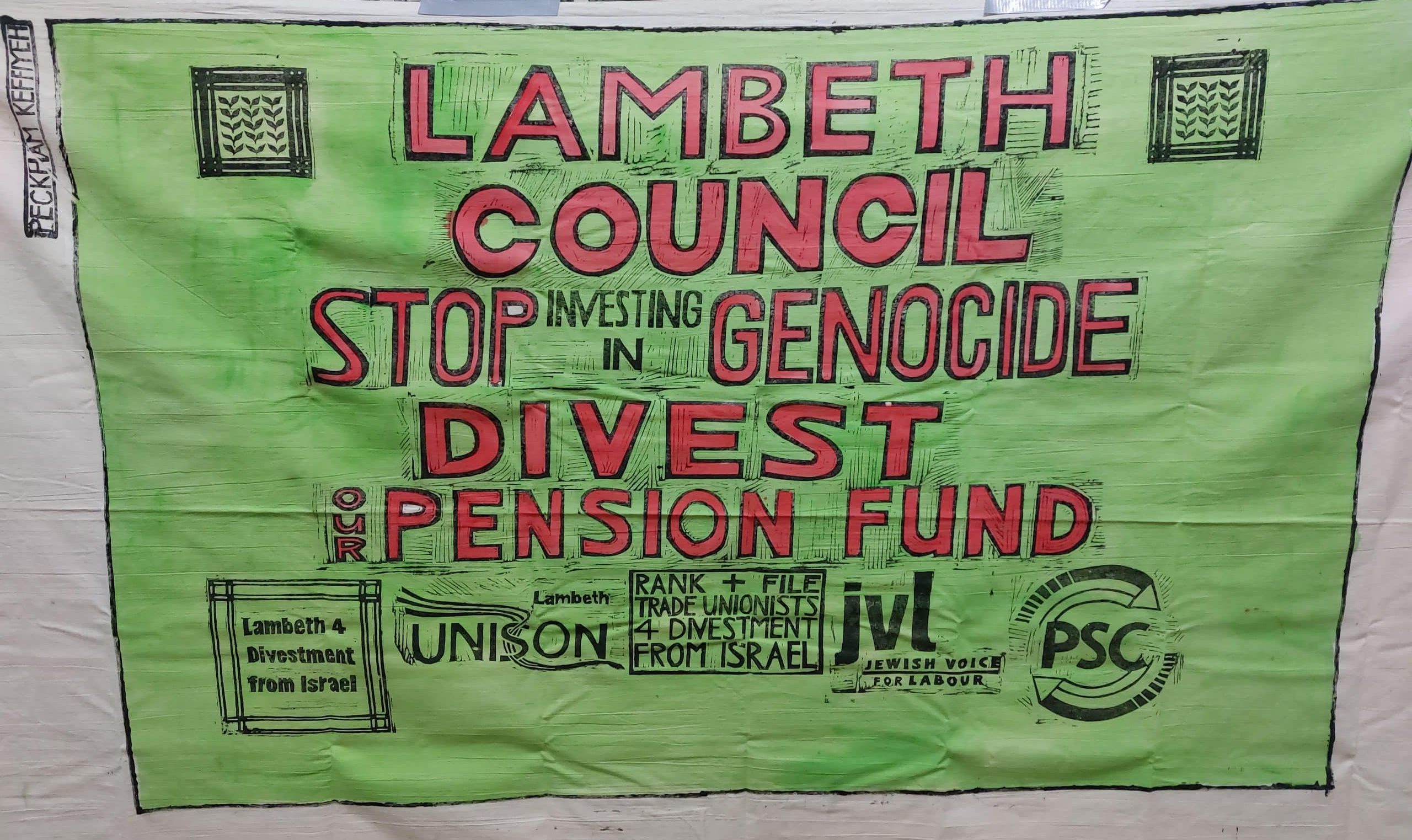
The Palestine Youth Movement (PYM) joined community members in Lambeth on Thursday 5 February to kick Labour out of their hometown. As a result, local people realised their democratic power in being the first community in the UK to launch the ‘Vote Palestine’ pledge campaign for the upcoming local elections in May.
Lambeth leading the way
The Lambeth event was led by Mariam of the PYM and London Votes Palestine campaign. Mariam gave an inspiring masterclass in how ordinary people can come together. In turn, she showed how voters across the country can use their democratic power to get the change they want to see in their hometowns.
Activists from Jewish Voice for Liberation (JVL) and Palestine Solidarity Campaign (PSC) joined other local activists and people who have had enough of Labour’s ongoing complicity and willingness to ignore Israel’s flagrant breaches to countless international laws. Former ANC member and arms trade corruption investigator Andrew Feinstein also attended the event.
In true unity and solidarity, organisers inspired and energised local people to get Palestine on the ballot.

‘No divestment: No votes’
Mariam of the Palestine Youth Movement passionately introduced the Lambeth campaign and what it hopes to achieve:
Lambeth Vote Palestine is not just launching here, but it’s part of a national campaign that is launching in 12 boroughs across London because people are fed up of Labour councils that are not listening to people that are pushing resolutions for divestment from genocide. It’s launching in Manchester, in Greater Manchester, in Newcastle, in Birmingham and in Sheffield. And the first national launch is taking place here today in Brixton in Lambeth.
So, the way that Vote Palestine came together has essentially come from all these local organisers that have tried to push divestment resolutions to get money out of Israel and money into our council and into the people of this council. But we know that Labour councillors have lied to us about just how much political power they have in order to take on divestment. We know that Labour councillors have watered down resolutions that have managed to pass and protests have been tried, resolutions have been tried, all sorts of attention against Labour majority councils have been tried.
And we know that they’re not interested in divestment from Israel because it’s a party of genocide. It’s a party that’s done nothing against austerity. It’s a party that with Rachel Reeves’ latest budget is raising taxes on ordinary working people. And we see this in Lambeth as well. It is a council that has ignored us time and time again.
So up and down the country, We know that the elections are coming in May 2026. And we’ve gotten started a little bit early, but actually right now, Labour is preparing itself for who’s going to be standing in the next election, and preparing its candidates and other parties are doing that as well. But so is Vote Palestine. We are preparing to say: no divestment, no vote. So, we are asking two things nationally, as well as here in Lambeth.
The first is what’s called a councillor’s pledge. We are asking that any sitting councillor or new candidate signs a councillor’s pledge that commits them to getting money out of Israel and money into our communities. No divestment, no votes.
But there’s a second portion to this, because this is also a grassroots campaign and a people-driven campaign, one that’s going to be powered forward by us giving it a little bit of time every month and getting a big impact out through just a little bit of labour together. And that is the People’s Pledge. So we are also asking voters to take a pledge that will say, ‘if this candidate has not endorsed the councillor’s pledge, we will not be voting for them’. And we’re going to take that to councillor’s and say, ‘hey, you know what? In Lambeth, hundreds of people have committed to the Palestine pledge, to the people’s pledge, and these people will not be voting for candidates that have not endorsed divestment, that have not endorsed Palestine.’
Mariam later referred to the response they receive on the ground from constituents in London, adding:
We’ve been talking to people all over London around what’s the issue that needs more funding? And no one says genocide. So this campaign is really about… We’re putting Palestine on the ballot. We know that the people are with Palestine. We also know from the last election, with the election of the Gaza Independents, that there is a Palestine-first voter. It’s time to show that in the local elections. And we’re going to make that known.
From Lambeth, from Brixton, all the way up to Newcastle and the country over, we’re going to put Palestine on the ballot and make it a non-negotiable issue. No divestment, no votes.
‘At the expense of our NHS, our benefit system, and all local services’
In Lambeth, Feinstein discussed the clear corruption at the heart of our current UK government, namely Keir Starmer’s lucrative relationship with billionaire-owned Quadrature:
And the reality is, I’ve just come from a Zoom meeting with four Palestinian journalists who are fortunate to be alive. What sort of a sick world do we live in? When journalists start a conversation when they introduce themselves by saying, I’m thankful to be alive. Because hundreds of their colleagues are not.
But what relevance does that have for Brixton and for Lambeth? It has every relevance. The reality is that the biggest political donation in British electoral history was paid by a company called Quadrature Capital to the campaign of Keir Starmer for the 2024 local election. That resulted in a situation where Starmer, who didn’t once show his face in his own constituency because he knows he would have been drummed out of town, spent tens of thousands of pounds on direct social media advertising. Our independent campaign was allowed to spend £17k in total on everything. Because the political system here is fixed.
Within three weeks of coming to power, Keir Starmer announced two policy proposals. One is he went back on his commitment to a new green economic plan that he’d committed at least £20bn to. And then he increased defence spending by £3.5bn a year until 2027. At which point, defense spending will increase by £15.4bn. Quadrature capital’s asset value at the end of those three weeks of Starmer being in power increased exponentially for the expenditure of £5m in their political donations.
And that is why Britain today lives in the best democracy money can buy. Our politicians are bought and paid for. Keir Starmer is a puppet. He is a puppet, not just of Morgan McSweeney, the little worm who is his chief of staff, but he is the puppet of billionaires and corporate interests like Quadrature. Quadrature has invested primarily in fossil fuels and arms company. Of that £15.4bn increase in our defense budget in 2027, a huge proportion of it will land up being used against the people of Palestine.
And that £15.4 bn is at the expense of our NHS, our benefit system, and all of our local services. Because frankly, and I’ll ask you to excuse my language here, but as you might gather, I’m a little bit angry about this. People like Keir Starmer and all of our establishment politicians don’t give a fuck about us. And if ever that was brought to our attention, it’s in the reality that people like them were more concerned about the fact that Jeremy Corbyn could not pronounce Jeffrey Epstein’s name properly, which they regarded as anti-Semitic. Then they are about the fact that Lord Peter Mandelson was who is an architect of the Starmer Project, is closest friends with a paedophile, with a man who has abused and sex-trafficked hundreds and hundreds of children for abuse by the old white men who run this world and profit from it.
‘Legal responsibility to take action’ in Lambeth
Local activist Jan O’Malley gave an eye-opening and inspiring speech about the sheer scale of Lambeth council investment in Israel and its ongoing genocide. Referring to the power of the BDS movement, O’Malley said:
BDS, you all know about BDS, boycott, divestment and sanctions. We are the D in BDS. So how big is this problem? PSC has done a massive amount of work on research on this, which has been a great resource for us all. And they have found that 81 local government pension schemes have collectively invested over £12bn in companies complicit with Israel’s oppression of the Palestinians. It’s genocide, it’s apartheid and it’s illegal occupation. And the British government as a party to the genocide convention has a legal responsibility to take action to prevent further genocide.
PSC has sent a letter to every pension committee member across the country, telling them about this legal duty. It’s not worth waiting until the ICJ finally concludes there is a genocide, they’re meant to prevent genocides. And this means that we take immediate action to start divesting. So, in Lambeth, how big is the problem? Well, the figures that we got from FOIs that PSC did was that the Lambeth Pension Fund had £52.4m invested in companies complicit with Israel. And this included £25m in Amazon, £20m in Alphabet.
They may say, ‘oh, we all use them’, and at the council meeting, they were joking about that. ‘Do you mean we ought to stop us using Amazon and Uber and things in our everyday lives? This is what these unrealistic people who are petitioning us are saying.’ But both of those companies are involved in providing Project Nimbus, which is a computing technology system of surveillance, which has been used to target the journalists, the doctors, the people in Gaza that they wanted to target…. it’s used and bought and helps and supports the Israeli government and military. Other investments are arms companies like Boeing, Rolls Royce, but also Israeli government bonds, which are actually lending money to the Israeli government, and Barclays, which funds so many arms companies.
Referring to a petition sent to Lambeth Council and its pensions committee, O’Malley finished by saying:
We took our petition. We presented it middle of November last year, thinking the council needed time to check the addresses and everything. And then we had to give them enough time. And they were meant to let us know in 10 days, if there was anything wrong with our petition. They didn’t until the day before the full council meeting, when they rejected the petition on the grounds that it was about something that they do not control, and they pointed a little item J in their constitution about petitions which will be rejected. They’re saying they’ve changed their constitution to take out the word control and amend all the weaselly words. They only administer.
So, what has the Pensions Committee been doing every three months when they meet and take decisions? It’s a total farce. It’s ludicrous. It’s dishonest. So shame on Lambeth Council. I was really shocked at this. It took me, I’m quite cynical and I’ve been demonstrating an activism since I was 14, but I’ve not known a council behave like this in my lifetime. So it shocked me. I wasn’t ready for it. So what are we going to do? We’re going to challenge. this attack on solidarity with Palestine, which is what it is, and democracy, which is what it is, by all available means, including in the local elections in May, which leads us to why we’re here tonight. And we will support alternative candidates who take the pledge for Palestine. And we will challenge Labour councillors who refuse to take the pledge and collude with this despicable denial of democracy. So let’s challenge them on the doorsteps. Let’s get busy with Lambeth Votes Palestine.

‘Get these shits out of their offices’
As ever, another powerful speech in Lambeth was delivered by Glyn Secker of what was formerly Jewish Voice for Labour (JVL). First Secker told us that the ‘L’ no longer stands for Labour, as a result of their pro-genocide actions, but now stands for ‘liberation’ in solidarity with Palestinians. Secker has long refused to be connected to the hostile state of Zionist Israel particularly as a Jewish man, stating:
We represent a very different perspective on what it means to be a Jew in this country, a very different point of view from the Jewish establishment, the Board of Deputies of British Jews, the Jewish Leadership Council. I’m going to give you a perspective, a historical one, tied up with where we are now.
Jews in this country represent 0.5% of the population. Muslims represent about 5%. So you might ask, why is the Israeli lobby so damn powerful? Why is their establishment here has minimal concerns with Islamophobia, but maximal focus on anti-Semitism and its weaponization?
But we can do no more than understand racism without understanding imperialism and slavery, than we can understand Islamophobia without understanding oil imperialism, which replaced slavery as a financial driver of the second stage of the development of international capitalism.
The economic foundations of Israel were laid by mercantile Jews, traders, financiers, and then developing into international bankers. the privileged upper-class Jews with a role in developing the first stage of capitalism. To jump very quickly from that to Israel and Zionism, Zionism translated that role into a nationalist form, a little loyal Jewish Ulster in a sea of hostile Arabism, as a British colonial agent in the Middle East described it at the time. And what happened was the development of Israel took over that role of Jewish capital when the bankers began, the Jewish bankers, Rothschilds and so on, began to give way to the large financial institutions developing in the States.
And so Israel took on that role of American imperial interest in the Middle East. Like the financials before them, they slotted neatly into servicing the dominant economic and political order. And so you have the United States’ multi-billion pound transfers to Israel, not just now during the genocide, but it’s accelerated. It’s been going on for decades, from the beginning of Israel’s inception, pretty much. So it’s imperative to draw a distinction between Israel and its ideology, political Zionism and Jew. Because I have nothing to do with what’s going on there, as far as I’m concerned, and I will not be identified with that. And there are many hundreds of thousands, probably a couple of million of us around the country.
Secker finished with a bit of advice for those out on doorsteps facing the inevitable allegations of antisemitism for refusing to support mass-murder, advising:
So what do you do on the doorstep when you’re told that it’s anti-Semitic? Well, you just say, there’s a whole lot of Jews in this country, who are deeply committed to it, because they’re deeply committed against genocide, who are deeply committed against any Holocaust, whoever perpetrates it.
And if it’s Jews, well for me, I’m deeply against that from the bottom of my being, because that is not something that I identify with in terms of my integrity and my humanity. So, I can’t tolerate, as a Jewish pensioner, drawing a lamb of pension that my deferred wages are invested in weapons companies that are slaughtering Palestinians.
So, I am deeply behind this campaign to get these shits out of their offices so we can disinvest.
Featured image via the Canary

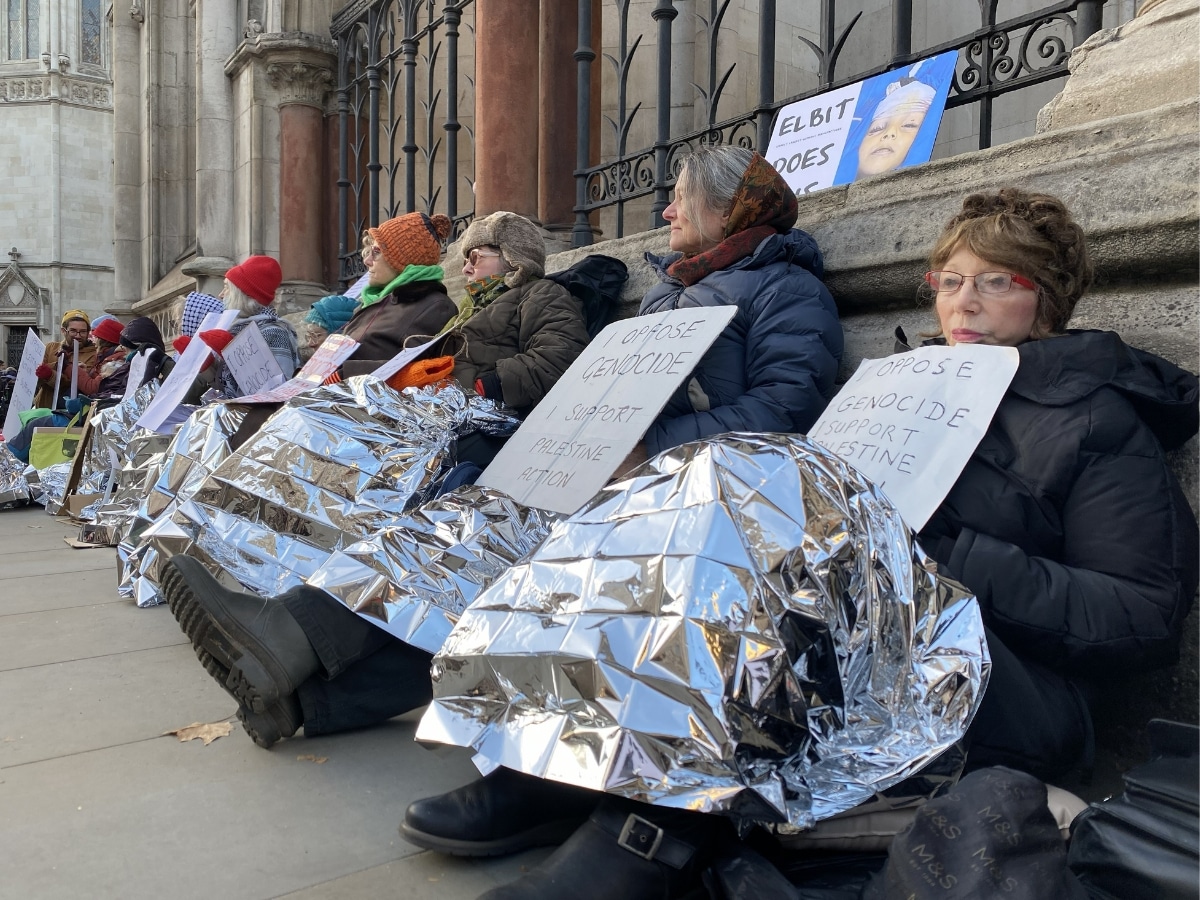
The fate of the 2,787 people arrested for terrorism offences for peacefully holding signs saying “I oppose genocide. I support Palestine Action” in silent vigils in towns and cities in all four nations of the UK, will be decided on Friday 13 February at 10am in Court 4 of the Royal Courts of Justice when the long-awaited Judicial Review ruling will be finally read into court.
Outside the court, supporters of the Lift The Ban campaign will again risk arrest by holding the same signs in a display of the ongoing defiance of the government’s authoritarian attempt to treat protest as terrorism. The Lift The Ban campaign – which aims to de-proscribe Palestine Action and end government complicity in genocide – has become the largest UK-wide campaign of nonviolent civil disobedience in recent history.
A spokesperson for Defend Our Juries said:
The Filton 6 verdicts show that only a Judicial Review ruling that strikes down the Palestine Action ban as unlawful will be in tune with the public’s understanding of justice. Unlike the government, the public knows the difference between protest and terrorism.
The Filton 6 verdicts have been a huge blow to government ministers who have tried to portray Palestine Action as a violent group. They have repeatedly referred to the single incidence of alleged harm to an individual in the case as justification for banning Palestine Action before the allegation was proven in court.
Yet Palestine Action never advocated causing harm to people and never caused unlawful violence to a person in over 400 actions. Their aim was always to save lives by causing damage to companies like Elbit Systems whose made-in-Britain quadcopter drones have been killing innocent civilians in Gaza.
Our action outside the Royal Courts of Justice will create yet another dilemma for the police – will they arrest us as the result of the Judicial Review is being read out? If the appeal against the proscription is successful, their action looks ridiculous.
If it is unsuccessful, more people will be added to the queue for prosecution in the courts – and people of conscience who want to defend our fundamental rights and freedoms will have no option but to continue to resist this unjust, unnecessary and unenforceable law.
Lobbyists for proscription
As the Channel 4 documentary Palestine Action – The Truth Behind The Ban showed, home secretary Yvette Cooper held meetings with lobbyists for arms companies and Israel that were revealed by Freedom of Information requests. Even the government’s own adviser on terrorism legislation, Jonathan Hall KC, condemned Cooper’s “nudge, nudge, wink, wink” approach to justifying the ban.
We also know about pressure from arms companies and lobbyists for Israel that was put on the government, and that in March 2025 Keir Starmer took two phone calls from Donald Trump about Palestine Action after the group painted “Gaza is not for sale” on Trump’s golf course in Scotland.
The decision was made despite warnings that the move would backfire, and despite deep and widespread concerns amongst civil servants, international experts, human rights observers and civil society.
Impacts of the proscription
The decision to proscribe has not only led to 2,787 people being arrested for sitting peacefully, holding signs in front of the world’s press. It has also resulted in the the misapplication of counter-terror resources, international condemnation, the exhaustion and lowering of morale of police officers and the possibility that people might be criminalised for showing support for the Palestinian people.
But it has not stopped people taking direct action against the properties of the companies who are complicit in genocide.
The judicial review grounds
Huda Ammori was granted four grounds on which to challenge the proscription in a judicial review which was heard at the Royal Courts of Justice over three days between 26 November and 2 December 2025.
On 30 July 2025 Mr Justice Chamberlain granted two grounds: that the proscription was a disproportionate interference with Article 10 and Article 11 rights Convention Rights, namely the rights to expression and assembly; and that Palestine Action should have been consulted.
Two additional grounds were granted by the Court of Appeal on 17 October 2025: that the home secretary failed to have regard to domestic public law principles and that she did not apply her own policy including the proportionality of the proscription.
Allegations of a judicial stitch-up
Avaaz launched a petition demanding an explanation from justice secretary David Lammy MP as to why the judge overseeing the case was removed just days before it was about to begin. The lack of an explanation has meant the Judicial Review has been dogged by allegations of a ‘stitch-up’ with questions about the suitability and independence of the three replacement judges demanding to be answered. A former British ambassador suggested the result had been to “load the dice for Israel”.
The judicial review
On the opening day of the Judicial Review, Raza Husain KC, representing Palestine Action co-founder Huda Ammori, noted that the group was the: “first direct-action civil disobedience organisation that does not advocate for violence ever to be proscribed as terrorist.” He said the ban was an “ill-considered, discriminatory, due process-lacking, authoritarian abuse of statutory power … that is alien to the basic tradition of common law and the European Convention on Human Rights.”
Defend Our Juries’ Lift The Ban campaign was cited as evidence of mass civil society disagreement with the proscription.
Intervening in the Judicial Review, United Nations Special Rapporteur Ben Saul warned the ban makes the UK “out of step with comparable liberal democracies” and “sets a precedent” for further crackdown on other protest movements in the UK such as climate protesters.
Amnesty International UK said it represented a substantial departure from established responses to protest movements which use direct action tactics and that it breached our fundamental rights to protest and free speech.
Liberty argued the ban was disproportionate because counter-terror powers have historically been directed at groups whose modus operandi includes intentional violence against people
Best-selling author Sally Rooney told the hearing how she may no longer be able to sell or publish her books in the UK due to her support for Palestine Action.
On the final day of the Judicial Review – Tuesday 2 December 2025 – the government presented part of its defence using the secret court system known as Closed Material Procedure. This method has come under criticism for allowing evidence to be presented without challenge and has been described by Angus McCullough KC as being a system “in meltdown”.
Government would have let hunger strikers die
During a rolling hunger and thirst strike running from November to January, Lammy refused to meet lawyers for the families and loved ones of hunger strikers, or even to reply directly to the several letters that they sent. This was despite warnings from medical professionals that participants had passed the point where there was a high risk of death and serious permanent injury.
UN experts said any death and injury would be the government’s responsibility:
The State’s duty of care toward hunger strikers is heightened, not diminished … Preventable deaths in custody are never acceptable. The State bears full responsibility for the lives and wellbeing of those it detains.
The conditions of Palestine Action-connected prisoners held without trial were earlier criticised by the UN in a letter to the UK government.
Government complicity in crimes against humanity and genocide
Evidence of UK complicity in crimes against genocide continues to mount. In October 2025 the UN issued its draft report Gaza Genocide: A Collective Crime detailing the complicity of states including the UK in the destruction of Gaza. Amongst other things, the UK continued to supply arms including components for F-35 stealth bombers, undertook daily surveillance flights over Gaza for Israel, maintained normal trade relations, and allowed Israel to undertake international crimes with impunity.
In December Declassified UK released its film Britain’s Gaza Spy Flight Scandal, investigating the hundreds of RAF intelligence flights conducted on behalf of Israel.
The genocide continues but the government is silent
The genocide continues to unfold in Gaza. Since the 11 October 2025 “ceasefire”, Israel has killed at least 556 Palestinians in Gaza and wounded 1,500. The total recorded death toll since 7 October 2023 is now 71,824.
In October 2025 the UN reported that 81% of buildings in Gaza had been either damaged or destroyed rendering the vast majority of the population homeless and relying on temporary shelters. Israel continues to destroy buildings in Gaza.
Israel recently banned 37 aid groups from working in Gaza. UN experts said:
Banning life-saving organisations from operating in Gaza marks a new phase in a policy that renders life unbearable for a population already devastated by genocide. This strategy will create conditions that force Palestinians into chronic deprivation, threatening their very survival as a group and further violating the Genocide Convention – it must be stopped …
We have entered a new phase in which Israel and its supporters have reached the genocide without witness stage. With journalists being killed, denied access, or forced out, humanitarian organisations paralysed or expelled, and a misleading global sense of ‘ceasefire’, atrocities are being committed without public scrutiny.
Featured image via Defend our Juries
The Westminster circus will be following every twist and turn of the admittedly disgraceful Peter Mandelson, Jeffrey Epstein, Morgan McSweeney and Keir Starmer nightmare blunt rotation. Many will say that this is the sort of scandal that could bring down the UK’s Labour government. But the biggest threat to any government comes from bread-and-butter economic issues, and Britain in 2026 is no exception. These days one might be labelled ‘cognitively-challenged-a-phobic’ for quoting James Carville, but what matters most is still the economy, stupid.
Another Downing Street chief of staff who left in acrimonious circumstances, Dominic Cummings, nails this on his latest Substack. It is a distillation of dozens of focus groups he has been monitoring to gauge the public mood. His conclusion: forget Epstein; the reason Labour will be sunk is that, despite talking a big game, it has completely failed to reduce the cost of living. Alongside immigration, this is the greatest failure of this government in the minds of the public.
Labour inherited inflation that had been brutally suppressed by what turned out to be the Pyrrhic efforts of former chancellor Jeremy Hunt. When Hunt entered No 11 at the end of the Truss interregnum in 2022, inflation was at a 41-year high of 11.1 per cent. By May 2024, the Consumer Price Index (CPI) hit the Bank of England’s two per cent target. Yet, by late 2025, within six months of Labour taking office, CPI had crept back up to around 3.4 per cent, driven mainly by the growing cost of services, food and drink.
Starmer and chancellor Rachel Reeves have now set about making the situation worse. Their employers’ national-insurance hike from 13.8 per cent to 15 per cent, the large minimum-wage increases, vehicle-excise-duty rises on higher-emission vehicles, and the restrictions on winter-fuel payments have all added to household and business costs. Milton Friedman called inflation a hidden tax. It hurts the poorest hardest.
Worse still, Labour is doubling down on policies that will put further pressure on prices and squeeze living standards, just when people are already feeling the pinch. Hikes in so-called sin taxes – that is, taxes on things ordinary people like, but the government disapproves of – are making life especially difficult.
The last autumn budget included another tax increase on cigarettes: an extra £2.20 per 100 fags from October 2026. This will noticeably lift the tobacco component of the CPI later next year. Alcohol duty is also increasing again, remote gaming duty is being doubled to 40 per cent from April 2026, general betting duty on online sports is heading to 25 per cent, air passenger duty is rising for non-economy flights, and the five-pence cut on fuel duty is only being extended temporarily, before being reversed in September this year.
All of this is exactly the opposite of what is needed to ease the cost-of-living crisis, or help inflation return to two per cent. Just imagine what a mini-boom there would be if, going totally against the grain, and in time for the World Cup this summer, Labour announced it would scrap all these extra rises and hikes. This would cost a fraction of what the government plans to give Mauritius as part of the Chagos surrender deal. Even I, no fan of this Labour government, would join the jubilation.
Ironically, if Starmer can just hold on for a few more months, he might see slightly better economic headlines before many of these price-raising measures fully hit. Economist Kallum Pickering has pointed this out: inflation is inching down, and the Bank of England is likely to cut interest rates in March. But, as this week’s events have demonstrated, that is one almighty ‘if’.
As Starmer enters the most dangerous period of his premiership, he should be wary. The persistent feeling of being robbed at the checkout will remind people every single day of how little he has done to help them. Ronald Reagan once described inflation as being ‘as violent as a mugger, as frightening as an armed robber, and as deadly as a hit man’. These are words Starmer should heed – although, given Labour is also presiding over a surge in shoplifting and general lawlessness, you can see why this other violent phenomenon seems to be no big deal to those in charge.
Only constant vigilance against inflation can bring it under control. But as the debacle of Peter Mandelson’s hiring shows, vigilance isn’t exactly Keir Starmer’s forte. Brace yourselves for more pain to come.
James Price was previously chief of staff to the chancellor of the exchequer.

In what is considered one of the most serious estimates since the outbreak of war in October 2023, the Geneva Academy of International Humanitarian Law and Human Rights has suggested that Palestinian deaths in Gaza may have exceeded 200,000. The estimate is based on data indicating a population decline of more than 10% in recent months.
If confirmed, the figure would call into question current casualty estimates. It would also raise serious concerns about the gap between published statistics and the reality on the ground.
Gaza’s population decline opens the door to shocking possibilities
Stuart Casey-Maslen, head of the Academy’s International Humanitarian Law Focus Project, told Anadolu Agency that the recorded population decline could indicate the loss of around 200,000 people. He stressed that the figures announced so far “do not reflect the full extent of human losses.”
He explained that the officially documented toll includes only bodies that have been found or registered. An unknown number of victims may remain under rubble or in inaccessible areas. He said
We will need time to know the exact number. But it is clear that we are facing a huge human loss, and it is necessary to know how these people were killed.
According to Gaza’s Ministry of Health, documented deaths have reached 72,037, with more than 171,000 injured. The ministry notes that thousands of victims have not yet been recovered due to ongoing destruction and limited rescue access.
International report monitors Gaza among 23 armed conflicts
Maslen’s comments were included in the Academy’s War Watch report, which assessed Gaza and the West Bank alongside 23 other global conflicts over the past 18 months.
The report states that conditions in Gaza remain extremely dangerous. This is despite a decline in large-scale clashes compared to the most intense periods of fighting.
Maslen said the absence of widespread hostilities seen before last year’s ceasefire “does not mean that the suffering of the population has ended.” He stressed that people “are still dying in Gaza.”
He added that wounded civilians in need of urgent evacuation face severe shortages of food, water, shelter, and healthcare. He called for a significant increase in humanitarian aid and guaranteed, unhindered access.
Exceptional destruction and years of reconstruction
Turning to reconstruction, Maslen described the scale of destruction as “exceptional.” He said returning life to pre-October 2023 levels will take years, not months, and require billions of dollars in investment.
He emphasised that rebuilding critical infrastructure demands long-term international commitment. This must go beyond emergency relief to comprehensive development planning.
Legal characterisation and pending accountability
In legal terms, Maslen noted that the UN Independent International Commission of Inquiry previously concluded that genocide had taken place in Gaza, though it did not specify a timeframe.
He also pointed out that in November 2024, the International Criminal Court issued arrest warrants for Israeli prime minister Benjamin Netanyahu and former defence minister Yoav Gallant. The charges relate to alleged war crimes and crimes against humanity.
Maslen criticised sanctions imposed on several ICC judges in connection with those warrants. He argued that such measures undermine international justice rather than support it.
He concluded that the attacks carried out by Hamas on 7 October 2023 cannot justify the scale of human losses that followed. He called for genuine legal accountability for events over the past two years.
Between limited official figures and alarming population estimates, the situation in Gaza remains unresolved. The true scale of human loss may be far greater than current records suggest.
Featured image via Wafa News Agency

The Regulator of Social Housing (RSH) has issued the lowest, most serious rating for social housing landlords, after its inspection uncovered “very serious failings”.
The RSH inspects all social housing providers as part of its regulatory inspection programme. It takes into account all four consumer standards. These are: Neighbourhood and Community Standard, Safety and Quality Standard, Tenancy Standard, and the Transparency, Influence and Accountability Standard.
The judgment on Northumberland County Council ruled:
Our judgement is that there are very serious failings in the landlord delivering the outcomes of the consumer standards. The landlord must make fundamental changes so that improved outcomes are delivered.
Social housing — ‘Significant inconsistencies’
The RSH also based the judgment on the “scale of the issues” and the “significant impact” on tenants.
Social housing providers are required to have accurate, up-to-date, and evidence-based information about the condition of their homes. This should:
reliably inform their provision of quality, well maintained and safe homes for tenants and to ensure that their tenants’ homes meet the requirements of the Decent Homes Standard.
Shockingly, Northumberland CC only had up-to-date information on the condition of around 3% of its homes. The council last conducted its stock condition survey in 2012. However, it only completed it for 10% of its houses. This means the RSH does not have assurance that homes meet the decent homes standard.
Additionally, the RSH requires Northumberland CC to meet all legal requirements related to the safety of tenants in its homes.
The judgment states:
Through our inspection we found very serious failings in Northumberland CC delivering this required outcome. We identified significant inconsistencies in reported information relating to health and safety obligations, and limited evidence that Northumberland CC is assured that it identifies and meets all legal requirements that relate to the health and safety of tenants in its homes and communal areas. We found no evidence to support that health and safety assessments are accurately recorded, are routinely monitored or that actions are being addressed within appropriate timescales.
The RSH also found weaknesses in Northumberland CC’s ability to undertake repairs and maintenance effectively and in a timely manner. It states:
We found no evidence that it has considered the needs of tenants in the delivery of its repairs service or that Northumberland CC keep its tenants informed with clear and timely communication.
Transparency, Influence and Accountability
The Transparency, Influence and Accountability Standard sets out how landlords must be open with tenants and treat them with fairness and respect, so that tenants can access services, raise complaints, influence decision-making, and hold their landlord to account.
The RSH found that Northumberland CC was also massively failing on this standard, too.
It was discovered that it does not provide meaningful opportunities for tenants to scrutinise or influence services. Additionally, it did not respond to complaints on time.
On the subject of tenancy agreements, the RSH found:
Northumberland CC could not provide evidence that it was offering tenancies or terms of occupation that were compatible with the purpose of its accommodation, the needs of individual households, the sustainability of the community, and the efficient use of its housing stock.
Furthermore, it did not provide any evidence that it was taking appropriate action in response to anti-social behaviour and hate crimes.
Ultimately, the RSH ruled that:
Although Northumberland CC has indicated a willingness to address these very serious failings, and has started the work in some areas, we do not yet have assurance that it understands the potential risks to tenants, and that it has the ability to put matters right.
Based on our assessment of the seriousness of the failings, the risks tenants are exposed to as a result of these failings, and the fundamental changes needed to improve outcomes for tenants, we have concluded a C4 grade for Northumberland CC.
Feature image via NorthumberlandTV
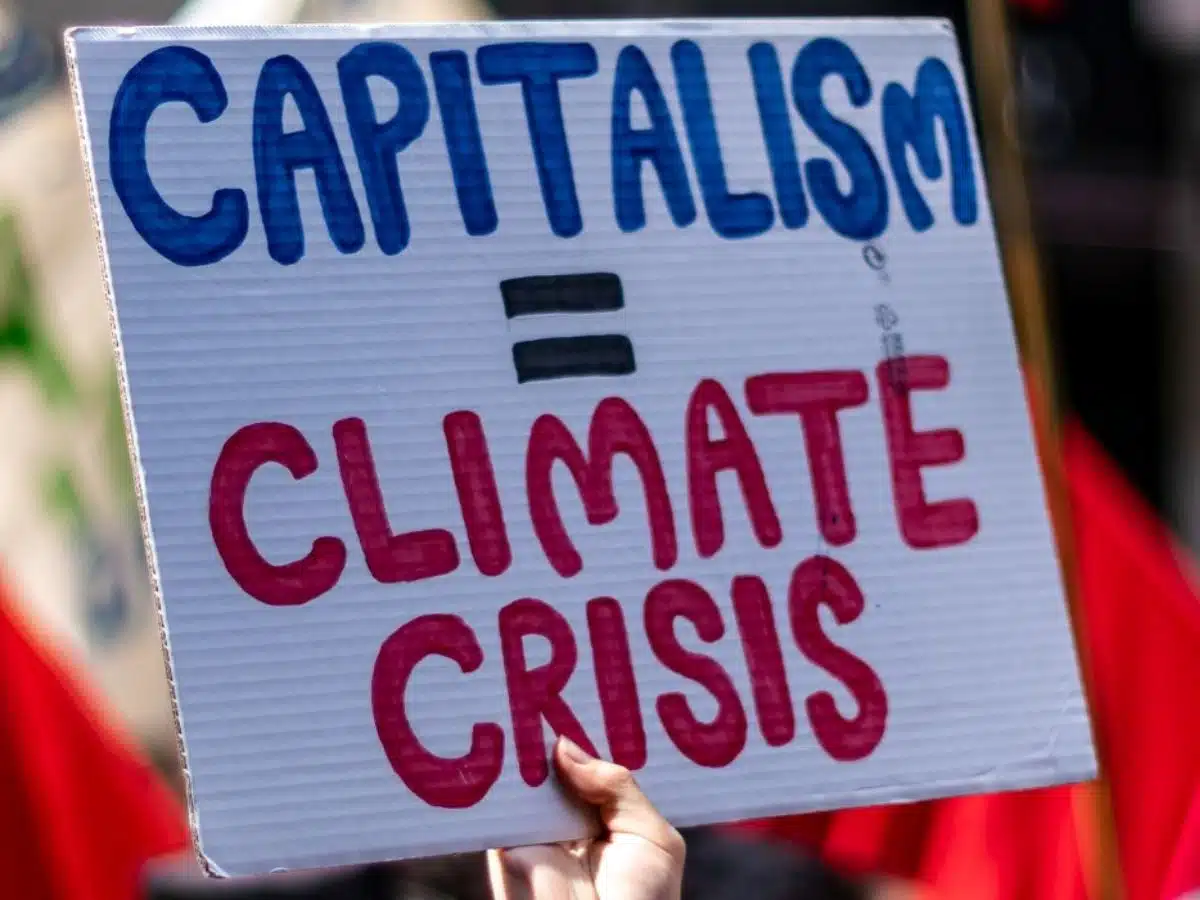
Writing in the Guardian, renowned economists Jason Hickel and Yanis Varoufakis make the case that tackling the climate crisis first requires dismantling capitalism and its interests.
Hickel and Varoufakis astutely point to the ‘extraordinary paradox’ we find ourselves. One where we have the technology and resources to produce more than we could ever possibly need. At the same, time inequality is increasing rapidly, leaving millions of people suffering through severe deprivation.
Supporting their argument, they state:
Capitalism cares about our species’ prospects as much as a wolf cares about a lamb’s. But democratise our economy and a better world is within our grasp
“Our existing economic system, capitalism, is incapable of addressing the social and ecological crises we face in the 21st century.” https://t.co/nbKPcpnaVr
— Jason Hickel (@jasonhickel) February 12, 2026
Capitalism: the cause of this paradox
Hickel and Varoufakis are sounding the alarm over our continued adherence to capitalist structures and principles. In this piece, they argue that we “have an urgent responsibility” to chart a different course. As they state, we’ve all learned it makes no difference who we vote for if we don’t have systemic change.
Additionally, they point out it’s ludicrous to tinker around the edges of a system that works against the interests of the 99%.
Quite aptly, they describe capitalism as:
an economic system that boils down to a dictatorship run by the tiny minority who control capital – the big banks, the major corporations and the 1% who own the majority of investible assets. Even if we live in a democracy and have a choice in our political system, our choices never seem to change the economic system. Capitalists are the ones who determine what to produce, how to use our labour and who gets to benefit. The rest of us – the people who are actually doing the production – do not get a say.
The latest situation in Argentina under far-right Trump-ally Milei only reinforces their claim that ordinary people’s quality of life is consistently sacrificed for billionaire profits:
This is what the far right calls ‘freedom’: turning workers into slaves—12-hour workdays, no severance pay, punished for striking. A country pushed back centuries in just a few years while working people lose their rights.
Milei is a monster. pic.twitter.com/7SzlWyukzh— Alejandro🌹🇪🇺 (@Alejandro_SocEU) February 12, 2026
‘Irrational forms of production’ feeds into the climate crisis
Hickel and Varoufakis highlight the imbalance in principle between what’s best for capital and what’s best for people. To do this, they point out that capital does not prioritise social good or human need. Instead, its priority will always be to ‘maximise and accumulate profit’.
Elaborating on this point, they argue that capitalism’s demand for “perpetual growth” pushes questions of necessity or harm far down the priority list, with chasing profit firmly at the top. The result, they say, are “irrational forms of production”: endless SUVs, sprawling mansions, and mountains of cheap fast fashion. All excellent for boosting the wealth of the already rich, whilst hurting the environment and reducing value for ordinary people.
Meanwhile, genuinely urgent needs such as affordable housing fall to the bottom of the pile — unless governments step in to make them profitable through tax breaks and the stripping away of so-called “burdensome” regulations. Regulations, of course, that exist to protect people and the environment.
Further to this point, they refer to the climate crisis and the desperate need to turn to renewable energy and abandon fossil fuels. They write:
Similarly with energy. Renewables are already much cheaper than fossil fuels. Alas, fossil fuels are up to three times as profitable. Thus capital forces governments to link electricity prices to the price of the most expensive liquified natural gas, not of cheap solar energy. Similarly, building and maintaining motorways is many times more lucrative for private contractors, car manufacturers and oil companies than a modern network of superfast, safe public railways. So capitalists continue to push our governments to subsidise fossil fuels and road building, even while the world burns.
Since Donald Trump’s election, many major investment firms enthusiastically abandoned their climate commitments, which had, in favour of the common good, restrained their profitability.
‘Keep southern economies subordinate’
They add that this contradiction between what is best for capital and what is best for people ‘lock us into never-ending cycles of imperialist violence’. The need for cheap labour and nature from the global south incentivises western capitalist powers to use:
debt, sanctions, coups and even outright military invasion to keep southern economies subordinate.
Trump favours the strong man tactics of recklessly breaking international laws and norms for his own greed and power. With that in mind, there’s definitely weight to their argument.
Hickel and Varoufakis insist there are three conditions required that will ensure this necessary change happens to our economy:
- A new financial system that makes harmful private investments expensive by enforcing penalties. The implementation of a new public investment bank, making it easier to get public finance for things that benefit the public. They suggest that this could run in tandem with the central banks.
- Increase the use of ‘deliberative democracy’ to decide focused goals at sectoral, regional and national levels. The public financing provided in point one would then be directed towards those goals.
- Introduction of the Great Corporate Reform Act which would look to democratise corporations. They say, favouring companies who adopt the change would incentivise more companies to work with a fairer system of ‘one employee, one share, one vote’.
The economists finished saying:
We live in a shadow of the world we could create. A world in which we shall be able to avert an almost certain ecological collapse, rather than waiting around for capitalism to push us beyond the point of no return. A world where the abolition of economic insecurity, precarity, poverty, unemployment and indignity is possible, while we lead meaningful lives within planetary boundaries. This is not a distant dream. It is a tangible prospect.
Climate crisis needs radical change — no more sticking-plaster politics
Our own James Wright wrote in November last year how inequality is exactly what capitalism is built to do, writing:
The non-work-based profiteering is taken to new heights by the few who are rolling in it to the point where they can pay experts to invest their money. Indeed, the global increase in rent-based income corresponds with a G20 report finding. Throughout the world, from 2000-2024, the richest 1% took 41% of new wealth, while 50% gained just 1% of it.
When it comes to neoliberal capitalism, we’re being fed a vision that’s well past its sell-by date. Like a decaying potato in the kitchen cupboard, we should preserve any positive parts and bin the rest ASAP.
Some public figures have also demanded an end to capitalist structures, arguing that they harm the vast majority of people. Ahead of the CEC elections, Zarah Sultana, the Grassroots Left, and aligned communities made their stance clear. Meaningful change requires a decisive break from what they describe as a system that traps people in the grip of self-interested capitalists.
This article from Hickel and Varoufakis backs their point up superbly.
At the Canary, we stand firmly behind that call and will keep speaking truth to power. No matter how loudly the establishment protests.
We need to nationalise our economy because the working class can run society better than the billionaires, the profiteers and the war criminals who rule over us today. pic.twitter.com/bAxIasbmYe
— Zarah Sultana MP (@zarahsultana) December 7, 2025
Featured image via Counter Fire


President Donald Trump on Thursday continued to personally attack Oklahoma Gov. Kevin Stitt over a debacle regarding the upcoming annual governors’ weekend in Washington.
“We will soon have a Governor in Oklahoma who knows how to accurately write a Press Release to the Public, in this case, to state that I invited, not happily, almost all Democrat Governors to the Governor’s Dinner at the White House,” Trump wrote in a Thursday Truth Social post. “Stitt, a wiseguy, knew this, but tried to get some cheap publicity by stating otherwise.”
Trump’s latest criticism against the Republican comes after Stitt, who serves as chair of the National Governors Association, became embroiled in a back-and-forth over whether Democrats would be invited to the routinely bipartisan governors event. Stitt at one point announced that a bipartisan business meeting with the president would be removed from the NGA’s agenda for the weekend because the White House said Democrats would be excluded from the event.
After a conversation with Trump, Stitt informed governors on Wednesday that all governors would be invited to the meeting, attributing the dispute to a “misunderstanding in scheduling,” according to a letter viewed by POLITICO.
But that wasn’t enough to salve the president’s displeasure: In a Wednesday afternoon social media post — after Democrats had begun receiving invitations to the meeting — Trump took to Truth Social to lament that “as usual with him, Stitt got it WRONG!”
All governors were welcome at the event, Trump wrote, except two Democrats: Colorado Gov. Jared Polis and Maryland Gov. Wes Moore — the latter of whom had already received a formal invitation to the meeting at the time of the post, according to a person familiar with the matter.
In the Thursday morning post, Trump took credit for Stitt’s victory in his last race for governor, writing that the Republican “was massively behind his Opponent in his previous Election for Governor” and “called me to ask for help.”
Trump added: “I Endorsed him (Barely!), and he won his Race,” but the president eagerly anticipated the arrival of the governor’s successor. Stitt is term-limited and cannot seek another term when his current one expires in 2027.
A spokesperson for Stitt’s office did not immediately respond to a request for comment, and a spokesperson for the NGA declined to comment on the post.
Stitt’s position atop the NGA has put him at odds with the president on at least one other occasion, when the Oklahoma Republican broke with his party to criticize the administration’s cross-state National Guard deployments last year.
The dispute regarding the upcoming NGA weekend has reignited tensions within the association, with 18 Democratic governors vowing to boycott a bipartisan dinner over the White House’s handling of the invitations.
With regard to the event, Trump wrote Thursday: “I’ll see whoever shows up at the White House, the fewer the better!”
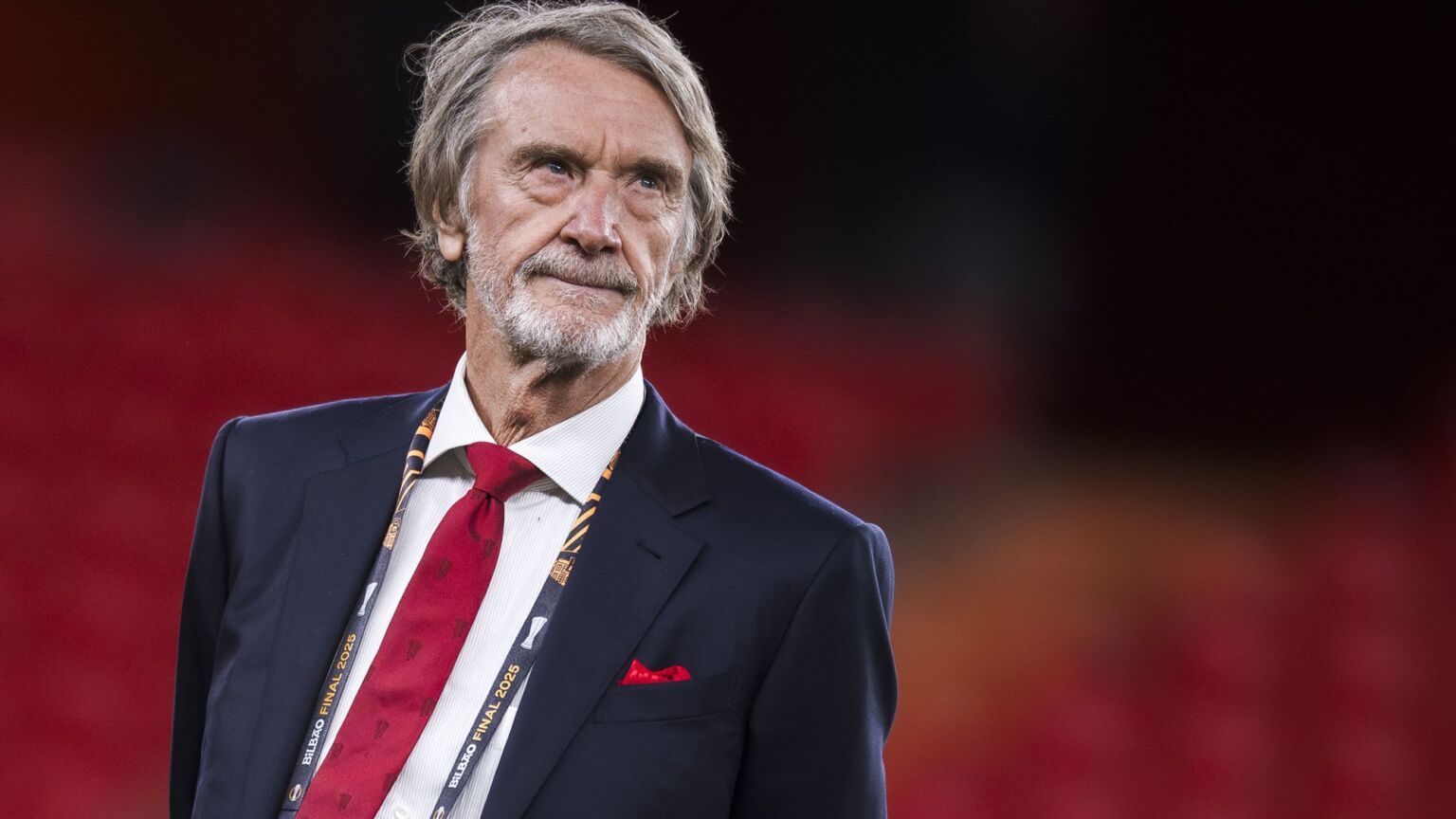
‘The UK’s got a lot of problems, we can all see that. Economy, crime, education, health. It’s not a great place to be at the moment.’
That was Sir Jim Ratcliffe, chemicals tycoon, part-owner of Manchester United and one of the UK’s richest men, speaking to Sky News on the sidelines of the European Industry Summit in Antwerp on Wednesday. To most, it was a relatively uncontroversial take on Keir Starmer’s Britain. But it was what he said next that has left him at the bottom of a ferocious pile-on.
‘The UK’s been colonised’, Ratcliffe said, apropos of nothing. His interviewer repeated that last word back to him incredulously. ‘The UK’s being colonised by immigrants, isn’t it?’, said Ratcliffe once again. ‘The population of the UK was 58million in 2020’, he added. ‘Now it’s 70million. That’s 12million people!’
Ratcliffe’s comments have gone down about as well as you could imagine with Labour and the left. Starmer jumped on X to demand Ratcliffe apologise. The same prime minister who less than a year ago said immigration had made Britain an ‘island of strangers’ called the billionaire’s comments ‘offensive and wrong’, because the UK is (repeat after me) a ‘proud, tolerant and diverse country’. He accused Ratcliffe of playing ‘into the hands of those that want to divide our country’.
For much of the British left, Ratcliffe’s comments appear to be the most exciting development since Nigel Farage was accused of making anti-Semitic comments as a schoolboy, 49 years ago. Labour may have no clue what it stands for, but it certainly knows who it stands against. And it loves nothing more than the chance to call those people ‘racist’.
For a few hours on Thursday morning, Labour found itself in possession of the one thing it has lacked in more than 18 months of government: a unifying message. Manchester mayor Andy Burnham said Ratcliffe’s comments were ‘insulting, inflammatory and should be withdrawn’. Justice secretary Jake Richards said Ratcliffe was a hypocrite because he himself had emigrated to Monaco for tax purposes. It was as if the knackered Labour Party had suddenly found its voice again – its boundless sense of self-righteousness had now been restored.
Ratcliffe’s status as part-owner of Manchester United has also provided an excuse for various footballing organisations to join the frenzy. The Football Association is investigating whether Ratcliffe has ‘brought the game into disrepute’. Show Racism the Red Card said Ratcliffe’s comments would ‘stigmatise migrant communities, fuel division and legitimise hostility towards minority groups’. Kick It Out, football’s anti-discrimination campaign group, said Ratcliffe had been ‘disgraceful and deeply divisive’. The Manchester United Supporters Trust, the Manchester United Muslim Supporters Club and the 1958 supporters’ group have given their two cents, too. All agreed that Ratcliffe’s comments were scandalous.
It is fair to say that Ratcliffe has made himself an easy target for this orgy of righteous indignation. He himself has since apologised for causing offence with the term ‘colonised’. The immigration figures he cited were also inaccurate by some margin. The population of the UK was 67million in 2020, not 58million, as he claimed. Had he referred to the year 2000, however, he would have been on far stronger footing.
Still, Labour’s ferocious response is also telling. Ratcliffe may have got his facts wrong and used fairly spicy language, but there is no denying that migration has spiralled out of control in recent years. More than six million migrants have arrived in the UK since 2020 – the vast majority under the previous Conservative government. The headline ‘net migration’ figures usually cited by the media may be far lower than this. But this is only because of the extraordinarily high levels of emigration over the same period, with more than 3.5million people leaving Britain seeking a better life elsewhere. As the Office for National Statistics admitted last year, many more of these emigrants were British citizens than previously reported. In 2024, more than 250,000 Britons left the country.
This might not amount to ‘colonisation’, but an unprecedented demographic shift has clearly taken place. Dismissing Ratcliffe’s comments as racist or far right won’t do anything to change this fact. Labour may think it has taken the moral high ground, but it looks to most people like a party in denial.
Ratcliffe’s adlibbed reflections on immigration weren’t the only thing that shocked and outraged the left. ‘You can’t have an economy with nine million people on benefits’, he also said. But here Ratcliffe was more or less on the money. There are more than seven million working-age people claiming Universal Credit, roughly 15 per cent of whom are not British citizens. You do not need to be a billionaire businessman to see this is a sign of an unhealthy economy and yet more proof of a broken immigration system.
The comments attracting all of the headlines were made by Ratcliffe in the final two minutes of a 15-minute interview. Labour and Starmer would do well to watch the whole thing. The INEOS founder said the chemicals sector in the UK – on which pharmaceuticals, agriculture, defence and manufacturing depend – is facing ‘unsurvivable conditions’. He warned that industrial energy costs are now up to four times higher in the UK than they are in America. Meanwhile, carbon taxes in Europe have quadrupled since 2024. ‘It means you can’t make any money’, was his blunt assessment. The result of Net Zero, Ratcliffe said, was that the UK is offshoring its heavy industries to coal-intensive economies like China. The economy is being sacrificed, in other words, without even benefitting the environment.
Ratcliffe’s migration comments might have provided the left with what it thought was a free kick. But rather than revelling in calling him a bigot, the Labour Party would do well to heed his warnings. Voters are overwhelmingly opposed to mass immigration, deindustrialisation and the ballooning welfare state. In the battle between Keir Starmer and Jim Ratcliffe, Starmer has come out looking even more aloof and out of touch with the British people than a Monaco-based billionaire. Labour has – once again – let its preening self-righteousness cloud its political judgement.
Hugo Timms is a staff writer at spiked.
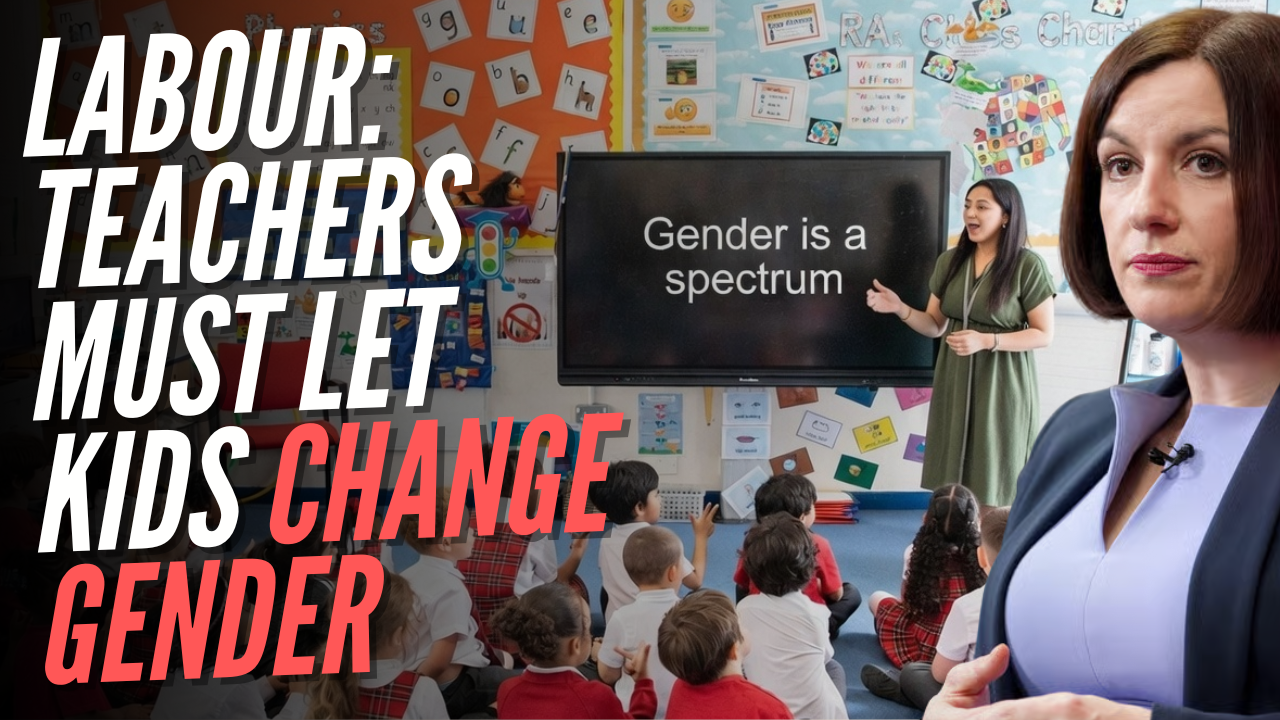
IN FULL: Phillipson Finally Publishes School Trans Guidance
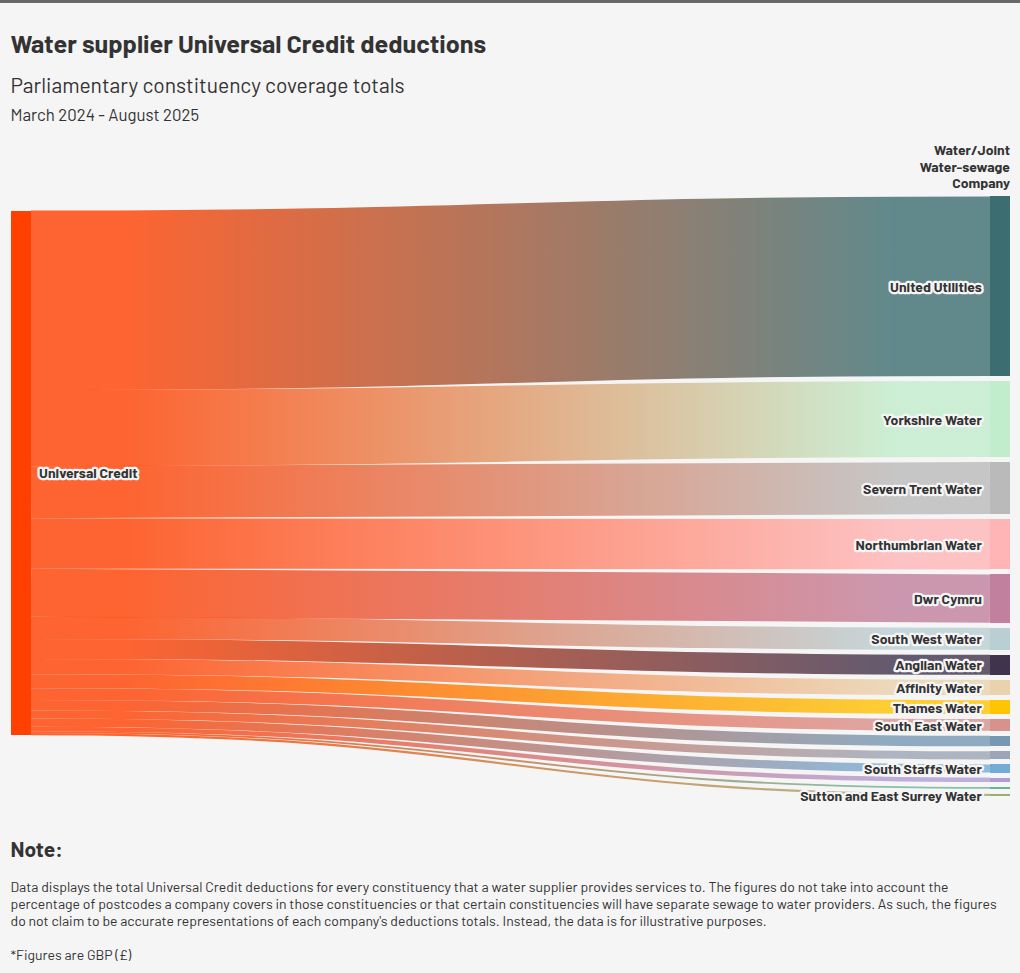
The results are in – and surprise, surprise Northern communities are bearing the brunt of water companies capitalising on the Department for Work and Pensions (DWP) Universal Credit deductions scheme.
As the Canary previously revealed, across 18 months, water firms robbed welfare claimants of £32.4m in Universal Credit.
However, the scale of individual water firms milking this punitive DWP debt clawback mechanism has been a mystery – until now.
Using a combination of publicly available data and Freedom of Information (FOI) requests, the Canary has been able to calculate ballpark figures revealing the likely biggest culprits snatching millions in welfare from some of the poorest households.
And among privatised providers engaged in routine sewage dumping, rampant profiteering, and opportunistic bill hikes, certain companies stood out as clear exploiters of this DWP deductions regime.
DWP Universal Credit deductions: the water companies cashing in
Unlike other services, monopoly suppliers dominate by location. What this means is that water companies serve fixed regional areas. Thanks to this, the Canary was able to estimate how much each company might have taken in UC deductions. However, there are a number of significant caveats to the following data, explained here.
Through an FOI, the Canary acquired UC deductions data for every parliamentary constituency in England and Wales. The data spans the 18 months between March 2024 – August 2025.
However, water company coverage does not exactly match up with regional boundaries. This meant we had to use water company parliamentary constituency data to collate the FOI information into our own dataset. Once we had this, we could make estimates for each water company:
So in total, constituencies that the regional water monopolies cover accounted for approximately £28.7m. However, it’s important to note that this will include significant double-counting, since suppliers will crossover in some constituencies.
Together, these regional companies supply water services to 30,099,891 postcodes. Small new entrant companies account for the remaining 159,524.
The most reliable data we have
Then, if we estimate deductions for the joint water and sewerage suppliers only, excluding parliamentary constituencies where the water company was different to the sewerage company, we get the following:
The above data was complicated by the fact that companies wouldn’t always cover the same number of postcodes for water services versus sewerage in any one given constituency.
As such, we only used data wherever sewerage postcodes were within 10% of the number of water postcodes.
The bottom line all this speculative data underscores is that it’s hard to know with any certainty how much each of the major water companies is extracting in Universal Credit deductions.
The key culprits
Nevertheless, the tentative estimates still provide a general idea of which companies are cashing in at welfare claimant’s expense.
United Utilities appears the most prolific user of the deductions regime by some margin. For a start, the company seems to make up the largest chunk of the £32.4m in deductions. Under all calculations, United Utilities nabbed somewhere north of £9m in Universal Credit. Moreover, even proportional to the number of postcodes it covers, the company is the clear forerunner.
In January 2025, regulator Ofwat greenlit United Utilities hiking customer bills by 32% over the next five years. Since it began raising bills in April, it has seen a 131% profit surge.
Meanwhile, Yorkshire Water and Northumbrian Water extracted the next largest sums from customer’s Universal Credit. At more than £2.95m and £2.65m respectively, the two northern utility giants also ranked high as a proportion of the postcodes they covered. For Yorkshire Water, it came in fourth behind United Utilities, Northumbrian in second place, and Dwr Cymru in third place as a ratio of deductions to the postcodes they supply services to.
In October 2025, Northumbrian Water was among five companies that lobbied the Competition and Markets Authority (CMA) for further bill hikes. The company had already secured permission in January to increase bills by 21%.
And of course, Ofwat slapped both United Utilities and Yorkshire Water with boss’s bonus bans in November. These were due to category 1 pollution incidents in 2024. In Yorkshire Water’s case, it was also down to its “serious failures” over sewage, which had resulted in “excessive spills”.
So as these companies provided atrocious services and mass polluted watercourses, they were also running roughshod over some of their poorest customers.
Northern water utilities running roughshod over welfare claimants
What’s immediately noticeable here is that, with the exception of Dwr Cymru, the biggest culprits are the companies administering water and sewerage in the North.
It tallies with broader statistics on Universal Credit deductions. During the same 12-month period, the North East had the highest number of Universal Credit households where the government or third parties had made one or more deductions. Specifically, it stood at 53%.The North West followed this, at 50%.
The North East (21.5%) and North West (20.2%) also has the highest number of highly deprived neighbourhoods in England. On the one hand, the high levels of deprivation offer an explanation for the significant scale of water debt. This is because, it logically follows that more people would be experiencing debt thanks to state-sanctioned poverty. However, on the other, it points to water companies and their extortionate bill hikes exacerbating the problem. And of course, eating into customer’s social security will also only compound this deprivation further.
Ultimately, the key point is that going after some of the poorest customers for outstanding payments is a choice. Water companies reporting mega-profits aren’t strapped for cash – and could easily take the hit. These unscrupulous firms are robbing welfare claimants of their social security to fund eye-watering shareholder dividends and executive pay packages. This needs to be recognised for the absolute scandal it is.
As ever, the most marginalised – particularly Northern – communities are bearing the brunt of this egregious cost of greed crisis fuelled by the DWP. This data shows clearly that it’s one in which the privatised water racket is undoubtedly playing a significant part.
Featured image via the Canary

The BBC has reported that a ‘”brazen” rail fare dodger’ has been fined over £3,600 for not paying for hundreds of journeys. However, it quickly becomes clear that the man is actually homeless and was sleeping on the trains. So why didn’t the BBC cover it that way?
BBC paints a homeless man as a criminal
The BBC article reports that Charles Brohiri, 29, “travelled” on Govia Thameslink Railway trains 112 times “without buying a ticket” in just under two years. He was given a suspended sentence and ordered to pay back £3,629. Brohiri had previously been sentenced for 36 charges of failing to pay for a ticket in August 2024. He pleaded guilty to 76 recent charges.
The judge at Westminster Magistrates’ Court, Nina Tempia, said Brohiri had a “sense of entitlement” and “acted as if he was invincible.”
The BBC also mentions that he continued to travel without paying after initially being charged in court in January, right up until the day before the current hearing. Apparently, there have been a further 16 offences since then.
What it glosses over, though, is the reason why Brohiri continued to commit the ‘crime’. He’s actually been homeless for the last three years and has had no choice but to sleep on trains, as well as in hospitals and libraries.
State incompetence to blame
His defence, Eleanor Curzon, said Brohiri had attempted to get support but struggled to engage with charities. She said it was:
a combination of a lack of support, a negative mental health space and not knowing how to go about maintaining support from services
Curzon also told the court that Brohiri wanted to make a change in his life, and getting sober three years ago demonstrated that. She also pointed out that he had always complied when caught by authorities.
Brohiri has admitted his crimes and wants to be given a chance to get into work and be supported back into having somewhere to live. Curzon told the court:
He reiterated to me this morning that if he is given the opportunity to work with probation they can assist him in securing accommodation and employment.
It is really these two factors which will put an end to Mr Brohiri’s offending.
BBC thinks homeless man not paying £15k is a bad thing
Thankfully, Brohiri was given a suspended sentence. He has, however, been ordered to carry out 150 hours of unpaid work. Hopefully, he will also be able to get paid employment alongside that, so he can live safely.
While Brohiri has to (somehow) pay the fine, he thankfully doesn’t have to pay the £15,120 prosecution fees. The article frames this as a bad thing, naturally. This is the part where they finally quote Govia Thameslink, who say that people not paying fares:
diverted public funding away from improving services for passengers. That is unfair both on taxpayers and on the vast majority of passengers who pay for their journeys.
However, if they hadn’t prosecuted a homeless man for the ‘crime’ of literally sleeping somewhere safe, that money could’ve been spent on homeless services.
As Adam Smith said on Twitter:
And we’re supposed to think our justice system is working? That £15,000 couldn’t have been spent actually helping this guy, and many others like him?
No, instead we’ll hound someone for money they don’t have. Like they do to all of us, these days.
BBC puts corporations before people’s lives, as usual
This is clearly a story about how the system is failing vulnerable people who fall through the cracks. The fact that the BBC frames this as a “fare dodger brought to justice” and not a sharp look at the way the state treats poor people tells you everything you need to know about who the BBC serves. And let’s be honest, the BBC aren’t strangers to twisting the truth to fit their narrative.
When it was discovered that Brohiri was repeatedly ‘offending’ because he had nowhere to sleep, the effort should’ve been on finding him somewhere safe. Instead, the system punished him and slapped a fine on a man with no possible means of paying it.
The true injustice in this story is being done to people like Brohiri every day. Not faceless corporations — worth millions — that force the taxpayer to pay for their sham trials. That’s what the BBC should be reporting on, instead of sucking off scumbag CEOs.
Featured image via Housing Digital

BlackRock Brings $2.1B Tokenized Treasury Fund to Uniswap for DeFi

White Sox GM Chris Getz swears he knows Luisangel Acuña isn’t a switch-hitter

Looking for a cheap but capable laptop? Our experts have rounded up the best deals from Dell’s Presidents’ Day sale

Smart energy pays enters the US market, targeting scalable financial infrastructure

Software stocks enter bear market on AI disruption fear with ServiceNow plunging 10%

Wikipedia volunteers spent years cataloging AI tells. Now there’s a plugin to avoid them.


-

 Politics4 days ago
Why Israel is blocking foreign journalists from entering
-
 Sports6 days ago
JD Vance booed as Team USA enters Winter Olympics opening ceremony
-
 Business4 days ago
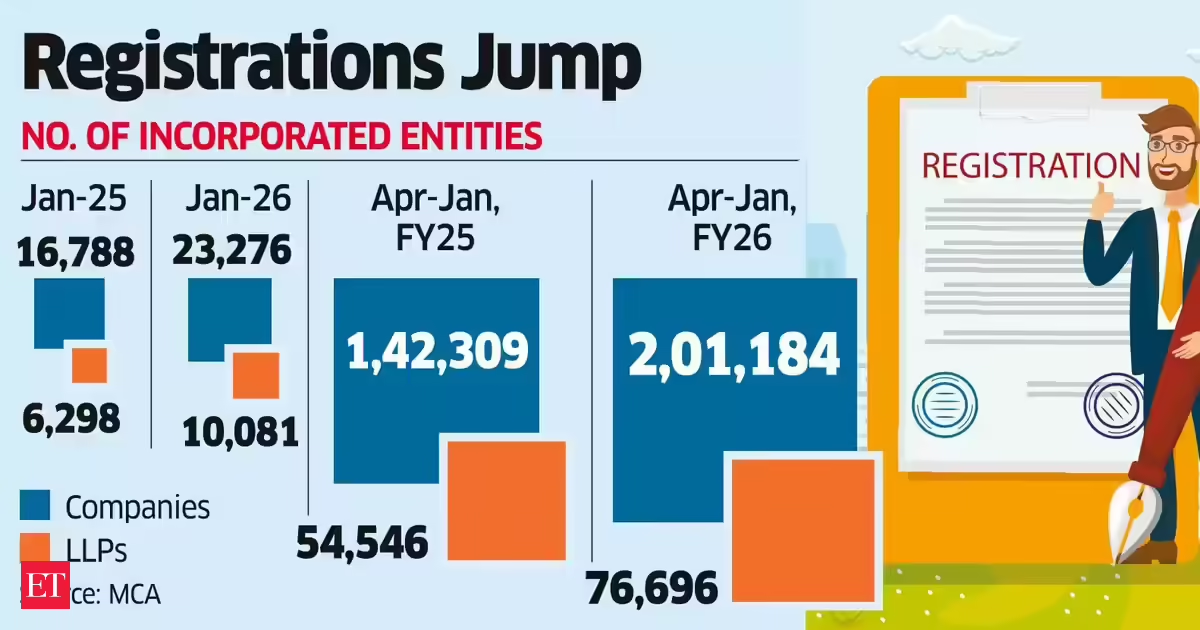
LLP registrations cross 10,000 mark for first time in Jan
-

 NewsBeat3 days ago
Mia Brookes misses out on Winter Olympics medal in snowboard big air
-

 Tech6 days ago
First multi-coronavirus vaccine enters human testing, built on UW Medicine technology
-

 Sports20 hours ago
Big Tech enters cricket ecosystem as ICC partners Google ahead of T20 WC | T20 World Cup 2026
-

 Business4 days ago
Costco introduces fresh batch of new bakery and frozen foods: report
-

 Tech2 days ago
SpaceX’s mighty Starship rocket enters final testing for 12th flight
-

 NewsBeat4 days ago
Winter Olympics 2026: Team GB’s Mia Brookes through to snowboard big air final, and curling pair beat Italy
-

 Sports4 days ago
Benjamin Karl strips clothes celebrating snowboard gold medal at Olympics
-
Sports5 days ago
Former Viking Enters Hall of Fame
-

 Politics4 days ago
The Health Dangers Of Browning Your Food
-
Sports6 days ago
New and Huge Defender Enter Vikings’ Mock Draft Orbit
-
 Business4 days ago
Julius Baer CEO calls for Swiss public register of rogue bankers to protect reputation
-
 NewsBeat6 days ago
Savannah Guthrie’s mother’s blood was found on porch of home, police confirm as search enters sixth day: Live
-
 Crypto World21 hours ago
Pippin (PIPPIN) Enters Crypto’s Top 100 Club After Soaring 30% in a Day: More Room for Growth?
-

 Video17 hours ago
Prepare: We Are Entering Phase 3 Of The Investing Cycle
-

 Crypto World2 days ago
Blockchain.com wins UK registration nearly four years after abandoning FCA process
-
 Crypto World3 days ago
U.S. BTC ETFs register back-to-back inflows for first time in a month
-
 NewsBeat3 days ago
Residents say city high street with ‘boarded up’ shops ‘could be better’