

Crypto World
Why a Hot July CPI Print Could Hit This Semiconductor Chip Hard

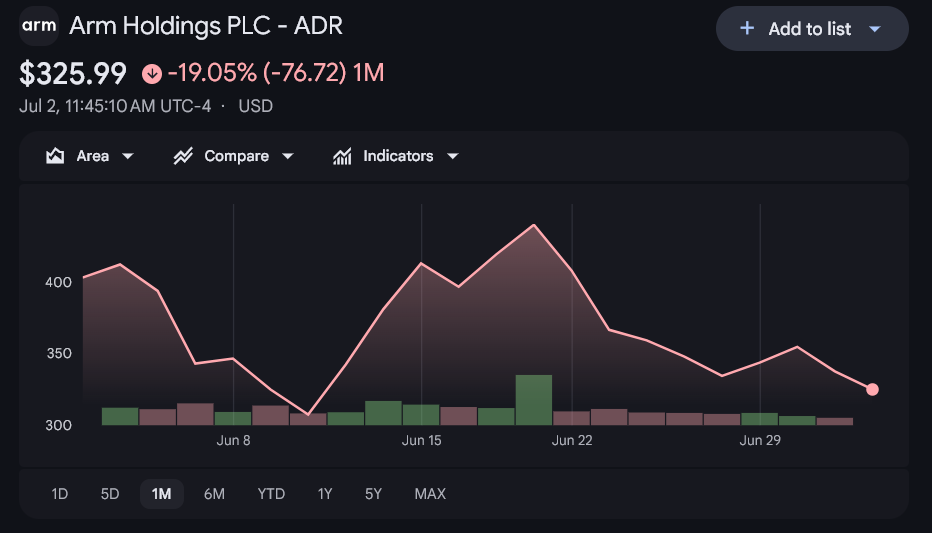
Arm Holdings (ARM) stock is up 194% this year. However, it has stalled and slipped since mid-June, and big investors are quietly selling. The reason is simple. Arm is the chip stock most exposed to rising interest rates.
The next test comes on July 14, when new inflation data is due. A hot reading would push the Federal Reserve closer to a rate hike. And Arm has the most to lose.

Big Money Started Leaving in Mid-June
The clearest warning comes from money flow. Chaikin Money Flow (CMF), a proxy for institutional buying, peaked at 0.37 around June 15 and has since fallen to 0.01. In plain terms, big buyers nearly vanished.

Note: Arm is based in the United Kingdom, but its shares trade in New York in US dollars, so Federal Reserve rate moves drive it like any American chip stock.
The timing is not random. Inflation hit 4.2% for the year on June 10, the hottest in three years. Days later, on June 17, the Federal Reserve held rates but signaled it may raise them. More so, institutional money began leaving in the run-up to the June 17 Fed meeting.
Since then, markets have gone back to pricing hikes. Robin Brooks, senior fellow at the Brookings Institution and former chief economist at the IIF, says one number will set the tone.
Here is why that hits Arm (ARM) hardest. A hot inflation report makes the Fed more likely to raise interest rates. Higher rates make profits expected years from now worth less today. Arm is the priciest big chip stock, and most of its profits sit far in the future. Investors are paying mainly for growth from its AI chip designs in the coming years, not for the money it makes today.
That makes Arm the most rate-sensitive name in its sector. Its price tends to move in the opposite direction of interest rates, and by more than any other big chip stock.

So it falls more than the average chip when rate fears rise. When a major bank warned of up to three more hikes on June 23, Arm dropped over 10% in a day.
Options Traders Turned Defensive Too
The options market flashed the same signal. Arm’s put-call ratio compares bets on a fall against bets on a rise. On June 15, with Arm near $412, the volume ratio was 0.51, so traders still bought more calls than puts.
Yet the open interest ratio was already 1.22, meaning longer-standing bets leaned bearish.

By July 1, with Arm near $337, both had turned bearish. The volume ratio jumped to 1.75, and open interest sat at 1.17.

In short, traders went from hopeful to defensive as rate-hike talk grew louder. The ARM price chart tells the same story.
The ARM Stock Chart Confirms the Warning
The rally was already running on empty. From May 6 to June 30, Arm rose, but the buying volume behind each move kept shrinking.
Want more insights like this? Sign up for Editor Harsh Notariya’s Daily Newsletter here.
That weakness stalled Arm at about $362. The stock now trades near $337, just under the $340 level it needs to hold.
If it breaks lower, $303, then $298, come into view. Far deeper support sits near $198 if the selling speeds up. To turn things around, Arm must reclaim $362 with strong buying, which would pull money flow back up. The real line, though, is $399 (the $400 zone).

Above $400, ARM regains genuine strength. Below it, with a hot July 14 report threatening another rate scare, every bounce is likely to be sold. The $400 mark separates a fresh leg higher from more selling into every rally.
The post Why a Hot July CPI Print Could Hit This Semiconductor Chip Hard appeared first on BeInCrypto.

Strategy President and CEO Phong Le acquired 11,000 shares of the company's Series A Perpetual Stretch Preferred Stock, known by its ticker STRC, on June 22, according to a Form 4 filed with the Securities and Exchange Commission. The purchase was made through the Phong Le Revocable Trust, of which… Read the full story at The Defiant


Ondo Finance has completed the first live onchain deployment of third-party tokenized U.S. securities under a structure designed to operate within the existing U.S. regulatory framework.
Summary
- Ondo tokenized BlackRock’s IVV ETF and Micron shares on Ethereum.
- The model keeps underlying securities within regulated U.S. custody rails.
- Ondo’s launch follows rising competition from Exodus, Robinhood, and Securitize.
According to Ondo Finance, the deployment brings shares of BlackRock’s iShares Core S&P 500 ETF (IVV) and Micron Technology (MU) onto the Ethereum blockchain while keeping the underlying securities inside the traditional U.S. custody system.
The company said the rollout coincides with July 4, when the United States celebrates 250 years of independence, and represents its first live implementation of this issuance model.
SEC-aligned structure keeps traditional custody intact
Unlike many tokenized stock offerings launched outside the United States, Ondo said its model follows the third-party custodial framework outlined in a January 2025 staff statement from the U.S. Securities and Exchange Commission. Under that structure, the underlying IVV and Micron shares remain with regulated custodians instead of moving onto a blockchain.
Ondo said its registered transfer agent, Oasis Pro, issues Ethereum-based tokens backed 1:1 by the underlying shares. Financial infrastructure company Broadridge manages shareholder communications, proxy voting, and regulatory disclosures, allowing token holders to receive the same shareholder rights as investors holding the securities through traditional U.S. brokerage accounts.
Discussing the rollout, Ondo Finance CEO Ian De Bode said the milestone demonstrates the company’s approach to issuing tokenized securities within existing U.S. regulatory requirements.
“Ondo has built the regulatory, product, and service infrastructure to support all major models within the United States. Today’s milestone shows we can tokenize securities in ways that satisfy both market and regulatory requirements.”
The company noted that the product is not yet available to U.S. investors and is currently intended for eligible international users outside the country.
Tokenized securities race gathers momentum
The launch comes as regulated tokenized securities continue to attract investment across financial markets. As previously reported by crypto.news, Ondo Finance recently partnered with Exodus Movement to introduce Exodus Markets, enabling eligible users in selected jurisdictions to trade more than 200 tokenized stocks, exchange-traded funds, and real-world assets through the Exodus self-custodial wallet on the Solana blockchain.
Competition in the sector has also intensified following Securitize’s public listing on the New York Stock Exchange under the ticker SECZ after its SPAC merger with Cantor Equity Partners II. Backed by BlackRock and Morgan Stanley, the company became the first publicly traded tokenization platform.
Questions over shareholder rights have remained a major issue for tokenized equities. The debate intensified in mid-2025 after OpenAI stated that it had not authorized Robinhood’s tokenized product linked to its shares and clarified that the tokens did not represent equity ownership in the company. The incident increased calls for clearer regulatory standards governing tokenized securities.
Ondo said its issuance framework addresses those concerns by routing token creation through a registered transfer agent while preserving the conventional custody chain, a structure the company believes aligns with existing U.S. market requirements.
Industry forecasts also point to continued expansion. In its June 2026 report, Citi projected the tokenized securities market could reach about $5.5 trillion by 2030. At the same time, Robinhood has introduced a public blockchain for tokenized stocks, the DTCC has expanded its blockchain infrastructure, and both the NYSE and Nasdaq have disclosed tokenization initiatives.
Ondo said it already manages more than $1 billion in tokenized stocks and ETFs covering over 430 securities outside the U.S. Separately, Ripple recently unveiled a lending protocol on the XRP Ledger that allows banks to borrow against tokenized assets, adding another example of financial institutions building infrastructure around tokenized real-world assets.

[PRESS RELEASE – Johannesburg, South Africa, July 2nd, 2026]
- Africa’s largest crypto exchange by trade volume expands its derivatives architecture, integrating Hyperliquid to offer access to perpetuals on equities, indices, precious metals, commodities, forex, and crypto.
- This marks the first time a major regulated exchange has natively integrated an on-chain Layer-1 protocol to source liquidity and execute trades across global cross-asset perpetuals.
- Perps on VALR are set to go live on the web on Monday, 6 July, with mobile app availability to follow shortly after.
VALR has announced the imminent launch of ‘Perps’, a new cross-asset class perpetuals product that introduces more than 200 markets to the platform. This expansion enables users to express directional views by going long or short with leverage across a comprehensive selection of global equities, commodities, precious metals, stock indices, forex pairs, and crypto assets. The launch adds to VALR’s established derivatives infrastructure, which pioneered the exchange’s initial perpetuals offering in 2023.
Strategic Infrastructure Integration with Hyperliquid
The new product is delivered through an integration of Hyperliquid, a high-performance decentralised blockchain. Using Hyperliquid’s permissionless infrastructure, VALR users can open and manage positions directly on VALR, ensuring a seamless user experience.
Advanced Cross-Asset Market Exposure
The inclusion of over 200 new markets marks a major development in the diversity of assets available through a single digital platform and marks the first time that a major regulated exchange has natively integrated an on-chain Layer-1 protocol to source liquidity and execute trades across global cross-asset perpetuals. The newly available contracts span multiple global asset classes, enabling traders to express their views on macroeconomic events and capitalise on volatility:
- Global Equities and Benchmarks: Perpetual contracts on trending global enterprises and pre-IPO markets, including SpaceX, NVIDIA, Tesla, Apple, SK Hynix, Samsung, and Palantir Technologies, alongside exposure to leading global equity indices such as the S&P 500 and other international indices.
- Commodities and Precious Metals: Exposure to vital energy markets, including Brent Crude Oil, WTI Crude Oil, and Natural Gas, metals such as Gold, Silver, Platinum, and Copper.
- Foreign Exchange: Institutional currency pairs including EUR/USD, GBP/USD, and USD/JPY.
- Crypto Assets: Comprehensive coverage of the digital asset ecosystem, ranging from foundational protocols like Bitcoin, Ethereum, and Solana, to a wide selection of alternative layer-1 and layer-2 networks, decentralised finance tokens, and high-volume tokens.
Gianluca Sacco, Chief Operating Officer at VALR, said:
“With this launch, we’re putting over 200 perpetuals markets directly inside the VALR app. 24/7 access to crypto, commodities, currencies, and equities – both listed and pre-IPO – all through the regulated exchange our customers already trust. Perps are how crypto traders take a view on price – a market now exceeding hundreds of billions of dollars in daily volume. We believe they will become how people trade every market. Our integration of Hyperliquid will give our users the deepest on-chain liquidity available anywhere. For VALR customers in South Africa and beyond, this is access to the markets that matter, in real-time.”
About VALR
Founded in 2018, headquartered in Johannesburg, and backed by leading investors including Pantera Capital, Coinbase Ventures, and Fidelity’s F-Prime Capital, VALR is the leading digital asset exchange and infrastructure provider on the African continent, offering a comprehensive suite of products, including Spot Trading, Spot Margin, Perpetuals, Staking, Lending, Borrowing, OTC services, VALR Invest, Crypto Bundles, and VALR Pay. Licensed by South Africa’s FSCA, and with a provisional licence from the Cayman Islands Monetary Authority, VALR serves over 1.9 million registered users and 1,900 corporate and institutional clients worldwide. The exchange is dedicated to advancing a just financial future that upholds human dignity and the unity of mankind. For more information, visit valr.com.
About Hyperliquid
Hyperliquid is a decentralised layer one blockchain best known for perpetuals and spot trading. It is the largest and most liquid decentralised exchange, with support for crypto and real-world assets, such as oil and precious metals. In addition, the ecosystem supports borrowing, lending, and a full-fledged EVM.
Risk Disclosure
Futures trading is provided by VALR DAM Pty Ltd, a licensed Financial Services Provider (FSP #54897) and Over-the-Counter Derivatives Provider.
VALR Perps order management, order execution, liquidation, margin requirements, position management, mark prices, and funding rates are managed by, and provided through, certain third-party liquidity provider(s). VALR acts only as an intermediary that enables account holders to access the services offered by such third-party liquidity provider(s) and disclaims any liability arising from or in connection with the acts, omissions, services, pricing, liquidity, order execution, system availability, or operational failures of such third-party liquidity provider(s).
Use of VALR Perps involves risk; please refer to VALR’s Risk Disclosures and Futures Terms of Service.
The post VALR Launches 200+ Hyperliquid Perps Markets appeared first on CryptoPotato.

After a rough June, the crypto market finally found its footing today. BTC USD climbed back above $60,000, while the total crypto market value recovered above $2.1 trillion. The rally added nearly $50 billion in about 90 minutes, showing buyers wasted little time.
The spark came from comments by former Federal Reserve Governor Kevin Warsh during the ECB Forum in Sintra. He said sustained AI-driven productivity could eventually give the Fed more room to lower interest rates. Although Warsh no longer sets policy, traders quickly treated the remarks as a friendly signal.
— Coin Bureau (@coinbureau) July 1, 2026
 WATCH: FED CHIEF KEVIN WARSH LIVE FROM ECB FORUM:
"I heard over the last couple of days, it was open-mindedness on these questions of AI, open-mindedness on productivity…"
"But we’ve all looked around, and we’ve seen that prices are too HIGH.”
"And I don’t think I’m the… pic.twitter.com/z84IHumFVW
Lower rate expectations usually make risk assets more attractive. That helped fuel demand across crypto, with BTC USD leading the charge instead of simply tagging along. Timing mattered too, as the market had already steadied during the previous session before finally breaking higher.
Bitcoin gained roughly 3%, while Ethereum rose to around $1,650 with a similar advance. Most large-cap altcoins followed, turning the recovery into a market-wide move. When macro news and technical momentum line up, traders rarely need a second invitation.
Discover: The Best Crypto to Diversify Your Portfolio
Can BTC USD Reclaim $70,000 This Week?
BTC USD is hovering at $61,200 after bouncing from support at $59,000. Earlier selling briefly pushed the price below $58,000 before buyers stepped in. That recovery was modest, yet it showed demand still exists whenever Bitcoin tests lower levels.
Meanwhile, technical indicators suggest selling pressure is fading. The RSI has climbed from oversold territory, while the MACD points to weakening bearish momentum. It is not a full trend reversal yet, but the market finally has some breathing room.

The next hurdle sits near $63,000, where sellers have repeatedly appeared. A decisive daily close above that level could open the door toward $68,000. Bitcoin still has work to do, but at least bulls are no longer chasing the game from behind.
If spot ETF inflows remain healthy and expectations for lower interest rates strengthen, Bitcoin could extend its rebound through July. On the other hand, a daily close below $60,000 would put recent lows back in focus. For now, ETF flows remain the market’s favorite scoreboard.
Discover: The Best Token Presales
Bitcoin Hyper Targets Early Mover Upside as Bitcoin Tests Key Levels
A Bitcoin relief rally at this market cap means the percentage upside compression is real. Getting a 5x from here requires conditions that took years to build the first time. That gap between “Bitcoin is going up” and “meaningful returns” is exactly where early-stage infrastructure plays operate differently.
Bitcoin Hyper ($HYPER) is positioning directly inside that gap. It’s the first Bitcoin Layer 2 integrating the Solana Virtual Machine (SVM), delivering sub-second finality and smart contract programmability while anchored to Bitcoin’s security model. That’s not incremental; that’s a structural unlock Bitcoin has never had.
The presale has raised $32.9 million at a current price of $0.0136, with staking live and a decentralized canonical bridge for BTC transfers already in the feature set.
Interested in the infrastructure layer behind Bitcoin’s next evolution? Research Bitcoin Hyper here.
Don’t Miss Out on Our $1,000 USDT Airdrop on ByBit
The post BTC USD Recovering: Why is The Crypto Market Going Up Today, July 2nd? appeared first on Cryptonews.
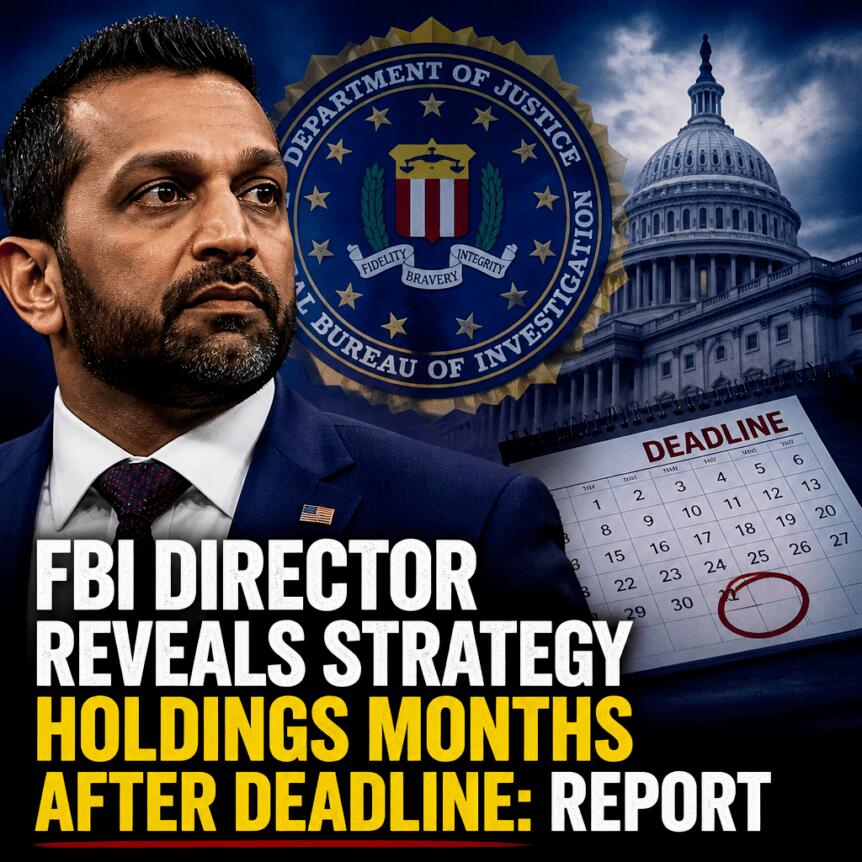
FBI Director Kash Patel has reportedly failed to disclose a Strategy (MSTR) stock purchase on time under the U.S. STOCK Act, prompting renewed attention to how government officials report crypto-adjacent investments and other financial holdings.
According to a report published Wednesday by the nonpartisan nonprofit news organization NOTUS, Patel “inadvertently omitted” a Strategy investment that was worth up to $250,000. NOTUS says the purchase was made on Nov. 21, 2025, but did not appear in Patel’s December 2025 financial disclosures filed under the STOCK Act.
Key takeaways
- NOTUS reports that FBI Director Kash Patel omitted a Strategy (MSTR) purchase from required December 2025 disclosures.
- Under the STOCK Act, covered officials generally must disclose reportable trades within 45 days of execution.
- Patel later filed an amended report on May 26, stating the Strategy holding was “inadvertently omitted” and that he believes no current conflict exists.
- The case feeds into broader congressional criticism of weak penalties for STOCK Act violations.
- Capitol Trades data cited by NOTUS also points to other officials reporting Strategy-related holdings late.
What NOTUS says Patel got wrong—and how he corrected it
NOTUS’s report centers on a specific compliance lapse tied to the STOCK Act, a law designed to curb conflicts of interest by requiring timely disclosure of certain financial transactions by members of Congress and other covered officials.
NOTUS says Patel purchased Strategy shares on Nov. 21, 2025. The trade was not included in Patel’s December 2025 disclosure filing, even though the law requires disclosure of financial transactions above a certain threshold within a set window—NOTUS notes that transactions exceeding $1,000 must generally be reported no later than 45 days after execution.
Rather than leaving the omission unaddressed, Patel filed an amended report on May 26, according to NOTUS. The filing described the Strategy holdings as “inadvertently omitted,” and stated that there is “no current conflict exists” involving the investment.
Strategy—formerly known as MicroStrategy—is a U.S.-registered government contractor, a detail that NOTUS highlights as a potential flashpoint for conflict-of-interest concerns when senior officials hold positions in firms with government contracting ties.
Why the STOCK Act debate is resurfacing
Signed in 2012, the STOCK Act has faced repeated scrutiny from lawmakers and watchdog advocates who argue that enforcement and penalties do not meaningfully deter late or incomplete reporting.
NOTUS points to criticisms that first-time violations can result in relatively limited consequences—citing that the law provides for a $200 fine for first offenders. The same criticism notes that these penalties fall well short of the large amounts sometimes at stake in financial disclosures.
In other words, even when omissions are corrected after the fact, critics argue the system may not impose strong enough repercussions to ensure compliance from the start. Patel’s amended filing—paired with the relatively modest penalty structure described by NOTUS—adds another data point to the broader oversight conversation.
Strategy disclosures: not an isolated pattern
Patel’s case appears within a wider pattern of late reporting involving Strategy investments, at least based on the examples NOTUS cites.
NOTUS also references Capitol Trades, a website that tracks politicians’ investment activity. The report says Representative Shri Thanedar “waited” until August 2025 to report a Strategy investment made in June 2024, which Capitol Trades lists as a range between $15,001 and $50,000.
While the underlying details differ by individual and timeframe, the common thread is that Strategy-related holdings can end up reported outside the law’s intended window. For traders, compliance officers, and policy watchers, timing matters because disclosures are meant to reduce the informational advantage that comes from acting on nonpublic knowledge and then reporting after the fact.
Crypto income disclosures in the background
Patel’s reported late correction comes as U.S. political attention to crypto-linked income and reporting remains intense.
The NOTUS report is framed alongside President Donald Trump’s publication of financial records showing his cryptocurrency ventures generated more than $1.4 billion in income in 2025—more than income reported from his real estate businesses, according to a link cited by NOTUS from earlier coverage by Cointelegraph.
That reporting has also fueled political disputes about whether crypto activities, including memecoin-related developments and other crypto platforms described in the cited coverage, create conflicts between official duties and private financial interests.
Although Patel’s situation involves the STOCK Act rather than presidential financial disclosure reporting, it sits in the same ecosystem of public accountability questions: who discloses what, when, and whether the disclosure regime is stringent enough to maintain trust.
Going forward, the key question for observers is how strictly oversight bodies evaluate the “inadvertently omitted” explanation in Patel’s amended filing, and whether the broader push for stronger STOCK Act penalties gains momentum. Readers should also watch for further examples of timing-related omissions in high-profile crypto-adjacent holdings, since the credibility of the disclosure system ultimately depends on consistent enforcement—not just post-hoc corrections.

Standard Chartered has become the first global systematically important bank (G-SIB) to let institutional clients mint and redeem USDC directly through its banking platform, the lender has said.
The service removes the need for eligible clients to open separate accounts with Circle, the issuer of USDC, giving them a single onboarding process for both traditional banking and stablecoin access.
Standard Chartered Brings USDC Services Into Its Banking Platform
The new service, announced on July 2, has been developed in collaboration with Circle and will let institutional clients that qualify to mint and redeem USDC through Standard Chartered’s operations in the Dubai International Financial Center (DIFC). According to the bank, clients will be able to access banking, custody and digital asset services through one integrated platform while using USDC for on-chain settlement and treasury management.
Initially, the offering will be available only through the bank’s DIFC business. However, Standard Chartered said it plans to expand it to more markets once it receives regulatory approvals.
“Digital assets are becoming an increasingly important component of global financial infrastructure, and institutional clients are seeking the same levels of trust and governance that underpin traditional markets,” said Roberto Hoornweg, Standard Chartered’s chief of corporate and investment banking.
Furthermore, he noted that the launch is meant to support wider institutional participation in crypto markets through established compliance and risk management standards.
Crypto market watchers viewed the announcement as another sign that the stablecoin infrastructure is moving further into regulated finance, with Spot On Chain’s Hupzy writing on X that placing a G-SIB directly into the USDC minting process will remove a major operational hurdle for institutions that in the past relied on exchanges or over-the-counter desks to get stablecoins. According to the analyst, the arrangement has the potential to increase the use of USDC among institutions, deepening on-chain liquidity in the process.
Stablecoin Competition Growing
Standard Chartered’s announcement came just a day after the introduction of OpenUSD, a new stablecoin backed by more than 140 companies, including Visa, Mastercard, Stripe, Coinbase, Ripple, and BlackRock. The project, designed around collaborative governance and revenue sharing, has added another competitor to the race to build institutional stablecoin infrastructure.
The bank has already been expanding its presence in regulated digital assets, including in April this year, when it was among the first groups to get a Hong Kong stablecoin issuer license, allowing it to mint Hong Kong dollar-backed stablecoins for cross-border payments.
The post Standard Chartered Becomes First Major Bank to Offer Direct Stablecoin Services appeared first on CryptoPotato.
Crypto World
Securitize (SECZ) takes $295M of its own tokenized stock to Solana, Avalanche amid NYSE debut


The opportunity has drawn growing interest across Wall Street. Citi projected that tokenized securities could reach $5.5 trillion by 2030, while Boston Consulting Group and Ripple estimated the market could grow to $18.9 trillion by 2033.
“We have long said that public equities are moving onchain, and there is no stronger validation of that belief than tokenizing our own public stock on day one,” CEO Carlos Domingo said in a statement.
Issuer-sponsored tokenization
Unlike many existing tokenized stock products, which are issued by third parties or offered outside the United States, Securitize said SECZ is an issuer-sponsored tokenization of the company’s own shares. Eligible U.S. investors can buy the tokenized stock through Securitize’s platform after completing identity verification and meeting securities law requirements.
The launch doubles as a showcase for Securitize’s business.
The company, founded in 2017, has spent years building tokenization infrastructure for firms including BlackRock, Apollo, KKR, Hamilton Lane and VanEck, providing issuance, transfer agency and fund administration services for blockchain-based securities.
Earlier this year, NYSE parent company Intercontinental Exchange (ICE) partnered with Securitize to develop infrastructure for tokenized equities. It also teamed up with Computershare and Continental, two of the world’s largest transfer agents, to help public firms issue their shares in token form on blockchain rails.

Key Points
-
Bitget introduces U.S. stock options on its Stock+ platform for qualified users.
-
Platform now supports long call and long put options on U.S.-listed equities.
-
Service extends beyond tokenized equity products and private market opportunities.
-
Initial rollout focuses on single-leg strategies with plans for complex structures.
-
Move aligns with unprecedented U.S. options market volume in 2025.
On Thursday, Bitget announced the addition of U.S. stock options trading to its Stock+ platform for qualified users. This development represents another step in the crypto exchange’s expansion into traditional financial instruments, complementing its existing tokenized stock offerings and access to private market investments.
Platform Debuts With Basic Options Strategies
The initial launch provides qualified users with long call and long put options functionality. Users can utilize call options to gain bullish exposure on U.S. stock listings, while put options enable bearish positioning or portfolio protection strategies.
Bitget chose to begin with single-leg options purchases, a more straightforward approach compared to complex multi-leg strategies such as spreads, iron condors, or butterfly positions. The exchange indicated that sophisticated options techniques will become available as the service matures.
While the product design limits potential losses to the initial premium amount, options contracts can lose their entire value when anticipated price movements don’t materialize. Users must consider factors including expiration timing, strike price selection, and market trajectory.
Stock+ Portfolio Expands Into Listed Derivatives
Bitget integrated the options offering into Stock+, its comprehensive traditional finance product ecosystem. The platform previously provided tokenized equities and opportunities to access pre-IPO companies. With this addition, Stock+ now delivers a more comprehensive range of market instruments.
Operating from the Seychelles, the exchange has designed Stock+ to function as a connection point between cryptocurrency markets and conventional financial products. This approach consolidates stocks, digital assets, commodities, foreign exchange, market indices, and precious metals within a unified trading interface. The strategy mirrors an industry-wide trend among cryptocurrency platforms evolving into diversified asset exchanges.
According to the exchange, the product addresses demand from qualified users seeking proven equity market tools. By launching with straightforward options configurations, the platform aims to provide an accessible onboarding experience. The company connected the timing to growing appetite for exchange-traded derivatives.
Surging Derivatives Activity Drives Platform Innovation
The product debut comes after an exceptional year for U.S. options trading. American options markets handled over 15.2 billion contracts throughout 2025, translating to approximately 60 million contracts during each trading session.
Options instruments have seen expanded adoption among both retail participants and institutional traders. Market participants employ them for directional speculation, risk mitigation, volatility exploitation, premium collection, and leverage management. Consequently, trading venues increasingly view options as a key engagement and revenue driver.
Bitget confronts growing competition from rival crypto platforms diversifying beyond digital currency products. In June, Coinbase revealed intentions to broaden its options infrastructure for both equities and cryptocurrencies. Through this Stock+ enhancement, Bitget advances its position in the listed derivatives space.



Senator Elizabeth Warren is pushing to add a provision to pending Senate crypto legislation that would bar President Trump, his family, and other senior officials from profiting off the digital asset industry. The push follows a financial disclosure showing Trump's crypto ventures generated more… Read the full story at The Defiant
Key Takeaways
-
LCID shares declined 7.62% to $6.13 following the release of second-quarter production data.
-
The electric vehicle maker manufactured 4,774 units and handed over 3,953 vehicles in Q2.
-
Alexander De Bock has been appointed as the new chief financial officer at Lucid.
-
Major leadership restructuring aims to streamline operations and enhance accountability.
-
Management seeks better alignment between production capacity, operational expenses, and market demand.
Shares of Lucid Group (LCID) experienced a sharp 7.62% decline, closing at $6.13, after the electric vehicle manufacturer disclosed its second-quarter manufacturing and delivery metrics. The downturn came alongside announcements of significant executive transitions, including a new chief financial officer and extensive leadership reorganization. These developments have intensified investor attention on the company’s operational effectiveness and cost management.
Second Quarter Manufacturing and Distribution Figures Released
Lucid manufactured a total of 4,774 electric vehicles throughout the quarter ending June 30, 2026. During this same timeframe, the automaker successfully delivered 3,953 units to customers. Market participants responded negatively, sending LCID shares downward at the opening bell.
The stock experienced initial selling pressure before finding some stability and staging a minor recovery later in the trading session. Nevertheless, the overall negative movement maintained downward momentum on the company’s short-term valuation. The quarterly performance data intensified questions surrounding customer demand dynamics, manufacturing planning capabilities, and distribution effectiveness.
The company maintains its strategic focus on software-integrated electric vehicles and cutting-edge automotive technology. However, Lucid remains under considerable pressure to expand production volumes while simultaneously enhancing operational efficiency. Consequently, this latest operational disclosure coincided with a comprehensive reorganization of its management team and corporate structure.
Financial Leadership Transition Marks Latest Executive Change
Lucid has announced Alexander De Bock as its next chief financial officer. De Bock comes with over twenty years of automotive financial management expertise. His previous role included serving as CFO at TI Automotive, where he led cost optimization initiatives and organizational restructuring projects.
Taoufiq Boussaid, the current CFO, will depart from Lucid following a transition period. He is expected to remain with the organization through the publication of second-quarter financial results. This transition represents another significant shift in the company’s financial leadership structure.
Lucid simultaneously revealed multiple executive appointments under the direction of CEO Silvio Napoli. Management stated these organizational modifications will simplify corporate structure and strengthen accountability mechanisms. The restructuring will reduce the number of executives reporting directly to the CEO by fifty percent.
Organizational Restructuring Aims to Accelerate Performance and Responsibility
Raja Ramana Macha has been named chief technology officer at Lucid. In this capacity, he will direct technology initiatives and engineering implementation. Macha’s professional history includes senior technology leadership positions at Eaton spanning automotive and additional industrial segments.
Billy Hayes has assumed the role of chief customer officer, taking charge of sales operations, customer service, marketing functions, and regional execution. Hugo Martinho will step into the position of chief transformation officer effective August 1. Kay Stepper will head Lucid Technologies, supervising robotaxi development, artificial intelligence, autonomous driving systems, advanced driver assistance systems, and enterprise information technology.
Lucid has additionally elevated Christian Appel to vice president of program management. Appel will coordinate platform execution and manage product portfolio alignment. These organizational changes build upon previous efforts to reduce operational complexity, synchronize manufacturing capacity with market demand, and strengthen competitive positioning.

Strategy CEO Phong Le Buys 11,000 STRC Shares Through Revocable Trust

10 Greatest Sci-Fi Books That Are Better the Second Time Around

Only 0.1% Are Chosen | XRP vs XLM vs HBAR Rich List SHOWDOWN!!


-

 Fashion6 days ago
Weekend Open Thread: Staud – Corporette.com
-

 Politics7 days ago
The House | Manchesterism won’t survive the painful trade-offs unless it gets citizens on board
-

 Crypto World3 days ago
Strategy authorizes up to $1.25B in Bitcoin sales under new capital plan
-

 Politics7 days ago
Potential 2028er World Cup attendee leaderboard
-

 Business7 days ago
Asia stock markets slide as tech shares slump
-

 News Videos4 days ago
MAJOR BITCOIN & MARKET UPDATE!!!! (MUST WATCH ASAP!!!)
-

 Tech7 days ago
A Look At A Gaggle Of Transputer Boards
-

 Crypto World5 days ago
Coinbase, Circle Deepen Crypto Stock Losses Despite Resilient S&P 500
-

 Tech3 days ago
Anonymous researcher drops 0-day ‘exploitarium’ repo
-

 Business3 days ago
Australia treasurer says alleged access of prime minister’s bank data ’incredibly concerning’
-

 Crypto World6 days ago
Kraken's xStocks Opens Bending Spoons IPO Registration to EEA Retail
-

 Crypto World7 days ago
Bitcoin Sparks $600M Hourly Liquidations With $65,000 Set To Become Resistance
-

 Sports6 days ago
FIH Pro League: India defeat Pakistan 7-1, register biggest win of campaign | Other Sports News
-

 Tech5 days ago
Bluekit phishing kit adopts browser-in-the-middle for login theft
-

 Tech5 days ago
Russian hackers now target Signal backup recovery keys
-
Crypto World6 days ago
Hyperliquid Named on Singapore MAS Investor Alert Register
-

 Crypto World6 days ago
RTX holders must register wallets before token distribution begins
-

 Crypto World7 days ago
Tether (USDT) Passes Ether in Market Cap as ETH Drops Toward $1.5K
-

 Sports1 day ago
Broncos roster: OL Ben Powers (No. 74) entering final year of contract
-
 Business3 days ago
The AI boom won’t burst all at once. It will pop in ‘rolling bubbles’: Macquarie
You must be logged in to post a comment Login