

Business
Amazon Stock Rises as Prime Day Success and AWS AI Demand Drive Optimism Ahead of Q2 Earnings


Amazon.com Inc. shares gained more than 1% to trade near $245 Thursday as investors cheered strong early performance from Prime Day sales and continued momentum in the company’s cloud and artificial intelligence businesses.
The e-commerce and technology giant is benefiting from robust consumer spending during its major summer shopping event while its Amazon Web Services division capitalizes on enterprise demand for AI infrastructure. With fiscal second-quarter results scheduled for late July, analysts expect another solid report highlighting growth across retail, advertising and cloud segments.
Amazon reported first-quarter revenue of $181.5 billion, up 17% year-over-year, with AWS posting 28% growth to $37.6 billion — its fastest pace in several years. The performance underscored the company’s dual strengths in consumer retail and high-margin cloud services amid heavy investments in AI capabilities.
Prime Day, traditionally one of Amazon’s largest sales events, has reportedly generated billions in sales this year, building on the company’s dominance in online shopping. Early indicators suggest strong participation from Prime members, who benefit from exclusive deals, fast shipping and digital content perks.
AWS remains a key growth engine, with analysts highlighting accelerating demand for generative AI services. The division’s operating margins have expanded as Amazon optimizes its infrastructure and introduces specialized chips and tools for AI workloads.
The company has committed substantial capital expenditures — projected around $200 billion for the year — to expand data center capacity and support AI training and inference needs. While such spending has pressured near-term cash flow, executives express confidence in long-term returns from increased cloud usage.
Retail Resilience Amid Economic Uncertainty
Amazon’s core e-commerce business has shown resilience despite fluctuating consumer confidence. Improvements in logistics, including expanded fulfillment networks and automation, have helped maintain competitive delivery times and control costs.
Advertising revenue continues as a high-growth, high-margin segment, benefiting from more sophisticated targeting and integration across Amazon’s platforms. Sellers increasingly rely on Amazon’s tools to reach customers, creating a virtuous cycle for the company’s marketplace.
International expansion, particularly in key markets, contributes to overall sales growth even as the U.S. remains the largest contributor. Currency fluctuations and regional economic conditions can impact results, but diversified operations provide some buffer.
Prime membership, with its annual fee and bundled benefits, continues to drive customer loyalty and higher spending. The program underpins much of Amazon’s retail ecosystem, encouraging habitual use of the platform for everyday purchases.
Strategic Investments in Future Growth
Amazon has positioned itself at the forefront of AI innovation through both internal development and partnerships. Investments in custom silicon, such as Trainium and Inferentia chips, aim to reduce reliance on third-party providers while lowering costs for customers.
The company’s logistics network, already one of the world’s largest, incorporates more robotics and machine learning for efficiency gains. These advancements support faster delivery and better inventory management, key differentiators in competitive retail.
Content and entertainment offerings, including Prime Video, continue expanding with original programming and sports rights. Advertising opportunities within streaming further monetize the subscriber base.
Amazon’s bet on physical retail through formats like Amazon Go and Whole Foods integration provides omnichannel presence, though online remains the primary growth driver.
Competitive Landscape and Challenges
Amazon faces stiff competition in cloud computing from Microsoft Azure and Google Cloud, both of which are also investing heavily in AI. Pricing pressure and customer multi-cloud strategies require continuous innovation to maintain market share.
In e-commerce, rivals including Walmart, Shopify-powered merchants and emerging platforms challenge Amazon’s dominance. Regulatory scrutiny over antitrust concerns and labor practices adds another layer of complexity.
Supply chain disruptions, inflation and shifting consumer preferences toward value can impact margins. Amazon has responded with cost controls, efficiency programs and selective price adjustments.
Analysts project mid-teens percentage revenue growth for the full year, with AWS potentially outpacing overall sales. Operating income guidance reflects continued investment but also operating leverage as fixed costs are spread across larger revenue bases.
Outlook and Market Sentiment
Wall Street largely maintains bullish stances on Amazon, citing its diversified business model and leadership in key growth areas. Consensus price targets suggest further upside, though valuations remain premium given the scale.
Short-term focus centers on Prime Day results and any updates on AI deal flow or capex execution. The upcoming earnings report will provide fresh insight into second-quarter trends, including early back-to-school and holiday preparation signals.
Broader technology sector performance influences Amazon’s stock, given its weighting in major indexes. Positive sentiment around AI has provided tailwinds, though concerns over spending levels and return timelines create periodic volatility.
Amazon’s founder and executive chairman Jeff Bezos has maintained significant involvement, while CEO Andy Jassy oversees daily operations. The leadership team has emphasized disciplined capital allocation alongside aggressive innovation.
For consumers, Amazon represents convenience and selection, while for investors it embodies exposure to multiple secular trends: e-commerce penetration, cloud migration and artificial intelligence adoption.
The company’s ability to balance growth investments with profitability has improved over time, though the current AI spending cycle represents a significant commitment. Early indications suggest strong customer uptake, supporting optimism for future returns.
As Amazon prepares for its next earnings release, the narrative remains one of transformation and opportunity. From online bookstore to global technology leader, the company continues evolving to meet changing customer and enterprise needs in an increasingly digital economy.


Check out what’s clicking on FoxBusiness.com.
Microsoft is expected to lay off up to 2.5% of its workforce as early as next week.
The cuts, which could affect 5,000 employees, may impact sales, consulting and the Xbox gaming unit, according to a report from Business Insider Tuesday.
The layoffs would mark the latest round of restructuring in the tech sector as companies continue to cut costs while directing more resources toward artificial intelligence (AI).
Last summer, Microsoft laid off roughly 4% of its workforce, or about 9,000 employees, in one of the company’s largest rounds of job cuts in recent years.
MICROSOFT ANNOUNCES ANOTHER ROUND OF LAYOFFS AFFECTING THOUSANDS OF WORKERS

A Microsoft office in New York in July 2025 ahead of the company hitting $4 trillion in market cap. (Adam Gray/Bloomberg via Getty Images / Getty Images)
According to Microsoft’s latest annual filing with the Securities and Exchange Commission (SEC), the company employed roughly 228,000 full-time workers worldwide as of June 30, 2025.
A 2.5% reduction in that workforce would amount to approximately 5,700 job cuts.
Sources said some employees affected by the latest round of layoffs will be offered new roles within the company immediately, Business Insider reported.
MICROSOFT WILL LAY OFF NEARLY 6,000 EMPLOYEES IN PUSH FOR EFFICIENCY

A pedestrian walks past a sign on the Microsoft campus July 17, 2014, in Redmond, Wash. (Stephen Brashear/Getty Images / Getty Images)
In the past month, Microsoft’s stock slumped about 19%, marking one of its worst monthly performances since the dot-com crash.
Investor concerns have risen as Wall Street analysts warn that AI could eventually replace certain software services, which may include offerings from Microsoft.
MICROSOFT PLANS ‘SUBSTANTIAL’ JOB CUTS ACROSS XBOX DIVISION
| Ticker | Security | Last | Change | Change % |
|---|---|---|---|---|
| MSFT | MICROSOFT CORP. | 390.49 | +6.21 | +1.62% |
Last month, Xbox CEO Asha Sharma sent a memo to employees calling for a “reset” of the business after months of uneven performance.
The Verge on Tuesday also reported that the gaming division is planning layoffs starting next week. The cuts are expected to be significant, with reductions to marketing and budgets, according to Bloomberg early last month.
The restructuring could lead to studio closures, mergers, spin-offs and canceled game projects, the Verge reported.
Xbox also recently raised prices on its gaming consoles by an additional $100 to $150 worldwide, citing increased demand for memory and storage driven by the AI boom.

Visitors walk past the Xbox booth at the Gamescom video games trade fair in Cologne, Germany, Aug. 22, 2024. (Ina Fassbender/AFP via Getty Images / Getty Images)
GET FOX BUSINESS ON THE GO BY CLICKING HERE
Sources said the 2026 round of layoffs appears to be smaller after the company earlier this year introduced a voluntary retirement buyout program, which led to a significant number of employees exiting, according to BI.
Roughly one-third of eligible employees reportedly opted in.
Last year, Microsoft reportedly eliminated roughly 15,000 roles across multiple rounds of layoffs, including about 6,000 positions in May followed by 9,000 employees in July.
FOX Business reached out to Microsoft for more information.

Omada Health CAO Craig Gracey sells $23,561 in company stock
Business
Intel Revives Old Raptor Lake Chip Production Lines for China as Global Memory Shortage Drives DDR4 Comeback
SANTA CLARA, Calif. — Intel has restarted production of its 13th and 14th Generation Core processors, a chip family nearly three years removed from its original launch, specifically to supply the Chinese personal computer market amid an unprecedented global memory shortage that has made the older platform’s compatibility with DDR4 memory a newly valuable asset rather than a legacy limitation.
The move, first reported by ChannelGate, reflects a broader and somewhat counterintuitive trend reshaping the PC component market in 2026: the surging demand for artificial intelligence computing has created a chip shortage so severe across every memory category that manufacturers and consumers in certain markets are turning back to older, DDR4-compatible hardware platforms rather than competing for the limited supply of DDR5 that the AI industry is consuming at record rates.
Intel’s 13th Generation Core processors, based on the Raptor Lake architecture and launched in late 2022, and the 14th Generation Raptor Lake Refresh chips that followed roughly a year later in 2023, both share the same LGA-1700 socket and support both DDR4 and DDR5 memory. That dual-memory support, which Intel built into the platform at a time when DDR5 was still too expensive and scarce for mainstream adoption, has taken on entirely new commercial significance in 2026 because vast amounts of DDR4 memory capacity currently sit underutilized while DDR5 remains under extraordinary demand pressure from data centers and AI accelerator systems.
By restarting Raptor Lake production, Intel can absorb some of that available DDR4 supply and channel it toward PC OEM manufacturers and do-it-yourself PC enthusiasts in mainland China, a market that remains one of the world’s largest consumers of desktop processor hardware across both gaming and productivity computing categories. The restarted production targets specifically those use cases rather than enterprise or workstation applications, positioning the older generation chips as a pragmatic, cost-effective solution for consumers who want capable computing hardware but cannot easily access or afford DDR5-based systems in the current supply environment.
The original 13th Generation Core lineup launched in October 2022 and covered a full product stack from entry-level Core i3 chips to the flagship Core i9-13900KS, which pushed boost frequencies to 6.0 gigahertz, an industry milestone at the time of its release. Intel then shipped the 14th Generation Raptor Lake Refresh in late 2023 on the same LGA-1700 socket, offering moderate performance improvements through targeted adjustments to die-to-die frequency, ring bus frequency and core base and boost clock speeds rather than a fundamental architectural redesign. The flagship of that generation, the Core i9-14900KS, pushed the single-core boost frequency to 6.2 gigahertz, a 200-megahertz improvement over its predecessor.
Both generations came with a significant controversy attached to them in the form of instability issues that affected high-end Raptor Lake and Raptor Lake Refresh desktop processors, particularly when run with elevated power and voltage settings. Intel issued multiple microcode updates throughout 2024 and 2025 to address those stability problems, and the company eventually extended warranty coverage for affected chips as documentation of the issue accumulated in the enthusiast community. The production restart presumably involves chips manufactured with the updated microcode and voltage guidance already incorporated, though Intel has not provided specific detail on whether the restarted production includes any physical or silicon-level changes to the chips beyond the software fixes previously distributed.
Intel is also expected to increase supply of 10th and 12th Generation Core processors through a parallel production expansion, according to ChannelGate, though the primary focus of the restart effort is concentrated on the 13th and 14th generation platforms. The 12th Generation Alder Lake processors, launched in late 2021, also supported both DDR4 and DDR5, making them another viable option for the same market dynamic, though the 13th and 14th generation chips offer better performance efficiency and a wider ecosystem of compatible hardware that is likely already embedded across the Chinese retail and OEM supply chain.
The broader context for Intel’s decision is a global PC market that has been quietly recovering from the post-pandemic demand collapse even as the AI chip boom consumes the sector’s most advanced manufacturing capacity. Worldwide PC shipments rebounded through 2025 and into 2026 as consumers and enterprises that deferred hardware upgrades during the years of post-pandemic correction began refreshing aging equipment, a replacement cycle that analysts have expected to accelerate further as artificial intelligence features become more integrated into client computing devices. China’s domestic PC market, which operates with a distinct mix of local OEM brands, international PC makers and a substantial enthusiast gaming segment, remains large enough that even a targeted production restart for a three-year-old chip generation can generate meaningful commercial volume.
For Intel, the production restart also carries practical manufacturing logic beyond its commercial rationale. The LGA-1700 platform tooling and production lines are already established assets that can be reactivated without the full capital expenditure of building out a new process node or manufacturing flow from scratch. Restarting production on mature nodes allows Intel to utilize manufacturing capacity that might otherwise sit idle as the company concentrates its leading-edge node efforts on newer architectures intended for the AI PC and data center markets, where competition from AMD and Qualcomm has been intensifying throughout the first half of 2026.
Demand for semiconductors across all categories remains at historic levels, driven by the AI industry’s extraordinary appetite for computing hardware at every tier of the market. That demand has not only kept advanced memory and logic chips scarce at the top of the market but has cascaded backward through supply chains in ways that have made even relatively mature, established platforms newly relevant in markets and applications where the primary constraint is availability and cost rather than raw performance. Intel’s decision to restart Raptor Lake production for China illustrates how unusual the current moment is for the semiconductor industry, a period in which the best available product is not always the most commercially rational one, and the industry is reaching back several generations to find components it can actually build and sell to customers who need computing hardware now.
Fox News correspondent Eric Shawn joined ‘Varney & Co.’ to report on President Donald Trump’s plan to restrict Iranian diplomats in New York, including a possible ban on shopping at Costco and Sam’s Club.
Costco’s iconic $4.99 rotisserie chicken has earned a cult-like following among shoppers for years, but Consumer Reports says Sam’s Club now has the best bird in the warehouse club business.
After evaluating rotisserie chickens from 10 grocery chains, warehouse clubs and big-box retailers, Consumer Reports named Sam’s Club’s Member’s Mark Seasoned Rotisserie Chicken its top overall pick, edging out Costco’s Kirkland Signature bird.
According to Consumer Reports, tasters gave Sam’s Club the edge for its flavor, seasoning and juicy texture. Costco’s chicken also landed among the publication’s top picks, though reviewers found the seasoning to be less consistent between samples.
CUSTOMERS UPSET AFTER COSTCO MAKES CHANGE TO ROTISSERIE CHICKEN

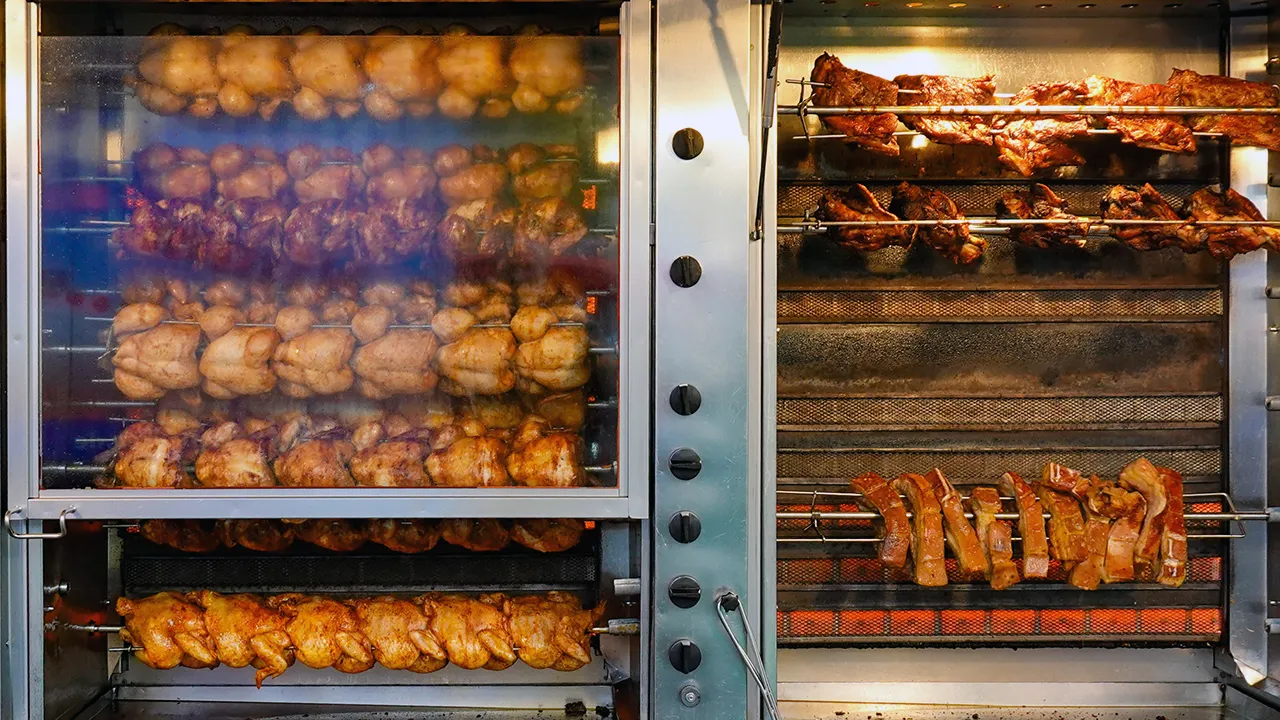
Rotisserie chickens cook inside a commercial roasting oven. Consumer Reports evaluated chickens from warehouse clubs, grocery stores and big-box retailers based on taste, nutrition and other factors. (Getty Images / Getty Images)
The results may come as a surprise to Costco shoppers, whose devotion to the retailer’s rotisserie chicken has helped make the $4.99 bird one of the company’s signature products.
Costco has held the price steady for years despite inflation, using the popular item as one of its best-known value offerings and a draw for shoppers. The retailer’s loyal customers have even voiced frustration over seemingly minor changes to the product, including 2024’s switch from plastic clamshell containers to bags.
Consumer Reports did not publish a traditional first-through-10th ranking. Instead, it grouped the chickens into those it considered flavorful enough to serve on their own and those better suited for recipes such as soups, salads and sandwiches.
COSTCO CEO SAYS 1 ITEM IS MORE IMPORTANT THAN EVERYTHING ELSE SOLD IN THE STORE

Rows of freshly cooked rotisserie chickens are displayed for sale at a grocery store. Consumer Reports recently ranked rotisserie chickens from 10 major retailers, naming Sam’s Club its top overall pick. (Getty Images / Getty Images)
Along with Sam’s Club and Costco, the top group included Stop & Shop, Walmart, Wegmans and Whole Foods Market. BJ’s Wholesale Club, Hannaford, ShopRite and The Fresh Market fell into the second category.
FOX Business has reached out to Costco and Sam’s Club for comment.
WHY COSTCO HOT DOGS HAVE KEPT $1.50 PRICE TAG SINCE 1985
A Costco store in Vallejo, Calif., May 29, 2025. (David Paul Morris/Bloomberg / Getty Images)
The evaluation went beyond taste. Consumer Reports purchased between 10 and 13 chickens from each retailer across multiple store locations and shopping trips.
Researchers weighed each bird, compared sodium levels with nutrition labels, conducted blind taste tests and screened the meat and packaging for chemicals commonly associated with plastics.
CLICK HERE TO SIGN UP FOR OUR LIFESTYLE NEWSLETTER
Among its findings, Consumer Reports said it detected no PFAS in any of the meat or packaging it tested. It also found that many chickens weighed more than the net weight listed on their labels, with Whole Foods’ birds averaging about a pound heavier than advertised, effectively lowering their per-pound cost.
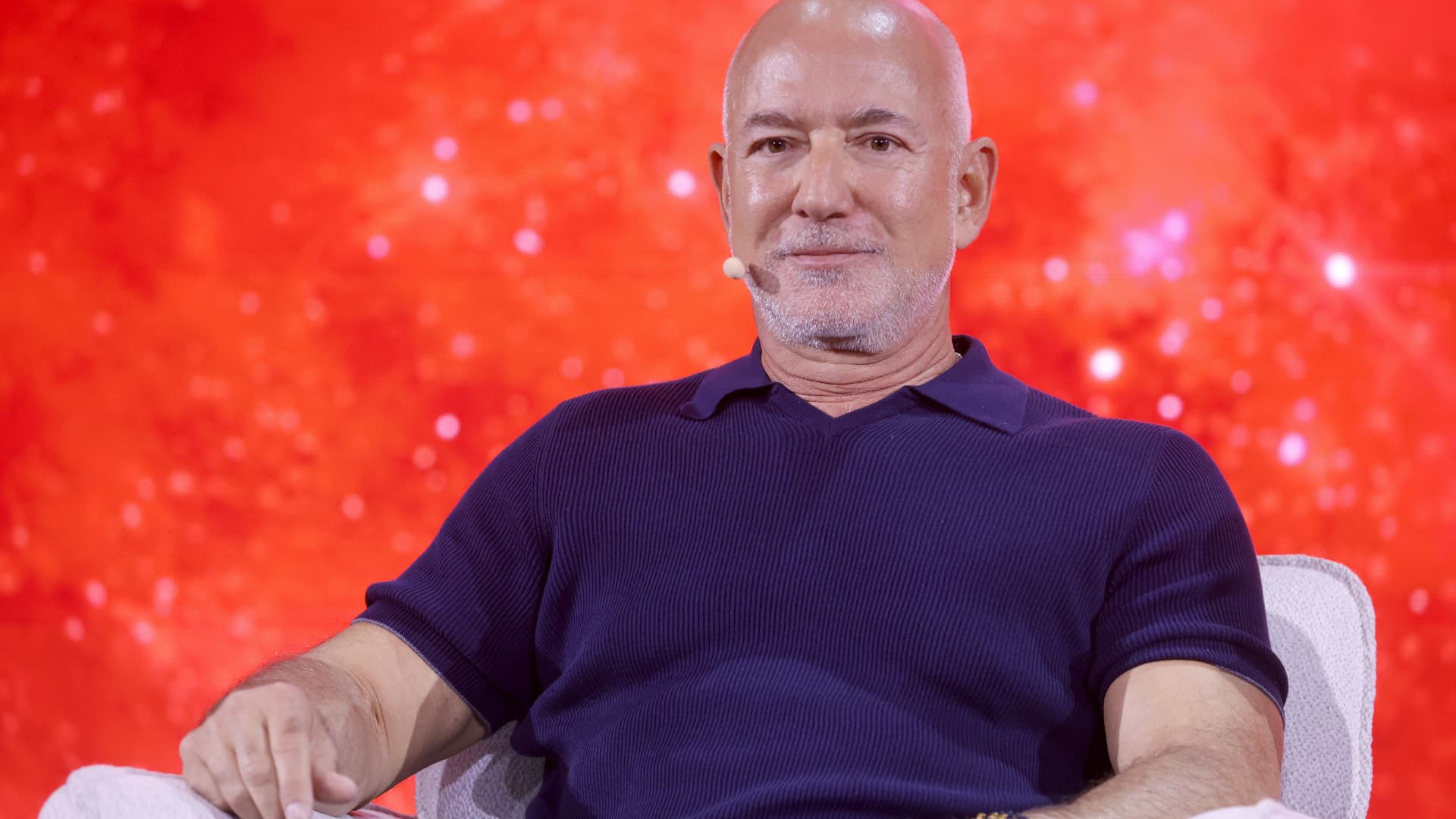
Jeff Bezos attends the Viva Technology show at Parc des Expositions on June 17, 2026 in Paris, France.
Chesnot | Getty Images Entertainment | Getty Images
A version of this article first appeared in CNBC’s Inside Wealth newsletter with Robert Frank, a weekly guide to the high-net-worth investor and consumer. Sign up to receive future editions, straight to your inbox.
Thanks to Jeff Bezos, summer is off to a strong start for investment firms of the ultra-rich.
In June, the Amazon founder’s family office made five direct investments in startups, accounting for 10% of family office dealmaking, according to exclusive data provided by Fintrx, the private wealth intelligence platform. Bezos Expeditions is now the most active family office investor thus far this year with eight direct investments in private companies, per Fintrx data.
The 21-year-old family office participated in five megarounds for artificial intelligence startups last month, including a $12 billion Series B for Prometheus. The startup, now valued at about $41 billion, counts Bezos as a cofounder and co-CEO. Prometheus aims to create an “artificial engineer” that will speed up the design and manufacturing of physical products from jet engines to pharmaceuticals, Bezos told CNBC’s David Faber on June 11.
“What drives the wealth of nations? What drives civilizational wealth? … The answer is invention,” Bezos said on in an interview on “Squawk Box.” “Our goal at Prometheus, what we’re working on is building a set of tools that accelerate that invention loop. So, how long does it take to improve something? How long does it take to – from idea to actually manufacturing, seeing it rate and have a useful object?”
He added that Prometheus has had to raise so much capital — more than $18 billion to date — in order to build massive datasets, which requires a lot of compute power.
While Prometheus takes up most of Bezos’ time, his namesake investment firm added four new startups to its portfolio with nine-figure rounds: General Intuition, CuspAI, Generalist and Flourish.
Bezos Expeditions’ portfolio illustrates the breadth of approaches and aims for developing AI models. The family firm co-led the fundraises for CuspAI, which is building AI models for chemistry, and Flourish, a startup developing models inspired by the human brain. Another new investment, Generalist, is focused on enabling robots to handle increasingly complex tasks.
Hillspire, the family office of ex-Google CEO Eric Schmidt, also participated in General Intuition’s $320 million Series A. General Intuition is using millions of hours of video gameplay to train spatial AI models.
Bezos told CNBC earlier this spring that he is unconcerned about an AI bubble.
“Even if it does turn out to be a bubble, you shouldn’t worry about it because the bubble is driving investment and a lot of the investment is going to turn out to be very healthy,” Bezos said in an interview with Andrew Ross Sorkin on “Squawk Box” in May. “Investors at this moment haven’t learned yet how to discriminate between good ideas and bad ideas, and that’s OK, because the good ideas will pay for all of the losers.”

Keurig Dr Pepper Disappointed Me (Rating Downgrade)
Form 4 Lifeway Foods Inc For: 2 July
Cerus Corp chief legal officer Chrystal Jensen sells $71,597 in stock
Form 4 Big Digital Energy Inc For: 2 July

Lion Finance Group PLC (BDGSF) Analyst/Investor Day – Slideshow

Newly discovered PamStealer isn’t your typical macOS malware

Spain finally clicking into gear at World Cup as Mikel Oyarzabal double and Pedro Porro header seal 3-0 win over Austria

Microsoft layoffs could affect 4% of its workforce next week


-

 Fashion6 days ago
Weekend Open Thread: Staud – Corporette.com
-

 Politics7 days ago
The House | Manchesterism won’t survive the painful trade-offs unless it gets citizens on board
-

 Crypto World3 days ago
Strategy authorizes up to $1.25B in Bitcoin sales under new capital plan
-

 Politics7 days ago
Potential 2028er World Cup attendee leaderboard
-

 Business7 days ago
Asia stock markets slide as tech shares slump
-

 News Videos4 days ago
MAJOR BITCOIN & MARKET UPDATE!!!! (MUST WATCH ASAP!!!)
-

 Crypto World5 days ago
Coinbase, Circle Deepen Crypto Stock Losses Despite Resilient S&P 500
-

 Tech3 days ago
Anonymous researcher drops 0-day ‘exploitarium’ repo
-

 Business3 days ago
Australia treasurer says alleged access of prime minister’s bank data ’incredibly concerning’
-

 Crypto World6 days ago
Kraken's xStocks Opens Bending Spoons IPO Registration to EEA Retail
-

 Sports6 days ago
FIH Pro League: India defeat Pakistan 7-1, register biggest win of campaign | Other Sports News
-

 Crypto World7 days ago
Bitcoin Sparks $600M Hourly Liquidations With $65,000 Set To Become Resistance
-

 Tech5 days ago
Bluekit phishing kit adopts browser-in-the-middle for login theft
-

 Tech5 days ago
Russian hackers now target Signal backup recovery keys
-
 Crypto World6 days ago
Hyperliquid Named on Singapore MAS Investor Alert Register
-

 Crypto World6 days ago
RTX holders must register wallets before token distribution begins
-

 Crypto World7 days ago
Tether (USDT) Passes Ether in Market Cap as ETH Drops Toward $1.5K
-

 Sports1 day ago
Broncos roster: OL Ben Powers (No. 74) entering final year of contract
-
 Business3 days ago
The AI boom won’t burst all at once. It will pop in ‘rolling bubbles’: Macquarie
-

 Tech5 days ago
Silicon Valley paid to kill AI regulation, now it wants the rules back
You must be logged in to post a comment Login