The Cold War was a difficult time, with elementary school children practicing “Duck and Cover” nuclear attack drills while some families set up fallout shelters in their homes and yards. The chief concern was nuclear war with the U.S.S.R. that could have seen the use of intercontinental ballistic missiles (ICBMs), submarines, and bombers, but there was more on the drawing board. In the late ’60s, engineers at Lockheed reportedly brainstormed something remarkable: a flying aircraft carrier. If you’re picturing the Helicarrier from Marvel’s “The Avengers” you’re not too far off, as Lockheed’s LC-1201 was also meant to travel on water and in the air.
It was never built, but the rumored design for this massive aircraft made it potentially terrifying to America’s enemies. There are no official specs from Lockheed or the U.S. Air Force, but multiple outlets have published figures taken from possibly leaked NASA schematics.The LC-1201 would supposedly have been 560 feet long with a 1,120-foot wingspan and weighed around 5,265 tons (over 11 million pounds). It could have housed hundreds of crew members and stayed in the air for over a month with its 1.83 gigawatt (1,830-megawatt) nuclear power generator.
Advertisement
For comparison, one megawatt powers around 200 homes in Texas, according to ERCOT, the organization that manages the state’s power grid. That means that the LC-1201’s powerplant could have theoretically powered 366,000 Texas homes. Using the state’s average of 2.84 people per household, that’s more than 1 million customers served. For a fictional comparison we can use the 1.21 gigawatts required to power Doc Brown’s flux capacitor in the “Back to the Future” movies, but the LC-1201’s nuclear reactor would have been tasked with keeping millions of pounds of metal aloft (plus the weight of the multi-role fighters docked under its wings) instead of time travel.
Advertisement
The Lockheed LC-1201 presented engineering challenges
While the design of the Lockheed LC-1201 was certainly ambitious, there were more than a few challenges preventing it from coming to life. Lockheed’s engineers reportedly dedicated much of their work to calculating power production and consumption, and designing a powerplant capable of moving the massive aircraft was a big problem.
The plane was meant to carry a brigade of troops and their gear anywhere in the world, and the need for nuclear propulsion would have made it an obvious (and very large) target. There was no stealth technology back then to hide it from enemy radar, although the reactor would have been able to operate for 1,000 hours at a stretch. That’s 41 days and 16 hours, long enough to fly anywhere in the world at the LC-1201’s reported max speeed of Mach 0.8.
Two versions of the aircraft supposedly made it through the design stage, though the details of one of them have been lost or remain secret. The so-called Attack Aircraft Carrier could have carried F-4 Phantoms or similar fighters and been armed with a variety of weapons and defense systems, making it a true terror of the skies. Unfortunately (or fortunately for Congress, which would have had to pay for it), there were far too many problems with for the LC-1201 to be practical as envisioned.
Advertisement
Why the LC-1201 would never be able to fly
The biggest problem with the LC-1201’s design was its size. There simply weren’t any runways on earth long enough to allow it to take off and land using regular thrust engines so Lockheed leaned into the Vertical/Short Takeoff and Landing (V/STOL) technology used in the legendary Harrier jump jet. Dozens of turbofan engines would be used to lift the behemoth off the ground; once in flight nuclear power would take over.
This was a technological impossibility at the time and remains highly improbable today, and a major challenge would be fitting a reactor capable of generating 1.83 gigawatts of energy on an aircraft. The largest nuclear reactor complex on earth is the Kashiwazaki-Kariwa plant in Japan; it produces around 8 gigawatts and takes up about 4.2 square km (over 1,000 acres). There’s also no guarantee that a typical pressure vessel (the protective chamber around the core) would survive a crash or anti-aircraft weapon attack.
Advertisement
The defensive tech available in the 1960s would have left the LC-1201 a giant sitting duck as well. The project died on the paper where it was printed due to technological limitations and likely cost. While there aren’t any reliable budget estimates to draw from, we can use a modern megaplane to build an educated guess. The largest American military plane in use today is the Lockheed-Martin C-5 Super Galaxy; each plane costs over $150 million to produce and they’re “only” 247 feet long. At more than twice that length it’s safe to assume that each LC-1201 would cost closer to $1 billion if making them was even possible. With all this in mind, it’s safe to say that the LC-1201 was almost as scary for Lockheed and military logistics experts as it would have been to enemies.
On Earth, we can punch an address into Google Maps and be on our way in seconds. But plotting a course for NASA’s Perseverance rover, 140 million miles away on Mars, is significantly more difficult. The rover’s course is usually plotted by a team at NASA’s Jet Propulsion Lab, who take into account terrain, obstacles and potential hazards.
For the first time, NASA’s JPL used AI to plot a course for Perseverance, and it seems to have worked out.
The two demonstrations, which took place on Dec. 8 and Dec. 10, were plotted by Anthropic’s Claude AI models and double-checked by JPL to ensure that the AI didn’t accidentally drive the rover into a ditch. Perseverance drove just under 1,500 feet across the two drives with no documented issues.
Advertisement
NASA took a similar approach with plotting the waypoints as it would with human operators. Claude was fed the same satellite imagery and data from NASA’s Mars Reconnaissance Orbiter that JPL scientists would use, and then asked to plot waypoints that Perseverance could handle safely.
The resulting path was slightly modified by NASA and then shipped to Perseverance, which then drove the path autonomously.
“This demonstration shows how far our capabilities have advanced and broadens how we will explore other worlds,” said NASA Administrator Jared Isaacman. “Autonomous technologies like this can help missions to operate more efficiently, respond to challenging terrain and increase science return as distance from Earth grows. It’s a strong example of teams applying new technology carefully and responsibly in real operations.”
You can watch the Dec. 10 drive on NASA’s YouTube channel, which has been condensed into a 52-second video.
Advertisement
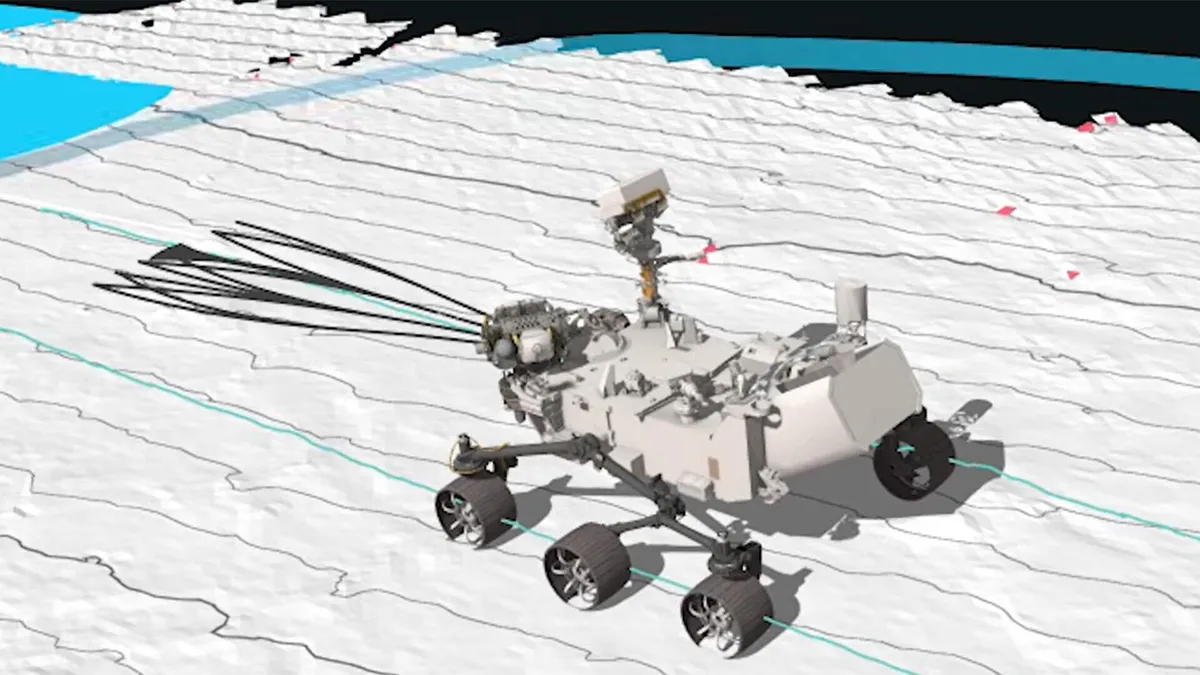
The route planned by Claude is shown in magenta, and the actual path taken is in orange. NASA scientists only had to make minor adjustments to the AI’s pathing.
NASA/JPL-Caltech/UofA
A more efficient way to do it
While AI is largely known as a provider of slop, which has been blamed for rapidly degrading people’s internet experience, it can be useful in some scientific pursuits. It takes time to parse years of imagery and data, plot the Perseverance waypoints, and then execute them.
Advertisement
Per NASA, waypoints are usually set no more than 330 feet apart, which means Perseverance is exploring the red planet one football field at a time. Take its epic climb out of the Jezero Crater in 2024. The journey took Perseverance 3.5 months and, all told, the rover climbed a total of 1,640 vertical feet. As of December 2025, the rover has driven a total of just 25 miles in roughly four years.
The goal, according to JPL space roboticist Vandi Verma, is to let Perseverance (and other Mars rovers) travel much farther while “minimizing operator workload.”
Verma also notes that AI could be used to flag interesting features on the planet, saving the human science teams time by eliminating the need to manually check “huge volumes of rover images.”
“This demonstration shows how far our capabilities have advanced and broadens how we will explore other worlds,” said Isaacman. “Autonomous technologies like this can help missions to operate more efficiently, respond to challenging terrain and increase science return as distance from Earth grows. It’s a strong example of teams applying new technology carefully and responsibly in real operations.”
Riding a motorcycle is one of the most freeing experiences you can have. Even if you have all the luxuries of being inside a car and even a chauffeur to drive you around in it, sitting astride a bike is just a different feeling. Modern motorcycles offer a ton of features that make for a more comfortable ride. However, doing so will always be a high-stakes game of focus, physics, and continuous learning. It doesn’t matter if you have the one of the safest and most beginner-friendly motorcycles ever built — you still need to take care while on the road.
After years on two wheels, I have realized that the most dangerous habits aren’t only the obviously reckless ones like performing stunts on highways or unnecessary speeding through traffic. For serious riders who really want to drive safely, you can’t overlook even minor issues; a small lapse in judgment can result in la life-altering injury on a bike. It’s not always about wearing a well-ranked bike helmet or sturdy, protective riding jacket; you can avoid major accidents by simply removing unnecessary risks from your ride.
Dangerous behavior can include things like wearing the wrong shoes, adopting bad driving habits, allowing yourself to get distracted, or blindly trusting what you see while on the road. It’s time to unlearn some of these bad behaviors. Here are five things that you need to stop doing if you drive a motorcycle.
Advertisement
Stop wearing loose shoelaces
marino bocelli/Shutterstock
It may sound like something your mom would tell you, but it’s a crucial point. You don’t want a loose shoelace getting tangled in your bike. It even happened to me very recently. As I went to put my left foot down to stabilize the bike, I realized I couldn’t move as my shoelaces had gotten themselves tangled around the gear lever. Thanks to my years of experience, I avoided a drop that would have otherwise led to some bruises and scratched fairings, but others might not be able to save themselves.
Loose laces can easily end up tangled at the same spot of your own bike, preventing you from shifting gears when you need to change speed. Things get especially dangerous when you have someone riding pillion, though; their loose laces can get into the most dangerous moving parts of a motorcycle like the rear wheel, drive, and sprockets. If their laces get stuck into any of these parts at speed, it doesn’t just snap the lace — it can pull their foot right into the machinery, resulting in something dreadful.
Advertisement
For all these reasons, many state DMVs will highlight the issue. An example of this is how the Washington Department of Licensing explicitly advises keeping all your gear secure to avoid interference with controls, stating that “laces should be tucked in to prevent them from catching on parts of the bike.” To avoid such mishaps, you should be rigorous about the type of footwear you wear. The California DMV Motorcycle Handbook likewise warns against the dangers, clearly suggesting wearing sturdy, over-the-ankle or closed-toe shoes.
Advertisement
Stop changing speed or gears mid-corner
Motoed/Getty Images
Riding a motorcycle on a mostly-straight highway or freeway is a totally different skill from riding over hills or through twisty mountain roads. I’ve been a rider for more than a decade, but when I took my bike to Ladakh in the mountainous region of northern India, I learned a lot of new things about riding. One of the most crucial new lessons was you need to stay calm when approaching a sweeping curve so as to avoid slamming on the brakes or grabbing the clutch and downshifting.
Downshifting or braking might feel like a smart move, but it is actually one of the quickest ways to crash. Motorcycles rely on a limited amount of traction. When you lean your bike into a curve (the most common way of turning for heavy bikes those loaded down with gear), your tires are already using almost all the traction available. Downshifting or braking spikes your power delivery, and the bike loses traction.
Experts also agree that gear shifting and braking should happen before you are ready to lean the bike. According to a driving manual published by the Kentucky State Police (via DrivingTests.org), it is recommended to change gears before entering a turn. The manual notes that if shifting is necessary, it should be smooth and there should be no sudden change in power delivery, as it can cause the vehicle to skid. TVS Motor, one of the biggest manufacturers of two-wheelers in India, also suggests that you should enter the curve in the smoothest way possible. In other words, its safer to finish gear shifts and braking before entering the corner.
Advertisement
Stop watching the speedometer or using a phone
Dominik Pietruszka/Shutterstock
Modern-day motorcycles are equipped with TFT or LCD screens that are compatible with Apple CarPlay and Android Auto, allowing users to view all of their phone’s content, sometimes use apps on the display, and view other metrics. Even bikes that don’t support these features can often be fitted with a smartphone mount to use for navigation or other purposes. But because of all this, it becomes quite tempting for riders to spend too long looking down at these screens.
This distraction is often the cause of major accidents on the road. Looking down at the display or taking your eyes off the road, even for a fraction of a second, can result in a crash. While driving, your eyes are your primary tool. Not only should you stay vigilant about what’s happening in front of you, but you should also check your bike’s rear-view mirrors for possible dangers behind. You should be scanning the horizon for safely overtaking, avoiding potholes, or swiftly changing lanes, not flicking your eyes down to whatever’s on your phone screen.
Distracted riding is quite lethal, and even the best riding gear might not be able to save you from accident or injury. The NHTSA (National Highway Traffic Safety Administration) reports thousands of lives lost annually due to distraction, with more than 3,000 deaths in 2023 alone. Even manufacturers of smartphone mount holders like Mob Armor stress that paying too much attention to your phone can lead to catastrophic consequences while riding.
Advertisement
Stop blindly trusting brake lights
jpreat/Shutterstock
One of the biggest mistakes, often committed by beginners and experienced bikers alike, is believing that if the car in front isn’t showing red brake lights, it isn’t slowing down. If you rely solely on this signal, then you may end up kissing the trunk of someone’s car with a bang. This most commonly comes up with with manual transmission cars, which is very common where I’m from. A car with a manual transmission often uses engine braking to slow down, which doesn’t require a driver to step on the brake.
Brake lights only tell you that the driver is depressing the brake pedal. It doesn’t tell you if the driver is just coasting to a stop or downshifting. If you’re in the habit of following vehicles too closely, it’s all too easy for this to result in an accident. As per the Motorcycle Safety Foundation, a rider should remain highly engaged when on the road, doing your best to anticipate what’s coming down the road or to look for signs that the cars in front of you are slowing down.
This is why you should always leave adequate space between your motorcycle and the vehicle in front. By leaving a visible gap between you and them, you will have sufficient time to react and bring your bike to a stop safely. A good cue to look for is whether the tires of the vehicle in front of you are exhibiting signs of slowing. You should also evaluate whether the gap between the two of you is shrinking faster than normal. Is this a lot of work? Sure. It’s also critical for your safety.
Advertisement
Stop riding behind the center of a car
Ozgurdonmaz/Getty Images
Riding a motorcycle can make you feel like royalty. It’s only natural to feel like you’ve got the right to cruise right down the dead center of your lane. However, that’s often considered the most dangerous spot for a two-wheeled vehicle. Since cars have four wheels, drivers usually center their vehicles over hazards to protect their own tires. This means the center of the lane becomes the collection point for all the stuff that cars have avoided, such as potholes, broken vehicle parts, and even spilled or leaking vehicle fluids.
Riding in the middle puts your front tire at great risk of hitting any of these obstacles. The last thing you want is ending up wrecked because you hit a pothole or slipped on an oil slick that accumulated in the center. More importantly, driving directly behind a vehicle in this way might make it hard for that driver in front of you to see you in their side mirrors, leaving you in their blind spot.
Advertisement
This is why your best bet is often to drive aligned with the left bumper of the car ahead of you. This places you squarely in view of the driver’s side mirror, making you harder to ignore. And second, it gives you a clearer view as you can more easily see past that vehicle, letting you avoid trouble down the road and minimizing your risk of an accident.
On Thursday, Google announced that “commercially motivated” actors have attempted to clone knowledge from its Gemini AI chatbot by simply prompting it. One adversarial session reportedly prompted the model more than 100,000 times across various non-English languages, collecting responses ostensibly to train a cheaper copycat.
Google published the findings in what amounts to a quarterly self-assessment of threats to its own products that frames the company as the victim and the hero, which is not unusual in these self-authored assessments. Google calls the illicit activity “model extraction” and considers it intellectual property theft, which is a somewhat loaded position, given that Google’s LLM was built from materials scraped from the Internet without permission.
Google is also no stranger to the copycat practice. In 2023, The Information reported that Google’s Bard team had been accused of using ChatGPT outputs from ShareGPT, a public site where users share chatbot conversations, to help train its own chatbot. Senior Google AI researcher Jacob Devlin, who created the influential BERT language model, warned leadership that this violated OpenAI’s terms of service, then resigned and joined OpenAI. Google denied the claim but reportedly stopped using the data.
Even so, Google’s terms of service forbid people from extracting data from its AI models this way, and the report is a window into the world of somewhat shady AI model-cloning tactics. The company believes the culprits are mostly private companies and researchers looking for a competitive edge, and said the attacks have come from around the world. Google declined to name suspects.
Advertisement
The deal with distillation
Typically, the industry calls this practice of training a new model on a previous model’s outputs “distillation,” and it works like this: If you want to build your own large language model (LLM) but lack the billions of dollars and years of work that Google spent training Gemini, you can use a previously trained LLM as a shortcut.
Have you ever asked Alexa to remind you to send a WhatsApp message at a determined hour? And then you just wonder, ‘Why can’t Alexa just send the message herself? Or the incredible frustration when you use an app to plan a trip, only to have to jump to your calendar/booking website/tour/bank account instead of your AI assistant doing it all? Well, exactly this gap between AI automation and human action is what the agent-to-agent (A2A) protocol aims to address. With the introduction of AI Agents, the next step of evolution seemed to be communication. But when communication between machines… This story continues at The Next Web
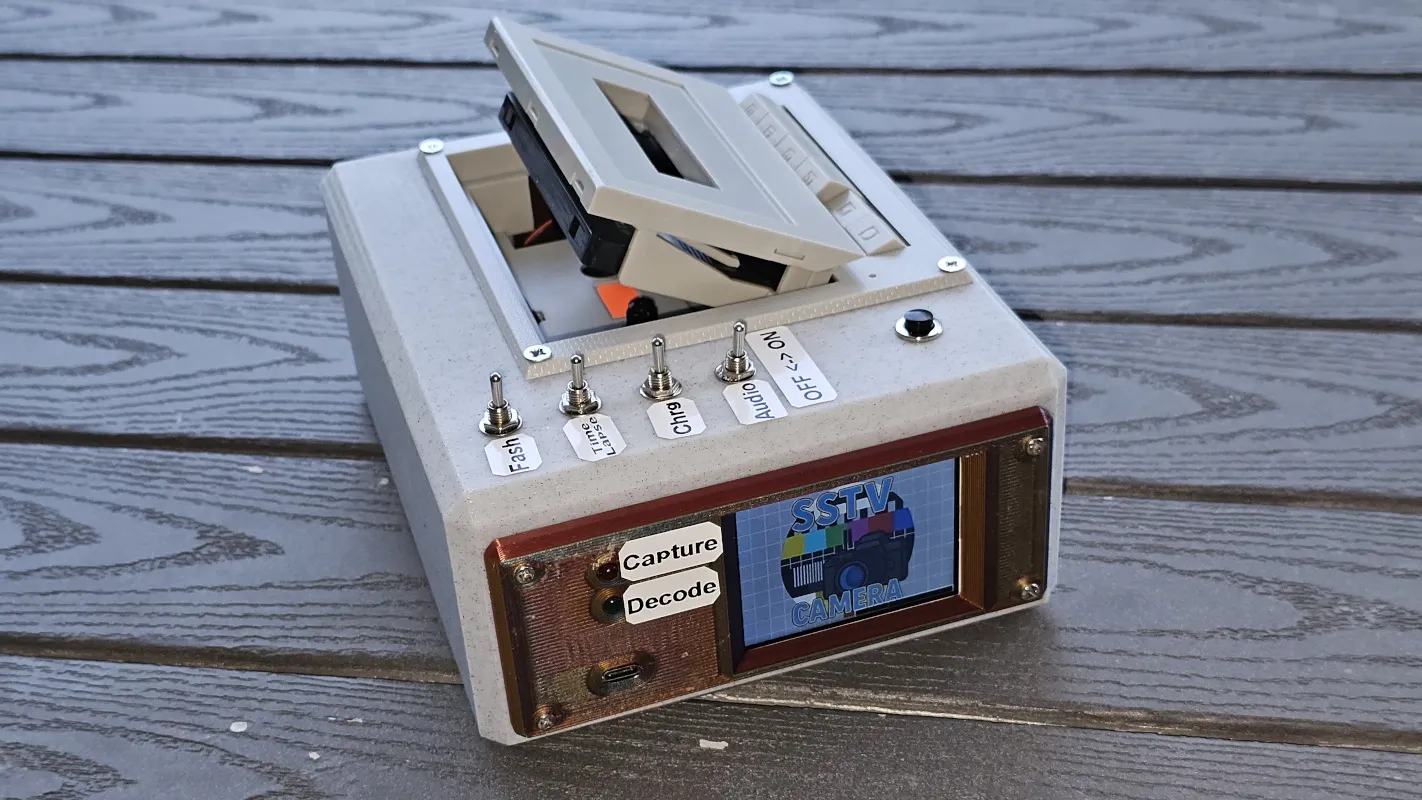
Ham radio operators may be familiar with slow-scan television (SSTV) where an image is sent out over the airwaves to be received, decoded, and displayed on a computer monitor by other radio operators. It’s a niche mode that isn’t as popular as modern digital modes like FT8, but it still has its proponents. SSTV isn’t only confined to the radio, though. [BLANCHARD Jordan] used this encoding method to store digital images on a cassette tape in a custom-built tape deck for future playback and viewing.
The self-contained device first uses an ESP32 and its associated camera module to take a picture, with a screen that shows the current view of the camera as the picture is being taken. In this way it’s fairly similar to any semi-modern digital camera. From there, though, it starts to diverge from a typical digital camera. The digital image is converted first to analog and then stored as audio on a standard cassette tape, which is included in the module in lieu of something like an SD card.
To view the saved images, the tape is played back and the audio signal captured by an RP2040. It employs a number of methods to ensure that the reconstructed image is faithful to the original, but the final image displays the classic SSTV look that these images tend to have as a result of the analog media. As a bonus feature, the camera can use a serial connection to another computer to offload this final processing step.
A critical pre-authentication remote code execution vulnerability in BeyondTrust Remote Support and Privileged Remote Access appliances is now being exploited in attacks after a PoC was published online.
Tracked as CVE-2026-1731 and assigned a near-maximum CVSS score of 9.9, the flaw affects BeyondTrust Remote Support versions 25.3.1 and earlier and Privileged Remote Access versions 24.3.4 and earlier.
BeyondTrust disclosed the vulnerability on February 6, warning that unauthenticated attackers could exploit it by sending specially crafted client requests.
“BeyondTrust Remote Support and older versions of Privileged Remote Access contain a critical pre-authentication remote code execution vulnerability that may be triggered through specially crafted client requests,” explained BeyondTrust.
“Successful exploitation could allow an unauthenticated remote attacker to execute operating system commands in the context of the site user. Successful exploitation requires no authentication or user interaction and may lead to system compromise, including unauthorized access, data exfiltration, and service disruption.”
Advertisement
BeyondTrust automatically patched all Remote Support and Privileged Remote Access SaaS instances on February 2, 2026, but on-premise customers must install patches manually.
Hacktron says approximately 11,000 BeyondTrust Remote Support instances were exposed online, with around 8,500 on-premises deployments.
Ryan Dewhurst, head of threat intelligence at watchTowr, now reports that attackers have begun actively exploiting the vulnerability, warning that if devices are not patched, they should be assumed to be compromised.
Advertisement
“Overnight we observed first in-the-wild exploitation of BeyondTrust across our global sensors,” Dewhurst posted on X.
“Attackers are abusing get_portal_info to extract the x-ns-company value before establishing a WebSocket channel.”
This exploitation comes a day after a proof-of-concept exploit was published on GitHub targeting the same /get_portal_info endpoint.
The attacks target exposed BeyondTrust portals to retrieve the ‘X-Ns-Company‘ identifier, which is then used to create a websocket to the targeted device. This allows the attackers to execute commands on vulnerable systems.
Advertisement
Organizations using self-hosted BeyondTrust Remote Support or Privileged Remote Access appliances should immediately apply available patches or upgrade to the latest versions.
BleepingComputer contacted BeyondTrust and Dewhurst to ask if they had any details on post-exploitation activity and will update this story if we receive a response.
Modern IT infrastructure moves faster than manual workflows can handle.
In this new Tines guide, learn how your team can reduce hidden manual delays, improve reliability through automated response, and build and scale intelligent workflows on top of tools you already use.
It’s rare that I spot something at the grocery store that makes my heart cry out with unbridled, capitalistic desire. Yes, both the wine and fancy cheese departments sometimes have fun finds, but otherwise, there are only so many ways to remix the foodstuff canon.
It wasn’t something edible that recently caught my eye, though, but rather a genius bit of infrastructure. And it was brightly colored packaging, in fact, but not in the processed-food department or the produce aisle. I spotted them in a fellow shopper’s cart: four technicolor shopping bags, one of them insulated, designed to fit inside the grocery cart, with overhanging handles that keep them open and in place while you shop.
Simple. Genius. How did I not realize that these were missing in my life?
Advertisement
I spotted these clever shopping bags in a fellow shopper’s cart. I knew I had to have them.
Pamela Vachon/CNET
The rainbow colors are certainly what grabbed my attention here, but once my brain processed what I was seeing, it was my type-A heart that decided I must have them. (I enthusiastically stopped the owner to ask if I could take a picture, as though they were a quartet of puppies and not shopping bags.)
Surely for a highly organized, competitive personality, efficiently sorting one’s grocery purchases into their shopping bags while parading the well-stocked aisles is about as much fun as one can have in the grocery store outside of contestantship on Supermarket Sweep. (The spice rack, you fools! Go to the spice rack!)
Advertisement
Sorting groceries into shopping bags in real time is about as much fun as one can have in the grocery store.
Pamela Vachon/CNET
Bags designed for grocery cart organization in real time
There are plenty of reusable grocery shopping bags that are sturdy enough to situate inside your cart, but to maximize space and organization, look for those called “cart bags,” “cart caddies” or “trolley bags,” which also offer the added bonus of making grocery shopping sound like a fun outing more than a weekly chore.
Advertisement
There are numerous bag designs to choose from.
Pamela Vachon/CNET
There are numerous designs and layouts here to choose from: Some have clip-on cart handles that retract, some have separate, removable clips, and others are outfitted with dowels that overhang the sides of the cart, which are then stored in what looks rather like a tent roll. (Again, adventure, not tedium.) Not every set comes with an insulated bag, and some brands feature bags that are all the same color. (Presumably so you don’t attract the attention of people like me who treat the grocery store like a fact-finding mission.)
You do you with regard to these various options, but here are several sets available on Amazon, all around the $30 to $40 range:
These bags create order out of chaos when grocery shopping.
Pamela Vachon/CNET
Perhaps your kitchen pantry, like mine, isn’t exactly designed with grocery aisle layouts in mind. Things that sit side by side on retail shelves often live in opposite corners in real life. “Snacks,” for example, are relegated to various shelves in my kitchen based on factors that I don’t know you well enough to divulge here.
Perhaps you get sniffy about cleaning products sharing bag space, or even cart space, with fresh produce. Perhaps you have numerous errands to run when you grocery shop, and you’re wondering about the condition of your refrigerated or frozen items once you leave the store. These bags create order for all of this potential chaos, real or imagined.
Advertisement
I use the color-coded bags for dedicated categories.
Pamela Vachon/CNET
The real beauty of these bags is that you can sort your groceries in real time, according to whatever system makes sense to you. (See “snacks,” above.) This is also the argument for multi-colored bags, which let you assign groceries to their appropriate bags, saving you time at the putting-away stage of grocery acquisition.
I’m sure I don’t need to mention that these are also environment-positive, if you’re not already in the reusable grocery bag game. A dedicated, ventilated bag for all your produce may even preclude the need to wrestle with the uncooperative produce aisle bag roll. Safe in their own color-coordinated zone, your lettuces and broccoli crowns won’t mingle with anything you don’t want them to touch.
Use with scan-as-you-go apps for extreme efficiency
Advertisement
Combine these clever bags with scan-to-pay shopping for the most efficient supermarket trip ever.
Pamela Vachon/CNET
Checking out and repacking your groceries becomes that much more sane when everything is already sorted in a like-with-like format. I realize this only amounts to mere minutes of your life, but for many of us, those minutes add up, not even over the course of a lifetime but in the course of a day, and a little bit of extra sanity can go a very long way in turbulent times.
If your grocery store has an app or device that allows you to scan as you go, now you’re really in a high-efficiency grocery zone. Like TSA Pre-check, except for the kind of elite grocery shoppers who would never double-park their cart in a high-traffic aisle. Those programs, which preclude even the need for checking out in any time-sucking sense, plus your pre-sorted groceries in these bags, amount to just about the pinnacle of what in-person grocery shopping can aspire to.
A Dutch appeal court also upheld an October decision to suspend the company’s Chinese CEO Zhang Xuezheng.
Nexperia’s Chinese owner Wingtech was unable to sway the Amsterdam Court of Appeal and regain control of the Dutch chipmaker that plays a vital role in the global automotive industry.
As per a translated press release published yesterday (11 February), the court’s enterprise chamber instead ordered an investigation into Nexperia, citing “well-founded reasons to doubt a proper policy and proper course of affairs” at the company.
The court also upheld an October decision to suspend the company’s Chinese CEO Zhang Xuezheng and hand control off to EU-based directors. Xuezheng’s shares were handed over to a trust, but he still retained economic benefits.
Advertisement
Nexperia’s seizure began in September last year when the Dutch government invoked the rarely used Goods Availability Act, pointing to “serious governance shortcomings” at the company.
The Netherlands believed that alleged mismanagement at Nexperia posed a “threat” to Europe’s semiconductor capabilities.
Responding to the seizure, China halted Nexperia chip exports in early October, which resulted in a disruption affecting nearly three-quarters of the company’s output. On 9 November, however, the export ban was lifted.
Nexperia’s Chinese and European arms have stopped collaborating since the seizure, and despite signs of easing tensions in November, issues between the parties still persist.
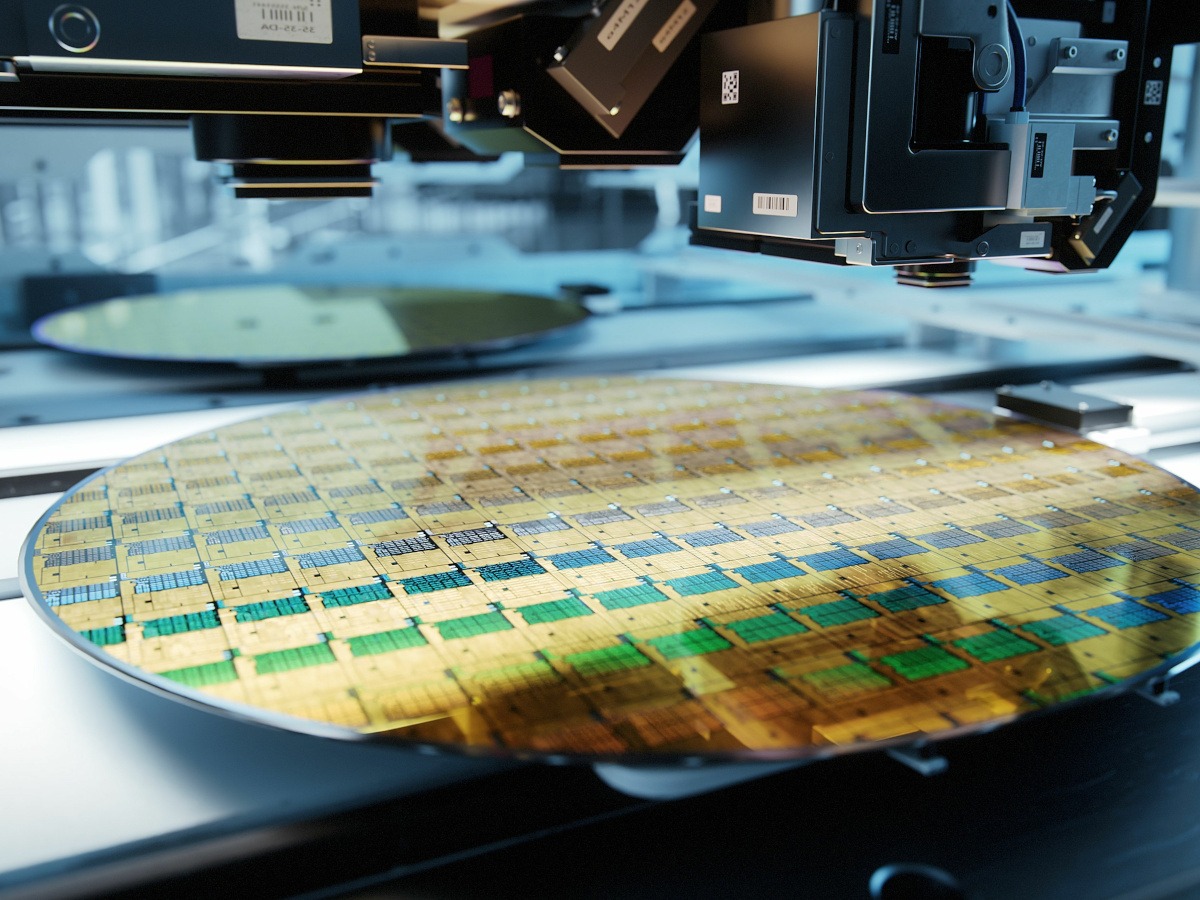
The Dutch company stopped shipping silicon wafers to its Chinese subsidiary last year, claiming the local unit refused to make payments. According to the Financial Times, customers are now purchasing wafers from the European unit and sending them to the Chinese unit for assembly themselves.
Nexperia supplies chips to the likes of Volvo, JLR and Volkswagen.
In its order following the public hearing of 14 January, the Dutch court found “indications that careless action was taken with a conflicting interest” at Nexperia.
Advertisement
It said that Xuezheng changed company strategies without consulting other board members. In a hearing last month, Nexperia’s lawyers claimed that Zhang was moving equipment to China and used its assets for Wing Systems, a different company he owned.
Responding to yesterday’s orders, Nexperia said it welcomed the ruling and is committed to fully complying with the investigation.
“Despite the challenging situation, our underlying business continues to be healthy and resilient and we remain committed to being a strong, reliable partner for all our stakeholders, including customers,” it said.
The Dutch-headquartered Nexperia – an offshoot of NXP – was acquired by China’s contract manufacturing giant Wingtech Technology in 2018.
Advertisement
Last year’s takeover has caused a severe strain in the relationship between parent company Wingtech and Nexperia, who have accused each other of disrupting operations and destabilising business.
In 2024, the US government added Wingtech to its Entity List – a designation given to companies that could pose a risk to the country’s national security. In 2022, the UK government ordered Wingtech-owned Nexperia to undo its acquisition of the Newport Wafer Fab, citing a national security risk.
Don’t miss out on the knowledge you need to succeed. Sign up for the Daily Brief, Silicon Republic’s digest of need-to-know sci-tech news.
from the fuck-everyone-but-us-policy-still-in-play dept
The DHS and its components want to find non-white people to deport by any means necessary. Of course, “necessary” is something that’s on a continually sliding scale with Trump back in office, which means everything (legal or not) is “necessary” if it can help White House advisor Stephen Miller hit his self-imposed 3,000 arrests per day goal.
As was reported last week, DHS components (ICE, CBP) are using a web app that supposedly can identify people and link them with citizenship documents. As has always been the case with DHS components (dating back to the Obama era), the rule of thumb is “deploy first, compile legally-required paperwork later.” The pattern has never changed. ICE, CBP, etc. acquire new tech, hand it out to agents, and much later — if ever — the agencies compile and publish their legally-required Privacy Impact Assessments (PIAs).
PIAs are supposed to precede deployments of new tech that might have an impact on privacy rights and other civil liberties. In almost every case, the tech has been deployed far ahead of the precedential paperwork.
As one would expect, the Trump administration was never going to be the one to ensure the paperwork arrived ahead of the deployment. As we covered recently, both ICE and CBP are using tech provided by NEC called “Mobile Fortify” to identify migrants who are possibly subject to removal, even though neither agency has bothered to publish a Privacy Impact Assessment.
Advertisement
As Wired reported, the app is being used widely by officers working with both agencies, despite both agencies making it clear they don’t have the proper paperwork in place to justify these deployments.
While CBP says there are “sufficient monitoring protocols” in place for the app, ICE says that the development of monitoring protocols is in progress, and that it will identify potential impacts during an AI impact assessment. According to guidance from the Office of Management and Budget, which was issued before the inventory says the app was deployed for either CBP or ICE, agencies are supposed to complete an AI impact assessment before deploying any high-impact use case. Both CBP and ICE say the app is “high-impact” and “deployed.”
While this is obviously concerning, it would be far less concerning if we weren’t dealing with an administration that has told immigration officers that they don’t need warrants to enter houses or effect arrests. And it would be insanely less concerning if we weren’t dealing with an administration that has claimed that simply observing or reporting on immigration enforcement efforts is an act of terrorism.
Officers working for the combined forces of bigotry d/b/a/ “immigration enforcement” know they’re safe. The Supreme Court has ensured they’re safe by making it impossible to sue federal officers. And the people running immigration-related agencies have made it clear they don’t even care if the ends justify the means.
Despite DHS repeatedly framing Mobile Fortify as a tool for identifying people through facial recognition, however, the app does not actually “verify” the identities of people stopped by federal immigration agents—a well-known limitation of the technology and a function of how Mobile Fortify is designed and used.
[…]
Records reviewed by WIRED also show that DHS’s hasty approval of Fortify last May was enabled by dismantling centralized privacy reviews and quietly removing department-wide limits on facial recognition—changes overseen by a former Heritage Foundation lawyer and Project 2025 contributor, who now serves in a senior DHS privacy role.
Even if you’re the sort of prick who thinks whatever happens to non-citizens is deserved due to their alleged violation of civil statutes, one would hope you’d actually care what happens to your fellow citizens. I mean, one would hope, but even the federal government doesn’t care what happens to US citizens if they happen to be unsupportive of Trump’s migrant-targeting crime wave.
DHS—which has declined to detail the methods and tools that agents are using, despite repeated calls from oversight officials and nonprofit privacy watchdogs—has used Mobile Fortify to scan the faces not only of “targeted individuals,” but also people later confirmed to be US citizens and others who were observing or protesting enforcement activity.
TLDR and all that: DHS knows this tool performs worst in the situations where it’s used most. DHS and its components also knew they were supposed to produce PIAs before deploying privacy-impacting tech. And DHS knows its agencies are not only misusing the tech to convert AI shrugs into probable cause, but are using it to identify people protesting or observing their efforts, which means this tech is also a potential tool of unlawful retribution.
Advertisement
There’s nothing left to be discussed. This tech will continue to be used because it can turn bad photos into migrant arrests. And its off-label use is just as effective: it allows ICE and CBP agents to identify protesters and observers, even as DHS officials continue to claim doxing should be a federal offense if they’re not the ones doing it. Everything about this is bullshit. But bullshit is all this administration has.
Dell‘s Presidents’ Day sale is happening this week, so I’ve asked TechRadar’s own computing experts to hand-pick their favorite deals. You can find discounts on award-winning Dell laptops, monitors, and desktops at prices comparable to those in its Black Friday sale.
You’ll find our favorite laptop dealsfirst, including the budget Dell 15 laptop for only $329.99, the powerful XPS 13 laptop for $949.99, and the versatile Inspiron 14 2-In-1 Laptop for $499.99.
If you’re looking for a cheap monitor for your home office, Dell has this 24-inch model for only $89.99, and gamers can get this 34-inch curved Alienware monitor for $349.99.
Advertisement
Last but not least, Dell is also offering discounts on its desktops, and our favorite is a whopping $470 off the Dell Tower Desktop.
Dell designs some of the best laptops on the market, and today’s offers make them even more affordable. Dell’s Presidents’ Day deals are limited-time offers, and all offers will expire at Midnight on Presidents’ Day proper (Monday, February 16).