IQM Quantum Computers has become the first European quantum computing company to list on a major US stock exchange.
Finland’s IQM Quantum Computers began trading on the Nasdaq Global Select Market on Wednesday (July 2) under the ticker symbol IQMX, becoming the first European quantum computing company to list on a major US stock exchange.
Founded in Espoo in 2018 by a group of scientists with the aim of building the best quantum processing units, IQM has since grown into a global provider of full-stack superconducting quantum computers, deploying systems to enterprises, research institutions, supercomputing centres and national laboratories. The company now employs more than 400 people across Europe, Asia and North America.
Advertisement
IQM claims to have sold 23 quantum computers worldwide, more than any other quantum manufacturer. Its customers include CINECA in Italy, the Leibniz Supercomputing Center in Germany, and the US Department of Energy’s Oak Ridge National Laboratory. The company also recently secured the first enterprise quantum computer purchase in Japan, with Toyo Corporation acquiring an IQM system.
“Quantum computing is reaching an inflection point,” said Jan Goetz, CEO and co-founder of IQM. “Around the world, organisations are moving from exploration to implementation, investing in quantum infrastructure and building the capabilities that will define the next generation of computing. IQM enters the public markets from a position of strength, with leading technology, a growing global customer base, and a clear strategy for scaling the commercial adoption of quantum computing.”
Central to IQM’s commercial model is what it calls the Production Quantum approach – full-stack, open-architecture systems that customers own, operate and build on, rather than access remotely via cloud alone.
The company is also expanding its US footprint with the opening of its first Quantum Technology Centre in Maryland and has recently announced a novel quantum error correction approach that it says significantly reduces hardware requirements for fault-tolerant quantum computing.
Advertisement
IQM’s Nasdaq debut comes as the broader quantum sector attracts growing attention from investors and governments alike, with organisations increasingly moving beyond research to real-world deployment.
Don’t miss out on the knowledge you need to succeed. Sign up for the Daily Brief, Silicon Republic’s digest of need-to-know sci-tech news.
According to the Wall Street Journal, SpaceX showed investors an early prototype of a slim, “handset-like” AI device running a proprietary operating system and integrating xAI technology. Elon Musk, however, denied the report, calling it “utterly false.” TechCrunch reports: SpaceX, alongside sister company Tesla, does have the manufacturing expertise to pull off mass-producing a bunch of AI devices — not to mention access to the chips needed to power any on-device compute. SpaceX has also signaled that it’s keen to expand into wireless, with Starlink Mobile as a potential competitor to Verizon and AT&T. One analyst even went as far as to speculate that T-Mobile or AT&T would make fine acquisition targets for the rocket builder, though such a purchase would, undoubtedly, be pricey.
It’s also not clear if SpaceX is just throwing spaghetti at the wall or if it will attempt to really mass-produce and market such a device. But one thing that seems clearer is that if OpenAI is doing it, Musk would, perhaps, want to try to do it better. […]
Like OpenAI, SpaceX’s prototype is reportedly designed to run on a proprietary operating system and integrate technology from xAI, Musk’s AI company that SpaceX acquired earlier this year. This would prevent these new devices from being trapped inside another company’s platforms (like Google’s Android). But the intent also appears to be to create something new, with native AI interfaces. That said, the graveyard is crowded with the unsuccessful launches of AI devices from companies like Humane and Rabbit. A company wanting to sell an AI device does not equate to consumers wanting to buy such a thing. Yet.
Report says proposed rewrite gives operators more freedom to shop around for a greener grade
The European Union’s proposed environmental rating system for datacenters may be amended in response to lobbying from IT industry heavyweights, making it easier to offset greenhouse gas emissions using clean energy certificates.
According to the Financial Times, the European Commission is weakening its original proposals after pressure from datacenter operators and tech giants. The newspaper claims to have seen the revised draft of the regulations, set to be discussed by representatives of member states on Thursday.
Advertisement
We asked the Commission for comment on the leaked draft.
The Commission published a draft regulation in March proposing an A-to-G rating scale for datacenters, based on their energy and water efficiency. The system is intended to incentivize greater sustainability in their operations, especially as bit barn capacity is expected to expand greatly over the next decade, thanks to huge demand for AI and cloud services.
That earlier draft specified that facilities could offset greenhouse gas emissions by investing in clean energy certificates, but only if the projects concerned were in the same region as the data campus itself.
It is understood that this has been amended so that facilities operating in one country can offset their emissions by obtaining certificates from renewable projects in a different EU state. The proposed change was made at the behest of companies and lobby groups that argued it would increase their operating costs.
Advertisement
The EU’s efforts to press datacenters and other large energy users into adopting greater efficiency and sustainability measures have met with varying degrees of pushback.
Last year, the Climate Neutral Data Centre Pact (CNDCP) expressed concerns about standards for data campus efficiency the European Commission was considering, based on feedback from mandatory reporting introduced in the Energy Efficiency Directive (EED).
The group lists tech giants AWS, Microsoft, and Google among its signatories, as well as datacenter operators like Digital Realty, NorthC, and Vantage Data Centers.
Also last year, the Cloud Infrastructure Service Providers in Europe (CISPE) trade body was critical of the EU’s Water Resilience Strategy, warning that burdensome regulatory demands regarding water use might prompt operators to build outside Europe.
Advertisement
Another body, the European Data Centre Association (EUDCA), issued a statement this week affirming its “unwavering commitment” to climate-neutral datacenters and sustainable digital growth.
But it warned that Europe will not be able to “unlock the digital infrastructure capacity required for its AI and digital ambitions” without addressing structural challenges in the electricity system, including expansion of transmission and distribution grids, faster and more transparent permitting processes, and stable access to low-carbon electricity.
Meanwhile, Europe needs a policy framework that integrates water and energy efficiency if it wants to keep growing datacenter capacity to support its AI and cloud computing ambitions, according to a recent report.
The proposed environmental rating system is still listed as due for adoption in the third quarter of this year, but debate over the changes may push that back further. ®
It can start with something as mundane as dragging a link into your browser. Three seconds later, a threat actor has the tokens needed to take over your Microsoft 365 account, and you never did anything that traditional security awareness training would flag. You just followed what looked like a normal set of instructions.
That’s the defining characteristic of modern cybercrime: it doesn’t force its way in. It steps quietly into the middle of an everyday workflow and turns a routine action into the moment everything goes wrong.
Why These Attacks Keep Working
These attacks work because of habits we’ve all built up online. Clicking through CAPTCHAs, accepting cookie prompts, pressing a key combination to move a process along. That trained reflexiveness is exactly what attackers are counting on.
It’s the core mechanic behind ClickFix attacks. Victims are shown a fake prompt instructing them to press a sequence of keyboard shortcuts, which pastes and executes attacker-supplied commands on their own machine. There’s no vulnerability to exploit and no firewall confrontation. Just a convincing lie inserted at the right moment.
Advertisement
ClickFix surged in 2025 and remains active, but attackers have already evolved the concept into something more sophisticated.
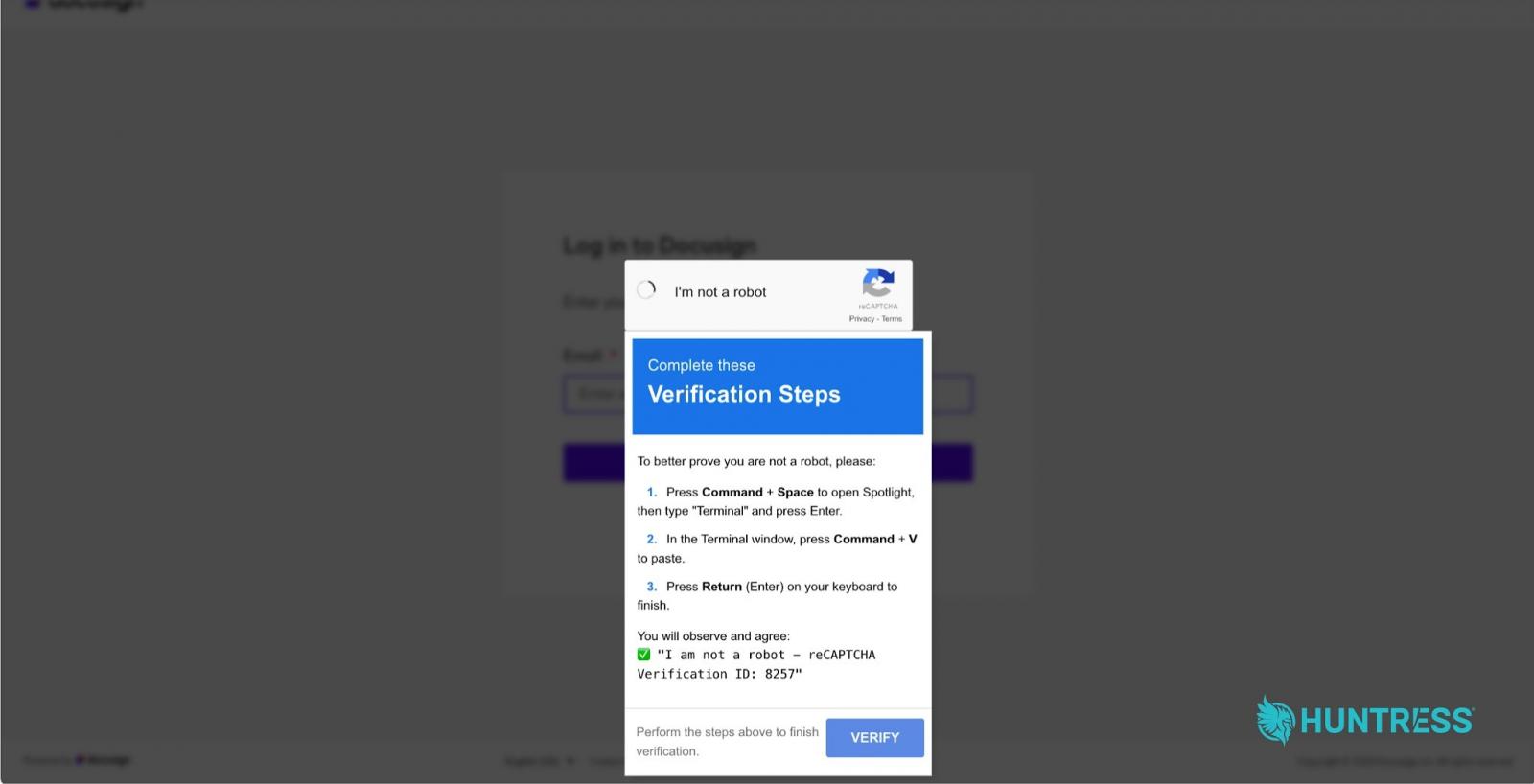
Figure 1 below shows the ClickFix-style fake verification prompt.
Figure 1: In a ClickFix attack, the victim follows fake verification steps that ultimately trigger malicious code on their own machine.
Hacker tradecraft’s evolving daily, so let’s break it down on Tradecraft Tuesday!
Join us monthly for an in-depth look at attacker tradecraft—no sales or product talk involved. Sign up for the series today or catch up on previous episodes. No tricks, just tradecraft.
A New Attack Variant Targeting Microsoft 365 Sessions
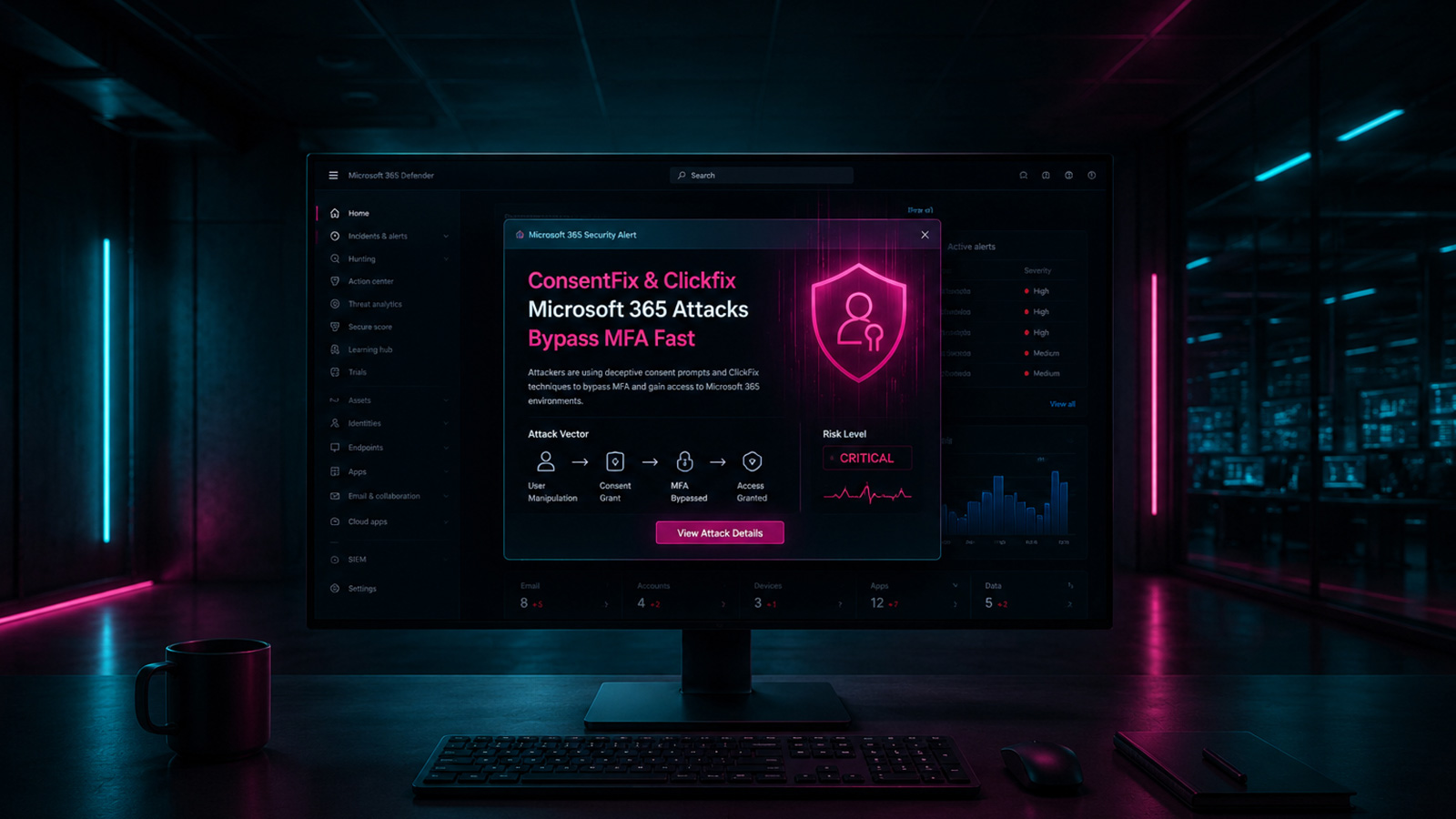
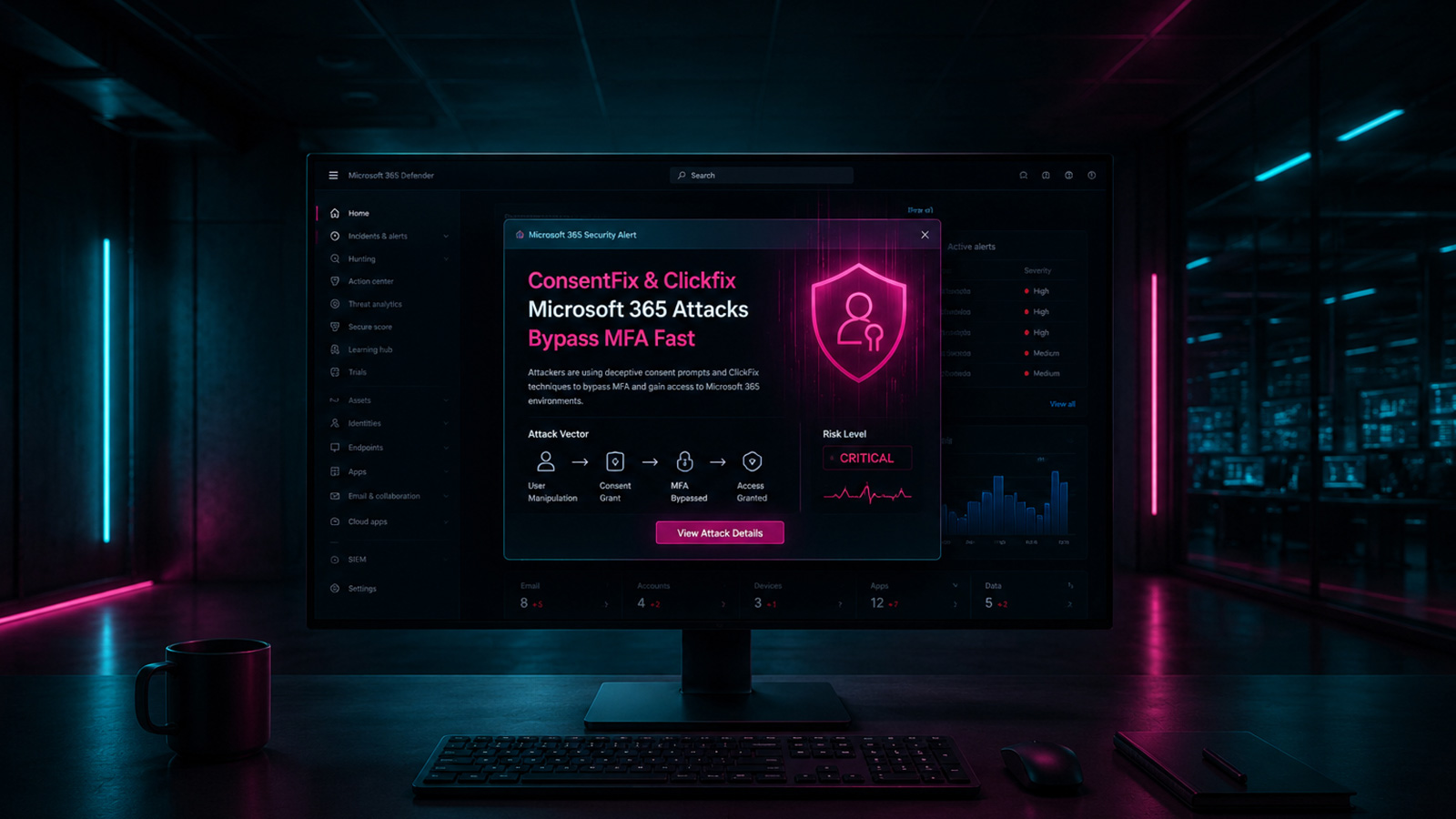
The newer variant, ConsentFix, shifts the attack surface to Microsoft 365’s OAuth consent flows, the sign-in prompts that users have learned to breeze through without much scrutiny.
Advertisement
The setup is deceptively clean. A phishing lure arrives, often delivered through trusted platforms like Dropbox or DocSend, sometimes behind a password that also makes it harder for security tooling to inspect.
The victim clicks through, encounters what looks like a standard Microsoft authentication screen, and is asked to complete the process by dragging a localhost callback link into the browser.
That drag-and-drop step is the trap. Rather than finishing a harmless authentication step, the user unknowingly surrenders OAuth tokens, handing the attacker session access to email and other Microsoft 365 services without a password and MFA bypass.
The victim isn’t typing credentials into a fake form. They’re completing what appears to be a legitimate authentication flow, and the session itself is what gets stolen.
Advertisement
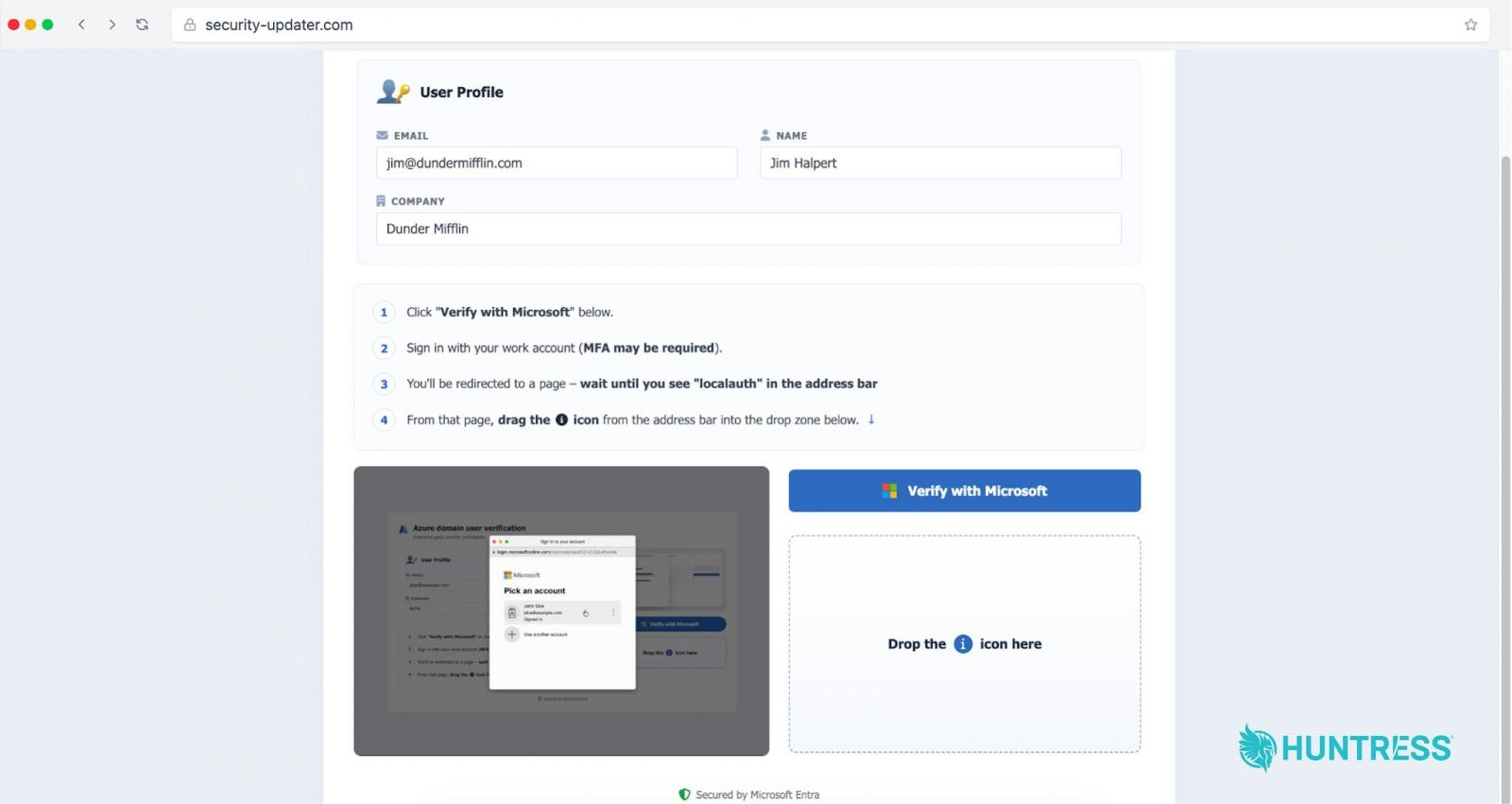
Figure 2 below shows how ConsentFix turns what looks like a normal Microsoft 365 sign-in step into session theft.
Figure 2: ConsentFix hijacks the Microsoft 365 sign-in flow by turning a familiar user action into stolen session access.
Criminals Are Sharing the Blueprint Openly
By early March 2026, a detailed walkthrough of ConsentFix had been posted to a public Russian cybercrime forum. It included working code, infrastructure screenshots, and a video tutorial showing exactly how to build and deploy the attack.
The infrastructure leaned on free or widely available services, and the post also outlined how attackers profile targets before sending a single phishing message, using LinkedIn and similar tools to map organizations and tailor lures to real people.
What was once a technique requiring meaningful technical skill now comes packaged with documentation and step-by-step guidance. The barrier to entry keeps dropping.
How to Reduce Your Exposure
Awareness still has a role. These attacks depend on people moving through familiar workflows without pausing. Asking why a website wants you to press hotkeys or drag a strange link into a browser is often enough to short-circuit the whole thing.
Advertisement
But awareness alone won’t close the gap, because these attacks are specifically engineered to look routine. Defenders also need detection coverage for the traces they leave behind: unusual PowerShell activity originating from normal user processes, or new session logins from unexpected locations.
Endpoint and identity monitoring can surface those signals before a brief lapse in judgment snowballs into a full account compromise.
The attacker’s job is to interrupt a normal workflow at exactly the right moment and let the victim do the rest. Understanding that pattern is the first step toward stopping it.
Tradecraft Tuesday: No Products. No Pitches. Just Hacks.
Tradecraft Tuesday provides cybersecurity professionals with an in-depth analysis of the latest threat actors, attack vectors, and mitigation strategies. Each weekly session features technical walkthroughs of recent incidents, comprehensive breakdowns of malware trends, and up-to-date indicators of compromise (IOCs).
Advertisement
Participants gain:
Detailed briefings on emerging threat campaigns and ransomware variants
Evidence-driven defense methodologies and remediation techniques
Direct interaction with Huntress analysts for incident response insights
Access to actionable threat intelligence and detection guidance
Advance your defensive posture with real-time intelligence and technical education specifically designed for those responsible for safeguarding their organization’s environment.
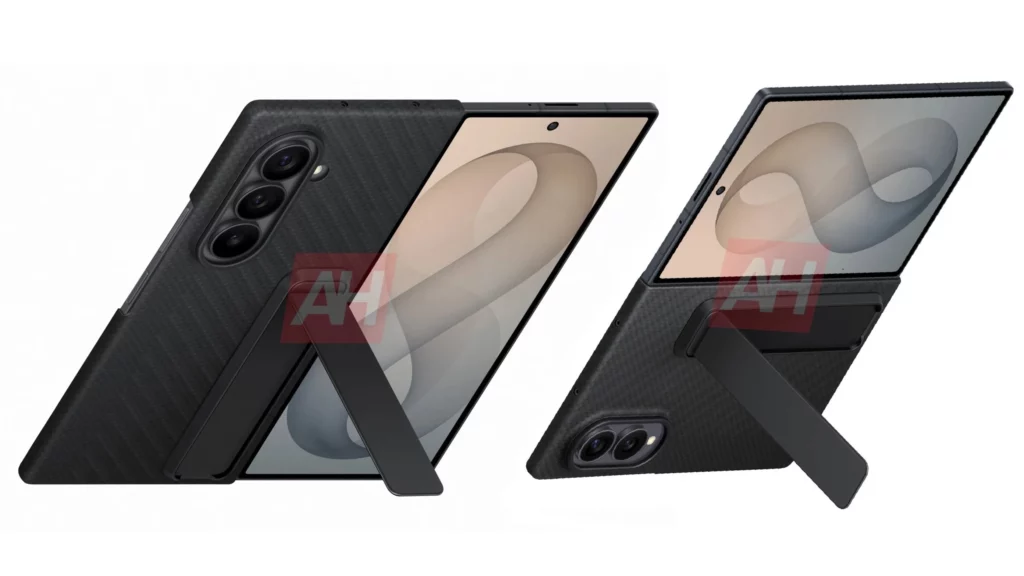
Samsung has begun teasing its upcoming foldable phones, which are scheduled to launch in July. With the theme “New Shape, New Joy,” Samsung has launched its teaser campaign hinting at the Galaxy Z Fold 8 redesign. Meanwhile, leaked images of official cases have offered an early glimpse of the phone’s design, giving a better idea of what Samsung may announce in the coming weeks. Unlike in earlier years, Samsung is building curiosity around the device before fully announcing the launch event.
The latest teaser images suggest Samsung is giving its next foldable a fresh design. The company repeatedly uses phrases like “new shape” and “cuts to what matters.” Another teaser shows purple, pink, and gold shades that could match the upcoming phone’s color options. Samsung also briefly reveals a wallpaper featuring the number “8,” hinting at the Galaxy Z Fold 8.
Leaked Images Reveal Galaxy Z Fold 8 and Other Foldables
Image: Android Headlines
New leaked images have provided an early look at Samsung’s upcoming foldable phones. The leaks include official protective cases for the Galaxy Z Fold 8, Galaxy Z Fold 8 Ultra, and Galaxy Z Flip 8. Some images also show the phones inside the cases, making their designs easier to understand. This gives a clearer view of the new designs teased by Samsung.
The latest leaks also highlight the key design changes across Samsung’s upcoming foldable lineup. The Galaxy Z Fold 8 appears wider than earlier Fold models. It includes a dual-rear-camera setup and a punch-hole selfie camera. The Galaxy Z Fold 8 Ultra retains a taller design and a triple-camera rear setup. The Galaxy Z Flip 8 maintains its classic flip-style design with dual cameras.
Case Options and Color Choices
Samsung seems ready to offer multiple official case options with its new foldable lineup. The collection includes kickstand cases, aramid-fiber-style finishes, and solid-color covers. Buyers may choose from purple, white, and dark gray. The company could also introduce cartoon-style cases for users who want a unique look.
Advertisement
Expected Launch Timeline
The date of release is still being kept secret. But the latest news indicates the devices could launch on July 22. The company is likely to release teaser information before making an official announcement. These updates should reveal more about the upcoming devices.
Tesla has finally launched the Model Y Long Wheelbase in the US and Puerto Rico and has started taking orders for the variant, almost a year after the company released it in China. The Model Y Long Wheelbase has a three-row six-seat configuration, with heated seats and touchscreen displays on the first and second rows. It has a six-inch wheelbase extension that the other Model Ys in the US lack. Tesla says the trunk can still fit a 28-inch and a 20-inch suitcase each despite the three rows, and the vehicle’s frunk (front trunk) can hold an additional 20-inch suitcase.
Both second and third rows have a one-touch fold feature, while the second row has powered armrests and the third one has power recline. They both have side air bags optimized for them, and seats come with either 50W charging pads or charging ports.
The model has 325 miles of range, just two miles shorter than the Premium non-Long Wheelbase version, and can go from zero to 60 mph in 4.4 seconds. Buyers will get free access to Supervised Full Self Driving for 12 months before they have to pay $99 a month for the driver assistance feature. They also get 12 months of Supercharging for free.
Advertisement
The Tesla Model Y Long Wheelbase has a base price of $61,990, almost $22,000 more than the most basic Model Y and $12,000 more than the non-Long Wheelbase Premium variant. Tesla will start delivering the vehicles sometime between September and October this year.
Introducing Model Y Long Wheelbase – now available in the US & Puerto Rico
A 3-row, 6-seat configuration that brings exceptional interior space with ample headroom & legroom for all passengers
Militaries routinely send satellites to fly by rival vehicles and suss out their capabilities, but scaling up this kind of reconnaissance is increasingly seen by the U.S. military as a challenge best handled by the private sector.
That’s why two space startups, True Anomaly and Rocket Lab, completed a rendezvous mission for the U.S. Space Force last week so complex, it was like something out of “Top Gun.” Their two rival satellites met up in orbit, close enough for one to capture imagery of the other.
The exercise, dubbed Victus Haze, demonstrated the close inspection of a space vehicle soon after it arrived in orbit, a necessity in a world where the U.S., Russia, and China are deploying novel space weapons.
“China and Russia launch capabilities to space on a regular basis, and part of the Space Force’s job is to understand what those capabilities are,” True Anomaly CEO Even Rogers, a veteran of the U.S. military’s space efforts, told TechCrunch. “Right now we have gaps in our collection capability.”
Advertisement
The June mission saw Rocket Lab, a rocket-building rival to SpaceX that recently announced its acquisition of Iridium, launch a spacecraft called Puma just 16 hours and 42 minutes after receiving notice, which is notable because most rocket launches are buttoned up months in advance.
A Jackal spacecraft built by True Anomaly was waiting in orbit to intercept it. As part of the exercise, the company didn’t know where Puma would arrive in space but used onboard sensors to find and identify its target from 2,000 kilometers away. The Jackal then flew close to the target — exactly how close is classified — and orbited it, capturing imagery of different parts of the vehicle, before returning to its starting point in orbit.
True Anomaly’s CEO said that, outside of NASA and Space Force space flight missions with humans, “this is probably the most complex rendezvous and proximity operation between two spacecraft in modern history.”
Bringing together two spacecraft in orbit, where they’re both moving at speeds approaching 17,500 mph, is no easy feat. Previous private demonstrations, like those performed by Northrop Grumman’s maintenance satellites or Astroscale’s orbital garbage hunting missions, operate on slower time frames.
Advertisement
And now things get interesting: The two companies are prepared to perform new exercises in the weeks ahead with increasing difficulty, which could include Rocket Lab’s Puma trying to evade True Anomaly’s Jackal and performing its own inspection maneuvers.
Founded in 2022 by Rogers and a cadre of former military space experts, True Anomaly planned to build both the hardware and software to enable the new tasks assigned to the U.S. Space Force when it was created in 2019. After several years of development missions, last month’s demonstration has begun to realize that vision.
“That’s the secret sauce of this company,” said Seth Winterroth, a partner at Eclipse Ventures who sits on True Anomaly’s board. “It’s not one spacecraft architecture or one piece of software or a certain set of payloads — it’s a deep, deep understanding of what tactics and doctrine look like in this domain.”
True Anomaly has raised just over $1 billion, including a $650 million round in March. Now the company will look to compete for a number of task orders, particularly in the Space Force’s $6.2 billion Andromeda program, which looks to the private sector for exactly this kind of maneuverable reconnaissance.
Advertisement
“Flight heritage is everything, and demonstrated capability is what speaks the loudest with these opportunities,” Rogers said.
When you purchase through links in our articles, we may earn a small commission. This doesn’t affect our editorial independence.
Elon Musk has denied a Wall Street Journal report claiming SpaceX showed investors a prototype AI device before its recent IPO. “Utterly false,” Musk wrote on X, responding to a post about the report that has since been deleted, offering no further explanation.
A denial that leaves more questions than it answers
The Journal’s report, which cited people familiar with the matter, described a handset-like prototype shown to investors and stakeholders ahead of the IPO. The device is said to run on a proprietary operating system, use a Qualcomm Snapdragon chip, and pull in AI technology from xAI, the company SpaceX folded into its operations earlier this year. Investors were reportedly told the project is still early enough that its design could change, with no commitment that it will ever ship.
Musk’s two words don’t specify what he’s disputing. He hasn’t said outright that no device exists, that it was never shown to investors, or that the Journal got the description wrong. SpaceX hasn’t issued its own statement either.
A familiar pattern of pushback
Musk has a track record of flatly denying reports that later turn out to have merit. For instance, Reuters reported in 2024 that Tesla had shelved its low-cost Model 2, a claim Musk dismissed as “Reuters is lying (again),” without elaborating. It’s been two years since, and there’s still no sign of the Model 2.
Advertisement
On top of that, this isn’t the first time Musk has pushed back on reports tying SpaceX to phone-like hardware. Earlier this year, SpaceX was rumored to be exploring a Starlink-connected phone, a claim Musk also rejected at the time. However, he did say that a Starlink-based device was “not out of the question at some point.”
Whether SpaceX ever ships anything resembling the device the Journal described, or whether “utterly false” means exactly what it says, remains unclear.
Replacing people with AI doesn’t seem to be that easy to do, if Meta can be seen as an example.
Reuters reports that at an internal town hall Thursday, CEO Mark Zuckerberg told staff that the pace of AI agent development had not “accelerated in the way” executives had previously expected them to.
Earlier this year, Meta laid off some 8,000 employees — approximately 10% of its corporate workforce — and reassigned another 7,000 to various AI groups, including one called Agent Transformation, Bloomberg reported.
During this week’s meeting, Zuckerberg apparently commented on these job cuts — noting that they were not as “clean” as they should have been. The cuts were made because top officials at the company “were worried that we weren’t going to move fast enough to adapt” to the changing landscape of the tech industry, Zuckerberg reportedly added.
Advertisement
The corporate leader also apparently said that the perceived upside of the new AI-focused company structure hadn’t “come to fruition yet,” although he said that he believed the company would begin to see improvements from its AI investments during the next three to six months. Several other investigative reports have depicted Meta’s months-old AI unit as a soul-crushing gulag, according to some of the engineers assigned to it.
Meta has invested heavily in AI and is expected to spend as much as $145 billion on AI infrastructure this year, Reuters reports.
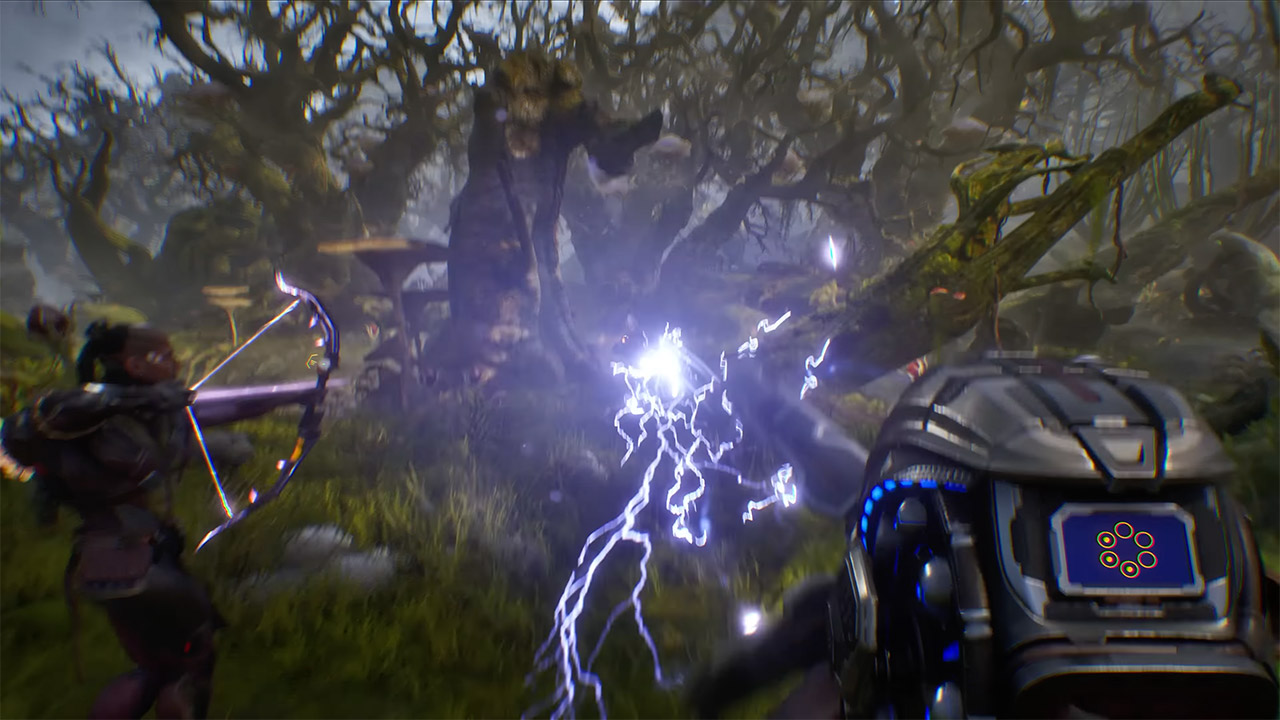
Saber Interactive just released a fresh in-engine gameplay trailer for Turok Origins, and it makes one thing clear right away: this return to the Lost Lands carries real weight. The roughly 47-second clip moves fast, blending brutal close-quarters combat with a striking new progression system that turns every major kill into something more than a notch on the belt.
A warrior in a high-tech suit charges through dense jungle and ancient ruins, while enormous reptiles emerge from the undergrowth to attack. The camera jumps between our rough first-person perspective and a more controlled third-person vision, allowing us to see both the current danger and the larger picture of the conflict. The view is right in the thick of the action, with a plasma blast ripping through scaly hide, and then it zooms out to show the entire arc of a melee swing as it impacts with a heavy thwack.
PlayStation 5 Console – 1TB, includes wireless controller, 1TBSSD, Disc Drive, 2 Horizontal Stand Feet, HDMI cable, AC power cord, USB cable, printed…
1TB of Storage, keep your favorite games ready and waiting for you to jump in and play
Ultra-High Speed SSD, maximize you play sessions with near instant load times for installed PS5 games
What sticks out is how the trailer handles the DNA mechanism, which is a true show-stopper. When a dinosaur dies, its energy flows directly into the suit. The armor begins to transform on the spot, with plates moving, colors deepening, and brilliant lines lighting up the surface. It’s unlocking new powers, which it’s demonstrating in rapid succession. There’s a scene in which a ground-stomp sends rubble flying and a shockwave spreading out, taking down a beast long enough for a follow-up tomahawk and an energy shot from a bow.
The trailer also shows how these powers can be combined with the rest of the armory. We witness a mix of the classics, such as a bow that fires luminous darts, plasma rifles that rip through groups, shotguns for close quarters, and some more experimental, sci-fi-style weaponry that appears completely out of this world. Ammo looks to be linked to the environment as well, with plants that can be drained in the midst of a resource war.
On top of that, the cooperative components begin to emerge. More warriors in identical suits join the conflict, and it appears like the game is ready for online team play against much larger dangers. There is a glimpse of an alien ship in the distance, which we know will play an important role in the game based on the tale. The environments are absolutely stunning; the jungle growth appears to have been wrestled to the ground, the temples are crumbling beautifully, and there are all these little patches of stranger, more alien-looking plants that really bring the ‘treacherously beautiful Lost Lands’ to life.
The pace is quick and unrelenting, with little pause between encounters, and the trailer frequently switches between different fighting types and angles to give us an idea of how the game will play. We see takedowns, special moves, and conventional shooting all mixed in, giving the action a true sense of weight and physicality.
Turok Origins is shaping up to be a real treat for fans of the series (and third-person action in general), and it will be available on Xbox and PC in the fall, with a target frame rate of 60 frames per second on the more powerful machine. Wishlisting is now available on Steam and the PlayStation 5, and the trailer clearly shows that the creators is aiming for a dynamic, developing experience in which you may increase your strength and skills by harnessing the very creatures you’re hunting. [Source]
Amazon says its Leo satellite network now has enough spacecraft in orbit to begin limited commercial internet service, with 396 satellites providing “continuous service across initial latitudes.” Early performance will likely be uneven, however, and well behind Starlink. “It’ll be years before Amazon can boast similar performance numbers as it continues to launch a planned 3,232 Leo satellites,” reports The Verge. From the report: SpaceX went live with its “Better than nothing beta” back in 2020 when it had almost 900 satellites operating in low-Earth orbit. It initially served a narrow band of users in the upper US and Canada, who complained about frequent service interruptions and high sensitivity to obstructions, with speeds between 50Mbps and 150Mbps, and latency from 20ms to 40ms. By 2022, the service and coverage areas had already dramatically improved. […]
SpaceX currently has over 10,000 Starlink satellites in operation, providing robust internet connectivity on land, sea, and air in over 160 countries. Performance varies by the dish, service level paid for, time of day, and location of the user, but we’re now talking 200Mbps median download speeds, 10Mbps to 40Mbps uploads, and latency hovering around 25ms.



























































You must be logged in to post a comment Login