
Business
Toronto home sales rise in June for fourth straight month




Business
5 Practical Ways to Track Down a Lost Samsung Galaxy Phone Using Its Built-In SmartThings Find Service

Losing a smartphone can be a stressful experience, but Samsung Galaxy owners have access to a suite of built-in tools designed specifically to help locate, lock or remotely erase a missing device before it falls into the wrong hands. Here are five practical steps Galaxy owners can take to track down a lost phone.
1. Use the SmartThings Find website from any browser. Samsung Galaxy devices ship with a service called SmartThings Find, formerly known as Find My Mobile, which uses a user’s Samsung account to locate, ring or remotely wipe a lost device. To use the service, visit the SmartThings Find website at smartthingsfind.samsung.com and sign in using the same Samsung account associated with the missing phone. The tool can be accessed from a desktop computer, tablet or any other device with a web browser, and once signed in, users will see all of their Find-compatible devices listed for selection. The lost phone generally needs an active internet connection for real-time location tracking to work, though on newer Samsung models, offline location detection is also possible under certain circumstances.
2. Enable offline finding before you lose your phone. SmartThings Find includes a feature called Offline Finding, which allows a lost device to be located even when it is no longer connected to the internet, provided the phone is still powered on. The feature works by creating a mesh network of nearby Samsung devices that have consented to participate, using Bluetooth Low Energy connections to relay location data back to Samsung’s servers, even when the lost phone itself lacks a direct internet or cellular connection. Because this feature relies on proximity to other participating Samsung devices, it works best in populated areas where other Galaxy users are likely to be nearby. Owners should confirm this setting is turned on in advance, since it cannot be enabled remotely after a phone has already gone missing.
3. Turn on “Send last location” for low-battery situations. If a lost phone’s battery dies before it can be located, SmartThings Find can still provide its last known position, provided the “Send last location” feature has been enabled beforehand. When active, this setting automatically transmits the device’s location to Samsung’s servers once the battery drops to 20%, giving owners a final reference point even after the phone powers down completely. This feature, along with offline finding and general remote-find permissions, can be checked and enabled by opening Settings, navigating to Security and Privacy, then selecting Lost Device Protection and confirming that “Allow this phone to be found,” “Send last location” and “Offline finding” are all switched on.
4. Use a paired Galaxy Watch to locate a misplaced phone nearby. For situations where a phone has simply been misplaced somewhere close by, rather than lost entirely or stolen, Galaxy Watch owners can use their watch to help locate it. Pressing the Home button on the watch and swiping to the Samsung Find app allows users to select their phone from a list of connected devices and view its location. Tapping the ring icon on the watch causes the phone to play a sound, helping the owner pinpoint its exact location within a home, office or other nearby space. If the watch-based search does not succeed in locating the device, users can fall back on the SmartThings Find or Samsung Find websites for a more comprehensive search.
5. Remotely lock, unlock or erase the device if it can’t be recovered. Beyond simply locating a lost phone, SmartThings Find offers several additional remote management tools for situations where recovery seems unlikely or security has become a concern. Users can remotely lock the device to prevent unauthorized access, or in a worst-case scenario, remotely erase all data stored on the phone to protect personal information from falling into the wrong hands. The service can also retrieve a log of the most recent 50 calls and messages received on the phone before it went missing, which can sometimes help identify whether someone else has been using the device. An unlock option is also available, which removes any PIN, password or fingerprint locks on the device, a feature generally intended for situations where an owner has regained physical possession of the phone but has forgotten their own credentials.
To use any of these SmartThings Find or Samsung Find features, several baseline conditions must be met on the lost device beforehand. The phone or tablet must be powered on, since a completely powered-off device will only display its last known recorded location rather than real-time tracking. The device must also have been connected to a stable network at the time it was lost, a Samsung account must already be linked to the device, and remote control permissions must be enabled, a setting Samsung generally turns on automatically when a user first signs into a Samsung account on a new device.
Given how central these settings are to successfully locating a lost device after the fact, Samsung and technology support guides consistently recommend that Galaxy owners proactively verify their Find and remote control settings are properly configured well before a phone ever goes missing, since several of the service’s most useful recovery features, including offline finding and last-location reporting, cannot be activated remotely once a device has already been lost.

Apple: Unjustified AI Premium

For GLP-1 users, the in-store clothes shopping trip is back

InvestingPro’s Fair Value spotted 64% gain in Ziff Davis stock
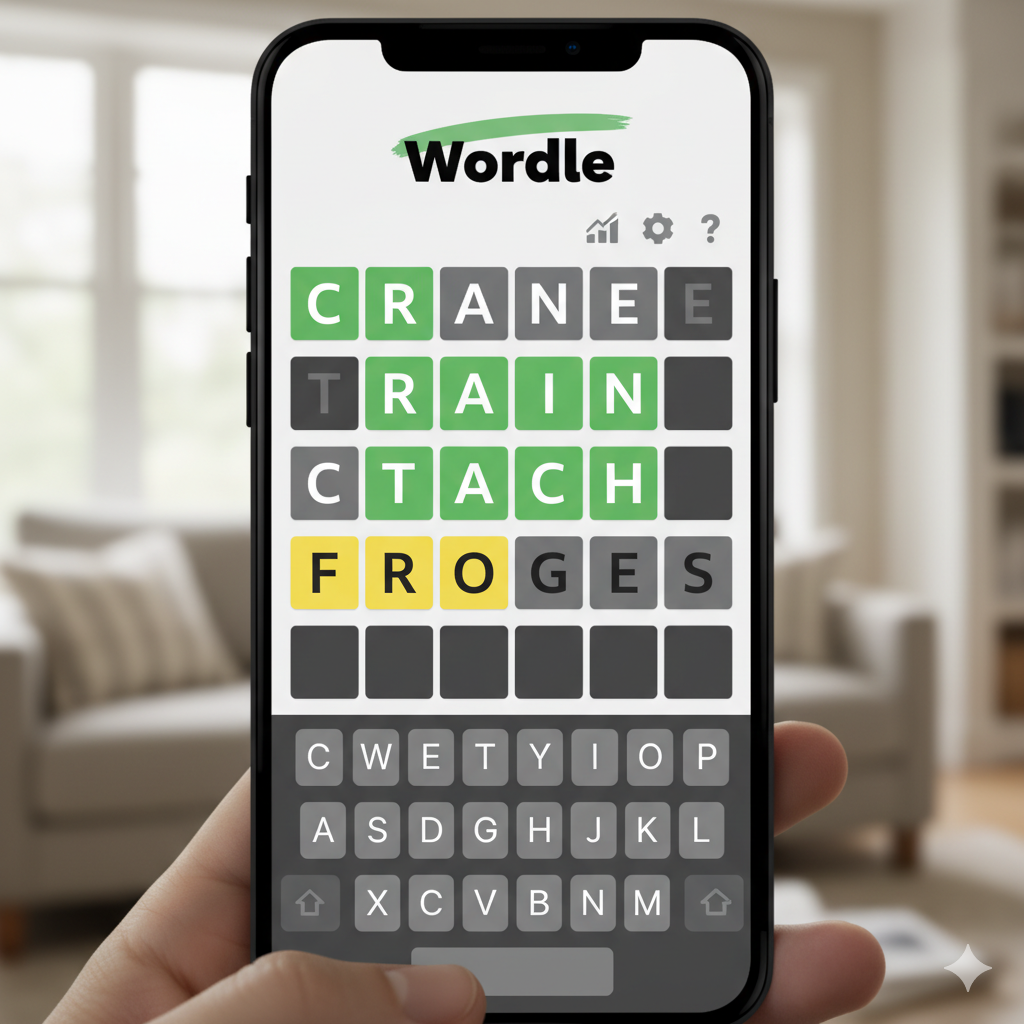
Wordle players tackling Sunday’s puzzle can find help here, with hints and the full solution for game number 1,870, the daily word puzzle from The New York Times.
The word puzzle, which challenges players to guess a five-letter word within six attempts, has remained one of the most consistently popular daily games since its rise to viral popularity in 2022. The game was originally created by software engineer Josh Wardle before The New York Times acquired it, and it has since spawned a broader family of daily puzzles under the Times’ games umbrella.
For players looking for hints before jumping straight to the answer, several clues can help narrow down the possibilities without giving the solution away entirely. Today’s word functions as an adjective and relates to matters of punishment, penalties or punitive institutions, the kind of terminology commonly encountered in legal or criminal justice contexts.
Structurally, today’s word contains two vowels and three consonants among its five letters, with no repeated letters anywhere in the word, meaning each of the five letters used appears only once. The word begins with the letter “P.”
Today’s Wordle answer is PENAL.
Penal describes anything relating to punishment, penalties or the legal systems and institutions built around punishing wrongdoing, as in phrases like “penal code” or “penal colony.” The word derives from the same Latin root, poena, meaning penalty or punishment, that also gives English words such as “penalty” and “pain.”
Puzzle strategy writers who cover Wordle daily offered guidance on effective opening words for tackling puzzles like Sunday’s. According to the New York Times’ WordleBot, which tracks how the average solver performs each day, CRANE has consistently ranked as one of the strongest overall starting words across the full archive of past puzzles, since it efficiently tests several of the most commonly occurring letters in five-letter English words without duplicating any of them. Other frequently recommended opening words include ADIEU, STARE and ROAST, each offering a different balance of vowel and consonant coverage depending on a player’s preferred strategy.
Strategy guides covering Sunday’s specific puzzle noted that words weighted heavily toward vowels, such as ADIEU and AUDIO, tend to rank lower in overall opening-word effectiveness despite their intuitive appeal, since they secure vowel placement at the cost of testing the consonants that more often distinguish one candidate word from another once a player has narrowed the field. For puzzles like Sunday’s, where the final word contains a relatively balanced two-vowel, three-consonant structure, opening guesses that spread coverage across both vowels and high-frequency consonants tend to produce more useful feedback in early guesses.
Wordle strategy guides commonly recommend a systematic approach for players working through the daily puzzle: begin with an opening word that tests several common vowels and consonants simultaneously, then use the resulting feedback, letters marked in green for correct placement, yellow for correct letters in the wrong position, and gray for letters not present in the word at all, to progressively eliminate incorrect possibilities across subsequent guesses. Strategy writers also caution players against ruling out repeated letters too early in a solve, noting that some past Wordle answers, including words like SHEEP and BLOOM, have featured a letter appearing twice, even though today’s specific answer did not follow that pattern. When narrowing down to a final one or two guesses, players are generally advised to avoid speculative or unlikely word choices in favor of guesses that satisfy all previously confirmed letter placements and exclusions.
Wordle has remained one of the most popular daily word games worldwide since its rise to prominence, spawning a broader ecosystem of related puzzles now published by The New York Times, including Connections, Connections: Sports Edition, Strands and the Mini Crossword, all of which are typically released and refreshed at the same time each day alongside the main Wordle puzzle. Sunday’s edition of Connections carried puzzle number 1,148, while Strands carried puzzle number 882, giving players a full slate of word-based challenges to work through alongside Wordle.
Players looking to maintain their daily Wordle streak, a feature the game uses to track consecutive days of play, can find Sunday’s puzzle and previous archived puzzles through the official Wordle website. The New York Times also continues to publish daily hints and strategy guidance across its games section for players seeking assistance without immediately revealing the day’s answer outright, a resource that has become a regular part of many players’ daily puzzle-solving routine, particularly on days when a puzzle’s subject matter, such as Sunday’s legal and punitive theme, falls outside a player’s everyday vocabulary.

Bitcoin holds above $63,000 as Coldcard losses near $89 million

NatWest is facing a $1.1 billion damages claim from Tandanor, a shipyard in Buenos Aires, over alleged fraudulent conduct during its privatisation in 1991, the bank has disclosed in its half-year results.
The FTSE 100 bank said the claim, first filed in 2012, sought unquantified damages until December, when the claimants filed an update putting the figure at $1.1 billion.
The case relates to the sale of the state-owned shipyard under Argentina’s then-president Carlos Menem in the early 1990s.
According to NatWest, the claim was brought by Tandanor against what is now known as the “representative office” of the Royal Bank of Scotland Argentine branch and 11 private individuals. The bank said the representative office, which is in liquidation, had a 2.9 per cent “participation” in the privatisation.
The representative office inherited the claim from Banco Holandés Unido, a bank that formed part of the Dutch group ABN Amro and was bought by RBS in 2007. The Argentine ministry of defence joined Tandanor’s claim in 2014.
An Argentine court initially dismissed the claim because it had been filed too long after the alleged events. NatWest said the dismissal, on “limitation grounds”, came in 2018, and that the claimants were unsuccessful in subsequent appeals.
However, the bank said a series of judicial proceedings since November 2024 means the case has now returned to the Argentine Federal District Court “for further consideration”.
NatWest said: “The representative office continues to defend the claim and has requested a hearing.”
The disclosure came in results in which NatWest reported profit before tax up 20.4 per cent to £4.3 billion for the first half of 2026. The bank had posted first-quarter profits of £2 billion in May, when it raised its income guidance for the year.
The claim is a legacy of RBS’s expansion before the financial crisis. RBS was bailed out by the taxpayer in 2008, changed its name to NatWest in 2020 and returned to full private ownership last year after the Treasury sold down the stake it took in the £45.5 billion rescue.
Tandanor was privatised in 1991 and, according to its website, was renationalised in 2007.
No hearing date has been set. NatWest’s results did not include any estimate of the potential outcome of the proceedings.

Amy Ingham
Amy Ingham is a reporter at Business Matters, covering UK business news with a focus on breaking news, business policy, late payments and insolvency. She joined the magazine in 2026 after completing the NCTJ Diploma in Journalism at Harlow College’s journalism school. Her recent reporting includes British Steel’s nationalisation and its impact on SME suppliers, the decline in late payments by large firms, and Insolvency Service director disqualifications. Reach her at aingham@cbmeg.co.uk.
Business
No Winner in Saturday’s $707 Million Powerball Drawing as Jackpot Continues Climbing Even Higher Still
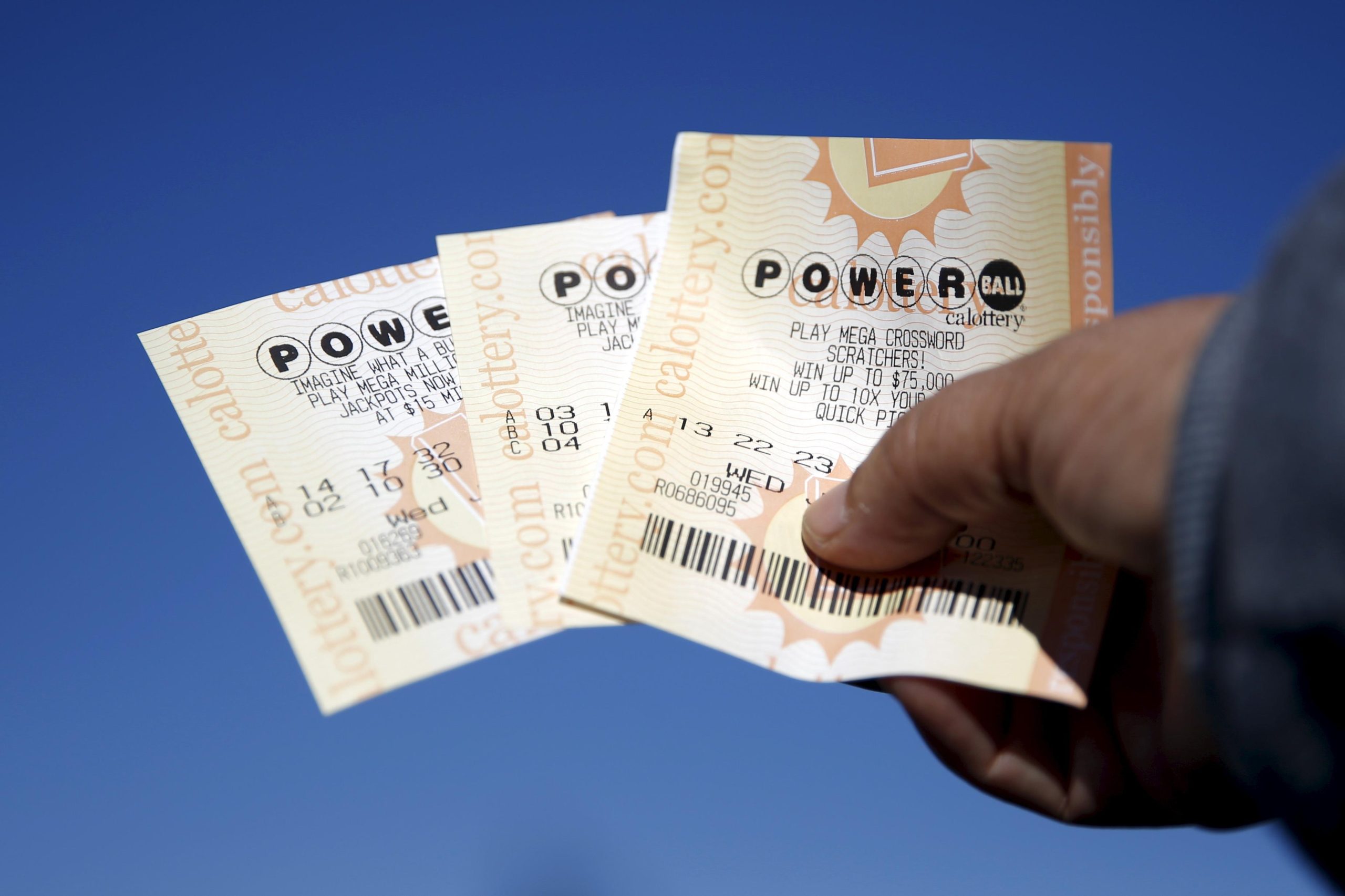
No ticket matched all the winning numbers in Saturday night’s Powerball drawing, allowing the jackpot to continue growing after the prize had already climbed to an estimated $707 million following Wednesday’s drawing, which also produced no winner.
The winning numbers drawn Saturday night were 6, 17, 27, 48 and 50, with a Powerball number of 5 and a Power Play multiplier of 3x. With no ticket matching all six numbers, the jackpot will roll over and continue increasing ahead of the next scheduled drawing.
Winners who select the lump-sum cash payout, the option most jackpot winners historically choose, would currently receive $307.3 million before taxes are applied, based on the jackpot total heading into Saturday’s drawing.
Powerball drawings are held three times a week, on Monday, Wednesday and Saturday nights, with the winning numbers broadcast live at approximately 10:59 p.m. Eastern time, or 7:59 p.m. Pacific time. Ticket sales typically close roughly an hour before each scheduled drawing, though the exact cutoff time can vary depending on the specific state where a ticket is purchased.
Each Powerball ticket costs $2 per play. Players select five numbers ranging from 1 to 69, along with one additional Powerball number ranging from 1 to 26, or can instead opt for a computer-generated Quick Pick selection rather than choosing their own numbers manually. For an additional $1 per play, players can add the Power Play option, which multiplies non-jackpot prize winnings by 2, 3, 4, 5 or 10 times, depending on which multiplier is randomly drawn during that particular drawing.
Powerball tickets are sold across 45 U.S. states, along with Washington, D.C., Puerto Rico, the U.S. Virgin Islands and, as of a recent expansion, the United Kingdom, broadening the pool of participants contributing to the game’s overall prize fund.
Saturday’s rollover keeps the Powerball jackpot well below the largest lottery prizes ever won in U.S. history, though it remains a substantial sum by any ordinary measure. The largest jackpot ever claimed in the United States was a $2.04 billion Powerball prize won in California on Nov. 7, 2022, which remains the largest lottery jackpot ever awarded in the country. Other prizes among the 10 largest U.S. jackpots on record include a $1.817 billion Powerball jackpot won in Arkansas on Dec. 24, 2025, and a $1.787 billion Powerball prize split between winners in Missouri and Texas on Sept. 6, 2025. Mega Millions, the other major multistate lottery game played across the country, has also produced several of the largest jackpots on record, including a $1.602 billion prize won in Florida on Aug. 8, 2023, and a $1.348 billion jackpot claimed in Maine on Jan. 13, 2023.
The current Powerball jackpot adds to what has already been an active year for major lottery prizes in the United States. A Florida ticket buyer recently won an $800 million Mega Millions jackpot, a prize that ranks as one of the largest lottery payouts awarded so far in 2026. Powerball’s own largest jackpot claimed so far this year stands at $250.8 million, won by a player from Arkansas.
The odds facing any individual Powerball ticket remain extraordinarily long. A single ticket faces roughly 1-in-292.2 million odds of matching all the numbers required to win the jackpot, reflecting the astronomically low probability that any given combination of numbers will match the winning draw. Despite those long odds, both Powerball and Mega Millions continue to draw significant public interest whenever their advertised jackpots climb into the hundreds of millions of dollars, a pattern that has repeated again as this jackpot has continued growing following consecutive drawings without a winner.
With no winner emerging from either Wednesday’s or Saturday’s drawings, attention now turns to the next scheduled Powerball drawing on Monday night, when the jackpot is expected to grow further still if once again no single ticket matches all the required numbers. Players interested in purchasing tickets for the upcoming drawing can do so at authorized retailers across participating states and territories, with sales typically continuing right up until the standard pre-drawing cutoff time observed in each individual jurisdiction.
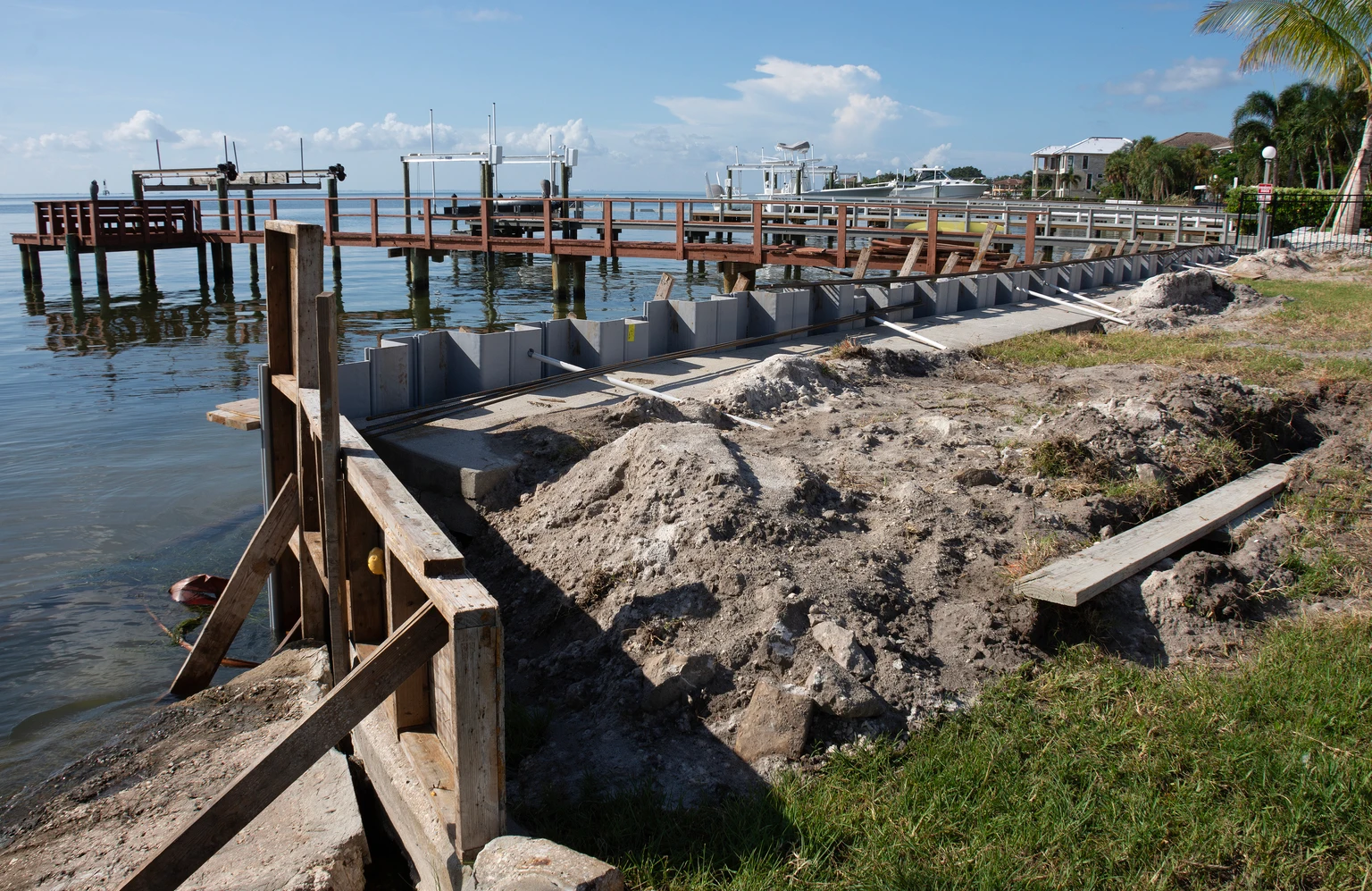
Orion Group Holdings: Rising Costs And Client Delays Have Me Worried

EPR Properties Has Just Shared Game-Changing News (Rating Upgrade)

Crazed In-N-Out gunman who opened fire in Idaho drive-thru killing at least two turned rifle on HIMSELF after deadly rampage, police reveal

5 Practical Ways to Track Down a Lost Samsung Galaxy Phone Using Its Built-In SmartThings Find Service
Ethereum Just Had Its Best Month in a Year: Can ETH Keep Rallying in August?

Renter of Home in Anne Heche Crash Denies Settlement With Son

No Jackpot Winner as $257 Million Prize Rolls Over to $269 Million Monday Draw

Weekend Open Thread: Staud – Corporette.com

LISA ‘MONEY’ mirrored dance cover #shorts (based on the Performance vid and added some freestyle)

The Most Ghetto Financial Audit

#famousshorts #motivation #money #bank #facts #youtubeshorts #video #3stooges #life #finance
-
 Sports7 days ago
Commonwealth Games boxing: Jadumani Singh seals dominant 5-0 win over Pakistan’s Sumama Rehman to enter quarter-finals | Commonwealth Games News
-

 Business4 days ago
Why Trees Belong on the Risk Register
-

 Fashion2 days ago
Weekend Open Thread: Wit & Wisdom
-

 Tech6 days ago
Intel is reversing course and bringing hyper-threading back to its server chips
-

 Politics2 days ago
Meta enters AI-training agreement with far-right ‘propaganda rag’ Newsmax
-

 Politics6 days ago
Luke Littler dismantles Gerwyn Price to retain title in Blackpool
-

 Crypto World21 hours ago
MicroStrategy Post-Earnings CLARITY Act Push Could Add New Catalyst for Its Stock
-

 Politics5 days ago
The Part of the Electric Transition Nobody Wants to Discuss
-
 Entertainment5 days ago
‘Stargate’ Creator’s New Sci-Fi Series Returns for Season 3 Tomorrow
-

 News Videos7 days ago
BITCOIN JUST ENTERED THIS CRITICAL ZONE…
-

 Business4 days ago
Major shareholder moves on Canyon
-

 Politics7 days ago
Spain sweeps the board at 2026 World Cup with individual awards
-

 News Videos3 days ago
Bitcoin Enters the 3rd Stage of the Bear Market
-

 Crypto World1 day ago
XRP Ledger v3.3.0 brings five institutional features
-

 Crypto World5 days ago
Kraken Enables Retail Access to Jersey Mike’s IPO via Tokenized Shares
-

 Tech5 days ago
New macOS Sequoia & Sonoma security updates for older Macs
-

 News Videos5 days ago
Claude: Build Financial Dashboards in Minutes (2026)
-

 Politics3 days ago
Luke Littler’s dominance sparks GOAT debate
-

 Sports2 days ago
Seema Kaliramna Wins Discus Throw Bronze, Takes India’s CWG Medals Tally To 17
-

 Business5 days ago
Johnson & Johnson agrees to $5.5B settlement over talc cancer claims
You must be logged in to post a comment Login