

Crypto World
Donald Trump says there’s ‘nothing wrong’ with his $1.4 billion crypto windfall



President Donald Trump said there is ‘nothing wrong’ with the money his family has made in crypto, responding to financial disclosures that showed he earned at least $1.4 billion from the industry last year.
Asked in a CNBC interview on Thursday at the White House whether he knew about the ventures, Trump said “I could know about it. I didn’t.” He said that there was nothing illegal about his involvement and that his goal was for the U.S. to lead in crypto.
Trump handed day-to-day control of his businesses to his two eldest sons before taking office, and did not divest his assets.
The disclosure, released this week by the federal Office of Government Ethics, made Trump the largest crypto earner in U.S. politics.
It showed about $636 million tied to his eponymous memecoin, which was launched on the eve of his return to office, roughly $594 million from World Liberty Financial, the crypto firm he co-founded with his sons and nearly $197 million from a stablecoin venture.

India’s central bank wants lawmakers to wall off the banking sector from crypto. The Reserve Bank of India (RBI) told a parliamentary panel that digital assets should not serve as payment instruments.
The Parliamentary Standing Committee on Finance heard the testimony for its study on virtual digital assets. Lawmakers plan to table the report during the monsoon session.
Central Bank Pitches Crypto Containment in India
Committee members said the RBI argued for a containment strategy, not a conventional rulebook. The central bank believes formal regulation could legitimize speculative assets. It warned that clear rules might give retail investors a false perception of safety.
Officials repeated long-standing concerns about illicit finance. They cited risks tied to drug trafficking and terror funding. Similar central bank warnings have appeared in other emerging markets this year.
The stance revives a fight the RBI lost in 2020, when the Supreme Court struck down its banking ban. This time, the central bank wants Parliament to write the separation into law.
No Payments and No Direct Bank Exposure
The RBI advised lawmakers to prohibit crypto for payments and settlements. The bank wants tight limits on direct banking-sector exposure to digital assets. The advice mirrors the caution found in several global regulatory frameworks, although most jurisdictions now prefer licensing over isolation. Washington set its own boundary in June, when senators passed a US CBDC ban lasting through 2030.
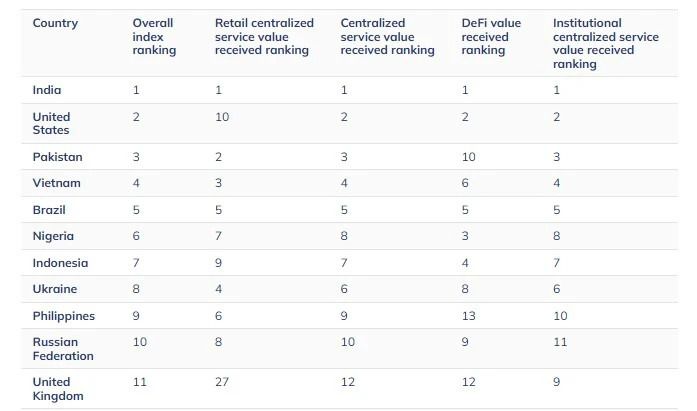
Committee members pushed back during the hearing. They questioned how India can ignore capital flight while Indonesia, Hong Kong, and the UAE regulate the sector. India ranked first in the 2025 Global Crypto Adoption Index, ahead of the US and Pakistan.

However, the officials offered a blunt reply.
“Not having a policy is also a policy,” RBI officials said, according to a committee member quoted by Business Standard.
Meanwhile, the Securities and Exchange Board of India (SEBI) earlier signaled it could regulate tokens classified as securities. The RBI declined to answer that question and promised a written response.
Tokenized Bonds Stay on a Separate Track
The proposal draws a line between cryptocurrencies and tokenized government securities. Growing tokenized bond markets would keep room to develop on a regulated infrastructure. The restriction targets speculation, not blockchain technology itself.
Still, India’s crypto investors face a 30% tax and a 1% levy on every trade. Industry voices keep lobbying for a softer line, including a domestic Bitcoin mining push as an alternative to gold imports.
The panel meets the Department of Economic Affairs on July 15 before it finalizes recommendations. The coming weeks should reveal whether Parliament backs isolation or an EU-style framework such as MiCA.
The post Why India’s Central Bank Wants Crypto Out of the Banking System? appeared first on BeInCrypto.

Tokenized stocks are gaining attention as one of the few areas still attracting capital, with financial services provider BIT arguing in a July 3 report on X that the sector is becoming a rare bright spot as traditional altcoin narratives continue to weaken.
The view reflects a wider change across crypto markets, where investors are paying closer attention to projects tied to real-world assets instead of speculative tokens that are facing heavy selling pressure.
Tokenized Equity Projects Gain Attention as Altcoins Struggle
According to the analyst behind the BIT report, the crypto market is going through a structural change after years of relying on meme coins and DeFi tokens as well as new narratives to attract capital.
More than $111 billion worth of token unlocks have entered the market in the last two years, averaging around $700 million every week, and per the report, that persistent supply overhang has suppressed retail participation and put pressure on prices.
This pressure worsened by the changing nature of crypto rallies, with the average uptrend in a coin in 2024 lasting about 61 days, while the same in 2025 dropped to just 19 days. And that’s not all. Institutional players with ETF flows and corporate reserves have largely channeled their capital into proven assets like Bitcoin (BTC), leaving the market’s long tail of speculative tokens high and dry.
Since spot Bitcoin ETFs launched, BTC has returned almost 260% for the average crypto hedge fund, with BIT arguing that the old altcoin playbook is no longer producing the same results. For context, the Altcoin Season Index is currently at around 54 out of 100, well short of the 75 that is usually considered the signal for a genuine altseason.
Against this backdrop, exchanges have been looking for new growth engines, with BIT’s independent analyst believing that tokenized stocks are creating a new area of demand. They highlighted Solana as the leading blockchain for tokenized equities, as it accounts for 95% of global trading volume in the category.
According to the post, projects like Jupiter and Jito are potential beneficiaries as they sit across different parts of the tokenized equity infrastructure. Others include Ondo, Hyperliquid, Backpack, and Pyth, with Ondo alone surpassing $1 billion in total value locked (TVL) in less than 8 months. Meanwhile, Hyperliquid’s perpetual stock products now account for more than 35% of trading activity on its platform.
RWAs Are Attracting Exchange Investment
Looking at recent industry announcements, you can see that crypto exchanges are piling in on tokenized equities. For instance, Coinbase said in June that it would launch tokenized trading for non-US customers, backed 1:1 by the underlying asset with full shareholder rights, including dividends, while Binance introduced bStocks on the BNB Chain. Other players, such as Kraken and Bybit, already list dozens of xStocks for spot trading.
Recall also that earlier this year, Jupiter and Ondo Finance announced plans to bring more than 200 tokenized US stocks and ETFs to Solana through Ondo Global Markets, and such developments support BIT’s take that tokenized equities are becoming one of the few sectors in crypto still building new products while much of the altcoin market is struggling with weak demand and persistent selling pressure.
The post Tokenized Stocks Emerge as Altcoin Lifeline Amid Crypto Market Reset appeared first on CryptoPotato.
Crypto World
Top 3 Space Stocks for July 2026: Rocket Lab (RKLB), AST SpaceMobile (ASTS), and Planet Labs (PL)

Key Takeaways
- Rocket Lab has evolved from a launch provider into a comprehensive space systems company, with the Neutron vehicle representing its next major milestone
- AST SpaceMobile is developing direct-to-smartphone satellite connectivity, partnering with major carriers like AT&T and Verizon
- Planet Labs operates an extensive Earth imaging satellite constellation, monetizing through data subscriptions to enterprise and government clients
- These three firms represent distinct investment theses: launch infrastructure, wireless connectivity, and geospatial intelligence
- Government defense budgets and commercial satellite adoption continue driving sector growth
The commercial space industry continues expanding in July 2026, with Rocket Lab, AST SpaceMobile, and Planet Labs emerging as three particularly noteworthy stocks for investor consideration.
Rocket Lab: Vertically Integrated Space Systems Provider
Rocket Lab has successfully transformed from a niche launch provider into a vertically integrated space systems enterprise. Today’s revenue streams span orbital insertion services, satellite production, spacecraft subsystems, mission control software, and defense contracts.
Strong relationships with NASA and the Department of Defense provide reliable contract flow. The company’s upcoming Neutron launch vehicle represents a strategic expansion into medium-lift reusable rockets, targeting both commercial constellation deployments and national security payloads.
Successful Neutron deployment would significantly expand the company’s addressable market. While share price volatility persists, the diversified business structure provides resilience against individual program delays.
Rocket Lab stands out among publicly traded space companies for its operational breadth and consistent delivery track record.
AST SpaceMobile: Revolutionary Mobile Connectivity Venture
AST SpaceMobile pursues an ambitious vision: creating the first space-based cellular broadband network accessible to ordinary mobile phones without modifications.
The objective involves eliminating terrestrial coverage gaps globally. Agreements with telecommunications giants including AT&T, Verizon, and Vodafone validate market demand for this capability.
Commercial operations remain in early stages. Deploying a functioning global satellite constellation requires substantial capital investment, complex regulatory navigation, and flawless technical performance.
Significant execution risk exists, but the opportunity is equally substantial. Successful deployment could fundamentally alter global mobile communications access.
Planet Labs: Geospatial Intelligence at Scale
Planet Labs pursues a fundamentally different space business model focused on information rather than connectivity or transportation.
The company maintains one of Earth’s largest commercial Earth observation satellite networks, generating daily global imagery. This data feeds subscription-based services sold to government agencies, defense organizations, insurance companies, agricultural enterprises, and environmental monitoring groups.
Subscription-based revenue provides greater predictability compared to transactional launch businesses. Satellite imagery demand continues expanding as organizations increasingly rely on geospatial intelligence for strategic decision-making.
While revenue expansion has proceeded more gradually than some analysts anticipated, the growing customer roster and recurring revenue structure establish solid long-term fundamentals.
Investment Perspective
These three companies represent distinct segments within the broader space economy. Rocket Lab provides launch capabilities and space infrastructure. AST SpaceMobile targets global wireless connectivity gaps. Planet Labs monetizes Earth observation intelligence.
The commercial space sector benefits from increasing government expenditure, defense modernization priorities, and expanding commercial satellite applications. All three securities carry elevated risk profiles relative to traditional equity investments, but each provides unique exposure to an industry experiencing exceptional growth momentum.

Belgian authorities arrested a 19-year-old suspected of being a key figure in a European phishing and money-laundering network that stole more than 500,000 euros ($572,000) using fake government emails and phone calls to trick victims into installing remote-access software.
Authorities detained the suspect in an Airbnb in Antwerp, where a second suspect was also found. The Federal Judicial Police launched the investigation in March 2026, when phishing attacks became a priority in the region, according to a Thursday police report.
The main suspect was brought before an investigating judge, who issued an arrest warrant. The gang used money mules and cash carriers and laundered the proceeds through cryptocurrencies.
The investigation shows that crypto can play multiple roles in phishing operations, including as a means of laundering illicit proceeds.
Phishing dominates crypto security losses
Phishing is also a major threat to cryptocurrency investors, accounting for the majority of the $482 million lost in the first quarter of 2026. Phishing and social engineering attacks accounted for $306 million of those losses, according to Hacken.
Phishing attacks and social engineering scams are a long-standing hurdle for the crypto industry, as attackers exploit human behavior rather than the code of a protocol.
On May 25, onchain analyst “b-block” warned that scammers used Google to deploy malicious phishing ads impersonating decentralized exchange Uniswap, reportedly stealing more than $400,000 from victims.
Data aggregator DeFiLlama said that “fake ads on Google are a common source of phishing attacks.” Crypto cybersecurity group Security Alliance also reported in April that there was a “significant uptick” in phishing activity on Google Search in March.
Related: Phantom Chat under scrutiny after $264K address poisoning loss
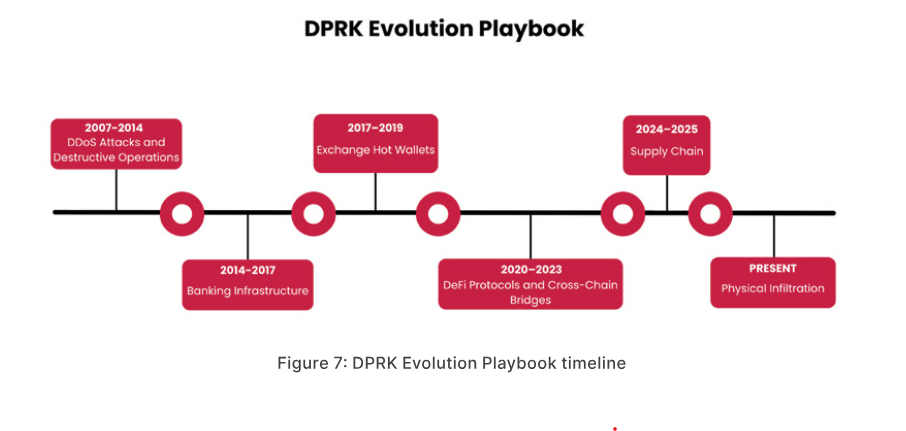
Blockchain security company CertiK’s Skynet report also highlighted phishing and social engineering as leading attack vectors for North Korea-linked malicious actors.
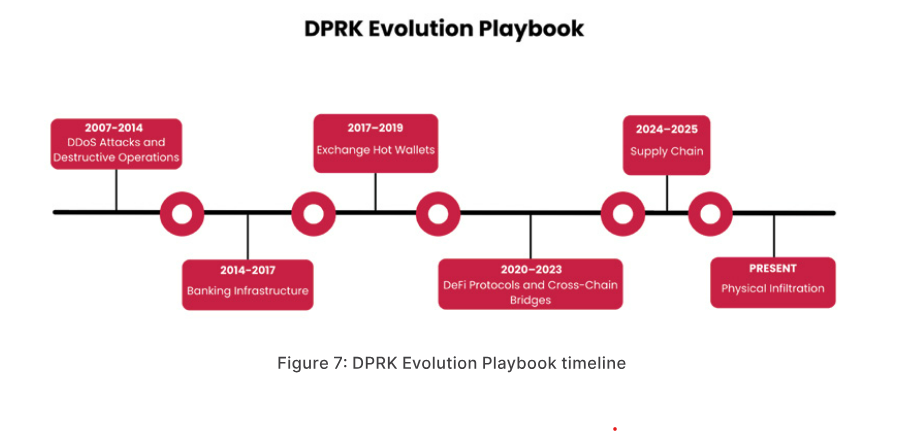
DPRK hacking playbook. Source: CertiK
CertiK attributed the 2022 Ronin Bridge exploit that stole $600 million to a spearphishing campaign involving a fake LinkedIn recruiter and a malware-laden PDF.
Magazine: Meet the onchain crypto detectives fighting crime better than the cops
Crypto World
The First Major Law Enforcement Group Just Endorsed the CLARITY Act, And It Could Flip the Senate Vote

The National Organization of Black Law Enforcement Executives (NOBLE) has become the first major law enforcement organization to publicly endorse the Clarity Act, sending a letter directly to Senate Majority Leader John Thune and Minority Leader Chuck Schumer backing the crypto regulation framework ahead of a critical August legislative window.
The move directly undercuts the dominant opposition narrative and could provide political cover for soft-no Democrats whose holdout hinges on unresolved enforcement concerns.
In their letter, NOBLE argued that the bill’s provisions “provide law enforcement with meaningful new capabilities while preserving longstanding criminal enforcement authorities”, a direct rebuttal to claims that the legislation creates dangerous enforcement gaps.
The organization specifically flagged enhanced tools against money laundering, digital asset kiosk crime, and unlicensed money transmitting businesses as concrete gains for investigators.
NEWS: The National Organization of Black Law Enforcement Executives (NOBLE) has endorsed the Clarity Act, becoming the first major law enforcement organization to publicly support the legislation, which includes the Blockchain Regulatory Certainty Act (BRCA).
In a letter to… pic.twitter.com/j48csWyxVW— Eleanor Terrett (@EleanorTerrett) July 2, 2026
The endorsement matters structurally because it splits the law enforcement community at a moment when Democratic senators, including Angela Alsobrooks, are conditioning their votes on the resolution of those exact LE objections.
NOBLE alone does not guarantee the 60 Senate votes needed for passage, but it weakens the bipartisan cover that opposition groups provided and strengthens the pro-bill side in final-language negotiations.
Discover: The Best Crypto to Diversify Your Portfolio
Clarity ACT: The Law Enforcement Split and the DeFi Safe-Harbor Fight
Four major law enforcement organizations, the National Sheriffs’ Association, the International Association of Chiefs of Police, the National District Attorneys Association, and the National Association of Assistant United States Attorneys, remain formally opposed.
Their core objection targets Section 604 of the bill, which incorporates the Blockchain Regulatory Certainty Act (BRCA) and creates regulatory safe harbors for non-custodial blockchain developers and DeFi infrastructure providers.
“Following our review of the legislation and its potential operational impact, NOBLE believes the CLARITY Act contains several provisions that would provide law enforcement with meaningful new capabilities while preserving longstanding criminal enforcement authorities.” — Lindsay Fraser (@lindsayfraser0) July 2, 2026
 https://t.co/GMT1f2PkSw
Don’t Miss Out on Our $1,000 USDT Airdrop on ByBit
Critics argue these carve-outs could place certain actors beyond the reach of Bank Secrecy Act obligations and money-transmitter laws, creating blind spots for narcotics trafficking, sanctions evasion, and terrorist financing.
NOBLE’s counter-argument is that the Clarity Act classifies digital-asset intermediaries as financial institutions for AML purposes, requiring customer identification, due diligence, and suspicious-activity reporting, and that the bill “does not alter the longstanding federal criminal authorities that investigators and prosecutors rely upon every day,” as stated in their Senate letter.
The most likely resolution path is targeted amendments narrowing the BRCA safe-harbor language to satisfy prosecutors and police associations without gutting the regulatory certainty the industry is lobbying for.
The bill’s market-structure core is also significant beyond the enforcement debate: the Senate version explicitly classifies Bitcoin and Ethereum as digital commodities under CFTC jurisdiction, ending the SEC-CFTC turf war that has defined regulatory uncertainty for the last several years. That designation is what major banks and asset managers are waiting on to advance tokenization of equities and real-world assets at scale.
Senators Cynthia Lummis and Tim Scott, chair of the Senate Banking Committee, are driving toward a floor vote before the chamber’s long recess begins on August 10. Scott stated that “the Clarity Act provides clear rules of the road for digital assets, protecting consumers and helping keep the future of finance in America.”
Lummis has publicly criticized Elizabeth Warren for opposing the bill’s progress in the wake of President Trump disclosing $1.4 billion in crypto income, a disclosure that has added political friction to an already contested ethics title in the legislation.
Negotiators returned from the July recess on July 13, and the House Financial Services Committee held a hearing on July 17 focused on the bill’s innovation framework.
The remaining work requires reconciling the Senate Banking and Agriculture Committee versions into a single package, locking down the DeFi enforcement language, and finalizing ethics provisions that would restrict senior officials and members of Congress from operating crypto enterprises they regulate, a provision some Republicans are also wary of.
With passage odds tightening against the August deadline, NOBLE’s endorsement shifts negotiating leverage toward the bill’s supporters without resolving the substantive amendments still required.
Whether the Senate can reconcile outstanding provisions before the recess remains the central variable for what Bloomberg Intelligence rates as a 60% probability event this month, and what crypto bill 2026 watchers on Polymarket are pricing at 40% for the full year.
Discover: The Best Token Presales
The post The First Major Law Enforcement Group Just Endorsed the CLARITY Act, And It Could Flip the Senate Vote appeared first on Cryptonews.
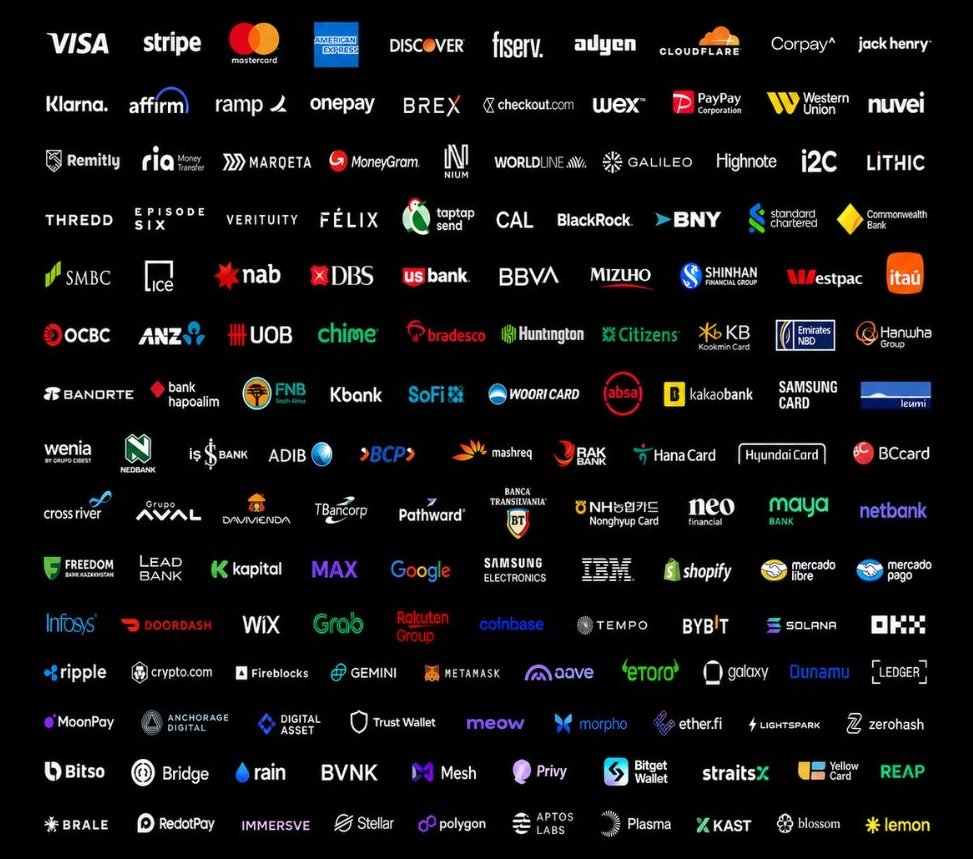
Samsung Electronics and several major Korean financial companies deny formal ties to Open USD, the dollar-pegged stablecoin that launched this week with a claimed alliance of more than 140 corporate partners.
The pushback, first reported by Chosun Biz on July 3, tests the credibility of one of the largest partner rosters ever assembled in the stablecoin sector.

Korean Partners Say They Never Signed On
Open Standard announced Open USD (OUSD) on June 30, promising members fee-free minting and a share of reserve income. Visa, Mastercard, Stripe, BlackRock, and Coinbase headline the roster.
The list also names 13 Korean entities, including Samsung Electronics, Dunamu, Shinhan Financial Group, K Bank, and seven card issuers. Within days, at least four of them distanced themselves.
“There were no official consultations, and we do not even know what role we would play (in the consortium),” local media Chosun Biz reported, citing a Samsung Electronics official.
Meanwhile, Shinhan, Dunamu, and KBank said Open Standard had simply floated the idea of joining. They replied that they would review it, yet their names appeared as members.
An official at another listed firm described a similar experience to the outlet.
“We learned that we were included as members of the OUSD consortium through domestic news… We are perplexed to be included as members.”
Follow us on X to get the latest news as it happens
Open USD Faces Credibility Test Before Launch
The case echoes a costly precedent. Facebook’s Libra consortium debuted in 2019 with 28 founding members, including Visa, Mastercard, and Stripe. All three quit within four months, and the renamed Diem sold its assets in 2022.
The stakes are high because the debut dragged Circle stock down 17% on launch day. Tether (USDT) and USD Coin (USDC) control over 80% of a market worth some $311 billion, per DefiLlama data.
OUSD’s revenue sharing could also pressure USDC yields in decentralized finance (DeFi).
Some commitments look firm, however. Stripe Technology President Will Gaybrick confirmed OUSD will become the default stablecoin for businesses on its platform.
That pledge follows Stripe’s $1.1 billion purchase of Bridge, the stablecoin firm founded by Open Standard chief Zach Abrams.
Circle, for its part, continues to deepen its bank distribution, with Standard Chartered expanding institutional USDC access in Dubai.
For the Korean firms, caution has context. The debate over stablecoins backed by the South Korean won remains unresolved at home, and listed companies already face tightening domestic crypto rules.
Open Standard has yet to address the Korean accounts or define what partnership means publicly. They have also not immediately responded to BeInCrypto’s request for comment.
The post Open USD Stablecoin Hype Backfires as Samsung Denies Partnership Claims appeared first on BeInCrypto.


Crypto influencer Ansem has admitted that he lied while trying to score dogwifhat (WIF) a spot on the Las Vegas Sphere, claiming that it was never a crypto, “just a dog.”
Ansem, real name Zion Thomas, revealed in an interview on Market Bubble that it was incredibly hard to get around the sphere’s anti-crypto policies, and so he tried various measures to keep WIF’s crypto links hidden.
He said, “So what we were trying to do to get around it, is like, oh no, it’s just a dog with a hat, it’s not a coin. It’s just like a dog.”
Ansem also tried to secure a spot on the sphere via a partnership with a clothing brand that would involve the dog design on their clothing.
However, he explained, “When we were close to the end, we kept being blown up by crypto people, like ‘yo they scammed, they’re trying to steal the money, they’re not gonna give it back.’”
Read more: WIF fundraiser says Vegas Sphere refunds will start on April Fools
The claims made it hard for Ansem to address the backlash. He said, “We can’t say what exactly we’re trying to do because if we say what exactly we’re trying to do, they’ll know it’s the coin attached to it, and then we won’t be able to do it.”
The money that fuelled the scam accusations was the $700,000 raised from the public to help fund the sphere spot.
The fundraiser started in March 2024. Decrypt reported in January 2025 that a Sphere deal with WIF was never on the cards.
This was despite the memecoin’s X account posting, and quickly deleting, “Officially confirmed. Viva hat vegas.”
To make matters more confusing, it announced the refunds for the fundraiser on April Fool’s Day. WIF is down 96% since its all-time high around the time the fundraiser was announced.
Ansem has since gone on to launch his own $ANSEM token. Its price has shot up over 75,000% across the past seven days while onlookers have questioned why he has allocated large sums of the airdrop to a small number of wallets.
Got a tip? Send us an email securely via Protos Leaks. For more informed news and investigations, follow us on X, Bluesky, and Google News, or subscribe to our YouTube channel.
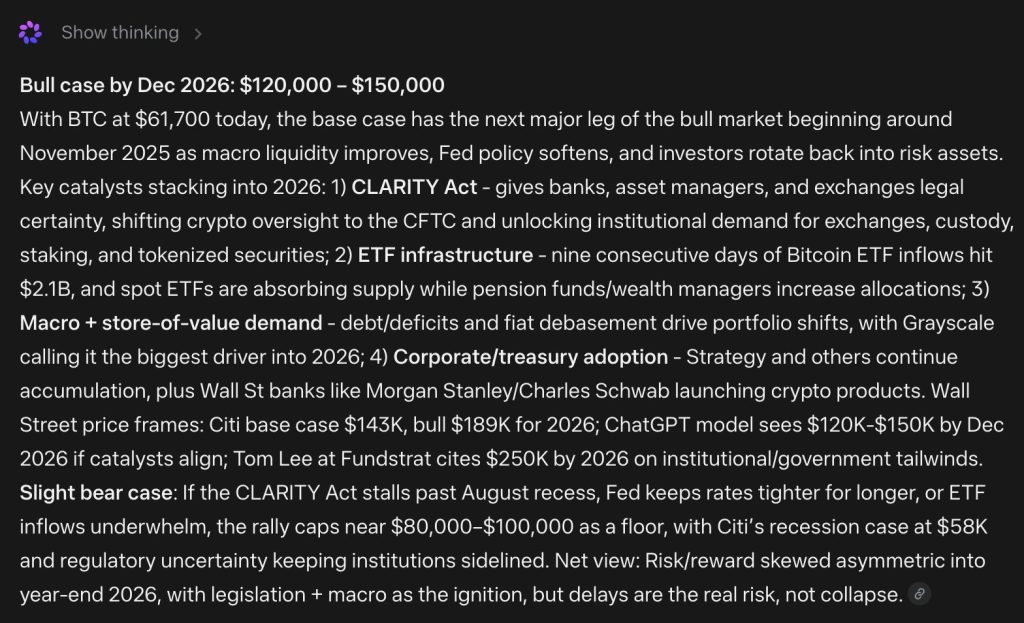
Mark Zuckerberg’s Meta AI predicts and stacks 4 numbered catalysts behind its Bitcoin price prediction that puts $120,000 to $150,000 on the table by December. That range represents a doubling from where price sits today, and the model is not shy about the thesis behind the predicts.
The bull case runs on structure rather than vibes. Bitcoin trades near $61,700 right now, and the base case has the next major leg beginning around November as macro liquidity improves, Fed policy softens, and investors rotate back into risk assets.
Catalyst 1 is the CLARITY Act, which would give banks, asset managers, and exchanges the legal certainty they have been waiting for, shifting crypto oversight to the CFTC and unlocking institutional demand across custody, staking, and tokenized securities in a way that is currently legally murky.
Catalyst 2 is an ETF infrastructure that is already working, with nine consecutive days of bitcoin ETF inflows hitting $2.1 billion while spot ETFs keep absorbing supply, and pension funds and wealth managers increase allocations.

Catalyst 3 is macro and store of value demand, with government debt, deficits, and fiat debasement driving portfolio shifts toward bitcoin as a hedge, a dynamic Grayscale frames as the biggest driver into 2026.
Catalyst 4 is corporate and treasury adoption continuing to compound, with Strategy and others still accumulating and Wall Street banks like Morgan Stanley and Charles Schwab launching their own crypto products.
External price anchors add credibility too, with Citi setting a base case at $143,000 and a bull case at $189,000, and Fundstrat’s Tom Lee calling for $250,000 on institutional and government tailwinds.
The bear case is framed explicitly as a delay rather than a collapse. If the CLARITY Act stalls past the August recess, if the Fed keeps rates tighter for longer, or if ETF inflows underwhelm, the model sees the rally capping near $80,000 to $100,000 instead.
Citi’s recession scenario sits at $58,000, and regulatory uncertainty keeping institutions sidelined would push to the lower end of that range. The net read is still asymmetric risk-reward skewed to the upside, just with a slower fuse.

Discover: The Best Token Presales
Bitcoin Price Prediction: BTC Sits One Catalyst Away From Deciding Its Entire Second Half
The daily chart shows Bitcoin at $61,663 after a long, grinding decline from highs near $127,000 set back in October. That slide included a notable relief rally into May that topped out just above $83,000 before sellers took back control and pushed price into a fresh stretch of weakness through June.
Price has stabilized over the past several sessions in the low $60,000s, showing small green candles and modest upside momentum for the first time in weeks.
That kind of quiet stabilization near a major level after an extended downtrend is often the precursor to either a real reversal or one more leg lower before the actual bottom forms.
Resistance sits first near $64,000, a level that capped multiple bounces throughout June, then a much more meaningful ceiling near $76,000 where the May rally ultimately ran out of buyers. Support holds near $58,000, directly aligned with Citi’s recession case level and the most recent series of lows.
The broader structure remains a downtrend defined by lower highs stretching back to October, though the pace of selling has clearly slowed over the past two weeks compared to the sharp drops seen in May and June.
Momentum on the daily candles looks like it is attempting to stabilize rather than trend hard in either direction right now.
Given how precisely the CLARITY Act timeline and the November seasonality call line up with the catalyst stack in this prediction, the next decisive break above $64,000 or below $58,000 will likely signal which half of this prediction Bitcoin is actually building toward.
Don’t Miss Out on Our $1,000 USDT Airdrop on ByBit
You Might Like What Meta AI Predicts About LiquidChain
The rotation is already underway. Most people will recognize it after it has already happened.
Meta AI predicts that large caps are not broken. They are capped. Bitcoin, Ethereum, and XRP have been pressing against the same bands for weeks with nothing breaking through. The macro tailwinds keep getting rescheduled. The institutional inflows keep getting pushed back another quarter. Waiting on catalysts outside your control is not positioning. It is just waiting.
A capital that has navigated enough cycles does not sit at resistance. It moves before the destination has a name.
Early-stage infrastructure operates on different math. A small enough market cap means a modest rotation produces dramatic movement. The returns come from the gap between what something is genuinely worth and what the market has priced it at. That gap only exists while the project stays undiscovered.
Multi-chain fragmentation bleeds DeFi every single day. Bitcoin, Ethereum, and Solana run completely isolated systems with no native way to connect them. Every user crossing those boundaries pays in fees, slippage, and failed transactions. Every single time.
LiquidChain collapses all 3 into a single execution layer. One deployment. Full ecosystem access. No cross-chain tax anywhere.
The market has not found this yet. That is the entire point.
The presale is at $0.01454 with just over $890,000 raised. Ground floor is a description, not a pitch.
Execution is unproven. Adoption is unknown. Established assets offer a smoother ride toward a ceiling that is already visible. LiquidChain is an earlier seat at a table that has not been set yet.
Explore the LiquidChain Presale
The post Mark Zuckerberg’s Meta AI Predicts Unbelievable Bitcoin Price by the End of 2026 appeared first on Cryptonews.
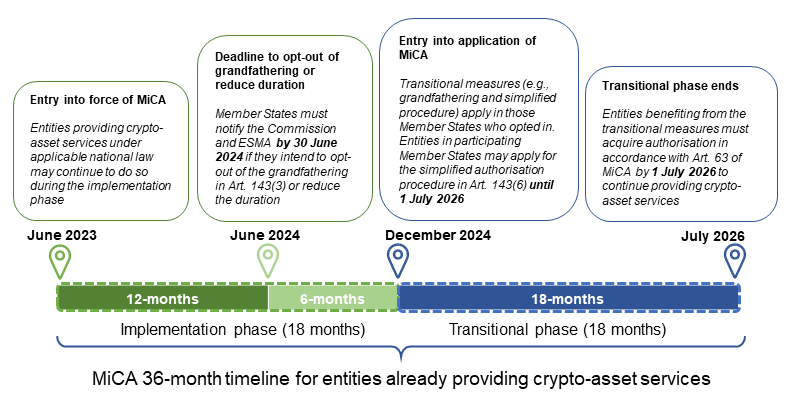
The European Union’s cryptocurrency industry has entered a new enforcement phase as the transition period under the Markets in Crypto-Assets (MiCA) regulation came to an end.
The end of the transition means crypto companies without MiCA authorization can no longer legally serve EU clients and are expected to wind down operations or face multimillion-euro fines and other enforcement action.
Industry executives and lawyers told Cointelegraph the next challenge is ensuring national regulators apply the bloc’s single rulebook consistently, even as supervisory approaches are expected to vary across member states.
The transition marks MiCA’s first major enforcement test as regulators begin applying the EU’s crypto rulebook.
MiCA compliance costs versus fines
Although complying with MiCA can cost hundreds of thousands or, in some cases, millions of euros, experts say operating without authorization carries far greater financial and regulatory risks.
Nicola Massella, partner at Legal & Resilience, estimated MiCA implementation costs for many cryptocurrency companies at 350,000 euros ($400,000) to 600,000 euros ($690,000), while Brickken CEO Edwin Mata said costs can reach 2 million euros ($2.3 million) depending on a company’s size, services and compliance readiness.
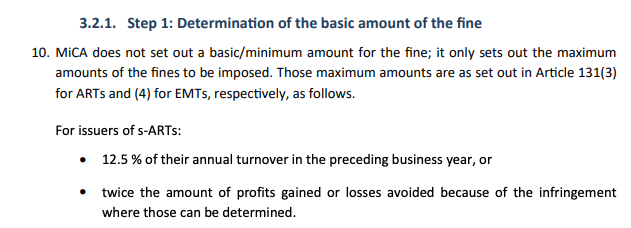
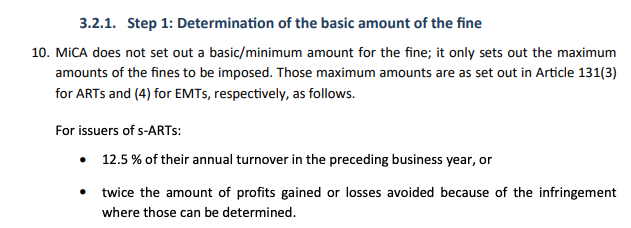
On penalties, Eckehard Stolz, managing director of Amina EU, said MiCA penalties start at 5 million euros or 5% of annual turnover for some violations.
Source: EBA
Massella added that the European Banking Authority (EBA) proposed on June 26 increasing penalties under certain regulatory regimes, including as much as 12.5% of annual turnover for some stablecoin-related breaches.
Who enforces MiCA?
While MiCA creates a single EU rulebook, day-to-day supervision is handled by national competent authorities (NCAs), which authorize, supervise and enforce the rules for crypto companies.
The European Securities and Markets Authority (ESMA) coordinates supervision across member states and maintains the public register of authorized crypto-asset service providers, and the EBA directly oversees significant stablecoin issuers.
Source: ESMA
“At the EU level, ESMA plays an important coordination and supervisory-convergence role, especially to avoid regulatory arbitrage between member states,” Ivo Grlica, founder of GrlicaLaw and G LAB Advisors, told Cointelegraph.
“National regulators are only the first line of MiCA enforcement, but the legal consequences can spread into national courts and criminal-law systems if the underlying conduct causes harm,” he added.
Enforcement unlikely to be uniform at first
MiCA enforcement is unlikely to be uniform in its early stages because NCAs differ in resources, experience and supervisory priorities.
“ESMA made clear it expects NCAs to act against unauthorized providers from July 1,” Stolz said, adding that how aggressively each regulator moves “will depend on local resourcing and priorities.”
Peter Bidewell, vice president of institutional product adoption at Parfin, said differing supervisory approaches could create opportunities for regulatory arbitrage despite MiCA’s goal of harmonizing crypto rules across the EU.
Related: StanChart joins ESMA’s first MiCA register update since deadline
Grlica said he expects enforcement to become more systematic over time as regulators identify unauthorized providers and share information across member states, making it increasingly difficult for companies with a history of non-compliance to obtain MiCA authorization later.
Several EU regulators, including authorities in the Czech Republic, Bulgaria, Luxembourg and Italy, have issued notices reminding crypto companies that the MiCA transition period has ended and urging providers without authorization to wind down their operations.
The Czech National Bank told Cointelegraph that the country’s Financial Market Digitization Act gives it the authority to impose sanctions for MiCA-related violations, including operating without authorization, unlawful token offerings and failing to cooperate with supervisors. The law allows the central bank to fine companies providing crypto services without authorization up to 118.5 million Czech koruna (about $5.6 million), 5% of annual turnover if higher, or twice the unlawful benefit obtained, whichever is greater.
Cointelegraph contacted France’s Autorité des marchés financiers (AMF), the Netherlands’ Authority for the Financial Markets (AFM) and Germany’s Federal Financial Supervisory Authority (BaFin) to ask how they plan to enforce MiCA following the transition deadline. None had responded by publication.
Magazine: How crypto laws changed in 2025 — and how they’ll change in 2026


Two protocol upgrades turned Hyperliquid from a crypto perpetuals exchange into something closer to an operating system for markets. HIP-3 lets anyone with enough staked HYPE launch a perpetuals exchange for stocks, oil, or gold. HIP-4 adds prediction markets that settle without a token vote. Here is how both work, what they have built so far, and where the risks sit.
Hyperliquid spent its first two years being described as the fastest decentralized perpetuals exchange in crypto. The description was accurate and incomplete. Since late 2025, the network has been executing a more ambitious plan: turning its core trading infrastructure into a platform that other builders deploy markets on top of, the way developers deploy apps on cloud infrastructure. Grayscale Research made the comparison explicit in a June 2026 note, writing that Hyperliquid now looks less like a stock exchange and more like Amazon Web Services.
Two upgrades carry that transformation. HIP-3, live on mainnet since October 13, 2025, opened perpetual futures listing to outside builders and brought tokenized stocks, commodities, and indices onto the platform at scale. HIP-4, live since May 2, 2026, added a second market primitive built for prediction markets and other event contracts. Together they explain why seven of the top ten markets by volume on a crypto exchange are now things like Nvidia stock and gold, and why the platform is picking a direct fight with Polymarket and Kalshi.
This guide walks through what each proposal does, how the mechanics work, what has happened since launch, and what can still go wrong.
First, the basics: what a HIP is
Hyperliquid is a layer 1 blockchain built around a fully on-chain central limit order book. Its core engine, HyperCore, processes around 200,000 orders per second and handles matching, margining, and liquidations for every market on the chain. A separate component, the HyperEVM, runs Ethereum-style smart contracts on the same consensus layer. The native token, HYPE, secures the network through staking, pays fees, and absorbs most protocol revenue through a continuous buyback program. Cumulative protocol revenue passed $1 billion in late June 2026, with an annualized run rate near $840 million.
Changes to the protocol arrive through Hyperliquid Improvement Proposals, or HIPs, which the community debates and HYPE stakers weigh in on before the core contributors ship the code. The first two set the pattern. HIP-1 created the standard for launching spot tokens, with ticker slots sold through recurring Dutch auctions, so listing a token became a market process instead of an application form. HIP-2 added a protocol-native liquidity mechanism that seeds order books for new tokens automatically, solving the empty-book problem that kills most new listings on other venues. Both dealt with spot markets, and both introduced ideas that return later: auctions as the allocation mechanism for scarce listing slots, and protocol-level guarantees standing behind builder-created markets. The third and fourth proposals took those ideas after the two bigger prizes: perpetual futures on everything, and event contracts on anything.
HIP-3: builder-deployed perpetuals
Before HIP-3, listing a new perpetual market on Hyperliquid worked the way it works on most exchanges: the core team decided. That created a bottleneck and a gatekeeper, two things the platform’s own community had complained about as the asset universe stayed narrow while demand for stock and commodity exposure grew.
HIP-3, called Builder-Deployed Perpetuals, removed the gatekeeper. Since October 2025, any builder who stakes 500,000 HYPE can deploy an independent perpetuals exchange on HyperCore, without core team approval. At current prices near $64, that stake represents roughly $32 million, a number that matters for reasons covered below.
The deployer controls nearly everything about their market. They choose the assets, the oracle that sets the mark price, the collateral token, margin requirements, leverage limits, funding parameters, and the front-end experience. The first three assets in any HIP-3 exchange deploy without an auction. Additional assets go through a Dutch auction shared across all HIP-3 deployers, similar to the HIP-1 ticker auctions.
What the deployer does not control is the plumbing. HIP-3 markets inherit the full HyperCore stack: the same matching engine, the same order types, the same margining and liquidation logic, and the same solvency guarantees as the validator-operated markets. A trader interacting with a builder-deployed market gets the same execution quality as on the flagship crypto perps.
The economic design has three pillars:
- The stake is a bond, not just a ticket. The 500,000 HYPE can be slashed if the deployer misbehaves, for example by manipulating an oracle or breaking market rules, and the requirement holds for 30 days even after a deployer halts all markets.
- Fees split down the middle. HIP-3 markets charge users twice the fee of validator-operated perps, and the deployer keeps 50%. The protocol collects the same revenue per trade either way, so builder markets grow the pie without cannibalizing it.
- Cross margin has eligibility standards. Validators only allow cross margin on HIP-3 assets with sufficient observable liquidity, a reliable external oracle, and resistance to price manipulation, and any 50% intraday move in the reference price triggers a review.
The design goal is alignment: builders with $32 million at stake and a 50% revenue share have every reason to run clean, liquid, well-oracled markets, and a slashing mechanism waits for the ones who do not.
What HIP-3 actually built
The proposal would be a footnote if nobody used it. The opposite happened. The first market, a synthetic Nasdaq-style index called XYZ100, went live within days of activation. Its deployer, TradeXYZ, then built out United States equities including Nvidia, Tesla, Google, and Amazon, plus gold and silver contracts benchmarked to COMEX front-month futures, and later secured official licensing rights to the S&P 500 ticker, a landmark moment for a DeFi protocol.
The numbers followed. Open interest across HIP-3 markets passed $1.43 billion within months of launch. By spring 2026, seven of Hyperliquid’s top ten markets by volume were tokenized equities or commodities, not crypto pairs. During the West Asia crisis earlier this year, when traditional commodity venues closed for the weekend, traders moved to Hyperliquid to trade oil, gold, and silver around the clock, and HIP-3 markets drove up to 40% of the platform’s total volume. Non-crypto assets showed 60% trader retention in late March, a signal that around-the-clock access to traditional markets is a durable product, not a novelty. At peak HIP-3 activity the platform generated $2.3 million in daily fees, funding $11 million in HYPE buybacks.
Other deployers took different angles. Kinetiq built around its liquid staking token. Liminal used HIP-3 markets to run fully on-chain delta-neutral yield strategies across equities, FX, and commodities, including markets collateralized with yield-bearing assets like Ethena’s USDe. In June, Hyperliquid and TradeXYZ launched the FOMO app, a single interface for trading equities, pre-IPO stocks, crypto, indices, and commodities. Access also spread through consumer wallets: HIP-3 markets can be traded through any Hyperliquid-compatible front end, including Phantom.
The listing economics also flipped in a way worth pausing on. Under the old model, and on centralized exchanges generally, a new asset waits for an exchange’s business development calendar, and projects have long complained about the cost and opacity of the process. Under HIP-3, listing latency collapsed from a governance or negotiation timeline to a deployment transaction plus an auction, and the gatekeeping moved from relationships to capital. A pre-launch project that wants a perpetual market for hedging no longer needs a major venue’s blessing; it needs a deployer willing to run the market. Comparable systems show how unusual this is: dYdX v4 still routes every new market through a governance vote with a week or two of latency, and GMX listings run through its core team. Hyperliquid is the first chain-level implementation where market creation itself carries no approval step.
The concentration is the caveat. TradeXYZ accounts for more than 90% of all HIP-3 open interest, and Blockworks Research has flagged the deployer economics as a structural risk: with a roughly $30 million lockup, auction costs, and stiff competition, a smaller deployer’s break-even period can stretch to four years. Blockworks has proposed lowering the stake for small builders and letting them keep 100% of revenue until they recover their costs. Hyperliquid’s own documentation says the 500,000 HYPE threshold is expected to fall as the infrastructure matures. Until it does, HIP-3 is permissionless in principle and an oligopoly in practice.
HIP-4: outcome markets
HIP-3 covered continuous markets, things with a price that moves all day. It could not cleanly handle discrete events. A perpetual future needs an oracle that updates continuously with limits of roughly 1% deviation per update, a design suited to leveraged trading on a live price and incompatible with questions that jump from uncertainty to a hard answer in one instant, like an election call or an inflation print.
HIP-4, announced on February 2, 2026 and live on mainnet since May 2, added a purpose-built primitive for exactly that. Outcome markets are fully collateralized contracts that settle to exactly 0 or 1 at expiry. Each market has two sides, typically Yes and No, and the order books for the two sides are merged: an order to buy Yes at a price of 0.62 is the same order as one to sell No at 0.38, so all liquidity concentrates in one book. Positions are collateralized in USDH, the network’s native stablecoin, and because every position is fully backed, there is no liquidation risk.
The market lifecycle has a distinctive opening. Each new outcome market starts with a single-price clearing auction lasting around 15 minutes, during which traders submit limit orders but nothing executes. The auction clears at the price that matches the most volume, and unfilled orders roll into continuous trading on the standard order book. The mechanism exists to concentrate early liquidity and produce a fair opening price instead of a thin, gappy first print. It borrows a page from how traditional exchanges open trading each morning, which is fitting for a protocol that keeps hiring ideas from the market structure it wants to replace.
The architecture runs natively inside HyperCore, sharing the matching engine, order types, and throughput of every other market on the chain. That matters for one under-discussed reason: liquidity providers can quote prediction markets with the same tooling and speed they use on perps, instead of the bespoke market-making setups that thinner prediction venues require. Deep books were always the missing ingredient on long-tail event markets, and Hyperliquid’s bet is that professional liquidity follows familiar infrastructure.
The fee structure is openly aggressive. Opening or minting an outcome position costs nothing. Fees apply only on closing, burning, or settling, and makers pay zero. That pricing targets Polymarket and Kalshi, which processed a combined $44.8 billion in June on the back of the World Cup, and the community reaction at announcement made the intent plain. When the proposal dropped in February, crypto.news covered the market pricing in exactly that ambition, with traders framing HIP-4 as Hyperliquid trying to house all of finance.
Initial markets are curated and validator-deployed, starting with recurring daily Bitcoin price threshold contracts that reset each day, run by the prediction platform Outcomexyz. Planned categories include politics, sports, macro data releases, crypto events, and entertainment. A later phase opens permissionless deployment: builders will stake 1,000,000 HYPE per market slot, slashable and burned if validators find oracle manipulation, invalid state transitions, or prolonged downtime. One slot supports rolling and recurring markets, recycling after each settlement.
Settlement without a token vote
The deepest difference between HIP-4 and the incumbent on-chain prediction markets is not fees. It is how truth gets decided.
Polymarket outsources contested resolutions to UMA’s optimistic oracle, where token holders vote on disputed outcomes, an architecture that has produced repeated controversies in 2026, including a $60 million market on a Strategy Bitcoin sale that resolved against the documented facts. The full mechanics and failure modes of that system are covered in our companion guide to how prediction markets resolve.
HIP-4 replaces the token vote with the chain itself. Settlement runs through Hyperliquid’s validator set executing automated resolution against pre-specified, objective data sources. There is no dispute window, no escalation, and no path for a token holder with a position in the market to also vote on its outcome. The trade-off is scope: deterministic settlement works for objective questions with a clean data source, which is why the first markets are price thresholds. Ambiguous questions, the kind that generate the worst oracle disputes elsewhere, are exactly the kind HIP-4’s design avoids listing.
What all of this looks like from the trader’s side
For a user, the machinery above mostly disappears. HIP-3 markets sit in the same interface as the flagship crypto perps, trade through the same API, and settle against the same margin account. A trader shorting gold on a builder-deployed market places the order the same way they would short Ethereum, and the differences show up in three places worth knowing.
Fees are higher on builder markets. The headline rate on a HIP-3 perp is twice the validator-operated rate, which at base tiers works out to roughly 3 and 9 basis points for makers and takers before discounts, with the deployer keeping half. Staking discounts, referral rebates, and collateral-based reductions still apply on top, so an active HYPE staker narrows the gap considerably.
Oracle quality varies by deployer. On validator-operated markets, the network itself maintains the price feed. On a HIP-3 market, the deployer chooses and operates the oracle, which is why the mark price on a weekend oil contract can drift from where Monday’s COMEX open eventually prints. During the West Asia crisis, Hyperliquid’s oil market traded on its own oracle through days when no traditional reference price existed at all. That independence is the product and the risk in one feature.
Collateral differs by market. Most markets margin in stablecoins, but HIP-3 supports alternative collateral where the deployer enables it, including yield-bearing assets, and HIP-4 outcome positions collateralize in USDH. Settlement demand for outcome markets flows through the stablecoin into the same fee-and-buyback loop that already routes nearly all protocol revenue toward HYPE, which is why analysts treat HIP-4 volume as a direct token catalyst rather than a side business.
The practical entry points have multiplied too. Beyond the native app, HIP-3 and HIP-4 markets surface through Phantom, through the FOMO app for the equities lineup, and through any front end built on the public API, since every builder market shares the unified HyperCore order flow.
The risk column
Every part of the story above has a counterweight, and an honest explainer lists them.
Deployer concentration is the loudest one. A permissionless system where one builder holds 90% of open interest has recreated a gatekeeper one level up, and the $32 million entry stake keeps it that way for now. Regulatory exposure is the second. Hyperliquid operates without KYC in most of the world, the United Kingdom’s FCA has declared the platform unauthorized, and pending United States market structure legislation could either validate or constrain synthetic stock perpetuals, a product category regulators have barely begun to examine. Institutional ceilings are the third: a June JPMorgan report saw limited institutional demand for perpetual futures generally, citing unbounded basis risk and missing clearing protections, which matters for a token whose valuation leans on volume growth. And the products themselves are dangerous instruments. Leveraged perpetuals on any underlying can liquidate a position in minutes, and cross margin across markets adds its own failure modes.
There is a subtler risk in the oracle layer that the slashing design only partially covers. A deployer’s oracle is a single point of interpretation for its markets, and unusual conditions expose the gap: when traditional venues close and a HIP-3 commodity market keeps trading, the mark price is whatever the deployer’s methodology says it is, with no external reference to check against until markets reopen. Validators review any 50% intraday reference move and slashing punishes proven manipulation, but a subtly mispriced weekend, honest or otherwise, transfers money between longs and shorts without tripping any threshold. Traders in builder markets are underwriting oracle methodology whether they think about it or not.
None of that has slowed the platform yet. Hyperliquid controls an estimated 70% of on-chain perpetuals volume, spot HYPE ETFs drew $111 million in inflows in late June while Bitcoin and Ethereum funds bled, and the ecosystem is spending on the long game, including a $29 million policy center in Washington. Whether the moat holds is a different question from whether it exists.
The bigger picture for L1 competition
HIP-3 and HIP-4 also reframe what layer 1 blockchains compete on. Ethereum and Solana fight over DeFi liquidity, users, and fees, a race with its own 2026 scoreboard. Hyperliquid opted out of the general-purpose contest and vertically integrated one thing: markets. The bet is that an exchange-shaped blockchain with permissionless market creation captures more value than a general-purpose chain hosting exchange apps. dYdX tried a dedicated appchain with governance-gated listings. GMX built on someone else’s layer 2. Hyperliquid is the first to make market creation itself permissionless at the chain layer, and the early evidence, an order of magnitude expansion in what can be traded on-chain, suggests the design space was bigger than the industry assumed.
What to watch from here
Three markers will tell the story over the next year. First, whether the HIP-3 stake requirement drops and the deployer set widens beyond one dominant builder. Second, whether HIP-4 volume becomes measurable against Polymarket and Kalshi once permissionless deployment opens and categories expand past crypto prices. Third, whether regulators treat builder-deployed stock perpetuals as an innovation to license or a loophole to close. The upgrades themselves are shipped and working. The open question, as always in this industry, is what survives contact with scale.
Frequently asked questions
What is Hyperliquid HIP-3?
HIP-3, called Builder-Deployed Perpetuals, is a Hyperliquid protocol upgrade live since October 13, 2025. It lets any builder who stakes 500,000 HYPE deploy an independent perpetual futures exchange on HyperCore, choosing the assets, oracle, collateral, and fee capture, while inheriting Hyperliquid’s matching engine, margining, and liquidation systems. It moved market listing from a core team decision to a permissionless, stake-secured process.
What is Hyperliquid HIP-4?
HIP-4 is the outcome markets upgrade, announced February 2, 2026 and live on mainnet since May 2, 2026. It adds fully collateralized event contracts that settle to exactly 0 or 1 at expiry, with merged Yes and No order books, USDH collateral, no liquidation risk, and zero fees to open a position. It is Hyperliquid’s entry into prediction markets.
How much does it cost to deploy a HIP-3 market?
A deployer must stake 500,000 HYPE, worth roughly $32 million at current prices near $64. The stake is slashable for misconduct and must be held for 30 days even after all of the deployer’s markets are halted. The first three assets deploy without an auction; additional assets go through a shared Dutch auction. Documentation says the threshold should fall over time.
What can you trade on HIP-3 markets?
Builder-deployed markets cover tokenized United States equities such as Nvidia, Tesla, Google, and Amazon, index products including a licensed S&P 500 contract and the Nasdaq-style XYZ100, commodities such as gold, silver, and oil benchmarked to COMEX and other references, FX, and long-tail crypto assets. Seven of Hyperliquid’s top ten markets by volume are now non-crypto assets.
How does HIP-4 settlement differ from Polymarket?
Polymarket resolves contested markets through UMA’s optimistic oracle, where token holders vote on disputed outcomes. HIP-4 settlement is deterministic: Hyperliquid’s validator set resolves each contract against a pre-specified objective data source, with no dispute window and no token vote. The design avoids governance attacks but limits markets to questions with clean, objective answers.
Who is TradeXYZ?
TradeXYZ is the dominant HIP-3 deployer, accounting for more than 90% of builder-deployed open interest. It launched the first HIP-3 market, the XYZ100 index, built out the equities and commodities lineup, secured S&P 500 ticker licensing, and co-launched the FOMO trading app with Hyperliquid in June 2026. Its dominance is also the center of the deployer concentration debate.
Is trading on Hyperliquid safe?
The protocol has strong solvency engineering and a clean track record on its core markets, but the products are high-risk by nature. Leveraged perpetuals can liquidate quickly, HIP-3 markets depend on each deployer’s oracle quality, the UK’s FCA lists the platform as unauthorized, and synthetic stock perpetuals sit in a regulatory gray zone. Position sizing and jurisdiction checks matter.
Does HIP-4 have liquidation risk?
No. Outcome positions are fully collateralized in USDH at purchase, so the maximum loss is the amount paid for the position and no liquidation engine is involved. That distinguishes outcome markets from perpetuals, where leverage means positions can be forcibly closed. The risk in outcome markets is being wrong about the event, or holding through a settlement data error.
Disclaimer: This article is for informational purposes only and does not constitute investment advice. Digital asset markets are volatile and you can lose your entire investment. Always do your own research. Information current as of July 3, 2026.

NATO leaders to gather in Ankara, aiming to smooth over tensions with Trump

Now a convicted people smuggler is claiming asylum in the UK

Kylian "Mobutu" Mbappé: 'Les Bleus' embrace the trend at the World Cup


-

 Fashion7 days ago
Weekend Open Thread: Staud – Corporette.com
-

 Crypto World4 days ago
Strategy authorizes up to $1.25B in Bitcoin sales under new capital plan
-

 Tech6 days ago
Claude Code turned every engineer into three. Now companies need more product thinkers
-

 News Videos5 days ago
MAJOR BITCOIN & MARKET UPDATE!!!! (MUST WATCH ASAP!!!)
-

 Tech4 days ago
Anonymous researcher drops 0-day ‘exploitarium’ repo
-

 Crypto World6 days ago
Coinbase, Circle Deepen Crypto Stock Losses Despite Resilient S&P 500
-

 Politics3 hours ago
The House | “Reframing the debate from a binary discussion of winners and losers”: Yuan Yang reviews ‘We Are Not Machines’
-

 Business3 days ago
Australia treasurer says alleged access of prime minister’s bank data ’incredibly concerning’
-

 Crypto World6 days ago
Kraken's xStocks Opens Bending Spoons IPO Registration to EEA Retail
-

 Sports7 days ago
FIH Pro League: India defeat Pakistan 7-1, register biggest win of campaign | Other Sports News
-

 Tech6 days ago
Bluekit phishing kit adopts browser-in-the-middle for login theft
-

 Tech6 days ago
Russian hackers now target Signal backup recovery keys
-

 Crypto World7 days ago
RTX holders must register wallets before token distribution begins
-
 Business4 days ago
The AI boom won’t burst all at once. It will pop in ‘rolling bubbles’: Macquarie
-

 Sports2 days ago
Broncos roster: OL Ben Powers (No. 74) entering final year of contract
-

 Tech6 days ago
Silicon Valley paid to kill AI regulation, now it wants the rules back
-

 NewsBeat3 days ago
Presenter Caroline Flack’s brother Paul Flack dies aged 55
-

 Crypto World1 day ago
Binance stock trading tops $1B in first month after launch
-
 NewsBeat1 day ago
New exhibition reflects five decades of movement between island of Ireland and GB
-

 Tech6 days ago
OpenAI mulls delaying IPO over valuation concerns
You must be logged in to post a comment Login