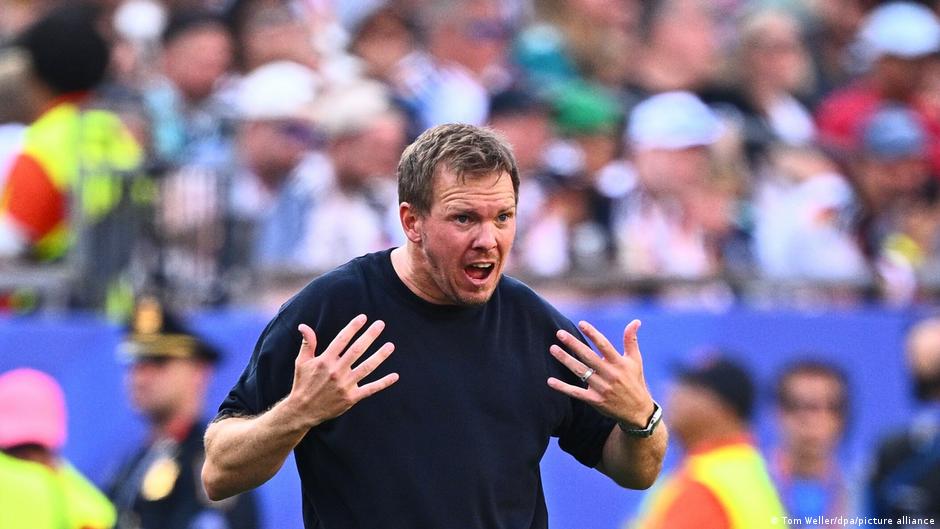
As had been widely expected ever since Germany’s shock exit to Paraguay at the 2026 World Cup, Julian Nagelsmann has left as national team head coach, the German Football Association (DFB) confirmed on Friday.
The 38-year-old resigned from the job just three years after arriving and well before the end of his contract, which was to expire after the 2028 European Championship. The renewal of his deal in January 2025 forced the DFB into tricky negotiations, and led to a reported three-hour secret meeting the day before the official announcement.
“This decision was anything but easy for me,” Nagelsmann said in a statement.
“My top priority has always been the team’s success. After such a bitter disappointment, the team deserves the chance for a fresh start without any baggage… A special thank you also goes to the fans. You carried us, you trusted us, and you gave us energy, even during difficult times. I am truly sorry and deeply saddened that we let you down and were unable to give you more nights of football excitement at this World Cup. You deserved so much more!”
Advertisement
Nagelsmann’s assistants Benjamin Glück and Benjamin Hübner have also left. The DFB also stated that it is entering talks with Jürgen Klopp for the vacant head coach position, indicating that the former Liverpool and Dortmund boss has already shown a willingness to take up the role.
Nagelsmann won 23 of his 37 games in charge of Germany, losing only eight times. Three of those defeats came against Spain, Portugal and France, but two also came at the 2026 World Cup against Ecuador and then Paraguay.
His exit is yet another downturn in a coaching career that was once expected to reach the highest of heights.
Julian Nagelsmann (left) started youth coaching at Hoffenheim before taking the first-team jobImage: Kai Schwörer/picture alliance
Young coach makes Bundesliga history
A decade ago, Julian Nagelsmann made his debut as Hoffenheim coach in a 1-1 draw with Werder Bremen in the Bundesliga. He was the face of Germany’s new, young coaching generation. He took a side battling relegation right up the table. They beat Bayern Munich. Then came the Champions League. He told the Süddeutsche Zeitung that: “30% of coaching is tactics, 70% social competence.” He was deemed a coach beyond his years, ahead of the times, and one of the best coaches around.
The following year, it all unraveled for Nagelsmann. His firing of Bayern Munich’s goalkeeper coach Toni Tapalovic caused a stir, with Manuel Neuer saying the dismissal was like “having his heart ripped out.” According to a report by The Athletic, Nagelsmann’s training was seen as too complicated and he had struggled to truly connect with the players.
In March 2023, while on a skiing holiday during the international break, Nagelsmann was sacked. He had spent just 20 months in the job. After seven full seasons of coaching in the Bundesliga, he was out of work and had just one Bundesliga title to his name.
The Germany job
Six months later, he was named Germany’s head coach. He was the “desired candidate” whose passion for the game was “infectious” — such were the words of sporting director Rudi Völler at the time.
In January 2025, Nagelsmann extended his contract until 2028, a decision met with lots of praise. Jürgen Klopp said he “loved Julian’s work” and thought Nagelsmann had turned Germany into a favorite for the next tournament.
However, eyebrows were raised when Nagelsmann said soon afterwards that the goal was to win the World Cup. A disappointing showing in the Final Four of the Nations League followed to dampen the mood, which was worsened when Germany’s World Cup qualifying campaign got off to a losing start against Slovakia.
“I can’t stand hearing this constant ‘quality, quality’ anymore. We have to play football with passion! In every game!” Nagelsmann railed at the time.
Germany got the job done, but as the World Cup year began, things began to unravel again as Nagelsmann’s communication became increasingly confusing. Oliver Baumann went from number one to the back-up after Manuel Neuer’s surprise recall. Joshua Kimmich was a midfielder, then a right back. Leon Goretzka was going to start, then didn’t. Deniz Undav was scoring in the Bundesliga, but considered a back-up.
Advertisement
World Cup woes
And then came the World Cup. Beyond the opener against Curacao, Nagelsmann’s side were more reactive than active. They did not seize on the momentum of the comeback win in Toronto. They couldn’t hold onto a lead against Ecuador. They couldn’t finish off Paraguay. The players deserve criticism, but there have also been questions asked of Nagelsmann’s decision making, communication and sideline behavior.
Who knows what will come next for the once-future king of German coaching. For someone who has long said he doesn’t want to be coaching into his older years, perhaps there are not many stops left before he gets off the football train. Certainly his reputation after this showing has taken a hit. A return to management in Germany does not feel likely. Given the Premier League has one of the most volatile fire-and-hire approaches in world football, perhaps Nagelsmann will reappear in six to 10 months’ time on the sidelines of a English top-flight team.
Right now though, there is a real sense of confusion about how this all came to pass. For a coach with so many skills, this was not how many would have imagined Julian Nagelsmann’s career unfolding.
FIFA introduced a wild rule for this year’s World Cup in which players could receive red cards for covering their mouths while speaking; however, one of soccer’s largest governing bodies will not be following suit.
FIFA established the new rule to prevent players from hiding abusive, discriminatory or offensive language while on the field.
But the Union of European Football Associations (UEFA) announced Thursday that players will not be sent off the field for the infraction during Champions League, Europa League and Conference League matches next season.
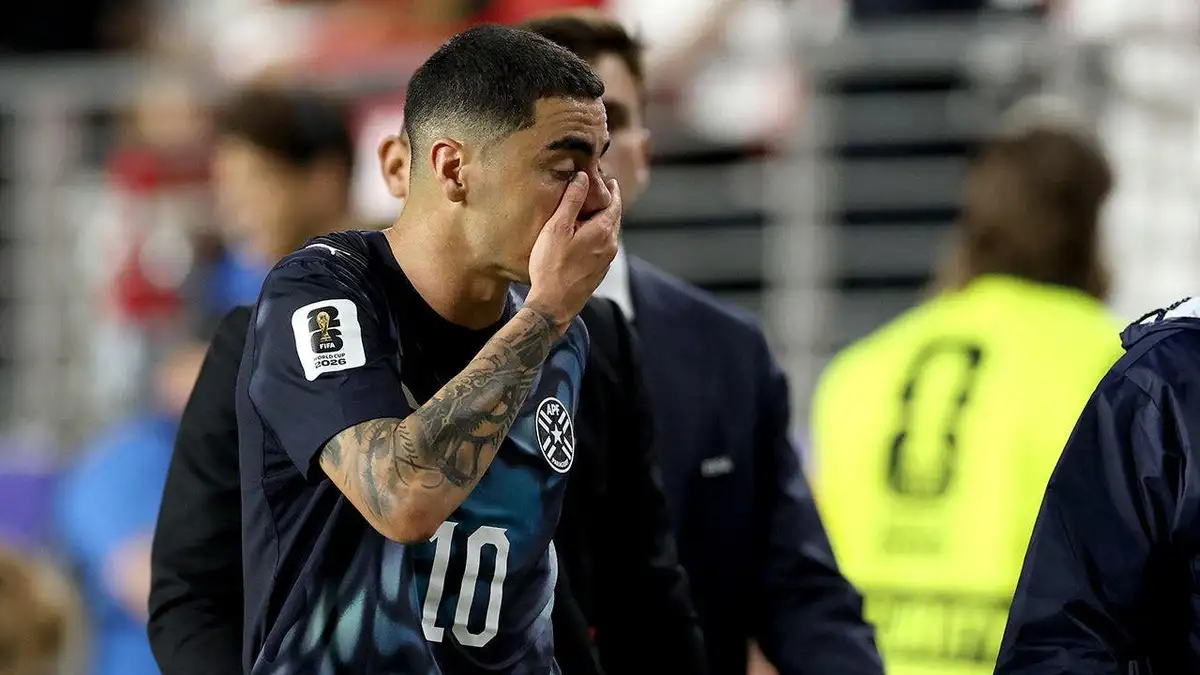
Miguel Almiron of Paraguay reacts after receiving a red card for covering his mouth while talking to another player during the FIFA World Cup 2026 Group D match between Türkiye and Paraguay in Santa Clara, California, on June 19, 2026.(Richard Heathcote/Getty Images)
UEFA did say, however, that players could receive a yellow card if they are “attempting to conceal communication as an act of unsporting behaviour.”
“This is obviously without prejudice to any disciplinary investigation or proceedings that may follow as a consequence of or in connection with such behaviour,” a statement said.
FIFA President Gianni Infantino pushed for changes after Benfica winger Gianluca Prestianni tried to hide verbal insults toward Real Madrid forward Vinícius Júnior in a Champions League match. Soccer’s rulemaking panel, the International Football Association Board, agreed that players can be penalized with a red card if they cover their mouths when verbally confronting another player.
Advertisement
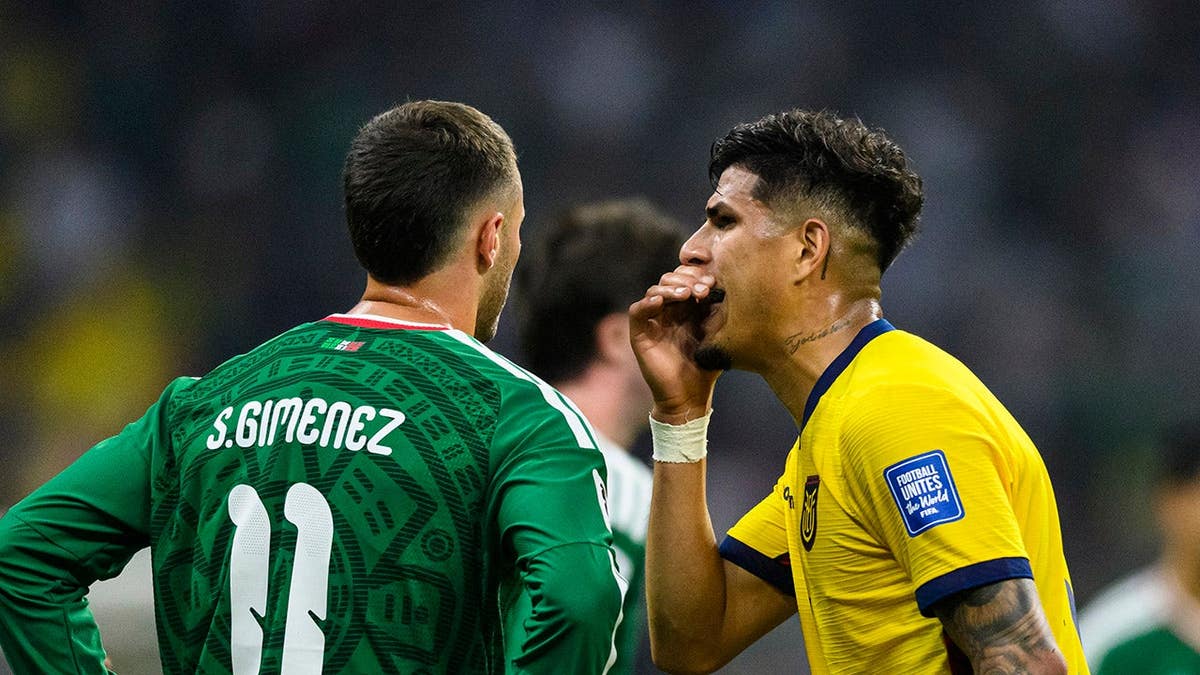
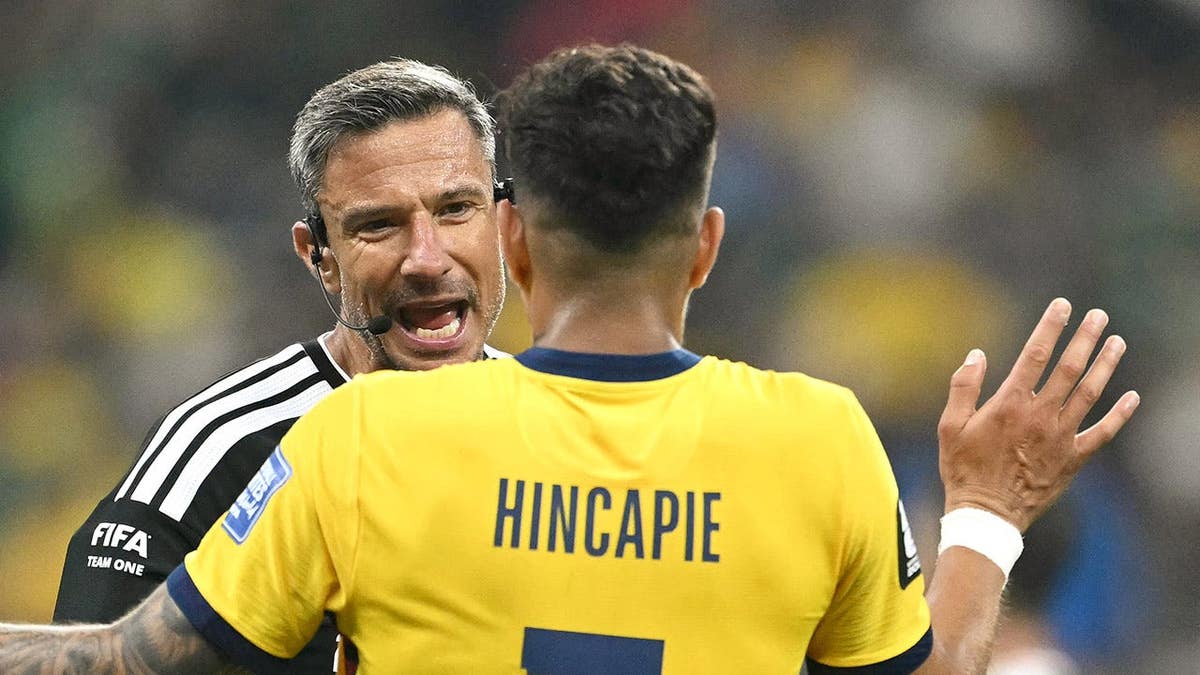
Piero Hincapie of Ecuador (R) covers his mouth while arguing with Santiago Gimenez of Mexico (L) during the FIFA World Cup 2026 Round Of 32 match between Mexico and Ecuador at Mexico City Stadium on June 30, 2026, in Mexico City, Mexico.(Martín Fonseca/Eurasia Sport Images/Getty Images)
The rule is not mandatory within the Laws of the Game but gives tournament organizers like FIFA the option to use it at their discretion.
The rule change was unanimously approved by IFAB, which includes officials from FIFA and the four British soccer federations, at a special meeting ahead of the FIFA Congress. FIFA’s proposal followed Vinícius, backed by Real Madrid teammate Kylian Mbappé, accusing Prestianni of making a racially charged insult while raising his jersey to cover his mouth during the game in February.
Paraguay’s Miguel Almiron and Piero Hincapie of Ecuador are the only players to be red-carded for mouth-covering.
Advertisement
Slovenian referee Slavko Vincic expels Ecuador’s defender Piero Hincapie during the 2026 World Cup Round of 32 football match between Mexico and Ecuador at the Mexico City Stadium in Mexico City on June 30, 2026.(Yuri Cortex / AFP via Getty Images)
If a player is shown a red card by an official, the player is ejected from the match and must serve a one-game suspension in the following match. The team is also forced to play the remainder of the match with 10 players.
OutKick’s Matt Reigle and The Associated Press contributed to this report.
A major experiment will be going on during this year’s NBA Summer League.
The NBA announced Thursday that the “one free throw rule” will be used at the Summer League events happening this month in Salt Lake City, Northern California and Las Vegas.
The G League has used this rule since the 2019-20 season, which is designed to speed up play.
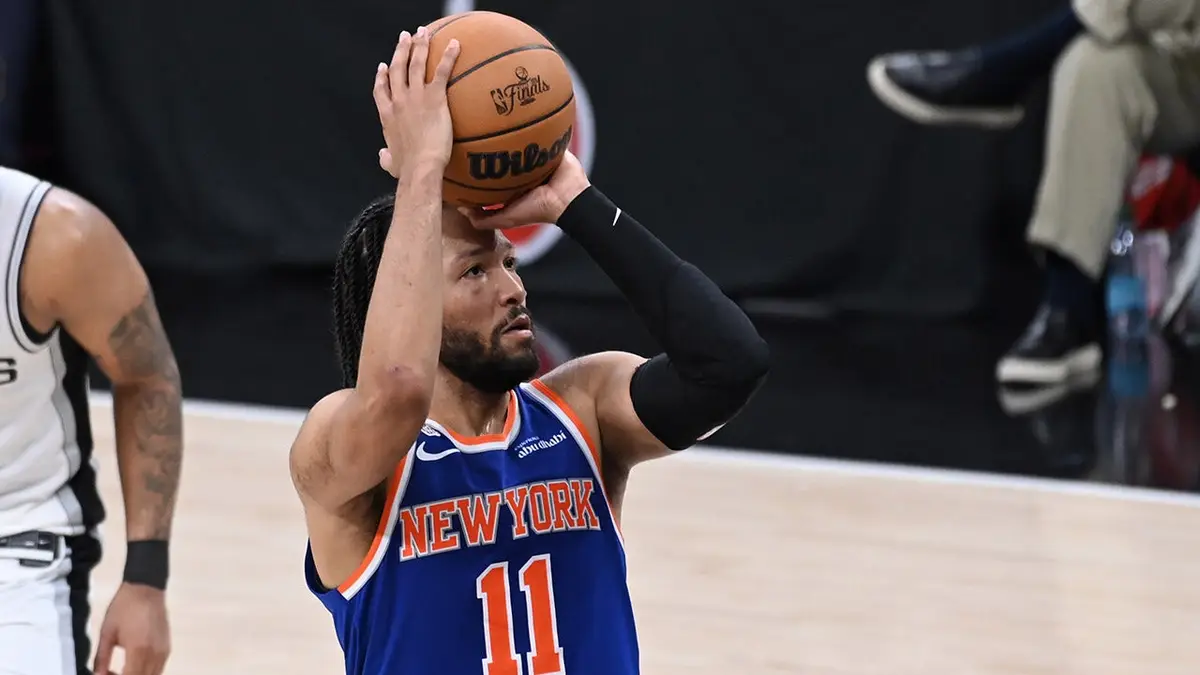
Jalen Brunson of the New York Knicks shoots a free throw during the game against the San Antonio Spurs during Game 5 of the 2026 NBA Finals on June 13, 2026 at Frost Bank Center in San Antonio, Texas.(Juan Ocampo/NBAE via Getty Images)
Any foul that would typically result in the awarding of one, two or three free throws will instead result in a single free-throw attempt. That attempt will be worth the same total number of points as the free throws it replaces.
The rule doesn’t apply to the entire game, though. Standard free-throw rules — two shots for a two-shot foul, etc. — will be used for the last two minutes of fourth quarters and in all of overtime.
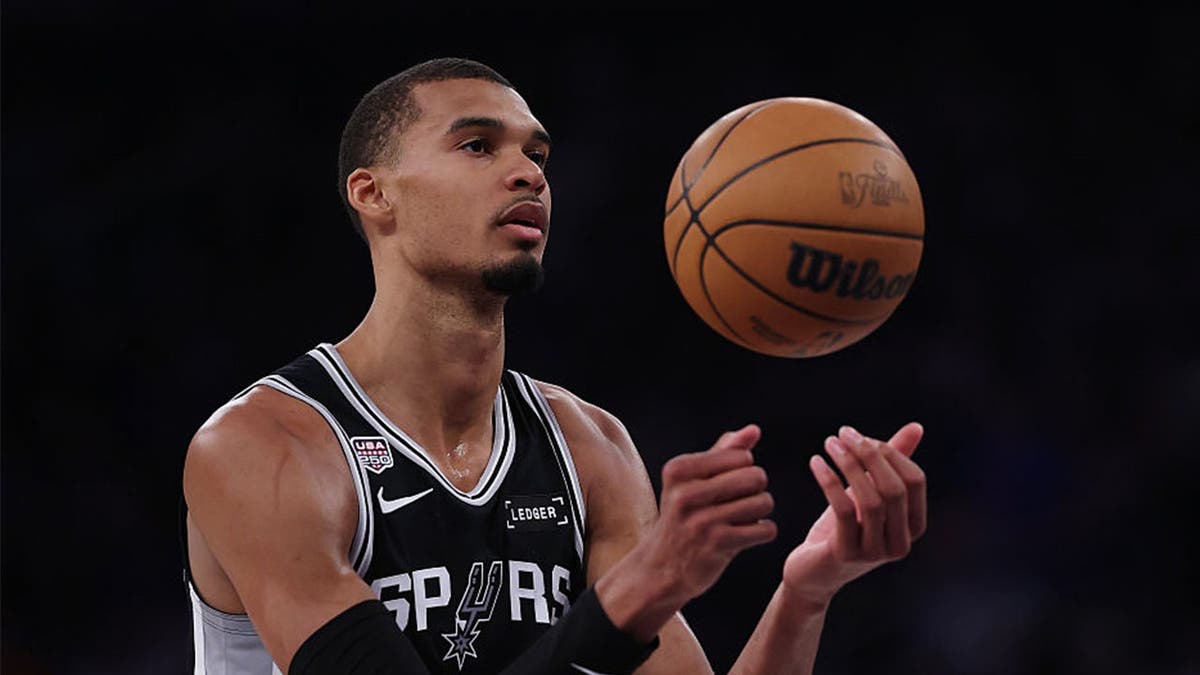
Victor Wembanyama #1 of the San Antonio Spurs takes a foul shot against the New York Knicks in Game Four of the 2026 NBA Finals at Madison Square Garden on June 10, 2026 in New York City. (Photo by Al Bello/Getty Images)((Photo by Al Bello/Getty Images))
It’s unclear whether the one-free-throw rule will make it into NBA games, but similar to the minor and independent leagues and Major League Baseball, the Summer League has been a proving ground for eventual rule changes.
Advertisement
Among those that started at those levels and eventually got to the NBA are the coach’s challenge, resetting the 24-second shot clock to 14 seconds after offensive rebounds and the one-shot award for a transition take foul — which is when a defender intentionally commits a foul to halt a transition opportunity for the opposition.
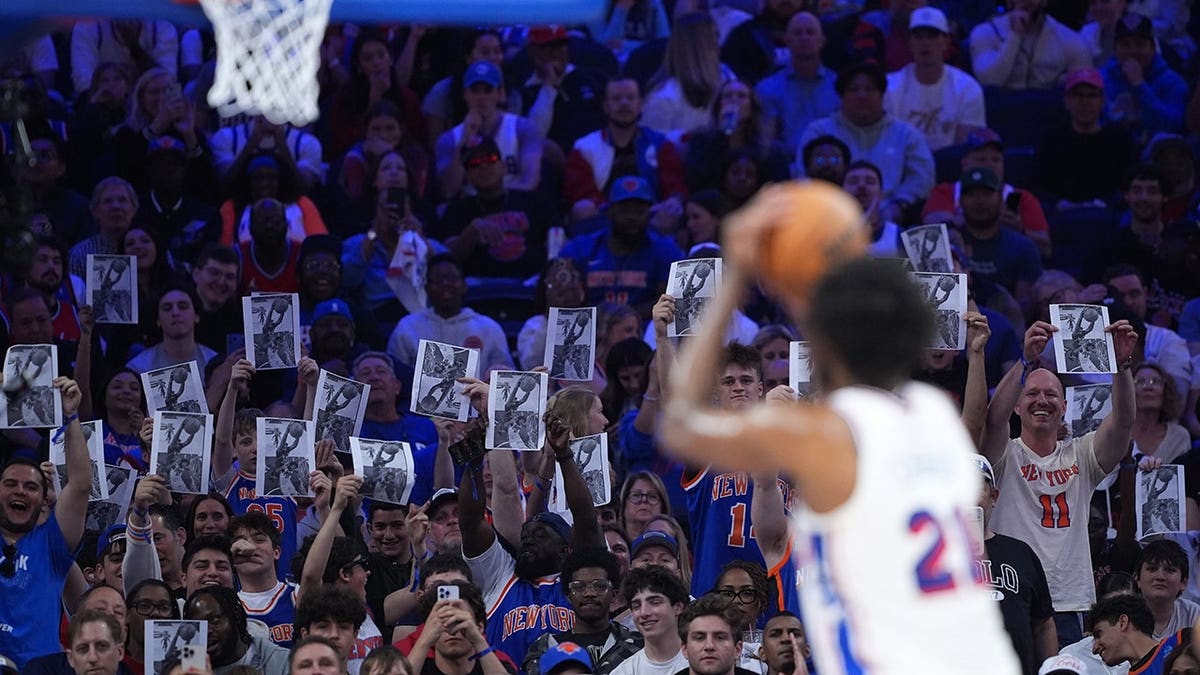
Joel Embiid of the Philadelphia 76ers shoots a free throw during the first half of Game 4 against the New York Knicks in the second round of the NBA playoffs in Philadelphia on May 10, 2026.(Matt Slocum/AP)
The G League also plays 10-minute quarters, something NBA Commissioner Adam Silver has openly advocated for. The league once tested 11-minute quarters in a preseason game, while exhibition games prior to the “bubble” in 2020 used 10-minute quarters.
After a series win over the Mets, it’s time for a mid-season vibe check. Sam McKee joins Ben Nicholson-Smith to talk about the state of the Jays, Bo Bichette’s return and what happens next.
TORONTO — The WNBA’s decision to make Toronto the home of its first international team is going well.
Tempo fans can be found across Canada. The expansion team could break the WNBA single-game attendance record next week. Not in Toronto, however, but around 550 kilometres east in Montreal.
On the opening leg of their Cross Canada Series, the Tempo are playing two games at Montreal’s Bell Centre, which holds 22,114 for basketball. A capacity crowd could top the WNBA playoff attendance record of 22,076.
In August, the series heads west for two games in Vancouver.
Advertisement
“We’ve put the work in and we’re continuing to get better every game, so I think the support is going to continue,” said Tempo guard Marina Mabrey. “It’s very inspiring to see this kind of hype and energy around it in Canada. It kind of motivates you to do better every single night.”
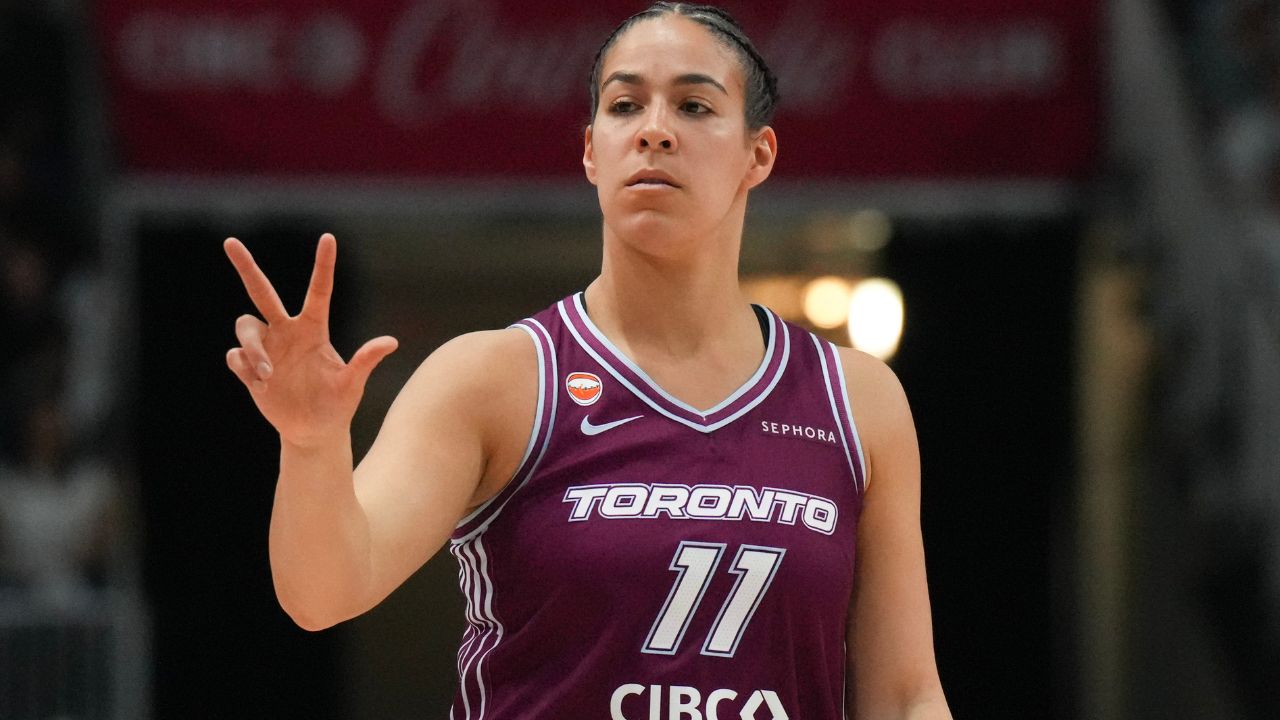
The Tempo have two home games before playing Dallas July 10 in Montreal. They have been giving fans much to be excited about. Toronto is one game under .500, with a 9-10 record, thanks in part to the scoring of Mabrey, who is having an All-Star calibre season averaging 21.2 points a game, third-best third in the WNBA.
Mabrey made headlines when she matched the WNBA scoring record with a 53-point performance in a June 25 win over Los Angeles. With the trip to Quebec coming up, she’s looking forward to scoring more points and making fresh fans in a brand new city.
“I haven’t been to Montreal, so I’m excited to see who shows up for that and for us,” Mabrey said.
Advertisement
Guard Kia Nurse is the lone Canadian on the Toronto roster and she expects a great turnout for the team that features players from eight different countries and is led by an Australian coach — two-time WNBA champion Sandy Brondello.
Nurse’s unofficial duties with the Tempo have included using her local knowledge to help her teammates adjust to their Canadian home.
“Early in the season, there were a lot of conversations around the most simple things,” Nurse said. “I’ve tried to help them with anything that’s different, even from the beginning when we got here, they were looking for CVS. I’m like, you want Shoppers Drug Mart. What are the grocery stores? OK, this one is near your house.”
Now that the Tempo have the basics figured out, Nurse said she’s seen her teammates learning something else, too.
Advertisement
“I think what everybody’s really starting to understand is how unique it is to play in a Canadian city and be the only Canadian team in the entire country, the same way the Raptors and Blue Jays are,” Nurse said. “We’re not on national television all the time in the U.S., but we are on national television every single game here in Canada, and that makes a difference, being able to reach people and get more love and excitement about women’s basketball. When we go to Montreal and when we go to Vancouver, the fans will fill out arenas.”
Brondello, who was a WNBA All-Star as a player, said she has received messages of support from Canadian basketball fans far beyond Toronto.
“We are Canada’s team, and we actually do feel it,” Brondello said. “One of the reasons I took this job is because it was a new challenge in a whole new country, and we had this unique opportunity to grow the game even bigger here.
“The WNBA is a real movement at the moment, the last few years,” Brondello said. “I’ve been part of this for 27 of the 30 years, so I’ve seen the evolution from when I played in the early, early days to how it is now, and there’s a sense of pride to see that. Women’s sport is so much more talked about than just a decade ago, five years ago. It’s our time now, and Canada gets to see that.”
Advertisement
As much as Mabrey is inspired by the prospect of a record crowd in Montreal, she also sees a bigger picture for her sport.
“Honestly, this is for all of women’s basketball,” Mabrey said. ’There’s so many players who have sacrificed time, money, themselves for us to be in this position now. It’s only right that when we get a fan base like that, that they’ve been working so many years for, that we go and we do it right and we put on a show, both teams.”
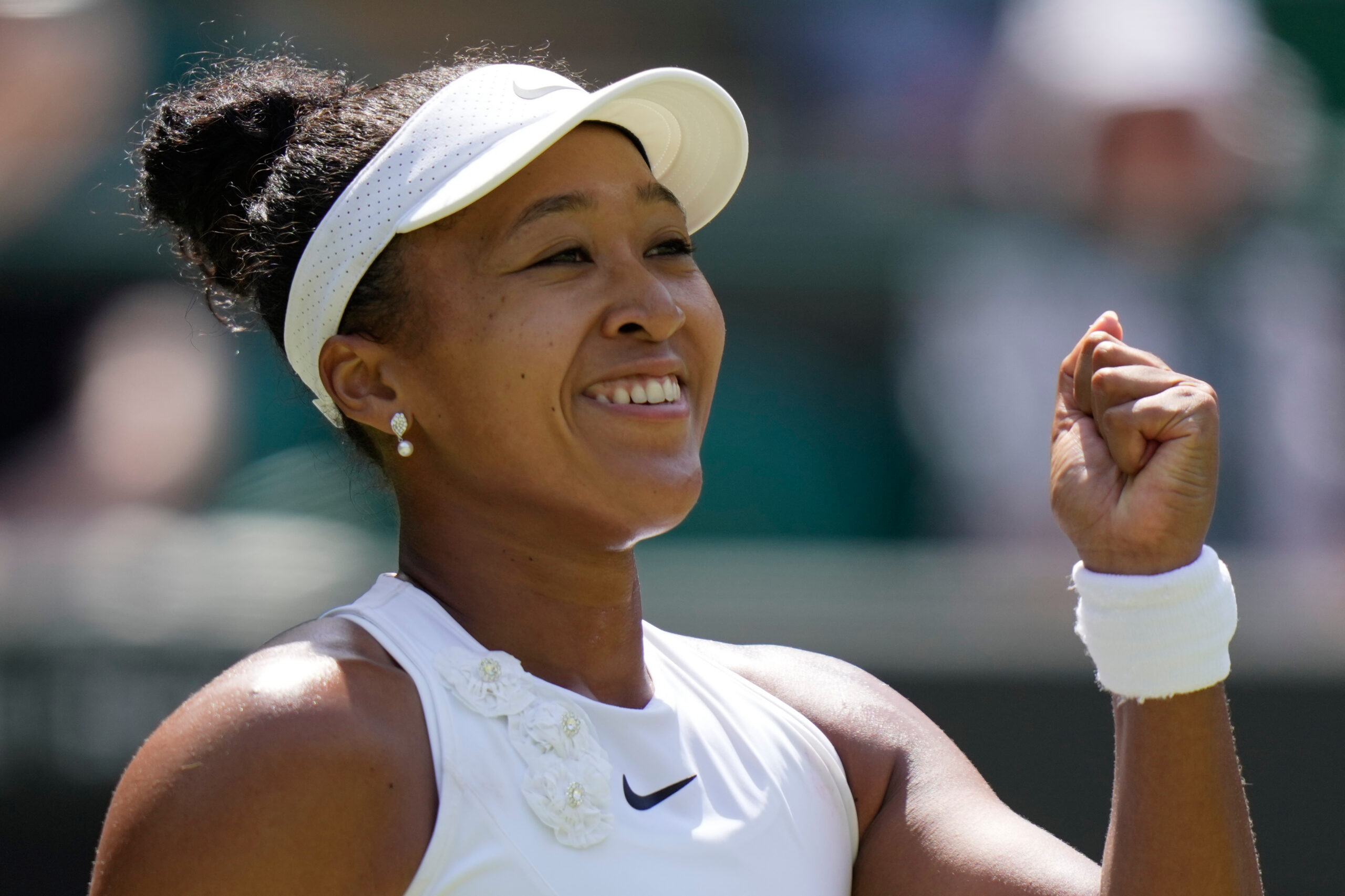
Naomi Osaka of Japan celebrates winning the third round women’s singles match against Daria Kasatkina of Australia at the Wimbledon Tennis Championships in London, Friday, July 3, 2026.(AP Photo/Brian Inganga)
LONDON–Japan’s Naomi Osaka ended her long wait to reach the Wimbledon fourth round for the first time with a 6-1, 6-3 win against Australian Daria Kasatkina on Friday.
Osaka has caused a stir at Wimbledon with her eye-catching outfits, but the 28-year-old is finally stealing the spotlight with her performances as well.
Article continues after this advertisement
Advertisement
After advancing no further than the third round in her five previous main draw appearances at the All England Club, Osaka finally made it to the last 16 with a dominant display on Court One.
She needed just 65 minutes to dispatch Kasatkina, setting up a fourth-round clash against world number one Aryna Sabalenka or former French Open champion Jelena Ostapenko.
“I’m really happy. In my career I’d never won on this court. I’m just glad to have made a really good memory here,” Osaka said.
“I’ve played a lot of matches on grass over the last few weeks. I’m feeling really confident. I hope I’m able to get further and further.”
Advertisement
Article continues after this advertisement
Osaka’s habit of wearing haute couture costumes on to court before removing them to play in her usual tennis attire has been the talk of Wimbledon.
She earned headlines with a kimono-inspired outfit prior to her first-round match and wore a long wedding-dress train for the second round.
And once again she struck a pose with her latest creation — an all-white layered Japanese ceremonial-style kimono — before facing Kasatkina.
Advertisement
Article continues after this advertisement
The outfit, by Tokyo fashion designer Hana Yagi, featured cherry blossoms in another nod to her native Japan.
She also wore a jelly-fish themed dress at the Australian Open this year and an Eiffel Tower-inspired costume at the recent French Open.
Osaka’s tennis has been as memorable as her cat-walk moments.
Osaka has maintained that grass-court excellence in south-west London, raising the prospect of a genuine challenge for her first Wimbledon title.
The four-time Grand Slam champion cruised to straight-sets wins over Elsa Jacquemot and Anastasia Gasanova before routing Kasatkina.
Osaka, the 14th seed, had only reached the last 16 at a Grand Slam twice since winning the Australian Open in 2021.
Advertisement
Having lost to Sabalenka in the fourth round of the French Open in June, Osaka is rounding into form just in time for a potential revenge mission against the Belarusian.
Your subscription could not be saved. Please try again.
Your subscription has been successful.
Advertisement
She was far too strong for world number 65 Kasatkina, whose ranking has slumped over the past 18 months due to poor form while she battled with a nagging hip injury.
The latest episode of Tour Validated was a personal one for me. I got to sit down with my dear friend Johnny Thompson, who is the current tour content manager at Callaway Golf. (Yes, my old gig.) Thompson is becoming known for his content, but on the Tour range, he’s still one of the most respected Tour fitters in golf. His wealth of knowledge and stories around working with the world’s best is unlimited.
We got to talking about Tour R&D — and the convo pivoted to Xander Schauffele. This is cool.
Let’s zero in on a specific part of that conversation that absolutely blew up my text messages after the episode aired: the real backstory of Schauffele’s driver struggles and how it forced Callaway to invent the Triple Diamond franchise.
For the gear junkies who think tour players just snap their fingers and magic happens, this is your ultimate reality check.
Advertisement
“>
The initial struggle
When Schuaffele first came over to Callaway, everyone assumed it would be an overnight, plug-and-play fit. It wasn’t. In fact, that first year was an absolute grind behind the scenes.
The truck was trying to fit him into the existing retail structures, running through the standard Rogue and Flash heads. On paper, everything looked fine. If you looked at the launch monitor, the ball speed was there, the launch was there, and the spin was exactly where the computers wanted it.
Advertisement
But out on the golf course, Schauffele was fighting it. He couldn’t find his start and fall line, which is HUGE for him. If it’s proper, it represents that most of the other tiles on a TrackMan are sound. Fitters know there is more to it than that, but Tour players are typically feel and sight oriented so that part is a non-negotiable.
Said Thompson: “It stung, man. We’d come home from weeks and just know we weren’t there with him with the current driver we had.”
Schauffele is a hyper-precise feel player who relies on an incredibly specific visual relationship with the face at address. If the club doesn’t sit on the turf perfectly, his brain subconsciously fights it. It got to the point where they built him a custom 440cc head just to try to trick his eye, but the consistency still wasn’t there. Schauffele actually went back to his old gamer from a previous OEM late in the year just to find comfort.
The optical illusion on the face — it’s not all numbers
So what was the actual problem? Through months of gathering data and getting feedback from Schauffele and his dad, Stefan, the R&D team diagnosed a visual conflict in how traditional drivers were being shaped.
To make a driver look appealing to a massive cross-section of players, standard heads often feature a blend of different visual vectors:
Advertisement
The bottom sole of the toe is rolled slightly “shut” or “squared-off”
The actual face angle line remains square
The top line is peeled away to look slightly open
For a normal amateur, you don’t even notice it. But for a world-class ball striker looking down at address, it was an optical illusion. If Schauffele looked at the toe, it looked shut; if he looked at the top line, it looked open. He was getting conflicting messages before he even started his takeaway. If Schauffele likes the “open” look, Jon Rahm is the polar opposite, he wants it shut. That makes sense — Schauffele is a drawer of the golf ball primarily, and Rahmbo is a cutter.
Callaway went back to Carlsbad and spent eight months building a tour-only prototype designed specifically to fix Schauffele’s eye.
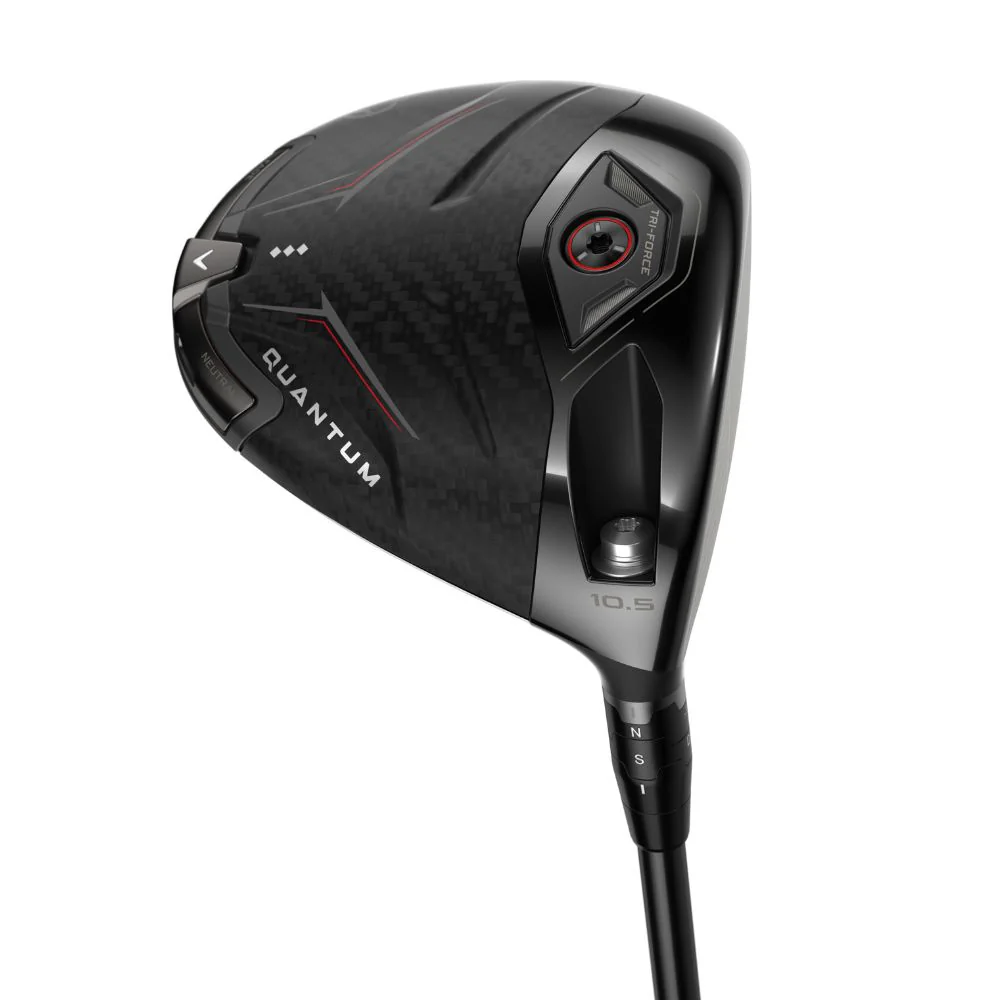
They threw out the old face-shaping parameters and made the club face completely linear. They aligned the bottom sole line, the middle face vector and the top line perfectly parallel. When you set it on the ground, it sat PERFECT or linear. No illusions. No tricks.
To track these ultra-linear, low-spin heads on the truck, they stamped them with three small diamonds.
Validation in Maui
The confirmation of that entire process came at the season-opening event in Maui. Xander had put the fresh Epic Flash Sub Zero Triple Diamond prototype in the bag for its competitive debut.
Advertisement
On Sunday, he shot a final-round 62 to come from behind and win the tournament.
As the reps (and the company) watched on, seeing a club that caused you months of work win in its very first week out is the ultimate validation. It proved that the R&D shift worked. High-speed players across the tour immediately started demanding the same linear shape, and Callaway added the Triple Diamond to the retail lineup the following year.
Every time you see that Triple Diamond logo on a retail rack today, remember: It exists because a world-class player refused to compromise on how his driver sat on the grass.
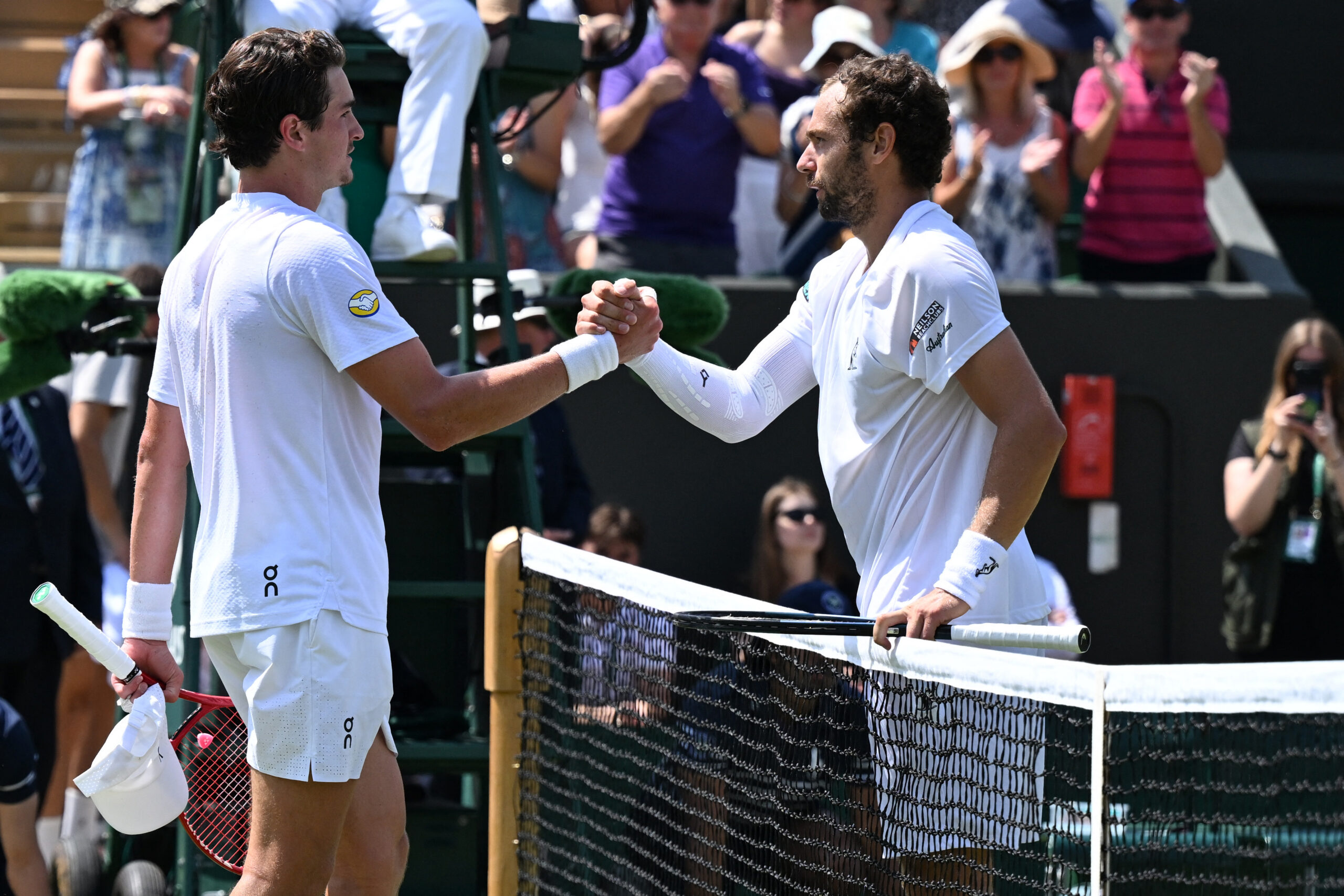
Russia’s Roman Safiullin (R) is congratulated by Brazil’s Joao Fonseca for winning their men’s singles third round tennis match on the fifth day of the 2026 Wimbledon Championships at The All England Lawn Tennis and Croquet Club on July 3, 2026. (Photo by Kirill KUDRYAVTSEV / AFP)
LONDON— Russian qualifier Roman Safiullin wiped away tears after beating Brazilian rising star João Fonseca 6-3, 6-3, 6-3 to reach the fourth round at Wimbledon on Friday.
Safiullin, ranked No. 132, dealt with a knee injury last year but this week has eliminated two seeded opponents at the All England Club. He surprised 12th-seeded Andrey Rublev in the first round. Fonseca was seeded No. 24.
Article continues after this advertisement
Advertisement
The 28-year-old Safiullin, a Wimbledon quarterfinalist in 2023, became emotional when he described his journey back.
“After the U.S. Open, I had to stop — for treating my injury,” he said in an on-court interview. “That time was super tough. Even let’s say half a year ago I didn’t know if I will be able to be back.”
Safiullin then paused and used his shirt to wipe away tears as fans applauded on No. 2 Court.
“I’m super happy to be back here,” he added.
Advertisement
Article continues after this advertisement
Safiullin will face either Novak Djokovic or Arthur Rinderknech for a spot in the quarterfinals.
Djokovic and Rinderknech were playing on Centre Court. Later, defending champion Jannik Sinner faces Jenson Brooksby of the United States on No. 1 Court.
In the women’s draw, top-ranked Aryna Sabalenka plays Jelena Ostapenko later on Centre Court.
Advertisement
Your subscription could not be saved. Please try again.
Vaibhav Sooryavanshi and Morne Morkel (Image credit: BCCI)
NEW DELHI: India bowling coach Morne Morkel has made it clear that the team management will continue to back openers Sanju Samson and Abhishek Sharma, despite growing calls for 15-year-old Vaibhav Sooryavanshi to make his international debut.Sooryavanshi has been one of the biggest talking points since being picked for India’s T20I squads against Ireland and England following his sensational IPL season. While Abhishek has scored a half-century and a 49 in his last three innings on the ongoing UK tour, Samson has struggled, managing scores of 5, 0 and 1.Even so, Morkel said the team believes in showing faith in players who have already delivered for India.“I think we just need to respect the fact that we’ve got the number one batter, or we had our number one batter in T20 cricket, Abhishek Sharma. You know, Sanju was the player of the World Cup,” Morkel said on the eve of the second T20I against England.“He (Samson) had a great IPL. So, I think as a coaching staff, it’s only fair to show faith and back your players. Yes, there’s a young man knocking on the door and it’s exciting. But I reckon for not just those two players at the top, but for the rest of the group, it’s a good sign that we show that we back you guys,” he said.
‘We don’t want to bat players out of position’
Morkel said selecting the playing XI is not simply about bringing in a new player. He stressed that the coaching staff also wants to avoid changing players’ batting positions.“In a day, it’s about putting performances on the board. That is the key. But we also don’t want to think too much and bat other players out of positions. So, I reckon it’s not straightforward, Ok, let’s play (Sooryavanshi).“It’s a matter of backing some of the guys who’ve won World Cups, who’ve done really well for you in tough situations, and then also from there, build and see how we can structure and make our top order as good as possible in these conditions,” he explained.
‘When he gets an opportunity, he’ll be ready’
Although Morkel did not reveal when Sooryavanshi could make his India debut, he praised the teenager for settling into the dressing room quickly.He also said the youngster has impressed everyone during training despite being only 15 years old.“I think he’s filled in very, very well. You know, I think if you follow the boys on Instagram, there’s already a lot of photos being posted, with him especially. At the nets as a 15-year-old at the international stage, it can be intimidating.“But, I think just the couple of nets we’ve had, it’s been very impressive. And, you know, we’re all excited to see how he goes. When he gets an opportunity, I’m pretty sure he’ll be ready. But in terms of coming into the squad and fitting in, it’s been very smooth,” he said.
Advertisement
Morkel praises Prince Yadav
The former South Africa fast bowler also had words of praise for young pacer Prince Yadav, who has taken six wickets in his first three international matches.Morkel revealed that he had worked with Prince during his time with the Lucknow Super Giants and had noticed his talent even then.“I was quite lucky to work with Prince while I was with Lucknow Super Giants. Prince at the time was a net bowler and there he was already marked as somebody who was highly skilled. I’m just blown away by how calm he keeps things.“I think he’s also a guy who is always looking for ways to improve his game. But at the end of the day, it’s about execution. If we talk about death bowling and that middle phase, how he reads the play, what decisions he makes under pressure and then executing that, for me, it’s great to see,” he noted.
Harshit Rana impresses after injury
Morkel also praised fast bowler Harshit Rana, saying it was encouraging to see him bowl with intensity after returning from an injury layoff.With the second T20I against England set to be played at Old Trafford, the India team management appears ready to continue backing its experienced players, while keeping a close eye on exciting youngsters like Sooryavanshi for future opportunities.
Matteo Berrettini’s former girlfriend, Vanessa Bellini, shared an emotional message about her struggles and the support she received from her loved ones amid the rumors of the Italian tennis player dating South Korean DJ Peggy Gou. Vanessa and Berrettini first met at a concert in Turin, Italy, where the Italian dancer was performing for rapper Marracash.
They both quickly connected and began dating before going public in October 2025. The Italian tennis player and dancer were seen enjoying a romantic beach getaway on a yacht in April 2026. Bellini also shared a warm message for Berrettini when he celebrated his 30th birthday on April 12, 2026. She was also seen cheering for him during his 2026 French Open appearance in May.
Thanks for the submission!
Advertisement
They reportedly broke up in late June. Soon after their breakup, rumors of Berrettini dating Gou started making rounds on social media after a few fans noticed Berrettini liking several of Peggy Gou’s recent Instagram posts. As the speculations about the tennis player and the DJ continued to grow, Bellini admitted that she had been struggling lately.
Advertisement
She shared a picture of herself crying, stating that although she usually posts happy moments, they don’t reflect her real feelings. She strongly wrote that while some people may enjoy seeing her struggle, she is focusing on who truly cares about her.
Peggy Gou is a South Korean DJ based in Berlin. She learned to DJ in London while studying fashion. She rose to fame following the release of her “It Makes You Forget (Itgehane)” song in 2018.
Matteo Berrettini opens up about his approach to injuries and fitness
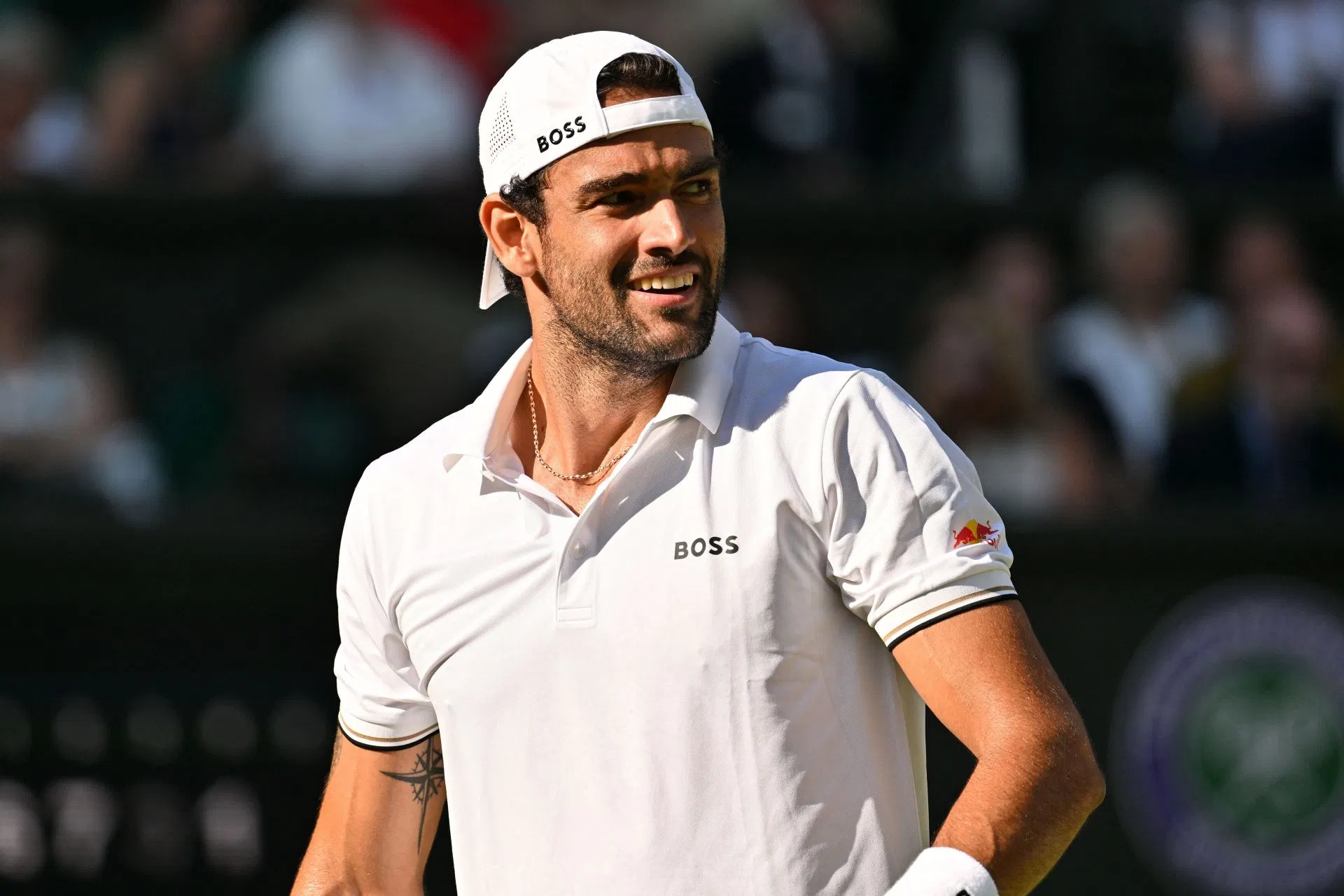
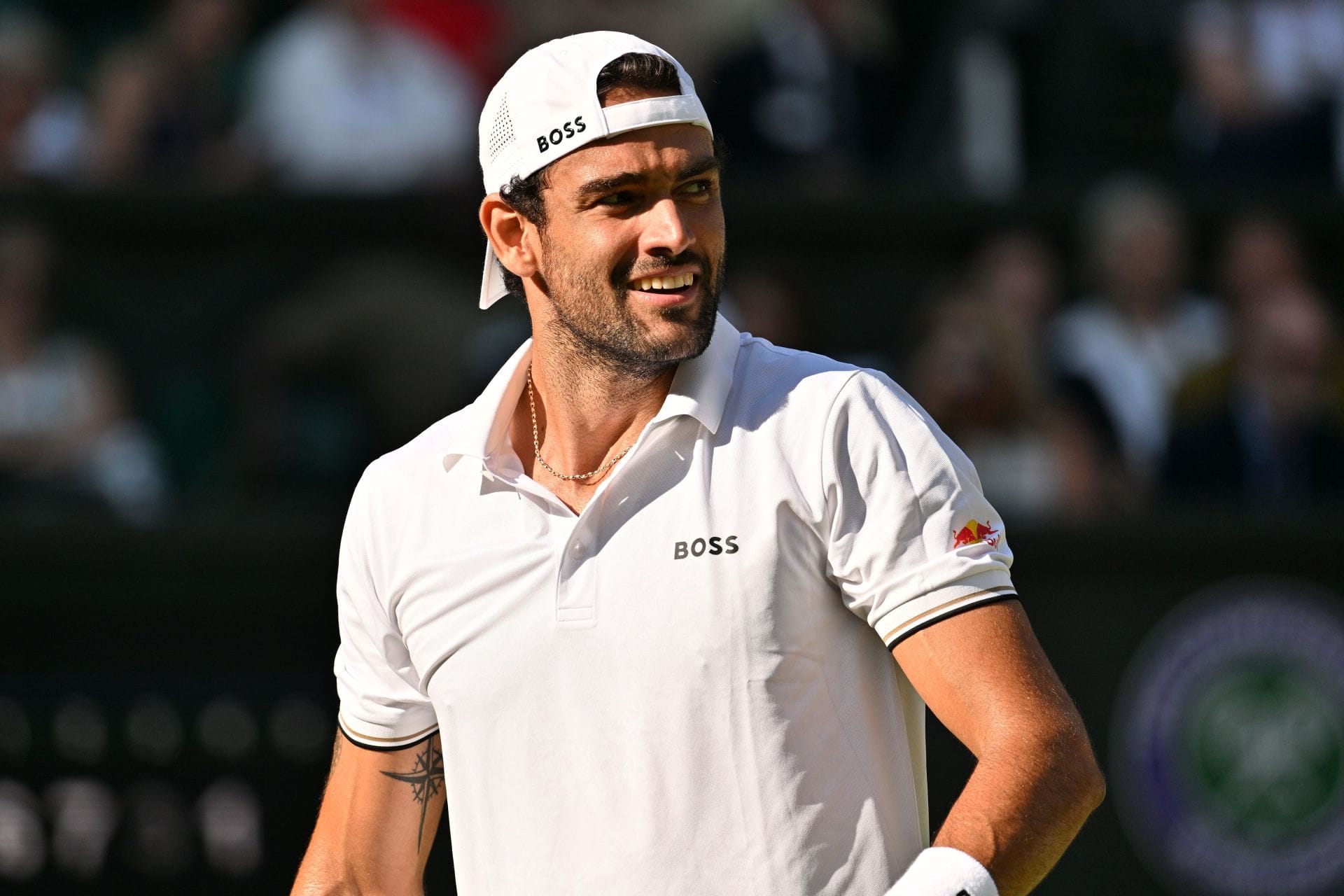
Matteo Berrettini of Italy at The Wimbledon Tennis Championships in London, United Kingdom. (Photo via Getty Images)
In a press conference at the 2026 Wimbledon Championships, Matteo Berrettini opened up about the transition in his approach towards injuries and fitness, stating that earlier he used to be concerned about staying healthy and worrying about injuries. However, now he focuses on giving his body rest when it needs to so as to make a strong comeback.
““For a long time I was just thinking about I want to be healthy, I want to feel free to serve, I don’t want to think about my body. Happiness goes through that, the fact that I don’t have to think about my body,” he said.
“Even if something is coming, I know it’s part of the journey. Before I was looking at it something that shouldn’t happen or couldn’t happen. I learned how to accept the fact that sometimes I have to stop, sometimes I have to say no, I can’t do it. This is my body, this is my career. I also know that I can get up. Instead of doing too many ups and downs, I’m a little bit more stable and balanced. I think this is really important.”
Matteo Berrettini reached the third round at the Wimbledon Championships, where he will face Grigor Dimitrov.

















































You must be logged in to post a comment Login