

Sports
The greatest college football team of every decade, from the 1920s to today

As we gather with family and friends this holiday weekend to celebrate the 4th of July, it is natural to reflect on American history over the decades. And while college football was not up and running when the founding fathers signed the Declaration of Independence in 1776, the sport has been undeniably American since its founding in the late 19th century.
In fact, when you consider its association with universities, the involvement of politicians and the way college football has continued to reflect our nation’s culture, you could argue that college football is the most American sport we have.
So, as we sat down with the challenge of naming one program as the “Best Team of the Decade” for each of the last 100 years, it was striking how often the stories of college football’s growth and development ran alongside the changes in our nation. Technological advancements impacting travel, television and even air conditioning played massive roles in how the sport grew from its early Northeastern and Midwestern roots, providing a college football map that, by the end of the 20th Century, more closely aligned with the expanse of our country. Throw in cultural developments like integration, war and the challenging of social norms, and you continue to find that college football history is American history.
So while we are waiting for fireworks or cleaning up after the celebration, let’s reflect on American history and the role college football has played. After hours of debate and research, we have assembled an imperfect, biased read on the best teams of the last 100 years, organized by decade. Hopefully, it’s as entertaining as that loud and proud fireworks finale.
1920s: Notre Dame (83-11-3)
It helps that this exploration starts with one of the most recognizable coaches and programs in college football history, as Knute Rockne was a shining star for the sport, leading Notre Dame in the 1920s.
Two of Rockne’s three national titles would come in this decade (1924, 1929), and the third would come shortly after in 1930. The descriptions of the “Four Horsemen backfield” in 1924 and Rockne’s larger-than-life personality — legendary halftime speeches and all — still carry weight to this day, but the consistency throughout the 1920s is what gives Notre Dame the honor for the decade. Eight of the 10 seasons had just one loss or fewer, and nine of them included a double-digit point differential per game. In fact, for the 97-game sample of Notre Dame football in the 1920s, the Fighting Irish were winning by 18.0 points per game on average.
The sport, like the country, was extremely regionalized, with dynasties popping up in different corners. Cal and USC were warring for supremacy out West, Wallace Wade laid the foundation for Alabama’s excellence in the South and Cornell claimed three of its five national titles in the 1920s, but if there’s just one program for the whole decade, there’s no debate that Notre Dame and Knute Rockne take the cake.
1930s: Alabama (79-11-5)
Honorable mentions: USC (72-25-9), Tennessee (79-17-4)
Wallace Wade’s work in the 1920s paid off with a sustained run of excellence throughout the next decade, starting with a 10-0 national championship season in 1930 — his last year with the Crimson Tide. Frank Thomas picked up the baton from Wade and, in no short order, doubled down on the standard.
Alabama claimed a conference title in the newly formed SEC in 1933 and followed that with a 10-0 national championship season in 1934, culminating in a Rose Bowl win over Stanford. Though the decade featured just two national titles and two conference titles, the consistency again proves to be a differentiator. Alabama won three of the first five SEC titles and lost more than two games just once across the entire decade. We haven’t even gotten to the Bear Bryant or Nick Saban portion of the proceedings, but it’s clear why the multi-generational expectations have been so high in Tuscaloosa.
USC gets our first nod for honorable mention after a decade that saw three claimed national championships (1931, 1932, 1939) but also a mid-decade dip under Howard Jones. The Trojans finished third or worse in the Pacific Coast Conference five times and had back-to-back losing records in 1934 and 1935. Jones is an all-time coaching great with claimed titles at Yale (1906) and Iowa (1921) before he even arrived in Los Angeles. His efforts in the 1930s were the finishing touches on his Hall of Fame career.
As for Tennessee, it should be noted here that the Vols are victims of the specifics of his exercise, since the arbitrary decade lines divide some of the program’s foundational success during the 20th Century. General Robert Neyland’s 1938 and 1939 squads are worthy for consideration among the best individual teams of the decade, remembered for their defensive dominance, but Tennessee was at its strongest at the beginning and end of the decade, and like USC faced a mid-decade slump that serves as a tiebreaker for this debate.
1940s: Notre Dame (82-9-6)
Honorable mention: Army (68-17-7)
World War II disrupted all facets of American life, and college football was certainly among them, with coaches and players leaving the sport to serve in various branches of the military. Army and Navy still fielded football teams (with Army in particular standing out for its title-winning success), but the programs that rose to the top did so in an era of roster fluidity most recognizable to today’s transfer portal. Here, it was the steady hand of Frank Leahy who was able to guide the Fighting Irish through the chaos, even as he also missed two seasons of the decade while serving in the Navy.
A former Notre Dame tackle who played for Knute Rockne, Leahy guided his alma mater to four national championships and six top-three finishes in the AP poll throughout the 1940s, including 36 wins, zero losses and just two ties in a post-war run from 1946-49. Notre Dame also produced three Heisman Trophy winners in this decade, becoming the first school to have three winners of the award. Things may have been uncertain and uneasy in the world order, but back home, college football felt familiar, with Notre Dame at the top of the sport.
As mentioned earlier, Army’s success in wartime is the peak of coach Earl Blaik’s Hall of Fame career. Blaik was 121-33-10 over 18 seasons at West Point, but earning at least a share of three straight national championships from 1944-46 is the strongest argument for inclusion in this debate. A scoreless tie with Notre Dame at Yankee Stadium in 1946 is the stuff of legends, pitting the two most iconic programs of the decade against each other with the No. 1 ranking hanging in the balance. At the end of that season, both teams would be undefeated with the 0-0 tie as the only blemish, and the AP voters decided to slot Notre Dame at No. 1 while Army received the Coaches’ Trophy to have their own claim to a title.
1950s: Oklahoma (93-10-2)
Every single season of the 1950s ended with a trophy for Oklahoma, as Bud Wilkinson cemented his status as a Hall of Fame coach, leading the most successful program of the decade. The Sooners won their conference championship every single season from 1950-59, adding eight top-10 finishes in that span and national championships in 1950, 1955 and 1956. Perhaps the most long-lasting mark of Wilkinson’s Oklahoma run is the 47-game winning streak between 1953 and 1957 that still stands as a Division I record to this day,
Oklahoma had already established itself as a regional power in its conference under previous regimes, but the sustained dominance of the Wilkinson era laid the foundation for the investment and expectations that would follow the Sooners through the decades. Speaking of investment, perhaps a preview of the disciplinary issues that would surface later, NCAA probation would arrive in Norman during this decade, but not to the detriment of the team, which continued to stack wins year over year through the 1950s.
Wilkinson was not without peers at the time, as Notre Dame continued to find success with a couple of top-three finishes in Frank Leahy’s final years and Woody Hayes won the first two of his five national championships at Ohio State. But awarding one team for an entire decade was a fairly simple exercise, since Oklahoma did not have a bad year during this run.
1960s: Alabama (90-16-4)
Honorable mentions: Texas (86-19-3), USC (76-25-5)
We have now entered what I have lovingly declared the “names on buildings” decade in college football. This decade was highlighted by Bear Bryant’s rise at Alabama, Johnny Vaught’s best seasons at Ole Miss, Darrell Royal’s pair of national titles at Texas and trophy-worthy seasons for icons like John McKay at USC, Woody Hayes at Ohio State, Ara Parseghian at Notre Dame and more. American culture was becoming more connected with the explosion of television, and this collection of Hall of Fame coaches at blue-blood programs made college football attractive to the sporting public.
A big question when making the final decisions for this feature was whether to give Alabama the solo spotlight for the 1960s, when Bryant won his first three national titles and had eight top-10 finishes in the AP poll, or the 1970s when the Crimson Tide flexed more SEC dominance (and won more games in total) but similarly pulled in three national championships and eight top-10 finishes in the AP poll. The story of college football is a multitude of colors and characters, so we can’t have everything covered in houndstooth and crimson, but from 1960 to 1981, there were very few seasons that did not include Alabama as a primary piece of the national picture.
Ultimately, it is with an eye on the emerging powers of the 1970s that Bryant and Alabama get the nod for returning Alabama to its pre-WWII position at the top of college football’s mountain. The Crimson Tide won national championships in 1961, 1964 and 1965 and finished as the only unbeaten and untied team in the country in 1966, but the AP voters gave that title to Ara Parseghian’s Notre Dame squad at 9-0-1. These teams included stars like Joe Namath and Kenny Stabler at quarterback, and future coaching legends like Gene Stallings and Howard Schnellenberger on staff. It was not an era without controversy, as Alabama (the university and state) became the focus of national desegregation and Civil Rights efforts throughout the 1960s, and Bryant himself did not play a Black player in a game until 1971.
John McKay ran a similar race to Bryant, guiding USC back to the heights of a pre-war era as he picked up two national championships and terrorized opponents with the “Student Body Left-Student Body Right” ground game. Meanwhile, Darrell Royal was elevating Texas from a conference contender to a national power and guiding the Longhorns to their first-ever national championships, winning in 1963 and 1969. Woody Hayes and Bo Schembechler began their rivalry in earnest by the end of the decade and even Joe Paterno broke through with a pair of runner-up finishes in the AP poll before the arrival of the 1970 season. Much like American culture, college football entered the 1970s looking different from what it had been 10 years earlier.

1970s: USC (93-22-7)
Honorable mentions: Alabama (103-16-1), Oklahoma (102-13-3), Nebraska (98-20-4)
John McKay’s success in the 1960s would return at the start of the decade, with the Trojans claiming two more national championships in 1972 and 1974. But USC’s bona fides were strengthened when he handed the reins to former assistant John Robinson, and the Trojans added a share of a third national championship in 1978. It’s a shared title with Alabama, which is interesting not just because USC won a head-to-head game that season in Birmingham, but also because the Crimson Tide similarly have a strong claim to being the best program of the decade.
But while Alabama’s run through the 1970s was an extension of Bear Bryant’s rule over the sport, USC’s decade reflected a successful transition of leadership without losing the program’s standing against its peers. Between the final four years of McKay’s tenure and the first four years of Robinson’s tenure, there are six conference championships and five top-two finishes, along with the three national titles. Heisman Trophy winners continued to come out of Los Angeles (Charles White being the program’s third winner in 1979), and USC’s power as a television draw enabled its stars to become household names well beyond California.
Alabama’s argument for inclusion here is extremely strong, boasting a better win-loss record and far greater consistency over the decade than the Trojans. Bear Bryant’s Tide lost more than one game in a season just twice throughout the entire decade, and had more conference championships and top-10 finishes, tying USC for three national championships (including the 1978 title they share).
Elsewhere, the Big Eight Conference was proving to be fertile ground for one of college football’s all-time rivalries, as Nebraska took off under Bob Devaney with the 1970 and 1971 national championships, challenging Oklahoma not just for local supremacy but also for spots at the top of the national polls.
The Sooners, of course, were taking the sport by storm with Barry Switzer and the wishbone offense, which set the stage for one of the many “Game of the Century” labels when Oklahoma and Nebraska faced off in a No. 1 vs No. 2 showdown in 1971 (Nebraska won 35-31). Switzer would go on to lead the Sooners to national championships in 1974 and 1975, navigating the program through postseason and television sanctions as OU demanded attention with its dominance. Nebraska, meanwhile, saw Tom Osborne take the program over from Devaney in 1973 and deliver six top-10 finishes before the end of the decade but just two share conference titles.
It would be wrong to call the relationship between Oklahoma and Nebraska symbiotic, since they were both the biggest roadblocks to each other’s success in a given season, but the competition between these two conference rivals certainly fueled an “iron sharpens iron” dynamic that drove both programs to landscape-shifting levels of success.
1980s: Miami (99-20)
Honorable mention: Nebraska (103-20), Penn State (89-28-2)
Later Miami teams would have a case as one of the best ever, especially at the start of the 2000s, but the success and impact of those first three title squads make this the best decade of Hurricanes football. The story starts with the 1983 title team, as Howard Schnellenberger had finally realized his vision for Miami football.
With an elite defense leading the way, the Hurricanes bounced back from a season-opening loss to Florida and rolled off 11 straight wins, culminating with an upset of No. 1 Nebraska in the Orange Bowl. Given Nebraska’s accomplishments not just in that season but in the era as a whole, the upset victory was enough for voters to vault Miami from No. 5 to No. 1, giving the Canes their first national title. Schnellenberger then handed the reins to Jimmy Johnson, and that’s when the profile elevated from plucky upstart in South Florida to college football’s newest challenge to the establishment.
The swagger shook more traditional football fans, but history has properly reframed Miami’s success by acknowledging the talent and competitiveness of those early Hurricanes teams. Practices were more challenging than games, at times, and that was reflected in the records over the back half of the decade. From 1985 to 1989, Miami carried a 55-7 record and finished in the top two of the final AP poll four times. National championships under both Jimmy Johnson (1987) and Dennis Erickson (1989) only furthered the mystique of “The U,” because the program was no longer associated with just one leader. The program was packed with star power but the brand of Miami football was even more powerful. Other titles would follow in 1991 and 2001, but the combination of on-field dominance and cultural impact makes it easy to name Miami the team of the decade.
Penn State played a role in multiple title races of the 1980s, finishing in the top three four times, and Joe Paterno finally got his breakthrough season 14 years after his first runner-up finish with his first and second national championships. The Nittany Lions went 11-1 in 1982 but held off Herschel Walker and Georgia in the Sugar Bowl to take over the No. 1 spot to claim the school’s first national title. That was followed by another title in 1986, which was cemented by shutting down a seemingly unstoppable Miami offense in the Fiesta Bowl with five interceptions of Vinny Testaverde.
Again, Nebraska makes an appearance here as it builds its argument to be one of the top programs of the late 20th Century. Tom Osborne led the Cornhuskers into a major bowl game every year from 1981-89 and finished ranked inside the top 11 of the AP poll every single year of the decade. The issue in this debate is the lack of national championships and a 3-6 record in major bowl games. Nebraska had a seat at the table throughout the decade, but just like the Orange Bowl at the end of the 1983 season, this is going to be a battle that’s lost to “The U.”
1990s – Nebraska (108-16-1), Florida State (109-13-1)
While we have been gracious in giving attention to many of the finalists for each of these decades, this is the only one in which we will award co-champions. Splitting hairs between Nebraska, which had been knocking on the door of Tom Osborne’s title-winning breakthrough for decades, and a Florida State program that had just started throwing haymakers against the sport’s best is too difficult. Celebrating both programs is necessary to the story of college football in the 1990s, so to make it up to you, we will award NO HONORABLE MENTIONS and stick to focusing on why Florida State and Nebraska stand out among the rest.
For years, Bobby Bowden famously took an aggressive approach to scheduling, which had the Seminoles willing to take on anyone, anywhere, as Florida State laid the foundation to become a national power. Then, in the 1990s, a good portion of their scheduling was taken out of their hands by giving up Independence and joining the ACC, producing one of the most stunning runs of dominance in major-conference college football. Florida State joined the ACC in 1992 and proceeded to win its first 29 conference games, claiming a conference championship in every season of the decade and finishing the 1990s with a 62-2 record against ACC opponents.
On the national stage, the Seminoles never finished lower than No. 4 in the AP poll throughout the decade and won the national championship in 1993 and 1999. The truly stunning statistics showcasing Florida State’s peak under Bobby Bowden stretch back to 1987 and through 2000 (double-digit wins and top-five finishes in every season), but it was in the 1990s that the spear was planted in the sport and the Seminoles became synonymous with college football at the highest levels.
Nebraska, meanwhile, ended a national title drought that spanned back to 1971. Tom Osborne built that consistency through the 1970s and 1980s, but it was not until the middle of this decade that everything clicked into place for a firework-like finale to his Hall of Fame career. The Cornhuskers went 60-3 from 1993-97, claiming at least a share of the national championship in three of Osborne’s final four seasons. Nebraska may not have had the year-to-year consistency of Florida State throughout the 1990s, but three national titles (to FSU’s two) and a top-three finish by Frank Solich in 1999 helped solidify the case for a true co-champion honor. It’s fitting, I guess, that the last decade of shared championships includes the honor shared honors for this feature.
2000s: Florida (100-30)
Honorable mentions: Oklahoma (110-24), Texas (110-19)
It’s really tempting to just name “The SEC” as the best of the decade in the 2000s, especially given a more modern review of the decade, where Oklahoma and Texas are conference members. Using the current membership, the SEC can lay claim to seven of the 10 national championships of this decade, with only the 2001 (Miami), 2002 (Ohio State) and 2004 (USC) seasons not ending with one of those southern-fried programs hoisting the BCS National Championship trophy. Oklahoma’s only title of the 2000s came at the beginning with Bob Stoops’ win in 2000, but thanks to Nick Saban and Urban Meyer, the decade would finish with a string of SEC kings.
And it really is in that Florida-LSU debate that we find ourselves trying to identify one team as the decade’s best. Nick Saban got things started in Baton Rouge and Les Miles added another ring in 2007, and we have given credit for a program getting multiple titles under different coaches in the same decade. But to truly extend the parameters to the end of the decade, the Gators can claim Steve Spurrier’s last SEC Championship from 2000 and carry that success through two-time champion Tim Tebow, who led the Gators to No. 3 overall with a 13-1 record in 2009. With two national championships, three conference championships and five SEC Championship Game appearances in a decade when the league ascended to the top of the sport, Florida gets to take the honor as the team of the decade.
It is admittedly showing some late-decade bias, because the early part of the decade saw the Gators take a dip under Ron Zook while USC, Oklahoma, Texas and Miami were very much the entrenched powers of the era. But a slight step back for USC and Miami later in the decade proved to be tiebreakers, making Oklahoma and Texas the most appropriate squads for the honorable mention.
The Sooners’ sustained success this decade is not unprecedented in college football history (or even in Oklahoma history), but it is certainly worth celebrating. After winning the national championship in 2000, Stoops would lead Oklahoma to an additional five top-five finishes before the close of the decade. The Sooners also won six Big 12 titles in the 2000s. Texas only won the conference in 2005 and 2009, both en route to BCS National Championship Game appearances, but it also finished in the top five of the final AP poll five times. Both programs were consistently in the mix at the top of the rankings, but fell a game or two short of the ultimate goal, particularly in the back half of the decade.
2010s: Alabama (124-15)
Other coaches changed college football with a scheme or some play-related innovation. Meanwhile, Nick Saban changed the sport by winning. By the end of the 2010s, the Sabanization of college football had not been so much about his defense or recruiting blueprint; it was, top to bottom, the way he organized and ran a modern power in the sport.
At different points in the decade, Alabama had won three of four, four of seven and five of nine national championships. The final total of six rings at Alabama for Saban includes 2009 and 2020, but this sustained success in the 2010s made Alabama not just the best program of the decade but the most consistent character in the college football conversation. Every season, the annual player or team of the moment has to take their talents to face big, bad Alabama. Saban’s recruiting machine was a turn-key operation for future NFL Draft picks, and so even off nights could be overcome by the advantage in height, weight and speed. With only 15 defeats in 10 seasons, every Alabama loss felt like an epic opera and many of those games have gone down as all-timers.
You can track the biggest stars of the decade, noting that the common thread among Cam Newton, Johnny Manziel, Deshaun Watson, Trevor Lawrence and Joe Burrow is a win over college football’s juggernaut in crimson.
But by the end of the decade, the game had changed again, with the transfer portal and NIL throwing new wrenches into old ways of roster construction. Saban would go on to win his seventh overall national championship in the first year of the next decade and make the College Football Playoff again in 2023, but his run of dominance throughout the 2010s had no peer. LSU, Clemson, Georgia, Notre Dame, and a few pesky Auburn teams made for some fierce rivals — and Urban Meyer did get the best of Saban in the 2014 CFP with Ohio State — but on the decade as a whole, there was no question who was wearing the crown.

2020s: Georgia (73-9)
Honorable mention: Ohio State (66-11)
And now we reach the unfinished portion of the proceedings, with just over half of the decade gone and four years remaining before the 2020s are added to the library of college football history.
The decade started with an extension of Alabama’s run through the 2010s, as Nick Saban and the Crimson Tide navigated the challenges of the COVID-impacted 2020 season better than anyone and fielded one of the most dominant teams of the modern era. It was Saban’s sixth ring at Alabama and seventh overall, and while the Tide would make it back to the College Football Playoff in 2021 and 2023, the balance of power shifted following that 2020 season.
Alabama defeated Georgia in the 2021 SEC Championship Game, adding to Kirby Smart’s list of frustrating defeats against his former boss. You already had the 2017 national title game and the 2018 SEC Championship Game from the previous decade, and suddenly, Bryce Young was blitzing through an all-time Dawgs defense in Atlanta to hand Georgia its first loss of the 2021 season. But two games later, Georgia and Smart would get their ultimate revenge with a 33-18 win against Alabama in the national championship game. It was Georgia’s first national title since 1980 and now stands as a reference point for one of the great runs of the 21st Century.
From the start of the 2021 season through the end of 2023, Georgia went 42-2 with two national championship game wins and the only defeats coming to Nick Saban and Alabama in SEC Championship Game appearances. And while the winning percentage has dipped a bit in the last two seasons (23-5), those years have each included SEC Championship Game wins. Kirby Smart helped build the juggernaut of the 2010s with Saban, and as we stare down the final four years of the 2020s, he’s currently driving the frontrunner to be the team of the decade.
But Georgia is not without challengers.
Ohio State and Ryan Day, like Georgia, had their own local issues to handle before ascending to the top of the mountain. A four-game losing streak to Michigan placed immense weight on Day and the Buckeyes, but a bounce back in 2024 to win the first-ever 12-team College Football Playoff moves Ohio State back in line to challenge the Bulldogs for decade supremacy.
Ohio State needs another national title to get level with Georgia in the decade count, but given the level of recruiting and consistency under Day, it’s likely they’ll have a roster talented enough to win it all nearly every year between now and 2029.
Ohio State and Georgia are the only programs to finish in the top-10 of the final AP poll in each of the last five years, setting a standard that Oregon, Notre Dame, Indiana and Kalen DeBoer’s Alabama are pushing to match. There is plenty of time left for Georgia or Ohio State to be unseated, but it’s easy to look at those two as the programs that have ruled the first six seasons of the 2020s.

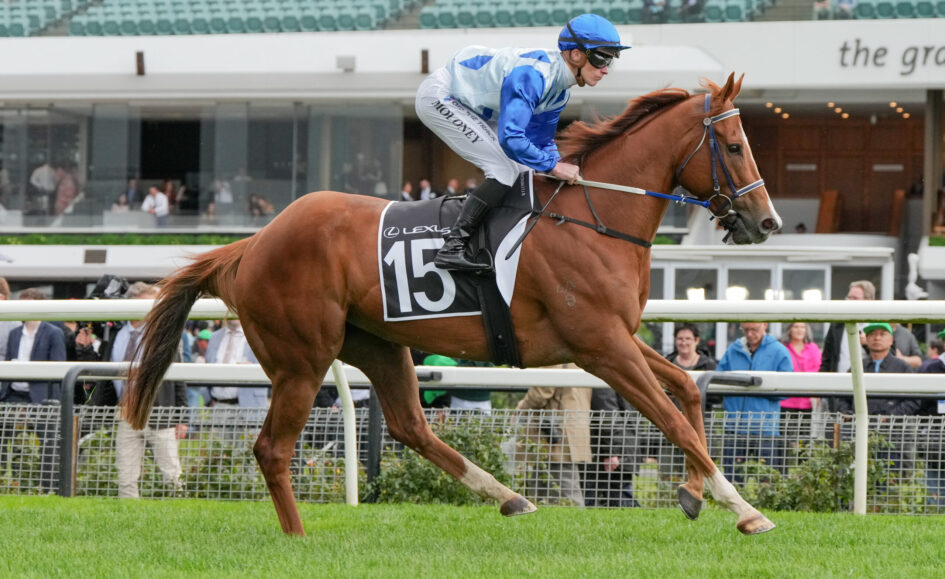
Sheila Laxon is aiming for a return to the Flemington winner’s circle this Saturday, a feat she hasn’t achieved since the 2024 Melbourne Cup.
The Macedon Lodge trainer, along with partner John Symons, has three runners entered for Finals Day, seeking their first Flemington victory since Knight’s Choice’s significant win in the 2024 Melbourne Cup.
Star Of Macedon, a two-year-old Zoustar colt, is the current favourite for the $175,000 Listed Taj Rossi Series Final (1600m). Mission Of Love will compete in the $150,000 Banjo Paterson Series Final (2600m), and Nihancan is slated for the $200,000 Mahogany Series Final (2500m).
These races have been the principal winter targets for the trio, and Laxon is enthusiastic about their chances.
“I think we should have a good day,” Laxon, who also trained Ethereal to win the 2001 Melbourne Cup, commented.
“I think they can all run in the first three on what they’ve done at home, all going well in their races.”
While Mission Of Love is a $21 chance and Nihancan is at $41, Star Of Macedon is the most respected by the odds-makers, positioned as the favourite just ahead of Marwooba.
Star Of Macedon, despite not having won in three outings, has yet to miss a place. This includes an unlucky third over 1420m at Flemington on June 20, a race that saw several of Saturday’s rivals compete.
“He’s showing plenty of ability, it looks like the mile will suit him and there’s not a lot of options as far as stepping them out over ground with two-year-olds at the moment,” Laxon said.
“From what he’s done so far we’re quite confident that the mile suits and I’m sure he’ll be finishing on well.
“He’s just had bad draws and other things making it very difficult for him to actually win in his previous starts.
“We just need to see where he sits and then we can make a decision on what we’re going to do with him from thereon in.”
Looking ahead, Laxon hopes their planning will lead to a campaign targeting major races, including the $3 million Group 1 Caulfield Guineas (1600m) during the Melbourne Spring Carnival.
“Everything he’s done for us he shows a lot of tenacity and ability to do whatever we ask him to do,” he noted.
“Hopefully he’s as good as we think he is.”
Star Of Macedon will break from barrier seven in the eight-horse Taj Rossi Final, with Dylan Dunn, who has ridden him in all his starts, retaining the mount.
For those keen to wager, exploring the latest Australian betting sites can provide access to comprehensive racing odds.
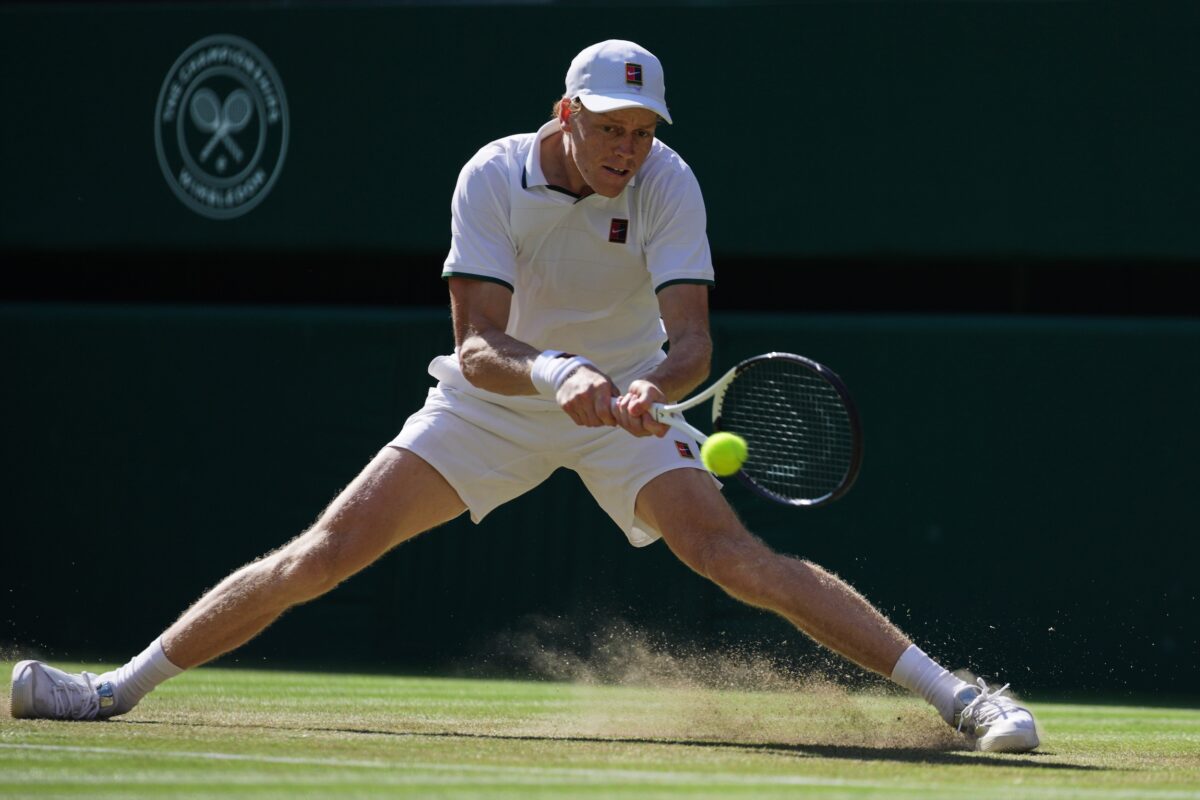

Jannik Sinner of Italy plays a return during the third round men’s singles match against Jenson Brooksby of the United States at the Wimbledon Tennis Championships in London, Friday, July 3, 2026.(AP Photo/Brian Inganga)
LONDON — Clay, grass, hard court — or even snow.
The surface underfoot doesn’t seem to make any difference for Jannik Sinner.
The top-ranked player — who is currently attempting to defend his title at Wimbledon — was one of Italy’s top junior skiers before he turned his attention full-time to tennis.
READ: Wimbledon: Jannik Sinner survives scare, fall to reach 2nd round
Now Sinner excels on every type of court and his background as a skier might have helped his tennis game.
Just like an elite slalom skier perfectly shifting their weight back and forth from one gate to the next, Sinner hardly ever seems off balance as he rushes back and forth across the baseline — despite his tall and lanky 6-foot-3 (1.91-meter) frame.
Fellow tennis player Casper Ruud agreed that the most impressive thing about Sinner is his movement.
“He’s strong also in balance and flexible to get to certain positions,” Ruud said. “He has good hip movement and knows how to slide (into) both corners.”
Skiing standout Lindsey Vonn also pointed to Sinner’s ability to stay in balance.
“He has an amazing kinesthetic sense, which is an important skill in both sports,” Vonn told The Associated Press. “He is very aware of his body in space and time, so even though he is tall, he moves fluidly and in sync.”
READ: Wimbledon: Jannik Sinner, Novak Djokovic into third round
Sinner won a national skiing championship when he was eight and placed second in Italian nationals at 12.
In a 2009 giant slalom won by Sinner, Giovanni Franzoni — the breakout downhiller of last season — finished 12th, four seconds behind.
Franzoni is now the Kitzbühel downhill champion and the Olympic silver medalist.
“I was really good,” Sinner said after his first Grand Slam title in 2024. “But then I had a couple of so-so seasons when I started competing against older athletes in slalom and giant slalom and when downhill came into the picture I weighed too little to compete.
“So I kept on playing tennis,” Sinner added. “In skiing, if you make a mistake you’re out; it’s a dangerous sport and you need to get up early in the morning and venture outside in frigid temperatures. Tennis is a bit more accessible. In the end I think I made the right choice.”
Vonn, who shares a common sponsor with Sinner, once hit the slopes with the tennis star.
READ: Jannik Sinner struggles with dizziness in French Open loss
“He skis similarly to how he plays tennis; he is fluid, smooth, and makes it look easy,” Vonn said in written comments. “His knees and hips are always parallel and he is always in balance. I really enjoyed skiing with him and I hope to do it again, but after his tennis career!”
Many elite skiers include tennis in their summer training regimen. Vonn’s fellow Olympic champion Bode Miller was a state high school champion tennis player in Maine and his family ran a tennis academy in New Hampshire. He once attempted to qualify for the U.S. Open.
“I love playing tennis. It’s good for my footwork, mental strength and general athleticism,” Vonn said. “I know of quite a few skiers who play tennis as a form of cross training. It’s a way to push myself physically and mentally. When you get physically tired, you have to still be mentally strategic and cool under pressure. I love that about tennis.”
Vonn was the top World Cup downhiller last season at age 41 until her horrific crash at the Milan Cortina Olympics in February left her with a severely fractured left leg.
Ruud, who is Norwegian, was also a skier as a kid, “but I don’t move as good as him,” he said of Sinner.
“I don’t necessarily believe because he did skiing when he was young, that’s why he moves so well,” Ruud said. “I mean, look at (Carlos) Alcaraz: He didn’t ski and he also moves pretty damn well.”
Ultimately, Ruud suggested, it’s just healthy for kids to try as many sports as they can.
“No matter what it is, whether it’s skiing, running, golf. Doing things that keep you active is great. I have never seen Jannik ski other than videos. Would be fun to do a skiing competition one day,” Ruud said with a smile.
Kostyuk’s gymnastics and backflips

Ukraine’s Marta Kostyuk does a backflip as she celebrates beating Russia’s Mirra Andreeva during the 2026 WTA Tour Madrid Open tennis tournament final singles match at the Caja Magica in Madrid, on May 2, 2026. (Photo by Oscar DEL POZO / AFP)
When Marta Kostyuk won the Madrid Open in May, she performed her customary title celebration: a backflip.
It was a nod to the Ukrainian player’s background in gymnastics, a sport she practiced until she was 11.
While Kostyuk appreciated the physical part of gymnastics, it was a stressful sport for her outside the gym.
READ: Marta Kostyuk gets emotional win after missile attack at home in Ukraine
“I had to be super skinny. I had to control what I eat. I would weigh myself 20-30 times a day from 8 to 10 years old,” Kostyuk said. “That had some consequences on me obviously that I had to work through.”
Kostyuk also tore an abductor muscle while performing gymnastics as a kid, which she called “a really big injury.
“That had also consequences in my career,” she said. “I fixed them but it took a while. I don’t know about Jannik and if he ever got any bad injuries but I’ve been there so there’s always two sides. But for sure it helped my tennis and I’m happy that I got out on the other side better.”
Cobolli’s football skills
French Open runner-up Flavio Cobolli was a talented soccer player and a member of Roma’s youth club until he decided to focus fully on tennis.
“I have a good physical skill and a lot of stamina, and maybe football helped me (in that department),” Cobolli said.
Many of the soccer players he used to train with as a kid are professionals now and remain good friends, like Watford midfielder Edoardo Bove, Arsenal fullback Riccardo Calafiori, Atalanta winger Nicola Zalewski and Lazio winger Matteo Cancellieri.
Djokovic was also a skier
Similarly to Sinner, Novak Djokovic grew up on a ski hill in Serbia and his father was a ski racer and instructor.
Along with Djokovic, Sinner is one of the few players who slides into shots on grass.
“It was always very natural,” Sinner said of his sliding abilities. “Maybe the skiing was a big part of (it) with the balance.”
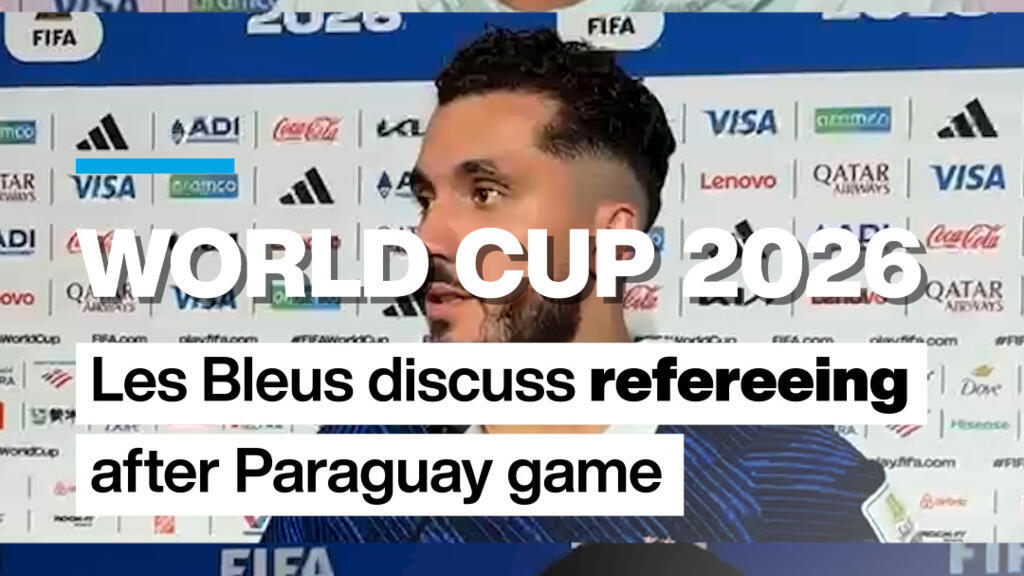

World Cup favourites France survived a major scare to reach the quarter-finals of the 2026 FIFA World Cup, with Kylian Mbappe’s second-half penalty securing a hard-fought 1-0 victory over a stubborn Paraguay side in Philadelphia.
Despite dominating possession throughout the contest, Didier Deschamps’ men struggled to break down a disciplined Paraguay defence that frustrated the two-time world champions for long periods in sweltering conditions.
The last-16 encounter was played in extreme heat, with temperatures reaching 38°C, but France began brightly and controlled much of the ball. However, Paraguay, managed by Gustavo Alfaro, remained organised and denied Les Bleus any clear opportunities.

Frustration started to show in the first half, with Mbappe reacting angrily after a challenge from Andres Cubas as both teams went into the break without registering a single shot on target.
France emerged with greater intent after the restart and finally tested goalkeeper Orlando Gill in the 54th minute when Manu Kone’s long-range effort forced a save.
The breakthrough eventually arrived after a tactical change by Deschamps. Substitute Desire Doue, introduced on the left flank, made an immediate impact by driving into the penalty area and beating his marker before Brighton midfielder Diego Gomez brought him down.
Following a VAR review, referee Ilgiz Tantashev awarded the penalty, and Mbappe calmly sent Gill the wrong way to score the decisive goal and book France’s place in the last eight.
The strike also saw the France captain draw level with Argentina legend Lionel Messi on seven goals in the race for the tournament’s Golden Boot.
Paraguay, who had stunned Germany on penalties in the previous round, once again showed remarkable defensive resilience and physicality, making life difficult for one of the tournament favourites.
The match became only the third World Cup knockout fixture since 1966 to reach half-time without either side managing a shot on target, underlining the South Americans’ defensive discipline.
However, as they have done throughout the tournament, France found a way through when it mattered most. Mbappe’s penalty continued his remarkable World Cup record, taking his tally to 19 goals in just 20 appearances at the competition.
For Deschamps, the victory carried echoes of France’s previous World Cup meeting with Paraguay in 1998, when Laurent Blanc’s golden goal sent the hosts into the quarter-finals before they eventually lifted their first world title.
Twenty-eight years later, Deschamps, now leading from the dugout rather than midfield, will hope this narrow victory proves to be another step towards World Cup glory.
Sports
FIFA WC: Mbappe delivers as France pass their toughest tactical test yet | FIFA World Cup 2026
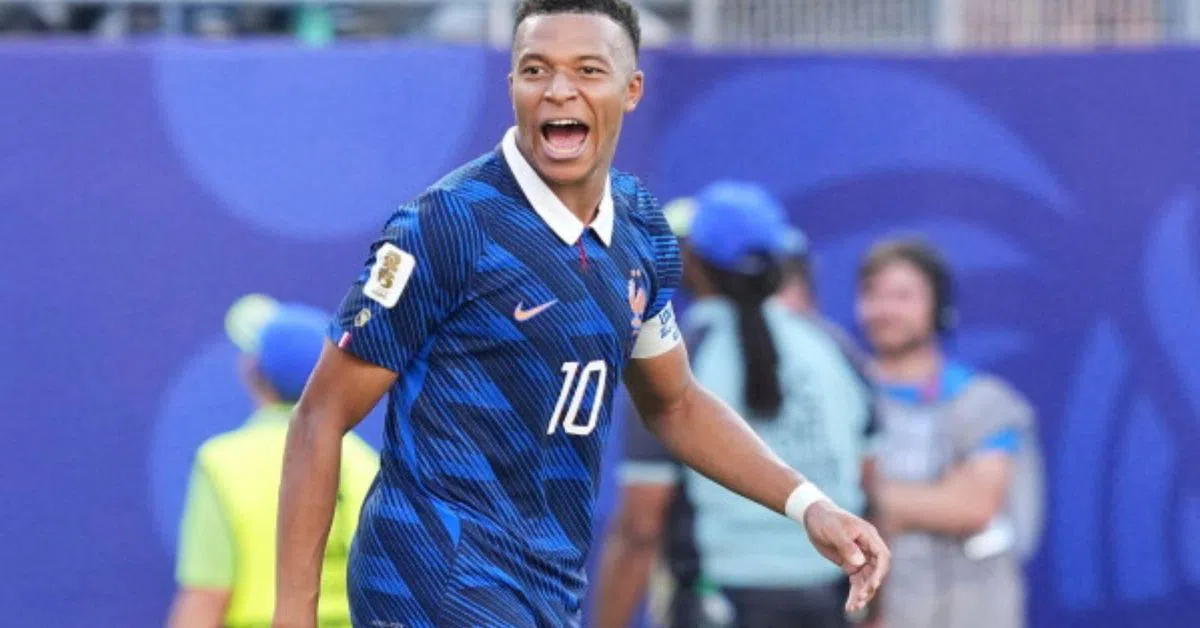
France’s march towards a third consecutive FIFA World Cup final continued, but only after Didier Deschamps’ side overcame one of their sternest examinations of the tournament.
A solitary Kylian Mbappe penalty proved enough to secure a hard-fought 1-0 victory over Paraguay in Philadelphia, sending Les Bleus into the quarter-finals where Morocco awaits. More significantly, Mbappe’s strike took him level with Lionel Messi on seven goals in the Golden Boot race, setting up what could become one of the defining individual battles of World Cup 2026.
Despite dominating possession throughout, France were forced to dig deep against a Paraguay side that combined defensive discipline with relentless physicality to frustrate one of the tournament favourites.
Paraguay’s low block tested France like never before
No team has managed to slow France’s attacking rhythm quite like Paraguay.
Gustavo Alfaro’s side spent much of the evening camped inside their own half, defending in a compact 5-4-1 shape that denied space between the lines and crowded every French attacker whenever they ventured into dangerous areas.
France monopolised possession but struggled to translate territorial dominance into clear-cut opportunities. Their first attempt arrived only after 22 minutes, their longest wait for a shot in a World Cup knockout match since detailed records began in 1966.
As central passing lanes disappeared, France increasingly resorted to long-range efforts from Adrien Rabiot, Manu Kone and eventually Mbappe himself, highlighting just how effectively Paraguay had closed off the penalty area.
For over an hour, the South Americans executed their defensive blueprint almost perfectly.
Physical battle boiled over
Paraguay’s resistance was built on far more than organisation. Every duel became a battle.
Mbappe found himself repeatedly targeted by Paraguay’s defenders, beginning with Andres Cubas’ robust challenge before Matias Galarza appeared to deliberately strike the French captain off the ball in one of the game’s more controversial moments.
The confrontations continued throughout the evening as Paraguay attempted to unsettle France emotionally as much as tactically.
Perhaps the biggest surprise was Paraguay avoiding disciplinary action for much of the contest despite several cynical challenges, with their first yellow card arriving only after the final whistle.
France, however, never allowed their frustrations to affect their composure.
VAR finally breaks the deadlock
The breakthrough arrived through persistence. Desire Doue, who added fresh energy after entering the contest, drove into the penalty area before being brought down by Diego Gomez.
Initially waved away, the incident was reviewed by VAR, prompting referee Ilgiz Tantashev to overturn his decision and award France a penalty.
There was little debate over the final verdict. Gomez clearly made contact with Doue inside the area, and after reviewing the incident on the monitor, the official pointed to the spot.
Paraguay attempted every trick possible to delay proceedings, even scuffing up the penalty spot before Mbappe stepped forward. None of it mattered.
Mbappe joins Messi in Golden Boot race
Mbappe remained ice cool. Ignoring the gamesmanship and pressure, the France captain calmly converted from 12 yards to score his seventh goal of the tournament, drawing level with Lionel Messi at the top of the Golden Boot standings.
Beyond the goal itself, it represented another statement from arguably the tournament’s most influential forward.
Throughout the evening Mbappe had been repeatedly fouled, provoked and crowded out by multiple defenders, yet when the decisive moment arrived, he delivered.
France showed patience instead of panic Perhaps the most impressive aspect of France’s victory was not the quality of football but the maturity they displayed.
Many teams would have become increasingly desperate after failing to break down Paraguay’s stubborn defence for over an hour. France never did.
Deschamps’ players continued circulating possession, trusted their structure and resisted the temptation to lose discipline despite Paraguay’s repeated attempts to provoke them. That emotional control eventually proved just as important as their technical superiority.
Paraguay leave with heads held high
The scoreline hardly reflected Paraguay’s effort. They defended heroically, disrupted France’s attacking patterns and remained within touching distance until the penalty decision.
Goalkeeper Orlando Gill produced several outstanding saves, including a spectacular late double stop to deny Mbappe a second goal, while Paraguay’s back line consistently threw bodies in front of shots and crosses. Ultimately, however, their inability to offer sustained attacking threat meant they had little margin for error. One lapse inside the penalty area proved decisive.
Morocco next as France’s biggest challenge awaits
France’s reward is arguably its toughest assignment yet. Morocco now stands between Les Bleus and the semi-finals after another impressive knockout performance from the African giants.
Unlike Paraguay, Morocco possesses significantly greater attacking quality and will ask far more questions of France defensively. However, Deschamps will also be encouraged by what his team demonstrated here.
Great World Cup winners are not defined solely by emphatic victories—they are often judged by how they survive difficult nights. Against a determined Paraguay side, France found a way.
And with Mbappe matching Messi at the summit of the scoring charts, Les Bleus remain firmly on course for another deep World Cup run.
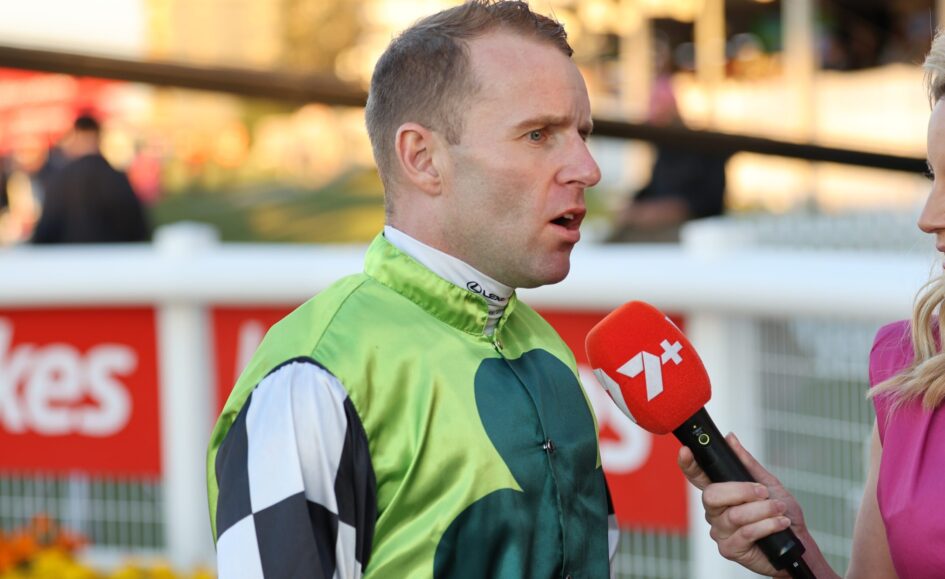
Racing NSW stewards have levied a $4000 fine on leading Sydney jockey Tommy Berry. Berry pleaded guilty to providing misleading evidence during a stewards’ inquiry concerning his interactions with disqualified trainer John O’Shea.
Last month, Berry faced questioning from stewards after suggesting in a post-race interview that he had communicated with O’Shea before Hovland’s win at Warwick Farm on June 3. The Rules of Racing explicitly forbid licensed individuals from engaging with disqualified persons on racing-related matters.
On June 24, Racing NSW stewards formally charged Berry with supplying misleading evidence, following their initial review of the jockey’s post-race interview. Berry’s legal representative, Wayne Pasterfield, informed stewards that the jockey’s calls to O’Shea were made ‘as a welfare check just the same as when people were checking in on Tommy during his disqualification a few years ago’.
Pasterfield argued that Berry’s responses regarding his conversation with O’Shea on June 3 were ‘misleading because he thought the questions were about whether he had spoken to him about racing matters.’ He also stated that Berry is a ‘breath of fresh air to racing, a person who everyone loves, an ornament to the sport’.
‘He gives his time to sick kids and countless hours of voluntary assistance at fund-raising events,’ Pasterfield told the stewards. Pasterfield successfully argued that a fine was an appropriate penalty ‘given that it is a charge of misleading rather than false evidence, given his plea of guilty at the first opportunity, given his honesty with stewards almost immediately after giving misleading evidence.’
Stewards initially assessed the penalty at $6000, but considering Berry’s guilty plea and other relevant factors, the fine was reduced to $4000.
The inquiry also considered whether ‘O’Shea had breached the prohibitions of his disqualification and, additionally, whether Berry had contacted a disqualified person for the purpose of discussing matters relating to thoroughbred racing’. While evidence confirmed communication between the jockey and trainer on instances where Berry rode horses previously trained by O’Shea, stewards ‘could not be satisfied there was sufficient evidence to establish there was a breach to the requisite standard, accordingly, no further action was taken in respect of those matters’.
Berry is currently enjoying a holiday with his wife, Sharnee, and their children, capping off a successful 2026 season where he secured 68 wins, placing him third behind James McDonald (88 wins) in the Sydney jockeys’ premiership.
John O’Shea received a four-month disqualification for conduct-related charges following the scratching of Bev’s Nine at Rosehill Gardens earlier this year. He admitted to the charges concerning his interactions with Racing NSW vets, which resulted in the ban that is scheduled to end this month.
Looking to place a wager on the next big race? Compare the latest racing betting markets from leading providers.
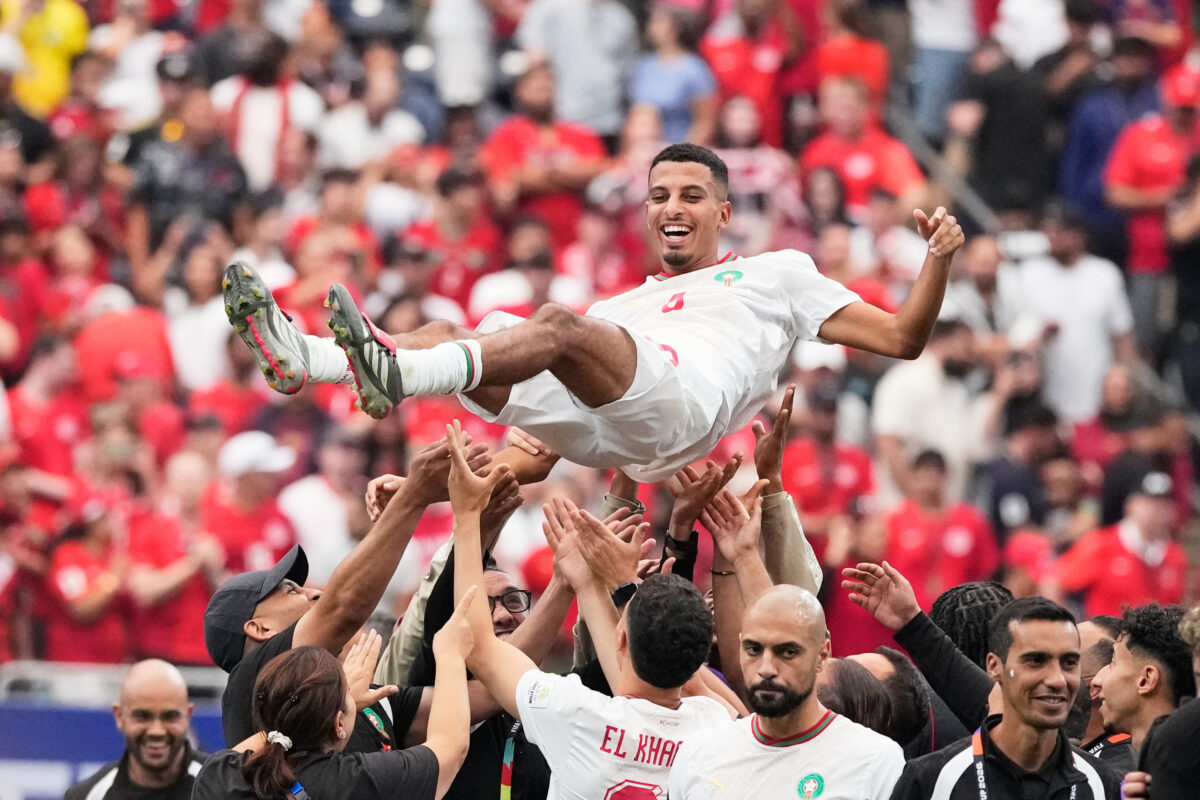

Morocco’s Azzedine Ounahi is thrown in the air by his teammates after the World Cup round of 16 soccer match against Canada in Houston, Saturday, July 4, 2026. (AP Photo/David J. Phillip)
HOUSTON — Morocco is heading back to the World Cup quarterfinals and coach Mohamed Ouahbi believes his team has established itself among football’s elite.
Azzedine Ounahi scored twice to lead Morocco to a 3-0 win over Canada in the Round of 16 Saturday to make the country the first African nation to reach the quarterfinals more than once.
“We are no longer a surprise,” Ouahbi said through an interpreter. “Now when people talk about Morocco we’re a major contender and it’s a great source of pride. I think it’s only the beginning and I hope we continue to have runs like this.”
READ: World Cup: Saibari, Morocco sends Netherlands to its earliest exit
And despite already making history in this World Cup, Morocco has much higher goals.
“We want to keep going,” Ouahbi said. “We don’t want to stop.”
It’s Morocco’s second straight appearance in the final eight after becoming the first African team to reach the semifinals in 2022.
“We are so proud to represent Africa because it’s a continent with a lot of talent and Africa deserves to be in the best level in football,” goalkeeper Yassine Bounou said.
Neither team was able to break through until Ounahi took a free kick from Achraf Hakimi and made a right-footed shot through traffic from outside the box to the bottom right corner to put Morocco on top 1-0 in the 50th minute.
Ounahi made it 2-0 on a right-footed shot from the middle of the box off a pass from Brahim Díaz in the 82nd minute.
Soufiane Rahimi added a goal in the final minute of stoppage time.
READ: World Cup Round of 32: Brazil-Japan, Netherlands-Morocco
Morocco will meet France, which beat Paraguay later Saturday, on Thursday in Foxborough, Massachusetts.
The loss ends a historic run for World Cup co-host Canada, which won its first-ever knockout round game, beating South Africa 1-0 to reach Saturday’s match. The country was playing in the World Cup for just the third time and the run enchanted a nation that is normally far more interested in hockey than the pitch.
Canada coach Jesse Marsch shared his postgame message to the team.
“I told them that I was proud of them and I challenged them to understand that we can play like this all the time against the best teams in the world,” he said. “We can be better on the day. And then the challenge is, can we hold that standard for 90 minutes?”
Morocco, No. 7 in the FIFA rankings entering the tournament, dispatched the Netherlands in a penalty shootout to reach the Round of 16 and send the country to its earliest World Cup exit.
READ: World Cup: Ismael Saibari lifts Morocco over Scotland
Marsch lauded how his team performed against a squad of Morocco’s caliber and how Canada controlled the match for much of the day.
“The way we pushed, the way we were in the match, the quality we showed, the overall impact in the match, we were better,” he said. “We were better than the No. 7 team in the world today.”
Ouahbi had a strong response when told of those comments.
“In terms of intensity they were good,” he said. “They were good for 98 minutes. Were they better? It’s hard to say. It takes some nerve to say that when you lose 3-nil.”
Canada had a couple of chances to score late. Jonathan David had a free kick from outside the box in the 78th minute, but his shot sailed over the crossbar.
Just after that, Tajon Buchanan’s shot from about 30 yards was stopped with a diving save from Bounou. Bounou, who was born in Canada to Moroccan parents, had three saves.
READ: World Cup: Brazil rallies for 1-1 draw vs Morocco in its opener
The victory set off a huge celebration for Morocco’s fans back home.
Within minutes, thousands poured into the streets of Casablanca, Morocco’s largest city. Horns echoed as supporters climbed onto car roofs, waving flags and chanting.
Traffic ground to a halt along the Corniche Boulevard, one of the city’s main avenues, where ecstatic Atlas Lions supporters danced, set off fireworks and waved flares. Other major boulevards across Casablanca were also jammed with jubilant fans.
Canada reached the Round of 16 despite missing star Alphonso Davies for the majority of the tournament because of a hamstring injury. The Bayern Munich player logged only 15 minutes as a substitute in the victory over South Africa but wasn’t available Saturday.
“His hamstring didn’t feel right,” Marsch said. “We were hoping that by the time he woke up this morning that he would feel better, but he didn’t.”
This game was a rematch from the last World Cup when Morocco beat Canada 2-1 in the group stage. Morocco went on to finish fourth.
It was an extremely physical match with eight yellow cards being issued. Both teams received four.
Hakimi and Canada’s Richie Laryea received yellow cards in the 40th minute. Hakimi shoved Laryea to the ground and then Laryea pushed him and a minor scuffle ensued.
Morocco midfielder Ismael Saibari left with an injury in the 22nd minute.
Sports
Mohamed Salah picks Lionel Messi over Cristiano Ronaldo, Neymar and Harry Kane for World Cup ‘last dance’ | Football News
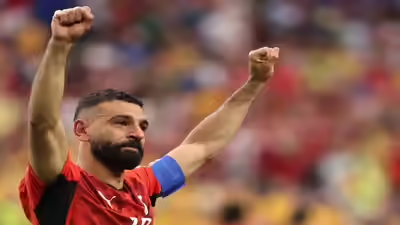
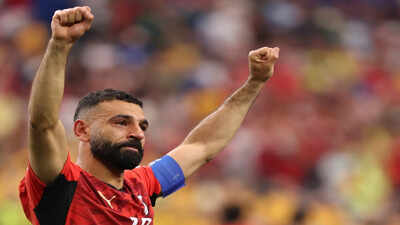
Mohamed Salah has made it clear which football icon he would choose to share a final World Cup “last dance” with, naming Lionel Messi ahead of Cristiano Ronaldo, Neymar and Harry Kane just days before Egypt’s blockbuster FIFA World Cup 2026 Round of 16 meeting with defending champions Argentina.The knockout clash, scheduled for Tuesday, July 7, at Atlanta Stadium, will be the first World Cup meeting between Salah and Messi and only the third time the two modern greats have faced each other in their careers. The winner will advance to the quarter-finals, where they will meet either Colombia or Switzerland, with Egypt chasing one of the biggest upsets of the tournament against the reigning world champions.
Salah chooses Messi for football’s final World Cup chapter
The 2026 World Cup is widely expected to be the final appearance on football’s biggest stage for several members of one of the sport’s greatest generations.At 39, Messi continues to lead Argentina’s title defence, while Cristiano Ronaldo, Neymar, Luka Modrić and Salah himself are all regarded as players unlikely to feature at another World Cup.Following Egypt’s dramatic Round of 32 victory over Australia on penalties, Salah was asked by reporters which player he would choose for a shared “last dance” from a group that included Messi, Ronaldo, Neymar and Harry Kane.The Egypt captain did not hesitate.“Messi,” Salah replied with a smile, making his preference immediately clear.The question did not specify whether the “last dance” referred to playing alongside someone or simply sharing one final World Cup journey. Regardless of the interpretation. Nevertheless, Salah’s answer left little room for doubt over which player he most wanted alongside him for this closing chapter.Ironically, that wish will now become reality almost immediately.
Argentina and Egypt set for first-ever World Cup meeting
Salah’s Egypt will now face Messi’s Argentina in one of the standout ties of the Round of 16.Argentina secured their place after surviving a major scare against Cape Verde, eventually prevailing 3-2 after extra time in a match that pushed Lionel Scaloni’s side to the limit.
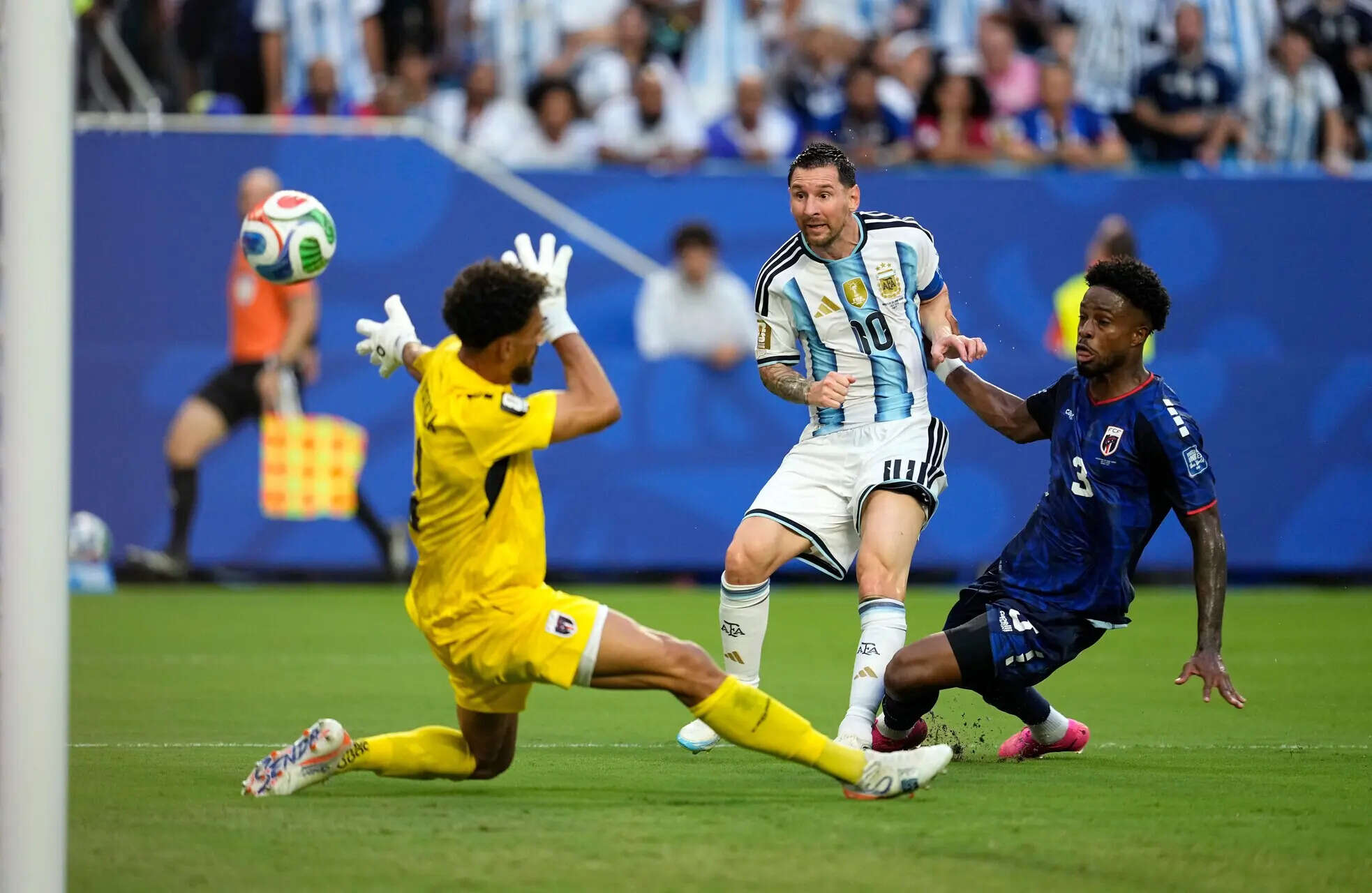
Argentina’s Lionel Messi (10) scores their first goal against Cape Verde goalkeeper Vozinha (1) during the World Cup round of 32 soccer match between Argentina and Cape Verde in Miami Gardens, Fla., Friday, July 3, 2026. (AP Photo/George Walker IV)
The dramatic victory ensured the defending champions remained alive in their pursuit of consecutive World Cup titles, but it also exposed vulnerabilities that Egypt will hope to exploit.The Pharaohs arrive with confidence after overcoming Australia in a penalty shootout to reach the knockout stages, setting up what will be the first competitive meeting between the two nations at a FIFA World Cup.
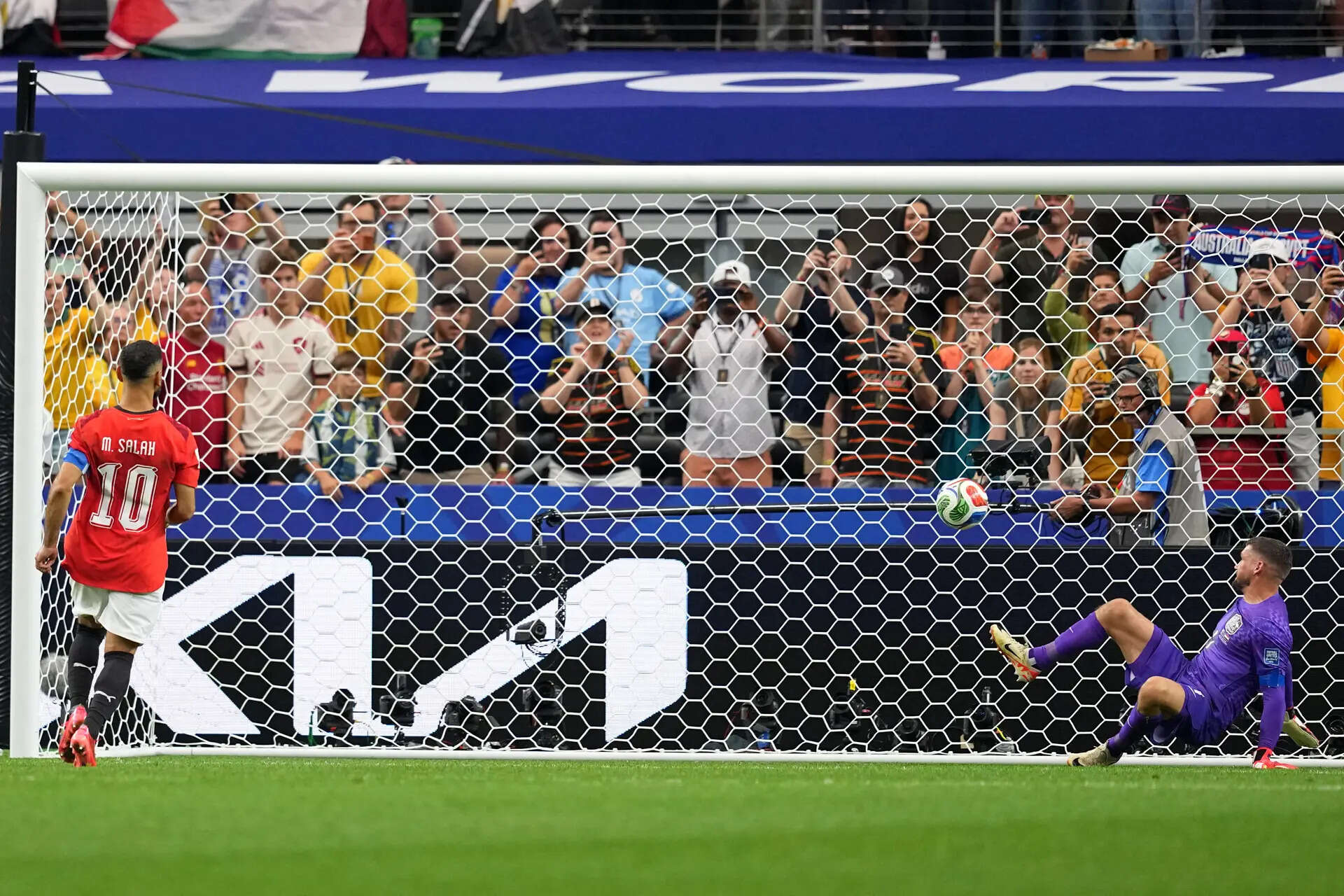
Egypt’s Mohamed Salah (10) scores a penalty in a shootout in the World Cup round of 32 soccer match against Australia in Arlington, Texas, near Dallas, Friday, July 3, 2026. (AP Photo/Julio Cortez)
Victory would send either side into the quarter-finals, where Colombia or Switzerland await.
Messi and Salah renew a rare rivalry
Although both have spent more than a decade among football’s elite, Messi and Salah have met only twice previously.Both encounters came in the UEFA Champions League while representing former clubs.The first was a 1-1 group-stage draw during the 2015-16 season, when Salah played for Roma against Messi’s Barcelona.Their second meeting came in the first leg of the 2018-19 Champions League semi-final at Camp Nou. Messi produced one of his finest European performances, scoring twice as Barcelona defeated Liverpool 3-0 before Jurgen Klopp’s side famously overturned the deficit at Anfield to reach the final.The upcoming encounter in Atlanta will therefore be their third meeting overall and their first wearing national team colours, with a World Cup quarter-final place at stake.
Messi continues to lead Golden Boot race as Salah eyes biggest upset
Messi enters the contest in outstanding form.The Argentina captain scored his seventh goal of the 2026 World Cup against Cape Verde, maintaining his place among the tournament’s leading scorers while extending his all-time World Cup record to 20 career goals.He remains one of the defining figures of the competition despite approaching his 40th birthday and continues his pursuit of back-to-back World Cup titles after leading Argentina to glory in Qatar four years earlier.
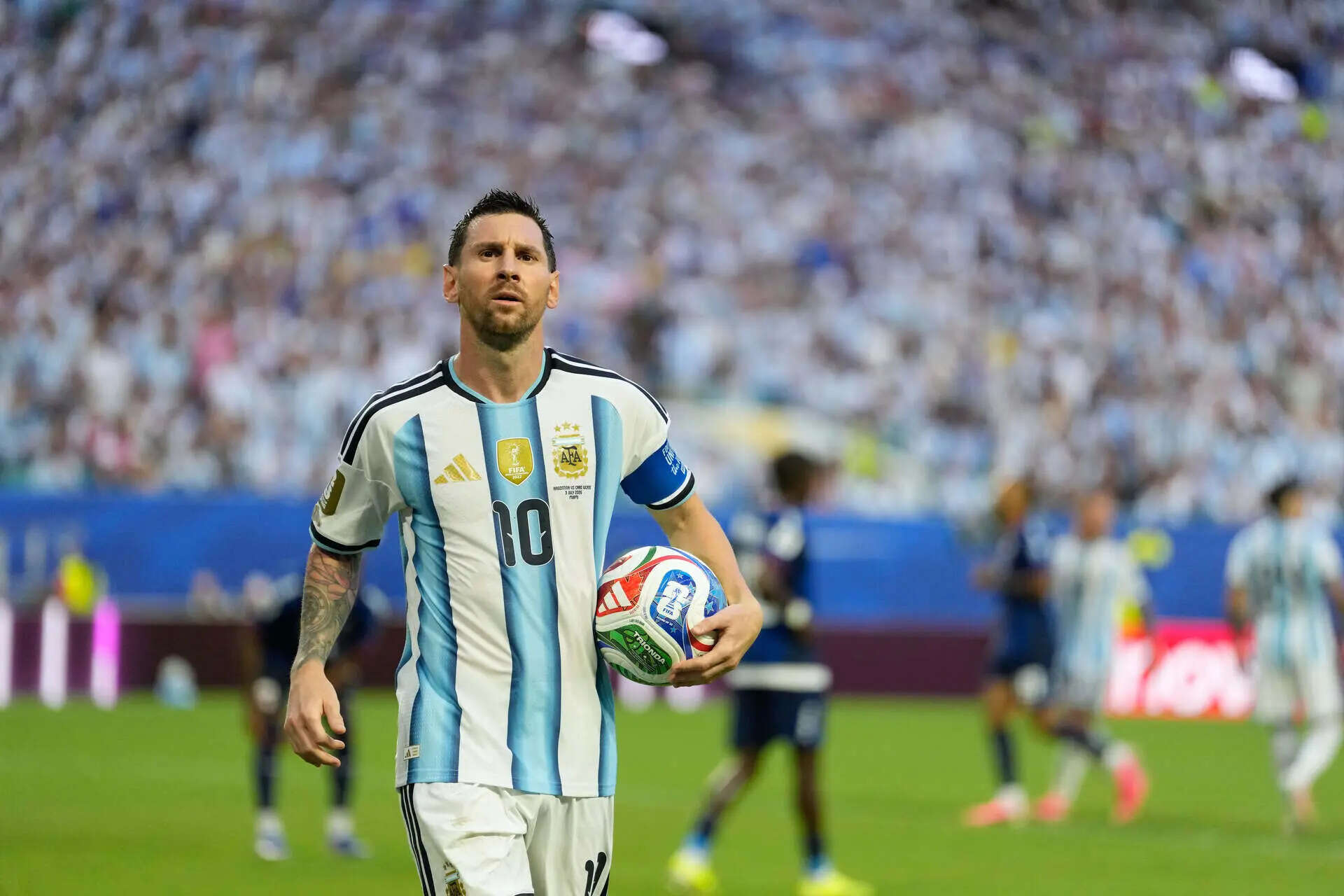
Argentina’s Lionel Messi looks on during the World Cup round of 32 soccer match against Cape Verde in Miami Gardens, Fla., Friday, July 3, 2026. (AP Photo/Rebecca Blackwell)
Salah, meanwhile, carries Egypt’s hopes into what promises to be their toughest examination of the tournament. He also stands as Egypt’s all-time World Cup scorer with three goals, having netted twice at the 2018 World Cup in Russia and adding a crucial third against New Zealand during the 2026 World Cup group stage. The Liverpool forward now has the opportunity to fulfil the wish he expressed after defeating Australia, sharing the stage with Messi in what could represent the final World Cup appearance for two of football’s modern icons. Whether that “last dance” ends with another chapter in Messi’s remarkable career or one of the biggest shocks of the 2026 tournament will be decided when Egypt and Argentina meet in Atlanta with a place in the quarter-finals on the line.
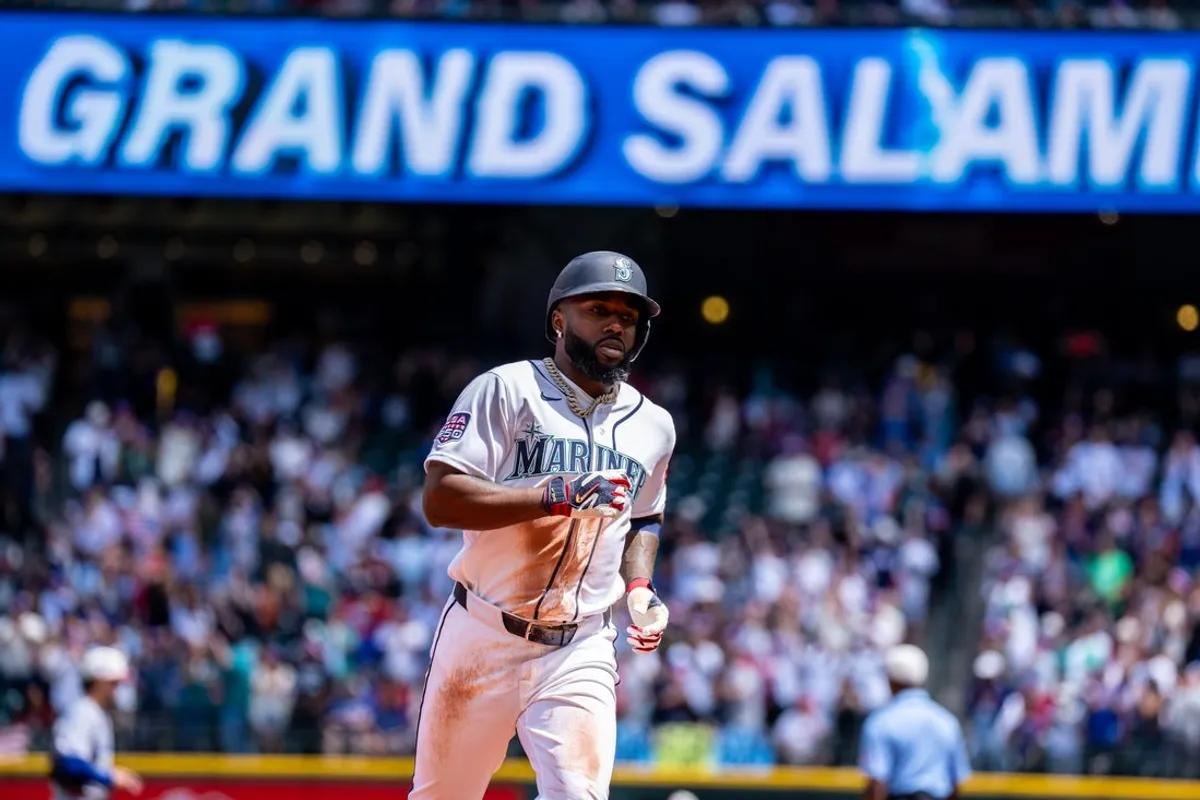
 Jul 4, 2026; Seattle, Washington, USA; Seattle Mariners left fielder Randy Arozarena (56) rounds the bases after hitting a grand slam home run during the second inning against the Toronto Blue Jays at T-Mobile Park. Mandatory Credit: Stephen Brashear-Imagn Images
 Logan Gilbert pitched 7 1/3 innings of one-hit ball and Randy Arozarena belted a grand slam as the Seattle Mariners routed the visiting Toronto Blue Jays 11-0 on Saturday afternoon.
Cal Raleigh hit a three-run homer and Dominic Canzone added a two-run shot as the Mariners won for the fourth time in their past five games and moved past Texas and into first place in the American League West.
Mariners manager Dan Wilson announced before the game the team was scrapping the scheduled piggyback with Gilbert (7-5) and Emerson Hancock for the day and the right-hander took advantage.
Gilbert retired the first 14 Blue Jays batters in order before Yohendrick Pinango blooped a single into shallow left field with two outs in the fifth inning, the ball falling between outfielders Victor Robles and Arozarena.
Gilbert retired the final eight batters he faced before exiting after 91 pitches. Gilbert didn’t walk a batter and struck out seven.
The Mariners opened the scoring in the second inning with a five-run rally after the first two batters were retired by Blue Jays starter Shane Bieber (0-1). Cole Young lined a double into right-center and Victor Robles singled to left, scoring Young. Colt
Emerson grounded a single to center, sending Robles to third, and J.P. Crawford walked to load the bases. Arozarena lined an 0-1 slider over the wall in left.
Seattle added to its advantage in the fifth as Arozarena drew a leadoff walk and Canzone followed with a homer to right to make it 7-0. That was it for Bieber, who allowed seven runs on six hits in four-plus innings. The right-hander walked three and fanned three.
With one out in the bottom of the sixth, Emerson bunted for a single and, an out later, Arozarena reached on an infield single, with third baseman Kazuma Okamoto’s errant throw allowing Emerson to take third. Canzone grounded an RBI-scoring single to right and Raleigh followed with a towering blast off the facade of the second deck in right off Tommy Nance to cap the scoring.
–Field Level Media
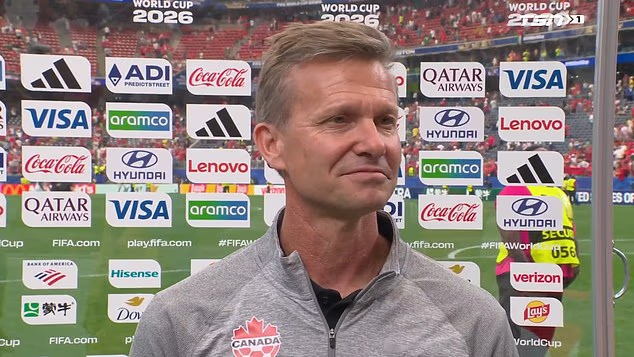
‘Cringeworthy’ Canada coach Jesse Marsch is slammed for bizarre comment during post-match TV interview after his team crashed out of the World Cup

WhiteFiber: A Small-Cap Way To Own The AI Power Bottleneck

Apple TV Has Great Sci-Fi, but This 8-Part Horror Fantasy Is Its Most Overlooked Gem


-

 Fashion1 day ago
Weekend Open Thread: High Hopes
-

 Politics2 days ago
The House | “Reframing the debate from a binary discussion of winners and losers”: Yuan Yang reviews ‘We Are Not Machines’
-

 Crypto World5 days ago
Strategy authorizes up to $1.25B in Bitcoin sales under new capital plan
-

 News Videos6 days ago
MAJOR BITCOIN & MARKET UPDATE!!!! (MUST WATCH ASAP!!!)
-

 Tech5 days ago
Anonymous researcher drops 0-day ‘exploitarium’ repo
-

 Business5 days ago
Australia treasurer says alleged access of prime minister’s bank data ’incredibly concerning’
-
 Business5 days ago
The AI boom won’t burst all at once. It will pop in ‘rolling bubbles’: Macquarie
-

 Sports4 days ago
Broncos roster: OL Ben Powers (No. 74) entering final year of contract
-
 NewsBeat4 days ago
Presenter Caroline Flack’s brother Paul Flack dies aged 55
-

 Crypto World3 days ago
Binance stock trading tops $1B in first month after launch
-

 Crypto World3 days ago
Alibaba-affiliate Ant Group enters the humanoid robot market with 12 deals
-
 NewsBeat3 days ago
New exhibition reflects five decades of movement between island of Ireland and GB
-

 News Videos5 days ago
How to Build INSANE Live Financial Dashboards With Claude
-

 Business3 days ago
Meta Platforms Stock Jumps 7% Today as Bloomberg Reports Company Plans to Enter the Cloud Business
-

 Business2 days ago
What a 10 Percent Drop Means for Buyers, Sellers and Renters
-

 Crypto World2 days ago
Binance Re-Enters Philippines As EU MiCA Rules Restrict Access
-

 Tech5 days ago
The attack that hijacked Claude Code came through Sentry. Datadog, PagerDuty, and Jira have the same exposure.
-
 Business5 days ago
PRISM’s IPO filing mentions Zostel case, CCI investigation
-
 Crypto World4 days ago
Airdrop Registration Becomes Key Focus For Remittix As RTX Launch Updates Approach
-

 Crypto World1 day ago
Standard Chartered Secures MiCA License as ESMA Adds 37 New Crypto Firms
You must be logged in to post a comment Login