

Crypto World
Micron (MU) Stock: CEO Reveals Memory Chip Shortage Won’t End Until 2028


Key Takeaways
- Micron’s Q3 results showed revenue of $41.46 billion, representing a 346% year-over-year surge, with earnings per share of $25.11 crushing expectations by more than $4.
- CEO Sanjay Mehrotra explained to Jim Cramer that the memory chip supply crisis is structural rather than cyclical, with new manufacturing facilities delayed until 2027–2028.
- Both HBM3E and HBM4 memory products are completely sold out through 2027, supported by $22 billion in advance customer deposits from hyperscalers.
- The company has delivered over $1 billion in HBM4 shipments and asserts technological superiority over competitors SK Hynix and Samsung in DRAM and NAND sectors.
- MU shares are currently trading around $970, retreating from their 52-week peak of $1,255, while maintaining approximately 244% gains year to date.
Micron Technology (MU) shares are hovering near $970, having pulled back from the 52-week high of $1,255 reached on June 25, yet the stock maintains impressive gains of approximately 244% year to date. Despite the recent decline, the fundamental narrative remains robust — a point CEO Sanjay Mehrotra emphasized during his appearance on Jim Cramer’s Mad Money on June 30.
Cramer posed the question dominating investor sentiment: what’s the timeline for resolving the memory shortage? Mehrotra’s response was unambiguous.
“The industry requires greenfield capacity. This means brand new construction of clean rooms. Those clean rooms require substantial time from initial groundbreaking to producing the first wafers.”
The company’s initial Idaho fabrication facility will begin wafer production by mid-2027, with full-scale manufacturing ramping predominantly throughout 2028. A secondary Idaho fab becomes operational by late 2028. The New York manufacturing site follows subsequently. Translation: the supply constraints persist for years.
Cramer previously highlighted Micron’s Q3 performance as among the most impressive earnings surprises he’s witnessed. The figures validate that assessment. Revenue totaled $41.46 billion, representing a 346% year-over-year increase from $9.30 billion. Non-GAAP earnings per share reached $25.11, surpassing the $20.78 consensus estimate. Free cash flow climbed to a company record of $18.30 billion.
The Q4 outlook is equally remarkable: $50 billion in projected revenue, approximately 86% gross margins, and anticipated EPS of $31.00.
HBM4 Technology Breakthrough
Both HBM3E and HBM4 memory products are entirely sold out through the end of calendar year 2027, with order backlogs already stretching into 2028. Major hyperscalers have deposited $22 billion in advance payments to guarantee future supply.
During the earnings conference call, Mehrotra revealed that Micron had already delivered over $1 billion worth of HBM4 products. This milestone transcends simple revenue metrics — it represents a technological achievement. HBM4 ranks as the most sophisticated memory product globally to manufacture, and Micron stands as the sole U.S.-based producer delivering it at commercial scale.
When Cramer directly questioned whether Micron had overtaken SK Hynix and Samsung, Mehrotra responded definitively: “Regarding DRAM and NAND technology, we maintain clear technology leadership.” The company currently holds approximately 65,000 patents.
Cramer also highlighted the valuation opportunity. Despite the substantial rally, MU shares trade at less than eight times earnings.
Domestic Manufacturing Expansion
Micron has pledged $200 billion toward U.S.-based manufacturing and research and development initiatives, targeting the creation of over 90,000 jobs. Additionally, the company is investing $300 million in developing a domestic semiconductor workforce through apprenticeship programs, community college partnerships, and university collaborations.
Cramer mentioned Morris Chang’s assertion that U.S. chip production costs exceed Taiwan’s by 50%. Mehrotra countered by referencing Micron’s current Manassas, Virginia facility, which already manufactures advanced memory solutions for automotive, defense, medical, and aerospace applications.
Addressing the consumer segment, Mehrotra acknowledged that surging AI data center demand is constraining availability for smartphone and PC memory, driving up consumer device prices. He noted that Micron maintains approximately 40% of its business in consumer markets to preserve portfolio diversification.
MU trades at $970 as of July 2, with fourth-quarter guidance projecting $50 billion in revenue and EPS of $31.00 approaching.


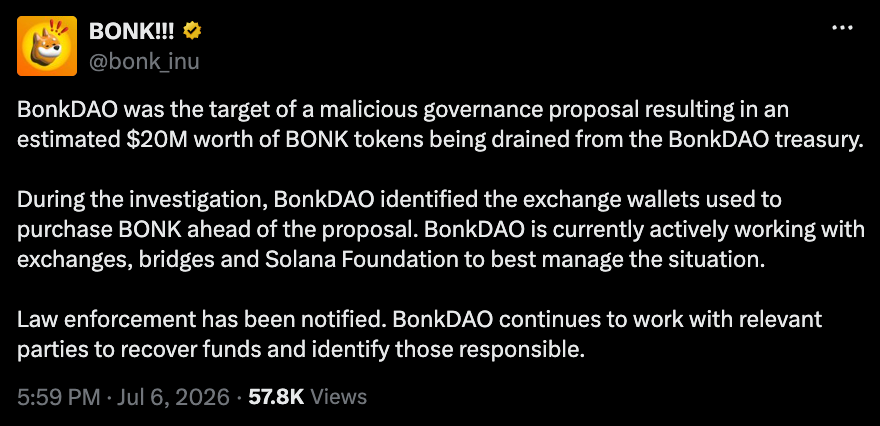
The decentralized autonomous organization (DAO) behind the Bonk (BONK) memecoin reported that an unknown entity had removed $20 million worth of the tokens in what it described as an attack using a “malicious governance proposal.”
In a Monday X post, the Bonk project said that it had informed law enforcement after the $20 million attack and was working to “recover funds and identify those responsible.” According to BonkDAO, the parties had drained $20 million in tokens from the project’s treasury on the Solana blockchain.
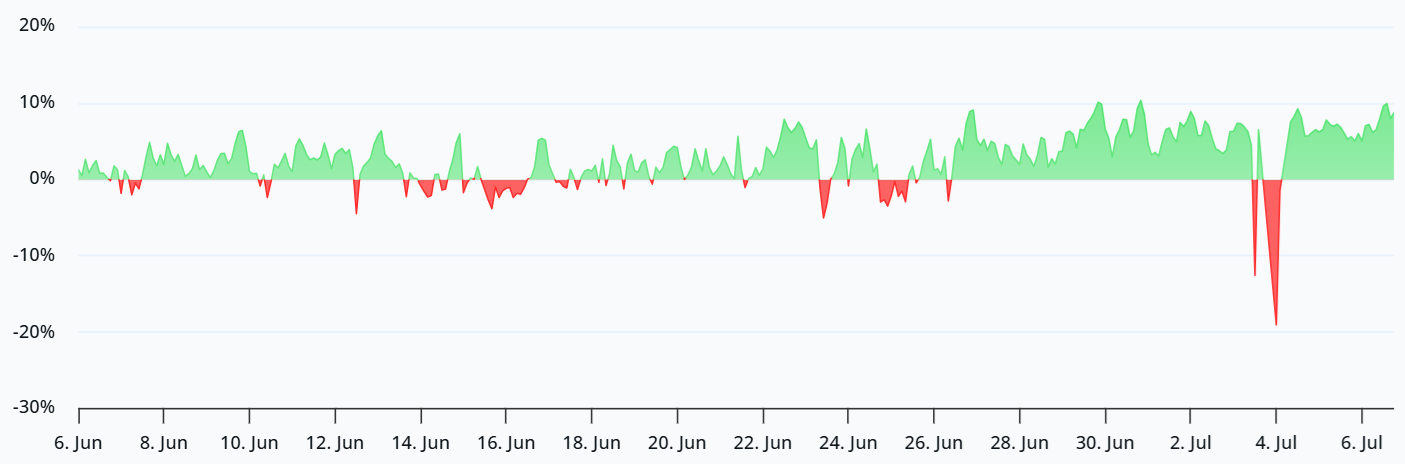
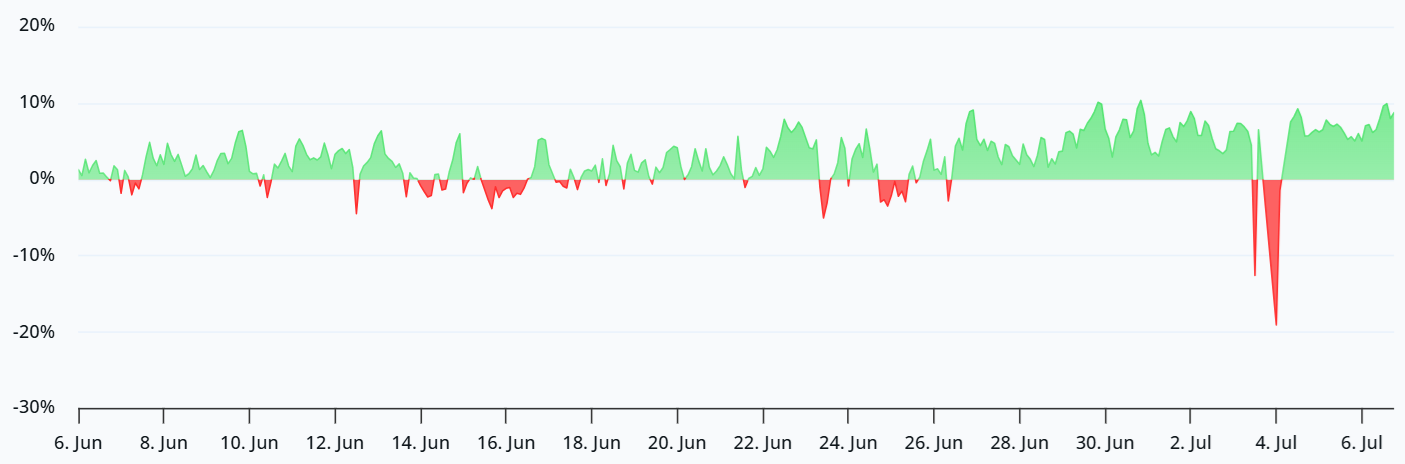
One of the dog-themed memecoins, along with tokens like Dogecoin (DOGE) and Shiba Inu (SHIB), BONK launched in December 2022, with its developers airdropping half of the token’s total supply. The price of BONK dropped about 7% over 24 hours amid reports of the attack, to about $0.05.
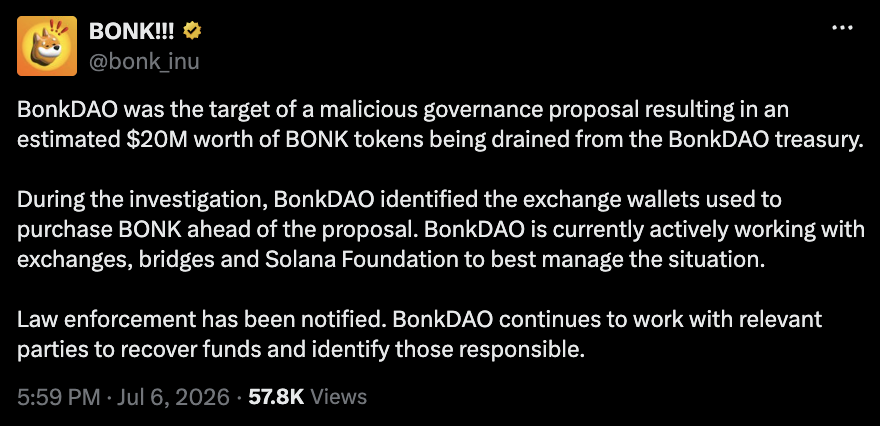
Source: Bonk Inu
The market capitalization of the top memecoins, including DOGE, SHIB and Pepe (PEPE), hit a two-year low last week, dropping to about $22 billion before recovering to more than $26 billion in July. According to CoinMarketCap data, the total market cap was $25.3 billion at the time of publication, down more than 54% over the previous 12 months.
Related: US senator calls for ban on elected officials issuing memecoins
In May, the memecoin launch platform DxSale reported losing $7.3 million in tokens following a cyberattack affecting liquidity providers on the BNB Chain. Although sleuths were able to identify the attacker’s wallet, one expert said the infrastructure used to move the funds could make tracing them difficult.
Trump memecoin holders lose big as president reports billions in crypto earnings
On Saturday, the New York Times reported that about 1 million investors in US President Donald Trump’s memecoin, Official Trump (TRUMP), had collectively lost $3.8 million as of June 30. The report, citing data from blockchain analytics company Nansen, came a few days after the president disclosed that he had earned more than $1.4 billion from his crypto-related ventures, including about $635 million from memecoin projects.
Magazine: Does ‘Paper Bitcoin’ mean there’s an unlimited supply of BTC?


Crypto-related losses have fallen 46.8% year over year to $1.32 billion during the first half of 2026, but blockchain security firm CertiK has warned that the decline does not indicate a safer digital asset ecosystem.
Summary
- CertiK says crypto losses fell 46.8% to $1.32 billion in H1 2026, but the decline does not mean the industry has become safer.
- Wallet compromises replaced phishing as the biggest attack method in Q2, with North Korean-linked attacks driving most major losses.
- CertiK and TRM Labs warn that attackers are becoming more targeted and sophisticated, making private key security a top priority.
According to CertiK’s H1 2026 security report, the lower loss figure is heavily influenced by the absence of an event on the scale of the $1.4 billion Bybit exploit recorded in the same period last year.
The firm said a simple comparison of headline numbers creates a misleading impression because attackers are carrying out fewer random campaigns and instead executing more targeted operations that inflict heavier damage per incident.
Attack patterns have become more concentrated
Breaking down the first-half figures, CertiK reported that phishing remained the leading cause of crypto theft during the first quarter, resulting in losses of $508.2 million. During the second quarter, however, wallet compromises overtook phishing as the largest attack method, accounting for $807.5 million in stolen assets.
A significant share of those losses came from just two major incidents. CertiK said more than 70% of the second-quarter total stemmed from attacks targeting KelpDAO and Drift Protocol, both of which are believed to have been carried out by North Korean state-sponsored hackers.
While total losses appear lower, CertiK said the industry is facing a structurally higher rate of attack activity than a year earlier. Excluding the exceptional Bybit hack from 2025, the firm concluded that individual attacks are becoming more financially damaging and increasingly focused on high-value targets instead of opportunistic exploits.
Separate findings from blockchain intelligence firm TRM Labs support that assessment. In its H1 2026 report released on Wednesday, TRM Labs said the decline in the total value stolen should not be interpreted as evidence that attackers have become less capable. According to the firm, the lower figure is largely the result of there being no record-breaking theft comparable to the Bybit incident during the reporting period.
TRM Labs also found that the number of crypto-related security incidents rose sharply from 83 in the first half of last year to 207 in H1 2026, the highest six-month total the company has recorded. Its analysis further showed that smart contract exploits accounted for 125 incidents, representing roughly 60% of all recorded attacks.
Private key security remains the main defense
Alongside its assessment of attack trends, CertiK identified private key management and multisignature wallet controls as the most critical areas requiring stronger protection. The firm recommended that crypto protocols and institutions securing substantial onchain assets strengthen every layer of key management, including hardware security, multisignature governance and geographic distribution of wallet signers.
CertiK said investments in these controls can produce disproportionately strong security benefits because they directly reduce the impact of attacks targeting sensitive wallet infrastructure.
Attention has also turned to the growing role of North Korean cyber operations. According to TRM Labs, North Korean hackers have stolen more than $6 billion worth of cryptocurrency since 2017. The recent attacks linked to KelpDAO and Drift Protocol prompted officials from the United States, Japan and South Korea to meet late last month to discuss ways to curb North Korea’s cyber activity and the illicit revenue generated through crypto theft.
During those discussions, government representatives acknowledged that North Korean IT workers are increasingly using artificial intelligence to improve the scale, speed and sophistication of cyber operations. Several cybersecurity leaders have separately warned that AI-assisted techniques are making protocol exploits harder to detect and defend against.
Meanwhile, hardware wallet maker Ledger has continued to advise crypto users to keep recovery seed phrases offline and never disclose them, describing those practices as basic but essential safeguards against phishing attacks and unauthorized wallet access.
Key takeaways:
- Bitcoin derivatives show resilience despite bearish pressure from Strategy’s Bitcoin sales.
- Onchain Bitcoin data points to sellers’ exhaustion, strengthening the $60,000 support level.
Bitcoin price quickly recovered from the selloff to $61,300 that followed Strategy’s Bitcoin sale announcement. Despite the negative impact on traders’ sentiment, the additional $216 million cash position eased concerns about the company’s ability to pay dividends and cover its debt. Does the quick recovery suggest that Bitcoin bulls back in control?
Bitcoin perpetual futures annualized funding rate. Source: Laevitas
The Bitcoin perpetual futures annualized funding rate jumped to 9% on Monday, indicating balanced demand between bullish and bearish leverage. While far from displaying conviction, the indicator distanced itself from the bearish momentum on Saturday marked by negative funding rates. But unlike the futures markets, Bitcoin options signaled minor stress on Monday.
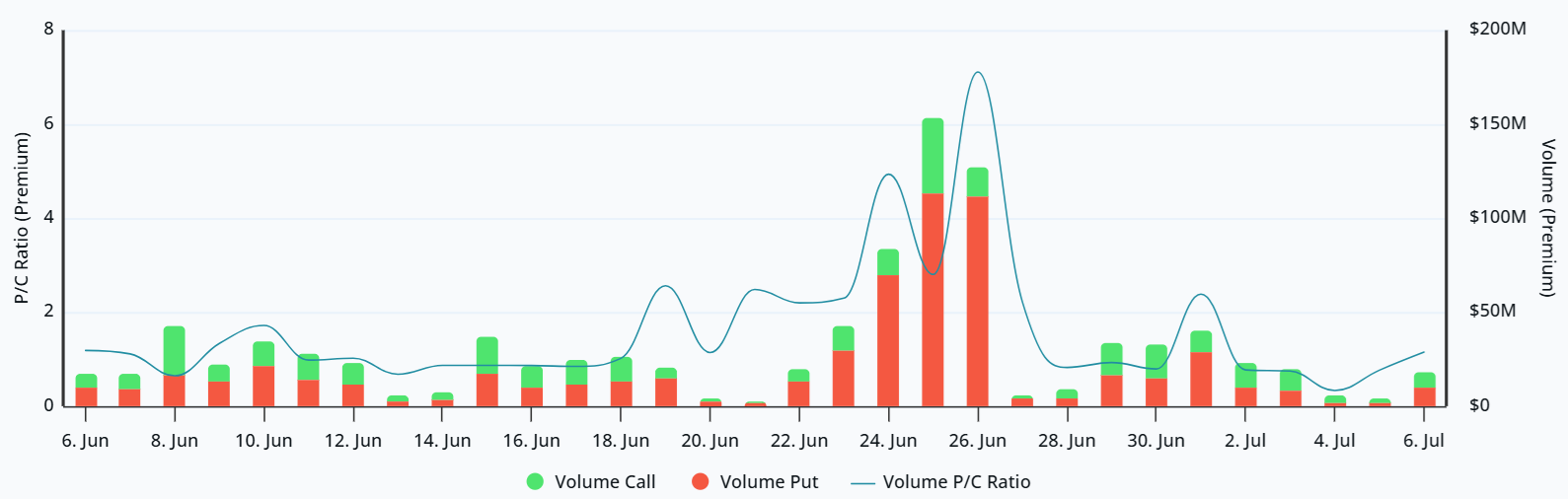
Bitcoin options premium put-to-call ratio at Deribit. Source: Laevitas
The put (sell) options premium at Deribit outpaced the equivalent call (buy) instruments on Monday, reverting the trend from Thursday and Friday. Typically, periods of stress can easily push the indicator above 2 times, hence the current 1.15 level remains under the neutral range. Bitcoin futures and options displayed resilience, although the bounce to $63,500 was unable to instill bullishness.
Bitcoin ETF flows reversal and long-term holders conviction favor $65,000 rally
Bitcoin bears might have underestimated the relevance of the $223 million net inflows into US-listed spot Bitcoin exchange-traded funds (ETFs) on Friday, the first after 10 consecutive outflows. The record-high $4.51 billion net outflows in June negatively impacted trader sentiment.
Still, the sell pressure will eventually subside, and the potential reversal in ETF flows could be enough to instill bullishness in Bitcoin derivatives markets.
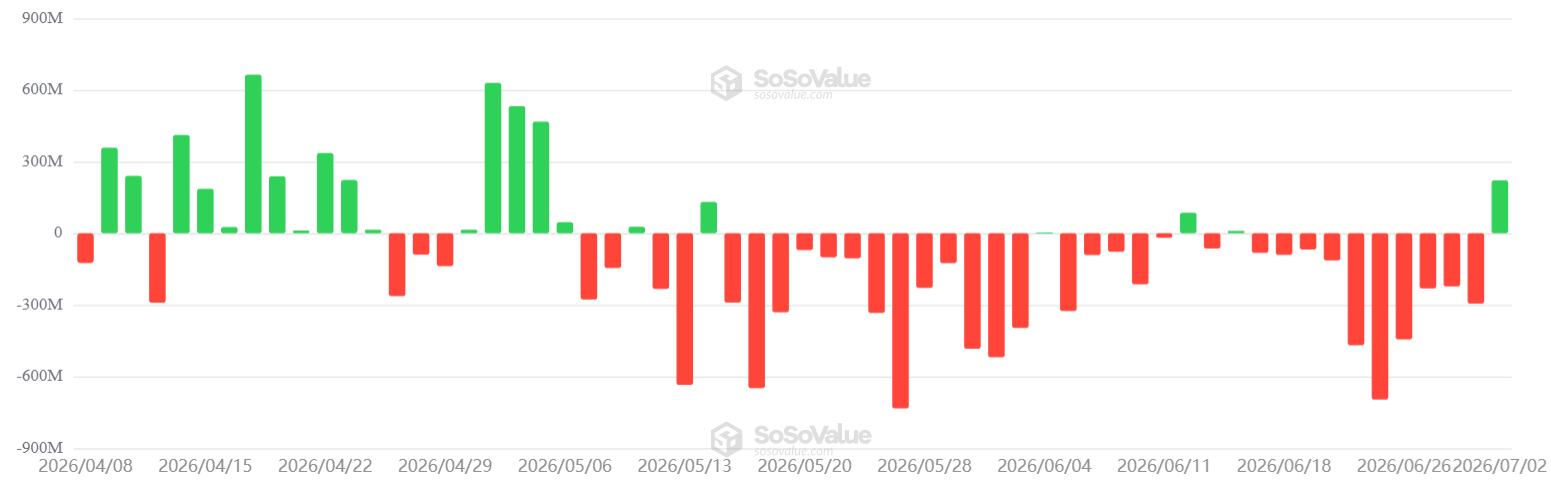
US-listed spot Bitcoin ETFs daily net flows, USD. Source: SoSoValue
Part of the recent bearishness can be pinned to the record drawdown in Strategy preferred perpetual equity Stretch (STRC US), which offers holders an attractive 12% yield. However, new stock issuance can occur only at the fixed $100 price; hence, the company currently has fewer instruments available to support the dividend payout.
Strategy holds sufficient cash reserves to cover 17 months of dividends; thus, the urgency of additional Bitcoin sales is debatable.
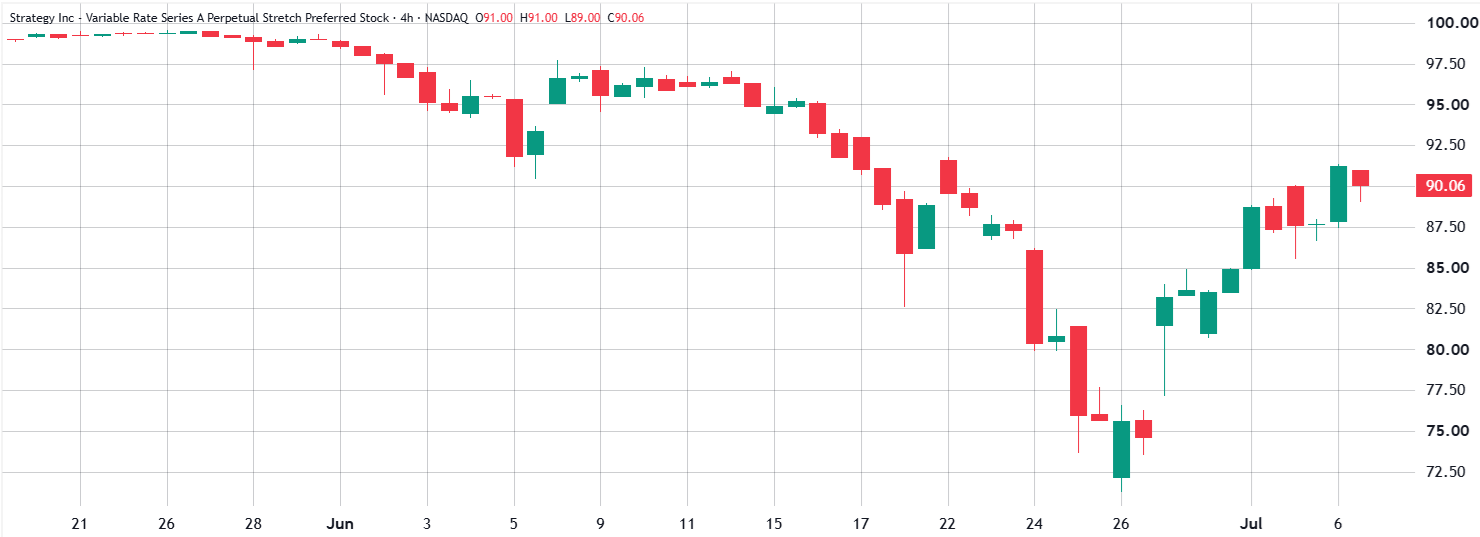
Strategy preferred perpetual equity Stretch (STRC US). Source: TradingView
Regardless of Strategy’s extremely low 8% debt leverage, Bitcoin bears have the upper hand as the company endures $8 billion in unrealized losses from its Bitcoin purchases. Bitcoin bulls’ biggest hopes rely on long-term holders’ conviction and onchain data pointing to selling exhaustion, strengthening the $60,000 support level.
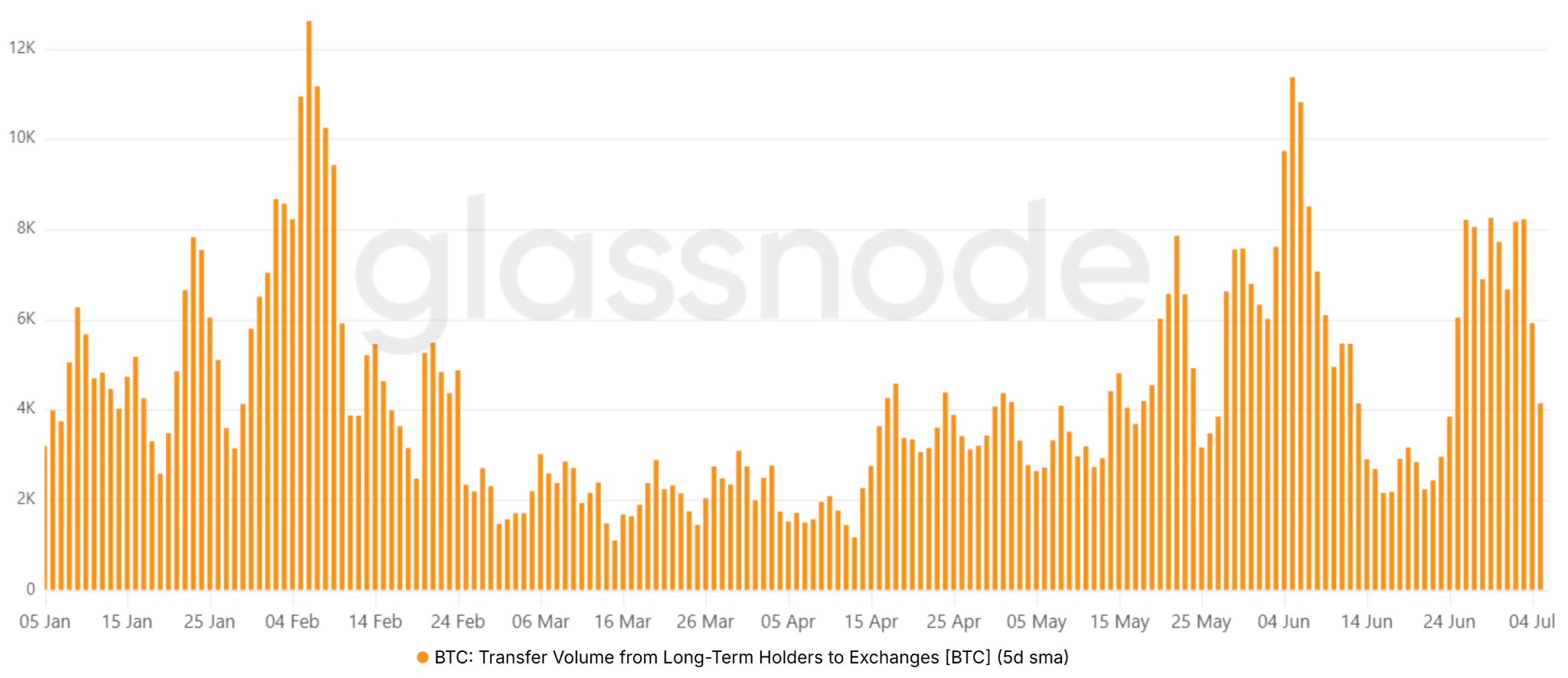
Bitcoin transfers from long-term holders to exchanges, BTC. Source: Glassnode
Transfers from long-term holders to exchanges are down to 4,130 BTC per day on average, from 8,040 BTC one week prior. Nonetheless, unless the spot Bitcoin ETFs exhibit a sequence of relevant net inflows, derivatives traders will likely remain skeptical of sustained bullish momentum, reducing the odds of a sustained rally above $65,000.
Presently, Strategy’s huge unrealized losses and skepticism in Bitcoin derivatives point to further pressure from bears.
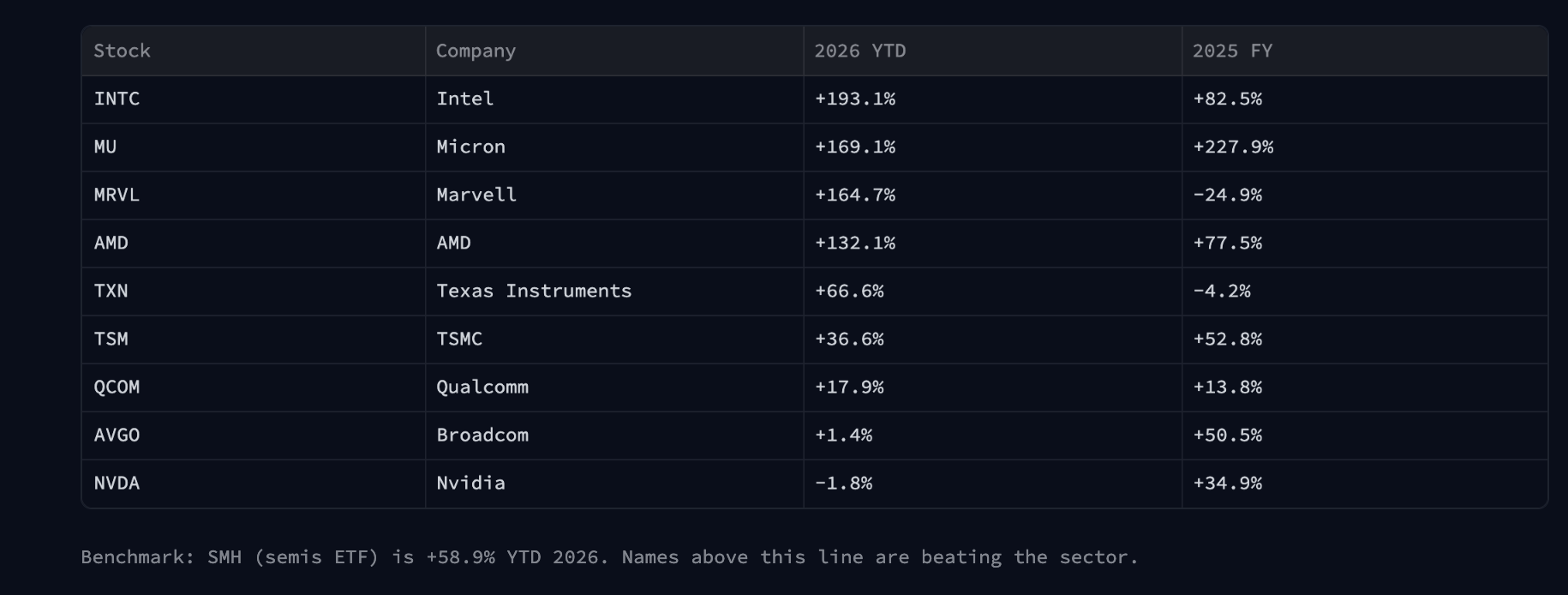
Nvidia stock trades near $195, and it has quietly become the worst performer in its own chip group in 2026.
The slide comes as investors question whether the AI boom that powered Nvidia can keep paying off. A delayed mega-IPO has only deepened those doubts.
Why Nvidia Stock Price is Lagging
Nvidia (NVDA) is mostly trading flat this year. Its peers have soared, with the semiconductor ETF up nearly 59% and rivals like AMD and Micron gaining well over 100%. The pain is recent. After a strong 2025, Nvidia stock fell about 18% from its June high, including a 10.7% drop in June alone.

Meanwhile, the wider AI trade has cooled. Reuters reported in late June that OpenAI may delay its IPO to 2027 to protect a $1 trillion valuation.
Want more insights like this? Sign up for Editor Harsh Notariya’s Daily Newsletter here.
That matters because it signals caution. When the biggest AI name waits rather than test the market, investors read it as a warning on stretched valuations, and Nvidia is the sector’s bellwether.
The Catalysts That Could Turn It Around
Still, the news is not all bad. Washington has begun issuing licenses for Nvidia to sell its H20 chips in China again, reopening a key market the US had blocked.
Big customers could help too. Microsoft, Meta, Amazon, and Alphabet report earnings in late July, and strong AI spending plans would point straight to more Nvidia chip orders.
One caveat on timing. Nvidia’s own results do not land until late August, so July hinges on these outside events, not the company’s numbers. It is worth noting that Nvidia’s Q1 earnings report landed in May, and April and May were the best months in terms of returns.

If the Nvidia stock price follows the same trend, July could be a bullish month, on record.
Money Flow and Positioning Are Mixed
The tape sends mixed signals. Chaikin Money Flow, a gauge of whether big money is buying or selling, has climbed since June 25 and now sits near zero at -0.01. That hints that money is trickling back in early July, which aligns with recovery month expectations shared earlier.
Yet, the CMF must cross above the zero line to confirm buying.

Options lean the same way. The put-call ratio’s volume reading eased to 0.48 while open interest held at 0.82, showing a few more bullish call bets.

Large traders, however, disagree. Smart money data, per crypto perps, shows a net short of about $16.7 million in Nvidia, the heaviest short among major chip names.

Even with those shorts in place, the setup is unlikely to spark a crash. According to The Kobeissi Letter, leveraged ETF bets on Nvidia total about $5.6 billion against $28.8 billion in daily trading, far tamer than the crowded leverage seen in Korean chip stocks like SK Hynix. That matters for the downside.
With little forced leverage to unwind, any further drop in Nvidia stock is more likely to be an orderly slide than a violent, cascade-driven crash.
Nvidia Stock Price Levels to Watch
For now, one number rules the chart. Nvidia lost the $200 level on June 23 and has not reclaimed it. A move back above $200 would flip momentum and open room toward the $207 to $213 zone inside its falling channel.
On the downside, $189 marks the channel floor. A daily close below it would expose a deeper slide. So the setup is binary. Strong AI spending guidance from the big cloud companies in late July, or a firm China deal, could push Nvidia stock back above $200, while fading AI confidence could crack $190.

The $200 level separates a July recovery from another leg lower.
The post What to Expect From Nvidia Stock in July 2026: Recovery or Another Leg Down? appeared first on BeInCrypto.


South Korea has given Polymarket an opportunity to defend its operations before regulators decide whether to seek corrective action over concerns that the prediction market platform may violate the country’s gambling laws.
Summary
- South Korean regulators will hear Polymarket’s response before deciding on possible corrective action.
- Authorities are reviewing whether the platform’s prediction markets violate the country’s gambling laws.
- The review follows an earlier police investigation into South Korean Polymarket users over alleged illegal gambling.
The Broadcasting, Media and Communications Review Committee said on Monday that it will hear Polymarket’s explanation before reaching a final decision on a corrective request tied to the platform’s legality and service model. According to a machine translation of the committee’s statement, regulators decided to allow the company to present its position so they could fully examine both the legal status of Polymarket and how its services operate.
Rather than issuing an immediate recommendation, the committee said it wanted to verify whether the platform’s activities fall within South Korea’s legal framework governing online gambling-related services. The review could determine whether authorities proceed with corrective measures against the platform.
Regulators are reviewing whether Polymarket violates gambling laws
South Korea’s National Gambling Control Commission Act classifies illegal gaming businesses as services that facilitate speculative gambling over the internet. The law also gives regulators authority to identify, monitor, and respond to businesses that may fall into that category.
As part of that review, authorities are assessing whether Polymarket’s prediction markets comply with domestic regulations. The committee’s decision to seek the company’s response comes before any final enforcement recommendation is made.
Outside South Korea, Polymarket already limits access in multiple jurisdictions. According to the company, users in 33 countries cannot access its platform, including the United States, the United Kingdom, France, Germany, Brazil, Singapore, Japan and Australia. Polymarket says those restrictions are designed to comply with sanctions, local financial regulations, gambling and prediction market laws, anti-money laundering requirements and Know Your Customer rules.
The company also blocks access in selected regions within otherwise supported countries, including Alberta, British Columbia, Ontario and Quebec in Canada, along with Crimea, Donetsk and Luhansk in Ukraine.
Authorities have expanded scrutiny beyond individual users
Attention from South Korean authorities has increasingly moved beyond local users to the platform itself. The latest review follows an earlier criminal investigation involving South Korean users who allegedly participated in election-related prediction markets that authorities considered illegal gambling.
On June 5, the Gangwon Provincial Police opened what local media described as the country’s first investigation into local Polymarket users over suspected illegal gambling. According to those reports, the investigation was requested by the National Police Agency.
South Korean law carries financial penalties and possible prison terms for gambling-related offences. Under the country’s Criminal Act, gambling can result in a fine of up to 10 million won (about $6,500), while habitual gambling may carry a prison sentence of up to three years or a fine of up to 20 million won. Separately, operating a gambling venue for profit is punishable by up to five years in prison or a fine of up to 30 million won.
For now, the review committee has not announced any enforcement action against Polymarket. Instead, regulators have chosen to consider the company’s explanation before deciding whether corrective measures should be requested, leaving the platform’s status in South Korea dependent on the outcome of that legal assessment.

Prominent blockchain investigator ZachXBT said that several meme coins using his name and likeness were launched across multiple blockchains over the past week to capitalize on the recent attention surrounding him.
He clarified that he had no involvement with any tokens and reiterated his longstanding position that he would never endorse or launch a meme coin.
Copycat Tokens Emerge
In his recent post, ZachXBT disclosed that every token sent to his donation wallet was sold on the market. All proceeds were directed to charitable causes rather than kept for personal use.
In total, around $41,000 was donated through The Giving Block to support earthquake relief efforts in Venezuela. The funds included 25,000 USDT sent to GiveDirectly on July 6, 5,000 USDT sent to Direct Relief later that day, and 153 SOL, worth about $11,000, donated to Direct Relief on June 28.
ZachXBT rose to prominence as one of crypto’s most respected investigators after repeatedly exposing scams and bad actors. He has consistently distanced himself from meme coins. In April, ZachXBT said he had never promoted, deployed, or shared the contract address of any meme coin with his followers. He had also added that while he maintains a public donation wallet to support his investigative work, he sells all tokens sent to it.
This stance was also evident in December 2023 after he temporarily deactivated his X account, warning users not to buy meme coins using his name. Following his brief departure, several Solana-based meme coins tied to his persona emerged.
Many community members defended him. Former Wall Street trader turned crypto artist Ovie Faruq had then said that ZachXBT had done more than anyone to protect retail investors from crypto scams.
Recent Investigations
His latest target was MemeCore. ZachXBT called out the controversial meme coin and questioned its multibillion-dollar valuation. He also asked why insiders appeared to control more than 90% of the token supply and criticized major exchanges for listing it despite red flags.
He has also raised similar concerns about the SIREN and LAB tokens this year.
The post ZachXBT Turns Unwanted Meme Coin Donations Into $41K for Venezuela Relief appeared first on CryptoPotato.
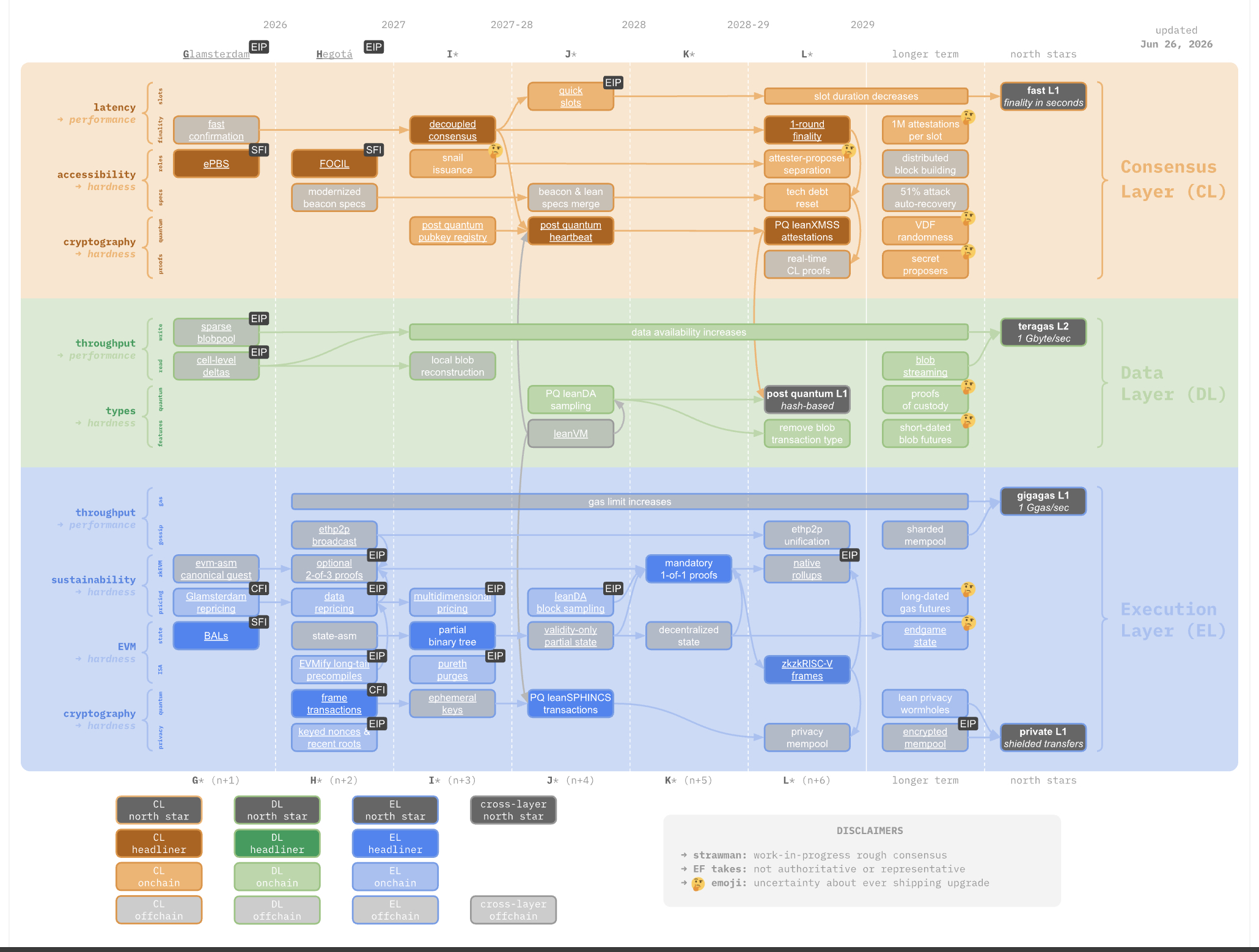
Ethereum price is trading at $1,780 as Vitalik Buterin revealed the network’s biggest roadmap since the Merge, which somehow sends ETH’s prediction higher. The catch is that it won’t happen anytime soon. Instead, the overhaul is expected to take three to four years, giving the market plenty of time to figure out what it really means.
The roadmap, published on strawmap.org, lays out seven major upgrades through 2029. Buterin described Lean Ethereum as the network’s third major chapter. It includes zero-knowledge validity proofs, quantum-resistant cryptography, faster transaction finality, and a redesigned two-tier storage system.
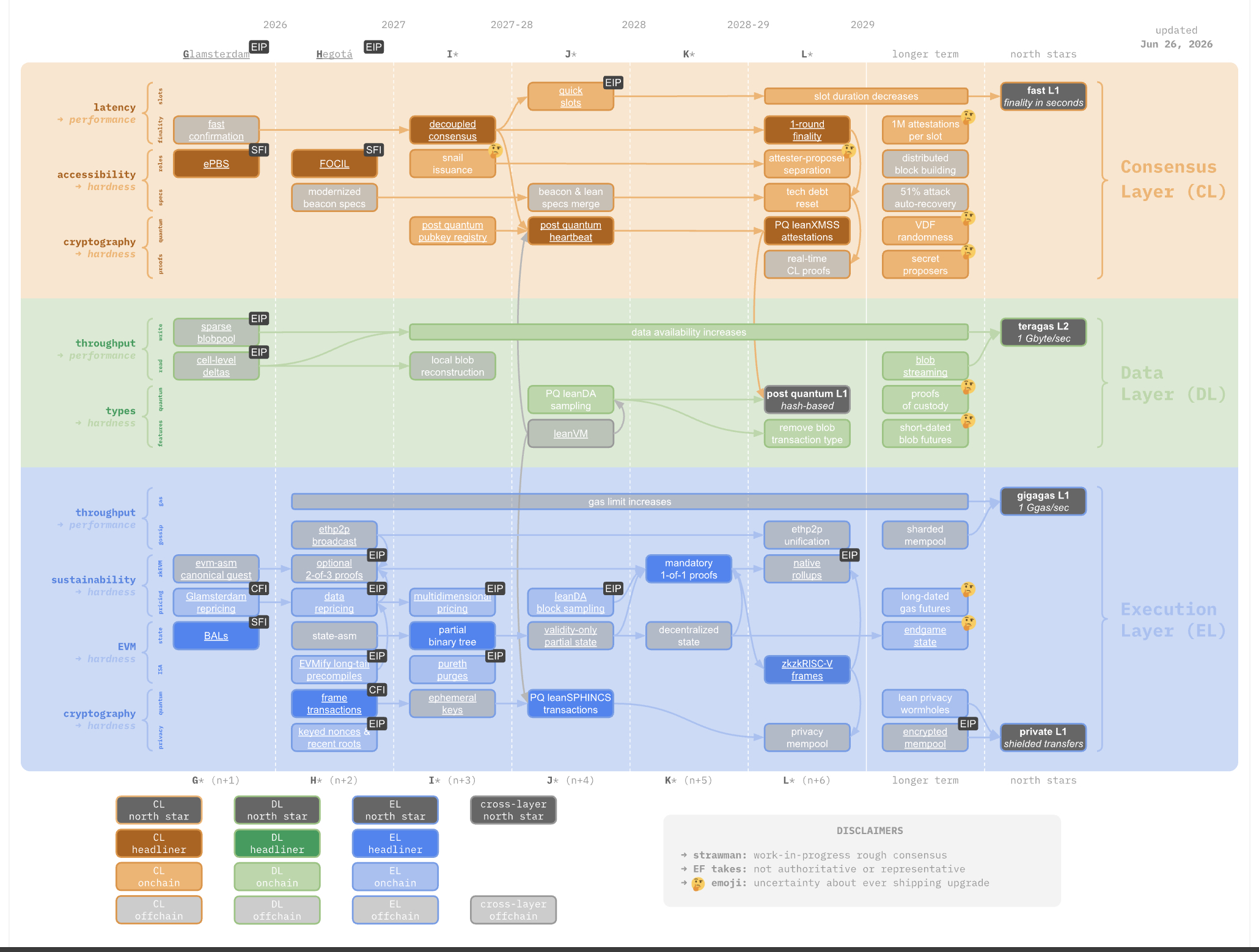
The storage overhaul stands out the most. Buterin called it the plan’s most disruptive change because it reshapes how Ethereum stores and manages data. Hegota, expected as the second hard fork of 2026, is likely the last major upgrade before Lean Ethereum starts rolling out.
For now, ETH is hovering around an important technical level while this long-term plan begins to take shape. The roadmap will not change the network overnight, but it gives traders and investors something bigger to watch than the next daily candle.
Discover: The Best Crypto to Diversify Your Portfolio
Ethereum Price Prediction: Recover to $2,000?
Ethereum is trying to stabilize after several volatile weeks, with buyers defending the area around $1,750. That level has become the market’s last line after the previous support gave way. Meanwhile, $1,850 is the first hurdle bulls need to overcome before sentiment can improve.
Momentum has started to recover, but the technical picture still calls for caution. The RSI has rebounded from oversold territory and is moving toward neutral, showing that selling pressure has cooled. Even so, buyers still need stronger follow-through to confirm the shift.

Don’t Miss Out on Our $1,000 USDT Airdrop on ByBit
If ETH breaks above $1,850, it could extend toward the $1,950 region. However, another rejection may send the price back to test $1,750. A daily close below that level would leave $1,680 as the next support, making the current range especially important.
The longer-term outlook remains constructive, supported by continued network development and steady institutional participation through staking products. Still, those catalysts are unlikely to erase short-term volatility overnight, so the price will probably continue reacting to key technical levels before the next sustained move.
Discover: The Best Token Presales
LiquidChain Targets Early-Mover Upside as Ethereum Tests Key Levels
A multi-year rebuild cycle at the L1 level is precisely the kind of environment where L3 infrastructure plays gain traction. Developers need execution environments that abstract away the transition chaos beneath them.
ETH at current levels offers legitimate upside, but entry here means tolerating the full drawdown risk of a technically weak chart while waiting on a 3-4 year protocol overhaul. Some traders look one layer up the stack for asymmetric positioning.
An L3 crafted by LiquidChain? — LiquidChain (@getliquidchain) July 6, 2026
That is the most powerful type of Magic.  ⟁https://t.co/vqvBcdSQYC pic.twitter.com/7Rwd3fVOGc
LiquidChain is an L3 infrastructure project built around a unified liquidity layer that fuses Bitcoin, Ethereum, and Solana into a single execution environment. The core pitch is architectural: developers deploy once and access liquidity across all three ecosystems, with verifiable settlement and single-step cross-chain execution.
The presale is currently priced at $0.0147, with $888K raised to date. That figure is close enough to the $1M threshold to matter as early-stage presales tend to reprice at milestones.
Traders evaluating the project can research LiquidChain’s presale details here.
Don’t Miss Out on Our $1,000 USDT Airdrop on ByBit
The post Ethereum Price Prediction: Vitalik Hints at 3-4 Years Long ETH Rebuild appeared first on Cryptonews.


Yield Guild Games (YGG), the web3 gaming guild that pioneered play-to-earn gaming, is sunsetting its game publishing arm YGG Play, affecting 35 jobs, co-founder Gabby Dizon said on X Monday. YGG will pay departing staff eight additional weeks during the transition and help them find new roles,… Read the full story at The Defiant
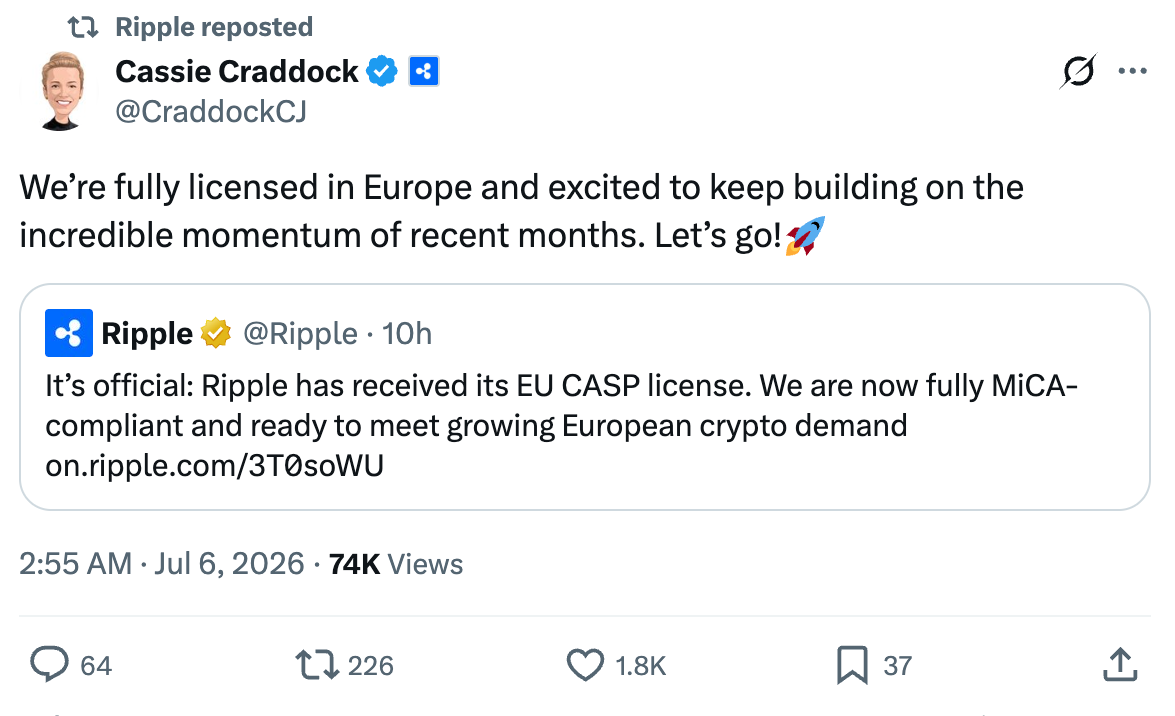
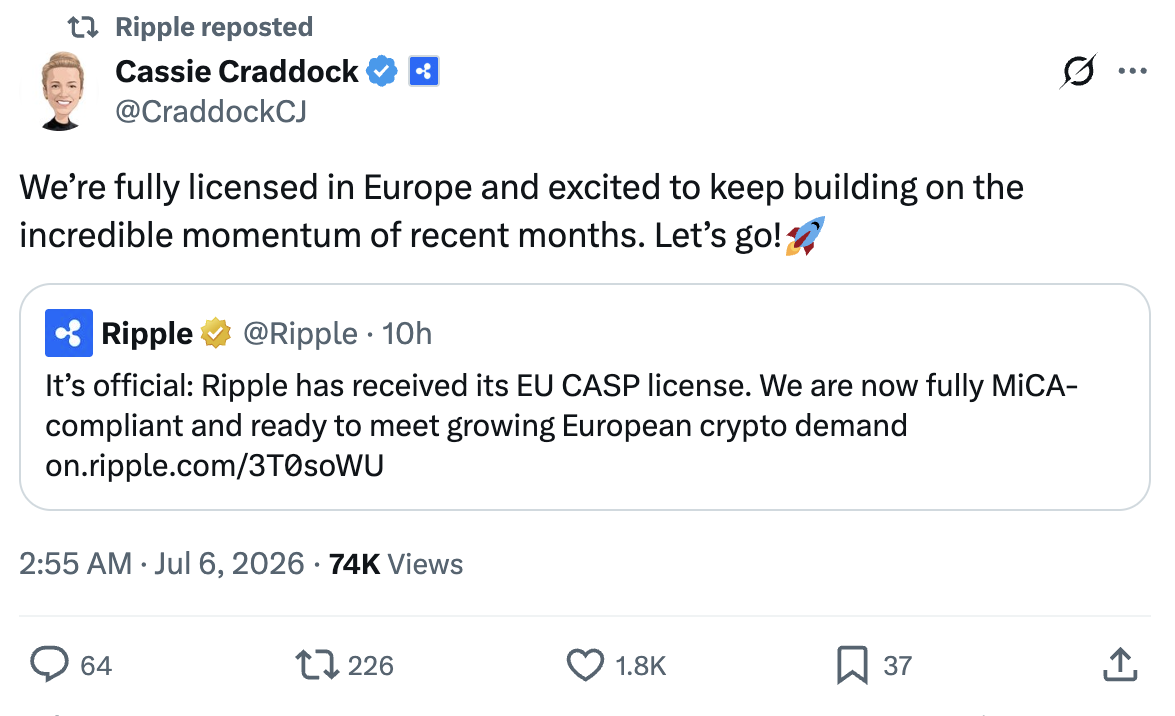
Ripple said it has received full authorization under the European Union’s MiCA crypto framework after Luxembourg’s financial regulator granted the company a Crypto Asset Service Provider (CASP) license.
The authorization follows Ripple’s preliminary approval in June and, together with the company’s existing Electronic Money Institution license, allows the blockchain payments company to offer regulated crypto-asset services across the European Economic Area (EEA).
Ripple said the approval makes it one of a small number of digital asset companies with full authorization under MiCA. The company now holds more than 75 regulatory licenses worldwide, including authorization from the United Kingdom’s Financial Conduct Authority secured in January.
“This CASP authorisation means Ripple enters the post-transitional MiCA era fully compliant and ready to scale,” said Cassie Craddock, Ripple’s managing director for the United Kingdom and Europe.
Source: Cassie Craddock
Related: Binance outflows triple to $1.2B as ETH withdrawals hit 3-year high
Europe begins enforcing MiCA crypto rules
Ripple’s approval follows the end of the European Union’s MiCA transition period on July 1, when crypto companies were required to obtain authorization or cease offering regulated services in the bloc. The framework allows authorized companies to generally passport regulated crypto services throughout the EEA under a single license.
On Friday, the European Securities and Markets Authority (ESMA) published an updated register listing 280 licensed crypto-asset service providers. The total rose from 243 a week earlier after 37 companies, including Standard Chartered, FalconX and Sygnum Europe, were added.
Not every company secured MiCA authorization before the deadline. Binance, the world’s largest cryptocurrency exchange by trading volume, withdrew its MiCA application in Greece ahead of the July 1 transition and said it would pursue authorization in another member state while taking steps to comply with the bloc’s new rules.
The bloc has now entered MiCA’s enforcement phase, with unauthorized crypto companies expected to wind down operations or face penalties. While ESMA coordinates supervision and maintains the bloc’s register of authorized crypto companies, day-to-day enforcement is carried out by national regulators, meaning implementation is likely to vary across member states.
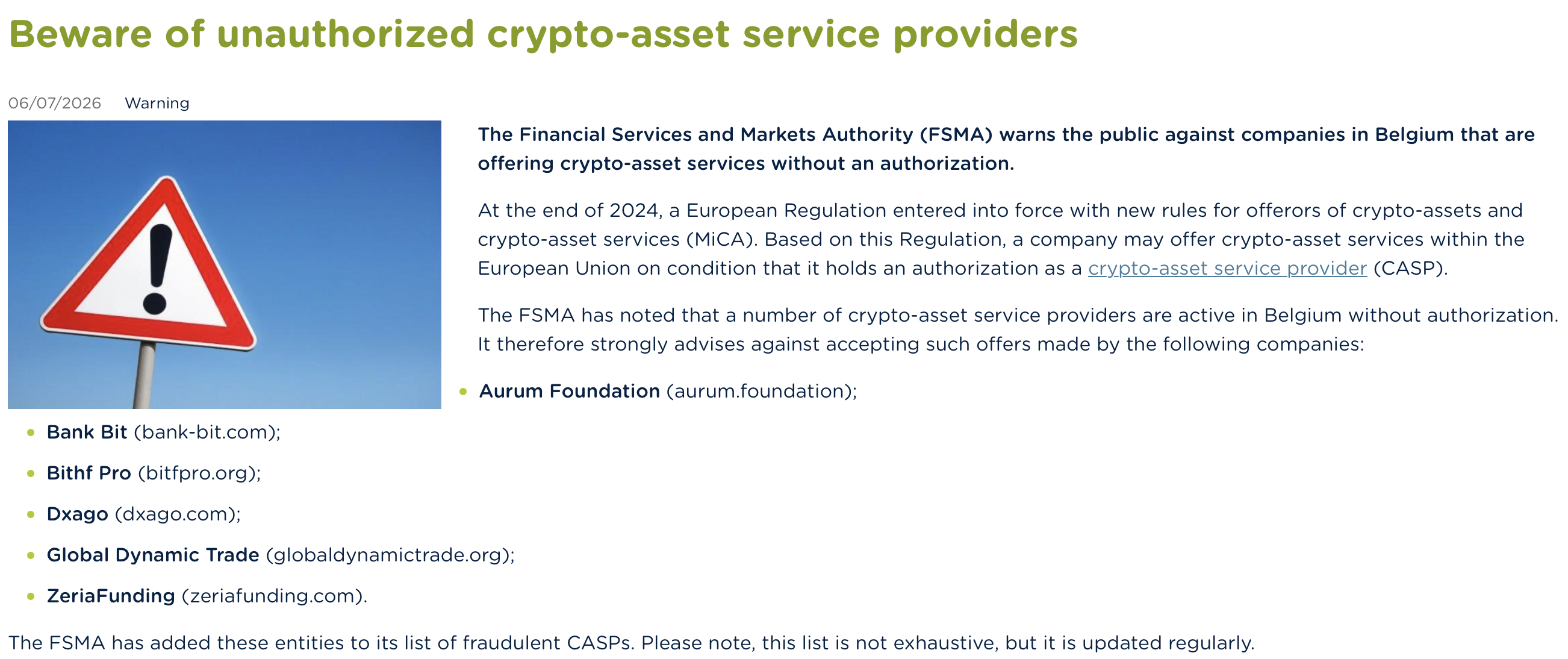
Belgium’s Financial Services and Markets Authority has already begun applying the new rules. On Monday, the regulator identified six crypto-asset service providers it said were operating without authorization and added them to its list of unauthorized crypto-asset service providers.
Belgium’s FSMA warns against unauthorized crypto providers. Source: FSMA
Magazine: Japanese pension fund tips 1% in crypto, G7 urges action on NK hackers: Asia Express
Crypto World
$1,000 Credit Alert! BlockDAG X Exchange Pre-Registration Now Officially Open, Polkadot Dips & Zcash Rebounds

Red candles don’t scare everyone off the market this week. Polkadot sits near $0.83 after a 6.53% weekly slide, still pinned below its major moving averages, while Zcash trades closer to $411.72 following a steadier 3.22% bounce off support. Both charts tell a familiar story of hesitation, sellers still holding one asset down and buyers slowly testing their footing under the other.
Then BlockDAG (BDAG) shifts the conversation entirely. Priced at $0.00000066 with a $0.03 buyback figure, the math points toward a 150X outcome, and a 100% World Cup bonus can push that toward 300X. BlockDAG X has opened pre-registration, and anyone who signs up before launch walks away with $1,000 in trading credit, making it the top crypto to buy today.
Polkadot Slips to $0.83 Under Bearish Pressure
The Polkadot price recently dipped to $0.83, marking a 6.53% decline over the past week. This drop keeps the asset well below its key weekly moving averages, confirming that sellers still control the market’s medium- and long-term direction.
Technical indicators like the MACD and RSI show strong downward momentum, with no immediate buy signals in sight. Because of this, the Polkadot price is expected to consolidate between $0.75 and $0.91 over the next week.

While the outlook remains cautious, some analysts suggest these deeply oversold conditions could eventually set up a reversal. However, until the Polkadot price breaks above $0.91, the current downtrend is likely to continue.
Zcash Holds Key Support Signaling Potential Rebound
The Zcash price has shown early signs of a rebound, recently rising 3.22% to trade around $411.72. The coin is currently holding a critical support zone, which technical analysts suggest could serve as the starting point for a broader recovery.
While buying pressure is slowly building, the Zcash price needs to clear immediate resistance levels at $428 and $436.92 to confirm a true bullish breakout. Bollinger Bands show that while selling pressure has eased, the market remains in a consolidation phase.
If buyers fail to defend the current support levels, a drop toward $361.92 could complicate recovery efforts. Ultimately, clearing these overhead barriers is essential for the Zcash price to sustain its upward momentum.
BlockDAG X Pre-Registration Delivers $1,000 Credit Bonus
BlockDAG continues to strengthen its position as one of the top crypto projects to watch, but its biggest milestone yet has just arrived. BlockDAG X is now officially live for pre-registration, marking the project’s next major step ahead of its full exchange launch in just 14 days. With the ecosystem expanding rapidly and the exchange almost here, the timing has made the overall BlockDAG story even more compelling.
The excitement around BlockDAG X goes beyond the launch itself. Users who pre-register at BlockDAGX.io will receive $1,000 in trading credit when the exchange goes live, with Spot Trading, Futures Trading, and dedicated iOS and Android apps available from day one. Those who enter the code “EARLY” will also unlock Priority Buyback Access, moving their payout date forward from October 1 to September 1, an added incentive for early participants.
The exchange launch is backed by an ecosystem that is already seeing significant real-world activity. The BlockDAG Casino has attracted more than 13,000 users in its first month alone, generating over $15 million in deposits and more than $150 million in wagers. These figures highlight that BlockDAG is building products people are actively using, rather than relying solely on future expectations.
The project’s pricing structure further boosts momentum. BDAG is currently available at just $0.00000066 per coin, while holders can sell their coins back to the network for $0.03 each, representing a potential 150X return. On top of that, the World Cup Bonus doubles every BDAG purchase with 100% extra coins, increasing the upside to a potential 300X return.

With BlockDAG X now open for pre-registration, a fully functional exchange launching in just two weeks, an ecosystem already generating millions in user activity, and a pricing model built around significant upside, BlockDAG is entering its next phase with considerable momentum and growing anticipation.
Conclusion
Polkadot’s slide to $0.83 and Zcash’s climb toward $411.72 sum up a week where caution and confidence sit side by side, with $0.75-$0.91 and $428-$436.92 as the levels to watch.
BlockDAG closes the stretch as the top crypto to buy today, with BlockDAG X pre-registration live, $1,000 in trading credit for early sign-ups, Spot and Futures trading, iOS and Android apps, and the EARLY code moving payouts to September 1. Its casino has drawn 13,000 users, $15 million in deposits, and $150 million in wagers, while $0.00000066 against a $0.03 buyback points toward 150X, doubled to 300X by the World Cup bonus.
Presale: https://purchase.blockdag.network
Website: https://blockdag.network
Telegram: https://t.me/blockDAGnetworkOfficial
Discord: https://discord.gg/Q7BxghMVyu
Disclaimer: This is a Press Release provided by a third party who is responsible for the content. Please conduct your own research before taking any action based on the content.

Apple Home AI features locked behind 2TB iCloud+ plan

Ethereum & Cardano Pumping (Altcoin Accumulation Zone)

The Most Affordable School Uniform For Kids From Primary To Sixth Form

No Jackpot Winner as $257 Million Prize Rolls Over to $269 Million Monday Draw

Renter of Home in Anne Heche Crash Denies Settlement With Son

Weekend Open Thread: Staud – Corporette.com
Ethereum & Cardano Pumping (Altcoin Accumulation Zone)

The Moment Stellar Lumens XLM And Ripple XRP Have Been Waiting For…..

More They Pay You,The Harder It Is to Leave | Financial Freedom #businessstrategy #wealth #business
-

 Fashion3 days ago
Weekend Open Thread: High Hopes
-

 Politics3 days ago
The House | “Reframing the debate from a binary discussion of winners and losers”: Yuan Yang reviews ‘We Are Not Machines’
-

 Crypto World7 days ago
Strategy authorizes up to $1.25B in Bitcoin sales under new capital plan
-

 News Videos7 days ago
How to Build INSANE Live Financial Dashboards With Claude
-
 NewsBeat2 days ago
Taylor Swift and Travis Kelce wedding staffer hilariously struggles to keep her cool while checking in megastars
-

 Fashion5 hours ago
Open Thread: What Great Books Have You Read Recently?
-

 Tech7 days ago
Anonymous researcher drops 0-day ‘exploitarium’ repo
-

 Business7 days ago
Australia treasurer says alleged access of prime minister’s bank data ’incredibly concerning’
-
 Crypto World5 days ago
Airdrop Registration Becomes Key Focus For Remittix As RTX Launch Updates Approach
-

 Sports5 days ago
Broncos roster: OL Ben Powers (No. 74) entering final year of contract
-

 Crypto World5 days ago
Binance stock trading tops $1B in first month after launch
-

 NewsBeat6 days ago
Presenter Caroline Flack’s brother Paul Flack dies aged 55
-

 Crypto World5 days ago
Alibaba-affiliate Ant Group enters the humanoid robot market with 12 deals
-

 Crypto World3 days ago
Standard Chartered Secures MiCA License as ESMA Adds 37 New Crypto Firms
-

 Crypto World1 day ago
South Africa proposes crypto tax guidance under existing rules
-

 News Videos6 hours ago
Best Time to Enter Small Caps Right Now? Another Bull Run? | Financially Free
-
 NewsBeat5 days ago
New exhibition reflects five decades of movement between island of Ireland and GB
-

 Business5 days ago
Meta Platforms Stock Jumps 7% Today as Bloomberg Reports Company Plans to Enter the Cloud Business
-

 Tech1 day ago
Lenovo laptops are now shipping with YMTC SSDs, a sign of Chinese NAND entering the mainstream
-

 Business4 days ago
What a 10 Percent Drop Means for Buyers, Sellers and Renters
You must be logged in to post a comment Login