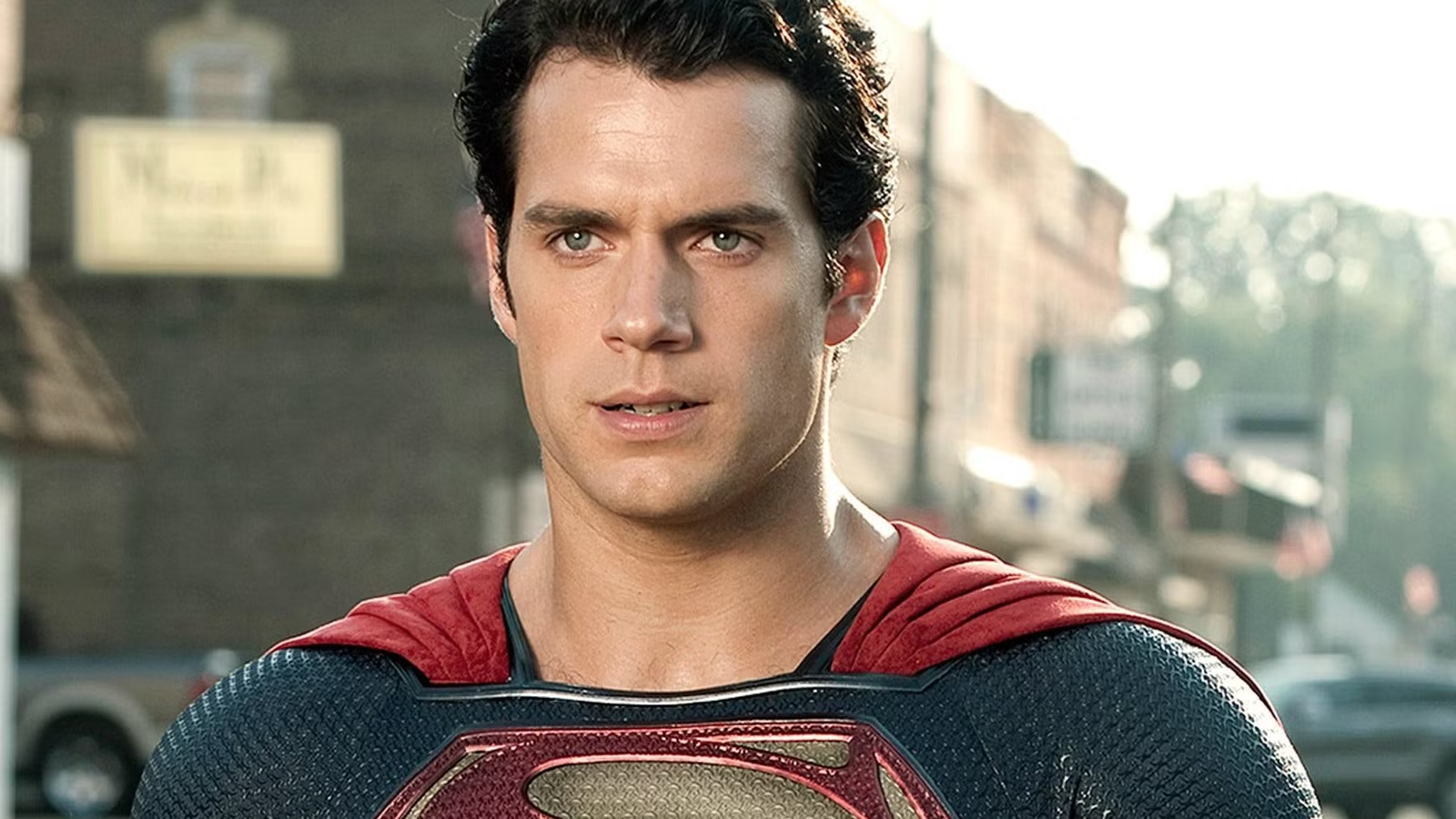
Henry Cavill as Superman in Man of Steel.Image via Warner Bros. Pictures
The DC Universe was launched with the promise of quality by James Gunn, the co-CEO of DC Studios. No film, he assured fans, would enter production without a script that everyone was satisfied with. The implication was the broader superhero cinema, and the preceding DC Extended Universe, had stopped prioritizing good storytelling. However, the critical and commercial failure of Supergirl, the second installment of Gunn and Peter Safran‘s franchise, has blown the lid off the issues that continue to plague studio-mandated franchise movies. It was reported last week that Gunn and director Craig Gillespie didn’t see eye to eye on Supergirl‘s final cut, resulting in a movie that left most audiences shrugging their shoulders. A common complaint about Supergirl is that it is too generic to stand out, and almost as a collective response, fans are now revisiting one of the most unconventional products of the superhero era.
According to FlixPatrol, Zack Snyder‘s Man of Steel emerged as one of the most popular titles on the domestic iTunes chart in the week of Supergirl’s release. Snyder’s movie served as the first installment of the DCEU, which was created in response to the record-breaking Marvel Cinematic Universe. The early mission statement was to produce director-driven movies that could stand on their own, without having to rely foundationally on each other. However, Snyder’s grounded take on Superman divided critics, and each subsequent installment of the franchise became a reaction to the previous movie.
Advertisement
Advertisement
Collider Exclusive · Marvel Personality Quiz Which MCU Hero Are You? Spider-Man · Daredevil · Iron Man · Punisher · Thor · Cap
Six heroes. One destiny. Answer 10 questions to discover which Marvel Cinematic Universe hero shares your personality, values, and fighting spirit. Will you swing, fly, or thunder your way to glory?
🕷️Spider-Man
😈Daredevil
🤖Iron Man
Advertisement
💀Punisher
⚡Thor
🛡️Cap
Advertisement
01
What drives you to do what’s right? Choose the answer that feels most like you.
Advertisement
02
It’s 2 AM. Where are you? Your answer says more about you than you’d think.
Advertisement
03
How do you handle a villain who keeps escaping justice? Every hero has a method. What’s yours?
Advertisement
04
How do you feel about keeping a secret identity? The mask — or the lack of one — says everything.
Advertisement
05
You’ve lost someone important because of your heroism. How do you carry that? Every hero pays a price. The question is how they pay it.
Advertisement
06
What’s your role when working with a team? Who you are under pressure is who you actually are.
Advertisement
07
Where do you draw the line between justice and revenge? The answer defines what kind of hero you really are.
Advertisement
08
When you’re not saving the world, what does life look like? The person behind the mask is always the more interesting story.
Advertisement
09
What keeps you up at night? Fear is useful data — if you’re honest about what you’re actually afraid of.
Advertisement
10
The battle is lost. You’re outnumbered, outgunned, and exhausted. What do you do? This is your tiebreaker — choose carefully.
Advertisement
Your Hero Has Been Identified Your MCU Hero Is…
Based on your answers, the Marvel hero who matches your spirit, values, and instincts has been revealed.
Advertisement
Queens, New York
🕷️ Spider-Man
Advertisement
You carry the weight of the world on shoulders that are younger than they should have to be — funny, loyal, and endlessly self-sacrificing.
You do the right thing not because it’s easy, but because no one else will.
You understand that responsibility isn’t a burden you choose — it’s one that finds you.
Whether it’s a neighbourhood mugging or a multiverse crisis, you show up.
Peter Parker’s lesson — that great power demands great responsibility — isn’t a slogan to you. It’s the code you live by, even when it costs you everything.
Hell’s Kitchen, New York
😈 Daredevil
Advertisement
You fight in the shadows between law and chaos, guided by a fierce moral compass that refuses to let the guilty walk free.
You use every tool available — your mind, your body, your faith — to protect those the system overlooks.
You’ve looked into the darkness and chosen not to become it, though the line has never been easy.
Matt Murdock’s duality — champion in the courtroom, devil in the alley — mirrors your own.
Relentless, conflicted, and unwilling to stop. That is exactly you.
Stark Industries, Malibu
🤖 Iron Man
Advertisement
Brilliant, driven, and occasionally insufferable — but always the person who solves the unsolvable problem.
You lead with your mind and back it up with resources, innovation, and a stubbornness that borders on heroic.
You started out looking out for yourself, but somewhere along the way the world became your responsibility.
Tony Stark’s arc — from ego to sacrifice — is your arc too.
You build, you plan, and when the moment comes, you’re willing to give everything. Because in the end, you’re Iron Man.
New York City
💀 The Punisher
Advertisement
You’ve been through fire that would break most people — and it did change you, completely. What’s left is unyielding, relentless, and operating by a code forged in grief.
You don’t ask for forgiveness, and you don’t expect gratitude.
You see a corrupt, broken world and you’ve decided to do something about it, consequences be damned.
Frank Castle’s war is born from love twisted by loss — and so is yours.
Uncompromising and unflinching — the world may not agree with your methods, but your conviction is absolute.
Asgard · Protector of the Nine Realms
⚡ Thor
Advertisement
Powerful, proud, and on a lifelong journey to become worthy of the legend you carry.
You lead with strength but have learned — sometimes painfully — that true greatness comes from humility and growth.
You’re larger than life, yet more vulnerable than you let on.
Thor’s story is one of transformation: from arrogant prince to worthy king, from isolated warrior to beloved protector.
You bring the storm when it’s needed — and the warmth when it matters just as much.
Brooklyn, New York · The Avengers
🛡️ Captain America
Advertisement
You believe in something bigger than yourself — and you fight for it even when the world has moved on and nobody else will.
You don’t bully the small guy, and you never stop when it gets hard.
Steve Rogers didn’t become a hero when he got the serum — he was always one. So were you.
Your strength isn’t in your fists; it’s in your refusal to compromise what’s right, no matter the cost.
In a world full of people taking the easy road, you’re the one who picks up the shield and stands up — every single time.
Advertisement
Here’s How Much ‘Supergirl’ Has Grossed So Far
Starring Henry Cavill, Man of Steel grossed $670 million worldwide against a reported budget of $225 million. When Gunn took over and orchestrated a new franchise to replace the DCEU, he decided that the first installment would be a rebooted Superman movie directed by himself. He thanked Cavill for his services and cast David Corenswetas a more hopeful Clark Kent. While his movie was better-received by critics, it grossed under $620 million worldwide. Man of Steel now holds a 56% score on the aggregator website Rotten Tomatoes, but it certainly seems to have more fans than Supergirl. The new movie holds a similar 54% score, but has virtually no chance of hitting the $100 million mark in its domestic box-office run. Stay tuned to Collider for more updates.
Christoper Nolan‘s The Odyssey has been the talk of online. Whether you’re a Nolan fan or someone mad about “historical” realism in a movie based on the fictional poem by Homer, who may or may not exist, people are talking. Fresh off his Oscar winning film Oppenheimer, Nolan tackled the epic poem (often taught in schools in tandem with Homer’s The Iliad). And the first social reactions for the film praise Nolan’s retelling, calling it his “most impressive.”
The Odyssey stars Matt Damonas Odysseus, the king of Ithaca, who embarks on a 20 year journey back home after fighting in the Battle of Troy. His son, Telemachus (Tom Holland) is not yet old enough to rule and the people of Ithaca don’t know if Odysseus is alive or dead. His wife, Penelope (Anne Hathaway) is the defacto queen still but she has no real power, leaning to suitors (Robert Pattinson and Corey Hawkins) knocking at her doorstep. The film also stars Lupita Nyong’o, Jon Berthanl, Zendaya, Charlize Theron, and more.
First reactions to the film include Jake Kleinman of Polygon calling it Nolan’s most “straight-forward” film while also potentially his most “impressive.” While some praised Nolan’s latest, others called it “Dense but accessible” and said that it is “built to last.” The Mary Sue’s Rachel Leishman said Nolan’s take is “as epic as the source material.” IndieWire’s David Ehrlichcalled it an “S-tier” Nolan film but said that “the last act rewards the journey.” Colldier’s own Perri Nemiroffsaid that The Odyssey “is a filmmaking feast. A grand and gripping rendition of Homer’s epic, and one that feels uniquely Christopher Nolan. It’s sincerely hard to imagine any other filmmaker on the planet being able to bring that source material to screen with this much scale, scope and heart.” Collider’s Steve Weintraub called it “incredible” after seeing the film twice, writing “I’m really blown away by this film.”
Advertisement
Advertisement
Collider Exclusive · Sci-Fi Survival Quiz Which Sci-Fi World Would You Survive? The Matrix · Mad Max · Blade Runner · Dune · Star Wars
Five universes. Five completely different ways the future went wrong — or sideways, or up in flames. Only one of them is the world your instincts were built for. Eight questions will figure out which dystopia, galaxy, or desert wasteland you’d actually make it out of alive.
💊The Matrix
🔥Mad Max
🌧️Blade Runner
Advertisement
🏜️Dune
🚀Star Wars
Advertisement
01
You sense something is deeply wrong with the world around you. What do you do? The first instinct is often the truest one.
Advertisement
02
In a world of scarcity, what resource do you guard most fiercely? What we protect reveals what we believe survival actually requires.
Advertisement
03
What kind of threat keeps you up at night? Fear is useful data — if you’re honest about what you’re actually afraid of.
Advertisement
04
How do you deal with authority you don’t trust? Every dystopia has a power structure. Your approach to it determines everything.
Advertisement
05
Which environment could you actually endure long-term? Survival isn’t just tactical — it’s physical, psychological, and very much about where you are.
Advertisement
06
Who do you want in your corner when things fall apart? The company you keep is the clearest signal of who you actually are.
Advertisement
07
Where do you draw the line — if you draw one at all? Every survivor eventually faces a moment that tests what they’re actually made of.
Advertisement
08
What would actually make survival worth it? Staying alive is one thing. Having a reason to is another.
Advertisement
Your Fate Has Been Calculated You’d Survive In…
Your answers point to the world your instincts were built for. This is the universe your temperament, your survival instincts, and your particular brand of stubbornness were made for.
Advertisement
The Resistance, Zion
The Matrix
You took the red pill a long time ago — probably before anyone offered it to you. You’re a systems thinker who can’t help but notice the seams in things.
Advertisement
You’re drawn to understanding how the system works before figuring out how to break it.
You’d find the Resistance, or it would find you — your instinct for spotting constructed realities is the machines’ worst nightmare.
You function best when you have access to information and the freedom to act on it.
The Matrix built an airtight prison. You’d be the one probing the walls for the door.
The Wasteland
Mad Max
The wasteland doesn’t reward the clever or the well-connected — it rewards those who are hard to kill and harder to break. That’s you.
Advertisement
You don’t need comfort, community, or a cause larger than the next horizon.
You need a vehicle, a clear threat, and enough fuel to outrun it — and you’re good at all three.
You are unsentimental enough to survive that world, and decent enough — just barely — to be something more than another raider.
In the wasteland, that distinction is everything.
Los Angeles, 2049
Blade Runner
You’d survive here because you know how to exist in moral grey areas without losing yourself completely.
Advertisement
You read people accurately, keep your circle small, and ask the questions others prefer not to answer.
In a city where humanity is a legal designation rather than a feeling, you hold onto something that keeps you functional.
You’re not a hero. But you’re not lost, either.
In Blade Runner’s world, that distinction is everything.
Arrakis
Dune
Arrakis is the most hostile environment in the known universe — and you are precisely the kind of person it rewards.
Advertisement
Patience, discipline, and political awareness are your core strengths — and on Arrakis, they’re survival tools.
You understand that the long game matters more than any single victory.
Others come to Dune and are consumed by it. You’d learn its logic and earn its respect.
In time, you wouldn’t just survive Arrakis — you’d begin to reshape it.
A Galaxy Far, Far Away
Star Wars
The galaxy far, far away is vast, loud, and in a constant state of violent political upheaval — and you wouldn’t have it any other way.
Advertisement
You find meaning in being part of something larger than yourself — a cause, a crew, a rebellion.
You’d gravitate toward the Rebellion, or the fringes, or whatever pocket of the galaxy still believes the Empire’s grip can be broken.
You fight — not because you have to, but because standing aside isn’t something you’re capable of.
In Star Wars, that willingness is what makes all the difference.
Advertisement
A Rare But Fascinating Adaptation for Christopher Nolan
Bill Irwin as Polyphemus in ‘The Odyssey.’Image via Universal Pictures
For most of Nolan’s career, he focused his work on original films. Starting with Following back in 1998 through movies like Memento, Inception, Interstellar, Tenent, and more, if he’s not making his own original genre bending work, he’s tackling things like a lesser known battle of World War II with Dunkirk or Oppenheimer. Outside of his Batman movies, Nolan’s relationship with adaptation is very limited. And he has in the past, on Stephen Colbert‘s show, said that he views the epics as the original superhero stories. So it isn’t surprising that he would go to something like The Odyssey in a post-Dark Knight trilogy world.
And if the reactions are anything to go by, it was clearly the right move. You can see Nolan’s The Odyssey in theaters on July 17.
There’s one decade that movies and TV shows never get sick of: the ‘80s. The wildly popular show Stranger Things kept the Reagan era in pop culture for nearly a decade. And long before Eleven first showed her chopped haircut, Hollywood began bringing ‘80s franchises like Ghostbusters, Transformers, and G.I. Joe to the big screen. While this was certainly an iconic time period, it was enough to make this ‘80s kid (class of 2000, baby!) wonder when a much better decade will finally get its due.
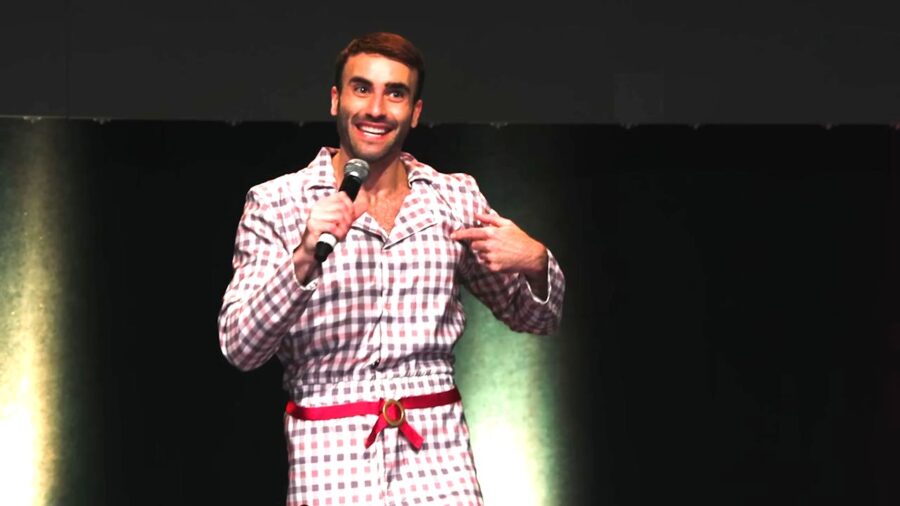
If we can’t celebrate the ‘90s, though, we can do the next best thing: laugh at the ‘90s. Recently, standup comedian Rob Anderson released a special, Are You Afraid of the ‘90s, and it basically gives the Bo Burnham treatment to our favorite overlooked decade. With killer punchlines, catchy songs, and perfectly timed video clips (not to mention several healthy heapings of raunchy humor), this is one special that’s guaranteed to leave millennials howling.
The Decade That Time Forgot
The formula for Are You Afraid of the ‘90s is simple but entertaining. Host Rob Anderson (who channels the self-deprecating, self-aware humor of Taylor Tomlinson and the manic, animated delivery of Gianmarco Soresi) brings up various arcane knowledge of the ‘90s and riffs on how weird these moments were. The result is a surprisingly fun performance that feels like the lovechild of Joe Bob Briggs’ How the Rednecks Saved Hollywood and the dankest memes in your favorite group chat.
Part of what makes Anderson’s humor so effective is how hilariously specific he gets. This isn’t just him saying “wow, that was crazy” and then moving on. Instead, he’ll pull up niche video clips of some of our favorite ‘90s protagonists and riff on how weird these moments are. For instance, in commenting on an awful anti-drug special, he points out the absurdity of just how quickly Simon from Alvin and the Chipmunks recognizes marijuana. In one of my favorite bits, he also talks about the weird visual similarities between the Burger King Kids, Captain Planet’s Planeteers, and Mrs. Frizzle’s kids. Like, it really was just genuinely bizarre!
From Stand-Up To Singing
Speaking of Mrs. Frizzle, Rob Anderson has an extended bit about Magic School Bus guaranteed to make you chuckle. This includes highlighting an episode where she forces the titular school bus into a kid’s body, leading to horrifying moments like them staring at this boy’s butthole from the inside. Strangely enough, the horrors of this pale in comparison to another episode where the children huddle in protective pods while a fish fertilizes them. Yes, it’s exactly what you think it is, and it looks just as insane as you imagine. Anderson really goes for it with the raunchy jokes, ensuring that you’ll never look at this beloved children’s cartoon the same way again.
I don’t want to say too much more about the jokes in Are You Afraid of the ‘90s? (seriously, go watch it, the link is at the bottom!) because it’s worth experiencing all of this delightful weirdness with an open mind. However, I do want to comment a bit on Rob Anderson’s comedic style. Basically, he pairs hyper-specific pop culture references with an energetic, almost manic delivery, and the result is downright infectious. While his subject matter can get a bit naughty, he never punches down, and the audience is always in on the joke. Plus, he’s a genuinely gifted singer, and the demented musical sections are far catchier than they have any right to be.
Advertisement
As luck would have it, this New York Times best-selling comedian has made his entire comedy special available for free on YouTube. That means Are You Afraid of the ‘90s is just a click away, and it won’t cost you a thing to enjoy this relentless riffing on the decade that time forgot. That leaves you with more spare cash to go mindlessly spend on your favorite collectibles from that era. If you snag some Burger King Kids toys and some Captain Planet toys, be sure to have them fight in a big, Avengers-style crossover. Trust me: it’s what Rob Anderson would want!
Stephen King has been writing horror books for well over half a century at this point, since the likes of Carrie and ‘Salem’s Lot were originally published more than 50 years ago, and The Shining is coming up on its 50th anniversary, too. Owing to those first three books, and then a bunch more that came after, King’s been linked to the horror genre more than any other, but he’s also made his mark on some other genres, writing fantasy, sci-fi, and some thriller books, too.
The thriller genre often gets tied to the horror one, for obvious reasons, and so King’s arguably written almost as many iconic thrillers as he has scary books. Misery rides the line well, and then something like 11/22/63 is more of a sci-fi/thriller novel than it is a work of horror. But if you’ve made your way through all his thrillers, or if you like thrillers but don’t really love Stephen King, then maybe the following books are worth tackling. These aren’t necessarily the best non-King thrillers, but they are all well-regarded thriller books not written by Stephen King (with some deservedly being considered classics, too).
Advertisement
8
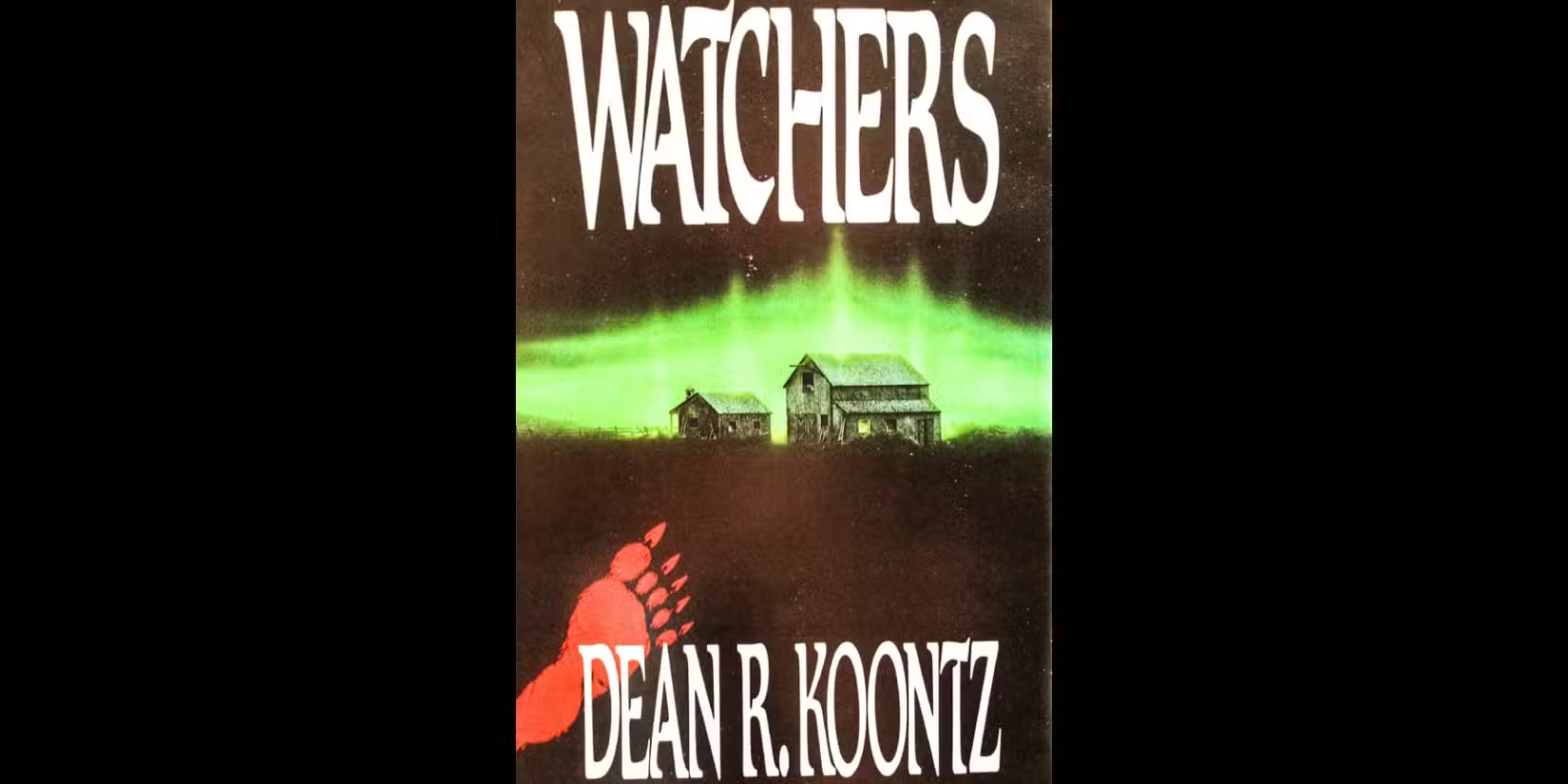
‘Watchers’ (1987)
Image via Putnam
This one’s here mostly because Dean Koontz’s work often gets compared to Stephen King’s. The two are almost the same age, they’re both very prolific, and they tend to write horror/thriller books, albeit neither does so exclusively. Koontz isn’t quite as well-known as King, with part of that being the fact that his work hasn’t been adapted nearly as often as King’s, but he certainly has a sizable fanbase regardless.
And with a big fanbase, it’s ultimately going to be hard to single out one Dean Koontz book as his “best” or “most important,” but Watchers is probably up there, for what it’s worth. It is the Koontziest of the Dean Koontz books, with a sentimental streak throughout that’s almost a bit much, though it does contrast with the more suspenseful and frightening moments in a sometimes interesting way. And it’s also about a (very unusual) dog, and Koontz loves his dogs, so yay. There’s that. Woof.
Advertisement
7
‘The Trial’ (1925)
Image via Knopf
It’s a bit hard to categorize The Trial into a single genre, but singling it out as something of a psychological drama/thriller book feels perhaps most appropriate. The Trial is kind of in a genre of its own, and that’s not said pretentiously, but more because Franz Kafka told a certain kind of story in a certain way, and Kafkaesque became an adjective used to describe such a story, so The Trial is indeed Kafkaesque.
That is to say, it feels a bit like a waking nightmare for its protagonist, with some absurdity that’s played more for unease and horror than it is for laughs. A man is put on trial, but doesn’t know what he’s been accused of, and the whole process just gets more confusing and surreal the longer it goes on. So, The Trial is not really a fun read, and it’s got very little to offer by way of answers, yet it is compelling, rewarding, and undeniably influential, so it earns its classic status, in any event.
Advertisement
6
‘The Wolf’s Hour’ (1989)
Image via Pocket Books
The Wolf’s Hour is really cool, and also really silly, but in a way that works. It’s a pulpy novel about a spy during World War II, working for the Allies, and he also happens to be a werewolf. So, he does spy and werewolf stuff behind enemy lines, taking on – and taking down – various high-ranking members of the German army, while some chapters also deal with his life some years in the past, back when he was first given (or cursed with) werewolf abilities.
The commitment to the bit is quite stunning, and The Wolf’s Hour really does remain entertaining throughout.
Advertisement
Maybe someone once thought, “What if I made a werewolf/spy/World War II story?” before, but if they did bring about that vision, then they didn’t do so as well as Robert R. McCammon. The commitment to the bit is quite stunning, and The Wolf’s Hour really does remain entertaining throughout. If you’re more into old horror movies than books, then comparing this to one of the movies in The Invisible Man series, called Invisible Agent, might be useful. That one’s got the grandson of the original Invisible Man using invisibility to be an Allied spy during World War II. Swap out an invisible guy with a werewolf, and make everything a good deal racier and more violent, and then you’ve pretty much got The Wolf’s Hour.
5
‘No Country for Old Men’ (2005)
Image via Alfred A. Knopf, Inc.
Advertisement
Cormac McCarthy is one of those rare writers who’s written something that some people have suggested might be the fabled “Great American Novel.” That book is Blood Meridian, which is a Western and sort of a horror book at the same time, but not really a thriller. He’s also done a post-apocalyptic book, The Road, but you can’t really call that a thriller, either, even if it does inspire dread and a persistent sense of unease, and they’re things you get from thrillers, obviously.
So, here’s No Country for Old Men instead, which is maybe his third-most iconic book, after those other two. This one is more within the bounds of thriller territory, though it does take place in a similar area to Blood Meridian, albeit it’s a neo-Western this time, thanks to the early 1980s setting. It involves a large amount of cash being found at the site of a drug deal gone wrong, which a man takes, and then he becomes the target of a ruthless hitman who’s trying to get that money back. And that hitman, Anton Chigurh, is similarly terrifying and unstoppable as Judge Holden in Blood Meridian. Chigurh is a big reason why No Country for Old Men is as unsettling and intense as it is, though McCarthy’s willingness to have shocking things happen almost out of nowhere helps in that regard, too.
4
‘The Black Dahlia’ (1987)
Image via The Mysterious Press
Advertisement
Compared to some of James Ellroy’s later books, The Black Dahlia is a rather straightforward affair. It’s the first book in the L.A. Quartet series, and stands out among them for just having the one protagonist, and also for being written in the first-person. This is stylistically different from his Underworld U.S.A. trilogy, too, which feels in line with the other L.A. Quartet books, albeit taking place from the late 1950s to the early 1970s, while the L.A. Quartet series spans from the late 1940s until the late 1950s.
So, if you want extra ambition and more complexity, you can find that to a greater extent in other Ellroy novels, but The Black Dahlia is compelling and direct, making it an ideal “first” James Ellroy novel to read. It’s about the titular case, which involved the infamously grisly murder of Elizabeth Short, and how it affects a pair of detectives (though mostly the one narrator) who get involved in the whole confounding investigation. It works as a psychological drama/thriller book as much as it works as a crime/mystery thing, and is also easy to recommend if you found the 2007 film Zodiac compelling. Similar things – like uncertainty, anxiety, and obsession –are unpacked extensively in both.
3
‘The Talented Mr. Ripley’ (1955)
Image via Coward-McCann
Advertisement
The Talented Mr. Ripley holds up well, even compared to other legendary books that were published in the 1950s. It’s about a young man named Tom Ripley who becomes obsessed with another young man named Dickie Greenleaf, and begins to involve himself in Dickie’s life more and more. Once Tom starts to realize just being acquaintances or friends probably isn’t enough, then things get complicated and a good deal messier.
If you’ve seen the movie adaptation of the same name, or Purple Noon, or the more recent series just called Ripley, you’ll know where things are going. Still, the first time you experience this story, regardless of whether you tackle the source material or one of those adaptations, The Talented Mr. Ripley proves undoubtedly surprising and nerve-wracking. It’s a story told in an incredibly clever and rather effortless way, and then it’s got even more to offer beyond its story (as a character study for the titular character, it’s also remarkable).
2
‘Libra’ (1988)
Image via Viking Press
Advertisement
Best known for his postmodernist novels, Don DeLillo strayed a little out of that kind of zone when he wrote Libra, which isn’t as postmodern as something like Underworld (1997). Libra is kind of a thriller, or at least more thrilling than most of DeLillo’s other works, as it’s a piece of historical fiction that paints a portrait of the assassination of John F. Kennedy in a way that intentionally diverges from what the official story is.
Importantly, it doesn’t say that this is definitely what happened. Liberties are taken, and Libra is most concerned with unpacking the state of mind of various characters, including some based on real-life people (Lee Harvey Oswald is probably the closest thing to a central character here). It uses a real historical event to unpack troubling and unsettling ideas about history and how fragile everyone’s grasp on reality, and everyone’s understanding of the “real world” and its history, really are.
1
‘And Then There Were None’ (1939)
Image via William Morrow
Advertisement
While there are a few Agatha Christiebooks that could be considered all-timers, And Then There Were None is the one that stands the best chance at being considered, well, her best. Especially if you’re looking at her standalone novels, since the likes of Murder on the Orient Express and Death on the Nile (both part of the Hercule Poirot series) are strong contenders. Still, And Then There Were None is something kind of special.
Maybe not having Poirot or Miss Marple at the center of it all makes things feel more suspenseful and dangerous. 10 people show up on an island, and they keep dying one by one, with the lack of a clear central character – and the title suggesting there could well eventually be none – making anything possible. It’s a murder mystery where there isn’t one wholly heroic detective character who you can (almost certainly) trust is not involved. It’s perfectly suspenseful, undoubtedly intense, and, in the end, one of the absolute greatest thrillers ever written.
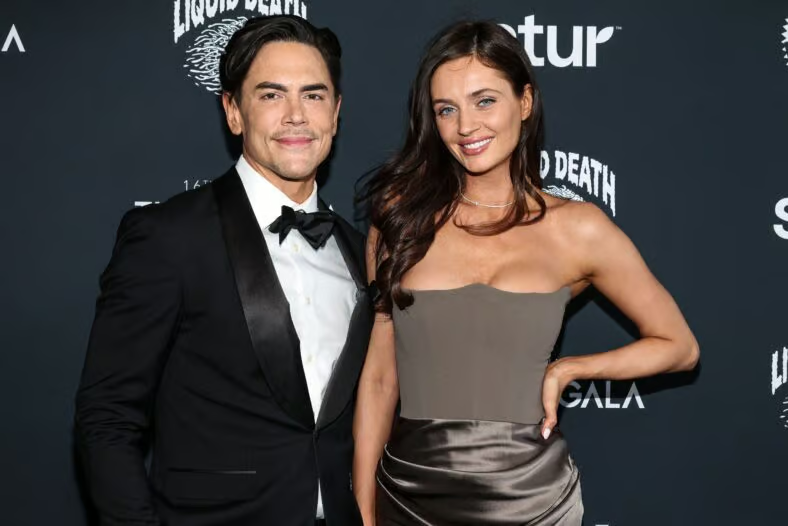
Former “Vanderpump Rules” star Tom Sandoval filed for a restraining order in June 2026, claiming his now-ex, Victoria Lee Robinson, and her father had been abusive toward him. Since then, more has transpired, including, most recently, she’s made similar accusations against the Bravo alum and also requested a restraining order.
This comes after Sandoval was seen with the police as she moved her items out of their rental home, where her father had also been staying leading up to the split.
5Kay Qiao/Image Press Agency/MEGA
According to TMZ, Robinson filed for a restraining order against Sandoval on July 3. In the filing, she stated that the “Vanderpump Rules” alum had exhibited forms of abuse against her on multiple occasions in the past. This includes their previously reported altercation at their rental home on June 3.
Before the June 2026 fight, the 34-year-old model claims Sandoval shoved her to the ground, elbowed her in the chest, locked her out of their hotel room, and rummaged through her personal items in May 2026.
Advertisement
Robinson also says he pushed her down the stairs on August 30, 2025. She stated in the filing that the attack left her with “visible injuries” on her knees.
Regarding the May 2026 attack, Robinson stated Sandoval screamed at her, gaslit, and manipulated her while she was in Nashville visiting her grandfather, who is terminally ill.
Victoria Lee Robinson Says She Endured Verbal Abuse
Elsewhere in the legal filing, Robinson claimed that she has faced verbal abuse from Sandoval throughout their relationship, which began in early 2024. The model recalled in the filing that she had been referred to as “stupid,” “dumb,” and “a coward.”
Regarding the restraining order, Robinson is hopeful that the judge will also add protection for her father, despite him having already filed for one on his own. She wants the extra measure out of fear that the “Vanderpump Rules” alum may seek out her father with the desire to harm him.
Per TMZ, Robinson has also requested that Sandoval move out of the home they had been sharing. She claimed in the legal filing that she had a right to the home as she had been paying rent. It’s unclear whether she meant the total amount of the rent or if she and Sandoval had been splitting it.
Robinson also stated in the legal filing that her name is present on the lease for the home. The model is even willing to forgo the Mercedes they leased together if it means she can retain the house. Robinson is also requesting a no-contact order from the court, which would render Sandoval unable to contact her or her father, with the required distance being 100 yards.
Sandoval requested and had his restraining order against Robinson and her dad approved on June 25. However, according to PEOPLE, she returned to retrieve some of her items from the home the following day. Sandoval then called the police to ensure that she and her father left the property.
Victoria Lee Robinson tells former “Vanderpump Rules” cast member Tom Sandoval: “I f*cking hate you, just like all of your ex-girlfriends, nobody likes you” as he carries a guitar to his vehicle. Tom says he has the police there to make sure Victoria and her father leave, because… pic.twitter.com/Arkimxyskw
This comes after the reality star accused Robinson of being abusive toward him, including by punching him in the face on June 3.
He also claimed that Robinson’s father “lunged.” According to the filing, “[Victoria] and her father continue to reside in our rental home, which I am presently paying for. Meanwhile, I have been completely displaced from my home. I am bringing this request because I cannot tolerate [Victoria’s] abuse any longer.”
However, it’s also important to note that footage released from the fight shows him screaming into her face about recording him and then pushing her father into a lit fire pit.
Advertisement
Victoria’s Dad Also Provided His Account Of The June Fight
Per PEOPLE, Robinson’s father filed a civil harassment restraining order against Sandoval on June 26. In discussing the June 3 altercation, he claimed Sandoval “overpowered’ Robinson and also recalls being pushed into the fire pit. He also stated that the “VPR” alum “began talking about himself having a gun.”
The man also said that Sandoval’s attack “seriously injured” him, causing a ruptured disk, a broken thumb and elbow, and a laceration on his right heel. Robinson’s father also accused Sandoval of returning to the home and “starting trouble,” resulting in the police being called.
The United Cajun Navy has reportedly called off its search for Nolan Xavier Wells. At first, it was unclear whether this meant the other Mississippi agencies involved in searching for the missing 18-year-old had also ceased their search. The update came after reports of a body being found on Horn Island, where Nolan was last seen on July 4. Hours after that update, Wells’ family identified the body as his and confirmed his death.
Body Reportedly Found On Horn Island Belongs To Nolan Xavier Wells (UPDATE)
According to WLOX, a park ranger discovered the body at around 8:45 a.m. on Monday (July 6), two days after Nolan Xavier Wells first went missing. The body was not immediately identified, but it was found on the northwest end of Horn Island. Additionally, Sheriff John Ledbetter reportedly confirmed it matched the description of the missing 18-year-old. The condition of the body found and whether the death was foul play is unclear. At this time, the Jackson County Sheriff’s Department, which oversaw the multi-agency search, has not provided any other details.
As mentioned, the United Cajun Navy announced on Facebook that the search for Nolan Xavier Wells “has been called off.” The agency offered thoughts and prayers for the teen’s family while sharing a link to WLOX’s body discovery update.
“At this time, officials have not confirmed the identity of the individual found. We will continue to provide updates as officials release a statement. Our hearts are with Nolan’s family, friends, the first responders, and everyone impacted as they await official confirmation. Out of respect for the family and the ongoing investigation, we will continue to defer to law enforcement for any additional updates. Please keep everyone affected in your thoughts and prayers,” the United Cajun Navy wrote.
Nolan’s Parents & Coroner Speak Out
Nolan was first reported missing on the night of July 4 by his mother, Christine Wonsley. By that point, the last time he has reportedly been seen was 3 p.m. that day on Horn Island. Local police described him as standing 6 feet tall and weighing 180 pounds. He was last shirtless, wearing blue swim trunks and sunglasses. He was a student at Southwest Mississippi Community College and played the position of wide receiver on their football team.
Advertisement
In an social media emotional post on Monday, Nolan’s mother described him as a “special soul.” She also thanked all the agencies and volunteers who aided in the search of her son.
“His father, our family, friends and I are absolutely devastated. My heartbroken for my sweet son who was always willing to cheer and uplift others,” Christine Wonsley wrote, per the New York Post. “Nolan was a special soul, God took his time creating our son. I ask that you please give me and my family time to grieve.”
Early Monday afternoon (Eastern Time), Jackson County Coroner Bruce Lynd told WLOX that DNA testing will confirm the body discovered is Wells’. However, Lynd added: “There is no reason to believe it is not him.”
What About The People Last Seen With Nolan?
Photos shared hundreds of times on social media appear to show that Wells might’ve been the only Black person enjoying the holiday among a group of white males. The internet has speculated that he was part of their friend group. However, at this time, the police have not shared details about Nolan’s relationship to the people he traveled to Horn Island with. Additionally, there hasn’t been online or media commentary from the men in the viral photos alongside Nolan. It’s unclear whether local police have questioned anyone in the group Wells traveled with. While the case is an active investigation, it also appears no arrests have been made.
Yung Miami has shared a message amid the chatter over her song ‘Spend Dat,’ and she is thanking Monica for her support. ‘The Boy Is Mine’ singer performed at the Essence Festival of Culture in New Orleans on Saturday, July 4, and she incorporated the controversial hit into the show.
Yung Miami Thanks Monica For Dancing To ‘Spend Dat’ During ESSENCE Fest
Monica delighted the crowd at the ESSENCE Fest when she incorporated ‘Spend Dat’ into her performance on Saturday night.
The move comes amid the controversy surrounding Yung Miami’s latest single, ‘Spend Dat,’ which features about spending money and scamming. As previously reported, one critic called out the song for being “degrading to our culture.” And India Arie’s weigh-in response prompted an online debate.
Several backup dancers joined Monica on stage as she danced to ‘Spend Dat,’ and Yung Miami was thankful for her support amid the drama.
Advertisement
The 32-year-old artist, whose real name is Caresha Romeka Brownlee, shared a video of the performance on Instagram. Caresha also thanked Monica in the caption.
“Ahhhh…. This is what an OG look like!!! Thank you @monicadenise for hitting that sh*t one time and showing ya girl some LOVE. We can celebrate each other’s wins and just have a good time! This is sisterhood this is black excellence!! 🤍🤍🕺🏽🕺🏽Thank you Monica you’ve truly always been a REAL ONE & stay embracing and pouring into the girls! A ICON, A LEGEND 🙏🏾🤍”
Monica Replied With More Support As Roomies Weighed In
Roommates also reacted after the video was shared on The Shade Room‘s Instagram page.
Advertisement
User @tsx2__ replied, “Yeah cause I don’t understand all the hate. The songs back in the day were way worse.”
@dana__denise joked, “boycott isn’t going so good huh?”
@_klassycapricorn agreed. “Real is so rare these days! Monica always been a REAL one.”
@d3miyo noted that Yung Miami finally spoke out about the drama. “One thing about Miami she know how to step on a toe or two in silence 🤣.”
Advertisement
Monica also replied to Yung Miami’s message on Instagram. “I Love You @yungmiami305 Support & Sisterhood is my stance always AA So much love for you and your family!”
However, not everyone supported the video.
@trapsoulmood replied, “Just cause she’s a celebrity don’t mean she right 😂😂😂😂.”
User @itslegendaryshay replied, “Why are yall still dragging this ? It’s giving she knows India is right. India never mentioned her name, and yall keep trolling over a general comment she made about ALL this watered down music. Mannnn gone!”
Advertisement
India Arie’s Comments About ‘Spend Dat’ Went Viral
After a fan called for a boycott of ‘Spend Dat,’ Arie’s response went viral.
“I spent my entire adult life, caring way too much,” wrote Arie in part. “Because I finally learned that not everybody Cares ( with a capital C) And explaining it to them is not gonna make them care. Everything you listen to see or eat is going to influence you. So make wise choices y’all. The mass acceptance of this song itself is a CRYSTAL CLEAR sign of the bigger problem.”
After folks began saying Arie supported a boycott, she clarified her comments.
“FOR CLARITY!! I did not say that I think anyone needs to boycott this song,” she wrote. “I said it is a sign of where we are as a culture that this song has been accepted so widely. And… THATS FACTS.”
You ever think about Will Smith’s greatest mistake? I’m not talking about his marriage, though I’ll probably go to my grave still trying to figure out how that sh*tshow actually works. No, I’m talking about Wild Wild West, the 1999 blockbuster which became a critical and commercial flop. On paper, this movie had everything going for it. The film had a huge budget, ambitious special effects, and was directed by Barry Sonnenfeld, the man who brought us ‘90s bangers like The Addams Family and Men in Black. Speaking of which, Wild Wild West starred Will Smith, whom Men in Black had cemented as a bankable action star.
However, this film was absolutely dead on arrival. Over on Rotten Tomatoes, it has an abysmal 16 percent critical score, which is low enough to make recent flops like Supergirl look downright good. So, what the heck happened here? How did a summer blockbuster from the hottest director and actor of the ‘90s become the cringiest punchline in all of Hollywood? It all began with a script in which four (!!!) screenwriters couldn’t figure out what kind of movie they wanted to make. And it ended with a fight against a giant mechanical spider that a producer spent years trying to inexplicably turn into the greatest Big Bad of the ‘90s.
Have Gun, Will Babble
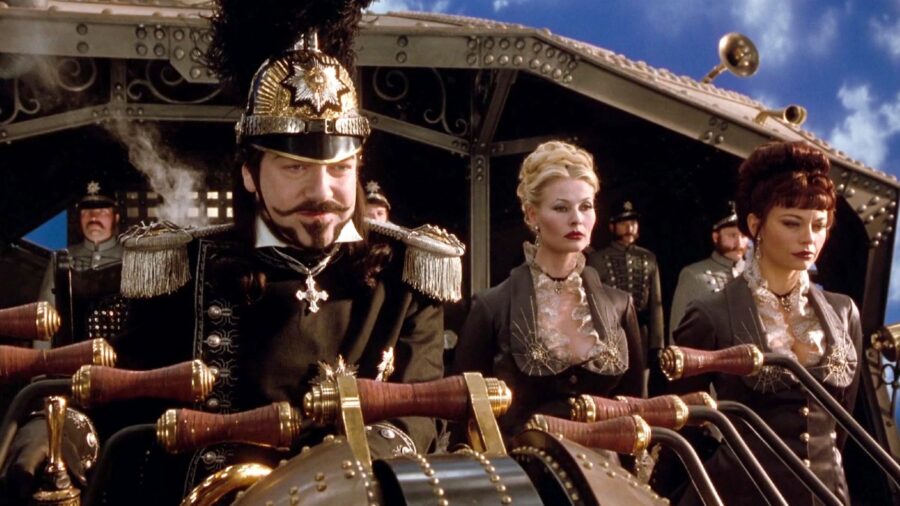
Wild Wild West is a loose adaptation of the ‘60s show The Wild Wild West. The plot involves an Army captain (played by Will Smith) and a US Marshal (played by Kevin Kline) hunting down the ex-Confederate general who killed the captain’s parents (played by Ted Levine). Along the way, they find a bigger foe: a former Confederate science genius (played by Kenneth Branagh) turned technological terrorist. Our two heroes are ultimately the only ones who can stop this mad scientist’s plan to divide America, effectively finishing the Confederate Army’s goal of destroying the United States as we know it.
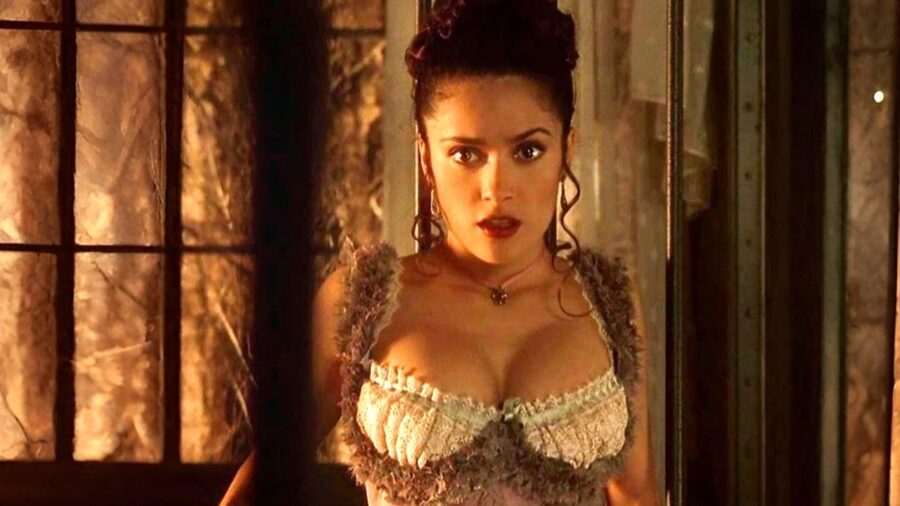
Based on the cast, Wild Wild West seemed like it would be a winner. Its primary star was Will Smith, the beloved Fresh Prince of Bel-Air alumnus who had become a breakout movie star thanks to the success of films like Men in Black and Independence Day. His costar was Kevin Kline, a veteran performer and Oscar winner. Their Big Bad was played by Kenneth Branagh, a man who has dedicated his life to bringing Shakespeare’s most complex dramas to life. Heck, it even starred Salma Hayek, the talented hottie that nobody could take their eyes off in From Dusk Till Dawn.
How The West Was (Not) Fun
Throw in the fact that this was a high-budget ($170 million) Western in a decade where cowboy movies (like Unforgiven, Tombstone, and The Quick and the Dead) made a huge comeback, and it seemed like Wild Wild West was destined for greatness. But the movie lost money and was absolutely bodied by the critics. Where did everything go wrong? As usual, it started with the writing. This blockbuster inexplicably had four different screenwriters, and it often seemed like they were all tugging the film in different directions. This was most apparent with the humor in Wild Wild West, which oscillated from completely tone deaf to completely cringe.
The biggest change from the original TV show was making Captain Jim West a Black man. That was downright progressive for the ‘90s, but the writers then proceeded to add the worst racial humor to the film. For example, Will Smith’s character escapes a lynch mob by doing a bizarre smooth-talking bit involving complimenting his attacker’s Klan-style hoods. Oh, and when one of them says they want to teach his character a lesson, Smith sarcastically replies, “Don’t grab a white lady’s boobies at the big redneck dance?” There’s nothing inherently wrong with racial humor, but Wild Wild West makes the cardinal mistake of being just painfully unfunny with it.
Advertisement
The South Will Raze Again
Another bizarre element is how hard this movie tried to bite the style of James Bond, a character who had his own ‘90s revival with GoldenEye. Unfortunately, it sucks at that, too. The spy banter is unworthy of even the worst 007 film. Furthermore, the gadgets (and my God, does this movie have a lot of gadgets) are goofy instead of cool. Plus, if you were in any danger of thinking this was a cool spy movie, Smith ruins it with one of his signature moves: an end credits rap song that retells the entire film in an even more forgettable way.
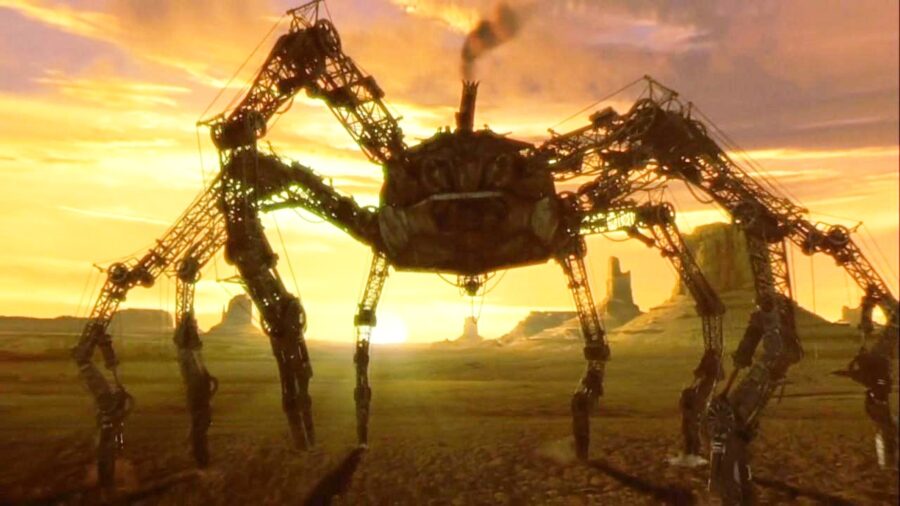
Wild Wild West failed to be a Blazing Saddles-style racial comedy, and it failed even harder at being a 007-esque spy thriller. Sadly, it failed at its last endeavor, too: being a steampunk-powered sci-fi Western. This genre crossover is mostly exemplified by a climactic fight against a giant mechanical spider, which feels as over-the-top as it is unnecessary. The original TV show had nothing like this, and “robot spider” isn’t exactly a cowboy’s natural enemy. How the heck did this end up in here? Simple: producer Jon Peters had spent most of the late ‘90s trying to put a giant spider in a movie, and he was done waiting.
Does Whatever A Spider Can
Back in the late ‘90s, Warner Bros. was in serious talks with Neil Gaiman about adapting The Sandman into a feature film. According to the author, Jon Peters wanted to include a giant mechanical spider in the film. In 2002, Clerks director Kevin Smith revealed that when he was writing Superman Lives, Peters requested the Man of Steel fight a giant spider. That Superman film was officially scrapped in 1998, and Wild Wild West came out one year later. Considering that Peters produced this failed blockbuster, it seems reasonable to assume he’s the reason it ends with a notoriously stupid fight against a giant robot arachnid.
This is sad because, in other creators’ hands, Wild Wild West should have been a masterpiece. It was an update of a classic TV show with a hit director and a cast of insanely talented performers. Unfortunately, the writers couldn’t decide if they were making an edgy comedy, a spy thriller, or a sci-fi adventure. The result was a movie with an identity crisis so massive that it destroyed the entire franchise. But are you morbidly interested in watching the trainwreck unfold, or maybe you just want to return to the glory days of Will Smith’s career? Maybe, like Smith, you need something to watch while your wife is with her boyfriend? Good news, then: Wild Wild West is currently streaming for free on Tubi.
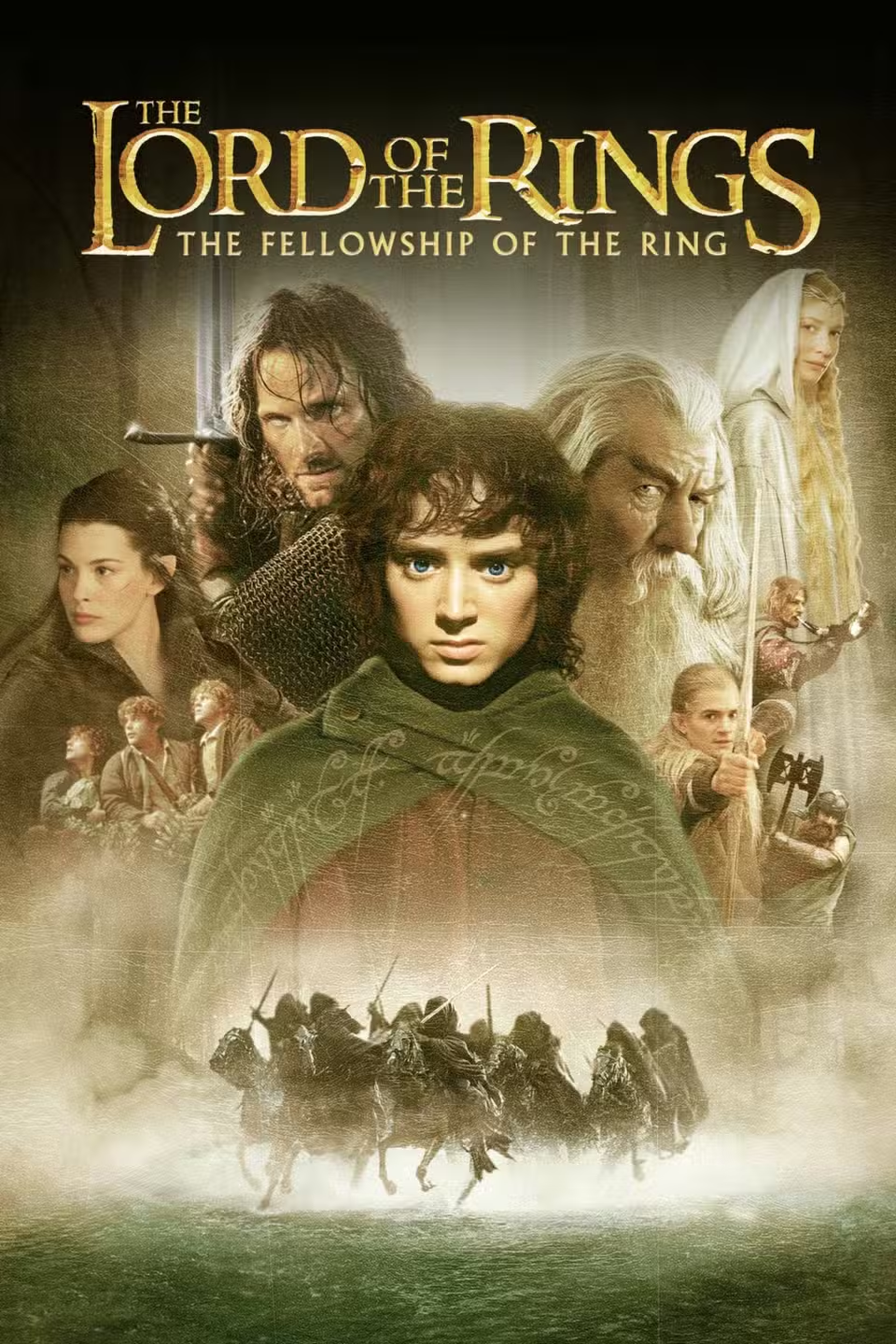
One of the most surprising announcements of the last 12 months was the confirmation that a new Lord of the Rings film was in the works, but this time, from the pen of one of television’s most famous late-night hosts. No, David Letterman isn’t writing a Tom Bombadil movie, but Stephen Colbertis taking one of the forgotten early chapters from The Fellowship of the Ring, and going back a quarter of a century to re-tell an important part of the story featuring Frodo Baggins, Samwise Gamgee, Meriadoc Brandybuck, and Peregrin Took.
“Okay. Well, it hasn’t… We’re not there yet… But listen, I think the implication is that the stories that Stephen [Colbert] wants to tell, which are the six chapters that were not committed to film in Fellowship of the Ring, largely because they would have slowed the process of the journey down, because when he leaves Bag End and the Shire, and he has to get to Bree, if it had gone the meandering way that it does in the books, it just would have taken a long time to get to Bree, and… it would have killed momentum.”
Advertisement
Collider Exclusive · Sci-Fi Survival Quiz Which Sci-Fi World Would You Survive? The Matrix · Mad Max · Blade Runner · Dune · Star Wars
Advertisement
Five universes. Five completely different ways the future went wrong — or sideways, or up in flames. Only one of them is the world your instincts were built for. Eight questions will figure out which dystopia, galaxy, or desert wasteland you’d actually make it out of alive.
💊The Matrix
🔥Mad Max
🌧️Blade Runner
🏜️Dune
Advertisement
🚀Star Wars
Advertisement
01
You sense something is deeply wrong with the world around you. What do you do? The first instinct is often the truest one.
Advertisement
02
In a world of scarcity, what resource do you guard most fiercely? What we protect reveals what we believe survival actually requires.
Advertisement
03
What kind of threat keeps you up at night? Fear is useful data — if you’re honest about what you’re actually afraid of.
Advertisement
04
How do you deal with authority you don’t trust? Every dystopia has a power structure. Your approach to it determines everything.
Advertisement
05
Which environment could you actually endure long-term? Survival isn’t just tactical — it’s physical, psychological, and very much about where you are.
Advertisement
06
Who do you want in your corner when things fall apart? The company you keep is the clearest signal of who you actually are.
Advertisement
07
Where do you draw the line — if you draw one at all? Every survivor eventually faces a moment that tests what they’re actually made of.
Advertisement
08
What would actually make survival worth it? Staying alive is one thing. Having a reason to is another.
Advertisement
Your Fate Has Been Calculated You’d Survive In…
Your answers point to the world your instincts were built for. This is the universe your temperament, your survival instincts, and your particular brand of stubbornness were made for.
Advertisement
The Resistance, Zion
The Matrix
You took the red pill a long time ago — probably before anyone offered it to you. You’re a systems thinker who can’t help but notice the seams in things.
You’re drawn to understanding how the system works before figuring out how to break it.
You’d find the Resistance, or it would find you — your instinct for spotting constructed realities is the machines’ worst nightmare.
You function best when you have access to information and the freedom to act on it.
The Matrix built an airtight prison. You’d be the one probing the walls for the door.
Advertisement
The Wasteland
Mad Max
The wasteland doesn’t reward the clever or the well-connected — it rewards those who are hard to kill and harder to break. That’s you.
You don’t need comfort, community, or a cause larger than the next horizon.
You need a vehicle, a clear threat, and enough fuel to outrun it — and you’re good at all three.
You are unsentimental enough to survive that world, and decent enough — just barely — to be something more than another raider.
In the wasteland, that distinction is everything.
Advertisement
Los Angeles, 2049
Blade Runner
You’d survive here because you know how to exist in moral grey areas without losing yourself completely.
You read people accurately, keep your circle small, and ask the questions others prefer not to answer.
In a city where humanity is a legal designation rather than a feeling, you hold onto something that keeps you functional.
You’re not a hero. But you’re not lost, either.
In Blade Runner’s world, that distinction is everything.
Advertisement
Arrakis
Dune
Arrakis is the most hostile environment in the known universe — and you are precisely the kind of person it rewards.
Patience, discipline, and political awareness are your core strengths — and on Arrakis, they’re survival tools.
You understand that the long game matters more than any single victory.
Others come to Dune and are consumed by it. You’d learn its logic and earn its respect.
In time, you wouldn’t just survive Arrakis — you’d begin to reshape it.
Advertisement
A Galaxy Far, Far Away
Star Wars
The galaxy far, far away is vast, loud, and in a constant state of violent political upheaval — and you wouldn’t have it any other way.
You find meaning in being part of something larger than yourself — a cause, a crew, a rebellion.
You’d gravitate toward the Rebellion, or the fringes, or whatever pocket of the galaxy still believes the Empire’s grip can be broken.
You fight — not because you have to, but because standing aside isn’t something you’re capable of.
In Star Wars, that willingness is what makes all the difference.
Advertisement
Is Elijah Wood Returning for ‘Lord of the Rings’?
Wood did not rule out returning, though. In fact, he sounds genuinely excited by the prospect of Colbert tackling some of Tolkien’s more wandering, strange, and fan-beloved material. “But I think the idea of telling the story of what happens in those six chapters is really exciting, and I think really exciting for fans, and I think what Stephen and his son have crafted and what they’re working through is really rich and interesting, and it certainly includes all those characters,” he added. “So, a script has to be written, we have to go through a process and read it, and it has to get a green light and all those things, but certainly in theory, yeah. And I’m beyond thrilled that it’s Stephen and his son doing it. It’s in the best Tolkien scholarly hands.”
Advertisement
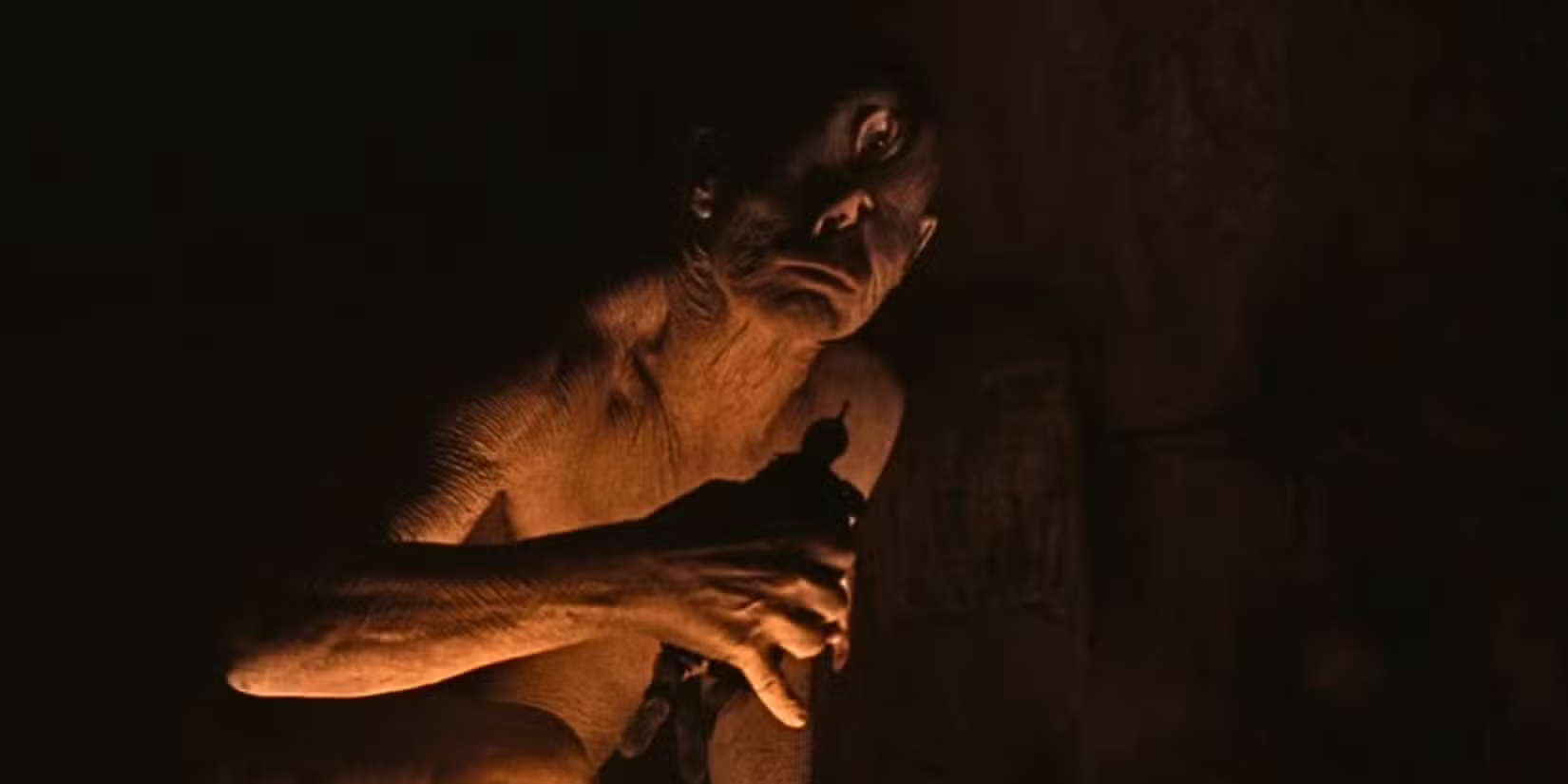
The big catch is right there: Shadows of the Past is not yet greenlit, meaning there is no confirmed cast, production timeline, or release date. Peter Jackson and Fran Walsh are reportedly attached as producers, but the project still has several major hurdles to clear before fans can start imagining Frodo heading back through the Barrow-downs. Wood is, however, set to return for The Hunt for Gollum, the Andy Serkis-helmed movie in which he will also star, with Jamie Dornan and Anya Taylor-Joy among the new names joining Middle-earth.
Stay tuned to Collider for more updates.
Advertisement
Advertisement
Release Date
December 19, 2001
Runtime
178 Minutes
Advertisement
Writers
Fran Walsh, Philippa Boyens, Peter Jackson, J.R.R. Tolkien
Advertisement
Producers
Barrie M. Osborne, Bob Weinstein, Harvey Weinstein, Mark Ordesky, Robert Shaye, Tim Sanders
For the most part, the Star Trek movies are generally self-contained adventures, which is a good thing: it’s possible for a newcomer (likely dragged to the theater by a superfan) to enjoy these films without having watched the 100+ episodes that came before. That’s a big part of what made Star Trek (2009) so fun: packed with action scenes and unforgettable characters, this movie appealed to everyone, including those who never watched so much as a scene of The Original Series. But decades before that, Paramount gave us something that most fans didn’t even notice: a secret trilogy of interconnected films centered around the franchise’s most iconic character.
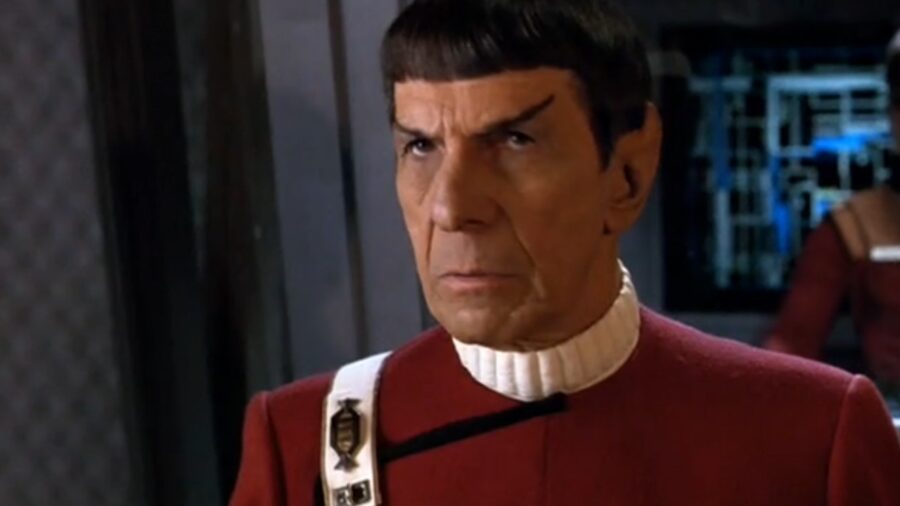
Taken on their own, the first three Star Trek movies (The Motion Picture, The Wrath of Khan, and The Search for Spock) are very different. The first is a slow, big-budget episode of TOS, the second is an action extravaganza, and the third is a character-driven, world-building drama. However, there’s something powerful that unites these movies, and once you notice, it will completely change how you view them. Here it is: for all their differences in story, theme, and tone, the first three Trek movies are a secret trilogy based around Leonard Nimoy’s Spock. Furthermore, it’s a trilogy designed to give him more character growth than anyone in the franchise!
Spock Was A Changed Man
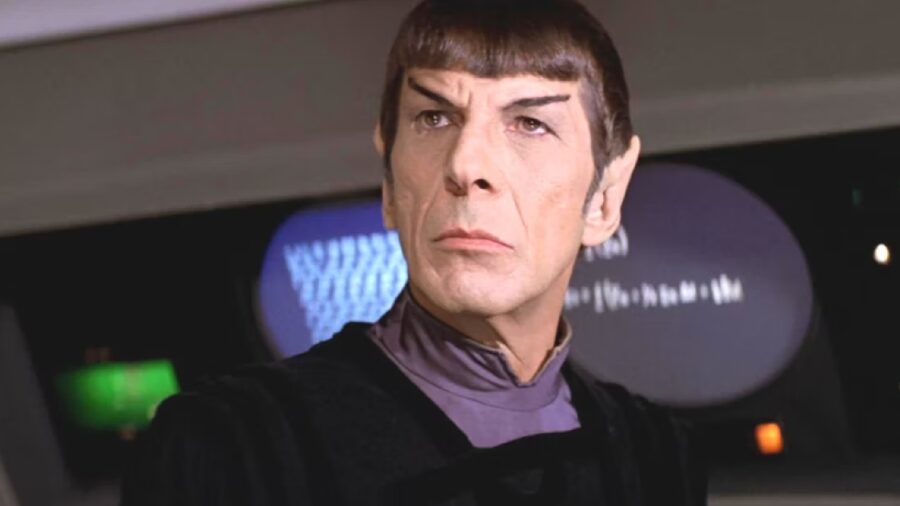
At the beginning of Star Trek: The Motion Picture, Spock is very different from the way we saw him in The Original Series. In that show, he periodically showed emotion, whether it was extreme sadness (like crying due to a creepy space virus in “The Naked Time”) or extreme happiness (like bursting into a huge grin when he discovered Kirk was alive in “Amok Time”). When TMP begins, he is undergoing the Kholinahr ritual, which is intended to fully purge him of emotion. This would make him the ultimate Vulcan, one who has chosen logic over everything else. However, he interrupts the ritual because he receives telepathic signals from V’ger.
V’ger is, of course, the giant, unstoppable space entity headed straight for Earth. Spock rejoins Kirk on the Enterprise, which is tasked with saving the planet. Everyone is happy to see him, but he is short and rather rude with them as a lingering effect of Kholinahr. Later, Spock gets in an EV suit and actually mind-melds with V’ger; when he recovers, he actually laughs at the irony that the giant vessel is like himself: a sentient being who aspired to pure logic, only to realize how little he actually understood. V’ger is haunted by questions that presumably haunt Spock, too: “Is this all that I am? Is there nothing more?”
The Needs Of The Many
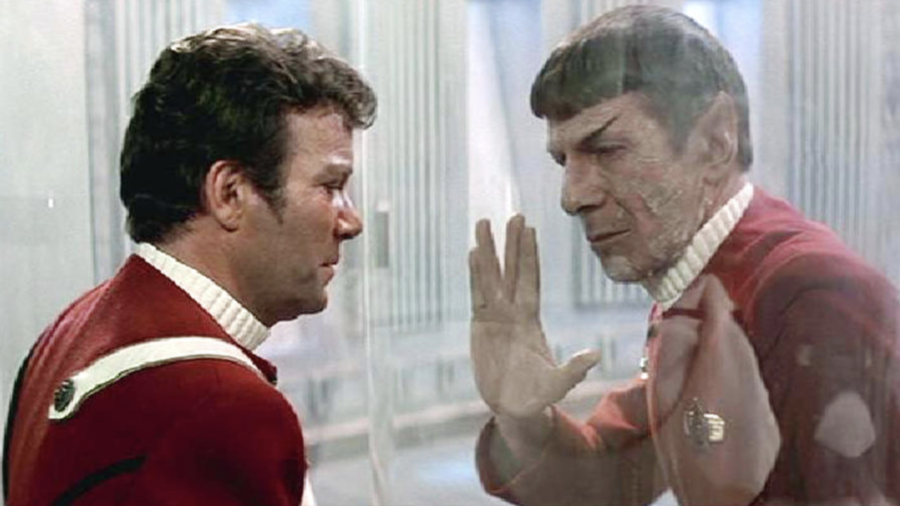
In true Star Trek fashion, they reach a kind of diplomatic solution with V’ger, effectively saving the Earth. But what does this franchise history lesson have to do with Trek’s secret trilogy? In The Wrath of Khan, Spock is effectively a new man, one transformed by his contact with V’ger. He still loves logic, claiming he has no ego to bruise and famously claiming that the needs of the many outweigh the needs of the few (or the one). But he pairs that with light humor in some of his interactions with Saavik (“You lied!” “I exaggerated”) and humanity in his interactions with Kirk (“I have been…and always shall be…your friend”).
Spock ultimately dies, poisoned by the radiation he received when saving the ship. It’s a touching moment, but most Star Trek fans don’t realize its significance. Spock has spent the film low-key exploring his half-human heritage: he enjoys reconnecting with his human friends, ribbing Kirk about his “shall we say, unique?” solution to the no-win scenario and even making gallows jokes before his death (when McCoy tells him no human can survive the radiation, he replies, “As you are so fond of observing, doctor, I am not human”). But he dies embracing the pure Vulcan logic of meeting the needs of the many (the entire crew) rather than the one (himself).
Advertisement
Somehow, Spock Returned
In Star Trek: The Motion Picture, Spock went from wanting to embrace pure logic to realizing that even logic has limitations. In The Wrath of Khan, he was happier because he was gently indulging in his human tendencies. Still, he died by the dictates of Vulcan logic. What happens in the next film? In The Search for Spock, we find out his body was resurrected by the Genesis device. Eventually, Kirk gets him to Vulcan, where his mind is safely transferred out of Dr. McCoy. Afterward, Kirk gives his very human reason for saving his oldest friend: “Because the needs of the one …outweigh the needs of the many.”
Spock learned the importance of emotions to understanding the universe in The Motion Picture, but he died following the dictates of Vulcan logic in The Wrath of Khan. After being reborn in The Search for Spock, he learned that logic doesn’t always tell us the right thing to do. Sometimes, it’s worth it to sacrifice your life to save your closest friends; other times, it’s worth it to throw your entire career away because a buddy needs you. Spock is half-human, half-Vulcan, and he finally realizes that understanding the universe means fully embracing the wisdom inherent in both logic and emotion.
Only The Beginning Of Wisdom
That’s what makes the first three Star Trek movies a secret trilogy: if you look past the colorful villains and all the Kirk drama (and boy, is there a lot of it), you’ll find that these movies are all about transforming Spock and deepening his character. That depth is evident in the final TOS film, The Undiscovered Country. There, he tells another Vulcan protege (who, notably, was originally written as Saavik) “that the universe will unfold as it should.” When she asked if this was logical, he responded, “Logic is the beginning of wisdom, Valeris, not the end.”
It’s something that Spock of The Original Series would never have said, and Spock at the beginning of The Motion Picture would have considered downright obscene. But thanks to the secret Star Trek trilogy, this Vulcan has realized that Kholinahr is basically a lie: embracing pure logic means blinding yourself to the greater mysteries of the universe. Perfectly combining logic and emotion, however, allows him to achieve insights that elude most of his entire race. If you want to see this famous character learn this powerful lesson, you don’t need to travel to Vulcan. Just travel over to the remote and head over to Tubi, where the first three Star Trek films are currently streaming for free!















:max_bytes(150000):strip_icc():format(jpeg)/Rob-Reiner-Life-Larry-And-The-Pursuit-Of-Unhappiness-070626-43a0ffe1719244d796648bd49cd28f80.jpg)
















































You must be logged in to post a comment Login