Politics
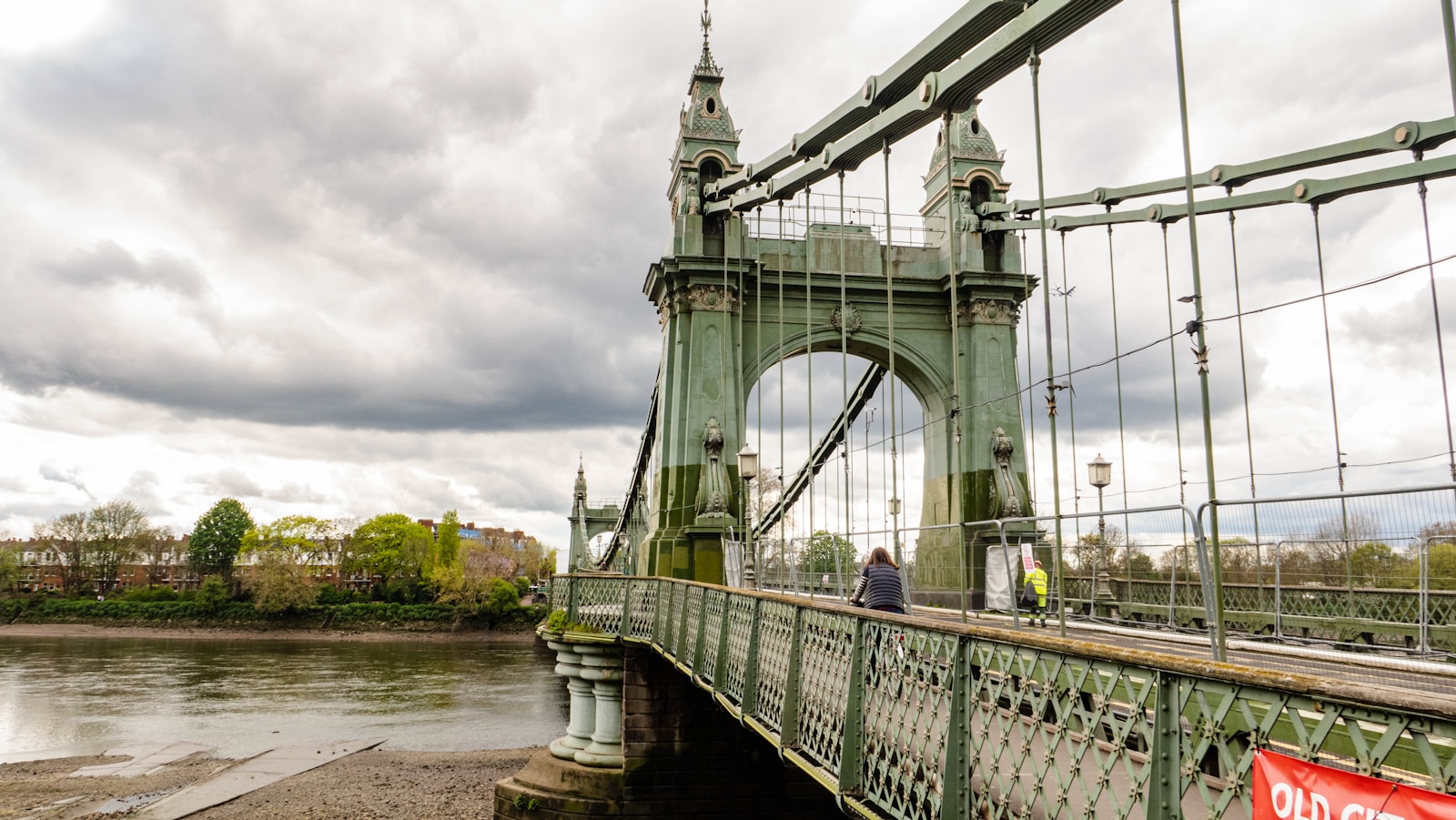
Liam Downer-Sanderson: Labour don’t want to reopen Hammersmith Bridge. Local Conservatives will.
Cllr Liam Downer-Sanderson is a councillor for Fulham Town Ward on Hammersmith and Fulham Council.
“Keeping Hammersmith Bridge closed is something we may have to look at.”
Those were the words of a Labour Hammersmith and Fulham Cabinet Member at a council committee meeting on 2 February 2026. After seven years of disruption, delay and evasion, it was a moment of rare honesty.
Labour finally said out loud what many residents have long suspected. They are comfortable with the bridge staying closed to traffic permanently.
That position is wrong for Hammersmith and Fulham, wrong for London and wrong for the country.
Hammersmith Bridge was closed in 2019 after serious cracks were discovered in its foundations. The bridge is more than a century old and decades of heavy goods vehicles had taken their toll. Closure was unavoidable to prevent the risk of collapse.
The consequences were immediate and severe. Six key bus routes were diverted overnight. Emergency vehicles were forced onto longer, slower routes. Journeys to hospitals, schools and workplaces became harder, longer and more expensive. A vital transport link between Barnes, Richmond, Wimbledon, Hammersmith, Fulham and Chiswick was severed.
At that moment, the council’s task should have been obvious. Restore public transport and emergency access across the Thames as quickly and safely as possible.
Instead, Labour chose a different path.
Rather than pursuing interim or staged solutions to reopen the bridge to traffic, several of which were put forward at the time, the Labour Administration fixated on a single option. A full, gold-plated restoration costing around £250 million, with no credible timetable for reopening.
Years passed. Progress was minimal.
Recognising the scale of the problem, the Conservative Government stepped in with a pragmatic offer. To split the cost three ways between central government, Transport for London and the council. A deal was on the table. The route to reopening was clear.
Labour walked away, claiming the council could not afford it.
That argument simply does not stand up.
Because during the same period, Labour somehow found the money for something else. A brand new Town Hall. The Civic Campus project now exceeds £200 million. It was meant to be completed in 2023. It is opening three years late. And even now, Labour has allocated a further £38.5 million of capital funding in 2025/26, on top of tens of millions committed in earlier years.
This was never about affordability. It was about priorities.
Labour chose to prioritise a prestige building over restoring public transport, emergency access and everyday vehicle crossings across the Thames.
That choice tells you everything you need to know.
But the problem goes deeper than mismanagement or poor judgement. Increasingly, Labour councillors are no longer even pretending that reopening the bridge is the goal. For some, a functioning bridge is seen as an incentive to driving and therefore something to be resisted altogether.
In other words, inconvenience is not an unfortunate side effect. It is the point.
Conservatives reject that worldview outright.
It is not progressive to slow down ambulances, lengthen school runs or force carers, tradespeople and small businesses to waste hours detouring across west London. It is not progressive to cut communities in two and call it progress.
As the Opposition, our job is to hold Labour to account for its failures. But it is also our responsibility to offer solutions. That is exactly what the Hammersmith and Fulham Conservative Opposition Group has done.
We have set out a clear and practical alternative. The construction of a temporary bridge just north of the existing crossing. Delivered for an estimated £10 to £20 million, it would allow buses, emergency vehicles and general traffic to cross the Thames while permanent repair work continues.
Similar structures are routinely deployed elsewhere. They can be delivered in months, not years, and at reasonable cost.
London is a global city, yet a major Thames crossing has been left closed for seven years with no clear end in sight. That failure reflects poorly on local government and undermines confidence. If we cannot reopen a bridge in west London, it raises serious questions about our capacity to deliver essential infrastructure across the country.
As the Conservative Opposition, our position is straightforward.
If elected to run the Council in May, we will invite engineers to put forward proposals for a temporary bridge and finally move from delay to delivery.
We will get Hammersmith and Fulham moving again.
Politics
Super Bowl Show Director Makes Alarming Bad Bunny Stunt Claim
As you can imagine, Bad Bunny’s action-packed Super Bowl Halftime Show required plenty of planning for everything to go off without a hitch – and some moments gave the performance’s directors more of a headache than others.
During his 13-minute Super Bowl set, at one point, the Puerto Rican singer and rapper famously climbed up a utility pole to deliver a performance of one of his hits.
And in a recent interview with Variety, it was revealed that “much to the producers’ chagrin”, the Grammy winner refused to use a safety harness for the stunt.
Director Hamish Hamilton told the US outlet: “He refused to wear a harness’. He was like, ‘I don’t need it’.”
But while Bad Bunny’s harness refusal may have been a health and safety nightmare, it turns out that there was one upside to it.
“There are all kinds of legal ramifications to that, which is not really my thing, but interestingly enough, when he decided he wasn’t going to wear a harness, we were able to then put a camera on the pole to look down at him climbing up!” Hamilton added.
Meanwhile, creative director Harriet Cuddeford recalled: “There was all safety and rigging and all of that available, obviously, of course, but he didn’t want it. He does his own stunts, that guy, and he learned it in about three minutes. Straight up that pole.
“At rehearsal, we were all like, ‘Is he gonna be OK?’ But he just went straight up there, and managed his vocals. Very agile. He could just, like, handle anything.”
Elsewhere in their Variety interview, Cuddeford and Hamilton lifted the lid on more behind-the-scenes secrets, including how the team pulled off one piece of trickery that’s got everyone talking and an interesting revelation about the 330-strong crowd that shared the stage with Bad Bunny on Sunday night.
The duo have also admitted that not everything actually went to plan, with a couple of mishaps taking place that – fortunately! – no one seemed to notice on the night.
Politics
Why Ford Motors inspires Badenoch’s Tory blueprint
At the end of 2008, Ford Motor Company was only months from running out of cash. It had a lackluster product lineup and a dysfunctional culture of infighting, backstabbing, and excuses. Sound familiar? Kemi Badenoch has been reading about how under the leadership of a bold new CEO, Alan Mulally, the company came back from the brink and returned it to one of the world’s most successful carmakers.
That, she has told her MPs, is inspiring her model for the Conservative Party.
After another strong outing at PMQs – skewering Sir Keir Starmer for “stuffing government with paedophile apologists” – Badenoch headed to her office for lunch. Unusually for her, one that included sandwiches (though she opted for a ham and cheese croissant). She has been hosting a series of these meetings with her MPs, and this week it was the first of two sessions with members of the 2024 intake.
Badenoch explained that Mulally’s insight at Ford Motors was realising the company had become distracted by its luxury brands like Aston Martin, rather than focusing on Ford itself and what it originally did so well. Her own lesson was similar: invest in the party’s “stakeholder products” — the core Tory vote, what it wants, and what the Conservatives can credibly offer.
And she wants a “fresh” Conservative Party to do so, with a Tory insider saying “Kemi told them she wanted these new MPs to be the future face of the Tory party”. It went down well with the group, some of whom have recently been getting their first outings at the despatch box like Peter Fortune.
He understood Badenoch’s Ford comparison, I’m told, likening the Conservative Party to a failing business: first stop the crisis, then stabilise, and then rebuild. Right now, he suggested, the party is still in the early stages.
As discussion ranged around the Leader of the Opposition’s office, MPs aired familiar frustrations and enecuragements. John Cooper urged the party to “get onto talking about the economy” as the route back to power, while still addressing the wound of immigration. Joe Robertson argued for a “more optimistic tone in how the party communicates” and “not just criticising the government”. Inevitably, the conversation drifted to the question that always arises when talk turns to renewal and making Badenoch’s New Conservatives: what to do about the past.
Both Lewis Cocking and Greg Stafford, I’m told, commented about the shadow cabinet. There were “too many faces reminding people of the last government”, and it being “frankly not very good”, with some not pulling their weight.
They are not alone. One LOTO figure told me: “Real surgery is needed at the top of the shadow cabinet – we’re talking the three great offices of state: Treasury, Foreign and Home.” That would mean shadow chancellor Mel Stride, shadow foreign secretary Priti Patel and shadow home secretary Chris Philp.
A senior Tory agrees in principle but not without caveats. “Every change has a cost,” they said. “What do you offer Mel and Priti? They’re already knighted and with a damehood. The Lords is an option, but that’s a way off.” One shadow cabinet member confided: “It needs to happen, though I fear it won’t any time soon.” Another said movement was inevitable, but only once Badenoch herself reaches that conclusion.
The argument for change is the freshness Badenoch has begun championing. “In the top jobs,” one shadow minister says, “we shouldn’t be so tainted by the past.” Patel, in particular, attracts criticism. Her association with the ‘Boriswave’ – an issue raised at this week’s lunch – and her robust defence of that record in a disastrous interview with Harry Cole are cited as reasons she should move on.
But she is loyal, and loyalty counts. “Kemi is very loyal and appreciates it,” one insider says. Another shadow cabinet colleague tells me they are “very keen for Tom Tugendhat to come into the fold,” and I’m told discussions have taken place, and may yet happen in the future.
When it comes to Philp those around him acknowledge “improvement in the job”, an “eagerness to get the message out”, and a grasp of deteialed Home Office legisaltion. Other colleagues say that same eagerness “comes across as too intense” and “doesn’t land well” with the public.
“The Home Office is such a vulnerability for Labour that we need our absolute top performer there,” one insider says. “Unfortunately, he probably isn’t.”
Stride, meanwhile, has two camps of defenders and detractors. Supporters describe him as offering “steadiness and reassurance” on the economy. Critics complain he lacks “punch” and “fight”. Polling has the Conservatives once again trusted most on the economy, which his allies say reflects his steady approach and resistance to gimmicks. “He has rare experience of both business and the Treasury,” one Tory notes. “That’s a big risk to give up.” Those less convinced argue he is “not dynamic enough” of a choice and “doesn’t cut through”.
Stride hosted a dinner for MPs at his London home on Tuesday, shoes removed at the front door, lubricated by wine and Vesper martinis “that would kill a horse”. Some attendees wondered whether it was an exercise in wooing. One guest told me: “I suspect Mel was doing a bit of self-promotion given rumours about a reshuffle.” But I understand the dinner was arranged weeks ago, part of a tradition he has maintained since 2011.
A Tory source, however, pours water on the suggestion of any movement: “There isn’t a reshuffle, let’s put it to bed. It is not going on, the idea is nonsense. It’s just not going to happen. Kemi is very happy with her top team.” They pointed to Badenoch’s leadership, new policies, and Nick Timothy’s arrival in the shadow cabinet as evidence of renewal. “Kemi has massively changed the party under her new leadership,” they added.
Both Stride and Philp are regularly in the top three of ConservativeHome’s members’ poll, with them coming second and third respectively at last publication.
Even at last night’s Winter Ball at The Peninsula hotel, Badenoch spoke warmly of “the team”, namechecking Stride and Helen Whately on welfare savings, and praising Claire Coutinho and Andrew Bowie for fighting for British jobs in energy.
Still, the question remains: how to balance experience with renewal. For a leader promising a fresh start, there is a sense that too much of the old guard lingers at the top. As one attendee at Badenoch’s lunch put it: “The mood is different. Things feel positive. But we need to look like we’re renewing – not just talk about it.”
Another framed it more philosophically: “Fresh is what Conservatives should always be. Things should be better tomorrow than they are today. That’s the Tory way.”
Whether Badenoch can pull off a Ford-style turnaround – rescuing and rebranding a damaged political entity – is the real test of her leadership.
Politics
Miriam Margolyes To Star In Her Own BBC Documentary
Director Simon Draper apparently put the hour-long documentary together with iPhone footage, having initially hoped to create a podcast centred around Miriam.
However, the candid footage was later used to create Miriam Margolyes Made Me Me, which will air on the BBC later this year, and explores the friendship between the two pals and collaborators.
Simon told the US outlet: “I thought getting Miriam Margolyes to make a podcast would be easy, after all, everyone’s doing them, but Miriam’s lifestyle is bonkers.
“In two years, we made just five episodes, but hanging out with her was life-changing. Mim’s a woman with strong opinions and a weak bladder, and I feel lucky to have been able to capture all the chaos and sparkle of the bravest, most honest person I know.”
Politics
Infernos Owners Respond To Margot Robbie’s ‘Thrown Out’ Claims
The owners of the infamous London nightclub Infernos have responded to Margot Robbie’s recent comments about being chucked out of the venue in her younger years.
Margot’s history with the Clapham nightspot is already well-documented, and during a recent interview on the podcast Table Manners, she admitted that not all of her memories there are exactly glowing.
During the conversation, the Wuthering Heights star claimed she met her future London roommates while working in Belgium, during which “they would tell me about the infamous Infernos”:
”This place is so fun – you can’t get kicked out of there, you can do anything in Infernos, and you can’t get kicked out,” Margot recalled being told by the group.
She continued: “I was like, ‘Wow, that sounds like paradise’. And so, we all had a weekend in London when the job was done. And, of course, we went to Infernos, and within about 15 minutes, we got kicked out.
“While we’re getting dragged out by security, I was screaming, ‘but this is Infernos, you can’t get kicked out of Infernos’. And the bouncer was like, ‘Look, we allow most things, but when your friend does [that], then we kick you out’. And I was like, ‘OK, fair enough!’.”
The incident clearly didn’t put her off going, though, as Margot later moved to Clapham and was briefly a regular at the club, to the point she now has an unofficial blue plaque there.
Lisa Love, of Infernos’ guest services, later responded: “Margot Robbie is Infernos royalty. So much so that we have an official blue plaque commemorating her time on our dance floor.
“She is forever welcome, and as our only gold card holder, her legacy at Infernos remains legendary.”
Elsewhere in her Table Manners interview, Margot claimed that she and her friends had actually been kicked out of “most of the clubs in Clapham” at some point or another.
“For a while we were banned at a number of places!” the Oscar nominee admitted, revealing that when she and her friends saw a flat that was “down the road from Infernos”, they “literally signed our lease” just for that reason, taking it as a “sign”.
Margot’s latest movie Wuthering Heights has finally hit cinemas as of Friday, in which she plays Cathy to fellow Australian actor Jacob Elordi’s Heathcliff.
Take a listen to Margot Robbie’s full Table Manners interview here.
Politics
Trump Finally Apologised For Something. No, Not That.
US President Donald Trump on Wednesday finally delivered an apology – but it was not the one many had called on him to make.
Trump last week shared a racist video depicting former President Barack Obama and former first lady Michelle Obama as a chimpanzee and gorilla, which was denounced by Democrats and Republicans alike.
But that’s not what he apologised for.
Trump deleted the video, but insisted he didn’t have to apologise since he didn’t actually see the racist part.
“No, I didn’t make a mistake,” he said last week. “I looked at the beginning of it. It was fine.”
Trump, who rarely apologises for anything, instead delivered a mea culpa to the people of Oklahoma for having previously endorsed their governor, Kevin Stitt, whom he denounced as “very mediocre (at best!)” and a “RINO” (Republican in name only).
“Sorry, my cherished Oklahoma, to have done that to you!” he wrote on Truth Social:

Donald Trump/Truth Social
Trump threw a fit over Stitt’s efforts to preserve the bipartisan nature of the National Governors Association, of which he is currently the chair.
Trump this week was reportedly planning to exclude Democratic governors from what had traditionally been a bipartisan NGA business meeting at the White House, and to exclude two governors from a dinner that is typically for every governor, regardless of party.
Stitt initially pulled the event as a result.
“Because NGA’s mission is to represent all 55 governors, the Association is no longer serving as the facilitator for that event, and it is no longer included in our official program,” Stitt wrote to his fellow governors, according to The Associated Press.
Trump later claimed he was planning to invite all but two of the Democratic governors to the meeting, although The New York Times reported that only Republican governors had received invitations as of Tuesday night for a meeting to be held on Friday.
In another post, the president attacked Stitt and several of the Democratic governors:

Donald Trump/Truth Social
Stitt has since said the meeting is back on and everyone will be invited. He blamed “misunderstanding in scheduling,” according to The Journal Record in Oklahoma City.
Politics
Trump Gives His Verdict On Bondi’s Public Crash Out
US President Donald Trump on Thursday praised Attorney General Pam Bondi for her “fantastic” appearance before Congress in the face of many others considering the performance to have been unhinged.
On Wednesday, Bondi shouted, sneered and launched a series of personal attacks as she faced questions from the House Judiciary Committee, largely about her Justice Department’s handling of files relating to late sex offender Jeffrey Epstein.
Amid reports the president is disillusioned with his attorney general for failing to push through his agenda, Bondi repeatedly crow-barred praise of Trump into her responses, calling him “the greatest president in American history.”
During one bizarre pivot, Bondi referenced how the Dow Jones Industrial Average had hit a record high, and lauded Trump for the achievement, as she fended off questions about Epstein.
“Because Donald Trump – the Dow,” she blurted out in a moment that became an instant internet meme.
But her grandstanding appears to have done enough to impress the president, at least according to a Trump post on Truth Social.
“AG Pam Bondi, under intense fire from the Trump Deranged Radical Left Lunatics, was fantastic at yesterday’s Hearing on the never ending saga of Jeffrey Epstein, where the one thing that has been proven conclusively, much to their chagrin, was that President Donald J. Trump has been 100% exonerated of their ridiculous Russia, Russia, Russia type charges,” he wrote.
Trump is referenced thousands of times in the Epstein documents released by the Justice Department, but has not been accused of wrongdoing by law enforcement.
In his post, Trump went on to criticise “sanctimonious” Republican Representative Thomas Massie (Republican, Kentucky), who the president said “made a total fool of himself.”
Bondi had called Massie “a failed politician” with “Trump derangement syndrome” as he pressed her on the Justice Department’s mishandling of redactions in the Epstein files.
Trump continued that “nobody cared about Epstein when he was alive,” and that “they only cared about him when they thought he could create Political Harm to a very popular President who has brought our Country back from the brink of extinction, and very quickly, at that!”
The president, without evidence, claimed that “this attempt by the Democrats to take away attention from tremendous Republican SUCCESS is backfiring badly.”
Trump was close friends with Epstein, but has attempted to distance himself from the New York financier ever since Epstein’s conviction on a Florida prostitution charge in 2008 — a defence that has recently come under scrutiny.
Lawmakers continue to ask questions about the scandal as the Trump administration is still holding back information about Epstein and his relationship with powerful figures.
Politics
Conor Boyle: If we want Britain to be better, we need a radically different Civil Service
Conor Boyle is a young conservative and unionist from Northern Ireland, an Oxford graduate, and now works in the financial services sector.
Civil service reform used to be a topic reserved for genuine political anoraks, and A-Level politics teachers, but if we want the country to succeed, it’s going to have to become an issue on all our lips.
The permanent system of government in the United Kingdom is often heralded as a model of good administration.
We’re told that the British model is the ‘Rolls Royce” Civil Service, capable of governing a vast global Empire and achieving some heroic feats. This is all very much in the past. And the issues with today’s civil service are the major roadblocks to a building a more successful, prosperous, efficient Britain. The are, to my mind, two serious problems. The first is the mentality and culture of our bureaucracy, and the second is the inability to do anything about it.
On the civil service themselves, without being impolite to our public servants, but I highly doubt many of the current crop would have made it in the days when Wellington or Disraeli were running the British Government. I have heard commentators from Tony Young to Dominic Cummings lay the decline in calibre of our public servants at the feet of the push to remove the aristocracy (who they argue felt a mitral burden of duty and service to the country) in favour of a merit-based system unveiled after the Northcote-Trevelyan reforms.
I’m not sure how much there is to this theory, I don’t propose to explore it further. My initial gripe is that, at the moment, we don’t have a meritocratic civil service, and culture turns away good, able, energetic young people before they reach senior positions. This is undoubtedly true. Seventy years ago, let’s say, the top graduates of our great universities would bite your hand off for a job in the Foreign Office, the Ministry of Defence, and many more government departments and agencies alike.
While may talented youngsters are, of course, still applying to become diplomats and what-not, it is no longer the case that the civil service attracts talent on a scale even close to the private sector. Consider that, a century ago, the type of young person being recruited for the likes of Stripe or SpaceX, seen a career in the Home Civil Service as having a greater level attractiveness to a private venture.
Now, it’s not even close.
Never-mind the super and futuristic companies mentioned above, the Civil Service can’t even compete with the relatively run-of-the-mill private sector jobs in London and the South-east. Part of this is money, of course (although, not if you subscribe to the argument about aristocrats and their love of service) but it’s also something deeper; the feeling that you’ll achieve something, be part of something special or important in a fast-paced private sector role; whereas in the civil service there is a perception – borne out by reality these days – that your job would be to push the pen and watch a managed decline.
Now, there will be a sort-of chicken and egg argument here about which caused which. Did the civil service stop attracting the best and brightest because Britain is no longer a great power, or did we stop being a great power because the talent intake dried up. The answer to that question I do not have, but I’m not sure that’s even the most important point.
The point is that the current civil service cannot hold a candle to its former self, and the country is suffering as a result. Readers who are alive in modern Britain will not need a reminder of this. Infrastructure projects don’t get built, or when they do, they’re very late and more costly than ‘anticipated’, the government can’t manage large data sets without losing some of it, there’s no joined-up or long-term thinking when it comes to procurement, the services provided are inefficient and the negotiating skill leaves a lot to be desired.
The reason for all of this, in my view, is the lack of a proper incentive structure. On the one hand, it appears nearly impossible to be dismissed from the civil service for not being very good, and there appears to be no consequences for catastrophic failure. On the other, there is neither the political will nor the public appetite to provide large rewards for a job done really well.
It seems to be an unfortunate truth that civil servants can fail upwards.
Doing the job, having held the very eminent position, is an achievement in itself. It’s the sort of London dinner party mentality that says, “ooh what an impressive title he’s got”. Despite the fact that the public have been broadly unimpressed by the performance of the NHS for the last ten or fifteen years, all permanent secretaries in the Department of Health leave with not only their generous pension package, but with a knighthood.
The gong, which ought to be awarded for having done something good, worthwhile or impressive, is merely a perk of the job, regardless of how well or badly the job is actually done. This is surely bizarre.
The other big problem is the political impossibility of changing any of this.
Any notion of substantial reform to the civil service is met with the howls of derision, and firm clutching of pearls.
The high-pitched screeches of “politicization” can be heard from all directions. To me, this is a sort of luxury belief that merely exists to ensure that entrenched interests aren’t disrupted by the will of the voters if they prove too radical. Just a few years ago I might’ve called that view a conspiracy theory, but I believe it’s as clear as day now. In the early twentieth century, a Labour government would’ve complained that the Whitehall mandarin was obstructing their programme, and the civil service was broadly a soft-Tory institution.
Today, the civil service would probably be described accurately as socially liberal, fairly internationalist/multilateralist and somewhat Keynesian in their economic philosophy. Obviously, this is painting with a broad brush, and I want to avoid the claim often made some on the right that the civil service is rabidly left wing or anything of the sort. I don’t think there’s much malign intent here, just a relatively common “do-gooder” attitude to the politics. There’s nothing wrong with that, it’s a perfectly legislate world view.
The problem is that it stays constant in the heart of the British government even as the voters opt for a different direction of government from election to election. It is bizarre to me that “politicized” carries such weight as an insult, surely we want the officials implementing government policies to be invested in the policies’ success.
As such, I would be in favour of a new system which allowed ministers to appoint senior civil servants to oversee the implementation of the Government’s programme, including Permanent Secretaries. Minister should have trusted advisers who also believe in the mission they are carrying out. I believe there are lots of benefits that would come from this.
Firstly, I think the quality of our public discourse would be enhanced markedly because think tanks would be empowered and become a much more important institution in British politics. This is because, when a party is in opposition, the would-be political appointees in the civil service will not be employed by the state and so would take up roles in think tanked which are broadly aligned to their political masters’ tastes.
For instance, young, smart thinkers on the right would spend these years in the likes of the Institute for Economic Affairs, Adam Smith Institute, or the Centre for Policy Studies, building up the knowledge and intricate detail of policy and implementation. As the think tanks grow stronger with high calibre, passionate, intakes, their production of research, papers, memos will be strengthened. As such, on both sides, our politicians will be well-armed with the facts, arguments and intuition for all of the policy ideas that are floating around our political system.
Secondly, the state will be better run with outsiders and true believers being responsible for policy. Under this type of regime, civil servants could properly be held to account in front of Parliament, because the old rules would no longer apply. This means that those responsible for projects that go wrong can be dismissed forthwith. Most importantly, ministers will, for the first time in decades, be in control of their departments. Currently, as I see it, a Minister of the Crown is a glorified press secretary for their department who answers to the press and on the floor of the House of Commons. The tortured metaphor of “pulling the lever but nothing working” would be consigned to the dustbin of history, because ministers would be directing officials who are loyal to the Government’s policy programme. The institutional power base of the Civil Service, which is considerable to say the least, will be significantly weakened by the ability of a minister to appoint trusted confidants to positions within the command structure of a department.
It is always the political moderates in our society today – the Lib Dems, Tory wets and the New Labour crowd – who are most appalled by this idea. It’s the sort of people (and their voters) who stand to lose most from a government with a radical vision (in any ideological direction). Thus, the compliant about “politicizing” the civil service is one they make rather disingenuously. Currently, I would argue that the administrative state is akin to a Blairite think tank. The political bias of the current system suits them nicely. It’s not that they’re trying to protect a truly neutral system. What I’m proposing is to simply make the political bias more open and honest, so that no one is under any illusions or pretences.

It goes without saying that this more radical reform can only come after getting the basics right. Restore appointment and promotion based on ability alone, removing any quotas or requirement on the basis of immutable characteristics, looking beyond university graduates alone for top jobs, end promotion and pay policy based on seniority or length of service in favour of a performance-based system, and begin the long-overdue process of downsizing much of the Civil Service to reduce overmanning.
This is necessary, so that decisions taken by Governments are implemented without needless layers of bureaucracy and second-guessing by well-meaning officials. And when the policy is delivered, its success or failure can be judged, and decision-makers held to account. This is good for democracy. This is good for Britain.
Politics
David Rose: Are those working on an Islamophobia definition too close to the subject?
David Rose is Policy and Research Director of the Free Speech Union.
The Free Speech Union has long been concerned that the Government’s plan to issue an official definition of Islamophobia – or ‘anti-Muslim hostility’, as leaks suggest it has been re-named – will, if adopted, gravely threaten freedom of expression.
Announcing her appointment of a five person “Working Group” tasked to produce it in February last year, the then-Communities Secretary Angela Rayner insisted it would be non-statutory, and hence “compatible” with free speech rights. Our Director, Lord Young, disagreed, arguing it would lead to self-censorship and the restriction of lawful discourse by both private and public bodies. He also pointed out that discrimination and hate crimes against Muslims are already sanctioned by the civil and criminal law. Any definition would thus either be pointless, or it would threaten freedom of speech.
Such a definition is a longstanding demand made by Islamist organisations with which successive UK governments have had a policy of non-engagement, such as the Muslim Council of Britain (MCB) and Muslim Engagement and Development (MEND), thanks to the extremist views expressed by some of their leaders, such as support for Hamas and other militant groups.
However, as I point out in Anti-Free Speech Hostility: The Islamist Links of the Government’s Working Group on Islamophobia, an investigative FSU briefing published today, it turns out that all the Working Group members have had close links to Islamist individuals or organisations, including the Group’s Chair, the former Tory attorney-general Dominic Grieve KC.
In a letter to Angela Rayner in June, Young raised a further, worrisome issue: that although Rayner claimed that the Group had been chosen to reflect “a wide range of perspectives”, four of its members had already expressed strong support for an earlier definition, that issued by the All Party Parliamentary Group on British Muslims in 2018. Its somewhat indigestible text – that Islamophobia is “rooted in racism and a type of racism that targets expressions of or perceived Muslimness” – was widely condemned by liberal and feminist Muslims, who said it would be weaponised by authoritarians to prevent both criticism of Islam and the highlighting of issues such as the disproportionately Muslim heritage of members of child sex grooming gangs. No one on Rayner’s Group shares that view.
Grieve, the only member of the Group who is not a Muslim, wrote a supportive Foreword to the APPG’s 2018 report. In coming to favour an official definition, he appears to have changed his views to a significant extent, although he denies this.
Yet until 2013, Grieve made a series of strong statements about Muslims’ religious and political attitudes, claiming, for example, that Muslims were trying to change society in ways that were inimical to pluralist democracy. He argued then that what he termed “political correctness” and “identity politics” arising from multiculturalism posed a serious threat to free speech and civil society. He told me he regarded his past and present views as consistent, saying the linking thread was his desire to reduce Muslims’ alienation from public life. Nevertheless, it is a matter of record that he said nothing supportive of an official definition until 2017, when he chaired a “citizens’ commission” on British Muslims in 2017.
Its report, The Missing Muslims, thanked the then-head of the MCB as a key adviser, while its consultative “Muslim leadership group” included further MCB and MEND luminaries – including Sahar al-Faifi, MEND’s organiser in Wales, who had blamed the London Bridge terrorist attack that killed 11 people on “pro-Zionists, pro-war individuals such as Robert Rosenkranz, Lord Ashcroft and Lord Kalms the owner of Dixons”. She had also tweeted support for Hamas.
The other Working Group members also have questionable links. Asha Affi, billed by Rayner as an “independent consultant”, stood as a council candidate for the far-left, Islamist-aligned Respect Party in 2010. For the previous five years, Respect’s highest-profile figure had been an MP for the borough where Affi stood — its sometime leader George Galloway, Saddam Hussein’s erstwhile admirer and an outspoken defender of the Iranian and former Syrian regimes. He had also praised the Hezbollah terrorist group, saying in 2009 he wanted to “glorify” because it was “right to fight Zionist terror”.
Group member Akeela Ahmed has long suggested that discourse must be regulated by the state to protect Muslims from harm. In 2018, as Young noted in his letter to Rayner, Ahmed told the APPG that the Islamophobia definition it was then considering must have “legal power”, so that it could be “implemented by the Government and the police”.
Meanwhile Ahmed has for years worked closely with Miqdaad Versi, the head of the MCB’s media monitoring unit, trying to block “Islamophobic” journalism. Last year she set up a new body that aims to engage with government, the British Muslim Network. Working with her was its then and current co-Chair, Qari Asim, a Sunni imam who was sacked by the last Tory government for attempting to restrict free speech after supporting protests against the film Our Lady of Heaven, which takes a Shia perspective on Islam. He has also cultivated relationships with Pakistani imams who support the death penalty for blasphemy and venerate the killer of the liberal former Punjab governor Salman Taseer, and arranged speaking tours for them in England.
Ahmed is also chief executive of the British Muslim Trust, a newly-established organisation that last July was awarded government grants worth £2.65 million by Rayner’s department – to assist victims of Islamophobia. This followed a campaign against the previous recipient of such funding, Tell MAMA, which was founded and led by Fiyaz Mughal, a fierce critic of Islamists. The campaign embraced critical articles in the left-wing Byline Times by Akeela’s husband Nafeez, and speeches in the Lords by another Working Group member, Baroness Shaista Gohir, who claimed – without adducing evidence – that Tory governments had “used” Tell MAMA to monitor extremists, not support victims of hate crime.
As for Gohir, in 2014 she posted tweets supportive of Hamas, and her son, who ran her parliamentary office until last year, claimed Israel fabricated evidence of the Hamas massacre of 7th October 2023. She too supported the APPG definition, and authored a report saying that to discuss the Muslim heritage of child sex grooming gangs is Islamophobic.
The last Group member, Javed Khan, runs Equi, a think tank that published a report last year arguing that “misinformation’” about Muslims should be combatted by the state.
In September 2025, together with Humza Yousaf, Scotland’s former first minister, Khan was one of two keynote speakers at the launch of the UK branch of an international organisation based in Turkey, the Muslim Impact Forum (MIF), which has close ties to the Islamist regime of Recep Tayyip Erdogan. At the time Khan spoke, the MIF’s website had for months been featuring an interview with Asim Qureshi, the Policy Director of CAGE, the terrorist prisoners’ support group, who once described Mohammed Emwazi, the ISIS executioner better known as “jihadi John”, as a “beautiful young man”. In his MIF interview, Qureshi said he hoped to build support for destroying the “evil” state of Israel once and for all, since it “should not be allowed to exist”.
Meanwhile, Labour continues to haemorrhage support to the electoral umbrella group known as The Muslim Vote, whose leaders include key figures from the MCB and MEND. The Government is running scared: a TMV rival slashed Wes Streeting’s once huge majority in 2024 to barely 500, and as he noted in his published texts to Peter Mandelson, it is likely that Labour will lose both its seats in his east London borough, Ilford. Meanwhile in Gorton and Denton, TMV is backing the Green candidate, and its influence may prove decisive.
The cause of free speech faces a daunting battle.
Politics
What’s Making Teenagers Anxious? Therapists Share Their Thoughts
What Kids Are Carrying is a HuffPost UK series focusing on how the nation’s youngest generation is *really* feeling right now – and how parents and caregivers can support them.
Anxiety is one of the most common issues young children and teenagers are bringing to therapy, according to therapists.
Just like there are myriad reasons why young children are increasingly anxious – from over-exposure to screens, to neurodivergence, to absorbing anxiety of ‘grown-up problems’ like money worries – for teens, there are a number of factors driving their anxiety. But therapists are witnessing some key trends.
“Adolescence is a challenging time, and the move towards increased independence while still only having recently left an era of play and imagination can bring with it increased anxiety,” said therapist and BACP member Amanda MacDonald.
“Teens will be aware of exams coming up, and other factors surrounding their immediate world, together with an awareness of global concerns such as conflicts and the environment.
“All this is going on at a time when they are working out who they are, and forming friendships based on this developing sense of identity.”
A 2025 survey by BBC Radio 5 Live and BBC Bitesize, which polled 2,000 kids aged 13-18, found two-thirds (69%) of all participants reported feeling anxious at least some of the time. Pressure around exams and grades was the biggest worry.
Counselling Directory member Debbie Keenan suggests teen anxiety is often driven by a mix of developmental pressure, expectations and uncertainty.
“Recurring themes include academic performance, social comparison, questioning identity/sexuality and fear of failure,” she noted.
Therapists also noticed the Covid-19 pandemic seems to have “significantly amplified” anxiety as teens experienced disrupted routines, isolation, and a prolonged sense of threat. Keenan noted this may have “sensitised their nervous systems and reduced their capacity to cope with stress”.
How parents can support anxious teens
When your child is struggling, you probably want to jump in and solve all their problems for them, but experts suggest the best way parents can support is to simply be there, be curious and listen without judgement.
Connection is key. “Check in with them to see how they are doing, and get a sense of what is happening in their life,” advised MacDonald. Sometimes it can help to do these check-ins while you’re doing something else together – gaming, shopping or driving in the car, for instance.
Joseph Conway, psychotherapist and mental health trainer at Vita Health Group, previously suggested that “side-by-side talking” can help teens, especially boys, feel comfortable enough to open up.
“Pick an activity they enjoy, such as football, baking, crafting, or gaming, to create a safe-space for conversation,” he said.
“Shared activities give boys room to open up without feeling scrutinised, or having the intensity of eye contact.”
Another helpful tip from Keenan is to explore your teen’s “window of tolerance”.
“The window of tolerance is the range in which a person can think, feel, and learn effectively,” she explained.
“When anxiety pushes them outside this window, they may become hyperaroused (panic, avoidance, irritability) or hypoaroused (shutdown, numbness).”
Support starts with helping teens recognise these states and teaching regulation skills. This might look like slow breathing, grounding, mindfulness or co-regulation exercises “to bring them back into their window of tolerance”, Keenan said.
What not to do when supporting your teen with anxiety
Counselling Directory member Bella Hird stressed that it’s key for parents to resist all urges to tell their teen “there is nothing to worry about”.
“Never in the history of mankind has anyone ever calmed down when told to ‘calm down’,” she said.
Counselling Directory member Mandi Simons agrees that teens benefit more from being listened to without judgement or minimisation.
Discussing what to do instead of saying “there’s nothing to worry about”, Hird suggested the internal narrative of “I am not worried about this but I want to understand your worry” can be helpful for parents to take on board.
“The experience of not being heard or understood is only going to add to the experience of anxiety,” she explained. “If you can show them you are willing to truly understand their anxiety and sit with them in it, you will be modelling that anxiety is not something to be feared and just simply our minds and bodies picking up on data that something is amiss.”
She added that sometimes, studying the “data” may throw to light an understanding that can be really helpful, for example a belief that might be challenged or a “worse case scenario” that isn’t that bad after all.
“Once you have allowed space to explore the anxiety you can together find ways to support,” she added.
Of course, if your teenager is no longer getting involved with the things they enjoy, or seems to have low or irritable moods that go on for longer, making contact with a mental health professional can help.
When anxiety fuels school avoidance
Therapists are noticing there are a growing number of children struggling to attend school because of anxiety, particularly since the Covid-19 pandemic.
A survey by youth mental health charity stem4 found more than one-quarter (28%) of 12- to 18-year-olds hadn’t attended school in 2023-24 because of it, according to the Guardian.
If your teen is struggling with anxiety and it’s preventing them from going to school, Hird suggested that open communication with the school is important, “but make sure that the goal remains the wellbeing of the child and that you don’t fall into the trap of becoming anxious that you won’t find a suitable solution”.
“You will,” she added. “This is where counselling or coaching can be particularly useful for a parent.”
Charity Young Minds recommends for parents to tell their teenager’s school about the specific things they are finding difficult and also asking their teacher(s) about anything they’ve noticed. Getting a note from your child’s GP, CAMHS or another mental health professional can also be helpful to show why your child isn’t at school.
“If you and your child have already identified some things that might help, ask for specific changes,” adds the charity. “If you’re not sure where to start, ask what changes the school can offer…” You can also ask for these changes to be formalised in an Individual Education Plan. It might also be helpful to schedule check-ins with the school so you can assess how your child is getting on.
Keenan noted that some of the effective strategies she uses, in collaboration with parents/caregivers, include: reassurance, gradual and gentle exposure back to school, validating anxiety without reinforcing avoidance, addressing underlying learning or social issues, and strengthening coping skills so teens feel safer tolerating distress rather than escaping it.
Macdonald acknowledges that while it can feel very concerning for parents who may feel worried for their child’s future, “for some young people this may pass, and they may just need a bit of time to have some adjustments made”.
For other young people, when attending school feels impossible, compassion is key.
“Your teen is in distress, and it may be at that time they need more space than a day or two at home will provide,” she concluded.
“There are young people who have taken paths other than traditional ‘bricks and mortar’ education, and who thrive in a different setting.”
Help and support:
- Mind, open Monday to Friday, 9am-6pm on 0300 123 3393.
- Samaritans offers a listening service which is open 24 hours a day, on 116 123 (UK and ROI – this number is FREE to call and will not appear on your phone bill).
- CALM (the Campaign Against Living Miserably) offer a helpline open 5pm-midnight, 365 days a year, on 0800 58 58 58, and a webchat service.
- The Mix is a free support service for people under 25. Call 0808 808 4994 or email help@themix.org.uk
- Rethink Mental Illness offers practical help through its advice line which can be reached on 0808 801 0525 (Monday to Friday 10am-4pm). More info can be found on rethink.org.
Politics
Why Are Girls With ADHD Flying Under The Radar?
It’s thought 5% of children have attention deficit hyperactivity disorder (ADHD), with boys more likely to receive a diagnosis than girls.
Yet when girls remain undiagnosed, it can harm their mental health and self-esteem.
Girls with undiagnosed ADHD are “more likely to blame themselves, turning their anger and pain inward”, according to the Child Mind Institute, which noted they’re also more likely to experience depression, anxiety and eating disorders than those without ADHD.
Dr Chris Abbott, chief medical officer at Care ADHD, told HuffPost UK his team regularly witnesses how early recognition can be “utterly life-changing” for girls who have ADHD, as “it reduces shame, helps girls understand how their brain works, and unlocks the right support so they can thrive”.
He noted that population research and reviews suggest ADHD is identified more often in boys in childhood at a ratio of 3:1 (males to females), while the ratio appears to even out in adulthood at 1:1, “which is consistent with the notion that many women are diagnosed later in life”.
So, why are girls more likely to fly under the radar in terms of diagnosis?
There are a few key factors coming into play here, which we’ll break down with the help of experts.
1. There is a gender divide in how ADHD symptoms are expressed
A key piece of the puzzle is that many people still associate ADHD with visibly hyperactive children – perhaps they picture someone who is impulsive or disruptive in class, usually a boy.
Dr Mukesh Kripalani, a consultant psychiatrist for The ADHD Centre, told HuffPost UK: “Traditionally, diagnostic patterns show a distinct gender divide in how ADHD symptoms are expressed. Girls tend to demonstrate more inattentive symptoms and internalise their struggles significantly more than boys, who more frequently exhibit the hyperactive and impulsive behaviours that demand immediate attention from parents and teachers.
“Because boys are more likely to become oppositional, they are identified earlier.”
While girls and boys can present with hyperactivity, Dr Abbott noted that “many girls struggle in ways that are easier to overlook – difficulties with attention, organisation, working memory and time, that can look like daydreaming, forgetfulness, or quietly falling behind”.
“They may be seen as ‘coping’ because they’re not causing problems for others, even when the internal effort to keep up is huge,” he added.
2. Social expectations can play a part
Girls are often raised to be kind, obedient and put others’ needs first. Both experts noted the social expectations we place on girls can also factor into them slipping under the radar for diagnosis, quite simply because they learn to keep quiet and carry on.
“Many girls learn to be ‘good’, stay quiet and blend in, so ADHD is more likely to emerge as a hidden struggle: overwhelm, people-pleasing, perfectionism or anxiety, rather than disruption,” said Dr Abbott.
3. Girls seem to develop sophisticated masking strategies
Both experts highlighted masking – where a person might act in a “socially acceptable” way to fit in with their neurotypical peers – as another factor in why girls slip through the diagnosis net.
“Many girls develop sophisticated strategies here: over-preparing, copying more organised peers, people-pleasing, or suppressing restlessness to meet social expectations,” said Dr Abbott.
“That can create an outward appearance of success, but it often comes at a cost: chronic stress, exhaustion, anxiety and low mood.
“Emerging research in early adolescence suggests higher masking is associated with poorer mental health in neurodivergent girls, reinforcing what many of our clinicians hear in consultations.”
Dr Kripalani added “the drive toward masking and conforming is notably higher in girls”. But telltale signs might begin to emerge over time.
“As these children grow older, the elements of Rejection Sensitive Dysphoria (RSD) often become prominent,” he noted.
RSD is where a person might feel strong emotional pain because of a failure or feeling rejected – as such, their reactions to criticism might be very intense.
Alex Partridge, the host of the ADHD Chatter podcast, previously described it as feeling like “a bull has charged at you and headbutted you in the chest”.
“It can be the smallest of criticisms, but my brain turns it into the most heart-wrenching comment ever uttered or heard,” he added.
4. Girls are likely to be diagnosed with sleep problems or mental health conditions before ADHD
Dr Abbott noted that girls may first present with anxiety, depression, sleep problems, or emotional dysregulation – yet the possibility of ADHD isn’t always explored, particularly if school reports focus on attainment rather than day-to-day functioning.
“In adult services, it’s not uncommon to meet women who’ve been treated for years for ‘mood’ symptoms without anyone stepping back to ask whether untreated ADHD is a driver,” he added.
Dr Kripalani noted that approximately 75% of the time, ADHD presents alongside at least one other mental health challenge.
Studies also consistently show that teachers tend to underrate symptoms in girls, sometimes misattributing their behaviours to primary anxiety or mood disorders.
“Anxiety remains the most common co-occurring condition, presenting a ‘chicken and egg’ clinical dilemma when trying to determine which is the primary driver,” he added.
What needs to change?
Ultimately, better awareness of how girls are impacted – and the signs they might present with – is crucial.
“What would genuinely shift the needle is both practical and achievable: better awareness training in schools and primary care, and clearer SENCO and referral pathways that don’t rely on ‘disruption’ as the signal,” said Dr Abbott.
“It’s important to say this isn’t about blaming parents or schools. Recognition is a shared responsibility across families or carers, schools and the wider system – including the pathways and thresholds that determine who gets referred.”
-
Politics5 days agoWhy Israel is blocking foreign journalists from entering
-
Sports6 days agoJD Vance booed as Team USA enters Winter Olympics opening ceremony
-
Business5 days agoLLP registrations cross 10,000 mark for first time in Jan
-
NewsBeat4 days agoMia Brookes misses out on Winter Olympics medal in snowboard big air
-
Tech7 days agoFirst multi-coronavirus vaccine enters human testing, built on UW Medicine technology
-
Sports1 day agoBig Tech enters cricket ecosystem as ICC partners Google ahead of T20 WC | T20 World Cup 2026
-
Business4 days agoCostco introduces fresh batch of new bakery and frozen foods: report
-
Tech2 days agoSpaceX’s mighty Starship rocket enters final testing for 12th flight
-
NewsBeat4 days agoWinter Olympics 2026: Team GB’s Mia Brookes through to snowboard big air final, and curling pair beat Italy
-
Sports4 days agoBenjamin Karl strips clothes celebrating snowboard gold medal at Olympics
-
Sports6 days ago
Former Viking Enters Hall of Fame
-
Politics5 days agoThe Health Dangers Of Browning Your Food
-
Sports7 days ago
New and Huge Defender Enter Vikings’ Mock Draft Orbit
-
Business5 days agoJulius Baer CEO calls for Swiss public register of rogue bankers to protect reputation
-
NewsBeat7 days agoSavannah Guthrie’s mother’s blood was found on porch of home, police confirm as search enters sixth day: Live
-
Crypto World1 day agoPippin (PIPPIN) Enters Crypto’s Top 100 Club After Soaring 30% in a Day: More Room for Growth?
-
Video1 day agoPrepare: We Are Entering Phase 3 Of The Investing Cycle
-
Crypto World3 days agoBlockchain.com wins UK registration nearly four years after abandoning FCA process
-
NewsBeat4 days agoResidents say city high street with ‘boarded up’ shops ‘could be better’
-
Crypto World3 days agoU.S. BTC ETFs register back-to-back inflows for first time in a month