

Crypto World
South Korea’s Toss Partners with Optimism to Test Won Stablecoins: Report

Viva Republica, the operator of South Korea-based mobile money transfer app Toss, reportedly signed a memorandum of understanding with blockchain company Optimism to test a Korean won-based stablecoin infrastructure for institutional payments.
The companies, along with privacy solutions provider Sunnyside Labs, will conduct a three-month proof of concept (PoC) using Optimism’s OP Stack and Sunnyside’s Privacy Boost protocol to develop a Korean won-based stablecoin and assess whether these technologies can be applied to domestic blockchain-based payment infrastructure for financial institutions, reported Yonhap News on Wednesday.
The PoC will explore whether financial institutions can control the settlement process, the feasibility of implementing know-your-customer (KYC) and anti-money laundering (AML) verification requirements and whether transactions can remain private on a public blockchain ledger.
Toss plans to use the three-month PoC as the foundation for building compliant stablecoin-based payment infrastructure in the country, according to the report.
Cointelegraph has approached Toss for more details about the stablecoin pilot.
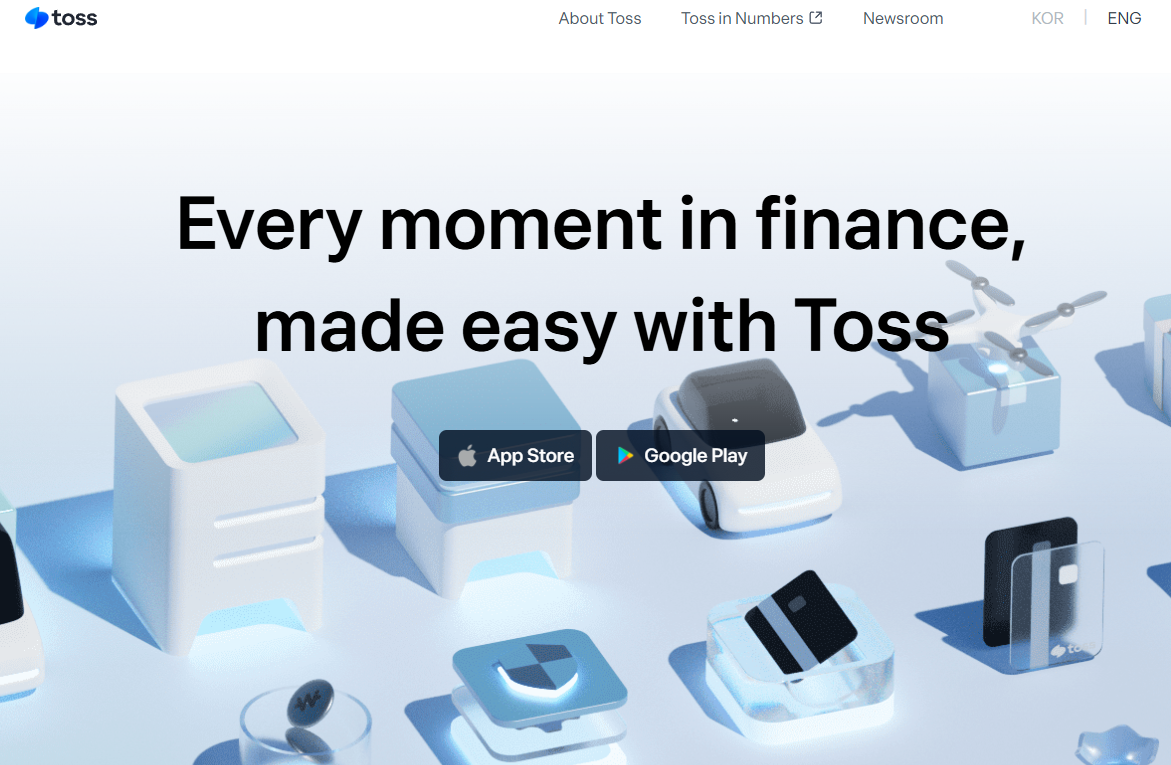
Toss app homepage. Source: Toss.im
Optimism will provide the blockchain infrastructure, while Sunnyside Labs will provide the privacy-preserving technology to shield transfers. Sunnyside is a core developer for the Optimism Collective and has been building core OP Stack infrastructure.
Seoul-headquartered Toss was launched in 2015 and claims it has more than 30 million users on its mobile application.
Related: Kiwoom eyes Bithumb stake as Korean brokerages push into crypto: Report
Payments giants test stablecoins for improved settlement
Toss’ PoC follows similar stablecoin-based initiatives from other large financial institutions in the country.
In late April, one of South Korea’s largest credit card providers, Shinhan Card, teamed with the Solana Foundation to test the commercial feasibility of stablecoin payments and the use of non-custodial wallets, after completing a joint pilot project earlier that month.
Shinhan Card said it hoped to eventually develop its own DeFi-linked services that implement blockchain oracles, a technology used to connect information in offchain and onchain environments.
Late last year, payments giant Visa also launched USD Coin (USDC) settlement services for some US-based financial institutions on the Solana blockchain in one of the more advanced examples of stablecoin projects.
Other large payment providers exploring stablecoins for improved payments and settlement include Mastercard and South Korea’s BC Card.
Magazine: The biggest blockchain upgrades still to come in 2026

TLDR
- SK Hynix completed a historic $26.5 billion capital raise through US markets, setting a record for foreign company listings
- The offering saw oversubscription exceeding seven times available shares, signaling robust investor interest
- Trading commenced on Nasdaq today under ticker symbol “SKHY”
- Despite recent 25% decline over two weeks, SK Hynix stock has surged 680% year-over-year
- Capital will finance manufacturing expansion and equipment purchases to address AI semiconductor demand
On Thursday, South Korean memory chip manufacturer SK Hynix set its American Depositary Receipts at $149 apiece, successfully completing a landmark $26.5 billion fundraising that represents the biggest US listing ever achieved by an international corporation. The semiconductor producer issued 177.9 million ADRs, with individual units representing one-tenth of a common share traded in Seoul.
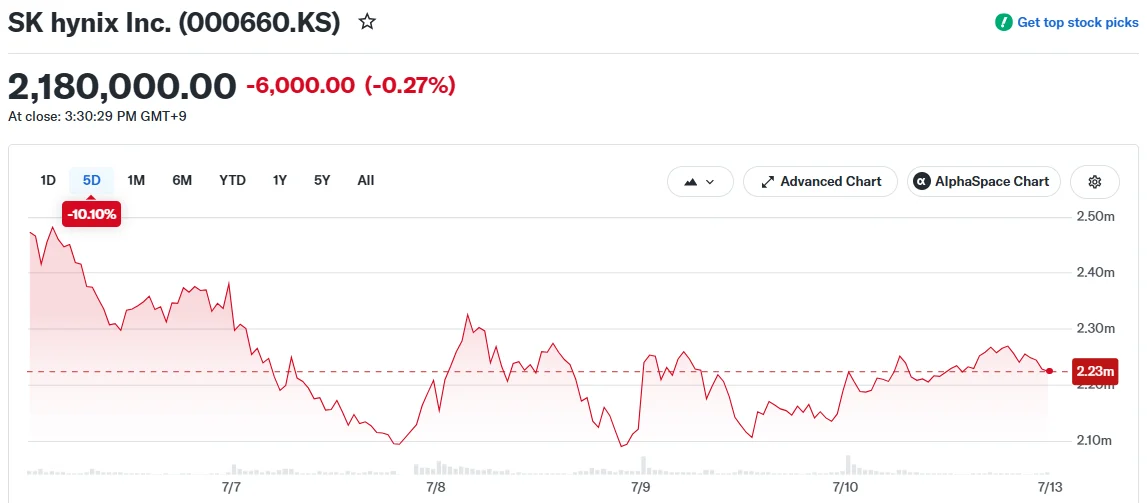
Trading activity for the new listing launched today on Nasdaq, where shares trade under the ticker symbol “SKHY.”
Investor enthusiasm for the offering proved substantial. According to a source with direct knowledge of the transaction, demand from institutional and retail buyers exceeded available shares by more than sevenfold, although SK Hynix refrained from providing official commentary regarding pricing dynamics or subscription levels.
The ADRs were established at a 2.7% premium relative to SK Hynix’s three-day average trading price preceding the offering.
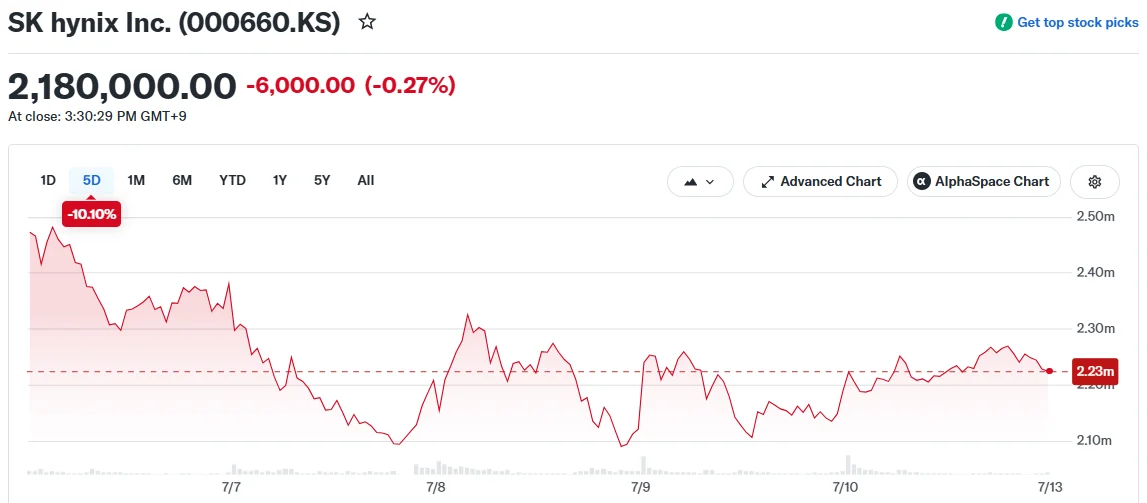
SK Hynix stock advanced 5% during Thursday’s Seoul trading session, even as shares have retreated approximately 25% across the most recent two-week period. Notwithstanding this recent correction, the stock maintains remarkable gains of 680% over the trailing twelve months.
The company’s forward price-to-earnings multiple for the next twelve months currently stands at 5.5 times — representing a decline from 7.9 times recorded at October’s conclusion — while American competitor Micron trades at 6.66 times forward earnings.
This Nasdaq listing strategy aims partially to narrow the existing valuation disparity. Micron has traditionally enjoyed advantages from immediate access to American capital markets, despite commanding smaller market share across essential memory product categories.
“SK Hynix leads on share and Nvidia proximity, Micron competes on power efficiency, US positioning, and momentum from third place,” said Daniel Newman, CEO of Futurum Group.
Funds generated through this capital raise will support construction of additional manufacturing facilities and procurement of advanced equipment necessary to accommodate accelerating artificial intelligence chip requirements.
Why Investors Are Paying Attention
SK Hynix commands the leading position globally in high-bandwidth memory chip production — essential components integrated into cutting-edge processors that drive AI data centers worldwide.
Nvidia CEO Jensen Huang confirmed last month that SK Hynix would continue as Nvidia’s primary supplier, adding that prevailing chip supply constraints are anticipated to persist for multiple years ahead.
“As long as there is demand for graphic processors and AI data centers, SK Hynix is indispensable,” said Yoo Hoi-jun, an electrical engineering professor at KAIST.
According to Rolf Bulk, head of semiconductors at Futurum Equities, the HBM market is forecast to expand from approximately $65 billion during the current year to $120 billion by 2027, ultimately reaching roughly $290 billion by decade’s end in 2030.
Listing Comes at a Crossroads for Chip Stocks
The semiconductor sector overall has experienced some momentum loss during recent weeks, as market participants express concerns about the trajectory of AI infrastructure spending expansion affecting the industry.
SK Hynix’s market debut is drawing scrutiny as an indicator of whether strong demand for memory chip manufacturers persists. Market observers and industry analysts view this listing as a gauge for the broader artificial intelligence investment landscape.
“SK Hynix holds the edge in production scale and maturity. Since demand is far outweighing supply, they have had tremendous pricing power,” said Ken Mahoney, CEO of Mahoney Asset Management.
SK Hynix’s market capitalization surpassed $1 trillion in its domestic Korean market during May. Both SK Hynix and Samsung have now joined the exclusive circle of companies valued above $1 trillion, a group that includes Nvidia, Apple, Microsoft, and Alphabet.
South Korea’s government announced initiatives in June targeting over $880 billion in collaborative investment with SK Hynix and Samsung to advance the nation’s semiconductor and artificial intelligence infrastructure.



HSBC has completed its first blockchain-based issuance of a digitally native structured product, using tokenized U.S. dollar-denominated notes in a private placement for institutional investors in Hong Kong.
Summary
- HSBC completed its first blockchain based issuance of a digitally native structured product through a private placement in Hong Kong.
- Marketnode supported the transaction by issuing the notes on blockchain and managing digital payment flows between HSBC and the investor.
- The pilot builds on Hong Kong’s growing tokenization efforts as financial institutions continue testing blockchain for capital markets.
According to HSBC, the pilot transaction involved U.S. dollar-denominated structured notes issued in Hong Kong with support from Asia-Pacific digital market infrastructure operator Marketnode, which acted as both the tokenisation agent and digital paying agent.
By issuing the notes directly on blockchain, Marketnode enabled digital issuance while also managing payment flows between HSBC and the investor. HSBC said the pilot tested how tokenisation can make the issuance, settlement, administration, and servicing of structured products more efficient for institutional markets.
Speaking about the transaction, Suvir Loomba, regional head of securities services for Asia at HSBC and a board member of Marketnode, said the issuance builds on the bank’s digital asset work and demonstrates how it is working with market participants to develop practical blockchain solutions for institutional finance.
Loomba added that tokenisation can simplify multiple stages of a structured product’s lifecycle, including issuance, settlement, administration, and ongoing servicing.
“As one of the leading issuers of structured products in Asia, we see clear potential for tokenisation to improve the efficiency of issuance, settlement and servicing, whilst creating a more scalable foundation for future product innovation,” HSBC’s head of institutional sales for Asia, Patrick Boumalham, said in an accompanying statement.
According to HSBC, the structured product pilot forms part of its digital assets strategy and demonstrates how blockchain technology can be applied to improve capital markets processes for institutional participants.
Hong Kong continues to build tokenised markets
The latest pilot adds to Hong Kong’s ongoing push to bring traditional financial products onto blockchain infrastructure.
In June, the Hong Kong Monetary Authority established a tokenized bond expert group after the government issued more than HK$6.8 billion ($868 million) in tokenized bonds across several offerings. The group includes HSBC, JPMorgan Securities, Standard Chartered, UBS, Ant Digital, HashKey Group, and other market participants, and is examining legal frameworks, market practices, and infrastructure needed to expand tokenized bond activity.
HSBC has also continued to strengthen its digital asset presence in the city. In April, the bank became one of the first institutions to receive a Hong Kong Monetary Authority stablecoin issuer license under the city’s new regulatory framework, allowing it to issue regulated stablecoins alongside Standard Chartered-backed Anchorpoint Financial.
Bitcoin (BTC) institutional demand is “not yet strong” despite positive inflows to the US spot Bitcoin exchange-traded funds (ETFs).
Key points:
- Bitcoin ETF flows reverse a ten-day losing streak, but analysis warns that demand remains weak.
- An “overwhelming” sell-off is nonetheless over, says Swissblock.
- Overall BTC demand shows a clear gap between spot and derivatives trends.
Swissblock on Bitcoin ETF outflows: “The storm has passed”
In new X commentary on Thursday, crypto investment company Swissblock called an end to the “most overwhelming” ETF sell-off in history.
“The storm has passed: The most overwhelming ETF distribution wave of this bear market has ended,” it wrote.
“As Bitcoin Risk continues easing from Capitulation Risk, Spot ETF flows have turned slightly positive again.”
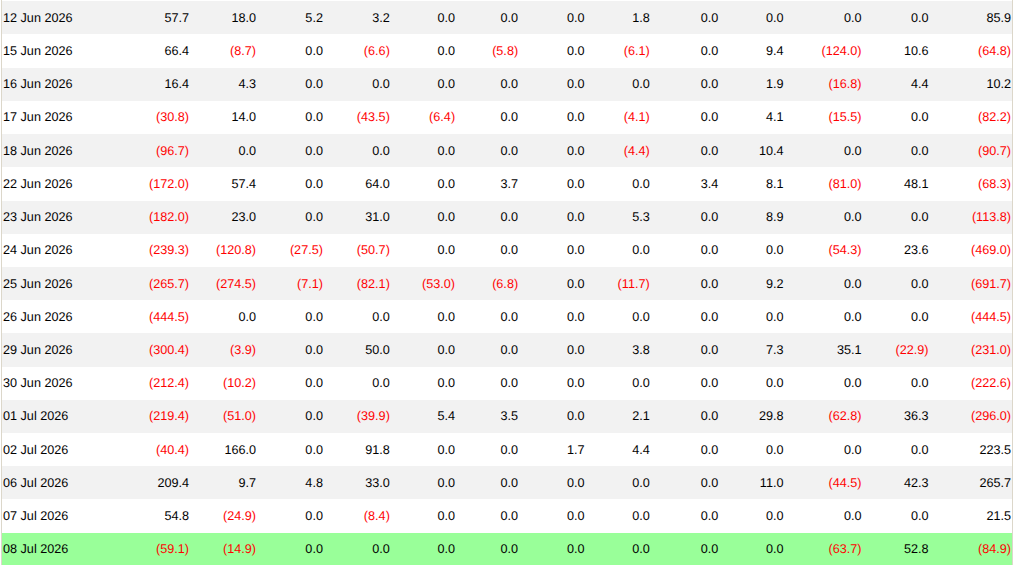
Beginning June 17, the ETFs saw ten straight days of net outflows totaling $2.7 billion, data from UK-based investment company Farside Investors confirms.
The cohort then began to reverse the trend, and saw over $500 million of net inflows over three trading days before a net $84.9 million outflow for Wednesday.
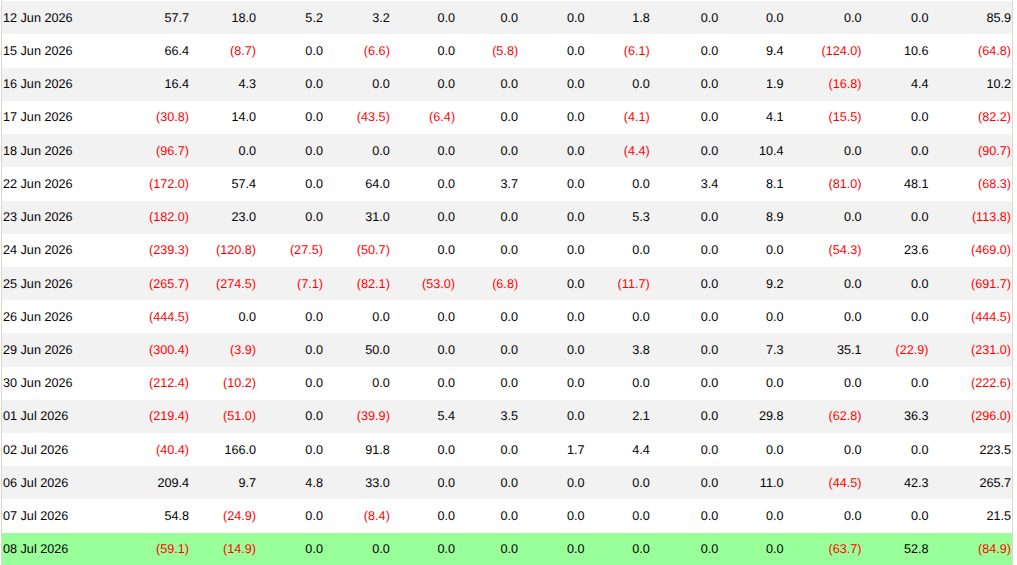
US spot Bitcoin ETF netflows (screenshot). Source: Farside Investors
Swissblock described the results as a “caveat” to the recovery signal.
“ETF accumulation is positive, but not yet strong. Institutional conviction is not returning with full force,” it added.
“Has the storm passed? Or is Bitcoin simply in the eye of the storm?”
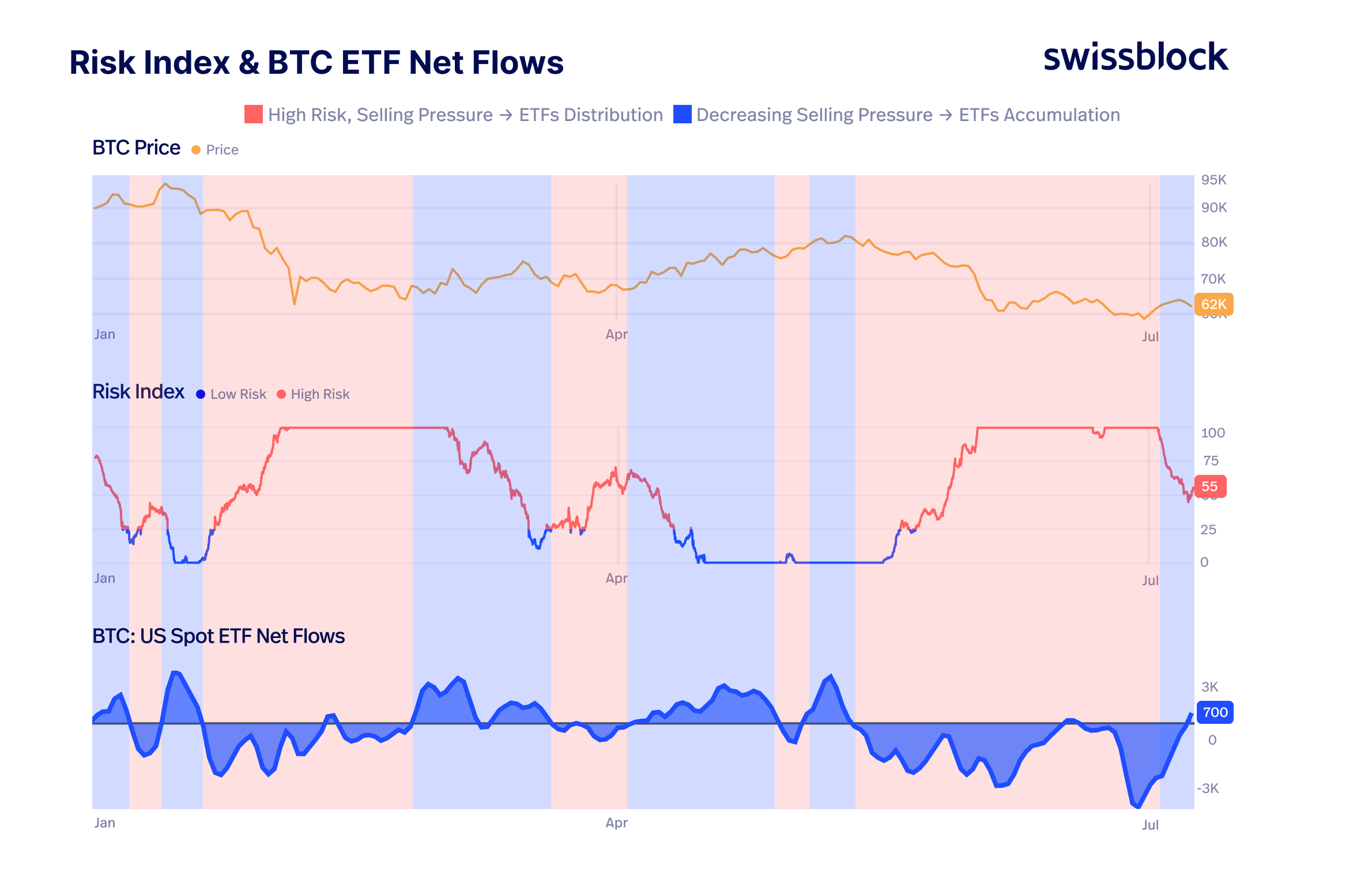
US spot Bitcoin ETF netflows. Source: Swissblock/X
Bitcoin spot markets fail to match futures demand rebound
As Cointelegraph reported, analysis sees overall demand as a key stumbling block on the way to a bullish market recovery.
Related: BTC speculators in focus as analysis says ‘textbook Bitcoin bottom’ is underway
In fresh research for onchain analytics platform CryptoQuant this week, contributor IT Tech saw conditions partially improving, albeit with a clear divide between spot and derivatives markets.
“A week ago, the 30-day cumulative demand was close to -500K BTC. Today, it’s recovered to roughly -75K BTC,” they summarized.
In that time, futures demand went from -295,000 BTC to a “slightly positive” figure, while spot demand stayed negative.
“This tells us something important. The latest bounce has been driven primarily by derivatives traders, while spot buyers are still relatively cautious,” IT Tech commented.
“Historically, the strongest and most sustainable rallies begin when both futures and spot demand move higher together.”
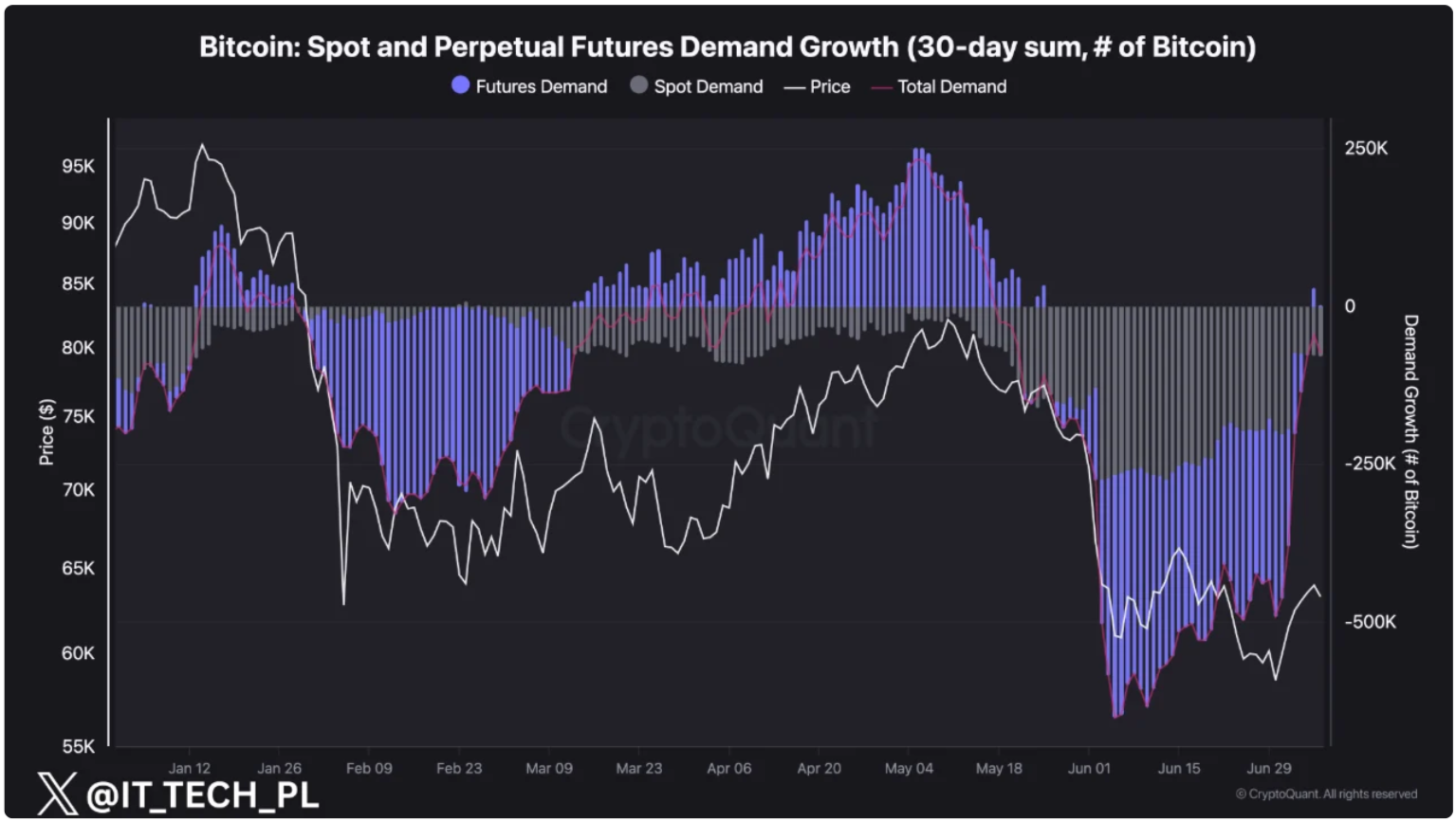
Bitcoin demand comparison (screenshot). Source: CryptoQuant


Thai police uncovered a crypto-laundering scheme in which one suspect’s wallet processed more than $122.5 million in proceeds from romance scams, as part of a global INTERPOL sweep.
The international police organization’s Operation First Light 2026 ran from January 15 to April 30. It targeted social engineering scams and the money laundering that sustains them.
INTERPOL Says Global Fraud Crackdown Uncovered 142,000 Victims
According to the news release, the global anti-fraud operation spanned 97 countries and territories, resulting in the arrest of 5,811 suspects and the interception of approximately $293 million in illicit proceeds.
Investigators identified more than 142,000 victims and froze 31,014 bank accounts linked to fraudulent activity. The operation also led to the resolution of 23,715 cases, while authorities issued 99 notices and diffusions.
INTERPOL said the operation highlighted how social engineering scams and financial fraud have grown into a significant transnational threat, impacting individuals, businesses, and governments worldwide.
“Social engineering scams continue to pose a significant threat to our society. Criminal syndicates exploit human psychology to manipulate their targets, and no nation can stay safe unless all countries are equipped and committed to jointly fighting back,” Tomonobu Kaya, Director of the INTERPOL Financial Crime and Anti-Corruption Centre, said.
Follow us on X to get the latest news as it happens
Crypto Money Laundering at the Center of a Global Sweep
The operation also highlighted several significant cases uncovered by participating countries. In Thailand, police arrested two suspects tied to a crypto laundering scheme that funneled funds from romance scams.
The operators used cross-chain token swaps to break the trail between blockchains. One suspect, aged 20, controlled a wallet that processed more than $122.5 million in 10 months, according to investigators.
In Palau, officials deported 22 people linked to hotel-based scam centres that leaned on crypto and illegal gambling sites. Enforcement stretched across several countries.
In Eswatini, police arrested 82 people and broke up a network running illegal gambling, laundering, and impersonation scams. Authorities in Singapore and Oman used I-GRIP to block a $6.6 million transfer linked to a business email compromise scam.
The cases reflect the growing role of cryptocurrency in cross-border fraud and money laundering schemes. They also highlight the increasing reliance on international cooperation to track illicit funds, dismantle criminal networks, and disrupt scams that span multiple jurisdictions.
Subscribe to our YouTube channel to watch leaders and journalists provide expert insights
The post Global INTERPOL Crackdown Exposes Crypto Laundering Behind Romance Scams appeared first on BeInCrypto.


The crypto market recorded its third straight quarter of negative returns in Q2 2026, marking its longest losing streak since 2022, according to a market review published by Bitwise.
Summary
- Crypto recorded its longest quarterly losing streak since 2022 after the Bitwise index fell 15.4%.
- Spot Bitcoin ETFs faced record quarterly outflows as digital assets moved closer to traditional stock markets.
- Stablecoin settlements, tokenized assets and prediction markets grew despite weaker prices across major crypto assets.
The Bitwise 10 Large Cap Crypto Index fell 15.4% during the quarter. Eight of its 10 assets ended the period in the red. Spot Bitcoin exchange-traded funds also recorded their worst quarter of outflows since their launch.
Crypto prices extend quarterly decline
Bitwise reported that onchain activity, trading volume and assets held in decentralized finance protocols declined during Q2. Meanwhile, crypto’s correlation with stocks increased, linking digital asset prices more closely with traditional risk markets.
The company said Q2 was “a tough quarter for crypto.” The latest decline extended the market’s run of negative returns to three consecutive quarters, the longest such period since the 2022 bear market.
Spot Bitcoin ETF outflows added to the selling pressure during the quarter. The funds have become an important source of institutional demand since their U.S. launch, but the record quarterly withdrawals showed that investors reduced their exposure as market conditions weakened.
However, ETF flows have changed direction several times during the current market cycle. Bitcoin ETFs attracted more than $3.4 billion across seven consecutive weeks of inflows by May 2026.
Stablecoins and tokenized assets continue growing
Despite lower crypto prices, Bitwise said stablecoin settlement volume reached 2.3 times the volume processed by Visa. The company added that stablecoin issuers now hold more U.S. Treasury securities than most countries.
As reported by crypto.news, adjusted stablecoin transaction volume reached $10.9 trillion in 2025, while total settlement volume reached $33 trillion under broader measurements.
Visa has also expanded its direct involvement with blockchain payments. Visa’s stablecoin settlement run rate reached about $7 billion as of March 2026.
Meanwhile, tokenized real-world assets rose 50.3% during the first half of 2026 to $32.89 billion, according to Bitwise. The sector includes blockchain-based versions of assets such as government bonds, private credit and investment funds.
The figure follows continued institutional interest in tokenization. As crypto.news previously reported, the tokenized real-world asset market approached $34 billion as Treasury products and Ethereum-based assets led the sector’s growth.
Prediction markets and crypto stocks resist downturn
Prediction market trading volume reached a record $43.2 billion in Q2. That total was almost 18 times higher than the volume recorded during the same period one year earlier.
Crypto-related stocks also performed better than major digital assets. The Bitwise Crypto Innovators 30 Index rose 30.6% during the quarter, even as the firm’s large-cap crypto index recorded a double-digit loss.
In addition, Bitwise said Hyperliquid, PancakeSwap and Aave each generated about $900 million in revenue during the previous year. The data points to continued demand for decentralized trading, lending and derivatives platforms.
Hyperliquid processed more than $41 billion in seven-day perpetual futures volume by May 2026. Its open interest also reached approximately $9.4 billion.
Onchain data remains above the 2022 bottom
Bitwise compared current market data with conditions at the bottom of the 2022 crypto downturn. Ethereum transaction activity has increased by about 13 times since then, while DeFi total value locked has risen by more than 60%.
Stablecoin assets under management have also roughly doubled from the 2022 market low. Bitwise said, “It’s only prices that haven’t kept pace.”
The company said the crypto industry is now about twice the size it was at the previous cycle’s bottom. However, Bitwise also warned that stronger network activity and wider institutional participation may not prevent further short-term price weakness.
Disclosure: This article does not represent investment advice. The content and materials featured on this page are for educational purposes only.
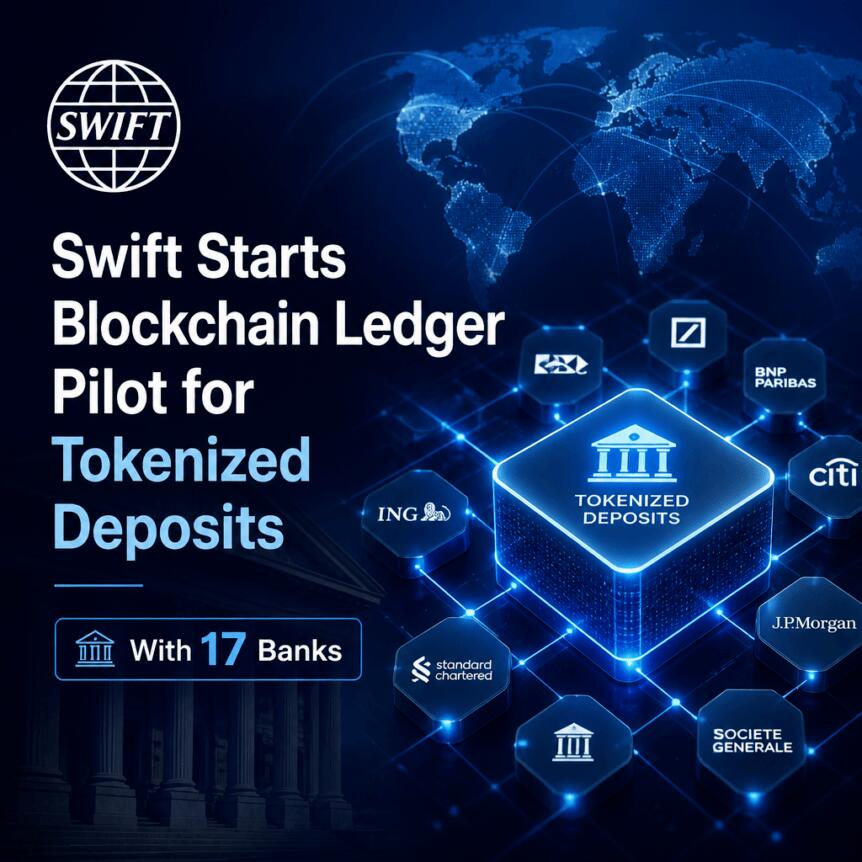
SWIFT says its blockchain-based ledger for financial messaging is now ready for initial use, marking a meaningful step toward giving banks a more clock-agnostic way to move value across borders. After nine months of development, SWIFT announced that 17 major institutions are preparing to pilot cross-border payments using tokenized bank deposits on the platform, with an initial controlled go-live phase expected to follow.
According to SWIFT, participating banks—including HSBC, Citigroup, BNP Paribas, UBS, ANZ, DBS, and Standard Chartered—will test how tokenized deposits can support 24/7 cross-border payments, including overnight and weekend transactions, while keeping the compliance, credit, risk, and control standards built into existing payment processes.
Key takeaways
- SWIFT’s blockchain ledger is reported as ready for initial use after nine months of development.
- 17 banks plan to pilot cross-border transfers using tokenized bank deposits on the SWIFT platform.
- The initiative targets 24/7 settlement behavior, extending payment availability beyond traditional banking hours.
- SWIFT emphasizes that the approach aims to preserve existing compliance, credit, risk, and control requirements.
- SWIFT indicated further expansion of the ledger’s functionality and availability after the first limited rollout.
From messaging to tokenized deposits
SWIFT’s role in global finance is largely about connectivity: its interbank messaging network links more than 11,500 banks and financial institutions across over 200 countries and territories. While SWIFT already supports rapid message delivery on its existing rails—SWIFT said 75% of payments reach the beneficiary bank within 10 minutes, often in seconds—the new effort focuses on what happens when settlement needs to operate regardless of the time of day.
The company’s announcement frames the ledger as an extension of SWIFT’s “resilient global platform,” intended to help “regulated digital assets” move across borders with greater velocity and flexibility. In remarks shared in the announcement, Thierry Chilosi, SWIFT’s chief business officer, said the ledger allows tokenized value to move internationally while maintaining the same levels of resiliency, security, and compliance that global finance expects.
For market participants, the practical significance is not just the use of blockchain, but the target operational outcome: keeping established governance structures while enabling payment flows that are less dependent on bank working hours.
Why the pilot matters for cross-border payments
In SWIFT’s description, the pilots are designed to test cross-border payment capabilities using tokenized deposits, without discarding the compliance and risk frameworks embedded in current processes. That emphasis is important because many tokenization efforts struggle with the same central question: how to integrate new settlement mechanics into existing regulatory and institutional controls.
SWIFT said the ledger will allow participating banks to support 24/7 cross-border payments, explicitly including overnight and weekend activity. That directly addresses a longstanding operational bottleneck in traditional payment infrastructure, where cut-off times and settlement windows can constrain responsiveness—especially for time-sensitive transfers.
It also places SWIFT in the middle of a broader shift in financial infrastructure: banks are increasingly exploring tokenized assets and settlement, but they want that evolution to happen within trusted, regulated systems rather than as isolated experiments.
Part of a wider push toward tokenized settlement
SWIFT’s move lands amid a series of parallel developments from major financial players that point to renewed momentum in tokenized deposits and securities infrastructure.
Earlier, a consortium of banks—including JPMorgan Chase, Bank of America, Citibank, Barclays, BNY, and Wells Fargo—announced plans to launch a tokenized deposit network in the first half of 2027. The Clearing House would operate the network and connect traditional payment rails with digital asset infrastructure to enable 24/7 settlement.
In the markets sphere, the New York Stock Exchange previously partnered with tokenization platform Securitize to build blockchain-based infrastructure for tokenized stocks and exchange-traded funds. Separately, the parent company of the NYSE, Intercontinental Exchange (ICE), has also shared plans for a tokenized securities venue aimed at 24/7 trading, instant settlement, stablecoin-based funding, and onchain settlement.
Taken together, these efforts suggest a sector-wide attempt to reduce the friction between “tokenized” workflows and the operational realities of regulated financial institutions. SWIFT’s pilot is another data point in that transition, particularly because SWIFT is not an issuer or a single-venue market—it is the messaging backbone for interbank communication globally.
What to watch next after initial go-live
SWIFT said it plans to expand the ledger’s functionality and availability after the initial controlled go-live phase. That sequencing matters: a controlled rollout typically helps institutions validate technical performance and governance requirements before scaling participation or expanding use cases.
For users ranging from treasury teams to payments operators, the next milestones will likely center on practical interoperability—how efficiently tokenized deposit transfers work across participating institutions and how smoothly the ledger integrates into existing operational and compliance routines. Investors and builders in digital asset infrastructure will also want to monitor whether SWIFT’s ledger becomes a repeatable baseline for cross-border settlement beyond the pilot group, or whether it remains a narrow-use experiment before wider adoption.
In the near term, the most important question is whether the pilots can demonstrate that 24/7 tokenized cross-border payments can coexist with established financial controls at scale. If SWIFT’s expansion follows the same logic, the ledger could become a significant bridge between traditional messaging standards and the settlement expectations of modern commerce.
Perpetual futures are on track to become one of the dominant trading instruments in global finance, with decentralized exchange Hyperliquid demonstrating how blockchain-based infrastructure could challenge traditional markets, according to Pantera Capital.
The blockchain-focused asset manager said in a Wednesday X post that perpetual futures offer structural advantages over traditional derivatives, including 24/7 trading, no contract expiries, simpler position management and continuous price discovery, making them increasingly attractive beyond crypto markets.
Pantera, an investor in the Hyperliquid ecosystem, said Hyperliquid has become the leading example of that shift by expanding perpetual futures beyond cryptocurrencies into equities, commodities and stock indexes as part of founder Jeff Yan’s vision of “housing all of finance.”
Hyperliquid’s growth has drawn attention from traditional finance, including NYSE parent Intercontinental Exchange (ICE), whose CEO, Jeffrey Sprecher, urged regulators to create a “level playing field” for launching 24/7 onchain perpetual futures contracts.
Pantera Capital said Hyperliquid has increased the market share of onchain perps, as DEX perps volumes rose to 14% of centralized exchange (CEX) perps volume, up from less than 1% in early 2023 when Hyperliquid launched.
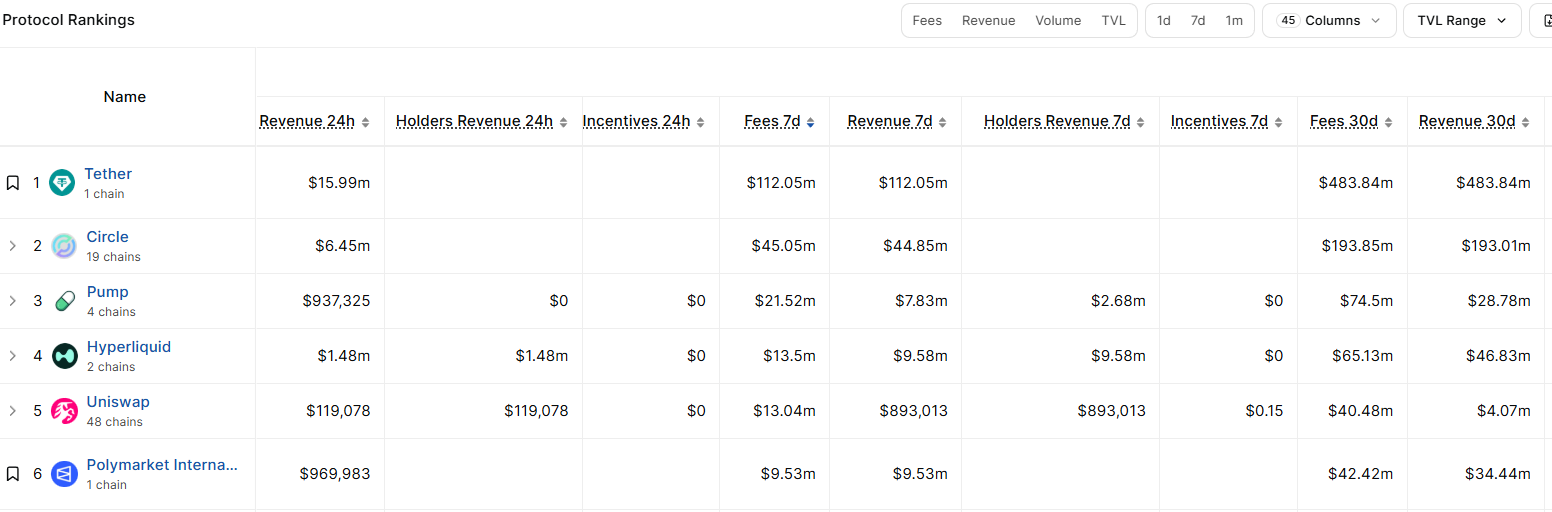
Hyperliquid accounts for roughly 40% of onchain perpetual futures trading volume, according to Pantera. It ranks as the fourth-largest fee-generating protocol in the crypto industry, generating $13.5 million in weekly fees in the past seven days, according to DefiLlama data.
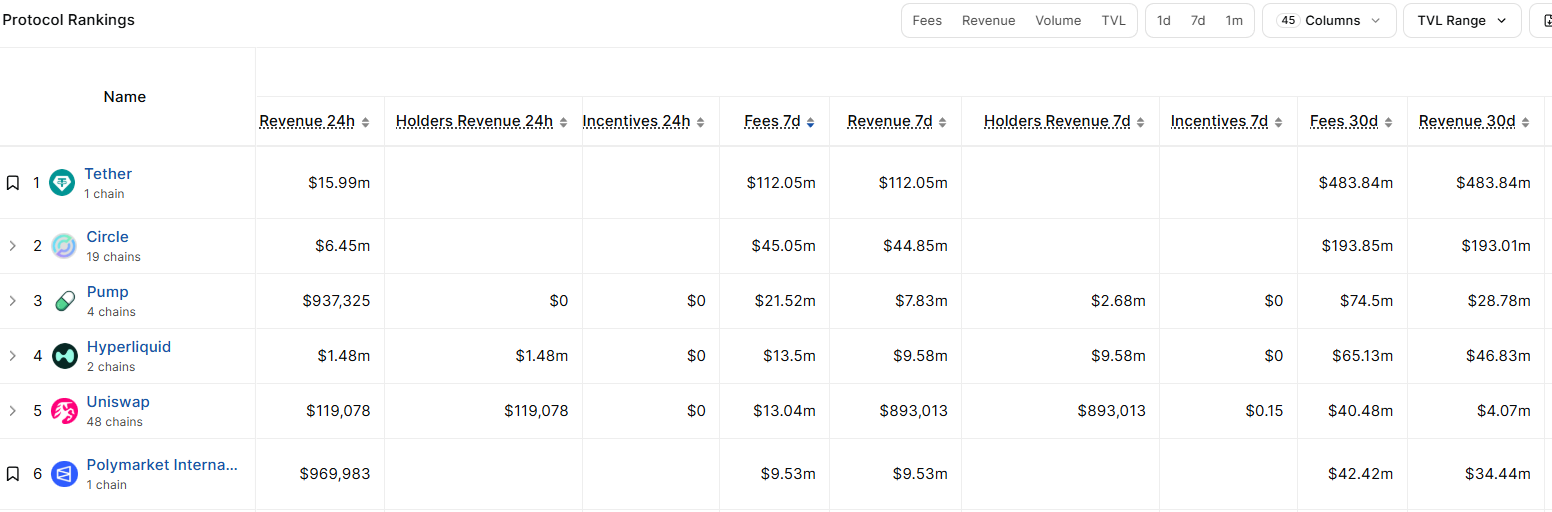
Top protocols by weekly fees generated. Source: DefiLlama
Related: UK payments blueprint outlines tokenized payments for ‘multi-money ecosystem’
Traditional finance embraces 24/7 markets
Cryptocurrency platforms and TradFi institutions are bringing more traditional investment products under blockchain wrappers.
On May 22, OKX announced plans to launch perpetual futures based on ICE’s Brent crude and West Texas Intermediate crude benchmarks under a partnership with the exchange operator.
Earlier in March, the NYSE partnered with tokenization platform Securitize as part of a broader effort to develop blockchain-based stock trading infrastructure with 24/7 trading and settlement for Wall Street.
In January, the NYSE’s parent company, the Intercontinental Exchange (ICE), shared plans for a tokenized securities venue designed for 24/7 trading, instant settlement, stablecoin-based funding and onchain settlement.
Magazine: The 5 types of real world assets being tokenized fastest onchain
The minutes from the Reserve Bank of Australia’s (RBA) June meeting, released on 30 June, suggested that policymakers are not yet ready to rule out further policy tightening. Board members noted persistent excess demand and broad-based inflationary pressures across the economy, leaving the door open for another interest rate increase if required. Against this backdrop, the interest rate differential between Australia and the United States continues to support the Australian dollar, particularly as markets have scaled back expectations for further tightening by the Fed in the coming months. This combination of a relatively hawkish RBA and a more cautious Fed has helped underpin demand for the Australian dollar, although further macroeconomic data from both economies will likely be needed to reinforce this trend.
Technical Picture
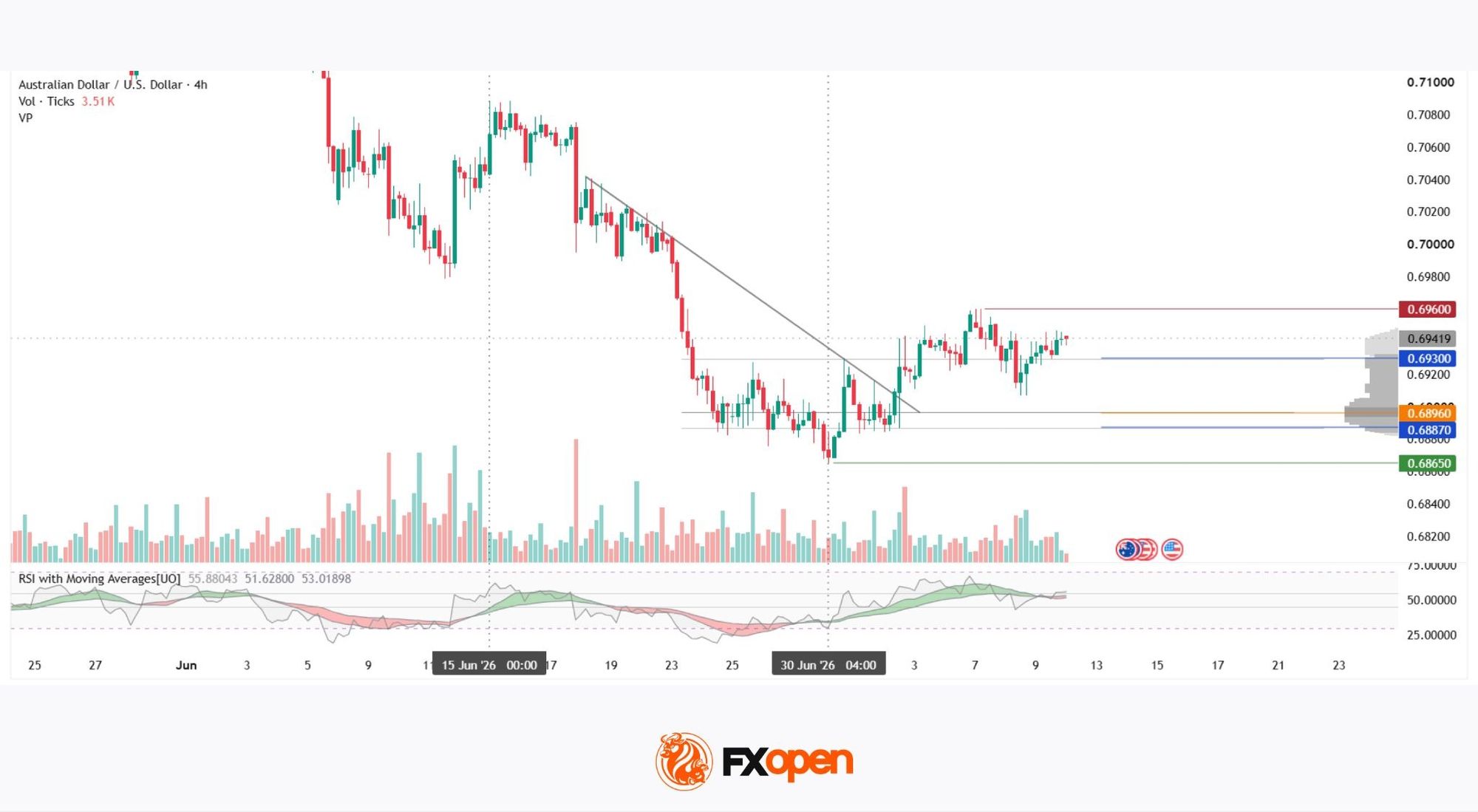
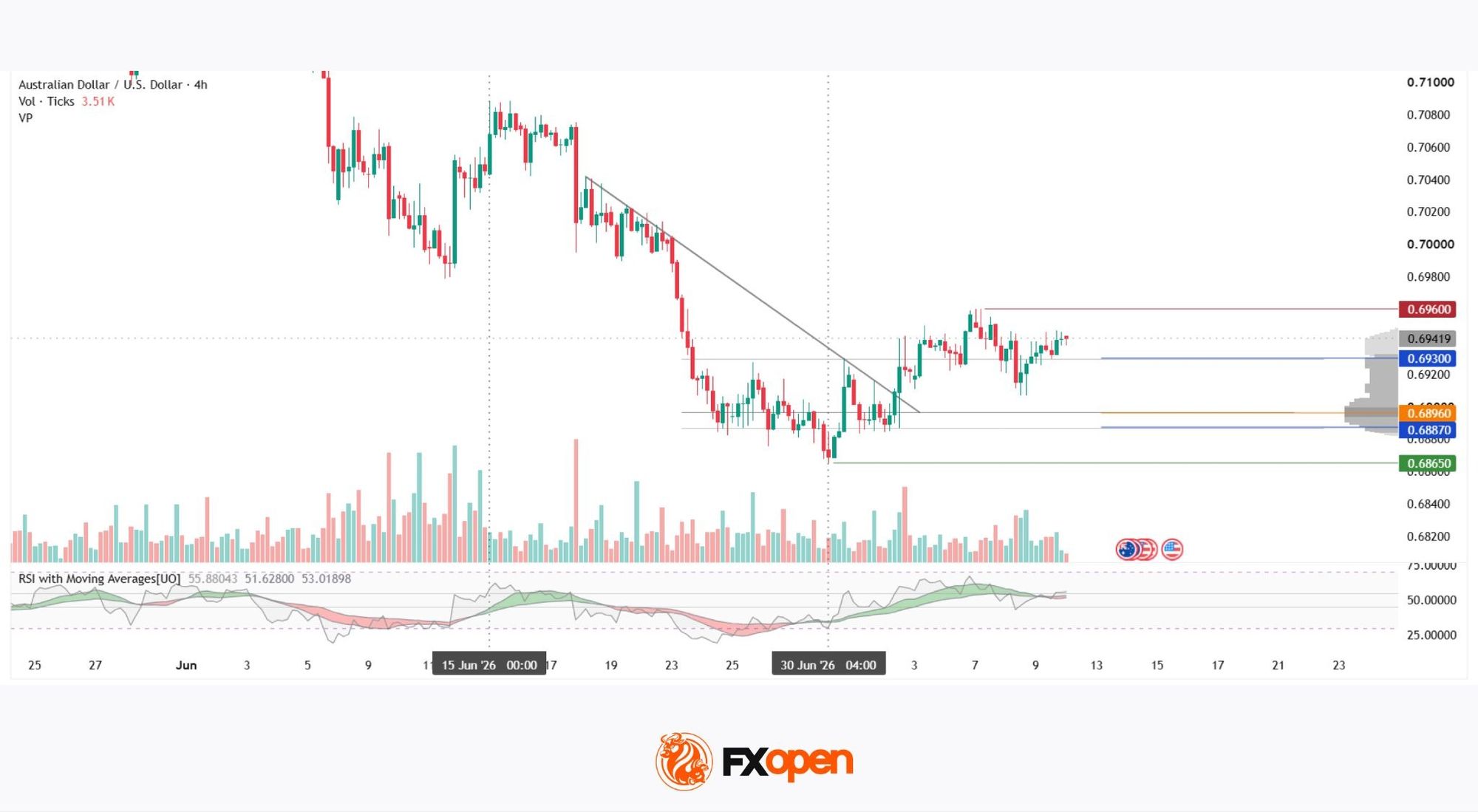
On the 4-hour chart, AUD/USD recovered after declining from the 0.7080 area to June lows near 0.6865. During the rebound, the pair broke above its descending trendline, which some market participants may interpret as a sign that the previous downtrend has come to an end.
The pair is currently trading above the upper boundary of the current market profile at 0.6930 and is approaching the local high around 0.6960. Below the current price lies the Point of Control (POC) at approximately 0.6896, followed by the lower boundary of the market profile at 0.6887. This area could be viewed by buyers as a potential support zone.
Beneath this range sits the green support level 0.6865, representing the next significant reference point should a deeper correction develop. The RSI + MAs indicator remains close to the equilibrium zone, with readings of 55, 51, and 53. The moving averages are broadly flat, suggesting a lack of strong momentum and indicating that the market may be pausing before choosing its next direction.
Summary
The pair’s position above the market profile and the break of the descending trendline may be viewed as supportive for buyers. However, the approach towards the 0.6960 resistance area could limit further gains unless additional fundamental catalysts emerge.
Trade over 50 forex markets 24 hours a day with FXOpen. Take advantage of low commissions, deep liquidity, and spreads from 0.0 pips (additional fees may apply). Open your FXOpen account now or learn more about trading forex with FXOpen.
This article represents the opinion of the Companies operating under the FXOpen brand only. It is not to be construed as an offer, solicitation, or recommendation with respect to products and services provided by the Companies operating under the FXOpen brand, nor is it to be considered financial advice.
Crypto World
JPMorgan Warns: Private Bank Blockchains Threaten Bitcoin (BTC) More Than Strategy Sales

Key Takeaways
- JPMorgan identifies Strategy’s bitcoin selling as a minor concern compared to structural threats
- Private blockchain infrastructure adoption by financial institutions represents the primary challenge
- Financial institutions favor permissioned blockchains offering identity verification, confidentiality, and regulatory alignment
- Digital bank deposits on private chains could diminish demand for public blockchain stablecoins
- The tokenized real-world asset sector valued at $50 billion may increasingly migrate to private systems
While Strategy’s bitcoin selling activity has created concern among market participants, JPMorgan’s research team suggests cryptocurrency investors should focus their attention elsewhere.
According to a client briefing authored by managing director Nikolaos Panigirtzoglou and his team, the more substantial challenge originates from legacy financial institutions constructing blockchain infrastructure that circumvents public networks such as Bitcoin and Ethereum.
Should critical financial functions including tokenization, payment processing, and transaction settlement migrate toward private, controlled infrastructure, public blockchain networks may experience diminished transaction activity, reduced market liquidity, and constrained capital inflows.
“Strategy does not represent the primary structural challenge facing bitcoin,” the research team stated. Their analysis emphasizes that institutional blockchain implementation is completely sidestepping public cryptocurrency networks.
Strategy currently maintains custody of approximately 4% of bitcoin’s total circulating supply. The company’s structured Bitcoin Monetization Program has established bidirectional market flow. While JPMorgan recognizes this arrangement may generate intermittent downward price pressure, analysts characterized it as a subordinate consideration.
Financial Institutions Favor Permissioned Networks
Traditional financial entities are migrating toward permissioned blockchain architectures because these systems deliver privacy management, customer identification compliance, legal recourse mechanisms, and regulatory clarity — capabilities that public blockchains struggle to replicate.
JPMorgan referenced its proprietary Kinexys platform as a case study. This permissioned network has facilitated more than $4 trillion in aggregate transaction volume for institutional participants.
The Bank for International Settlements has similarly cautioned against deploying public blockchains for critical financial infrastructure components. Instead, the BIS advocates for permissioned unified ledger frameworks.
Financial institutions are engineering tokenized deposit instruments — digitized representations of conventional bank deposits operating within established banking regulations and deposit protection schemes. Widespread implementation of these instruments could substantially decrease institutional reliance on stablecoins for payment functions.
SWIFT’s blockchain exploration and sovereign digital currency initiatives including the digital euro and digital yuan may additionally reinforce these regulated alternative systems.
Tokenized Asset Market Faces Strategic Inflection
The market for tokenized real-world assets presently stands at approximately $50 billion in value. A considerable portion currently resides on Ethereum, though JPMorgan analysts attribute this distribution primarily to initial experimentation phases.
As institutional participation expands, asset issuance, custody arrangements, and settlement operations may progressively transition toward private infrastructure frameworks that more effectively address identity management, confidentiality standards, and governance protocols.
Public blockchain networks may retain relevance for asset distribution and constrained secondary market activity, but could experience declining centrality in the ecosystem.
The research team additionally highlighted the DTCC’s development of tokenization processes on permissioned infrastructure, while noting Securitize has deployed tokenized assets across Solana and Avalanche through regulated channels.
Even assuming the CLARITY Act achieves legislative passage this year, JPMorgan maintains it may prove insufficient to address these fundamental structural challenges. The analysts suggested the legislation could potentially accelerate banks’ tokenized deposit issuance capabilities, thereby reinforcing their competitive positioning.
The team indicated their assessment could shift if public and private blockchain ecosystems evolve in parallel, stablecoins expand under enhanced regulatory frameworks, or bitcoin sustains its trajectory primarily as a value preservation asset.
The second-largest cryptocurrency has rebounded from the local bottoms witnessed last month, and now multiple analysts believe the price is ready to jump even higher.
Growing institutional interest supports the bullish thesis and could indeed pave the way for a more substantial upward move.
$2K Comes Next?
As of press time, ETH trades at around $1,750, representing an 8% increase over the past week and a 17% rise from its June low. X user Ted noted that the asset recently tapped the $1,820-$1,850 resistance zone but got rejected. At the same time, he highlighted ETH’s ability to hold the $1,750 support and predicted that a decisive breakout could open the door for a rally toward $2,000.
Earlier this week, Poseidon claimed that ETH has formed a double bottom under $1,800 and wondered why some people expect a decline given how bullish this pattern typically is.
“ETH to $2,500 before September,” they added.
For his part, Ali Martinez said that the asset has recently tested the $1,580 support, reminding that in recent years this specific level has served as “a primary demand zone, halting corrections and triggering major upward expansions.” He noted that in October 2023, this setup was followed by a 149% pump, while last year it secured the floor, fueling a massive 203% explosion.
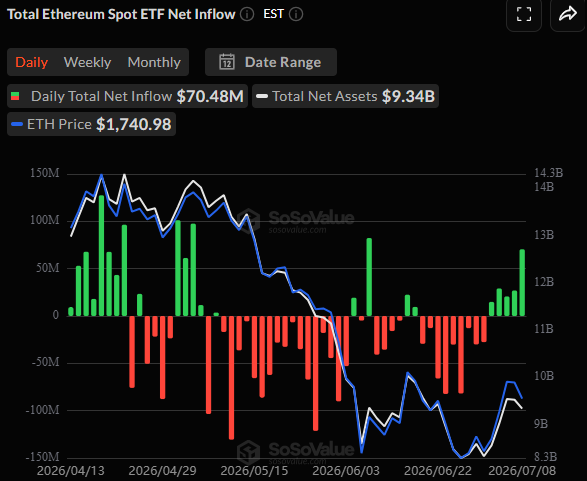
The renewed interest from institutional investors reinforces the positive outlook. Data show that spot ETH ETFs have seen five consecutive green days, the longest streak since April. This means that pension funds, hedge funds, and other conservative investors have increased their exposure to the asset, forcing BlackRock, Fidelity, Franklin Templeton, and other financial behemoths to purchase ETH, thus setting the stage for a more substantial upswing.
How About a New Pullback?
Ethereum’s Relative Strength Index (RSI) indicates that bulls may suffer more pain in the near future. The ratio has increased to 70, meaning that the asset has entered overbought territory and could be due for a correction. The technical analysis tool ranges from 0 to 100, and readings below 30 are considered bullish zones.

Some popular analysts support the theory that ETH hasn’t reached its cycle bottom yet. An example is the popular X user KALEO, who believes that a potential crash to $1,000 would occur before a possible spike to $5,000.
The post Ethereum (ETH) Rises 8% Weekly: Is a Bigger Pump Coming Next? appeared first on CryptoPotato.

SK Hynix (SKHY) Makes Historic Nasdaq Debut With Record $26.5B Offering

Mom Addresses AI Video Amid Investigation

Loch Lomond jet skis crash as authorities warn against ‘reckless behaviour’ in soaring temperatures

No Jackpot Winner as $257 Million Prize Rolls Over to $269 Million Monday Draw

Renter of Home in Anne Heche Crash Denies Settlement With Son

Weekend Open Thread: Staud – Corporette.com

RBI #CRYPTO BAN EXPLAINED – WHY ITS STUPID INDIA SHOULD REGULATE NOT BAN #shorts

Gold And Crypto Live Trading || 08 JULY || Vivek Yadav #btc #crypto #gold

I lent my dad hundreds of thousands in my early twenties. Money I’ll never see again #family #shorts
-

 Fashion7 days ago
Weekend Open Thread: High Hopes
-
 NewsBeat5 days ago
Taylor Swift and Travis Kelce wedding staffer hilariously struggles to keep her cool while checking in megastars
-

 Crypto World7 days ago
Standard Chartered Secures MiCA License as ESMA Adds 37 New Crypto Firms
-

 Fashion4 days ago
Open Thread: What Great Books Have You Read Recently?
-

 Politics7 days ago
The House | “Reframing the debate from a binary discussion of winners and losers”: Yuan Yang reviews ‘We Are Not Machines’
-

 Fashion22 hours ago
Loro Piana Fall 2026 Enters Houston’s Art Scene
-

 News Videos3 days ago
Whats Hidden Inside This Cash Register? #treasure #reselling #money
-
 Tech3 days ago
Anthropic’s new “J-lens” reveals a silent workspace inside Claude that mirrors a leading theory of consciousness
-
Crypto World7 days ago
ESMA Expands Crypto Register by 37 Firms Following MiCA Transition Period
-

 Business4 days ago
AXT Shares Jump Nearly 14% as Semiconductor Materials Maker Rebounds on AI-Linked Indium Phosphide Demand
-

 Sports3 days ago
Joshua Pacio ‘more complete’ ahead of ONE rematch vs Malachiev
-
Crypto World4 days ago
SK hynix (000660.KS) Stock Dips as $28B Nasdaq ADR Offering Drives AI Memory Expansion
-

 Crypto World5 days ago
South Africa proposes crypto tax guidance under existing rules
-

 News Videos4 days ago
Best Time to Enter Small Caps Right Now? Another Bull Run? | Financially Free
-

 Tech5 days ago
Lenovo laptops are now shipping with YMTC SSDs, a sign of Chinese NAND entering the mainstream
-
Sports3 days ago
We have punished the disrespect
-

 News Videos4 days ago
Avoid entering in FOMO #bitcoin #cryptocurrency #trading #scalping
-

 Tech2 days ago
Anthropic brings Claude Cowork to mobile and web as usage data shows most users aren’t coding
-

 Tech6 days ago
Neuralink Threads Its Way Straight Through the Brain’s Armor
-

 Crypto World4 days ago
$1,000 Credit Alert! BlockDAG X Exchange Pre-Registration Now Officially Open, Polkadot Dips & Zcash Rebounds
You must be logged in to post a comment Login