If English devolution deepens under Burnham the competitive pressures on Wales will increase
09:40, 10 Jul 2026Updated 09:49, 10 Jul 2026
Andy Burnham.(Image: Peter Byrne/PA Wire)
For Wales the prospect of an Andy Burnham premiership should not be viewed through the usual PR-driven prism of Labour politics or Westminster personalities.
The more important question is what his approach to power and economic development would mean for a nation that already has devolved government yet still struggles to turn it into a sustained economic advantage.
Advertisement
Burnham’s political appeal has always rested on something different from the standard Westminster offer. He has consistently spoken the language of place and built a reputation in Greater Manchester around transport, housing, skills, local accountability and a more muscular form of regional leadership.
Whether one agrees with every aspect of his record or not, he has shown that English city regions can become serious political and economic actors in their own right.
That is why Wales should pay close attention because if a Burnham-led UK Government were to accelerate devolution within England, then the implications for Wales could be significant.
Not because such a policy would be anti-Welsh, but because it could create a much more competitive set of English regions, each with stronger leadership, clearer economic priorities and greater freedom to act.
Advertisement
For years, Wales has often compared itself with England as a whole, which is the wrong comparison because the real competition increasingly comes from Manchester, Birmingham, Liverpool, Leeds, Bristol and Newcastle, each of which is trying to position itself as a destination for investment, talent, innovation and infrastructure.
If those places are given more power over skills, transport, planning, housing, business support and inward investment, they will not wait for Wales to catch up.
That is the challenge, and Wales already has a devolved government, its own economic development responsibilities, its own education system, and its own ability to shape policy in areas that matter directly to business. Yet too often, the machinery of economic development in Wales feels slow and fragmented, with little visible urgency in the basic task of growing the Welsh economy.
If English devolution deepens under Burnham, the competitive pressures on Wales will increase in five areas. The first is inward investment, and a powerful mayoral authority with a clear proposition can go to investors and say, with confidence, what it stands for, which sectors it wants to build, what infrastructure it can offer, and how quickly it can help firms make decisions.
Advertisement
Wales should be able to do the same, but too often our proposition is obscured by institutional complexity and inter-regional competition.
The second is skills, and Burnham has long understood that local economies cannot be transformed if the skills system is disconnected from employers. If English regions gain more influence over training, employment support and technical education, they will be able to align their workforce more closely with growth sectors.
Wales already has many of these levers but having powers and using them well are not the same thing, and our further education colleges and universities need to be part of a much more coherent national mission than they have been for the last 27 years.
The third is infrastructure, and Greater Manchester’s transport agenda has been central to Burnham’s identity as a leader. He understands that buses, trains, housing and employment sites are not separate issues, but shape whether people can access jobs, whether firms can recruit and whether places can grow.
Advertisement
Wales cannot afford to treat infrastructure as a series of disconnected projects. Whilst South East Wales has benefited from public investment, the rest of Wales – especially North Wales – has been left behind.
The fourth is political influence, and whilst a Burnham premiership might be more sympathetic to places outside London, it could also mean that powerful English mayors become even more influential within Whitehall. They will be in the room arguing for funding, freedoms and investment, and Wales cannot assume that its status as a devolved nation automatically gives it priority.
The fifth is enterprise, and this is where the issue becomes most urgent, as Wales lacks enough businesses. Our business density remains below the UK average, and our start-up and scale-up rates are not where they need to be.
A more entrepreneurial England, driven by assertive regional leadership and stronger local economic tools, would place Wales under even greater pressure unless we respond with a serious strategy for business creation and scale-up of our own.
Advertisement
None of this means we should oppose further English devolution as there is no long-term benefit to Wales in an over-centralised neighbour dominated by Whitehall and London. But if English regions are given new powers, the Welsh Government needs to ask itself a harder question, namely what have we done with the powers we already have, and what more can we do?
It is easy to call for more devolution, but harder to show that existing powers are being used with sufficient purpose, especially when Wales desperately needs a sharper economic development model, business-facing economic leadership, and backing for entrepreneurs.
Above all, Wales needs to take competitiveness much more seriously. An Andy Burnham premiership would not necessarily weaken Wales as it could create an opportunity for a new economic settlement across the UK, one in which places outside London finally receive greater power, attention and resources.
But it will weaken Wales if we respond passively, and if English city-regions are given more tools and use them with ambition while those running our nation continue with slow decision-making and institutional caution, the gap will widen.
Advertisement
And that won’t be because England has too much devolution, but because Wales has failed to make the most of its own.
That is the real lesson, and a Burnham premiership may simply expose what has long been true, namely that Wales cannot rely on constitutional status alone.
If increased English devolution forces Wales to become more ambitious, it may prove a useful shock, but if it merely leaves us complaining from the sidelines while the English regions get on with the job, then we will have no one else to blame but ourselves.
To paraphrase Apollo 13’s Jim Lovell’s actual fateful utterance to Mission Control in 1970—not the word-smithed movie version, but the real one—“Okay, Houston, we’ve had a problem here,” Horizon Central had a problem several weeks ago, too. But a good one, to be sure, which is a lot of client questions. Not too many, that’s not the problem. Just too many to do them all justice in one sitting.
Why not just answer and move on? Some can be answered succinctly. Others require a certain minimum background and defining of terms. The standard P/E ratio might be a meaningless or misleading valuation measure for a certain type of company, but the reason needs to be explained, as well as why an alternative one is more suitable. It might be necessary to describe a scenario for how the valuation realization will develop over time. Enough information so that the explanation makes sense and isn’t just a planted axiom—an unsupported assertion that can make an argument seem logical at the start, with everything thereafter resting on a false foundation, or no foundation at all.
Advertisement
Like this sort of familiar, breezy assertion: “We like XYZ-sector here, it’s pulled back from its risk-on highs and offers pretty good value now at the lower end of its recent trading range, and consensus earnings estimates have bottomed out.” Does that really tell you anything useful other than what the share price has done and what other people think about that?
Me, I’m just asking questions here, but are we talkin’ the Mag 7, at a P/E of only 24.8, which is cheaper than the 29.6 of 12 months ago? I heard that just recently. Or are we talkin’ the Mag 7, two of which have negative free cash flow and one of which trades at 700x free cash flow? Ordinarily, analysts don’t include negative figures in valuation averages. Let’s give these two companies the benefit of the doubt, and just call it an even 100x, so that all seven companies can be averaged. The group trades at 150x run-rate free cash flow, based on the most recent reporting periods.
In typical calculations, non-cash stock compensation is usually adjusted in free cash flow. We did NOT do that in this exercise. If a company didn’t utilize stock options, you’d think employees would demand cash instead, so it really is an operating expense—and dilutes shareholder returns even as stock.
Because, on a run-rate basis across the Mag 7, it amounts to $108 BILLION! One approach to a superfluity of questions is to:
Advertisement
(i) divide and conquer.
That’s why we held a roundtable-type webinar several weeks ago about the rapidly deteriorating business model of the five AI data-center hyperscalers, four of which are members of the Mag 7. The plan was to spend a generous amount of time on a topic that’s relevant to anyone exposed to the equity markets, thereby freeing up time at this Quarterly Commentary for issues more directly relevant to our portfolio holdings. At the table was one of our analysts and private fund managers, Fredrik Tjernstrom, along with James Davolos, our Director of Research and manager of the Inflation Beneficiaries ETF. Fredrik writes our short-sale report, The Devil’s Advocate. His May fundholder letter1 was essentially a sell recommendation on those AI data-center companies. We couldn’t accommodate a live audience at that roundtable, since we’re moving offices, but we will be able to at the next one.
As best-laid plans of mice and men—and luck—would have it, there were way more questions about other topics than about the data centers. We addressed many of them at the roundtable, but the overflow will supersede some of what had been planned for today, and there remain more than we can adequately handle today.
Questions, for example, about—and I quote—the “stunning” decline in the price of Miami International Holdings (MIAX) stock in response to the potential threat of the new prediction markets like Kalshi. MIAX, by the way, has actually done better than the other securities exchanges, and it’s no lower now than it was a few months ago.
Advertisement
There were specific questions about the other exchanges and the negative implications of the recent regulatory approval of perpetual futures contracts. And about why we liquidated mineral royalty positions. And about the short- and long-term outlook for cryptocurrency, and whether our bitcoin thesis is still the same as in 2015. And about gold. And about data center project development on TPL land, plus requested updates on related companies like LandBridge (LB), PriairieSky, and WaterBridge (WBI). And a request to describe some initial new portfolio positions that relate primarily to Spin-Off strategy accounts, which are somewhat different than Core Value. You should contact your relationship manager about that one—and, if necessary, ask for me. All legitimate questions. Plus a couple more that will be addressed here, because they pretty much require a response.
Oh, and we were asked to please keep this Commentary to a maximum of 90 minutes. Another approach to an excess of topic demand per topic-minute supply is to:
(ii) employ a central theme that ties them together.
For us, that is to emphasize—in new ways that keep it fresh and top of mind—the power of financial compounding and the power of being able to employ a very long time horizon. We try to do both. In fact, one can’t happen without the other; it’s easy to say, hard to do, rarely practiced.
Advertisement
It’s a reason we favor securities exchanges and royalty companies, among other asset-light businesses. Many of the world’s national securities exchanges have been operating since the early to late 1800s. The nature of their business is what gives them this rare economic persistence.
It’s a reason that royalty companies are unique: their life-of-mine and 20-year contracts, which well-exceed the duration of ordinary business cycles, support their revenue and profit margin persistence.
And, of course, land. It’s a rare public market investor who buys land. How would you even do it? It’s not an uncommon asset class among the extremely wealthy. We once listed the largest of them; it’s not a short list and they own a LOT of land. Why do you think that is?
Ted Turner died in May: He owned 2 million acres of land.2 He could not possibly have been thinking, when making those purchases, about merely the next 10 years. Land is a perpetuity, the longest-lived of assets, and can compound forever. It has the additional property that it can often be repurposed for higher, better uses. Can’t do that with a tractor or a data-center server. In Turner’s case, land and species restoration was one goal.
Advertisement
Importantly, the available supply of land is always shrinking—in acres per person—because the world population is always increasing. Even land in remote areas of Texas and Canada is not isolated from expanding resource demand elsewhere in the nation or the world, whether it’s for oil and natural gas. Or for compute power for AI, which translates into demand for water to cool the electric power plants that provide the electricity for a multi-thousand-acre 10-gigawatt campus that could power 2x Chicago’s electricity demand.
If the capital allocators at those land companies understand the ultimate value (and valuation multiple) difference between a perpetuity like surface acreage and the depletable minerals that come with it, they can enhance that value.
PrairieSky, the subject of one of the roundtable topic questions, is a land and royalty company that has done just that. In the 12 years since its IPO, even while more than tripling its acreage from 5 million to 18 million acres, it managed to double its acres per share. That’s about 6% annually, in addition to whatever revenue and earnings growth it managed to achieve.
That astoundingly large and largely unexploited land portfolio, which sprawls along a roughly 750-mile axis across three Canadian provinces, gives PrairieSky the advantage of not having to reinvest profits in additional royalty contracts. Its large cash flow budget is fully available to pay dividends, repurchase shares, and make expansion-type land acquisitions. That consistently applied capital allocation plan by an executive team that requires of itself to, within three years of appointment, make cash purchases of enough PrairieSky stock to be worth 2x to 5x their salary. This is separate from their direct stock-based compensation. It is a strategy toward ensuring itself of a very long stretch of financial compounding possibilities.3
Advertisement
Those of us gathered here happen to know that it’s possible to own land in the public sphere, even though this largest of all physical resources is not even listed as a sector in the equity indexes. That was the idea—land, not oil—in the original buy recommendation for Texas Pacific Land Trust over 30 years ago: to own the internal, frictionless compounding benefits of share repurchases to increase the per-share acres held.
(iii) Alarm-bell client questions are another way to determine which topics should take precedence.
Two were asked during recent events that caught my ear. The type that pretty much requires a response. If seeming shifts in our investment choices don’t make sense to a client, then the fault lies with the communicator. These questions will initiate today’s discussion. Here they are:
I find it interesting that as an active investor who dislikes index funds, you are suddenly producing ETFs. Why?
Advertisement
Would you address how you’ve have been absent from the IPO market for decades but, more recently, have participated more. I always thought IPOs and value investing were like water and oil.
As different as these questions appear to be, they both relate to how we practice our long-horizon value philosophy. It’s a difference between semantic form—the terminology that’s being asked about—and investing substance. I won’t cover the entirety of the ETF question response—though it’s a separate response, it largely overlaps the Roundtable version, plus there’s no need to burden those who attended the Roundtable. Instead, I’ll just cover the conclusion and add a sidebar. The sidebar is not about indexation today, but about how it came into this world, the origin story. The real story is not what we imagine.
Indexation and Us
First, here’s the crux of the misunderstanding: We’re not antagonistic toward indexation as a concept, nor as it was first practiced in the 1970s by Vanguard’s founder John Bogle. It can be a valuable tool, and did much good for many. We don’t disdain overvalued or misrepresentative index funds any more than we disdain an overvalued common stock or mis-labeled industry sector. If an index offers an attribute we can employ to good effect, we’ll use it, no differently than any other security.
The Alerian MLP ETF, for instance, which tracks an index of natural gas pipeline companies, can help solve the wasting asset problem of bonds due to inflation. It has a 7%-plus distribution yield without the K-1 tax reporting problem, and receives regulated increases in earnings over time to compensate for the inflation-driven increased costs of replacing and operating their pipeline networks. Those few extra percentage points of return do the trick. This ETF is one inflation-beneficiary instrument we’ve used in income-oriented portfolios.
Advertisement
But the ETF industry is a very different creature than it once was. The origin story, of which this is only one part, is instructive.
John Bogle’s espoused idea of indexation in 1974, was: Don’t try to pick and choose among the many actively managed mutual funds and their different strategies, and which the average investor was wholly unequipped to evaluate. (And certainly not individual stocks.) Instead, went the liberating idea, just dispense with trying to outperform the market, and instead own the entire market so as to simply participate, through corporate profit growth, in the expansion of the overall economy. Without the high fees, which at the time could average over 2%.4 The academic theory already existed, but no one had tried to implement it.
Part of the idea was that if you just passively participate in the entirety of the market, you can get the benefit of the “true” clearing prices as collectively determined by all the jousting of active investors—one person buying what the other was selling. That free ride on the efficient market works just fine so long as indexed assets are some modest proportion of the total, so that index investors don’t themselves impact the prices.
The idea caught on and Vanguard indexed mutual funds were hugely successful at gathering assets. In the 2000s, though, arose the ETF industry. It was a lower-cost instrument and had the very attractive feature of intra-day trading, which mutual funds do not. The asset-gathering combine that arose eventually collected more indexed dollars than there were actively managed dollars. That changed how prices were determined. Each new ETF dollar had to go toward buying more of the very same indexed company shares. With new dollars always coming in, ETFs became the marginal price-setting buyer of what they already owned. Thus did the business end of indexes, the ETFs, cross over from passively participating in the price discovery, to having a hand in making the prices.
Advertisement
Which is kind of weird. You once knew if your stocks were expensive or performing relatively well because they could be compared, arms-length-basis, to the whole market. But now the market price is partly set by the index’s associated ETFs as a profit-making business, not merely as a measuring tool. How can you reference the S&P 500 as a benchmark when the ETFs are the ones setting the benchmark?!
Other scale-based distortions came about. Out of practical need, the ETF organizers changed the rules of security inclusion to accommodate the trillions of dollars they had to handle. It was unworkable to try to include companies that were too small or didn’t have enough share-trading liquidity. That created an artificial bifurcation of winners (index constituents) and losers (the excluded class of companies). The losers had less access to fund flows, which impacted their cost of capital, and received less research attention, all of which suppressed their valuations. (We have reason to like that, though—more of which later.)
That money influx also created a self-reinforcing cycle whereby the largest, highest-weight constituents received a disproportionately larger share of new ETF inflows. The indexes became less and less representative of the broad economy. You don’t need an MBA to know that the makeup of U.S. GDP does NOT look like these S&P 500 index weightings. Does anyone think the mix of corporate activity in the accompanying sidebar is what supports the formidable economic power of the U.S.? Here are some of the index weightings. Reflect a moment upon how large those economic sectors are—not how big the companies are, but where the populace spends its weekly and monthly money even if indirectly through intermediate goods and services.
U.S. GDP Profile, according to the S&P 500:
Advertisement
3% from Energy (that’s Oil & Gas Exploration; Refining; Storage & Transportation, like pipelines; etc.)
5% from Consumer Staples (that would be Food & Staples retailing like Costco (COST), Walmart (WMT), drugstores; the Food Products companies themselves, like General Mills (GIS); Beverages; Household Products like Procter & Gamble (PG); Personal Products; etc.).
6% from Consumer Discretionary (need more be said than: Automobiles, household furniture, electronics, apparel, hotels, restaurants, media & entertainment, retailing, and beyond?)
But, 49% in Information Technology!! Or should that be a question mark instead of an exclamation point? Is 49% of the economic output of the entire U.S. really and truly from the services of Meta (META) and Google (GOOG) and Nvidia (NVDA) and their cohort? Or anything remotely close to that figure?
Whether this misallocation of investment capital will have a remunerative outcome or be a tale of woe is not germane to this discussion. The point is that the market indexes have long ceased to be the holistic solution for the financially uninformed, for Main Street as Mr. Bogle would say. How are non-professionals equipped to select from thousands of ETFs, including leveraged sector and single-stock ETFs, when the intent was to provide a simple, low-selection-risk long-term asset allocation vehicle? “Long-term” is the operative concept, and what paradoxically joins us to John Bogle’s vision of indexed investing. The original experiment was undone by its own success as a good idea.
Our Commonality With Indexation: John Bogle Style
I had the honor of debating John Bogle about active vs. passive management—and the friendliest debate it was—at a Grant’s Interest Rate Observer event in 2017. As I said in my opening remarks:
I came here to do “debate.” Except I ran into a problem. As I review your writings and interviews about investing and the markets I realized I basically agree with 95% of what you say; we’ve conducted some of the same research and drawn some of the same conclusions, and written or said the same things.
Subject to one condition, we even share common ground on the active/passive point of debate. Because, when I listen to you, I realize I don’t have to think from a public policy perspective—my clients can afford access to consultative resources. You think deeply about public policy. And with that condition, I found I agree with you: Main Street, the little guy and gal, need basic, safe modes of investing, protected from what they don’t know and from the predations of Wall Street. We’ve written and said as much ourselves, albeit from a different vantage point.
I went on to observe how that model of paternalistic altruism had lately fallen victim to the unintended consequences of Vanguard’s success in driving down management fees. Once the ETF market began to take off after the mid-2000s, it couldn’t live on 3-basis-point fees, even if investor-owned Vanguard could. The ETF providers began to dismantle the experiment—bringing investors right back to square one—by balkanizing the holistic market index into ostensibly value-added strategies like country-specific or industry- or style-specific funds for which they could charge 20x more. It is toward the 85-basis-point funds that their marketing prowess drew new investment dollars.
Advertisement
Horizon’s essential concord with John Bogle’s investment philosophy was that the great power of compounded earnings growth could not be achieved except by holding to a very long-horizon, unbroken chain of it—“staying the course” in his everyman tongue. His vehicle of choice for his constituency was a whole-market index. Our choice for ourselves and our clients is to identify the rare business models that can sustain such a long period of high-order financial compounding.
Peter Doyle recently described the John Bogle/Vanguard creation story, along with some other misunderstood modern portfolio theory creation stories, like the development of security price volatility (standard deviation) as the appropriate measure of risk. His observation was about how mechanistically such practices are followed once they become institutionalized. Not much thought is now given to how and why they were created and if they even—if looked at squarely—make sense.
A Side Note on the Birth Pangs of Indexation:
John Bogle didn’t set out to democratize equity investing as a societal good. Hired out of university by Wellington Management, he wanted to be a superior active fund manager, and publicly disdained buy-and-hold strategies. Within 15 years, he was President. This was near the final years of the Nifty Fifty bubble, on the heels of a merger he orchestrated with a Go-Go growth fund group that was riding that bull market. The conservative Wellington, with its allocations to bonds and preferred stocks, naturally lagged the market, and Bogle led it into high-growth, high-profile companies with P/E ratios about twice that of the market. In 1970, at 38, Bogle was appointed CEO. In1974, amidst the Nifty Fifty bear market, he was fired. Those bluest of blue-chip growth stocks declined 40% from their year-end 1972 high to their year-end 1974 low.
Advertisement
Bogle negotiated hard to stay in the mutual fund business, countering a buyout offer from his Wellington partners with his own proposition. He proposed that Wellington could lower its cost structure by selling him its internal mutual fund administration operations, which he would turn into a low-cost provider by mutualizing so as to be owned by its unitholders—becoming a non-profit institution. This became Vanguard. But, he was restricted by the Vanguard charter from providing any investment services to those funds, from actually managing money. Nor could he own any of the profits, only be a salaryman. In a sense, he was stuck. But not without ideas and some necessity-based inspiration.
Bogle saw a twinned opportunity: Actively managed funds underperformed the S&P 500 index by well over a whole percentage point, yet, as a mutualized fund administrator Vanguard had a far lower fee structure. Plus, who would possibly compete with him on a cost basis? Any such person would have to forego profit participation and likewise settle for a salaried position like Bogle was forced into.
The bigger challenge: Bogle needed to scale up and raise more assets, but how to skirt the non-compete restrictions of his Wellington agreement, which forbade him from managing a fund?
He could do it if he created a fund with no investment management. How is that even possible? Seemed like a contradiction in terms. By, simply, a passive replication of the S&P 500 index. He had a competitive cost advantage, was pretty sure he had a going-forward performance advantage, and was very sure he had a marketing advantage. It was a big business idea and a laudatory de facto public policy idea. But there was sausage-making, too.
Advertisement
Which brings us to why we’ve produced our own ETFs (of the active variety)
Some Horizon clients prefer an ETF structure, or for various reasons can’t open a standalone account and require an ETF. Other prefer the ETF model but are restricted from doing so and therefore do open individual accounts. Meaning that an ETF can be a valuable tool to access one of our strategies.
It might also offer differentiated portfolio exposure; we wouldn’t bother if we thought otherwise.
Example: the sum total of all the holdings in the Inflation Beneficiaries ETF that are also S&P 500 constituents amount to a 0.57% weight in the S&P 500 and 0.59% in the Russell 1000. 5 Excuse me for a moment…!!!
If that is a fair indication, then most equity investors lack countervailing exposure to the risk of commodity price inflation, which is one of the principal few systemic risks to the stock market—meaning the ones it’s very difficult to avoid or diversify away.
Advertisement
The looming shift in the supply/demand imbalance of the past decade—from an oversupply condition—runs across global hard commodities: oil and ultimately natural gas, iron ore, copper, and other electrification metals like cobalt and lithium. These raw inputs infuse every facet of the economy, which means that higher prices in these commodities can be particularly inflationary for the general price level. Price increases can degrade profit margins throughout the companies in the index.
Moreover, even if such price increases don’t seriously impact the CPI, there is great optionality in localized inflation in individual resources, sometimes geographically localized as well. Might as well add in land and water. The S&P 500 will not benefit from that optionality to any measurable degree.
The disinflationary era had its day, if that’s not a Yogi Berra-ism. The inflationary era is not quite here. That’s a curve that’s nice to be ahead of. At the very least, the Inflation Beneficiaries ETF is a form of completion fund: providing what the index is missing. We think it’s more than that, relative to what passes for but isn’t actually an inflation hedge, like mining and chemicals companies. We think it’s a better mousetrap.
Another valuable function that a Horizon Kinetics ETF or other fund can provide for us is exposure to an otherwise inaccessible market or which would not be well-executable as a sub-strategy of individual holdings within a client account. Example: In Japan, as elsewhere, ETF exposure is typically limited to the large- and mega-cap companies. Those are usually global in scope and generate much or most of their revenues outside their home market. There is little direct exposure to the companies that form the local economy, and which might be quite vibrant and undervalued.
Advertisement
In Japan, we have two distinct and entirely local strategies that operate beneath the indexed large-cap umbrella that asset allocators believe provides diversified exposure to the Japanese economy. One of them is the Japan Owner Operator ETF. The other—the Japan Special Opportunity strategy—buys publicly traded captive subsidiaries of corporate parents that the government is determined should be made independent or be wholly taken private. That’s the value recognition catalyst. As to the value part, many of these subsidiaries are priced at classic Graham and Dodd style discounts, and bit by bit they are indeed being acquired at substantial premiums. Sometimes the parents are undervalued, too. In this case, we wish we had an ETF! So far, clients open a separate investment advisory account in which the few dozen positions are individually purchased.
Hopefully that answers the question as to whether our often-robust criticism of the ETF industry, or at least aspects of it, is categorical as opposed to just evaluative and pragmatic.
Our Gratitude For Indexation, Industrial Style
Thank goodness for the market-structure-distorting impact of ETFs. The ranks of company analysts have been decimated these past 20 years; those who didn’t leave the business shifted to be ETF and asset allocation analysts. Less competition for us.
The active rejection of smaller-cap companies, of companies that don’t fit standard business models, or which reduce their trading liquidity through share buy-backs, means that they are not being efficiently priced. Or maybe they really are; maybe they reflect exactly the liquidity risk discounts and the uncorrelated performance risk discounts that the ETFs as price-makers impose.
Advertisement
But since we don’t consider those to be risks, maybe the lunch is free.
Example: It shouldn’t be feasible to be able to buy one of the fastest growing Asian airports at a discount to book value and a single-digit cash earnings multiple when the typical publicly traded airport company—including a comparable-region airport company—trades at an EBITDA multiple of about 25x.
In this case, the airport company is a wholly owned subsidiary of another company that is in a different industry, and the parent has a market value of only several billion dollars. Making matters worse, about half of the parent company shares are held by, in turn, its own larger parent company, so the float-adjusted market cap is smaller still. And it is illiquid; one can only buy a relative handful of shares at a time, so it would be a very lengthy process for any institutional buyer to establish even a miniscule position. And impossible to exit rapidly unless they were willing to crater the stock price.
We like it, though. Airport companies trade at high valuations partly because they have usually have little direct competition, having long-term government-granted operating jurisdictions. They have significant investments in property and plant, but generate high operating margins, on the order of about 30%, as a mid-point. They are fairly stable businesses and have many ways to create more value through the real estate they are usually granted for development around the airport itself, such as for hotels, convention centers, and the like.
Advertisement
In any case, this one is uncommonly cheap. And that’s because in the ETF era the market does not care that a wrong-shaped micro-cap company without a proper industry designation has a subsidiary that is growing like a weed, is worth more than its parent company, and for which an IPO may well feature in the foreseeable future.
There are any number of other portfolio holdings that are of too high a quality and too deep a discount to make economic sense in a healthily functioning market. Unless we’re missing something and courting NFL risk (No Free Lunch risk), which seems to be a universal constant across all sectors of life. But if we’re not missing something, if the reason for the anomalously favorable pricing is either a separate or joint operation of EYC and ETFD factors, then we’ll earn a free lunch. Those acronyms are for:
The Equity Yield Curve, which operates when the timing of value realization of a security is just too far away or too indeterminate for the short-term relative-return-based asset-management class; and
The ETF Divide we’ve been discussing, which imposes discounts on companies for entirely non-economic or non-fundamental risk reasons.
Other such holdings—for illustrative use—could be AutoNation (AN) and Penske Automotive Group (PAG).
For instance, why would a company that increased its per-share earnings since 2000 by 13.7% a year trade at 11x net income? Why would another company that increased its 15-year earnings per share by 14% trade at a P/E of 11x? In the cases of AutoNation and Penske, whose stock market values are $7 billion and $11 billion, AutoNation has repurchased 58% of its shares via free cash flow in the past 5 years, (which is entirely the wrong direction relative to the expanding trading liquidity needs of ETF organizers). Penske’s inside-ownership is over 50%, so the float-adjusted market cap is only half that $11 billion.
At over $11 billion, the two smallest-cap companies in the S&P 500 are larger than Penske and have weights of 0.1% and 0.0%. Moreover, another 20% of Penske’s shares is held by a Japanese company, Mitsui (MITSY), so Penske’s float, despite an $11 billion market value, is more like $3 billion. And Penske has bought back 18% of its shares in the past 5 years. Interestingly, if the company buys back 2.5% of its total shares each year, that’s more like 7.5% of its publicly traded shares.
Advertisement
Note: Last week, subsequent to the writing of this paragraph, Penske Automotive—the publicly traded company—received an offer from the privately held Penske Corporation and Mitsui & Co. to buy the remaining 17% of the shares they don’t yet own. This proposal will now go through the standard independent special committee review process.
IPOs and Us
Similar to the question about why we’ve changed our stance on ETFs, the second question is why we’ve changed our stance on IPOs. The answer is much the same; we haven’t.
It remains true that a decisive majority of IPO share prices finish lower than where they started. There are evergreen financial incentive and social finance reasons for this, most of them intuitively logical. While the precise IPO performance figures depend on the selection and calculation tradeoffs that shape the methodology of any given study, the results are mutually consistent. Using an academic-provenance study, for the 9,000-plus IPOs over the 46 years to 2021, three years after their IPO, 56% of those companies were lower than their IPO price. For people who bought shares at the end of the first day of trading, the figure is 60%. After five years, the figures are a bit worse.6
The confusion in the IPO question is one of language: the challenge of communicating non-unidimensional thoughts clearly. This goes right back to the opening remarks about how many questions can be answered satisfactorily in a brief-answer format. Still, let’s keep this one short.
Advertisement
If we participate in an IPO, the decision is definition-agnostic. It’s about the business and valuation analysis. Not that we can’t be wrong about any given company, but that’s the difference. The label or form is irrelevant; we’re particular about the substance. Most IPOs are decidedly unattractive; they’ve been engineered to be sold to the public.
Example: mentioned earlier was an IPO that might happen within the body of another company, and that the available data show that both the subsidiary and the parent are demonstrably and almost certainly unsustainably undervalued. This is the mirror image of the typical IPO risk/reward proposition. This particular IPO would be a value realization catalyst within a client portfolio.
An IPO in which many of our strategies recently participated was LandBridge Corp in July 2024, anchored by Horizon Kinetics. Our connection with LandBridge as a private company was through our long association with TPL and other adjacent property transactions in the Permian Basin. LandBridge management understood through our history that we both understood their business and would be long-term holders of their shares.
LandBridge embodies just the sort of rare hard assets, profitability, and business persistence that we seek. It now has over 300,000 acres of strategically assembled surface acres in the Delaware Basin of Texas. It is from that land position that its current and future revenues will emanate. Its core business for the time being is leasing its land for water transportation, treatment, and remediation purposes, which largely manifests in a royalty-like fee based on the volumes of water that are either piped across its acreage or stored in its subsurface pore space.
Advertisement
There is an unusual inherent and rather high level of passive growth and inflation-beneficiary element to LandBridge. The unique hydrogeology of the Delaware Basin, which is the remains of an ancient inland sea, means that as wells age or get deeper, greater volumes of brackish water come up the well with each barrel of oil. Presently, that averages about four barrels of water per barrel of oil. By 2030, the estimate is for a six-to-one ratio. The progression from four to six barrels amounts to about 9% annualized water volume increases, even without expansion of oil output by the Chevrons and ExxonMobils—which, in fact, is expanding—and absent any active growth efforts by LandBridge.
Moreover, the company’s water handling and storage contracts, which typically run for 10 years, contain inflation escalators. Based on typical inflation indexes like the CPI, one can already anticipate 12% or greater revenue growth, which requires no capital spending on Landbridge’s part. Then, as demand for pore space increases in future years, new contracts are likely to be priced higher than the current roughly $0.11 per barrel, which would add to the revenue growth rate.
Looking forward, LandBridge was the first company to introduce the concept of “powered land” as a strategy to facilitate the development of private power generation, transmission and ultimately large-scale data centers. LandBridge’s contiguous surface land has the latent potential to capture developments from the data center itself, related roads, power lines, wind and solar, carbon capture, and water, all of which generate recurring, high-margin “royalty-like” revenue streams. It’s important to note that because LandBridge acreage sits above a significant aquifer, the company can supply necessary water to the oil and gas drillers. Aquifer-based source water is priced in the $1/barrel range, though some of the gross revenue is shared with water handling companies that extract it from LandBridge’s acreage. Again, LandBridge takes a royalty-like interest in it.
So, yes, this was an IPO, but no, it was not of the typical IPO character. It was precisely the type of asset and business character we believe a portfolio should contain.
Advertisement
The few other IPOs we’ve participated in, lately, such as WaterBridge and White Hawk Minerals, also share the type of qualitative and valuation characteristics that suit our selection criteria.
Compounding and Us
This is what I wanted to get to. Because now, care of a Horizon Kinetics analyst, we have a better—certainly a different—way to explain the power and, most important, the TIME function of compounding. In the client relations part of the portfolio management biz, expectations and edification loom large: hardly a Quarterly Commentary or roundtable passes without a pressing question being a variation of “Is it time to sell?” or “Why haven’t you sold?” Usually asked when a particular stock is up or down a lot; often the same stock from year to year, and sometimes from decade to decade.
Our responses tend to be in word language form—analogies, metaphors, pictures. A fresh sample of which follows. But, on occasion, a bit of math can add clarity to otherwise mostly qualitative notions. In a recent research meeting, while we all were discussing how to again explain the periodic and (for us) anticipated decline in bitcoin relative to its long-term expected value progression, one of our analysts began wondering if the recent questions might be addressed with an “intuition pump,”7 so to speak. A single, simple mathematical function whose properties seems to describe the price of bitcoin—and, surprisingly, all sorts of other things, like the size of snowballs and the price of Amazon stock!—quite well but whose properties, through no fault of our own, are not intuitively obvious. A function that would explain why people have such difficulty truly “getting” the extraordinary benefits of WAITING for the cornucopian rewards of long-term compounding.
First, though, another language- and picture-based version.
Advertisement
The Repetitive Language Model (RLM) of Compounding
Near-term volatility looms large in the mind and jangles the nerves. Someone recently pressed me about “What is the matter with TPL?” He felt something was amiss because the share price was down 30% from its all-time high. I responded that TPL has been down many times during the three decades that he’s owned it. He responded—and he is a talented securities analyst and fund manager in his own right—“Yeah, but not for this long.” Of course, I had to look.
In just the past eight years, TPL has declined by between 40% and 53% on four separate occasions. Despite those dizzying drops, the shares today are up 4-fold from their high of eight years ago.
Intra-year price swings of that magnitude are statistically normal for almost any stock.
Fun exercise: Is this TPL, or is this TPL? Which is the pretender in these long-term charts?
Advertisement
Source: FactSet. TPL constitutes a large holding in many of the accounts and funds managed by HKAM and is also a substantial holding on behalf of the officers and employees of HKAM.
Before the answer, take note, below, of the left-hand portion of the top chart. Until the very obvious recent volatility, the early years show a relatively smooth upward rising curve. That’s a mirage, a misimpression wrought by time and compounding.
As to the other company, which might or might not be TPL, the similar two charts—the look-back view of volatility vs. the in-the-moment view—look like this. The mild-seeming look-back version was in fact a 66% price decline, also over about a year and change.
Source: Factset
Advertisement
Without the tools of business model and valuation analysis and an appreciation for the time element in the compounding class of investments, one has only stock price behavior as a reference point. But, if you can believe your lyin’ eyes and these charts, short term price behavior offers no predictive information, and using price as a decision-making tool is likely to lead to the wrong long-term outcomes.
These two companies have little in common with one another in the indexation or asset allocation world. They don’t share the same industry and they’re not in the same market cap class. What they do share is a fairly high degree of financial compounding over an extended time fame. The failure to easily recognize their decade-old volatility without the aid of these nifty charts is the pattern-recognition-failure of a brain evolved for the physical world of the veldt and the steppes.
It’s a good brain for spotting a charging lion in the first place (a sudden pattern change at the edge of the grasses) and for judging how fast the lion might catch up with you (because acceleration or compounding of speed stops after a few strides, so was never a real issue). Our brains have trouble with geometric—as opposed to arithmetic—functions and with extended time frames that are below our sensory or neuronal excitation threshold.
Over a long enough stretch of compounding, what was once an alarmingly high bout of volatility becomes attenuated to the point of being a blip on a chart. The companies are Intercontinental Exchange (ICE) and Texas Pacific Land Corp. (TPL).
Advertisement
A not infrequent question: Why we don’t just sell at these periodic highs and buy something else? A vibrant and lengthy debate could be had on the efficacy of this proposition. This table illustrates one of the many risks and costs entailed when breaking a compounding chain in pursuit of such an active and presumably repeatable trading tactic over a long time frame.
In this instance, you sell a holding that has appreciated by many multiples above its cost in order to buy a new security that after much analysis and review is believed will grow at a rate 25% faster. You pay your gains taxes and reinvest your post-tax 85¢ on the dollar in the new company.
For Illustrative Purposes Only. Past performance is not indicative of future result.
Lo and behold, it turns out you’re right. The new company does grow 25% faster. You won’t find out if you’re right, though, until year seven. That’s how long until, being that skilled or prescient or lucky, you break even and start to do better. The more interesting question is whether you will have held the second stock long enough to find out. It takes a lot of time to develop excess value through growth. It’s a perpetual challenge. To quote two of our co-founders:
Advertisement
Peter Doyle recently said, “The hardest temptation to resist is to trade something good for something average.”
And about a decade ago, Murray Stahl wrote, “Although it might seem hard to believe, patient inactivity is hard, demanding, and exhausting work.”
The idea of a better way to explain this is what everything before this sentence has been leading up to.
A Math Model of Compounding – From a Water Glass to a Snowball, to Amazon and Bitcoin
The following is a four-sample series of familiar yet seemingly unrelated real-world phenomena. It was authored by the aforementioned analyst. The simulations run from the simple to the complex, yet with a startling sameness or universality about both the actual power of the almost cliché term “power of compounding,” and its confounding and sometimes misleading nature to those of us without the conceptual and quantitative tools to define them.
Advertisement
To hew to our 90-minute limit, this analyst’s eloquent and wry description of the inquiring train of thought that led him to this exercise is appended to this Commentary. It is commended for your reading.
Each of these exercises is about the different rates at which A) time passes and B) value compounds. Time progresses in a linear, arithmetic way: count the seconds or years; the rate of the ticking of the clock doesn’t change. Value compounds geometrically: slowly at first, then eventually at a rapidly rising rate. When the two are paired, our experience of them can be woefully distorted if we don’t know HOW that happens.
Waiter!!!
This exercise takes place sometime in the future when waiters no longer fill patrons’ water glasses. That task is done by carbon-based nanobots, molecule-sized and invisible, which precipitate water from the air. It’s all the rage in uber-fancy restaurants. At the bottom of each glass is a starter portion of nanobots-as-waiter, which fill the glass over the course of about an hour. To be precise, 64 minutes: their population ingeniously doubles every 8 minutes, so the process starts slowly while patrons are still looking about and sampling the varietal olives, and have yet to work up a thirst, and finishes after eight generations or time steps.
The evening at Table 2 goes like so: In time step 1, less than 1% of the glass has been filled. In time step 2, that doubles to nearly 2% filled, and then to 3%. The pace does pick up, doubling again with the next generation so the glass is 6% filled at time step 4. But half, 50%, of the hour has passed and the whole table walks out in a huff, because they see the glass as essentially empty. At least with respect to the amount of water, which is what they were focused on. But on a time basis, the glass is half full.
Advertisement
Table 5 is more patient. The couple there waits until time step 7 of 8. They’re 88% of the way there in terms of TIME, or 56 minutes, and ONLY ONE TIME STEP AWAY from the end. But their glasses are only 50% full! The service is awful! They take their leave, too. The remaining 50% of the water fills the glass in the final time step, the last 12% of the remaining time. If only they’d waited for the whole 64 minutes.
The value progression in this case was an exponential function, 2^t, or to the power of each time interval, which is not linear: Its rate of change, volume per unit of time…changes. Restaurant Tables 2 and 5 were watching the contents of the glass, like a stock price or an account statement balance. If they knew of the operative function, they would instead have been watching TIME. Linear models train us to watch time OR price, with the idea that one time step should equal one price step or vice versa. But compounding doesn’t work that way.
Snowball Fight
In this exercise a cartoon snowball—which is to say idealized for our purposes by ignoring friction and such—rolls downhill, picking up volume and mass with each rotation. It accelerates more slowly than, say, a stone dropped from a building, because the formula uses a 20-degree slope. Unlike the hour required for the water glass to fill in a futuristic restaurant, this snowball, which starts at a few pounds, takes only 6.8 seconds to reach its final almost 3-foot width and 200-plus pounds. Only 6.8 seconds, but long enough to reach 36 miles an hour (or for a stone to fall 50 stories).
The accompanying table divides each second into tenths, so there are 68 time steps. For visual ease, most of the intermediate time steps have been hidden. Of the many fascinating aspects of this series, the key thing to notice—which you probably couldn’t in just seven seconds watching a real snowball—is this:
Advertisement
For Illustrative Purposes Only. Most of the rows in this table have been hidden for ease of viewing, except for those immediately around the notable time and value stops.
Strangely similar to the water glass: at the halfway point in time,8 only 15% of the snowball’s ultimate mass has been accumulated.
At the 78% of time mark—or at 5.3 seconds—the snowball is only 50% of its final weight. Or, 50% of the weight “return” happens in the final 22% of the time horizon.
At the 90% time mark, the snowball is less than three-quarters of its ending mass. Rephrasing, 25% of the final weight accrues in the final 10% of the time, between 6.1 seconds and 6.8 seconds.
This next exercise is straight out of real life, comprised of strictly and obviously arms-length data, no simulation. These are the closing weekly share prices of Amazon.com from its very first week of trading in May 1997 through April 2026, all 1,512 prices. As before, most of the rows in this table have been hidden for ease of viewing, except for those immediately around the notable time and value stops.
For Illustrative Purposes Only. Past performance is not indicative of future results. Most of the rows in this table have been hidden for ease of viewing, except for those immediately around the notable time and value stops.
User note: Not to ignore the obvious, a stock price is highly variable in the short term even if it will follow a long-term expansion slope. At any of the highlighted time and price stops, temporarily lower prices will be found thereafter. Because this is not, after all, a simulation of a power function. just an observation of one.
Interesting, these tables, huh?
Advertisement
Bitcoin (BTC-USD) is a Snowball…but then, it was designed that way
This is as simple, in its way, as the Snowball and Amazon exercises, but can be far more intriguing and useful. Carry this exercise forward and it suggests a reasoned expectation of what the price of bitcoin might be at the next obvious time stop, the next halving in 2028—which will be discussed a little more fully later.
This bitcoin table uses daily prices since Jan 2009, so about 6,300 time stops. This time, we’ll eliminate all the rows except the handful of now familiar reference points. As was the case with Amazon, these are real-world prices, so they come with interim volatility around the long-term slope. Nevertheless, the results are closer to identical than one could reasonably expect. Particularly given that one is a mass market retailer-slash-IT cloud & AI data-center hyperscaler, while the other is still a point of debate as to whether it’s a commodity or security, a true persistent money, or a bubble-as-passion-project by crypto enthusiasts.
At 50% of the way from inception to the present, bitcoin’s price was only 6% of the recent price level; for Amazon it was 5%. At the 75% time mark, bitcoin’s price was 47% of the recent level; for Amazon the time and price figures were 80% and 50%. A remarkable consonance.
From this point forward, Bitcoin and Amazon part company.
Advertisement
First—and this applies to both of them—unlike the water glass or snowball, there isn’t a near-term limit to their value progression. They have a future beyond the number of rows in those spreadsheets. And for both bitcoin and Amazon, this geometric progression can be used to suggest what their prices might be in the future. That’s only theoretical, though.
In reality, Amazon’s capital spending for AI data centers is rising dramatically, it has just about transitioned from free-cash-flow positive to negative, and it’s begun to engage in large-scale borrowing. These are changes from its prior business profile and capital allocation practice. Will these changes conspire to degrade the rate of its actual future financial progress or its long-term valuation multiple (from the current-year P/E ratio of 36x)?
In bitcoin’s case, that slope of value progression is known and predictable, as defined by its programming: the cost of production is designed to double every four years by halving of the amount of bitcoin reward paid to the miners. Doubling every four years entails a 19% annualized increase in production cost, all else held equal. And the iron law of supply and demand dictates a price at least as high as production cost so long as people (any people, some people, the world) would like to own it or use it. Otherwise, the miners have to close up shop, and no more bitcoin or blockchain.
In another section, as soon as we answer another couple of client questions—about the precious metals royalty companies and the fear around recent new-trading-venue threats to the securities exchanges—we’ll test both what the formulaic expectation of the bitcoin price should be in two years at the next halving, and compare that with what the raw mining economics suggest.
Advertisement
Why Did We Reduce or Sell Precious Metals Royalty Companies?
Many have asked why we have chosen to reduce our positions in the precious metal royalty companies. Perhaps the best way to answer that is to revisit why we purchased them in the first place.
Some Then-and-Now History
Source: FactSet, Normalized to a 100 base
In the years following the financial crisis, from year-end 2008 onward, global interest rates were set at effectively zero and many governments were running extreme deficit spending programs—a very accommodative environment for the price of gold. It rose approximately 100% to ~$1,900/oz at its 2011 peak, only to fall to less than ~$1,100/oz at the 2015 low.
The low in 2015 is notable, as this gold price was lower than the cash cost of production for a meaningful percentage of the sector. Many mines operated at a loss or were barely profitable, causing segments of the industry to become increasingly strapped for capital. This is not a sustainable dynamic for any commodity, as, obviously, if prices remain below the cost of production for prolonged periods, mines begin to close and new mine supply will contract. Conversely, if demand for a commodity persists or grows, prices will eventually need to increase to a level that allows producers to earn an adequate return on capital, thereby incentivizing investment in new mines.
Advertisement
This, perhaps counterintuitively, was the absolutely best period for precious metal royalty companies, because they could extract advantageous contractual terms on world-class mines whose owners would otherwise never need to seek royalty financing. The royalty companies were locking in fairly high double-digit financing rates for gold that would be produced over the ensuing 20 years or longer (more details of which below).
Investing in the royalty companies at this point in the gold cycle didn’t require a strong opinion about the price of gold. The superior business model inherent to the royalty companies—the advantageous discount rates at which these contracts were signed, the free exploration optionality on a mine’s surrounding land package, the insulation from operating expenses and balance sheet risks, the diversified portfolio of newly acquired royalty assets—would allow these companies to potentially generate very attractive returns even if gold prices didn’t rise. If gold prices happened to move higher, or if monetary and fiscal policies changed to become more supportive of gold prices, the potential returns would be that much better. In other words, this was a business valuation selection, not a gold price wager.
The basic thesis about future gold pricing did eventually prove correct—although, again, it was an unnecessary outcome—with gold rising to a high $5,400/oz earlier this year before retracing to the current ~$4,100/oz. However, these higher gold prices are now embedded as premiums in the current valuations of the royalty companies, much as the depressed gold prices a decade earlier were embedded as discounts in the royalty share prices.
All of this simply means the investment backdrop has changed markedly, and the extreme positive optionality that existed in 2015 is no longer present. This doesn’t mean that these are not attractive investments today, but they are objectively less attractive than 10 years ago (similar to most other financial assets).
Advertisement
It must ultimately be remembered that, for all the benefits embedded in the royalty business model, there are minor drawbacks. Firstly, while the royalty companies bear no operating or capital costs, they similarly have no discretion over mine operations. Secondarily, the royalty companies do not have pricing power with respect to the metal itself. Yes, they have negotiating leverage with a miner when outlining a new royalty or streaming contract, but their revenues are a function of the prevailing gold price. They are price takers for the ounces they earn from their royalty agreements.
Bookending this decade-long period, the gold price is now comfortably above the all-in-sustaining-cost of production for most global mines, not below it. This means that mines can continue to operate and grow even with lower gold prices and perhaps more importantly, these miners have reasonable access to capital, which is less advantageous to royalty financing providers. The royalty companies can no longer secure new royalty contracts that have the same earnings power at existing gold prices or the same degree of gold price optionality that they once did, which is a significant shift.
It should be noted that, while mine supply certainly contributes meaningfully to annual gold supply/ demand balances, new mine supply has only expanded by only 2.6% in total since 2018, which is 0.36% annually. There isn’t a lot of ready new mine supply. Gold recycling boosted supply during this time (+24%), which has been more than offset by rising investment demand (primarily from central banks). To the extent that these conditions continue, gold prices should have structural support, and higher gold prices will almost certainly lead to share price gains for the royalty companies. But again, we focus on business analysis and fundamental valuation, not gold price forecasts.
Valuations Have Meaning
If that is the general valuation risk case, a specific valuation and expected return case can also be made. Wheaton Precious Metals (WPM) and Franco-Nevada (FNV) are the leading precious metals royalties companies. They have achieved scale economies and an established track record, with key assets that consistently deliver the free optionality upside that royalty investors seek. Because of this, they trade at premium valuations, which gives them the cheapest cost of capital for new deals, thus creating a virtuous cycle. They have the highest returns on equity in the industry.
Advertisement
Likewise, their shares have the highest valuation multiples, roughly 2x NAV, using the consensus estimates of analysts. Understanding how those Net Asset Values are arrived at is instructive, because those NAVs—perhaps vaguely likened to an actively marked-to-market book value for an ordinary operating company—themselves incorporate elevated assumptions.
The assumed price of gold is a primary input into the calculation, which, today, typically starts around current prices and declines modestly over a period of years. The calculation fails to capture the significant value of what is essentially a perpetual option on gold.
Gold production is the other critical input, although the calculation generally only includes currently producing or imminently producing mines such future, non-producing royalties are valued at zero. The calculation fails to capture the exploration optionality on existing royalties or the growth potential from new deals. In this sense, royalty companies should trade at a premium to NAV in almost all environments—the critical question being how large a premium?
For Illustrative Purposes Only. Past performance is not indicative of future results. Source: Horizon Kinetics Research
Advertisement
These inputs create a set of cash flows, which analysts then discount to establish a present value for royalty payments received many years in the future. These discount rates are only in the 3% to 5% range (though the royalty companies themselves certainly negotiate significantly higher discount rates in their own royalty deals). The inverse of those consensus NAV figures would be equivalent to P/E ratios of 20x to 33x. That is not the best analogy.
To illustrate the change in royalty company valuations, an annual income stream of $100,000 for 20 years—if discounted to a present value at a 15% rate—would amount to about $625,000. That is the equivalent of buying $2 million of future payments for about 30¢ on the dollar, and earning 15% annually on that investment. The equity investors for precious metal royalty companies, however, are now choosing to discount these cash flows at a 3% rate, which means the present value of those $2 million in future payments would be almost $1.5 million. Not a bargain by any means.
With the larger royalty companies now trading at 2x NAV, there is risk of valuation multiple compression. For example, what if, five years from today, these royalty companies were to decline to 1.5x NAV, which is still higher than some smaller but similarly profitable precious metals companies, but continue to earn their normalized returns based on their royalty economics? In other words, yes, the companies are doing everything they’re supposed to and are qualitatively wonderful. A valuation contraction within that time frame overwhelms the gradual accumulation of compounded growth.
For instance, say that a royalty company’s earnings were to expand, based upon its existing royalty portfolio, at a 15% annual rate and are anticipated to do so for 15 years. However, in five years, the shares, presently priced at 2x NAV, will trade at 1.5x NAV. The annualized return, all else held equal (e.g., excluding real-world complicating factors like the actual price of gold; how much cash or debt might be on the balance sheet; etc.), would be only 8.6%.
Advertisement
For those who like to look at the numbers that comprise that result, this table is a simplified version.
These few minutes of discussion are simply a description of the considerations that go into deciding whether one might or might not want to maintain a large commitment to an excellent business at what appears to be a sub-optimal valuation for a suitable long-term forward return. These companies can still provide very attractive exposure in certain portfolios, but it is not reasonable to assume that the historical returns can be sustained going forward.
Source: Factset, Price chart July 25, 2025-July 27, 2026.
The Securities Exchanges: Perpetual Futures, Prediction Markets, “Stunning” Price Declines
How are the Exchanges Doing?
In the five weeks from May 15 through June 22, the shares of the major U.S. regulated securities exchanges behaved almost as one, declining between about 22% and 38%.
Advertisement
In the five weeks since June 22, they recovered on the order of about 20%. Two of them—MIAX and CBOE—are substantially higher than they were 12 months ago and more than the S&P 500. Two of them are substantially lower. As far as price volatility, all looks normal but for the lockstep decline that started on May 15.
The reference to the exchanges’ share prices, as opposed to the ordinary “the exchanges were down” phrasing is because the exchanges as businesses are doing quite well.
Intercontinental Exchange’s (ICE) first quarter revenues were much higher than in 2025, its operating margin was higher still, and per-share net income even higher. Quarterly earnings are not very indicative, though, since they are so variable.
But the same rising revenue and expanding operating margins relationship is apparent in the full-year 2025 results. The revenue expansion for the year is only 6%, but the end result—inclusive of a 33% after-tax net profit margin—is a double-digit per-share earnings growth rate. This reflects the low incremental cost for rising transaction volume and revenues for this type of business.
Advertisement
The year’s 14% increase in per-share earnings is essentially equal to the 20-year annualized increase of 15%.
MIAX, which hasn’t yet achieved full scale economies, reported 40% higher revenues in its March 2026 quarter, and free cash flow was more than 2x higher.
If these two companies are representative, as far as reported results to date, the exchanges seem to be robust and growing businesses.
The Day the Shares Went Down
The May 15 share price declines commenced on the day of a Bloomberg news story that ICE and CME Group were petitioning the Commodities Futures Trading Commission (CFTC) to require a decentralized exchange called Hyperliquid to register with the CFTC and bring it under U.S. regulation. Without more information, that seems like a big ask. Events leading up to and following that story share a regulatory and political dimension that might partially explain the market behavior around the securities exchange stocks.
Advertisement
Hyperliquid is only three years old. It had recently expanded from cryptocurrencies and began offering blockchain token-based contracts on oil prices. These are a novel type of derivatives contract called perpetual futures, or perpetuals in finance world lingo (and “perps” if you’re in the know). With the end-of-February commencement of the U.S-Iran conflict, oil had one of the largest one-month price increases on record.9 Trading in oil tokens on Hyperliquid rose from what was a marginal trading product to notional volumes in the billions of dollars for a single day.
A natural inference is that perpetuals could be a competitive threat to the regulated U.S. exchanges. This mid-May news about Hyperliquid did not occur in a vacuum. The ICE and CME actions were preceded by and followed by other news about the regulatory framework for commodities futures trading—which is largely what ICE and CME do.
Starting with a later event as the basis for describing some relevant earlier events, in mid-June, the CME filed a suit against the CFTC. It was triggered by the CFTC’s May 29 approval of an application by Kalshi, the event or prediction market firm—think YES-NO wagers on sports, economic or political events—to list and trade a bitcoin perpetual in the U.S. as a futures contract.
The CME asserted that the approval contravened various procedural and definitional rules, including that the current Chair of the CFTC is the only member of what is supposed to be a five-person commission, and especially around the definition of swaps. The CME contends that a so-called perpetual future is not an actual futures contract, but a form of swap. Swaps were the kryptonite in the 2008 global financial crisis—which is why these perpetuals could not be traded in the U.S. before that May 29th approval.
Advertisement
By Commodity Exchange Act definition, futures contracts require an expiration date and a delivery date for the underlying asset, whereas perpetuals have neither. This is an exceedingly limited synopsis and is certainly not an analysis or evaluation, since it is in the regulatory realm, which is not ours. The purpose is simply to highlight a political or regulatory risk dimension that might have informed market reaction around the securities exchanges.
Irrespective of the actual regulatory determination in this case, there are very important economic differences between futures and swaps. A trading-product risk dimension question would be whether the perpetuals and prediction markets are a threat to the incumbent regulated exchanges.
As to event or prediction contracts, nothing precludes the incumbent regulated exchanges from offering the same products. In fact, ICE owns 17% of Polymarket, which it purchased in late 2025 for $1 billion. It added another $600 million to its investment this March. ICE is interested in the crowd-sourced information aspect of prediction markets. Not the sports wagering, but the pricing and volume data around economic indicators and events. Such data, if organized into useful information that can be sold to the professional class of traders, could be lucrative. Information and connectivity services are ICE’s second largest revenue source after its core derivatives trading business.
Nor are token- or blockchain-based products and services the sole province of the Kalshis and Polymarkets. For the regulated exchanges, blockchain technology can enable all sorts of administrative and back-office efficiencies; same-day/same-moment settlement of trades; which in turn can enable greater collateral reserve efficiencies and transaction velocity for traders; 24-hour/7-day trading; and, via tokenization, the securitization of almost any physical or intangible asset, whether real estate, intellectual property like music or crowdsourced odds on economic events. That’s a technological development that can immensely increase the universe of tradable and hedge-worthy assets.
Advertisement
In that respect, the existence of crypto-blockchain-based companies like Kalshi or Polymarket aren’t a threat to incumbent exchanges so much as an indicator of extraordinary next-generation, next-decade expansion possibilities for exchanges. Which is why we established the Blockchain Development ETF.
There are already tokenization initiatives at almost all the U.S. regulated exchanges.
The CME has already introduced, earlier this year, 24/7 cryptocurrency futures and options.
It is also just launched 24/7 mini Gold futures and plans to launch 24/7 Oil futures by the end of August.
And also single-stock futures, which are another means for retail investors to use margin or leverage—using less capital to control a larger position.
And prediction markets partnerships with FanDuel and FutureSports
CBOE submitted a proposal to the SEC to launch near 24/5 U.S. equity trading by the end of the year.
This March, the SEC approved a Nasdaq proposal to allow certain stocks to trade and settle in token form through the DTCC, the dominant U.S. clearing and settlement entity.
ICE is working with a crypto exchange in which it has acquired a small stake to launch oil-linked perpetual futures (more of which below) to be marketed to retail traders. Though these will not, by the book, be eligible for trading in the U.S.
The NYSE division of ICE is exploring a blockchain-based settlement capability that would allow 24/7 trading on the New York Stock Exchange.
A meaningful difference is that these initiatives are coordinated with institutional brokerage firms and regulators on trading, collateral, and settlement protocols. It is important that each tokenized equity has interoperability and the same shareholder rights and governance. One should evaluate this complex interrelated construct of business, legal, regulatory and institutional market participants that is in the process of being developed with what independent unregulated platforms offer.
Perpetuals require some explanation before an informed judgment can be made about their threat to the regulated securities exchanges. To date, their sole allure seems to be with retail investors, whereas 85% to 90% of ICE’s business, for instance, is with institutions. The best way to understand why is to compare perpetuals with actual futures contracts, which to a retail investor are prohibitively cumbersome at every step of the process.
First, the primary use and need for a futures contract is to hedge a legitimate business exposure. A made-up for-instance: a South Korean buyer of a tanker’s worth of oil from the U.S., perhaps a distributor who will simply sell the oil to its local customers, could be a temporary owner of 500,000 barrels of oil. The problem is that the transit time can be as long as three weeks. That’s $40 million of oil subject to daily price risk. This distributor needs the price paid in the U.S. to be the same as when it arrives in South Korea, otherwise the intended profit margin of the transaction could easily become a loss. Distributors don’t have much of a profit margin anyway. If the departure date for that trip happened to be this past May 31, the buyer’s selling price by the end of the trip could have been 20% lower.
Advertisement
That ruinous possibility needs to be hedged, and it is done by selling an equivalent amount of oil at the then-current price for delivery in three weeks. The loss on the purchase would be offset by the gain on the futures contract. This contract can’t work without a specific date upon which both parties commit to deliver and take receipt of that oil. It can’t work unless the contract is executed on a regulated exchange that enforces that both parties constantly maintain sufficient collateral to perform.
Amazingly, even though this is done on leverage, and despite all the economic and financial crises there has never been a contract failure on a futures contract in ICE’s nearly three-decade history. As a reference point, there have already been over 1.2 billion futures and options contracts traded on ICE this year.
In contrast, a perpetual is just that; it has no expiration date. And there is no delivery of the underlying physical asset. Therefore, it can’t be used to hedge a business commitment or exposure and is therefore useless for a commercial customer and, more broadly, for the economy. It’s a user-friendly, phone-click wager or trading instrument that is very popular among certain retail traders. It’s designed to be. It’s referred to as market gamification.
The perpetuals trader doesn’t have to take possession of physical barrels of oil or pay for their storage and transportation, or roll those contracts forward as they approach expiration. One attractive feature for retail customers is that perpetuals can have north of 50x leverage in the offshore, unregulated markets, though lower in the now U.S. approved contracts. Kalshi offers almost 6x leverage on bitcoin perpetuals and provides an example of how it works:
Advertisement
Put down $200 of collateral to control $1,000 of bitcoin, if 5x leveraged. If bitcoin rises 10% you make a 50% return. If bitcoin falls 20%, your $200 deposit is lost. 10
Basically, heads, you’re up 50%, tails you lose it all. It is known in certain lending and wagering circles that if you offer the customer leverage, or more leverage, they’ll probably take it. A commercial customer would be decidedly uninterested in an instrument that is not a direct proportional hedge; they need insurance, not a chance at a trading profit at the cost of compromising their hedge.
A quantitative financial analyst armed with such data might suggest that while the short-term predictability of elections is not much better than a random walk, the long-term trend is a continuation of alternation between parties and administrations. There have been 16 Democratic and 19 Republican presidents, a 46% to 54% differential. Due to the index construction rules, presidents from formerly statistically relevant parties—like the Federalists and Whigs—are excluded. Democratic presidents have served a cumulative 96 years11 and Republican presidents (through July 2026) 97.5 years, a 49.6% to 50.4% differential. The numbers would probably suggest that the U.S. political cycle will remain a fairly short one. The standard disclaimer, of course, is that past performance is not indicative of future results.
Advertisement
Viewed in the same manner, securities exchanges have demonstrated the opposite: statistically unusual staying power and resilience, with very little disruption.
The NYSE predates the first U.S. manufactured four-wheel gasoline-powered automobile in 1893, and the CME started only several years later. The transformative power of that technology was publicly demonstrated when it won the first U.S. auto race in which any of the entrants finished, with a winning average speed over the 54-mile course of 7.5 miles/hour.
Clearly, these exchanges adapted to and eventually benefitted from every subsequent technological, financial and political development or crisis since then. The latter business feature—benefitting from an economic or financial crisis—is an unusual one.
Let’s use a current crisis as an example. Polymarket has enabled retail investors to speculate intensively on Strait of Hormuz related events and oil prices. They haven’t facilitated any real-economy needs or exposure mitigation. On the other hand, oil producers across the middle east—from Syria and Iraq to Saudi Arabia and the U.A.E.—are now building or planning alternate routes for oil and oil product exports. One such pipeline that is being expanded was in the 1980s when Iran threatened shipping during the Iran-Iraq war. These new export routes will require new futures contracts for hedging purposes.
Advertisement
Why? Because the petrochemicals from each such route will have different delivery schedules. Brent oil futures is not one contract; it’s hundreds. This is not only to accommodate different journey times to the U.S., Europe or Asia, but also for one contract’s trading or hedging spreads versus other Brent contracts and even other energy commodities, such as heating oil or gasoline. The current geopolitical disruption will result in more petrochemicals being transported over more trade routes, which will require additional hedging demand.
At that point, when institutional customers of CME and ICE identify an economic exposure that can’t be hedged with an existing futures contract, the exchanges will compete to launch one. In that way, more resilience is added to the global energy supply chain.
Crisis and innovation during the past century-plus have been business opportunities, not displacement threats, for the exchanges.
Source: Bloomberg
Meanwhile, one outcome of their share price declines is that the valuations of Intercontinental Exchange and CME Group haven’t been this low in the 17 years since the Great Financial Crisis. They are objectively—in terms of profit margins and long-term per-share earnings growth—far superior to the stock market, yet demonstrably cheaper—the S&P 500 now trades at 26x consensus earnings estimates for 2026—and cheaper than their typical valuations. CBOE hasn’t been this inexpensive in three to five years.
Advertisement
What’s With the Price of Bitcoin?
The short answer, is that it’s doing pretty much what is expected. Or, as Murray Stahl answered someone’s “Why is bitcoin down?” question earlier this year, “It’s right on schedule.”
That’s plain to see in this chart from Fidelity, which was the first mainstream financial firm to allow clients to buy and hold bitcoin in their accounts.
Take note that the price axis is on a log scale where each step increases by a multiple of 10x: the distance from $0.01 per bitcoin to $1, is the same as from $10,000 to $100,000. It would look like a rocket-ship trajectory if it were an ordinary stock price scale.
One couldn’t expect that periodic result without having a sense of the programming behind it, because bitcoin is—however you want to classify it—a programmed money, asset, or commodity. It has a distinct economic supply and cost-of-supply component, and a distinct economic demand component, and these can be measured.
Advertisement
Without a modicum of knowledge, all you have are the pattern-association explanations: It’s a risk-off environment; it was overbought and is finding consolidation at the current resistance level; there’s competition from 10,000-plus other cryptocurrencies; oil prices or interest rates are the culprit; heightened geopolitical risk is making gold the favored hedge asset; and so on.
If anyone’s patience for the coming explanation is already exhausted, here’s the conclusion, right up front, and you can be done with it. By tax-payment day in April 2028, the basic math and real-world economics of the supply side of the bitcoin system (the cost of production) say that bitcoin should be trading between about $150,000 and $250,000; and the basic math of the bitcoin system based on the power law relationship described shortly suggests that bitcoin should be trading at $270,438…and 5 cents.
For anyone who wants to hang around a bit, one part of the explanation—the Snowball Fight exercises—has already been covered: namely that time and value progression aren’t one-to-one relationships in long-term compounding. Knowing that can save you from disappointed expectations and badly timed investment decisions.
Reviewing a couple of essentials before moving on, because they are the reason—in the wake of the flood of government money and debt issuance in and after the 2008 global financial crisis—that someone(s) created the bitcoin protocol as a hedge against or haven from debasement of the national currencies:
Advertisement
Bitcoin was the first digital currency to solve two challenges associated with digital money: simultaneously controlling its creation and avoiding its duplication or counterfeiting.
If viewed as a safe MONEY that can’t be devalued, bitcoin—alongside energy as perhaps the keystone needs in any economy—really could be the “greatest thing since sliced bread.” Without historical exception, any currency that became widely adopted succumbed to the inflationary consequences of its controller issuing ever more of it over time, ultimately to the point of collapse.
Bitcoin is that first exception. About 96% of the total fixed supply has already been released, so the experienced supply inflation over the next 114 years, by which time the remainder will have released, will average less than 0.04%/yr. The U.S. M2 money supply expanded 5.5% in the past 12 months, while real GDP growth was about 2.7%.
The Supply Side of Bitcoin’s Value
Bitcoin’s current decline is the fourth in a series that’s repeated with remarkable regularity every four years. That’s partly related to the cost of production, which doubles every four years upon the “halving.” This is when the amount of bitcoin awarded to the miners, whose activity sustains the bitcoin blockchain ownership record, is reduced by half. In other words, their revenue gets halved, but their operating costs don’t.
Advertisement
Many approaches have been taken to try identifying a factor that will match or explain bitcoin’s price behavior. On the supply side, which is the most intuitively obvious to investors, if one could know the global cost of production, one could know the minimum bitcoin price, because the miners in their entirety can’t, generally speaking, continue production at a loss. The system is much more dynamic than this, but it serves for this discussion.
We’ve made our own direct estimation of bitcoin’s historical production cost as a demonstration of the way it works. The primary cost of mining bitcoin is electricity. Electric power, embodied in hosting costs at a data center, plus ancillary operating expenses, is roughly 60% of the total; the rest is ancillary operating expenses and equipment, which depreciates rapidly enough that it becomes a pretty normalized expense. With some additional information, it’s possible to develop an estimate of the production cost per coin.
Our analyst constructed his own estimated historical electricity consumption schedule of the global bitcoin network, although others, like the University of Cambridge Judge Business School, also maintain such indexes. The total computational power of the network is also a known figure, and dividing the two is a way of estimating the average efficiency of the global fleet of bitcoin miners, in terms of electricity used per computation per second. It’s known how many coins are issued per day, so one has an estimate of the production cost per coin for an average miner.
On a backward-looking basis, there is a historical series for total network electricity usage, for network hashing power, and plenty of information about the power consumption efficiencies of prior generations of equipment relative to their hashing power. The following chart was modeled using an electricity cost of $0.05/kWh. The all-in-cost estimate over time is the orange solid-fill area chart, and the bitcoin price is the blue line. Being a model, we can adjust the inputs, say $0.04 or $0.06/kWh electricity cost, or a 55% electricity cost (as a proportion of total costs) as opposed to 60%, but the figures we used are pretty close to our real-world observations.
Advertisement
The periodic bitcoin price spikes generally occur at the four-year halvings, because the cost of production spikes. The periodic declines in the bitcoin price appear to touch and climb with the production cost curve until the next price spike.
From this point forward, one can estimate what the production cost per coin will be upon the halving on or about April 15, 2028. If using the current average miner efficiency, multiply by two, from the current all-in estimated cost of $65,000, which would be $130,000. For a variety of reasons, the price tends to rise above that. Natural reasons, like bitcoin miners who enjoy being—or need to be—compensated for the time and risk they expend. They could do something else for a living. Taking the average post-halving peaks above production cost, if the price will rise 75% above the production cost, bitcoin might be valued at $225,000.
A final note on these production-side estimate of bitcoin’s value range. The chart above used the convenience of an estimated system-wide efficiency of an average mining rig. But recent more-efficient models are now available. If one of the most recent models were used, the current all-in production cost with an allowance for some miner return on investment might be about $117,000; if another of the latest models is the one, the figure would be roughly $149,000. To be clear, these figures assume a 25% annual return on invested capital for the miners (i.e., the midpoint between breakeven and a 50% rate of return).
Though this is a familiar approach, it is not the only one. The more interesting approaches, particularly because they so closely match these figures, but with an entirely different methodology—think Snowball Fight exercise—come from the demand side of bitcoin’s value progression.
Advertisement
The Demand Side of Bitcoin’s Value
It’s not all about production costs. There are explicit demand functions, too. Putting aside the indeterminate (albeit gargantuan) ultimate demand value for bitcoin as a globally accepted parallel currency, if that’s how the future unfolds, there is, for instance, its network value. This is a well-known and calculable number developed by Robert Metcalfe for the Ethernet, a local area network for data transfer. Metcalfe’s Law, which is well-known in the computer sciences—though not frequently used in economics—has been evident in the initial valuations of companies like Facebook (now Meta (META)) and Tencent (TCEHY), as well as Internet usage in general. It states that the value of a network grows proportionally to the square of its number of users, and this provides a framework for understanding bitcoin’s rise over the past 16 years.
The basic idea is that a network gets more valuable when more participants can interact with each other. For bitcoin, each additional user can make the system more useful for payments, savings, transfers, and liquidity, which can increase demand for bitcoin.
Even though people don’t transact with every other participant, a larger network generally means more people willing to accept bitcoin as payment; more liquidity in exchanges; more developers building software; more businesses offering services; greater confidence that others will also value and use it. Each of these effects can reinforce the others.
Bitcoin’s adoption follows a predictable societal trajectory. Individuals disappointed by inflation and financial ‘repression’ were the early adopters. They were first joined by entrepreneurial and technically knowledgeable institutions like MicroStrategy (MSTR) and Tesla (TSLA), which recognized bitcoin’s potential as a hedge against fiat currency debasement. Now, nation-states like El Salvador and Bhutan are leading the way, adopting bitcoin as a strategic reserve currency to safeguard their economies from fiat inflation.
Advertisement
As the network expands, bitcoin’s security and utility improve considerably. For example, bitcoin’s total hashrate or computational power—a measure of its security—has increased tenfold in the past five years. The decentralized nature of the bitcoin network ensures that no central authority can manipulate its supply or undermine its value. The hashrate, as a demand-side measure, also describes bitcoin’s price behavior remarkably closely.
Accompanying is both a log-based chart comparing the system’s historical hashrate with the bitcoin price, and a normal linear-scale price chart—the rocket ship trajectory version. Question: is the bitcoin price following the system hashrate, or is it the other way ‘round?
Therefore, Metcalfe’s Law can be applied to bitcoin by treating it as a network rather than just a digital currency: as more people, wallets, merchants, and nodes join and use it, the network’s usefulness and value can grow roughly with the square of its users. In that context, bitcoin’s price is driven less by isolated speculation and more by the size and activity of its network.12
A visual example would show a three-node network, say for a phone network: there are three possible user-to-user connections that can be made. For a five-person network, there are 10 possible connections. By the time you’ve got a nine-node network, one begins to lose the ability to visually identify all 36 connections. For 100 users, it’s almost 5,000 connections; for 1,000 users, just under 500,000 connections, and for 1 million users, 500 billion connections. Applications based on Metcalfe’s Law are in use commercially, such as by shipping logistics companies,13 from which the below graphic pictures of small networks come.
Advertisement
Using two formulas that are familiar to people in the cryptocurrency realm, and which we covered already here, one can project forward the theoretical price or value an asset like bitcoin. Importantly, these are for specific fundamental reasons, one being the value of a network, using a t^2 power function over time, based on Metcalfe’s Law. The other is for the expanding size of a network, approximated by t^3, a cube function, which was used for the Snowball rolling downhill. One can think of a gas expanding to fill a sphere, which is why natural gas is priced in cubic feet. In the snowball example, while the radius increased linearly with each rotation, the volume or mass of the snowball increased by a cubic function. Combining the two network value and size functions together, one gets a power function for bitcoin’s value expansion that is a touch less than t^6.
For illustrative purposes only. Past performance is not indicative of future result.
The extraordinarily surprising part of this demand-based function is that it has projected bitcoin prices over time that are so close to the actual result, that one might swear there was some cheating, or at least peeking, going on. There are two things to pay attention to, an obvious one and a more subtle but important one.
Obvious Thing:
Advertisement
The theoretical value of $1 invested in bitcoin in 2011, as projected eight years into the future was, on December 16, 2019, $9,986, or a cumulative multiple of 9,986 times. The actual bitcoin cumulative multiple (the actual starting price was $0.75) on that date was 9,169 times ($0.75 to $6,877).
As of 4/5/2025, 14 years into the model, the theoretical value of bitcoin was $99,878, or a cumulative multiple of 99,878 times. The actual cumulative multiple of bitcoin was 110,726 times.
Less-Obvious but Important Thing:
The dates used in this table were based on how long it would take for the projected bitcoin value to increase 10x.
Each such 10-fold increase takes longer. The first took 1.1 years, the second took 1.6 years, and the third was 2.4 years. From the last such date, April of last year, it will take almost 8 years for the next 10x increase. With power laws, the incremental time required for the same relative increase…increases.
It’s important to know this to avoid unnecessary disappointment because of our arithmetic-anchored pattern spotting brains: the 90% annualized returns from the 2016 “era” will be more like 33% annualized.
Important, because between the four-year halving-related price declines and the slowing rate of change of the network value as it expands, it’s easy to be fooled—without an understanding of the TIME function of compounding—into making investment decisions for the wrong reasons.
It’s why we here at Horizon Kinetics Central are not perturbed by the periodic price declines in bitcoin.
Appendix
A telling, by our analyst, of the train of thought that led him from an observed frustration with a seeming lack of bitcoin value progress to…the preceding TIME and compounding exercises.
As I was listening to a recent conversation, I started thinking about Bitcoin and its relationship to time, Amazon’s share price history, and, ultimately, cartoon snowballs rolling down hills—and whether some of these seemingly different things might really be the same, at least in some general sense. And if they were the same, well, wouldn’t that be surprising, even hilarious!
I often tell my kids to be on the lookout for irony—it comes in multiple forms—and it’s often the thing that’ll get you, especially if you lose your sense of humor.
Advertisement
There’s humor to be found in the outcomes described in the attached. They surprise us. But the outcomes are surprising mostly because of our ignorance, which is harmless most of the time, like a child laughing at Wile
E. Coyote, from the old Looney Tunes cartoons, as he repeatedly fails to catch the roadrunner. Or when an adult diligently watches and, yet, still manages to burn that piece of toast as the process accelerates at the very end (for me it’s always the sesame seeds and pine nuts!). No harm done in either case.
But when crossing the street or making a consequential investment decision, such ignorance can be disastrous. And just like the frustrated coyote, the negative outcome is often self-inflicted and avoidable, if only we would acknowledge certain basic laws—the force of gravity for the coyote and the Arrhenius relationship for the toast enthusiast (who knew?!); and perhaps a power law for the tech or Bitcoin investor.
If you want to be good at chasing roadrunners, perhaps consider learning about gravity (and avoid ACME products!). If you want to make toast successfully—even if you know nothing of Arrhenius—be aware that the process tends to accelerate at the very end, so make sure your focus is oriented towards and heightened at the very end.
Advertisement
If you want to be good at holding bitcoins and the like, perhaps consider learning some of the characteristics associated with such processes (hint from the attached: similar to toast, but for different reasons, it’s also very much about what happens at the very end).
Perhaps what you’ll find in the attached spreadsheets is all obvious. I did it to answer some basic questions I had and to find some interesting parallels and maybe have a little fun (and then my notes turned into this!). But I thought I’d share it in the event you might find it useful. There’s humor in the attached—it makes the ideas easier to hold onto.
It helps to have a sense of humor. Recently, I have been reading about the Iranian sense of humor and the Persian language (and, unrelatedly, about Chuck Jones, creator of Wile E. Coyote—great story!). The detour into Iranian comedy wasn’t the plan! I was actually retracing my steps through the Diamond District—where Murray and I first went on walks a long time ago (it’s the secret to coming up with good ideas, you know)—and ultimately found myself at the New York Public Library. I renewed my library card, thought about old newspapers and wondered what he might be reading right now, and then saw something about humor in Iran.
The classic novel is called My Uncle Napoleon. They have some interesting expressions. “Ba namak” is one—literally meaning “with salt” and used to describe someone with a charming, witty, captivating personality—someone with flavor, a person whose presence elevates everything else. I thought that fit Murray nicely—perfectly, in fact. I think that’s why I stumbled onto Iranian comedy—to find that phrase.
Advertisement
It’s perfect. I hope he would like it.
The military history of Iran is interesting. Iranian military history and Iranian comedy—a natural combination, right? If you knew Murray, absolutely! The person below is an American-Iranian and the longest-serving member of the United States Special Forces. The attached image is from his autobiography. I look at it and the caption frequently, “I’m smiling, because I’m still alive,” with a downed Blackhawk helicopter in the background. Just incredible.
While perhaps not finding it hilarious to be in such a predicament, I imagine the author at least finding humor in the situational, or maybe it’s cosmic irony—a Blackhawk helicopter crash landing, you say?!—“dâstân dârim!,” or, “we have a story ahead of us!,” as they would say in Persian. Like a more optimistic version of the English speaker’s, “oh man, here we go again!” Irony and humor being mobilized to steel one’s resolve, to turn the otherwise unpleasant situation into an adventure; not the end of something but a chance to accumulate another great story. And perhaps ultimately an acknowledgement of the insignificance of human machinations when confronted by a higher power—the cosmic, r^x, etc.—sometimes you just have to go with the flow. Irony and humor.
Peter said Murray would want us to laugh. This exercise made me laugh. It can be a little analytical in spots, sure, and there’s value in being analytical. But everyone’s analytical these days, just like the coyote! The coyote would rather be a technician, immersed in the tangible details of his most recent contraption, while at the same time completely ignoring gravity until it’s too late. Gravity, a potential ally, instead becomes his antagonist, with the roadrunner’s simple “beep, beep” being all that is needed to catalyze the series of events that sends him over the edge.
Advertisement
Gravity, time, irony, humor…These expansive ideas can be quite powerful if you know how to use them. Most people just can’t bring themselves to focus on time, for example, only on price running up and down the
chart—“beep, beep.” Not everyone has a sense of humor. Not everyone appreciates time the way a historian might. Murray sure did. A combination of Ben Graham and Fernand Braudel, but also Mel Brooks. Isaiah Berlin’s hedgehog and his fox. Murray made sense of things analytically, but he was also open to the surprising and the unexpected—“cheap optionality,” he would say. Understand things like capital structure risk, of course—but, he might add, “did you ever read the Mel Brooks autobiography, the part where he first understands risk?” It’s so good, it’s worth including here, and, of course, it all goes back to Brooklyn:
Brooklyn
It is 1931, I am five years old, and my older brother Bernie takes me to see a movie called Frankenstein at the Republic Movie Theatre. Big mistake! That evening, even though it was a hot summer night, I closed the window next to my little bed. My mother hears it being closed and immediately comes into the bedroom and quickly opens it.
Advertisement
“Mel,” she says, “we’re on the top floor and it’s a hundred degrees in here. It’s very hot. We have to keep the window open.”
I counter with, “No, we must keep it closed! Because if we keep it open Frankenstein will come up the fire escape and grab me by the throat and kill me and eat me!”
(Even though it was the doctor who was named Frankenstein, all the kids called the monster Frankenstein because that was the title of the picture.)
My mother, realizing that she could never win by demanding that the window stay open, decides to reason with her five-year-old baby boy. “Mel,” she says, “let’s say you are right. That Frankenstein wants to come here and kill you and eat you. But let’s look at all the trouble he’s going to have to get to Brooklyn.
Advertisement
First of all, he lives in Transylvania. That’s somewhere in Romania. That’s in Europe. And that’s a long, long ways away. So even if he decides to come here, he has to get a bus or a train or hitchhike to somewhere he can get a boat to go to America. Believe me, nobody is going to pick him up. So let’s say he’s lucky enough to find a boat that would take him here. Okay, so he is here in New York City, but he really doesn’t know how the subways work. When he asks people they just run away!
Finally, let’s say he figures out it’s not the IRT, it’s the BMT and he gets to Brooklyn. Then he’s got to figure out how to get to 365 South Third Street. Okay, it’s going to be a long walk. So let’s say he finally gets to Williamsburg and he finally finds our tenement. But remember, all the windows at 365 are going to be wide open and he’s had a long journey, so he must be very hungry. So if he has to kill and eat somebody, he probably would go through the first-floor window and eat all the Rothsteins who are living in apartment 1A. And once he’s full, there is no reason for him to go all the way up to the fifth floor and eat you.”
The story made good sense to me. “Okay,” I said, “open the window. I’ll take a chance.” And that’s how my patient, loving mother solved only one of the many problems I would hand her each day.
Murray had a way of telling stories that made good sense to me too. I’m grateful that I got the chance to know him.
5 As of June 30, 2026. Calculated against the iShares Russell 1000 ETF and iShares Core S&P 500 ETF.
6 Initial Public Offerings: Updated Statistics Jay R. Ritter Eugene F. Brigham Department of Finance, Insurance, and Real Estate Warrington College of Business, University of Florida, July 7, 2026
13 From SeaRates, a cargo logistics and shipping company.
Important Disclosures
Past performance is not indicative of future results. The information contained herein is subject to explanation during a presentation.
Advertisement
Note that indices are unmanaged and the figures shown herein do not reflect any investment management fee or transaction costs. Investors cannot directly invest in an index. References to market or composite indices or other measures of relative market performance (a “Benchmark”) over a specific period are provided for your information only. Reference to a Benchmark may not reflect the manner in which a portfolio is constructed in relation to expected or achieved returns, portfolio guidelines, correlation, concentrations, volatility or tracking error targets, all of which are subject to change over time.
Certain of the securities listed in this presentation are holdings in funds and strategies managed by Horizon Kinetics. Additionally, employees of Horizon Kinetics may have personal holdings in many of the securities referenced herein.
This material references cryptocurrencies, including bitcoin. Horizon Kinetics’ subsidiaries manage products that seek to provide exposure to bitcoin and other cryptocurrencies. The value of bitcoins is determined by the supply of and demand for bitcoins in the global market for the trading of bitcoins, which consists of transactions on electronic bitcoin exchanges (“Bitcoin Exchanges”). Pricing on Bitcoin Exchanges and other venues can be volatile and can adversely affect the value of the bitcoin. Currently, there is relatively small use of bitcoins in the retail and commercial marketplace in comparison to the relatively large use of bitcoins by speculators, thus contributing to price volatility that could adversely affect a portfolio’s direct or indirect investments in bitcoin. Bitcoin transactions are irrevocable, and stolen or incorrectly transferred bitcoins may be irretrievable. As a result, any incorrectly executed bitcoin transactions could adversely affect the value of a portfolio’s direct or indirect investment in bitcoin. Only investors who can appreciate the risks associated with an investment should invest in cryptocurrencies or products that offer cryptocurrency exposure. As with all investments, investors should consult with their investment, legal and tax professionals before investing, as you may lose money.
Side-by-Side Management: A number of The Adviser’s portfolio managers are responsible for managing one or more funds or client accounts. A portfolio manager may manage a separate account or other pooled investment vehicle that may have a materially higher or lower fee arrangement or that may have a performance fee arrangement. The side-by-side management of these accounts may raise potential conflicts of interest relating to cross trading, the allocation of investment opportunities and the aggregation and allocation of trades. In addition, it is possible that due to varying investment restrictions among accounts and for other reasons, certain investments could be made for some accounts and not others or conflicting investment positions could be taken among accounts. The Adviser has a fiduciary responsibility to manage all client accounts in a fair and equitable manner. The Adviser seeks to provide best execution of all securities transactions and aggregates and then allocates securities to client accounts in a fair and timely manner. To this end, the Adviser has developed compliance policies and procedures that seek to mitigate and manage the potential conflicts of interest that may arise from side-by-side management of accounts, which include its allocation and aggregation policies.
Advertisement
Material Relationships: The Adviser and certain of its management personnel have relationships or arrangements that may present potential or actual conflicts of interest. The Adviser seeks to address these potential conflicts of interest through various policies and procedures, which include both electronic and physical safeguards. Texas Pacific Land Corporation (“TPL”) and Miami International Holdings Inc. (“MIAX”), both of which are public companies whose shares trade on the New York Stock Exchange, are significant portfolio holdings in many of the advisory accounts managed by the Adviser. To the extent the Adviser’s policies and procedures prevent the Adviser from trading in certain securities (e.g., TPL or MIAX stock) for a client account during certain periods of time, the account and its performance could be negatively impacted. Furthermore, because the Firm has discretion over a substantial percentage of the outstanding shares of TPL and MIAX, it may be deemed to be an affiliate of TPL and MIAX. As a result, the Firm might be restricted from selling TPL or MIAX on behalf of certain types of client accounts.
Board of Director Relationships and Personal Transactions: Mr. Eric Sites, an employee of the Adviser, is a member of the Board of Directors of MIAX but does not have investment discretion over any trades involving MIAX in client accounts. Furthermore, Adviser personnel, including Mr. Sites and other personnel who are or may be involved in the management of advisory accounts managed by the Adviser, may have personal investments in TPL and/or MIAX stock or the stock of a company that has a material business relationship with TPL and/or MIAX. These personal investments may also present potential or actual conflicts of interest. The Adviser has adopted a Code of Ethics governing the manner in which employees may engage in personal securities transactions. The Code requires employees to periodically report their personal holdings and to pre-clear personal securities transactions. The personal holding information and pre-clearance requests are reviewed by the Adviser’s compliance personnel. This is not an offer to sell or a solicitation to invest. Opinions and estimates offered constitute the judgment of Horizon Kinetics LLC (“Horizon Kinetics”) and are subject to change without notice, as are statements of financial market trends, which are based on current market conditions. Under no circumstances does the information contained within represent a recommendation to buy, hold or sell any security, and it should not be assumed that the securities transactions or holdings discussed were or will prove to be profitable.
Any index returns or performance provided in this presentation is provided for illustrative purposes only and does not demonstrate actual performance.
The Adviser and its management persons have relationships or arrangements that may be material to the Adviser’s advisory business or to investors in the products and accounts managed by the Adviser and that present potential or actual conflicts of interest.
Advertisement
Subsidiaries of Horizon Kinetics LLC manage separate accounts and pooled products that may hold certain of the individual securities mentioned herein. For more information on Horizon Kinetics, you may visit our website at www.horizonkinetics.com.
Not all investors will experience the same holdings, returns or weightings as the corresponding composite. No part of the research analysts’ compensation was, is, or will be, directly or indirectly, related to the specific recommendations or views expressed by the research analysts in this report.
No part of this material may be copied, photocopied, or duplicated in any form, by any means, or redistributed without Horizon Kinetics’ prior written consent.
Editor’s Note: The summary bullets for this article were chosen by Seeking Alpha editors.
Editor’s Note: This article discusses one or more securities that do not trade on a major U.S. exchange. Please be aware of the risks associated with these stocks.
Australia confirmed its first mass mortality event linked to the H5N1 bird flu virus on Monday, after the disease killed approximately 50 greater crested terns off the coast south of Adelaide, prompting federal officials to warn that further spread among the country’s wildlife is now likely.
Agriculture Minister Julie Collins told reporters in Canberra that testing had confirmed H5N1 bird flu in a group of 49 dead and 35 sick terns discovered by helicopter surveillance on rocks off Cape Jaffa, located roughly 250 kilometers, or 155 miles, from Adelaide, following the survey conducted Friday. “This is the first confirmed case of a mass mortality,” Collins said. She warned that additional wildlife losses should now be expected as the virus continues moving through Australia’s bird populations. “Australians should expect to see more spread and larger numbers now of wildlife being affected,” Collins said. “Once the H5 bird flu is spreading in wildlife and the natural environment, it is not possible to avoid significant losses, which is what we’re starting to see now.”
Despite the confirmed mass mortality event among wild seabirds, Collins said there remains no evidence of the virus having reached Australia’s commercial farms. Many poultry operations across the country have implemented lockdown measures to protect their flocks since H5N1 was first detected in Australia in June. Australia’s total confirmed case count now stands at 74, spread across a geographic range including Western Australia and Queensland, though Collins said the majority of cases to date have occurred within South Australia specifically.
Australia and New Zealand had spent years preparing for the eventual arrival of H5N1, implementing measures including tighter biosecurity protocols at farms, expanded testing of shorebird populations, vaccination programs for particularly vulnerable species, and formal war-gaming exercises to simulate the country’s response to an outbreak. New Zealand recorded its own first confirmed H5N1 case last month, following a similar pattern of the virus eventually reaching a country that had previously remained free of the disease despite years of preparation.
Advertisement
The H5N1 strain has caused devastating losses to bird and mammal populations globally in recent years, killing hundreds of millions of birds and mammals worldwide and causing billions of dollars in losses to poultry farmers internationally. The virus has also infected cattle herds in the United States and has repeatedly left beaches littered with the corpses of dead birds and seals in various countries where outbreaks have occurred.
While H5N1 bird flu can infect humans who come into direct contact with infected animals, the total number of confirmed human cases worldwide remains small, and public health officials continue to characterize the overall risk to humans as low under current circumstances. Even so, health authorities in affected countries generally advise the public to avoid direct contact with sick or dead wild birds and to report unusual wildlife mortality events to relevant agricultural or wildlife authorities.
Australia had previously been considered one of the last major regions in the world without a confirmed H5N1 detection, given the country’s geographic isolation and the extensive biosecurity preparations undertaken in the years leading up to the virus’s eventual arrival. The confirmation of Monday’s mass mortality event among greater crested terns marks a significant escalation from earlier, more isolated case detections reported since the virus first appeared in the country in June, signaling that the outbreak has now progressed into the kind of larger-scale wildlife mortality event officials had long anticipated once the virus became established within Australia’s wild bird populations.
Wildlife and agricultural authorities are expected to continue closely monitoring the situation in the coming weeks, tracking both the geographic spread of confirmed cases and the scale of mortality among affected wild bird species, while maintaining heightened biosecurity measures at commercial poultry operations to prevent the virus from crossing over into farmed flocks. Given the pattern seen in other countries following the virus’s initial establishment in wild bird populations, officials are bracing for the possibility of additional mass mortality events affecting other vulnerable native species across Australia’s coastal and inland regions in the months ahead.
Apple faces a class action worth up to $32.5 billion over the collection of biometric information from users of its Photos app, after the US Court of Appeals for the Seventh Circuit on Thursday denied the company’s appeal against a ruling certifying the class.
As many as 6.5 million consumers in the US state of Illinois could seek $5,000 each in damages, on the basis that Apple illegally collected their biometric information through a facial-recognition feature without proper notice, consent or retention policies.
The claimants allege Apple collected their biometric data without consent in violation of the Illinois Biometric Information Privacy Act, a state law passed in 2008 owing to concerns about how emerging technology was increasingly collecting and using biometric identifiers such as retina or iris scans, fingerprints, voiceprints or faceprints that are biologically unique to an individual.
The law bans companies from collecting a person’s biometric information unless they first provide notice and obtain the person’s written consent.
Plaintiffs in the class action allege that Apple’s Photos app, which comes pre-installed on Apple devices, automatically uses facial-recognition technology to scan individual faces and create a unique “faceprint” for each person detected in the user’s photo library.
Advertisement
They claim that once the software has a sufficient sampling of images, the Photos app then applies an algorithm to identify the iPhone user, creating biometric information that is stored on the device and catalogued in the app.
In 2017, Apple began syncing photographs and associated data across multiple Apple devices, if those devices were logged into iCloud with the user’s Apple ID. Plaintiffs claim that this data is biometric information under the Illinois law, and that the company collects and stores the biometric information on its servers.
Apple has sought to have the case thrown out, arguing that whether the alleged data qualifies as biometric identifiers or information depends on individualised proof about each user’s choices and labels.
The company has said the Photos app has privacy safeguards, so that the numerical vectors it uses to organise photo albums cannot recreate a face and are not inherently linked to a person’s name or identity. Apple said it cannot access vector data, does not decrypt or use album labels, and does not know who appears in a user’s albums, whether any album is labelled, or what any label says.
Advertisement
In June an Illinois judge ruled that consumers had met the requirements to pursue a class action. Thursday’s appeal court decision leaves that certification in place.
Andrew Schlichter, lawyer for the plaintiffs, told The Times: “The allegation that Apple created faceprints of people appearing in photos, including children, and stored those faceprints on its cloud-based servers — without obtaining consent or telling device users what it was doing — raises serious privacy concerns. We are pleased with the court’s decision to certify a class, which means that Apple will have to answer for its alleged conduct as to all affected Illinois citizens.”
Jamie Young is Senior Reporter at Business Matters, covering SME finance, employment law and Westminster policy since 2016. He has reported on every Budget and Autumn Statement since 2018, helped make sense of the ‘covid era’ and the bounce-back loan scheme from launch through the fraud investigations, and broke the magazine’s coverage of the 2024 late-payment reforms. He joined Business Matters straight from completing his BA in Administration from Exeter University and is NCTJ-qualified. Reach him at jyoung@cbmeg.co.uk
Lynda Petherick joined the Weymouth-headquartered retailer in 2024
Anna Wise, Press Association Business Reporter
12:03, 03 Aug 2026
A New Look store(Image: GNP)
Fashion chain New Look has appointed a new boss as it revealed its earnings were buoyed by having fewer discounts and tighter control over costs, while its loyalty programme topped a million members.
Advertisement
The high street retailer, which is headquartered in Weymouth and has 309 shops in the UK, has named Lynda Petherick as its new chief executive officer.
She will take over from Helen Connolly who leaves in late September to head up Asda’s fashion and homeware business George.
Ms Petherick joined New Look as its chief information officer in 2024, before being promoted to chief operating officer in 2025, leading work to accelerate its use of data and technology and transform digital channels.
Online shopping now makes up about 40 per cent of total revenues, and New Look is the UK’s third-largest online women’s fashion retailer, according to the company.
Advertisement
The business’s earnings before interest, tax, depreciation and amortisation (Ebitda) more than doubled to £36.6m in the year to the end of March, from £14.3m the year before.
Digital sales increased by 1.6 per cent year-on-year.
New Look said this was helped by more disciplined cost management against rising costs, reduced discounting and improved stock quality, resulting in a higher proportion of products sold at full price.
It comes after New Look shut 15 of its shops in the UK last year and announced that it was shutting all 26 shops in the Republic of Ireland in the face of squeezed consumer spending.
Advertisement
The company has completed a refinancing of its loan facilities to 2029 which it said will provide some flexibility and support selective investment into its digital channels and shops.
Trading has also improved over more recent months with Ebitda coming in at £17.4m between April and June, up £1.8m on the same period a year ago.
The retailer said its customers had been responding well to recent products and new collections such as denim, dresses, knitwear and footwear.
It also revealed that more than a million members were now part of its loyalty programme, Club New Look, which offers weekly discounts and early access to sales.
Advertisement
Members shop around seven times more frequently and spend about 9.5 times more annually on average than non-members, according to the firm.
New Look’s chairman Mike Coupe said the retailer was “in a stronger position than it has been for many years”.
He added: “The board is delighted to appoint Lynda as chief executive.
“She combines strong commercial judgment and operational discipline with a deep understanding of our customers, our brand and the role that data and technology will play in our future.”
Advertisement
Ms Petherick said New Look was a “fantastic brand” with “millions of loyal customers”.
“Over the past two years, we have made significant progress in strengthening the business and becoming a faster, more data-led and customer-focused organisation,” she said.
“I am excited about what New Look can achieve and look forward to working with our brilliant teams to build on the strong progress already made and deliver the next phase of sustainable, profitable growth.”
In theory, the inquiry should be impartial and informative – a learning process focused solely on improving passenger safety. But in the case of AI171, the information revealed by the investigation so far has triggered a major backlash from safety campaigners, pilots’ groups and lawyers acting for the bereaved relatives.
A key factor in this has been the preliminary report issued by the AAIB a month after the accident. The 15-page document did not draw any conclusions about the causes of the crash, or make any recommendations.
Nonetheless, just two short paragraphs generated a great deal of controversy.
First, it was noted that according to the aircraft’s flight data recorder, the two fuel cutoff switches – normally used when starting the engines before a flight and shutting them down afterwards – transitioned from the run to the cutoff position seconds after take-off. This would have deprived the engines of fuel, causing them to lose thrust rapidly.
Advertisement
The report then says: “In the cockpit voice recording, one of the pilots is heard asking the other why did he cutoff. The other pilot responded that he did not do so.”
This brief statement, provided without a transcript or any indication of who was speaking, sparked intense speculation about the actions of the pilots. Newsweek, for example, focused on the “troubling possibility: that a seasoned captain may have deliberately doomed his jet – and nearly 250 lives”. Former NTSB chairman Robert Sumwalt told CBS News the report showed “this was not a problem with the airplane or the engines. Instead…somebody in the cockpit shut the fuel off to those engines.”
A few days later, The Wall Street Journal weighed in. Citing people familiar with the matter, it claimed that recordings of dialogue between the pilots suggested it was the Captain, Sumeet Sabharwal, who had flipped the fuel switches.
It is important to note that this was merely a preliminary report, and within days, the AAIB issued a statement condemning “selective and unverified reporting” in the international press as “irresponsible”. It urged the public and the media to “refrain from spreading premature narratives that risk undermining the integrity of the investigative process.”
Advertisement
By then, arguably, the damage had already been done.
“When a pilot is alive he can defend himself” says Capt. CS Randhawa, president of the Federation of Indian Pilots (FIP). “When the pilot is dead, all the agencies can collude – and they put the blame on the pilot, to save the manufacturer. And this is seen the world over. It’s not the first time”.
His organisation, which represents around 6,000 pilots, condemned the preliminary report as “irrevocably compromised”. Together with Sumeet Sabharwal’s 91-year-old father, Pushkar Raj Sabharwal, they took their concerns to India’s Supreme Court, demanding a judicial investigation into the crash.








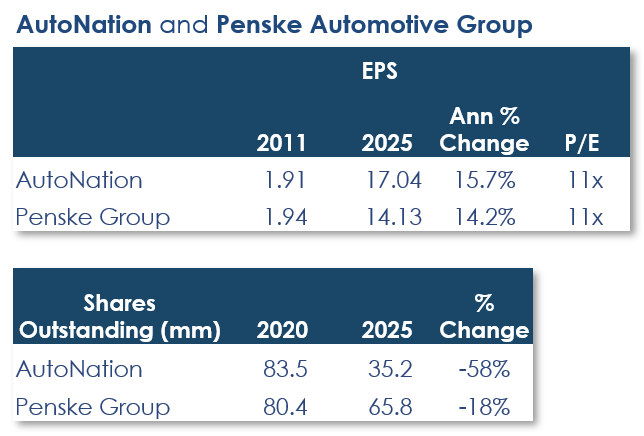
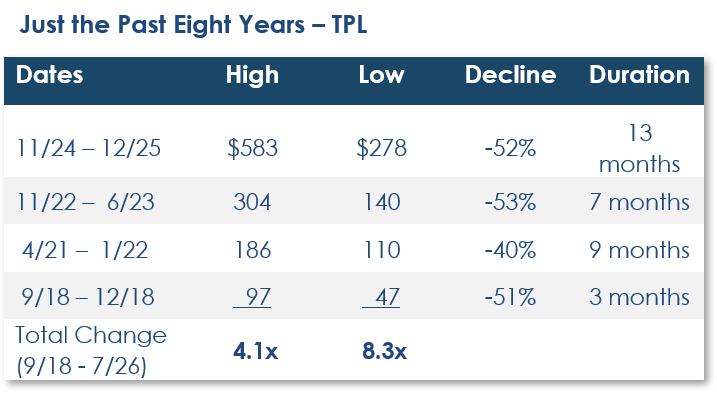
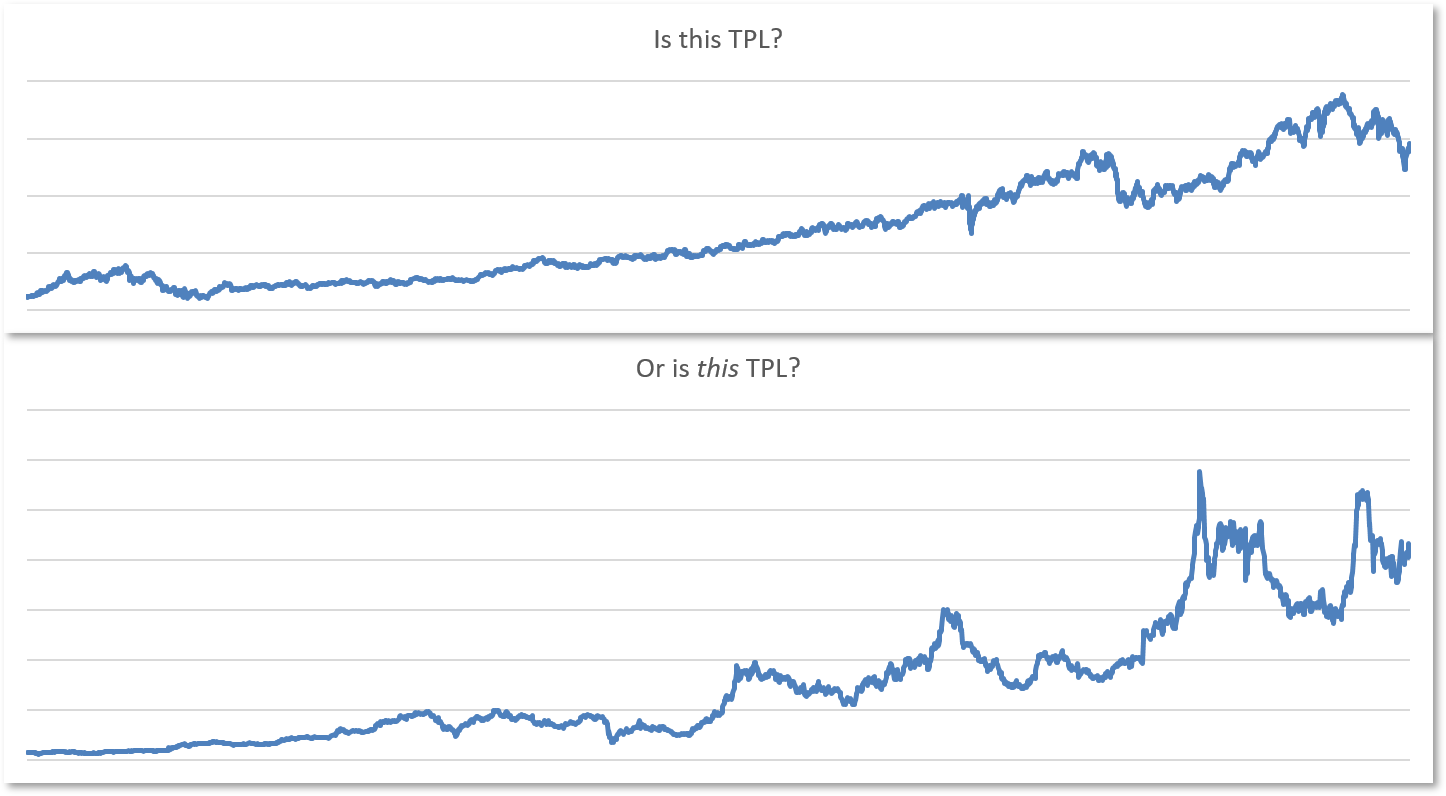
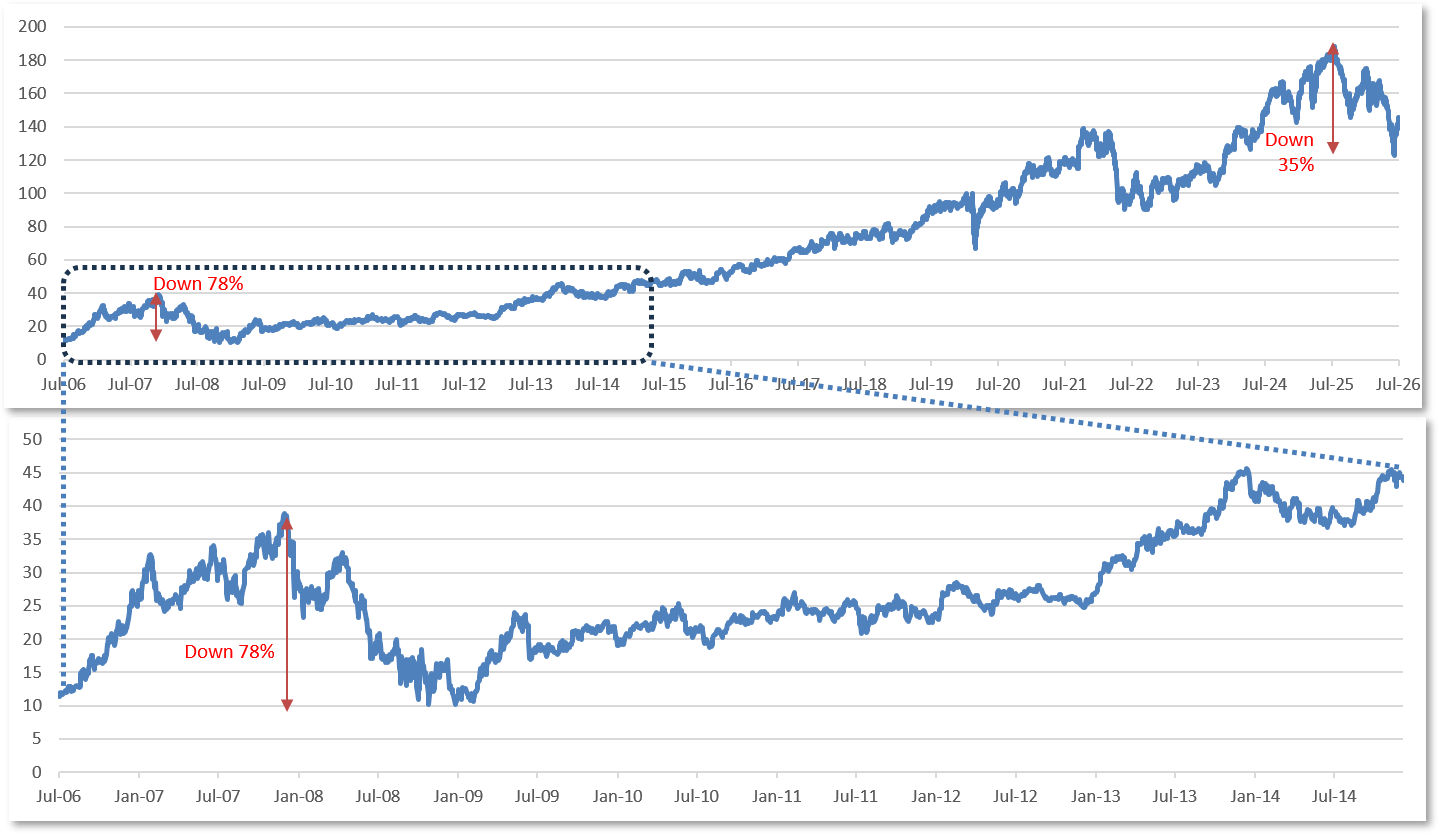
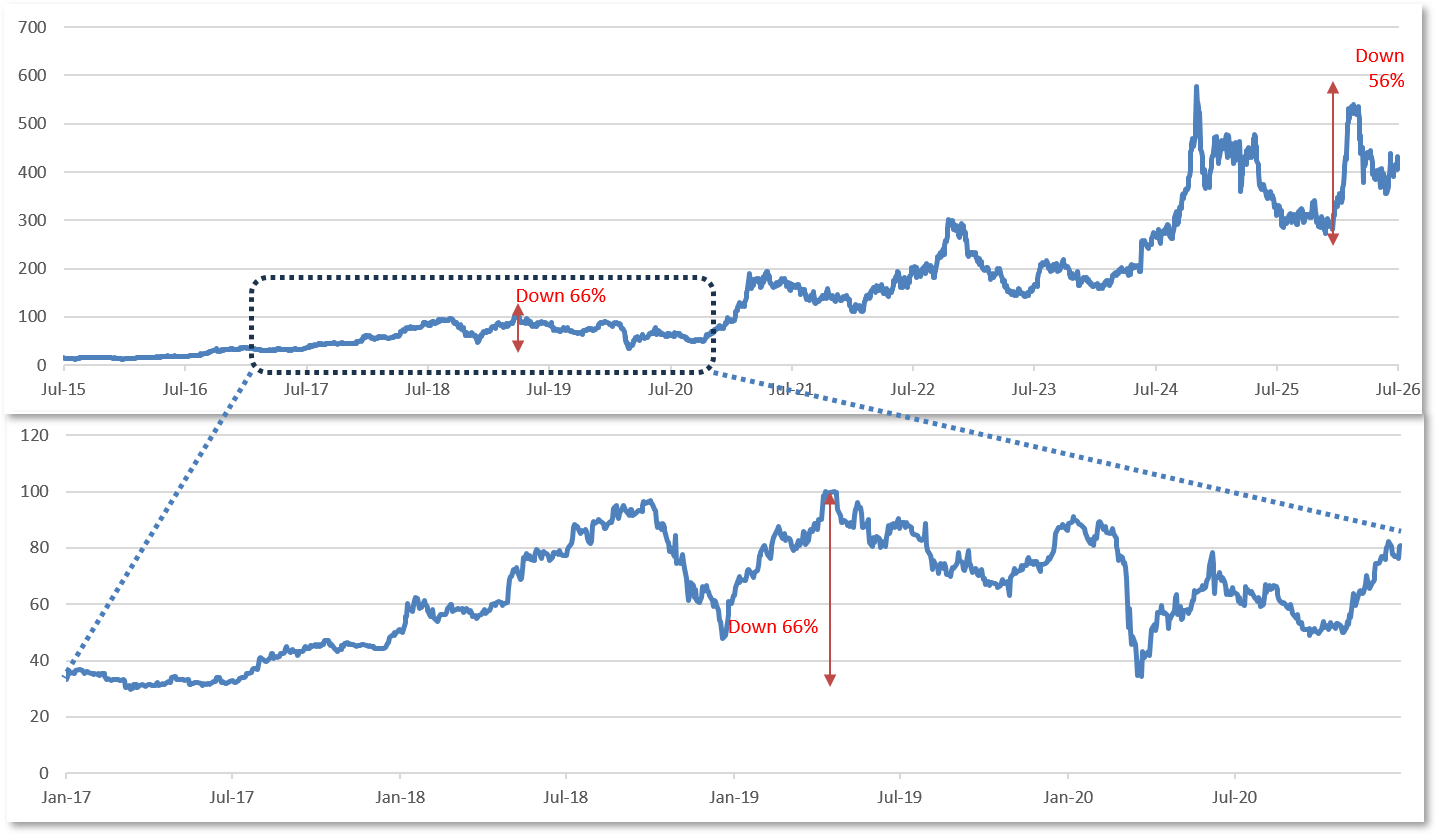




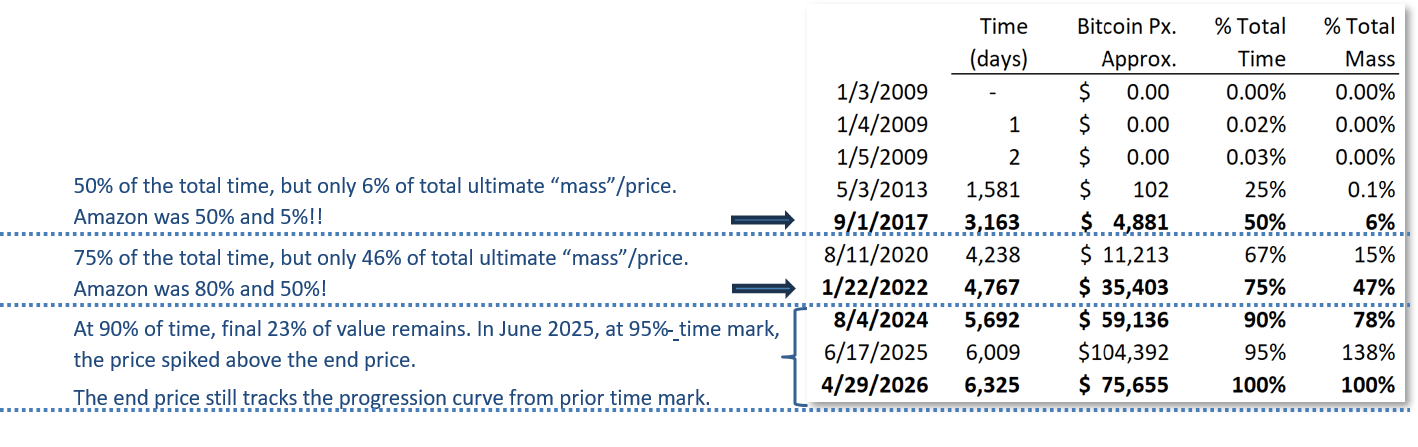
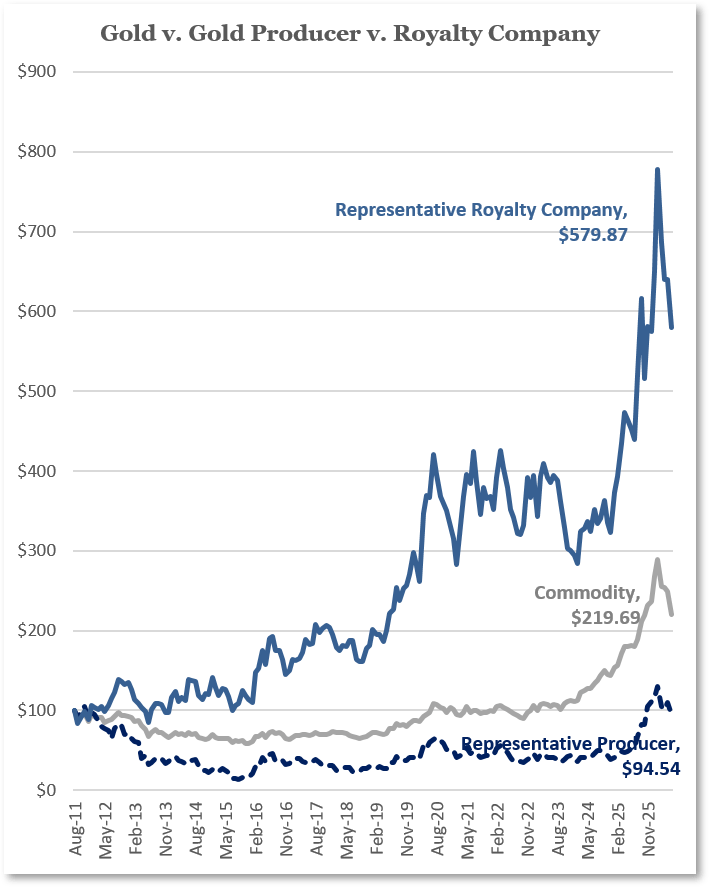
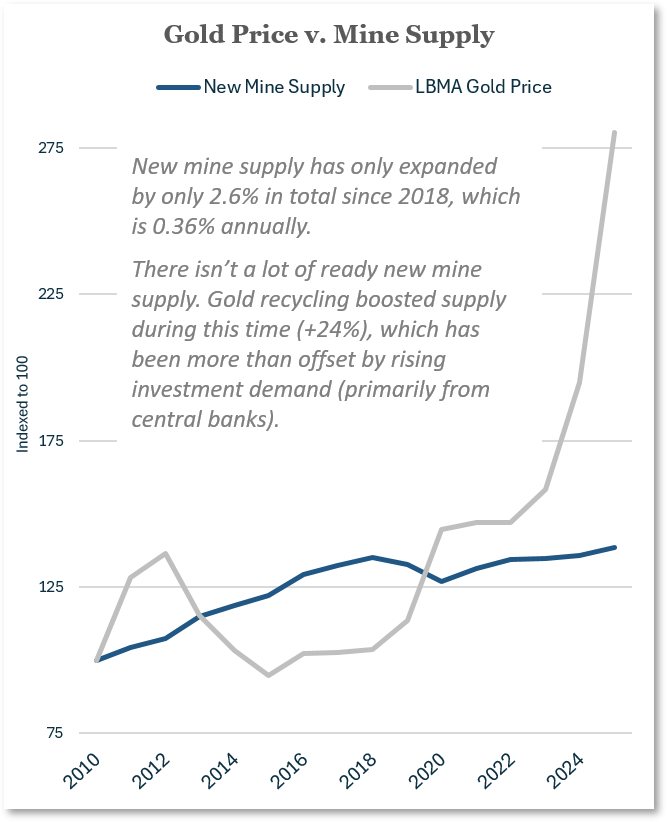
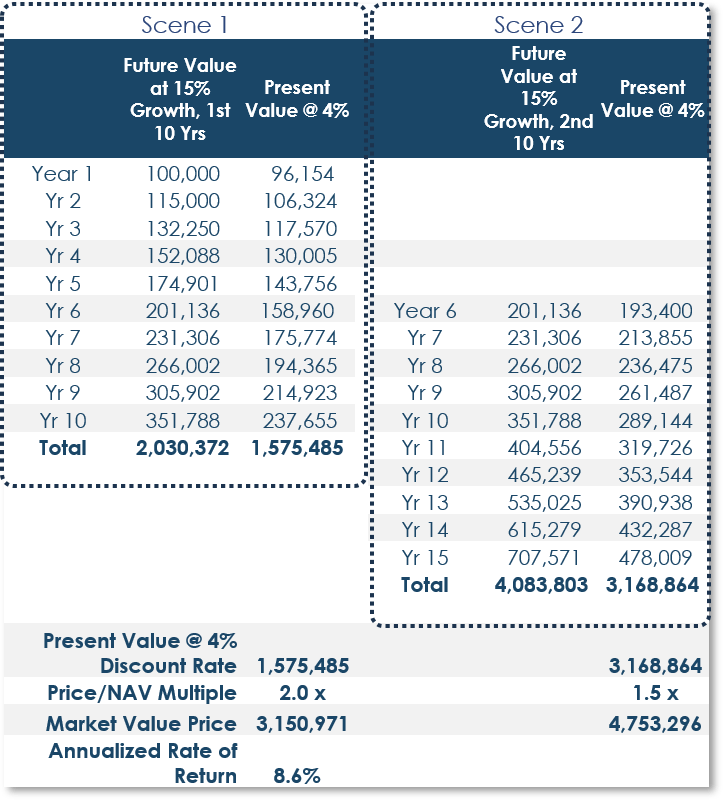
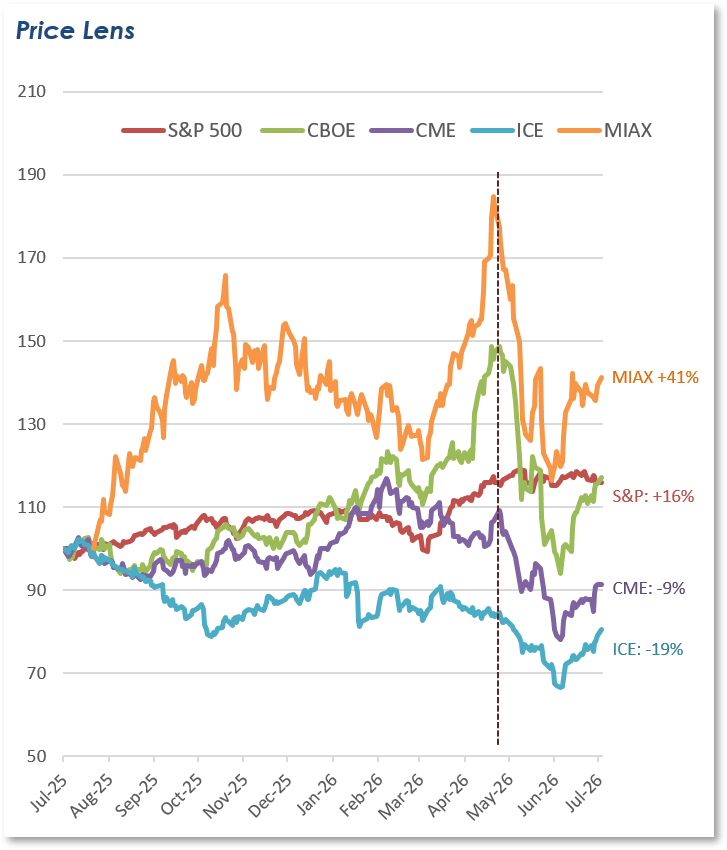
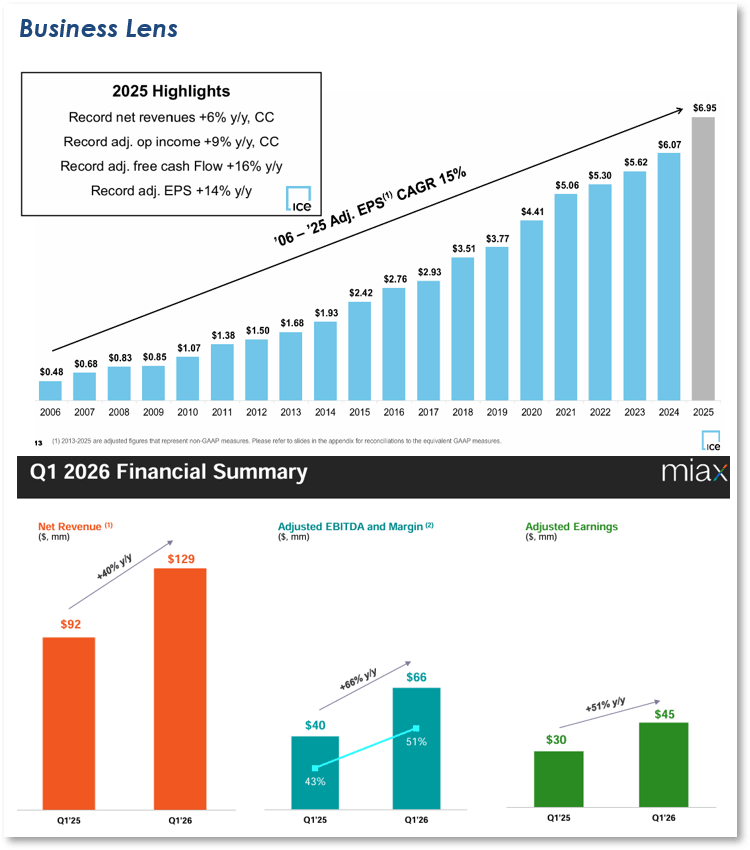
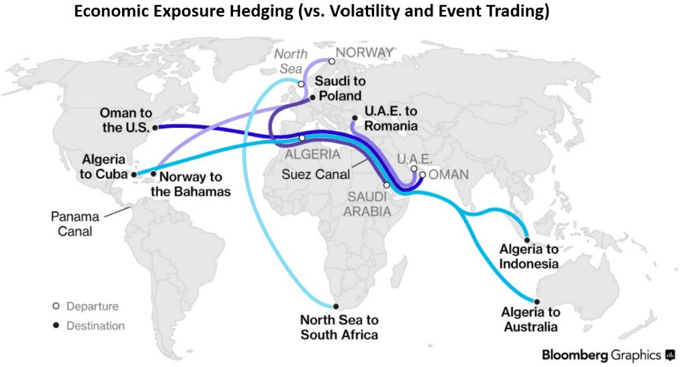
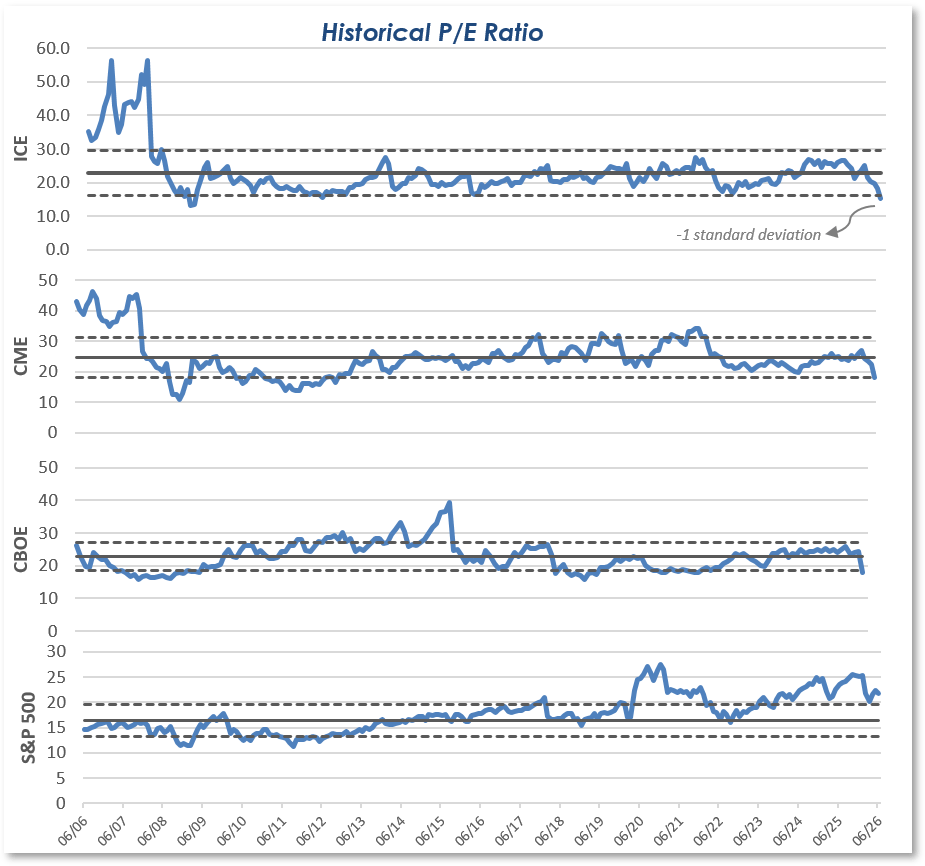

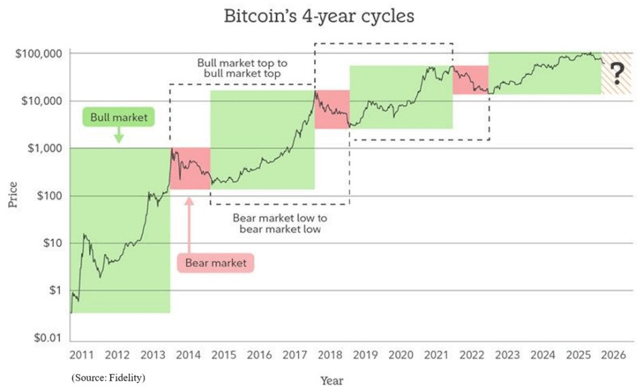
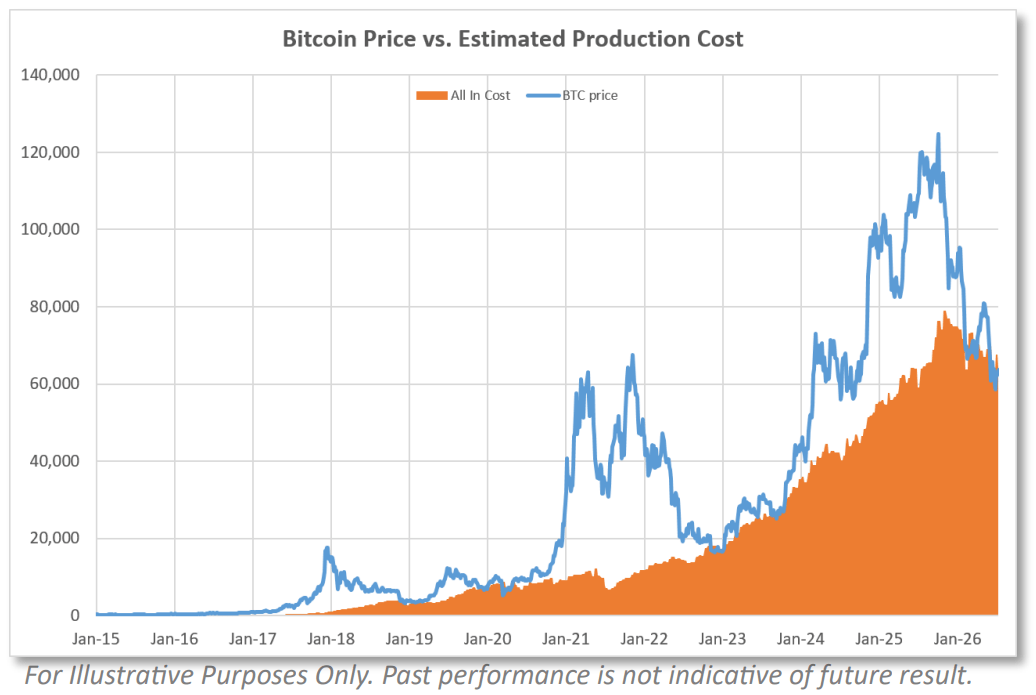
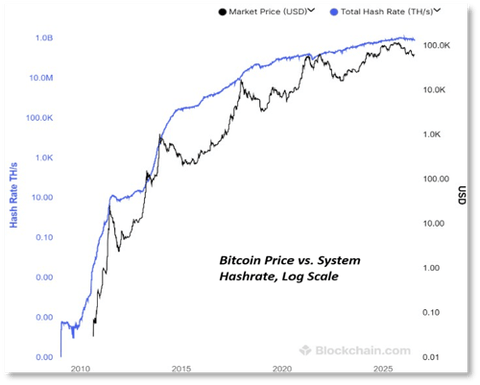
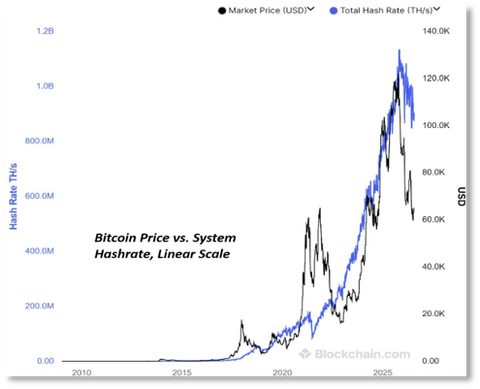
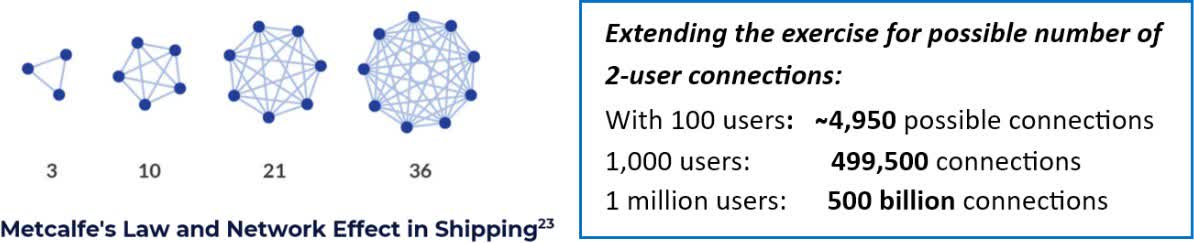
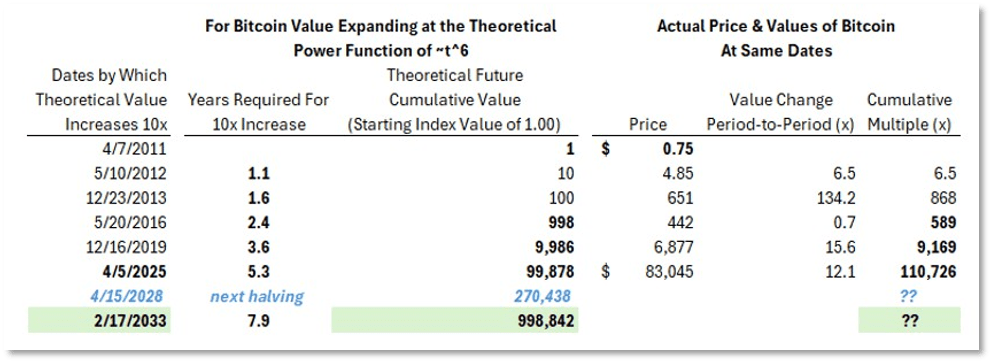























































You must be logged in to post a comment Login