

Business
Baird reiterates Costco stock Outperform on strong June sales



Business
Top 10 US Cities Attracting the Biggest Corporate Headquarters Moves in 2026, Led by Dallas-Fort Worth

Corporate America’s headquarters map has continued shifting decisively toward the Sun Belt in 2026, with Texas and Florida cities absorbing the bulk of high-profile relocations while traditional coastal business hubs continue losing companies to lower taxes, cheaper real estate and looser regulation. Here is a look at 10 of the cities drawing the most significant corporate headquarters activity this year, based on data from CBRE Americas Consulting and other real estate and economic development trackers.
1. Dallas-Fort Worth
Dallas-Fort Worth has cemented its status as the fastest-growing headquarters market in the country, gaining 100 relocations between 2018 and 2024 alone. According to CBRE’s 2026 update, the metro logged 18 headquarters announcements in 2025, including 11 interstate or international relocations from higher-cost markets such as Chicago, New York City, San Francisco and Los Angeles, along with seven intrastate moves as companies consolidated operations. Public companies based in Dallas-Fort Worth now hold a combined $1.5 trillion in value, a figure that has doubled over the past five years, with Goldman Sachs among the firms expanding its local headcount to as many as 5,000 employees.
2. Austin
Austin has continued its run as one of the country’s premier tech relocation destinations, earning its “Silicon Hills” nickname through a steady stream of tech startups and established firms moving in. CBRE data shows Austin has attracted 66 headquarters relocations since 2018, more than any other Texas city, drawn by wage savings of 15 to 20 percent compared with Silicon Valley, a lower cost of living, and a strong local venture capital ecosystem that Dealroom.co ranks among the nation’s best for early-stage startups.
3. Houston
Houston remains a top destination for energy and industrial companies, anchored by Chevron’s high-profile 2025 headquarters move from San Ramon, California, which made it the metro’s second-largest public company by market value behind only Exxon Mobil. Exxon Mobil itself asked shareholders in March to approve relocating its legal domicile from New Jersey to Texas after 144 years, citing a more favorable legal and business environment, further reinforcing Houston’s pull among major energy firms.
4. Miami
Miami continues to be one of the primary beneficiaries of the broader corporate migration out of the Northeast, drawing companies from New York and Connecticut in recent years, including Blockchain.com and software firm Anaplan. Florida’s tax system ranks fifth overall on the 2026 State Tax Competitiveness Index, and CBRE noted that two international companies chose Miami in 2025 specifically for its industry concentrations, including a cosmetics firm drawn to the region’s medical spa and dermatological aesthetics sector and a travel company attracted by South Florida’s deep pool of leisure and travel talent.
5. Nashville
Nashville has emerged as a rising destination powered by strength across healthcare, music and technology sectors, according to relocation tracking cited by CRE Daily, which named the city among a group of Sun Belt markets, alongside Charlotte and Phoenix, benefiting from business-friendly policies, diverse talent pools and improved quality of life relative to higher-cost coastal cities.
6. Charlotte
Charlotte has continued building on its reputation as a major banking and finance hub while attracting a broader mix of corporate relocations, buoyed by North Carolina’s business-friendly tax environment and the region’s deep talent pipeline. The city’s growth mirrors that of nearby Raleigh, Durham and Chapel Hill, collectively known as the Research Triangle, which has separately gained traction as a destination for technology and life sciences companies drawn to the area’s university-driven talent base.
7. Chicago
Despite Illinois’ comparatively higher tax burden, Chicago was named the top U.S. metro for corporate relocation and site selection by Site Selection Magazine for a record 13th consecutive year in 2026, based on verified corporate facility projects. Mayor Brandon Johnson credited the city’s manufacturing depth, transportation infrastructure and skilled workforce for the continued investment, with World Business Chicago recording 223 qualifying projects in 2025, a 40 percent increase from the prior year, corresponding to an estimated 19,600 new and retained jobs.
8. Atlanta
Atlanta has continued attracting corporate relocations tied to Georgia’s favorable business environment and strategic incentives, highlighted by the U.S. Soccer Federation’s move of its headquarters and national training center from Chicago to metro Atlanta earlier this year. Automated storage and retrieval systems company Hai Robotics also relocated its Americas headquarters from California to Norcross, Georgia, just outside Atlanta, in June, part of a broader pattern of companies choosing the region for its diverse culture and economic growth.
9. Phoenix
Phoenix has gained increasing attention as a lower-cost alternative to California’s coastal markets, benefiting from Arizona’s business-friendly policies and a growing talent pool. The city has been repeatedly cited alongside Charlotte, Miami and Nashville as one of the Sun Belt markets reinforcing relocation momentum in 2025 and 2026, with rising office demand tied to incoming corporate tenants supporting continued expansion of the region’s headquarters footprint.
10. New York City
Despite California’s steeper losses, New York City has posted a more complicated picture, recording 17 total headquarters relocation announcements in 2025, according to CBRE, though only seven represented genuinely new entrants to the market. The remaining 10 were intrastate moves by companies already based in the broader metro area, many of which cited portfolio optimization while reaffirming their long-term commitment to the region, whether by right-sizing space within Manhattan or shifting into New Jersey or north toward White Plains.
Taken together, the 2026 data underscores a broader national trend: headquarters relocation announcements rose to 164 in 2025, up sharply from 96 the year before, according to CBRE’s expanded tracking of 725 public headquarters announcements since 2018. Technology and manufacturing companies remained the most active movers last year, with 39 and 33 relocations respectively, many shifting away from traditional coastal hubs such as Silicon Valley and Seattle toward lower-cost metros. Meanwhile, California continued to post the steepest net losses among U.S. states, having shed at least 275 headquarters since 2018, with the San Francisco Bay Area alone accounting for 156 of those departures amid persistently high taxes, elevated office vacancy rates and stringent regulatory conditions.
With federal tax policy, interest rate trends and continued hybrid-work adjustments all still evolving heading into the back half of 2026, real estate analysts say the broader southward and westward migration of corporate headquarters activity shows few signs of slowing, even as high-density hubs like Chicago and New York continue to demonstrate they remain competitive for companies prioritizing infrastructure, talent depth and logistical connectivity over tax savings alone.
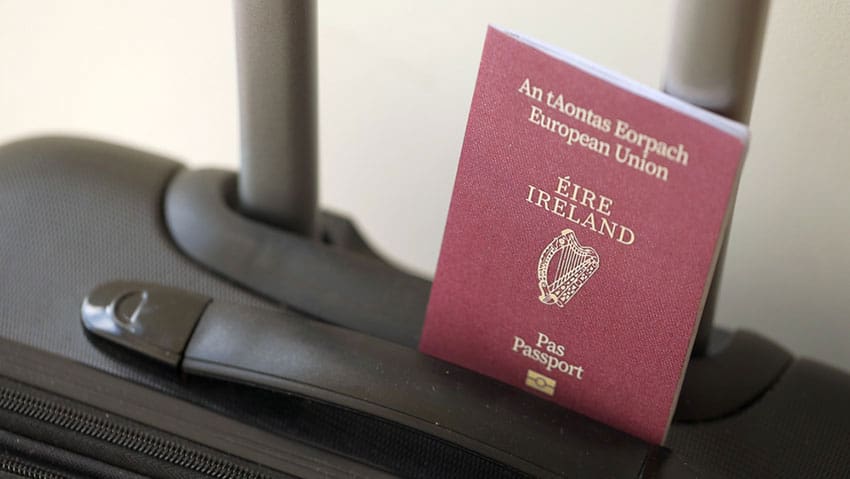
Ten years after Britain voted to leave the EU, the clearest measurable cost to the British passport is not its overall standing, which remains firmly elite, but a 22-place gap between where it ranks on paper and where it ranks at the border.
That is the headline finding of the sixth annual Global Passport Index, published today by residency and citizenship advisory firm Global Citizen Solutions (GCS), which ranks 197 countries and territories on Enhanced Mobility, Investment and Quality of Living.
Ireland outranks the UK for a second consecutive year, taking 7th place to Britain’s 8th. The composite scores are a whisker apart, roughly 93.4 to 93.08, and the UK has held between 6th and 8th in every edition since 2021.
But on Enhanced Mobility, the pillar that carries half the composite score and measures travel freedom, the two neighbours diverge sharply. Ireland ranks 7th in the world. The UK ranks 30th, a 22-place shortfall from its composite position and the widest such gap GCS identified among its Western European and Anglosphere peers.
The reason is structural. Irish citizens enjoy full EU freedom of movement and, under the Common Travel Area, retain the right to live, work, study and vote in the UK. Ireland ends up with unrestricted access to both arrangements at once. British passport holders, by contrast, now face greater friction entering the EU even as tourists.
For SME owners that friction is no longer abstract. British business travellers are already contending with hours-long queues under the EU’s new Entry-Exit System, and from next year will need a €7 visa waiver under the ETIAS scheme before crossing into the Schengen zone.
Elsewhere the British passport holds up well. Its investment ranking, 16th, is exactly where it stood in 2021, and its Quality of Living rank sits at 9th. Two indicators have softened: national income per capita, at roughly $49,040, ranks only 30th, well behind Ireland’s $71,150, and the UK slipped from 17th to 33rd in the Happiness Index.
“The United Kingdom passport held firm in the global top ten, ranked 8th overall in 2026. Yet for a passport of such standing, its mobility rank is conspicuously modest, around 30th, well adrift of the elite tier it otherwise occupies. That gap is the quiet signature of Brexit. The index measures visa-free travel, where the British passport remains strong, but it cannot capture what was actually lost: the automatic right of UK citizens to live, work and permanently reside across the European Union,” said Patricia Casaburi, chief executive of Global Citizen Solutions.
The UK’s ceiling sits within a wider Anglosphere slide. The United States, which led the index outright in 2021, has fallen to 12th, driven by a 31-place collapse in its mobility ranking after a run of visa reversals, including Brazil reinstating requirements for American travellers in 2025. Canada fell 11 places, Australia 10 and New Zealand 15. Only Ireland improved, up seven places, insulated by its EU membership. Little wonder growing numbers of entrepreneurs are weighing up fast-track routes to a second passport.
“For decades, the Anglosphere passports were treated as fixed inheritance. Our data says it is closer to an asset that can lose value or gain it responsive to policy, to diplomacy, and to how a country chooses to treat others. Ireland’s rise and America’s fall are the same lesson read from opposite ends,” said Dr Laura Madrid, lead researcher at the firm’s Global Intelligence Unit.
Europe, meanwhile, dominates outright. Nine of the top ten passports are European, led by Sweden, Switzerland and Finland, with Singapore in 10th the only outsider. Barely three points separate first from tenth. For British firms doing business on the continent, the message is uncomfortable but clear: the passport in your pocket is still world class, right up until you reach the border.

Jamie Young
Jamie is Senior Reporter at Business Matters, bringing over a decade of experience in UK SME business reporting.
Jamie holds a degree in Business Administration and regularly participates in industry conferences and workshops.
When not reporting on the latest business developments, Jamie is passionate about mentoring up-and-coming journalists and entrepreneurs to inspire the next generation of business leaders.

Nvidia Lands Crunch Perplexity Deal But the Stock Is Falling

Operator
Good day, and welcome to the AZZ Fiscal 2027 First Quarter Results Conference Call. [Operator Instructions] Please note, this event is being recorded. I would now like to turn the conference over to Phillip Kupper, Managing Director of Three Part Advisors. Please go ahead.
Phillip Kupper
Three Part Advisors, LLC
Good morning. Thank you for joining us today to review AZZ’s fiscal 2027 first quarter results for the period ended May 31, 2026. Joining the call today are Tom Ferguson, President and Chief Executive Officer; Jason Crawford, Chief Financial Officer; and David Nark, Chief Marketing, Communications and Investor Relations Officer.
After today’s prepared remarks, we will open the call for questions. Please note that the live webcast for today’s call is available www.azz.com/investor-events. Before we begin, I would like to remind everyone that our discussion today will include forward-looking statements made in accordance with the safe harbor provisions of the Private Securities Litigation Reform Act of 1995.
By their nature, forward-looking statements are uncertain and outside the company’s control, except for actual results, AZZ’s comments containing forward-looking statements may involve risks and uncertainties, some of which are detailed from time to time in documents filed by AZZ with the Securities and Exchange Commission, including the latest annual

Wall Street climbs, oil slides as Middle East conflict resumes
Business
Lamine Yamal Calls Lionel Messi’s World Cup Form ‘Incredible’ Ahead of Spain’s Quarterfinal With Belgium

Spain winger Lamine Yamal said he is thrilled to see Lionel Messi continue defying the passage of time and delivering standout performances at this year’s World Cup, praising the 39-year-old Argentine captain just days before Spain’s own quarterfinal clash against Belgium.
Messi currently leads the tournament’s Golden Boot race with eight goals and delivered another standout showing in Argentina’s dramatic 3-2 comeback win over Egypt on Tuesday, a result that carried the defending champions into the quarterfinals. Asked about Messi’s continued excellence at this stage of his career, Yamal, 18, did not hold back his admiration in comments to Spanish outlet El Mundo Deportivo. “Incredible,” Yamal said. “Everyone knows who Messi is, but no one expected him to be playing at such a high level. I’m really happy for him.”
Messi was named the tournament’s most valuable player when Argentina ended a 36-year wait for a third World Cup title in Qatar in 2022, and the Inter Miami forward has now scored in nine consecutive World Cup matches dating back to that triumph. Yamal, who inherited Messi’s iconic No. 10 shirt at Barcelona last season, has often been compared to the Argentine great as one of the sport’s brightest young talents, making his comments about Messi’s continued dominance carry particular weight.
Beyond Messi, Yamal also expressed appreciation for two other players who shaped his childhood love of the sport, Neymar and Cristiano Ronaldo, both of whose international careers effectively concluded during this tournament. “I’m happy for Neymar, even though he’s no longer here, and for Cristiano [Ronaldo],” Yamal said. “They shaped the childhoods of all of us who are playing now.”
Neymar, Brazil’s all-time leading scorer with 80 goals, brought his international career to a close following Brazil’s Round of 16 exit against Norway on Sunday. The 34-year-old forward had not featured for Brazil since October 2023 due to injuries but returned to the national team for this tournament before Brazil’s elimination.
Ronaldo’s World Cup career, meanwhile, ended at the hands of Yamal’s own Spain squad. Portugal’s 1-0 defeat to Spain on Monday marked Ronaldo’s final World Cup appearance, closing the book on his pursuit of the one major trophy that had eluded him throughout his career. The Portuguese star exits the tournament as the only player in history to score in six different World Cups, and he remains the all-time leader in both international goals, with 146, and international appearances, with 233.
Reflecting on watching both Neymar and Ronaldo depart the tournament, Yamal offered a gracious sentiment about his childhood idols’ broader legacies. “Anything good that happens to them will be good for me,” Yamal said. “That said, if I make it to the final, I want to win it.”
Yamal’s own tournament has been shaped by a recent return from injury. He played all 90 minutes in Spain’s win over Portugal, marking his longest stretch of playing time in a single World Cup match so far this tournament, after working his way back to full match fitness following an absence of nearly two months. “I’d been out for almost two months, and it’s not the same as when you’ve played seven games in a row,” Yamal said. “I need to keep touching the ball, keep playing, keep racking up minutes, and, obviously, that game will come.”
Despite his standing as one of the tournament’s most closely watched young stars, Yamal was candid about holding himself to a high standard, acknowledging that he has yet to feel fully satisfied with his own performances so far. “I think I can do better. I’m very hard on myself. I’m not satisfied with what I do,” Yamal said. “I’ve never been the best player in the group stage. I’m not worried about that. I know I have opportunities to prove it.” He added that he tends to elevate his game as matches grow more consequential, saying, “The closer the important matches get, the semifinals or the final, the better I play.”
A European champion with Spain in 2024, Yamal is now preparing for Friday’s quarterfinal against Belgium in Inglewood, California, a match he says he is approaching with confidence and anticipation. “I’m feeling great,” Yamal said. “I’m really looking forward to showing what we’re capable of as a team and what I’m capable of. I hope the match against Belgium will be a great one for the whole team.”
Friday’s quarterfinal represents the second match of the tournament’s knockout round, following France’s clash with Morocco earlier in the week. Spain advanced to this stage after its narrow win over Portugal, while Belgium reached the quarterfinals with a commanding 4-1 victory over co-host United States in the Round of 16, a result that ended the Americans’ tournament run and marked the elimination of the last remaining World Cup co-host nation.
With Messi, Ronaldo and Neymar all representing distinct eras and storylines within this year’s tournament, Yamal’s comments underscore the sense of generational continuity running through the 2026 World Cup, as a new wave of young stars, led by players like Yamal himself, continues to emerge alongside some of the sport’s most decorated veterans during what may be a final World Cup appearance for several of the game’s biggest names. As Spain prepares to face Belgium, Yamal’s own growing influence on the tournament will be closely watched, with his combination of technical ability and competitive maturity positioning him as one of the players most likely to define the remainder of this year’s knockout stage.

Check out what’s clicking on FoxBusiness.com.
San Francisco pet owners are set to lose access to one of the pet care industry’s biggest brands with the upcoming closure of the city’s lone PetSmart location.
PetSmart’s store located in the City Center shopping center on Geary Blvd. is set to close on July 19, according to a report by SFGate.
The pet store chain confirmed the planned closure in an email to SFGate, explaining that the company remains “committed to serving pet parents throughout San Francisco, who will continue to have access to nearby PetSmart locations, including our Daly City store, as well as online shopping with convenient delivery options.”
BLUE CITY’S LARGEST MALL NOW 93% VACANT AS VALUE PLUNGES $1 BILLION OVER THE PAST DECADE
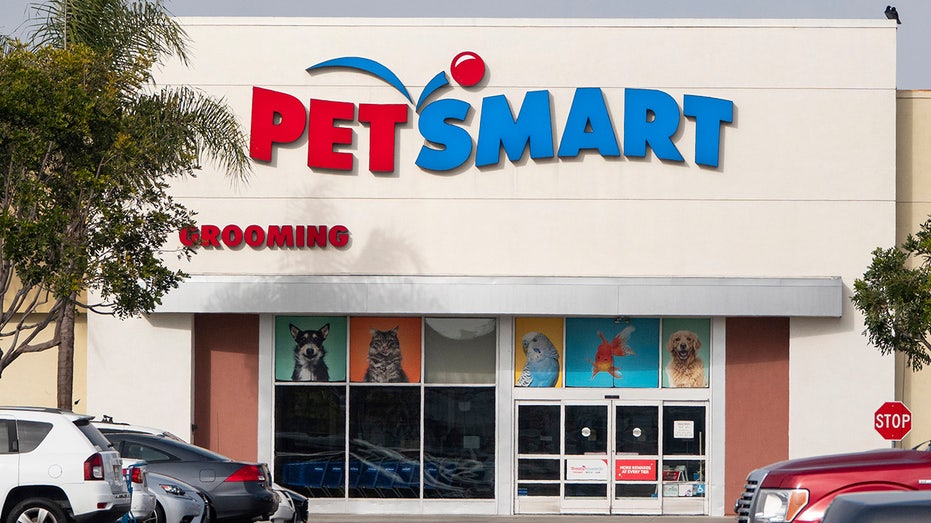
PetSmart is planning to close its lone location in San Francisco. (Kevin Carter/Getty Images)
The company also told the outlet that it’s expanding fulfillment capabilities at the Daly City store to better serve the community.
San Francisco PetSmart employees who will be affected by the closure are being offered resources to help in their transition and “information about opportunities at nearby PetSmart locations,” SFGate reported.
SAKS FIFTH AVENUE SHUTTING DOWN SAN FRANCISCO LOCATION AFTER NEARLY 45 YEARS

San Francisco’s lone PetSmart location is reportedly closing this month. (Justin Sullivan/Getty Images)
PetSmart’s San Francisco location has provided boarding services for customers’ dogs and cats, along with grooming services, though those services aren’t currently available at the location, according to the company’s website – though pet training and adoption services remain available.
The company cited “a number of factors” as contributing to the decision to close in its comment to SFGate, noting that with increasing numbers of customers using online shopping, autoship and same-day delivery services, PetSmart is adapting how to best serve pet owners.
FOX Business reached out to PetSmart for comment.
BLOOMINGDALE’S TO CLOSE STORE IN DOWNTOWN SAN FRANCISCO

PetSmart previously acquired Chewy, though it was spun off by BC Partners. (Gabby Jones/Bloomberg via Getty Images)
San Francisco’s retail sector has faced headwinds in recent years, with a number of Walgreen’s stores closing as well as the San Francisco Centre shopping mall losing brands like Adidas, American Eagle, Bloomingdale’s, Nordstrom and Michael Kors.
PetSmart was acquired by private equity firm BC Partners in 2015 for $8.7 billion and the firm remains its majority shareholder, though Apollo made a strategic investment in the chain in 2023.
GET FOX BUSINESS ON THE GO BY CLICKING HERE
The company acquired Chewy – a rival pet product retailer that focuses on e-commerce – through a deal in 2017, though BC Partners moved to separate the two companies in 2023.
‘The Big Money Show’ panel breaks down President Donald Trump’s and New York City Mayor Zohran Mamdani’s speeches marking America’s 250th birthday and comments on the rise of far-left politics.
Citadel founder and CEO Ken Griffin took direct aim at rising socialist sentiment in America, telling progressive politicians to “read a damn history book” while warning that high taxes and poor public services are driving Wall Street out of blue states.
Speaking at a Goldman Sachs symposium, the billionaire hedge fund manager detailed how he believes fiscal mismanagement in cities like New York is accelerating a financial migration toward business-friendly hubs in Florida and Texas, according to audio obtained exclusively by Fortune.
“I believe Citadel will be a principal player in financial services for far longer than [New York City Mayor Zohran Mamdani] will be mayor,” Griffin said according to Fortune. “We intend to be here for decades. And he will be here for a few years.”
“How have we ended up with so many 20- and 30-year-olds who actually think socialism is the path to prosperity?” Griffin asked, while noting World Bank data showing that when China shifted toward free-market policies, it lifted roughly 800 million people out of poverty over a 40-year period.
“It’s the greatest success story in the history of humanity,” he continued, saying that “whether it’s Bernie Sanders, whether it’s Mamdani,” to “read a damn history book for once and then tell us how to run our country.”
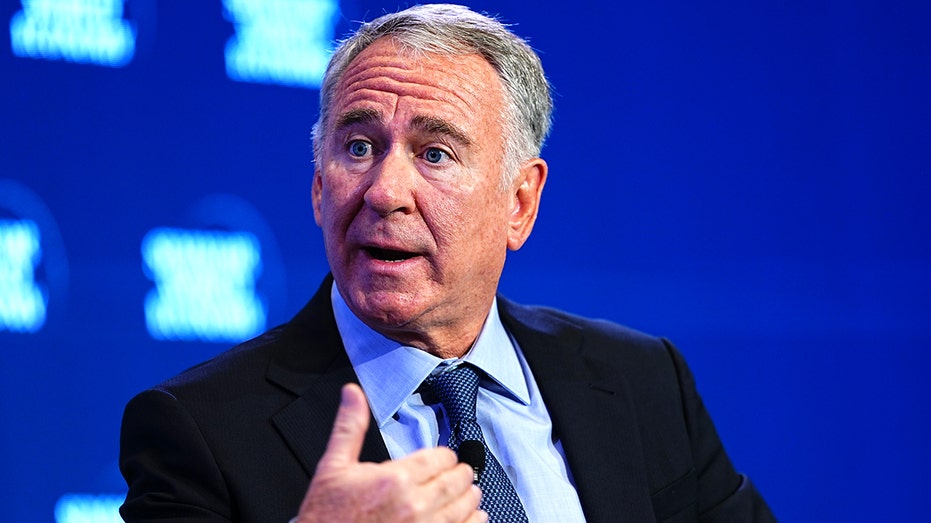
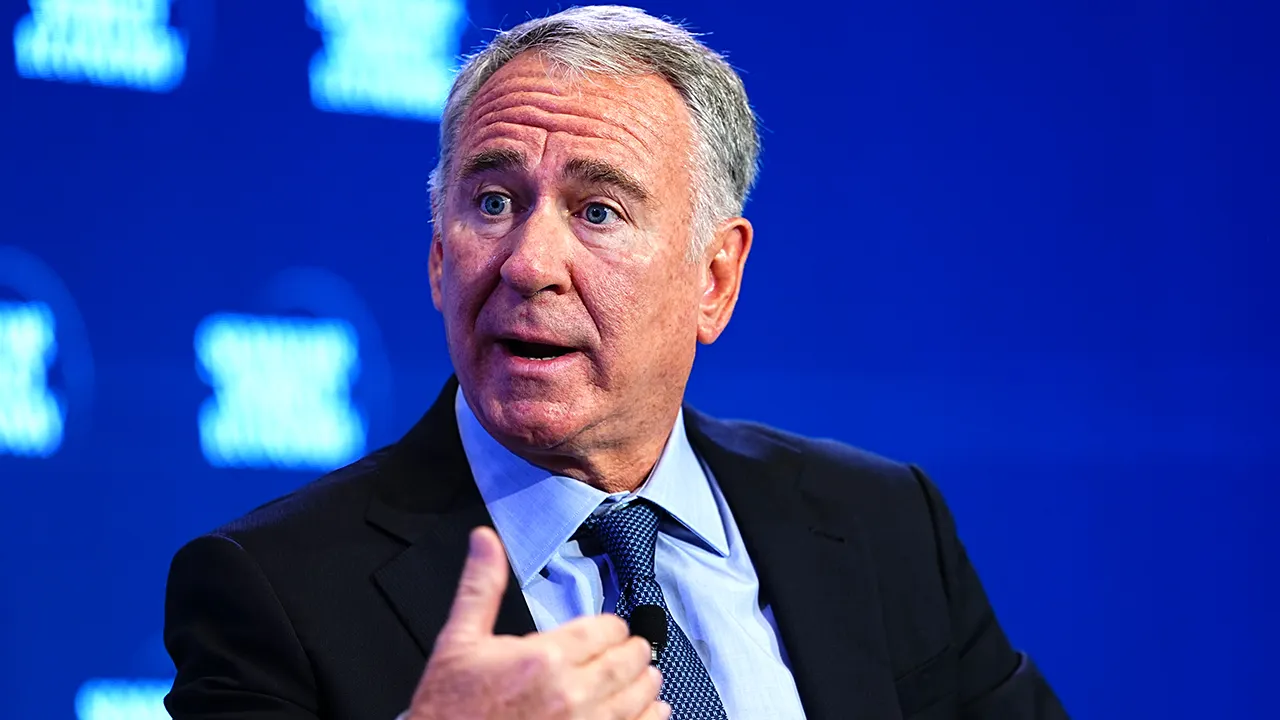
Citadel CEO and founder Ken Griffin at the Semafor World Economy Summit meetings in Washington, D.C., on April 14, 2026. (Getty Images)
Griffin’s comments come after similar remarks he made at the World Economic Forum in Davos, Switzerland, earlier this year. The CEO has also publicly criticized Mamdani over taxes, wealth distribution and the city’s business climate, as well as a viral advertisement that called out Griffin’s New York City penthouse.
Shortly after the pandemic, Citadel relocated its headquarters to Miami, where the firm is constructing a 1.7 million-square-foot office tower in the city’s downtown financial district.
During the Goldman Sachs symposium, Griffin also questioned the corporate hype surrounding artificial intelligence, arguing that companies often confuse genuine technological advances with marketing buzzwords.
FOX Business Madison Alworth reports on Citadel CEO Ken Griffin reaffirming plans to move his firm to Miami from New York City, driven by a desire for a state that embraces business on ‘Varney & Co.’
At a dinner with top CEOs “about two years ago,” Griffin said many executives were enthusiastic about artificial intelligence, but he was skeptical.
“I couldn’t help myself. I’m like, ‘Let’s go around the table and share stories about how AI is transforming your business,’… not one involved AI.”
“There is a technological revolution happening, of which AI is a component of the story,” he told Goldman Sachs executive Ashok Varadhan Mahajan, “but it’s just a piece.”
Griffin also warned that a Chinese blockade of Taiwan would trigger an immediate economic shock in the United States by cutting off access to Taiwan Semiconductor Manufacturing Co. (TSMC), the world’s largest contract chipmaker, and shrinking the U.S. economy by an estimated 8% within six months.
GET FOX BUSINESS ON THE GO BY CLICKING HERE
Maria Bartiromo and Gordon Chang discuss China’s discovery of security vulnerabilities in Anthropic’s Claude AI model. This flaw allows sensitive data transfer without user approval.
“As an American I get frustrated by this,” he said. “Simply put, we go into a Great Depression in the blink of an eye. Unlike any we’ve seen before… everything freezes.”
Citadel did not immediately respond to Fox News Digital’s request for comment.

iHeart agrees to resolve US probe into airplay practices
Business
SpaceX Shares Rebound Above $150 After Data Center Lawsuit Recently Threatened Its $45 Billion Anthropic Deal

Shares of Space Exploration Technologies Corp. traded at $152.35 on Thursday, up $4.09, or 2.76 percent, recovering some ground after the stock briefly slid toward its initial public offering price earlier in the week following news that a lawsuit had forced the shutdown of a data center tied to a major artificial intelligence contract.
Note: This article is intended to provide factual context and does not constitute financial advice. Readers should consult a licensed financial advisor before making investment decisions.
SPCX shares fell as low as $150.55 during early trading Tuesday, coming close to slipping below the company’s original $135 listing price for a second time since the company’s public debut on June 12. According to TradingKey, the decline was tied to reports that a legal challenge had led to the shutdown of gas turbines powering SpaceX’s Colossus 2 data center, a facility central to a reported $45 billion contract with AI company Anthropic. The lawsuit raised questions about whether the disruption could jeopardize the underlying agreement, contributing to renewed selling pressure on the stock even as broader market sentiment toward technology shares remained mixed heading into the week.
The pullback came just as SpaceX was completing its formal addition to the Nasdaq-100 index on July 7, a milestone that marked the fastest such inclusion in the index’s history, occurring just 15 trading days after the company’s record-setting IPO. According to TradingKey’s analysis published around the time of the inclusion, SPCX was trading near $158 with a technical floor identified around $149, and the firm cautioned that historical precedent from other high-profile Nasdaq-100 additions, including Palantir and Strategy, showed both stocks peaking around their respective inclusion dates before experiencing significant pullbacks in the weeks that followed.
Despite the recent volatility, Wall Street sentiment toward SpaceX has remained largely constructive. According to TipRanks, SpaceX has received several buy ratings from major brokerages since officially joining the Nasdaq-100, and analysts currently characterize the stock as undervalued relative to its price. Morgan Stanley analyst Adam Jonas has continued to advocate a bullish case for the company, according to CNBC, while separate coverage from JPMorgan described the possibility of a future merger between SpaceX and Tesla, both led by Elon Musk, as “strategically coherent,” fueling continued speculation about the long-term structure of Musk’s broader corporate holdings.
Investor Cathie Wood’s ARK Invest has continued to make notable moves involving SpaceX shares in recent sessions. According to TipRanks, ARK Invest exchange-traded funds purchased 182,000 additional shares of SpaceX on Wednesday, extending a pattern of active portfolio adjustments the firm has made involving the stock since its public listing. Separately, options market activity has shown a moderately bearish tilt among traders in recent sessions, with notable put buying activity observed as shares traded in the mid-$140s earlier in the week.
Beyond the data center dispute, SpaceX has continued to generate a steady stream of corporate news since going public. The company’s newly integrated AI division, operating under the SpaceXAI banner following its merger with Elon Musk’s xAI earlier this year, announced this week that it was releasing its latest large language model, Grok 4.5, in partnership with AI coding company Cursor. SpaceX also moved bitcoin on-chain for the first time in six months on Tuesday, according to TipRanks, an $88 test transaction that ended a lengthy period of blockchain inactivity for the company and drew attention from cryptocurrency-focused analysts tracking corporate bitcoin holdings.
SpaceX’s broader business continues to span three primary segments. Its Space division designs, manufactures and launches reusable rockets, including the Falcon 9, Falcon Heavy and Starship vehicles, for both commercial and government customers, and conducts more orbital launches annually than any other launch provider in the world, including national space programs. Its Connectivity segment operates the Starlink satellite broadband network, which now includes approximately 9,600 satellites in low-Earth orbit delivering service to customers across more than 164 countries and territories. Its AI segment, formed through the xAI acquisition earlier this year, operates the Grok large language model, the X social media platform, and a growing footprint of AI computing infrastructure, including the Colossus data center system at the center of this week’s legal dispute.
The company’s customer base includes some of the largest institutional space and technology purchasers in the country, with NASA, the U.S. Space Force and the National Reconnaissance Office among its largest government clients. Elon Musk owns approximately 42 percent of SpaceX’s outstanding shares and controls roughly 85 percent of the company’s voting power through a structure of super-voting stock, giving him continued significant control over the company’s strategic direction even as it now trades as a public company.
Valuation remains a central point of debate among analysts covering the stock. According to Morningstar, SpaceX’s aggressively lofty valuation implies that investors will likely need to wait years, if not decades, for the company’s earnings to grow into its current market multiples, even as the firm acknowledged SpaceX’s dominant, decade-long lead over competitors in launch experience and payload volume. The company’s market capitalization stood at approximately $2.13 trillion as of the most recent trading data from TipRanks, reflecting the scale of investor interest in the stock despite its short public trading history.
SpaceX’s 52-week trading range, reflecting price movement since its IPO just weeks ago, spans from a low of $147.11 to a high of $225.64, according to TipRanks, illustrating the significant volatility that has characterized the stock’s brief time on public markets. The company has not yet announced a date for its first quarterly earnings report as a public company, an event analysts have identified as a key upcoming catalyst likely to provide further clarity on the durability of both its core launch and Starlink businesses and its rapidly expanding AI infrastructure segment.
With the data center dispute still developing and the broader Anthropic contract’s status not yet fully clarified in public disclosures, investors are likely to continue monitoring further updates on the legal proceedings, along with SpaceX’s ongoing execution across its space, connectivity and artificial intelligence businesses, as key factors shaping the stock’s trajectory in the weeks ahead following its historic entry into the Nasdaq-100 index.

Mexico to file criminal complaints over deaths in US custody

Top 10 US Cities Attracting the Biggest Corporate Headquarters Moves in 2026, Led by Dallas-Fort Worth

Buy STRC and make 28%? Traders say no thanks

No Jackpot Winner as $257 Million Prize Rolls Over to $269 Million Monday Draw

Renter of Home in Anne Heche Crash Denies Settlement With Son

Weekend Open Thread: Staud – Corporette.com

Warren Buffett’s 7 Simple Money Habits That Can Make You Wealthy | Financial Wisdom Everyone Should

BREAKING : CRYPTO REGULATION IN INDIA || UPDATE

Devenir millionnaire en travaillant chez Costco ! #costco #management #finance #salaire
-

 Fashion6 days ago
Weekend Open Thread: High Hopes
-
 NewsBeat5 days ago
Taylor Swift and Travis Kelce wedding staffer hilariously struggles to keep her cool while checking in megastars
-

 Crypto World6 days ago
Standard Chartered Secures MiCA License as ESMA Adds 37 New Crypto Firms
-

 Fashion3 days ago
Open Thread: What Great Books Have You Read Recently?
-

 Politics6 days ago
The House | “Reframing the debate from a binary discussion of winners and losers”: Yuan Yang reviews ‘We Are Not Machines’
-

 Fashion8 hours ago
Loro Piana Fall 2026 Enters Houston’s Art Scene
-

 News Videos3 days ago
Whats Hidden Inside This Cash Register? #treasure #reselling #money
-
 Tech2 days ago
Anthropic’s new “J-lens” reveals a silent workspace inside Claude that mirrors a leading theory of consciousness
-
 Crypto World6 days ago
ESMA Expands Crypto Register by 37 Firms Following MiCA Transition Period
-
 Business3 days ago
AXT Shares Jump Nearly 14% as Semiconductor Materials Maker Rebounds on AI-Linked Indium Phosphide Demand
-

 Sports2 days ago
Joshua Pacio ‘more complete’ ahead of ONE rematch vs Malachiev
-
Crypto World3 days ago
SK hynix (000660.KS) Stock Dips as $28B Nasdaq ADR Offering Drives AI Memory Expansion
-

 Crypto World4 days ago
South Africa proposes crypto tax guidance under existing rules
-

 News Videos3 days ago
Best Time to Enter Small Caps Right Now? Another Bull Run? | Financially Free
-

 Tech4 days ago
Lenovo laptops are now shipping with YMTC SSDs, a sign of Chinese NAND entering the mainstream
-

 Business7 days ago
What a 10 Percent Drop Means for Buyers, Sellers and Renters
-
Sports2 days ago
We have punished the disrespect
-

 Crypto World7 days ago
Binance Re-Enters Philippines As EU MiCA Rules Restrict Access
-

 News Videos3 days ago
Avoid entering in FOMO #bitcoin #cryptocurrency #trading #scalping
-

 Crypto World6 days ago
Alibaba bans Claude Code over alleged backdoor security concerns
You must be logged in to post a comment Login