

Crypto World
New Hampshire snuffs out trailblazing bitcoin bond effort



At the last moment, New Hampshire has turned its back on a groundbreaking effort to establish what was expected to be the first rated, bitcoin-backed bond issued under a state’s authority, with a governmental body there canceling the project.
Just a few months after Moody’s Ratings gave the bond a Ba2 rating, the New Hampshire Executive Council, which reviews major state financial actions, slammed the door with a 3-2 decision that sided with those concerned about the state’s financial reputation.
The financial instrument was to be issued by the Business Finance Authority of the State of New Hampshire, backing a private-sector bond of up to $100 million tied to Bitcoin mining and datacenter firm CleanSpark. The council’s vote was the final step.
“It was an extremely short-sighted decision,” Keith Ammon, a longtime crypto advocate and the majority floor leader in the New Hampshire House of Representatives, posted on social media site X. “They should gather all relevant facts and information and reconsider their vote at a future meeting.”
Ammon told CoinDesk that it’s an election year for council members, and it only takes one to swing the vote, adding, “We’re not giving up.”

Crypto exchange Backpack has launched 24/7 trading for select tokenized US equities, allowing international investors to trade stocks including SpaceX, Micron and SanDisk around the clock.
Under the initial offering, Backpack said that investors would receive direct ownership of the underlying securities rather than synthetic exposure, with trades settling instantly and funded in fiat currency or stablecoins. The initial offering includes a limited selection of US equities, with additional stocks planned.
The company also offers Solana-based tokenized versions of the securities, which can be transferred between wallets, used in decentralized finance applications and converted 1:1 into the corresponding shares through Backpack.
Backpack said the service is available to investors in more than 150 countries and regions and that trades are backed by liquidity from traditional exchanges.
The company added that tokenized SpaceX shares became the most actively traded tokenized version of the private rocket and AI company after launching in June, though it did not disclose trading volumes or provide comparisons with competing offerings.
Related: Tokenized stock transfers surge 105% in a month to $8.4B
Earlier this year, Backpack unveiled a token distribution model tied to its planned US initial public offering. Users who stake the exchange’s native token for at least one year will be eligible to exchange it for company equity after the IPO, while part of the token supply will remain locked until at least one year after the listing.
Traditional finance joins tokenized equities push
Backpack’s launch comes as tokenized equities have become one of the fastest-growing segments of the onchain real-world asset (RWA) market.
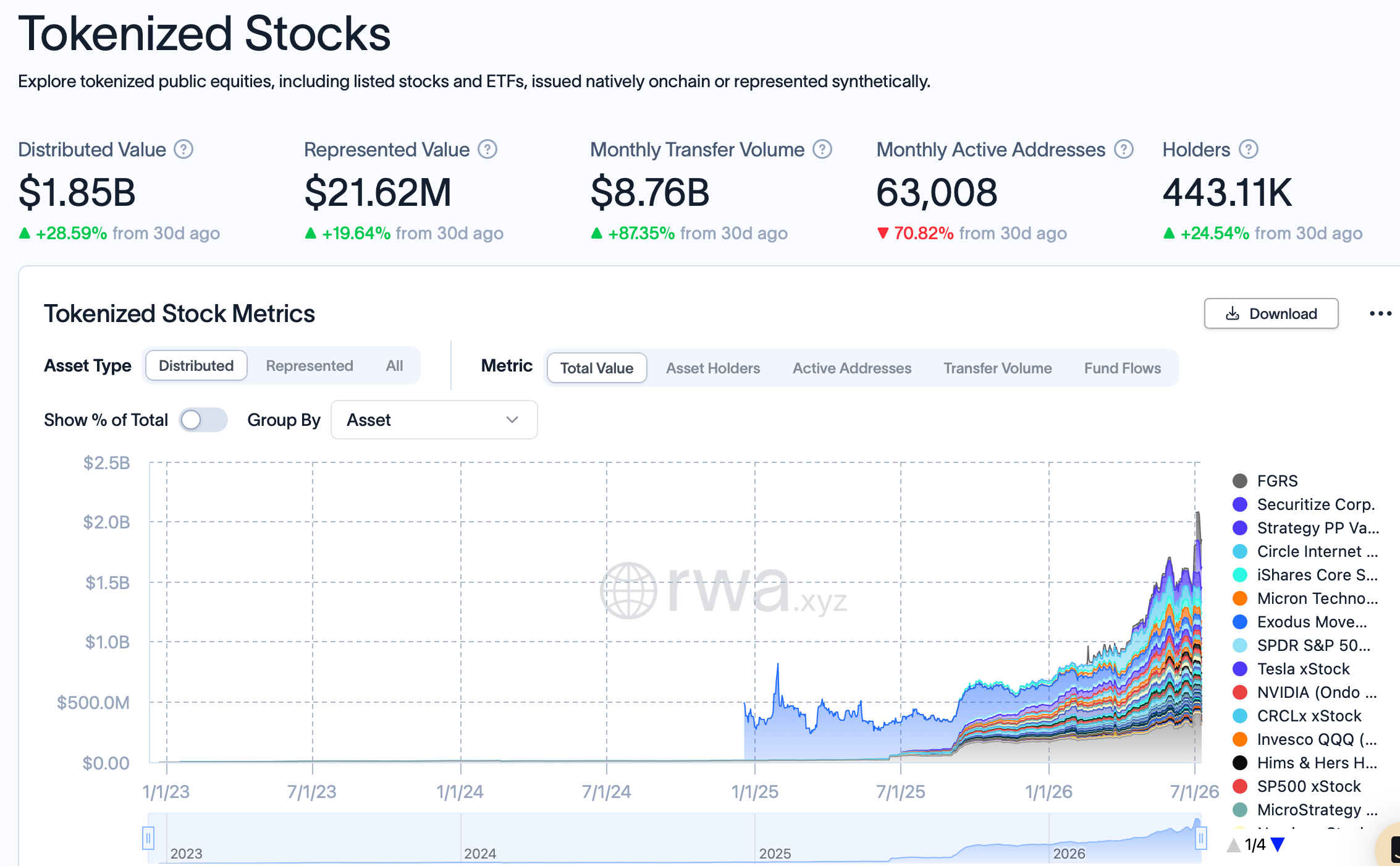
According to RWA.xyz data, the tokenized stock market has grown from about $379 million to $1.85 billion over the past year. Over the past 30 days alone, distributed value has climbed 28.6%, while monthly transfer volume has surged over 85% to $8.76 billion.
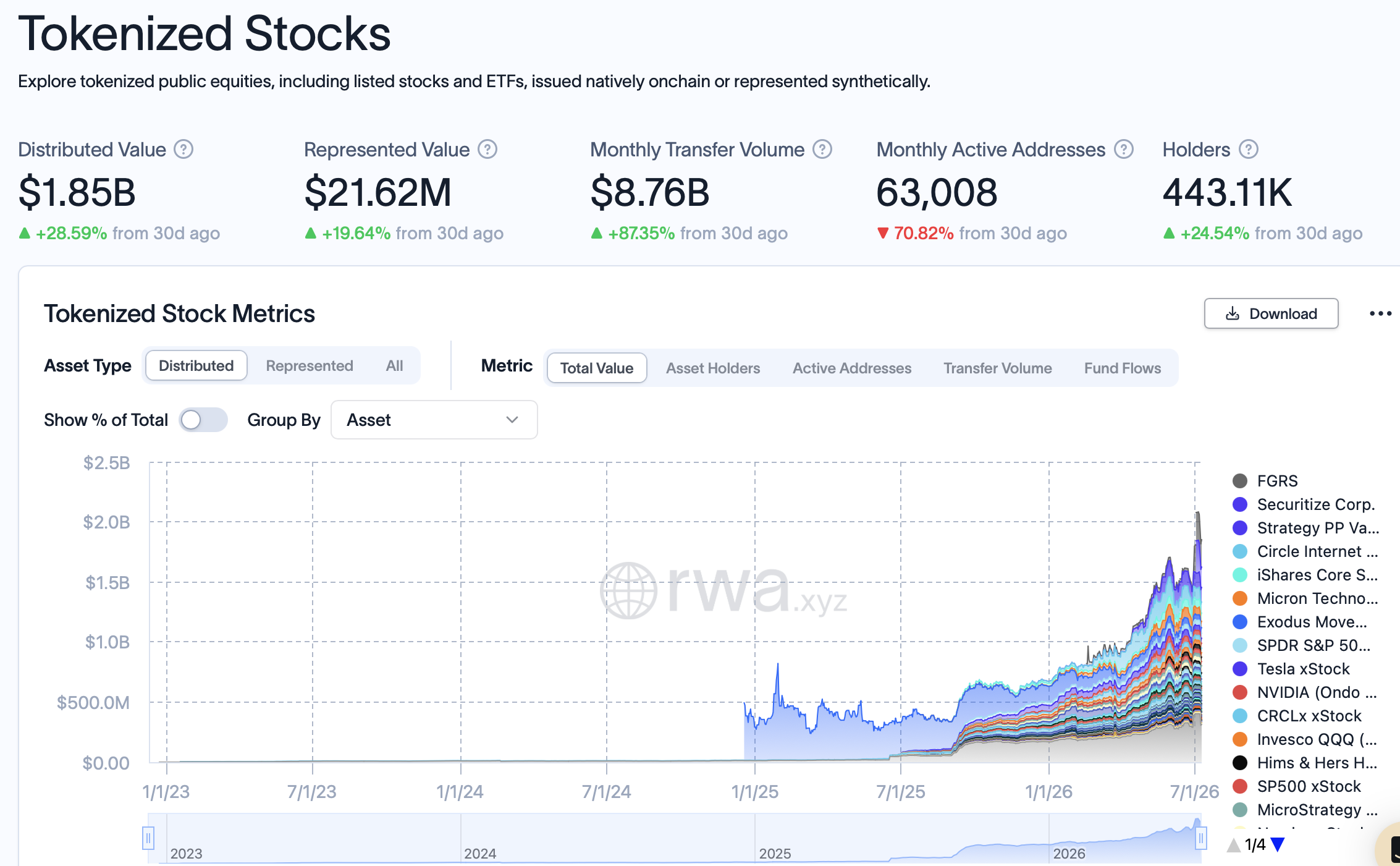
Tokenized stocks. Source: RWA.xyz
Crypto exchanges have led much of that growth. Kraken, which acquired xStocks developer Backed Finance in late 2025, has expanded the platform across its exchange, while Bybit and Bitget have also integrated xStocks. Coinbase and Binance have likewise rolled out tokenized equity offerings in recent months.
Traditional exchanges have also embraced tokenization. In March, the SEC approved Nasdaq’s pilot to trade tokenized stocks alongside conventional securities on the same exchange, while the New York Stock Exchange partnered with Securitize to develop a 24/7 platform for tokenized stocks and ETFs.
The following month, the Depository Trust & Clearing Corporation (DTCC) announced plans to launch a tokenized securities service in October after a pilot involving more than 50 financial and crypto firms.
Magazine: Will the crypto lobby’s $189M campaign get CLARITY over the line?
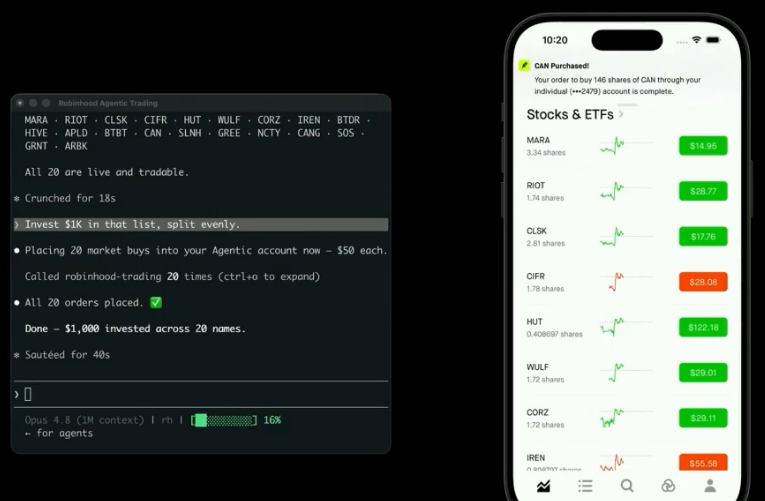
Robinhood said eligible US-based customers will soon be able to connect third-party AI agents to make crypto trades on their behalf, marking the latest expansion in autonomous trading after the company rolled out a similar product to equities and options traders in May.
“You can work with an agent to create a strategy with specific guardrails and not need to be constantly monitoring your account,” a Robinhood executive said during a presentation on Friday.
Robinhood didn’t set a date for when it would roll out the product to eligible US crypto traders but noted that its UK customers would be next in line to access the offering.
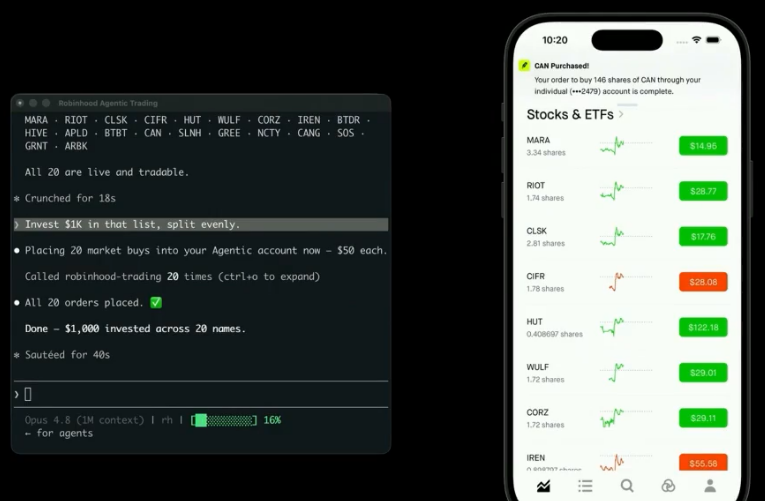
Equities traders can already ask AI agents to invest in crypto mining stocks on their behalf. Source: Robinhood
The push for autonomous crypto trading adds to Robinhood’s broader crypto strategy, which has primarily focused on real-world asset tokenization and the company’s Ethereum layer 2 Robinhood Chain, which launched earlier this month.
Robinhood’s senior vice president and general manager of crypto, Johann Kerbrat, said the new blockchain processed 17 million transactions from nearly 350,000 wallet addresses in its first week.
Meanwhile, over 70,000 agentic accounts have already been created by Robinhood equities and options traders since late May, when the platform launched a beta version of the product.
AI agents serve to even the playing field
During the presentation, the Robinhood executive said the AI agents would enable retail users to base trades on data that they would have otherwise missed, putting them on a more equal playing field with institutions:
“This is another big step towards giving retail investors every advantage that institutions have enjoyed for decades.”
Robinhood offers the agentic accounts through several third-party AI companies, including Anthropic, OpenAI and SpaceX’s Grok.
Robinhood is also enabling eligible users to have credit card purchases made on their behalf by AI agents.
It comes as crypto industry executives like Coinbase CEO Brian Armstrong and Circle CEO Jeremy Allaire have tipped that AI agents will become the dominant users of blockchain payments in the next few years.
AI agent crypto payment integrations are also taking place
Several notable integrations advancing AI agent-driven stablecoin spending have emerged in recent months, including one by Amazon Web Services in May when it integrated Coinbase’s x402 payments protocol into Amazon Bedrock AgentCore, allowing agents to transact in the USDC (USDC) stablecoin.
Related: Robinhood Venture Fund invests $75M in OpenAI
In April, crypto wallet startup Oobit launched a Visa-supported virtual card for AI agents to make online purchases in USDt (USDT) on behalf of businesses.
AI agent payments adoption lagging
Despite the integrations, data shows that AI-agent transaction activity on the blockchain remains relatively small, with Artemis data showing that only $2 million in transaction volume was facilitated through the AI agent-supported x402 protocol in June.
Features: The 5 types of real world assets being tokenized fastest onchain


OpenAI has reportedly supplied AI technology to Chinese companies on the Pentagon’s military-linked blacklist, adding fresh scrutiny to U.S. controls over advanced artificial intelligence exports.
Summary
- OpenAI and Google reportedly provided AI access to Chinese firms on the Pentagon’s Section 1260H blacklist.
- The reported access has renewed debate over U.S. AI export controls and cloud-based model distribution.
- The development comes as OpenAI expands GPT-5.6 Sol, Terra, and Luna across ChatGPT, Codex, and its API.
According to the reported findings, OpenAI and Google provided access to their AI models to Chinese companies included on the U.S. Department of Defense’s Section 1260H list, which identifies entities the Pentagon believes are tied to China’s military-industrial complex.
While inclusion on the list does not automatically prohibit commercial dealings or trigger sanctions, the designation serves as a warning for U.S. businesses evaluating relationships with those organizations.
The reported access has drawn attention because both companies have publicly positioned themselves as important partners in Washington’s efforts to maintain U.S. leadership in artificial intelligence.
OpenAI has repeatedly highlighted its role in strengthening American AI capabilities, while Google has expanded work with U.S. defense and intelligence agencies. Against that backdrop, the reported availability of their models to blacklisted Chinese firms has raised new questions about how advanced AI systems are distributed internationally.
Cloud-based AI remains difficult to control
Unlike conventional defense technologies that move through physical supply chains, AI models can be delivered through cloud-based application programming interfaces, commercial partnerships, or intermediary services. According to the report, those distribution channels make frontier AI systems harder to restrict once they become commercially available, even when governments tighten technology controls.
The development comes shortly after OpenAI expanded access to its latest GPT-5.6 family. As crypto.news reported earlier, the company has begun rolling out GPT-5.6 across ChatGPT, Codex, and its API while introducing a new capability-based lineup consisting of GPT-5.6 Sol, Terra, and Luna.
OpenAI said the release replaces its previous naming convention and separates models by intelligence, speed, and pricing, with availability expanding across consumer, enterprise, and developer products worldwide over a 24-hour deployment window.
Regulatory pressure could increase
At the policy level, the reported model access arrives as Washington continues tightening restrictions on advanced AI technology reaching China. The U.S. Commerce Department has repeatedly expanded chip export controls, while successive administrations have introduced measures governing the transfer and diffusion of advanced AI capabilities.
According to the report, if frontier AI models continue reaching companies connected to China’s military despite those efforts, lawmakers could seek stricter oversight of AI distribution. Possible measures discussed in the report include mandatory know-your-customer checks for AI API users or direct limits on providing advanced models to organizations in countries viewed as strategic rivals.
The report also notes that investors may watch the issue closely because additional regulation could affect how leading AI developers generate revenue from global API services. Any congressional inquiry or executive action targeting commercial AI model access could alter operating conditions for companies that currently rely on broad international customer bases.
Competitive effects may also follow if U.S. providers face tighter distribution rules. According to the report, restrictions on American frontier models could create opportunities for domestic Chinese AI developers, including Alibaba, Baidu, and DeepSeek, whose products would remain available within China’s technology ecosystem even if access to U.S. models becomes more limited.

We are already more than halfway through the year, and it’s safe to say that it hasn’t been kind to the largest cryptocurrencies. All three of the ones that we will explore in this article are deep in the red YTD after dipping to new local lows.
But let’s be more optimistic about the rest of 2026 and ask ChatGPT, Perplexity, Gemini, and Grok which they believe has the most potential to post the biggest gains in the next 5-6 months.
ChatGPT and Gemini Say…
Perhaps the most widely known and used AI outlined the realistic and bullish peaks of all three assets: $95,000 for BTC, $3,200 for ETH, and $2.50 for XRP in one of the cases, and $135,000, $4,500, and $4.50, respectively, in the other. Consequently, their realistic and bullish upside potentials ranged between 48% and 110% for the market leader, 97% and 117% for the largest altcoin, and 136% and 325% for Ripple’s cross-border token.
Its winner is quite clear: “XRP has the greatest percentage upside, followed by ETH, which is the best balance between upside and fundamentals.” Bitcoin, on the other hand, is described as the one with the “highest probability of a rally, but the lowest potential returns.”
Gemini had a slightly contrasting opinion. It placed Ethereum as the “highest theoretical upside contender,” since it is currently the most beaten down. It outlined the upcoming Glamsterdam update as a potential catalyst for future gains, as it promises to fix the fee structures.
“Because it is starting from such a compressed level, its upside multiplier is massive,” Gemini added.
It categorized XRP as the “clearest binary catalyst,” while BTC falls under the same category – the highest probability for a run, but the lowest percentage potential.
Grok and Perplexity Add…
Grok agreed to a large extent with Gemini. It said XRP “edges out for explosive relative gains,” since it’s smaller in size, while its pent-up narrative (payments and regulatory resolution), alongside its sensitivity to positive news, makes it the “highest beta play among the three.”
“In risk-on environments with altcoin rotation, XRP often amplified moves. However, this comes with higher risk – if macro weakens or catalysts delay, it could underperform,” Grok explained.
BTC is the safest “big rally” bet, while ETH balances utility and adoption but may “lag in pure speculative rallies unless specific narratives catch fire.”
Perplexity took ChatGPT’s side, indicating that “ETH probably has the best asymmetric rally potential in H2 2026, while BTC is the most likely to be steady, and XRP is the wild card with the sharpest upside if catalysts hit but the highest execution risk.”
The post BTC vs ETH vs XRP: Which Could Explode the Most in H2 2026? AIs Pick Their Winner appeared first on CryptoPotato.

Ethereum price prediction is back in focus after Fundstrat co-founder Tom Lee floated a $5 trillion network valuation. ETH trades near $1,740, leaving it valued at around $210 billion. That puts Lee’s target 24 times above today’s level. Big swing, small ask, right?
Speaking on the New Era Finance podcast, Lee argued Ethereum remains undervalued compared with the markets it could eventually support. He pointed to gold at roughly $22 trillion, global equities above $100 trillion, and real estate near $300 trillion. His view is that more of those assets will migrate on-chain over time.
Lee also tied that thesis to tokenization and AI infrastructure, where Ethereum could serve as the main settlement layer. The comments fit with BitMine’s growing Ethereum treasury strategy, a stance Lee has supported for some time. If ETH’s circulating supply stays near 121 million coins, a $5 trillion valuation implies a price close to $41,300.
Of course, reaching that level is another story entirely. Macro conditions, regulation, and institutional demand still drive Ethereum’s price in the near term. Until those pieces line up, traders may care more about the next resistance level than a target that belongs several zip codes away.
Don’t Miss Out on Our $1,000 USDT Airdrop on ByBit
Ethereum Price Prediction: Can it Even Break $2,000 Before the Next Macro?Catalyst?
Ethereum still well below $2,000, is putting the price prediction debate on a knife’s edge. Buyers have defended this area, although conviction still needs proof. Volume remains healthy, showing traders have not wandered off for coffee just yet.
The $1,750 to $1,770 zone remains the first level worth watching. If ETH reclaims and holds above it, momentum could build toward resistance between $1,845 and $1,865. Beyond that, the $1,975 to $2,000 range is the real test, where sellers have previously shown up in force.
The bullish case stays intact while Ethereum holds above roughly $1,725. A pickup in buying volume could send ETH back toward $1,865 over the coming sessions. Otherwise, the market may continue shuffling sideways between $1,730 and $1,850, waiting for a fresh catalyst instead of making the first move.

If ETH closes decisively below $1,725, the technical picture weakens. That could expose support near $1,620, with $1,530 becoming possible if selling accelerates. On chain activity, including Ethereum supply trends and stablecoin flows, may influence which path the market ultimately takes.
Tom Lee’s implied $41,000 target remains a long term thesis rather than a near term trading call. The idea depends on tokenized real world assets driving greater demand across Ethereum’s network. Until that story plays out, investors may need patience because markets rarely sprint in a straight line.
Discover: The Best Token Presales
Bitcoin Hyper Targets Early-Mover Upside While Ethereum Consolidates
ETH at $1,740 is a long way from $41,000. Even the optimistic near-term target of $2,000 represents a 15% move from here. It’s real, but modest relative to where early-stage infrastructure can move.
Ethereum’s scale also means its market cap needs tens of billions in new inflows to move the needle meaningfully. For traders who believe in the on-chain infrastructure thesis but want asymmetric exposure, the math on a $210 billion asset is structurally different from an early-stage presale.
Bitcoin Hyper ($HYPER) is positioning as the first Bitcoin Layer 2 with Solana Virtual Machine (SVM) integration, a combination that targets Bitcoin’s core limitations: slow throughput, high fees, and minimal programmability.
The project has raised $33 million at a current token price of $0.0136829, with a staking mechanism offering high APY for early participants. The SVM integration is the technical differentiator, bringing smart contract performance comparable to Solana while settling on Bitcoin’s security layer.
If the on-chain infrastructure buildout Lee describes actually accelerates, the picks-and-shovels layer — fast, programmable, Bitcoin-secured, is where early capital tends to concentrate.
Research Bitcoin Hyper before the presale closes.
Discover: The Best Crypto to Diversify Your Portfolio
The post Ethereum Price Prediction: Tom Lee Predicts $5 Trillion Ethereum appeared first on Cryptonews.


South Korea has launched its first government-backed blockchain stablecoin pilot after Gyeonggi Province confirmed an eight-month proof-of-concept program scheduled to begin in August.
Summary
- Gyeonggi Province will begin South Korea’s first government-backed blockchain stablecoin pilot in August.
- ZKrypto will test issuance, settlement, privacy, fraud prevention, and proof-of-reserves through February 2027.
- Toss and KT have also launched separate initiatives to develop infrastructure for won-based stablecoins.
According to blockchain media outlet NexBlock, Gyeonggi Province, the country’s most populous province, will begin testing a blockchain-based stablecoin in August as part of an initiative to examine its use for regional currency and government disbursements. The project is being led by blockchain security company ZKrypto and is expected to run until February 2027.
First phase focuses on core stablecoin functions
During the initial stage, the pilot will test how the stablecoin is issued, circulated, and settled before moving into a second phase between October and December. ZKrypto said the later stage will examine fraud prevention measures, privacy protections, and the possibility of using the stablecoin across public benefit programs.
To support the pilot, ZKrypto said the system will use zero-knowledge proof technology to stop duplicate spending while protecting user privacy. The company added that proof-of-reserves technology will verify reserve assets in real time throughout the testing process.
ZKrypto also stated that the project comes as dollar-denominated stablecoins continue gaining adoption globally, adding that South Korea should strengthen its own domestic stablecoin infrastructure. The company presented the provincial pilot as one step toward evaluating whether locally issued digital assets can support public-sector financial services.
Private companies are expanding won stablecoin infrastructure
The government-backed pilot follows several private-sector initiatives announced this week as South Korean companies continue testing blockchain payment infrastructure.
Earlier this week, financial super-app Toss signed a strategic agreement with Optimism and Sunnyside Labs to evaluate infrastructure for South Korean won-linked stablecoins.
According to a press release shared with crypto.news, the three companies will conduct a three-month proof-of-concept to determine whether blockchain infrastructure can support institutional payment systems while complying with South Korean financial regulations.
Separately, South Korea’s largest telecommunications company, KT, disclosed plans to invest 18 trillion won ($13.2 billion) over the next three years, including 6 trillion won for artificial intelligence infrastructure and 12 trillion won for networks, information technology, and cybersecurity.
According to South Korean technology publication Digital Daily, KT Chief Executive Park Yoon-young said the investment strategy also includes expanding into tokenization services and infrastructure for won-based stablecoins.
The company said those blockchain initiatives will be developed alongside upgrades to its core telecommunications business as part of its long-term growth plans.
Taken together, the announcements show government agencies, financial technology companies, and telecommunications providers testing different parts of South Korea’s digital payments infrastructure.
While Gyeonggi Province is examining stablecoin use in public administration, private companies are evaluating blockchain networks for regulated payments and building the systems needed to support future won-denominated digital assets.


Policymakers in New Hampshire’s executive council voted against a proposal that would have allowed the state to issue $100 million in bonds backed by Bitcoin (BTC).
At a Wednesday hearing, the five-member panel voted 3-2 against the New Hampshire Business Finance Authority’s (BFA) proposed issuance of $100 million in BTC-backed bonds. The proposed investments, which the authority approved in November 2025, already had support from Governor Kelly Ayotte.
“It was an extremely short-sighted decision,” said state representative Keith Ammon in a Thursday X post after the vote. “I can’t believe I witnessed it in person. They should gather all relevant facts and information and reconsider their vote at a future meeting.”
Councilors Karen Liot Hill, Dave Wheeler and Janet Stevens voted against the measure, while Joseph Kenney and John Stephen approved it. The crypto investment vehicles, issued by the BFA and with CleanSpark putting up BTC as collateral, would have marked New Hampshire’s continued approval of digital asset policies, following its May 2025 crypto reserve law.
Related: Bank of Korea governor outlines tokenized bond vision, unified ledger plan
While the BTC-backed bonds had support from many in the crypto industry, some experts warned against the proposal, saying it carried “substantial risk” for New Hampshire residents. Moody’s assigned the Bitcoin bond a provisional Ba2 rating in March.
New Hampshire to join prediction markets fight against CFTC?
With gaming authorities in many US states having already filed lawsuits against prediction market platforms like Kalshi and Polymarket over sports betting, some have speculated that New Hampshire could join the legal fight challenging the Commodity Futures Trading Commission’s (CFTC) authority. State Senator Tim Lang reportedly planned to introduce legislation restricting prediction markets in New Hampshire in April, but as of Friday, the platforms were still live in the state.
Magazine: Has Bitcoin bottomed for this cycle? Analysts say ‘not yet’
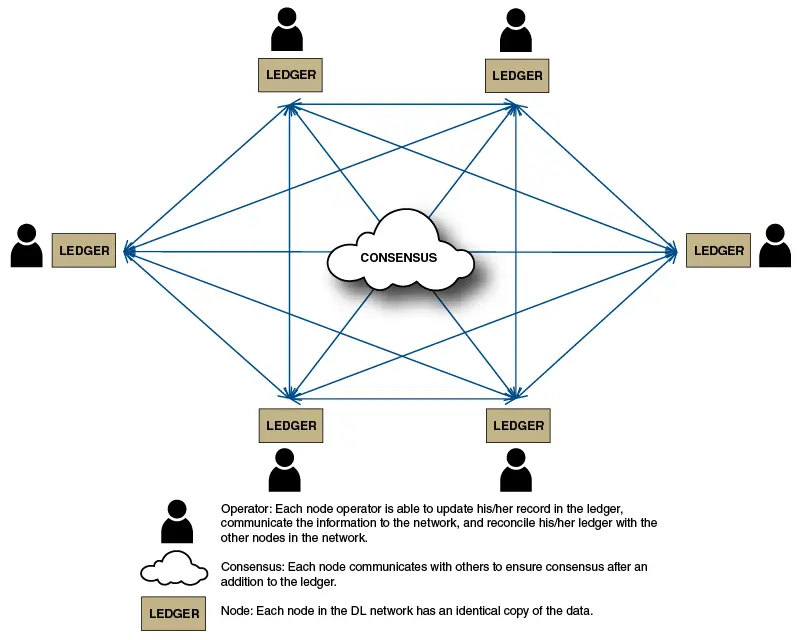
SWIFT is taking its biggest step into crypto after confirming its blockchain-based shared ledger is ready for initial use. Built on Hyperledger Besu over nine months, the network will let 17 major banks, including HSBC, Citi, UBS, BNP Paribas, DBS, ANZ, and Standard Chartered, pilot live cross-border payments using tokenized deposits.
The rollout moves beyond closed sandbox testing into real banking operations. Rather than replacing existing payment rails, the ledger coordinates tokenized deposits between participating banks while final settlement stays on the current infrastructure. That could help banks process payments during nights, weekends, and across time zones, where delays have long been a problem.
Discover: The Best Token Presales
What the SWIFT Crypto Ledger Actually Does
The shared ledger sits above existing payment rails instead of replacing them. When a participating bank starts a transaction, the platform coordinates funding commitments across counterparties and gives every institution the same real-time view of payment status. Final settlement still runs through RTGS systems and Swift’s existing messaging network.
The pilot uses bank-issued tokenized deposits rather than stablecoins or public crypto assets. Each token is backed one-to-one by commercial bank deposits, giving it the same regulated status as money held in a traditional bank account. In practice, the blockchain improves how banks move and coordinate funds, while the underlying money and compliance framework remain unchanged.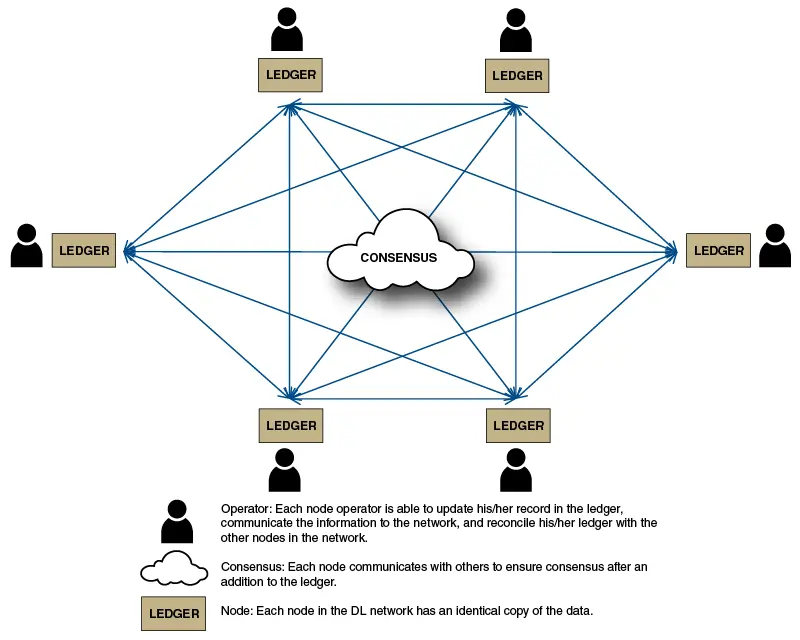
SWIFT already processes 75% of payments to beneficiary banks within 10 minutes on existing rails, often in seconds. The ledger’s specific contribution is removing the remaining constraint: the dependency on overlapping business hours between sender and receiver.
The result is 24/7 settlement availability, including overnight and weekend flows that current infrastructure cannot support, regardless of how fast the underlying messaging moves.
Don’t Miss Out on Our $1,000 USDT Airdrop on ByBit
Compliance Architecture Is the Strategic Signal
One reason the crypto project could gain traction is what Swift chose not to change. The shared ledger keeps the compliance, credit, risk, and control standards already used in today’s payment systems. Instead of creating a separate settlement network, it works within the existing regulatory framework.
That approach matters because regulators and major banks have been reluctant to adopt tokenized payment systems that weaken oversight. By keeping established safeguards in place, Swift is pitching blockchain as an upgrade to existing infrastructure rather than a replacement for it.
Thierry Chilosi, Swift’s Chief Business Officer, said the platform lets tokenized value move across borders with the speed modern commerce demands while maintaining the resilience, security, and compliance expected by global financial institutions.
The pilot brings together 17 banks from six continents, including ANZ, BNP Paribas, BNY Mellon, Citi, DBS, First Abu Dhabi Bank, FirstRand Bank, HSBC, Itaú Unibanco, Lloyds Bank, Mashreq, MUFG Bank, OCBC, Standard Chartered, UBS, UOB, and Wells Fargo.
The lineup suggests this is more than a regional trial. These institutions play a central role in cross-border payments across the dollar, euro, and major Asian currency corridors. Their participation gives the project a broader international footprint from the outset and could provide an early test of blockchain-based settlement at global banking scale.
Discover: The Best Crypto to Diversify Your Portfolio
The Broader Institutional Tokenization Race
SWIFT is not operating in isolation. A separate consortium including JPMorgan Chase, Bank of America, Barclays, and BNY Mellon announced a US-focused tokenized deposit network via The Clearing House, targeting a first-half 2027 launch.
NYSE parent Intercontinental Exchange has outlined a 24/7 settlement venue for tokenized securities with stablecoin-based funding, while NYSE itself partnered with Securitize in March to build blockchain infrastructure for tokenized stocks and ETFs.
Payments, deposits, and securities are steadily moving toward a blockchain-based infrastructure that can operate around the clock. Swift’s pilot stands out because of its reach. Its existing network connects more than 11,500 financial institutions across over 200 countries, giving the shared ledger a potential user base that few blockchain payment networks can match.
If the pilot succeeds across 17 major banks and multiple currency corridors, it could make it easier for other institutions to join. The project is designed to work within existing banking rules, reducing one of the biggest barriers to institutional adoption.
Swift has already outlined the next phase. Future upgrades are expected to support foreign exchange payment versus payment, programmable corporate payments, and cash movements tied to securities transactions. The current rollout is an early milestone, while the next test is whether that global network can translate interest into meaningful transaction volume.
Don’t Miss Out on Our $1,000 USDT Airdrop on ByBit
The post SWIFT Crypto Ledger Targets Settlement Dead Zones With 17-Bank Go-Live appeared first on Cryptonews.
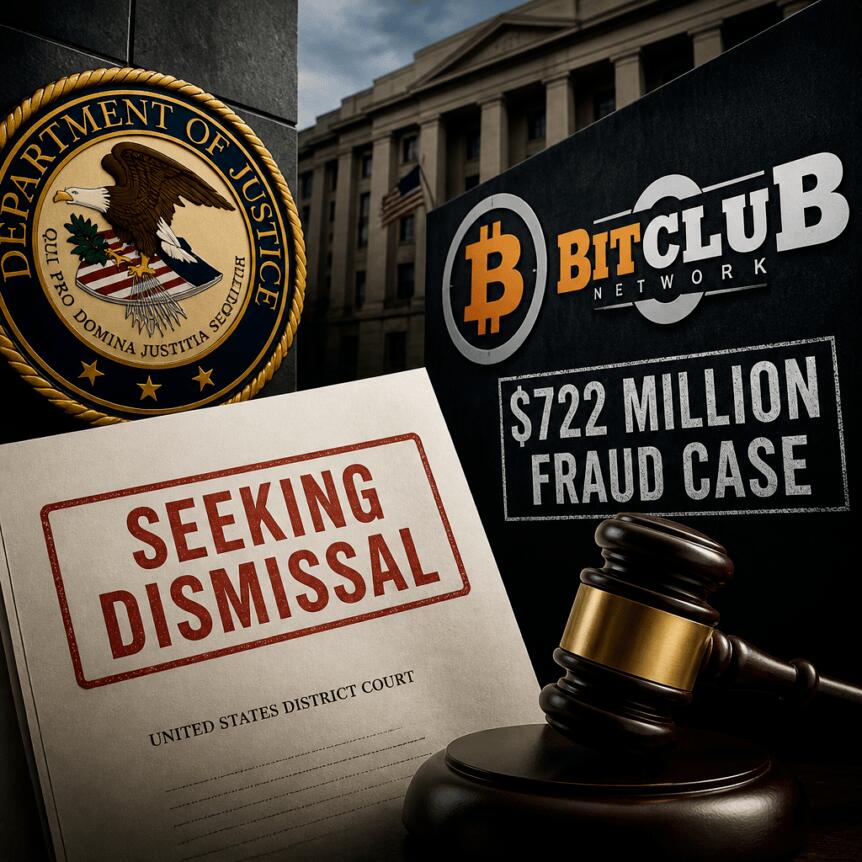
The U.S. Department of Justice is reportedly moving toward dropping federal charges against Matthew Goettsche, the founder of BitClub Network, a purported Bitcoin mining operation accused of defrauding investors of $722 million between 2014 and 2019. The development, if finalized, would represent one of the more consequential reversals in recent U.S. crypto enforcement history.
According to a Bloomberg Law report, the DOJ’s deputy attorney general’s office directed the New Jersey attorney general’s office to dismiss the case against Goettsche with prejudice. Following that directive, Goettsche’s attorneys informed the court that the parties had reached an “agreement in principle” to resolve the pending charges, but needed additional time to finalize the terms.
Key takeaways
- DOJ action to dismiss the BitClub Network case with prejudice would mark a major enforcement rollback for a high-profile crypto fraud prosecution.
- Goettsche’s counsel says the parties reached an agreement in principle, signaling a likely procedural resolution, though terms are not yet final.
- The case reversal follows a broader DOJ policy push described in an April 2025 memo from Deputy Attorney General Todd Blanche.
- Earlier in the same BitClub matter, multiple former associates—Silviu Balaci, Joseph Abel, and Gordon Beckstead—have already pleaded guilty.
A dismissal “with prejudice” under discussion
In a court filing surfaced via Bloomberg Law, Goettsche’s attorneys wrote to U.S. District Court Judge Claire Cecchi on Wednesday stating that the parties had reached an “agreement in principle” to resolve the pending charges. The letter adds that the parties “need time to finalize the terms,” suggesting that while a shift in posture has occurred, the outcome still depends on completing the procedural steps required by the court.
Bloomberg Law reported on Friday—citing two sources familiar with the matter—that DOJ leadership instructed New Jersey prosecutors to dismiss the case with prejudice. In legal terms, dismissal “with prejudice” typically prevents the government from refiling the same charges, which would effectively end the case against Goettsche in its current form.
Background on BitClub’s allegations
Goettsche was indicted in December 2019 and was scheduled for trial in October on charges including conspiracy to commit wire fraud and selling unregistered securities. Prosecutors characterized BitClub as a mining pool where investors could purchase shares and receive passive earnings.
According to the allegations described in reporting, BitClub purportedly falsified earnings values reported to investors and fabricated mining-related data to attract additional participation. The claim that investors were promised returns tied to mining activity is central to how the scheme was framed, because it linked the advertised profitability of mining to alleged misrepresentations.
The timing also matters for readers trying to understand the scope of potential impact. The accusations cover a multi-year window from 2014 to 2019, after which the case entered the federal court system and eventually resulted in an indictment and trial scheduling.
Why this case stands out in DOJ’s crypto approach
The reported reversal comes amid a broader shift in DOJ messaging about how prosecutors should approach digital assets—at least as described in internal guidance. In April 2025, Deputy Attorney General Todd Blanche issued a memo directing the DOJ to move away from what it characterized as “regulation by prosecution” against the digital asset industry, according to a DOJ-published document: https://www.justice.gov/dag/media/1395781/dl?inline.
That memo has been interpreted across the industry as a potential recalibration of how far enforcement actions should be used to draw lines on digital asset behavior. Earlier reporting from Cointelegraph also referenced this pivot in the context of Blanche’s views on the relationship between code and criminality, including coverage such as Acting AG Todd Blanche confirms ‘code is not a crime’ in DOJ pivot.
Still, the BitClub allegations—centered on investor deception and alleged wire fraud—sit in a familiar lane for U.S. prosecutors: fraud and securities-related theories rather than purely novel questions about whether a technology feature is “criminal.” That creates a tension worth watching. If the government is willing to step back from prosecuting Goettsche, investors and legal observers will likely focus on what DOJ believes the evidentiary or legal posture looks like under the newer policy framework.
The human dimension: prior pleas by co-defendants
One reason this potential dismissal drew attention is that the BitClub case already produced guilty pleas from multiple figures previously involved in the scheme. According to the coverage, three of Goettsche’s former colleagues—Silviu Balaci, Joseph Abel, and Gordon Beckstead—have pleaded guilty. Their earlier outcomes can complicate perceptions of how the government views the case overall, especially if Goettsche’s prosecution is curtailed while other participants have already resolved their matters.
It’s also notable that the broader enforcement environment for crypto remains active. Earlier coverage highlighted that DOJ continues to pursue criminals operating in digital asset fraud and theft. In April, a California man named Evan Tageman was sentenced to 70 months in prison for an alleged criminal enterprise that stole about $263 million worth of crypto from victims through social engineering scams and burglary, per Cointelegraph reporting such as this article. Separately, DOJ actions reported in April described the freezing of over $700 million in crypto tied to investment scammers targeting Americans, and in February, the seizure of nearly $580 million linked to a criminal scam group operating in Southeast Asia—reflected in Cointelegraph coverage including this report and this one.
Taken together, those examples suggest that while DOJ’s strategic posture may be shifting, enforcement against alleged fraud and theft is still proceeding through other cases. The question in the BitClub matter is therefore not whether DOJ will prosecute crypto-related wrongdoing, but whether it will continue this particular prosecution in light of updated internal guidance and the specifics of the case.
What to watch next
For now, the key development is procedural: Goettsche’s attorneys say an agreement in principle exists, but the terms are not yet finalized. Investors, attorneys, and crypto operators should watch for the court’s next filings to confirm whether the dismissal becomes official—and, if so, how DOJ explains its reasoning in a way that clarifies what the “regulation by prosecution” directive means when fraud allegations are on the table.
Exclusive analysis of the RWA.xyz database surfaces three surprising tokenization stats. They show that tokenization’s growth engine has quietly moved. The money is no longer where the headlines say it is.
Three figures from RWA.xyz data between May 31 and July 9, 2026 tell one story. The famous category has stalled, a $20 billion giant hides in plain sight, and stablecoins are quietly rotating.
How to Read These Tokenization Stats
All figures come from one source, RWA.xyz, using its dashboard convention. That means distributed on-chain value, or tokens natively issued on a blockchain, counted once per asset.
Want more token insights like this? Sign up for Editor Harsh Notariya’s Daily Crypto Newsletter here.
Growth rates use the dashboard’s 30-day change, or daily API snapshots normalized to daily averages.
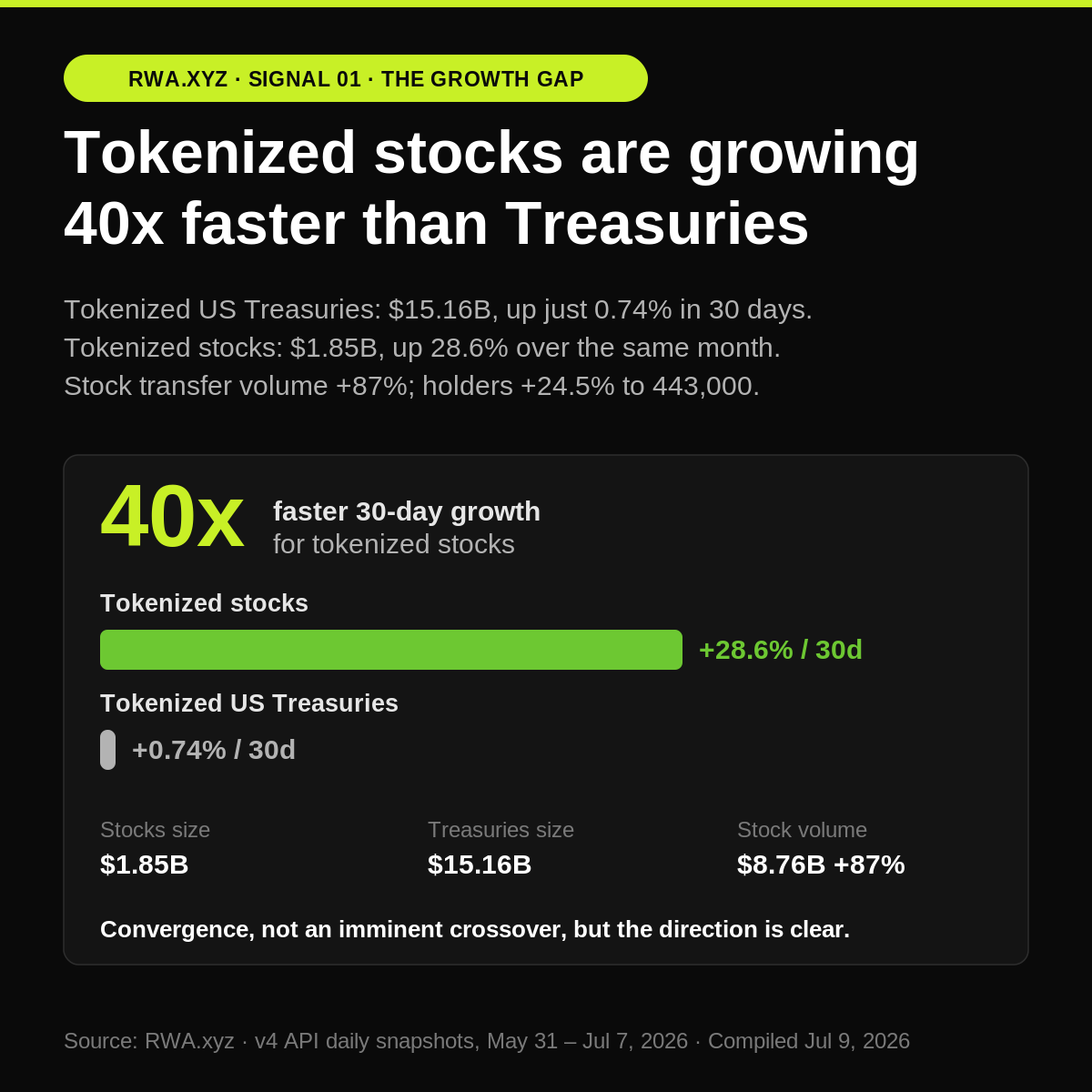
Tokenized Stocks Are Growing Nearly 40x Faster Than Tokenized Treasuries
For two years, tokenization mostly meant putting US government bonds on a blockchain. That trade has stalled.
The value held in tokenized US Treasuries, such as the BUIDL and BENJI funds, stands at $15.16 billion, up just 0.74% in the past 30 days. Tokenized stocks tell the opposite story. At $1.85 billion they are still about eight times smaller, but they grew 28.6% over the same month.
Monthly transfer volume in stock tokens jumped 87% to $8.76 billion. Holders grew 24.5% to more than 443,000.

The shift matters because Treasury tokens are a cash product, and that demand looks full. Stock tokens are an access product, and demand is still climbing. At these rates the story is convergence, not an imminent crossover, though the direction is clear.
The Biggest Tokenized Asset Is a $20 Billion Home-Loan Token
The largest tokenized asset is not a BlackRock fund. It is a home-equity token from Figure Technologies. A home-equity line of credit, or HELOC, is a loan taken against the value of a house.
Figure records these loans on the Provenance blockchain, then finances and trades them on-chain. It is one of the most surprising tokenization stats in the data.
The token reached about $20.1 billion on July 7, up $730 million in three weeks. That is more than every tokenized US Treasury combined, which totals $15.16 billion. It is also over 10 times the tokenized stock market.

It grows without marketing because it is securitization plumbing, the bundling of loans for investors, not a retail product. Counting all tokenization types, the wider shift to private credit now tops $31 billion on-chain, the largest non-stablecoin category.
Stablecoins Look Flat, but They Are Churning Underneath
Total stablecoin value has not moved in a month. It sat near $321 billion since June 7. The calm is misleading.
Under the surface, billions are rotating between types. USDGO, a regulated dollar issued by Anchorage Digital Bank, grew 54% in three weeks to $6.12 billion. Global Dollar (USDG) rose 16% and Dai gained 8%.

On the other side, Ethena’s USDe fell 16%, about $1.4 billion redeemed. USDe is a synthetic dollar, one that earns yield from crypto trading positions rather than bank deposits.
That yield only holds while traders pay to stay long. So the redemptions point to falling funding rates and leverage unwinding across the market.
The same capital is moving into regulated, fully-reserved tokens like USDGO and Global Dollar. Traders are swapping market-driven yield for the safety of bank-issued dollars.
Honorary Mention, the Marginal Dollar Buys Stocks and Credit
Put the 30-day growth numbers side by side and the rotation is clear. Tokenized stocks grew 28.6%,whereas tokenized credit grew 7.6% to $6.58 billion in distributed value. Tokenized US Treasuries grew just 0.74%.
It is worth noting that Tokenized credit is the umbrella for private credit, on-chain lending, corporate bonds, and structured debt. It is held by nearly 185,000 addresses across more than 2,500 assets.
The category runs deeper than that number suggests. Adding assets represented on-chain, including Figure’s HELOC complex, tokenized credit tops $31 billion. Its leaders are lending protocols like Maple’s Syrup pools and tokenized CLO funds, bundles of corporate loans, from Janus Henderson and Securitize.

Treasury tokens were tokenization’s proof of concept. Credit and fund wrappers, built by leading tokenization platforms, are where the growth now compounds.
What the Rotation Adds Up To
One thread ties these tokenization stats together. Very little new money entered the market. The same capital simply moved.
It rotated out of Treasury tokens into equities and credit. It rotated out of synthetic dollars into regulated ones. That distinction matters for liquidity. Growth built on rotation, not fresh inflows, leaves the market thin. Value also sits in very few tokens, from a single $20 billion HELOC token to a stock market of $1.85 billion spread across hundreds of small instruments.
When capital turns, it can leave fast. USDe’s $1.4 billion in redemptions show how quickly. That is the core of the RWA market liquidity problem.
The coming weeks will show whether stock tokens keep compounding near 40 times the Treasury pace.
The post 3 Surprising Tokenization Stats Reshaping On-Chain Markets in 2026 appeared first on BeInCrypto.

Backpack Expands Tokenized Equities with 24/7 Trading

Celebrity Baby Names 2026: The Meanings Behind Ozzy, Midas And More

Pinstriped’s early return for 2026 Caulfield assault


-
 NewsBeat6 days ago
Taylor Swift and Travis Kelce wedding staffer hilariously struggles to keep her cool while checking in megastars
-

 Fashion5 days ago
Open Thread: What Great Books Have You Read Recently?
-

 News Videos4 days ago
Whats Hidden Inside This Cash Register? #treasure #reselling #money
-

 Fashion2 days ago
Loro Piana Fall 2026 Enters Houston’s Art Scene
-
 Tech4 days ago
Anthropic’s new “J-lens” reveals a silent workspace inside Claude that mirrors a leading theory of consciousness
-

 Business4 days ago
AXT Shares Jump Nearly 14% as Semiconductor Materials Maker Rebounds on AI-Linked Indium Phosphide Demand
-

 Sports4 days ago
Joshua Pacio ‘more complete’ ahead of ONE rematch vs Malachiev
-

 Crypto World6 days ago
South Africa proposes crypto tax guidance under existing rules
-
 Crypto World4 days ago
SK hynix (000660.KS) Stock Dips as $28B Nasdaq ADR Offering Drives AI Memory Expansion
-

 News Videos5 days ago
Best Time to Enter Small Caps Right Now? Another Bull Run? | Financially Free
-

 Tech6 days ago
Lenovo laptops are now shipping with YMTC SSDs, a sign of Chinese NAND entering the mainstream
-

 Crypto World4 days ago
$1,000 Credit Alert! BlockDAG X Exchange Pre-Registration Now Officially Open, Polkadot Dips & Zcash Rebounds
-

 Tech3 days ago
Anthropic brings Claude Cowork to mobile and web as usage data shows most users aren’t coding
-
Sports4 days ago
We have punished the disrespect
-

 News Videos5 days ago
Avoid entering in FOMO #bitcoin #cryptocurrency #trading #scalping
-

 Fashion5 hours ago
Weekend Open Thread: Nutriplenish Leave-In Conditioner
-

 Tech6 days ago
Neuralink Threads Its Way Straight Through the Brain’s Armor
-

 Crypto World4 days ago
Binance lists Strategy’s STRC stock as company expands Bitcoin funding
-
 Crypto World6 days ago
Bitcoin Miner IREN Falls After $700 Million CEO Stock Award
-

 Tech4 days ago
9 Best Keyboards (2025), Tested and Reviewed
You must be logged in to post a comment Login