This week The Flying Bull Academy welcomed the Portsmouth-based artist, My Dog Sighs, to complete a mural based on our new school values. Paul went back to his roots as an art teacher, answering the children’s insightful questions as they watched him paint the mural. We were really excited to welcome him back for our grand opening at our summer fayre last Thursday, where he saw all of the children’s ‘My Dog Sighs’ creations. They were especially pleased to have their work signed by Paul. It was wonderful to see so many families coming onsite to celebrate and appreciate his work. Thank you to everyone who contributed to make this such a success.
Their new impact report, released this week, highlights the UK’s understanding and response to strangulation four years since the law was introduced.
It includes data from police forces which they say shows a 13% increase in reports from the year before, and that there have been 24,446 offences prosecuted by the CPS since the offence was introduced.
Dr Helen Bichard, a principal clinical psychologist with North Wales Brain Injury Service, was involved in the original funding bid which led to the creation of the IFAS.
Advertisement
She said: “I had carried out research in 2020 which I think for the first time really highlighted the impact of strangulation on the brain, which was used by the government in creating the new legislation.”
She said changing the law was amazing but additional action was needed.
“It was almost as if the legalisation had proceeded all the systems that needed to be in place to make sure it’s effective, so that’s why IFAS was created.”
One of those actions is guidelines created for medical professionals as there were none for strangulation in the UK.
Advertisement
“They are a first of its kind, they will save lives – there is no greater impact than that,” said Bichard, adding that it is vital health professionals are aware of the situations and effects caused by strangulation.
“It can be catastrophic, it can cause death that’s why strangulation is used in violence because it is really effective.”
England is set to play Norway on Saturday (July 11) at 10pm
As England make their way further into the World Cup, the games have been a boost for Cambridgeshire pubs. England are set to play Norway on Saturday (July 11) at 10pm.
Advertisement
This means more fans and punters will be heading to their local to see if England can take one step closer to bringing it home. For pubs across the county, the World Cup games have left them fully booked.
At The Tivoli in Chesterton Road, Cambridge, staff have had to turn people away due to being “packed out” for games. “We’ve had to reject over 100 bookings for the Norway game,” events manager Ben Tatum said.
He added: “We’ve had a great couple of weeks with the World Cup so far. It took a couple of fixtures to get off the ground, but then all of a sudden we are packed out.”
During England’s last game versus Mexico, which was broadcast at 2am on Monday (July 6), Ben added that the pub was “very tense”. He said: “We had three Mexican lads at the back of the room, but everyone got on like a house on fire. It’s all very sporting camaraderie. It’s a decent atmosphere.”
Advertisement
The World Cup has also drawn more people to other pubs in Cambridge. Chloe Williams, who works at The Prince Regent, in Regent Street, said the pub has “definitely” seen an increase in people coming to watch the games.
She added: “It’s been great, we have been really busy. It’s really nice as everyone seems to come together to watch football.”
Marianna, who asked to use only her first name, at the The Grain and Hop Store pub in Regent Street, said the pub has also seen more people turning out for the football. She said: “It’s been very busy, especially for England.
“We have been fully booked. We have not had any problems and we probably won’t. We always have people coming in to watch sports, but the numbers have definitely increased.”
David Turner-Robinson at the Golden Hind pub in Milton Road said everyone has had a “good time” watching England’s World Cup journey. He said: “We’ve had quite a lot of people. The next game is fully booked out. For the first few games, we weren’t sure how it was going to go. However, we have adapted and it’s been great.”
At The Shed Taproom and Grill at Sand Martin House in Peterborough, the games have been “hectic”. Zola Barraco, who believes “it’s coming home”, said: “It’s been great. It’s nice to see people so patriotic. We have had more families which has been really nice.
Advertisement
“It has been hard work for us bar staff as it’s a constant, but everyone has been in good spirits. Everything is always really nice and we’ve had no trouble.”
While the World Cup has been a winner for many pubs, some pubs haven’t benefited from it as much. Ali Prior from The Cobblestones in March said: “We haven’t really bothered with it.
“We are too far out of town and we have too many pubs to compete with that are walkable. It’s not really something we have pushed.”
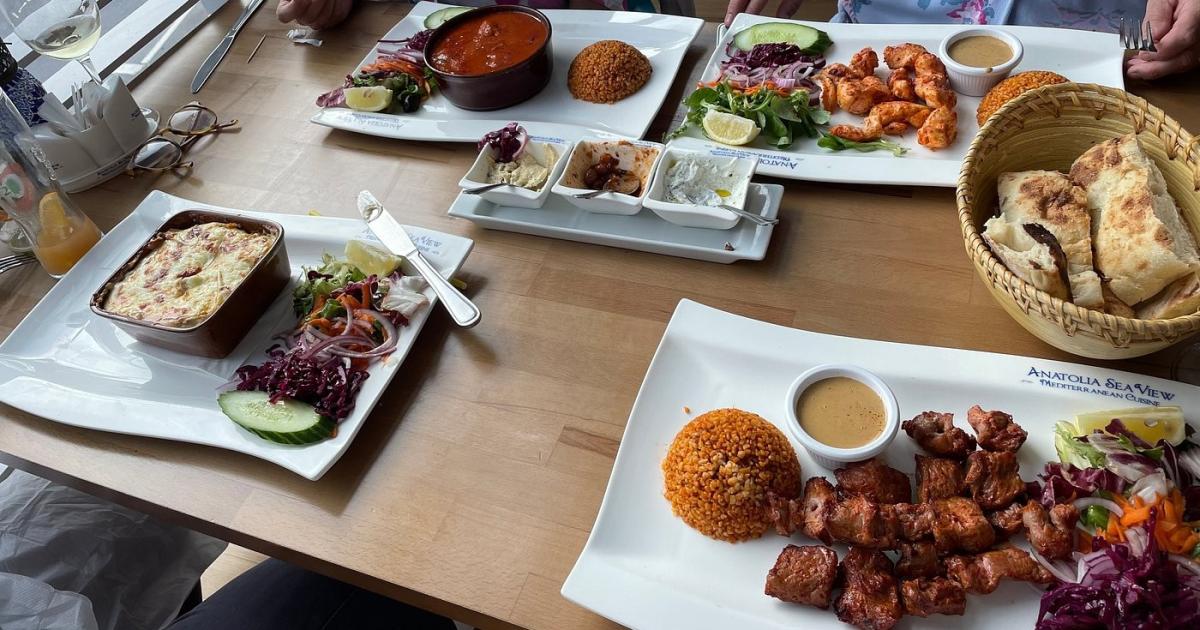
Anatolia Sea View Mediterranean Cuisine, on the seafront in St Annes, currently holds an impressive 4.8-star rating on TripAdvisor and has been recognised with a Travellers’ Choice 2025 award.
The restaurant has built a loyal following among locals and visitors alike, with customers regularly praising its authentic Mediterranean dishes, attentive service, and stunning coastal views.
Specialising in Anatolian and Mediterranean cuisine, the venue serves a range of fresh seafood, traditional mezes, grilled kebabs, and classic Turkish-inspired dishes.
Several reviewers have described the restaurant as a must-visit destination when in Lytham St Annes, highlighting both the quality of the food and the welcoming atmosphere.
Advertisement
One customer, who visited with a friend, said: “Had a lovely meal last night with a friend.
“Food was gorgeous, staff were very friendly and welcoming, and the view was stunning.
“Would definitely recommend. Thank you.”
Another reviewer praised the restaurant’s commitment to authentic cooking and its range of gluten-free options.
Advertisement
They wrote: “Great tasting authentic food cooked in a visible kitchen, most of the menu also available gluten free, great service and good value.
“A must every time we visit Lytham St Annes and well worth the effort of a walk down the prom.”
The restaurant also appears to have impressed customers with its efficiency and hospitality.
One diner said: “The Anatolian restaurant is beautiful, the staff and food are exceptional, and there are no long waits for your food either.
“We loved our meal here and will definitely return.”
Advertisement
Larger groups have also spoken highly of their experiences at the seafront venue.
A recent reviewer wrote: “Great evening.
“Food was fantastic with excellent customer service.
“There were 33 of us, and everyone enjoyed the experience.”
Advertisement
Customers frequently praise the combination of authentic Mediterranean flavours, generous portions, and views across the coastline, helping Anatolia stand out among dining destinations on the Fylde coast.
According to its TripAdvisor profile, the restaurant focuses on showcasing the rich culinary heritage of Anatolia and the Mediterranean, using fresh ingredients to create traditional dishes in a relaxed setting.
With a 4.8-star rating from more than 1,500 reviews, a Travellers’ Choice award, and diners repeatedly describing the food and service as exceptional, Anatolia Sea View Mediterranean Cuisine has established itself as one of Lytham St Annes’ most highly rated restaurants.
Argentina were allegedly the subject of a hacking that caused accredited members of Argentinian media to receive threats of further cyber-attacks if ‘justice’ isn’t served over the World Cup referee controversy
The Argentine Football Federation (AFA) has claimed its systems were infiltrated by Egyptian hackers, who subsequently sent mass emails asserting their win over Egypt was “snatched by corrupt refereeing decisions”.
Advertisement
The defending champions are reported to have been targeted in a cyber attack that resulted in accredited Argentine journalists receiving threats of further digital strikes unless ‘justice’ is delivered.
According to a report from Argentine outlet La Calle, the emails, dispatched from AFA email addresses, called into question the performance of French referee François Letexier. The messages stated that “Argentina did not win” and that the victory resulted from “corrupt refereeing decisions,” while praising the Egyptians’ display.
The outlet suggests that the group of hackers of Egyptian origin breached part of the federation’s database, obtaining email addresses, passwords, IP addresses, and specialist form data. Following the mass circulation of emails to journalists, Argentina released an urgent statement distancing themselves from any activity originating from their channels that appeared “unusual”.
Their statement read: “Dear colleagues, we would like to inform you that we have detected the possible sending of emails from one of our institutional accounts that were neither generated nor authorised by our team.
“Given this situation, and while we conduct the corresponding verifications with the IT department, we would like to inform you that…We ask that you disregard any messages you have recently received from our account that seem unusual..”, reports the Mirror.
“There is a possibility that our account has been the subject of unauthorised access, so we are working to clarify what happened and take the necessary security measures. Our systems have the corresponding security and safeguards in place.
“Thank you very much for your attention and cooperation.”
Advertisement
The Pharaohs found themselves on the wrong end of a dramatic World Cup turnaround as Lionel Messi spearheaded a second-half revival to keep their hopes of retaining their title intact.
Mohamed Salah and his teammates established a two-goal advantage and appeared poised to shock the world champions, only for Messi to both score and provide an assist in a 3-2 victory for Lionel Scaloni’s team.
The fixture was overshadowed, however, by furious reactions from the Egyptian camp, who felt aggrieved by officiating decisions.
Ziko’s potential second goal was disallowed due to an infringement in the build-up, while Salah was refused a penalty during the sequence of play that led to Enzo Fernandez’s decisive strike.
Advertisement
Meanwhile, the contents mirrored grievances and criticisms voiced by manager Hossam Hassan and Mostafa Ziko. The criticisms, however, were met with a resolute response from FIFA’s Chief Refereeing Officer, Pierluigi Collina.
The former World Cup final referee came to the defence of his fellow officials in the face of mounting criticism. He said: “Constructive discussion about decisions will always be part of football, but unfounded allegations have no place in our sport. Nobody can question the integrity of the FIFA World Cup match officials.”
The Colt family, found living in a makeshift camp in an isolated farming valley in Australia, kept 38 blood relatives in squalor — with children so severely affected by inbreeding they were unable to speak or see
The discovery of a horrific incest cult hidden within a family home sent shockwaves through those who uncovered the harrowing situation.
Advertisement
A deeply disturbing incestring, started by two great-great grandparents in a remote farming valley, was brought to light after avoiding any intervention for years.
Their descendants were found to be severely disabled and unable to speak or see as a result of relentless inbreeding. Social services were horrified when they found 38 people living in squalor, all related.
The children, subjected to extreme abuse, were so severely disabled that they were unable to talk. After being placed in foster care, their adoptive families noticed deeply troubling sexualised behaviour.
In a disturbing development, one of the parents subsequently shared a post on Facebook with the sickening caption “Love Makes a Family”, as reported by the New Zealand Herald.
Advertisement
The ordeal for the Colts, a pseudonym assigned by the court, began with June and Tim’s marriage in New Zealand in 1966 before they relocated to Australia. The couple had seven children, with Martha being the youngest.
Each of the 38 children within the group endured prolonged sexual abuse at the hands of siblings, cousins, fathers, an uncle, and a grandfather, spanning four generations. The Colt family first came under official scrutiny in June 2010.
Over the subsequent two years, authorities filed seven “risk of significant harm reports” centred primarily around neglect, medical neglect, and truancy concerns.
Advertisement
In 2010, social services finally gained access to the makeshift camp where the family lived. The site lacked even the most basic amenities, including running water and toilets.
The children were unable to comb their hair, had no knowledge of how to use toilet paper, couldn’t brush their teeth, and ate with their hands.
The caravan’s cooking area was caked in grime, vegetables were left to rot in the fridge, and the bed sheets appeared to be heavily stained with dirt. A kangaroo was discovered sleeping on one of the children’s beds.
Advertisement
Many of the children displayed visible physical deformities, with misaligned eyes, low-set ears, and appearances suggesting they were decades older than their true age. Only Rhonda’s five year old daughter was found not to have been fathered by a blood relative.
All remaining children were the products of incest.
Despite genetic testing proving to the contrary, Betty, Martha, and Raylene all continue to deny that their children are the result of incest.
Three of the girls, aged seven, eight, and nine, claimed their uncle, Charlie Colt, who lived on the property when the children were removed, was also their father. The nine-year-old also alleged that Charlie Colt had had sexual relations with her.
Advertisement
It is believed the family patriarch, Timothy Colt, who died in 2009, fathered children with both one of his daughters and one of his granddaughters.
Five of the boys who were removed also confessed to torturing animals on the farm, including puppies and cats, and admitted to mutilating the genitals of animals.
Initially, the family complied with a request from social services in June 2012 to improve their living conditions, but by July, police were forced to remove 12 children, all cousins aged between five and 15 years, after it was established they were at risk of harm if they remained at the property.
Advertisement
The children who were taken into care will remain there until they reach 18. The case came to public attention when the children’s court of New South Wales opted to make its ruling public.
In 2021, during the trials of other Colt family members, evidence emerged suggesting that Martha’s father, Tim Colt, may also be the father of his daughter Betty’s 13 children.
Martha, who was known to share a “marital bed” with her brother Charlie, had five children with him. Her trial heard that her children were likely fathered by Charlie, her own father Tim, and another brother.
Three family members, Roderick, Martha, and Derek Colt, filed intentions to appeal in 2020, but these have since lapsed. Of the 80 original charges against eight Colts – which included incest, child sexual abuse, indecency against a child, and perjury – many were subsequently dropped.
Advertisement
Charlie Colt, who initially faced 27 charges, was cleared of two counts and acquitted, with the remaining charges subsequently dropped. His brother Roderick, however, was convicted of raping his niece and half-sister Petra.
During the trial, it emerged Petra was in fact his half-sister, having been born to Roderick’s sister Betty and their father Tim.
Despite all eight family members being remanded following their arrest in 2018, only four have received custodial sentences.
Martha, along with her elder sisters Betty and Rhonda, and Betty’s daughter Raylene, faced charges for lying about the paternity of their children. In a 2018 Facebook post, Betty Colt shared a photograph of herself with two female relatives, bearing the caption “Love Makes a Family”.
Advertisement
Rhonda received a 14-month intensive corrections order (ICO) for perjury, which concluded in 2021. Raylene was likewise handed a 16-month ICO for perjury, which also came to an end in 2021.
Betty was found guilty on four counts of perjury, one count of lying under oath, and one count of perverting the course of justice, resulting in a 14-month prison term.
Her maximum sentence of two years and four months is due to expire in August. Martha, the youngest of the sisters, admitted to five counts of perjury and one count of making a false statement under oath.
Widdecombe’s political career spanned decades – she served as MP for Maidstone in Kent for 23 years and worked as a Home Office and employment minister in John Major’s government between 1994 and 1997.
Following news of the police investigation, Prime Minister Sir Keir Starmer said it was “shocking news” and his thoughts were with Widdecombe’s family “at this awful time”.
He said he had spoken to the Speaker of the House of Commons Lindsay Hoyle, Conservative leader Kemi Badenoch, Reform UK’s Nigel Farage, as well as Andy Burnham, “to urge everybody to come together”.
Badenoch said she was “stunned” and “really struggled to find the words”. She added: “My heart is breaking for her family.”
Advertisement
Likely incoming prime minister Burnham sent his condolences to Widdecombe’s family, and said: “Ann gave a lifetime of public service.”
Home Secretary Shabana Mahmood urged the public “to avoid speculation and allow the police investigation to progress”.
In a post on X, she said the circumstances of Widdecombe’s death were “extremely distressing”, adding that her “thoughts are with Ann’s family and loved ones”.
Parent-teenager friction is a rite of passage that everyone experiences at some point. Not only is it common, but according to several experts who spoke with HuffPost, it’s also developmentally appropriate.
As they emerge from childhood, teens push boundaries while simultaneously exploring their newfound freedom. At the same time, parents are desperately trying to ensure not only their kids’ safety, but their success as independent adults.
“At the heart of almost every argument between parents and teens is autonomy and agency,” licensed marriage and family therapist Saba Harouni Lurie, the owner and founder of Take Root Therapy, told HuffPost. “Teens are trying to figure out who they are, and that process naturally involves pushing for more independence.”
Parents, on the other hand, “are focused on protection and long-term safety of their kids,” licensed marriage and family therapist Cristina Pasini Billingsley, told HuffPost, “particularly when emotional maturity may not yet align with chronological age.”
Advertisement
Elva Etienne via Getty Images
“Autonomy” and “agency” are at the heart of almost every conflict between teens and their parents.
It shouldn’t come as a shock that this parent-teen conflict usually arises around the following three topics: screen time, homework/grades and chores.
But Harouni Lurie acknowledged that the source of the fight usually doesn’t matter: “What is really happening underneath is a teen saying, ‘I need more space to become myself,’ and a parent saying, ‘I still need to keep you safe.’ Both things are completely valid, and that is exactly what makes it so hard,” she said.
So what do you do when it feels like every day is a battle between you and your teenager?
Advertisement
JJ Kelly, a licensed clinical psychologist known as the “Punk Rock Doc,” advised getting ahead of fights with a parenting contract that families can keep in plain sight on their refrigerator. This document, along with several other practical strategies, can help prevent disagreements from deteriorating into full-on blow-ups.
“When expectations around chores, grades and screen time are written down, agreed upon, and posted on the fridge before a fight ever starts, you’ve already done most of the work,” said Kelly of the parenting contract strategy, offering this free, therapy-informed resource on her website. “There’s nothing to debate. There’s nothing to negotiate in the heat of the moment. You just refer back to what was already decided, together, calmly.”
This contract, along with the following advice from our experts, can be implemented when discussing these painfully common fights parents have with their teens.
1. Screen time (phone use, tablet use, etc.)
Advertisement
Screen time is the root of many parent-teenager conflicts because both sides have valid arguments. Parents are concerned about their teens’ safety and mental health, while teenagers rely on their screens to stay connected to their social world.
Not to mention the fact that screens are highly addictive, by design.
“Screen time is the fight of this generation,” observed Kelly, and it’s uniquely hard because the technology is designed – by some of the smartest engineers on the planet – to be impossible to put down.”
There is no doubt that parental concern about their teens’ exposure to harmful content and predatory adults, as well as social media’s impact on mental health, is legitimate. But Harouni Lurie pointed out that limited screen time can “genuinely feel devastating” to teenagers because devices are the gateway to their entire social existence.
Advertisement
“Social connection is everything at that age,” she said, “and their phone is often the primary way they access it.”
What some parents may not realise is that many teens also use their devices to cope with hard emotions or to decompress. “In moderation, that’s not always a bad thing,” offered Harouni Lurie. But “when a parent takes the phone away or puts heavy restrictions on it, they’re potentially cutting off a coping mechanism and a social lifeline.”
However, the key phrase here is “in moderation,” as Harouni Lurie warned that coping through screens “can tip into avoidance, which doesn’t actually help [teens] process what they’re feeling.”
PixelsEffect via Getty Images
We can’t pretend that teens’ independent social lives don’t require some bit of screen time. But you can tag-team to find the balance and teach them how to identify the ways the screens make them feel.
Get ‘curious’ before implementing boundaries that make sense for your teen
Advertisement
Kelly recommended “getting curious” before establishing any rules or boundaries, and deducing what exactly is driving their teen to seek comfort from their device. Is it anxiety? Social struggles? Overwhelmed at school? Because the goal of screen time limits isn’t compliance, it’s emotional regulation.
“If your teenager is spending five hours a day on a screen, ask yourself – and then ask them – what’s going on underneath that?” said Kelly. Without this fundamental understanding, “taking away the screen without addressing the underlying feeling just moves the avoidance somewhere else.”
Once you have a clearer understanding of your teen’s screen use, you can establish any proposed screen time limits in the parenting contract “before it becomes a crisis,” advised Kelly.
The more details in the contract, the better: hours per day, which devices and which hours of the day. Most importantly, agree upon these limits and write them down “when everyone is calm.” So when limits are crossed, parents can refer to the contract instead of their frustration.
Advertisement
2. Chores
Let’s get real: Nobody likes to do chores. So it’s hardly surprising that our experts pinpoint these essential tasks as a source of conflict between parents and teens.
Yes, the dishes and the laundry need to get done, but that’s not why fights break out. The arguments are really about fairness and respect.
“Teens often feel like their time and their effort aren’t valued, that chores are just one more thing being imposed on them without their input,” observed Harouni Lurie. “Parents, on the other hand, are often exhausted and feel like they’re carrying the household while their teen is checked out. Both of those experiences are real, and when they collide, it tends to get loud.”
Advertisement
The other layer to this conflict is neurobiological: teenage brains literally haven’t finished developing yet, so they don’t understand why the bins need to be taken out now.
“The part of their brain that connects present action to future consequence is still under construction,” explained Kelly. The prefrontal cortex (the seat of long-term thinking, planning and “this will matter later”) isn’t fully developed until people are in their mid-20s. “So when a parent says ‘do your chores,’ the teen isn’t being defiant for sport,” she continued. “[Teens are] operating from a brain that is literally wired to prioritise the immediate. That gap in perception is where the fight lives.”
Chores do help teens learn the skills they’ll eventually need to live alone. But rigidity isn’t necessary to make those lessons stick.
Figure out ways to add flexibility to the standard chore requests
In addition to establishing expected tasks (which chores, how often, etc.) in Kelly’s parenting contract, both Kelly and Harouni Lurie recommended giving your teens some agency over how they contribute to the household.
For example, your teen can choose which chores they take on, or perhaps decide when to do them.
Advertisement
“This kind of flexibility costs you little as a parent but buys a lot in terms of buy-in from teens. Teens are far more likely to follow through on something they helped decide,” Harouni Lurie said.
Kelly echoed the importance of autonomy here as well, because it’s “deeply important to adolescent development.” She pointed out the significant difference between telling a teen, ‘Your room needs to be clean by Sunday evening,’ and ‘Clean your room right now.’ One respects the developmental need for independence; the other triggers a power struggle that neither of you will win.”
Harouni Lurie also advised viewing chores as an essential real-world life skill rather than just a parental demand. “They’re part of learning to function as an adult and as a contributing member of a household.”
Teens who know how to do laundry, cook basic meals, and clean up after themselves will be able to adjust far more easily once they’re living on their own.
Advertisement
But if teens feel the current chore system is unfair, you can absolutely re-negotiate! Kelly recommended having a conversation – calmly – to revisit your assigned tasks. “That’s a mature move,” she noted, “and most parents will respond to it.”
3. Homework and grades
If you’re not fighting over homework and grades, do you really have a teenager? This conflict is rooted in control and anxiety – on, you guessed it, both sides.
“A parent’s instinct is to stay on top of their teen’s schoolwork because the stakes feel high: grades, college, their future,” Harouni Lurie said. “But for a teen, being micromanaged around homework [and grades] is one of the clearest signals that their parent doesn’t trust them to handle their own responsibilities. And trust, at this stage of development, is everything.”
Advertisement
Yes, much of the parents’ anxiety comes from love, acknowledged Kelly, but, she said, “It gets delivered as pressure, criticism or panic, and none of those land the way the parent intends.”
For teens who come home with a low grade, it’s often accompanied by shame and the belief that they are a failure.
“Shame shuts people down,” Kelly continued. “It doesn’t motivate; it paralyses. So you have a parent escalating out of fear and a teen shutting down out of shame, and both of them are doing the exact opposite of what the situation actually needs.”
Leading with shame is far less likely to get you the results you want when it comes to your teen’s school work.
Letting kids experience consequences for their choices is important. But check in on the deeper issues, too.
Harouni Lurie recommended setting clear expectations about when and where homework gets done, and then “letting your teen take ownership of it.”
Advertisement
Understandably, parents want their teen to complete their homework, but ultimately, it’s the teen’s responsibility. If they don’t do their assignments, they will experience the consequences, whether it’s in the form of low grades and a lack of preparedness on the subject.
If grades start to slip, however, parents should talk with their teenager. Harouni Lurie suggested asking direct questions before making assumptions, like, “Is there something making this harder right now?” instead of “Why haven’t you started yet?”
“Before you say a single word about the grade itself, find out what your teen is feeling,” advised Kelly, emphasis on the word “feeling.”
“If they’re already ashamed, piling on with, ‘What were you thinking?’ or ‘You need to do better’ is gasoline on a fire,” she said.
Advertisement
Instead, validate your teen first. “It looks like this was a hard one. What’s going on for you?” Then you can move on to problem-solving. Kelly also recommended adding academic expectations to the parenting contract, with a focus on effort, communication with teachers, and agreed-upon consequences for poor performance – not necessarily specific grades.
“If struggles are consistent,” noted Harouni Lurie, “it may be worth looking into whether there’s an underlying issue, like [ADHD] or anxiety, that needs support.”
Yes, parent-teen fights are common, but they can be healthy, too!
If you feel a disagreement is getting a little too heated, Pasini Billingsley advised parents to first “emotionally regulate before attempting to communicate.” This way, you can approach your teen from a grounded perspective, allowing each side to calmly present their case.
Advertisement
“It’s important to remember that conflict within families, especially during adolescence, is common and expected,” she continued.But, by implementing the strategies discussed above, the ultimate goal is for families to “develop better communication patterns that support emotional resilience and secure relationships.”
Above all, arguments between parents and teenagers can be productive, as long as they are “built on a foundation of respect,” Pasini Billingsley said.
Steve Tandy’s side are back in action on Saturday night during the second round of Nations Championship fixtures
Don’t pinch yourself – Wales currently sit top of the Nations Championship’s northern hemisphere table after one round of action.
Advertisement
Last week’s win over Fiji in Cardiff moved Steve Tandy’s side top of the new tournament. Heady days indeed for a side that was celebrating just their fourth Test win in 29 matches.
It’s unlikely Wales will remain at the top of the table for long, but they head to San Juan this weekend with a bit of confidence.
As for their opponents, Argentina are looking to bounce back from a disappointing defeat to Scotland in Cordoba – with Gregor Townsend’s side running in seven tries.
Can Wales continue to make progress under Tandy?
Advertisement
Here’s everything you need to know ahead of Argentina v Wales…
What time is Argentina v Wales?
Argentina v Wales kicks off at 8.10pm BST on Saturday, July 11, at Estadio del Bicentenario San Juan, San Juan.
What channel is the game on?
The game is being shown live and for free on ITV4 and S4C. Coverage on both channels start at 7.30pm.
What about live streaming?
You can stream the match via ITV’s app, ITVX, as well as BBC iPlayer and S4C Clic.
Advertisement
You will need a valid TV licence and an account to watch.
Argentina v Wales teams
Argentina: Santiago Carreras; Bautista Delguy, Lucio Cinti, Justo Piccardo, Mateo Carreras; Tomas Albornoz, Gonzalo Garcia; Boris Wenger, Julian Montoya (c), Tomas Rapetti, Guido Petti, Matias Alemanno, Santiago Grondona, Marcos Kremer, Joaquin Oviedo.
Replacements: Ignacio Ruiz, Mayco Vivas, Francisco Coria Marchetti, Franco Molina, Pablo Matera, Simon Benitez Cruz, Matias Moroni, Ignacio Mendy.
Wales: Blair Murray; Ellis Mee, Eddie James, Joe Hawkins, Josh Adams; Sam Costelow, Tomos Williams; Rhys Carre, Dewi Lake (c), Dillon Lewis, Ben Carter, Adam Beard, James Botham, Jac Morgan, Aaron Wainwright.
Advertisement
Replacements: Ryan Elias, Nicky Smith, Ben Warren, Teddy Williams, Kane James, Kieran Hardy, Max Llewellyn, Louis Rees-Zammit.
Andy Burnham is to stand firm on immigration reform despite dozens of Labour MPs urging him to back down.
The incoming Prime Minister is said by allies to understand the importance of the issue and to remain committed to the Home Secretary’s tough stance.
He is already under pressure to abandon Shabana Mahmood’s proposal to make migrants wait twice as long before they can settle permanently in Britain, after nearly 80 backbenchers sent him a letter demanding he change course.
Advertisement
And he will witness another show of strength from the rebels on Monday when dozens are expected to refuse to vote for her Immigration Bill.
It has echoes of the revolt a year ago that forced Sir Keir Starmer into abandoning proposed welfare cuts, fatally damaging his authority.
But a senior source close to Mr Burnham told the Daily Mail: ‘Andy gets it. He knows how important it is to get proper control of immigration. He won’t be backing down.’
A second insider said: ‘The majority of the PLP [Parliamentary Labour Party] and wider party are fully behind Shabana and Andy on this.’
Advertisement
And a Cabinet minister who supports Mr Burnham added: ‘He’s been speaking to colleagues about this and reassuring them that there will be no backsliding.
Andy Burnham is to stand firm on immigration reform despite pressure from dozens of Labour MPs urging him to back down on Shabana Mahmood’s proposals
‘The thing people forget about Andy is he’s from Wigan, not central Manchester. He understands how working people feel about this. He’s on their side.’
Advertisement
In the letter sent to him by Labour MPs this week however he was told that voters in his Makerfield constituency are more concerned about illegal migrants than ‘making it harder for nurses and care workers to settle here’.
Mr Burnham was warned that under Ms Mahmood, Labour had ‘decided to fight on Reform’s territory’.
The backbenchers said her plan to double the time to qualify for Indefinite Leave to Remain (ILR) to ten years, and to apply it retrospectively to those already in the UK, ‘does not pass the fairness test’.
They said the party was ‘expending huge political capital’ and ‘huge Home Office resource’ as well as ‘losing progressive voters’ on a policy that ‘few really understand or want’.
Advertisement
‘We need a more strategic, cross-party approach, less focused on political point-scoring, which risks this Labour Party being seen as a pale imitation of Reform,’ they urged.
Although the ILR proposal is not part of the Immigration and Asylum Bill, the rebels will use its return to the Commons next week as an opportunity to demonstrate their opposition to Ms Mahmood.
Dozens are expected to abstain rather than voting for it at its Second Reading on Monday, and some will try to speak out against it in the debate.
Britain’s High Court today backed the appeal of five Channel migrants who argued the Government was breaking the law in deporting them – in a dramatic blow to the Home Secretary’s plans to crackdown on illegal crossings (file photo)
Advertisement
One senior MP told this newspaper: ‘I do think a lot of people are using the Bill as a referendum on how Shabana has handled both the PLP and immigration.
‘A lot of us are going to abstain.’
Another MP said they were considering voting against it and had been offered a discussion with a Home Office minister.
There is also anger at Sir Keir’s Government for tabling the Second Reading of the legislation for Monday despite knowing Mr Burnham would soon be taking over.
Advertisement
‘They set a test of how serious he is about immigration reform,’ a source said.
As part of the Bill, refugee status will no longer be permanent and those granted asylum will face reviews every 30 months to see if they still face danger in their home countries or if they could safely return.
Labour MP Stella Creasy said: ‘I think the Home Office have to get the basics right before we start spending more money asking the same refugees if they are still victims of torture. It’s difficult to see how the answer is going to change.’
In an intervention that could further increase left-wing opposition to the bill, Britain’s equalities watchdog has written to MPs about the proposal to make it harder for foreign criminals to use their right to a family life avoid deportation.
Advertisement
Mary-Ann Stephenson, Chairman of the Equality and Human Rights Commission, said: ‘The Bill includes a definition of “family life” under Article 8 of the European Convention on Human Rights and how this should be applied in immigration cases.
‘Article 8 protects all of us and applies to children as well. The definition therefore requires particularly close attention.’
Share or comment on this article:
Andy Burnham faces new revolt on Left as Labour MPs urge him to ditch tough immigration reform

















































You must be logged in to post a comment Login