

Business
Bitcoin coils below $64,700 resistance: Live levels



Business
Trump Says US Struck Iran ‘Very Hard’ as Strait of Hormuz Tensions Escalate Rapidly Across Persian Gulf


President Donald Trump said Sunday that the United States hit Iran “very hard” overnight, responding to renewed Iranian attacks on shipping in the Strait of Hormuz that Trump said derailed talks he described as nearing a breakthrough.
“We hit them very hard last night,” Trump told CNN by telephone, in an interview centered mainly on the death of Sen. Lindsey Graham. Trump said the U.S. and Iran had been close to reaching “a deal” on Saturday before the situation deteriorated. “They were giving up everything, and then all of a sudden, two hours after that, they hit a ship with a drone. These people, there is something wrong with them,” he said.
The latest exchange follows a pattern of escalating strikes since a ceasefire memorandum signed by Trump and Iran’s president on June 17 began breaking down amid disputes over safe passage through the strait. U.S. Central Command said Sunday that the waterway remained open despite Iranian claims to the contrary. “The Strait of Hormuz is open to all vessels seeking to lawfully transit the international waterway,” CENTCOM said on X, adding that U.S. forces “are positioned and prepared to ensure that freedom of navigation remains available despite unwarranted Iranian aggression.”
Iran’s parliament speaker, Mohammad Bagher Ghalibaf, accused Washington of failing to honor the agreement. “The era of one-sided deals is OVER. We told you: keep your word or pay the price. Reality is knocking,” he wrote on X.
Qatar’s military said it intercepted several ballistic missiles Sunday, while Kuwait reported confronting “hostile aerial targets” in its airspace and Oman said drone strikes hit sites in Musandam Governorate. Air raid sirens also sounded in Bahrain, though no attacks were officially confirmed there. This is a developing story.

Micron: The Mirage Of A Single-Digit P/E Ratio

Evaxion presents preclinical data on AI-designed CMV vaccine


I am a dedicated Finance professional with a Post-Graduate degree in Finance, specializing in independent market analysis and equity trading. My background is rooted in a deep understanding of macroeconomic trends and their direct impact on asset valuation. As an independent trader, I have developed a disciplined approach to the markets, focusing on capital preservation and a strict risk-to-reward ratio (typically 1:2 or higher). My areas of specialization include technical analysis, momentum trading, and fundamental research, particularly within the technology and financial sectors. On Seeking Alpha, I intend to provide readers with actionable, data-driven investment theses that bridge the gap between complex economic data and practical market execution. My sector focus primarily includes global tech and emerging market financials, where I utilize quantitative grounding to identify growth opportunities. My investing approach is a blend of “Growth At A Reasonable Price” (GARP) and momentum-based strategies, ensuring a rigorous margin of safety in every recommendation. I am motivated to write for Seeking Alpha to contribute high-quality, professional-grade analysis to a community of serious investors. By leveraging modern AI-enhanced research tools alongside traditional fundamental analysis, I aim to deliver clarity and strategic insights that help investors navigate volatile market cycles. My goal is to provide a fresh, expert perspective on market dynamics, helping readers make more informed and strategic investment decisions.
Analyst’s Disclosure: I/we have no stock, option or similar derivative position in any of the companies mentioned, and no plans to initiate any such positions within the next 72 hours. I wrote this article myself, and it expresses my own opinions. I am not receiving compensation for it (other than from Seeking Alpha). I have no business relationship with any company whose stock is mentioned in this article.
Seeking Alpha’s Disclosure: Past performance is no guarantee of future results. No recommendation or advice is being given as to whether any investment is suitable for a particular investor. Any views or opinions expressed above may not reflect those of Seeking Alpha as a whole. Seeking Alpha is not a licensed securities dealer, broker or US investment adviser or investment bank. Our analysts are third party authors that include both professional investors and individual investors who may not be licensed or certified by any institute or regulatory body.

Television viewers have no shortage of options this July, with returning fan favorites, high-profile new dramas and a handful of buzzy limited series arriving across every major streaming platform and cable network. From dystopian science fiction to a golf comedy starring Will Ferrell, here is a look at 10 of the month’s most notable shows worth adding to a summer watchlist.
Topping the list is “Silo,” Apple TV’s dystopian science fiction drama, which returned for its third season on July 3. Adapted from Hugh Howey’s trilogy of novels, the series stars Rebecca Ferguson as an engineer investigating the truth behind a strictly regulated underground bunker where she and roughly 10,000 others live hundreds of years in the future. The cast also includes Tim Robbins, Rashida Jones, David Oyelowo, Steve Zahn and Common. According to Rotten Tomatoes, the Emmy-nominated series has actually increased its Tomatometer score with each successive season, a rare trajectory for a long-running drama, making its latest installment one of the more critically consistent shows currently airing.
Also drawing significant attention is “X-Men ’97,” the Disney+ animated revival that continues the story first told in the 1990s series “X-Men: The Animated Series.” The show’s second season premiered its first three episodes on July 1, following characters including Wolverine, Rogue, Cyclops, Jean Grey, Storm and Gambit, now operating under the leadership of their former nemesis, Magneto. Critics have praised the show for balancing nostalgia with fresh storytelling, adapting decades-old comic plotlines that Rotten Tomatoes noted “still resonate with their timeless themes” for modern audiences.
Apple TV also has a major new offering arriving midmonth in “Lucky,” a seven-episode crime thriller premiering July 15 and airing weekly through August 19. Based on Marissa Stapley’s 2021 novel and executive produced by Reese Witherspoon, the series follows a con artist whose heist goes disastrously wrong, drawing the attention of both the FBI and a ruthless crime boss. Anya Taylor-Joy stars in the title role, with a supporting cast that includes Annette Bening, Timothy Olyphant and Aunjanue Ellis-Taylor, giving the series one of the more stacked ensemble casts among this summer’s new limited series.
Netflix’s slate for July leans heavily on nostalgia and reinvention. A new adaptation of “Little House on the Prairie” arrives early in the month, offering a fresh take on the classic frontier story, while “Enola Holmes 3,” starring Millie Bobby Brown as Sherlock Holmes’ younger sister, leads the streamer’s original film offerings for the month. Fans of the coming-of-age series “Heartstopper” will also want to make time for “Heartstopper Forever,” a feature-length film that closes out the beloved series.
Prime Video has centered much of its July programming around female-led storytelling, headlined by “Elle,” a prequel to “Legally Blonde” following a young Elle Woods as she navigates a 1990s Seattle high school while defying expectations, including her signature affinity for pink. The streamer is also debuting “Ride or Die,” an action buddy comedy starring Octavia Spencer as a woman who discovers that her best friend, played by Hannah Waddingham, is secretly a professional assassin, a premise critics have flagged as one of the more purely entertaining new offerings of the summer season.
HBO Max continues its run of buzzy programming with new episodes of “House of the Dragon” airing weekly throughout July, keeping fans of the “Game of Thrones” prequel engaged through the summer months. The streamer is also introducing “Stuart Fails to Save the Universe,” a “Big Bang Theory” spinoff centered on Kevin Sussman’s comic book store owner character, Stuart Bloom, as he becomes entangled in multiverse-hopping antics, offering a lighter counterpart to the network’s typically weightier prestige dramas.
Will Ferrell headlines one of Netflix’s more anticipated comedic offerings of the month in “The Hawk,” a golf comedy that has generated buzz among the streamer’s original programming slate for the summer. The series adds to a growing list of sports-adjacent comedies that have found success on streaming platforms in recent years, leaning on Ferrell’s established comedic style to anchor the show’s appeal.
For viewers drawn to true-crime programming, Paramount+ is releasing “The Real Wolf of Wall Street,” a three-episode docuseries premiering July 14 that offers a closer examination of convicted stockbroker Jordan Belfort, whose story was previously dramatized in Martin Scorsese’s 2023 film starring Leonardo DiCaprio. According to the docuseries’ promotional material, at least one interviewee featured in the project asserts that Scorsese’s film “didn’t even accurately portray the level of insanity that occurred,” suggesting the docuseries aims to go even further than the well-known feature film in documenting Belfort’s excesses.
Rounding out the month’s notable offerings, Peacock’s “The Five Star Weekend” has drawn attention for its ensemble cast, which includes D’Arcy Carden, Regina Hall, Chloë Sevigny, Jennifer Garner and Gemma Chan, positioning the series among the more star-studded new releases of the summer television season. Hulu, meanwhile, is rounding out its July lineup with the streaming debut of “Ready or Not 2: Here I Come” alongside a full slate of the “Twilight” film franchise, giving subscribers a mix of newer horror content and returning cult favorites to work through over the course of the month.
Beyond individual premieres, the broader television landscape this July reflects a summer season built around variety, spanning animated superhero revivals, prestige fantasy dramas, true-crime documentaries and star-driven comedies alike. With new episodes and full series debuts landing on a near-weekly basis across nearly every major platform, viewers looking to fill out a summer watchlist have an unusually broad range of genres and formats to choose from this month, whether they are drawn to returning favorites or entirely new stories making their debut for the first time.
Evaxion presents preclinical data on CMV vaccine candidate

- Thailand’s sluggish growth, rising poverty, and widening inequality signal that its export- and foreign-investment-dependent economic model has run its course. Despite 2.9% GDP growth in 2024, poverty rates increased, exposing a structural failure to distribute gains broadly or build domestic economic capabilities.
- The authors propose “Productivism,” a framework developed by economist Dani Rodrik, as an alternative path. It emphasizes raising productivity, creating quality jobs, strengthening SMEs, and extending industrial policy to services. It calls for collaborative, evidence-based state engagement rather than top-down planning or passive reliance on market incentives.
In the early 1990s, Thailand was tipped to be the region’s next economic tiger. Today, it risks being seen as the “sick man of Asia.”
The matter is not just about slower growth. It reflects a deeper policy problem: an economy clinging to an old playbook while the global economy has entered a complicated era marked by geopolitical tensions and structural limits.
The Thai economy, dependent on manufacturing exports and foreign investment, is now facing a truth hard to accept: the old growth model can no longer push the country towards high-income status or better living standards.
If Thailand wants to shake off its decline, it needs not only new measures but also changes in perspective on economic development as a whole.
The old model was built on low-cost labour, foreign direct investment, and large-scale infrastructure such as the Eastern Seaboard. It expanded production quickly and delivered strong growth in the past.
But over time, returns have been diminishing. Foreign investment still flows in, yet much of it sits in low value-added activities. Links with Thai firms remain thin. The state gives up tax revenue through incentives but gains little in creating new economic capabilities domestically. Under this model, Thailand’s growth has lagged behind regional peers such as Vietnam and Indonesia for much of the past decade, reflecting deeper structural weaknesses.
At the same time, inequality is widening.
Headline GDP figures hide the strain beneath. In 2024, the economy grew by 2.9%. Income per head rose to 266,103 baht a year. Yet poverty increased, from 3.41% to 4.89%.
Growth, in other words, does not distribute its benefits equitably.
That is why the real question is not only how to grow faster, but also how to make growth work for more people.
What is missing is not just new policies, but a new organising framework for economic development. One promising approach is “Productivism”, a concept advanced by Dani Rodrik, a renowned scholar of Harvard Kennedy School. The idea is simple in principle, demanding in practice: build an economy that creates good jobs, expands the middle class, and lifts domestic firms.
This requires a proactive state to work alongside business and civil society to drive investment, skill development, innovation, and production, so that growth generates economic opportunities more broadly.
The core of productivism is a focus on the supply side to raise productivity and create good jobs directly, rather than relying on the economy to respond to market incentives and hoping that benefits will automatically trickle down in time.
Instead, it calls for deliberate structural change. Economic policy must help workers, money, and investment move into businesses that create higher value — especially SMEs that employ much of the country’s labour.
Meanwhile, economic growth should not be limited to manufacturing. Technology and automation have reduced manufacturing’s power as a mass employer. For the economy to create good jobs on a wide scale, industrial policy must extend to services as well.
Productivism is not a return to the developmental state model. It does not romanticise the state’s ability, recognizing the state’s limits, especially in developing countries where capacity and information are often constrained. It is not a top-down planning or the old idea of governments “picking winners,” but a shift to a more collaborative and more experimental approach that supports ongoing adjustments.
In practice, policies should be shaped through engagement with firms and other stakeholders. Learning should come from real constraints on the ground, not abstract models. By employing knowledge and experiences from a broader spectrum of the economy, not limited to state orders, adjustment of goals and tools can respond to real needs in time to raise productivity.
This approach is particularly relevant for Thailand, where firm capabilities and domestic linkages remain the binding constraint, rather than capital accumulation alone. This means rethinking industrial policy in several practical terms.
First of all, the focus should be on upgrading firms. Policies should be more targeted, tailored to the needs and potential of different groups, rather than broad schemes with limited structural impact. The aim is clear: to create better jobs, in both manufacturing and services.
The problem has never been a lack of foreign investment. It is the assumption that local supply chains will form automatically. They often do not.
In sectors such as High-Density Interconnect (HDI) Printed Circuit Boards (PCB) or Electric Vehicles, we still face problems in skills, standards, and specialised services. Without intervention, the supply chain linkages will stay weak.
The state, therefore, must step up to build close links between foreign investment and local businesses. It should help build domestic suppliers, support joint research, and upskill labour in concrete ways.
It must also go beyond usual tax incentive measures. What firms, especially SMEs, need is practical government support in areas such as technology extension, standards compliance, skills intermediation, and affordable advisory services. These measures will help SMEs upgrade without having to spend a fortune on consultancy firms.
Coordination is just as critical.
Industrial development cuts across investment, education, research, regulation, and market access. It involves numerous state agencies, but the silos currently observed stall progress. Thailand does not suffer from a lack of committees. It suffers from a lack of problem-solving institutions.
High-level committees on national economic strategies cannot tackle this bottleneck. What is needed is clear leadership in each sector, with real authority to align efforts across state organisations. There must be operational working groups to bring together government, business, and academia to solve problems, track progress, and adjust policies in real time.
To address these challenges, robust metrics matter too. Productivity, domestic linkages, and job quality must be measured and monitored together through reliable indicators and databases. The government cannot act just as a rule-maker. It needs effective indicators and databases to allow adjustments to implemented policies .
Thailand has reached a point where our economic models and tools no longer deliver. Productivism offers a way to overcome current structural constraints that hold the economy back and to rebuild from within.
The label of “sick man of Asia” is not inevitable. Whether Thailand can reverse that trajectory will depend not simply on growth, but on its ability to build a growth model that raises productivity, creates good jobs, and spreads the gains more broadly across society.
Nopparuj Chindasombatcharoen, Ph.D. Is a research fellow and
Kanlayanee Kaewmee is a researcher at t the Thailand Development and Research Institute (TDRI). Their policy analyses appear in the Bangkok Post on 1 July 2026
Other People are Reading
July 13: Investors will watch earnings from major names like HCL Technologies, ICICI Prudential AMC, and Bajaj Consumer Care.
Read more: India’s top 3 fuel retailers may report Rs 47,700 crore loss in Q1. What’s behind this?
July 14: Key announcements include Tata Elxsi, Anand Rathi Shares and Stock Brokers, Jindal Saw, Den Networks and LT Technology Services. With a mix of IT and steel stocks, market participants will be focused on growth trends and profitability in these sectors.
July 15: A busy day for earnings, featuring Jana Small Finance Bank, HDB Financial Services, HDFC Asset Management Company, HDFC Life Insurance Company, Himadri Specialty Chemical, ICICI Lombard General Insurance, ICICI Prudential Life Insurance Company, MRPL, Reliance Industries Infra, Network18, Union Bank, Angel One, Container Corporation of India, Groww, Emmvee Photovoltaic Power, and GTPL Hathaway.

Also read:Nifty Q1 earnings to grow 10%, highest in 4 quarters, says Motilal Oswal. Which sectors will take charge this quarter?
July 16: Top companies reporting include Jio Financial Services, Wipro, Tech Mahindra, ITC Hotels, Newgen Software, Polycab India, Muthoot Capital Services, South Indian Bank, WeWork, SW Solar, Piramal Finance, Nelco, BHEL, 360 One, CEAT, and DB Corp. With IT, FMCG, and banking in the mix, these results will be closely watched to gauge both domestic consumption trends and tech sector momentum.
July 17: Notable earnings announcements will come from Reliance Industries, RBL Bank, Federal Bank, Tata Technologies, Havells India, JSW Steel, Oberoi Realty, and Poonawalla Fincorp. Covering conglomerates, steel, and banking, these results are expected to provide insights into diversified sectoral growth.
July 18: The week closes with key banking names including HDFC Bank, ICICI Bank, Kotak Mahindra Bank, YES Bank, Axis Bank, Can Fin Homes, and Indo Cotspin. Investors will focus on loan growth, asset quality, and capital adequacy as these banks release their June quarter numbers.
(Disclaimer: Recommendations, suggestions, views and opinions given by the experts are their own. These do not represent the views of The Economic Times)
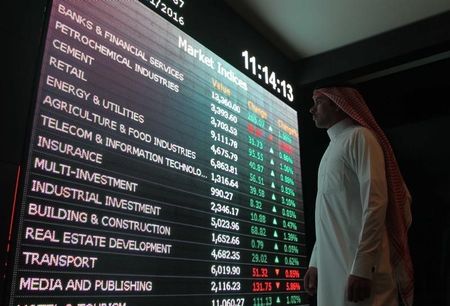
Saudi Arabia stocks higher at close of trade; Tadawul All Share up 0.10%

Investors to grapple with packed week of earnings, CPI, Iran headlines

EU regulations could force an Apple Pencil upgrade in early 2027

Addison Rae – Money is Everything (Official Lyric Video)

Dovestone moor fire LIVE as blaze rages for second following reports of ‘youths setting off fireworks’


-

 Fashion6 days ago
Open Thread: What Great Books Have You Read Recently?
-

 News Videos5 days ago
Whats Hidden Inside This Cash Register? #treasure #reselling #money
-

 Fashion2 days ago
Weekend Open Thread: Nutriplenish Leave-In Conditioner
-

 Fashion3 days ago
Loro Piana Fall 2026 Enters Houston’s Art Scene
-
 Tech5 days ago
Anthropic’s new “J-lens” reveals a silent workspace inside Claude that mirrors a leading theory of consciousness
-

 Crypto World6 days ago
$1,000 Credit Alert! BlockDAG X Exchange Pre-Registration Now Officially Open, Polkadot Dips & Zcash Rebounds
-

 Business6 days ago
AXT Shares Jump Nearly 14% as Semiconductor Materials Maker Rebounds on AI-Linked Indium Phosphide Demand
-

 Sports5 days ago
Joshua Pacio ‘more complete’ ahead of ONE rematch vs Malachiev
-
 Sports3 days ago
2026 Genesis Scottish Open Thursday TV coverage: Round 1
-

 News Videos6 days ago
Best Time to Enter Small Caps Right Now? Another Bull Run? | Financially Free
-
 Crypto World6 days ago
SK hynix (000660.KS) Stock Dips as $28B Nasdaq ADR Offering Drives AI Memory Expansion
-

 Tech4 days ago
Anthropic brings Claude Cowork to mobile and web as usage data shows most users aren’t coding
-

 Sports2 days ago
Super Eagles star Moses Simon opens up on Liverpool transfer regret
-

 News Videos6 days ago
Avoid entering in FOMO #bitcoin #cryptocurrency #trading #scalping
-
Sports5 days ago
We have punished the disrespect
-

 Crypto World5 days ago
Binance lists Strategy’s STRC stock as company expands Bitcoin funding
-

 Tech3 days ago
Character.AI enters the microdrama arena with its own productions, but there’s a twist
-

 Tech6 days ago
9 Best Keyboards (2025), Tested and Reviewed
-
 Business5 days ago
Enbridge: AI Tailwind Priced In (Rating Downgrade)
-

 News Videos5 days ago
“What’s going on?!” Carl Froch discusses Floyd Mayweather Jr financial issues
You must be logged in to post a comment Login