Security teams log 54% of successful attacks and alert on just 14%. The rest move through your environment unseen.
The Picus whitepaper shows how breach and attack simulation tests your SIEM and EDR rules so threats stop slipping by detection.
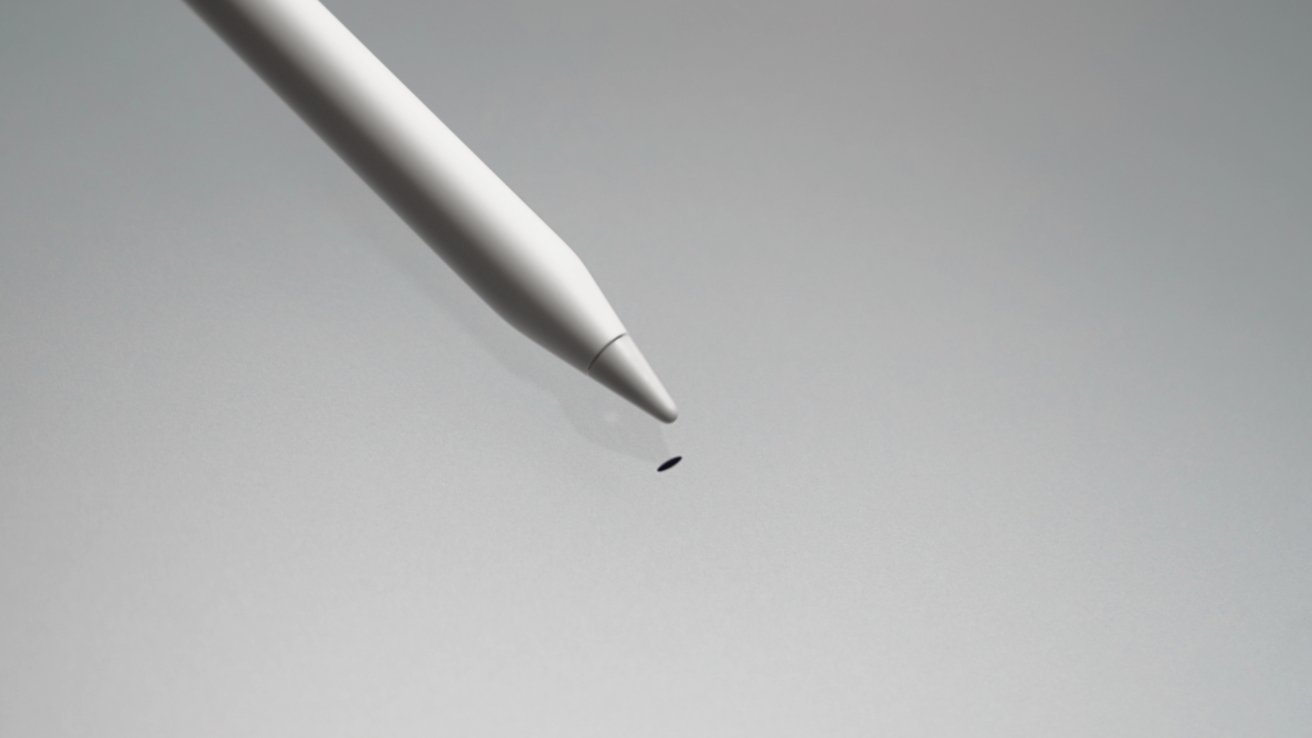
The iPad Pro with M6 is expected in early 2027 and Apple may release upgraded Apple Pencil models with easier-to-replace batteries in time for new EU regulations.
The European Union mandated in 2023 that consumer electronics must have easily replaced batteries by 2027. One of Apple’s notoriously impossible-to-repair products is the Apple Pencil, which could see some design changes to meet this mandate.
According to the “Power On” newsletter from Bloomberg, Apple is expected to release an updated Apple Pencil Pro and Apple Pencil with USB-C in early 2027. That timing aligns with previous reports of an iPad Pro refresh during the same release window.
No details about the new Apple Pencil models were provided. There isn’t any information about what new features might be introduced or how the design might change to accommodate easily-replaced batteries either.
Due to the regulatory requirements, the entire upgrade could simply be focused around the battery change. Currently, the Apple Pencil is a hunk of plastic filled with glue and is virtually impossible to repair.
Apple’s focus on selling what is essentially a plastic unibody stylus means it had no seams, screws, or separation points anywhere. Adding the USB-C port in the Apple Pencil with USB-C that hides behind a sliding mechanism was quite the design change on its own.
Because of the sliding mechanism, the lower-priced Apple Pencil with USB-C may be the easier product to redesign with replaceable batteries in mind. It isn’t clear how Apple might adapt the solid Apple Pencil Pro for the regulation.
To offer a guess, since the Apple Pencil tip is replaceable and offers the single seam in the device, it could also act as an entryway for internal access. Of course, the use of glue would need to be reduced or thrown out entirely.

Outside the iPhone, which has already been designed to accommodate the rules, EU battery regulations will require dramatic changes to some of Apple’s product designs, or necessitate quite clever solutions. It remains to be seen how something like AirPods might meet the regulatory standard.
Anyone who still thinks Them! is just a 1950s giant bug movie has clearly never had ants invade a kitchen, a picnic, or the inside of a wall. Ants are not peaceful. They are organized, relentless, and disturbingly good at turning a small problem into a full-scale occupation. Fortunately, they do not have nuclear death rays. Were that to happen, Raid could go sit back down.
Gordon Douglas’ 1954 science-fiction classic takes that very real anxiety and gives it an atomic-age upgrade. Much like Godzilla, released the same year in Japan, Them! uses nuclear weapons testing as more than a convenient monster-movie excuse. The bomb does not merely create a creature; it creates a consequence. Godzilla turned nuclear trauma into a walking national nightmare. Them! takes American desert testing, mutates one of nature’s most efficient predators, and follows the premise to its logical extreme: if radiation made ants gigantic, humanity would have a very serious problem under its floorboards.
That is one reason the film has always remained one of my favorite childhood discoveries. Yes, the title is blunt. Yes, the ants are enormous. Yes, there is a giant insect shriek that can make your dog leave the room. But Them! is far smarter and more disciplined than its reputation as a creature feature suggests. It works because Douglas does not treat the material like disposable drive-in nonsense. He stages the film like a police procedural that slowly mutates into a military thriller, letting the dread build long before the monsters take center stage.
James Whitmore stars as New Mexico State Police Sergeant Ben Peterson, who discovers a traumatized young girl wandering alone in the desert near a destroyed trailer. A nearby general store has been ripped apart, its owner killed, and sugar scattered across the floor. FBI agent Robert Graham, played by James Arness, joins the investigation, and the evidence soon brings in entomologists Dr. Harold Medford and Dr. Patricia Medford, played by Edmund Gwenn and Joan Weldon. Their conclusion is not exactly the kind of thing one wants to hear before lunch: atomic testing has mutated ordinary ants into enormous predators capable of spreading new colonies.

From there, Them! moves from the New Mexico desert to the storm drains of Los Angeles, where the surviving queens threaten to reproduce beneath the city. Flamethrowers, soldiers, missing children, and one of the great “what the hell is making that sound?” monster noises in cinema follow. The effects may look mechanical by modern standards, but the film’s sense of escalation still works because the threat is treated seriously.
That seriousness is why Them! remains both popular and underrated. Fans of classic science fiction and horror know exactly why it matters, but the broader audience still tends to file it under “old movie with big ants.” That undersells it badly. The film is tense, well-acted, sharply paced, and rooted in the same nuclear unease that gave the 1950s its most durable monsters. Childhood nostalgia brought me back to Them! more than once; the craftsmanship, atmosphere, and stubbornly effective nightmare logic are why it has never left the shelf.
Scream Factory’s two-disc Collector’s Edition gives Them! the 4K UHD and Blu-ray treatment, with both discs housed in a standard case and slipcover. The new transfer comes from a 4K restoration of the original camera negative, and the UHD is presented in native 2160p with Dolby Vision and HDR10 support. The disc is framed at 1.67:1, which keeps it very close to the film’s original 1.66:1 theatrical presentation.
I have owned Them! in just about every home video format one could reasonably defend without requiring an intervention, and this UHD is easily the best the film has ever looked in my collection. The old Warner Bros. Blu-ray was perfectly watchable for its time, but putting it on after the Scream Factory 4K is not especially kind to it. The UHD offers a more stable grayscale, deeper blacks, better dimensionality, and a far more convincing layer of film grain. On the Warner disc, grain could look clumpy and somewhat flat. Even Scream Factory’s included Blu-ray does not fully escape that flatter appearance, but the 4K disc finally gives the image some real texture and depth.
The Dolby Vision presentation is not about turning Them! into some glossy modern spectacle, which would be a crime against common sense and giant ants alike. The HDR gives the black-and-white photography more separation and snap, especially in darker interiors, desert exteriors, and the Los Angeles storm-drain sequences. Fine detail is also stronger, with facial textures, uniforms, sand, concrete, and practical effects all looking more resolved without making the film appear scrubbed or artificially sharpened.
Scream Factory includes a DTS-HD Master Audio 2.0 Mono track, and it is a meaningful upgrade over the earlier Warner Blu-ray. The 2015 disc was listenable, but dialogue could sit too low in the mix, and the presentation lacked the presence needed to make the film’s sound design fully register.
The new track sounds cleaner, better balanced, and more authoritative without pretending to be something it is not. Dialogue is easier to follow, Bronislau Kaper’s score has welcome warmth, and the effects have more weight than expected from a 1954 mono presentation. The ant shrieks remain sharp and unsettling, while bazooka shots, explosions, aircraft, and the storm-drain climax land with more impact.
Through the Focal Mu-so Hekla currently under review, the track had surprising scale and body without feeling artificially inflated. It also helps that Joan Weldon’s Dr. Patricia Medford could explain ant behavior for hours and still hold one’s attention, even if her delivery is so composed that the giant radioactive insects almost sound like a scheduling issue.
“THEM! Memories” is a short Richard Bellis interview, with the former child actor recalling his small role, Sandy Descher, and Gordon Douglas’ very 1950s method of producing tears on command.
“Nameless Terror” gives Courtney Joyner time to explain why Gordon Douglas and Warner Bros. turned Them! into something far better than just another bug problem with a budget.
“Entering the Atomic Age” focuses on James Arness, his John Wayne connection, and why his understated performance works alongside James Whitmore, Joan Weldon, Edmund Gwenn, and Fess Parker.
The archival extras include the brief 2003 behind-the-scenes footage of the giant ants and the original theatrical trailer; neither is pristine, but both are worth having unless one is allergic to context.
Scream Factory’s Them! Collector’s Edition is the best home video presentation this atomic-age classic has received, with a superb 4K image, stronger mono audio, and enough supplemental material to remind viewers that giant radioactive ants were never the silly part. The silly part was assuming humanity could keep detonating nuclear weapons in the desert and not eventually create something that wanted sugar, darkness, and possibly Los Angeles.
★★★★★★★★★★ Movie
★★★★★★★★★★ Picture
★★★★★★★★★★ Sound
★★★★★★★★★★ Extras
Old electronics have a talent for making themselves invisible. The laptop that got replaced two years ago is still in the office, the printer that stopped cooperating is in the garage and the desktop tower is somewhere in a closet behind things you haven’t touched since you moved in. None of it is being used, none of it is going away on its own, and the vague intention to deal with it keeps getting deferred because dealing with it feels complicated. It isn’t. Most major retailers and manufacturers run free take-back programs that handle old tech responsibly, and using them typically requires nothing more than a short drive and a few minutes of prep.
Major retailers such as Best Buy and Staples have become drop-off hubs for digital junk. You can walk into a store with a dead PC or a clunky old scanner and hand it over for free, regardless of where you bought it. Some of these places will even give you a discount on new gear or a trade-in credit just for helping them reclaim the heavy metals and plastics that don’t belong in a landfill. It’s the easiest way to recover your storage space without feeling like a jerk for tossing electronics in the trash.
The only real “work” on your end is making sure you aren’t handing over your entire life history along with the hardware. Before you dump a device, you need to do a legitimate data wipe — not just drag files to the trash can. A 10-minute factory reset or a dedicated drive-scrubbing tool ensures your old tax returns and saved passwords don’t become someone else’s property. Stop acting like you’re going to “fix” that laptop from 2015 and let a professional recycler break it down for parts instead.
Wherever you take or mail in your items to be recycled, you’ll want to protect your data by removing it as best you can. One way to do this is to perform a factory reset on your computer. Our guide walks you through the process.
Some retail stores will accept computers and printers for recycling, but it’s not always a free service. Policies vary by company.
You can recycle your old Apple computers, monitors and peripherals, such as printers, for free at an Apple store, but there’s a costly catch. According to the Apple Free Recycling program, you must purchase a qualifying Apple computer or monitor to receive this service. Need another option? A third-party company called Gazelle buys old MacBooks to recycle them. After accepting Gazelle’s offer, you print a prepaid label or request a prepaid box and ship the machine to them.
Read more: Phone and Laptop Repair Goes Mainstream With Push From iFixit
Best Buy generally accepts up to three household items per household per day to be recycled for free, including desktop computers and printers, as well as other items ranging from e-readers to vacuum cleaners. While three is the limit for most items, there’s a higher limit for laptops — Best Buy will take five of those per household per day. Note that rules for dropping off monitors vary by state, and it’s not always free to do so. Best Buy also offers a mail-in recycling service for select items, but that’s also not free. A small box that holds up to 6 pounds costs $23, while a large box (up to 15 pounds) costs $30. One CNET editor recently lugged in an old, nonworking tube TV-VCR combo for e-cycling, and was happy to pay $30 to be rid of it.
Office Depot and OfficeMax merged in 2013. The retailers offer a tech trade-in program both in-store and online, where you may be able to get a store gift card in exchange for your old computers and printers. If the device has no trade-in value, the company will recycle it for free. Office Depot also sells e-waste recycling boxes that you can fill with electronics to be recycled and then drop off at the stores, but they aren’t free. The small boxes cost $8.39 and hold up to 20 pounds, the medium ones cost $18.29 and hold up to 40 pounds, and the large boxes cost $28 and hold up to 60 pounds.
You can bring your old desktop computers, laptops, printers and more to the Staples checkout counter to be recycled for free, even if they weren’t purchased there. According to a Staples rep, the retailer also has a free at-home battery recycling box, which has led customers to recycle thousands of batteries per week, up from an earlier average of 50 per week. Here’s a list of everything that can be recycled at Staples.
Watch this: Give Your Old Phone a Second Life: The Right Way to Recycle and Reuse It
If you don’t live near a major retailer or would rather take your computers and printers to a recycling center, you can locate places near you by using search tools provided by Earth911 and the Consumer Technology Association.
Use the recycling center search function on Earth911 to find recycling centers near your ZIP code that accept laptops, desktops and printers. Note that the results may also turn up places that accept mobile phones and not computers or printers, so you may have to do a little filtering.
Consult the Consumer Technology Association’s Greener Gadgets Recycle Locator to find local recycling centers in your area that will take old items. The search function also allows you to filter the results to separately hunt for places that take computers versus printers.
Noise has added another device to its range of wearables with the launch of the REP Band, its first product in the screenless wearables category. The device provides comprehensive health tracking and insights through the NoiseFit app, with no subscription fees. Pre-bookings can be made for Rs. 9,999, and the device claims up to 10 days of battery life.

The Noise REP Band is designed for those who want health-monitoring features on their wearable device without being distracted by a display screen. The screenless technology makes the wearable device look minimalist, and the stainless steel body makes it very durable. The device weighs only 27g; thus, it is very light to wear for extended periods. Its woven band, one-handed clasp, 10-day battery life, and 5ATM water resistance make it perfect for everyday use.
The wearable continuously tracks key health metrics, including heart rate, blood oxygen, stress, sleep, respiratory rate, recovery score, and VO2 Max. However, instead of providing raw numbers, the NoiseFit app transforms the information above into AI-driven daily health insights. Since these insights do not require a subscription, users can access all app features at no additional cost.
Noise has also considered tracking accuracy. The optical sensor has been tuned for different skin tones to deliver accurate readings. The 6-axis motion sensor detects any movement, including running, walking, cycling, rowing, and elliptical training. The REP Band can connect to a smartphone via Bluetooth on Android and iOS. It can also connect via Bluetooth to Android and iOS smartphones.
The Noise REP Band is available for pre-booking in India at an introductory price of Rs. 9,999. Users can pick the REP Band in Vivid Orange, Navy Blue, Classic Black, or Sand Beige. Buyers can reserve the wearable through the Noise website, Amazon, and Flipkart. The company has not yet confirmed its regular pricing or sale date.
A neat idea, the Nanoleaf Solar Garden Lights look great, and each set has eight individual storks of colour. With solar charging, if you get enough sunlight, then there’s no power to be run or fiddly cables to hide.
Static light colours look great, adding ambience to the garden, but the dynamic effects are often a bit too much and feel intrusive. I found that my set would occasionally forget their settings, too, reverting from static colours to dynamic effects.
Control via the remote is simple, but without a smart app you lose some more advanced features that rivals have.
Easy to install
Bendable design gives flexibility
Basic colours look good
Not very customisable
Dynamic effects are a bit too much
Lights would occasionally reset their settings
Outdoor lights are a brilliant way of changing the way your garden looks at night, but if you don’t have outdoor power sockets or any way of running neat cabling, the Nanoleaf Solar Garden Lights could well be of interest.
Charging via solar (or USB-C), these lights have a wide-range of effects and are quick and easy to set up. A few niggles got in the way of my enjoyment, but read on to find out if these lights are a good match for your garden.
You can buy the Nanoleaf Solar Garden Lights in a pack of two or a pack of six, depending on how many you want to install in your garden. Each set comes with the lights and a remote control.
Each light consists of eight wands with an individual colour-changing LED on top. These wands are bendable, so you can tilt the lights the way that you want.


Lights need to be staked into the ground, and there’s a choice to use the extension tube for more height, or just to have the Nanoleaf Solar Garden Lights closer to the ground. It all depends on where you want the lights to go and what’s around them.


Battery and charging are provided by the solar unit, which connects to the lights via a cable. This unit can be staked into the ground or you can use the wall mount. If you’re relying on solar energy, then you do need to place the solar panel so that it can soak up as much sun as possible.


Alternatively, the lights can be charged via USB-C if you need to get them going. It’s an option in an emergency, but as you’ll likely run the battery down each night, charging via USB-C isn’t a practical solution for everyday use.


Although a Nanoleaf product, the Solar Garden Lights aren’t compatible with the app for remote control. I get that having Wi-Fi or Thread built in would probably put too much strain on the battery, but Bluetooth control would have been a nice option.
With the Linkind Smart Solar Spotlight SL5C, Bluetooth control makes it much easier to configure your lights to work the way that you want.
With the Nanoleaf Solar Garden Lights, the basic way they operate is via a light sensor, turning on when it’s dark and off when it’s light (or when there’s strong ambient lighting, such as me turning on my main outdoor lights). You can also use the button on the solar panel to cycle through the available effects.


To control how they operate in more detail, there’s a bundled remote control that can control up to 20 lights simultaneously.


Via the remote, you can turn the lights on or off, although they’ll only stay on if it’s dark enough. The default behaviour is to stay on until morning (or the battery runs out), but there’s an option for four-, six- or eight-hour timers. With these options, the lights turn on when it’s dark and then turn off when the timer runs out.
That, of course, means that the lights turn on at different times during the year. With the Linkind lights, I could set them to come on when it’s dark and at a specific time, for uniform operation through the year.
Colour control is available. For basic lighting, I could change the colour temperature, moving between warm and cold whites. This is nice to have for ambient lighting, although I noticed that one of my sets had one LED that was a different shade to the others.


For solid colours, there’s an RGB button to cycle through the options. Colour intensity is good through the range, and there’s enough choice to find something that will suit your garden.


There’s also a range of dynamic effects, although a lot of these are a bit too in your face, and would suit a Christmas tree more than the garden. I switched away from these options, preferring the static colours.
All modes also have brightness controls, so you can get the right level to suit your garden.
Once an option has been set, a light should remember its mode and options, but I immediately had an issue. I set both of my lights to a warm white, but a couple of hours later, one set had moved to dynamic lighting and was flashing different colours; not what I wanted.
I used the remote button to resync the lights and the reset option. While the lights generally keep the same setting, I’ve found that one will occasionally change modes on its own.
Battery life really depends on how much charge you can get into them. Writing now in the middle of Spring, even on a cloudy day, the lights have enough charge that they’re still going as I go to bed. As the nights draw in, depending on sunlight and where you’ve put them, battery life could vary.
Stake the lights in the ground, use the remote to select a scene and then leave them alone.
If you want to choose when the lights turn on and off, then look for solar lights with Bluetooth and an app.
Simple outdoor lighting, the Nanoleaf Solar Garden Lights look nice and don’t need any permanent cabling. I did find that the controls were very basic and, in my case, a light would sometimes forget its settings. I also found the dynamic lighting too much and a lot of the options are too distracting. For smart solar utility lighting, the Linkind Smart Solar Spotlight SL5C gives more options; otherwise, I’d buy proper outdoor lighting, such as Philips Hue Outdoor.
We test every smart light we review thoroughly over an extended period of time. We use industry standard tests to compare features properly. We’ll always tell you what we find. We never, ever, accept money to review a product.
Find out more about how we test in our ethics policy.
| Nanoleaf Solar Garden Lights Review | |
|---|---|
| UK RRP | £59.99 |
| Manufacturer | – |
| Size (Dimensions) | 950 MM |
| Release Date | 2026 |
| First Reviewed Date | 18/06/2026 |
| Model Number | Nanoleaf Solar Garden Light |
on-prem
Firm faces quandary of wanting to help the environment, but also wanting to force AI on everyone
Microsoft says it matched its entire electricity consumption with renewable energy last year. The bad news is it also increased greenhouse gas (GHG) emissions by 25 percent due to datacenter construction.
The cloud and software biz has released a 2026 Environmental Sustainability Report [PDF], claiming its environmental sustainability work is entering a new phase due to rapid technological change.
A global shift towards AI is reshaping economies, the report claims, which is becoming “foundational” to how technology is built and used.
Producing the infrastructure to support AI, however, is also upping demand for energy, water, land, and materials required to support it, Microsoft admits.
The foreword, penned by President Brad Smith and Chief Sustainability Officer Melanie Nakagawa, says that “AI can deliver broad societal, economic, and environmental benefits,” and “We do not see these dynamics as a reason to step back. We see them as a mandate to lead differently.”
In 2020, Microsoft set itself the goal of becoming “carbon-negative” by 2030. Its own figures show emissions heading only upwards, from 13 million tons of CO2 equivalent in 2020, to 20 million tons in 2025.
However, Microsoft estimates that without the carbon reduction initiatives it has already put in place, emissions would now stand at 34 million tons.
We asked Microsoft what this meant for its goal of becoming carbon-negative by 2030. It has yet to reply.
As noted previously, Microsoft’s rise in GHGs is primarily driven by the expansion of its datacenter infrastructure, though it also points to a decision to stop purchasing non-additional, unbundled renewable energy certificates.
The construction spike means that Scope 3 emissions are still the largest part of Microsoft’s carbon footprint, but 2025 saw a growing contribution from Scope 2, due to generation of energy the company purchased. These represent 13 percent of total emissions – up from 2 percent in 2024.
This underscores the growing role energy systems play in shaping environmental outcomes and why advancing carbon-free energy sources remains critical to long-term progress, the report says.
When it comes to water consumption, another hot topic for those living near to datacenters, Microsoft says it focuses on cooling systems, improving water usage effectiveness (WUE), and reducing reliance on municipal water supplies.
It claims the facilities it owns and operates achieved a 25 percent reduction in WUE since the 2022 baseline. The exact figures listed in Microsoft’s Environmental Data Fact Sheet put the company’s total global water withdrawal for 2025 at 13,266 million litres (3,504 million gallons), and total water consumption at 8,170 million litres (2,158 million gallons).
For the first time, Microsoft claims to have replenished more than it withdrew during 2025, returning 14,278 million liters (3,771 million gallons).
Elsewhere, the corporation says its Circular Centers program reused 92 percent of decommissioned servers and their components.
In the past, Microsoft said it tried to cut the emissions from building datacenters by using concrete mixes with lower overall embodied carbon, and it experimented with facilities made out of wood, estimated to produce a carbon footprint 65 percent lower. ®
A new version of the RedHook Android malware abuses the Android Wireless Debugging (Wireless ADB) mechanism in a novel way to gain shell-level privileges without requiring a computer connection.
Researchers at cybersecurity company Group-IB analyzed the new release of the mobile malware and say that it significantly expands its capabilities compared to the previous variant documented in 2025.
At the same time, the malware retains its remote access trojan (RAT) features, allowing it to stream the screen, intercept keystrokes, automate UI interactions, and steal credentials.
ADB (Android Debug Bridge) is Google’s debugging interface that lets a user control an Android device from a command line.
The system, which runs on an Android device as an ADB daemon, enables executing shell commands from a computer running the ADB client.
Wireless ADB, first introduced in Android 11, provides the same capability wirelessly, without requiring the devices to be linked via a USB cable.
RedHook essentially turns the phone into its own ADB client by tricking the victim into granting it Accessibility permissions, which let it automatically manipulate Settings, enable Developer Options, and activate Wireless Debugging.
After that, the malware retrieves the pairing code displayed on the screen and connects to the phone’s ADB service via the loopback interface (127.0.0.1).
Once paired, the malware gains shell (UID 2000) privileges, which are significantly more powerful than those available to normal Android apps, though not root-level.
The entire attack chain does not require the device to be rooted, so it works across all Android devices as long as the user is tricked into approving the Accessibility Service permission request.
Next, the malware deploys a Shizuku-based framework to execute shell commands, grant itself additional permissions, modify protected Android settings, silently install or remove applications, and perform various operations without displaying user dialogs.
Shizuku is a legitimate Android utility popular among power users and developers, and does not require a rooted device.
RedHook executes Shizuku code as part of its attack chain, using it as a privileged server (libmx.so) to invoke privileged Android APIs as UID 2000.

According to Group-IB’s report, the current version of the malware supports 53 server-issued commands, which include:
The malware’s multiple persistence mechanisms are also highlighted in Group-IB’s report.
RedHook uses silent audio playback to increase process priority, WakeLocks to prevent CPU sleep, and two services that restart each other when one is terminated.
Other mechanisms include a five-minute watchdog alarm, automatic restart after device boot, and setting oom_score_adj to -1000 to reduce the likelihood of being killed when available system memory is low.
The latest version of RedHook is distributed through social engineering, via messages and phone calls where attackers impersonate government agencies or financial institutions to direct victims to fake Google Play sites.
Android users are advised to install apps only from Google Play, scrutinize requested permissions at installation, and ensure that Play Protect is active on the device.
Security teams log 54% of successful attacks and alert on just 14%. The rest move through your environment unseen.
The Picus whitepaper shows how breach and attack simulation tests your SIEM and EDR rules so threats stop slipping by detection.
ON-PREM
Consumption rose another 10% while restrictions on most new grid connections remained around Dublin
Electricity used by datacenters in Ireland increased by 10 percent during 2025, despite an effective moratorium on most new datacenter grid connections in the Dublin area.
The latest figures from Ireland’s Central Statistics Office (CSO) show that giant server farms now account for nearly a quarter of the country’s metered electricity consumption.
Their share rose to 23 percent in 2025 after passing 20 percent in 2023 and 14 percent in 2021 – up from just 5 percent way back in 2015.
According to the CSO, the energy sucked up by massive bit barns increased by 10 percent last year, expanding from 6,973 gigawatt hours (GWh) in 2024 to 7,663 GWh in 2025. All other customers consumed just 2 percent more electricity over the same period.
In fact, datacenters used more electricity than urban households, which accounted for 18 percent of metered use, and more than twice the rural-household share of 9 percent.
“Datacenter consumption has grown every single year without exception, more than doubling between 2015 and 2019 from 1,240 GWh to 2,490 GWh, and tripling again between 2019 and 2025, reaching 7,663 GWh,” commented Grzegorz Głaczyński, statistician in the CSO’s Climate and Energy Division.
Things got so bad in Ireland that at one point there were fears that the ever-expanding data dormitories might eat up as much as a third of the Emerald Isle’s electricity by now.
The Commission for Regulation of Utilities (CRU) put an effective moratorium on connecting new server farms to the electricity grid, at least in the Dublin area, where much of the activity tends to concentrate.
This was lifted in December of last year, meaning electricity consumption still rose by a tenth while the moratorium was in place for nearly all of 2025.
Under stricter new regulations, server farm operators seeking a grid connection of more than 10 MW must also now provide generators or battery systems capable of providing the same power. They will be required to feed power back to the national grid, if and when required, a system already pioneered by Microsoft and Digital Realty.
Like a growing number of places, Ireland has also seen protests against datacenters, which perhaps isn’t surprising given that there are understood to be more than 80 of them for a relatively small country of just over 5 million people.
Even in the US, the Trump administration is having to work to defuse public opposition to datacenters, asking the tech giants to commit that their expanding server farm estates won’t spike energy bills or drain local water supplies across the US. ®
OPINION Things you might not know about me. I was the first person to write a popular article about the web. Little did I, or anyone else, know how it would change everything. Our lives were transformed when all of human knowledge became just a click away. That was then. This is now. Today, more web traffic now comes from bots than humans. We’re just picking up AI’s crumbs.
That was not how it was meant to be. Mind you, I was never an internet idealist. I didn’t think the internet would set us free and lead us to a technological paradise. I did think, however, we’d do better than we have. The internet quickly became, as the song goes, for porn. That was relatively harmless, though, compared to doxxing, targeted misinformation, and automated botnets and troll farms. But there was still some good, although it was hard to find at times. And it was all driven by people.
Now it’s another story. Cloudflare’s public Radar “Bot vs Human” tracker is reporting that bots now account for roughly 57-58 percent of HTTP requests for HTML content, compared with about 42-43 percent from humans. Meanwhile, Imperva’s Bad Bot Report based on 2025 data put bots at about 53 percent of measured web traffic for the second year in a row, with humans at 47 percent.
Separately, according to Pangram, an AI detection company, on websites such as LinkedIn, Medium, Twitter, and Reddit, “about one in four long-form items were fully AI-generated.”
The company went on to report that “LinkedIn was the most AI-saturated platform, where more than 40 percent of long-form posts [were] flagged as fully AI-generated. However, if we included mixed AI and human content, X/Twitter was the worst off: almost half of X articles were either fully AI-generated (23.9 percent) or AI-assisted/mixed (22.9 percent), with only 53.2 percent of X articles flagging as fully human-authored.”
There are that many flesh-and-blood people still posting on LinkedIn and Twitter? Based on what I’ve been seeing, I’d have guessed there were fewer.
So, with the web increasingly written and consumed by AI, where does that leave us, exactly? Nowhere good.
It’s not just online. AI is everywhere. A non-fiction writer friend of mine “wrote” a novel last year using AI as a goof. It was, well, awful. But he put it online to see what would happen. A year and a half later, it’s still bringing in a few thousand dollars a month. That’s a lot better than many full-time, mid-tier novelists I know are doing.
Of course, AI isn’t actually writing anything. It’s really a copy-and-paste scam on an industrial scale. OpenAI and the other AI powers claim it’s not so. However, a recent court filing by the New York Times and others alleges that Vincent Monaco, who leads privacy engineering at OpenAI, acknowledged in a deposition that “OpenAI had searched training datasets and output data despite the company’s initial claims that it couldn’t access that data. The outlets also alleged OpenAI deleted logs, a violation of the court’s preservation orders.”
As it happens, one of the publishers suing OpenAI is Ziff-Davis, which published my web article back in 1993. Since then, it’s published thousands of my Linux and open source news stories, how-tos, interviews, and features. So, when someone accuses me of using AI in my Linux stories, my reply is “Where do you think AI got that information and phrasing in the first place? Hello! It was me.”
Just go ahead and cut me a check, OpenAI, and all will be forgiven.
That said, another AI problem I’m all too painfully aware of is that you can’t trust AI’s answers. When AI tells you something about Linux, for example, it’s not just quoting me, the Linux Kernel Mailing List, or Linux Weekly News. No, it’s also pulling data from Ima Moron, a poster from a deservedly obscure subreddit.
Repeat after me: AI isn’t intelligent at all. It’s just a copy-and-paste of words that are likely to go together. It may sound right, but it often isn’t. Confidence is why so many buy AI garbage as gospel truth. You really can’t trust it.
The reason I use Perplexity as my search engine isn’t that it’s more accurate than other AI LLMs; it’s that it shows me its sources. I can see if what it just turned up is the real thing or just BS. Guess what? It’s often crap.
It’s only going to get worse. I saw the AI model collapse coming back in 2025. It’s here now. When I dive into AI “answers” today, every time and in every question, I find it referring not to primary or reputable secondary sources, but to AI summaries. When you pile garbage on top of garbage you do not get reliable information.
I see this all the time in Google’s AI Overviews. That’s one of the reasons I almost never use Google anymore.
Unfortunately, everyone else is using Google’s made-up answers and not even looking down the page to get a real answer from a true expert, or at least someone with a clue about your question of the day.
I can tell on many subjects when an answer is likely to be accurate. But I don’t have a clue about medical treatments. I wouldn’t trust an AI answer on a serious health problem at all. Nevertheless, I know millions of people do that every day. That’s seriously scary.
Equally worrying is that many of us now turn to AI for companionship. I understand loneliness, but this is no cure; it’s, at best, a sticking plaster.
You see, the web really is written by AI for AI. We’re losing both accuracy and humanity. This is not the web I’d hoped we would end up with. I fear there’s no way we can reverse this trend. We’d rather have easy, fast answers and artificial companionship than the real things. That’s profoundly sad.
Pass the cheese. ®
Ruark Audio is turning 40, and rather than celebrate with a badge slapped on a press release and a commemorative mug no one asked for, the British manufacturer has introduced the R410 Anniversary Edition, a limited production version of its all in one music system finished in White Oak veneer with an ebonised grille and ebony veneer inlay.
Only 500 systems will be produced worldwide, each carrying an anniversary badge. The system is listed at £1,399, with wider European pricing reported at €1,599, and Ruark says the Anniversary Edition is due for release in August. Fidelity Imports has not yet confirmed U.S. pricing, but we will update this story when that information becomes available.
That makes this less of a new platform and more of a carefully dressed version of a product Ruark already understands rather well. The R410 remains part of the company’s 100 Series, sitting alongside the R610 Music Console, R710 CD Hi-Fi Console, and R810 Radiogram. The difference is that the R410 keeps the entire system in one cabinet: streamer, amplifier, DAC, phono input, radio, HDMI ARC/eARC, speakers, display, and physical controls. No speaker matching. No rack. No cable spaghetti slowly turning your living room into a failed Maplin or Crazy Eddie’s demonstration.

The Anniversary Edition’s biggest visual change is the cabinet. Ruark has moved from the standard R410 finishes to a White Oak veneer cabinet, paired with an ebonised grille and ebony veneer inlay. That contrast matters. The regular R410 already leaned into mid century modern cues, but this version looks more deliberate and less like another lifestyle audio box trying to win a design award by being beige and harmless.
The matching limited edition R-CD100 CD player, finished in ebonised casework, will also be available alongside it. That is the right move for anyone with shelves full of discs they actually intend to play. Having already reviewed the R-CD100 CD transport, it is also a logical add-on for any compatible Ruark system.
Ruark’s pitch is clear: one box that can handle streaming, radio, vinyl, TV audio, local files, Bluetooth, and optional CD playback. The R410 Anniversary Edition supports Apple AirPlay 2, Google Cast, Spotify Connect, TIDAL Connect, and Qobuz Connect. It also includes Internet Radio, FM with RDS, UPnP/DLNA media server support, Bluetooth 5.1 with aptX HD, AAC, and SBC, plus Wi-Fi networking listed as 802.11 a/b/g/n/ac/ax.

DAB/DAB+ support is also included, although that matters far more in the U.K., Europe, Australia, and other active DAB markets than it does in North America, where HD Radio remains the relevant terrestrial digital radio format.
The wired side is not an afterthought either. There is HDMI ARC/eARC for TV audio, an optical input up to 24-bit/96kHz PCM, stereo RCA line input, a moving magnet phono input with adjustable gain, Ethernet, USB-C file playback and charging, and a mono RCA subwoofer output.
That is the reason the R410 is more interesting than most wireless speakers. It acknowledges that people still own televisions, turntables, CD collections, NAS libraries, and occasionally brains. Unless you live in Maine at the moment and still think Platner was a viable candidate for the U.S. Senate.
Inside, the R410 Anniversary Edition uses a fully active 120 watt Class D amplifier, twin bass reflex cabinet architecture, two 100mm Ruark NS+ bass mid woofers, and two 20mm silk dome tweeters. Ruark also specifies Burr-Brown 32-bit/192kHz DAC and ADC stages, adjustable bass and treble, and switchable Stereo+. Hi-res file support goes up to 32-bit/192kHz for FLAC, AIFF, ALAC, and WAV. MP3 is supported up to 48kHz/320kbps, while AAC is supported up to 96kHz/320kbps.
The display and control system are part of the appeal. The R410 uses a 4-inch colour TFT display with auto dimming and Ruark’s familiar RotoDial control, supported by a rechargeable wireless remote. That sounds like a small thing until you have spent ten minutes inside a rival app wondering why changing inputs now feels like filing a planning application with the Long Branch council. Ruark’s best products work because they remain physical, tactile, and understandable. The company has figured out that convenience should not mean surrendering every useful control to a phone.
We have spent a fair bit of time with Ruark over the past two years, and the appeal has become clearer with each product. The company is not chasing the usual wireless-speaker race to the bottom, nor is it pretending that every listener wants a rack full of separates.
The R410 Anniversary Edition lands in the middle of that strategy. It is not as ambitious as the R810. It is not as flexible as the R610 or R710 if you want to choose your own loudspeakers. But it may be the cleanest expression of what Ruark is trying to do for listeners who want better sound without turning their living room into a dealer demo room. It is for someone who wants one system, proper source flexibility, attractive industrial design, and enough sonic ambition to make a Sonos or soundbar solution feel rather underdressed.


The Ruark R410 Anniversary Edition is not trying to reinvent the R410, and that is probably wise. The core system already made sense: serious streaming support, a real phono input, HDMI ARC/eARC, radio, optional CD playback, useful physical controls, and a cabinet that does not look like it escaped from a router factory.
What makes this version different is the execution. The White Oak veneer, ebonised grille, ebony inlay, anniversary badge, and 500 unit production run push it closer to collectible territory without turning it into a ridiculous luxury object. For listeners who want a handsome all in one system that handles modern streaming, vinyl, TV audio, radio, and CDs without demanding a full rack, this is Ruark making a very clear argument.
For more information: ruarkaudio.com
Enterprise AI teams are giving agents more freedom at the same moment their confidence in automated testing is collapsing.
Half of enterprises have deployed an AI agent or LLM feature that passed internal evaluations and yet still caused a customer-facing failure — one in four more than once — according to the June 2026 VB Pulse survey of 157 qualified enterprise respondents at companies with 100 or more employees.
The sample is self-selected rather than a probability sample, so the findings should be read as directional, not precise.
But enterprises are not responding by slowing automation: 66% of respondents already permit some production deployment without human review or are building systems intended to do so within the next 12 months. Only 5% say they fully trust the automated evaluations that would make those release decisions.
That mismatch is the evaluation gap: the autonomy ceiling is rising faster than the assurance beneath it.
It also fits a broader thesis that will be explored at VB Transform 2026: enterprises ship agents first, while the control layers around identity, evaluation, cost, context and orchestration are arriving later. The next year will be a retrofit cycle, with buyers shifting budget toward the systems that make agentic deployments governable and dependable.

Traditional software testing usually asks whether a defined input produces an expected output. Agent testing is harder because the system may choose its own sequence of steps, call tools, retrieve data, alter state and respond differently from one run to the next.
An agent can make several individually plausible decisions and still reach the wrong result. It may retrieve the correct account but update the wrong field. It may draft a valid refund request but send it without approval. It may call five tools successfully before a sixth step leaks sensitive information or leaves a workflow incomplete.
The survey shows enterprises already recognize this limitation. The most common reason for distrusting automated evaluation is poor alignment with real-world outcomes, cited by 29% of respondents. Bias or inconsistency follows at 21%, lack of explainability at 18%, and data leakage or privacy concerns at 17%.

That hierarchy matters. Enterprises are saying the score often does not predict what happens when a customer, employee or business process encounters the agent in production — not that automated scoring is too slow or expensive.
NIST makes a similar point in its Generative AI Profile: measurements gathered in controlled environments may not transfer cleanly to deployment because behavior changes with prompts, users, context and operating conditions. Its guidance calls for field testing, post-deployment monitoring and clear processes for escalating failures.
VB Transform · July 14–15 · Menlo Park · LLMs, ops & evals
Standard benchmarks fail. Amazon and Waymo explain what they test instead.
The evals track goes deep on the four dimensions of reliability — consistency, robustness, predictability, safety — and how teams at Amazon and Waymo are operationalizing them in production.
A single successful run proves that an agent can complete a task. It does not prove that it will complete the task reliably.
Anthropic’s guidance on agent evaluation distinguishes between measuring whether a system succeeds at least once across repeated attempts and whether it succeeds every time. That distinction is essential for customer-facing or operational workflows. A model that occasionally produces an excellent answer may still be unacceptable if the same task fails unpredictably on the next attempt.
Enterprise teams should therefore treat repeatability as a first-class metric. That means running the same scenario multiple times, varying phrasing and context, testing tool failures, and measuring whether the final business outcome remains correct even when the route changes.
The evaluation set also has to evolve. Every production incident should become a permanent regression test. Customer escalations, failed tool calls, incorrect approvals and data-handling mistakes should feed back into the pre-deployment suite rather than remaining isolated support cases.
The survey does not imply that every agent action should require a person. Human review cannot scale across millions of low-consequence decisions.
But zero-human operation should be earned by demonstrated reliability and bounded by the consequences of failure.

Low-risk actions such as drafting internal summaries or categorizing documents can tolerate broader autonomy. Financial transactions, customer communications, code deployment, access-control changes and data deletion need stricter thresholds, repeated consistency tests, policy checks, rollback mechanisms and clear human escalation paths.
The risk isn’t evenly distributed by company size, either. Larger enterprises — those with 2,500 or more employees — are moving toward zero-human deployment fastest, at 70% versus 64% for smaller companies, and they’re also shipping more agents that go on to fail a customer, at 54% versus 48%.
That is the warning for enterprise leaders. Removing the human from the loop does not remove uncertainty. Without stronger assurance, it converts uncertainty into an automated production decision.
The market will keep pushing toward greater autonomy because the economic incentive is real. The organizations best positioned won’t be those that remove people fastest — they’ll be the ones that treat repeatability and regression testing as seriously as deployment speed.
Open Thread: What Great Books Have You Read Recently?
Whats Hidden Inside This Cash Register? #treasure #reselling #money
Weekend Open Thread: Nutriplenish Leave-In Conditioner
Loro Piana Fall 2026 Enters Houston’s Art Scene
Anthropic’s new “J-lens” reveals a silent workspace inside Claude that mirrors a leading theory of consciousness
$1,000 Credit Alert! BlockDAG X Exchange Pre-Registration Now Officially Open, Polkadot Dips & Zcash Rebounds
AXT Shares Jump Nearly 14% as Semiconductor Materials Maker Rebounds on AI-Linked Indium Phosphide Demand
Joshua Pacio ‘more complete’ ahead of ONE rematch vs Malachiev
2026 Genesis Scottish Open Thursday TV coverage: Round 1
Best Time to Enter Small Caps Right Now? Another Bull Run? | Financially Free
SK hynix (000660.KS) Stock Dips as $28B Nasdaq ADR Offering Drives AI Memory Expansion
Anthropic brings Claude Cowork to mobile and web as usage data shows most users aren’t coding
Avoid entering in FOMO #bitcoin #cryptocurrency #trading #scalping
Super Eagles star Moses Simon opens up on Liverpool transfer regret
We have punished the disrespect
Binance lists Strategy’s STRC stock as company expands Bitcoin funding
Character.AI enters the microdrama arena with its own productions, but there’s a twist
9 Best Keyboards (2025), Tested and Reviewed
Enbridge: AI Tailwind Priced In (Rating Downgrade)
“What’s going on?!” Carl Froch discusses Floyd Mayweather Jr financial issues
You must be logged in to post a comment Login