

Politics
B’Tselem report exposes routine killings by “Israel” against Palestinian children

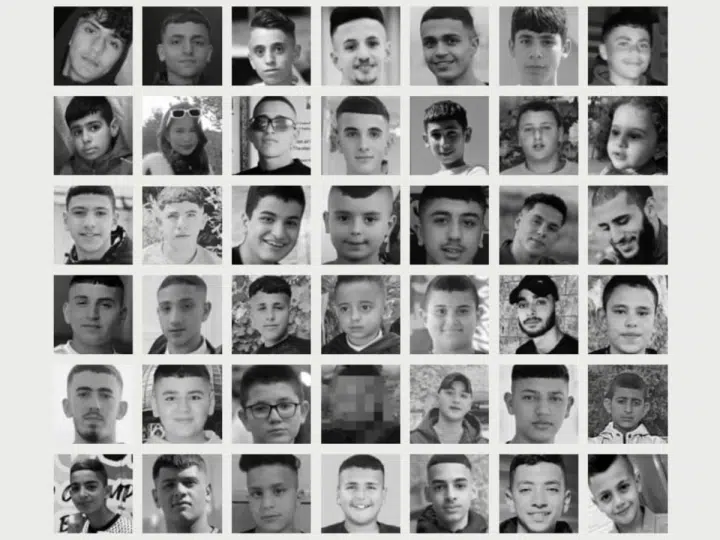
A new B’Tselem report examines the Israeli occupation’s killing of Palestinian children in the occupied West Bank, with special emphasis on 2025. The report provides a stark overview of the brute force Israel uses to maim and kill Palestine’s youth.
Titled — Unshielded Childhood: Palestinian children and teenagers killed by Israel in the West Bank — reveals the scale of the killings, and the circumstances in which children have been shot and killed by Israeli occupation forces (IOF). It also discusses the policies and practices enabling these violations to continue with total impunity.
“Israel” attacks all aspects of Palestinian life
Since the start of “Israel’s” genocide in Gaza, for want of revenge, the occupation has attacked all aspects of Palestinian existence in the territory. This includes the right to life.
Lethal violence carried out by the occupation’s military and settler militias has led to an unprecedented increase in the number of Palestinians killed by the occupation. This includes children. Between 7 October 2023 and 7 June 2026, the IOF killed 1,086 Palestinians in the occupied West Bank. Almost one in every four, or 235, of those killed was a Palestinian child. But, since October 2023, no charges have been filed in any of these cases.
The report also documents how the violence extends beyond the moment children are shot. In nearly a quarter of the cases involving children killed in 2025, the IOF deliberately delayed or prevented critically wounded children from receiving life-saving medical treatment.
These findings expose a consistent pattern. Palestinian children are killed by “Israel”, intentionally denied urgent medical care. They are also denied dignity even after death, with 18 of the 54 bodies still being withheld by the occupation, as of 6 June 2026.
54 Palestinian children in the occupied West Bank killed in 2025
120 Palestinian children were killed by “Israel” in 2023. 80 of them in under three months after 7 October, 2023. In 2024, 89 children were killed. These two years saw a record number of Palestinian children killed.
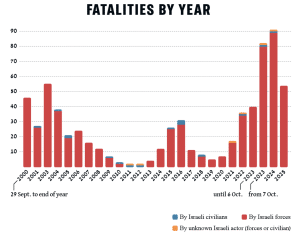
54 children, who were 17 years old and younger, were killed by the Israeli occupation in 2025. Five of these were between the ages of just two and 10 years old. This figure is lower than 2023 and 2024. But it is still four times the number of children killed by the occupation between 2005 and 2021. During this time, an average of 19 Palestinians were killed by the IOF and illegal colonial settlers each year. Israeli occupation authorities are withholding the bodies of 18 of these 54 children. So they deny their families the opportunity to bury them, and prolong their suffering.
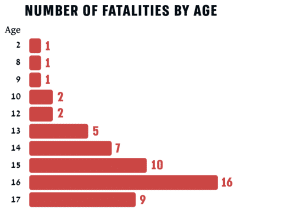
Of these 54 children killed by “Israel” in 2025, thirteen were shot while throwing stones at roads or armoured tanks. Even though no injuries were reported from the stone-throwing. And at least 21 were not involved in any clashes, even when they were taking place nearby.
“The widespread, unprecedented killing of Palestinian children and teenagers in the West Bank is the result of a broader Israeli policy. The policy enables the killing of Palestinians with virtually no accountability. When the military commander of the area boasts that Israel is killing Palestinians ‘like we haven’t killed since 1967,’ he is confirming exactly that: the system does not merely back those who pull the trigger – it effectively grants them a license to kill.”
Shoot-to-kill directives
Novak is referring to major general Avi Bluth, head of the army’s central command in the West Bank, who also claimed 96 percent of those killed were involved in “terrorism”. This allegation has been proven to be a “blatant lie” by B’Tselem documentation.
The report explains that the increase in child fatalities started in 2022. New regulations brought in during that year, allow occupation soldiers to use lethal fire against any Palestinian throwing stones. This also applies to those who supposedly throw stones, but who flee the scene, and so pose no danger.
47 of the 54 children were killed by the Israeli occupation gunfire, in a range of military operations and confrontations, although B’Tselem says it was unable to verify many of these claims. The other seven were killed by Israeli occupation airstrikes.
B’Tselem’s report details each of the 54 children killed by “Israel” in 2025. In most of these cases, testimonies are also given by eyewitnesses and family members.
 Nidal Shaghnubi, 16, was killed on 17 May 2025, in Burqah, Nablus district.
Along with two other teens, Shaghnubi was throwing stones at Route 60. This is the main road running North to South of the occupied West Bank, and is used by both settlers and Palestinians. Israeli occupation soldiers opened fire at them. Shaghnubi was critically wounded, but his two friends, who were also injured, managed to flee and were taken to hospital in an ambulance. No residents or ambulance was able to reach Shaghnubi, as the soldiers continued firing into the air. He died as a result of his wounds and “Israel” is still withholding his body.
“We weren’t given the chance to say goodbye, or bury him.”
According to B’Tselem, in cases where the IOF have removed the wounded from the scene themselves, it is often unknown whether they made any attempt to save the victim’s life before they died.
As part of a testimony he gave to B’Tselem on 28 March 2026, Nidal’s father Wael Shaghnubi, 54, says:
“I still haven’t seen my son. They wouldn’t let me see him after he was wounded, or after he died. When he was lying there in the grove, they didn’t let me go near him or look at him. And I don’t know where on his body he was wounded. His body hasn’t been returned to us, and we weren’t given the chance to say goodbye to him, or bury him.”
 Amru Ali Ahmad Qabha, 13, was shot and killed on 18 July, 2025, in Ya’bad, Jenin district.
The IOF were raiding the town of Ya’bad, and Qabha happened to pass by the soldiers. At the same time they ordered him to stop, they also fired at him. The ambulance was only allowed to enter once Qabha had died of his wounds. In a press report, the occupation claimed he had thrown an IED at the military and another one had been found at the scene.
As part of a testimony she gave to B’Tselem on 28 March 2026, Amru’s mother Ayidah Qabha, 42 says of her only son:
“I can’t forget the moment I saw my son’s body, with deep wounds in his neck and legs, and nine bullets that pierced his body.”

Muhammad Bahajat al-Halaq, 9, was killed on 16 October 2025, in a- Rihiya village, South of Hebron.
Two military jeeps stopped next to the school in the centre of the village, so the children ran away and hid. Some threw stones at the armoured jeeps as they passed. An occupation soldier fired live bullets, and one hit al-Halaq in the pelvis. He collapsed, bleeding. Then the soldiers fired tear gas at him, and fired live bullets at a young man who tried to reach him. He was pronounced dead at 6pm that evening.
“Israel” prevents medical personnel reaching critically injured
According to the report, at least nine out of the 54 cases of children killed by “Israel” in 2025, involved soldiers firing live shots in the air or at residents and medical personnel to keep them away from the wounded persons.
As part of a testimony she gave to B’Tselem on 27 October 2025, Muhammad’s mother Aliyah al-Halaq, 32, says:
On 22 October, some military vehicles arrived at the place where Muhammad was shot, accompanied by some Israeli journalists. At first I thought they were going to conduct a real investigation into the incident. But I lost hope when I heard the soldiers threatening the residents over loudspeakers, saying Muhammad’s name and that they had no regrets over his death, and would not hesitate to shoot anyone who threw stones, even such a young child. They threatened to do to us what they did in Gaza, and to destroy our village’s streets, like they did in Jenin and Tulkarm.
The occupation’s killing of Palestinian children has become “routine.” Even the killing of 21,000 children during the occupation’s genocide in Gaza has failed to lead to demands for change. This shows, according to the report, the “Israeli” public’s indifference to, and dehumanisation of, Palestinians.
The sharp rise in the killing of children in the occupied West Bank cannot be viewed in isolation from Israel’s genocide in Gaza. More than 21,000 Palestinian children have been killed here since October 2023. But such an unprecedented death toll has not brought about widespread public demands for a change in policy. B’Tselem argues this is because Palestinians have been dehumanised to such an extent in “Israeli” society.
This climate of impunity and indifference, it says, has helped normalise the “routine” killing of Palestinian children.
Featured image via B’Tselem / the Canary
By Charlie Jaay


Erskine May

8 min read
It failed to break the Brexit deadlock but helped hasten the exit of Keir Starmer. Lord Lisvane explains how Parliament rediscovered the power of an humble address
That an humble address be presented to His Majesty, that he will be graciously pleased to give directions to require the government to lay before this House all papers relating to Lord Mandelson’s appointment as His Majesty’s ambassador to the United States of America, including but not confined to…
So begins the lengthy resolution come to by the House of Commons on 4 February 2026. In response, the government provided 1,000 pages of documents in two tranches, in March and June 2026. As a result of a manuscript amendment to the original motion, documents thought to raise issues of national security were first seen by the Intelligence and Security Committee.
These events can be seen as a welcome assertion of the power of Parliament over the executive. Certainly they have deep historical roots; but do they have quite the magical powers that many would wish to see?
The principle set out in Erskine May is that each House has the power to call for the production of papers by the government of the day, by a “motion for a return”. A return from the Privy Council or from a department headed by a secretary of state is called for by an humble (always “an” humble, not “a” humble) address to the sovereign; papers from any other body are sought simply by means of an Order of the House. The somewhat artificial distinction is based on the theory that secretaries of state are created by the King, and that the departments which they head are his property.
The power of each House to call for papers is in effect delegated to select committees, whose parent House has given them the power “to call for persons, papers and records” (known as PPR). This is of greater practical importance in the often adversarial surroundings of the House of Commons than in the calmer waters of the House of Lords. A select committee with PPR cannot exercise that power directly, as if it were the House itself. Rather, a select committee whose request is refused can report the matter to the House to take action (at which point, of course, the committee loses control of the process). It is sometimes suggested (but not by me) that such requests should be backed by a penal power, which would no doubt risk bringing the courts into the picture. In my experience, as a tussle over information is essentially a political struggle, witnesses come to realise quite quickly that continuing to refuse a select committee’s request may be much more damaging than giving in gracefully.
There remains a category of proceeding which is entirely at the initiative of ministers: “Motions for Unopposed Returns”. Some of these have become traditional: the Financial Statement and Budget Report and the accounts of the Contingencies Fund are two examples. The unopposed return is also used as a means of conferring the protection of privilege upon a document – typically the report of an inquiry – which otherwise might be the subject of legal proceedings.
Because a motion for an unopposed return (moved by a minister) is an indication that the document is about to be provided to the House, it is not in order to seek to oppose it (unlike a motion for an humble address, as we shall see).
The relationship between Crown and Parliament has proceeded in parallel since the very earliest days. Even after the Reform Act 1832 the procedure of the House of Commons, and the standing orders which regulated it, would have been easily recognisable to a Member in the Long Parliament of 1640. But the rapid development of the corporate state and government in the middle to late 19th century brought profound procedural change. Business became more complicated, and the standing orders proliferated to match it. Most important, the government took control of the agenda and the time of the House of Commons, a process completed – for the time being – by the ‘Balfour Reforms’ of 1902.
One type of proceeding that was profoundly changed by these developments was calling for papers. In earlier centuries, seeking the production of papers for the information of the House was fairly frequent, and often had a charming informality (as it were, “we’d like to know more about this, so we had better see some papers”). The establishment of co-ordinated machinery of government in the latter half of the 19th century meant that a great deal of information began to be routinely provided to Parliament, both in Command Papers (presented to Parliament “by command” of the sovereign) and Act Papers (where statutes required the submission of reports to Parliament). This meant that there was much less need to call for papers by motions for returns or humble addresses.
But the power of both Houses to call for papers remained unchanged, and as the Commons Procedure Committee noted in 2019, has never been challenged. There are no limits upon it in common law or statute.
The House of Commons must be able to instruct His Majesty’s ministers, and refusal to comply must in turn be an issue of privilege, and ultimately of confidence
Humble addresses went into near-hibernation for some years (although at the start of every parliamentary session each House has agreed a motion for an humble address to the sovereign for the Queen’s or King’s Speech from the throne). Motions for humble addresses are still frequently seen, as any attempt to have a statutory instrument annulled takes the form of a “prayer”; whereby an address would be presented to the sovereign, praying that the such-and-such statutory instrument be annulled. It is extremely rare for a motion of this sort to be agreed, so they are essentially vehicles for debate.
In the 2017-19 session, the issue emerged from hibernation, with 10 motions in the name of the leader of the opposition put down on opposition days. Four (seeking the submission of papers to a select committee) were agreed, and the others were negatived.
The profile of humble addresses seeking information was raised sharply in November 2018 when the House agreed a motion calling for legal advice given to ministers (contrary to the convention in the Ministerial Code). The government responded in general terms, only for the House, in December 2018, to find ministers in contempt for not providing the Attorney General’s advice as given. This prompted the inquiry by the Commons Procedure Committee
So, how effective is the humble address of the type relating to Lord Mandelson? The answer must, I think, be “fairly effective”. First, you need time on the floor of the House. If the government of the day is not going to provide this (and there may well be political reasons why any government might be reluctant to do so) then the obvious vehicle will be an opposition day.
Second, will an agreed motion be binding on the government? On 1 November 2017 the then-opposition tabled a motion for an humble address seeking impact assessments for a number of sectors following Brexit. The motion was agreed to, and the then-shadow secretary of state for exiting the European Union, Keir Starmer, asked the Speaker if the decision of the House would be binding on the government. In a somewhat rambling ruling, the Speaker said that “motions of this kind have been traditionally regarded as binding or effective”.
From first principles, this must be right. The House of Commons must be able to instruct His Majesty’s ministers, and refusal to comply must in turn be an issue of privilege, and ultimately of confidence.
Third, will you get what you asked for? The government response to the humble address relating to Lord Mandelson very helpfully sets out the process followed in assembling the material sought. It quotes the resolutions on ministerial accountability to Parliament, allowing non-disclosure when disclosure “would not be in the public interest”. Redactions were made to protect national security, international relations, junior staff or people peripherally involved, or to protect legal professional privilege.
Within these constraints, the humble address provided what was expected – although it must be remembered that in this case the government was a willing player.
There has been some unease about possible prodigal use of these motions. In 2019, the Commons Procedure Committee was pretty unsympathetic. It pointed out the options available to the government: simply vote against the motion (or amend it); negotiate over the material to be provided; or have the material submitted to a select committee for analysis and report.
So, two (or even two-and-a-half) cheers for the humble address. Like any procedural device, it should not be used too often; but in Parliament’s dealings with over-mighty executives (and executives are always over-mighty) it remains a weapon in the armoury.
Lord Lisvane is a crossbench peer and former clerk of the Commons
Politics
The House | Heathrow, HS2, Homes: How Britain’s Infrastructure Projects Will Fare Under Burnham



8 min read
Keir Starmer promised to ‘get Britain building again’ but leaves No 10 with many projects still on the drawing board. Noah Vickers reports on how Andy Burnham might pick up the pace
Andy Burnham inherits a raft of government-backed projects, from a controversial third runway at Heathrow to the massively expensive High Speed 2 rail line, and an ambitious programme of new towns as part of a pledge to build 1.5 million homes before the next election.
As Labour MPs are only too aware, the Makerfield MP’s promise to put “good growth in every postcode” presents an opportunity to change direction on each of those schemes, particularly as he seeks to draw a contrast with his predecessor, Keir Starmer.
On High Speed 2, Burnham has been clear he wants to reverse Rishi Sunak’s decision to axe the line’s ‘northern leg’ to Manchester – though precisely what combination of levers he would pull to pay for it remains unclear.
Ahead of his election in Makerfield, Burnham told the i Paper there is a “cleverer way” of funding the route north of Birmingham, drawing on his experience as the minister who signed off on the funding for London’s Elizabeth line. According to a 2024 report commissioned by Burnham, that could involve money raised from business rates.
“A portion of the net-increase in business rates that is directly attributable to the project (i.e. which would not have been ‘generated’ if the project was not delivered) could be ringfenced over time, and used to repay upfront financing to support the capital works,” said the report, overseen by former HS2 Ltd chairman Sir David Higgins and the engineering consultants Arup.
Henri Murison, chief executive of the Northern Powerhouse Partnership, which contributed to the report, points out that the most expensive parts of the route have already been allocated funding.
“The most expensive bit, which is Manchester Piccadilly underground station through to Manchester Airport, has just been re-branded as part of Northern Powerhouse Rail,” he says.
“So, when we talk about HS2, the thing you’ve got to remember is that the most expensive bit at the bottom and top is still being built. It’s just the relatively cheap bit in the middle that we’re not doing.”
Given that extending the line north of Birmingham would generate a significant increase in passengers, Murison argues that future fare income could be key in helping to pay for the full route.
Burnham has also talked about land value capture as a way of raising funds for it, which Murison believes has been a missed opportunity in the project’s first phase.
“Planning permissions have gone sky-high in Birmingham, the same thing’s happened at Old Oak Common [in west London], but all that uplift in the value of land around the stations and the depots on the route of phase one has been given away by the UK government – and I think that’s scandalous.”
The stage has only been set for restoring the route, he adds, as the land has been carefully safeguarded against attempts to sell it.
“Fundamentally, between the then-chancellor Jeremy Hunt, Andy Burnham, Andy Street, a load of us in the private sector, we have managed to avoid the government and the country doing something really stupid, which was making decisions it couldn’t reconsider…
“That is the real victory. The fact that Andy is one of the people who has been on that side of the debate is obviously a huge help to us when trying to finish the job.”
When it comes to Labour’s housing mission, Burnham inherits a programme of new towns which remains at a relatively early stage. Between March and May this year, ministers consulted on seven proposed sites, with the outcome of that exercise yet to be published.
Sir Michael Lyons, who chaired the taskforce which recommended a shortlist of 12 locations from which the seven have been drawn, is encouraged by what Burnham has said on housing so far.
“Everything that he says points to a further concentration on the housing shortfall in this country and a proper role for government and the public sector in making sure that we move faster towards homes for all,” Lyons tells The House.
“We’ve got a massive task there, years of work ahead of us. It’s not helped by setting targets which you can’t meet. Frankly, the 1.5 [million homes] figure was hope against experience.”
While he acknowledges that the target has prompted “a lot of action” in difficult circumstances, he believes the next PM should replace it with a new 10-year goal, stretching beyond the current Parliament and focused on ensuring authorities meet local quotas.
Burnham’s boosterism, Lyons argues, will itself have a positive impact on confidence in the housebuilding sector.
“We have managed to avoid the government and the country doing something really stupid”
“I do think it makes a difference if the country’s led by somebody who emphasises that you can do things, rather than that ‘it’s all complicated’. That is not to be underestimated, in releasing energy, in releasing innovation and basically building a coalition of people willing to find ways of progressing things faster.”
He also believes Burnham will bring new ways of thinking about funding major developments.
“There’s quite a lot of people talking about the fact that while we are severely limited in terms of public expenditure, that does not necessarily go for long-term investment and that there is scope for government to do more in that area.
“I think we will see Burnham coming forward with sound proposals for patient capital to be invested in housing and infrastructure – I’m fully expecting that.”
While Burnham has promised to devolve new decision making powers to local communities, Lyons warns that this cannot mean allowing councils to “pull up the drawbridge” on new homes.
One of the seven new towns consulted on is at Crews Hill and Chase Park on the northern edge of London. But there, Enfield council’s new Conservative administration has “formally withdrawn” support for the scheme, saying it “reflects the democratic will of the residents we have been chosen to represent”.
As far as Lyons is concerned, Burnham’s government should firmly push back against such resistance, arguing that housing should be viewed through the same prism as defence.
“Defence is an issue of national interest,” he says. “We don’t start debating with local communities whether they want a submarine base on their doorstep. You can’t run the country that way.”
During his taskforce’s work identifying sites, Lyons says that in some cases, he saw “people opposing development in the most offensive terms, really, about keeping out others”.
He adds: “For many more people, it’s about not wanting their quality of life to be damaged by development.
“I think the answer to that is investment in economic and social infrastructure – so that your doctor’s surgery isn’t all of a sudden flooded, your local schools do have enough places to accommodate the homes being built. But this isn’t beyond us, actually. These are things that can be planned for.”
Perhaps most fascinating will be the approach Burnham takes on Heathrow expansion. The scheme, touted by Chancellor Rachel Reeves as a critical growth project, continues to divide Labour MPs, particularly in London, where mayor Sir Sadiq Khan is opposed on environmental grounds.
MPs trying to prevent a third runway are reassured by comments made by Burnham following Reeves’ announcement about the scheme in January 2025, when he told Times Radio that expansion “diverts infrastructure investment away from the North and traps it in London and the South East”.
Burnham called it “a model for an ever-overheating UK economy, rather than a more balanced, levelled-up economy, which is what we would argue for”.
One London Labour MP tells The House those comments “have not passed us by” and that Burnham’s ascendency brings “an opportunity for a change of conversation” about the project.
“It doesn’t make economic sense – it’s just a financially unviable scheme. I cannot see how it can meet our climate targets, but also I think it would be much better for regional growth [not to build it],” they say.
“If there’s going to be growth in air transport, it’s better to share that out with the regional airports, and I hope to get a good hearing on that from Andy.”
Another London Labour MP argues that if Heathrow expands: “Manchester Airport loses out, currently Birmingham Airport loses out even more and therefore the hinterlands, the economies of those regions around those airports… I wouldn’t put any money on runway three getting any further.”
But Steve Race, the Exeter MP who co-convenes the Labour Growth Group, believes the next PM should press ahead with the work started by Reeves.
“As long as we can do it within our carbon budget, as long as we’re forcing airlines and airports to get to [improved] sustainability as quickly as they possibly can, then I think connectivity, trade and infrastructure development is absolutely key to this economy,” he says.
One well-connected source says that as much as Khan and Burnham “don’t particularly get on” with one another, the new PM will not want to “go to war” with London’s mayor “unnecessarily about something he doesn’t really care about”.
But Burnham, they add, may still “take a more economically minded view of this than people might first assume”.
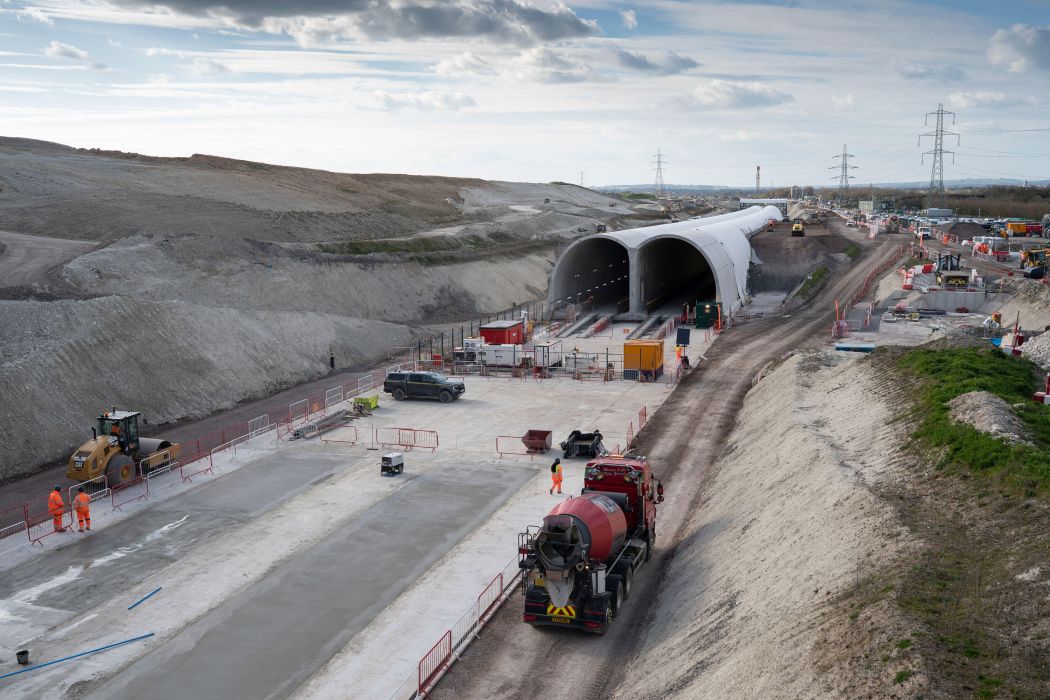
One option would be to back the rival expansion proposal by the hotel tycoon Surinder Arora. Unlike the airport’s own proposal, Arora’s plan would avoid the M25 motorway needing to be tunnelled under Heathrow, as it would mean building a shorter third runway on the airport’s existing footprint.
“That would be a compromise,” says the source. “Andy is pretty into compromises.”


Democrats continue to rake in cash across some of the nation’s most pivotal Senate races, outpacing their Republican counterparts several times over.
In Georgia, Democratic Sen. Jon Ossoff has 20 times as much cash on hand as his Republican challenger, Rep. Mike Collins. In North Carolina, perhaps Democrats’ best pickup opportunity, former Gov. Roy Cooper outraised former RNC Chair Michael Whatley $8.2 million to $2.9 million. And in Texas, Democratic state Rep. James Talarico ended June with $21.5 million in the bank compared to $1.8 million for his GOP opponent, Texas Attorney General Ken Paxton.
But Republicans have a leg up in a handful of states that have gotten messy for Democrats, including Michigan and Maine, where the GOP has built up a cash advantage while primaries have prevented Democrats from sending their resources to a single candidate. That could challenge Democrats’ narrow path back to Senate control heading into the fall.
The Senate battle map is nearly solidified with a handful of critical states left on the primary calendar. Democrats face a steep climb against Republicans, who benefit from a more favorable map and campaign-arm cash advantage. But Democrats’ pipe dream to seize the upper chamber has become more realistic as the party fields a slate of star recruits with proven fundraising prowess — and as Republicans continue to grapple with high costs and an ongoing war in Iran.
Democrats’ hopes were further buoyed Wednesday by their candidates’ second-quarter campaign finance reports, filed with the Federal Election Commission.
“In key battleground races, Democrats are out-raising and out-polling many of their Republican counterparts,” said Adrienne Elrod, a national Democratic strategist who has advised numerous Senate and presidential campaigns. “All of this bodes well for a strong midterm for Democrats.”
Republicans shrugged off the disparities, pointing to the recent Supreme Court decision relaxing rules around coordination between candidates and party campaign arms that will allow the GOP to flex its committee-level cash advantage. The National Republican Senatorial Committee had just shy of $49 million in the bank at the end of May compared to just under $39 million for the Democratic Senatorial Campaign Committee.
“Republicans have a massive advantage on the party committee level and were ready to hit the ground running following the Supreme Court decision on Super PACs,” said GOP strategist Doug Heye. “As the fundraising ground has shifted over the past several years, all of this gives reason for Republicans to be hopeful about holding the Senate.”
Republicans are also building sizable cash advantages in some critical swing states where Democrats are slogging through contentious primaries. In Maine, Graham Platner’s exit — after POLITICO reported a woman accused him of sexually assaulting her years ago — has set off a scramble to succeed him on the ballot. Platner denied the allegations, but ended his bid after he hemorrhaged support.
Democrats now stand at a massive financial disadvantage against GOP Sen. Susan Collins, who ended the second quarter with $11 million in the bank.
Platner had raised a whopping $9 million in the second quarter, though his high burn rate meant he ended up with only $1.7 million cash on hand at the end of June.
Democrats are racing to bankroll their next standard-bearer. The DSCC launched a fund for the eventual new nominee as soon as Platner dropped out. Another Democratic group, the grassroots organization Swing Left, said it plans to raise roughly $500,000 for the eventual nominee.
Candidates running against Collins have generally been able to raise a lot of money in the past, but it’s not clear yet whether Platner’s successor will be able to recapture the small-dollar donor base that was electrified by his populist candidacy, especially with just a few months until Election Day.
And in Michigan, Democrats Abdul El-Sayed and Rep. Haley Stevens are burning through cash ahead of their Aug. 4 face-off — allowing the presumptive GOP nominee, former Rep. Mike Rogers, to build a sizable cash advantage heading into the general election.
Rogers had stockpiled nearly $5.7 million heading into July, compared to Stevens’ $3.4 million and El-Sayed’s $2.7 million.
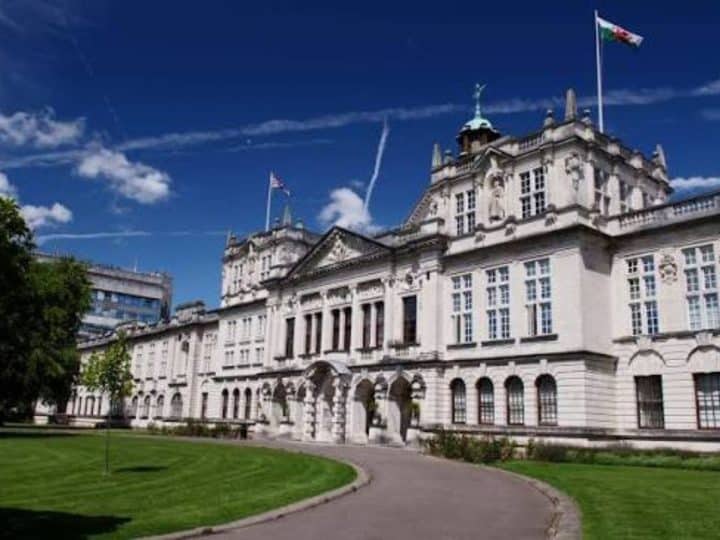
Security staff have twice assaulted a Cardiff University student — for holding a Palestine flag and then for trying to take a photo of them. The Caerdydd Students for Palestine (CS4P) group described what happened:
As a student was on the way OUT of graduation she was physically assaulted and had the Palestinian flag ripped out of her hands with such violence it ripped her acrylic nails off.
She was simply carrying the flag in her hands on her way out of the building. She was then assaulted AGAIN when trying to get photos of the staff after they refused to give their names as seen on this video.
The blonde woman also mocked the word genocide and said graduation “isn’t political.” The arena supervisor said there’s nothing they could do!
Please share this everywhere and say SHAME on @utilitaarenacardiff and their violent staff. This was the actions of SUPERVISORS.
@cardiffuni this is who you trust to manage your graduations?
The group posted footage of the two staff involved:
View this post on Instagram
Cardiff University — a shameful record
This is not Cardiff University’s first rodeo when it comes to suppression of Palestine solidarity — nor the Utilita Arena’s. In July 2025, the university threatened to remove students for a display of solidarity, while Utilita staff harassed and intimidated students wearing keffiyehs:
View this post on Instagram
At the beginning of 2025, the university was accused of spying on pro-Palestine staff and students. A month earlier, it had suspended two students for taking part in an anti-genocide protest. In May 2025, it set police on students holding an anti-genocide picket and in June went to court for an injunction against them.
CS4P has asked opponents of genocide to share news of the latest incident widely.
Featured image via Cardiff.ac
By Skwawkbox

A 14-year-old boy has been charged with a terrorism offence over an alleged plan to attack two mosques in the Sutton area of south London. The plan, the latest in a flood of Islamophobic violence, was linked to “extreme right-wing terrorism”.
The youth was originally arrested on suspicion of criminal damage, but a subsequent search of the address revealed “a number of documents of concern” according to the Met Police. He is in custody and will appear at Westminster Magistrates’ court tomorrow ,16 July 2026.
“Very serious terrorism”
For once, after months of the establishment ignoring Islamophobic violence, police officers responded appropriately to the planned attack. Detective Chief Superintendent Nick Blackburn said:
These charges come just days after 12 people were arrested for a suspected threat to an Islamic festival in Suffolk and a man was arrested for an alleged assault outside a mosque in Leyton.
We should not underestimate the cumulative impact of incidents of this nature on the Muslim community.
His colleague counter-terror Commander Helen Flanagan added that this is a “very serious terrorism charge against a young boy” that is “particularly concerning” to the Muslim community.
Featured image via MiddleEastMonitor
By Skwawkbox
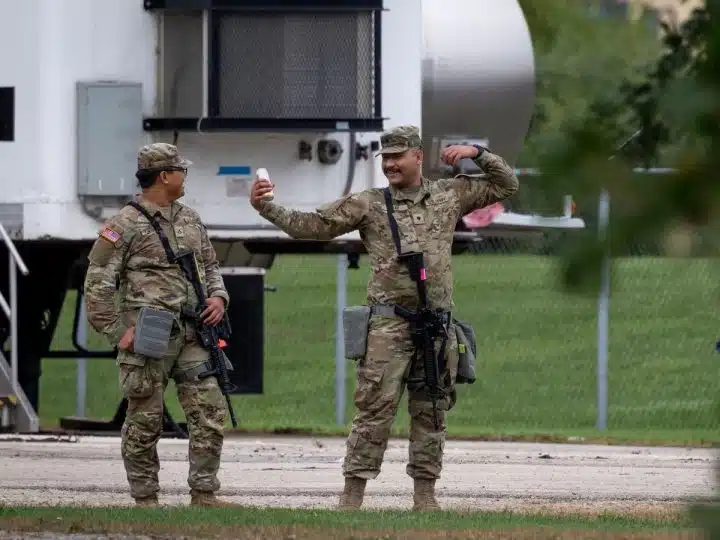
US president Donald Trump’s much-hyped national guard deployments did nothing to lower crime rates. Canary readers will recall how Trump filled the streets of US cities with troops at the start of his second term.
A major centre-left US thinktank has now debunked any claims that the military presence lowered crime. And what’s more, the whole project has ripped off taxpayers to the tune of billions.
The Center for American Progress (CAP) warned in a new report:
The second Trump administration is trying to take credit for the historic drop in violent crime across America despite the fact that this trend began before it took office, and it is using these declines to justify expanding policies that are unpopular, ineffective, and costly.
However, CAP claims the data “clearly shows” violent crime and homicides were:
already dropping in American cities in 2023 and 2024.
Yet:
the Trump administration has continued to threaten city and state leaders and argue that its extreme actions, such as deploying the National Guard to support law enforcement operations, are improving public safety.
CAP reported:
analysis finds no evidence that National Guard deployments have reduced violent crime.
And they added that:
if these deployments are extended and continue through the end of 2026, they could cost American taxpayers more than $1.7 billion.
The authors were very blunt in their conclusions. Trump has no basis to make any claims his deployments worked as stated:
This analysis should give policymakers confidence to reject out of hand the Trump administration’s claims that its actions have materially improved public safety in these cities, call out its falsehoods, and demand better solutions for the American people.
Trump’s ICE are still killing people
And while the story has largely dropped out of international media, Trump’s immigration thugs are still killing people in the US.
Immigration and Customs Enforcement (ICE) reportedly killed a Colombian national in the north-eastern US state of Maine on 14 July. The BBC reported:
An ICE agent has fatally shot a Colombian national during an immigration enforcement operation in the US state of Maine.
The killing came only:
a week after the agency used deadly force against another migrant in a Texas traffic stop.
The authorities have not identified the man killed, but:
local lawmakers and neighbours have identified him as Joan Sebastian Guerrero.
The truth is Trump’s military deployments and increased ICE thug raids were never about security for the public. They were about militarising public spaces, hunting terrified migrants and rebuilding the US in Trump’s image: as a fearful place with a more obedient and, ultimately, whiter population.
Featured image via the Canary
By Joe Glenton

Yesterday, 15 July, the Covid Inquiry published its latest update — this time focusing on the Johnson government’s failure to secure adequate personal protective equipment (PPE). In response, both anti-corruption campaigning organisations and the unions representing affected hospital workers have been swift to issue their condemnation.
As the Canary’s Joe Glenton previously reported:
Boris Johnson’s government wasted £10bn on unusable personal protective equipment (PPE), the Covid inquiry report has found. Inquiry chair Heather Hallett also slammed the then-Conservative government’s use of firms with Tory ‘VIP’ connections to fulfil major PPE contracts.
BMA: Government performance ‘an omnishambles’
Reacting to the Module 5 report, British Medical Association (BMA) council deputy chair Dr Emma Runswick said:
What we saw unfold was an omnishambles; a scramble in procurement, supply and distribution, resulting in chaotic and slapdash approaches to try to get PPE to those who needed it.
Yet we know they often didn’t receive it. Time and time again, from the beginning of the pandemic, and right through the multiple waves of 2020, doctors and our colleagues were left without the PPE needed to protect them and their patients from a fatal disease. This impact was uneven, with women and ethnic minority doctors either unable to access suitable fitting PPE, or indeed, facing greater pressure to work without proper protection.
Runswick also highlighted that the report “makes a number of positive recommendations” for preparation. However, those recommendations served to highlight the UK’s current sorry state:
it is shocking, six years on, to see in black and white that still not enough is being done to ensure both the size and quality of the PPE stockpile, or prepare more widely.
A new pandemic, as well as wider global risks in an increasingly hostile world, remain very real threats to our healthcare systems and the safety of our population. Yet we remain unprepared – both in terms of supplies like PPE, but also in the state of the very buildings we work in, the facilities to provide critical care, and the staffing capacity we have to treat people.
Royal College of Nursing: “is unforgivable”
Meanwhile, the Royal College of Nursing’s (RCN) reaction was similarly outraged. Rose Gallagher, the RCN’s leader for infection prevention during the pandemic, said:
This report is a damning indictment of just how badly nursing staff were let down. The total failure to plan meant stockpiles of PPE were too low, while much of the equipment meant to protect our profession didn’t fit or work effectively. That so many staff were forced to repurpose shower caps, or wear bin bags in desperate attempts to protect themselves, should be marks of shame for the successive governments that left us so unprepared.
Gallagher also praised the nurses who continued in their vital work despite the dangerous position the government placed them in. The infection-prevention lead added:
Despite this litany of government failures to prepare, nursing staff continued to show up for their patients knowing the very real risk to themselves and their families. We know so many died after being sent onto wards, into care homes and into the community with inadequate protection. Meanwhile, scores more continue to live with the long-term effects of Covid to this day. It is unforgivable.
Even back in 2021, the Office for National Statistics (ONS) had already noted the disproportionate level of deaths among nursing staff. The ONS recognised 157 deaths among nurses, averaging over 50 fatalities per 100,000 members of the profession. [ED NOTE: (24.5+79.1)/2=51.8]
Anti-corruption campaigners on PPE report
Given the scandal of the bogus procurement contracts, corruption watchdogs also offered comment on the latest report. For example, Gavin Hayman – executive director of the UK Anti-Corruption Coalition’s Open Contracting Partnership — said:
The British Government bought the wrong things, from the wrong people, in the wrong way. The Inquiry has shown what happens when emergency powers, weak controls and political access collide with disastrous results. Giving huge direct awards to untested companies [specialising in lingerie, drinking straws, confectionery and the like] recommended by politicians harmed the UK’s Covid emergency response.
Likewise, Transparency International UK works with governments and businesses to tackle corruption both at home and around the world. Chief executive Daniel Bruce, who previously gave evidence to the inquiry on behalf of the UK Anti-Corruption Coalition, said:
The inquiry’s report lays bare the failings of the so-called VIP lane for PPE contracts. It confirms our earlier findings that there was systemic bias in awarding contracts to those with connections to the party of government and that, in a majority of cases, there was no objective assessment of those firms’ ability to actually deliver PPE.
The inquiry underscores the damage done to public trust by a prolonged and unnecessary failure of transparency in public spending.
It also challenges the new government to go further to guard against the risk of corruption in future emergencies.
And for PPE Medpro?
Spotlight on Corruption is a research and monitoring organisation which publishes findings on the UK’s implementation of its anti-corruption laws. Executive director Sue Hawley criticised the so-called ‘VIP Lane’:
Its ongoing use, beyond the very early stages of the pandemic, undermined trust in government, and trust in government is never more important than during a public health emergency.
VIP contracts failed at three times the rate of standard ones and cost 80% more per unit, even as nurses resorted to bin bags on the frontline. Five years on, nearly £10 billion has been written off, only one supplier has been taken to court, and the public is still owed a full accounting.
The supplier Hawley alluded to there is PPE Medpro. The firm, which has links to Tory peer Michelle Mone through her husband Doug Barrowman, is at the centre of an ongoing criminal investigation. Mone recommended the company to other ministers, who promptly awarded it over £200m in PPE contracts.
Mone and Barrowman have denied any wrongdoing. The National Crime Agency is still investigating, but hasn’t yet brought charges. However, the company has already had to pay back £148m to the government by order of the High Court.
Whilst the Covid Inquiry held a full day of hearings on PPE Medpro, it can’t yet publish the results due to restrictions surrounding the criminal proceedings.
Featured image via Senedd
By Grace
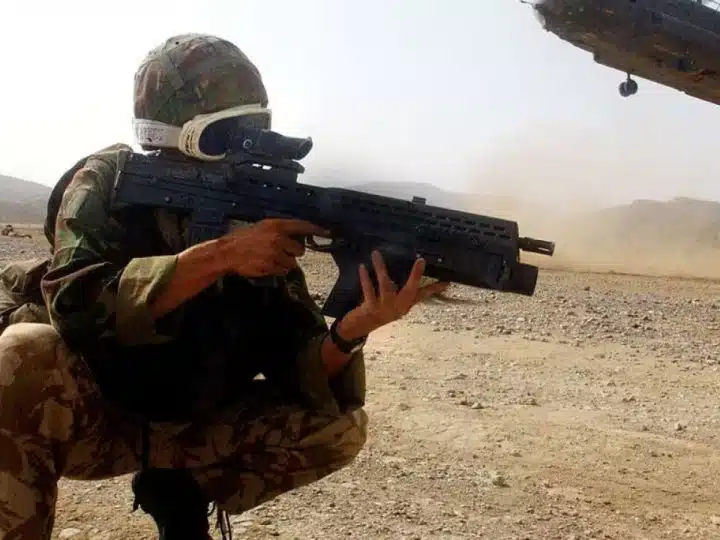
SAS troops currently under investigation for war crimes dropped prisoners from a forklift “for fun”, an inquiry has heard. And one soldier who served with them was allegedly called a “Taliban-loving apologist” for raising concerns about the elite unit’s behaviour.
The inquiry into allegations that the SAS extrajudicially murdered Afghan civilians between 2010 and 2023 occupation heard from two whistleblowers on 14 July:
Monica Grenfell, a former journalist, and Christopher Green, who was part of the Army Reserve, contacted the Afghanistan Inquiry to give evidence after the chairman issued a request for information.
According to Sky News:
Both witnesses spoke behind closed doors with only redacted excerpts released on Tuesday.
Green served alongside special forces as an attached army reservist. He tried to raise concerns about the killings of three Afghan brothers. Green said the deaths were:
described to him as having “gone wrong”, forcing special forces to shoot lawfully “in self-defence”.
However, Green said the army’s intelligence was:
pretty clear that there was nothing to suggest that the sons were anything other than farmers and even less to suggest that they were Taliban commanders.
When he raised these concerns with a liaison officer, he encountered strong resentment from the elite commandos:
At some point he did call me a ‘Taliban-loving apologist’.
Green also asked to see so-called ‘gun tapes’ — video recordings of the raids — but was denied access despite having the right security clearance.
SAS — Forklift ‘fun’ with prisoners
Monica Grenfell served alongside the SAS as a stores person and kitchen staff member. She told the inquiry she was informed by a soldier that special forces troops had abused prisoners by lifting them up on the forks of a forklift and then dropping them.
I specifically recall him telling me that he would put prisoners on a forklift, raise it up and drive very fast so that they fell off.
Grenfell said she had:
Never been anywhere that was as bad as there.
There was a sense that:
People had been let off the leash somehow.
You felt no one was really watching them [the soldiers], and the language was just… I’ve never known the language like it.
After the US-led occupation of Afghanistan collapsed in 2021, then-PM Boris Johnson said UK troops should be:
Proud of their achievements and we should be deeply proud of them.
The nature of allegations which have since the war included suppressed evidence, murdered children, and failure to report serious allegations simply to spare the alleged killer’s morale. They make this kind of grandiose claim even more precarious than before.
The story of the UK’s shadow war in Afghanistan may never be fully known, but the kind of stories starting to appear are shocking indeed.
Featured image via the Canary
By Joe Glenton
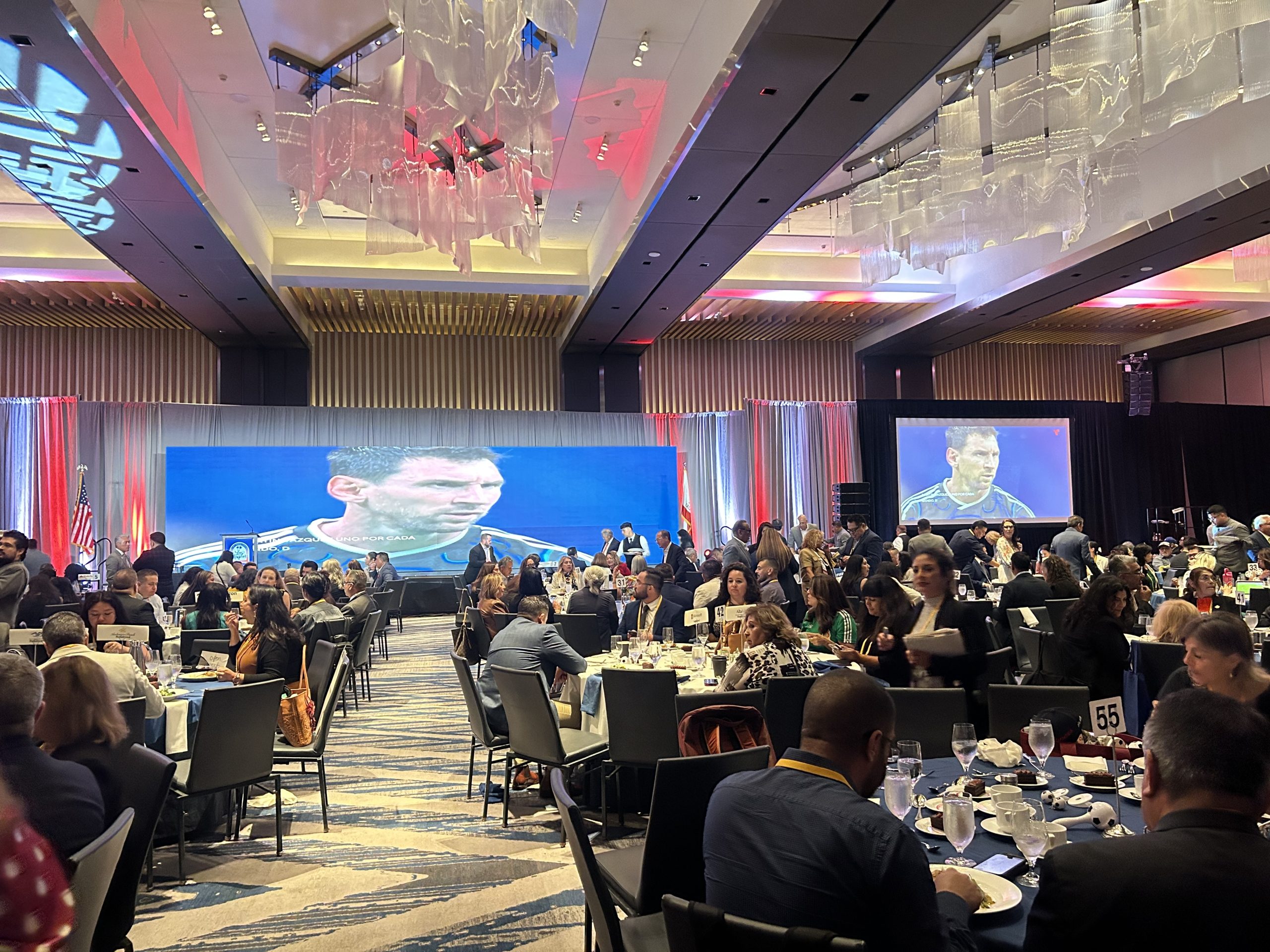

LOS ANGELES — Some of the most powerful Latino politicians in the United States were invited to wear their favorite soccer jerseys. But few chose Argentina’s Abiceleste.
Mayor Frank Figueroa of Coachella, California said his feelings toward Argentina as a “Latin American country” (in finger quotes) were so strong, he was willing to back England, the team that knocked out Mexico — where Figueroa traces his heritage — in a contentious quarterfinal match.
“Just by looking at their soccer team. For me, it’s like who’s playing on the soccer team compared to all the other Latin American countries who had the people playing on their team,” said Figueroa. “That is a big thing for me. They all look European.”
With the World Cup semi-finals coinciding with one of the country’s largest gatherings for Latino policymakers, organizers of the National Association of Latino Elected Officials annual conference embraced the timing. They have scheduled Telemundo World Cup watch parties in a hotel ballroom and are selling NALEO soccer jerseys to celebrate the organization’s 50th anniversary. Multicolored soccer jerseys — most commonly the green of Mexico’s El Tri — were scattered among the polished suits and business-casual attire in the conference venue.
But the absence of support for the tournament’s only remaining Latin American team was notable. In fact, it was easier today to spot England’s colors than Argentina’s hours before the two countries faced off in Atlanta.
Argentina’s history of blanqueamiento policies encouraging mass European migration, sanctuary for Nazis after World War II and its “genocide” against Afro-Argentines contributes to the “systemic problems and challenges” in Argentina’s history, said Karina Moreno, a councilmember representing Palm Desert, California. It’s a history that Moreno said continues the “fallacy” of superiority from Argentina to other Latin American countries.
Animosity towards Argentina was compounded after Argentine media personality Eduardo Feinmann said he “detested Mexicans” in on-air comments after Mexico’s tournament exit last week. Feinmann went on to describe “the envy the Mexicans feel for us Argentines, not just in football, but in everything.” The ensuing controversy escalated with a public rebuke from Mexican president Claudia Sheinbaum.
“It’s not the first time, and it validates what we’re talking about,” Moreno said, referring to the incident.
The behavior of Argentina fans has also come under scrutiny, with FIFA opening an investigation into a supporter’s alleged racist abuse of American streamer IShowSpeed during the team’s victory against Cape Verde earlier this month. Egyptian coach Hossam Hassan’s made FIFA’s designated gesture to report racist abuse — a crossed-arm “X” gesture — against Argentina..
Salta Lake City councilmember Alejandro Puy, a Salt Lake City councilmember sported one of the rare Argentina jerseys. Raised in Buenos Aires, he says “rivalries are expected” between countries in soccer.
“Ultimately we are all brothers and sisters of this continent and we stand by it,” Puy said, though he still says there’s “no doubt” Argentina has the best team in Latin America.
Though he said he appreciated the Latino camaraderie in the conference, Puy was headed to Argentina’s Consulate in Los Angeles to watch the game and not feel “a little alone.”
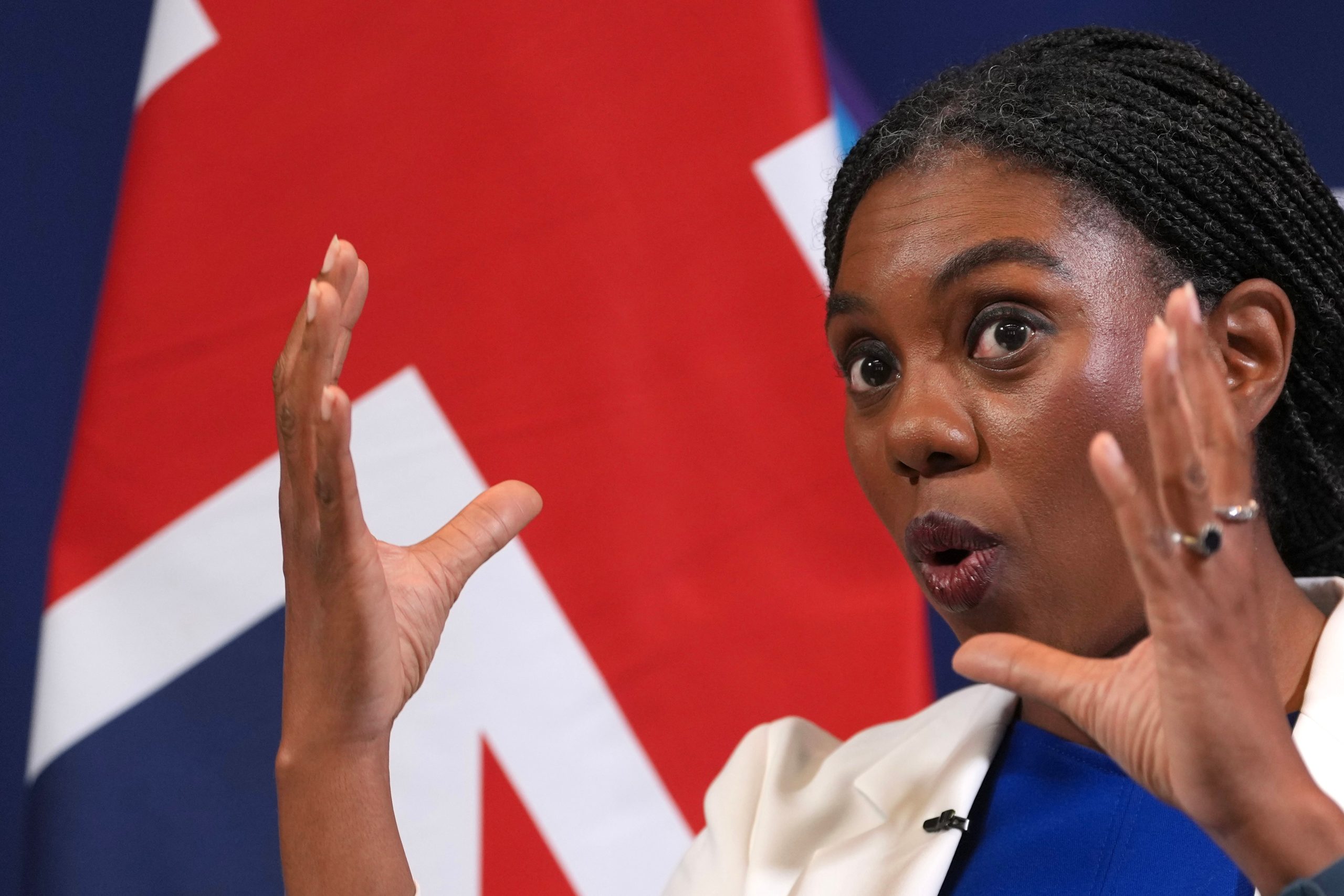

Tory Leader Kemi Badenoch was in a jovial mood during the usually combative PMQs by calling for all MPs to unite behind England against Argentina this evening.
Badenoch said that while Keir Starmer may be “disappointed that he won’t be emulating his hero Harold Wilson in winning multiple elections … we all hope that he may be about to emulate him in another way, by being the prime minister when England win the World Cup.” England’s only previous success came in 1966.
The Tory leader said that was something “every single one of us in this house should get behind, especially the SNP.” But the diminished rump of Scottish independence-supporting MPs, possibly still bruised from going out in the World Cup group stage, shook their heads.
Indeed, opposition to England’s success crossed party lines.
Scottish Labour MP Brian Leishman told POLITICO he’ll be watching “from behind the couch and the cracks in our fingers,” adding it will be “unbearable” if England makes the final.

Former Argos standout defensive lineman Jim Corrigall dies at age 80

All XRP HOLDERS I GOT HUGE DATE NEWS FOR YOU!!!

Andy Burnham pledges not to increase income tax, VAT or NI


-

 Fashion7 days ago
Loro Piana Fall 2026 Enters Houston’s Art Scene
-

 Fashion5 days ago
Weekend Open Thread: Nutriplenish Leave-In Conditioner
-
 Sports7 days ago
2026 Genesis Scottish Open Thursday TV coverage: Round 1
-

 Sports6 days ago
Super Eagles star Moses Simon opens up on Liverpool transfer regret
-

 Tech7 days ago
Character.AI enters the microdrama arena with its own productions, but there’s a twist
-

 Politics21 hours ago
Young campaigners urge incoming PM to act on outdoor junk food ads
-

 News Videos2 days ago
XRP BOMBSHELL… XRP OMBOARDED FOR TRANSACTIONS!!!
-

 Tech2 days ago
Get Your ESP32 Sunny Side Up With This Solar Dev Board
-

 Tech2 days ago
Dark Secrets Emerge When Jailbreaking LLMs
-
 Sports12 hours ago
New Cornerback Enters Vikings Trade Rumor Mill
-
 Entertainment16 hours ago
Disney’s Most Ambitious Failed Star Wars Attraction Is Coming to SDCC
-

 Tech7 days ago
Level Infinite Launches Gangstar Mirage City in India with Pre-Registrations
-
 NewsBeat7 days ago
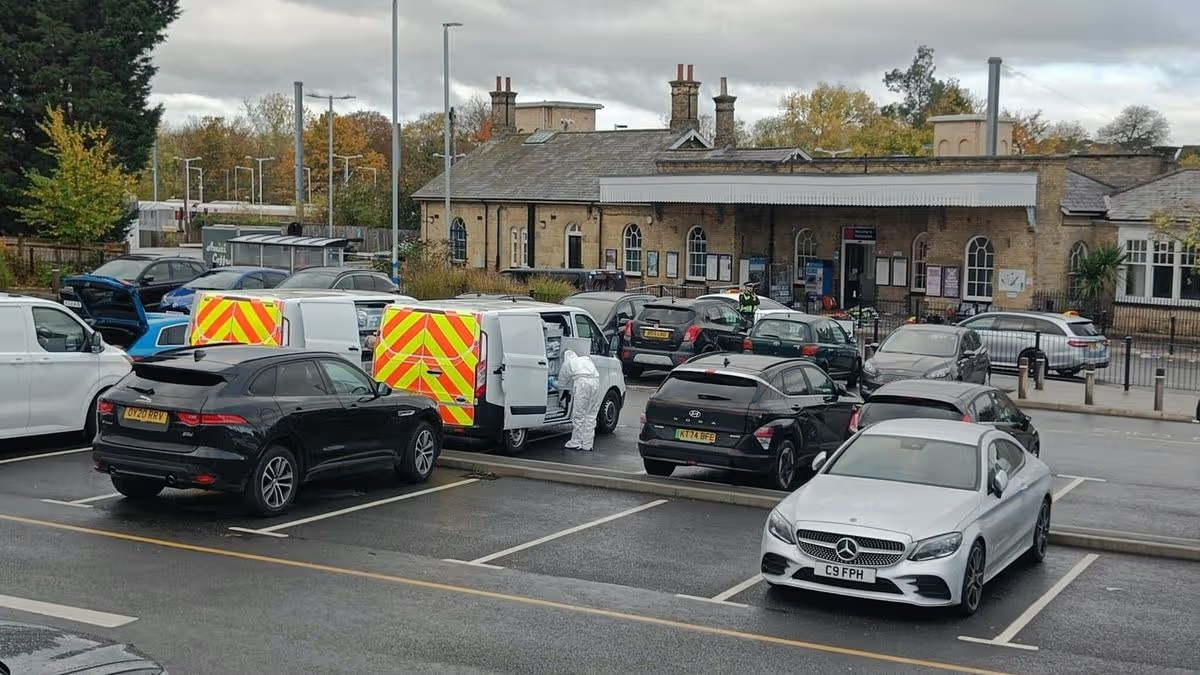
Major update after Huntingdon train attack as man enters plea
-

 News Videos3 days ago
how to make coin bank box with cardboard #scienceproject #money #diy #shorts
-
 Tech3 days ago
Cloudflare Precursor Watches Your Mouse and Keyboard To Decide If You Are Human
-
 Entertainment14 hours ago
Vicki Gunvalson Defends Discussing Heather Dubrow’s Money
-
Crypto World2 days ago
Ripple, Coinbase, Circle Join Linux x402 Foundation to Help Shape AI Payments
-

 NewsBeat11 hours ago
Watch: Is Donald Trump facing a popular backlash on immigration?
-

 Sports9 hours ago
Michigan officials not expected to discuss AD Warde Manuel at Thursday meeting
-
 NewsBeat11 hours ago
Firefighters issue update on Dovestone moorland blaze as fire enters fourth day
You must be logged in to post a comment Login