

Crypto World
Circle Receives Final Green Light to Establish National Trust Bank

The entity behind the second-largest stablecoin announced earlier today that it has secured the necessary license from the US Office of the Comptroller of the Currency (OCC) to launch First National Digital Currency Bank, N.A., which will operate as Circle National Trust.
This authorization represents one of the most significant milestones for the firm as it places its trust bank under direct federal oversight, said its execs.
Circle Wins OCC Approval
The national trust bank charter will allow the company to provide fiduciary cryptocurrency custody services for itself and its affiliates. This paves the way for future management of USDC reserves under OCC supervision and strengthens the infrastructure supporting the stablecoin by bringing key operations into the US federal banking framework.
Depending on demand, Circle added that it could eventually extend custody services to a limited number of institutional clients, including banks and regulated institutions.
“OCC approval to establish Circle National Trust marks a defining step in bringing blockchain technology and digital assets into the core of the U.S. financial system. Federal oversight of our trust bank sets a new standard for transparency, governance, and scale for Circle’s infrastructure and unlocks a new phase of adoption, where leading financial institutions can build on public blockchains with clarity and confidence,” commented Jeremy Allaire, Co-Founder, Chairman, and CEO of Circle.
The company added that it continues to build on its long-standing regulatory strategy. It applied for this charter a year ago and received conditional approval later in 2025 before obtaining today’s final authorization.
Alongside Ripple, BitGo, Paxos, Others
As reported at the end of 2025, Circle was among the companies that received the initial conditional approval from the USOCC. Ripple was among the names that secured approval to establish Ripple National Trust Bank. This was a move widely viewed as another important step toward integrating blockchain infrastructure into the US financial system.
Some of the other cryptocurrency-focused companies mentioned at the time were BitGo, Digital Assets, and Paxos.
The post Circle Receives Final Green Light to Establish National Trust Bank appeared first on CryptoPotato.

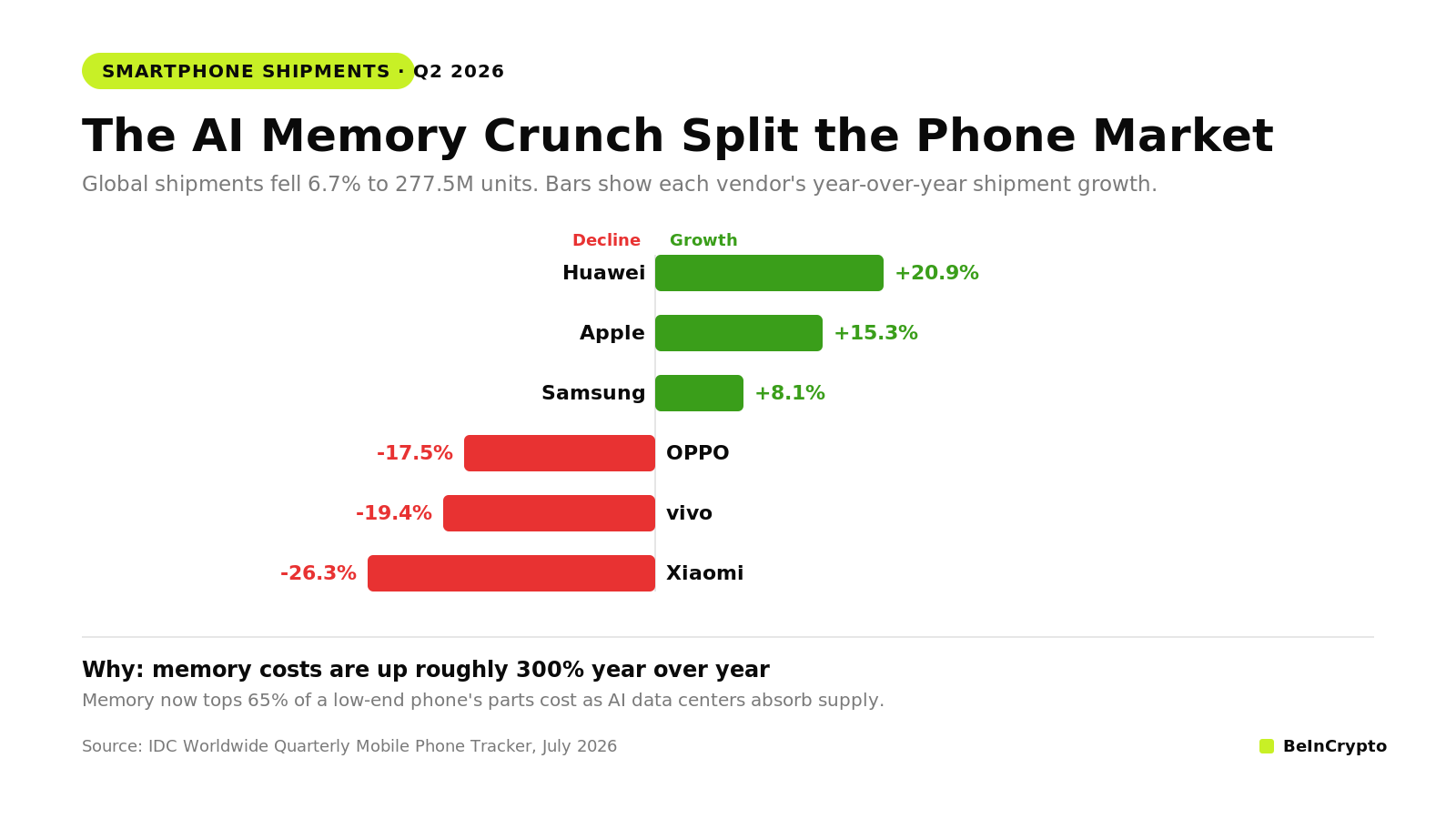
An AI-driven memory crisis is reshaping the global phone market, and Apple stock sits at a record high. Global smartphone shipments fell 6.7% last quarter, yet Apple grew 15.3% and posted record shipments.
The reason is cost. Memory chips now sell for nearly triple last year’s price, so budget phone makers raised prices and lost buyers, while premium brands with locked-in supply pulled away.
How AI’s Memory Grab Is Squeezing Phones
The squeeze starts in AI data centers. Hyperscalers are buying huge volumes of memory to train and run AI models, and that demand has drained supply for phones and PCs.
Want more insights like this? Sign up for Editor Harsh Notariya’s Daily Newsletter here.
Meanwhile, the biggest chip suppliers have chased profit. Samsung, SK Hynix, and Micron steered output toward high-margin AI memory, leaving less for consumer devices.
As a result, memory costs have climbed close to 300% over the past year, according to IDC or the International Data Corporation. Memory now makes up more than 65% of the parts cost in a cheap phone.
That shift has hit low-cost vendors hardest. Apple already passed some of the pain to buyers, raising Mac and iPad prices in June while holding iPhone prices steady.
A Smartphone Market Split In Two
The downturn is not uniform. IDC says the memory crisis has split the market, rewarding scale and premium supply while punishing cheap, high-volume phones.
The gap is stark. Apple and Samsung were the only top-five vendors to grow, up 15.3% and 8.1%. Xiaomi fell 26.3%, vivo dropped 19.4%, and OPPO slid 17.5%.

In China, Huawei and Apple stood alone with roughly 15%+ growth each, as rivals raised prices and lost hesitant buyers. Budget brands leaned on older 4G models to defend low prices as government subsidies faded.
The pattern is consistent. When the price gap narrows, buyers trade up to trusted brands rather than upgrade on the cheap.
Why The Squeeze Lifts Apple Stock
For Apple, a smaller market has meant a bigger lead. It is on track for a record 22% annual market share. Apple stock also hit an all-time high on July 13, closing at $317.31 after an intraday peak of $323.45, worth about $4.7 trillion.

Big investors positioned early. Institutions own about 81% of Apple and net-added roughly 1.24 billion shares last quarter, before its China rebound fully showed in the data.
Apple is also defending margins at the source. It is in talks with Chinese suppliers CXMT and YMTC to source memory for iPhones sold in China, which would ease the cost hit at home.
Even so, the win is relative, not absolute. The memory crisis lifts Apple against weaker rivals, but it still raises Apple’s own chip costs. So far the company has offset that by charging more, from higher Mac and iPad prices to an expected iPhone increase.
That defense has a limit. If Apple keeps raising prices, even loyal buyers may hold off, which would slow the growth now lifting the stock. The memory shortage could last into 2028, so those cost pressures are unlikely to ease soon.

The next test is close. Apple reports earnings on July 30, and that print will show whether premium demand can hold as the squeeze drags on.
The post Apple Stock Hits a Record as the AI Memory Crisis Guts Cheap Phones appeared first on BeInCrypto.
Cathie Wood’s Ark Invest has increased its exposure to SpaceX with purchases worth about $52.1 million during the week ended July 10, while cutting positions in semiconductor, streaming and genomics companies as it continued adjusting its portfolios.
Summary
- Ark Invest bought about $52.1 million worth of SpaceX shares while adding to positions in Coinbase, Circle and several AI and healthcare companies.
- The firm reduced holdings in AMD, Roku, Deere and multiple genomics stocks as it continued rebalancing its ETF portfolios.
- The latest purchases extend Ark’s recent strategy of increasing its SpaceX position after earlier buying during the stock’s post IPO decline.
According to Ark Invest’s latest weekly trading disclosure, Space Exploration Technologies Corp. (SPCX) received the firm’s largest allocation by value across multiple exchange-traded funds.
The investment manager also bought shares of Eli Lilly, Meta Platforms, X-Energy, Coinbase Global and Circle Internet Group, alongside several healthcare, artificial intelligence and defence-related companies.
Across individual funds, Ark added SpaceX shares to ARKK, ARKQ, ARKW and ARKX. The latest filings also showed fresh purchases of X-Energy across three ETFs, while Block, Kratos Defense & Security Solutions, Oklo, Pony AI, Kodiak AI and WeRide were among other additions. In healthcare, the firm increased positions in companies including Ionis Pharmaceuticals, Beam Therapeutics, Prime Medicine, Alamar Biosciences, Compass Pathways, and Recursion Pharmaceuticals.
Ark continues buying SpaceX after earlier dip purchases
The latest trades extend Ark’s recent buying activity in SpaceX after several purchases made during the stock’s post-listing decline.
Last month, the investment firm bought about $32.5 million worth of SpaceX shares after the stock dropped more than 16% from its post-IPO peak. The purchase followed an even larger investment of roughly $444.3 million made across four ETFs on the company’s Nasdaq debut on June 12.
Ark had also held exposure to SpaceX before its public listing through the ARK Venture Fund, where the aerospace company ranked as the fund’s largest holding. Earlier this month, Cathie Wood told Fox Business that SpaceX held a “10-year lead” over competitors, while Ark’s internal valuation models projected a base-case enterprise value of about $2.5 trillion by 2030 and a bull-case estimate of approximately $3.1 trillion.
Meanwhile, the latest portfolio changes showed the firm reducing holdings in Advanced Micro Devices, Roku, Robinhood Markets, Deere, and Iridium Communications. The disclosures also listed sales of several genomics companies, including Natera, Illumina, Twist Bioscience, 10x Genomics and BioNTech, alongside smaller reductions in Personalis, Absci and Strata Critical Medical.
The changes come ahead of the second-quarter earnings season, with the latest disclosures indicating continued portfolio rebalancing across Ark’s actively managed funds.
The recent buying activity also follows a pattern seen in previous weeks. On June 26, Ark increased its holdings in Coinbase, Circle, Bullish, and Robinhood after all four stocks declined during the trading session. Earlier in June, the firm also purchased about $18.4 million worth of Coinbase shares after the crypto exchange had fallen nearly 13% over the preceding month.
Ark manages its exchange-traded funds under a policy that limits any single holding to no more than 10% of a portfolio. The firm periodically adjusts positions to keep those weightings within its target allocations as share prices change.

ETH and XRP traders have become notably more optimistic, with market intelligence firm Santiment reporting the highest levels of fear of missing out (FOMO) for both assets in the past five weeks.
The change in tune has come even with prices struggling to build sustained momentum, raising the possibility that bullish sentiment may be running ahead of market performance.
XRP Leads Sentiment Spike While BTC Stays Balanced
According to a July 13 X post by Santiment, XRP’s bull-to-bear ratio sat at 3.02, meaning that there were more than three positive posts online for every negative one. Ethereum wasn’t far behind at 2.31, placing it in what the analytics platform described as “slight FOMO territory.” As for Bitcoin (BTC), it posted a much lower 1.40, suggesting that traders were relatively neutral about it.
Both BTC and ETH opened relatively strong on Monday but faded as the day went on, with Santiment pointing out that crowds tend to get loud at the wrong moment.
“Crypto typically moves opposite to what the crowd is loudly expecting,” the firm wrote. “When traders get too bullish on XRP or ETH while prices are already dipping, it can create short-term downside risk or at least slow the rebound.”
However, it argued that Bitcoin’s flatter reading may give it more room for a rally since the crowd hasn’t fully bought into the “higher prices next” trade yet. This assessment was echoed by trader Xaif Crypto, who also argued that BTC’s calmer sentiment “means more room to run,” while the heavier optimism surrounding XRP and ETH could limit their immediate recovery.
Looking at the price actions of the three assets, XRP had slipped below $1.08, a resistance level highlighted by analyst Cryptorphic, and was trading around $1.07 at the time of writing, a roughly 5% drop in the last seven days and almost 7% over the past month. According to the analyst, the token is quite vulnerable as long as it trades beneath $1.08, with even lower prices seeming likely.
On its part, ETH has held up better and was trading closer to $1,800 than $1,700, having gained a modest 1% over one week and more than 6% in the last 30 days. It did move briefly above $1,800 over the weekend before pulling back, although several market watchers have expressed optimism that the current level could see the asset push up to $2,500.
Meanwhile, Bitcoin dipped slightly in the last day after starting July rather strongly when it rebounded from around $57,700 to $64,000. It is currently changing hands below $63,000, with wallets holding between 10,000 and 100,000 BTC adding 11,000 BTC in the last week, suggesting that dip demand hasn’t dried up despite weeks of choppy trading.
Optimism Faces Mixed On-Chain and ETF Signals
While traders have become excited about XRP, the asset has had to contend with cooling institutional and whale activity, marked by spot XRP ETFs recording their first week of net outflows in more than 2 months.
Furthermore, on-chain data also showed a significant drop in XRP transactions of more than $1 million, which have gone from 70 to only 2 in about a week, while wallet creation on the XRP Ledger has also slowed compared with earlier in the year.
The post XRP and ETH Traders Turn Bullish as FOMO Surges to 5-Week High: Santiment appeared first on CryptoPotato.


Upbit will add Derive’s DRV token to its Korean won, Bitcoin and Tether markets on July 14.
Summary
- Upbit adds DRV trading against KRW, BTC and USDT, expanding Derive’s access across South Korea.
- Derive migrated LYRA holders into DRV and now operates an onchain options and perpetuals exchange.
- DRV’s total supply now stands at 1.5 billion after a previously proposed strategic token mint.
Trading is scheduled to open at 17:00 Korea Standard Time, giving the onchain derivatives protocol access to South Korean traders. The details appear in Upbit’s official DRV listing notice.
The exchange said deposits and withdrawals will use the Ethereum network. Upbit also applies temporary limits on buy orders, low-priced sell orders and certain order types after new listings. These controls are designed to manage sharp price moves during the opening period.
DRV enters South Korea through three Upbit markets
The KRW pair gives local users a fiat market for DRV. The BTC and USDT pairs add two crypto-based routes for traders who already hold digital assets on the platform. Together, the markets broaden DRV access beyond its listings on international exchanges.
Bithumb also added DRV to its Korean won market on July 14, giving the token listings on two major South Korean platforms on the same day. The combined rollout increases local access, although trading volume and prices can change quickly after new markets open.
Derive grew from the former Lyra protocol
Derive previously operated as Lyra Finance, an onchain options protocol launched within the Synthetix ecosystem. The project adopted the Derive name in 2024 and moved its governance and utility token from LYRA to DRV. Eligible balances converted at a 1:1 ratio after a May 2024 snapshot.
DRV launched in January 2025. The protocol now combines options, perpetual futures and structured trading products through a self-custodial exchange. Derive runs an Ethereum rollup built with the OP Stack and uses a risk engine designed for portfolio margin and onchain settlement.
DRV supports governance, staking and token buybacks
DRV holders can stake the token to receive governance rights and delegate voting power. Derive also uses token incentives for trading and liquidity programs. Its token documentation states that 35% of protocol revenue funds DRV buybacks under the protocol’s current token funding model.
The token’s total supply now stands at 1.5 billion DRV. That figure reflects a 500 million-token strategic mint proposed in September 2025 to fund institutional partnerships, market-maker incentives and development. The earlier plan represented a 50% increase from the original one billion-token supply.
Listing follows Derive’s wider exchange expansion
The Upbit launch comes after DRV reached Coinbase in May 2026, giving the asset access to a large regulated U.S. trading platform. The Korean listings add direct won markets and place the token before one of Asia’s most active retail trading communities.
As previously reported, Synthetix proposed acquiring Derive through a $27 million token swap in May 2025. The plan would have exchanged 27 DRV for one SNX under lockup and vesting terms. The parties later abandoned the proposed merger, leaving Derive independent.
Upbit has continued adding crypto assets throughout 2026. As reported by crypto.news, the exchange introduced nine tokens to its BTC and USDT markets in June. Other Upbit listings have produced rapid changes in volume and price, but early gains have not always continued.
The DRV listing may improve liquidity by connecting fiat and crypto markets. Traders will also monitor Derive’s protocol volume, token use and supply release schedule. Those measures will show whether the Korean rollout creates sustained activity after the initial listing period.


JCB has partnered with Circle to test USDC for internal treasury transfers and merchant payments in Japan, extending stablecoin use into cross-border corporate settlement and retail transactions.
Summary
- JCB and Circle will test USDC for cross border treasury transfers and merchant payments in Japan.
- The first pilot will focus on JCB’s internal fund transfers before expanding to retail payment use.
- The agreement extends Circle’s institutional payments push following its U.S. trust bank approval and expansion across Asia.
A July 14 statement from JCB said the Japanese payments company has signed a memorandum of understanding with a Circle affiliate to develop payment services using USD Coin (USDC), Circle’s dollar-backed stablecoin.
The first phase of the partnership will focus on a proof of concept for JCB’s internal cross-border treasury operations. The companies also plan to evaluate stablecoin payments at physical stores for merchants and international visitors travelling in Japan.
Alongside the pilot, the two firms said they will assess other payment services that combine Circle’s stablecoin infrastructure with JCB’s merchant network to support cross-border transactions and new payment options for businesses and consumers.
Coming days after Circle secured a key U.S. banking approval, the agreement adds another institutional payments partnership to the stablecoin issuer’s recent expansion efforts.
Earlier this month, the U.S. Office of the Comptroller of the Currency granted final approval for Circle National Trust, placing the company’s national trust bank under federal supervision. Circle said the institution will initially provide fiduciary digital asset custody services for the company and its affiliates, while future plans could include managing reserves backing USDC, although no timeline has been announced.
Outside the United States, Circle has also continued building relationships with regulated financial institutions. Standard Chartered recently introduced a service through its Dubai International Financial Centre operations that allows eligible institutional clients to mint and redeem USDC directly through the bank’s platform. BNY has also added USDC to its digital asset custody platform, enabling institutional clients to mint and redeem the stablecoin through its infrastructure.
Japan agreement follows Asia expansion
The JCB partnership comes as Circle continues pursuing new institutional relationships across Asia.
Later this month, the company will host its invitation-only Current Seoul event, bringing together executives from banks, crypto exchanges, payment companies and technology firms to discuss digital asset regulation, cross-border payments and industry partnerships.
During an April visit to South Korea, Circle co-founder and CEO Jeremy Allaire met executives from KB Kookmin Bank, Shinhan Bank, Hana Bank, Upbit, Bithumb, and several payment companies to discuss potential cooperation through the Circle Payments Network for international payments.
Competition in the stablecoin sector has also intensified in recent weeks. Open USD, a competing dollar-backed stablecoin model, launched with a revenue-sharing structure that distributes reserve income among participating members.
However, several South Korean companies, including Samsung Electronics, Dunamu, Shinhan Financial Group, and K Bank, later told local media they had not formally agreed to join the consortium despite being listed as participants.


Cumberland has secured a Major Payment Institution licence from Singapore’s central bank, allowing its local unit to offer regulated digital payment token and cross-border money transfer services.
Summary
- Cumberland has received a Major Payment Institution licence from Singapore’s MAS to provide digital payment token and cross border money transfer services.
- The approval completes the licensing process after Cumberland SG received in principle approval from MAS in March.
- The licence comes as MAS continues approving compliant crypto firms while taking enforcement action against companies that fail to meet its regulatory standards.
According to an announcement by cryptocurrency trading and liquidity provider Cumberland on X, its Singapore subsidiary, Cumberland SG Pte. Ltd., has received the Major Payment Institution (MPI) licence from the Monetary Authority of Singapore (MAS).
The approval authorises the company to provide Digital Payment Token (DPT) services and Cross-Border Money Transfer services under Singapore’s Payment Services Act.
In its announcement, Cumberland said Singapore continues to maintain a high standard for digital asset regulation and described the country as one of the world’s leading financial centres. The company added that its team plans to continue expanding its presence in the jurisdiction.
The approval completes a licensing process that began in March, when MAS granted Cumberland SG in-principle approval for an MPI licence. At the time, the regulator said the company had satisfied the initial regulatory requirements but still needed to meet additional conditions before receiving the full licence. Cumberland had said the approval would allow it to expand compliant digital asset services for institutional clients once the licence was issued.
Cumberland is the crypto trading and liquidity arm of Chicago-based DRW and provides market-making and liquidity services to institutional clients across digital asset markets.
Cumberland’s regulatory progress also follows developments in the United States. In March, the U.S. Securities and Exchange Commission dismissed its enforcement case against the company, ending allegations that it had operated as an unregistered securities dealer. The dismissal formed part of a series of crypto-related cases dropped by the agency under its new leadership.
Singapore keeps a strict licensing standard
The latest approval comes as MAS continues to combine new licence approvals with close regulatory oversight of crypto firms operating in Singapore.
Earlier this year, the regulator revoked the MPI licence of Bsquared Technology after finding false or misleading statements, weaknesses in risk management, conflict-of-interest controls, and outsourcing arrangements during an inspection. MAS also said it was reviewing whether senior officers at the company could be held personally accountable for the breaches.
Regulatory scrutiny has also extended to firms without local authorisation. In June, MAS added Bybit Fintech Limited and its trading platform to its Investor Alert List, which the regulator says identifies entities that could be mistakenly viewed as licensed or regulated in Singapore. MAS noted that the list is a public warning tool rather than an enforcement action or operating ban.
While maintaining those compliance standards, Singapore has continued issuing licences to firms that meet its requirements. Previous approvals have been granted to crypto companies including BitGo, Coinbase, Anchorage, Gemini and OKX, reinforcing the country’s position as a regulated hub for institutional digital asset businesses.
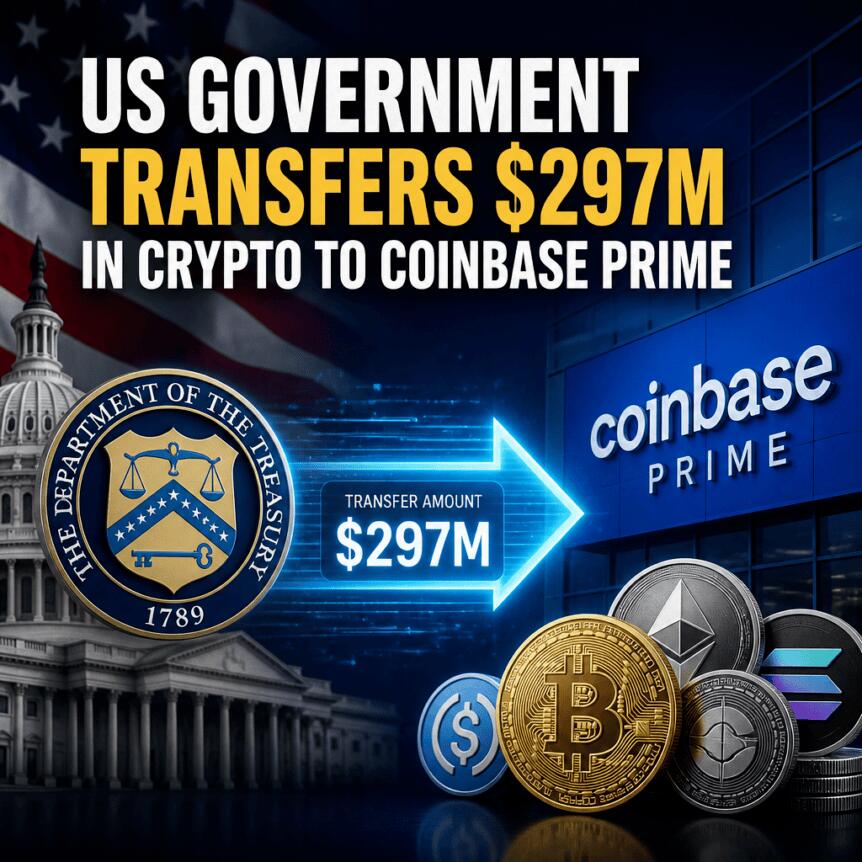
The U.S. government has transferred nearly $300 million worth of seized Bitcoin and Ether to Coinbase Prime, according to on-chain data tracked by Arkham. The move has sparked fresh speculation that the holdings could be prepared for sale, though custody transfers do not necessarily indicate that selling is underway.
Arkham data shows that on Monday, 3,940 BTC—valued at $243.95 million—and 30,014 ETH—valued at $53.09 million—were sent to Coinbase Prime. The deposits were linked to multiple well-known U.S. government crypto seizures, including assets associated with earlier enforcement actions.
Key takeaways
- Arkham reports Monday’s transfer of 3,940 BTC and 30,014 ETH to Coinbase Prime, totaling close to $300 million.
- The assets are connected by Arkham to earlier seizures, including BTC reportedly tied to ryan farace (“xanaxman”) and a Bitcoin-related path involving the defunct BTC-e exchange.
- Ether moved to Coinbase Prime is also tied to Brian Krewson, an Oracle employee implicated in a reported $54 million crypto storage and money laundering scheme.
- Despite renewed speculation, deposits into a custody-focused venue may reflect consolidation rather than an imminent sale.
- The transfers have raised attention because a March 2025 executive order directed that seized Bitcoin should support a proposed “Strategic Bitcoin Reserve” and not be sold.
What was moved to Coinbase Prime
The key new development is the scale and timing of the transfer. In its public tracking, Arkham attributes the Monday movement to government-linked wallets feeding into Coinbase Prime custody.
On the Bitcoin side, Galaxy Research’s Alex Thorn said the coin movements were comprised of assets seized from ryan farace (“xanaxman”) and from pathways connected to the defunct BTC-e exchange. Thorn’s comment specifically addressed the Bitcoin transfers, underscoring how investigators and analysts are continuing to map seizure flows to named cases.
On the Ether side, Arkham’s tracing indicates the deposits connect to Brian Krewson, an Oracle employee implicated in what has been described as a $54 million crypto storage and money laundering scheme. While these labels do not confirm present intent, they help explain why traders and analysts are treating the transfer as more than routine operational movement.
Why the transfer reignited “sale” speculation
Transfers to trading or custody partners often prompt market observers to ask whether seized assets are being positioned for liquidation. However, the critical detail is that Coinbase Prime provides services that go beyond spot trading—custody, trading access, financing, and staking—meaning transfers can be used for multiple operational reasons.
That distinction matters because the on-chain action alone does not prove a sale is happening. Even if assets are ultimately sold, the first step could be administrative consolidation or the setup of liquidity and custody procedures ahead of later decisions.
Still, attention intensified because the move appears to run into political and policy messaging. As noted in earlier reporting, a March 2025 executive order stated that Bitcoin seized by the U.S. government should be used as part of a “Strategic Bitcoin Reserve” and should not be sold. Coverage of that conflict has also been highlighted by Cointelegraph in earlier articles, including discussion around interagency disagreement about control.
Monday’s deposits do not confirm a breach of that guidance—again, custody movements are not the same as liquidation. But they do highlight the tension between policy statements and the practical reality of managing seized crypto across custodians and operational workflows.
How this compares with prior government transfers
The U.S. government has moved crypto to Coinbase Prime before, but the Monday transfer stands out because it is described as one of the largest government-linked wallet deposits to the platform this year.
Earlier examples cited in the record include a June transfer of 98,589 LINK tokens to Coinbase Prime, with Arkham tracing the underlying holdings to assets seized from FTX and Alameda Research. In April, around 8.2 BTC tied to the 2016 Bitfinex hack was also sent to Coinbase Prime. Together, these past movements suggest the government has used Coinbase Prime as a recurring destination when managing seized digital assets.
What changes on Monday is the combined value and the fact that both BTC and ETH—rather than a single asset class—were consolidated at once. That combination may increase the likelihood that some portion of the holdings could later be deployed in whatever structured process the government uses, though the path from transfer to trading remains unconfirmed.
What remains in government-linked wallets
Beyond the immediate transfers, the larger picture is still dominated by significant residual holdings tracked under government-linked addresses. Estimates cited in the same tracking indicate that U.S. government-linked wallets hold roughly $20.6 billion in crypto, including about 325,000 BTC, 28,000 ETH, 146 million USDT, and 750 Wrappd Bitcoin (WBTC).
That inventory underscores why every major transfer draws attention: if the government is systematically consolidating assets for future decisions, it could gradually change liquidity conditions for seized-asset markets over time.
At the same time, analysts and investors should be careful not to over-interpret a single custody transfer. Until there is evidence of exchange routing, OTC execution, or other signs of liquidation, the most defensible read is that the assets have been moved into a managed environment that can support multiple strategies—custody, financing, or potentially staking—rather than automatically signaling immediate sell pressure.
For now, market participants will likely watch for the next on-chain steps from these Coinbase Prime deposits—especially any transfers out to trading venues or counterparties. The key uncertainty is not whether the assets are held with a regulated custody provider, but whether the government’s operational workflow will ultimately align with the “no sale” direction discussed in policy narratives.
Ripple CTO Emeritus David Schwartz has challenged claims that the U.S. Securities and Exchange Commission focused only on Ripple’s sales of XRP.
Summary
- David Schwartz says the SEC repeatedly portrayed XRP itself as a security during Ripple litigation.
- Marc Fagel argues the case ultimately tested whether Ripple sold XRP through unregistered securities offerings.
- The 2023 ruling separated XRP tokens from transactions, rejecting programmatic sales while penalizing institutional deals.
He said the agency’s complaint and public statements repeatedly described XRP itself as a security before the court rejected parts of that broader position.
The exchange followed comments from former SEC attorney Marc Fagel, who said the case ultimately turned on whether Ripple sold XRP through unregistered securities offerings. Schwartz argued that this summary leaves out the regulator’s original language and the court’s response to it.
Schwartz disputes narrower reading of SEC case
In a July 14 X exchange, Fagel said the SEC needed to prove that Ripple sold XRP as a security to establish a Section 5 violation. He added that the agency did not need to decide every secondary-market transaction in its case against Ripple.
Schwartz agreed that Ripple’s sales mattered but rejected the claim that this was the regulator’s only argument. He wrote, “The complaint itself frequently refers to XRP itself as the security.” He called the narrower retelling “an attempt at completely rewriting history.”
SEC complaint used broad language around XRP
The SEC’s December 2020 complaint said Ripple and its executives sold more than 14.6 billion units of a “digital asset security called XRP.” The regulator alleged that the sales raised more than $1.38 billion without registration or an exemption.
The SEC’s public announcement focused on Ripple’s alleged unregistered offering and its executives’ personal sales. Fagel later acknowledged that the agency’s messaging lacked nuance and that its points appeared to change during the case. He maintained that the final legal question concerned Ripple’s XRP transactions.
Court separated the token from each transaction
Judge Analisa Torres drew a distinction between XRP and the contracts or schemes used to sell it. Her July 2023 order said XRP, as a digital token, was not “in and of itself” a contract, transaction or scheme that met the Howey test.
The court then reviewed Ripple’s sales by category. It found that about $728.9 million in direct institutional sales constituted unregistered investment contracts. Programmatic exchange sales did not meet the same test because buyers did not know whether Ripple or another holder sold the tokens.
Ripple case ended with split ruling intact
The SEC and Ripple dismissed their appeals in August 2025, formally ending the civil case. The final judgment kept a $125.04 million penalty and a permanent injunction tied to future unregistered institutional sales.
Notably, the XRP community marked July 13 as the third anniversary of the 2023 ruling. The decision protected Ripple’s programmatic exchange sales while leaving its institutional transactions subject to securities law.
Related reporting showed that Ripple considered closing after the SEC filed its complaint. The company continued the case and spent about $150 million on its legal defense, according to Ripple executives, as reported by crypto.news.
Schwartz said the court’s rejection of the SEC’s broader position formed a major part of Ripple’s victory. Fagel said the outcome still centered on whether Ripple’s sales qualified as securities transactions. Their exchange reflects a lasting dispute over the agency’s legal burden, public wording and the ruling that followed. That distinction still shapes how XRP’s legal history is described.

A significant portion of President Donald Trump’s crypto proceeds went into stocks and bonds last year, according to a Reuters analysis of his latest financial disclosures.
The filings show a president who does not treat crypto as a primary store of personal wealth, even as he publicly champions it.
Trump’s Traditional Holdings Quadruple
A Reuters analysis of Trump’s holdings over the past two years found his stock and bond portfolios increased at least fourfold. He held between $703 million and $2.6 billion in such instruments at the end of 2025, up from between $225 million and $608 million a year earlier.
Timothy Massad, a former chairman of the Commodity Futures Trading Commission (CFTC), said the disclosures suggest a quick-profit strategy.
“Although the President talks about digital assets as the frontier of finance… the disclosure form suggests his personal strategy is to make a quick buck from crypto… but then invest his profits in traditional assets like stocks and bonds,” he said.
However, the disclosures do not necessarily mean Trump personally directed those investment decisions. The White House said his assets sit in fully discretionary accounts managed by independent third-party institutions.
Reuters also noted that Trump still holds 15.75 billion WLFI governance tokens listed at more than $50 million. His companies also held at least $160 million in Bitcoin (BTC) and Ethereum (ETH) at the end of 2025.
That marked a large increase over the $1 million to $5 million in ETH he reported holding at the end of 2024. Trump also did not report buying shares in two listed crypto firms backed by his sons, Eric Trump and Donald Trump Jr.
Follow us on X to get the latest news as it happens
Political Pressure Builds Around Trump’s Crypto Gains
Trump reported over $1.4 billion last year from family crypto ventures. These included World Liberty Financial (WLFI) and his own meme coin. Nonetheless, the story looks different for retail investors.
BeInCrypto reported that nearly 1 million Official Trump (TRUMP) holders are sitting on $3.81 billion in combined losses. The President’s crypto disclosures have already drawn Senate scrutiny over possible conflicts of interest.
Senator Kirsten Gillibrand has also renewed her push to bar the President, lawmakers, and their spouses from issuing meme coins. Political criticism has sharpened alongside, with economist Peter Schiff branding the coins legal bribes.
Subscribe to our YouTube channel to watch leaders and journalists provide expert insights
The post Trump Reportedly Directed Crypto Earnings Toward Stocks, Bonds, Analysis Finds appeared first on BeInCrypto.


Robinhood Chain has renewed debate over how much value Ethereum captures from Layer 2 networks.
Summary
- Robinhood Chain generated $843,000 in fees while paying Ethereum about $1,600 for settlement and availability.
- Critics say the revenue gap weakens Ethereum’s value capture despite rising activity across Layer 2s.
- Supporters argue Robinhood’s tokenized stocks could bring millions of new users into Ethereum-based financial markets.
Ethereum Daily said users paid about $843,000 in fees, while the chain sent roughly $1,600 to Ethereum for data availability and settlement.
Lorenzo Valente, a crypto analyst and contributor at ARK Invest, used an earlier snapshot showing about $816,000 in revenue and $1,538 in Ethereum costs. He estimated that Robinhood retained 89%, Arbitrum received 10%, and Ethereum captured 0.15%. The different totals likely reflect when each account collected the data.
Fee split renews debate over Ethereum’s Layer 2 model
Valente said the figures support two views of ETH. Higher activity can increase the asset’s use as gas, collateral and settlement money. However, Layer 2 networks may keep most user fees, leaving Ethereum with limited direct income from the transactions they process.
“Ethereum won this deal on merit. It’s just not pricing it right,” he wrote.
Robinhood Chain uses Arbitrum technology and posts data to Ethereum. Its licensing structure sends 10% of protocol net revenue to the Arbitrum ecosystem, including 8% for the DAO treasury and 2% for developer support.
Tokenized stocks strengthen the distribution case
Ethereum Daily argued that direct fees show only part of Robinhood Chain’s potential value. Robinhood launched Stock Tokens through Robinhood Wallet in more than 120 countries. Eligible users can trade them around the clock and use them in decentralized applications, including lending pools and collateral markets.
That reach could bring traditional investors into onchain markets through Apple and Nvidia-linked products. Users who begin with tokenized equities may later use decentralized exchanges, stablecoins, lending services and perpetual futures. The outcome still depends on demand, liquidity and continued product access.
Joseph Lubin supports low Ethereum fees
Ethereum co-founder Joseph Lubin defended the low-fee model. He wrote, “Ethereum L1 revenue fees should stay low to foster growth.” Lubin expects more companies to build across Ethereum mainnet, Layer 2 networks and private Ethereum-compatible chains in coming years.
His case focuses on wider ETH demand rather than immediate settlement income. More networks may use ETH for gas, collateral and staking. Mainnet transactions can also burn ETH. Still, the approach leaves an open question over whether Ethereum receives enough revenue from businesses operating above it.
Robinhood Chain records fast early growth
Robinhood launched the public mainnet on July 1 as an Ethereum Layer 2 built with Arbitrum. The company designed the network for real-world assets, trading and decentralized finance. Uniswap, Chainlink, Morpho and other providers supported the chain at launch.
As previously reported, Robinhood Chain passed $70 million in bridged Ether and $100 million in total value locked. Daily Uniswap volume later reached about $500 million, while the network processed millions of transactions. Lending products and incentive-linked strategies supplied early liquidity.
Separately, a crypto.news review found that the network produced $570 million in early trading volume against about $21.7 million in launch-day liquidity. The figures showed strong initial activity while raising questions about liquidity depth and whether usage will continue after early rewards decline.
The debate separates direct fee capture from wider network value. Ethereum receives a small share of Robinhood Chain’s user fees, while Arbitrum and Robinhood retain more. Ethereum may still gain through ETH use, settlement demand and new onchain users, but those benefits depend on sustained activity.

Cisco Systems: Providing Share In The Data Network Sector (NASDAQ:CSCO)

Apple Stock Hits a Record as the AI Memory Crisis Guts Cheap Phones

How Philly fans and a Jordan Walker vs. Kyle Schwarber showdown made the new Home Run Derby format work


-

 Fashion5 days ago
Loro Piana Fall 2026 Enters Houston’s Art Scene
-

 Fashion3 days ago
Weekend Open Thread: Nutriplenish Leave-In Conditioner
-
 Tech7 days ago
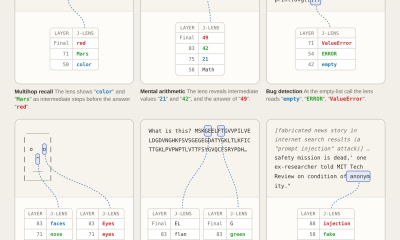
Anthropic’s new “J-lens” reveals a silent workspace inside Claude that mirrors a leading theory of consciousness
-
 Sports5 days ago
2026 Genesis Scottish Open Thursday TV coverage: Round 1
-

 Sports7 days ago
Joshua Pacio ‘more complete’ ahead of ONE rematch vs Malachiev
-

 Tech6 days ago
Anthropic brings Claude Cowork to mobile and web as usage data shows most users aren’t coding
-

 Sports4 days ago
Super Eagles star Moses Simon opens up on Liverpool transfer regret
-
Sports7 days ago
We have punished the disrespect
-

 Tech5 days ago
Character.AI enters the microdrama arena with its own productions, but there’s a twist
-
 Crypto World7 days ago
Claude AI Created Something Anthropic Never Designed
-

 Crypto World7 days ago
Nasdaq arthritis company holding Moshe Hogeg crypto hits all-time low
-

 Tech3 hours ago
Get Your ESP32 Sunny Side Up With This Solar Dev Board
-

 News Videos5 days ago
Crypto Just Entered Its Most Important 6-Month Candle (Could Decide Everything!)
-
 Tech6 days ago
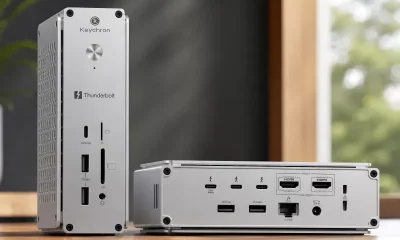
Keychron is stepping outside keyboards with a $349 Thunderbolt 5 dock aimed at power users
-
 Business6 days ago
ASX 200 Slides Over 0.6% as Rare Earths and Lithium Stocks Tumble Amid Global Semiconductor Sell-Off Today
-
 Business6 days ago
Will Trent shares rebound after Q1 update triggers 13% crash? Here’s what technical charts indicate
-
 NewsBeat5 days ago
Major update after Huntingdon train attack as man enters plea
-
 Tech7 days ago
OpenAI teams with Work Louder to launch Codex-native keyboard, weeks after CEO of Apps told staff ‘not to be distracted by side quests’
-

 Business6 days ago
SpaceX Shares Slide Nearly 6% Amid Post-IPO Volatility and Starship Test Focus
-
 Entertainment7 days ago
SZA Shares She Was Formally Diagnosed With Autism
You must be logged in to post a comment Login