

Politics
Politics Home | Getting cybersecurity on track: How to protect rail in the transition to Great British Railways

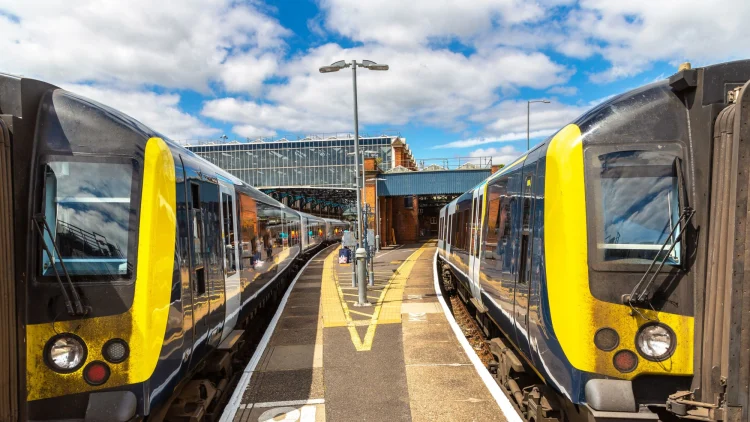
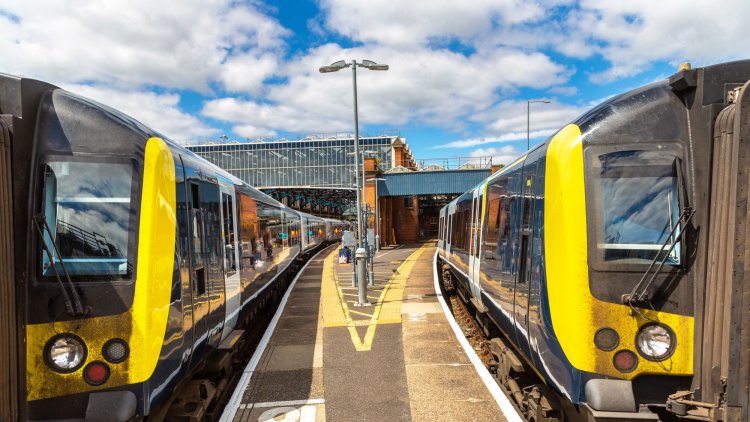
Credit: Adobe
As Britain’s railways move into public control under GBR, digitisation is transforming how the network runs. But with more connected systems comes greater cyber risk. With 1.7 billion passenger journeys a year, government and industry must embed cyber resilience into procurement, skills, incident learning, and cross-sector collaboration from day one.
Britain’s railways are changing more rapidly than at any point in a generation. The creation of Great British Railways (GBR) moves the operation of trains from private train operating companies into the hands of the state as franchises expire.
Earlier this year, we saw the first GBR rolling stock down in Brighton. But behind the red white and blue paint, the operation of trains is changing too, with increasing digitisation of passenger information systems and operational technology.
A modern rail system is a good thing – but it brings new cyber challenges. Around the world, cyberattacks on rail infrastructure have caused serious disruption, such as in Germany, Israel and Denmark. In the UK, we need to guard against weaknesses as we transition to GBR, with over 1.7bn passenger journeys a year. Suddenly, the risk is owned by government, not private companies.
Analysis commissioned by the Department for Science Innovation and Technology found a hypothetical systemic cyber incident on the rail network could result in a total economic cost of approximately £1.8 billion for a week’s period of disruption. Meanwhile, the National Cyber Security Centre (NCSC) continues to report a sharp rise in serious cyber incidents affecting the UK’s essential services and wider economy, underlining a growing risk to critical national infrastructure like rail.
As the network becomes more digital, keeping trains moving safely and reliably increasingly depends on the resilience of the cyber systems that protect them. The transition to GBR presents a series of new challenges from procurement to skills and it is vital that GBR equips itself to be fit for the future. In Fortinet’s recent report on this subject, four key recommendations emerged.
The first is to establish a national cybersecurity incident reporting and learning system for the rail industry. Too often, organisations learn only from incidents that happen within their own network. Yet cyber threats rarely respect organisational boundaries. The NHS’s patient safety reporting framework is a model for how lessons from incidents and near misses can be captured centrally and shared quickly across an entire sector. The transition to GBR presents an opportunity to embed that culture of continuous learning from the outset, helping operators identify systemic vulnerabilities before they become major disruptions.
Second, cybersecurity must become an integral part of procurement rather than an afterthought. In Great Britain, passenger rolling stock typically has a service life of around 30–35 years, with some fleets already over 30 years old, meaning that contractual choices made now will shape the network’s cyber risk profile for a generation. Decisions taken today about rolling stock, signalling systems and operational technology will shape the railway for decades to come. If cybersecurity expertise is absent when those decisions are made, vulnerabilities can become locked into infrastructure with long asset lifecycles that are difficult and expensive to remedy later. Great British Railways offers the chance to make “secure by design” the default principle for procurement, ensuring resilience is built into every new system from the beginning rather than bolted on afterwards.
Third, the sector must address the growing cyber skills challenge. The National Skills Academy for Rail (NSAR) estimates that up to 75,000 workers could be lost to retirement or attrition by 2030, with acute shortages already emerging in areas such as digital signalling, data, and systems engineering. Yet the future railway depends on professionals who understand both operational rail systems and modern cyber risk. Those hybrid skills remain in short supply. A dedicated rail cyber skills taskforce could help coordinate training, attract new talent and ensure the workforce develops alongside the technologies it will be responsible for protecting.
Finally, we need stronger collaboration across critical national infrastructure. The convergence of information technology and operational technology means that cyber resilience can no longer be considered in isolation by individual organisations. Transport operators, infrastructure managers, technology suppliers and Government all have a role to play in identifying emerging threats and sharing best practice. Trusted cybersecurity partners should be a central part of that collaboration. Building on NCSC Information Exchanges, sector specific working groups for major transport modes (rail, aviation, maritime and road) should coordinate cyber risk assessment, set shared resilience standards, run joint exercises and report regularly to ministers on emerging threats and recommended actions. This should, in time, be extended to critical national infrastructure sectors such as energy and health.
The Cyber Security and Resilience Bill, being debated in Parliament today, is an important step forward in setting a modern and updated legal framework, but it is only the start. By pairing clear statutory duties with an industry-wide learning culture, secure-by-design procurement, a skills pipeline that reaches every region and an open door between Government and industry, we can turn GBR into a global benchmark for safe, digital transport.
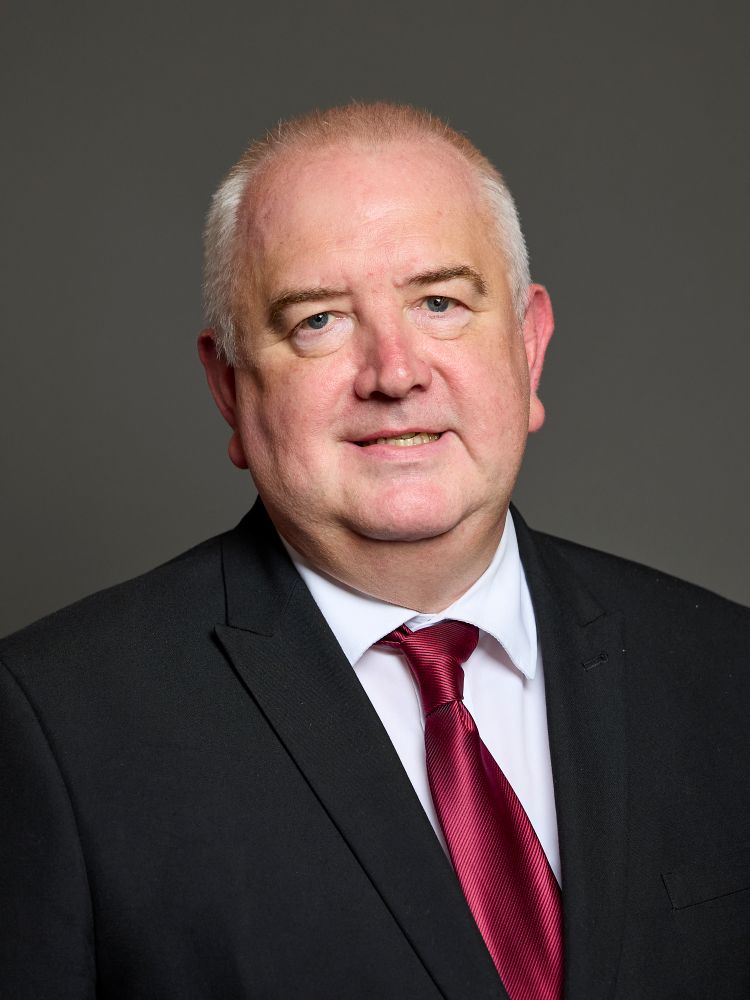
Martin Rhodes, Member of Parliament for Glasgow North.

Chris Parker MBE, Director of Government Strategy at Fortinet.


Right now, there’s an “exceptional” risk of wildfires in parts of the UK (especially the sunnier South of England and the lower parts of the Midlands).
Hot, dry conditions, influenced by the back-to-back heatwaves we’ve experienced so far, are continuing into the longest period of unusually hot weather in years.
That means that something as simple as a glass bottle or embers that travelled on the wind risk setting spaces like your garden aflame, the London Fire Brigade (LFB) said on its site.
A National Fire Chiefs Council spokesperson told the BBC: “When the weather stays hot and dry, it only takes one spark to start a wildfire. What can begin as a small fire can spread incredibly quickly, putting people, homes, wildlife and our countryside at risk.”
One of the ways the LFB recommends reducing this risk is by getting rid of combustible materials (things that can easily catch fire) in your backyard.
This includes keeping your grass below a certain height.
Keep your grass below 7cm during periods of high wildfire risk
“By removing anything flammable, like dry grass or piles of rubbish, you’re removing fuel for any wildfires,” the LFB explained.
Keeping your grass below 7cm can help with that, as can removing dead leaves from areas like your gutters, positioning things like sheds and garden furniture away from your home, and cutting back trees and shrubs near your house.
Ensuring your garden is watered can help, too, but be aware that many parts of the UK are currently facing hosepipe bans.
“If a hosepipe ban is in place, consider using water butts or wastewater from your home to water your garden,” the LFB added.
Where possible, try creating “firebreaks” around your property
This involves clearing a 2-3cm space around every side of your home and garden to reduce the chances of fire spreading.
Anything else? Yes. Compost heaps can be a fire hazard in gardens, so it’s best to keep them away from buildings and structures like sheds.
Keep them moist and use a watering can if you’re worried it’s running dry.
A “good balance” of green (plants, kitchen scraps, natural fibres, and leafy garden waste) and brown (like cardboard and shredded woody prunings) materials helps too, as does turning the heap over often.
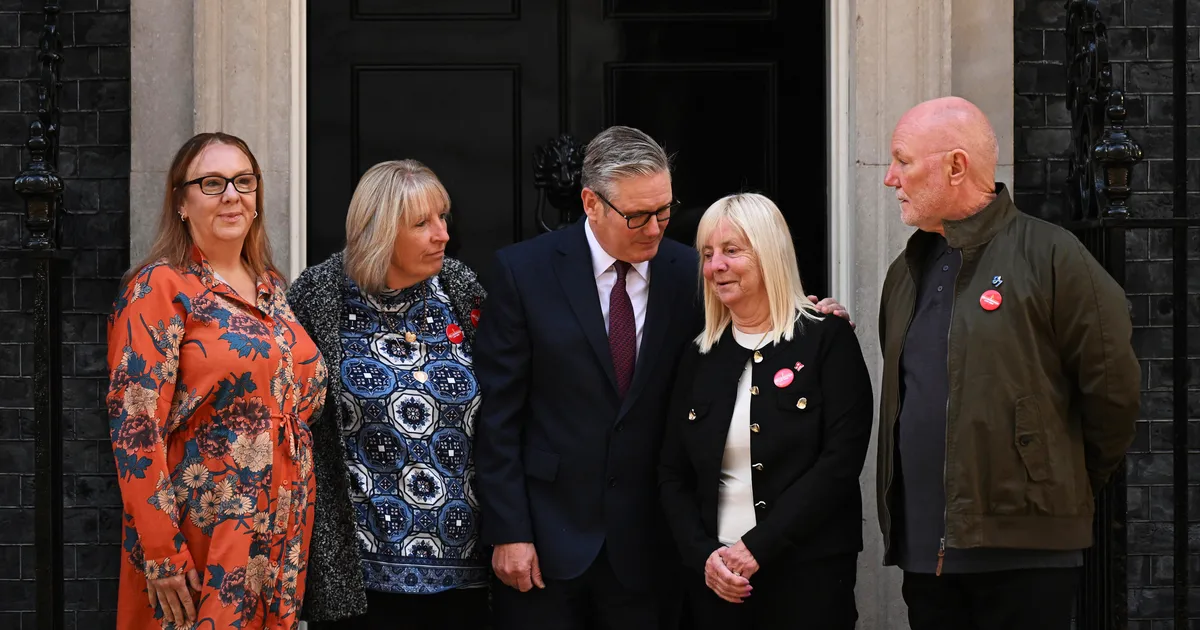
The bill for the Hillsborough Law is set to be approved by MPs in the Commons today more than three decades after the disaster.
The long-awaited legislation is expected to become law by the autumn, marking a major victory for campaigners including incoming prime minister Andy Burnham.
Here’s what you need to know about the law and why it’s so significant.
What Happened At Hillsborough?
Ninety-seven Liverpool fans died as a result of the tragedy at Hillsborough stadium on April 15, 1989, during the FA Cup semi-final between Liverpool and Nottingham Forest.
Hundreds more were injured as overcrowding caused a deadly crush in the Leppings Lane end of the ground.
It remains the UK’s worst sporting disaster in history.
Victims’ families fought for decades to uncover the truth about what caused the tragedy, after Liverpool fans were wrongly blamed for what happened.
However, their efforts were hampered by the police, who blamed the fans and held back evidence of their own failings.
What Is The Hillsborough Law?
Officially known as the Public Office (Accountability) Bill, the Hillsborough Law will make it a legal duty for public officials to tell the truth to inquiries and investigations.
Prime minister Keir Starmer has welcomed the “landmark law” as a tribute to campaigners who spent decades “fighting to get justice for their loved ones”.
“This will make sure nobody else has to suffer like they did. I am proud to bring back this Bill, delivering a law not just for the 97, but a law for everyone,” he said.
Why Has It Taken So Long?
The authorities spent decades unfairly blaming the fans for the incident.
It was 27 years before a court finally ruled in 2016 that those who died were unlawfully killed and that the fans caught in the crush were not responsible.
But campaigners wanted accountability, too.
So far, only one senior police officer in charge at Hillsborough, David Duckenfield, has been fined £6,500 for a health and safety offence.
Meanwhile, a police misconduct investigation run by the Independent Office for Police Conduct and operating since 2012 concluded last December – but ruled no one would be held accountable.
Some of the most prominent campaigners and officers involved have passed away in the 36 years since the disaster without ever seeing justice.
The Major Sticking Point
The original proposals in the Hillsborough Law gave intelligence agencies the right to decide whether to co-operate with public inquiries.
They could opt out of giving evidence if they thought it would pose a major national security risk, a caveat which infuriated campaigners.
Families bereaved by the 2017 Manchester Arena bombing wrote to Starmer in January saying MI5 should not be exempt.
A public inquiry found the intelligence agency had not offered an “accurate picture” about the information it held on the suicide bomber.
It’s thought ministers have now agreed not grant the intelligence services any exemptions in order to get the legislation through.
Why Is It Coming In Now?
Starmer originally promised to introduce the law by the anniversary of the Hillsborough disaster in April 2025.
But further disagreements over how far it would require intelligence services to comply with a proposed legal “duty of candour” on public bodies meant it was withdrawn.
To push it through in the last week of his premiership, Starmer helped to weaken the opt-outs for authorities.
Downing Street’s push to get the legislation over the line at the last minute of Starmer’s time in office will be seen as an effort to shore up his own legacy.
What Does Andy Burnham Think of The Law?
Burnham – who will become prime minister next Monday – will also make his first statement in the Commons since returning to parliament as the Makerfield MP on the legislation.
The incoming prime minister introduced a Hillsborough law in 2017, but it was not picked up by the then-Tory government.
The former Greater Manchester mayor has been an avid supporter of the victims, and joined them in criticising Starmer’s bill for not going far enough.
Burnham welcomed the incoming bill on Monday, writing in the Liverpool Echo: “If an entire city could be ignored for two decades while telling the truth about the deaths of its own people, what other communities have gone unheard? Which voices have been overlooked simply because they lacked power?
“For me, this has always been about changing that. It is why I believe we must continue to redistribute power, strengthen our towns and cities, and build a Britain where every community is treated with equal respect and where, in the face of injustice, nobody walks alone.”
Listen to Commons People, the podcast that makes politics easy. Every week, Kevin Schofield and Kate Nicholson unpack the week’s biggest stories to keep you informed. Join us for straightforward analysis of what’s going on at Westminster.

Tom Holland has admitted he had a bit of a “humbling experience” when he tried to get together with football icon Erling Haaland.
On Monday, the Bafta winner paid a visit to The Tonight Show, where, naturally, talk quickly turned to the World Cup.
“It’s a huge deal for us,” the British actor said, of England qualifying for the semi-finals. “And it really does feel like something is in the air right now. Sometimes in life I just get a feeling, and I have that feeling right now, Jimmy.”
During this year’s World Cup, Norway’s Erling Haaland has become one of the most talked-about players in the world, with host Jimmy Fallon putting Tom on the spot about whether rumours that the Spider-Man actor once slid into the footballer’s DMs were true.

“Yes,” Tom confessed. “And I tell you what, that is the exact type of humbling experience that is important for actors.
“Like, ‘I’ll text him, I’ll take him for dinner’. Not even a response. Not an excuse, not ‘I’m busy tonight, I’m playing football’. Nada.”
Explaining exactly what went down, he continued: “I was at Monaco, I was watching Lewis [Hamilton] race, and I saw [Erling Haaland] in a hospitality suite across from me.
“And I just thought I’d shoot my shot. [So, I] sent him a text. I never imagined I’d talk about it on live television, but here we are!”
When Jimmy asked Tom if the invitation was still open, he responded: “I don’t think he’d have dinner with me after the other day.”
“He’s incredible,” Tom concluded. “He’s an absolute legend.”
Erling previously shared his side of the story during an interview on the Norwegian series A-laget, Norway’s equivalent to The Assembly.
“This is a bit embarrassing, to be completely honest,” Erling said. “We were in Monaco at the Formula 1, and then I got a message. I don’t watch movies much, so I have no idea who people are. There was one asking if we could go out for dinner, but I’d never seen him, so I didn’t bother to answer. I didn’t want to answer an unknown person.”
The Marvel performer is currently gearing up for the release of his new movie The Odyssey, which also features his wife and Spider-Man co-star Zendaya.
Also in the star-studded cast are Anne Hathaway, Lupita Nyong’o, Charlize Theron, Robert Pattinson and Matt Damon, who takes the lead as Tom’s on-screen father, Odysseus.
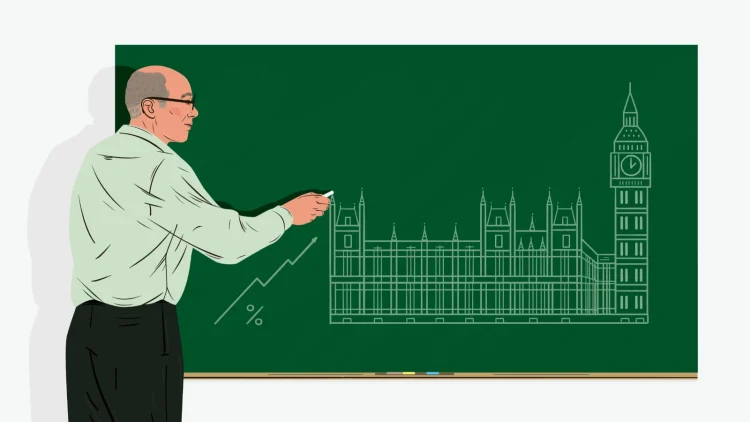
Illustration by Tracy Worrall
4 min read
Lessons in political science. This week: post
The letter the constituent received ended, as they often do, with some polite boilerplate. “Please feel free to contact me with other matters that are of importance to you. I am honored to serve as your representative in the US Congress”.
But then it continued, in a way these letters usually don’t: “I think you’re an asshole.”
Congresswoman Jo Ann Emerson was forced to apologise, saying that she didn’t know how that happened or who was responsible; if she ever found out, she never made it public. But it is a rare MP or staffer who has not wanted to add a similar parting shot occasionally.
It used to be letters: almost five million pieces of post arrived at Westminster in 2005; that had fallen to just over 1.2 million by 2019 and is now below the million mark every year. But email has grown to replace it, which I suspect does little to reduce the asshole coefficient.
Given how resource intensive it is, we know surprisingly little about MP-constituent post. There have been few efforts to follow in the footsteps of Frances Morrell’s 1977 study of postbags or Richard Rawlings’ detailed analysis of MPs’ casework from 1990 – although a fascinating article just published in the Historical Journal has examined some of the existing archival collections of MPs post.
One innovation is what are known as correspondence or audit studies, a very common way to check for bias. You send off a bunch of otherwise identical CVs or letters to companies and you see if those from John get more positive replies than those from Joan, or indeed those from Mohammed. When some academics tried something similar with MPs a few years ago, there was a big row; the Speaker got involved, claiming it might be a contempt of the House.
I had assumed that warning would be the end of such studies of Westminster. No one wants to end up in chokey, just to get an article in The British Journal of Political Science.
Hence my surprise to see a new study is forthcoming. Turns out this new one was carried out before the last row, with the fieldwork undertaken in 2018-19. Its publication in 2026 is a bit of an indictment on academic lead times but should at least stop them having their collars felt.
Even more of a defence is that this time no fakery was involved at all. In a clever methodological innovation, this study recruited students to send letters to MPs. These were real constituents, participating voluntarily, and the study ensured that the messages sent reflected their genuine views. The only difference is that the research study was able to track them.
Given how resource intensive it is, we know surprisingly little about MP-constituent post
The letters were on policy, covering a range of different issues: Brexit, student finance, immigration. The main findings are all null (of one result, the authors say the “estimated coefficient on the constituent-party congruence treatment is non-significant, wrongly signed, and close to zero”, which is a null result in its purest form). There was no difference between the rates of reply, or their content, depending on “constituent congruence”, that is whether the writer agreed with the MP or not. Lest you think this is obvious, US studies find the opposite.
There was similarly no difference between loyalists and rebels on particular issues. Marginality didn’t seem to matter either. This is all, in many ways, actually very positive: constituents are getting equal treatment, whatever their views.
The secondary finding is, to me, more interesting. Holding responses came from 63 per cent of MPs, but a substantive response came from just 46 per cent of those contacted. This was lower than I was expecting. Perhaps the policy-related nature of the questions lowered the extent to which MPs felt a response was required (would casework get a higher response?); perhaps the relatively short nature of the emails made some MPs treat them as campaign group generated? Having just been writing to MPs myself for something else, I’m at least confident the holding replies these days would be close to 100 per cent.
At least no one replied: I think you’re an asshole.
Further reading: K Kowol and R Toye, The Management of British MPs’ Postbags and Politician-Voter Relations in the Democratic Age, The Historical Journal (2026); D Bischof et al, When Legislators Do Not Differentiate: A Field Experiment on British MPs’ Responses to Constituency Policy Queries, British Journal of Political Science (2026)

Alison Hammond has made a rare comment about her relationship with boyfriend David Putman.
The This Morning presenter has been dating the Russian model and massage therapist since 2023, opening up about their romance during an interview with The Mirror.
“I’ve got a lovely man in my life,” she enthused. “It’s just easy. I think that’s when you know you’ve got something special.
“He just sees me for who I am. We choose each other, every day.”
Much has been made in the media of the 22-year age gap between the two of them, but Alison is adamant that this has “nothing to do with anyone else”.
She noted: “People are going to talk. People do. But that’s their business, not mine.”
While she’s clearly loved up, the Bake Off host played down the suggestion that she and David could tie the knot in the future, insisting: “We don’t need to! We’re both cool.”
In 2024, Alison spoke about the age difference between herself and her boyfriend as part of an interview with Good Housekeeping.
“I can see how, on paper, you’d notice the age difference. But honestly, when we see the word ‘toyboy’ written about us, it bears no relation to what we have at all,’ she insisted.
Alison added: “Yes, I’m 22 years older than he is, but if you saw us together, you’d understand. People have said to me: ‘We get it now.’
“He’s so mature and sensible, and I’m so not. And the things he says to me… they’re just so lovely. It’s like a jigsaw; we fit, and it all comes together.”
Before getting together with her current boyfriend, Alison was in a relationship with gardener Ben Hawkins for around two years.
The former Big Brother housemate also has a 21-year-old son, whose father is her ex-fiancé, Noureddine Boufaied.

Andy Serkis has responded to the discourse surrounding the lack of diversity in the Lord Of The Rings movies.
The British actor famously provided the voice and motion-capture performance for Gollum in the Lord Of The Rings films, before reprising the role in the Hobbit trilogy.
He is also directing a new film in the franchise, The Hunt For Gollum, set between the events of The Hobbit and The Lord Of The Rings: The Fellowship Of The Ring.
During a new interview with BBC News, it was pointed out to him just how predominantly white the casts of the previous Lord Of The Rings films have been, while his own Middle Earth film’s confirmed cast so far includes only white actors.

New Line/Kobal/Shutterstock
Asked why he thinks Lord Of The Rings hasn’t embraced a more diverse approach to casting, Andy claimed: “Tolkien himself was influenced a lot by Norse mythology, there’s a lot of that feeling.”
“The Shire feels very, very much like a very, a very white, you know…” he continued, before trailing off.
He noted that the film’s central characters are “not very concerned about what goes on beyond the borders of The Shire, but they know they don’t want people coming in”.
Acknowledging past “criticisms” of this, Andy added: “This particular film is somewhat acknowledging that.
“But we don’t think we will be doing a politically correct just-casting-for-the sake-of-casting-and-ticking-boxes version of the film. So, it’s only where relevant basically.”

One Lord Of The Rings adaptation that has been more diverse in its casting is the Amazon Prime Video prequel series The Rings Of Power.
Cast member Sir Lenny Henry told The Times in 2022: “That’s to do with it being the 21st century; people want to see themselves.”
He stated: “Of course, if you go back, there’s going to be that thing that prevails because the books don’t say… although some of the characters are described as hard-skinned and darker in complexion… but that was then, this is now and we’re telling the story now.”

Carol Vorderman was rushed to hospital earlier this year after a freak accident near her home left her unconscious.
Speaking on Instagram, the former Countdown host recalled: “I’ve got a bit of a story to tell you about my concussion, which might also explain why I was a bit offline in June.
“Right at the very end of May, I was walking just outside my house on a public footpath and I tripped over a tree root, which I didn’t see. And I went smash [on the top of my head] on the tarmac path. And I was unconscious.
“I can’t remember what happened then, but I do know that an ambulance came, and I was taken to the Bristol Royal Infirmary.”
Carol explained that she was “discharged the next day”, but when she began experiencing “massive vomiting” and “all the bad signs”, she went “straight back to hospital” where she underwent more tests.
“I had the biggest black eye, all, bruises all down my face for three or four weeks,” she continued, noting that this is why she wasn’t on camera much in June, before adding that the experience also left her with severe dizziness.
“So, I felt as though I was kind of walking on a moving ship, sort of knocking into the wall a little bit,” she recalled. “And when I was in bed, when I put my head back on the pillow, it was like, ‘woah, the room’s spinning’. So, I thought, ‘I’ve got to sort this’.”
Carol went on to share that visiting a specialist who used what’s known as the Epley technique helped her overcome this condition.
“I am not a doctor, I am not advising people about this,” she pointed out. “I’m just telling you what happened to me. I’ve had three sessions with her and I am now discharged, and I couldn’t be happier.”
The Epley technique is traditionally used to treat vertigo, and consists of head and body movements intended to use gravity to reassemble inner ear crystals.
Elsewhere in the video, she added: “By the way, I also know that they were playing The Final Countdown in the ambulance on the way. That’s another story, but it did make me laugh.”
Carol first rose to fame in the early 80s as one of the presenters on Countdown, alongside Richard Whiteley and, later, Des Lynam and Des O’Connor.
Outside of Countdown, she has been part of the Loose Women panel, fronted the Pride Of Britain Awards and competed on both Strictly Come Dancing and I’m A Celebrity, returning for the latter’s first all-stars series in 2023.
Politics
The House | Inside Burnham’s ‘No 10 North’ Plans: “It’s Not Just About Creating A Second Westminster”
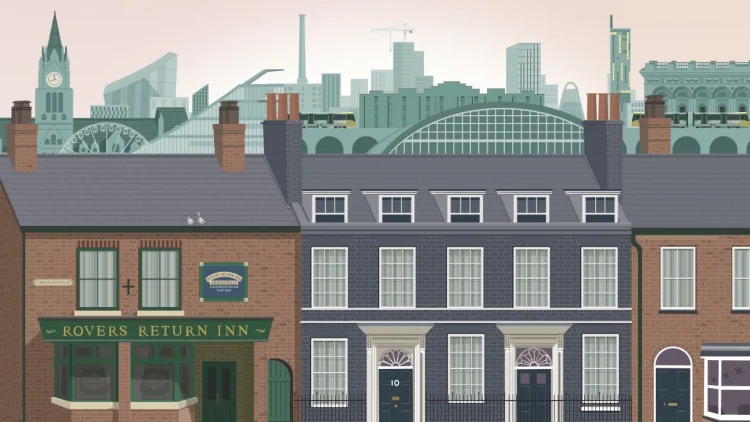

Illustration by Tracy Worrall

21 min read
Andy Burnham has pledged to create a ‘No 10 North’ in Manchester that would serve as the ‘nerve centre of a rewired Britain’. Will it work? How? Sienna Rodgers reports
Back in 2015, Andy Burnham was on his second attempt at winning the Labour leadership. Although ruthlessly mocked for overemphasising his outsider status as a Northerner, he was the frontrunner at first and Labour’s biggest donor, Unite, was ready to endorse him.
If you want our backing, the union said, you’ve got it – you just need to call us on Monday morning. But Burnham was reluctant to accept their funding. So, Monday came and went. Tuesday came and went, too. The “change candidate” released a statement to make clear he would refuse to be beholden to any one section of the movement. Unite turned to Jeremy Corbyn instead, and the course of history was forever changed.
On his third time trying, Burnham has no opponents – and he has not just stuck with his northern branding but put it at the centre of his forthcoming project as the sole Labour candidate to be our next prime minister.
The King of the North has not yet stepped over the threshold of 10 Downing Street, but already he is clear that fundamental to his government will be bringing power to – where else? – the North, made tangible with a second prime minister’s office in Manchester. “True to the motto of this city,” he declared there, in his first vision-setting speech as prime minister-in-waiting, “I am going to do things differently.”
While Burnham accepts the need to be in London when Parliament is sitting, his team say he wants to spend as little time as possible “closed off” behind that famous high-gloss black door. He hopes instead to show the country that decision-making does not only happen in Westminster – and he fully expects to be in the new ‘No 10 North’ at least one day a week.
The incoming prime minister has promised that this new office in Manchester will act as “the nerve-centre of a rewired Britain”. The plan is not to duplicate the work of London’s No 10 but to task No 10 North specifically with driving Burnham’s “devolution and growth agenda”.
Caroline Simpson, the Greater Manchester Combined Authority’s chief executive who is credited with helping him deliver fast growth in the region, will lead that work and be based there as his deputy chief of staff, while former Blairite minister James Purnell will run No 10 South.
Burnham would like to see No 10 North located at a government hub already under construction, the Manchester Digital Campus in Ancoats, but that is not due to be completed until 2032. Other sites in Greater Manchester fit the bill and interim arrangements are being made to get the new office up and running “as quickly as possible”, The House understands.
One Labour source says part of the thinking behind No 10 North is that, with lobby hacks based in Westminster, rooting part of the operation elsewhere could help limit leaks. Burnham’s team declines to address the claim specifically but stresses that unauthorised briefing and leaking is not an acceptable part of the culture – regardless of where staff might be based – and he is determined to stamp it out.
Some Labour MPs are freely criticising the No 10 North plan, of course. Hardcore Starmerites are particularly dismissive. “Yawn,” says one, who admits they are looking forward to life as a rebellious backbench MP under Burnham. “It sounds performative and seems like a gimmick.” Scottish MPs, meanwhile, like to point out that Burnham should try acknowledging “the real North”. (Plaid Cymru’s Rhun ap Iorwerth, First Minister of Wales, similarly said the proposal “means very little to the people of Wales”.)
Others are more welcoming. “Moving media to Manchester did make a difference for my constituents – the middle-class ones, anyway,” says a Labour MP with a northern seat, citing the BBC’s mass move to Salford as a positive example. “I’m interested to see how it would work in practice, but after years of the North being forgotten and left behind, I welcome anything that puts us firmly on the map and in the minds of No 10,” says another.
Many point out that it is at least evidence that Burnham has a story to tell the country about its future – something they argue Keir Starmer sorely lacked. There are concerns, however, about whether the move is purely symbolic. “What does it actually mean in practice? It will only be meaningful to my constituents if it leads to something real,” says a different northern backbencher.
“He will spend time out of London in a way that other prime ministers don’t, but this idea that it’s two days a week or whatever – it’s almost impossible to see how that will work”
Theo Bertram, director of the Social Market Foundation (SMF) think tank, reckons No 10 North’s symbolic value should not be understated. “That you could go and work in No 10, at the very top of government, without having to move to London, that is a positive symbol – even if that’s all it is,” he says. “The whole circus of Westminster will gear itself more to Manchester. To some degree, it already is.”
He adds: “What makes it not gimmicky is that this is pretty consistent with both his economic narrative and his political message, which are all about place.”
And while some have accused Burnham of unwisely moving a chunk of government to Manchester simply because that is where his family lives and is keen to stay, Bertram does not see this as a problem.
“We expect prime ministers to just up sticks, move their whole family – no matter what stage they’re at with their schooling – down to London and into this weird building that’s not really suitable to be a home, let alone the office of a head of state.
“Actually, if Andy Burnham can lead a more ‘normal life’ by still keeping some connection to where he feels at home, where his family might be able to stay, I think all of those things would be positive.”
Crucially, No 10 North – if done well – could allow the next prime minister to make clear his priorities in government and drive them through more effectively than he otherwise might have.
“If you go back to some of the things that Blair did with his policy unit,” explains Bertram, who advised both Tony Blair and Gordon Brown in No 10, “it was really clear that this wasn’t coming from a secretary of state – it was coming from the PM himself. The person who was working on it – say, Andrew Adonis, working on academy schools – what you knew is, this is the thing that the prime minister cares about and is driving.”
Whether No 10 North staff use email addresses ending in “no10.gov.uk” is one of those details that will be key to determining whether their work is taken seriously and prioritised, a Labour source argues.
Luke Sullivan, who was Starmer’s political director in opposition and previously worked as a spad to the chief whip towards the end of the New Labour government, makes a similar point.
“The most important words in Whitehall still are: ‘The prime minister wants’, or at least should be,” he says. He describes complaints frequently heard during the Starmer era about the obstructive nature of civil servants as “self-defeating” and “not reflective of what’s going on”.
“Where you’ve got really clear political leadership and ministerial direction,” Sullivan says, citing Ed Miliband in Desnz and Shabana Mahmood at the Home Office as examples, “those secretaries of state and those departments were seen to be delivering because they had clear guidance”.
Like Bertram, Sullivan thinks PMs being rooted in their seats is no bad thing. “Gordon and Tony spent significant chunks of time in their constituencies or in their constituency homes, and I think it made them better politicians for it,” he says.
“The geography is less important than the structures and clarity over people’s roles… I think that was probably one of those things under Keir where I’m not sure that was always clear – who had responsibility for what.”
Dave Penman, general secretary of the FDA trade union for civil servants, tells The House he appreciates the symbolic value of No 10 North and its contribution to Burnham’s vision, but raises concerns about the practicalities involved.
“Access to the prime minister – officials fight over it, politicians fight over it, because that’s really important to how you make government work. If you’re on a train or in the wrong location, or there’s some people there but not here, it’s just not going to work,” the union chief warns.
“Think of the amount of time you spend travelling, the demands on a prime minister, the need to be in the room with the prime minister… Him looking people in the eye is how things will actually happen.” Putting limits on this time “because that conversation is had with someone who’s supposed to be in Manchester when they’re in London, or London when they’re in Manchester”, he says, “will cause restrictions”.
“He will spend time out of London in a way that other prime ministers don’t, but this idea that it’s two days a week or whatever – it’s almost impossible to see how that will work, and it’s probably not what he means. I think he just means to demonstrate and show leadership.”
Penman is especially anxious about the impact on civil servants. “It’s a one-way ticket when you move out of London. It’s almost impossible to go back if you move permanently,” he explains, echoing a long-established principle based on the inaccessibility of the capital’s housing market.
“People have got to feel there’s a career for them – it’s not a one-move thing. There’s a potential for that around the M62 corridor, because you’ve got a lot of big conurbations… But it’s got to be thought through.”
He also flags that recruitment will need careful consideration: “If it’s 500 people [working in No 10 North], chances are there aren’t 500 people with the right experience already in and around Manchester.”
It has been suggested that Burnham could staff No 10 North with people already working in combined authorities around the country, who will be experienced in the relevant areas. “You can understand that’s an expertise you want,” says Penman reacting to the idea, but he asks: “Are they going to leave what they’re doing just now? Do they understand how you get government to work?”
Penman is keen not to be seen as too critical, saying: “You can get through all of this – it’s all doable.” But he cautions that Burnham must offer more clarity on the detail, adding: “He’s saying, ‘I want to do things differently.’ That doesn’t mean he’s worked any of that stuff out… You can’t just be on the vision stuff when you become prime minister. You’re a midterm prime minister as well – you’ve not got a lot of time here.”
Asked whether he is hopeful that Burnham will not talk negatively of the Civil Service, after Starmer declared in 2024 that “too many people in Whitehall are comfortable in the tepid bath of managed decline”, Penman warns Burnham: “You can’t have a situation where Whitehall becomes a term of abuse, and I think that’s the danger for him.”
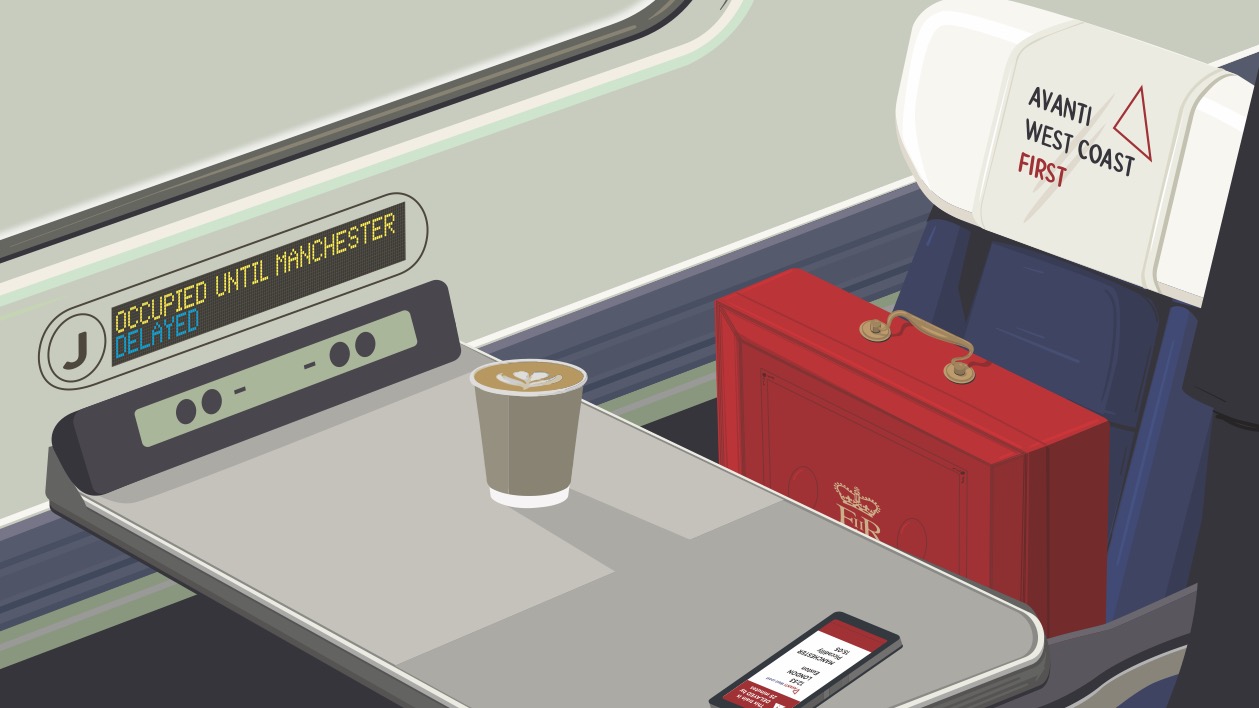
Burnham’s team will not comment on security concerns over the plan to have him working in No 10 North every week. While the train would offer the best optics, it is thought that taking it at such regular times would present a risk. “The prime minister can’t just get on the 3.05 from Euston,” as Penman puts it.
Bertram suggests they would use a variety of transport methods and points out, referencing Blair’s constituency journey, “You’d be surprised how fast you can get from Sedgefield to London if you’ve got a police convoy the whole way.” They tend to drive far over the speed limit, he explains, as that is a sure way of telling whether any other drivers around are hostile.
Then there is the question of whether, as some suggest, the devolution brief would have to be removed from the Ministry of Housing, Communities and Local Government (MHCLG) where it currently lies, to avoid duplication of work. There is no clarity from Burnham’s camp so far on this point.
The relationship between No 10 North and MHCLG will need to be figured out. Hannah Keenan, associate director at the Institute for Government (IfG), says the two could work well together.
“What you have is a bit of the centre that’s holding you to account as a department, but also that’s helping you as MHCLG, who are right behind this devolution agenda, to bash heads around Whitehall: ‘Actually, no DWP, you do have to get on board with this thing that is happening over here, or we’re going to find a way to manage this bit of tension in that relationship,’” she says.
“It is fine and good for No 10 to be big enough to actually support the prime minister’s interest in his top priority, which sounds like it’s devolution,” Keenan adds, comparing this definition to the Starmer era’s ‘mission-led government’, which became less distinct over time. “The clarity of purpose that might have existed at the start of the Starmer premiership dissipated over the course of it,” she says.
In agreement with most of Westminster, Keenan believes “No 10 isn’t working” at present. The IfG strongly advocates reform.
“There are lots of different things you could do to try and get No 10 to work,” she says. “Taking out a bit of it, away from the incredibly fast hustle and daily disruption in Whitehall, putting it in Manchester, for example, and saying, ‘This is exactly what I want you to deliver, and I’m giving you all of my political power to do this thing’, it might work.
“He has to be really clear about why he’s doing it and what those people are doing, and he has to avoid any sort of duplication between No 10 North and No 10 South.”
She explains: “The worst version of this is having special advisers or officials in No 10 North and in 10 Downing Street all claiming to speak for the prime minister and not talking to each other. That is a recipe for disaster.”
“It’s all changed so much since Brexit, and Andy and James are going to have to get their heads around that”
Emphasising the importance of the ‘No 10’ name, as others do, Keenan warns: “In government, if it ends up getting called anything other than ‘No 10’, bad things will happen. The number of times that you would say, ‘No 10 have asked for this’, and if the response to that is, ‘No 10 or No 10 North?’, I worry that starts to get into a slightly dangerous, ‘Who actually has authority in that system?’”
She believes that the risk of second campuses in other departments is that they become a backwater, but here the primary danger is that it has “overlapping power”.
That is not so much of a concern when applied to the Treasury, however, as she acknowledges: “At the moment, there’s a big vacuum in terms of strategic priority setting around the prime minister, and the Treasury comes in and fills that.” Labour MPs who would like to see Burnham abolish the Treasury altogether (along with the Office for Budget Responsibility) say they hope a No 10 North will at least disempower it.
The IfG supports breaking up the Cabinet Office and creating a ‘Department of the Prime Minister and Cabinet’.
“You can stop using No 10 the building as No 10 the office, because that doesn’t work,” Keenan argues, as do many others. “It has been horribly underpowered for too long. Now, this isn’t going to fix it… You need to do much more fundamental reforms to the centre of government.
“You still have an enormous Cabinet Office that is quite amorphous and too large and unfocused and doesn’t really support the prime minister properly – what are you doing with that? But it is fine and good to bolster the power of No 10.”
Reform will not be without its significant challenges. A former senior civil servant highlights that while Burnham may prove to be a “lucky general”, benefiting from tough policy decisions taken by his predecessor, he and his chief of staff will have to adapt quickly to a very different machine from the one they inhabited during their last period in government. “It’s all changed so much since Brexit, and Andy and James are going to have to get their heads around that.”
Notably, Purnell was a member of the expert advisory group that helped guide a paper on how a new Downing Street department would work, published by the Future Governance Forum (FGF) in November last year.
Its proposal for a streamlined ‘Executive Office for the Prime Minister’ would see No 10 configured around four functions: a politics and strategy group; a policy and delivery group; a diplomacy and security group; and a private office. A communications team and political office would also operate across all four.
An Honest Day, the paper by (now outgoing) Labour Growth Group director Mark McVitie earlier this year, similarly recommended the creation of a ‘Department of the Prime Minister’ that would absorb the “useful functions” of the Cabinet Office, leaving No 10 to behave “as a centre of power within the wider department, much like the West Wing within the White House”.
So, could Burnham and Purnell succeed where Dominic Cummings and Morgan McSweeney failed? At a minimum, No 10 North answers FGF’s calls for a greater clarity of purpose and perhaps also clarity of roles and responsibilities. The House understands the Burnham operation is likely to go further than that.
A well-placed source describes as “nailed on” that it will implement at least some of the FGF’s recommendations on a new structure for No 10. The politics and strategy group is the function seen as best-suited to being based out of No 10 North. “I think they want to move a lot of senior people there. It’s real,” the source says.
Those who are cynical about No 10 North – and worried about talent problems – point to the 2007 relocation of Office for National Statistics (ONS) headquarters to Newport, considered by many to be a disaster. An independent review following the move away from London concluded that it had made the recognised national statistical institute’s output worse, due to a significant loss of experienced staff. About 90 per cent of London-based ONS staff chose to leave rather than relocate.
Optimists say the merits of other government hubs offer a better clue to No 10 North’s potential.
The Treasury’s Darlington Economic Campus, the DEC, has benefited from the presence of second permanent secretary Beth Russell. It comprises seven different departments and has open-plan floors, allowing civil servants from all of them to work beside each other, breaking down silos.
The atmosphere is said to be a positive one. Staff are motivated and proud to work there, particularly as equivalent jobs with similar prestige are not easy to find in the area – unlike in London. Above all, it is a modern, functional building, complete with air conditioning. The DEC is also just a short walk from the train station, enabling it to pull in talent from across multiple regions.
Conservative MP James Wild recently highlighted that Chancellor Rachel Reeves has worked from the DEC only twice in the last year, and junior ministers just once each. But others point out that many meetings are held by video call anyway, as it’s more efficient and there aren’t enough big meeting spaces in London.
A former senior No 10 figure calls the No 10 North idea “deeply impractical” because, they say, “No 10 only works with the PM physically present”. The view is shared by others quoted in this piece. One source even says McSweeney’s tendency to work from home on Fridays sometimes slowed down No 10.
But there is also the perspective expressed by IfG’s Keenan: that assuming everyone must be in the same building represents “quite an archaic way of thinking”.
“In some ways, the prime minister not being in Manchester and allowing that bit of No 10 space every week to do some of the thinking and the work that isn’t sucked into the daily crisis comms machine that 10 Downing Street can be is no bad thing,” she says.
“We have a capital city, and our capital city is London, and our ministers and our Parliament exist here, and stuff is going to happen here. That doesn’t mean you can’t ship other bits outside of London, but it’s just being honest about what that looks like, and what the purpose of each bit is.”
No 10 North has given rise to bigger questions over Burnham’s agenda. Devolution has been celebrated across both Labour and the Conservatives for years, yet not all Labour MPs are convinced.
Labour MPs who do not represent constituencies that currently sit in a mayoralty, and especially those in areas with no obvious path to mayoralties, are concerned that their locals will be disadvantaged by Burnham’s plans.
The model of devolution also matters. In a piece for The House, Labour MP Alex Mayer urges Burnham to “look almost anywhere but Greater Manchester” for inspiration. Her area – Bedfordshire, Luton and Milton Keynes – is evenly divided between parties, making disagreement the norm and consensus difficult. The London model, she argues, would be preferable for the next stage of devolution.
There are also those who doubt that Burnham’s priorities of promoting devolution and addressing inequality are, in fact, symbiotic. One Labour MP with a northern seat says they wonder whether his push for devolution could actually entrench inequalities, by giving revenue-raising powers to areas where this capability will be naturally limited by existing deprivation.
Even some in favour of a growth-first approach believe that devolution will work as an incentive structure for places around the country to improve, but means there will be winners and losers. The argument for devolution works best, they say, when framed as a Brexit-style drive for sovereignty and power – not fixing inequality.
Mirte Boot, principal research fellow and interim head at IPPR North, which has offices in Manchester and is seen as close to Burnham, has a different take.
“Right now, if you’re a mayor and you invest in a business park, and that creates higher wages in your area, or higher business rate income, that nearly all goes back to the Treasury. So, you don’t necessarily have an incentive or a reward for investing in growth,” she says.
Boot goes on to acknowledge: “Fiscal devolution does benefit those areas able to create growth. To ensure no area is left behind, what you then need is some kind of mechanism, like an equalisation mechanism, where after you’ve given away tax powers, you do some redistribution.
“Every local area is able to make those investments for growth, then there is a redistribution after a couple of years to make sure that the areas that are left behind aren’t left behind too far. Thirty countries already do this, and we can take examples from Germany and Denmark for how it’s done.”
Like Burnham, she argues that centralisation is at “the core of a lot of our problems in this country”, and highlights that of every £1 we pay in tax, 96p goes straight to the Treasury.
“It’s not just about creating a second Westminster here,” Boot says of No 10 North. “This is about working really closely with local leaders all around the country, but especially here in the North, in a different way.
“I think it will change the way that politics is done, and it may be quite uncomfortable for those used to having everything so concentrated, but it could lead to different decisions and a different style of governing that is probably more connected with the rest of the country.”
As for the potential problems of overlap with other departments, she adds: “Every department is going to have to give up some power. That is the reality of it, with devolution. Not just MHCLG, but also DfE, DBT and others – all of them will have to think about how to make that work, and we will have to overcome resistance to that.”
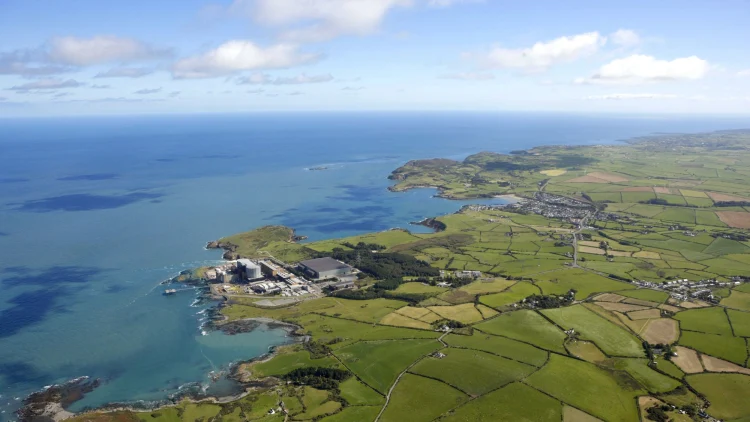

Wylfa on Anglesey selected as the site for the UK’s first small modular reactor nuclear plant
With growing demand and an increased need for energy security, nuclear power is set to play a vital role in the nation’s future energy mix. Total Politics sat down with Simon Roddy, CEO of Great British Energy – Nuclear, to learn what the nuclear renaissance means for Britain’s economic, energy and industrial future
“I think we are at a real moment,” Simon Roddy, the new CEO of Great British Energy – Nuclear (GBE-N), tells us early on in his sit-down conversation with Total Politics. “The need for secure, reliable and clean energy has never been greater. This is a once-in-a-generation opportunity.”

This conviction was strong enough to persuade Roddy to leave a successful career in the private sector to head up GBE-N, taking on one of the biggest infrastructure challenges in Britain. It is a challenge that he believes the nation is ready to meet. With electricity demand increasing and energy security at the centre of political debate, Roddy says the question is no longer whether we embrace nuclear. Instead, it is how we successfully deliver it.
That is where GBE-N comes in. Created less than three years ago, the organisation has already achieved a series of important milestones, including the Small Modular Reactor (SMR) competition, the appointment of Rolls-Royce SMR as a technology partner, and plans in place for the deployment of the first SMRs at Wylfa on Anglesey.
Roddy is aware that he has stepped into an industry with a long and storied history. Britain was one of the pioneers of civil nuclear power. He told us that level of embedded expertise is a major national asset. “I am extremely conscious of the heritage, and I approach it with enormous enthusiasm, but also a great deal of humility,” he says. “I look at the experience, skills and expertise that made nuclear what it was in the UK. That capability is still there. That commitment is still there. That hunger to put nuclear back at the heart of the system is still there.”
That blend of heritage and opportunity is what motivated Roddy to make the move into nuclear after three decades of work in the energy sector. Throughout our conversation, he remains clear-sighted about the primary task ahead of him.
The power station might be in Wylfa, but the capability to design it, engineer it, and build it comes from all over the UK
“Our mission over the coming days, weeks, months, and years is to get Wylfa right,” he states bluntly. “That is what we will be remembered for.”
For Roddy, the significance of the Anglesey project extends far beyond the construction of a new power station. It is also about demonstrating that Britain can once again deliver major infrastructure projects at pace and scale.
“Yes, it is a power station,” he reminds us, “But it is also a reset of nuclear in the UK. It is putting nuclear back at the heart of our energy system.”
Roddy points out that the lessons learned at Wylfa will shape what comes next. One of the attractions of SMRs, he tells us, is the potential to move away from one-off projects and pioneer a repeatable model that can be deployed at pace across the country.
“The whole concept of replication and of improvement through standardisation and therefore the ability to deploy at scale is at the heart of SMR,” Roddy explains. “The modular concept is transformational.”
Having spent a great deal of time at the Anglesey site since taking up the role, Roddy says he has been struck by the level of local enthusiasm. However, he highlights that the impact of work on Wylfa will be felt far beyond Anglesey.
“The power station might be in Wylfa, but the capability to design it, engineer it, and build it comes from all over the UK,” Roddy tells us. “This is a national mission and a national endeavour.”
Roddy points out GBE-N is on track to meet its ambition for 70 per cent of GBE-N contracts to be awarded to UK companies. But the GBE-N Chief Executive believes that success is about more than jobs, investment, or a single power station. It is about creating the stable energy foundation that underpins our entire way of life.
Trust, he tells us, will ultimately determine whether that generational opportunity is realised.
“Trust plays a critical role,” he says. “Whether that’s with residents, our neighbours, those who live on Anglesey, the different regulatory agencies, the supply chain, or the wider public.”
That emphasis on trust runs through Roddy’s approach to leadership. It is also closely tied to the culture he wants to build inside GBE-N to drive its ambition to innovate to benefit the nation.
“The most successful organisations are those that have a culture that helps identify issues early and have that supporting environment to address the challenges together,” he says. “That is the culture we want.”
The ability to overcome challenges will be vital if GBE-N is to succeed. Major infrastructure projects inevitably encounter difficulties. What distinguishes the best organisations, Roddy argues, is the ability to respond when those moments arise.
“Any project of this size and scale will have bumps,” he points out. “The challenge is how you work together, how you build the coalition to avoid them or manage them in the best possible way.”
He believes that the level of alignment already emerging across government, regulators, and industry makes GBE-N well-placed to achieve that goal.
“The support from government and from regulators has been very strong,” he says. “There is an absolute focus and commitment on how we actually work together to move forward safely and at pace. There is no trade-off. We can do them both.”
For Roddy, Wylfa is the place where Britain’s nuclear heritage and future ambitions will initially come together. Partners are now in place. The expertise and technology already exist. The challenge now is one of delivery.
The prize on offer is much greater than a single project. It is the opportunity to establish a new model for nuclear deployment, unlock future sites, and put nuclear back at the centre of the nation’s energy future.

Choosing the wrong scaffold tower doesn’t just slow a job down. It creates genuine safety risks, wastes budget, and can put a project in breach of the Work at Height Regulations 2005. Construction sites vary enormously in floor space, ceiling height, and the kind of access required. The catch is that not every tower suits every environment, so selecting without proper thought tends to cost more in the long run than taking a few minutes to get it right. Stable platforms. Appropriate sizing. Load capacity that matches the task. These matter.
So here are five types of scaffold tower that work well across most construction environments, from groundwork and internal fit-out through to external façade work.
Aluminium Scaffold Towers
Aluminum towers are the default choice for many construction and maintenance projects in the UK, and with good reason. They are light, strong, and quicker to assemble than older steel alternatives. For jobs where workers need to move access platforms around a site, the lower weight of aluminum can make day-to-day work much easier. For example, Lakeside Hire, HSS Hire, and Speedy Hire are useful options for contractors looking for aluminum scaffold towers in different heights and platform sizes, making it easier to choose a tower that fits the task instead of settling for the closest available option.
PASMA guidelines apply to all aluminum tower use. Workers should be properly trained, ground conditions must be checked, and outriggers or stabilizers should be fitted where the height-to-base ratio requires them. These steps are not optional on a safe worksite. Because aluminum towers can be hired for short periods, you are not tied to long-term costs for access equipment that may only be needed during one phase of the project. That flexibility helps keep budgets sensible without compromising on quality or safety.
Stairway Scaffold Towers
A stairway tower includes an integral staircase rather than relying on a ladder to access upper platforms. This matters more than it might seem. Carrying tools and materials up a standard ladder access tower is awkward, slower, and adds fatigue across a long working day. Stairway towers eliminate that problem. They work particularly well for longer tasks where operatives spend extended time working at height, internal ceiling installation, ductwork runs, and prolonged plastering on high walls.
The stairway design typically results in a wider base footprint than a standard single-width tower. That can limit their use in narrow corridors or tight plant rooms. Open construction floors or external elevations with adequate space? Excellent fit. Some configurations allow the staircase to be positioned on either side of the tower, which helps adapt to site constraints. For projects with strict manual handling policies, stairway towers are often the right specification.
Narrow-O (Camlock) Scaffold Towers
Narrow-O towers, sometimes called Camlock towers after the proprietary locking system many manufacturers use, are designed for restricted-access situations. The platform width is smaller than a standard double-width tower’s, which makes it practical in corridor work, between machinery, or in spaces where a full-width tower simply won’t fit. Construction projects that include mechanical and electrical installation in tight plant rooms or stairwells tend to specify this type frequently.
Don’t mistake the narrow footprint for weakness. Properly stabilized with outriggers, a Narrow-O tower is stable enough for most light-duty tasks at relevant working heights. The load-bearing capacity is lower than that of a full-width counterpart, so you’ll want to check that tools and operatives together don’t exceed the platform’s rated safe working load. Manufacturers generally specify this clearly, and any reputable hire supplier will confirm the limits before dispatch. This type of tower covers a wide range of internal construction tasks without requiring significant space overhead.
Folding Low-Level Platforms
Not all the best scaffold tower choices for construction projects involve working at significant heights. A large proportion of construction tasks sit in the 1 to 3 meter working range: installing partition walls, fitting light fittings, taping and jointing plasterboard at ceiling level, or accessing elevated pipework. Folding low-level platforms, podium steps, or folding work platforms handle these jobs well. They set up in seconds. They fold flat for storage. And they don’t demand the assembly time of a full tower system.
Safety standards for low-level platforms have tightened in recent years. BS EN 131 ladder standards and the PASMA low-level access guidance both apply here. One distinct advantage of a folding platform over a stepladder is the guardrail; operatives can work with both hands free and don’t risk overreaching. Overreaching from an unsupported ladder is one of the most common causes of falls from height on construction sites, so removing that risk for lower-level tasks is genuinely worthwhile.
Double-Width Scaffold Towers
A double-width tower provides the largest working platform of the standard tower range. The extra platform area lets operatives work side by side, store materials at height, and reduce the number of trips to ground level. For external brickwork, window installation on multi-storey projects, or any task where two tradespeople need to work simultaneously, the double-width configuration is a straightforward choice. The wider base also improves stability at greater working heights, which reduces the frequency with which stabilizers need repositioning as work progresses along an elevation.
And because the platform is larger, it can accommodate more equipment at any one time. Brick. Mortar. Fixings. Power tools. All of it can sit on the platform together, which keeps the workflow moving. The trade-off is weight and assembly time. Double-width towers are heavier to move and take longer to put together and dismantle. On long-duration projects, that’s rarely a problem. For short-duration work where the tower needs to shift position multiple times a day, you might want to consider whether a narrower configuration suits the rhythm of the job better.
Conclusion
The best scaffold tower choices for construction projects depend on three things: the working height required, the space available on site, and the nature of the task at hand. Aluminum standard towers handle the majority of construction site requirements well, but stairway towers, narrow configurations, low-level platforms, and double-width options each solve specific problems that a single tower type can’t address. Match the specification to the job; check the load ratings; make sure everyone who assembles or uses the tower has the relevant training. Getting those details right keeps work at height safe and keeps projects moving on schedule.
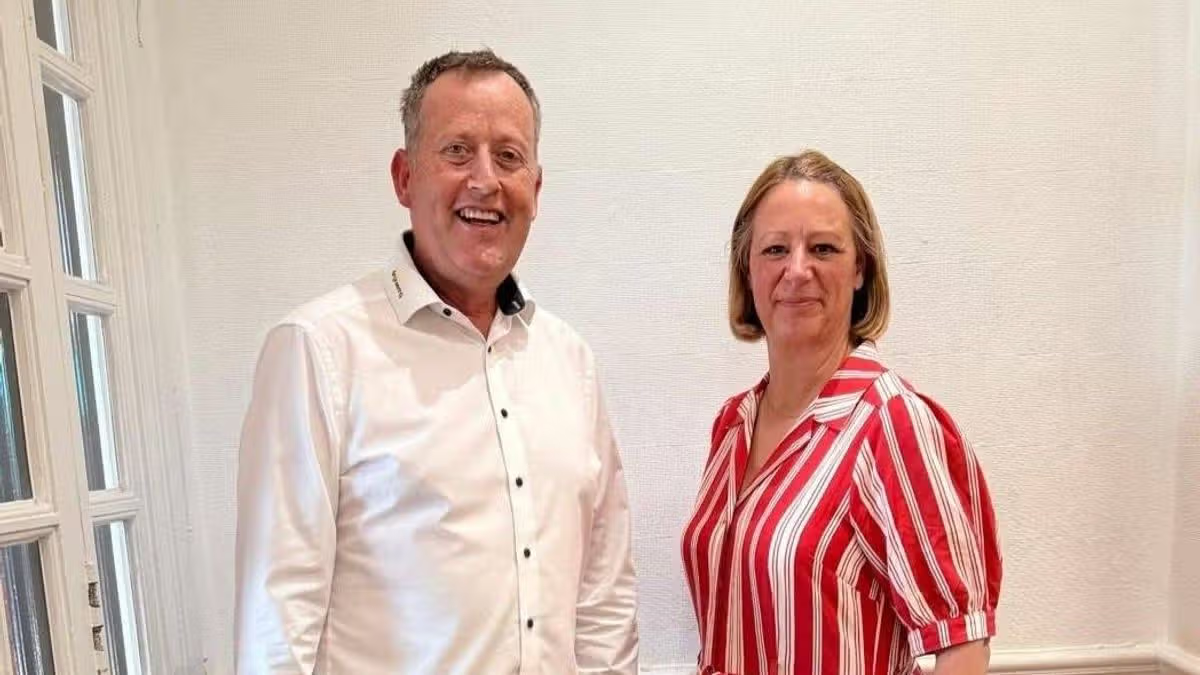
Somerset company used by royal family rescued from administration
Crystal Intelligence launches Ask Crystal, the AI analyst behind every blockchain judgment

How To Fireproof Your Garden In A Heatwave


-

 Fashion5 days ago
Loro Piana Fall 2026 Enters Houston’s Art Scene
-

 Fashion3 days ago
Weekend Open Thread: Nutriplenish Leave-In Conditioner
-
 Sports5 days ago
2026 Genesis Scottish Open Thursday TV coverage: Round 1
-

 Sports7 days ago
Joshua Pacio ‘more complete’ ahead of ONE rematch vs Malachiev
-

 Tech6 days ago
Anthropic brings Claude Cowork to mobile and web as usage data shows most users aren’t coding
-

 Sports4 days ago
Super Eagles star Moses Simon opens up on Liverpool transfer regret
-
Sports7 days ago
We have punished the disrespect
-

 Tech5 days ago
Character.AI enters the microdrama arena with its own productions, but there’s a twist
-
 Crypto World7 days ago
Claude AI Created Something Anthropic Never Designed
-

 Crypto World7 days ago
Nasdaq arthritis company holding Moshe Hogeg crypto hits all-time low
-

 Tech4 hours ago
Get Your ESP32 Sunny Side Up With This Solar Dev Board
-

 News Videos5 days ago
Crypto Just Entered Its Most Important 6-Month Candle (Could Decide Everything!)
-

 Tech6 days ago
Keychron is stepping outside keyboards with a $349 Thunderbolt 5 dock aimed at power users
-

 Business6 days ago
ASX 200 Slides Over 0.6% as Rare Earths and Lithium Stocks Tumble Amid Global Semiconductor Sell-Off Today
-
 Business6 days ago
Will Trent shares rebound after Q1 update triggers 13% crash? Here’s what technical charts indicate
-
 NewsBeat5 days ago
Major update after Huntingdon train attack as man enters plea
-
 Tech7 days ago
OpenAI teams with Work Louder to launch Codex-native keyboard, weeks after CEO of Apps told staff ‘not to be distracted by side quests’
-

 Business6 days ago
SpaceX Shares Slide Nearly 6% Amid Post-IPO Volatility and Starship Test Focus
-
 Crypto World7 days ago
TeraWulf’s $19B Anthropic Lease Turns Bitcoin Miner Into AI Landlord
-
 Sports6 days ago
39-year-old Djokovic wins five-hour thriller to enter Wimbledon semis | Other Sports News
You must be logged in to post a comment Login