“Successful investing is about having people agree with you… later” –
James Grant
Aim for the Stars
During the first half of 2026, several events triggered market volatility. The Magnificent 7 group of stocks continued to lag the market, as they did in 2025, and a general broadening of stock participation helped to drive market returns. However, at the end of February, the Department of Defense reinitiated its targeted strikes on Iran, with the magnitude of these strikes being significant. The Iranian regime responded by cutting the oil supply coming out of the Persian Gulf by closing the Straits of Hormuz. The following month saw oil prices rise more than 80% to just above $110 a barrel. This increase in oil prices sent a shock wave through the market, driving equities lower and interest rates higher. During the balance of March, the S&P 500 declined nearly 10% while the 10-year U.S. Treasury moved nearly 60 basis points higher to 4.43 percent. At the same time, fears of an energy-related recession climbed with recession odds on prediction markets jumping to nearly 30% for 2026. Inflation expectations also increased with the market predicting the Federal Reserve would not cut interest rates in 2026 because of the increase in energy prices and its potential impact on inflation. However, as the second quarter started, markets began looking through these existential threats and refocused on explosive earnings growth powered by an elevated AI investment cycle.
Strong Earnings
April’s 10.49% return for the S&P 500 Index became the index’s best returning month since 2021 and the best month since October 2003 for the NASDAQ. This turnaround in the market was supported by higher earnings revisions for 2026. As the year began, the market expected 2026 earnings to increase around 15%; however, during the April rally, revisions grew nine percentage points with the market now expecting 2026 S&P 500 earnings to increase by 26.6% as noted in the table below. While the increase in growth estimates was broad based, the market performance remained bifurcated between technology related stocks and non-technology related stocks. More specifically, this rally is being led by hardware related technology stocks like semiconductors and server manufacturers.
Tech Sector Outperformance
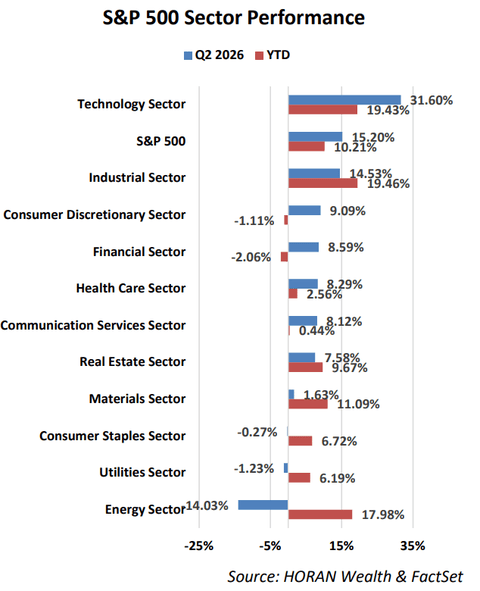
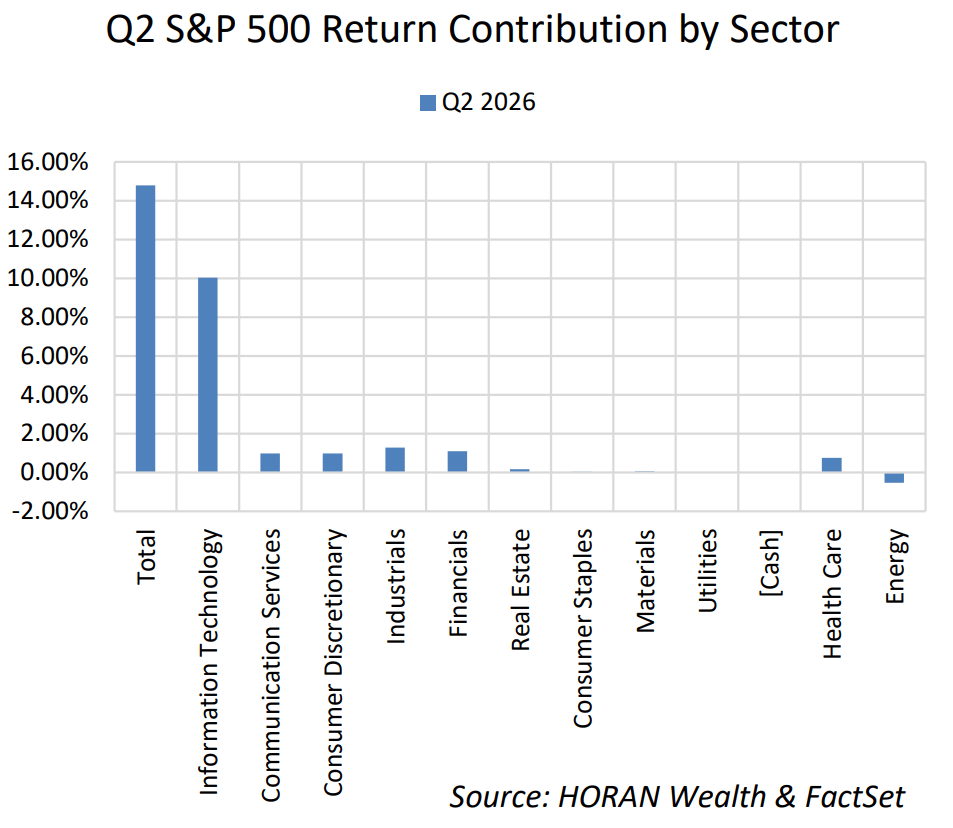
From the market bottom in March through June 30, the technology sector returned 42.5% while semiconductors gained 71% and the S&P 500 Index increased 15%. Also, since March, technology has been the only sector outperforming the market. In fact, during this recovery, technology has been responsible for 65% of the index’s return. This outperformance has been driven by the anticipated profits from the significant capital expenditure spending by the top five hyperscalers: Meta (META), Microsoft (MSFT), Amazon (AMZN), Oracle (ORCL) and Google (GOOG). These five companies alone are expected to spend a combined $725 billion in capital expenditures this year. This equates to roughly 3% of US GDP and is benefiting smaller companies such as hardware technology companies that participate in this investment. The market seems to be looking through any inflation and economic impact that may occur due to the Iran conflict and is refocused on earnings.
Historical Concentration
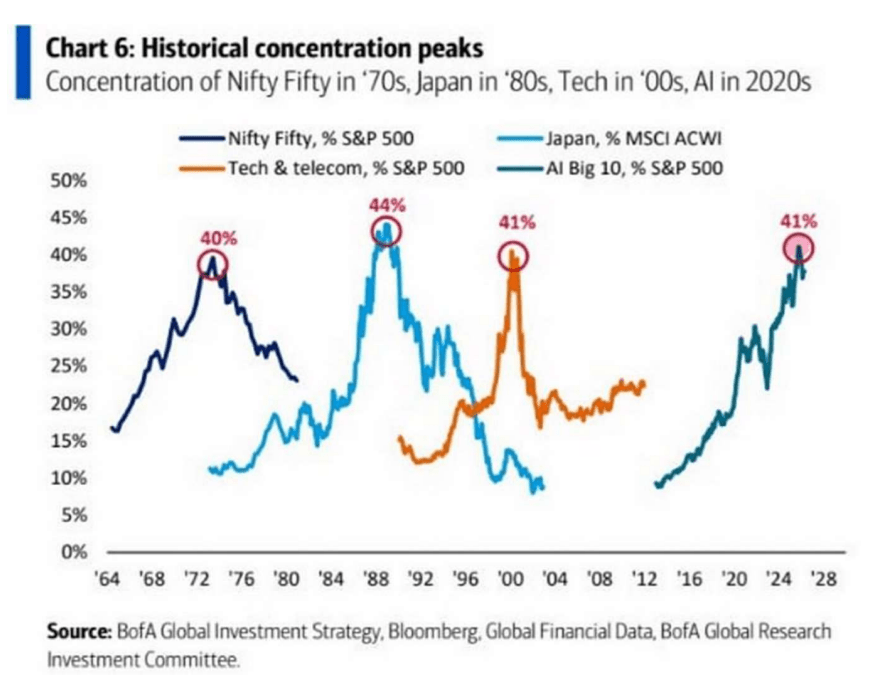
Given the strong return from the semiconductor industry, the S&P 500 index is now as concentrated as other high historical environments when concentration peaked. This can be seen in the table below. Indeed, the Information Technology sector, as classified by S&P Global, now represents 38% of the S&P 500 Index (SP500). However, the weight of the technology sector becomes 51.2% of the S&P 500 Index when accounting for the technology stock exposure of the Mag 7 that are not included in the technology sector. Additionally, due to the law of diminishing returns and the concentration of the index, market returns are effectively being derived from the equivalent of a 41-stock portfolio, notwithstanding the index constituency of 500 companies. While concentration might be a feature of capitalism with the best companies gravitating to the top, this lack of diversification can open investors up to additional risk. Indeed, returns for June were much more broad-based than the early parts of the quarter.
Advertisement
More specifically, the S&P 500 equal-weight index returned +2.28% in June, while the cap-weighted S&P 500 declined -0.95%. Seven out of the eleven sectors outperformed in June, while technology underperformed the broader index, declining -3.27%. In fact, the S&P 500’s decline for June was broadly due to the weakness in the technology sector. Information Technology contributed -1.3% to the index’s return partly due to the index’s allocation weight. The top two performing sectors for June, Healthcare and Industrials, averaged a positive roughly 7% but only contributed +1.18% to the overall return. Other outperforming sectors, like Utilities and Real Estate returned 2.73% and 0.84% while only contributing a combined 0.08% to the S&P for June. Tech’s concentration in the index has become the proverbial tail that wags the dog.
SpaceX IPO
In addition to increased concentration, investors witnessed the largest IPO in history, Space Exploration Technologies Corp, or SpaceX (SPCX). The company came public at roughly a $1.75 trillion valuation, or at a price equal to one hundred times sales. This solidified Elon Musk as the richest person in the world, by far. So, the question is, with an IPO being successful at this valuation is this an indicator that markets are beginning to become frothy? There are several parts to this answer. First, the goal of IPO’s is to raise as much money as the company can, and they are likely to be more successful with that goal when markets are near peaks rather than near bottoms. Second, when looking at the last 25 years, calendar years with higher than normal IPO activity tend to be followed by years with weaker market returns. However, there may be a positive economic impact related to the sheer amount of wealth created from this IPO. According to the New York Times, approximately 4,400 new millionaires were created as a result of the IPO. This could be a tailwind for the overall economy. Assuming employee ownership was 35% of total equity, then the value of this cohort would be ~$600Bln or ~2.5% of US real GDP.
New Fed Chair
Kevin Warsh, the new Federal Reserve chair, addressed capital markets for the first time at the June Federal Open Market Committee (FOMC) meeting. Already there are some noticeable differences between his approach and the previous Fed Chair, Jerome Powell. First and foremost, the FOMC statement was considerably shorter than previous statements. The focus of the most recent statement was more direct, with the committee recommitting to their goal of price stability. The part of the statement that stood out the most was the final paragraph:
“Inflation remains elevated relative to the Committee’s 2 percent goal, in part reflecting supply shocks that have driven price increases in certain sectors, including energy. The Committee will deliver price stability.” Additionally, this statement did not include the Fed’s guidance on where interest rate policy could be going. At the press conference that followed the meeting, when Fed Chair Walsh
Advertisement
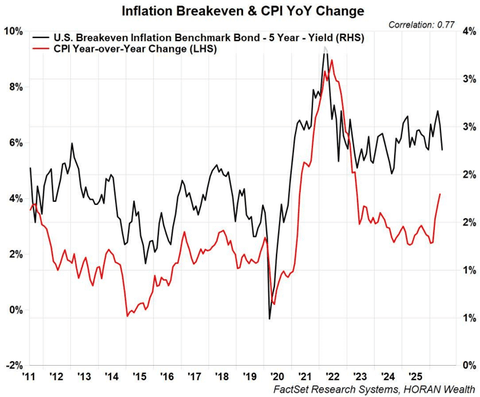
was asked about the lack of guidance, he responded it is not the Fed’s responsibility to communicate to markets what the Fed’s future actions might be. Following these remarks, the market began pricing in higher rate expectations and increased the probability of a rate hike in September to 44%. However, the bond market is not necessarily pricing in higher inflation over the intermediate term. The near chart highlights the current inflation rate in red, and the return needed to breakeven against inflation on a bond over the next five years in black. While inflation has seen a recent spike higher, the bond market is predicting this to be a short-term problem with breakeven rates decreasing over the past quarter.
Conclusion
The technology sector has been the best-performing sector in 2026 as the AI trade is in full swing, driven by the $725 billion in capex being spent by Meta, Microsoft, Amazon, Oracle and Google. This outperformance has further increased the technology sector’s concentration in the S&P 500 Index. In June, new Fed Chair Kevin Warsh led his first FOMC meeting and struck a hawkish tone, with the market broadly expecting a bias towards higher interest rates to combat inflation. With the volatile off and on ceasefire in the Middle East, crude oil prices have fallen from over $100/barrel in May to the low $70s per barrel, which should help the inflation picture moving forward. A recent escalation in Iran hostilities, though, is resulting in higher oil prices. Another positive is company earnings expectations continue to be strong, which could provide a favorable backdrop for investors.
Thank you for your continued confidence and support in HORAN Wealth and we are always available to answer your questions and discuss our outlook further. Please be sure to visit us for company news, reports, and our blog at Insights.
Respectfully,
Advertisement
HORAN Wealth
HORAN Wealth, LLC is an SEC Registered Investment Advisor.
The information herein has been obtained from sources believed to be reliable, but we cannot assure its accuracy or completeness. Neither the information nor any opinion expressed constitutes a solicitation for the purchase or sale of any security. Any reference to past performance is not to be implied or construed as a guarantee of future results. Market conditions can vary widely over time and there is always the potential to lose money when investing in securities. HORAN Wealth and its affiliates do not provide tax, legal or accounting advice. This material has been prepared for informational purposes only, and is not intended to provide, and should not be relied on for tax, legal or accounting advice. You should consult your own tax, legal and accounting advisors before engaging in any transaction. For further information about HORAN Wealth, LLC, please see our Client Relationship Summary at IAPD – Investment Adviser Public Disclosure – Homepage.
Cheryl Casone and Scott Ladner discuss the weeks significant economic data, including June CPI, PPI, and retail sales. Ladner emphasizes watching big bank earnings for insights into consumer behavior.
This story about the June 2026 CPI inflation report will be updated with further details.
Inflation pulled back in June after surging in prior months due to the Iran war’s impact on energy prices throughout the economy.
Advertisement
The Bureau of Labor Statistics (BLS) said on Tuesday that the consumer price index (CPI) – a broad measure of how much everyday goods like gasoline, groceries and rent cost – declined 0.4% on a monthly basis in June and was up 3.5% from a year ago. The monthly decline was the largest since a 0.8% decrease in April 2020.
Expectations vs. reality
Those figures were cooler than the estimates of economists polled by LSEG, who predicted a decline of 0.1% on a monthly basis and a 3.8% increase from a year ago. They also represent a cooling trend from the 0.5% monthly increase and the 4.2% annual rise recorded in the May edition of the report.
So-called core prices, which exclude volatile measurements of gasoline and groceries to better assess price growth trends, were unchanged from a month ago and up 2.6% from last year. Both of those figures were lower than the estimates of economists polled by LSEG, who predicted a monthly increase of 0.2% and 2.8% from a year ago.
High inflation has created severe financial pressures in recent years for most U.S. households, which are forced to pay more for everyday necessities like food and rent. Price hikes are particularly difficult for lower-income Americans, because they tend to spend more of their already-stretched paychecks on necessities and have less flexibility to save.
Energy prices fell 5.7% on a monthly basis – the energy index’s largest monthly decline since April 2020 – and are up 15.7% from a year ago. BLS noted that the energy index was the largest contributor to the decline in headline inflation, more than offsetting increases in indexes for food and housing.
Gasoline prices fell 9.7% in June and are up 26.7% from a year ago. Electricity prices were down 1% on a monthly basis and are up 4% from a year ago. Utility gas service prices rose 0.5% in June and are up 3% from last year.
Food prices rose 0.2% in June and are up 3% in the past year. The food at home index is 2.7% higher than a year ago, while the food away from home index is up 3.4% in the last year and both rose 0.2% on a monthly basis in June.
Advertisement
Energy prices fell 5.7% on a monthly basis and are up 15.7% from a year ago. (Justin Sullivan/Getty Images)
The meats, poultry and fish index was 0.4% higher in June and has risen 5.7% over the past year. Beef and veal prices rose 1.2% on a monthly basis and are up 11.8% from a year ago. Egg prices increased 4.3% in June but are down 27.9% over the last year as supplies normalized after an avian flu outbreak. Prices for fruits and vegetables decreased 0.2% in June and are up 5.3% from a year ago.
Housing prices rose 0.1% on a monthly basis, which was the smallest one-month change since January 2021, and are up 3.3% from a year ago. Tenants’ and household insurance costs rose 0.2% from a month ago and are up 5.9% in the last year.
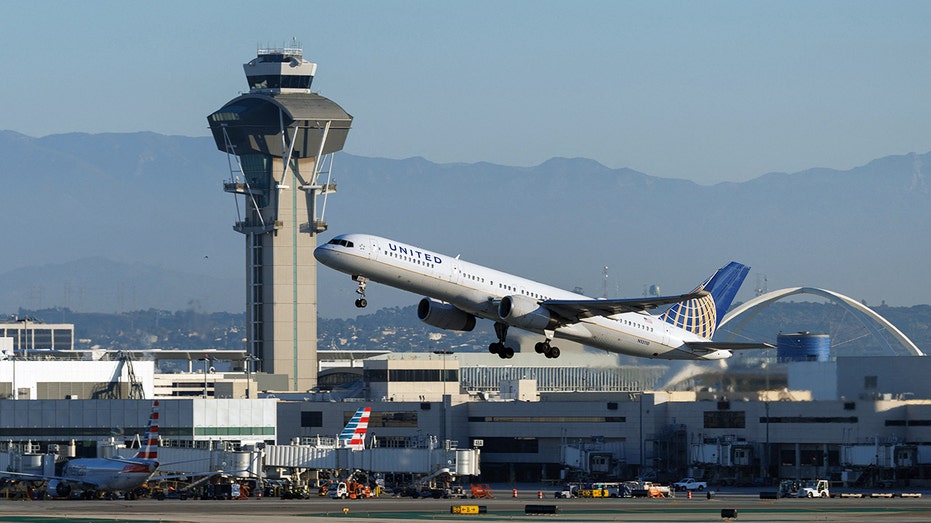
Transportation services prices declined 0.3% in June and are 3.4% higher than a year ago. Airline fares increased 0.2% on a monthly basis but are up 26.5% compared with a year ago.
Airline fares increased 0.2% on a monthly basis. (Mike Blake/Reuters)
Ellen Zentner, chief economic strategist for Morgan Stanley Wealth Management, said that the “Fed was losing patience with high inflation, and today’s cooler-than-expected report gives them room to breathe.”
“By surprising on the downside, it relieves immediate pressure for action, allows the Fed to gather additional inflation data over the summer, and makes it considerably easier for policymakers to maintain their current wait-and-see stance through the next meeting,” Zentner added.
Jeffrey Roach, chief economist for LPL Financial, said: “After today’s benign core inflation release, it appears less likely that the FOMC will raise rates over the next few meetings. However, we may still be at an inflection point, given the risk that the energy shock could spill over into other categories of consumer prices. A positive resolution with Iran before the end of the summer is becoming increasingly important.”
What does it mean for the Fed?
The Federal Reserve has held interest rates steady at recent meetings amid concerns about elevated inflation, and with readings still coming in well above the central bank’s 2% target, policymakers are likely to leave rates unchanged at the next few meetings.
Advertisement
The CME FedWatch tool showed an 85.6% probability that the benchmark federal funds rate will remain at its current target range of 3.5% to 3.75% at the Fed’s next meeting in late July, up from 58.3% a day ago.
The tool also shows a 0% chance of a 25-basis-point rate cut by the end of the year, with just a 19.4% chance that rates remain at their current levels – with a 42.2% chance of a 25-basis-point hike and a 29.7% chance of 50-basis-points worth of hikes by the end of the year.
President Donald Trump said Tuesday he is backing away from charging a 20% fee for commercial ships transiting the Strait of Hormuz.
President Donald Trump on Tuesday announced that he will replace a 20% fee on commercial shipping moving through the Strait of Hormuz with “Trade and Investment Deals” that Gulf nations will be making in the United States.
Trump said the move came as the movement of oil and natural gas supplies has eased along the waterway, a vital, narrow commercial shipping point currently being contested by Washington and Tehran.
Advertisement
“Oil is flowing like never before, thanks to the awesome Power of the United States Military,” Trump wrote on Truth Social. “The Strait of Hormuz is open to ALL Ship traffic except for Iran — and that is because of their lying, violent, malicious leadership, which is taking them down the path of TOTAL DESTRUCTION.”
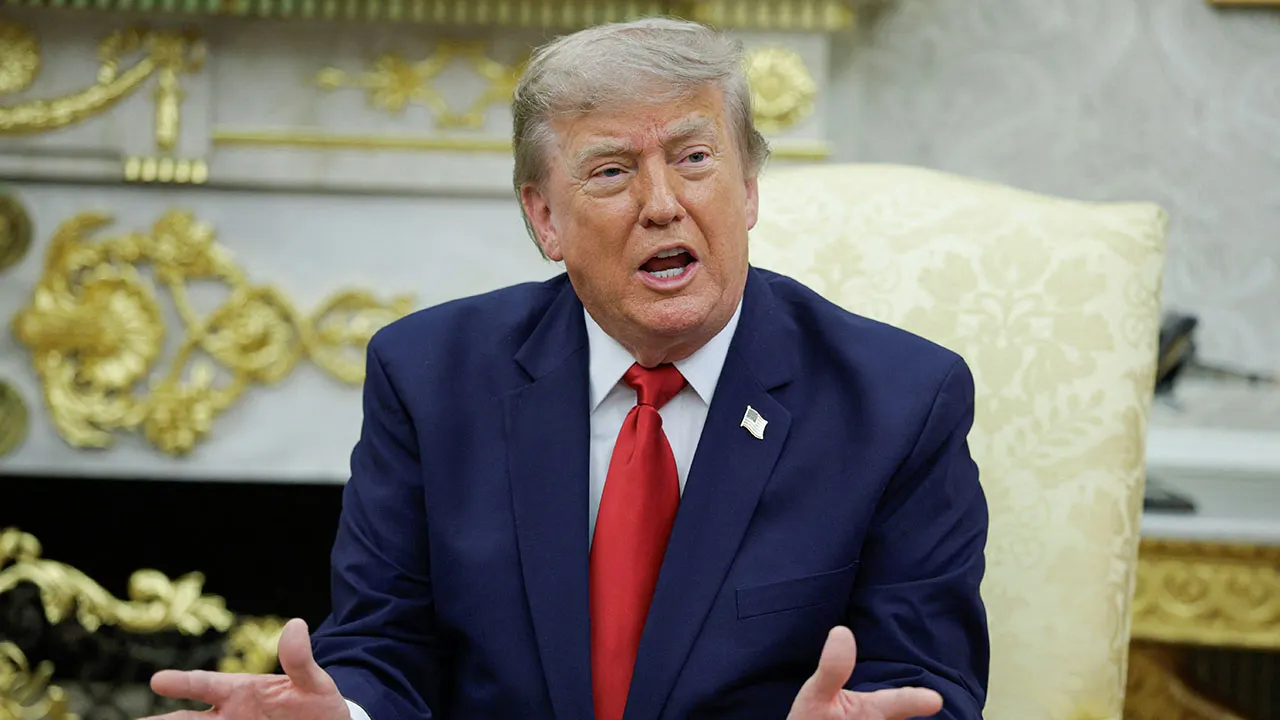
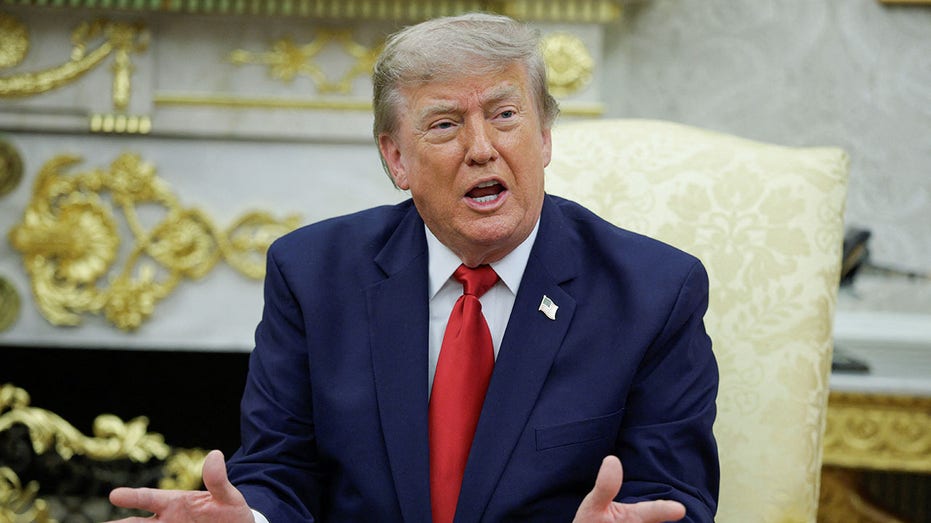
President Donald Trump gestures as he participates in a bilateral meeting with Iraqi Prime Minister Ali al-Zaidi (not pictured) in the Oval Office at the White House in Washington, D.C. (Reuters / Reuters)
However, Trump said he would reinstate a blockade on Iran.
“We will therefore have a FULL Blockade, but only on Ships coming to and from Iranian ports, or carrying anything have to do with Iranian cargo,” he added. “Based on highly productive conversations with Middle East leadership, I have decided to replace the 20% United States Reimbursement Fee with Trade and Investment Deals that the various Gulf States will be making into the United States.”
Advertisement
Trump’s announcement comes amid Iran’s push to assert control over the strait. Tehran has claimed sovereign authority over the territory, despite the strait historically being considered a free-to-use international waterway.
During Tuesday’s meeting with Iraqi Prime Minister Ali al-Zaidi, Trump said he spoke with Gulf state leaders, who all said they would like to invest in the U.S. “at record amounts.”
Ships and tankers in the Strait of Hormuz off the coast of Musandam, Oman, April 18, 2026. (Reuters / Reuters)
“And this way there’s no fee,” he told reporters in the Oval Office. “I don’t like the concept of a fee, but at the same time, it’s not fair that we’re protecting this strait for the entire world, for China and everyone.”
Advertisement
“I don’t mind protecting it for anybody. But it’s unfair that we’re not in somehow compensated. And we’ve been doing this for many years,” he added. “They’re investing and they’re getting a return on their money, and it’s good, but they’re going to be making massive investments into the United States and I like that much better.”
Over the weekend, U.S. and Iranian forces exchanged missile and drone attacks as Tehran again claimed to have control over the strait.
On Monday, the U.S. launched strikes against Iranian military sites. By Tuesday, Trump said Iran had been “very much destabilized.”
FOX Business correspondent Edward Lawrence reports on rising U.S.-Iran tensions as anchor Liz Claman highlights surging oil prices tied to Iran’s claims over the Strait of Hormuz and President Trump’s reinstated blockade on ‘The Claman Countdown.’
“I think what we’ve done to Iran is we’ve taken away almost all of their military capability.”
“I gave them a chance. I wanted to give them a chance at making a deal. You know, we had a deal two days ago. It was done. And then all of a sudden, they couldn’t do it,” he said. “They didn’t like something about the deal. They couldn’t do it. And they shot first. And that was a big mistake that they shot first because we have been knocking the hell out of them.”
New accounts for the claims, recovery and repairs group also show a fall in operating profits
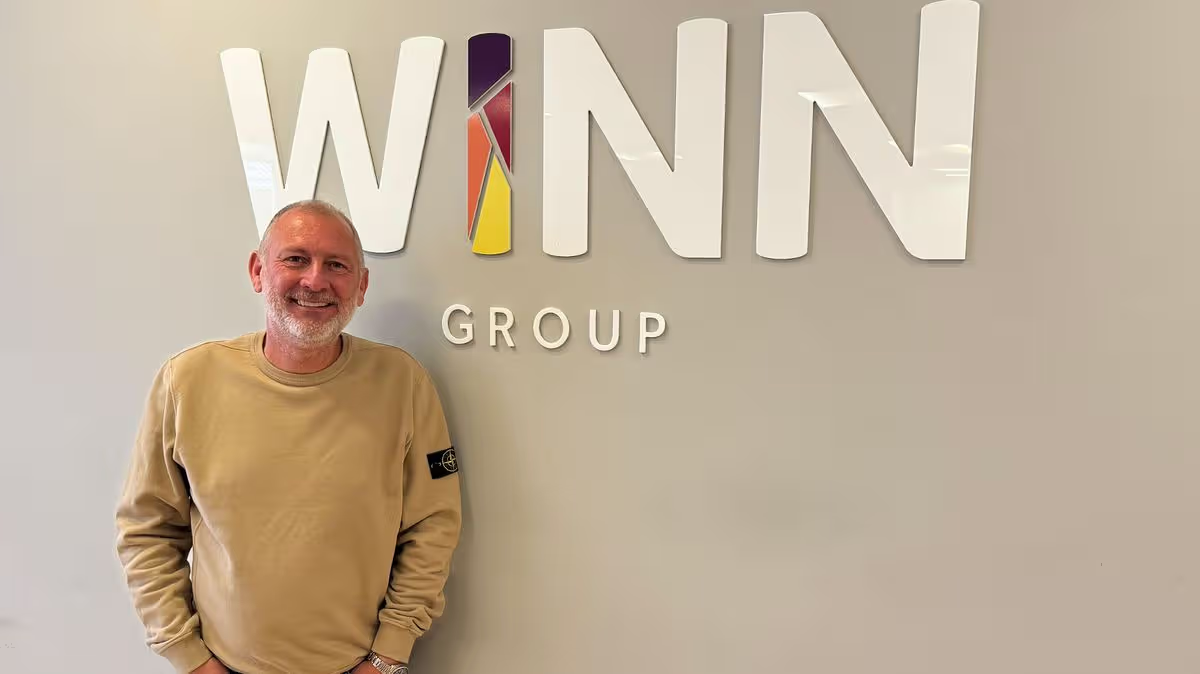
Chris Birkett, CEO of Winn Group(Image: Winn Group)
Turnover has increased at Newcastle accident management specialist Winn Group, which says it is well positioned to meet market challenges ahead.
The legal group – which includes replacement vehicle firm On-Hire, medico-legal reporting and rehab firm On Medical and non-fault accident specialists Winn Solicitors – saw turnover rise to £217m in the year to the end of March, 2026, from £196.1m the year before. The accounts for Winn Holding Limited show operating profit fell from £38.7m to £29.8m.
Bosses said performance had been impacted by narrowed operational losses from the group’s Scottish office which started trading in April 2023, and reduction in instructions across intervention services, along with increased salary and commission costs amid increased volumes and legal fees. Winn said it expects strong levels of profit in the future from its Scottish operation, where legal fees increased by 148% to more than £1.6m during the year.
Elsewhere, the main contributor to group revenue growth was On Hire Limited, which saw revenue increase 8% to more than £185.4m on the back of growing instructions. Winn Solicitors Limited ended the year with a 28% increase in turnover thanks to a 38% increase in non-personal injury fees and a 15% increase in fees across road traffic accident personal injury cases.
Advertisement
Meanwhile On Medical was only providing services to medical instructions not completed by April 1, with its main activity being the collection of outstanding trade debtors’ balances. Strong cash generation was noted across the group with £41m of cashflow generated from operating activities before exceptional costs. Dividends of more than £80.7m were also paid during the year.
Winn Group describes itself as a one-stop-shop for people involved in road traffic accidents. The group has become a major player in the accident management and rehabilitation market in recent years and offers an around-the-clock service to clients. It handles vehicle recovery, repairs arrangements and replacement vehicles as well as pursuing compensation and claims.
Staff levels across the year increased as headcount rose from 713 to 747. And following a refinancing in late 2025, the group negotiated a £95m loan with PGIM and Nomura to fuel growth.
Writing in the accounts, CEO Chris Birkett said: “During the year, we have not seen a major change in repair and hire markets; with the exception of inflationary increases in vehicle rental cost across all models and slightly lower lead times versus last year’s levels.”
Advertisement
He added: “Although the economic environment remains uncertain, with the wars in Ukraine, Gaza and Iran and interest rates at 3.75%, the directors remain of the opinion that the group is in a strong financial position to face the challenges ahead, including those arising from an industry where many competitors are in turmoil given recent legislative and macro changes, while keeping significant growth rates.”
Seeking Alpha’s transcripts team is responsible for the development of all of our transcript-related projects. We currently publish thousands of quarterly earnings calls per quarter on our site and are continuing to grow and expand our coverage. The purpose of this profile is to allow us to share with our readers new transcript-related developments. Thanks, SA Transcripts Team
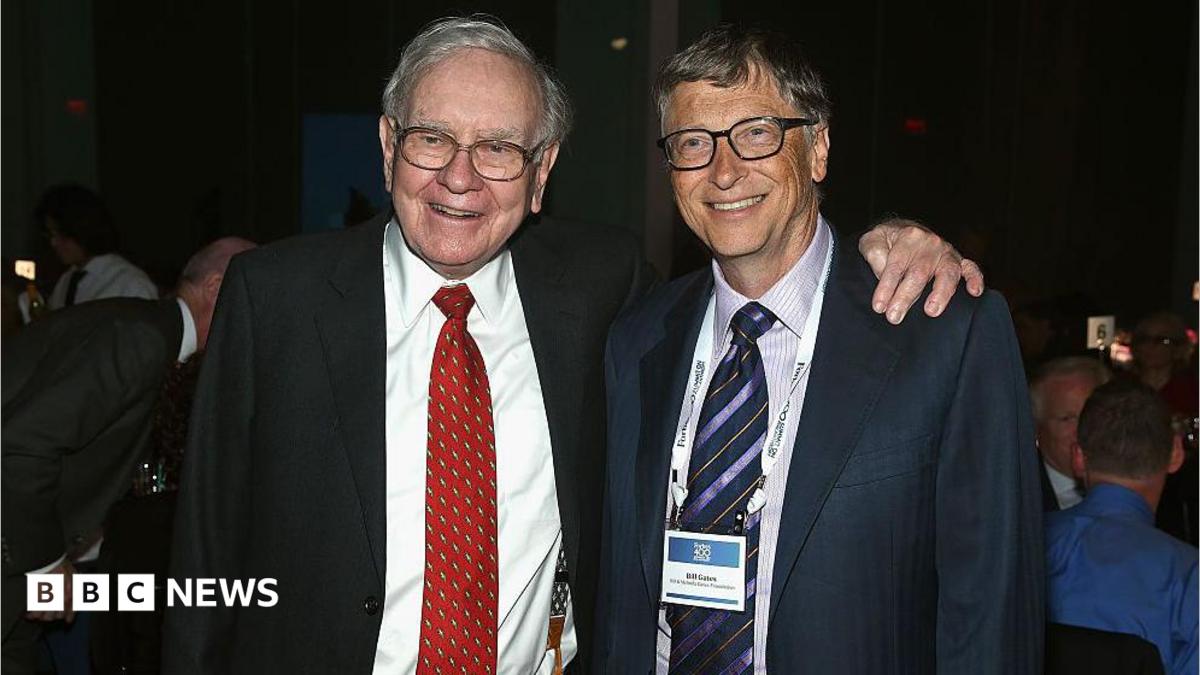
Billionaire investor Warren Buffett has stopped giving donations to Bill Gates’ charitable foundation weeks after the Microsoft co-founder detailed his links to the dead sex offender Jeffrey Epstein.
Buffett “irrevocably” committed in 2006 to donate shares in his firm, Berkshire Hathaway, each year to the Bill and Melinda Gates Foundation as it was then known “throughout my lifetime”.
But on Thursday, the Gates Foundation was left off the list of firms that will receive billions of dollars worth of stock.
The stock will instead be split between four foundations involving members of the Buffett family. The 95-year-old said he will dispose of his remaining stock over the next eight years.
Advertisement
“Of course, mortality is unpredictable,” said Buffett. “But my remaining shares will be donated to the four foundations one way or the other by 31 December, 2034.”
Gates’ association with Epstein was revealed when the US Department of Justice released files in January.
Buffett did not mention Gates or Epstein by name in his statement regarding his donations.
But in March, he told CNBC, external that he had not spoken to Gates “since the whole thing was unveiled”.
Advertisement
He added: “I don’t want to be in a position where I know things… to be called as a witness.”
The Gates Foundation has been contacted for comment.
In a transcript of his testimony, Gates said that he had been introduced to Epstein in 2011 on the premise that he could raise billions of dollars for global health – a key focus of the foundation.
Advertisement
“I recall being aware that Epstein had faced prior legal issues, but I did not fully understand the extent of the crimes he committed,” Gates said.
Three years earlier, Epstein had pleaded guilty to soliciting a minor for prostitution and procuring a person under age 18 for prostitution.
Gates told the committee: “I should never have met with Epstein in the first place. Based on what I know now, I understand that even if he had delivered the donors he promised, it would not have justified associating with him.”
Buffett was an enthusiastic supporter of the Bill and Melinda Gates Foundation, stating in 2006 he “greatly” admired what it was accomplishing and promised to make yearly donations.
Advertisement
In 2010, Bill and Melinda Gates and Buffett started the Giving Pledge, which aimed to get extraordinarily wealthy people to give away the majority of their fortune during their lifetime or in their will.
Bill and Melinda Gates divorced in 2021 after 27 years of marriage.
Melinda French Gates resigned in 2024 from the foundation she co-founded and said that she would donate $1bn to help women’s rights in the US.

















































You must be logged in to post a comment Login