

Business
Rockets Star Linked to Pistons and Cade Cunningham as Interest Grows Again

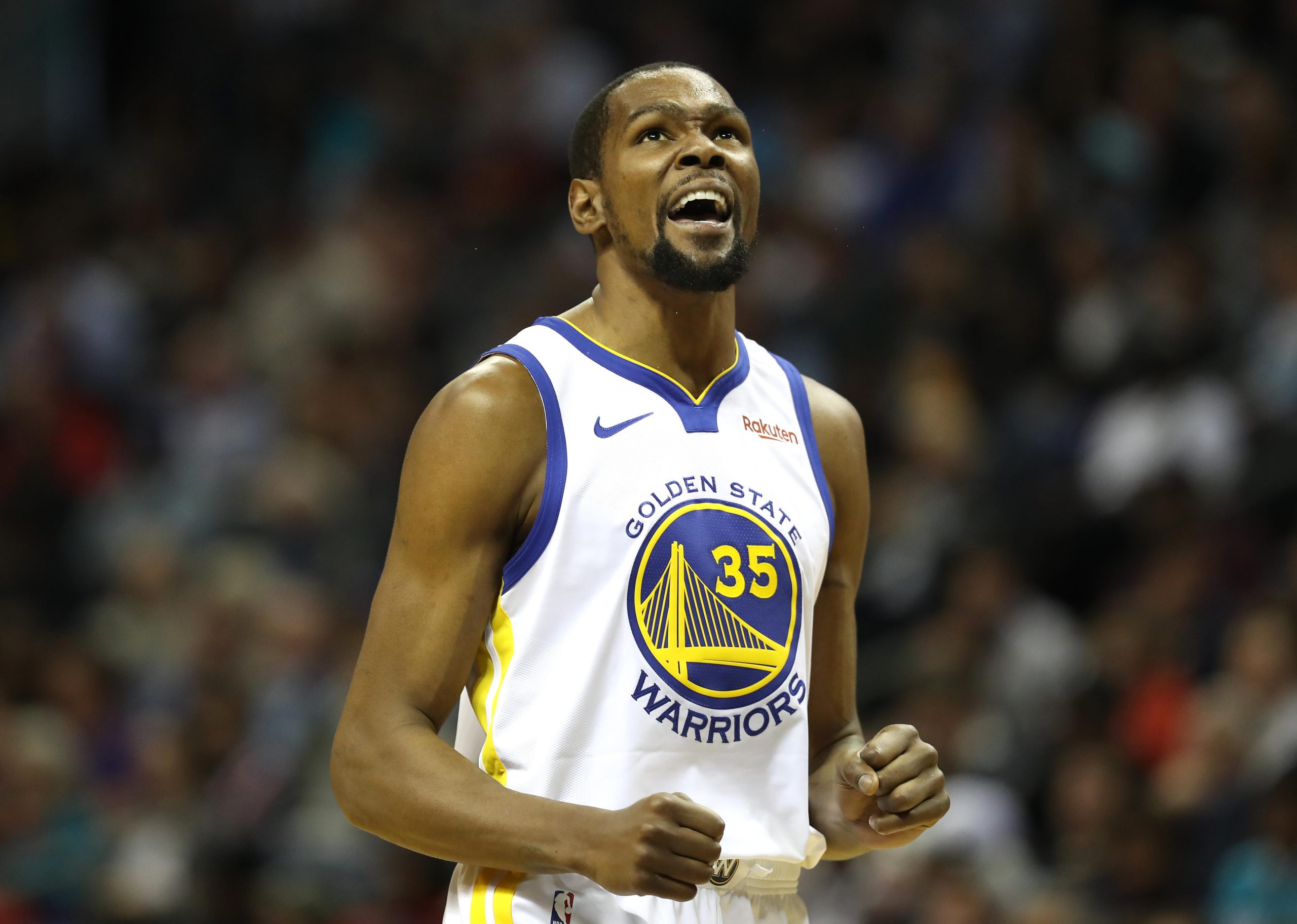
Kevin Durant’s future with the Houston Rockets is once again a subject of speculation across the NBA, with multiple reports indicating the franchise does not consider the future Hall of Famer untouchable in trade discussions, just one year after acquiring him in a blockbuster deal from the Phoenix Suns.
Durant joined Houston in July 2025 as part of a historic seven-team trade and later signed a two-year, $90 million contract extension with the Rockets in October, a fully guaranteed deal carrying an average annual salary of $45 million and including a player option for the 2027-28 season. Despite that long-term commitment on paper, questions about Durant’s staying power in Houston have persisted through the offseason.
According to ClutchPoints NBA insider Brett Siegel, the Rockets have not treated Durant as an “untouchable” piece of their roster despite bringing him in to accelerate the franchise’s championship timeline. “Whether or not the Rockets look to continue their partnership with Durant is the big question at large, especially since they don’t view him as an ‘untouchable’ talent in trade talks on their roster,” Siegel wrote. “Houston viewed the opportunity to acquire Durant as a way to upgrade from Jalen Green and bridge the gaps in their lineup to contend in the West, but by no means was this addition viewed as a long-term commitment.”
Siegel also reported that a small number of teams have already contacted Houston this offseason to gauge Durant’s availability, including the Detroit Pistons. “A few teams have made calls to the Rockets asking about Kevin Durant’s availability this offseason, including the Pistons,” Siegel wrote, adding that no trade talks were believed to be imminent as of early July.
Speculation intensified after Durant posted a photo to Instagram on July 5 wearing a Detroit Tigers cap featuring the team’s Old English “D,” a post some fans and analysts interpreted as a subtle signal of interest in a move to Detroit, given the visual overlap with the Pistons’ branding. Siegel has reported that Durant holds genuine interest in playing alongside Pistons star Cade Cunningham, a relationship rooted in mutual public admiration between the two players dating back to before Cunningham’s entry into the league. “Durant has always had high praise from the young superstar guard early in his career and has been on the record multiple times calling him a ‘special talent,’” Siegel wrote.
According to Siegel’s reporting, the Pistons previously explored a three-team framework earlier in the offseason involving the Boston Celtics and Rockets, one that would have sent Jaylen Brown to Houston, Alperen Sengun to Boston, and Durant to Detroit. That deal never came together, and Brown has since joined the Philadelphia 76ers, but Siegel indicated the underlying interest in a Durant-to-Detroit move has not disappeared. “Two league sources with knowledge of the situation told ClutchPoints that the Pistons were set on figuring out a path to land Durant, but nothing ever materialized in this three-team idea, nor did anything appear possible in brief discussions with only Houston,” Siegel wrote. “Perhaps the greatest detail to emerge from all of these rumors is that Durant has interest in playing alongside Pistons star Cade Cunningham, sources said.”
Siegel has also pointed to internal tension in Houston’s locker room as a factor clouding Durant’s long-term future with the franchise. “Many around the league are skeptical of the Rockets wanting to keep Durant through the end of his current contract running through the 2027-28 season,” Siegel wrote. “It isn’t a secret to anyone that there were tensions between Durant and the Rockets’ locker room last season after reports of an alleged burner account came to light and frustrations were mounting internally about the team not taking a step forward with the former league MVP at the helm.”
Houston’s difficult 2025-26 campaign has added further fuel to the speculation. The Rockets lost veterans Steven Adams and Fred VanVleet to injuries during the season, absences that significantly affected the team’s development, according to reporting cited by The Sporting News. Houston ultimately fell in the first round of the playoffs to a Los Angeles Lakers team playing without Luka Doncic, with Durant appearing in only one game of that series due to injury. During the regular season, Durant appeared in 78 games and averaged 26 points, 5.5 rebounds and 4.8 assists while shooting 52% from the field in 36.4 minutes per contest.
Not everyone covering the team believes a trade is imminent or wise. Bleacher Report’s Zach Buckley questioned whether Houston should even consider moving on from Durant after just one season, noting the Rockets have had a relatively quiet offseason apart from re-signing forward Tari Eason and adding veteran role players Marcus Smart and Bogdan Bogdanović. Some analysts covering the team have argued that trading Durant away after a single season, rather than building around him with a healthier roster next year, would represent a step backward for a franchise that spent years rebuilding through the draft before finally acquiring an established superstar.
Any trade sending Durant to Detroit would likely require the Pistons to part with significant young talent or draft capital, or to involve a third team to satisfy salary-cap requirements, given the size of Durant’s contract. Analysts have floated names including center Jalen Duren as a potential centerpiece of an outgoing package from Detroit, though no formal trade framework has been reported as advancing beyond exploratory conversations.
Durant, 37, remains one of the league’s most productive scorers even as he enters the later stages of a career that includes a 2014 NBA MVP award, 16 All-Star selections and two NBA Finals MVP honors. His extensive trade history, including previous moves away from the Brooklyn Nets and Phoenix Suns, has left some analysts wondering whether he may seek out one more change of scenery before retirement, even after previously saying he hoped to finish his career in Houston.
As of this week, no formal trade had been agreed upon involving Durant, and the Rockets have given no public indication that they are actively shopping their star forward. Houston enters the coming season looking to build on a difficult first year with Durant, with the team’s direction likely to hinge on both his health and the roster’s performance once the 2026-27 campaign gets underway.

Business
ChronoScale Holdings Stock Jumps 16.68% as Company’s AI Infrastructure Play Continues Wild Streak

Shares of ChronoScale Holdings Corporation rose 16.68%, or $3.29, to close at $23.01 Tuesday, extending a pattern of extreme single-day volatility that has characterized the small, newly formed AI infrastructure company since it emerged from a corporate transformation earlier this year. The specific catalyst behind Tuesday’s move had not been publicly confirmed as of publication.
ChronoScale, based in Dallas and trading on the Nasdaq under the ticker CHRN, designs and develops a compute platform intended to support large-scale artificial intelligence workloads, providing dedicated compute environments the company says are engineered for performance, consistency and long-term operational execution. The company in its current form is a recent creation: it was formerly known as Ekso Bionics Holdings, a maker of medical and industrial exoskeleton products, before completing a business combination in February 2026 that transformed it into an AI infrastructure operator through a transaction with Applied Digital Corporation.
Under the terms of that deal, disclosed in SEC filings, a wholly owned subsidiary of Applied Digital’s parent company contributed all of the equity in its Cloud business to what was then Ekso Bionics in exchange for roughly 138.2 million newly issued shares of common stock, immediately making Applied Digital’s affiliated entity the overwhelmingly dominant shareholder, holding approximately 96% to 97% of the combined company’s outstanding shares. Legacy Ekso Bionics shareholders were left holding only about 3% of the newly formed entity. As part of the same transaction, the company changed its name first to ChronoScale Corporation and then, in July 2026, to its current name, ChronoScale Holdings Corporation.
The company has continued reshaping its leadership and strategic focus in the months since the combination closed. In May, ChronoScale appointed Cenly Chen as chief executive officer to lead what the company described as its next phase of AI compute growth. In June, the company named Raj Jegannathan as chief technology officer and Lawrence Lam as chief product officer, moves the company said were aimed at accelerating its global AI infrastructure strategy. That same month, ChronoScale formally divested its legacy Ekso Bionics exoskeleton business entirely, a step the company described as allowing it to refocus fully on its cloud and AI compute operations.
ChronoScale’s financial profile remains that of a very early-stage company despite its multibillion-dollar market capitalization. According to data compiled by StockTitan, the company generated $12.8 million in revenue over the trailing 12 months, with a gross margin of 53.5%, but posted an operating margin of negative 104.1% and a net profit margin of negative 91.4%, reflecting net income of negative $11.7 million and diluted earnings per share of negative $4.91 over the same period. Operating cash flow over the trailing 12 months stood at negative $11.8 million. Despite those financial figures, the company’s market capitalization has fluctuated between roughly $64.8 million and $2.4 billion across recent trading sessions, reflecting how dramatically the stock’s valuation has swung alongside its share price.
That valuation volatility has drawn scrutiny from at least one Wall Street analyst. A Seeking Alpha analysis published shortly after the company’s transformation into an AI infrastructure operator noted that CHRN traded at a steep 35.2 times price-to-sales multiple relative to its prior fiscal-year revenue of roughly $75 million, a level the analyst described as expensive given the company’s limited financial disclosure at the time. The analysis recommended a “Hold” rating on the stock pending release of ChronoScale’s initial standalone financial statements, citing a lack of transparency and an elevated trading premium relative to comparable companies.
ChronoScale’s trading history since its transformation has been marked by an unusually high frequency of large single-day swings in both directions. According to data compiled by CNN Business, the stock has recorded a string of double-digit percentage moves over recent weeks, including gains of 17.6% and 18.0% on separate sessions, alongside declines as steep as 17.9% within the same stretch. That pattern of sharp reversals has continued even as the company has taken steps intended to bolster its financial position, including securing a $100 million related-party credit line in late June and filing to sell 1.1 million additional shares of common stock to existing holders around the same period.
The stock’s 52-week trading range illustrates the scale of that volatility further. According to Robinhood data, CHRN shares have moved between a low of $2.91 and a high of $28.20 over the trailing 12 months, a spread reflecting both the company’s dramatic transformation from a medical device maker into an AI infrastructure company and the broader speculative interest that has periodically driven sharp rallies in smaller AI-adjacent stocks throughout 2026.
ChronoScale’s parent relationship with Applied Digital adds further context to the stock’s movements. Applied Digital, which designs, builds and operates high-performance, sustainably engineered data centers and colocation services for artificial intelligence infrastructure, has itself posted a strong year, with shares up more than 60% in 2026 as of recent tracking, according to FinancialContent. Given ChronoScale’s origins as a spinoff-style combination involving Applied Digital’s cloud assets, broader sentiment toward Applied Digital and the AI data center sector more generally has appeared to influence trading in ChronoScale shares, even though the two companies now trade as separate publicly listed entities.
As of Tuesday’s close, no specific company announcement, analyst upgrade or broader sector catalyst had been publicly identified as the direct driver of ChronoScale’s 16.68% gain, consistent with the stock’s recent pattern of large, sometimes unexplained single-day moves that market trackers have attributed generally to thin trading volume, speculative retail interest in AI infrastructure names, and the company’s still-limited public financial track record following its recent transformation. Investors tracking the stock have generally been advised to treat its current valuation with caution given the wide gap between its market capitalization and its reported revenue and earnings figures, pending further clarity from the company’s upcoming financial disclosures.
Business
Volkswagen Warns of Up to 100,000 Job Cuts, but Analysts Call It Latest Negotiating Tactic in Germany
Volkswagen’s chief executive confirmed to employees this week that the company is weighing as many as 100,000 job cuts worldwide, a figure that would mark the most radical restructuring in the automaker’s nearly 90-year history, though industry analysts say the number likely represents an opening negotiating position rather than the company’s final target.
Volkswagen CEO Oliver Blume told employees Monday in an internal memo, seen by Agence France-Presse, that the company must “act now” to safeguard its future, confirming a further 50,000 jobs could be cut on top of 50,000 already in progress under an earlier 2024 agreement, bringing the total potential reduction to roughly 100,000 positions, or about 15% of Volkswagen’s global workforce of approximately 657,400 employees as of the first quarter of 2026. The memo followed weeks of speculation triggered by a June report in Manager Magazin, which first detailed the scale of the potential cuts and the possible closure of four German plants.
Blume also confirmed continued uncertainty over the future of four specific German factories central to the restructuring discussions. “The truth is also that, as things stand today, we cannot confirm that the Emden, Hanover, Zwickau and Neckarsulm plants will be able to operate competitively into the 2030s,” Blume said, referring to three Volkswagen brand facilities alongside Audi’s Neckarsulm site. Options under consideration reportedly include shifting production of China-focused models to underused German sites such as Zwickau, an approach Blume has previously floated, or gradually phasing out production at certain plants by declining to assign new models to them rather than closing facilities outright.
Despite the scale of the figures being discussed, multiple industry analysts told AFP and other outlets they believe Volkswagen deliberately floated a worst-case scenario ahead of formal negotiations with labor unions, describing the tactic as a common corporate negotiating strategy rather than a finalized restructuring plan. Volkswagen has followed a similar pattern before: in the second half of 2024, following earlier threats of mass strikes, the company reached an agreement with German trade union IG Metall to trim 35,000 jobs at the core Volkswagen brand by 2030 “in a socially responsible manner,” with another 15,000 positions to go across its other brands, a figure notably lower than initial, more dramatic proposals floated during those negotiations.
Labor representatives have pushed back sharply against the latest figures. A spokesman for IG Metall called Blume’s Monday memo “superficial,” saying employees remained largely in the dark about specifics. “Management’s communication remains a disaster across the board,” the spokesman said, adding that shop stewards were organizing meetings at which Blume would be expected to take questions from staff directly. “The answers will determine the crucial question: whether the executive board intends to overcome the crisis with staff or against them,” he said. IG Metall Chair Christiane Benner has separately called for “innovative solutions” that preserve production capacity and domestic employment rather than layoffs, underscoring how far apart labor’s vision remains from management’s proposed restructuring.
Volkswagen’s notoriously complex governance structure adds further complexity to any potential deal. Labor representatives and the German state of Lower Saxony, which holds a 20% voting stake in the company, together control more than half the seats on Volkswagen’s supervisory board. Lower Saxony has historically opposed plant closures and layoffs, a position reinforced by the so-called Volkswagen Law, a decades-old measure that effectively limits management’s unilateral ability to close factories. Thomas Besson, head of automotive research at Kepler Cheuvreux, said Volkswagen’s management would need to demonstrate there is no viable alternative to the proposed measures. “It is going to be a very complicated move to implement,” Besson said.
Rico Luman, a senior sector economist focused on transport and logistics at ING, described the situation as reflecting broader structural pressure across the European auto industry rather than a crisis unique to Volkswagen. “It’s very complicated but something needs to happen, that’s for sure. So, the supervisory board should be aware of the urgency as well,” Luman said. He noted that Volkswagen remains profitable for now, but that the scale of the proposed cuts signals the company is preparing for tougher conditions ahead. “They are still profitable, right? But the reported plans are to prepare for the demise or losses over the next couple of years. So, this is a strategic step for what is coming up in the future,” Luman said, pointing to challenges including the slower-than-expected pace of Europe’s shift to electric vehicles, intensifying competition from Chinese automakers, and export difficulties in key overseas markets.
Volkswagen’s financial results have underscored the pressure driving the restructuring talks. The company posted first-quarter 2026 operating profit of roughly $2.92 billion, down 14.3% from a year earlier and well below analyst expectations of nearly 4 billion euros. Sales revenue for the quarter came in at approximately $75 billion, down 2.5% year over year, while vehicle sales fell 7% to 2 million units and operating margin slipped to just 3.3%, a level well below what investors typically expect from a global automotive leader. Earnings before tax dropped more than 28% year over year, though the company did see some signs of relief, including a roughly 15% increase in European order intake and $2 billion in net cash flow generated by its automotive division.
Volkswagen has invested heavily in electrification in recent years, including dedicated electric vehicle platforms and battery production, but Europe’s EV market has expanded more slowly than the company anticipated, leaving several production facilities operating below capacity. Blume has previously warned that Chinese manufacturers are compounding that pressure by building highly efficient factories directly in Europe. “The Chinese are coming to Europe, also building factories which are highly efficient,” Blume said in April.
Volkswagen is not alone among German automakers facing this kind of pressure. BMW and Mercedes-Benz have also reported falling profits in recent periods, driven largely by intensifying competition from Chinese rivals in what remains the world’s largest auto market.
As of this week, no final restructuring plan had been formally approved, and Volkswagen’s management, labor unions and the German state of Lower Saxony appear headed toward what analysts describe as a prolonged and difficult negotiating process. Historically, Volkswagen restructuring efforts have unfolded gradually through voluntary retirement programs, hiring freezes and internal redeployment rather than abrupt mass layoffs, with previous rounds of cuts typically settling on figures well below the initial numbers first reported publicly. Whatever the eventual outcome, analysts broadly agree Volkswagen faces genuine pressure to reduce costs to remain competitive, with the coming months of negotiations likely to shape the future structure of Europe’s largest automaker for years to come.


S&S Flavors follows FlavorSum’s most recent acquisition of Beverage Flavors International.

Older teenagers in the UK will face an overnight social media curfew, the government has announced – though they will be able to opt out of it by changing their account settings.
It would means apps such as Instagram, TikTok and YouTube being set to be unavailable by default to 16 and 17-year-olds between midnight and 06:00.
The government also wants “addictive” features such as auto-play and infinite scroll to be set to be disabled, saying – combined with the curfew – the measures will improve teenagers’ focus, sleep quality and family life.
However, critics have described the proposals as “piecemeal” and a “missed opportunity” for children’s safety.
The plans follow the announcement in June that under-16s in the UK would be banned entirely from a range of platforms.
“These measures will be crucial in helping young people get the sleep they need, focus on school and college, and spend more quality time with family and friends, all of which are fundamental to building a happy, healthy and fulfilling adult life,” said Technology Secretary Liz Kendall.
“We want young people to enjoy the benefits of technology while having the tools to make the online world a place where they can thrive.”
Laura Trott, the Conservative shadow education secretary, described the plans as a “dog’s dinner”.
“Either they think 16 and 17-year-olds should be on social media or they don’t, but curfews they can simply switch off won’t achieve anything,” she said.
The government said further measures would be aimed at helping children use AI chatbots safely – including by making providers introduce regular breaks for under-18s.
It says it will aim to lay its new proposed measures in front of parliament by the end of 2026, with the aim that they take effect alongside its social media ban for under-16s next spring.
But some child safety charities and experts have cast doubt on the effectiveness or promise of a midnight curfew for older UK teens.
“While we welcome these measures for older teens, this latest move is yet another piecemeal set of announcements not the comprehensive plan for children’s safety that’s required,” said Andy Burrows, chief executive of the Molly Rose Foundation.
He added that Prime Minister Sir Keir Starmer “leaves office having announced a social media ban without a plan” – with his likely successor Andy Burnham to “inherit a series of missed opportunities”.
Meanwhile Prof Sonia Livingstone, an expert in children’s digital rights at the London School of Economics, said a curfew could harm vulnerable children by limiting their access to social media when they might need it most.
“If it’s a curfew on companies using push notifications to wake someone up in the night, absolutely have a curfew,” Prof Livingstone told the BBC.
“But if it’s a curfew that prevents a child in need of support or help or comfort reaching out to trusted sources in the middle of the night, I think that’s quite harmful potentially.”

Form 4 Planet Labs PBC For: 14 July

David Beckham publicly defended his wife, Victoria, on Instagram after a U.S. comedian poked fun at her seemingly unbothered expression while the couple watched England’s World Cup quarterfinal against Norway over the weekend, insisting Victoria “was celebrating inside” even as cameras caught her looking calm and composed.
The Beckhams were among a group of celebrities spotted in the stands for England’s knockout match, with television broadcasts repeatedly cutting to the couple as the game intensified. While David reacted animatedly to the on-field drama in his usual style, it was Victoria’s steady, largely unreadable expression that drew the attention of some viewers, reviving a long-running joke about her tendency not to smile on camera.
The exchange began after U.S. comedian Jenny Johnson shared footage and stills of the couple watching the match, posting a sarcastic Instagram caption that singled out Victoria’s low-key demeanor. “I wanted to take a moment to single out @england’s number one fan Victoria, Lady Beckham!!!” Johnson wrote alongside an image from the broadcast, leaning into the joke that Victoria is football’s least animated fan. “There’s nothing like cheering your heart out for England from home, then they cut to Victoria and we see that classic Posh Spice smile! It’s so infectious!” she continued, adding that Victoria’s energy “blows my enthusiasm out of the water” and that she shouts “SPICE UP YOUR LIFE!!!” at her screen whenever the cameras find her, joking that Victoria’s “energy is electric!!!”
The post was the kind of lighthearted social media ribbing celebrities typically let pass without comment. David Beckham, however, chose to respond directly. Dropping a reply in the comments beneath Johnson’s post, the former England captain wrote, “She was celebrating inside I promise. Her reactions were slightly slower than mine.” The response carried no formal statement or PR framing, just a brief, off-the-cuff defense of his wife that managed to diffuse the joke without appearing defensive or upset. Fans quickly took notice, with many praising Beckham for standing up for Victoria while still acknowledging the humor behind the original post.
The moment tapped into a decades-old narrative around Victoria Beckham’s public persona, one dating back to her years in the Spice Girls, when she was known as “Posh Spice” for her tendency to favor a composed, tight-lipped expression over broad smiles in photographs, a choice she has previously said simply felt more natural to her than performing enthusiasm on cue. That contrast between David’s openly emotional public presence, including memorable moments such as crying after England’s tournament exits and celebrating with a fist pump following a last-minute free kick, and Victoria’s more composed, aloof aesthetic has long been part of the couple’s public identity, extending into the fashion empire Victoria has since built around impeccable tailoring and controlled visual branding.
Johnson’s post struck a chord in part because it played directly into that familiar dynamic. The footage showed David reacting animatedly as England pushed forward in the match, while Victoria sat beside him appearing largely unmoved. The comments beneath Johnson’s post filled with laughing emojis, memes and nostalgic references to the Spice Girls’ hit “Spice Up Your Life,” with some users joking that Victoria was likely mentally reorganizing her wardrobe while the match played out, and others insisting her composed reaction was simply “peak Posh,” adding that they would be disappointed if she suddenly began celebrating like a typical fan. The mockery, notably, carried little malice, reading more as affectionate amusement at the consistency of Victoria’s public image than any genuine criticism.
The brief exchange also illustrated how carefully the Beckhams continue to manage their public narrative, even during moments when public attention is ostensibly focused elsewhere, in this case on England’s World Cup campaign. By acknowledging the joke directly rather than ignoring it, Beckham effectively reframed the conversation without adding fuel to the mockery. His follow-up line, noting that his own reactions were simply faster than his wife’s, added a self-deprecating touch, subtly suggesting he might be the one who gets carried away during matches while Victoria maintains her composure.
The response drew a warm reaction across social media, with fans describing Beckham’s comment as “sweet” and “classy,” and some noting that only David Beckham could defend his wife while still keeping the exchange lighthearted enough to make people laugh. Others pointed out that Victoria has spent decades facing public scrutiny over how much, or how little, she smiles in photographs, suggesting that while the joke landed well with many viewers, the underlying commentary on her expression has become a somewhat tired recurring theme over the years.
Neither Victoria Beckham nor her representatives issued any further public comment on the exchange, and there is no indication that Victoria herself directly engaged with Johnson’s original post. No formal statement was released, and there were no official complaints on record tied to the incident, leaving the moment to play out as a brief, self-contained social media flare-up that faded nearly as quickly as it began.
Even so, the episode underscored how easily a single expression captured in a stadium camera cut can briefly overshadow the sporting event itself in an era of constant reaction shots and instant online commentary, shifting public conversation away from England’s on-field performance and toward a decades-old joke about Victoria Beckham’s famously composed public face, a dynamic that, for a woman who has built a global fashion brand partly on that same unwavering aesthetic, may not represent much of a setback at all.


The Premier Protein Ultimate line contains 42 grams of protein per shake.
The proposed transaction involves Jay Mahendra Mehta transferring his 49.99 per cent stake in Galaxy Technologies Pvt Ltd to the trust. Juhi Chawla Mehta will also transfer her 50.04 per cent profit sharing/voting rights in Omna Enterprises LLP to the trust.
Galaxy and Omna, a part of the promoter and promoter group of Saurashtra Cement Ltd, together hold a 24.04 per cent stake in the company.
The Mehta Family Trust, registered in 2019, has Juhi Chawla and her husband, industrialist Jay Mehta, as trustees.
Sebi noted that the proposed indirect acquisition would ordinarily trigger an open offer under the Takeover norms.

The capital markets watchdog granted an exemption after observing that the transaction is part of an internal reorganisation of the promoter family aimed at streamlining succession planning and consolidating family holdings.
“I… hereby grant exemption to the proposed acquirer, viz. , Mehta Family Trust, from complying with the requirements of SAST Regulations, 2011 with respect to the proposed indirect acquisition in the target company, viz. , Saurashtra Cement Ltd, by way of proposed transaction,” Sebi’s Whole Time Member Kamlesh Chandra Varshney said in the order.Sebi noted that the acquisition is non-commercial in nature and would not prejudice the interests of public shareholders.
According to the order, there will be no change in control of Saurashtra Cement Ltd pursuant to the proposed acquisition.
The company’s promoter group will continue to hold 66.62 per cent while public shareholding will remain at 33.38 per cent, Sebi said.
Sebi also noted that the trust comprises only promoters, their immediate relatives and lineal descendants, making it a mirror image of the existing promoter holding structure.
The regulator said the exemption is subject to conditions, including the filing of a report within 21 days from the date of acquisition.
Markets regulator Sebi also clarified that the exemption is limited to open offer requirements and does not waive other compliance obligations under applicable regulations.
The exemption from open offer obligations is valid for one year from the date of the order, within which the proposed acquirers must complete the acquisition; failing which it will lapse and cease to exist, it added.
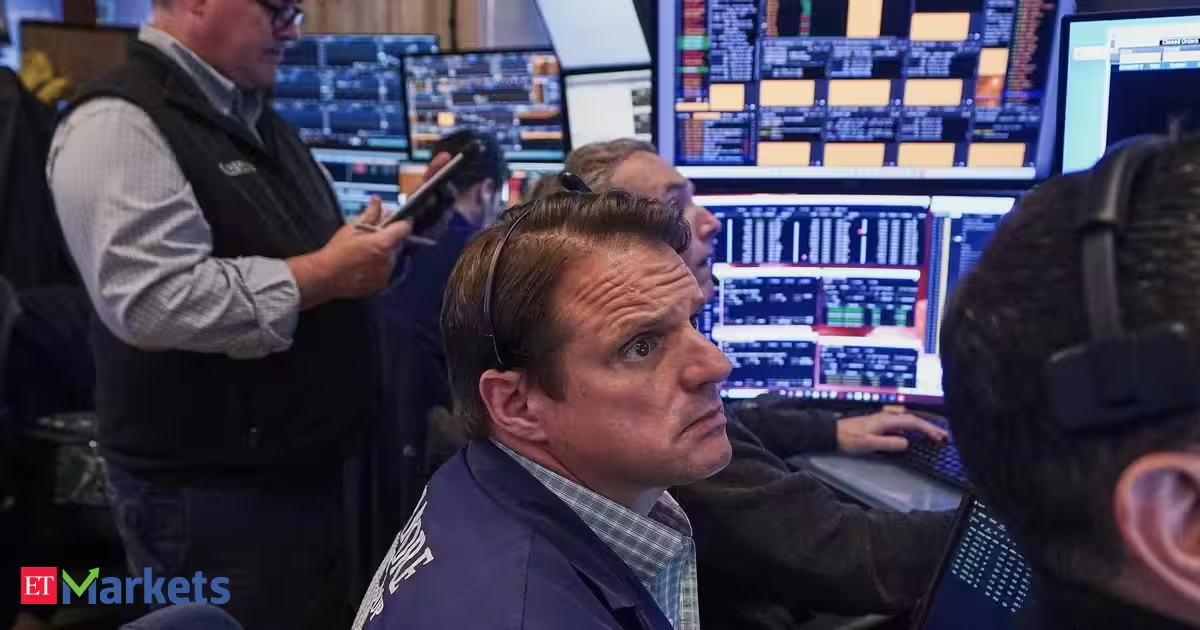
A rebound in chip shares put the Nasdaq out front, while the Dow’s gains were more subdued. The Labor Department’s Consumer Price Index showed inflation cooled more than analysts expected in June, largely due to abating energy price pressures amid last month’s signs of progress in U.S.-Iran peace negotiations. U.S. Federal Reserve Chair Kevin Warsh sat for his first congressional testimony since his confirmation, in part to lay out the central bank’s plan to contain upward price pressures. Warsh’s testimony occurred while the battle for control over the Strait of Hormuz has led to ramped-up airstrikes between the United States and Iran and boosted crude oil prices, reviving fears of upward price pressures.
Still, following the CPI report, financial markets were pricing in an 83.4% likelihood that the Fed will let its key interest rate stand at the conclusion of its July policy meeting, up from 58.3% on Monday. Markets expect at least one 25-basis-point rate hike before year-end, according to CME’s FedWatch tool.
“The inflation report seems to have weakened the argument that the Fed is going to raise rates,” said Chuck Carlson, chief executive at Horizon Investment Services in Hammond, Indiana. “It gives the Fed cover, for now.”
“(Warsh) is saying we can bring down inflation, and that’s what the people he was speaking to want to hear,” Carlson added. “And maybe inflation is going to come down without having to raise rates.”
EARNINGS SEASON KICKS OFF Second-quarter earnings season began with five big U.S. banks reporting solid results, buoyed by trading strength and dealmaking. Goldman Sachs surged after it surpassed second-quarter profit expectations, as dealmaking picked up pace and geopolitical uncertainties boosted its trading business. JPMorgan Chase and Bank of America both advanced after delivering consensus-beating profits. But Citigroup slid as worries over expenses overshadowed its profit beat. Wells Fargo also declined.
“It’s a big earnings week, so we finally get to hear from corporate America,” said Tom Hainlin, national investment strategist at U.S. Bank Asset Management in Minneapolis. “What we continue to look for from the banks is what are they seeing in terms of consumer health? So far, good news on that front.” IBM shares tumbled after the company warned second-quarter revenue would fall below estimates.
According to preliminary data, the S&P 500 gained 28.69 points, or 0.38%, to end at 7,544.03 points, while the Nasdaq Composite gained 236.48 points, or 0.91%, to 26,109.65. The Dow Jones Industrial Average rose 28.92 points, or 0.05%, to 52,527.56.

At six o’clock on Sunday morning I was standing on what used to be my lawn, decanting a washing-up bowl of grey water onto a hydrangea like a man disposing of evidence. The hosepipe has just been banned. The water butt gave up in May. The lawn itself is now the colour and texture of a digestive biscuit.
Everyone of a certain age says the same thing: this is 1976 again. Standpipes in the street, ladybirds in biblical quantities, and a government so rattled it appointed an actual Minister for Drought, whereupon it promptly rained for a month. We got through it because it was a freak. It has stopped being a freak.
The Met Office spent June marking fifty years since the legendary summer of 1976, still the hottest and sunniest on record, its peak temperature now beaten on six days in the past decade. Meanwhile the Environment Agency’s latest bulletin reads like the opening chapter of a disaster novel: five water companies imposing hosepipe bans, reservoirs below average, and 729 separate restrictions on farmers’ abstraction licences while winter storage reservoirs drain and East Anglian livestock men run out of forage in July.
My lawn will recover. The people who grow your dinner may not.
Consider Jeremy Clarkson, Britain’s most heavily televised farmer. He says last year’s scorched summer gave him the second worst harvest in living memory, with yields down as much as 40 per cent, and he has admitted that Diddly Squat will not make money on wheat and barley. Read that again. A man with an Amazon contract, a farm shop, a pub and several million viewers cannot make the actual farming bit of his farm pay. Now picture the farm three miles down the road with the same weather, the same costs and no camera crew.
And what is the Government’s grand plan for these people? There is no drought fund, no irrigation strategy worth the name, no serious word about food security from a Treasury that can always find a few billion down the sofa for something shinier. Increasingly, the plan is to pay them to stop.
It is as if Rolls-Royce had hit a rough patch and its biggest customer, rather than ordering engines, offered a stipend to let wildflowers grow through the assembly line. Not as a sideline. As the business. The lathes fall silent, the apprentices retrain as meadow wardens, the annual report is retitled A Celebration of Grasses. Everyone applauds the biodiversity, right up until the day the country needs an engine.
That is not a wild caricature of rural policy. Under the sustainable farming schemes, the state pays handsomely per hectare for flower-rich margins, herbal leys and freshly planted trees, while the market pays a wheat price that frequently fails to cover the cost of growing wheat. The Government’s own food security analysis concedes that if every land-use and climate policy were enacted in full, almost a quarter of our farmland could come out of food production.
Business readers will recognise the disease instantly, because it is not really about farming at all. It is about price signals. When the subsidy for not producing exceeds the margin for producing, any rational operator stops producing. You do not need a conspiracy; a spreadsheet will do. Farmers are not sowing wildflower meadows because they have gone soft. They are sowing them because they are the only crop in Britain with a guaranteed buyer.
Which brings us, inevitably, to Rachel Reeves. Farming’s income statement was already wrecked by the weather. The Chancellor then went after the balance sheet, with her 20 per cent inheritance levy on farms worth over £1 million, unmoved by the tractors on Whitehall and by analysis suggesting the raid could end up costing the Treasury £2 billion. Drought is nature’s nail in the coffin of the family farm. The tractor tax is the man-made one, and it was hammered in deliberately.
The bill lands with the rest of us. Retailers report that hot weather is already pushing food prices up as domestic yields shrivel, and peers have warned that taps could run dry by mid-century without serious investment. Food security is infrastructure, every bit as much as runways and reservoirs. We would never pay Heathrow to grow moss on its runways and then act surprised when nothing lands.
In 1976 we scraped through because the rain came back and farming was still stubborn, solvent and everywhere. In 2026 the rain will come back eventually. The farmers, once gone, will not.
Meanwhile I shall be out at dawn with my washing-up bowl, keeping one hydrangea alive in a dead brown garden. It is ornamental, it produces nothing, and it survives entirely on handouts. I have decided to call it British agricultural policy.

Richard Alvin
Richard Alvin is a serial entrepreneur, a former advisor to the UK Government about small business and an Honorary Teaching Fellow on Business at Lancaster University.
A winner of the London Chamber of Commerce Business Person of the year and Freeman of the City of London for his services to business and charity. Richard is also Group MD of Capital Business Media and SME business research company Trends Research, regarded as one of the UK’s leading experts in the SME sector and an active angel investor and advisor to new start companies.
Richard is also the host of Save Our Business the U.S. based business advice television show.

XRP 20 Days Left!

Taco Bell under investigation over outbreak of ‘explosive diarrhea’ parasite

ChronoScale Holdings Stock Jumps 16.68% as Company’s AI Infrastructure Play Continues Wild Streak


-

 Fashion5 days ago
Loro Piana Fall 2026 Enters Houston’s Art Scene
-

 Fashion4 days ago
Weekend Open Thread: Nutriplenish Leave-In Conditioner
-
 Sports5 days ago
2026 Genesis Scottish Open Thursday TV coverage: Round 1
-

 Tech7 days ago
Anthropic brings Claude Cowork to mobile and web as usage data shows most users aren’t coding
-

 Sports5 days ago
Super Eagles star Moses Simon opens up on Liverpool transfer regret
-

 Tech5 days ago
Character.AI enters the microdrama arena with its own productions, but there’s a twist
-

 Tech17 hours ago
Get Your ESP32 Sunny Side Up With This Solar Dev Board
-

 News Videos2 hours ago
XRP BOMBSHELL… XRP OMBOARDED FOR TRANSACTIONS!!!
-

 News Videos6 days ago
Crypto Just Entered Its Most Important 6-Month Candle (Could Decide Everything!)
-

 Tech2 hours ago
Dark Secrets Emerge When Jailbreaking LLMs
-

 Tech7 days ago
Keychron is stepping outside keyboards with a $349 Thunderbolt 5 dock aimed at power users
-

 Business7 days ago
ASX 200 Slides Over 0.6% as Rare Earths and Lithium Stocks Tumble Amid Global Semiconductor Sell-Off Today
-
 NewsBeat5 days ago
Major update after Huntingdon train attack as man enters plea
-
 Business7 days ago
Will Trent shares rebound after Q1 update triggers 13% crash? Here’s what technical charts indicate
-
 Business7 days ago
SpaceX Shares Slide Nearly 6% Amid Post-IPO Volatility and Starship Test Focus
-
 Sports6 days ago
39-year-old Djokovic wins five-hour thriller to enter Wimbledon semis | Other Sports News
-

 Tech6 days ago
Entra passkey enrollment vishing targets Microsoft 365 users
-

 News Videos1 day ago
how to make coin bank box with cardboard #scienceproject #money #diy #shorts
-
 Tech1 day ago
Cloudflare Precursor Watches Your Mouse and Keyboard To Decide If You Are Human
-

 Tech5 days ago
Level Infinite Launches Gangstar Mirage City in India with Pre-Registrations
You must be logged in to post a comment Login