

Crypto World
Coinbase Reportedly Opens Easier Access for Mainland China: Test of Tolerance or Calculated Gamble?


Coinbase has reportedly begun accepting Chinese national IDs and mainland addresses for account verification, based on user reports circulating on July 14. Reports suggest Coinbase staff confirmed the change for users in China.
Responding to BeInCrypto’s request for comment, Mary-Kate Collins, head of international communications at Coinbase, pointed to the company’s offshore platform without directly confirming the mainland verification change.
“Coinbase International Exchange allows customers in more than 100 countries to onboard and trade a variety of products, including crypto, equities and commodities.”
Follow us on X to get the latest news as it happens
Coinbase has made no public announcement, and its own support documentation still lists a passport as the only accepted document for the country. The gap leaves the scope of the change unclear.
Coinbase Reports Contradict Official China Documentation
Until now, mainland residents faced steep verification hurdles. The process previously required a Chinese passport and a Hong Kong address, documents many potential users lack.
Multiple social media users posted screenshots of successful sign-ups on Monday. The company’s help center still tells a different story.

Its identity verification page lists a passport as the sole supported document for China and marks proof of address as not available. The discrepancy may reflect a staged rollout. However, Coinbase has confirmed nothing, and access could narrow as quickly as it appeared.
Testing the Limits of Beijing’s Crypto Ban
The People’s Bank of China and nine other agencies outlawed crypto trading in a September 2021 notice. It declared services from offshore exchanges to mainland residents illegal financial activity. Huobi, then among the largest exchanges globally, stopped accepting Chinese users within days.
Enforcement has tightened since. Regulators widened the crypto ban to stablecoins and tokenization in February, while a separate offshore broker crackdown hit mainland trading channels in May.
Coinbase is not first through the door. OKX and other rivals have long served some Chinese users through offshore channels.
The difference lies in visibility. A US-listed exchange easing mainland onboarding invites scrutiny that offshore competitors rarely attract, particularly as Washington frames crypto as strategic competition with China.
The scale of what Beijing shut down is measurable. Cambridge data showed China produced over 75% of global Bitcoin (BTC) hashrate, the network’s computing power, in September 2019. That share collapsed to near zero by July 2021 after the mining ban.
Even partial re-entry by mainland retail would therefore represent a meaningful pool of demand. For users, though, the legal exposure is real. Trading remains prohibited for mainland residents regardless of which platform accepts their documents.
Both readings of the move can be true at once. For Beijing, tolerance is now being tested in public. For Coinbase, a rollout with no announcement and unchanged documentation looks like a gamble kept deliberately reversible.
China’s ban-or-build crypto approach has so far channeled regulated activity through Hong Kong. Updated help pages in the coming weeks would signal commitment. Quietly closed doors would answer the question the other way.
The post Coinbase Reportedly Opens Easier Access for Mainland China: Test of Tolerance or Calculated Gamble? appeared first on BeInCrypto.

The broader cryptocurrency market has endured a persistent bearish phase in recent months, with countless leading digital assets, including Bitcoin (BTC), Ethereum (ETH), Ripple (XRP), Solana (SOL), Cardano (ADA), and more bleeding heavily.
The sector, though, consists of thousands of tokens, and few have defied the ongoing carniage by charting substantial gains. Cash Cat (CASHCAT) is one of the most notable examples, with its price skyrocketing by 2,000% over the last week. Below is a detailed breakdown of its performance and what may lie ahead.
The Impressive Pump
At the start of July, the cat-themed meme coin was basically worthless, trading well below $0.01 with a market cap of around $3 million. Over the past few days, though, there has been a remarkable uptick, and now CASHCAT stands at around $0.17, with a capitalization of just under $200 million. This makes it the 176th-largest cryptocurrency.

Perhaps the most evident reason for the price explosion is that the meme coin is affiliated with the official Robinhood platform, which recently launched its own blockchain. Following the move, CASHCAT dominated the network with massive transaction volume, thousands of traders, and high liquidity.
Another main factor is the backing from Binance. The world’s largest crypto exchange added the token to its perpetual services, allowing traders to use up to 10x leverage.
Investor interest is also quite high. The analytics platform Lookonchain revealed that an anonymous market participant spent 519 ETH (over $920,000) to purchase 6.12 million CASHCAT coins. Prior to that, the entity disclosed that another investor had successfully cashed out $1 million in the meme coin after investing less than $1,000. Of course, this triggered speculation of potential inside information.
However, a separate individual sold too early and made “only” 10x on their initial $69 investment. Should they have held a bit more, they could have made a fortune, Lookonchain noted.
CASHCAT is indeed on fire lately, with many analysts predicting further gains in the near future. Some even suggest that Coinbase could be the next big exchange to support the token, potentially adding more fuel to the rally.
Beware the Risks
Despite the overall enthusiasm, though, traders and investors must be extremely careful when dealing with such meme coins since they are often driven purely by hype, and once that momentum fades, the price usually follows.
The crypto community is well aware of other tokens of that type that recently charted substantial gains only to collapse by double digits in a matter of minutes. One example is MemeCore (M), whose price hovered around $3 in late June before nosediving to around $0.50 following allegations of manipulation.
Siren (SIREN) should also be mentioned. Last month, the token experienced a whopping crash from approximately $1.30 to $0.05 after its controller supposedly sold roughly 94% of the supply.
The post Viral Cat-Themed Meme Coin Explodes by 2,000% in a Week: What’s Behind the Madness? appeared first on CryptoPotato.
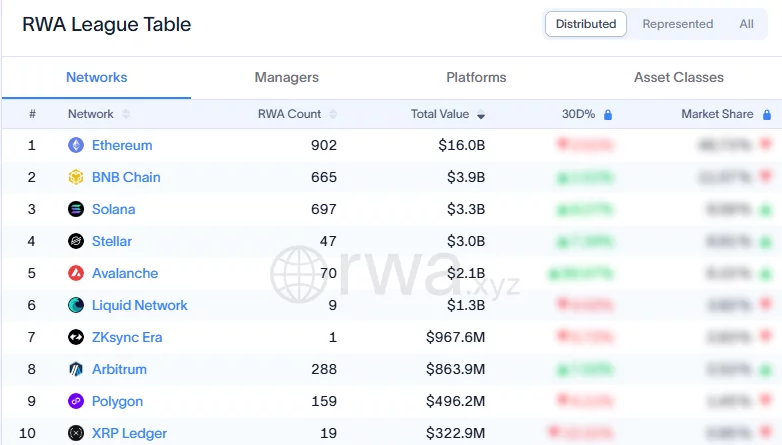
Avalanche has reached $2.1 billion in distributed tokenized real-world asset value after a 60.47% monthly increase, supported by a newly announced $11 billion institutional tokenization deal with Bridgetower.
Summary
- Avalanche’s tokenized RWA value has climbed to $2.1 billion after a 60.47% monthly increase.
- Bridgetower’s $11 billion tokenization deal has pushed Avalanche into the top five for net RWA inflows.
- BlackRock, VanEck and Franklin Templeton continue expanding institutional activity on Avalanche.
According to data from RWA.xyz, Avalanche’s distributed tokenized asset value climbed to $2.1 billion over the past 30 days, lifting the network to fifth place among tokenization blockchains by distributed value.
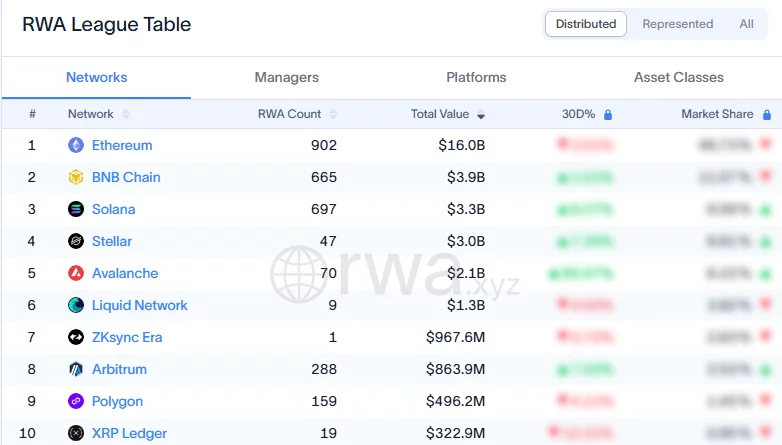
The latest increase came as institutional issuers expanded their use of Avalanche for real-world asset deployments, strengthening its position in one of crypto’s fastest-growing sectors.
Bridgetower expansion has accelerated institutional adoption
Fresh momentum followed Bridgetower’s July 13 announcement that it had tokenized more than $11 billion in production-linked real-world assets on Avalanche using Chainlink infrastructure. The portfolio includes the Arizona Copper-Gold project and pushed Avalanche into the top five networks for net RWA inflows on RWA.xyz shortly after the announcement.
Commenting on the milestone, Ava Labs Vice President of Business Development Morgan Krupetsky wrote on X that Avalanche now ranks among the top five blockchain networks for tokenized assets by both distributed and represented value, adding that the network’s progress is “still just the beginning.”
Bridgetower’s deployment builds on an institutional base that was already expanding before the latest transaction. BlackRock’s BUIDL tokenized U.S. Treasury fund has grown to more than $900 million on Avalanche, making it the network’s second-largest tokenized asset after Ethereum, according to publicly available on-chain data.
Institutional participation has continued to widen beyond treasury products. Investment manager VanEck has announced plans for a portfolio focused on gaming, decentralized finance, artificial intelligence and real-world assets on Avalanche, while unused capital in the strategy will be allocated to tokenized money market instruments issued on the network.
Other financial institutions have also selected Avalanche for tokenized financial products. Franklin Templeton’s BENJI fund and Littio Bank both chose Avalanche for yield-related offerings, while previous industry research has identified the blockchain as one of the leading infrastructures for real-world asset tokenization.
Competition with Ethereum remains intense
Even after the recent growth, Avalanche remains well behind Ethereum in overall tokenized asset value. According to RWA.xyz, Ethereum continues to host roughly $16 billion in tokenized real-world assets, keeping a significant lead despite Avalanche’s recent gains.
Avalanche’s institutional appeal has largely centered on its subnet architecture, which allows organizations to launch dedicated blockchains with high throughput, low latency, and full Ethereum Virtual Machine compatibility. Ava Labs has consistently promoted these technical features as suitable for enterprise deployments requiring customized blockchain environments.
Growing tokenized asset activity also increases network usage because AVAX is required for transaction fees, staking and subnet deployment. The 60.47% monthly increase recorded by RWA.xyz therefore coincides with measurable on-chain activity rather than speculative trading alone.
Meanwhile, the Avalanche Foundation continues to support tokenization projects through its $50 million real-world asset initiative, with additional subnet launches expected as more institutions explore blockchain-based financial products.
Regulatory developments could also influence adoption. Earlier this year, the U.S. Securities and Exchange Commission discussed tokenization during a public roundtable, where Avalanche was identified among the blockchain networks attracting industry attention.
At the same time, competition remains strong as Ethereum layer-2 networks and other high-performance blockchains continue competing for institutional tokenization projects, leaving future market share dependent on adoption and regulatory progress rather than a single transaction.
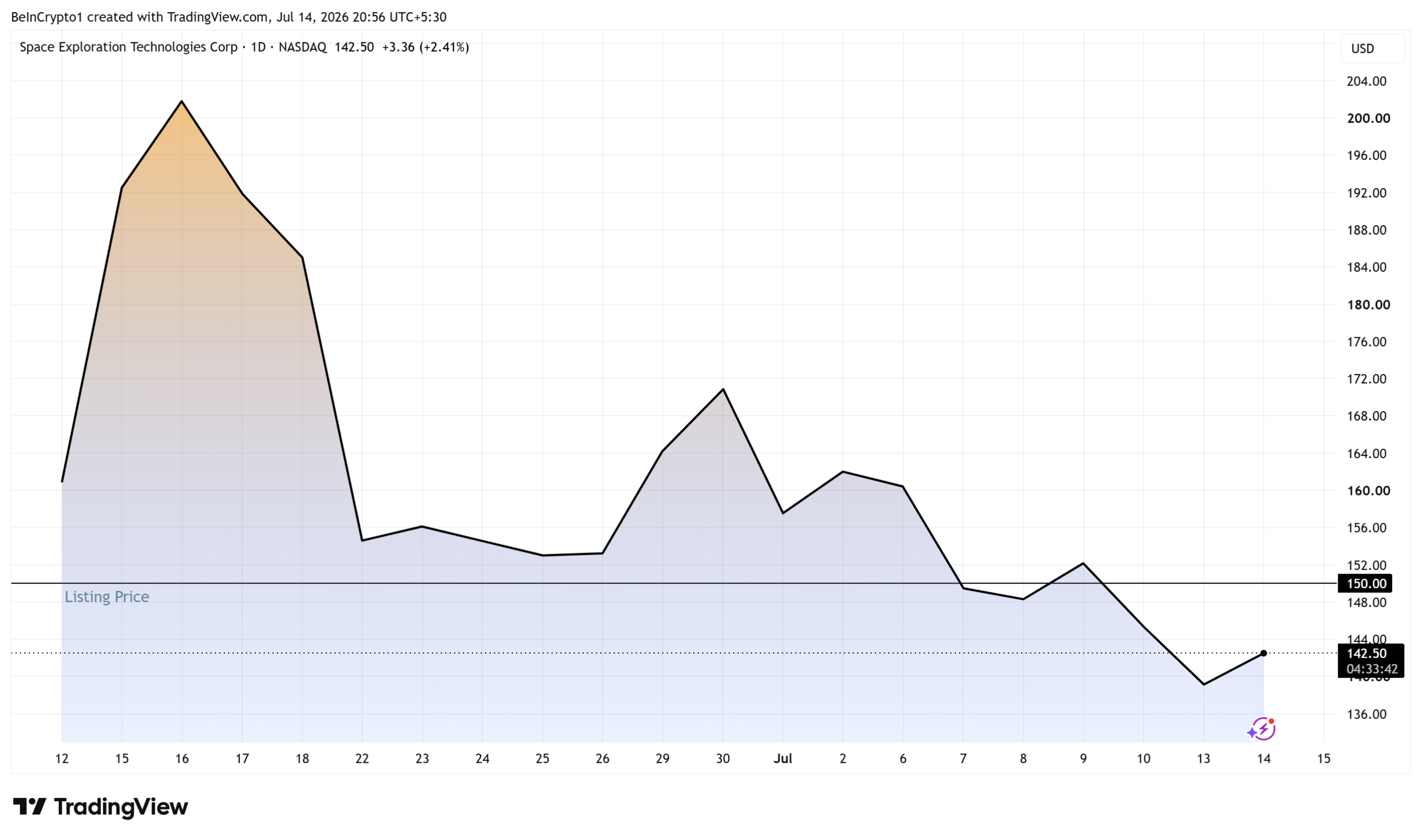
Elon Musk’s net worth has fallen more than $500 billion from its June peak of $1.45 trillion as SpaceX stock slid nearly 40% from record highs reached days after the company’s Nasdaq debut.
SPCX traded near $142.50 on Tuesday, up 1.74%, after printing an all-time low of $136.78 on Monday. Analysts argue the correction reflects profit-taking rather than any weakening in the company’s fundamentals.

Why SpaceX Stock Fell 38% From Its Peak
SpaceX (SPCX) priced its record June IPO at $135 per share and hit $225.64 on June 16. That day, Forbes reported the company had passed Amazon to become the fifth-largest US company by market value.
The math behind Musk’s loss is mechanical. He holds 4.8 billion shares, about 42% of SpaceX, according to the IPO filing. Each $1 move in SPCX therefore shifts his paper wealth by roughly $4.8 billion.
The $84 slide from peak erased close to $400 billion from that stake alone. Forbes also cut $116 billion of restricted Tesla stock from its estimate, leaving his fortune near $879 billion, still the world’s largest.
The company has shed more than $1 trillion in market value in four weeks, with its capitalization now near $1.86 trillion. The selloff persisted despite the fastest Nasdaq 100 inclusion on record and the firm’s place among the top stocks to watch this quarter.
Geopolitical risk added pressure after Iranian state media designated Musk’s Middle East operations, including Starlink, as potential military targets, CNBC reported.
Can SpaceX Stock Rebound?
Wall Street’s answer is yes, over time. Analysts view the drop as a valuation reset after post-IPO euphoria, not a broken business, so recovery depends on execution.
Evercore ISI initiated coverage on Tuesday with an Outperform rating and a $230 price target, implying roughly 65% upside. The firm’s model projects revenue compounding at 106% annually through 2028, with margins widening from 35% to 69%.
The call sits near the $236 consensus among covering brokers.
“We don’t think there’s a debate that this is an extraordinary company on a real path to reshaping the future of humanity.”
Evercore ISI analyst Kutgun Maral wrote in the initiation note, describing SpaceX as a vertically integrated operation with near-monopoly access to orbit.
Operations have not slowed with the share price. SpaceX launched 27 more Starlink satellites from Vandenberg on Monday. Starship Flight 13 follows on Thursday, carrying 20 functional Starlink V3 satellites for the first time.
That batch adds 60 terabits per second of capacity, over 20 times a single Falcon 9 load, per SpaceNews.
History offers a precedent. Facebook fell more than 50% below its 2012 IPO price within four months. The stock regained that level within 15 months as earnings caught up.

That launch cadence feeds Musk’s long-term valuation claims, while growing demand for tokenized stocks suggests retail appetite for SPCX exposure remains intact.
Still, a premium valuation and execution risk could cap near-term gains.
Thursday’s Starship flight now stands as the first major test of the rebound case. A clean mission would show the company delivering what investors are paying for, while a setback may extend the four-week correction.
The post SpaceX Stock Crash Wipes $500 Billion From Musk’s Fortune: Can It Rebound? appeared first on BeInCrypto.
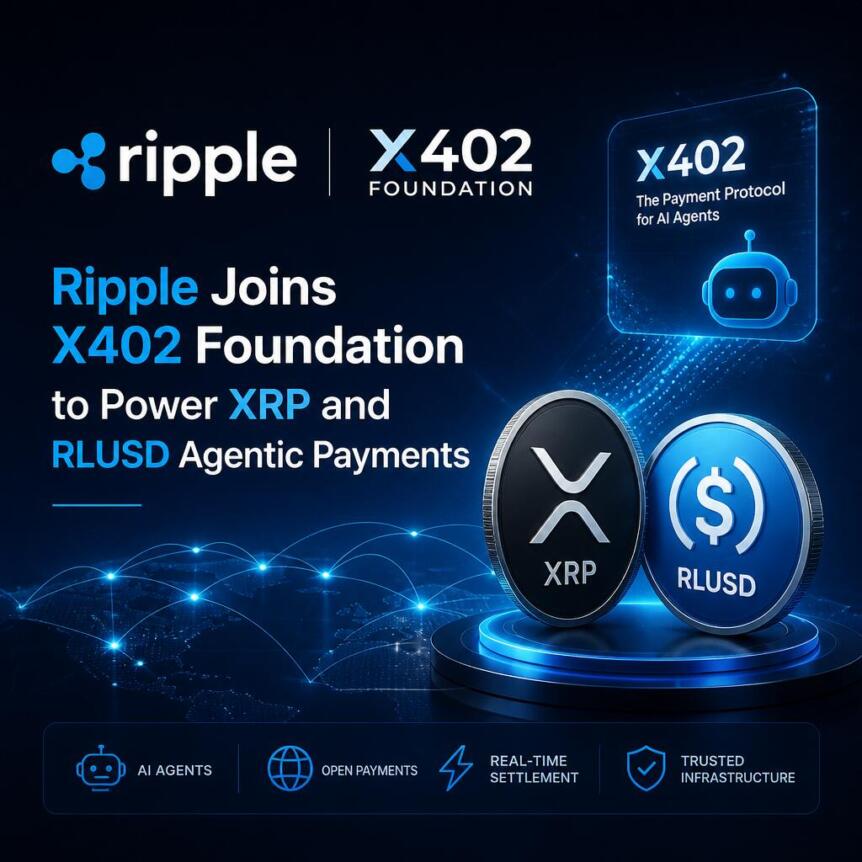
Ripple has joined the x402 Foundation to expand payment capabilities for XRP and RLUSD across AI-driven digital transactions. The move strengthens Ripple’s role in building payment infrastructure for automated online services. It also places the company among major technology, finance, and blockchain organizations supporting the x402 protocol.
Ripple Strengthens XRP and RLUSD Payment Infrastructure
Ripple became a Premier Member of the x402 Foundation as development around automated digital payments continues to expand. The membership supports broader adoption of XRP and RLUSD for machine-to-machine transactions. It also aligns Ripple with efforts to standardize internet-native payment systems.
The company continues building payment tools on the XRP Ledger for automated transaction processing. Those tools support the x402 protocol, which allows software agents to complete payments using XRP and RLUSD. As a result, developers gain additional options for integrating blockchain payments into digital services.
Ripple has steadily expanded its infrastructure during recent months through several related initiatives. In June, it introduced the XRPL AI Starter Kit to simplify automated payment development. The company also supported the launch of the XRPL AI Hub through Ripple-backed t54.ai alongside the XRPL Foundation.
The XRP Ledger has already recorded increasing activity following support for the x402 protocol. Earlier this month, the XRPL Foundation confirmed that the network surpassed one million agentic transactions. That milestone reflected growing developer activity and increasing use of automated payment workflows across the ecosystem.
Background developments also support Ripple’s broader payment strategy across blockchain infrastructure. The company has continued expanding enterprise payment solutions alongside stablecoin services through RLUSD. At the same time, XRP remains a core settlement asset within Ripple’s payment ecosystem.
Linux Foundation Launches X402 Foundation Under Open Governance
The Linux Foundation officially launched the x402 Foundation after Coinbase completed its contribution to the x402 protocol. The operational launch places protocol development under an open governance structure. That framework allows participating organizations to guide future technical improvements together.
The Foundation brings together technology companies, payment providers, financial institutions, and blockchain organizations. Premier members include Ripple, Coinbase, Circle, Google, Mastercard, Amazon Web Services, Visa, Stripe, Shopify, Cloudflare, Adyen, American Express, Fiserv, Monad Foundation, Solana Foundation, Stellar Development Foundation, and MoonPay. Their participation supports collaborative protocol development across multiple industries.
General members include Injective, Near Foundation, Polygon Labs, and World Liberty Financial. Associate members include the Cardano Foundation, Casper, the BSV Association, the Japanese Contents Blockchain Initiative, and OMA3. Together, these organizations broaden participation across blockchain ecosystems and technology sectors.
The x402 protocol aims to simplify native internet payments between software services and applications. Open governance allows participating members to contribute technical standards and implementation improvements. This structure also encourages wider compatibility across payment networks and blockchain platforms.
Ripple’s participation adds another payment-focused blockchain network to the Foundation’s growing membership. The company continues expanding real-world payment applications through XRP and RLUSD across multiple initiatives. Meanwhile, the Foundation provides a shared environment for advancing internet payment standards through collaborative development.

The cryptocurrency market erased more than $20 billion after fresh geopolitical tensions pushed traders toward safer assets. Bitcoin led the decline as oil prices climbed sharply following new comments from U.S. President Donald Trump. Meanwhile, liquidations accelerated across major digital assets before key United States economic events.
Trump’s Remarks On The Strait Of Hormuz Deepen Pressure Across Risk Markets
President Donald Trump increased market uncertainty after discussing the Strait of Hormuz and ongoing tensions involving Iran. He stated that the United States would take control of protecting the strategic shipping route. Consequently, energy markets reacted quickly as geopolitical risks intensified.
Brent crude advanced above $79 per barrel after gaining nearly 5% during renewed military developments. At the same time, reports indicated continued exchanges between the United States and Iran across the region. Iran also announced the closure of the Strait of Hormuz, although U.S. Central Command rejected that claim.
Higher oil prices added fresh pressure across global financial markets and reduced demand for risk-sensitive assets. As a result, cryptocurrencies joined broader market declines during the trading session. The latest developments also extended uncertainty surrounding international trade and energy supplies.
The market weakness followed separate reports involving American Bitcoin, the mining and treasury company backed by Eric Trump. Bloomberg reported that the company’s shares had declined more than 95% from their previous peak. The decline also reduced the value of Eric Trump’s reported stake by more than $600 million.
American Bitcoin reportedly closed at a record low of $6.13 on July 10. The company had recently completed a one-for-15 reverse stock split before reaching that level. As a result, the broader crypto sector faced additional negative sentiment alongside geopolitical concerns.
Rising energy costs often increase inflation expectations and reduce demand for speculative assets. Therefore, cryptocurrencies experienced additional selling pressure as market participants adjusted their positions. The combination of geopolitical uncertainty and higher oil prices strengthened the broader risk-off environment.
Bitcoin Leads Crypto Decline As Liquidations Accelerate
Bitcoin fell more than 3% during the selloff and traded near $62,389 during the latest session. Earlier, the cryptocurrency reached an intraday low of approximately $62,120 after trading above $64,300. The decline reflected broad weakness across the digital asset market.
Ethereum also moved lower as selling pressure spread across major cryptocurrencies. XRP, BNB, Solana, Hyperliquid, Zcash, and Cardano declined between 2% and 6% during the session. Consequently, losses expanded across both large-cap and alternative digital assets.
According to CoinGlass, the crypto market lost nearly $20 billion in value during the downturn. The data provider also reported almost $40 million in liquidations across multiple digital asset positions. Furthermore, approximately 73,000 traders faced liquidations within the previous 24 hours.
Bitcoin, Ethereum, Solana, XRP, Hyperliquid, SPCX, SNDK, and MU positions recorded notable forced liquidations. Leveraged positions amplified losses as prices declined across the broader market. Therefore, liquidation activity accelerated throughout the trading session.
CoinGlass also reported the largest single liquidation on the Hyperliquid platform. The closed XYZ: SKHX position carried an estimated value of approximately $4.86 million. That transaction highlighted the impact of leverage during periods of heightened market volatility.
Attention has now shifted toward the upcoming United States economic releases scheduled for this week. Markets will receive the latest Consumer Price Index inflation report before additional policy signals emerge. Federal Reserve Chair Kevin Warsh will also deliver testimony that could influence expectations surrounding future interest rate decisions.

Velocity, a stablecoin treasury and settlement infrastructure provider, has raised $38 million in a Series A round as it seeks to deepen the plumbing enterprises need to use stablecoins for cross-border payments and finance operations. The deal brings the company’s total funding close to $50 million since it launched in 2025, according to Velocity.
The round was led by Dragonfly and FirstMark, with participation from Activant Capital, Capital One Ventures, QED Investors, Coinbase Ventures, Wintermute Ventures and Ripple. Velocity said it will use the proceeds to expand its banking and payments network, create new products, and strengthen its regulatory capabilities.
Key takeaways
- Velocity raised $38 million in Series A funding to scale stablecoin treasury and cross-border settlement infrastructure.
- Backers include Dragonfly and FirstMark, alongside strategic investment from firms such as Coinbase Ventures and Ripple.
- The company says its software connects stablecoin networks to banking, custody, compliance and settlement systems for enterprises.
- Funding lands amid intensifying competition for the enterprise stablecoin market, including initiatives such as Open USD.
What Velocity is building for enterprise finance
Founded in 2025, Velocity develops software designed to bridge stablecoin networks with traditional financial rails. The company’s focus is on connecting stablecoin-based value transfer to the systems enterprises rely on—banking connectivity, custody, compliance workflows and settlement processes.
Velocity’s stated customers include enterprise finance teams, payment providers, fintech firms and financial institutions that want to incorporate stablecoins into cross-border payment flows and treasury operations. In practice, that means the product is less about issuing tokens itself and more about making stablecoin usage operational inside existing financial processes.
According to Velocity, the latest financing will support expansion of its banking and payments network and help it develop additional products. It also highlights “regulatory capabilities” as a priority, underscoring that firms moving stablecoin treasury workflows into regulated contexts need more than basic on-chain transfer functionality.
More capital flows into stablecoin infrastructure
Velocity’s Series A adds to a broader pattern: investors are funding infrastructure players that sit between stablecoin networks and real-world financial operations. In earlier coverage this year, Tether participated in a $5.2 million round for Ark Labs, which is building stablecoin issuance and settlement infrastructure on Bitcoin. The project focuses on a programmable execution layer intended to enable faster payments and more complex financial applications.
Other enterprise-focused infrastructure investments cited by Cointelegraph include OpenFX, which raised $94 million in a Series A to expand a stablecoin-based foreign exchange network. Trace Finance also secured $32 million to grow cross-border payment infrastructure that combines banking, foreign exchange and stablecoin settlement services.
Taken together, these moves point to a market where differentiation increasingly depends on integration depth—how smoothly stablecoin flows plug into liquidity management, compliance and settlement—and less on purely offering a token. Velocity’s emphasis on expanding its banking and payments network fits that trend, suggesting investors view “connective tissue” as a major constraint on enterprise adoption.
Enterprise stablecoin competition heats up
Competition for enterprise stablecoins is not standing still. In June, more than 140 companies backed the launch of Open USD (OUSD), a dollar-pegged stablecoin supported by major payments and crypto players including Visa, Mastercard, Coinbase and Ripple. That development signals how quickly enterprise-facing stablecoin initiatives are moving from concept to rollout.
Velocity’s timing appears deliberate. Rather than competing directly as a stablecoin issuer, the company is positioning itself as the system layer enterprises can use regardless of which dollar-pegged stablecoin rail they choose. Still, as more stablecoin ecosystems and industry consortia emerge, the integration and compliance demands for treasury operations are likely to increase rather than decrease.
For investors and operators, the key question is whether these infrastructure providers can maintain flexibility across networks while meeting the regulatory expectations of banks, payment providers and financial institutions. Velocity’s stated commitment to regulatory capabilities suggests it views governance, controls and compliance tooling as part of the competitive edge.
Why investors care: stablecoins are moving into payment reality
The funding momentum also aligns with reported usage data indicating stablecoins are becoming part of everyday payment flows. A joint analysis by McKinsey and Artemis Analytics, referenced in the source reporting, estimated that stablecoins processed $390 billion in annualized real-world payments in 2025. The figure includes about $226 billion in business-to-business transactions.
While these estimates describe annualized payment activity rather than balances held on exchanges or in wallets, they matter for enterprise adoption because they point to sustained transactional demand. As stablecoin rails get integrated into treasury and settlement workflows, companies may look for providers that can reduce operational friction—such as reconciling transfers, managing liquidity and handling compliance requirements—without forcing teams to rebuild core financial processes from scratch.
Velocity’s focus on connecting stablecoin networks to banking, custody, compliance and settlement systems suggests it is targeting that operational gap. If stablecoin payment volumes keep scaling, the “last mile” of infrastructure—network connectivity and regulated settlement execution—may become a deciding factor for who can serve institutional and enterprise users reliably.
Next, investors and potential customers should watch whether Velocity can broaden its banking and payments network quickly while demonstrating that its compliance and settlement tooling supports real cross-border treasury workflows. With enterprise stablecoin competition accelerating—from initiatives like Open USD to other infrastructure funding—execution and integration depth will likely determine which providers become essential partners rather than optional add-ons.

The US Senate is nearing a vote on the Digital Asset Market Clarity (CLARITY) Act, a market-structure bill backed by Republicans that would set new rules for digital-asset activity. But a vocal bloc of Senate Democrats and civil-society groups says the legislation is incomplete, arguing it fails to address ethics concerns tied to President Donald Trump’s financial relationships with parts of the crypto industry.
At a press conference on Tuesday, Senators Chris Murphy, Jeff Merkley, and Chris Van Hollen—along with representatives for Americans for Financial Reform and Indivisible and actor Ben McKenzie—criticized the bill for what they characterized as “Trump’s crypto corruption.” The lawmakers argued that passing a new regulatory framework without curbing potential conflicts would effectively “protect” the President’s ability to influence the sector.
Key takeaways
- Democratic senators Murphy, Merkley, and Van Hollen signaled they will not back the CLARITY Act unless ethics safeguards are added.
- The bill’s Senate path is tight: it must clear a 60-vote threshold and then return to the House, meaning some Democratic support is likely required.
- Majority Leader John Thune says the Senate will vote before the Aug. 10 work period, though the exact timing was not confirmed in the Senate calendar as of Tuesday.
- The CLARITY Act has support from at least two law-enforcement organizations, which argue it would help combat digital-asset crime.
Ethics fight threatens a bipartisan milestone
The CLARITY Act has been moving through Congress for roughly a year, having already passed the House as part of a broader Republican “Crypto Week” agenda. As the bill heads to the Senate floor, opposition has focused less on whether rules are needed—and more on whether the proposed framework includes sufficient ethics provisions.
In the Tuesday remarks, Murphy argued there is “no reason” to create a new regulatory system for crypto if it does not prevent what he described as corruption across the industry. He warned that legislation could become “in and of itself a fundamental corruption” if it effectively shields the President’s influence over how the sector is regulated.
Other Senate Democrats have raised similar concerns. Van Hollen, Murphy, and Merkley cited recent disclosure activity by Trump as part of the broader push for safeguards. The article notes that Trump disclosed that he earned $1.4 billion from crypto ventures in 2025, a point connected to objections about the bill’s ethics posture. Senator Elizabeth Warren—an influential critic of many crypto-related policies—has also called for the bill to address “brazen financial corruption,” aligning her position with the group opposing the legislation’s current form.
Still, the ethics dispute also has practical implications: with the CLARITY Act requiring 60 votes, any Democratic refusal could make passage difficult even with Republicans’ slim majority. The Senate’s voting arithmetic becomes especially relevant as party leaders consider whether they can secure enough support to avoid a failed floor vote.
What the Senate vote means for timing and leverage
Majority Leader John Thune told Bloomberg Government News that the Senate would hold a vote before the August recess/work period, which is scheduled to begin Aug. 10. As of Tuesday, the precise timing was reportedly not yet reflected in the official Senate calendar.
Thune’s pledge matters because it compresses the window for negotiations that could produce amendments or side arrangements. If lawmakers expect a vote before Aug. 10, there is less time to resolve disagreements over ethics language, stablecoin provisions, or other implementation details.
The political pressure around timing has also been heightened by developments on the Republican side. The article says Trump urged senators to pass the bill “in honor of” Senator Lindsey Graham after his death over the weekend. While the article notes that Graham did not appear to make public statements directly supporting CLARITY, it frames the President’s comments as additional momentum for the vote.
At the same time, the article highlights the narrowness of Republican numbers in the chamber following Graham’s passing, and notes that Senator Mitch McConnell was still hospitalized as of Tuesday. With the party reportedly holding a 52-47 majority after Graham’s death, the chamber’s effective attendance could be even more consequential for a time-sensitive floor schedule.
Law enforcement support adds a counterweight
Despite the ethics-focused pushback, the CLARITY Act also has backing from law enforcement organizations. The article says the National Organization of Black Law Enforcement Executives and the Federal Law Enforcement Officers Association have endorsed the bill, arguing it would help address digital-asset-related crime.
This matters for lawmakers trying to bridge the gap between regulatory design and political feasibility. While ethics provisions may be the deciding factor for some Democrats, law enforcement endorsements provide a separate policy narrative: the claim that clearer rules would improve compliance, investigation, and prosecution in markets historically associated—rightly or wrongly—with illicit activity.
The tension between those two narratives—ethics safeguards versus criminal enforcement benefits—could become the central question for observers watching the Senate whip count. If the ethics amendments are viewed as non-negotiable by some senators, the enforcement arguments may not be enough to secure the 60-vote threshold.
Where the bill stands and what to watch next
The CLARITY Act is expected to return to the House if the Senate amends it, meaning any changes—whether aimed at ethics, stablecoin-related details, or other market-structure mechanics—could restart parts of the legislative process. With the bill already cleared the House nearly a year after “Crypto Week,” supporters will likely want to avoid a cycle that delays implementation.
For investors, builders, and market participants, the upcoming Senate floor vote is less about short-term price noise and more about policy certainty. The key question now is whether Senate Democrats who raised ethics objections can be brought on board through clarifications or carveouts—or whether their opposition will be strong enough to force either a delay or a reshaped bill.
As senators head toward a vote before Aug. 10, watch for when the bill’s final text is released, whether ethics language becomes a sticking point on the floor, and how quickly negotiations can turn opposition into enough votes to reach the 60 threshold.
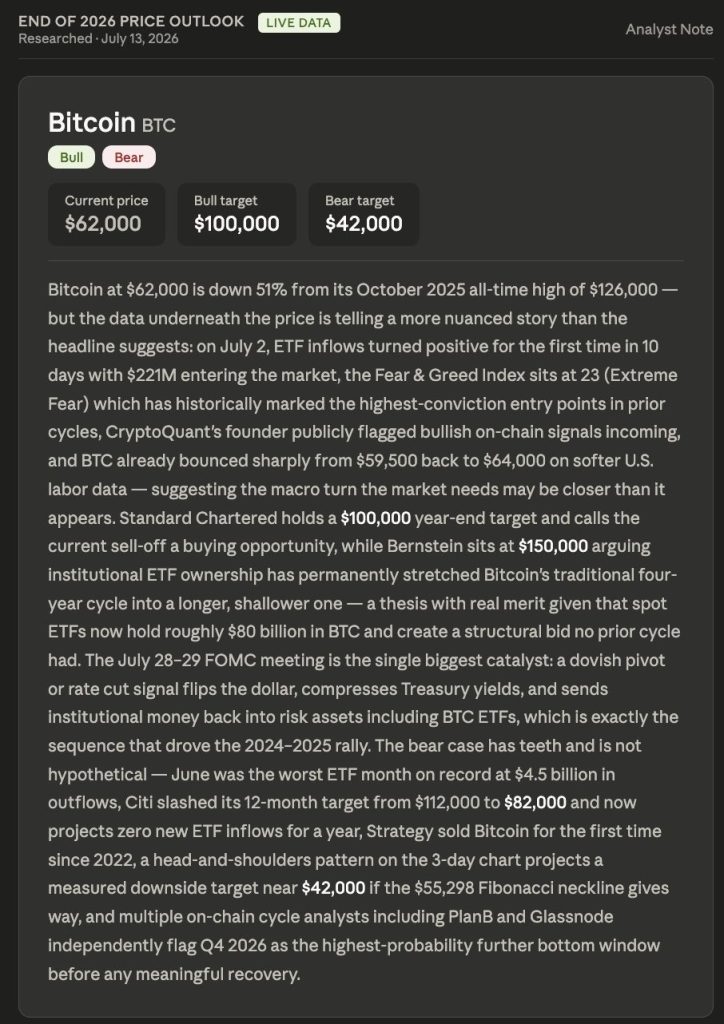
Claude Fable 5 looked at Bitcoin sitting at $62,000 and landed on $100,000 as the bull case price prediction. That is a predicts for a 61% move higher from a chart that just lost half its value.
The bull argument leans on the plumbing rather than the price. ETF inflows flipped positive on July 2 for the first time in 10 sessions, with $221M coming back in.
Fear and Greed is parked at 23, which is Extreme Fear, and that reading has historically marked the entry of convictions. Spot ETFs now hold roughly $80 billion in BTC, so there is a structural bid no earlier cycle enjoyed.
Bernstein argues that this ownership base has stretched the four-year cycle into something longer and shallower, which is a thesis with real merit.

Standard Chartered still carries a $100,000 year end target and calls this sell off a buying opportunity. The July 28 to 29 FOMC meeting is the swing factor. A dovish pivot softens the dollar, compresses yields, and pushes institutional money back toward risk.
The bear side is not a thought experiment. June was the worst ETF month on record with $4.5 billion in outflows. Citi cut its 12 month target from $112,000 to $82,000 and now models zero new ETF inflows for a full year.
Strategy sold Bitcoin for the first time since 2022, which is a signal from the most stubborn holder in the space. A head and shoulders pattern on the 3 day chart projects a measured move near $42,000 if the $55,298 Fibonacci neckline breaks. PlanB and Glassnode both flag Q4 2026 as the likeliest bottom window.

Bitcoin Price Prediction: The $55,298 Trapdoor Standing Between Fear and $100,000
Price structure is ugly and honest about it. Bitcoin topped near $126,000 in October 2025 and has carved lower highs ever since. The February gap down through $84,000 was the structural break.
May rallied to roughly $82,000 and failed, confirming the pattern. Now we sit at $62,155 after a 2.49% daily loss, with the session high at $64,385 and the low at $61,750.
That is the head and shoulders playing out on the higher timeframe. Support is layered at $59,500, then the $55,298 neckline. Resistance stacks at $64,000, $68,000, and $73,000. RSI reads near 42 with the signal line around 46.
The negative gap means momentum is fading beneath its own average, so bounces are being sold. That is not capitulation, it is exhaustion.
For $100,000 to happen, buyers need to reclaim $68,000 first and hold $59,500 in the meantime. Lose the neckline and the Fable 5 bear number stops being theoretical.
Don’t Miss Out on Our $1,000 USDT Airdrop on ByBit
You Might Like What Claude AI Predicts About LiquidChain
The rotation is already underway. Most people will recognize it after it has already happened.
Meta AI predicts that large caps are not broken. They are capped. Bitcoin, Ethereum, and XRP have been pressing against the same bands for weeks with nothing breaking through. The macro tailwinds keep getting rescheduled. The institutional inflows keep getting pushed back another quarter. Waiting on catalysts outside your control is not positioning. It is just waiting.
A capital that has navigated enough cycles does not sit at resistance. It moves before the destination has a name.
Early-stage infrastructure operates on different math. A small enough market cap means a modest rotation produces dramatic movement. The returns come from the gap between what something is genuinely worth and what the market has priced it at. That gap only exists while the project stays undiscovered.
Multi-chain fragmentation bleeds DeFi every single day. Bitcoin, Ethereum, and Solana run completely isolated systems with no native way to connect them. Every user crossing those boundaries pays in fees, slippage, and failed transactions. Every single time.
LiquidChain collapses all 3 into a single execution layer. One deployment. Full ecosystem access. No cross-chain tax anywhere.
The market has not found this yet. That is the entire point.
The presale is at $0.01454 with just over $890,000 raised. Ground floor is a description, not a pitch.
Explore the LiquidChain Presale
The post Premium Claude AI Model Fable 5 Predicts Bold Bitcoin Price Target by End of 2026 appeared first on Cryptonews.


JPMorgan has lowered its earnings forecasts for Circle and Coinbase after a new USDC revenue-sharing agreement with Hyperliquid changed how income from the stablecoin’s reserves will be divided.
Summary
- JPMorgan cut earnings forecasts for Circle and Coinbase after the Hyperliquid USDC deal.
- The bank warned new revenue-sharing terms could pressure stablecoin profit margins.
- Analysts remain divided as higher interest rates may still support USDC earnings growth.
According to a JPMorgan research note, the revised agreement could reduce the long-term profitability of the USDC business for both companies, even as they continue pursuing higher adoption of the dollar-backed stablecoin.
The bank argued that competition among distribution partners may force issuers to give away a larger share of reserve income to secure market share.
New revenue-sharing terms reduce reserve income
Under the arrangement highlighted by JPMorgan, Coinbase will classify USDC held on Hyperliquid as “on-platform” balances. As a result, Coinbase will receive the reserve income generated by those deposits but will return 90% of that revenue to Hyperliquid instead of splitting the proceeds with Circle under the companies’ existing economic arrangement.
JPMorgan estimated that Hyperliquid currently holds about $6 billion worth of USDC, representing roughly 8% of the stablecoin’s circulating supply. Because of the platform’s growing role in the USDC ecosystem, the bank believes the revised economics could have a noticeable effect on future earnings for both Circle and Coinbase.
Describing the competitive dynamic, JPMorgan said both companies face pressure to increase USDC usage even if doing so requires surrendering a larger portion of reserve revenue to distribution partners. The bank characterized the situation as one in which efforts to expand adoption could come at the cost of lower profitability.
The revenue-sharing concerns follow an announcement made on May 14, when Circle and Coinbase revealed a partnership with Hyperliquid to deepen USDC integration across the crypto trading platform. Hyperliquid operates both a Layer-1 blockchain and a decentralized exchange offering spot and perpetual futures markets.
Since June 11, USDC has become Hyperliquid’s preferred stablecoin, strengthening the platform’s importance within Circle’s distribution network. JPMorgan said the commercial terms supporting that expansion, rather than the growth in usage itself, have become the main issue for investors evaluating future earnings.
Wall Street remains divided on Circle’s outlook
Elsewhere on Wall Street, analysts have reached different conclusions about Circle’s long-term prospects. Mizuho has also taken a more cautious stance on the company, downgrading the stock as concerns grow over whether expanding USDC adoption will continue to generate attractive economics.
By contrast, Bernstein and William Blair have maintained positive ratings on Circle, indicating they still expect the stablecoin issuer to benefit from continued growth in digital dollar usage despite increasing competition for distribution partnerships.
Even after cutting its earnings estimates, JPMorgan said it continues to forecast growth in USDC-related earnings through 2027. The bank attributed that expectation to its interest-rate outlook, which now includes a 25-basis-point Federal Reserve rate increase at the October 2026 meeting.
Higher rates generally increase the income earned on the cash and Treasury reserves backing USDC, providing an offset to the revenue-sharing concessions outlined in the Hyperliquid agreement.
For investors, the latest debate has shifted attention away from USDC’s circulating supply alone and toward how reserve income is divided among issuers, exchanges, and distribution partners. JPMorgan’s analysis suggests that while adoption can continue rising, the financial value retained by Circle and Coinbase may come under increasing pressure as more platforms negotiate similar commercial terms.
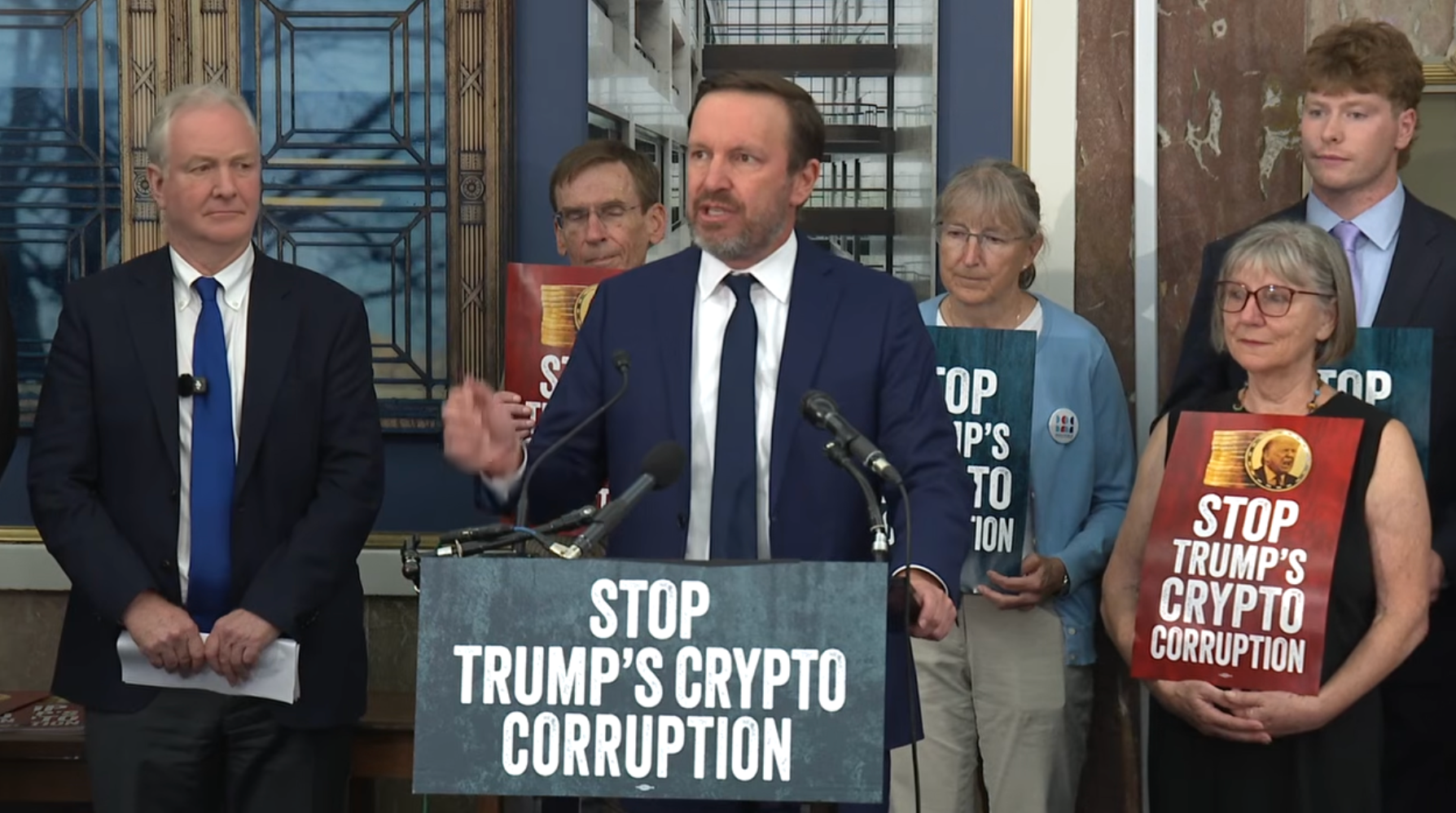
The US Senate is expected to vote soon on a comprehensive bill to establish market structure rules for digital assets, backed by Republican lawmakers, while some Democrats continue to push for ethics provisions.
In a Tuesday press conference, Senators Chris Murphy, Jeff Merkley, and Chris Van Hollen spoke alongside representatives for Americans for Financial Reform and Indivisible and Hollywood actor Ben McKenzie in opposition to the Digital Asset Market Clarity (CLARITY) Act. The lawmakers said that the bill did not address what they called “[Donald] Trump’s crypto corruption,” referring to the US President’s ties to the industry through his memecoin, his family’s World Liberty Financial company and other businesses and investments.
“There is no reason to pass a new regulatory system for crypto if this system does not stop Trump’s corruption of the entire industry,” said Murphy. “This bill is worthless if it protects Trump’s dominance over an industry that he will have more control to regulate. In fact, the bill is in and of itself a fundamental corruption if it gives Trump’s corruption the protection of law.”
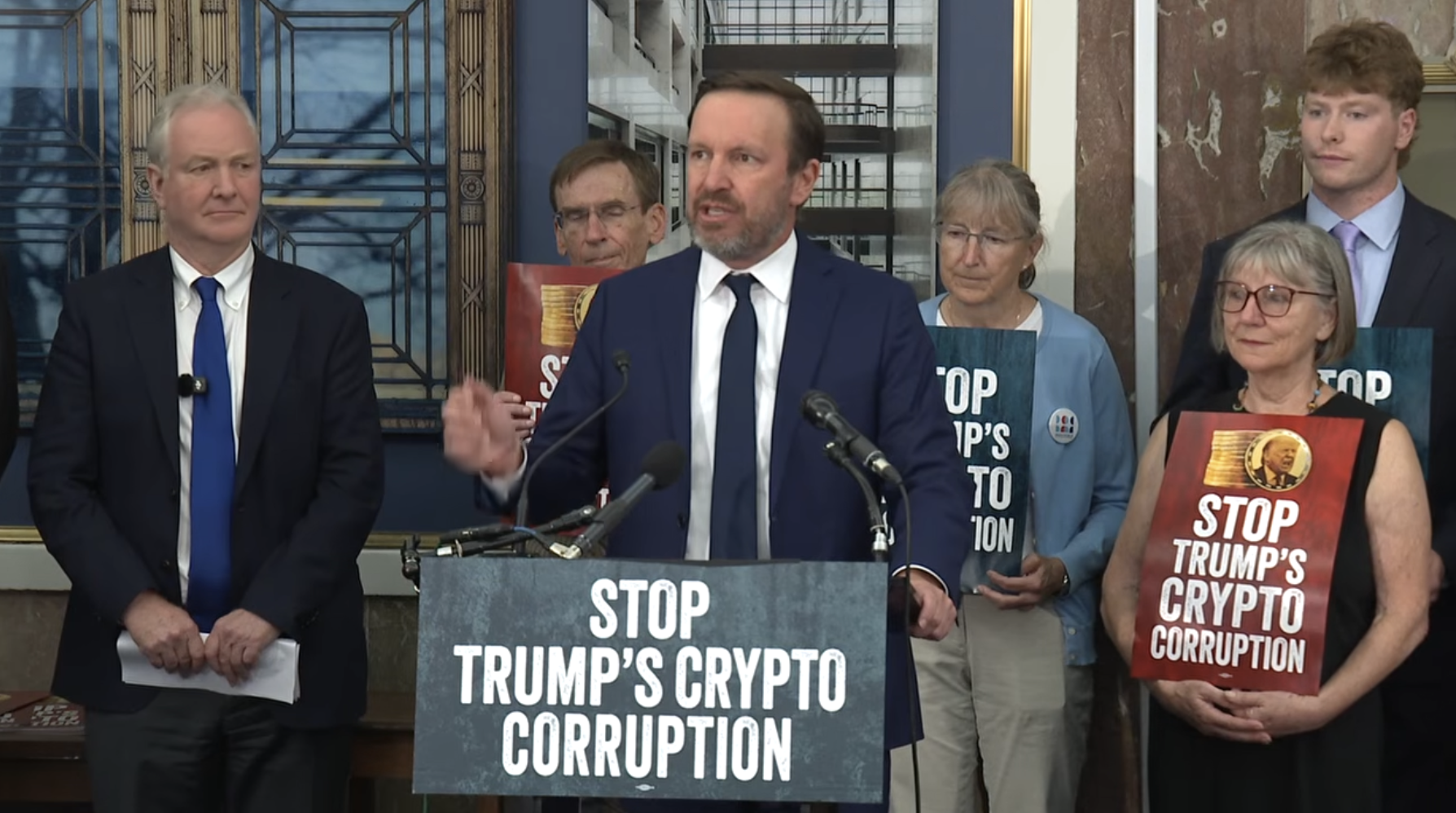
Senator Chris Murphy (third from left) addressing the press on Tuesday with Senator Chris Van Hollen (left). Source: Chris Murphy
The CLARITY Act has been under discussion in the US Senate since being passed by the House of Representatives almost a year ago this week as part of the Republicans’ “Crypto Week” agenda, in which the GENIUS stablecoin bill was also signed into law. The bill needs to meet a 60-vote threshold to pass the Senate and return to the House, meaning that some Democrats will need to support the legislation with Republicans’ slim majority in the chamber.
Related: ABA, state banking groups push back on CLARITY Act stablecoin yield provisions
Van Hollen, Murphy and Merkley are not the only Senate Democrats saying they will not support the bill without a clear carveout for ethics following Trump disclosing that he earned $1.4 billion from his crypto ventures in 2025. Senator Elizabeth Warren, an outspoken voice in the chamber against many crypto-related issues, has also called for the legislation to address what she called “brazen financial corruption.”
Despite the pushback from many lawmakers, the CLARITY Act has the support of two law enforcement organizations. The National Organization of Black Law Enforcement Executives and the Federal Law Enforcement Officers Association have backed the crypto bill, saying it would help address digital asset-related crime.
Senate majority leader says vote will happen before August work period
John Thune, majority leader in the US Senate, pledged to hold a vote on the crypto bill before the chamber breaks for a state work period on Aug. 10, according to Bloomberg. The exact timing of the vote was not available on the Senate calendar as of Tuesday.
The CLARITY Act already has support from Trump, who on Monday urged members of the Senate to pass the bill “in honor of” Senator Lindsey Graham, who died over the weekend. The president said that the South Carolina lawmaker had been “a big supporter” of the legislation, but Graham did not appear to have made any public statements directly supporting CLARITY.
The senator’s death left Republicans with a 52-47 majority in the chamber and, with Senator Mitch McConnell still hospitalized as of Tuesday, the party could only have 51 lawmakers present at the time of the potential vote.
Senator Cynthia Lummis, one of CLARITY’s proponents in Congress, said on Monday that lawmakers would release the text of the bill “in the next few days.”
Magazine: Crypto’s CLARITY Act faces partisan fight over ethics on Senate floor
Viral Cat-Themed Meme Coin Explodes by 2,000% in a Week: What’s Behind the Madness?

Michael Irvin’s Update on Wife Sandy’s Alzheimer’s Battle

Racist B*tch Has $0.02 To Her Name | Financial Audit


-

 Fashion6 days ago
Loro Piana Fall 2026 Enters Houston’s Art Scene
-

 Fashion4 days ago
Weekend Open Thread: Nutriplenish Leave-In Conditioner
-
 Sports5 days ago
2026 Genesis Scottish Open Thursday TV coverage: Round 1
-

 Tech7 days ago
Anthropic brings Claude Cowork to mobile and web as usage data shows most users aren’t coding
-

 Sports5 days ago
Super Eagles star Moses Simon opens up on Liverpool transfer regret
-

 Tech5 days ago
Character.AI enters the microdrama arena with its own productions, but there’s a twist
-

 News Videos3 hours ago
XRP BOMBSHELL… XRP OMBOARDED FOR TRANSACTIONS!!!
-

 Tech18 hours ago
Get Your ESP32 Sunny Side Up With This Solar Dev Board
-

 Tech3 hours ago
Dark Secrets Emerge When Jailbreaking LLMs
-

 News Videos6 days ago
Crypto Just Entered Its Most Important 6-Month Candle (Could Decide Everything!)
-

 Tech7 days ago
Keychron is stepping outside keyboards with a $349 Thunderbolt 5 dock aimed at power users
-
 Business7 days ago
ASX 200 Slides Over 0.6% as Rare Earths and Lithium Stocks Tumble Amid Global Semiconductor Sell-Off Today
-
 NewsBeat5 days ago
Major update after Huntingdon train attack as man enters plea
-
 Business7 days ago
Will Trent shares rebound after Q1 update triggers 13% crash? Here’s what technical charts indicate
-

 Business7 days ago
SpaceX Shares Slide Nearly 6% Amid Post-IPO Volatility and Starship Test Focus
-

 Sports6 days ago
39-year-old Djokovic wins five-hour thriller to enter Wimbledon semis | Other Sports News
-

 Tech5 days ago
Level Infinite Launches Gangstar Mirage City in India with Pre-Registrations
-

 Tech6 days ago
Entra passkey enrollment vishing targets Microsoft 365 users
-

 News Videos1 day ago
how to make coin bank box with cardboard #scienceproject #money #diy #shorts
-
 Tech1 day ago
Cloudflare Precursor Watches Your Mouse and Keyboard To Decide If You Are Human
You must be logged in to post a comment Login