

Crypto World
Thailand Central Bank Audits USDT Amid Gray Money Crackdown



Thailand’s central bank is stepping up stablecoin surveillance as part of a wider effort to crack down on money laundering, illicit finance and “gray money” in the country.
The Bank of Thailand is working with the Kingdom’s Securities and Exchange Commission to audit high-volume stablecoin transactions, with a focus on USDt (USDT), cash transactions and currency exchanges, to identify and stop illicit financial flows.
“The measures we are implementing are not short-term fixes; they require the continuous deployment of multiple parallel strategies,” Bank of Thailand Governor Vitai Ratanakorn said, according to local media outlet The Nation on Saturday.
Thailand is targeting the “gray economy,” which largely consists of cash that may have come from suspicious origins, such as scam call centers that have proliferated in the region. While there are no reliable figures for the gray economy, scam losses were 115 billion THB ($3.4 billion) in 2025, with around 173 million scam calls and texts recorded.
Stablecoins have become a popular method of transferring large amounts due to near-instant cross-border settlement.
Cash, forex and gold trading targeted
The move will expand commercial bank compliance duties across cash networks, currency exchanges, gold bullion trading and “suspicious stablecoin transactions” in an effort to prevent regulated entities from facilitating corruption or shadow economies, it reported.
High-value cash transactions will also require a source-of-funds declaration, and exchanges of large volumes of big banknotes for smaller denominations without a clear business reason will also be monitored. Cash deposits of more than 5 million baht ($150,000) also require full disclosure.
Related: Thailand crypto platforms freeze 10K accounts in AML crackdown: Report
Thailand has often been touted as a crypto haven, but digital asset and stablecoin payments are still outlawed by the central bank and there has been regular rule tightening on crypto businesses.
Crypto trading remains legal, with the country’s largest exchange, Bitkub, seeing about $26 million in daily volume. However, almost 40% of that is forex, with the USDT/THB pair being the most popular, according to CoinGecko.
Scammer crackdown gone wrong
Thailand’s banks imposed sweeping account restrictions and froze three million bank accounts in 2025 as part of its crackdown on mule accounts, gray capital and suspicious activity.
However, thousands of individuals and legitimate businesses were caught in the dragnet in what media reports described at the time as a “scammer crackdown gone wrong.”
Features: Robinhood L2 sparks ETH optimism, Saylor ‘muddies waters.’ Hodler’s Digest

SWIFT moved its blockchain-based shared ledger into live operational use, naming 17 pioneer banks for 24/7 tokenized cross-border payments. Its payments framework lists more than 30 institutions with existing Ripple XRP ties.
The SWIFT pilot is nine months in the making and represents a decisive escalation from prototype to production. The 17 pioneer banks are live on a blockchain-based shared ledger that coordinates tokenized deposits rather than public cryptocurrencies, giving the participating institutions 24/7 settlement capability.
SWIFT’s native ledger settles in tokenized bank deposits, not XRP. The token is not embedded in the standard payment flow and is not required in SWIFT’s native ledger/payment flow.

However, the indirect connection runs through Ripple’s On-Demand Liquidity product, which uses XRP as a bridge asset for instant settlement, but that route depends on how banks deploy Ripple’s liquidity services.
What the SWIFT move does confirm is that the financial industry’s direction of travel aligns with the model Ripple has been building toward for years: always-on, programmable settlement that eliminates pre-funded nostro accounts in each destination currency.
Don’t Miss Out on Our $1,000 USDT Airdrop on ByBit
Ripple XRP Ties, SWIFT Development
The more than 30 banks named in SWIFT’s wider payments framework with existing Ripple relationships are a set beyond the 17 live pilot participants. The overlap is not specified. Being listed in SWIFT’s framework does not mean those institutions have activated ODL or routed any liquidity through XRP.
Many currently use RippleNet purely for messaging, without touching the token. The upgrade path from messaging to liquidity provisioning is where actual XRP demand materializes, and that transition remains at the bank’s discretion.
SWIFT has also signaled its next phase explicitly, describing its ambition to become a platform for programmable money and agentic commerce. SWIFT is aiming for a world where payments execute automatically when conditions are met without manual authorization per transaction.
Ripple’s institutional positioning has been reinforced in parallel. The company joined SWIFT earlier in 2026, enabling direct global bank access and unified management of fiat and crypto flows. It has also partnered with Kyobo Life Insurance for real-time tokenized government bond settlement.
Ripple’s institutional credibility has benefited from regulatory engagement in Europe, a prerequisite for the institutional adoption the SWIFT partnership.
Discover: The Best Token Presales
What Has to Change for XRP to Capture the Structural Upside
The SWIFT development is a credibility event for Ripple’s ecosystem, not a demand event for XRP. The token’s upside from here is conditional on whether banks use On-Demand Liquidity routes using XRP in live payment corridors, creating real settlement demand. Without that, the SWIFT-Ripple connection remains structural alignment rather than token adoption.

Near term, the case hinges on institutions moving beyond messaging into using XRP-enabled liquidity for tokenized cross-border payments. Ripple’s parallel institutional build, including its positioning on the UK’s wholesale digital markets taskforce, suggests the regulatory environment is moving in the right direction for that decision to become easier.
XRP’s fate tracks Bitcoin’s strength and broader altcoin sentiment. A sustained rise in Bitcoin dominance above 59% would likely extend pressure on XRP and other alts; the cleanest signal is that dominance staying elevated. The SWIFT narrative is real Ripple structural progress, but structural progress that does not yet mandate XRP demand trades differently from one that does.
Discover: The Best Crypto to Diversify Your Portfolio
The post Ripple XRP Gains Attention After SWIFT Blockchain Expansion appeared first on Cryptonews.
Crypto World
American retirees use ETH AI auto trading via MoneySimpler to earn $58,500 stable passive income monthly


Disclosure: This article does not represent investment advice. The content and materials featured on this page are for educational purposes only.
As interest in AI-driven investing grows, platforms like MoneySimpler are attracting retirees seeking automated digital asset management and trading tools.
Summary
- MoneySimpler gains attention as US retirees explore AI-powered crypto trading for automated digital asset management.
- MoneySimpler highlights AI-driven crypto trading tools as more investors seek automated income solutions.
- AI trading platform MoneySimpler attracts interest from retirees seeking simplified digital asset investment options.
In the United States, many retirees are starting to look into digital asset investments, hoping to generate additional income beyond their fixed pensions and alleviate the pressure of daily expenses.
Instead of engaging in high-risk, blind speculation, they chose platforms like MoneySimpler. The platform features AI-powered automated trading, with returns settled daily. By participating in the ETH market through smart trading strategies, users can earn up to $1,950 in passive income in a single day.
As artificial intelligence and digital finance continue to mature, this investment approach, which requires no manual monitoring and is fully automated, is gradually gaining favor among more and more American investors.
American retirement planning professionals and major financial media outlets have all noted that MoneySimpler is now a highly popular cryptocurrency investment platform in the private wealth management sector. The platform boasts transparent processes, compliant operations, and stable returns, providing Americans with a reliable new option for planning their retirement.
What is MoneySimpler?
Founded in 2020 and headquartered in the UK, Money Simpler is a cryptocurrency cloud AI automated trading company regulated by the Financial Conduct Authority (FCA) and operated by MONEY LINKS LTD. (FRN: 921139).
The platform provides users with automated digital asset trading services through AI market analysis and automated strategy execution, supporting mainstream digital assets such as Bitcoin (BTC), Ethereum (ETH), and Ripple (XRP).
It covers 150 countries and regions, hasover 3 million registered users, manages over $2 billion in assets, and holds 1,717 Bitcoins and 35 million Ripple to ensure liquidity.
This means users can participate in cloud AI automated trading in an automated and standardized manner within a compliant and secure framework and earn daily cash settlements.
Why are more and more US retirees choosing to join MoneySimpler?
US retirement plans are primarily based on long-term investments in tax-advantaged accounts such as 401(k)/IRA, but the real purchasing power of many retirement funds has been eroded by prolonged low interest rates and inflationary pressures.
The regulated MoneySimpler offers a digital financing pathway focused on automation and stable cash flow.
Retirees can get started by depositing a small amount of money into supported crypto assets such as XRP or BTC.
MoneySimpler provides pre-designed trading strategies by a professional team. Its AI system continuously analyzes the market and automatically executes trades in digital assets such as BTC, ETH, and XRP. It continuously optimizes trading efficiency through intelligent algorithms and automated execution to achieve sustained returns.
MoneySimpler uses AI intelligent algorithms, preset trading strategies, and risk hedging as its core to generate passive income through automated trading, daily settlement, and automatic accounting.
How to get started?
Step 1 | Register an Account
Visit MoneySimpler and click “Register”. New users receive a $10 registration bonus and can experience the profit model.
Step 2 | Deposit Assets
Supported currencies: BTC / ETH / USDT (TRC20/ERC20) / XRP / BNB / USDC / ADA / SOL / DOGE / BCH / LTC, etc. Please select a familiar currency for deposit.
Step 3 | Activate Hashrate Contracts
Starting at $100, investors can choose a suitable contract level based on their funds and time constraints. The system will automatically execute trades; no programming or monitoring is required.
Featured Contracts Showcase:
Basis Arbitrage Strategy: Invest $100, 2-day cycle, daily return of $4; total return at maturity is $100 principal + $8 profit.
Digital Asset Trend Following Strategy 2.25: Invest $600, 7-day cycle, daily return of $7.62; total return at maturity is $600 principal + $53.34 in returns.
Digital Asset Trend Following Strategy 2.2: Invest $1,000, 10-day cycle, daily return of $13.2, total return at maturity is $1,000 principal + $132 profit.
Crypto Statistical Arbitrage Strategy 2.6: Invest $5,000, 20-day cycle, daily return of $71; total return at maturity is $5,000 principal + $1,420 in returns.
Cross-Exchange Arbitrage Strategy 3.6: Invest $10,000, 30-day cycle, daily return of $162, total return at maturity is $10,000 principal + $4,860 in returns.
Crypto Statistical Arbitrage Strategy 2.55: Invest $97,000, 45-day cycle, daily return of $1,891.5, with a total return at maturity of $97,000 principal + $85,117 in returns.
For more contract details, please visit the MoneySimpler official website. Once the contract is activated, the system will automatically execute trades without any technical configuration required.
Step 4 | Daily Settlement and Withdrawals/Reinvestment
Once the contract takes effect, earnings will be settled daily. Withdraw or reinvest at any time to create an automated digital cash flow.
A previous USA Today report mentioned:
MoneySimpler integrates traditional, mature financial risk control models with blockchain technology, making it a highly representative platform in the digital transformation of retirement financial planning in the United States.
Dr. Arthur Hamilton, a renowned industry researcher, stated:
“MoneySimpler’s operations are compliant and standardized, and its profit payment rules are open and transparent. In the domestic retirement savings sector, it is a digital asset management platform highly regarded by many.”
An ordinary investor who has lived in New York for many years and is retired shared his genuine experience:
“I no longer have to worry about my retirement savings slowly depreciating. MoneySimpler’s stable daily returns provide reliable financial security for my later years.”
Daily passive income plan for US retirees
With volatile market conditions and persistent inflation eroding the purchasing power of Social Security pensions, many American retirees are struggling to cover their retirement expenses. MoneySimpler offers a compliant, worry-free, and automatically accruing digital asset income stream specifically designed for US retirees. It’s more than just a simple investment tool; it’s a wealth management approach that makes asset management easy: no need to constantly monitor the market, allowing idle assets to operate continuously, with daily returns automatically credited to an account, steadily supplementing retirement income.
Visit MoneySimpler now to convert ETH or BTC into a stable $58,500 monthly passive income, providing added security for retirement.
Disclosure: This content is provided by a third party. Neither crypto.news nor the author of this article endorses any product mentioned on this page. Users should conduct their own research before taking any action related to the company.
[The stream is slated to start at 10 a.m. ET. Please refresh the page if you do not see a player above at that time.]
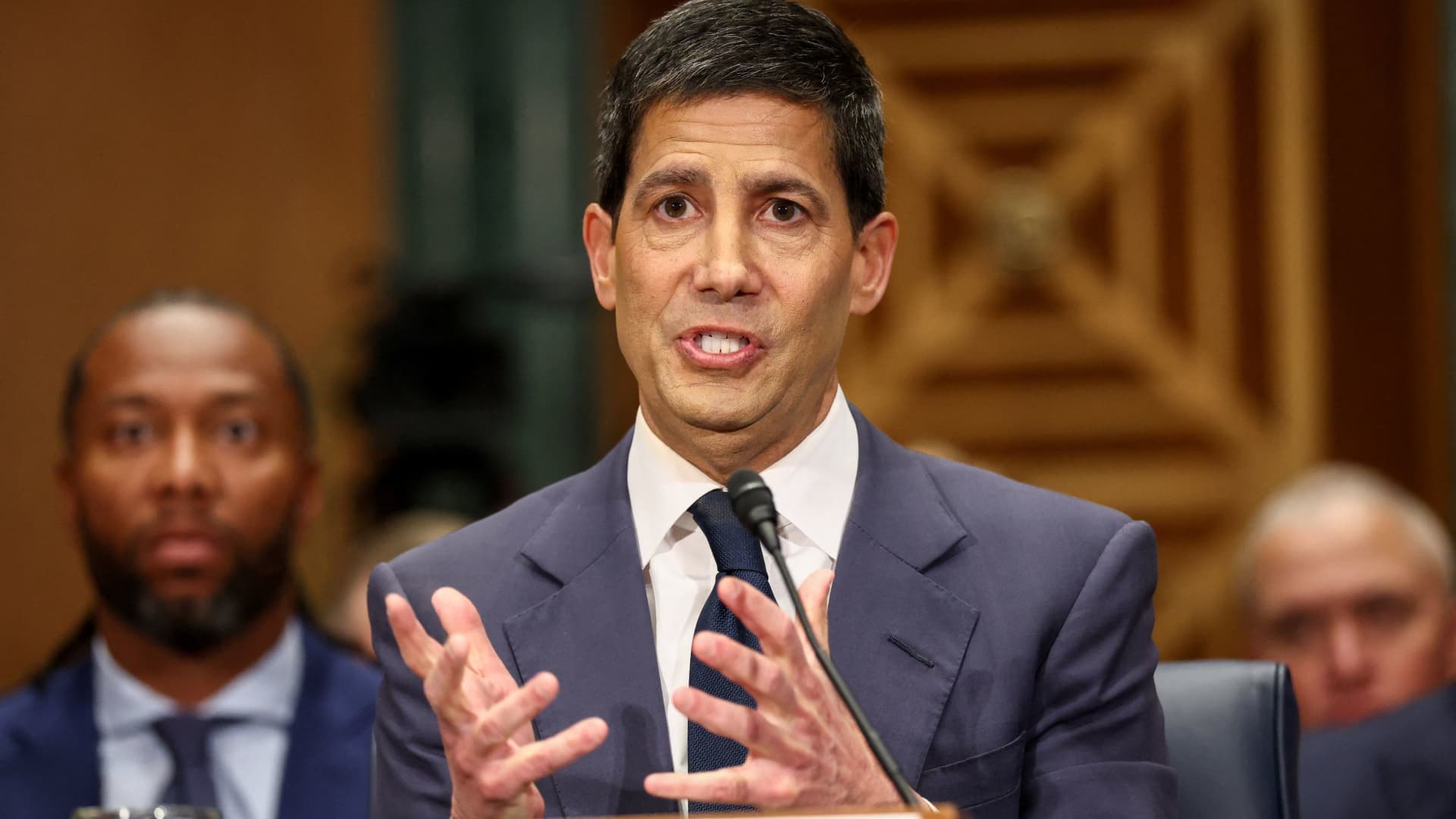
Federal Reserve Chairman Kevin Warsh speaks Tuesday to the House Financial Services Committee as part of the congressionally mandated semiannual monetary policy report.
The central bank leader’s appearance comes the same day the Bureau of Labor Statistics reported that consumer prices fell an unexpectedly sharp 0.4% in June, easing some worries among policymakers about inflation.
In remarks prepared for the appearance, Warsh promised a vigilant fight to return inflation to the Fed’s 2% target.
“The members of our Committee have no tolerance for persistently elevated inflation. And we share a resolute commitment to restoring price stability,” he said.
Read more
Warsh promises inflation will be a ‘thing of the past,’ cites benefits of AI investment boom
Fed officials were split on direction of interest rates at last meeting, minutes show
Warsh faces multiple alternative inflation signs as Fed charts new course
Japan’s largest domestic payment network, JCB, has signed a memorandum of understanding with Circle to explore using USDC for cross-border payments and merchant transactions.
Under the memorandum, the companies will initially explore using USDC for JCB’s internal cross-border fund transfers through a proof of concept, while also evaluating stablecoin payments at merchants in Japan for international visitors. The companies said they will also assess technologies that support interoperability across multiple blockchain networks.
The agreement builds on a separate initiative JCB launched in January with Digital Garage and Resona Holdings to test stablecoin payments at physical stores in Japan. That project focuses on identifying technical and operational challenges to bringing stablecoin payments to domestic merchants.
Beyond the initial proof of concept, JCB and Circle said they will evaluate additional applications for stablecoin infrastructure aimed at cross-border payments and merchant services, though they did not provide a timeline for commercial deployment.
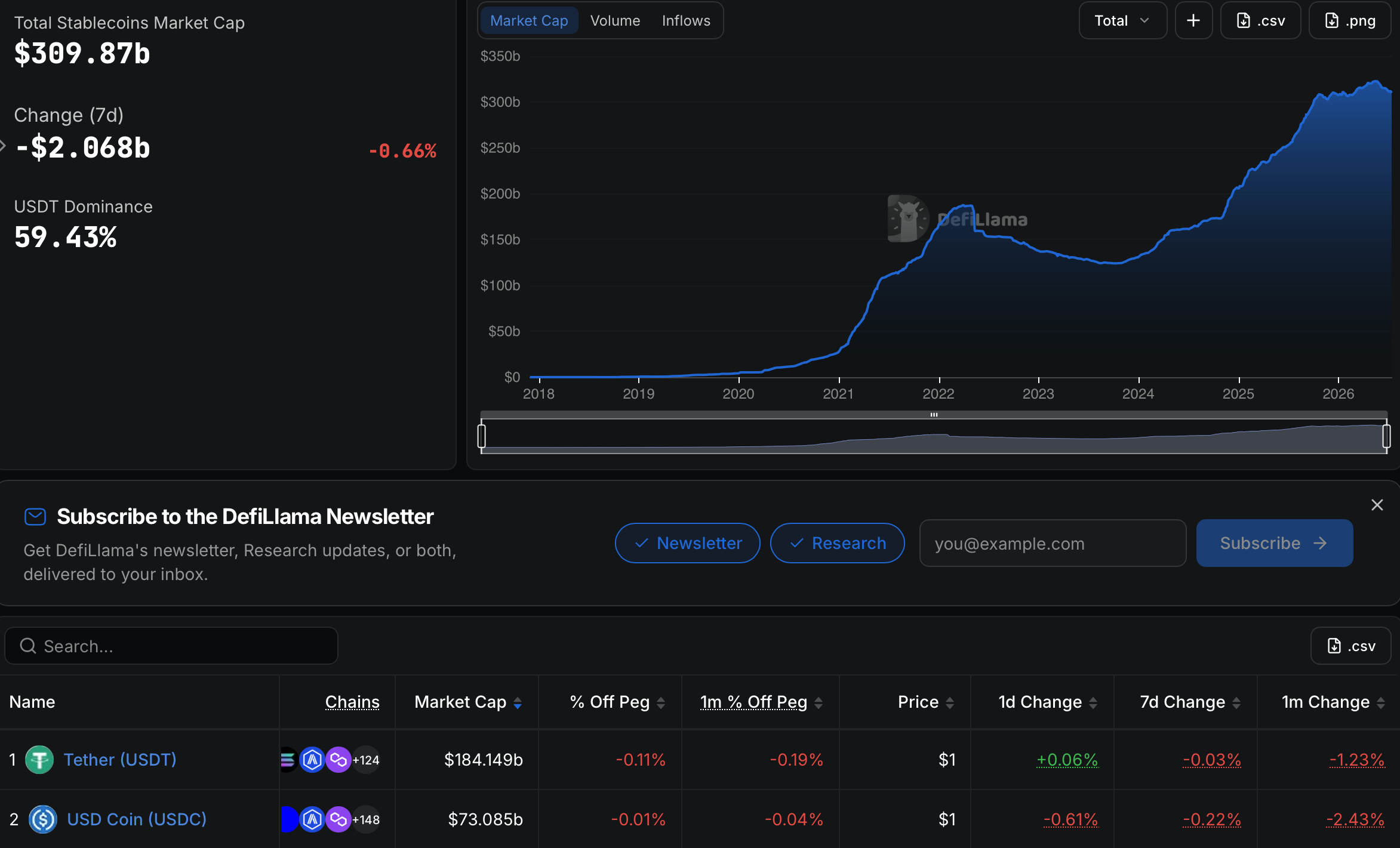
USDC is the world’s second-largest stablecoin by market capitalization, with a circulating supply of about $73 billion, behind Tether’s USDT at roughly $184 billion, according to DefiLlama data.
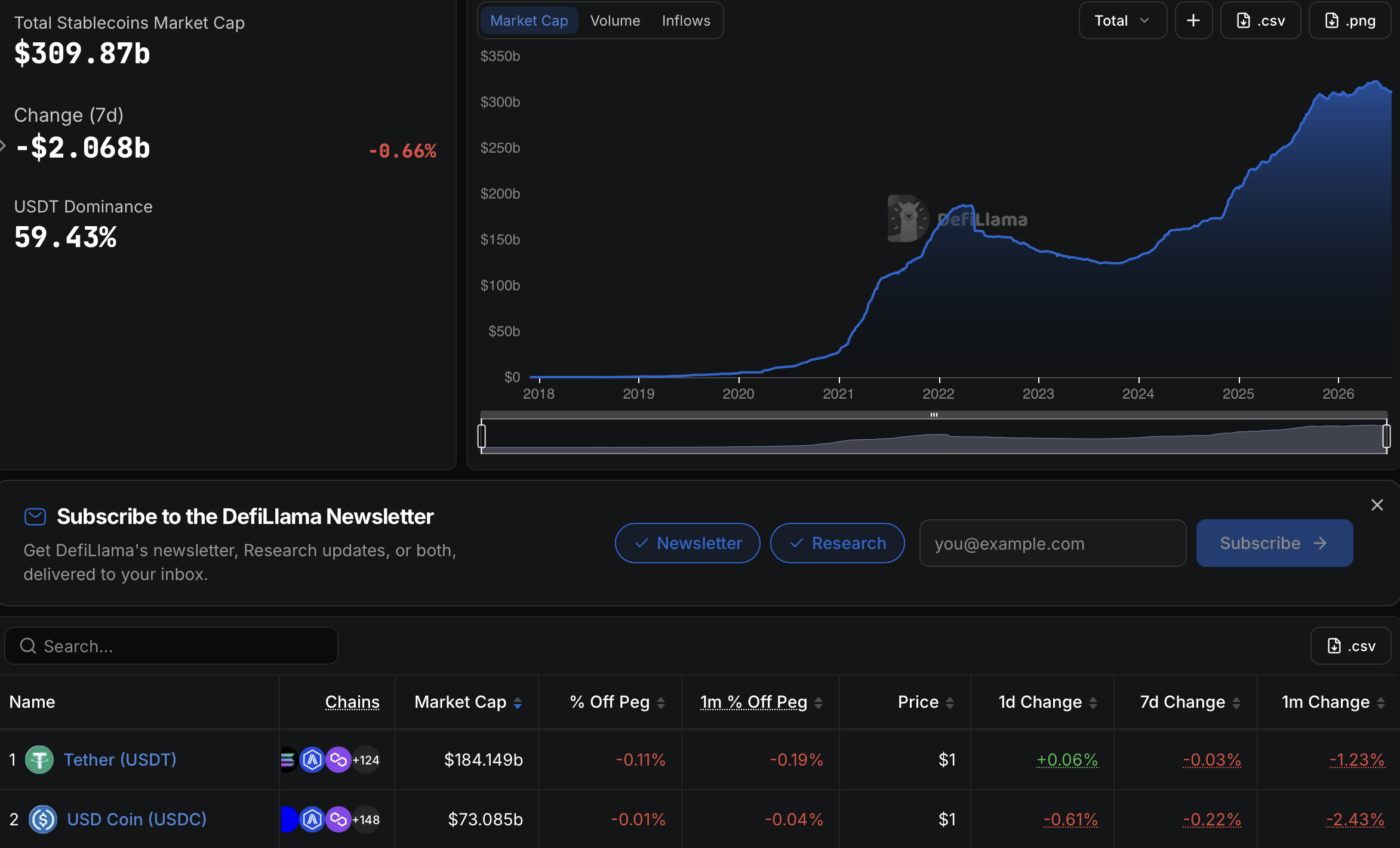
Source: DefiLlama
Related: USDC issuer Circle wins final approval for US national trust bank charter
Japan accelerates stablecoin payment adoption
The agreement adds to a growing number of stablecoin payment initiatives announced in Japan this year, as companies test blockchain-based payment and settlement systems across retail and corporate use cases.
In June, Circle and Japan’s largest investment bank, Nomura, were reported to be developing a stablecoin-based foreign exchange settlement service for Japanese companies. The service would allow businesses to convert yen into USDC for cross-border transactions and near-instant settlement.
On Monday, convenience store operator Lawson announced plans to test yen-denominated stablecoin payments at a Tokyo location beginning in August, while Japanese payments company Netstars launched a merchant payment service supporting USDC, USDT and JPYC across the Solana and Polygon blockchains.
Japan was among the first major economies to establish a legal framework for stablecoins, allowing banks, trust companies and licensed money transfer providers to issue fiat-backed tokens under amendments to the Payment Services Act that took effect in 2023.
The country has also been advancing broader digital asset reforms. In June, the Lower House passed a bill that would classify crypto assets as financial instruments, potentially opening the door to crypto exchange-traded funds and bringing the sector under stricter market rules.
Magazine: Strategy became a symbol of the dot-com crash: Could history repeat?
Ethereum has stabilized after its sharp correction from the $2.4K May highs, with the price attempting to build momentum beneath major resistance. Both the daily and 4-hour charts suggest buyers are gradually regaining control, although confirmation will require a decisive breakout above the current supply zone. The futures market’s aggressive positioning is also pointing to an interesting situation.
Ethereum Price Analysis: The Daily Chart
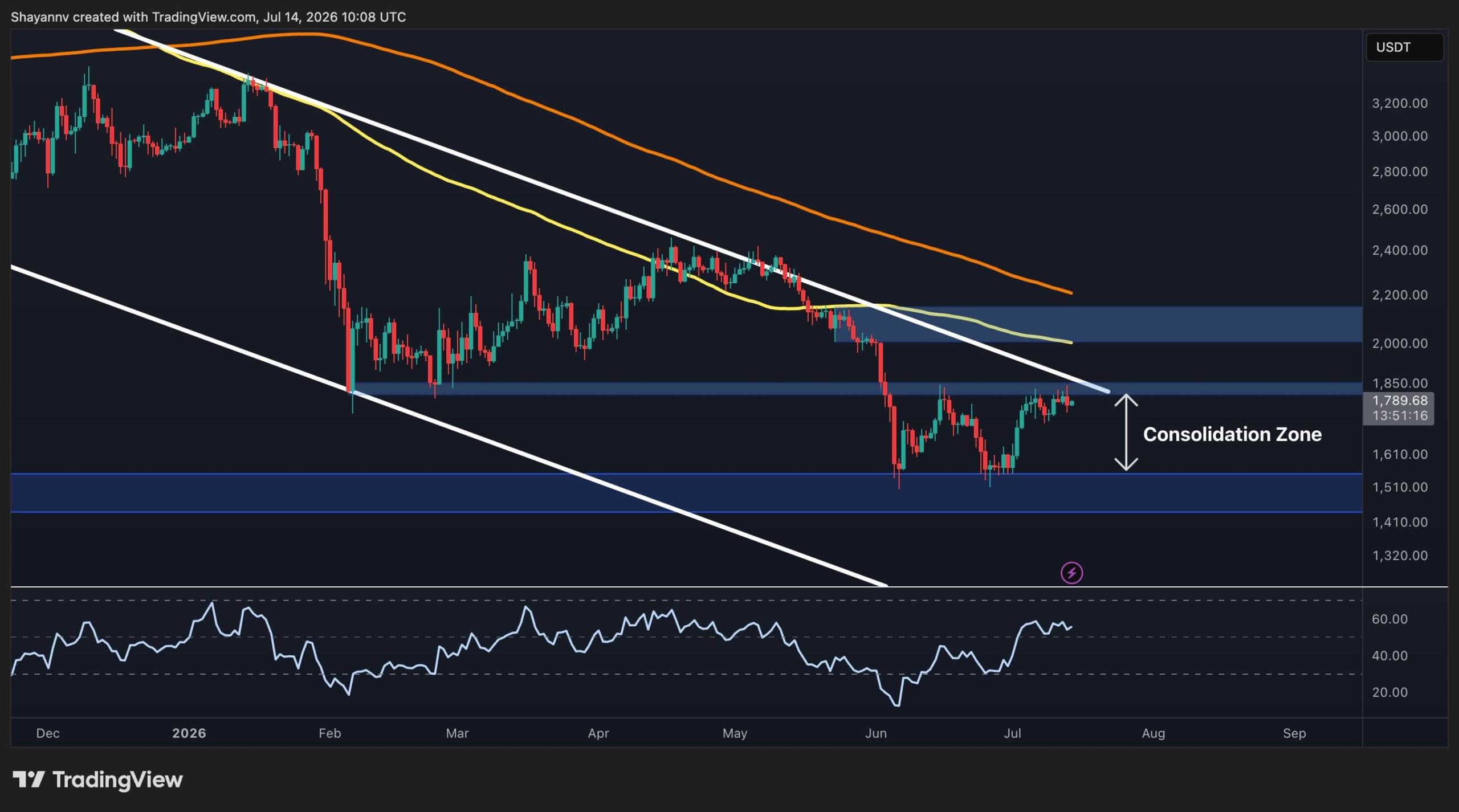
On the daily timeframe, ETH continues to recover after breaking out of the long-term descending channel that had capped the price action for several months. Following the breakout, the market experienced a deep retracement toward the $1.5K demand region before buyers stepped back in aggressively.
The rebound has brought ETH back into the $1.85K resistance zone, which now serves as the first major obstacle. This area also aligns closely with the higher channel resistance, creating a strong technical confluence that explains the recent consolidation.
The 100-day and 200-day moving averages remain overhead near the $2K to $2.2K region, indicating that the broader trend has not fully shifted bullish yet. Until those averages are reclaimed, the recovery should still be viewed as a corrective move within a larger neutral-to-bearish structure.
Momentum has improved noticeably, with the RSI recovering above 50 after rebounding from oversold conditions. However, the indicator remains below overbought territory, suggesting there is still room for continuation if buyers can overcome current resistance.
A successful breakout above $1.85K could expose the next resistance zone around $2K to $2.2K, where both major moving averages converge. On the downside, losing the $1.5K support would likely lead to a prolonged bearish trend.
ETH/USDT 4-Hour Chart
The lower timeframe presents a more constructive picture. Ethereum has been trading inside a rising channel, producing a sequence of higher lows while repeatedly testing the overhead supply zone between roughly $1.8K and $1.85K.
The ascending lower trendline continues to provide dynamic support, with every pullback attracting buying interest before reaching the broader support area near $1.7K. This suggests buyers remain active despite repeated rejection from resistance.
The price is currently compressing between rising support and horizontal resistance, creating conditions for an eventual breakout. Such structures often precede a volatility expansion, making the current range particularly important.
A confirmed move above $1.85K would likely trigger renewed bullish momentum toward the psychological $2k level and potentially the $2.2K region. Conversely, a breakdown below the rising trendline could invalidate the short-term bullish structure and expose the $1.71K support zone, followed by the broader $1.63K order block if selling pressure accelerates.
The 4-hour RSI remains around neutral territory, reflecting balanced momentum after cooling from recent highs. This supports the view that the market is waiting for a catalyst before choosing its next directional move.

Sentiment Analysis
The Taker Buy Sell Ratio remains below the neutral 1.0 threshold, indicating that aggressive sellers continue to slightly outweigh aggressive buyers across futures exchanges. Historically, readings below one reflect cautious market sentiment and reduced conviction from bulls.
However, the 30-day moving average of the ratio has turned higher after recovering from recent lows, suggesting selling pressure has gradually eased. Although buyers have not yet established clear dominance, the improving trend points to strengthening demand beneath the surface.
If the ratio continues climbing toward and eventually above 1.0 while ETH breaks above the $1.85K resistance area, it would provide additional confirmation that buyers are regaining control. Until then, the sentiment data supports a cautiously optimistic outlook rather than signaling a fully confirmed bullish trend.
The post Ethereum Price Analysis: Will ETH Finally Break the $1.85K Barrier? appeared first on CryptoPotato.


Japanese investment bank Mizuho downgraded Circle (CRCL) to underperform from neutral and slashed its price target to $50 from $85, arguing that OpenUSD’s business model threatens the stablecoin issuer’s long-term economics.
Circle shares were trading 0.6% lower at $62.63 at publication time.
Open USD, a dollar-backed stablecoin unveiled June 30 by the Open Standard consortium, “could fundamentally alter CRCL’s business model, which relies on retaining a large portion of the treasury yield to drive revenues,” analysts led by Dan Dolev said in the Tuesday note to clients.
The consortium counts more than 140 partners, including Mastercard (MA), Stripe, Coinbase (COIN) and BlackRock (BLK).
USDC has also lost momentum in recent months, with its circulating supply falling to about $73 billion from nearly $80 billion in March. The decline comes as the stablecoin market has shrunk by roughly $10 billion since May amid softer crypto trading activity and growing competition from newly regulated issuers.
Unlike Circle’s USDC model, which captures reserve income before sharing a portion with partners such as Coinbase and Binance, Open USD charges a small operating fee and distributes most reserve income to issuers and distributors, the analysts said.
Crypto World
U.S., UK move to align rules for tokenized finance across world’s largest financial markets


The United States and the United Kingdom have laid out a plan to make it easier for tokenized financial products to move between their markets, signaling that both governments want blockchain-based finance to become a bigger part of mainstream capital markets.
Released Tuesday by the U.S. Department of the Treasury and HM Treasury, the recommendations from the Transatlantic Taskforce for Markets of the Future focus on reducing regulatory friction that could slow the growth of tokenized securities, stablecoins and other digital assets operating across both countries.
The report sets out 10 recommendations covering digital assets and traditional capital markets.
On the digital asset side, governments propose creating an industry-led working group to test cross-border tokenization projects, coordinate the regulation of tokenized securities, and support the development of cross-border stablecoins. They also want to review global banking standards for cryptoassets and build policy frameworks that allow stablecoins, tokenized bank deposits and other forms of digital money to coexist.
The two governments also issued a joint statement backing cross-border stablecoin activity, stating that the private sector will play a central role in developing digital money and payment systems.
Cathie Wood has expanded ARK Invest’s position in SpaceX with a new $21.3 million purchase even as fresh warnings about a potential AI-driven market bubble have unsettled investor sentiment.
Summary
- Cathie Wood’s ARK Invest bought another $21.3 million worth of SpaceX shares despite the stock’s recent decline.
- The purchase comes as a U.S. Treasury draft report warns that an AI downturn could pose risks beyond the technology sector.
- Analysts remain divided, with some warning AI valuations are overheating while BlackRock trims direct AI exposure.
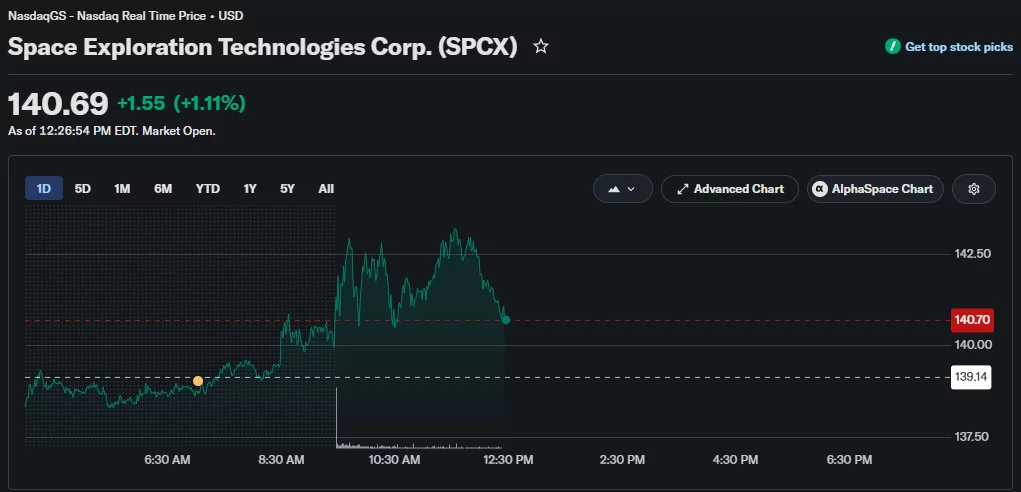
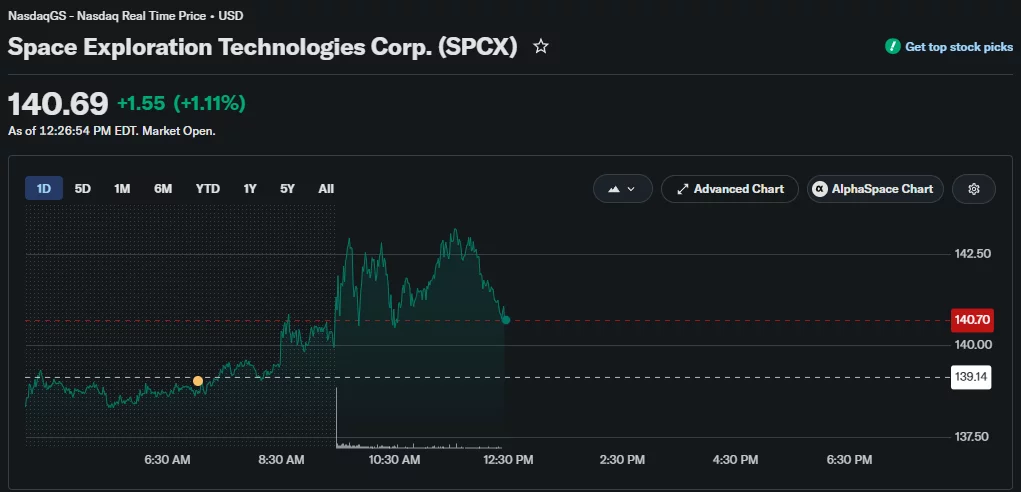
According to data from Yahoo Finance, SpaceX stock continued its recent slide on Monday, July 13, closing at $139.14, down 4.24% for the session. It has since recovered modestly, trading around $140.69 during Tuesday’s session.
According to ARK Invest’s daily trading disclosures, the firm bought 130,241 shares of SpaceX across its ARK Innovation ETF (ARKK), ARK Autonomous Technology & Robotics ETF (ARKQ), and ARK Next Generation Internet ETF (ARKW). The combined purchase was valued at about $21.3 million.
As reported by crypto.news earlier, the latest transaction extends ARK Invest’s buying campaign during SpaceX’s post-listing decline.
Last month, the investment manager acquired about $32.5 million worth of SpaceX shares after the stock fell more than 16% from its post-IPO peak. That followed an investment of roughly $444.3 million across four ETFs on the company’s Nasdaq debut on June 12.
ARK Invest keeps adding despite technical weakness
With the latest decline, SpaceX shares have slipped below the $150 level that previously served as an important price area. Notably, $145 has now become a key resistance level after earlier acting as support.
This continued selling could push the stock below its $135 IPO price if bearish pressure remains. SpaceX shares rebounded after ARK Invest bought about $52 million worth of stock during an earlier buying round last week.
Technical indicators, however, continue to paint a cautious picture. The MACD indicator has turned negative, suggesting bearish momentum is still active and could make it harder for the stock to recover above $150 in the near future.
Treasury report outlines AI-related market risks
While ARK Invest increased its exposure to SpaceX, attention has also turned to a draft report from the U.S. Department of the Treasury examining risks tied to the rapid expansion of artificial intelligence.
Drawing on research by career-focused researchers at the University of Texas at Austin, cited by NOTUS, the report said AI companies are now more deeply connected to the U.S. economy than internet firms were during the dot-com era.
According to the report, any sharp downturn in the AI sector could spread beyond technology stocks into private credit, semiconductor manufacturers, cloud service providers, electric utilities, and businesses financing large-scale data center construction.
The Treasury report did not predict that such a downturn is imminent. Instead, it described a downside scenario in which AI companies fail to deliver the productivity gains and profitability currently expected by investors.
Under those conditions, the report said investment growth could slow, investor confidence could weaken, and economic expansion could lose momentum. It also identified supply chain disruptions, geopolitical tensions, electricity shortages, and financing constraints for data center infrastructure as additional risks.
Meanwhile, market observers continue to debate whether AI valuations have become stretched. In a recent Substack post, Bernstein and Cummings argued that the performance of leading AI stocks indicates the bubble is “still inflating.”
They also wrote that major technology companies are committing so much capital to AI that their cash reserves are shrinking, while technology investment has climbed to nearly 5% of U.S. GDP, exceeding levels seen during the dot-com era.
A different approach has emerged at BlackRock. According to comments from BlackRock analyst Rick Rieder, the asset manager is reducing exposure to companies whose businesses are centered on artificial intelligence and instead increasing focus on firms expected to benefit indirectly from AI demand.
One example he cited was Bitcoin miner TeraWulf, which has signed a 20-year agreement with Anthropic to host one of the company’s data centers.
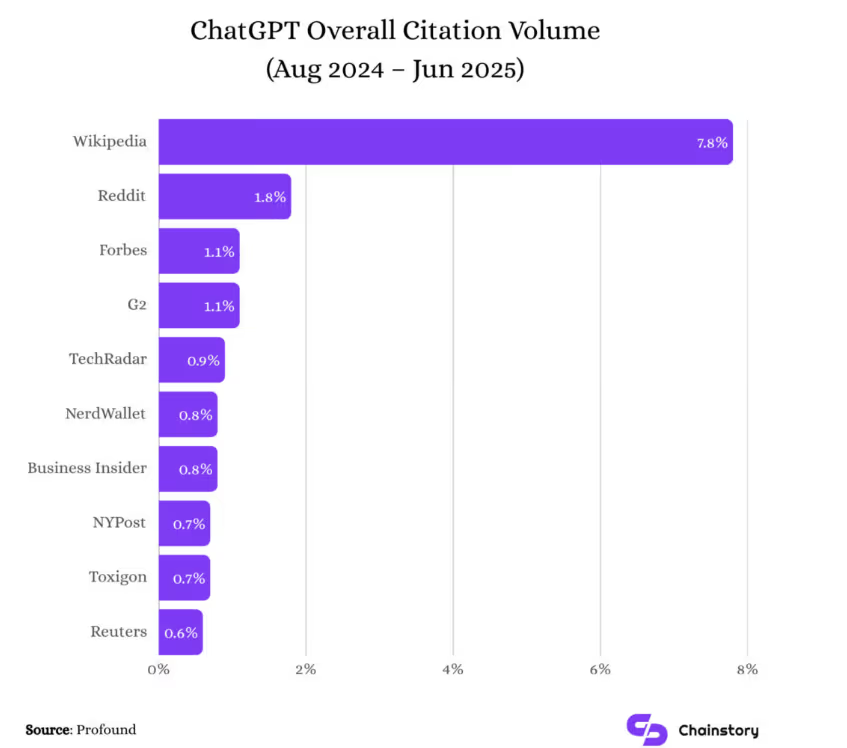
The lack of Wikipedia coverage is a more acute concern in an era where more users get their information from AI tools like ChatGPT. The report cites data from the AI tracking site Profound, which shows that 7.8% of links to sources on ChatGPT go to Wikipedia, compared to 1.8% and 1.1% to Reddit and Forbes, respectively, in second and third place.

The report also cites data from Trakkr, which shows that Wikipedia accounted for 36% of the top-10 citation links on ChatGPT and 25% of the top 100.

Contrary to popular belief, not everyone can create a Wikipedia page. The domain for doing so involves passing through tiers of protection and moderation views, according to Chainstory’s report. Volunteer reviewer’s must check prospective new articles against a number of factors, such as notability, verifiability and reliable sources.
Even when an article clears the process, it can still be deleted by administrators or via a 7-day community vote, which cannot be appealed.
Not helping matters for crypto projects is Wikipedia’s guidelines for crypto-centric news organizations (including CoinDesk), which describe them as “overwhelmingly enthusiastic about cryptocurrencies” and “generally unreliable.”
Mainstream news outlets that cover crypto, such as Reuters and Bloomberg, are regarded as reliable, the report said, but they are less likely to explore niche areas of the industry, such as liquid staking and perpetual exchanges.
Crypto World
Ethereum Price Prediction: Robinhood Chain Leads Ethereum’s Biggest User Onboarding Wave

Price prediction debates are heating up as Ethereum trades at $1,790 and is slipping in trading volume. Still, Robinhood Chain keeps stealing the spotlight, and it could reshape Ethereum’s user base over the next year.
Robinhood Chain is an Ethereum Layer 2 built for tokenized real-world assets, starting with tokenized US stocks. The network has already generated about $843,000 in user fees, showing people are actually using it instead of simply testing wallets. Robinhood’s millions of brokerage users also give it an onboarding advantage few crypto projects can match.
it's interesting seeing people continue to fade Robinhood Chain — Unipcs (aka 'Bonk Guy')
or think it's just some short-term hype or fad that will fizzle out soon
barely a week after its official launch, Robinhood Chain:
• flipped Base in daily DEX volume
• flipped BNB Chain in daily DEX volume
• is… https://t.co/2YNBT6r3FR pic.twitter.com/7iicnACRBK
 (@theunipcs) July 14, 2026
Other retail-focused Layer 2 networks have already shown how quickly transactions can climb when the product clicks. Robinhood now has the same opportunity, except it starts with an audience many rivals would be happy to borrow. Every transaction also uses ETH for gas, so stronger adoption could quietly feed demand for Ethereum even if users never touch the mainnet directly.
Meanwhile, the macro picture refuses to stay quiet. US Iran tensions intensified this week as reports of fresh military exchanges rattled markets. Oil prices jumped while semiconductor stocks fell, reviving the usual flight from risk. Crypto often joins that party a little late, so Ethereum traders should keep one eye on geopolitics and the other on the chart.
Discover: The Best Token Presales
Ethereum Price Prediction: Hit $2,000 Before the Robinhood Chain Effect Fully Prices In?
Ethereum trades around $1,790, with little to no movement in the past 24 hours. This suggests buyers are still showing up on dips instead of heading for the exits. Market capitalization stands at $216 billion. Volume has cooled, though, which usually points to consolidation rather than a fresh breakout.
The technical picture remains fairly simple. The $1,750 to $1,770 zone is still the line in the sand. Hold that area, and the first target remains the $1,845 to $1,865 resistance cluster. Clear it, and $1,975 to $2,000 comes into view. That’s where sellers could start lining up again, because nobody likes sharing profits.

Three paths still make the most sense. In the bull case, $1,750 to $1,770 holds, volume improves, and ETH gradually pushes toward $1,865, with $2,000 as the extended target. The base case keeps Ethereum stuck between $1,770 and $1,845 while macro headlines, including inflation and tariffs, continue calling the shots.
Meanwhile, the bear case has not changed. A confirmed close below $1,750 shifts focus toward $1,620, with $1,530 becoming the next major support if selling accelerates. It would be uncomfortable, not unprecedented. Crypto has a habit of testing traders’ patience before rewarding it.
Longer term, analysts, including Tom Lee, still argue that Ethereum can outperform Bitcoin on a relative basis. Even so, that view depends on key support staying intact. The Robinhood Chain onboarding story remains a legitimate long-term catalyst, yet near-term price action will be decided by buyers defending support, not by headlines alone.
Don’t Miss Out on Our $1,000 USDT Airdrop on ByBit
LiquidChain Targets Early Mover Upside as Ethereum Tests Key Levels
ETH’s range-bound grind highlights a recurring problem for active traders: the asymmetry isn’t there at $1,790 with $2,000 resistance looming. The upside is real but capped near-term. That’s precisely when early-stage infrastructure plays attract rotation capital.
LiquidChain is positioning as a cross-chain infrastructure at the L3 layer. Its core proposition is a Unified Liquidity Layer that fuses Bitcoin, Ethereum, and Solana liquidity into a single execution environment. With Liquid, developers deploy once and access all three ecosystems; users get single-step execution without bridging friction.
The path doesn't end at L1. — LiquidChain (@getliquidchain) July 13, 2026
It doesn't stop at L2 either.  ⟁https://t.co/vqvBcdSQYC pic.twitter.com/UsmCfGdk3x
The presale is currently priced at $0.01479, with $900K raised to date. Key architecture features include Verifiable Settlement and a Deploy-Once model that addresses one of the more persistent developer pain points in multi-chain environments.
The infrastructure thesis directly addresses a structural gap that Robinhood Chain-type deployments will eventually need to solve as they scale across ecosystems.
Research LiquidChain before the presale price moves.
Discover: The Best Crypto to Diversify Your Portfolio
The post Ethereum Price Prediction: Robinhood Chain Leads Ethereum’s Biggest User Onboarding Wave appeared first on Cryptonews.

Anthropic Introduces Claude for Teachers

Vybz Kartel – Money Me a Look

Welsh Government set to lose budget vote as parties refuse to back Plaid spending plans


-

 Fashion5 days ago
Loro Piana Fall 2026 Enters Houston’s Art Scene
-

 Fashion4 days ago
Weekend Open Thread: Nutriplenish Leave-In Conditioner
-
 Sports5 days ago
2026 Genesis Scottish Open Thursday TV coverage: Round 1
-

 Tech7 days ago
Anthropic brings Claude Cowork to mobile and web as usage data shows most users aren’t coding
-

 Sports4 days ago
Super Eagles star Moses Simon opens up on Liverpool transfer regret
-

 Tech5 days ago
Character.AI enters the microdrama arena with its own productions, but there’s a twist
-

 Crypto World7 days ago
Nasdaq arthritis company holding Moshe Hogeg crypto hits all-time low
-

 Tech13 hours ago
Get Your ESP32 Sunny Side Up With This Solar Dev Board
-

 News Videos6 days ago
Crypto Just Entered Its Most Important 6-Month Candle (Could Decide Everything!)
-

 Tech7 days ago
Keychron is stepping outside keyboards with a $349 Thunderbolt 5 dock aimed at power users
-
 Business7 days ago
ASX 200 Slides Over 0.6% as Rare Earths and Lithium Stocks Tumble Amid Global Semiconductor Sell-Off Today
-
 NewsBeat5 days ago
Major update after Huntingdon train attack as man enters plea
-
 Business7 days ago
Will Trent shares rebound after Q1 update triggers 13% crash? Here’s what technical charts indicate
-
 Tech7 days ago
OpenAI teams with Work Louder to launch Codex-native keyboard, weeks after CEO of Apps told staff ‘not to be distracted by side quests’
-

 Business7 days ago
SpaceX Shares Slide Nearly 6% Amid Post-IPO Volatility and Starship Test Focus
-

 Sports6 days ago
39-year-old Djokovic wins five-hour thriller to enter Wimbledon semis | Other Sports News
-
 Crypto World7 days ago
TeraWulf’s $19B Anthropic Lease Turns Bitcoin Miner Into AI Landlord
-
 Tech23 hours ago
Cloudflare Precursor Watches Your Mouse and Keyboard To Decide If You Are Human
-

 News Videos1 day ago
how to make coin bank box with cardboard #scienceproject #money #diy #shorts
-

 Tech6 days ago
Entra passkey enrollment vishing targets Microsoft 365 users
You must be logged in to post a comment Login