

Politics
Matthew Jeffery: Is this the beginning of the end for Reform UK?

Matthew Jeffery is an experienced global talent and recruitment leader, with more than 25 years advising boards and C-suite executives on workforce strategy, skills, and productivity.
Reform supporters will rage at the very suggestion the show might be coming to end and choke on their morning Cheerios but anger does not change reality.
The signs of decline are beginning to appear. Yes, Reform is still ahead in national polling, although recent surveys show the gap tightening. Yes, it continues to win council by elections but other parties are starting to push their way back in. The question Reform voters must confront is simple. Has the movement reached its peak? Decline does not happen overnight. It is gradual. But are the seeds of their demise already sown?
Credit where credit is due. Nigel Farage has done something genuinely rare in modern British politics. He took a fringe protest movement and turned it into a national force that reshaped the political landscape. Reform broke through where the old parties had grown complacent, rallied voters who felt ignored and forced Westminster to confront issues it preferred to avoid. Under his leadership the party won millions of votes, gained council seats across the country and became a permanent fixture in national polling. Whatever happens next, that achievement stands. Farage built a movement that changed the national conversation.
But times are changing. Has Midas lost his touch?
Reform UK has reached the moment every protest movement eventually hits: the applause has faded, the spotlight has shifted and what once looked like momentum now feels like exposure. Farage is no longer steering the national conversation; he is being questioned by it. For the first time, voters are looking at Reform itself rather than the failures it promised to fix. The phase of possibility has given way to the demand for proof. For months Farage forced Westminster to confront issues it preferred to ignore; that spell is breaking. Voters aren’t clapping the problems he highlighted anymore. They’re asking whether he can meet the standards he demanded of everyone else.
The forces that fuelled Reform’s ascent have not disappeared. Far from it. Immigration, frustration and economic anxiety remain powerful. But success changes the test. Protest movements are judged against the failures of government. Potential governments are judged against the standards they would impose on themselves. The closer an insurgent comes to power, the more it is judged as a government. Reform is now facing that examination and the early signs are unforgiving.
The truth is simple. The qualities that built Reform are not the qualities required to run a modern state. Anger can rally supporters. Charisma can win votes. Neither produces institutions, ministers or disciplined decision making. Campaigning identifies problems. Government must solve them.
Local government is providing the first real examination. Voters will judge Reform not by speeches in Westminster but by refuse collections, planning decisions, balanced budgets, social care and the everyday competence of the councils it now controls.
Kent County Council has already shown how quickly protest politics gives way to governing reality. Reform councillors arrived insisting Conservative administrations had overspent and that substantial savings could easily be found. Once in office, they discovered the opposite. Years of pressure on social care, transport and statutory services meant the budget had already been cut to the bone. Kent entered the year facing a £47 million budget gap, driven largely by rising demand in adult social care and children’s services. More than 70 per cent of spending was already committed to statutory obligations, leaving little room for discretionary cuts. Reform councillors were forced to implement a 4.99 per cent council tax rise; the maximum permitted without a referendum. Opposition offered the luxury of simple answers. Office demanded difficult choices.
The Defence Test
These are dangerous times. War in Ukraine. Conflict in the Middle East. The International Monetary Fund, Bloomberg and several European defence ministries have reported that Russia is now spending more than 50 per cent of its government revenue on its war machine, while the United Kingdom spends around 2.3 per cent of GDP. Long‑standing alliances are wobbling, even our closest ally, the United States, is no longer a guaranteed constant.
Years of underinvestment have left Britain’s armed forces exposed. The Army is at its smallest size since the Napoleonic era. The Navy has world class ships but not enough of them. The RAF has advanced aircraft but too few to generate mass. Ammunition, spare parts and critical components are held in peacetime quantities and industry cannot scale quickly. Britain can fight but it cannot fight for long. Admiral Tony Radakin has warned that Russia could pose a direct threat to the UK and NATO by 2030. Britain is weak and vulnerable.
This is not a policy debate. It is a test of seriousness.
Reform is not meeting that test.
It has no dedicated defence spokesperson and no developed approach to the strategic choices government must make, from procurement and force structure to the future of the nuclear deterrent and Britain’s alliances. Defence is the first responsibility of government. If a party cannot explain how it would defend the country, everything else becomes secondary. That weakness was exposed when Reform’s Laila Cunningham was unable to outline the party’s defence policy when asked by Julia Hartley Brewer on Talk.
The problem extends beyond defence.
Reform has articulated ambitions on taxation and immigration but it has produced almost nothing that resembles a governing programme. It has no credible plan for public service reform, no fiscal framework that explains how its promises would be funded and no operational blueprint for running the Home Office, the Treasury or the Department of Health. It has offered slogans about cutting taxes without explaining which budgets would be reduced. It has demanded lower immigration without outlining the legal, administrative or diplomatic machinery required to deliver it. It has attacked waste in public services without presenting a serious plan for procurement, staffing or productivity. It has criticised welfare without defining eligibility, enforcement or incentives. It has promised growth without a coherent industrial strategy. It has talked about sovereignty without explaining how Britain’s treaty obligations would be managed.
A party that cannot answer these questions is not offering a programme. It is offering a mood. Voters may share that mood but they cannot build a government on it. A movement built on confidence cannot indefinitely rely on confidence alone. Eventually it must demonstrate competence.
Image: A Party With a Reputation Problem
Reform UK does not just face questions of competence. It faces questions of character. The party’s image has hardened in ways that carry real political cost. For many voters, Reform is no longer simply a protest movement. It is a movement associated with hostility, controversy and a culture that feels far removed from the mainstream.
That perception is not abstract. It is shaped by repeated scandals involving candidates, councillors and activists. Racism allegations. Antisemitic posts. Inflammatory rhetoric. Suspensions and withdrawals. A pattern that suggests a party attracting the wrong people and struggling to enforce basic standards. Reform promised to be a clean break from the old politics. Instead, it has acquired the reputation of a party that tolerates behaviour the public finds unacceptable.
The problem is not confined to race or religion. It extends to women and LGBT people. The Makerfield by election exposed that with brutal clarity. Reform defended candidate Robert Kenyon’s comments as “locker room banter” even after he said women presenting rugby “aren’t up to the job,” declared “I’m sexist, sorry but I am,” mocked English women’s bodies, used homophobic slurs and endorsed a sexualised message sent to a female TV presenter with the line “he’s only saying what we’re all thinking.” For many voters, especially women and LGBT people, that is not banter. It is a red flag about the culture inside the party.
The wider record reinforces that impression. Reform is not openly anti‑gay but it has never championed LGBT rights either. It has no policy platform on equality. It rarely engages with Pride events. It offers silence where clarity is expected. Critics see that silence as passive discrimination. Supporters call it prioritisation. The result is confusion, suspicion and a sense that Reform is uncomfortable with modern social norms. In a country where most voters expect basic respect for LGBT people, silence is not neutral. It is noticed.
Farage’s own rhetoric has added to the perception. His comments on immigration, Islam and national identity energise a core base but alienate voters who want toughness without toxicity. Minority communities’ express anxiety about Reform’s rise. Women see a party willing to excuse misogyny. LGBT voters see casual homophobia brushed aside. Image shapes trust and trust shapes growth. On that test, Reform is struggling and the damage is cumulative.
Reform now battles four overlapping reputational problems:
- Racism allegations – repeated candidate scandals have created a perception of intolerance.
- Antisemitism controversies – documented cases and inconsistent sanctions have damaged credibility.
- Misogyny and homophobia – the defence of Kenyon’s comments suggests a party willing to excuse behaviour most voters find unacceptable.
- A “nasty party” aura – Reform’s tone and rhetoric give opponents an easy frame: angry, divisive, hostile.
These perceptions do not need to be universally true to be politically lethal. They only need to be widespread enough to make Reform look risky, unserious or socially corrosive. A party that wants to govern cannot afford to look like a party that makes people uneasy.
Reform promised authenticity. It promised straight talking. It promised a different political culture. But image is not built on slogans. It is built on behaviour, discipline and the standards a party is willing to enforce. On that test, Reform is struggling and the damage is cumulative.
Integrity Is Hardest to Demonstrate
Nigel Farage built his career by holding an unaccountable political class to account. Now he is the one under scrutiny, judged by the standards he once demanded of others. He still presents himself as the outsider battling the establishment but that claim is harder to sustain. By any conventional measure he is part of the establishment: educated at Dulwich College, successful in the City, twenty‑one years as an MEP, leader of multiple national parties and one of the most recognisable figures in British public life. This is not the biography of a man shut out by the system. It is the biography of someone who has spent decades as a member of the establishment himself. Scrutiny is not persecution. It is the inevitable consequence of seeking high office.
Reform promised a different political culture, integrity, transparency, accountability. That promise now meets reality. Farage faces serious questions over the £5 million donation from Christopher Harborne, currently being examined by the Parliamentary Commissioner for Standards and already widened into a Met Police probe. He also accepted money from George Cottrell, who served a prison sentence in the United States after pleading guilty to an offence connected with money laundering. Reform built its brand on integrity. It invited a higher standard of scrutiny. Now it is receiving exactly that.
Farage cannot dismiss every difficult question as establishment hostility. The scrutiny he faces is not punishment for unfashionable views. It is the consequence of seeking power. Questions about donations, transparency and standards are exactly the questions he would demand of any Labour or Conservative leader. The principle does not change simply because he is now the one being asked to answer them.
The optics make the problem sharper. Farage still casts himself as a man of the people, yet the £5 million gift from Harborne sits uneasily with that image. His explanation has shifted repeatedly, personal security, a reward for Brexit, money he could spend on anything from campaigning to Ferraris, before insisting he has not spent a penny. For voters struggling under high taxes and rising costs, that inconsistency does not look like the life of an outsider. It looks like privilege. And when a movement builds its identity on authenticity, moments like this matter.
The danger of becoming a joke.
When ridicule replaces fear, a protest movement enters its most dangerous phase. Movements rarely decline because opponents discover better arguments. They decline when they stop looking inevitable. Criticism invites debate. Ridicule changes perception. Once a movement becomes an object of humour rather than threat, it loses something far harder to recover than votes. It loses authority. It loses seriousness. It loses the aura that persuaded supporters it could actually win.
Farage’s by election against Count Binface has captured that shift with brutal clarity. The defining image is no longer Farage confronting the establishment. It is Farage campaigning against a satirical candidate wearing a bin on his head. Social media is amplifying the humiliation. Memes, jokes and viral clips are spreading across every platform. The British public has a savage sense of humour and a long history of turning politics into farce. The Natural Environment Research Council asked the public to name a new polar research vessel. The winning name was Boaty McBoatface. H’Angus the Monkey was elected Mayor of Hartlepool. Once the public decides something is funny, it becomes almost impossible to make it serious again. This is the danger Nigel faces. The odds are heavily stacked against it but if he loses the by election to Count Binface, it would be humiliating and potentially brand fatal. Even a strong showing by Binface is enough to humiliate Nigel. That’s not what a potential Prime Minister needs. (And don’t forget a comedian became the President of Ukraine).
Rachel Reeves, not known for her humour, understood the symbolism immediately when she tweeted, “It is a farce and a desperate distraction and the people of Clacton deserve better. But if he wants to spend the summer arguing with a bin, I won’t stop him”. Ed Davey, said in interview, “We take elections seriously, so I can’t back a joke candidate with ridiculous policies. So, I hope Count Binface beats him” Whether fair or not, the frame had changed. Farage was no longer shaping the political agenda. He was reacting to it. Established parties can absorb ridicule because decades of institutional legitimacy cushion the blow. Insurgent movements have no such protection.
This matters because Reform’s voters are transactional rather than tribal. They did not join a political family. They backed Reform because it articulated their frustrations more effectively than anyone else. If they conclude the party cannot translate those frustrations into competent government, they will leave as quickly as they arrived. Ridicule accelerates that process because it undermines the credibility on which insurgent movements depend. And if Farage loses the by election, or does not win by a massive majority, the symbolism becomes even more damaging. The joke becomes the story. The meme becomes the verdict.
The polling suggests that shift is already beginning. Nigel Farage’s latest Opinium approval rating has fallen to net -27, his lowest since the 2024 general election. Political leaders can survive periods of unpopularity but sustained declines matter because they shape the public’s perception of momentum. Farage built his appeal on looking like the politician who was always advancing while everyone else retreated. A leader with deeply negative personal ratings finds it much harder to sustain that sense of inevitability.
Farage made his name by exposing other people’s failures. Now he is being measured by the same yardstick. The party that vowed to be cleaner and tougher than the establishment is wrestling with donations scrutiny and the movement that mocked incompetence is learning how unforgiving competence can be.
A Party Built Around One Man
Reform’s greatest vulnerability is not only scandal. It is structure. The investigations, the donations controversy and the Clacton by election have damaged the party but they have done so for a deeper reason. Nigel Farage is the strategist, communicator, fundraiser and defining political asset of the movement. Every major decision runs through him. Every message depends on him. Every surge in support is tied to his presence. That concentration of authority helped build Reform but it also means that when Farage becomes the story, the party disappears behind him.
That is exactly what has happened. Instead of driving the national debate on immigration, taxation and Britain’s economic decline, Reform has been dragged into a conversation about Farage himself. Donations, standards investigations and the Clacton by election have replaced the issues that fuelled its rise. The focus has shifted from the country’s problems to the party’s leader. For a movement built around one individual, which is not simply uncomfortable. It is dangerous.
Strong parties survive their leaders. Weak parties depend on them. Reform has no institutional spine, no bench of credible successors and no centres of authority beyond Nigel Farage himself. It has a leader and a logo. It does not yet have a fully formed strong party.
This is the cost of building a movement around a single personality. When the leader is riding high, the party rises with them. When the leader is engulfed by controversy, the party has nowhere else to turn. Every headline about Farage becomes a headline about Reform. Every question directed at him becomes a question about the party’s judgement, priorities and credibility. The Conservatives are rebuilding a front bench, a governing philosophy and a programme. Reform remains organised around one man. That model works for an insurgency. It is a fragile foundation for a party that wants to govern.
Reformists will point to Zia Yusuf, Richard Tice, Suella Braverman, Lee Anderson and Robert Jenrick as evidence of a deeper party. They will add Laila Cunningham, their London mayoral candidate. But the wave of Conservative defectors tells a different story. Reform built its identity on being outside the establishment, free from the failures of the old parties. That brand was its greatest strength. The moment it began welcoming senior Conservatives such as Nadhim Zahawi, Suella Braverman and Robert Jenrick, it undermined the very premise on which it rose. These were not outsiders. They were architects of the record millions of voters believe failed the country, the record Kemi Badenoch is now working to repudiate.
The defections did more than blur Reform’s identity. They strengthened the Conservatives by removing internal dissent and clarifying the ideological divide. What once looked like a clean break from the past now looks like a refuge for the same politicians Reform claimed to replace. For a movement built on difference, that is a dangerous contradiction.
And beneath that contradiction lies a deeper structural weakness. If Nigel Farage were no longer leader, Reform would face an immediate and destabilising succession battle. The party has no agreed hierarchy and no unifying figure capable of holding its factions together. Zia Yusuf is combative and uncompromising, qualities that energise a core base but struggle to command wider confidence. Richard Tice is more measured but lacks national reach. Suella Braverman polarises opinion inside and outside the movement. Robert Jenrick is politically agile but mistrusted by many Reform activists. The result is a leadership field defined by rivalry rather than authority. A party built around one man has no obvious successor and the moment Farage steps aside, the unity that sustained Reform’s rise would be at risk.
Reform Chose the Wrong Fight
Oppositions do not get many defining moments. One is about to arrive. On 20 July Andy Burnham will arrogantly strut into Downing Street with remarkably little scrutiny of the programme he intends to govern with. His positions on taxation, public spending, immigration, defence, energy and public service reform remain largely untested. For a movement that built its reputation by asking the questions others avoided, this should be political gold.
Yet Reform is choosing a different battlefield. Instead of preparing to put Burnham under pressure from the moment he enters Number Ten, the party is preparing for a by election in Clacton in August that will drag Nigel Farage back to the centre of the story. The headlines will not be about the new Prime Minister or the choices he must make. They will be about Farage, donations, investigations and Count Binface. Labour will escape the examination that should accompany a new government. Reform will absorb it instead.
That is more than a tactical mistake. It is the sign of a party losing clarity about its purpose. Successful oppositions force governments onto uncomfortable ground. They set the terms of the argument. Reform is doing the opposite. It is surrendering the initiative and allowing the national conversation to revolve around itself.
Politics is ultimately about choosing where to fight. At the moment Labour is at its most exposed, Reform is choosing to defend Nigel Farage rather than prosecute the case against the incoming government. For a party that claims to be Britain’s real opposition, that choice may prove to be its most costly error.
Andy Burnham’s arrival in Downing Street creates another challenge for Farage. For years he positioned himself as the great communicator of British politics, a man of the people who could speak to voters in a language Westminster had forgotten. But Burnham occupies the same space. He is one of the most effective communicators of modern politics, a cheeky chappy with a sense of humour and an instinctive feel for ordinary voters. Farage is no longer the only politician who can claim that mantle. And at the moment Burnham is entering Number Ten, Reform is fighting a by election rather than defining the national argument. Farage has competition.
The Conservatives are coming back
Looking back with honesty, Conservatives know they drifted away from their own instincts. Britain was hit by a decade of shocks. Brexit tore open the constitution. The pandemic forced government to step in on a scale no one had imagined. Russia’s invasion of Ukraine sent an energy shock through every advanced economy. Under that pressure, the state grew, borrowing surged and public spending reached levels no Conservative would ever call normal.
Some of that intervention was unavoidable. The mistake was letting emergency government turn into everyday government. Conservatives didn’t return quickly enough to the economic instincts that define Conservatism. Taxes stayed too high. Spending stayed too high. The state stayed too big. Immigration soared during the “Boriswave.” As Kemi Badenoch has said bluntly: mistakes were made. Conservatives forgot to be Conservatives.
But the British people don’t want endless apologies. They want to know whether the Conservatives have learned the right lessons. And the lesson isn’t simply that government should spend less. It’s that government must remember its proper purpose. Every pound it spends is first earned by a hardworking taxpayer. Government should never lose sight of that. It is spending money entrusted to it by people who worked hard to earn it and it has a duty to treat every pound with the same care families and businesses show every day. Every regulation carries a cost. Every tax rise changes behaviour. People respond to incentives. Good economic policy starts by recognising those realities instead of pretending they don’t exist.
Kemi Badenoch understood that before anyone else. She did not imitate Reform’s outrage or chase its rhetoric. She confronted the truth millions of former Conservative voters already recognised. The party had abandoned its principles. It had allowed spending to spiral, taxes to rise and the state to grow without restraint. It had defended policies that contradicted its own philosophy. Badenoch was willing to say so openly. That honesty mattered because it acknowledged the grievance that drove voters away.
She is now rebuilding the party around the principles those voters never stopped believing in. Lower taxes that reward work. A smaller state that trusts people more than bureaucracies. Real spending restraint and a commitment to repay debt. Strong law and order. Secure borders. A welfare system that encourages work rather than dependency. A clear plan to leave the European Convention on Human Rights. An end to net zero targets that drive up bills and damage industry. These are not abstract policies. They are the instincts of the voters who left. They are the reasons they became Conservatives in the first place.
Reform supporters are also starting to notice something more fundamental: the party they thought was a small‑state insurgency is, on paper, anything but. Its platform is packed with big‑state intervention: sweeping nationalisations of rail and utilities, mandatory price controls on energy, heavy‑handed immigration crackdowns that require vast bureaucratic expansion and state‑directed industrial policy that looks more like economic management than free‑market reform. It talks the language of liberty while proposing a government that would be larger, more intrusive and more centralised than anything Conservatives have ever offered. For voters who left the Conservatives because they wanted a leaner state, Reform’s own blueprint reads less like Thatcherism and more like state‑powered populism. That contrast is becoming harder to ignore.
Candidate selection shows the Conservatives shift is real. Badenoch is choosing candidates who support withdrawal from the ECHR and who reject the rigid orthodoxy of net zero. These choices speak directly to the voters who left the Conservatives for Reform. They show a party returning to traditional Conservative principles rather than defending the compromises of the past. Reform supporters will notice this. They will see a Conservative Party willing to challenge supranational constraints, prioritise national sovereignty and question environmental policies that impose heavy costs on households and industry. Candidate selection has become a declaration of intent. It signals that the Conservatives are not drifting back to the centre. They are reclaiming the territory Reform thought it owned.
Reform’s difficulties have created an opening, not a guarantee. Former Conservatives will not return out of habit. They will return only if they believe the party has changed, if they see discipline restored, credibility rebuilt and a recognisably Conservative agenda taking shape. If Badenoch continues on that path, the voters who left out of frustration have a reason to come home. If she fails, Reform’s current problems will be remembered as a pause rather than a turning point in the realignment of the British centre right.
The Seeds are Sown.
Nigel Farage has repeatedly defied political gravity and the forces that fuelled Reform’s rise remain very real. Immigration, weak economic growth, high taxation, pressure on public services and deep frustration with Westminster have not disappeared. Those grievances will continue to shape British politics for years to come. But grievances alone do not produce governments. Every insurgent movement eventually reaches the point where voters expect more than anger, slogans and diagnosis. They expect competence.
That is where Reform now finds itself. For years it was judged against the failures of others. Today it is being judged against its own standards. The questions have changed. Can it govern. Does it have the people. Does it have the policies. Does it have the judgement. Those are far harder questions than asking what is wrong with Britain.
None of this means Reform is finished. Far from it. The movement still speaks to genuine public concerns and no Conservative should assume those voters will simply come home. Trust must be rebuilt. Credibility must be earned. Good intentions must become convincing government.
But political movements do not decline in one dramatic moment. They decline when the story around them changes. They decline when momentum becomes scrutiny. They decline when enthusiasm becomes expectation. They decline when protest becomes responsibility. And they decline when the public stops seeing inevitability and starts seeing fragility.
Over recent months, that shift has begun. The seeds of decline are already visible:
- Protest turning into scrutiny – Reform is now judged as a potential government, not a protest movement.
- Local government exposure – Kent showed how simple answers collapse under real governing pressure.
- Defence incoherence – In a dangerous world, Reform has no defence strategy and no credible spokesperson.
- Absence of a governing programme – Slogans on tax, immigration and sovereignty mask a vacuum where policy should be.
- Integrity questions – Donations controversies and widening investigations undermine Reform’s claim to be different.
- Damaging optics – The £5m gift and the Clacton timing create the impression of evasion, not accountability.
- Ridicule replacing fear – Count Binface turned Farage from a threat into a punchline, eroding authority.
- Structural fragility – A party built around one man has no depth, no succession and no resilience.
- Identity dilution – Tory defectors blur Reform’s outsider brand and weaken its distinctiveness.
- Strategic misfire – Reform chose Clacton over scrutinising Burnham, surrendering the national agenda.
- Credible Conservative leadership – Badenoch offers seriousness and authority where Reform offers protest.
- Conservatives reclaiming Conservatism – The party is returning to the low‑tax, small‑state, sovereignty‑focused agenda Reform thought it owned.
- Image toxicity – Racism allegations, antisemitism controversies and hostile rhetoric make Reform look risky, divisive and socially corrosive.
Taken individually, none of these developments is fatal. But taken together, they reveal a movement beginning to lose the qualities that once made it look unstoppable. Momentum is giving way to scrutiny. Authority is giving way to ridicule. Simplicity is giving way to the hard realities of government. The questions surrounding Reform are multiplying, and each one makes the next harder to answer.
Perhaps that is where British politics stands today, not at the end of Reform UK but at the moment its trajectory first began to bend. Turning points rarely announce themselves. They are only recognised later. If Reform’s momentum continues to ebb, this period will not be remembered as a run of unfortunate events. It will be remembered as the moment the seeds of decline were planted.
One seed rarely changes history. But enough seeds, left to grow together, almost always do.

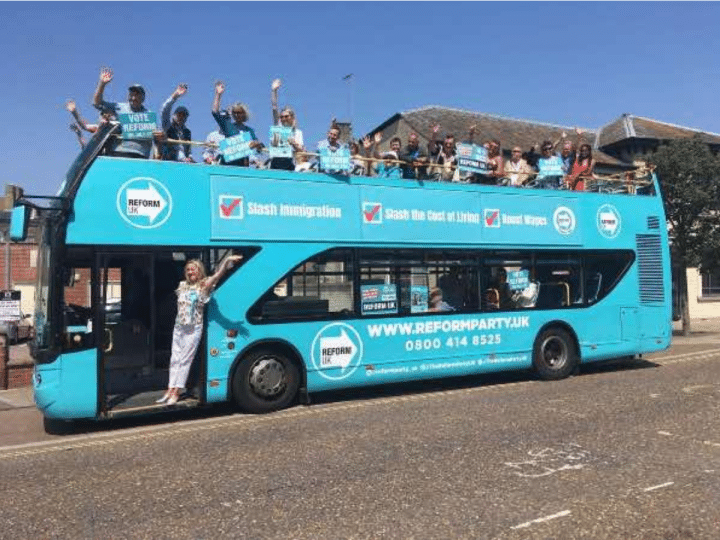
Reform UK has beaten Labour to a manifesto launch in the Greater Manchester mayoral election race. Both parties are, of course, going through by-election-related leadership dramas.
The latter saw former Greater Manchester mayor, Andy Burnham, unseat its historically unpopular leader, Keir Starmer, in Makerfield. Reform now faces the not insignificant prospect of its leader being challenged by Count Binface. And Nigel Farage’s popularity is tanking too, thanks to his repeated corruption.
With all this going on, Reform reportedly sent internal WhatsApp messages to party activists telling them to get themselves down to Clacton and abandon Manchester’s mayoralty. (Reform denied this in Manchester Mill.) All because Reform is worried it can’t take on a character almost as unserious as Farage.
But it hasn’t stopped Reform putting out a mishmash of ideas for Manchester, many seemingly borrowed. (The Canary hasn’t been able to confirm whether its manifesto is properly costed either.)
Given all their competitors’ furore, the Green Party must be laughing. The Greens are celebrating their ability to out-match Labour by beating them to a proper manifesto.
Green Party mayoral candidate, Geraldine Coggins, said:
Labour need to get serious…You can’t hope to run a 3 billion budget based on a cartoon bus.
Greens slam ‘unserious’ Labour in Manchester mayoral election
Reform: Is this Manchester’s great Reformation?
Reform’s candidate, landlord Sian Astley, is in fact promising to “go to war” with vape shops and “dodgy” barbers. Meanwhile, Reform promises to:
Cut waste, slash spending on little-used cycle lanes, reverse the increase in the Mayor’s tax and end spending on DEI projects such as equality panels and funding for greener future programmes.
This is despite every elected Reform-controlled council promising to do similar, failing to find the phantom woke DEI “waste”, and instead raising taxes. Anyone who cycles around Manchester — an activity that’s not party political — knows that the idea that bike lanes are somehow overfunded is nonsense.
Reform pledges to “shut down every migrant hotel” with no mention of where asylum seekers are intended to go after.
However, councillor Astley, previously pledged to build immigrant prisons in non-Reform-voting areas. This viciously punitive — not to mention likely illegal plan — is part of Reform’s national policy. Astley doubled down on it, but the general public hated those plans when announced.
Astley also pledges to create the “toughest police force in Britain” if elected. This is despite the fact that Greater Manchester Police was recently found to have used “disproportionate and unnecessary force” against anti-fascist demonstrators in April. The question, then, is: tough on who, exactly?
Not fascists, presumably. Just drugs, knives and shoplifters, according to the manifesto.
Is Reform just pinching policies?
This rhetoric is perhaps standard Tory-esque stuff. “Tough on crime”, yada yada yada. Maybe a little bit more of a fascist flavour when the time comes, we’ll see…
Reform is in lockstep with the Tories and both parties’ fossil fuel donors, railing against “Net Zero measures” and pledging to scrap all of them in Greater Manchester Combined Authority. You couldn’t publish this at a worse time as Manchester and much of the lower North West is covered in smoke from a raging wildfire burning near Oldham.
But Reform has also pinched policy ideas from its further right, with a pledge to launch an inquiry into “grooming gangs”. The party has alleged to pursue every perpetrator and “publicly expose the officials who enabled them”. This language is a clear imitation of Rupert Lowe’s Restore Britain party, which is likely eating into Reform’s vote again as we saw in Makerfield.
Lowe calls Farage a “coward” for not launching an inquiry, which Lowe did himself. He claims it found 250,000 cases of child rape — a figure seemingly plucked from thin air, in a biased document clearly targeted against Muslims.
The inquiry was truly hateful and dangerous and led to stabbings against five people in Edinburgh mere days after its launch. Right-wingers are farming racist mass psychosis.
This is standard fare for Reform now, who time and again has been caught with racist councillors, hateful spads and vicious MPs. From racist dog whistles to overt hate, we know its direction of travel.
Reform UK sees its sixth councillor suspended over racist rhetoric
Vague unaccountability and watered-down policy
There’s also a commitment to “proportional” funding for regeneration across the boroughs and plans to build on all brownfield sites. Not bad ideas, in theory. The latter is certainly something that many could get behind, including greens.
But surely Astley, whose business is property sales, will be a boon for the unaccountable development interests that have dominated this city under Burnham.
Reform seems to have some consciousness about Burnham’s shocking legacy. That legacy was fully overseen and enabled by Labour candidate, Bev Craig, as city council Leader.
Reform has promised:
For luxury developer contracts in the region, Reform UK say they will publish every loan agreement, decision record and contract above £1million held by TfGM and the GMCA, commission an independent audit of the Housing Investment Loan Fund and Renaker loans, impose a conflict of interest regime, enforce terms of existing deals and refer evidence of wrongdoing by developers, officials or contractors to relevant authorities.
The question is whether it’s purely political vengeance, or whether the party will hold itself accountable too. Reform offers very vague plans for housing, without even bothering so much as to put a target on building homes. Instead it only promises “affordable homes where they need to go”.
The thing about not having targets, like the Greens’ 20,000 homes plan, is that you don’t have to be accountable. That seems to be Reform’s underlying plan. Accountability and apology is not its game.
Lastly, in a policy blatantly pinched from the Greens, only measurably shitter, Reform pledge free bus travel… for 16-18s only. Hardly as ambitious or crucial as the Green pledge of free for under-22s.
It’s just more evidence that Reform grifters are short on ideas and lack real substance.
Featured image via Manchester Gazette
Reform’s Manchester mayor candidate is a landlord, because of course
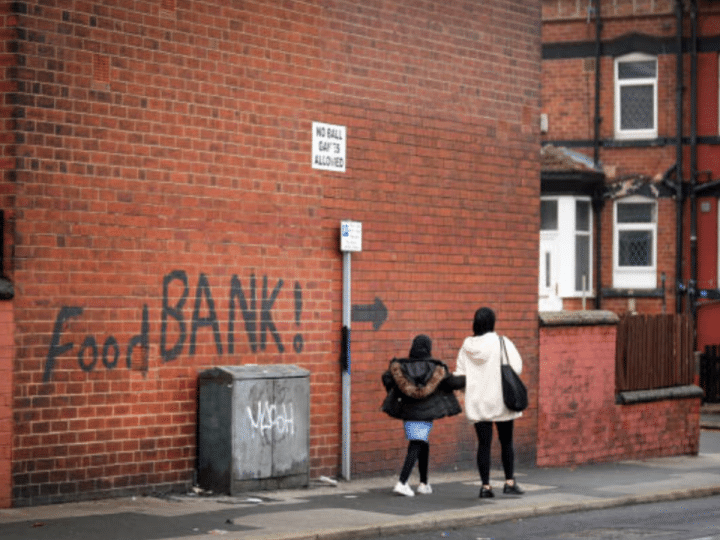
A new report from a group of renowned paediatricians has raised huge alarm as poverty and inequality mean that child health outcomes have either stalled or declined so much that this generation has the poorest health in decades.
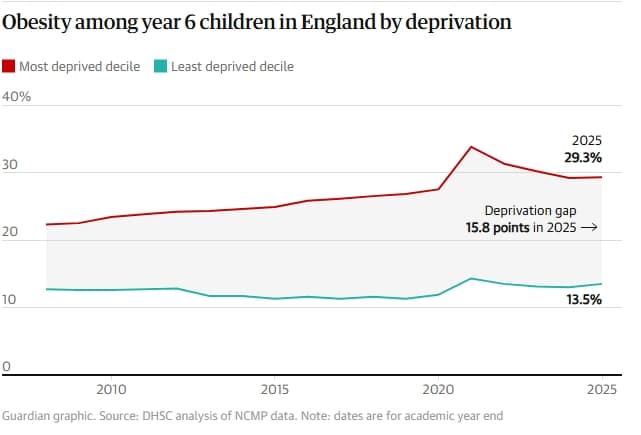
Inequality and poverty are significant factors in this critical issue hurting the UK’s children, with those living in more deprived areas seeing rates of infant deaths and childhood obesity that are twice as high as the least deprived.
Dr Helen Stewart, officer for health improvement at the Royal College of Paediatrics and Child Health (RCPCH), has powerfully stated:
The UK’s record on children’s health should be a national embarrassment.
UK children will be one of unhealthiest generations in decades.
Reduced vaccination rates, rising asthma, mental health disorders; high infant mortality rates, oral health, obesity.
Poverty a major factor. Significant health inequalities across the UK.https://t.co/yrMDETPLPO
— Prem Sikka (@premnsikka) July 14, 2026
Children’s health stagnating by every metric
The report examined 12 internationally recognised indicators used to measure child health and wellbeing. These indicators include infant mortality, oral health, obesity, vaccination uptake, mental health disorders, and asthma. Its analysis found that children’s health has stagnated across every indicator, with the UK now lagging behind many countries in western Europe and ranking among the least healthy for children.
Examples given refer to the uptake of the MMR vaccination which stands at 84% by the age of five, despite the World Health Organisation (WHO) setting a target of 95%. The report says this makes the UK the worst amongst G7 countries.
The picture gets even bleaker: the UK records one of the highest rates of asthma-related deaths among children anywhere in Europe. Looking at infant deaths, there has been little improvement since 2023, and the UK’s rate of deaths remains higher compared to other European countries.
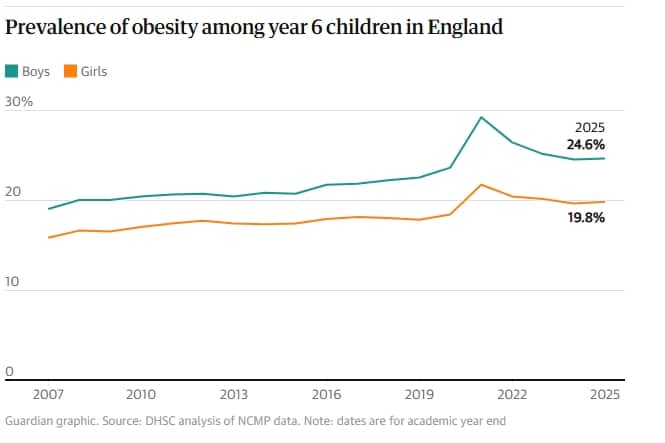
It also raises concerns about rising obesity, with almost 1/4 of boys being obese and almost 1/5 of girls. Given how expensive extra-curricular clubs are in schools, the cost-of-greed crisis squeezing the pockets of lower-income families, and a lack of accessible green spaces in more deprived areas, this is hardly a surprise.
Poverty wake-up call
But it should be a wake-up call for our leaders if they truly cared about improving the chances of the next generation.
Dr Helen Stewart from the RCPCH says we are “failing children” in the UK:
Across western Europe, many other countries are achieving better outcomes for children, yet too many children here are being left behind. The State of Child Health report shows that we are categorically failing children in the UK, but especially those from ethnic minorities and poorer backgrounds.
The new government has a chance to be bold on child health. Without action, more children will grow up in poor health, entering adulthood at a disadvantage and putting even greater pressure on families and public services.
She then challenged the incoming Burnham government:
In its first 100 days, the new government should set out how it will make children’s health a priority through sustained investment, better use of data and clear national targets.
Paediatricians have provided the blueprint, now policymakers must listen.
Poverty: class war is hurting life chances of children
Deprivation brought on by rising poverty and widening inequality have a huge impact on the life chances of children, which is emphasised by the findings of this crucial report.
For instance, the prevalence of obesity and infant mortality is twice as high as children from wealthier families revealing further how the class war we are currently living in is having very real, and potentially fatal, impacts on young children today.
As a result of this inequality the report urges the government to implement a variety of measures, such as more investment in children’s health services and in the workforce looking after our children.
The report also calls for better collection and sharing of child health data, alongside legally binding national targets to close the health gap between children from the richest and poorest families.
Stop blaming parents
Efforts to blame this on parents are already coming in on X. This is despite the fact that parents on low incomes have little power over the exorbitant costs they are having to cover through high rents, the ever-increasing cost of food, and trouble accessing healthy food being a significant challenge for those on tighter budgets.
In fact, some are attempting to offload state responsibility for children’s health entirely:
Kids in the UK will grow up to be one of the unhealthiest generations in decades according to a new report.
Who should take responsibility for children’s health in the UK? pic.twitter.com/GmGEfWcNof
— BBC Radio Scotland (@BBCRadioScot) July 14, 2026
Children growing up in social housing have far greater challenges. They are more likely to live alongside industrial sites, breathe polluted air, and have limited access to safe green spaces because of years of underinvestment. Many families are also priced out of clubs, sports, and other extracurricular activities.
Even the most determined parents can only do so much when the places around them deny their children the opportunities to thrive.
I, like many, know this from personal experience. I lived briefly in social housing with my eldest daughter in Salford in an incredibly deprived area with high levels of antisocial behaviour. We were surrounded by lorries, plastic recycling factories kicking out fumes, and industrial businesses. My car was covered in an orange dust every morning and my daughter had a cough every single day.
Chief exec of health charity the King’s Fund, Sarah Woolnough, insists this must be a “wake-up call” for the government and that without sustained and urgent remedial action, children will be left to pay the price for the failure of the generations who came before them.
This, alongside the climate crisis, has become a consistent pattern, it must be said.
She said:
This report paints a deeply worrying picture of children’s health across the UK. It is a stark reminder that health inequalities begin early in life and can shape health, wellbeing and opportunities for years to come. Whether it is infant mortality, obesity, mental health or vaccination uptake, the evidence is clear that children from disadvantaged backgrounds are more likely to experience worse outcomes.
Will the government listen?
The government has spoken out in response to the report’s concerning findings with an apparent lack of humility and showing just how out of touch with reality they truly are. They have been in power for two years, yet little has changed, in fact poverty and inequality have risen.
Nevertheless, they have said they are:
expanding mental health support in schools and colleges, opening family hubs and local health centres, and protecting children through tougher rules on smoking, vapes and junk food ads.
We’re also giving primary pupils a healthier start to the day with free breakfast clubs and providing free school meals to every single child from a household in receipt of universal credit.
However, tackling the concentration of wealth and power that is driving inequality, pushing up living costs and making life harder for most families would do far more to improve children’s lives.
Without addressing the root causes of inequality, its damaging impact on children’s health and wellbeing will continue.
Featured image via the Canary
Rich’s Monday Morning View
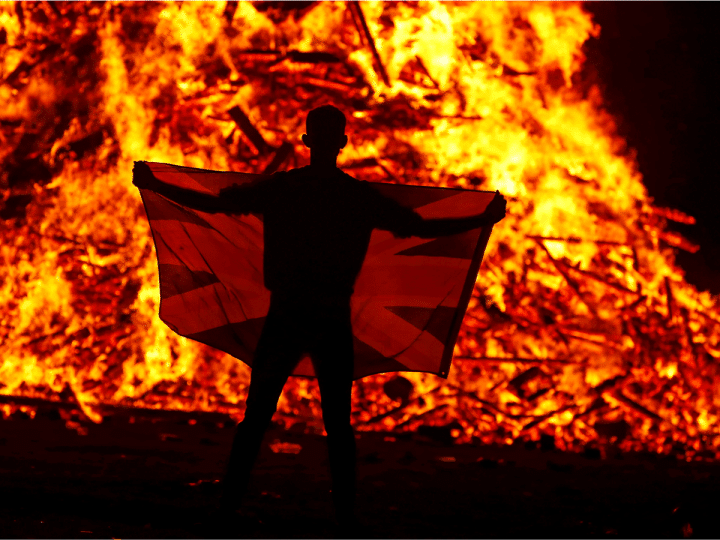
Another 12 July commemoration has now passed in the north of Ireland, leaving behind a trail of bile, death, pollution and charred remains of homes.
The yearly knuckle-dragging is a sectarian festival marking the Battle of the Boyne in 1690, in which Protestant king, William III, defeated Catholic king, James II.
The hate-fest lasted longer than usual, with bonfire groups lighting some pyres on 9 July, and parades not taking place until 13 July due to 12 July falling on a Sunday this year. The first major disgrace was the Moygashel Bonfire Association’s torching of a replica mosque.
Deputy leader of the Ulster Unionist Party, Diana Armstrong, claimed the Police Service of Northern Ireland (PSNI) scaled back its presence prior to the hate crime, in response to her requesting they do so. The PSNI has contradicted this.
Nonetheless, the pattern across the Six Counties is one of near-ubiquitous criminality across the long 12th weekend, almost entirely allowed to proceed by police. That includes incitement to violence through loyalists displaying threatening messages at bonfire sites, to property destruction, including homes burnt to the ground.
The X account, Kulture Watch, conveyed plenty of evidence for that.
12 July bonfires blaze message of sectarian and Islamophobic hate
A bonfire in South Belfast featured both sectarian and anti-migrant hate. The pyre’s creators placed a sign with ‘KAT’ written on it, which is an acronym for “Kill all Taigs”, a slur referring to Catholics.
Others were saying, “Stop illegals” and “Stop the boats”. An Irish tricolour flag was placed for burning at the top of the pile of pallets.
Elsewhere in Belfast, bonfire builders burned effigies of republican rap group Kneecap, alongside a Palestine flag. Islamophobia was a common theme, with another bonfire featuring a placard reading, “F*ck Islam”.
In a sign of the absurd leeway authorities grant to the toxic festival, a massive fire featuring a tricolour collapsed as firefighters hosed down nearby properties. At an enormous cost, the Northern Ireland Fire & Rescue Service (NIFRS), attended.
The service logged 303 emergency calls between 6pm on 11 July and 2am on 12 July.
This resulted in firefighters attending 151 operational incidents. 54 of these were bonfire-related.
The NIFRS reported how:
In an isolated incident, firefighters withdrew from a bonfire in the Cookstown area as a result of a hostile crowd.
Such events sometimes occur when firefighters try to intervene early to stop a dangerous blaze, but attendees block the bonfire being extinguished. It’s not uncommon for the heat to melt windows.
Councils, again, effectively subsidise the destructive pyres by paying for boards that people can use to prevent their houses suffering this fate. What they can’t prevent are the inevitable worst case scenarios, like the homes completely destroyed by embers spiralling off the vast blazes.
The Belfast Telegraph reported:
A row of terraced homes caught fire near the bonfire in the Knockleigh Walk area of Greenisland.
David Haighton recounted how in the incident he “lost everything”. He’d lived in his home for more than 50 years.
Tragically, a man also died while helping to construct a bonfire in East Belfast. Warren Lyttle, a father-of-one, fell from the structure in Braniel housing estate. John Steele died in similar circumstances in Larne in 2022.
Time to move beyond toxic ‘culture’ of destruction
Bonfires are a health hazard in other ways, with organisers burning toxic material, harming air quality and contributing needlessly to climate breakdown. Another form of pollution are the piles of rubbish revellers leave in the streets, which sometimes look like an attempt rival the size of bonfires themselves. Taxpayers, again, have to foot the bill for cleaning this up.
All this mess is left by people apparently expressing pride and fondness for their community by littering it, burning it and disgracing it with a torrent of hate. There are increasing calls to “move beyond bonfire sectarianism”, in the words of People Before Profit MLA, Gerry Carroll.
Carroll has called for:
…a movement of working class people, drawn from every background, ready to stand together and challenge sectarianism head on.
Working class Protestants are failed by being perennially dragged into sectarian and racial hate. Such sentiments are a convenient misdirection away from justified hatred for the policies of the British ruling class that impoverish them, alongside working class Catholics, Muslims and migrants.
The grand secretary of the Orange Order, Mervyn Gibson, had some pleasant words about reaching out to those outside unionism. But that means little while his organisation does the minimum to clamp down on mass displays of hate by its own adherents.
He also conjured up a fictitious notion of embracing “true Britishness”, apparently symbolised by “Civil and Religious Liberty for all”. Britain has never represented such a thing, and today the Union Jack unquestionably stands for diminishing freedom and increasing impoverishment.
At some point maybe bonfire revellers and sash-wearing marchers will realise the folly of identifying in a bigoted, exclusivist way with a sinking ship that harbours largely disdain for them. They might then appreciate that the 12th is an act of mass self-harm — from the smouldering homes to the corpses at the foot of stacked pallets, to the toxic bonfire embers that poison the body and entrench a ‘culture’ that poisons the soul.
Featured image via Jason Cairnduff/ Reuters
Before we start, let’s note that this took 37 days.

As you’re about to read, it says almost nothing other than “Please go away now”.

It takes quite a long time to say it, but nevertheless those four words are pretty much the sum total of the actual content. It does not in any way whatsoever address the contents of our letter of 6 June, of which the below is an extract.

DCC Houston does say one intriguing thing, though.

Now, we can’t be certain of exactly what he means by “the comments made recently”, since he refers to “various individuals”. But the comments OUR letter referred to were those made by the First Minister of Scotland.

So we must reasonably assume that DCC Houston is talking about those. Which means he’s saying Police Scotland already KNEW that the SNP had misappropriated the fundraiser money and spent it on another purpose.
The Dean of the Faculty Of Advocates, one of Scotland’s most distinguished lawyers, and one who’s been employed by the Scottish Government itself, is unequivocally of the professional opinion that that constitutes the crime of embezzlement, as indeed almost any lay observer would be.


37 days of holding our breath later, we’re none the wiser as to why the Deputy Chief Constable of Police Scotland apparently disagrees with both the First Minister and the Dean Of Faculty that donors to the fund were the victims of criminal embezzlement.
We will now consider our next steps, and keep you updated.

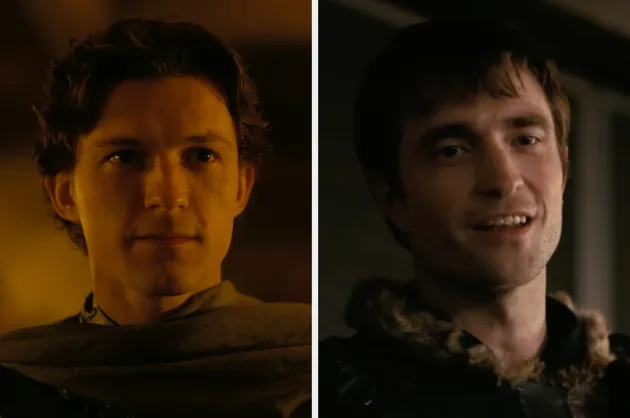
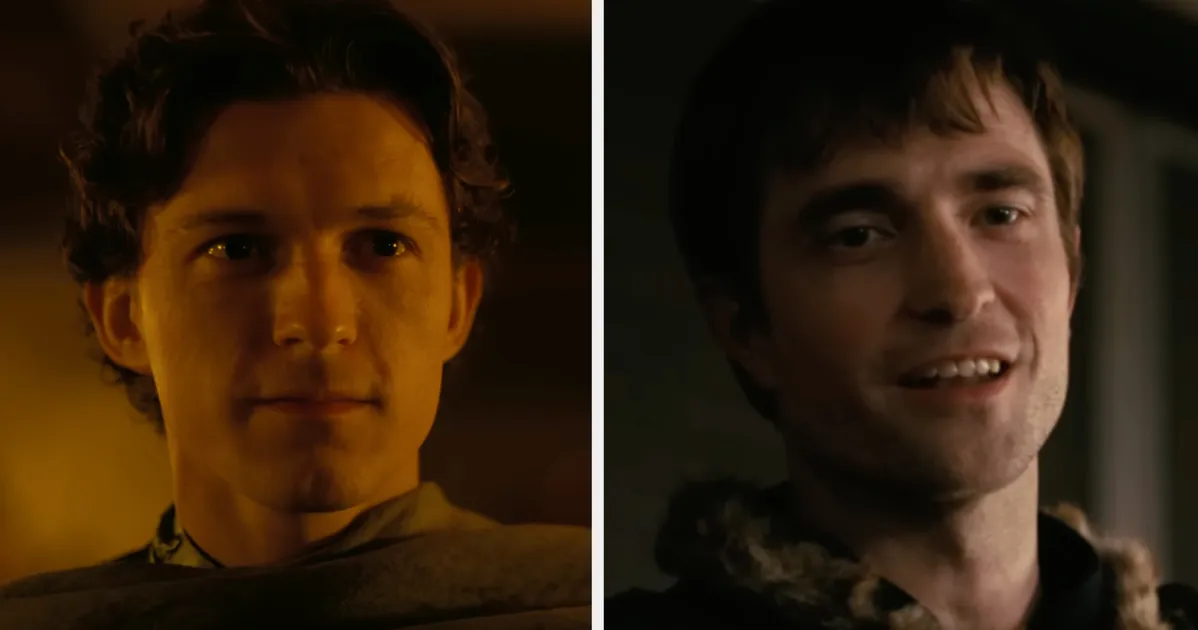
 Tom Holland and Robert Pattinson in The Odyssey
Tom Holland has revealed that he felt like he wanted to come to blows with Robert Pattinson for real when they were shooting a tense confrontation in their new movie The Odyssey.
In Christopher Nolan’s new epic, Tom stars as Ithacan prince Telemachus, while fellow Brit Robert appears as Antinous, a suitor of the Spider-Man star’s on-screen mum.
Viewers have already been teased with some tense scenes between the pair in The Odyssey’s trailers, with the Marvel actor admitting to Digital Spy that Robert did a great job of getting under his skin while they were filming these sequences.
“He is such a treat to work with because he’s so good and he really keeps you on your toes as an actor,” Tom enthused.
“You can never coast when you’re working with Rob. Everything is going to challenge you. He’s going to make big choices.”
“Acting is listening, you have to be able to react to him,” he continued. “I do remember in that scene when he’s talking to me, having this feeling inside of like, ‘I want to hit him so fucking bad’. But he’s great and I love him, he’s excellent in this film.”
@digitalspyuk Robert Pattinson might have been too committed to the “daddy” scene with Tom Holland 😂 The Odyssey is released in cinemas on 17 July 🎥 #TheOdyssey#TomHolland#RobertPattinson
Tom added: “I feel like he’s probably the only person that could have found that version of Antinous. He really has a unique way about him.”
During the promotion of The Odyssey, Tom has already weighed in one of the most divisive aspects of the movie, after his character was heard using modern language while speaking to his adversary in preview footage.
Meanwhile, Robert has spoken candidly about his numerous inspirations behind his villainous character, which include James Woods’ performance in the 1995 Martin Scorsese film Casino.
Joining Tom and Robert in The Odyssey’s star-studded cast are a host of A-listers including Matt Damon, Anne Hathaway, Charlize Theron, Lupita Nyong’o and Zendaya, Tom’s wife and co-star from the Spider-Man movies.
The Odyssey hits cinemas on Friday 17 July.
READ MORE:


“He is such a treat to work with because he’s so good and he really keeps you on your toes as an actor,” Tom enthused.
“You can never coast when you’re working with Rob. Everything is going to challenge you. He’s going to make big choices.”
“Acting is listening, you have to be able to react to him,” he continued. “I do remember in that scene when he’s talking to me, having this feeling inside of like, ‘I want to hit him so fucking bad’. But he’s great and I love him, he’s excellent in this film.”
Tom added: “I feel like he’s probably the only person that could have found that version of Antinous. He really has a unique way about him.”
The Odyssey hits cinemas on Friday 17 July.
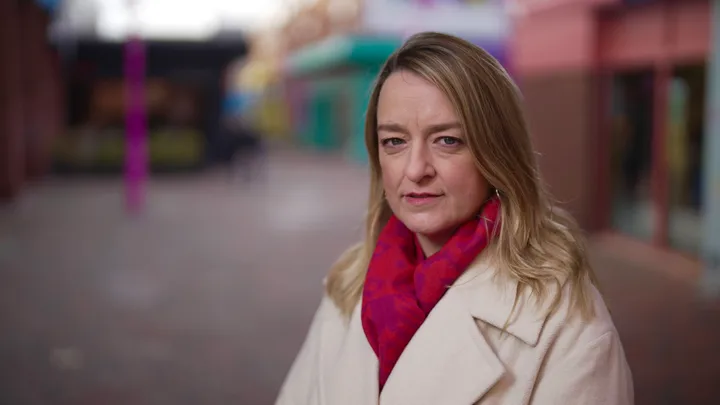
The BBC has confirmed that Scott Mills had become its biggest on-screen earner prior to him being fired at the end of March.
Before his abrupt departure from the broadcaster, Mills had been best known for fronting Radio 2’s flagship breakfast show, as well as taking part in the BBC’s coverage of the Eurovision Song Contest each year.
He was dropped immediately by the BBC earlier this year, and it later emerged that he’d been investigated and questioned by the police almost a decade earlier over “allegations of serious sexual offences against a teenage boy”, who was under the age of 16 at the time.
Shortly after he was dismissed, Scott’s team issued a statement saying he had “fully cooperated and responded” to the allegation back in 2018.
On Tuesday morning, the BBC published its annual report, in which it was revealed that Mills had risen to the position of its highest-earning presenter, pulling in around £745,000 in his final year of employment.
Behind him on the list was his Radio 1 counterpart Greg James, whose salary was said to be around £440,000, followed by Stephen Nolan at £425,000.
In joint fourth position was Laura Kuenssberg, at around £405,000, the same figure as Radio 2 staple Vernon Kay.

BBC/October Films/Jonathan Callery
Completing the top 10 were Alan Shearer (around £390,000), Justin Webb (around £375,000), Naga Munchetty (around £360,000), Fiona Bruce (around £345,000) and Sophie Raworth (£340,000).
This data only includes money paid directly by the BBC, and not those whose earnings come from external production houses (such as The Traitors host Claudia Winkleman or talk show favourite Graham Norton).
In April, Mills released a statement following his departure from the BBC, which read: “An allegation was made against me in 2016 of a historic sexual offence which was the subject of a police investigation in which I fully cooperated and responded to in 2018.
“As the police have stated, a file of evidence was submitted to the Crown Prosecution Service, which determined that the evidential threshold had not been met to bring charges.
“Since the investigation related to an allegation that dates back nearly 30 years and the police investigation was closed seven years ago, I hope that the public and the media will understand and respect my wish not to make any further public comment on this matter.”
The BBC also issued an apology for failing to “follow up on” an additional allegation relating to Mills that was raised by a freelance journalist last year.
Earlier this month, Sara Cox took over as the new host of Radio 2’s breakfast show, with her debut show going down well with critics.


3 min read
It has been two years since the government pledged to restore order to the asylum system so that it operates swiftly, firmly, and fairly.
A new asylum system that works for British communities and those in need of sanctuary must be built with integration and consent at its core. Community sponsorship is the only viable policy that provides both facilitating partnerships with local communities and providing accessible, safe and legal routes for those currently being exploited by smuggling gangs.
The Home Secretary’s commitment to open the named sponsorship scheme to greater numbers this autumn is welcome progress. Communities across the UK have shown again and again that they are ready to welcome those in need of protection, and this scheme rightly places community capacity, agency and consent at the heart of the UK’s protection offer.
We know this works. We have seen first-hand the power of community sponsorship since it was introduced ten years ago. Thousands of refugees from Syria, Afghanistan and, most recently, Ukraine, have been supported and integrated into communities up and down the country, with the consent of the British public. The Homes for Ukraine scheme has seen my own constituents in Hornsey and Friern Barnet welcome over 1,600 Ukrainian refugees, with hundreds of sponsors opening their doors to support those in need.
It is that community leadership which makes this scheme so powerful. Local people get the chance to raise their hands and say, ‘we want to take responsibility for this family.’ Sports teams can welcome athletes fleeing war. Churches can support persecuted Christians. LGBTQ+ groups can support those fleeing persecution. The community groups at the heart of our civic life are empowered to take the lead.
We know that the energy exists up and down the country, but for community sponsorship to make a lasting impact – both in terms of providing sanctuary for refugees fleeing war and dislocation, and in restoring consent to the asylum system – it must be ambitious.
It must have a pathway and clear steps to scale to ensure that all who need protection can access it. It must be a genuine partnership with communities and ensure that eligibility criteria are sufficiently open so as to ensure as many people as possible can sponsor refugees. If done in this way, the scheme will reach far more people in need, support integration, undermine the pull of the smuggling gangs, and reflect the best of this country’s welcoming tradition. It has potential to reopen routes to family reunion for refugees.
At a moment of political transition, this is the time for bold policymaking. Two years ago, this Labour government inherited an asylum system that was failing refugees and the British public. We have taken the first steps to restoring order and fairness.
As the asylum backlog begins to come down, and small boat arrivals show signs of reducing, we now have an opportunity to use community sponsorship to restore consent to the asylum system while continuing to offer sanctuary to all those who need it.
To take full advantage of this once-in-a-generation opportunity, the government must put in place the necessary supporting measures, such as access to employment support and English language classes, so that refugees can integrate and contribute to the communities which welcome them.
Catherine West is the Labour MP for Hornsey and Friern Barnet
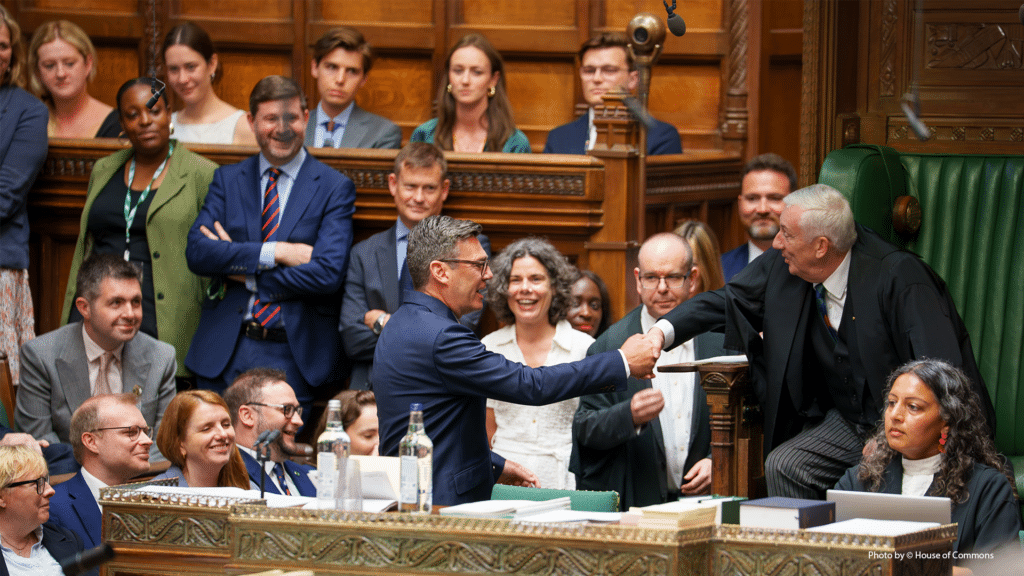
Ruxandra Serban explains that the gap between Andy Burnham taking office and facing Parliament will be the longest of any incoming Prime Minister in history and considers what this means for democratic accountability.
The Labour Party is now certain to elect Andy Burnham as its new leader on 17 July, and he is set to become Prime Minister on 20 July. The House of Commons is scheduled to go into recess on 16 July, so Burnham will not address MPs as Prime Minister until they return at the beginning of September. This would mean almost seven weeks in office before making a statement or answering Prime Minister’s Questions (PMQs). While this is not a constitutional problem, it definitely raises questions about democratic accountability.
There is no constitutional rule requiring a newly appointed Prime Minister to appear before the House of Commons immediately after being appointed. Once appointed by the monarch, a Prime Minister assumes office straight away and is expected to fulfil their parliamentary responsibilities such as attending PMQs when the House next sits. Indeed, had Keir Starmer remained in office, Parliament would also have normally been in recess during the summer, with regular scrutiny resuming in September.
But Andy Burnham is likely to appoint new ministers, announce new priorities and begin setting the direction of the government in the coming weeks. He has already signalled an ambitious policy agenda. During the summer recess MPs would have no opportunity to question the Prime Minister directly, ask ministers Urgent Questions, or hold debates on the government’s new agenda.
From a historical perspective, this delay would be unusual. Since 1945, ten Prime Ministers have entered office between general elections. In most cases, they did so while the House of Commons was sitting and addressed MPs soon after. Theresa May in July 2016 and Boris Johnson in July 2019 both took office shortly before the summer recess, but still made statements in the Commons before the last sitting day. Three other postwar Prime Ministers also entered office shortly before recesses but nevertheless addressed the House shortly before the House adjourned: Anthony Eden in April 1955, James Callaghan in April 1976, and Liz Truss in September 2022.
Johnson became Prime Minister on 24 July 2019 and made his first statement and answered questions in the Commons the following day, which was the last sitting day before recess. Amid the political tensions related to Brexit in the summer of 2019, Sarah Wollaston MP, at the time Chair of the Liaison Committee, argued that the recess should be postponed to allow MPs more time to scrutinise the new government. Her proposal was unsuccessful, but it demonstrated that concerns about a newly appointed Prime Minister avoiding parliamentary scrutiny are politically important. Parliamentary experts argue such controversies could be avoided by giving MPs more control over when the House of Commons sits.
Only two post-war Prime Ministers first took office while the House was not sitting. Harold Macmillan succeeded Anthony Eden on 10 January 1957 and first answered questions in the Commons about two weeks later on 22 January. Alec Douglas-Home became Prime Minister on 19 October 1963 while the Commons was not sitting, and without being an MP. After winning a by-election, he first spoke in the Commons four weeks later on 14 November, after the House returned on 12 November. But even these exceptional cases involved shorter delays than would occur if Burnham did not appear at the despatch box until September.
Looking beyond the UK
Among countries that share historical links with the UK and institutional similarities, there is no constitutional requirement for immediate parliamentary scrutiny when a new Prime Minister takes office between elections. In Australia, New Zealand, and Canada, Prime Ministers can also assume office while parliament is adjourned by being replaced as party leaders.
Chris Hipkins became Prime Minister of New Zealand in January 2023 during the summer adjournment and first faced the House of Representatives when it returned in mid-February. Scott Morrison became the Prime Minister of Australia on 24 August 2018 after a Liberal Party leadership spill. The House was not sitting and did not return until 10 September, meaning Morrison was in office for just over two weeks before facing parliament.
These recent examples show that a delay between appointment and parliamentary scrutiny is not unusual in countries that share a similar relationship between Prime Ministers and parliament. At the same time, they did not involve a gap as long as the one that may arise in the UK this summer.
Many European parliamentary democracies follow a different model in which a new Prime Minister cannot take office without parliamentary approval. In countries such as Germany, Italy, Spain and Ireland, a new head of government takes office following parliamentary approval through an investiture vote. This also applies to changes of Prime Minister between elections. In these systems, parliament is directly involved in the process of government formation, so a situation in which a new Prime Minister could go for a while before facing parliament does not occur in practice.
Should anything be done?
One possibility would be for the House of Commons to sit for an additional day before the summer recess so that Andy Burnham could make a statement and answer questions, as in the case of Boris Johnson. This would require government support, as the parliamentary calendar is largely determined by the government and recess dates are approved by the House of Commons on motions put by the government which cannot be debated or amended.
So far, there has been limited political controversy over this, aside from calls from the Leader of the Opposition, Kemi Badenoch, and from the Shadow Leader of the House, Jesse Norman, for recess to be delayed. According to the House of Commons Standing Orders, Select Committees can sit during recess, so another possibility would be for the Liaison Committee to hold an evidence session with the new Prime Minister during the summer, providing at least some parliamentary scrutiny before the normal schedule of questions resumes.
Andy Burnham has signalled that he wants to reset the relationship with his backbenchers and change parliamentary culture. But the gap that will arise as a result of the clash between the Labour Party internal procedures and the parliamentary calendar nevertheless raises questions about the control that MPs have over when the House of Commons is sitting, and about the expectations around the relationship between the Prime Minister and Parliament.
By Dr Ruxandra Serban, Lecturer, School of Social Sciences, Birbeck University.

The Most Heart-Thumping R-Rated Thriller Of All Time Just Landed On Netflix

The New Proportions – Julia Berolzheimer
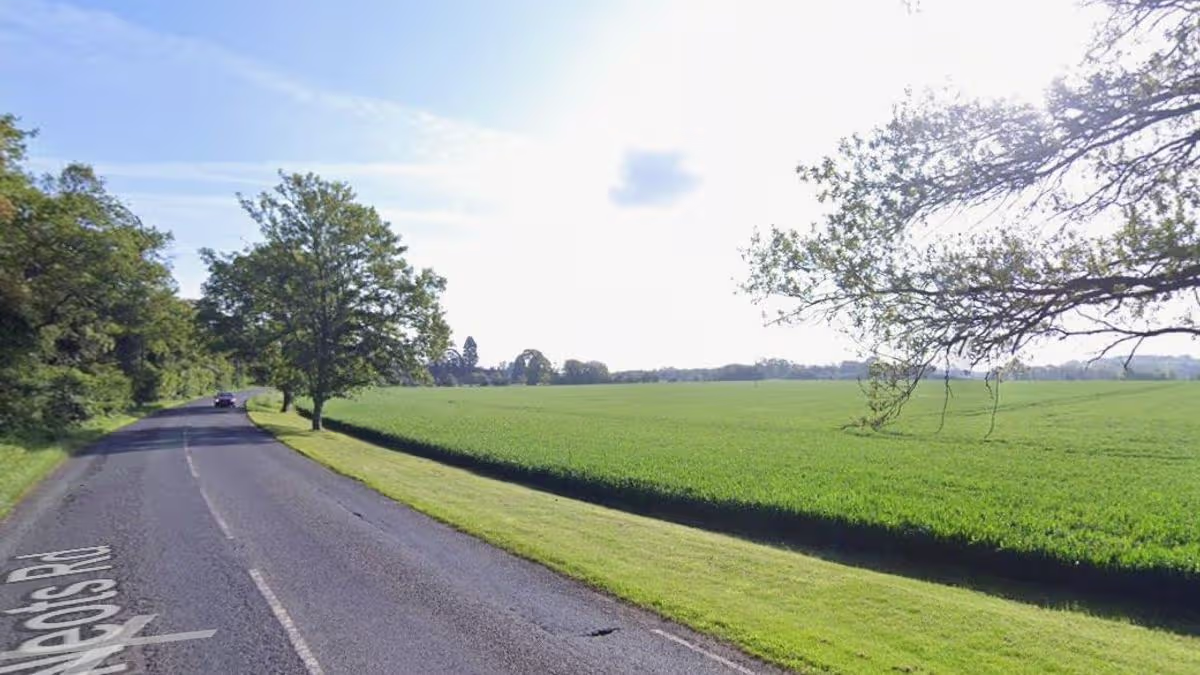
More than 4,000 homes could be built on edge of Cambridgeshire town


-

 Fashion5 days ago
Loro Piana Fall 2026 Enters Houston’s Art Scene
-

 Fashion4 days ago
Weekend Open Thread: Nutriplenish Leave-In Conditioner
-
 Sports5 days ago
2026 Genesis Scottish Open Thursday TV coverage: Round 1
-

 Sports7 days ago
Joshua Pacio ‘more complete’ ahead of ONE rematch vs Malachiev
-

 Tech6 days ago
Anthropic brings Claude Cowork to mobile and web as usage data shows most users aren’t coding
-

 Sports4 days ago
Super Eagles star Moses Simon opens up on Liverpool transfer regret
-
Sports7 days ago
We have punished the disrespect
-

 Tech5 days ago
Character.AI enters the microdrama arena with its own productions, but there’s a twist
-

 Crypto World7 days ago
Nasdaq arthritis company holding Moshe Hogeg crypto hits all-time low
-

 Tech9 hours ago
Get Your ESP32 Sunny Side Up With This Solar Dev Board
-

 News Videos6 days ago
Crypto Just Entered Its Most Important 6-Month Candle (Could Decide Everything!)
-

 Tech7 days ago
Keychron is stepping outside keyboards with a $349 Thunderbolt 5 dock aimed at power users
-

 Business6 days ago
ASX 200 Slides Over 0.6% as Rare Earths and Lithium Stocks Tumble Amid Global Semiconductor Sell-Off Today
-
 NewsBeat5 days ago
Major update after Huntingdon train attack as man enters plea
-
 Business6 days ago
Will Trent shares rebound after Q1 update triggers 13% crash? Here’s what technical charts indicate
-
 Tech7 days ago
OpenAI teams with Work Louder to launch Codex-native keyboard, weeks after CEO of Apps told staff ‘not to be distracted by side quests’
-
 Business6 days ago
SpaceX Shares Slide Nearly 6% Amid Post-IPO Volatility and Starship Test Focus
-
 Sports6 days ago
39-year-old Djokovic wins five-hour thriller to enter Wimbledon semis | Other Sports News
-
 Crypto World7 days ago
TeraWulf’s $19B Anthropic Lease Turns Bitcoin Miner Into AI Landlord
-

 News Videos23 hours ago
how to make coin bank box with cardboard #scienceproject #money #diy #shorts
You must be logged in to post a comment Login