Matthew Jeffery is an experienced global talent and recruitment leader, with more than 25 years advising boards and C-suite executives on workforce strategy, skills, and productivity.
Reform supporters will rage at the very suggestion the show might be coming to end and choke on their morning Cheerios but anger does not change reality.
The signs of decline are beginning to appear. Yes, Reform is still ahead in national polling, although recent surveys show the gap tightening. Yes, it continues to win council by elections but other parties are starting to push their way back in. The question Reform voters must confront is simple. Has the movement reached its peak? Decline does not happen overnight. It is gradual. But are the seeds of their demise already sown?
Credit where credit is due. Nigel Farage has done something genuinely rare in modern British politics. He took a fringe protest movement and turned it into a national force that reshaped the political landscape. Reform broke through where the old parties had grown complacent, rallied voters who felt ignored and forced Westminster to confront issues it preferred to avoid. Under his leadership the party won millions of votes, gained council seats across the country and became a permanent fixture in national polling. Whatever happens next, that achievement stands. Farage built a movement that changed the national conversation.
But times are changing. Has Midas lost his touch?
Reform UK has reached the moment every protest movement eventually hits: the applause has faded, the spotlight has shifted and what once looked like momentum now feels like exposure. Farage is no longer steering the national conversation; he is being questioned by it. For the first time, voters are looking at Reform itself rather than the failures it promised to fix. The phase of possibility has given way to the demand for proof. For months Farage forced Westminster to confront issues it preferred to ignore; that spell is breaking. Voters aren’t clapping the problems he highlighted anymore. They’re asking whether he can meet the standards he demanded of everyone else.
The forces that fuelled Reform’s ascent have not disappeared. Far from it. Immigration, frustration and economic anxiety remain powerful. But success changes the test. Protest movements are judged against the failures of government. Potential governments are judged against the standards they would impose on themselves. The closer an insurgent comes to power, the more it is judged as a government. Reform is now facing that examination and the early signs are unforgiving.
The truth is simple. The qualities that built Reform are not the qualities required to run a modern state. Anger can rally supporters. Charisma can win votes. Neither produces institutions, ministers or disciplined decision making. Campaigning identifies problems. Government must solve them.
Local government is providing the first real examination. Voters will judge Reform not by speeches in Westminster but by refuse collections, planning decisions, balanced budgets, social care and the everyday competence of the councils it now controls.
Kent County Council has already shown how quickly protest politics gives way to governing reality. Reform councillors arrived insisting Conservative administrations had overspent and that substantial savings could easily be found. Once in office, they discovered the opposite. Years of pressure on social care, transport and statutory services meant the budget had already been cut to the bone. Kent entered the year facing a £47 million budget gap, driven largely by rising demand in adult social care and children’s services. More than 70 per cent of spending was already committed to statutory obligations, leaving little room for discretionary cuts. Reform councillors were forced to implement a 4.99 per cent council tax rise; the maximum permitted without a referendum. Opposition offered the luxury of simple answers. Office demanded difficult choices.
The Defence Test
These are dangerous times. War in Ukraine. Conflict in the Middle East. The International Monetary Fund, Bloomberg and several European defence ministries have reported that Russia is now spending more than 50 per cent of its government revenue on its war machine, while the United Kingdom spends around 2.3 per cent of GDP. Long‑standing alliances are wobbling, even our closest ally, the United States, is no longer a guaranteed constant.
Years of underinvestment have left Britain’s armed forces exposed. The Army is at its smallest size since the Napoleonic era. The Navy has world class ships but not enough of them. The RAF has advanced aircraft but too few to generate mass. Ammunition, spare parts and critical components are held in peacetime quantities and industry cannot scale quickly. Britain can fight but it cannot fight for long. Admiral Tony Radakin has warned that Russia could pose a direct threat to the UK and NATO by 2030. Britain is weak and vulnerable.
This is not a policy debate. It is a test of seriousness.
Reform is not meeting that test.
It has no dedicated defence spokesperson and no developed approach to the strategic choices government must make, from procurement and force structure to the future of the nuclear deterrent and Britain’s alliances. Defence is the first responsibility of government. If a party cannot explain how it would defend the country, everything else becomes secondary. That weakness was exposed when Reform’s Laila Cunningham was unable to outline the party’s defence policy when asked by Julia Hartley Brewer on Talk.
The problem extends beyond defence.
Reform has articulated ambitions on taxation and immigration but it has produced almost nothing that resembles a governing programme. It has no credible plan for public service reform, no fiscal framework that explains how its promises would be funded and no operational blueprint for running the Home Office, the Treasury or the Department of Health. It has offered slogans about cutting taxes without explaining which budgets would be reduced. It has demanded lower immigration without outlining the legal, administrative or diplomatic machinery required to deliver it. It has attacked waste in public services without presenting a serious plan for procurement, staffing or productivity. It has criticised welfare without defining eligibility, enforcement or incentives. It has promised growth without a coherent industrial strategy. It has talked about sovereignty without explaining how Britain’s treaty obligations would be managed.
A party that cannot answer these questions is not offering a programme. It is offering a mood. Voters may share that mood but they cannot build a government on it. A movement built on confidence cannot indefinitely rely on confidence alone. Eventually it must demonstrate competence.
Image: A Party With a Reputation Problem
Reform UK does not just face questions of competence. It faces questions of character. The party’s image has hardened in ways that carry real political cost. For many voters, Reform is no longer simply a protest movement. It is a movement associated with hostility, controversy and a culture that feels far removed from the mainstream.
That perception is not abstract. It is shaped by repeated scandals involving candidates, councillors and activists. Racism allegations. Antisemitic posts. Inflammatory rhetoric. Suspensions and withdrawals. A pattern that suggests a party attracting the wrong people and struggling to enforce basic standards. Reform promised to be a clean break from the old politics. Instead, it has acquired the reputation of a party that tolerates behaviour the public finds unacceptable.
The problem is not confined to race or religion. It extends to women and LGBT people. The Makerfield by election exposed that with brutal clarity. Reform defended candidate Robert Kenyon’s comments as “locker room banter” even after he said women presenting rugby “aren’t up to the job,” declared “I’m sexist, sorry but I am,” mocked English women’s bodies, used homophobic slurs and endorsed a sexualised message sent to a female TV presenter with the line “he’s only saying what we’re all thinking.” For many voters, especially women and LGBT people, that is not banter. It is a red flag about the culture inside the party.
The wider record reinforces that impression. Reform is not openly anti‑gay but it has never championed LGBT rights either. It has no policy platform on equality. It rarely engages with Pride events. It offers silence where clarity is expected. Critics see that silence as passive discrimination. Supporters call it prioritisation. The result is confusion, suspicion and a sense that Reform is uncomfortable with modern social norms. In a country where most voters expect basic respect for LGBT people, silence is not neutral. It is noticed.
Farage’s own rhetoric has added to the perception. His comments on immigration, Islam and national identity energise a core base but alienate voters who want toughness without toxicity. Minority communities’ express anxiety about Reform’s rise. Women see a party willing to excuse misogyny. LGBT voters see casual homophobia brushed aside. Image shapes trust and trust shapes growth. On that test, Reform is struggling and the damage is cumulative.
Reform now battles four overlapping reputational problems:
- Racism allegations – repeated candidate scandals have created a perception of intolerance.
- Antisemitism controversies – documented cases and inconsistent sanctions have damaged credibility.
- Misogyny and homophobia – the defence of Kenyon’s comments suggests a party willing to excuse behaviour most voters find unacceptable.
- A “nasty party” aura – Reform’s tone and rhetoric give opponents an easy frame: angry, divisive, hostile.
These perceptions do not need to be universally true to be politically lethal. They only need to be widespread enough to make Reform look risky, unserious or socially corrosive. A party that wants to govern cannot afford to look like a party that makes people uneasy.
Reform promised authenticity. It promised straight talking. It promised a different political culture. But image is not built on slogans. It is built on behaviour, discipline and the standards a party is willing to enforce. On that test, Reform is struggling and the damage is cumulative.
Integrity Is Hardest to Demonstrate
Nigel Farage built his career by holding an unaccountable political class to account. Now he is the one under scrutiny, judged by the standards he once demanded of others. He still presents himself as the outsider battling the establishment but that claim is harder to sustain. By any conventional measure he is part of the establishment: educated at Dulwich College, successful in the City, twenty‑one years as an MEP, leader of multiple national parties and one of the most recognisable figures in British public life. This is not the biography of a man shut out by the system. It is the biography of someone who has spent decades as a member of the establishment himself. Scrutiny is not persecution. It is the inevitable consequence of seeking high office.
Reform promised a different political culture, integrity, transparency, accountability. That promise now meets reality. Farage faces serious questions over the £5 million donation from Christopher Harborne, currently being examined by the Parliamentary Commissioner for Standards and already widened into a Met Police probe. He also accepted money from George Cottrell, who served a prison sentence in the United States after pleading guilty to an offence connected with money laundering. Reform built its brand on integrity. It invited a higher standard of scrutiny. Now it is receiving exactly that.
Farage cannot dismiss every difficult question as establishment hostility. The scrutiny he faces is not punishment for unfashionable views. It is the consequence of seeking power. Questions about donations, transparency and standards are exactly the questions he would demand of any Labour or Conservative leader. The principle does not change simply because he is now the one being asked to answer them.
The optics make the problem sharper. Farage still casts himself as a man of the people, yet the £5 million gift from Harborne sits uneasily with that image. His explanation has shifted repeatedly, personal security, a reward for Brexit, money he could spend on anything from campaigning to Ferraris, before insisting he has not spent a penny. For voters struggling under high taxes and rising costs, that inconsistency does not look like the life of an outsider. It looks like privilege. And when a movement builds its identity on authenticity, moments like this matter.
The danger of becoming a joke.
When ridicule replaces fear, a protest movement enters its most dangerous phase. Movements rarely decline because opponents discover better arguments. They decline when they stop looking inevitable. Criticism invites debate. Ridicule changes perception. Once a movement becomes an object of humour rather than threat, it loses something far harder to recover than votes. It loses authority. It loses seriousness. It loses the aura that persuaded supporters it could actually win.
Farage’s by election against Count Binface has captured that shift with brutal clarity. The defining image is no longer Farage confronting the establishment. It is Farage campaigning against a satirical candidate wearing a bin on his head. Social media is amplifying the humiliation. Memes, jokes and viral clips are spreading across every platform. The British public has a savage sense of humour and a long history of turning politics into farce. The Natural Environment Research Council asked the public to name a new polar research vessel. The winning name was Boaty McBoatface. H’Angus the Monkey was elected Mayor of Hartlepool. Once the public decides something is funny, it becomes almost impossible to make it serious again. This is the danger Nigel faces. The odds are heavily stacked against it but if he loses the by election to Count Binface, it would be humiliating and potentially brand fatal. Even a strong showing by Binface is enough to humiliate Nigel. That’s not what a potential Prime Minister needs. (And don’t forget a comedian became the President of Ukraine).
Rachel Reeves, not known for her humour, understood the symbolism immediately when she tweeted, “It is a farce and a desperate distraction and the people of Clacton deserve better. But if he wants to spend the summer arguing with a bin, I won’t stop him”. Ed Davey, said in interview, “We take elections seriously, so I can’t back a joke candidate with ridiculous policies. So, I hope Count Binface beats him” Whether fair or not, the frame had changed. Farage was no longer shaping the political agenda. He was reacting to it. Established parties can absorb ridicule because decades of institutional legitimacy cushion the blow. Insurgent movements have no such protection.
This matters because Reform’s voters are transactional rather than tribal. They did not join a political family. They backed Reform because it articulated their frustrations more effectively than anyone else. If they conclude the party cannot translate those frustrations into competent government, they will leave as quickly as they arrived. Ridicule accelerates that process because it undermines the credibility on which insurgent movements depend. And if Farage loses the by election, or does not win by a massive majority, the symbolism becomes even more damaging. The joke becomes the story. The meme becomes the verdict.
The polling suggests that shift is already beginning. Nigel Farage’s latest Opinium approval rating has fallen to net -27, his lowest since the 2024 general election. Political leaders can survive periods of unpopularity but sustained declines matter because they shape the public’s perception of momentum. Farage built his appeal on looking like the politician who was always advancing while everyone else retreated. A leader with deeply negative personal ratings finds it much harder to sustain that sense of inevitability.
Farage made his name by exposing other people’s failures. Now he is being measured by the same yardstick. The party that vowed to be cleaner and tougher than the establishment is wrestling with donations scrutiny and the movement that mocked incompetence is learning how unforgiving competence can be.
A Party Built Around One Man
Reform’s greatest vulnerability is not only scandal. It is structure. The investigations, the donations controversy and the Clacton by election have damaged the party but they have done so for a deeper reason. Nigel Farage is the strategist, communicator, fundraiser and defining political asset of the movement. Every major decision runs through him. Every message depends on him. Every surge in support is tied to his presence. That concentration of authority helped build Reform but it also means that when Farage becomes the story, the party disappears behind him.
That is exactly what has happened. Instead of driving the national debate on immigration, taxation and Britain’s economic decline, Reform has been dragged into a conversation about Farage himself. Donations, standards investigations and the Clacton by election have replaced the issues that fuelled its rise. The focus has shifted from the country’s problems to the party’s leader. For a movement built around one individual, which is not simply uncomfortable. It is dangerous.
Strong parties survive their leaders. Weak parties depend on them. Reform has no institutional spine, no bench of credible successors and no centres of authority beyond Nigel Farage himself. It has a leader and a logo. It does not yet have a fully formed strong party.
This is the cost of building a movement around a single personality. When the leader is riding high, the party rises with them. When the leader is engulfed by controversy, the party has nowhere else to turn. Every headline about Farage becomes a headline about Reform. Every question directed at him becomes a question about the party’s judgement, priorities and credibility. The Conservatives are rebuilding a front bench, a governing philosophy and a programme. Reform remains organised around one man. That model works for an insurgency. It is a fragile foundation for a party that wants to govern.
Reformists will point to Zia Yusuf, Richard Tice, Suella Braverman, Lee Anderson and Robert Jenrick as evidence of a deeper party. They will add Laila Cunningham, their London mayoral candidate. But the wave of Conservative defectors tells a different story. Reform built its identity on being outside the establishment, free from the failures of the old parties. That brand was its greatest strength. The moment it began welcoming senior Conservatives such as Nadhim Zahawi, Suella Braverman and Robert Jenrick, it undermined the very premise on which it rose. These were not outsiders. They were architects of the record millions of voters believe failed the country, the record Kemi Badenoch is now working to repudiate.
The defections did more than blur Reform’s identity. They strengthened the Conservatives by removing internal dissent and clarifying the ideological divide. What once looked like a clean break from the past now looks like a refuge for the same politicians Reform claimed to replace. For a movement built on difference, that is a dangerous contradiction.
And beneath that contradiction lies a deeper structural weakness. If Nigel Farage were no longer leader, Reform would face an immediate and destabilising succession battle. The party has no agreed hierarchy and no unifying figure capable of holding its factions together. Zia Yusuf is combative and uncompromising, qualities that energise a core base but struggle to command wider confidence. Richard Tice is more measured but lacks national reach. Suella Braverman polarises opinion inside and outside the movement. Robert Jenrick is politically agile but mistrusted by many Reform activists. The result is a leadership field defined by rivalry rather than authority. A party built around one man has no obvious successor and the moment Farage steps aside, the unity that sustained Reform’s rise would be at risk.
Reform Chose the Wrong Fight
Oppositions do not get many defining moments. One is about to arrive. On 20 July Andy Burnham will arrogantly strut into Downing Street with remarkably little scrutiny of the programme he intends to govern with. His positions on taxation, public spending, immigration, defence, energy and public service reform remain largely untested. For a movement that built its reputation by asking the questions others avoided, this should be political gold.
Yet Reform is choosing a different battlefield. Instead of preparing to put Burnham under pressure from the moment he enters Number Ten, the party is preparing for a by election in Clacton in August that will drag Nigel Farage back to the centre of the story. The headlines will not be about the new Prime Minister or the choices he must make. They will be about Farage, donations, investigations and Count Binface. Labour will escape the examination that should accompany a new government. Reform will absorb it instead.
That is more than a tactical mistake. It is the sign of a party losing clarity about its purpose. Successful oppositions force governments onto uncomfortable ground. They set the terms of the argument. Reform is doing the opposite. It is surrendering the initiative and allowing the national conversation to revolve around itself.
Politics is ultimately about choosing where to fight. At the moment Labour is at its most exposed, Reform is choosing to defend Nigel Farage rather than prosecute the case against the incoming government. For a party that claims to be Britain’s real opposition, that choice may prove to be its most costly error.
Andy Burnham’s arrival in Downing Street creates another challenge for Farage. For years he positioned himself as the great communicator of British politics, a man of the people who could speak to voters in a language Westminster had forgotten. But Burnham occupies the same space. He is one of the most effective communicators of modern politics, a cheeky chappy with a sense of humour and an instinctive feel for ordinary voters. Farage is no longer the only politician who can claim that mantle. And at the moment Burnham is entering Number Ten, Reform is fighting a by election rather than defining the national argument. Farage has competition.
The Conservatives are coming back
Looking back with honesty, Conservatives know they drifted away from their own instincts. Britain was hit by a decade of shocks. Brexit tore open the constitution. The pandemic forced government to step in on a scale no one had imagined. Russia’s invasion of Ukraine sent an energy shock through every advanced economy. Under that pressure, the state grew, borrowing surged and public spending reached levels no Conservative would ever call normal.
Some of that intervention was unavoidable. The mistake was letting emergency government turn into everyday government. Conservatives didn’t return quickly enough to the economic instincts that define Conservatism. Taxes stayed too high. Spending stayed too high. The state stayed too big. Immigration soared during the “Boriswave.” As Kemi Badenoch has said bluntly: mistakes were made. Conservatives forgot to be Conservatives.
But the British people don’t want endless apologies. They want to know whether the Conservatives have learned the right lessons. And the lesson isn’t simply that government should spend less. It’s that government must remember its proper purpose. Every pound it spends is first earned by a hardworking taxpayer. Government should never lose sight of that. It is spending money entrusted to it by people who worked hard to earn it and it has a duty to treat every pound with the same care families and businesses show every day. Every regulation carries a cost. Every tax rise changes behaviour. People respond to incentives. Good economic policy starts by recognising those realities instead of pretending they don’t exist.
Kemi Badenoch understood that before anyone else. She did not imitate Reform’s outrage or chase its rhetoric. She confronted the truth millions of former Conservative voters already recognised. The party had abandoned its principles. It had allowed spending to spiral, taxes to rise and the state to grow without restraint. It had defended policies that contradicted its own philosophy. Badenoch was willing to say so openly. That honesty mattered because it acknowledged the grievance that drove voters away.
She is now rebuilding the party around the principles those voters never stopped believing in. Lower taxes that reward work. A smaller state that trusts people more than bureaucracies. Real spending restraint and a commitment to repay debt. Strong law and order. Secure borders. A welfare system that encourages work rather than dependency. A clear plan to leave the European Convention on Human Rights. An end to net zero targets that drive up bills and damage industry. These are not abstract policies. They are the instincts of the voters who left. They are the reasons they became Conservatives in the first place.
Reform supporters are also starting to notice something more fundamental: the party they thought was a small‑state insurgency is, on paper, anything but. Its platform is packed with big‑state intervention: sweeping nationalisations of rail and utilities, mandatory price controls on energy, heavy‑handed immigration crackdowns that require vast bureaucratic expansion and state‑directed industrial policy that looks more like economic management than free‑market reform. It talks the language of liberty while proposing a government that would be larger, more intrusive and more centralised than anything Conservatives have ever offered. For voters who left the Conservatives because they wanted a leaner state, Reform’s own blueprint reads less like Thatcherism and more like state‑powered populism. That contrast is becoming harder to ignore.
Candidate selection shows the Conservatives shift is real. Badenoch is choosing candidates who support withdrawal from the ECHR and who reject the rigid orthodoxy of net zero. These choices speak directly to the voters who left the Conservatives for Reform. They show a party returning to traditional Conservative principles rather than defending the compromises of the past. Reform supporters will notice this. They will see a Conservative Party willing to challenge supranational constraints, prioritise national sovereignty and question environmental policies that impose heavy costs on households and industry. Candidate selection has become a declaration of intent. It signals that the Conservatives are not drifting back to the centre. They are reclaiming the territory Reform thought it owned.
Reform’s difficulties have created an opening, not a guarantee. Former Conservatives will not return out of habit. They will return only if they believe the party has changed, if they see discipline restored, credibility rebuilt and a recognisably Conservative agenda taking shape. If Badenoch continues on that path, the voters who left out of frustration have a reason to come home. If she fails, Reform’s current problems will be remembered as a pause rather than a turning point in the realignment of the British centre right.
The Seeds are Sown.
Nigel Farage has repeatedly defied political gravity and the forces that fuelled Reform’s rise remain very real. Immigration, weak economic growth, high taxation, pressure on public services and deep frustration with Westminster have not disappeared. Those grievances will continue to shape British politics for years to come. But grievances alone do not produce governments. Every insurgent movement eventually reaches the point where voters expect more than anger, slogans and diagnosis. They expect competence.
That is where Reform now finds itself. For years it was judged against the failures of others. Today it is being judged against its own standards. The questions have changed. Can it govern. Does it have the people. Does it have the policies. Does it have the judgement. Those are far harder questions than asking what is wrong with Britain.
None of this means Reform is finished. Far from it. The movement still speaks to genuine public concerns and no Conservative should assume those voters will simply come home. Trust must be rebuilt. Credibility must be earned. Good intentions must become convincing government.
But political movements do not decline in one dramatic moment. They decline when the story around them changes. They decline when momentum becomes scrutiny. They decline when enthusiasm becomes expectation. They decline when protest becomes responsibility. And they decline when the public stops seeing inevitability and starts seeing fragility.
Over recent months, that shift has begun. The seeds of decline are already visible:
- Protest turning into scrutiny – Reform is now judged as a potential government, not a protest movement.
- Local government exposure – Kent showed how simple answers collapse under real governing pressure.
- Defence incoherence – In a dangerous world, Reform has no defence strategy and no credible spokesperson.
- Absence of a governing programme – Slogans on tax, immigration and sovereignty mask a vacuum where policy should be.
- Integrity questions – Donations controversies and widening investigations undermine Reform’s claim to be different.
- Damaging optics – The £5m gift and the Clacton timing create the impression of evasion, not accountability.
- Ridicule replacing fear – Count Binface turned Farage from a threat into a punchline, eroding authority.
- Structural fragility – A party built around one man has no depth, no succession and no resilience.
- Identity dilution – Tory defectors blur Reform’s outsider brand and weaken its distinctiveness.
- Strategic misfire – Reform chose Clacton over scrutinising Burnham, surrendering the national agenda.
- Credible Conservative leadership – Badenoch offers seriousness and authority where Reform offers protest.
- Conservatives reclaiming Conservatism – The party is returning to the low‑tax, small‑state, sovereignty‑focused agenda Reform thought it owned.
- Image toxicity – Racism allegations, antisemitism controversies and hostile rhetoric make Reform look risky, divisive and socially corrosive.
Taken individually, none of these developments is fatal. But taken together, they reveal a movement beginning to lose the qualities that once made it look unstoppable. Momentum is giving way to scrutiny. Authority is giving way to ridicule. Simplicity is giving way to the hard realities of government. The questions surrounding Reform are multiplying, and each one makes the next harder to answer.
Perhaps that is where British politics stands today, not at the end of Reform UK but at the moment its trajectory first began to bend. Turning points rarely announce themselves. They are only recognised later. If Reform’s momentum continues to ebb, this period will not be remembered as a run of unfortunate events. It will be remembered as the moment the seeds of decline were planted.
One seed rarely changes history. But enough seeds, left to grow together, almost always do.














 (@TiceRichard)

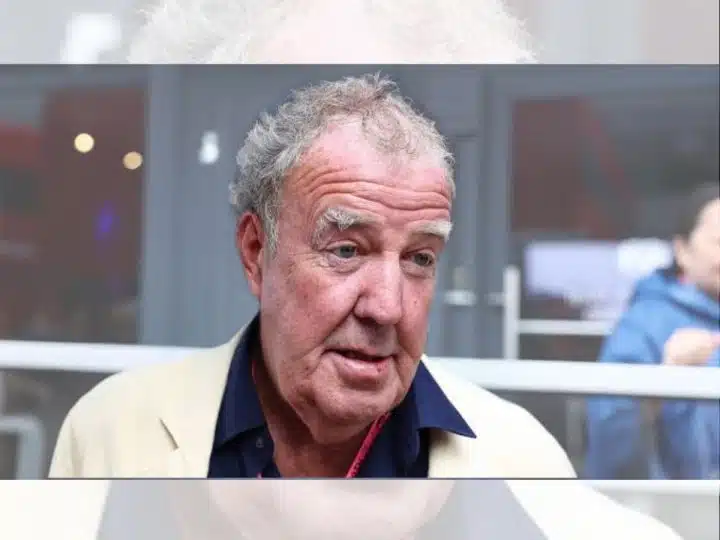

 NEW: Jeremy Clarkson says benefits claimants should be forced to write a genuine thank you email to a random worker every week












































You must be logged in to post a comment Login