Connect with us

Business

Samsung Reclaims No. 1 Global Smartphone Spot From Apple Amid AI-Driven Memory Chip Shortage Crisis

Published

on

MacBook Neo

Samsung Electronics has retaken the top spot in the global smartphone market, overtaking Apple in the second quarter of 2026, even as the industry as a whole recorded its weakest second-quarter performance in more than a decade amid an intensifying shortage of memory chips.

Samsung accounted for 24% of global smartphone shipments in the April-to-June period, according to a new report from market research firm Counterpoint Research, while Apple ranked second with a 20% share, a record figure for the company during that quarter despite slipping back to second place. The reversal comes just one quarter after Apple had briefly overtaken Samsung to claim the top spot, leading the market in the first quarter of 2026 with a 21% share, ahead of Samsung’s 20%, on the strength of record-breaking iPhone 17 sales.

Counterpoint attributed Samsung’s return to the top of the market to several converging factors: robust sales of its Galaxy S26 lineup, relatively modest price increases in key markets including India and the Middle East, and aggressive promotional campaigns during the quarter. The Galaxy S26 Ultra, released in March, emerged as what Counterpoint described as the “standout performer” driving the company’s overall shipment growth. Notably, Samsung avoided raising the price of its flagship Ultra model even as component costs climbed industrywide, a decision that appears to have helped sustain demand for its highest-end device.

Despite Samsung’s strong showing, the broader global smartphone market contracted sharply during the quarter. Global shipments fell 11% year over year, marking the weakest second-quarter performance since 2013, according to Counterpoint. The research firm pointed to a persistent and worsening shortage of DRAM and NAND memory chips as the primary driver behind the industrywide slowdown, with memory suppliers continuing to prioritize higher-margin artificial intelligence data center demand over consumer electronics production. That dynamic has pushed manufacturing costs sharply higher across the industry, forcing many smartphone makers to raise prices, particularly on budget and mid-range devices where profit margins were already thin.

Advertisement

Counterpoint Senior Analyst Shilpi Jain described the memory shortage as having evolved into the industry’s dominant challenge. “The global memory crisis has now overtaken every other factor as the single biggest drag on the smartphone industry. What started as a components issue last year is now a full-blown demand issue,” Jain said. She noted that entry-level and mid-tier devices, which together account for the majority of global smartphone shipment volume and are most exposed to rising bill-of-materials costs, have become structurally difficult to sustain at previous price points. “We see manufacturers responded in different ways, some are increasing prices and accepting margin pressure, while others are extending the lifecycle of older-generation models and using promotions to retain budget-conscious buyers, and a few are simply pulling back on launches and production,” Jain said.

Apple’s performance during the quarter reflected a notably different strategy than most of its rivals. According to Counterpoint, Apple was the only major smartphone manufacturer to avoid raising prices during the second quarter, even as it grew shipments 3% year over year and achieved its record 20% market share. The iPhone 17 remained Apple’s top-selling product line and was identified as the single top-shipped global smartphone model of the quarter, sustaining an extended stretch of year-over-year growth for the brand.

Even so, Apple faced its own challenges tied to the memory shortage. Counterpoint’s report noted that Apple’s legacy iPhone models “faced softer demand, as component allocation prioritized current-generation devices amid memory-related supply constraints,” suggesting the company redirected limited chip supply toward its newest devices at the expense of older models still on the market. Apple also continued to face relative softness in China, one of its most important international markets, with shipments there declining year over year despite an early promotional push tied to the country’s mid-year 618 shopping festival.

The memory shortage has created something of a structural advantage for Samsung relative to other smartphone makers, given that the company operates its own semiconductor manufacturing business alongside its mobile division. As one of the world’s leading memory chip producers, Samsung has more direct exposure to and potential benefit from the current memory supply dynamics than rivals who must purchase DRAM and NAND components entirely from third-party suppliers, though that advantage does not fully insulate its phone business from broader industry cost pressures.

Advertisement

Rounding out the top five global smartphone brands for the quarter were Chinese manufacturers Xiaomi, OPPO and vivo, with market shares of 12%, 11% and 8%, respectively. Compared with the same period last year, Samsung gained roughly four percentage points of market share while Apple gained about three points, according to Counterpoint’s year-over-year comparison, while Xiaomi lost about two points and OPPO lost roughly one point, with vivo posting a modest one-point gain.

Looking ahead, Counterpoint said it expects the broader industry downturn to continue through the remainder of 2026, forecasting a roughly 14% decline in full-year global smartphone shipments, with the memory chip shortage likely to persist well into 2027. Separate research from analytics firm Omdia has struck a similarly cautious tone, projecting that memory prices are unlikely to begin declining before the second half of 2027, and cautioning they may never fully return to pre-2025 levels. Memory and storage components now account for more than 60% of total production costs on some budget smartphones and more than 30% on premium devices, according to Omdia’s analysis, a dynamic expected to weigh most heavily on phones priced below $400 as shortages continue affecting major product launches and seasonal shopping periods later in the year.

Samsung had already raised prices modestly on its Galaxy S26 lineup in February, and industry speculation has continued to circulate that the company could implement further mobile price increases in the near future, even as it avoided doing so on its top-performing Ultra model this past quarter. Samsung is expected to unveil its next generation of foldable smartphones at an event scheduled for July 22 in London, a launch that will offer an early indicator of how the company plans to navigate pricing amid the ongoing memory constraints. Apple, meanwhile, is not expected to release its next major iPhone lineup, the iPhone 18 series, until September, a launch widely seen as pivotal in determining whether the company can sustain its current momentum or whether Samsung’s renewed lead will prove more durable heading into the back half of the year.

Advertisement
Continue Reading
Click to comment

You must be logged in to post a comment Login

Leave a Reply

Business

GameStop Stock Plunges Nearly 12% on Debt-for-Equity Swap as eBay Takeover Pursuit Continues

Published

on

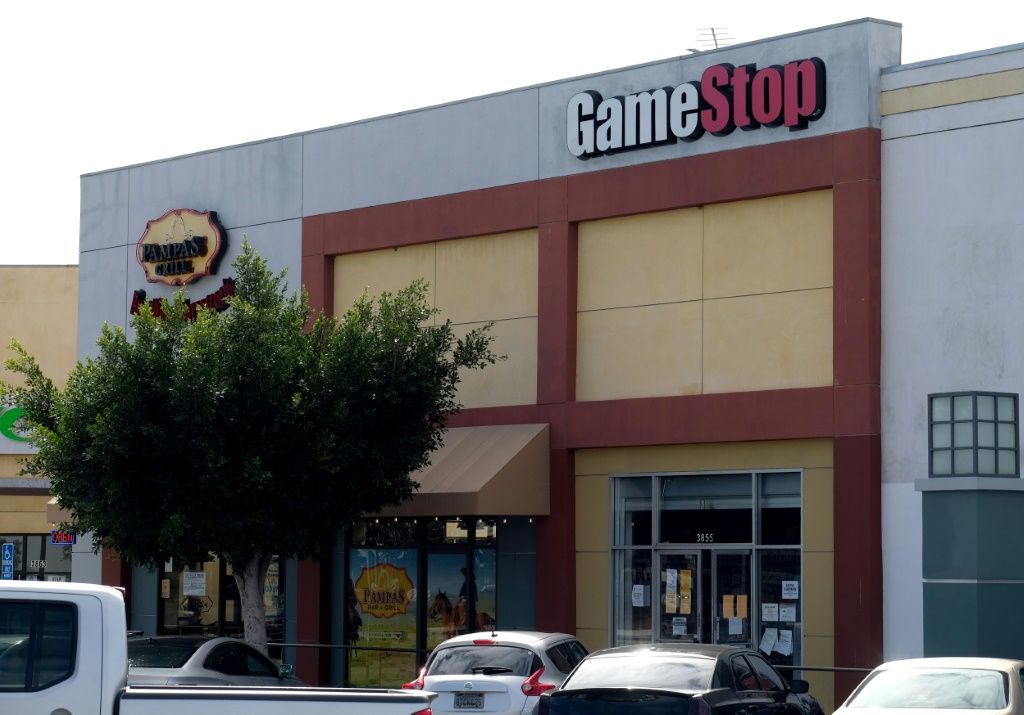
GameStop shares are buzzing anew on Wall Street

GameStop Corp. shares fell sharply Monday after the video game and collectibles retailer announced a private exchange of approximately $1.4 billion in convertible senior notes for common stock, a move that reduces long-term debt without using cash but increases the number of shares outstanding.

The stock traded down more than 11% in morning action, reflecting investor concerns over dilution even as the company continues its high-profile pursuit of eBay Inc. The exchange involves about $400 million of 0.00% notes due 2030 and $1.0 billion of notes due 2032. Noteholders will receive newly issued Class A common shares based in part on the stock’s average volume-weighted average price over a 35-trading-day period that began Monday, subject to a per-share floor. The transaction is expected to close around September 23, subject to customary conditions.

GameStop will not receive cash proceeds from the issuance. Upon completion, the exchanged notes will be canceled, cutting outstanding long-term debt by roughly $1.4 billion and leaving approximately $1.1 billion of the 2030 notes and $1.7 billion of the 2032 notes outstanding. The company described the deal as retiring debt without the use of cash.

The announcement comes amid GameStop’s ongoing campaign to acquire eBay. In early May, the company delivered a non-binding proposal to buy all outstanding eBay shares it does not already own at $125 per share in a mix of cash and GameStop stock, valuing the e-commerce platform at roughly $55 billion to $56 billion. eBay’s board rejected the offer, calling it neither credible nor attractive and citing questions about financing, management of a combined company and other terms.

Advertisement

GameStop has since substantially increased its ownership. It now holds approximately 43.4 million eBay shares, or about 9.8% of the company, after converting derivative positions and making open-market purchases. Chief Executive Ryan Cohen has repeatedly signaled determination to press forward. In comments following the stake increase, Cohen said, “we’re coming for eBay one way or another.”

Shareholders earlier approved an increase in authorized Class A common shares to 2.5 billion, providing additional flexibility for potential stock-financed transactions. Cohen also withdrew a previously approved CEO performance award, with the company stating it was focusing on the eBay opportunity. GameStop has pointed to its cash position, a non-binding commitment letter for up to $20 billion in debt financing from TD Securities contingent on investment-grade ratings for a combined entity, and its retail network as elements that could support a deal.

In late June, GameStop provided a fiscal 2026 outlook expecting adjusted EBITDA in excess of $600 million, up from $345.4 million in fiscal 2025. Management has framed the eBay pursuit as a strategic expansion that would combine GameStop’s physical retail footprint and growing collectibles business with eBay’s global marketplace platform, authentication capabilities and seller network.

The debt-for-equity exchange improves the balance sheet by lowering leverage at a time when the company is positioning itself for a potentially transformative acquisition. However, the issuance of new shares dilutes existing holders, a dynamic that typically pressures the stock in the near term. Market reaction Monday underscored that tension: while the reduction in debt is viewed as positive for credit metrics and future financing capacity, the increase in share count raised questions about ownership stakes and potential further equity issuance if a deal advances.

Advertisement

GameStop has been transforming its business model in recent years. Physical video game software sales have declined as digital distribution grows, but collectibles, trading cards and other categories have expanded to represent a larger share of revenue. The company has also explored partnerships, including delivery services, and maintained a significant cash reserve that has supported both share repurchases and the accumulation of the eBay stake.

eBay, for its part, has emphasized its own turnaround efforts and independent strategy. The marketplace operator has focused on improving its platform, expanding categories and returning capital to shareholders. Any potential combination would face regulatory review, financing hurdles and integration challenges given the scale difference between the two companies.

Analysts and investors will watch several developments in the coming weeks. These include the final share count issued in the notes exchange, any further updates on the eBay proposal or negotiations, quarterly operating results, and broader market conditions for meme-associated and retail stocks. GameStop’s ability to convert its eBay stake and financing commitments into a completed transaction remains uncertain, particularly after the initial rejection.

The sharp decline in GameStop shares on the exchange news highlights the market’s sensitivity to dilution even when paired with balance-sheet strengthening. At the same time, the company’s continued accumulation of eBay shares and public comments from leadership indicate the acquisition effort is far from abandoned. Whether the debt reduction ultimately bolsters credibility for a larger deal or simply reflects prudent capital management will depend on subsequent steps by both companies.

Advertisement

As trading continued Monday, the focus remained on how GameStop balances near-term shareholder dilution against longer-term strategic ambitions in a rapidly evolving retail and e-commerce landscape. The outcome of the eBay pursuit, if it advances, would rank among the most significant corporate moves in the company’s recent history.

Continue Reading

Business

Singapore’s Grab lifts annual revenue forecast

Published

on


Singapore’s Grab lifts annual revenue forecast

Continue Reading

Business

Baytex Energy: Organic Growth With Strong Commodity Prices (NYSE:BTE)

Published

on

Baytex Energy: Organic Growth With Strong Commodity Prices (NYSE:BTE)

This article was written by

Long Player believes oil and gas is a boom-bust, cyclical industry. It takes patience, and it certainly helps to have experience. He has been focusing on this industry for years. He is a retired CPA, and holds an MBA and MA.
He leads the investing group Oil & Gas Value Research. He looks for under-followed oil companies and out-of-favor midstream companies that offer compelling opportunities. The group includes an active chat room in which Oil & Gas investors discuss recent information and share ideas. Learn more.

Analyst’s Disclosure: I/we have a beneficial long position in the shares of BTE either through stock ownership, options, or other derivatives. I wrote this article myself, and it expresses my own opinions. I am not receiving compensation for it (other than from Seeking Alpha). I have no business relationship with any company whose stock is mentioned in this article.

Disclaimer: I am not an investment advisor and this is not a recommendation to buy or sell a security. Investors are recommended to read all of the company’s filings and press releases as well as do their own research to determine if the company fits their own investment objectives and risk portfolios.

Advertisement

Seeking Alpha’s Disclosure: Past performance is no guarantee of future results. No recommendation or advice is being given as to whether any investment is suitable for a particular investor. Any views or opinions expressed above may not reflect those of Seeking Alpha as a whole. Seeking Alpha is not a licensed securities dealer, broker or US investment adviser or investment bank. Our analysts are third party authors that include both professional investors and individual investors who may not be licensed or certified by any institute or regulatory body.

Continue Reading

Business

First Solar: Strong Growth But A Hold For Now (NASDAQ:FSLR)

Published

on

First Solar: Strong Growth But A Hold For Now (NASDAQ:FSLR)

This article was written by

I’m a passionate investor from the Netherlands with 12 years of stock market experience. My articles usually contain a good overview of important investment criteria. A stock for my portfolio is of interest to me if the company has the following characteristics:1. Companies that are growing in both revenue, earnings and free cash flow.2. Companies that have excellent growth prospects.3. Stocks with favorable valuations.I prefer steadily growing companies with high free cash flow margins, dividend stocks and stocks with generous share repurchase programs.Disclaimer: My articles do not provide financial advice, they reflect my own findings and insights.

Analyst’s Disclosure: I/we have no stock, option or similar derivative position in any of the companies mentioned, and no plans to initiate any such positions within the next 72 hours. I wrote this article myself, and it expresses my own opinions. I am not receiving compensation for it (other than from Seeking Alpha). I have no business relationship with any company whose stock is mentioned in this article.

Seeking Alpha’s Disclosure: Past performance is no guarantee of future results. No recommendation or advice is being given as to whether any investment is suitable for a particular investor. Any views or opinions expressed above may not reflect those of Seeking Alpha as a whole. Seeking Alpha is not a licensed securities dealer, broker or US investment adviser or investment bank. Our analysts are third party authors that include both professional investors and individual investors who may not be licensed or certified by any institute or regulatory body.

Advertisement
Continue Reading

Business

Aston Martin creditors threaten legal action over plan to sell branding rights, FT reports

Published

on


Aston Martin creditors threaten legal action over plan to sell branding rights, FT reports

Continue Reading

Business

ENAV S.p.A. (EENNF) Q2 2026 Earnings Call Transcript

Published

on

OneWater Marine Inc. (ONEW) Q1 2026 Earnings Call Transcript