

Business
Watch Snakes on the street: Nearly 900 snakes, including cobras, escape flooded farm in China, enter nearby villages


Floodwaters set loose a slithering nightmare in southern China this week after nearly 900 snakes, including venomous cobras, escaped a breeding farm in the Guangxi Zhuang Autonomous Region. The farm in Dengwei village was swept away by rising waters on July 6, according to Wu Zhi, head of the local village committee, who spoke to state-run outlet Red Star News. The escaped reptiles included water snakes, king ratsnakes, and cobras, local media reported.
The bizarre episode is just one chapter in a much larger flood emergency unfolding across China. Days of extreme weather in the country’s south and central regions have already killed at least 39 people, sent dozens of rivers overflowing, and triggered the collapse of a reservoir dam. Chinese authorities have now evacuated more than 900,000 people as Typhoon Bavi barrels towards the eastern city of Wenzhou, after already lashing Taiwan and Japan’s southwestern islands, even as the country continues to deal with the fallout of Typhoon Maysak, which struck Hainan earlier this month.
Videos of cobras in floodwater send chills online
State media shared several videos of the aftermath, and the internet is not okay. One widely circulated clip shows local residents using dip nets to fish snakes out of the water, while another captures a cobra raising its head above a stretch of muddy floodwater. The footage, tied to the flooding caused by Typhoon Maysak, has racked up views as users reacted with a mix of horror and disbelief.
The farm bred snakes for medicine, meat and anti-venom
According to Chinese daily Global Times, the Dengwei village facility mainly bred three types of snakes, cobras, king ratsnakes, and water snakes, for use in traditional medicine, meat production, and anti-venom manufacturing. When the floodwaters tore through the farm, the reptiles simply swam away with the current.

“Most of the snakes have already been washed away,” say officials, but caution urged
Wu Zhi told Global Times, “Most of the snakes have already been washed away by the floods.” He added that only a small number remain stranded on floating garbage and debris in the stagnant water, and that the vast majority of snakes captured at the site so far have turned out to be harmless water snakes rather than venomous ones.A ten-member team has been deployed to recapture the escapees using nets and electric fishing equipment. Even so, officials are taking no chances given that some of the loose reptiles are believed to be cobras. Residents have been firmly told not to attempt catching the snakes on their own. Wu Zhi said anyone who spots a snake at home should immediately alert the village committee so trained personnel can handle it.
Hundreds evacuated as reservoirs overflow
The snakes escaped on Monday, July 6, according to Shanghai Daily, and one villager was bitten by a snake and hospitalised. By the following day, 712 residents had been evacuated after the nearby Liulan and Yunbiao reservoirs began overflowing in the wake of Typhoon Maysak, China Daily reported.
Describing the chaos, a local resident told the Associated Press, “It was terrifying.” The resident added that the flood tore through the snake farm and left the animals roaming everywhere, even in the water.
With Typhoon Bavi now approaching and memories of the snake scare still fresh, villagers in the flood-hit region are keeping a wary eye on both the skies and the water below.

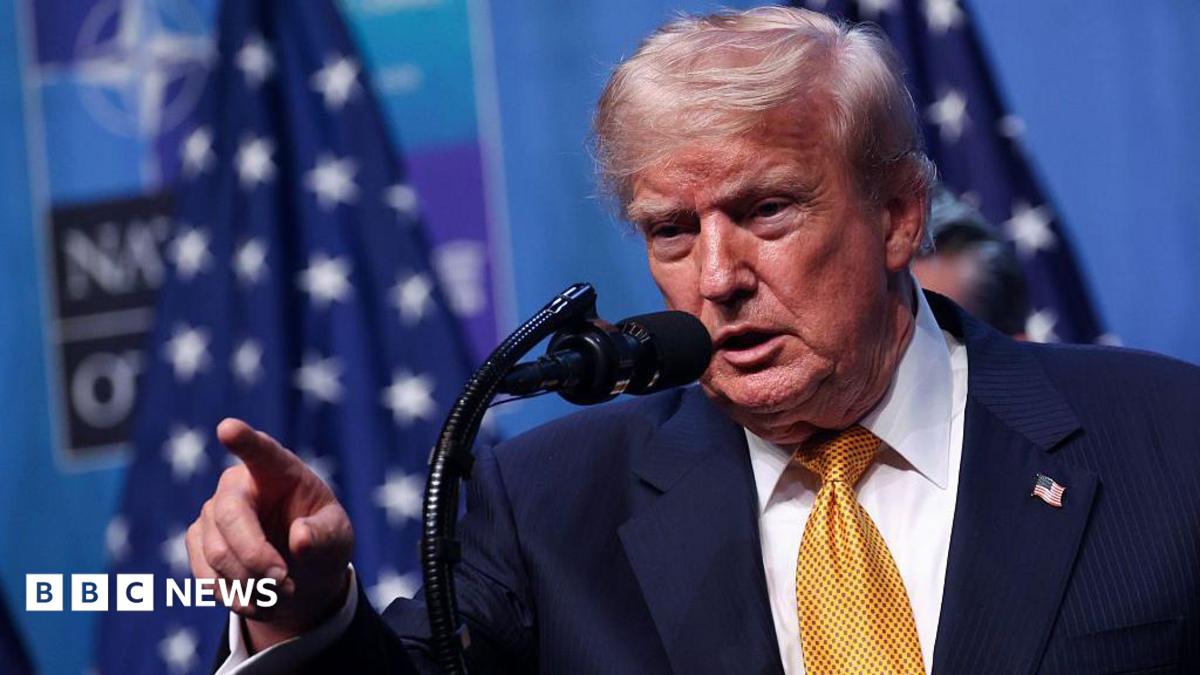
In Trump’s Truth Social post on Monday, he insisted the strait “will remain OPEN, with or without Iran”.
“The U.S.A. will be, from this point forward, known as “THE GUARDIAN OF THE HORMUZ STRAIT,” but as such, and as a matter of FAIRNESS, will be reimbursed, at the rate of 20% on all cargo shipped, for any and all costs necessary to do the job of providing safety and security to this very volatile section of the World,” he wrote.
The US president added that “the process and formation will begin immediately”.
His comments came shortly after he told Fox News the US would “probably run” the Strait of Hormuz, claiming that Iran “broke” a deal that was made with the US.
“We are taking over the strait,” he said.
Later on Monday, US Central Command (Centcom) said its forces “will resume blockading maritime traffic entering and exiting Iranian ports” on 14 July.
“The US military continues to support traffic flow through regional waters for all vessels not violating the blockade,” a Centcom statement said.
Responding to Trump’s announcement, Iranian Foreign Minister Abbas Araghchi wrote in a post on X: “POTUS is absolutely right. Whoever provides secure and safe passage of commercial vessels through the Strait of Hormuz should be compensated for this service.”
He continued: “Iran has always been the GUARDIAN of the Strait and will remain so FOREVER.”
“20% is of course too much. We will be fair,” Araghchi added.
Meanwhile, a spokesperson for the International Maritime Organization – the UN agency regulating global shipping – was quoted by Reuters news agency as saying that “IMO stands firmly against charging fees for passage through straits used for international navigation”.
“There is no legal basis through which to introduce mandatory tolls simply to transit through a strait,” the spokesperson added.
Before Trump’s announcement, Iran’s top military headquarters said it would not allow the US to “interfere in the management” of the Strait of Hormuz.
In a statement shared by Iranian media, Ebrahim Zolfaghari, spokesperson of Khatam al-Anbiya, said “repeated adventurism and malicious actions” from the US in the strait have “seriously endangered regional security, international trade and the passage of oil tankers and commercial vessels”.
Any cooperation with the US would be considered an act of “war” against Iran’s sovereignty, he added, warning that if the conflict spreads “the flames of war will engulf all the countries of the region”.
NEW YORK — The Nasdaq Composite declined 277.14 points, or 1.05 percent, to 26,004.46 on Monday amid renewed weakness in technology and semiconductor shares, as investors locked in gains from recent rallies and weighed ongoing uncertainties from the Middle East.
The drop extended early session losses, with the S&P 500 slipping modestly while the Dow Jones Industrial Average posted small gains, illustrating continued rotation away from high-growth names. Technology-heavy indexes bore the brunt of selling pressure following last week’s strength tied to artificial intelligence enthusiasm and major listings.
Chip stocks were among the hardest hit. SK Hynix’s American depositary receipts fell sharply after a strong Nasdaq debut on Friday, contributing to broader sector declines. Micron Technology, SanDisk and other memory and storage names also traded lower. The Philadelphia Semiconductor Index fell several percent as the group digested profit-taking after an extended run.
Analysts described the moves as a healthy correction rather than a reversal of the AI investment theme. Mohamed El-Erian, chief economic adviser at Allianz, said in a CNBC interview that markets are viewing recent U.S.-Iran tensions as likely contained. “The market is assuming that this clash will remain localized,” he noted, pointing to indications that neither side seeks full escalation.
Oil prices rose on supply disruption fears linked to the Strait of Hormuz but pared gains later. West Texas Intermediate crude settled near recent levels, providing some support to energy names in the Dow while pressuring broader risk assets.
The session highlighted the market’s sensitivity to rotations. After SK Hynix’s landmark $26.5 billion U.S. listing helped boost sentiment, some investors shifted positions, leading to weakness in related names. SK Hynix remains a key player in high-bandwidth memory for AI applications, with strong long-term demand expected from hyperscalers and model developers.
Focus is rapidly shifting to corporate earnings season, which kicks off in earnest this week. Major banks including JPMorgan Chase, Goldman Sachs, Morgan Stanley, Bank of America, Citigroup and Wells Fargo report results, followed by technology and consumer names. FactSet projects S&P 500 companies will deliver average second-quarter earnings growth of more than 23 percent year-over-year.
Larry Adam, chief investment officer at Raymond James, maintained optimism about AI spending. He cited projections for capital expenditures to continue expanding through 2028, driven by demonstrated returns from AI adoption. “AI-related mentions in S&P 500 earnings calls hit a record high, up 98 percent from last year,” he added.
The Nasdaq’s performance this year remains robust overall, propelled by megacap technology companies. However, Monday’s decline serves as a reminder of the sector’s volatility even as underlying fundamentals in AI infrastructure appear solid.
Geopolitical developments added a layer of caution. Reports of Iranian actions and U.S. responses in the Gulf region contributed to energy price swings and selective risk-off flows. Markets have so far absorbed the news without broader disruption, focusing instead on company-specific catalysts.
Federal Reserve policy remains a background factor. Recent signals have kept rate expectations anchored, with potential for support if inflation continues moderating and growth holds steady.
For the semiconductor space, SK Hynix’s listing and subsequent trading activity provide insight into investor appetite for AI supply chain exposure. The company’s dominant market position and production ramp for advanced chips position it well for sustained growth, despite near-term fluctuations.
The Dow’s relative strength reflected gains in financials, industrials and energy. Banks preparing for earnings offered a counterbalance to tech weakness. The divergence across indexes underscores healthy market breadth even during sector rotations.
Volume increased in technology shares as traders repositioned. Smaller growth names faced additional pressure compared to large-cap leaders.
Analysts caution that while enthusiasm for AI persists, periodic pullbacks are normal after sharp advances. Elevated valuations in parts of the sector invite selective selling, creating opportunities for patient investors.
SK Hynix’s performance will continue to be monitored as its ADRs trade under the regular ticker. The premium to underlying shares may adjust as liquidity builds and arbitrage activity increases.
Broader indexes trade near recent highs, buoyed by corporate earnings resilience and expectations around policy. The S&P 500’s modest loss kept it in positive territory for the year, with technology remaining the key driver despite Monday’s setback.
As the week advances, reports from Netflix, Johnson & Johnson and others will offer further clues on consumer trends and corporate health. AI-related commentary in earnings calls is expected to draw particular attention.
Monday’s trading exemplifies the market’s ongoing balancing act between innovation-driven growth and caution around external risks and valuations. The Nasdaq’s slide provides a pause after recent momentum, with focus turning to fundamentals in upcoming reports.
For participants, the session reinforces diversification benefits. Technology leads during expansions, but other sectors offer stability during adjustments. The Dow’s gain amid Nasdaq weakness highlights this pattern.
The Federal Reserve’s path and fiscal developments will influence the backdrop. Solid earnings could reinforce the rally, while surprises in AI investment or geopolitics might test nearby support.
SK Hynix and the chip sector serve as important sentiment gauges for AI. Their stabilization post-listing volatility could support broader technology recovery.
Markets closed mixed but within familiar ranges. The day sets up a data-intensive week with potential to clarify near-term direction for equities.

East West Bancorp: Attractive Returns, Opaque Risks

Brazil Potash Corp: Autazes Economical, Strategic, But Considerable Reflexivity Risks
CrowdStrike's Valuation Is At Nose Bleed Levels
UBS managing director and senior portfolio manager Jason Katz joins ‘Varney & Co.’ to give his outlook on the markets in the second half of the year.
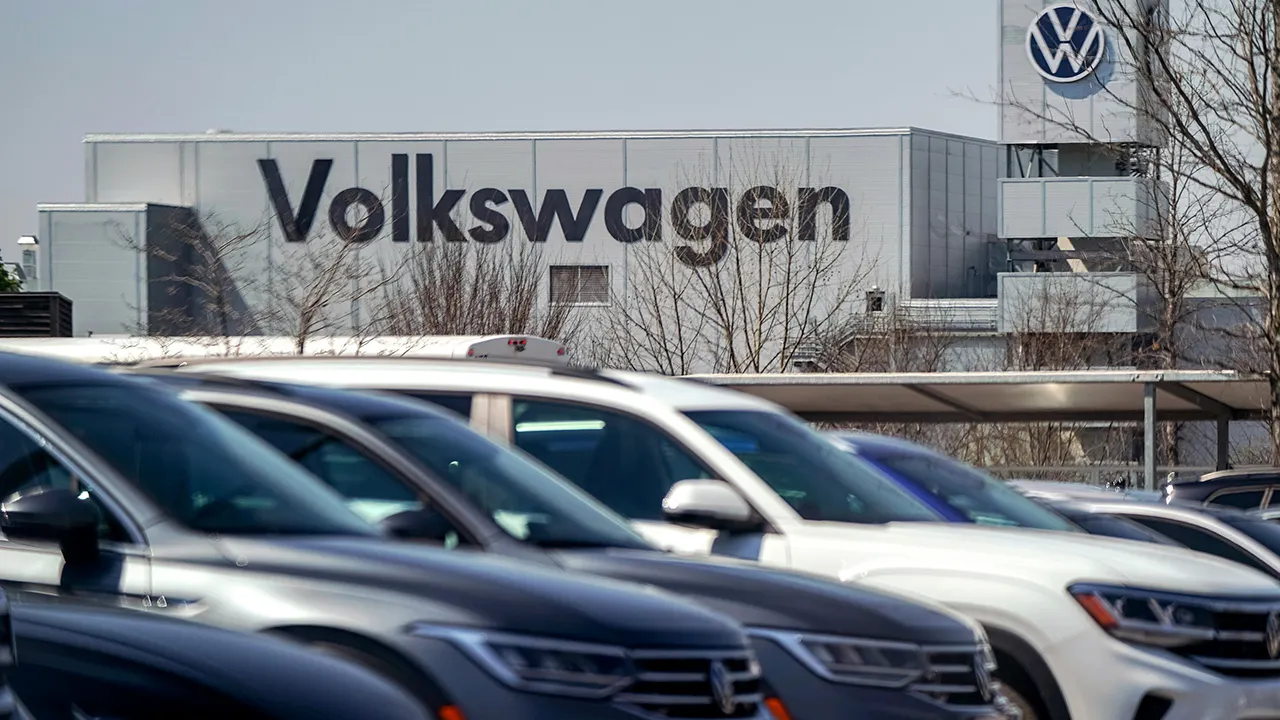
Volkswagen’s leadership is warning that the company may need to cut an extra 50,000 jobs to stay competitive with auto industry rivals, according to an internal memo sent to staff.
The German automaker previously announced plans to cut 50,000 jobs across the company, including at its subsidiaries Porsche and Audi, and CEO Oliver Blume said in a memo reviewed by Reuters that further cuts are needed because Volkswagen is operating at a 20% cost disadvantage relative to its competitors.
The memo said that situation means a “theoretical deduction” of another 50,000 jobs across the company’s worldwide footprint, effectively confirming prior reports that Volkswagen was weighing up to 100,000 job reductions.
“We are currently assessing across all brands, companies and regions how many adjustments are actually necessary and feasible,” Blume said in the memo, according to Reuters.
VOLKSWAGEN RECALLS NEARLY 50,000 VEHICLES OVER SERIOUS ENGINE FIRE RISK FROM FAULTY WIRING
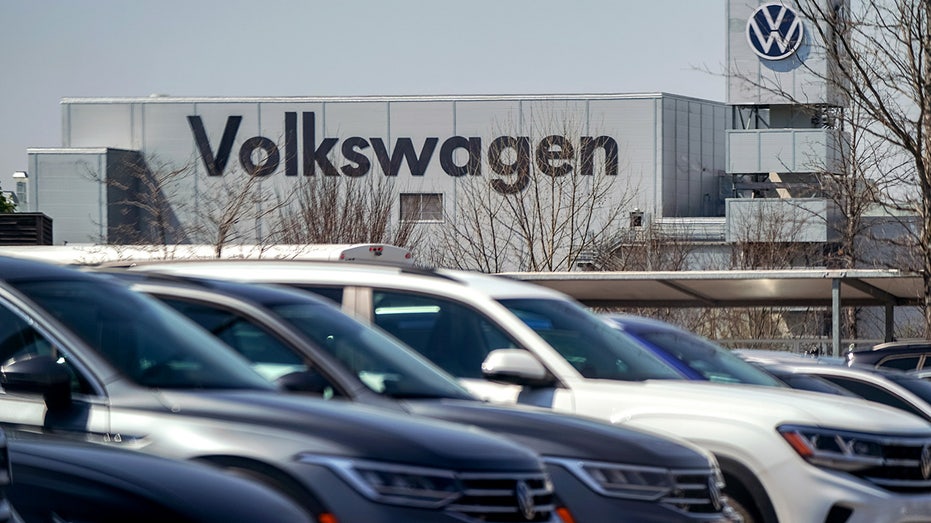
Volkswagen is weighing an additional 50,000 job cuts on top of the previously announced layoffs of 50,000 workers amid a restructuring effort. (Elijah Nouvelage/Getty Images)
Volkswagen is Europe’s largest automaker but has seen its profits slump amid higher tariff costs, tough competition in the Chinese market and pressure on its German manufacturing network to become more efficient.
Blume said in the memo that he prefers “intelligent solutions” over the closure of facilities, and previously suggested that underutilized factories could be used for the defense industry or to produce Chinese Volkswagen models in Europe.
UBER PARTNERS WITH CHINESE TECH GIANT TO ROLL OUT DRIVERLESS VEHICLES ACROSS MULTIPLE GLOBAL MARKETS
| Ticker | Security | Last | Change | Change % |
|---|---|---|---|---|
| VWAGY | VOLKSWAGEN AG | 8.2665 | +0.06 | +0.69% |
He said in the memo that looking into the next decade, the company “still cannot confirm competitive use cases for the plants of Emden, Hanover, Zwickau and Neckarsulm in the 2030s.”
The company’s leaders have faced angry calls from workers for the automaker’s management to explain its restructuring plans, which Blume presented to a supervisory board on Thursday.
POLESTAR BANNED FROM US MARKET UNDER RULE TARGETING CHINA-LINKED CONNECTED VEHICLES
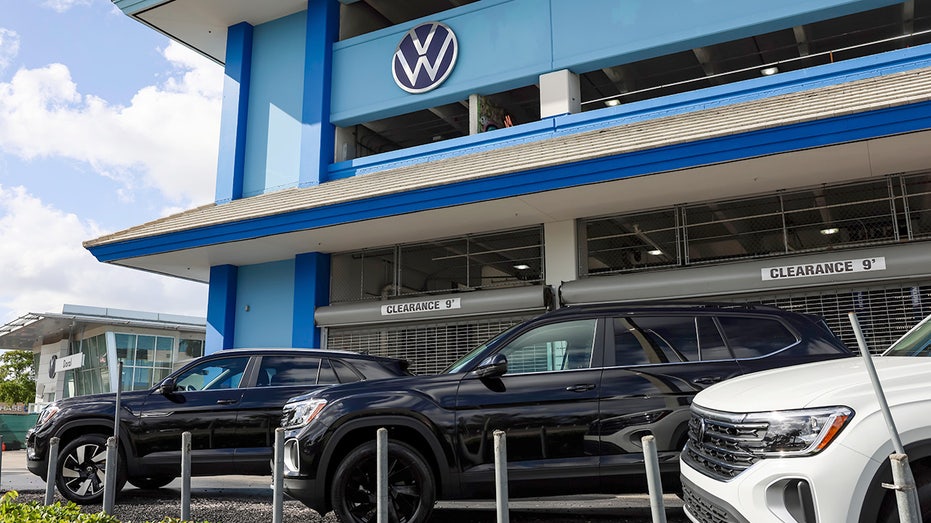
Volkswagen is looking to halve its lineup of models amid a push to restructure more efficiently. (Eva Marie Uzcategui/Bloomberg via Getty Images)
Reuters reported that sources familiar with the matter said labor representatives on the committee blocked proposals that were said to include job cuts and the possible closure of four factories.
Volkswagen’s statement after the meeting with stakeholders didn’t discuss job cuts or plant closures and instead announced plans to further reduce production capacity and gradually halve its lineup of models.
GET FOX BUSINESS ON THE GO BY CLICKING HERE
“Of course, it’s understandable that not everything has been planned out down to the last detail yet, and that certain issues still need to be further discussed and evaluated,” Blume said in his message to workers. “There will certainly be more meetings in which we will work hard to find the best solutions.”
Reuters contributed to this report.


Partnership will create four fruit-derived extracts for beverage applications.

California-led states sue to block Paramount’s $110 billion Warner Bros Discovery deal
According to the exchange, the index is aimed at investors who want exposure to companies that do not engage in activities that harm animals. It has been developed in collaboration with the Ahimsagain Foundation and is based on the foundation’s Ahimsa Investment Movement (AIM) framework, which assesses companies on the extent to which their products, services and business practices adhere to Ahimsa principles.
Under the AIM framework, companies are classified into three categories: Green, Orange and Red. Only companies classified under the Green category are eligible for inclusion in the index, while those placed in the Orange and Red bands are excluded, NSE said in a press release.
NSE Indices said the launch of the Nifty500 Ahimsa Index expands its range of thematic indices designed to cater to evolving investor preferences. The index is intended to provide a transparent, rules-based benchmark that combines ethical investment considerations with broad-based exposure to the equity market.
The index draws its constituents from the diversified Nifty 500 universe, providing representation across sectors while selecting companies that demonstrate stronger alignment with responsible and sustainable business practices under the AIM framework.
According to the exchange, the index is also expected to serve as a benchmark for asset managers and support the development of passive investment products, including exchange-traded funds (ETFs), index funds and other structured investment solutions.
The Nifty500 Ahimsa Index has a base date of April 1, 2016, and a base value of 1,000. It will be reconstituted on a semi-annual basis, while the weight of each constituent will be determined based on its free-float market capitalisation.(Disclaimer: Recommendations, suggestions, views and opinions given by the experts are their own. These do not represent the views of The Economic Times)

NEW YORK — The S&P Energy Select Sector Index rose 28.43 points, or 2.45 percent, to 1,188.82 on Monday, outpacing broader markets as rising oil prices reflected heightened geopolitical risks in the Middle East and supply concerns.
Energy shares benefited from gains in crude futures amid reports of renewed U.S.-Iran tensions, including actions in the Strait of Hormuz. West Texas Intermediate crude climbed several percent before paring some advances, settling near $73 per barrel, while Brent crude traded around $78. The sector’s advance provided a counterweight to weakness in technology amid profit-taking in semiconductors.
The broader market showed mixed performance. The Dow Jones Industrial Average posted modest gains, the S&P 500 edged lower and the Nasdaq Composite declined about 1 percent. The divergence underscored rotation dynamics, with defensive and commodity-linked sectors finding support while growth names faced pressure.
Analysts attributed oil’s move to developments in the Gulf region. Reports of Iranian strikes on vessels and U.S. responses raised fears of potential disruptions to global energy flows. However, markets appeared to price in a contained scenario rather than widespread escalation.
Mohamed El-Erian, chief economic adviser at Allianz, told CNBC that investors view the conflict as likely localized. “The market is assuming that this clash will remain localized,” he said, noting indications that neither the U.S. nor Iran seeks full-scale confrontation.
The energy sector’s performance highlighted its role as a hedge during periods of geopolitical uncertainty. Major integrated oil companies and exploration and production firms led gains, benefiting from higher commodity prices. Refiners and service providers also participated in the advance.
The S&P Energy Select Sector Index’s year-to-date returns reflect volatility tied to global events. While the sector has lagged technology-driven indexes for much of the year, periodic spikes in oil prices provide opportunities for outperformance.
Broader economic factors also influenced trading. Investors monitored the start of earnings season, with major banks reporting this week. FactSet forecasts solid profit growth for S&P 500 companies, though energy firms’ results will depend on realized prices and production levels.
Larry Adam, chief investment officer at Raymond James, noted broader market resilience. He highlighted sustained capital investment in various sectors, including those tied to traditional energy infrastructure alongside emerging technologies.
Oil’s rise came as traders assessed potential impacts on inflation and consumer spending. Higher energy costs could feed through to broader prices, though recent disinflation trends have provided some buffer. The Federal Reserve’s policy path remains data-dependent, with officials watching commodity movements closely.
For energy producers, the current environment offers revenue support but also underscores the sector’s sensitivity to global events. Companies with diversified operations and strong balance sheets are better positioned to navigate swings.
The S&P Energy Select Sector Index includes major names such as Exxon Mobil, Chevron and ConocoPhillips. Their performance often serves as a barometer for investor sentiment toward traditional energy amid the transition to lower-carbon sources.
Monday’s gains followed a period of relative underperformance for the sector. Technology’s dominance has drawn capital away from cyclical areas, but geopolitical developments can quickly shift flows.
Analysts caution that oil price spikes may prove temporary if tensions ease. However, ongoing risks in key shipping routes keep a floor under prices in the near term.
The energy sector’s contribution helped limit downside in the Dow Jones Industrial Average. Financials and industrials also provided support, creating a mixed picture across the 30-stock index.
Broader indexes traded within recent ranges. The S&P 500’s modest decline kept it in positive territory for the year, while the Nasdaq faced more pressure from semiconductor weakness linked to profit-taking after SK Hynix’s U.S. listing.
SK Hynix’s American depositary receipts fell following a strong debut, dragging related names lower. The episode illustrated short-term volatility in AI supply chain stocks despite long-term demand tailwinds.
Market participants are shifting attention to corporate results. Banks’ earnings will offer insights into loan demand, credit quality and economic activity. Technology reports later in the season will address AI capital spending trends.
The energy sector’s advance aligns with historical patterns during periods of geopolitical stress. Investors often rotate into commodities and related equities when risks to supply emerge.
Longer term, the industry faces pressures from energy transition policies and technological change. Companies are investing in lower-carbon initiatives while maintaining traditional operations to meet current demand.
The S&P Energy Select Sector Index’s performance Monday reflects these crosscurrents. Short-term gains from oil prices contrast with structural challenges, requiring balanced strategies from producers.
Trading volume in energy names increased as the sector attracted interest. Options activity also picked up, signaling heightened awareness of potential volatility ahead.
As the week progresses, additional economic data and Fed commentary could influence commodity markets. Retail sales figures and inflation readings will be watched for impacts on consumer behavior and policy expectations.
For energy investors, the current environment offers both opportunities and risks. Higher prices boost near-term cash flows, but sustained elevation depends on resolution of geopolitical issues.
The sector’s role in diversified portfolios has grown amid macro uncertainties. Its correlation with traditional equities can vary, providing potential hedging benefits during stress periods.
Monday’s market action exemplified selective buying amid broader caution. Energy’s strength offset technology weakness, keeping major averages from steeper declines.
The S&P Energy Select Sector Index remains well below its all-time highs, leaving room for recovery if oil stabilizes at elevated levels. Producers with low-cost operations and disciplined capital allocation stand to benefit most.
Broader commodity markets showed mixed signals. Gold edged lower as risk appetite held in some areas, while agricultural futures traded quietly.
Currency markets reflected dollar strength on safe-haven flows tied to geopolitical news. Treasury yields moved modestly as investors assessed inflation risks from energy costs.
The session sets the stage for continued focus on Middle East developments and their economic ripple effects. Any de-escalation could pressure oil prices lower, while persistence of tensions might sustain support for energy shares.
Investors will monitor corporate updates for commentary on energy costs and hedging strategies. Banks’ exposure to the sector through lending could also feature in earnings discussions.
The energy sector’s Monday performance provides a timely reminder of its sensitivity to global events. As markets digest the latest developments, the S&P Energy Select Sector Index’s gains highlight its potential to deliver relative strength during periods of uncertainty.

York MP asks locals for Yorkshire words for accent debate

Trump to reinstate naval blockade of Iran ports and impose Strait of Hormuz charge

Microsoft Copilot AI Predicts Insane XRP Price by End Of 2026


-

 News Videos7 days ago
Whats Hidden Inside This Cash Register? #treasure #reselling #money
-

 Fashion4 days ago
Loro Piana Fall 2026 Enters Houston’s Art Scene
-

 Fashion3 days ago
Weekend Open Thread: Nutriplenish Leave-In Conditioner
-

 Crypto World7 days ago
$1,000 Credit Alert! BlockDAG X Exchange Pre-Registration Now Officially Open, Polkadot Dips & Zcash Rebounds
-
 Tech6 days ago
Anthropic’s new “J-lens” reveals a silent workspace inside Claude that mirrors a leading theory of consciousness
-

 Sports6 days ago
Joshua Pacio ‘more complete’ ahead of ONE rematch vs Malachiev
-
 Sports4 days ago
2026 Genesis Scottish Open Thursday TV coverage: Round 1
-

 Tech6 days ago
Anthropic brings Claude Cowork to mobile and web as usage data shows most users aren’t coding
-

 Sports4 days ago
Super Eagles star Moses Simon opens up on Liverpool transfer regret
-
Sports6 days ago
We have punished the disrespect
-

 Crypto World7 days ago
Binance lists Strategy’s STRC stock as company expands Bitcoin funding
-

 Tech4 days ago
Character.AI enters the microdrama arena with its own productions, but there’s a twist
-
 Tech7 days ago
9 Best Keyboards (2025), Tested and Reviewed
-
 Business7 days ago
Enbridge: AI Tailwind Priced In (Rating Downgrade)
-
 Crypto World6 days ago
Claude AI Created Something Anthropic Never Designed
-

 News Videos7 days ago
“What’s going on?!” Carl Froch discusses Floyd Mayweather Jr financial issues
-

 Crypto World6 days ago
Nasdaq arthritis company holding Moshe Hogeg crypto hits all-time low
-
 Entertainment7 days ago
Taylen Biggs Reveals The Celebrity She Dreams Of Interviewing
-
 Crypto World7 days ago
Microsoft Cuts 4,800 Jobs as Xbox Loses 3,200 Roles in Reset
-

 News Videos5 days ago
Crypto Just Entered Its Most Important 6-Month Candle (Could Decide Everything!)
You must be logged in to post a comment Login