

Business
US Natural Gas Power Costs Hit 17-Year High as Data Center Demand Surges


NEW YORK — The cost of generating electricity from natural gas-fired plants in the United States has reached its highest level in at least 17 years, according to analysis from Lazard, and is expected to climb further amid surging power demand from data centers and artificial intelligence infrastructure.
Lazard’s latest Levelized Cost of Energy report highlights how rising fuel prices, construction costs and operational expenses have pushed natural gas power costs upward. The findings come as the U.S. grapples with unprecedented electricity needs from technology companies building massive data centers to support AI training and cloud computing.
Natural gas remains the dominant source of electricity generation in the U.S., accounting for a significant share of the power mix. However, the economics of gas-fired plants have deteriorated in recent years as renewable energy costs have fallen and fuel price volatility has increased. Despite these challenges, gas plants continue to provide essential dispatchable power, particularly during periods of peak demand or when renewable output is low.
The report underscores a broader trend in the energy transition. While solar and wind have achieved record-low costs in many regions, the intermittency of renewables requires backup from flexible sources like natural gas. This dynamic has kept gas plants relevant even as their levelized costs rise.
Data center demand is a primary driver of the projected increases. Technology giants are investing billions in new facilities across the country, many in regions reliant on natural gas for reliable baseload power. The AI boom has accelerated these builds, with hyperscalers seeking constant, high-volume electricity to power servers and cooling systems.
Analysts estimate that data centers could double or triple power consumption in certain markets over the next decade. This surge strains existing infrastructure and boosts the value of gas-fired generation, which can ramp up quickly to meet fluctuating loads.
Lazard’s analysis incorporates multiple factors, including capital costs, fuel expenses, operations and maintenance, and financing assumptions. The firm’s levelized cost metric provides a standardized way to compare different generation technologies over their lifetimes.
The 17-year high for gas power costs reflects a combination of inflationary pressures on construction and higher expected fuel prices. Natural gas prices have been volatile, influenced by domestic production trends, liquefied natural gas exports and global supply dynamics.
Renewable energy sources, particularly solar and onshore wind, continue to offer lower levelized costs in many scenarios. Battery storage costs are also declining, improving the economics of intermittent renewables. However, the full system costs of integrating high levels of renewables, including transmission upgrades and backup capacity, complicate direct comparisons.
Natural gas plants benefit from existing infrastructure and the ability to provide firm capacity. Many utilities and grid operators rely on them to ensure reliability, especially in regions with growing peak demand from electrification of vehicles, buildings and industry.
The Lazard report arrives as policymakers debate the future of the U.S. energy mix. The Inflation Reduction Act has accelerated renewable deployment through tax credits, but recent proposals in Congress could alter incentives. Uncertainty around federal policy adds complexity for developers of both gas and renewable projects.
Regional variations play a significant role. In areas with abundant renewable resources and supportive policies, solar and wind often undercut gas on cost. In other markets, particularly those with constrained transmission or high reliability needs, gas retains an edge.
Data center operators are increasingly signing power purchase agreements with various generators. Some are pairing renewables with storage and gas backup to achieve both cost efficiency and reliability. This hybrid approach reflects the practical challenges of meeting 24/7 demand with variable sources.
The power sector faces a capacity crunch in coming years. Retirements of older coal and nuclear plants, combined with rising demand, require significant new buildout. Natural gas is often the fastest option to bring online, though environmental regulations and permitting delays can extend timelines.
Environmental groups have criticized reliance on gas, citing methane emissions and long-term climate impacts. Advocates for gas argue that modern combined-cycle plants are far cleaner than older facilities and serve as a bridge to a lower-carbon future.
Utilities are navigating these tensions by pursuing diverse portfolios. Many are adding solar, wind and storage while maintaining or expanding gas capacity for reliability. The Lazard analysis helps inform these decisions by quantifying costs across technologies.
For investors, the report highlights opportunities and risks. Gas plant developers may benefit from near-term demand but face potential stranded asset risks if decarbonization accelerates. Renewable developers continue to see favorable economics, though integration costs and policy shifts introduce uncertainty.
The data center boom is reshaping power markets nationwide. States like Texas, Virginia and Georgia have seen massive investments, straining grids and prompting new generation proposals. Natural gas infrastructure in these regions positions it to capture incremental demand.
Longer-term forecasts suggest electricity demand growth will outpace recent decades due to AI, electrification and manufacturing reshoring. Meeting this demand affordably and reliably will require coordinated investment across the energy value chain.
Lazard’s findings align with other industry analyses showing rising costs for thermal generation. Fuel price forecasts, capital cost inflation and regulatory compliance all contribute to the trend.
The report also examines offshore wind, nuclear and other technologies. While nuclear offers carbon-free baseload power, high upfront costs and long construction times limit near-term deployment. Small modular reactors could change that dynamic in the 2030s.
Storage costs continue declining, enhancing renewables’ competitiveness. Batteries paired with solar can shift output to evening peaks, reducing reliance on gas peaker plants.
Transmission remains a bottleneck. Upgrading the grid to move power from resource-rich areas to demand centers is essential for optimizing the system cost-effectively.
Policymakers face difficult trade-offs. Supporting rapid renewable deployment can lower long-term costs and emissions, but ensuring reliability during the transition may require retaining or adding gas capacity.
The Lazard Levelized Cost of Energy report is widely referenced by utilities, developers and investors for its independent benchmarking. This year’s edition reflects updated assumptions on technology costs, capacity factors and financing.
As data center demand accelerates, power costs across the board are under scrutiny. Companies are exploring everything from on-site generation to long-term contracts with diverse suppliers to manage expenses and risks.
The energy transition is entering a more complex phase. While renewables dominate new capacity additions, dispatchable resources like natural gas remain critical for grid stability. Balancing these elements will determine the cost and reliability of U.S. electricity in the coming decade.
Monday’s market movements reflected broader commodity trends. Energy stocks advanced as oil prices rose on geopolitical developments, aligning with the sector’s sensitivity to supply risks.
For natural gas specifically, futures prices have responded to weather forecasts, storage levels and export demand. LNG terminals in the U.S. Gulf Coast continue shipping cargoes globally, linking domestic prices to international benchmarks.
The interplay between gas power costs and data center economics will shape corporate decisions. Hyperscalers seeking to minimize expenses may favor regions with abundant renewables and supportive transmission, while others prioritize reliability in gas-heavy markets.
Utilities planning new plants must weigh Lazard’s cost metrics against local conditions, regulatory hurdles and customer needs. The report serves as one input among many in a multifaceted decision process.
As the U.S. navigates record electricity demand growth, the cost of natural gas power reaching multi-year highs highlights the challenges ahead. Data centers are accelerating the need for new generation, forcing a reassessment of the optimal energy mix for reliability, affordability and emissions goals.
The coming years will test the industry’s ability to deliver power at scale while managing costs. Lazard’s analysis provides a valuable snapshot of current economics, informing strategies across the power sector.


The country’s third largest software exporter reported higher new deals momentum during the quarter with a total contract value of $2.4 billion compared with $1.9 billion in the previous quarter and maintained that the order pipeline was strong and deal booking would improve further in the September quarter. However, this optimism did not reflect in its full year revenue and operating margin guidance which remained unchanged from the prior quarter at 1-4% revenue growth in constant currency with a margin band of 17.5-18.5%.
 Agencies
Mixed Signals Co logs $2.4-b order bookings; weak discretionary spending keeps outlook cautious
Similar to Tata Consultancy Services (TCS), it also announced an investment in the datacentre to help deliver full stack artificial intelligence (AI) related solutions. Barring an occasional spurt, the stock may remain range-bound until clarity on trend in discretionary client spending emerges.
The ₹3,500 crore capital expenditure on the datacentre project to create a 50 megawatt facility will be funded through a combination of debt and equity though more clarity is awaited. Last October, TCS, the country’s largest software exporter, became the first top tier Indian IT company to announce a datacentre investment estimated at around ₹55,000 crore to create one gigawatt facility.
At the time, HCLTech had no intentions to foray into such a venture. However, almost a year later, it has decided to build such capabilities citing a scarcity of datacentre capacity required for the compute or training stage of AI models. Such projects are likely to yield benefits in medium-to-long term and their success will depend upon effective customer engagements and agility to handle technological shifts.

For the June quarter, HCLTech’s revenue fell by 0.9% sequentially to $3,650 million while operating margin improved by 40 basis points to 16.9%. In rupee terms, revenue and net profit rose by 1.8% and 3% to ₹34,579 crore and ₹4,624 crore respectively.
Business
Taylor Swift and Travis Kelce Step Out for First Time as Newlyweds at JuJu Smith-Schuster’s Wedding
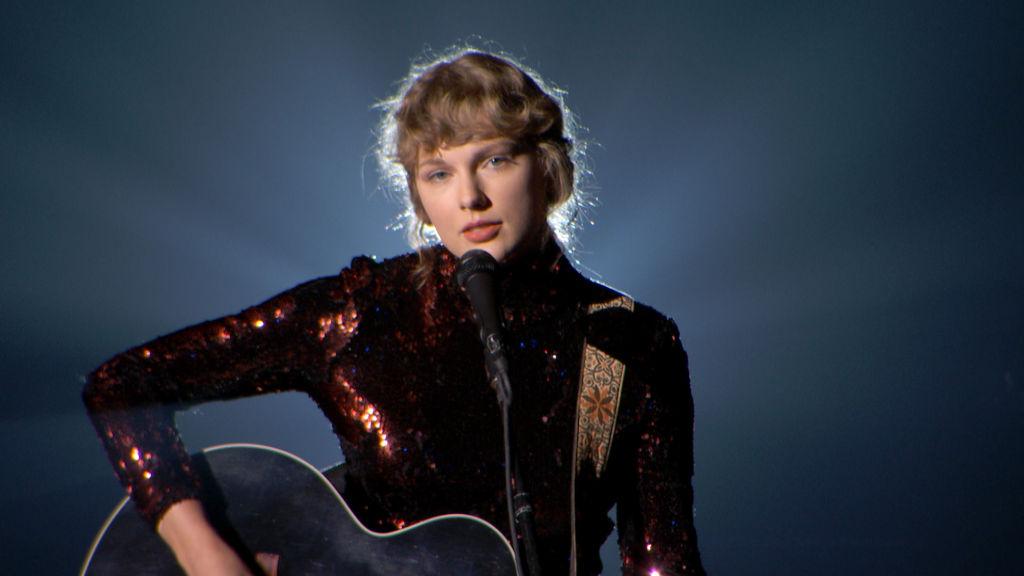
Taylor Swift and Travis Kelce made their first public appearance as a married couple over the weekend, attending the wedding of former NFL wide receiver JuJu Smith-Schuster and fitness coach Laura Kruk at the Ritz-Carlton in Dana Point, California, just over a week after their own star-studded ceremony in New York City.
The pair were photographed at the Friday, July 10, celebration, with Swift wearing a pink floral gown and appearing to sport her wedding ring, according to multiple outlets covering the appearance. Kelce wore a black suit for the occasion. Photos showed the couple walking hand in hand into the venue before mingling with the bride and groom throughout the evening, marking the newlyweds’ first public outing together since news of their own wedding, held July 3 at Madison Square Garden, first broke.
Swift, 36, and Kelce, also 36, were also seen spending time at the reception with Kansas City Chiefs quarterback Patrick Mahomes and his wife, Brittany, with Swift seated next to Brittany Mahomes during the event. Smith-Schuster, 29, who signed with the New York Giants in early June to bolster the team’s receiving corps, had previously attended Swift and Kelce’s own wedding earlier in the month as one of roughly 1,000 guests present. The two men were teammates on the Kansas City Chiefs for three seasons, a stretch that included a Super Bowl LVII victory together in February 2023, a shared history that made the reciprocal wedding attendance between the two families unsurprising to those close to the group.
Smith-Schuster and Kruk became engaged in September 2024 aboard a boat off the coast of Nantucket Island. At Swift and Kelce’s wedding earlier this month, Kruk had worn a Sau Lee gown featuring a corseted bodice and a draped maroon skirt, a look that notably resembled an outfit separately worn by Swift’s longtime friend Abigail Anderson Berard, an overlap widely described in coverage of the event as a lighthearted coincidence given the scale of the guest list.
Swift and Kelce’s own ceremony at Madison Square Garden drew roughly 1,000 guests and was officiated by comedian and longtime family friend Adam Sandler. The couple departed from several wedding traditions, forgoing a conventional wedding party of bridesmaids and groomsmen. Instead, Swift’s brother, Austin Swift, served as her “man of honor,” while Kelce’s brother, retired NFL center Jason Kelce, served as his best man, according to a representative for the couple.
Several attendees from the July 3 ceremony have since shared reflections on the celebration. Kansas City Chiefs head coach Andy Reid, who attended the wedding, spoke publicly about the marriage advice Sandler offered the couple during an event in Salt Lake City on July 5. “He told them, ‘Keep kissing,’” Reid said, according to the Deseret News. “So, in its simplest form, that’s a good thing. It’s hard to argue when you give your wife a kiss, or your wife gives you a kiss.”
Former NFL quarterback and broadcaster Ryan Fitzpatrick, who attended the wedding with his wife, Liza, described Sandler’s appearance as officiant as one of the evening’s standout moments. “When Adam Sandler walked out — it had everybody floored, that was really cool,” Fitzpatrick told People. “The ceremony was beautiful.” Fitzpatrick also described the extensive dancing at the reception. “There was a LOT of dancing, hours and hours, we’re still kind of recovering from being out on that dance floor for six-plus hours,” he said, adding, “My favorite moment was just I got to spend the night with my wife just on the dance floor, being around and being in it, so that was pretty magical for us.”
Broadcaster Rich Eisen separately confirmed to Entertainment Tonight that the flower girls at the ceremony were the four daughters of Jason Kelce: Wyatt, Elliotte, Bennett and Finnley, whom Eisen said were “sprinkling flower petals all over the place” throughout the event.
Ahead of traveling to California for Smith-Schuster’s wedding, Swift and Kelce reportedly spent time in Montana with Jason Kelce and his wife, Kylie, with reports indicating the newlyweds visited the members-only Yellowstone Club in Big Sky, Montana, following their own wedding before heading west for Friday’s celebration.
The couple’s public appearance at Smith-Schuster’s wedding came amid separate news regarding the costs associated with their own Madison Square Garden ceremony. New York City Mayor Zohran Mamdani confirmed earlier this month that Swift had paid more than $160,000 to cover the permit and police security costs tied to closing streets around Madison Square Garden for the wedding, addressing public criticism that had emerged over the use of city resources for the event. “Taylor Swift will be paying, has paid already, the cost of the permit that was lodged, which was over $160,000 for that event, and for the response to that event,” Mamdani told reporters. “And that was a permit that was finalized, I think, in just the days before the event itself.”
Friday’s gathering offered fans a rare glimpse into Swift and Kelce’s post-wedding activities amid an otherwise ongoing NFL offseason, with Smith-Schuster continuing preparations for his first season with the Giants after signing with the team in June. The high-profile appearance underscored the close personal ties between Smith-Schuster and the newly married couple, a friendship rooted in his shared history with Kelce as Kansas City Chiefs teammates and reinforced by their mutual attendance at each other’s weddings within the span of a single week.
Representatives for Swift and Kelce had not issued additional public comment specifically addressing the appearance at Smith-Schuster’s wedding as of Monday, though the couple’s continued high-profile presence at events tied to their close circle of friends and former teammates has kept both figures firmly in the spotlight in the days following their own widely covered ceremony.

FUNDAMENTALS
Spot gold was down 0.2% at $3,993.83 per ounce by 0110 GMT, having shed about 3% in the previous session in its biggest daily percentage decline in more than a month. U.S. gold futures for August delivery were steady at $4,000.70.
The U.S. military carried out a third consecutive night of strikes against Iran on Monday and two tankers came under fire in the Strait of Hormuz, after U.S. President Donald Trump said Washington was reinstating its blockade of Iranian shipping in the Gulf.
Oil futures hit their highest point since mid-June, having surged about 9% in the previous session, while U.S. Treasury yields and the dollar climbed as the conflict between the United States and Iran re-ignited over the weekend.
Investors will closely watch June U.S. CPI data due later in the day for fresh clues on inflation and the Fed’s policy path, with PPI data and Fed Chair Kevin Warsh’s first semiannual testimony before Congress this week also in focus.
The U.S. central bank may need to raise interest rates “in the near term” if coming data show inflation continuing well above the 2% target, Waller said on Monday, in remarks that characterized monetary policy as being at a “crossroads.”
Traders have ramped up bets on a September U.S. interest rate hike, with CME Group’s FedWatch Tool showing the probability rising to around 78% from 57% a week ago.
The European Union announced on Monday new sanctions against Sudan by targeting the country’s gold trade, which it said was being used to finance the military conflict in the country.
Elsewhere, spot silver declined 1.2% to $56.98 per ounce, having earlier touched a two-week low.
Platinum fell 1% to $1,589.35 and palladium eased 0.4% to $1,242.54.
DATA/EVENTS (GMT)
1230 US Core CPI MM, SA June
1230 US Core CPI YY, NSA June
1230 US CPI MM, SA June
1230 US CPI YY, NSA June
1230 US CPI Wage Earner June : China Exports, Imports YY June : China Trade Balance USD June

The dollar index, which measures the greenback against a basket of currencies including the yen and the euro, was flat at 101.27.
Inflation risks remain in the spotlight with the release of U.S. June CPI data on Tuesday, June PPI gauges the following day, and Fed Chair Kevin Warsh’s first semiannual testimony before Congress.
Concerns over escalating tensions between the United States and Iran returned to the fore, with President Donald Trump saying on Monday Washington was reinstating a naval blockade on Tehran and would ensure the Strait of Hormuz remained open for a fee following fresh exchanges of missile and drone strikes.
U.S. and Iranian forces exchanged heavy missile and drone assaults at the weekend, with Tehran striking U.S. facilities in states across the Gulf on Sunday and saying it had again closed the vital Strait of Hormuz shipping route.
Oil prices rose more than 9% to a one-month high on Monday. Both U.S. West Texas Intermediate and Brent crude futures rose more than 2% to their highest since mid-June in early Tuesday trading.
The euro was stable against the dollar at $1.1383 and sterling traded at $1.3347. Meanwhile, Federal Reserve Governor Christopher Waller said rates may need to rise “in the near term” if data shows inflation remaining well above the central bank’s 2% target.
A core CPI reading of 0.3% or higher would likely imply, depending on PPI data due later in the week, that the Fed’s preferred core PCE deflator is also running at 0.3% or above, said Ray Attrill, head of FX strategy at National Australia Bank, in a podcast.
“That may well be a trigger for a Fed rate hike as early as the July meeting,” Attrill said.
Economists’ median estimate for the June core CPI was 0.2% growth month-on-month.
Fed funds futures are pricing in about 30 basis points of rate hikes by the U.S. central bank this year, according to LSEG data.YEN UNDER PRESSURE AGAIN
The Japanese yen was roughly flat against the greenback at 162.40 per dollar, putting traders back on alert for possible intervention from authorities in Tokyo as the Japanese currency continues to languish at 40-year lows.
“Japanese authorities appear to have softened their tolerance a touch, though they remain vigilant and have indicated that further forceful intervention is on the cards should we see another dramatic move from here,” said Matthew Ryan, head of market strategy at Ebury, a British payment firm.
The Japanese yen slipped against the dollar on Monday after Reuters reported that Tokyo had no imminent plans to change the asset allocations of its state pension funds, tempering expectations of near-term support for domestic assets.
The yen and Japanese bonds had rallied on Friday after Finance Minister Satsuki Katayama said the government would seek ways to encourage pension funds, including the Government Pension Investment Fund, to make greater investments in Japanese financial assets.
The Australian dollar last traded at $0.6915 versus the greenback. New Zealand’s kiwi gained 0.24% versus the dollar to $0.5762.
In cryptocurrencies, bitcoin rose 0.23% to $62,293.66. Ether was up 0.56% at $1,775.54.

Trump says Lindsey Graham’s sister should be interim South Carolina senator


I’m a full-time investor with a strong focus on the tech sector. I graduated with a Bachelor of Commerce Degree with Distinction, major in Finance. I’m also a proud lifetime member of the Beta Gamma Sigma International Business Honor Society. My core values are: Excellence, Integrity, Transparency, & Respect. I always, to the best of my ability, hold true to these values which I believe are key for long-term success. I would like to invite all of my readers to leave their constructive criticism and feedback in the comments section so that I can further enhance the quality of my work moving forward. Thank you and God Bless America!
Analyst’s Disclosure: I/we have no stock, option or similar derivative position in any of the companies mentioned, and no plans to initiate any such positions within the next 72 hours. I wrote this article myself, and it expresses my own opinions. I am not receiving compensation for it (other than from Seeking Alpha). I have no business relationship with any company whose stock is mentioned in this article.
Seeking Alpha’s Disclosure: Past performance is no guarantee of future results. No recommendation or advice is being given as to whether any investment is suitable for a particular investor. Any views or opinions expressed above may not reflect those of Seeking Alpha as a whole. Seeking Alpha is not a licensed securities dealer, broker or US investment adviser or investment bank. Our analysts are third party authors that include both professional investors and individual investors who may not be licensed or certified by any institute or regulatory body.

China’s premier urges ’objective’ understanding of the economy


The Closed-End Fund Association (CEFA) is the national trade association representing the closed-end fund industry. A not-for-profit association, CEFA is committed to educating investors about the many benefits of these unique investment products and to providing a resource for information about its members and their offerings.
Analyst’s Disclosure: I/we have no stock, option or similar derivative position in any of the companies mentioned, and no plans to initiate any such positions within the next 72 hours. I wrote this article myself, and it expresses my own opinions. I am not receiving compensation for it. I have no business relationship with any company whose stock is mentioned in this article.
This transcription was created from a CEF Insights video recorded in June 2026. For more information, please visit cefa.com. This material is not and is not intended as investment advice, an indication of trading intent or holdings or the prediction of investment performance. All fund-specific information is the latest publicly available information. All other information is current as of the date of this presentation. All opinions and forward-looking statements are subject to change at any time. Aberdeen disclaims any responsibility to update such views and/or information. This information is deemed to be from reliable sources; however, Aberdeen does not warrant its completeness or accuracy. This presentation is not intended to, and does not constitute an offer or solicitation to sell or a solicitation of an offer to buy any security, product, investment advice or service (nor shall any security, product, investment advice or service be offered or sold) in any jurisdiction in which Aberdeen is not licensed to conduct business, and/or an offer, solicitation, purchase or a sale would be unavailable or unlawful.
Past performance is not indicative of future results.
This commentary is for informational purposes only, and is not intended as an offer or recommendation with respect to the purchase or sale of any security, option, future or other derivatives in such securities. Any research or analysis used in the preparation of this document has been procured by Aberdeen Investments or its affiliates for their own use and may have been acted on for their own purpose. The results thus obtained are made available only coincidentally and the information is not guaranteed as to its accuracy. Some of the information in this document may contain projections or other forward-looking statements regarding future events or future financial performance of states, markets or companies. These statements are only predictions and actual events or results may differ materially. The reader must make his/her own assessment of the relevance, accuracy and adequacy of the information contained in this document and make such independent investigations, as he/she may consider necessary or appropriate for the purpose of such assessment. Any opinion or estimate contained in this document is made on a general basis and is not to be relied on by the reader as advice. Neither Aberdeen Investments or any of its agents have given any consideration to nor have they made any investigation of the investment objectives, financial situation or particular need of the reader, any specific person or group of persons. Accordingly, no warranty whatsoever is given and no liability whatsoever is accepted for any loss arising whether directly or indirectly as a result of the reader, any person or group of persons acting on any information, opinion or estimate contained in this presentation. The information herein including any expressions of opinion or forecast have been obtained from or is based upon sources believed by Aberdeen Investments to be reliable but is not guaranteed as to accuracy or completeness. The information is given without obligation and on the understanding that any person who acts upon it or otherwise changes his position in reliance there on does so entirely at his or her own risk. Aberdeen Investments reserves the right to make changes and corrections to its opinions expressed in this document at any time, without notice. Any unauthorized disclosure, use or dissemination, either whole or partial, of this presentation is prohibited and this presentation is not to be reproduced, copied, made available to others. Fixed income securities are subject to certain risks including, but not limited to: interest rate (changes in interest rates may cause a decline in the market value of an investment), credit (changes in the financial condition of the issuer, borrower, counterparty, or underlying collateral), prepayment (debt issuers may repay or refinance their loans or obligations earlier than anticipated), call (some bonds allow the issuer to call a bond for redemption before it matures), and extension (principal repayments may not occur as quickly as anticipated, causing the expected maturity of a security to increase). Historical data and analysis, should not be taken as an indication or guarantee of any future performance analysis forecast or prediction. Such information is basis and the user of this information assumes the entire risk of any use made of this information. In the United States, Aberdeen Investments is the marketing name for the following affiliated, registered investment advisers: Aberdeen Standard Investments Inc., Aberdeen Asset Managers Ltd., Aberdeen Standard Investments Australia Ltd., Aberdeen Standard Investments (Asia) Ltd., Aberdeen Capital Management LLC, Aberdeen Standard Investments ETFs Advisors LLC and Standard Life Investments (Corporate Funds) Ltd. © Aberdeen Group plc 2026 ID: AA-220626-209669-1 aberdeeninvestments.com
Seeking Alpha’s Disclosure: Past performance is no guarantee of future results. No recommendation or advice is being given as to whether any investment is suitable for a particular investor. Any views or opinions expressed above may not reflect those of Seeking Alpha as a whole. Seeking Alpha is not a licensed securities dealer, broker or US investment adviser or investment bank. Our analysts are third party authors that include both professional investors and individual investors who may not be licensed or certified by any institute or regulatory body.

Australia business conditions steady in June; mood improves
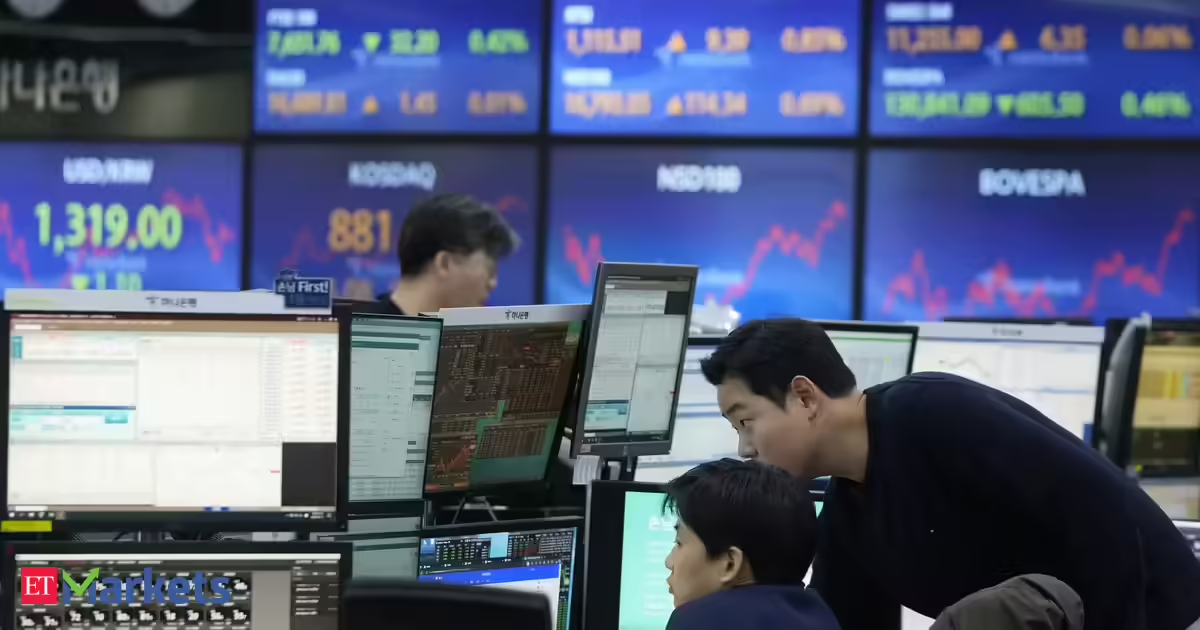
Brent climbed as much as 2.8% to $85.64 a barrel. The commodity had jumped 9.6% on Monday — its biggest gain since May 2020 — after President Donald Trump reinstated the US blockade of Iranian ships transiting the Strait of Hormuz and demanded a 20% reimbursement on all other cargo shipped through the waterway.
Treasuries slipped as traders saw a US interest-rate hike later this month as a coin toss, ahead of Tuesday’s US consumer price index data. Money markets priced in about 50% odds of a Federal Reserve hike in July as Governor Christopher Waller said officials may need to raise rates to tame price pressures. Gold and silver retreated.
Asian shares were mixed with MSCI’s gauge of regional equities fluctuating between small gains and losses. South Korean stocks were volatile, rising as much as 0.6% and dropping up to 2.8%. The chip sector remained in focus after SK Hynix Inc.’s American depositary shares fell 9.3% as an AI-fueled stock rout in South Korea spilled over into the US market. US equity-index futures also retreated.
The latest wave of attacks between the US and Iran dashed hopes for a near-term normalization of traffic through the Strait of Hormuz. The escalation adds another layer of uncertainty ahead of a pivotal week for markets, with earnings season kicking off alongside US inflation data and Fed Chair Kevin Warsh’s congressional testimony, both seen as key to the outlook for interest rates.
“The energy sector is once again in the limelight as the status of the Strait of Hormuz is driving price action in global markets,” said Ian Lyngen at BMO Capital Markets. “There is a growing sense that the situation is likely to get worse before it de-escalates.”
The flare-up comes as investors are increasingly questioning whether the enormous sums being poured into artificial intelligence will generate commensurate returns.An AI-fueled stock rout in South Korea on Monday spilled over into the US market, underscoring concerns that the boom has become overextended. The selloff on the Kospi index is the latest sign of how volatile the Korean market has become after the AI rally drove massive outperformance versus global peers.
“Uncertainty around the Middle East continues, but we think the AI wave is what will drive markets over the next few weeks, especially as earnings season kicks off,” said Sonu Varghese at Carson Group.
Investors are now turning their focus to US inflation data after Waller said policymakers may need to raise rates in the near term if underlying inflation continues to signal broad price pressures.
Treasury two-year yields, which are relatively sensitive to changes in Fed policy expectations, edged up one basis point to 4.29%, the highest since February 2025. The benchmark 10-year yield climbed to 4.63%, the highest since May.
The surge in short-term yields reflects growing expectations that the Fed will need to raise rates sooner to rein in price pressures from the rebound in global energy prices and signs of a resilient US economy.
In data due Tuesday, the consumer price index is expected to slow to 3.8% in the year through June, from 4.2% in May, according to a Bloomberg survey of economists. Warsh will also make his first appearance before Congress as Fed chair.
“If we get another hot reading on core inflation this week, then the FOMC will need to consider tightening monetary policy in the near term,” Waller said Monday, referring to the central bank’s rate-setting committee.

Why You’re Still Stressed About Money (Even When You Make Good Money)

Revealed: Alarming reasons behind Britain’s alcohol death crisis – according to the scientists that spotted the surge in victims (and it’s not just Covid)
HCLTech FY guidance stays muted despite $2.4 billion deal momentum


-

 News Videos7 days ago
Whats Hidden Inside This Cash Register? #treasure #reselling #money
-

 Fashion5 days ago
Loro Piana Fall 2026 Enters Houston’s Art Scene
-

 Fashion3 days ago
Weekend Open Thread: Nutriplenish Leave-In Conditioner
-
 Tech7 days ago
Anthropic’s new “J-lens” reveals a silent workspace inside Claude that mirrors a leading theory of consciousness
-
 Sports4 days ago
2026 Genesis Scottish Open Thursday TV coverage: Round 1
-

 Sports6 days ago
Joshua Pacio ‘more complete’ ahead of ONE rematch vs Malachiev
-

 Tech6 days ago
Anthropic brings Claude Cowork to mobile and web as usage data shows most users aren’t coding
-

 Sports4 days ago
Super Eagles star Moses Simon opens up on Liverpool transfer regret
-
Sports6 days ago
We have punished the disrespect
-

 Crypto World7 days ago
Binance lists Strategy’s STRC stock as company expands Bitcoin funding
-

 Tech5 days ago
Character.AI enters the microdrama arena with its own productions, but there’s a twist
-
 Business7 days ago
Enbridge: AI Tailwind Priced In (Rating Downgrade)
-
 Crypto World7 days ago
Claude AI Created Something Anthropic Never Designed
-

 News Videos7 days ago
“What’s going on?!” Carl Froch discusses Floyd Mayweather Jr financial issues
-

 Crypto World6 days ago
Nasdaq arthritis company holding Moshe Hogeg crypto hits all-time low
-
 Crypto World7 days ago
Microsoft Cuts 4,800 Jobs as Xbox Loses 3,200 Roles in Reset
-

 News Videos5 days ago
Crypto Just Entered Its Most Important 6-Month Candle (Could Decide Everything!)
-

 Tech6 days ago
Keychron is stepping outside keyboards with a $349 Thunderbolt 5 dock aimed at power users
-
 Business6 days ago
ASX 200 Slides Over 0.6% as Rare Earths and Lithium Stocks Tumble Amid Global Semiconductor Sell-Off Today
-

 Crypto World7 days ago
Robinhood bucks crypto selloff as Trump launches child accounts
You must be logged in to post a comment Login