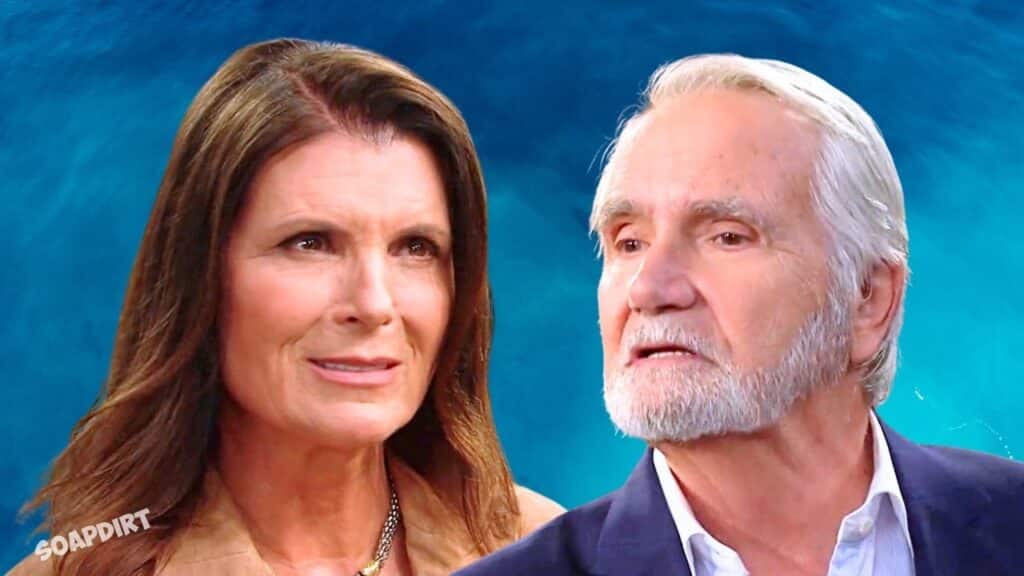
Bold and the Beautiful 2-Week Spoilers for July 13 – 24, 2026 kick off with Sheila Carter (Kimberlin Brown) working to get what she wants, but will be accused of manipulating someone close to her. And we are also going to see Eric Forrester (John McCook) making threats which seem unwarranted.
So, the two weeks of July 13th through the 24th also include the final day of July sweeps, which is Monday the 20th. We’ll have some talk about the Monaco location scenes, including an air date of when you can expect to see them.
Bold and the Beautiful: Will’s Heartbreak and Sheila’s Manipulation – July 13th Through 17th
Monday, July 13th, we’ve got Will Spencer (Crew Morrow) going to Bill Spencer (Don Diamont) looking for support from his dad. He recently told Will to avoid using his fist, but Bill also told Ridge Forrester (Thorsten Kaye) that he was proud of Will and that Ridge Jr. needs to toughen up. I think Bill’s going to tell Will again that he did nothing wrong and Electra Forrester (Laneya Grace) is making way too much of all of this.
I hope that Bill encourages Will to find another lucky LA lady to pursue. And once Bill and Katie Logan (Heather Tom) hear that Dylan (Sydney Bullock) is coming back around, they may push Will towards Dylan with both hands to make sure he’s not back with a Forrester who will demand to know Logan company secrets anytime she wants them.
Advertisement
Bold and the Beautiful Spoilers: Sheila Pleads with Finn
Carrying over from Friday’s episode, Sheila Carter keeps working on Finn Finnegan (Tanner Novlan) for another chance. He believes that Sheila really has changed and he forgives her for the shooting. And of course, that means the world to her. And Finn also called her mom, which thrilled Sheila, and she continues to ask for a chance to talk to Steffy Forrester (Jacqueline MacInnes Wood) and present her case. But Finn may think that he’s the better person to have that conversation.
Then on Tuesday, July 14th, this is the day we’re going to begin hearing the Forresters talking about the trip to Monaco, which kicks off at the end of the month. And I will have an air date for you later in the video. Daphne Rose Walton (Murielle Hilaire) meets with Dr. Li Finnegan (Naomi Matsuda) at the hospital to get some test results. Daphne got checked out after months of negative pregnancy tests and her and Carter Walton (Lawrence Saint-Victor) trying really hard to make a baby. So, Steffy’s there with her bestie, which is really good because Daphne’s about to get very bad news.
Bold and the Beautiful Spoilers: RJ’s in Electra’s Ear & Jessica Encourages Dylan
Also this week, R.J. Forrester (Brayan Nicoletti) blathers to a very sad Electra in the Forrester Creations design office. And I’m sure R.J. is going to reiterate what Ridge said about Electra choosing sides and staying away from Will because you know he’s so dangerous which is utter nonsense. I think Ridge Jr. is going to repeat all of Ridge Senior’s nonsense that he was saying to Electra this past week.
Jessica is up at Bikini Bar while Dylan is tending bar and Jessica is encouraging Dylan to go for it. Make a move. I think word is spread about Electra and Will’s split. So Jessica might think this is Dylan’s big chance.
Advertisement
On Wednesday, July 15th, Will is eaten up with regret for keeping things from Electra, which is straight ridiculous. Will did nothing wrong. Electra was the one in the wrong asking nosy questions about Logan trade secrets and absolutely wrong to blame Will for staying loyal to his job and parents, especially because it’s pretty clear that Electra would have blabbed to the Forresters had she known. S
Steffy is there for Daphne. So, this is after the meeting with Dr. Finn who gives Daphne terrible news. And if you remember, Steffy went the adoption route before, you know, when she accidentally bought Hope’s baby Beth Spencer (Jordan Ariza). So, that is a cautionary tale, but Steffy was excited to adopt at the time and might talk to her about the process.
Bold and the Beautiful Spoilers: FC in Trouble & Darter Marriage Tested
On Thursday, July 16th, Ridge talks to Eric about rescheduling the launch of the new couture line. Ridge really wants the attention on Forrester and off of Logan. I do wonder if they’re going to plan to launch Eric’s couture line in Monaco during the shoot there.
That would definitely be a splashy place to do Eric’s launch and out of Katie and Bill’s reach because if Eric’s launch doesn’t go well, Forrester Creations could be in a tight spot because they overspent on the line as Carter warned. So, basically, they spent too much trying to compete with Logan. Then they shut down their jewelry line because of Logan. And then they put off Eric’s launch because of Logan. The Forresters need to get a grip. Logan is living rent-free in their heads at this point.
Advertisement
Carter and Daphne’s marriage is tested. So Steffy was there to support Daphne and Finn shows up for part of their meeting with his mom, Dr. Finn. But then Daphne’s got to tell Carter what is going on. And I’m sure he’s going to tell Daphne they can look at other options to start a family like adoption or surrogacy.
Will goes to see Electra to plead with her to move back in. And Will wants her to not break up with him. But I’m expecting R.J. to butt in about how Will shouldn’t be there. You know, like how Ridge shouldn’t be at Logan hitting Bill and Brooke Logan (Katherine Kelly Lang) shouldn’t be at Logan breaking things and laying hands on her sister and R.J. may run and tell Eric that Will is in the building.
Bold and the Beautiful Spoilers : Sheila Carter – Eric Forrester
Bold and the Beautiful Spoilers: Steffy & Finn Reach a Crossroads
On Friday, July 17th, Steffy and Finn are at a crossroads in their marriage. Finn tells Steffy this week that his mom, Sheila, came to see him. And Finn thinks it’s time they let Sheila into their lives. And I think we all know what Steffy’s going to say to that. Eric barks at Will to stay away from the Forresters. So, looks like Eric finds out that Will is in the building because he’s up there pleading his case to pouty, over dramatic Electra. And I just personally think Will needs to forget her and get with Dylan.
So, after Electra refuses to reconcile and Eric is awful to him, Will’s going to go over to Bikini Bar for a drink and he is swarmed by women eager to distract him from Electra. But Dylan is there bartending and lends him a sympathetic ear. And that leads to Will and Dylan winding up back at his place talking more. Dylan promises Will more smiles and fun in his future. And he talks about being judged because of his last name, Spencer. Just because of his dad’s reputation on Bold and the Beautiful.
But Dylan says not everybody sees him that way. And Will says Electra didn’t see him that way. And he blathers about their breakup. Will says he knows that Dylan is trying to cheer him up, but he misses Electra so gosh darn much. Dylan is flirting like crazy. They talk about where she’s living now. And she tells Will if she ever came back to the beach house, she wouldn’t be living above the garage anymore. Sounds pretty seductive.
Advertisement
Bold and the Beautiful: Monaco Launches and Family Turmoil – July 20th Through 24th
The week of July 20th through the 24th, we should be seeing a date for Eric Forrester’s couture launch, which is coming soon. But I’m guessing it’s not going to go smoothly and it’s not going to be exactly what the Forresters need it to be. And it could be that Bill and Katie do something to steal a little bit of the limelight. Or it could be that the fashion press just hasn’t moved on from Hope for the Future.
We’ll see more drama between Finn and Steffy, who is of course outraged that Sheila wants back in their lives. Finn seems open to it, and Steffy thinks that Sheila is manipulating her son. Steffy is going to give an ultimatum, and I’m sure that Finn is going to have to cave and at least pay lip service to it.
Things are going to change in Monaco, though. The Forresters are going to continue planning the Monaco trip, but the location shoot itself. Those scenes won’t start airing until Wednesday, July 29th. Also, Will’s heartbreak continues, and Dylan is sticking close to him, but Electra may rage at Dylan about that. A whole sisters over misters thing. R.J. stays close by Electra to make sure that Will stays out of her life. And of course, to make his own play for Electra again.
Taylor Hayes (Rebecca Budig) and Deacon Sharpe (Sean Kanan) consider the future, which is wide open thanks to Sheila signing those divorce papers, and Daphne and Carter decide next steps after her devastating diagnosis from Dr. Li. Daphne just needs to decide where they go from here and what this is going to do about their big family plans. Brooke should be back from the wellness center soon and we’ll see if she’s more chill. I kind of doubt that a massage and some yoga are going to make her forget what Hope Logan (Annika Noelle) and Katie did behind her back.
The Lord of the Rings fans have a lot to be excited about this year and beyond, with new releases coming at least every few months. The biggest new project on the schedule is the long-awaited third season of The Lord of the Rings: The Rings of Power. The Tolkien-inspired series officially returns to streaming on November 11. Following TROP Season 3 is The Lord of the Rings: The Hunt for Gollum, which is coming to theaters on December 17, 2027, the same day as Avengers: Secret Wars. Lord of the Rings fans who are also passionate about video games have a new open-world RPG from Warhorse on the way, the same studio that delivered both critically acclaimed Kingdom Come games. No word yet on when the new game will be released.
There is a new Lord of the Rings game with an expansion coming very soon that may have slipped under the radar, though. Free League Publishing recently announced a new expansion for The One Ring tabletop roleplaying game, The White Tower and the Hall of Gold. The new campaign is officially set to launch in September 2026, and it centers around Gondor and Rohan, putting players in the shows of those exploring the last great kingdoms of Men during the Third Age. This is around the same time that Sauron was rising to power as his influence spread like wildfire across Middle-earth. The new expansion is full of lore and exciting new adventures throughout the realms, and it’s set to be released as The Lord of the Rings: Realms of the South for The Lord of the Rings Roleplaying E5 version of the game. The new release includes a comprehensive bestiary also launching in September.
Advertisement
Collider Exclusive · Middle-earth Quiz Which Lord of the Rings Character Are You? One Quiz · Ten Questions · Your Fate Revealed
Advertisement
The road goes ever on. From the green hills of the Shire to the fires of Mount Doom, every soul in Middle-earth carries a destiny. Ten questions stand between you and the truth of who you are. Answer honestly — the One Ring has a way of revealing what we most want to hide.
💍Frodo
🌿Samwise
👑Aragorn
🔥Gandalf
Advertisement
🏹Legolas
⚒️Gimli
👁️Sauron
🪨Gollum
Advertisement
01
Advertisement
You are handed a responsibility that could destroy you. What do you do? The weight of the world falls on unlikely shoulders.
02
Advertisement
Your closest companion is heading into terrible danger. You: True loyalty is revealed not in comfort, but in crisis.
03
Advertisement
Enormous power is within your reach. Your instinct is: Power corrupts — but only those who reach for it.
04
Advertisement
What does “home” mean to you? Where we long to return reveals who we truly are.
05
Advertisement
When a battle is upon you, your approach is: War reveals what we are made of — whether we like it or not.
06
Advertisement
Someone comes to you for advice in their darkest hour. You: Wisdom is not knowing all the answers — it’s knowing which questions to ask.
07
Advertisement
How do you see yourself, honestly? Self-knowledge is the most dangerous kind.
08
Advertisement
Which of these best describes your relationship with the natural world? Middle-earth speaks to those who know how to listen.
09
Advertisement
You encounter a wretched, pitiable creature who has done terrible things. You: How we treat the fallen reveals the height of our character.
10
Advertisement
When the quest is over and the songs are sung, what do you hope they say about you? In the end, we are all just stories.
The Fellowship Has Spoken Your Place in Middle-earth
Advertisement
The scores below reveal your true character. Your highest number is your match. Even a tie tells a story — the Fellowship was never made of simple people.
💍 Frodo
🌿 Samwise
Advertisement
👑 Aragorn
🔥 Gandalf
🏹 Legolas
⚒️ Gimli
Advertisement
👁️ Sauron
🪨 Gollum
You carry something heavy — and you carry it alone, even when you don’t have to. You were not born for greatness, and that is precisely why greatness chose you. Your courage is not the roaring, sword-swinging kind; it is quiet, stubborn, and terrifying in its refusal to quit. The Ring weighs on you more than anyone can see, and still you walk toward the fire. That is not weakness. That is the rarest kind of strength there is.
Advertisement
You are, without question, the best of them. Not the most powerful, not the most celebrated — but the most essential. Your loyalty is not a trait; it is a force of nature. You would carry the person you love up the slopes of Mount Doom if it came to that, and we both know you’d do it without being asked. The world needs more people like you, and the world is lucky it has even one.
You were born to lead, and you have spent years running from it. The crown is yours by right, but you know better than anyone that right means nothing without the will and the worthiness to back it up. You are tempered by loss, shaped by long roads, and defined by a code of honour you hold to even when no one is watching. When you finally step forward, the world shifts. Because it was always waiting for you.
Advertisement
You have seen more than you let on, and you say less than you know — which is exactly as it should be. You are a catalyst: you do not fight the battles yourself, you ignite the people who can. Your wisdom comes not from books but from an age of watching what happens when it is ignored. You arrive precisely when you mean to, and your presence alone changes what is possible. A wizard is never late.
Graceful, perceptive, and almost preternaturally calm under pressure — you see things others miss and act before others react. You do not need to make a scene to be remarkable; your presence speaks for itself. You are loyal to those you choose to stand beside, and that choice is not made lightly. You have lived long enough to know that the most beautiful things in this world are also the most fragile, and that is why you fight to protect them.
Advertisement
You are loud, proud, and absolutely formidable — and beneath all of that is one of the most fiercely loyal hearts in Middle-earth. You don’t do anything by half measures. Your friendships are forged like iron, your grudges run as deep as mines, and your courage in battle is the kind that makes legends. You came into this fellowship suspicious of everyone and ended it willing to die for an elf. That is not a small thing. That is everything.
You think in centuries and act in absolutes. Order, dominion, control — not because you are cruel by nature, but because you have decided that the world left to itself always falls apart, and you are the only one with the vision and the will to hold it together. You were not always this. Something was lost, or taken, or betrayed, and the version of you that stands now is the answer to that wound. The tragedy is that you’re not entirely wrong — just entirely too far gone to course-correct.
Advertisement
You are a study in contradiction — pitiable and dangerous, cunning and broken, capable of both cruelty and something that once resembled love. You are defined by loss: of innocence, of self, of the one thing that gave your existence meaning. Two voices war inside you constantly, and the tragedy is that the better one sometimes wins, just not often enough, and never at the right moment. You are a warning, yes — but also a mirror. We are all a little Gollum, given the right ring and enough time.
Advertisement
Who Stars in ‘The Lord of the Rings: The Hunt for Gollum’?
The first live-action Lord of the Rings movie in over 10 years is bringing back franchise veterans, including Ian McKellen as Gandalf, Lee Pace as Thranduil, Elijah Wood as Frodo, and Andy Serkis as Gollum. Additional cast members include Anya Taylor-Joy as Seren, Leo Woodall as Halvard, Kate Winslet as Marigol, and Jamie Dornan as Aragorn. Peter Jackson is producing and writing the new Lord of the Rings movie and overseeing the production personally, with the talented Andy Serkis directing. Philippa Boyens, Phoebe Gittins, and Art Papageorgiou also worked on the script for The Hunt for Gollum.
Advertisement
Stay tuned to Collider for more updates and coverage of The Lord of the Rings franchise.
Advertisement
Release Date
Advertisement
December 17, 2027
Writers
Arty Papageorgiou, Phoebe Gittins, Fran Walsh, Philippa Boyens, J.R.R. Tolkien
The appeal of science fiction is the vast worlds that the stories we watch can take us to. A time machine can take us to the past, while a spaceship can take us to, well, space! The latter have served as places where the narratives familiar on our surface become even more extraordinary in the galaxy. Within the larger sci-fi space genre is the space opera, stories that emphasize grand, sweeping adventures, high-stakes drama, and epic conflicts over scientific accuracy; they’re battles of good and evil that only imagination could think up.
The most familiar space opera in pop culture is Star Wars, and since its massive success, the subgenre has found its place on the small screen. Here, we discuss ten near-perfect space operas no one remembers today. The series on this list are set in vast galactic empires, feature interstellar warfare, and chronicle larger-than-life characters, prioritizing epic storytelling, which is why the devoted fans adore them.
Advertisement
‘Buck Rogers in the 25th Century’ (1979-1981)
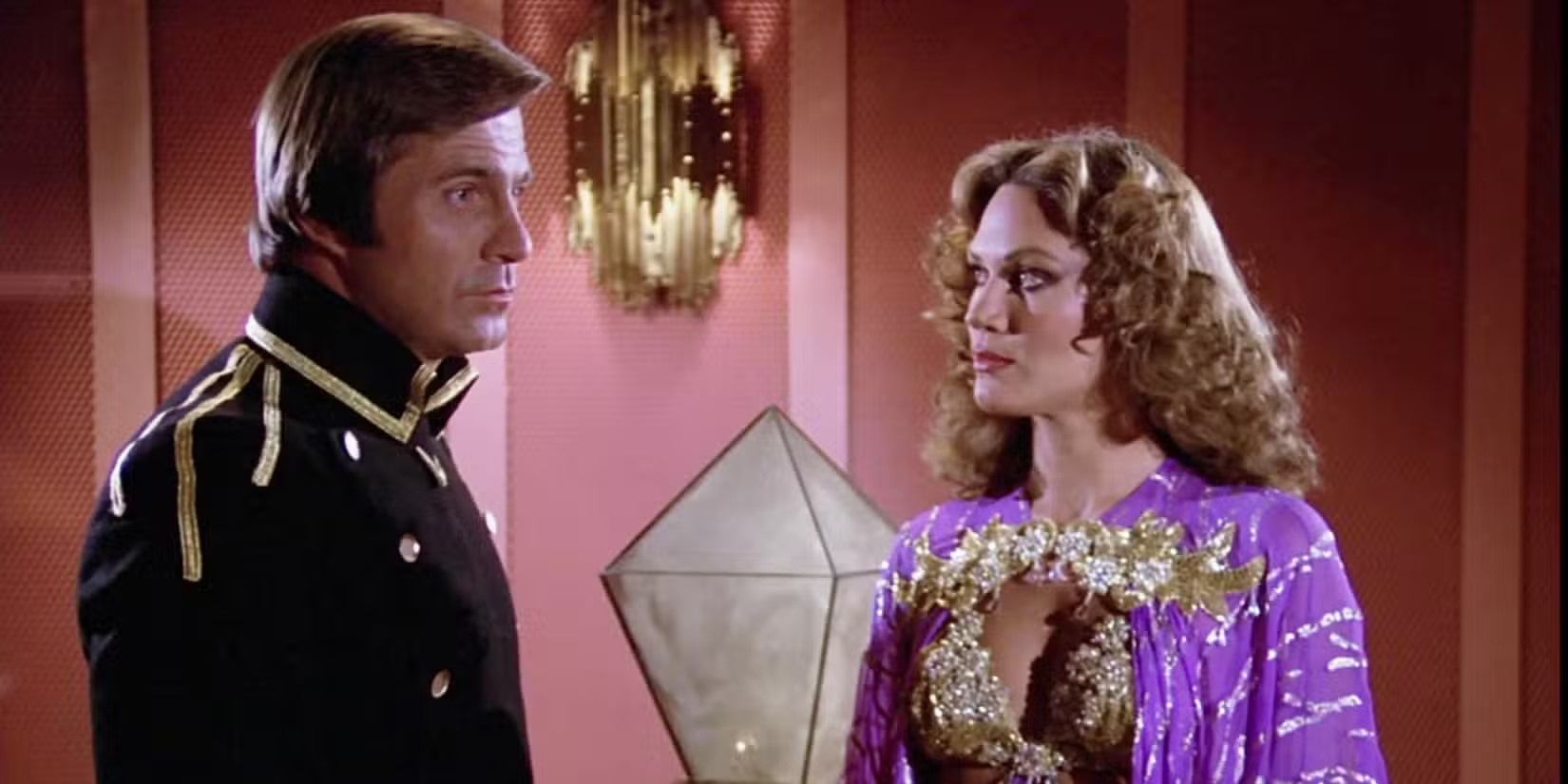
Gil Gerard as Buck Rogers and Pamela Hensley as Princess Ardala as ‘Buck Rogers in the 25th Century.’Image via NBC
Back in 1928, Philip Francis Nowlan created an iconic character known as Buck Rogers. Since then, he has appeared in an assortment of media, including comic strips, radio, and novellas. Nearly 50 years later, the character returned to the small screen in the two-season space opera Buck Rogers in the 25th Century, following the adventures of Captain William “Buck” Rogers (Gil Gerard), a 20th-century astronaut accidentally frozen in space for 500 years. Revived in 2491, he discovers Earth rebuilding from nuclear war and uses his piloting skills to defend the planet against alien empires and galactic villains.
Buck Rogers in the 25th Century struck a balance between high-stakes cosmic adventure and unapologetic pulp charm. From evil galactic empires with seductive space princesses to dogfights in sleek, futuristic starfighters, there was a cinematic quality to the television budget. Buck Rogers in the 25th Centurychose kitsch over a philosophical sci-fi thriller. By never taking itself too seriously, the series rarely did, relying on clever humor and dazzling visual design that was bright and optimistic. Certainly a product of its time, this gemwas meant to entertain first and foremost.
Advertisement
‘Dark Matter’ (2015-2017)
Joel Edgerton and Alice Braga stepping into a lighted area looking alarmed in Dark Matter.Image via Apple TV
Even though a second season is around the corner, there is a faction of TV-watchers who either forgot about or have never even realized Dark Matter existed. Created by Blake Crouch, based on his 2016 novel, it follows Jason Dessen (Joel Edgerton), a Chicago physicist who is abducted and thrust into the multiverse. He wakes up in alternate realities where his life choices went differently, and he must fight his way back home through a labyrinth of parallel worlds to save his true family from the most dangerous foe imaginable: himself.
A deeply character-driven love story set within a high-stakes multiverse thriller, Dark Matter explores the roads not taken, challenging viewers with a core question: Are you happy in your life? Blending epic space-opera ambition with deeply intimate family drama, Dark Matter uses “space” in terms of the infinite multiverse. It’s the ultimate “what if” story, taking a protagonist and introducing twisted reflections of his life and career, leading to a masterful, multidimensional war fought on a personal level. It may not use the stars as its backdrop, but its space opera sensibility makes it a near-perfect option.
Advertisement
‘Farscape’ (1999-2003)
Ben Browder as John Chrichton in FarscapeImage via SYFY
Farscape chronicles the adventures of Earth astronaut John Crichton (Ben Browder), who is accidentally sucked through a wormhole into a distant, hostile part of the universe. He ends up aboard Moya, a living spaceship, alongside a crew of escaped alien fugitives while being relentlessly hunted by a merciless military empire. The antithesis of Star Trek, Farscape blends space-opera adventure and dark emotional arcs with innovative, groundbreaking puppetry.
The massive allure of the series was the incredible work by The Jim Henson Company and the creatures they created. The series uses a stranger-in-a-strange-land premise, with Crichton using modern science and pop-culture references to survive, often clashing with and enlightening his alien crewmates. It flipped the good-guy tropes on its head, as the merry band of convicts operated in moral shades of grey. If you’re looking for romance, look no further than Crichton and Peacekeeper warrior Aeryn Sun (Claudia Black). Prefer slapstick, bizarre humor, or gut-wrenching psychological horror? Farscape has you covered. It’s a time capsule series that truly delivered on all cylinders.
Advertisement
‘Killjoys’ (2015-2019)
Dutch (Hannah John-Kamen), Johnny (Aaron Ashmore), and D’avin (Luke Macfarlane) in KilljoysImage via SYFY
Coming out of Canada was one of the more underrated space adventure series, Killjoys. A thrilling space Western, Killjoys follows three interplanetary bounty hunters who work as a neutral police force. Dutch (Hannah John-Kamen)isa highly skilled, top-tier bounty hunter with a mysterious, dark past. John Jaqobis (Aaron Ashmore) is a kind-hearted, tech-savvy peacemaker who acts as the glue of the group. D’avin Jaqobis (Luke Macfarlane) is John’s older brother and an elite former soldier with combat skills and deep-seated military trauma.
The high-octane series blends the “monster-of-the-week” bounty-hunter format with a surprisingly deep, serialized sci-fi conspiracy, featuring unique worldbuilding and the ability to balance lighthearted humor with serious stakes. The heart comes from the found family dynamic built by the primary trio: each character is distinct enough that you may have a favorite, but together they create the perfect team. Killjoys was a show that let you dip in and out, but for those who journeyed through, it wove a massive, satisfying overarching narrative.
Advertisement
Collider Exclusive · Sci-Fi Personality Quiz Which Sci-Fi Hero Are You Most Like? Paul Atreides · Captain Kirk · Princess Leia · Ellen Ripley · Max Rockatansky
Advertisement
Five iconic heroes. Five completely different ways of facing an impossible universe. One of them shares your instincts, your values, and your particular way of refusing to back down. Eight questions will tell you which one.
🏜️Paul Atreides
🖖Capt. Kirk
✊Princess Leia
🔦Ellen Ripley
Advertisement
🔥Max Rockatansky
Advertisement
01
How do you lead when the stakes couldn’t be higher? The way you lead under pressure is the most honest thing about you.
Advertisement
02
What is your greatest strength in a crisis? The quality that keeps you alive when everything else fails.
Advertisement
03
What is the thing you’d sacrifice everything else for? Your deepest motivation is your truest compass.
Advertisement
04
How do you relate to the people around you? Who you are to others under pressure is who you really are.
Advertisement
05
You’re facing a threat that no one else believes is real. What do you do? How you respond when you’re the only one who sees it defines everything.
Advertisement
06
What has your heroism cost you personally? Every hero pays. The question is what — and whether they’d pay it again.
Advertisement
07
How do you feel about the rules of the world you’re in? Every hero has a relationship with the system. What’s yours?
Advertisement
08
When everything is on the line, what keeps you going? The answer is the most honest thing about you.
Advertisement
Your Hero Has Been Identified Your Sci-Fi Hero Is…
Your answers point to the iconic sci-fi hero who shares your instincts, your values, and your particular way of facing the impossible.
Advertisement
Arrakis · Dune
Paul Atreides
You carry a weight most people would crumble under — the knowledge of what you’re capable of, and the burden of what you might have to become.
You see further ahead than others and you plan accordingly, even when the vision frightens you.
You are driven by loyalty to your people and a sense of destiny you didn’t ask for but can’t escape.
Paul Atreides is not simply a hero — he is someone who understands the cost of power and chooses to bear it anyway.
That gravity, that willingness to carry what others won’t, is exactly you.
Advertisement
USS Enterprise · Star Trek
Captain Kirk
You lead with instinct, warmth, and an absolute refusal to accept a no-win scenario — because you’ve always believed there’s a third option nobody else has thought of yet.
You take the mission seriously without ever taking yourself too seriously.
Your crew would follow you anywhere, not because you demand it, but because you’ve earned it.
Kirk’s genius isn’t tactical — it’s human. He reads people, bends rules with purpose, and wills outcomes into existence through sheer conviction.
That combination of warmth, audacity, and relentless optimism is unmistakably yours.
Advertisement
The Rebellion · Star Wars
Princess Leia
You are the kind of person who holds the line when everyone else is losing faith — not because you’re fearless, but because giving up simply isn’t something you’re capable of.
You lead through conviction. Your voice carries because your belief is unshakeable.
You gave up everything ordinary the moment you chose the cause, and you’ve never looked back.
Leia is not a supporting character in her own story — she is the moral centre of the entire rebellion.
That same fierce, principled, unbreakable core is what defines you.
Advertisement
The Nostromo · Alien
Ellen Ripley
You are not reckless, not grandiose, and not particularly interested in being anyone’s hero — you just refuse to stop when it matters.
You see threats clearly, you document the truth even when no one listens, and when the time comes you handle it yourself.
Ripley’s heroism is earned, not performed. She doesn’t have a speech — she has a flamethrower and a plan.
You share her composure under the worst possible pressure, and her refusal to pretend the monster isn’t there.
When it counts, you don’t flinch. That’s everything.
Advertisement
The Wasteland · Mad Max
Max Rockatansky
You have been through fire that would break most people — and what came out the other side is something the world underestimates at its peril.
You don’t ask for help, don’t need validation, and don’t wait for anyone to tell you the rules no longer apply.
Your loyalty, when it finally arrives, is absolute — but it’s earned in silence and tested in action, not in words.
Max is not a nihilist. He is someone who lost everything and found, against his will, that he still has something worth protecting.
That bruised, stubborn, ultimately human core is exactly yours.
Advertisement
‘Lexx’ (1996-2002)
Stanley H. Tweedle (Brian Downey) and Zev Bellringer (Eva Habermann) look forward in Lexx.Image via Sci Fi Channel
Advertisement
Another space thriller from Canada with a ‘90s aesthetic is Lexx. Created by Lex Gigeroff and brothers Paul and Michael Donovan, Lexx was a bizarre and darkly satirical sci-fi series about a ragtag group of reluctant misfits who accidentally steal the “Lexx,” an enormous, sentient, dragonfly-shaped spaceship that doubles as the most destructive weapon in two universes. They wander through hostile and chaotic universes, avoiding the clutches of a tyrannical empire.
Leaning heavily into irony, parody, and adult-oriented humor rather than traditional space heroism, its subversion of every space opera trope allowed it to stand out uniquely on its own. Lexx lives and breathes via its band of anti-heroes and pokes fun at the genre within its worldbuilding. Each of the show’s four seasons has a distinct essence. The first two seasons are wild, raunchy space operas; the third season is a darker, slow-burn psychological journey on a literal hell-planet, and the fourth season is a satirical send-up set on modern-day Earth. And yet, they all thrive together as one complete series.
‘Space: 1999’ (1975-1977)
Lynne Frederick and Catherine Schell in Space: 1999Image via ITV
Advertisement
If there might have been a rival to Doctor Who, it was Space: 1999. The classic space drama set in 1999 follows the 311 inhabitants of Moonbase Alpha, a scientific research station on the Moon. When a catastrophic nuclear waste explosion blasts the Moon out of Earth’s orbit, the crew is sent hurtling uncontrollably into deep space. The runaway moon serves as the crew’s unlikely spacecraft as they drift across the universe, encountering strange alien civilizations and cosmic phenomena, and battling for survival.
Across two epic seasons,Space: 1999combines cinematic hard-sci-fi aesthetics with surreal, philosophical storytelling through breathtaking practical effects, an existential focus, and an adventurous premise. Space: 1999 is revered for its special effects design by Academy Award winner Brian Johnson, who went on to work on Alien and The Empire Strikes Back. With realistic and cinematic weight on the small screen, Johnson helped craft some of the most believable and iconic spacecraft in genre history. By believing in the universe in which the characters occupied, the story of survival resonated.
‘Spaceballs: The Animated Series’ (2008-2009)
The cast of ‘Spaceballs: The Animated Series.’Image via G4
Advertisement
There will most certainly be a faction of individuals reading this who will shake their heads at the inclusion of Spaceballs: The Animated Series. For those of us who have great reverence for the Mel Brooks film, the 13 episodes were the perfect way to scratch the itch of our beloved comedy classic. Created by Brooks and Thomas Meehan, the show follows the galactic misadventures of a ragtag space hero named Lone Starr (Rino Romano), a half-man/half-dog Barf (Tino Insana), and Princess Vespa (Daphne Zuniga) as they continually outwit the evil, power-hungry President Skroob (Brooks) and his bumbling henchman, Dark Helmet (Dee Bradley Baker).
Each episode targeted a different blockbuster franchise or pop culture element, such as the Star Wars prequel trilogy, The Lord of the Rings, and video games like Grand Theft Auto. If you admire the Brooks brand of humor, Spaceballs: The Animated Series is exactly what you expect. The series is gloriously nostalgic, and animation allowed the parodies to have fewer budgetary constraints, exaggerating the spectacle. The space oddities are bigger and better than ever, and the animation style was distinct, but the viewing accessibility was, well, not universal. Still, if you were counting down to Spaceballs: The New One, you absolutely tuned in to this short-lived space series.
‘The Expanse’ (2015-2022)
Detective Josephus Miller (Thomas Jane) wears a protective suit and helmet as he treks through a peculiar, luminescent blue field in ‘The Expanse’ Season 2, Episode 5 “Home”.Image via SYFY
Advertisement
A major reason some of these shows have been forgotten might be the place where they aired. Nothing against Syfy, but the weight of the network was outmatched by the big-name streamers. Nevertheless, Syfy delivered one of the best space shows of the 21st century: The Expanse, set in a future where humanity has colonized the solar system. Now, there are political tensions and military conflicts among three factions: Earth, a militarized Mars, and the working-class citizens of the Asteroid Belt, all while a mysterious alien technology threatens to destroy them.
To some, The Expanse played out like Game of Thrones in space. The series excelled at geopolitics, weaving together the converging interests and deeply flawed perspectives of three major factions through a story of survival, power, and exploitation rather than the classic good-versus-evil. The worldbuilding was some of the strongest in the genre. Leading the ensemble were Thomas Jane as Joe Miller, a gritty, cynical detective, and Shohreh Aghdashloo as Chrisjen Avasarala, alongside an ensemble that served as the heart of the show.The Expanse was an epic and ambitious series that felt cinematic in scale.
‘The Orville’ (2017-Present)
Seth MacFarlane as Ed Mercer on The Orville.Image via Hulu.
Advertisement
There are very few things that Seth MacFarlane can’t do, and we’re here to celebrate another of his masterpieces, The Orville. The narrative centers on Captain Ed Mercer (MacFarlane), who gets command of the U.S.S. Orville to get his career back on track after a difficult divorce. In a twist of workplace awkwardness, Captain Mercer’s ex-wife, Commander Kelly Grayson (Adrianne Palicki), is assigned to his ship as his First Officer. Joining them are an eclectic mix of humans and aliens.
Inspired by classic Star Trek, The Orville quickly moved away from parody to earn its own identity, positioning itself more as a touching love letter to science fiction space operas. The blend of heart and humor may be different than other MacFarlane projects, yet his stamp is very present. The characters truly drive the action, with each member of the crew grounded in real-world themes. From a visual perspective, The Orville made great use of its big budget: the visual effects, space battles, and alien designs are at a popcorn-blockbuster level. The Orville’s embrace of optimism and hope made it a comforting show, which space operas tend not to be.
‘Vagrant Queen’ (2020)
Adriyan Rae holding hands up and smirking in Vagrant QueenImage via SYFY
Advertisement
Sometimes a legacy is born by being canceled too soon — for Vagrant Queen, the Jem Garrard-created series’ single season was near-perfect. Airing on Syfy for ten triumphant episodes, it is a snarky space opera that follows Elida (Adriyan Rae), an overthrown child queen who becomes an outlaw scavenger. When she learns her mother is still alive, she and her crew — Isaac (Tim Rozon), a charming rogue “frenemy,” and Amae (Alex McGregor), an optimistic, tech-savvy mechanic — embark on a dangerous galaxy-wide rescue mission, all while being hunted by an unhinged military leader obsessed with wiping out her bloodline.
Based on the Vault Comics series by Magdalene Visaggio and Jason Smith, Vagrant Queen rejects the typical, gritty doom-and-gloom of modern sci-fi in exchange for colorful and campy adventures. Many hero stories focus on the chosen one arc; here, that’s tossed out the window. Elida is a deposed child queen-turned-scavenger who has absolutely zero interest in returning to her throne. In doing so, her journey explores the nuances of the burden of royal expectations, making her a highly relatable, reluctant hero. The story is fun and funky, leaning into sharp, witty banter and confrontational buddy relationships,featuring an all-female writing and directing team, elevating diverse voices and representation.
Us Weekly has affiliate partnerships. We receive compensation when you click on a link and make a purchase. Learn more!
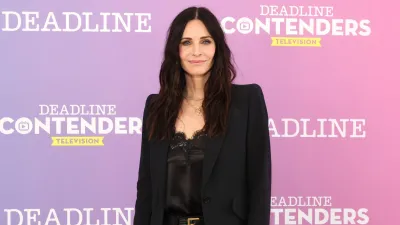
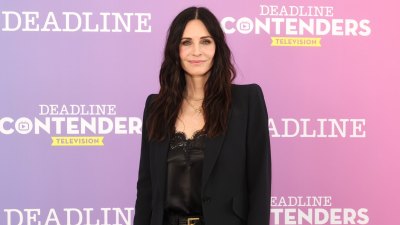
Some handbags only work with certain outfits. However, there are styles that you instinctively reach for day after day because they look good with literally everything. Courteney Cox reminded Us why a woven crossbody bag belongs in the second category. The actress was seen last week carrying the effortlessly chic style with one of her signature casual looks. And unsurprisingly, we’re ready to copy it ASAP.
The Friends alum was spotted in Malibu, CA on July 28, 2026, wearing relaxed blue jeans, a button-up shirt and classic black flats. Instead of relying on flashy accessories, Cox finished the outfit with a black woven crossbody that tied everything together. The timeless texture gave the laid-back look a more elevated feel while still being practical enough for everyday wear.
Advertisement
Get the Dabdays Handwoven Crossbody Bag for $44 (was $46) at Amazon! Please note, prices are accurate as of the publishing date but are subject to change.
Luckily, recreating the look doesn’t require a designer budget. The Dabdays Woven Crossbody Bag delivers the same woven finish and sleek silhouette for $44 on Amazon. Available in Cox’s classic black, it’s the kind of bag that quietly works with nearly everything already hanging in your closet.
Packing for vacation always sounds easier than it actually is. You want shoes that can survive cobblestone streets, airport terminals and long sightseeing days — all while feeling comfortable and looking effortlessly cool. As it turns out, Courteney Cox may have found the perfect pair, and they’re on sale right now. The Adidas Adilette Comfort […]
The vegan leather bag features an intricate woven design, a roomy main compartment and an adjustable strap that lets you wear it over your shoulder or as a crossbody. A secure zip closure and interior slip pocket help keep everyday essentials organized and safe, whether you’re heading to brunch, running errands or catching a flight.
One shopper who called the bag “stunning and timeless” wrote in a review, “The craftsmanship is evident in every detail, from the stitching to the hardware. It adds a touch of elegance to any outfit.”
Other reviewers say it’s just as functional as it is stylish. A customer praised the “easy-to-adjust” straps, as well as the practical design, which “held all the essentials without being too heavy.”
Advertisement
We’re leaning into the black hue style to get the star’s look. However, if you’re looking for a little more color, the bag also comes in camel, burgundy, silver and several other versatile shades.
Like Cox’s effortlessly cool style, this woven crossbody proves that the best accessories don’t have to steal the spotlight. They simply make every outfit look better. Whether you’re pairing it with jeans, breezy dresses or tailored separates this season, it’s an easy way to add a polished touch.
Get the Dabdays Handwoven Crossbody Bag for $44 (was $46) at Amazon! Please note, prices are accurate as of the publishing date but are subject to change.
Welcome to summer with our biggest sale of the year. This summer’s chicest dresses, tops and swimsuits are all over 30% + free shipping. Inventory is limited so hurry before they’re gone.
Gisele Bündchen is giving Us a masterclass in beach style, and honestly, it’s a summertime look that women in their 40s will instantly fawn over. During a beach day in Tahiti, the supermodel reached for a timeless white bikini style that felt equal parts polished, relaxed and endlessly flattering. The best part is you don’t […]
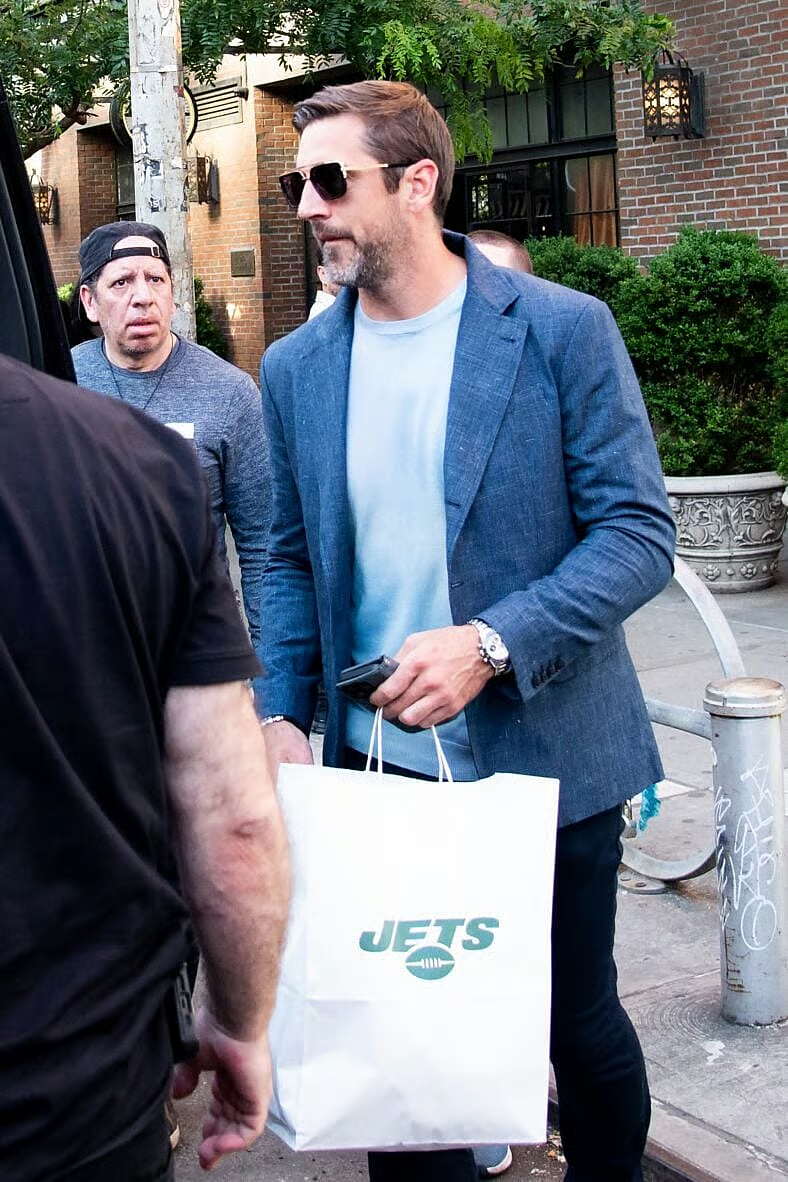
Aaron Rodgers is getting honest about the painful rift that kept his family members at odds with each other for years.
The veteran quarterback credited his marriage to his wife, Brittani, for inspiring a long-awaited reconciliation with his family, while also dropping a subtle nod to those who handled the private conflict publicly.
Notably, Aaron’s wife also supported and encouraged him to do one more year with the Steelers to see how it turns out.
After years of sitting out August exhibition games, Aaron is set to suit up during Pittsburgh’s first two preseason matchups against the Packers and the Jets.
During a candid conversation about his career, Aaron’s personal life also came up. Speaking on his recent family reconciliation, he noted that his wife was a major catalyst for the repair of the long-strained relationship.
Reflecting on the resolution, Aaron noted that while he always believed family disputes should stay out of the media, not everyone in his family adhered to that boundary. This appeared to be a subtle nod to his brother Jordan’s public comments during their separation.
“Now, not everybody in the family adhered to the same thing, but there are different things, situations, experiences, and people that actually change your life,” Aaron admitted to The Athletic.
Nevertheless, he expressed deep gratitude for having closed the rift and for reconnecting with his parents.
Advertisement
Aaron Rodgers Revealed The Role His Wife Played In His Family Reconciliation
Building on his recent reflections, Aaron elaborated further on how his private marriage created the foundation for his family reunion.
The Blast reported that in a candid interview, he explained that his wife, Brittani, provided the steady emotional backing he needed to address a feud that had stretched back to 2014.
Following a viral social media post showing the quarterback reunited with his parents and brother, Aaron addressed the overwhelming public response, admitting that marrying Brittani served as a true catalyst for opening up a dialogue.
“A big part of it was getting married, and having those conversations with my wife that allowed me to kind of open up to the possibility of coming together,” he explained.
Quiet Steps Toward Healing Began Months Before Public Social Media Posts
Things you love to see:#Steelers QB Aaron Rodgers, who has remained distanced from his immediate family over the years, posted pictures on Instagram with his mom, dad, brother and more. ❤️ pic.twitter.com/Z7ZfuRlrCU
While recent public posts brought attention to Aaron’s restored family dynamic, the foundation for healing had actually been laid long before the quarterback shared it online.
According to The Blast, the initial steps toward mending their nearly decade-long separation began as far back as 2023, setting the stage for more public milestones in the months that followed.
In April, the family gathered for the inaugural Pleasant Valley High School Athletics Hall of Fame ceremony, where Aaron was inducted into the school’s Hall of Fame.
During the event, witnesses noted that Aaron appeared relaxed and in high spirits while sitting, talking, and laughing with his family. Taking the podium to deliver his acceptance speech, he publicly acknowledged and thanked them, offering a clear sign that the tension had dissolved.
Advertisement
Aaron Rodgers’ Wife Also Influenced His Career Choices
In addition to helping him find stability in his personal life, Aaron’s wife also had a say in his career choices. He recently highlighted how his marriage influenced his decision to continue his professional football career, as reported by The Blast.
As the veteran quarterback prepares for his 22nd season in the league, he made it clear that his return to Pittsburgh would likely mark the definitive end of his playing career.
However, before committing to one final run under center, it took a combination of key coaching changes and direct encouragement from his wife to convince him to suit up once more.
The NFL icon admitted that he had initially contemplated walking away after last season, but his perspective shifted significantly following Pittsburgh’s hiring of head coach Mike McCarthy. He also revealed that discussions with his wife, Brittani, were central to making the choice to play one more season.
4Tammie Arroyo / AFF-USA.COM / MEGA
Despite speaking so lovingly about his wife’s role in his personal life and career, Aaron’s statements sparked a mix of skepticism and defense over his wife’s low-profile identity.
Following his comments regarding his decision to return for one final season, online users immediately zeroed in on his references to his wife, Brittani.
Advertisement
Given that she has intentionally avoided the public spotlight, rumors and sarcastic commentary quickly spread across platforms, per The Blast.
One user joked about how media outlets can track down anyone except Aaron’s spouse, leading to a wave of trolling that targeted the couple’s privacy.
However, another set of fans quickly rallied to the MVP’s defense, pushing back against the online cynicism and pointing out that the athlete has been transparent about his wife’s desire to remain private.
Kamri Peterson recalled the exact moment she found out she would be part of the Dancing With the Stars troupe for season 35.
“I was in a hotel room. I was at a dance convention. I was in a hotel room all by myself. I got the call,” Peterson, 18, told Us exclusively at Dancing With the Stars Con 2026. “I was absolutely shocked and so excited.”
“I was just so excited. I really don’t think I’ve ever been so happy in my entire life,” she gushed. “I called my mom first, and then I called my dad, and then I called one of my best friends’ moms, Felicia, and then my best friend Malakai.”
Several Dancing With the Stars pro dancers began their journey in the ballroom in the troupe. The hit dance competition first introduced its troupe during 2011’s season 12, featuring a selection of performers who didn’t have a celebrity partner but still appeared in group numbers and their own “bumpers” between competitive routines. “When I first […]
News broke on Sunday, August 2, at the first-ever DWTS Con that Peterson will perform in the troupe for the upcoming season of the hit show. When Peterson appeared on DWTS: Juniors in 2018, she was partnered up with Little Big Shots alum Akash Vukoti with help from mentor Witney Carson.
Advertisement
“One of my favorite pros is Witney because she was my pro on Juniors, so I always feel like that’s so fun,” Peterson told Us. “I love Rylee [Arnold] because I grew up with [her], so it’s so fun seeing her.”
Getty Images (2)
She continued: “But literally, there’s Dani[ella Karagach]. I grew up watching Dani even before I was on Juniors. I’d watch her videos on YouTube. Like, I have been a die-hard fan of Dani since before Juniors. I mean, before Dancing With the Stars. So, yeah, I mean, literally everyone. Everyone’s so good.”
Peterson said being on DWTS: Juniors was an experience that shaped her life, adding, “I just remember having the absolute time of my life. Like, literally, my favorite memories ever are from that show.”
“This is my first performance with Dancing With the Stars since Dancing With the Stars: Juniors. I’m just so excited,” she shared from the Acrisure Arena in Palm Springs, California. “It’s surreal because this is such a big dream of mine. So it’s been amazing, and I feel like everyone’s had a lot of fun. I’ve had a lot of fun. It’s been amazing.”
Advertisement
ABC has yet to announce the rest of the season 35 troupe members — or the pro roster — but so far, fans can expect to see celebs Ciara Miller, Maura Higgins, Jackson Olson and Guillermo Rodriguez competing in the ballroom this fall.
Thank You!
You have successfully subscribed.
Peterson, meanwhile, is looking forward to leaving her mark, telling Us, “I want to inspire the younger generation. I want them to see that dance doesn’t have to be so serious. It can also be something that’s just fun because I feel like, at least for me, dance is something that I do because I enjoy it, not because I have to.”
Advertisement
She concluded: “And I feel like sometimes people get a little distracted by the fact that ‘Oh, we have to win, we have to do this, we have to do that,’ but also we dance because we love it, so I think I want to show people that dance can be fun. It doesn’t always have to be competitive and scary.”
Dancing With the Stars returns to ABC with a two-night premiere starting Tuesday, September 15.
Last July, Rasheeda Frost let her supporters know: “I ain’t never leaving Kirk.” That line alone had the freestyle buzzing across the internet. While some found humor in her approach to long-standing shade against her husband, others kept the hate train choo-chooing! More than a year later, Rasheeda is resurfacing her iconic lyrics to participate in a viral TikTok trend. Now, fans are divided as they debate the couple’s relationship history and Kirk Frost’s infidelities.
Mrs. Frost dropped by Antoinette Media for a chat and participated in an acting challenge that’s been sweeping the internet. Folks have been picking a quote and repeating it in different emotional tones. In Rasheeda’s case, she used the tones happy, sad, sarcastic, disappointed, angry and flirty. Each time she repeated the phrase, “I ain’t leaving Kirk.” She appeared to enjoy the internet challenge and seemingly put her all into each acting cue. As mentioned, Rasheeda Frost debuted the freestyle rap that features those lyrics in July 2025.
Recap Of Kirk Frost’s Track Record
More than 10 years ago, Kirk Frost gagged his and Rasheeda’s fans after they learned of his cheating ways. During ‘Love & Hip Hop ATL’ S2 airing in 2013, his wife revealed her pregnancy with son Karter. Kirk’s reaction appeared to be less than ideal as he asked Rasheeda for an abortion and questioned who the father was. Later in S2 of ‘LHHATL’, camera caught Kirk Frost kissing and partying with two women or as most people call it: cheating. By the following year, in 2014, Kirk acted on his doubt toward his wife and tested Karter’s DNA. By 2017, Jasmine Washington came forward with her and Kirk Frost’s affair. Approximately two years laterk, court-ordered DNA proved he was the father. Their son was secretly born in 2016 and the following year she joined the ‘LHHATL’ cast, where her and Kirk’s coparenting issues got air time.
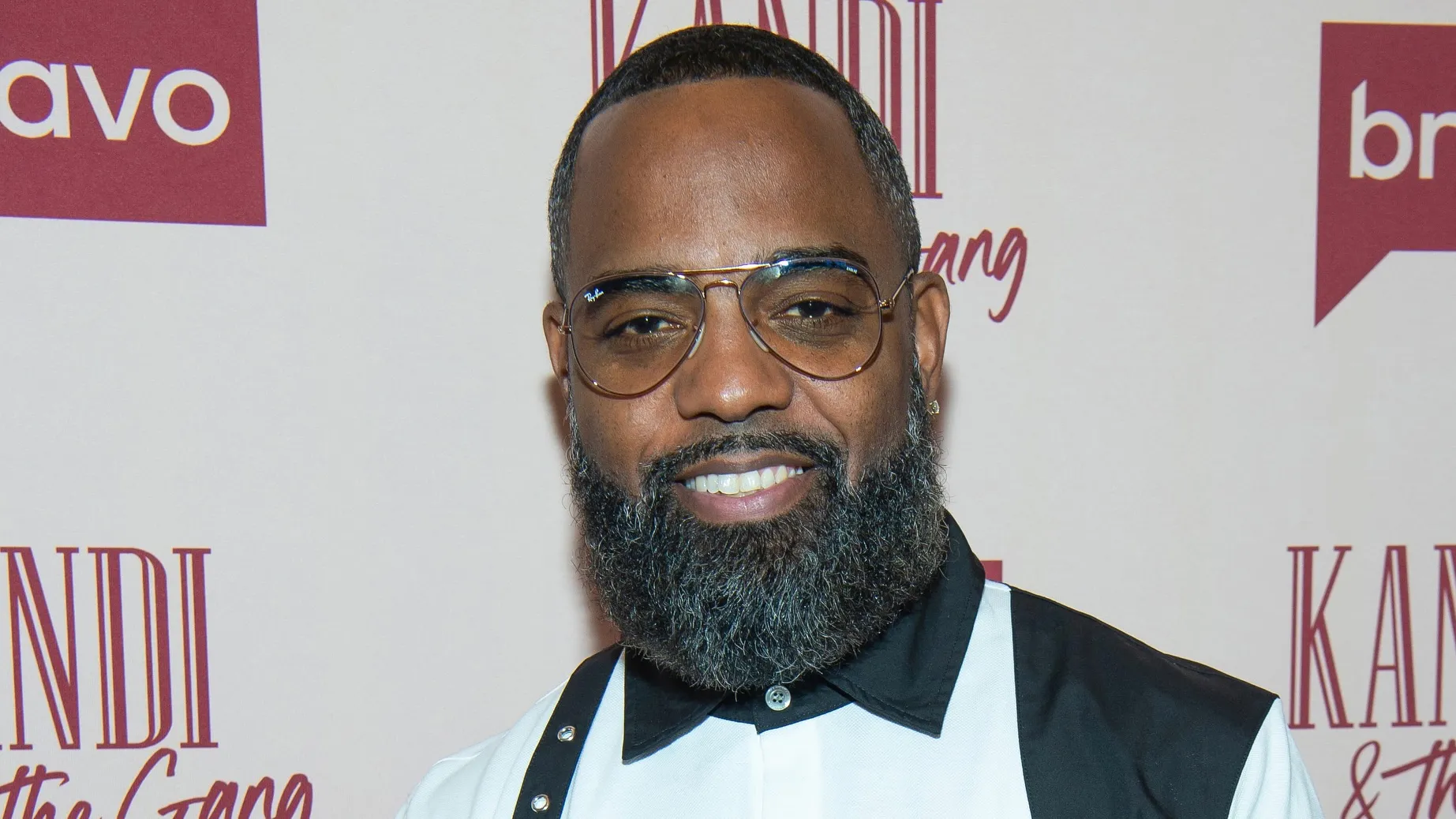
Todd Tucker Asks Question About Dating: “How Young Is Too Young?”
On Monday, August 3, Todd Tucker took to Instagram with a question for the internet to weigh in on. Furthermore, he noted that he’s always “asking for a friend,” but was wondering, as one gets back into the dating world, “How young is too young?”
“And is there an age that’s too old?” he continued. “So my body said if you’re gonna go younger, you have to go your oldest child’s age, and add eight years. So my daughter Kayla is what? 30? So eight years is 38. Is that appropriate? Imma be 53. Then, another friend said it’s half your age plus seven… And then how old is too old? Can I go 60? 65?”
Todd Tucker Raises Eyebrows With Question About Dating
Social media users entered TSR’s comment section with raised eyebrows to Todd Tucker’s question about dating.
Advertisement
Instagram user @brittani__nicole wrote, “If you gotta ask I’m suspicious 🤔”
While Instagram user @spunky_brewstah added, “If you gotta ask 😏 knowing good and damn well you just added that ‘how old is too old’ for razzle dazzle. However I am not razzled nor am I dazzled so…”
Instagram user @tamashintl wrote, “Date your age group. You’ll have more in common and lots to talk about than someone slightly older than your daughter. Simple as that.”
While Instagram user @rosekransmami added, “🌽 He always single and looking lol he never had these questions when he was married and cheating”
Advertisement
Instagram user @md29creations wrote, “Asking for a friend, okay Todd😂”
While Instagram user @laysia_jaayy added, “He trying to see how young he can go without scrutiny”
Instagram user @boriibillions__ wrote, “Men think the single life so fun until you 50 divorced & on the internet asking questions you know the answer to all because you want attention from your ex wife .”
While Instagram user @jeliroleearthwalker added, “I liked him better. When he was married and quiet”
Advertisement
Instagram user @mochalamode wrote, “IF YOU GOTTA ASK YOU SHOULDN’T BE DOING IT🧐🤔🙁😐”
While Instagram user @legendary_berry added, “If you’re even asking this question, I think you know the answer.”
Instagram user @yellow_dymond wrote, “The ink just dried on the divorce decree🫠”
While Instagram user @yasmeeniana added, “He’s scheming. I can see it in his eyes.”
Advertisement
Instagram user @dewithluv wrote, “Too old to be using the wrong ‘to/too’ I can say that much”
His & Kandi Burruss’ daughter, Riley, Recently Opened Up About Their Divorce
As The Shade Room previously reported, Kandi Burruss announced her and Todd Tucker’s split in November 2025. This, after they were married for almost 12 years. Last month, their daughter Riley opened up about the impact of their divorce.
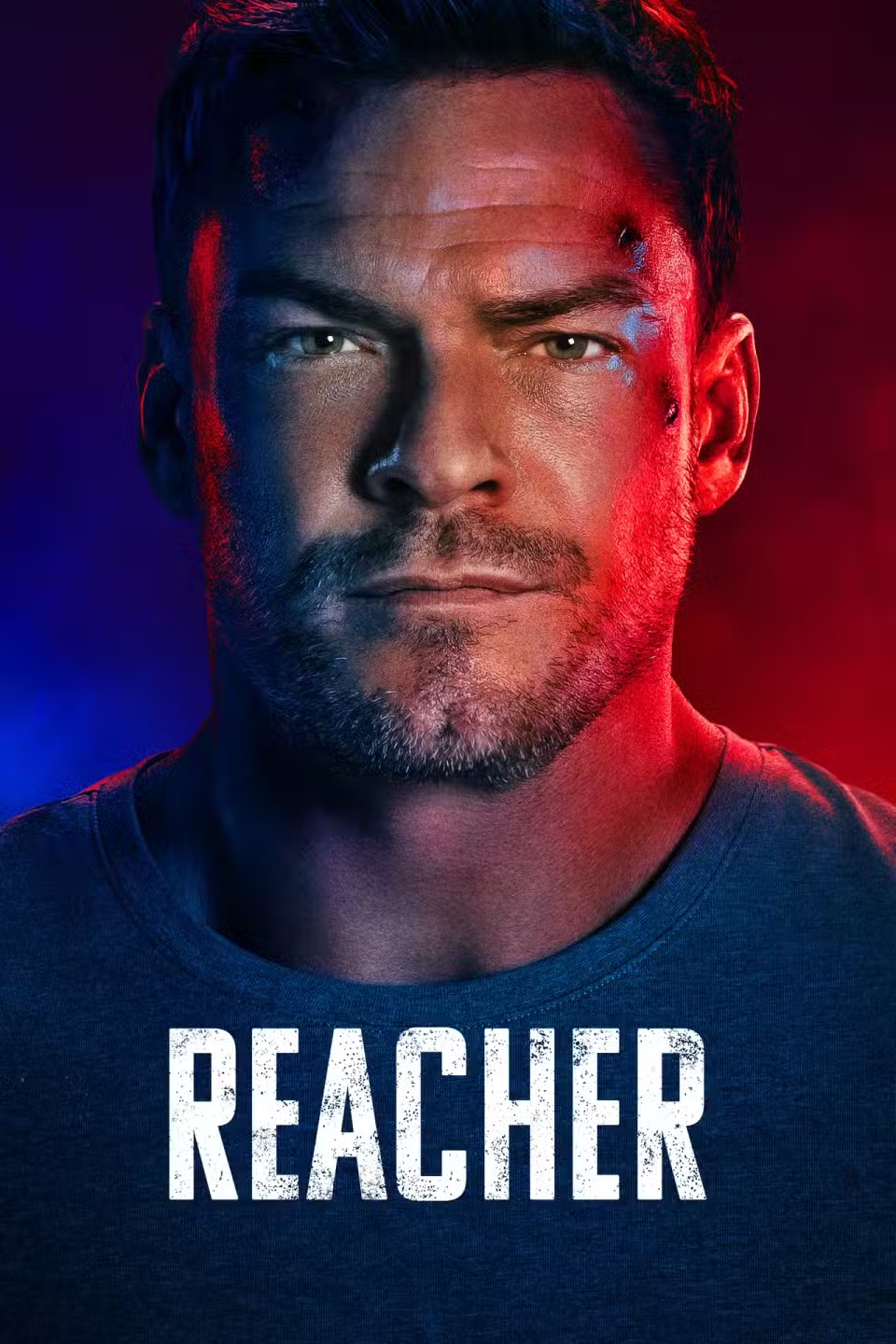
Alan Ritchson is rapidly becoming the King of Hollywood, with the rate he’s going at. We’re running out of characters to describe the sheer number of projects he’s got on the go, but this next one might be the most ambitious project he’s signed up to yet. His appearance in Fast X seems to have given him a taste for high octane thrills, because he’s doing his own take on the mega franchise.
Deadline is reporting that Netflix has partnered with Ritchson on an untitled MotoGP-set heist thriller, which will serve as the first project under the actor’s newly signed first-look feature deal with the streamer. Ritchson will both star in and produce the film through his Dancing Skeleton banner, with longtime Fast & Furious writer Chris Morgan penning the screenplay. MotoGP is fully involved with the project and will consult on it for Ritchson. The announcement comes just days after Ritchson revealed he had acquired the rights to MotoGP while speaking on Dax Shepard’s Armchair Expert podcast.
“I got the rights to MotoGP. I love motorcycles. They’re so fun. I want to tell stories about it. I want to make a cool, Fast and Furious kind of thing for motorcycles, like international.”
Advertisement
He also revealed he’d already begun extensive stunt preparation for the film, which he’s clearly keen to be involved with practically on every level, if he can be.
“I had just set up a film where I would be riding every bike in that thing and riding it in crazy scenarios. So I really got to know how to do every kind of stunt. I have every kind of bike you can imagine, all levels of stunt bikes, dirt bikes, and I practice on these things all the time.”
Advertisement
Collider Exclusive · Sci-Fi Personality Quiz Which Sci-Fi Hero Are You Most Like? Paul Atreides · Captain Kirk · Princess Leia · Ellen Ripley · Max Rockatansky
Five iconic heroes. Five completely different ways of facing an impossible universe. One of them shares your instincts, your values, and your particular way of refusing to back down. Eight questions will tell you which one.
🏜️Paul Atreides
🖖Capt. Kirk
Advertisement
✊Princess Leia
🔦Ellen Ripley
🔥Max Rockatansky
Advertisement
01
How do you lead when the stakes couldn’t be higher? The way you lead under pressure is the most honest thing about you.
Advertisement
02
What is your greatest strength in a crisis? The quality that keeps you alive when everything else fails.
Advertisement
03
What is the thing you’d sacrifice everything else for? Your deepest motivation is your truest compass.
Advertisement
04
How do you relate to the people around you? Who you are to others under pressure is who you really are.
Advertisement
05
You’re facing a threat that no one else believes is real. What do you do? How you respond when you’re the only one who sees it defines everything.
Advertisement
06
What has your heroism cost you personally? Every hero pays. The question is what — and whether they’d pay it again.
Advertisement
07
How do you feel about the rules of the world you’re in? Every hero has a relationship with the system. What’s yours?
Advertisement
08
When everything is on the line, what keeps you going? The answer is the most honest thing about you.
Advertisement
Your Hero Has Been Identified Your Sci-Fi Hero Is…
Your answers point to the iconic sci-fi hero who shares your instincts, your values, and your particular way of facing the impossible.
Advertisement
Arrakis · Dune
Paul Atreides
Advertisement
You carry a weight most people would crumble under — the knowledge of what you’re capable of, and the burden of what you might have to become.
You see further ahead than others and you plan accordingly, even when the vision frightens you.
You are driven by loyalty to your people and a sense of destiny you didn’t ask for but can’t escape.
Paul Atreides is not simply a hero — he is someone who understands the cost of power and chooses to bear it anyway.
That gravity, that willingness to carry what others won’t, is exactly you.
USS Enterprise · Star Trek
Captain Kirk
Advertisement
You lead with instinct, warmth, and an absolute refusal to accept a no-win scenario — because you’ve always believed there’s a third option nobody else has thought of yet.
You take the mission seriously without ever taking yourself too seriously.
Your crew would follow you anywhere, not because you demand it, but because you’ve earned it.
Kirk’s genius isn’t tactical — it’s human. He reads people, bends rules with purpose, and wills outcomes into existence through sheer conviction.
That combination of warmth, audacity, and relentless optimism is unmistakably yours.
The Rebellion · Star Wars
Princess Leia
Advertisement
You are the kind of person who holds the line when everyone else is losing faith — not because you’re fearless, but because giving up simply isn’t something you’re capable of.
You lead through conviction. Your voice carries because your belief is unshakeable.
You gave up everything ordinary the moment you chose the cause, and you’ve never looked back.
Leia is not a supporting character in her own story — she is the moral centre of the entire rebellion.
That same fierce, principled, unbreakable core is what defines you.
The Nostromo · Alien
Ellen Ripley
Advertisement
You are not reckless, not grandiose, and not particularly interested in being anyone’s hero — you just refuse to stop when it matters.
You see threats clearly, you document the truth even when no one listens, and when the time comes you handle it yourself.
Ripley’s heroism is earned, not performed. She doesn’t have a speech — she has a flamethrower and a plan.
You share her composure under the worst possible pressure, and her refusal to pretend the monster isn’t there.
When it counts, you don’t flinch. That’s everything.
The Wasteland · Mad Max
Max Rockatansky
Advertisement
You have been through fire that would break most people — and what came out the other side is something the world underestimates at its peril.
You don’t ask for help, don’t need validation, and don’t wait for anyone to tell you the rules no longer apply.
Your loyalty, when it finally arrives, is absolute — but it’s earned in silence and tested in action, not in words.
Max is not a nihilist. He is someone who lost everything and found, against his will, that he still has something worth protecting.
That bruised, stubborn, ultimately human core is exactly yours.
Advertisement
Alan Ritchson Will Partner With Netflix
The MotoGP thriller also signals Netflix’s growing confidence in Ritchson following the enormous success of War Machine. The sci-fi action blockbuster amassed 139.9 million views during its first 91 days, becoming one of Netflix’s biggest original movie hits and earning an immediate sequel.
Under the new first-look deal, Ritchson will star in and produce multiple feature films for Netflix. He’s already attached to headline Maelstrom, directed by Jaume Collet-Serra, while also fronting an untitled survival competition series for the streamer.
Us Weekly has affiliate partnerships. We receive compensation when you click on a link and make a purchase. Learn more!
If stiff joints, brittle nails or lackluster skin are getting in the way of feeling your best, Momentous Collagen Peptides could be the simple daily upgrade your routine needs. Available at The Vitamin Shoppe, this unflavored powder delivers bovine collagen peptides that support healthy joints, skin, hair, nails and connective tissue, all without changing the taste of your favorite drinks or smoothies.
Better yet, there’s another reason to shop right now. Through Aug. 9, The Vitamin Shoppe and Momentous are giving one lucky winner the chance to travel to Los Angeles for a private workout with Arnold Schwarzenegger, complete with round-trip airfare and a two-night hotel stay.
Adding collagen to your routine doesn’t have to be complicated. Momentous Collagen Peptides dissolve easily into hot or cold beverages, making it simple to support your wellness goals whether you’re mixing up your morning coffee, post-workout shake or afternoon smoothie.
Momentous is known for its science-backed supplements and commitment to ingredient transparency, so you know exactly what’s in every serving. If you’re building a complete wellness routine, you can also check out Momentous Fiber+ for digestive support, Momentous Grass-Fed Whey Protein Isolate to help support muscle recovery and Momentous Creatine to promote strength, endurance, and post-workout performance.
Whether you’re focused on staying active, supporting healthy skin or simply investing in your long-term wellness, now is a smart time to stock up. Every qualifying Momentous purchase can also help you earn additional sweepstakes entries for the chance to train with Schwarzenegger.












:max_bytes(150000):strip_icc():format(jpeg)/Matilda-WATN-072826-b417efa3233d4a7f886fe773116a5016.jpg)










































You must be logged in to post a comment Login