

Connect with us
DAPA Banner
DAPA Coin
DAPA
COIN PAYMENT ASSET
PRIVACY · BLOCKDAG · HOMOMORPHIC ENCRYPTION · RUST
ElGamal Encrypted MINE DAPA
🚫 GENESIS SOLD OUT
DAPAPAY COMING

Politics

Richard Tice Praises Commons Speaker After Zia Yusuf Criticism

Published

on

Richard Tice Praises Commons Speaker After Zia Yusuf Criticism

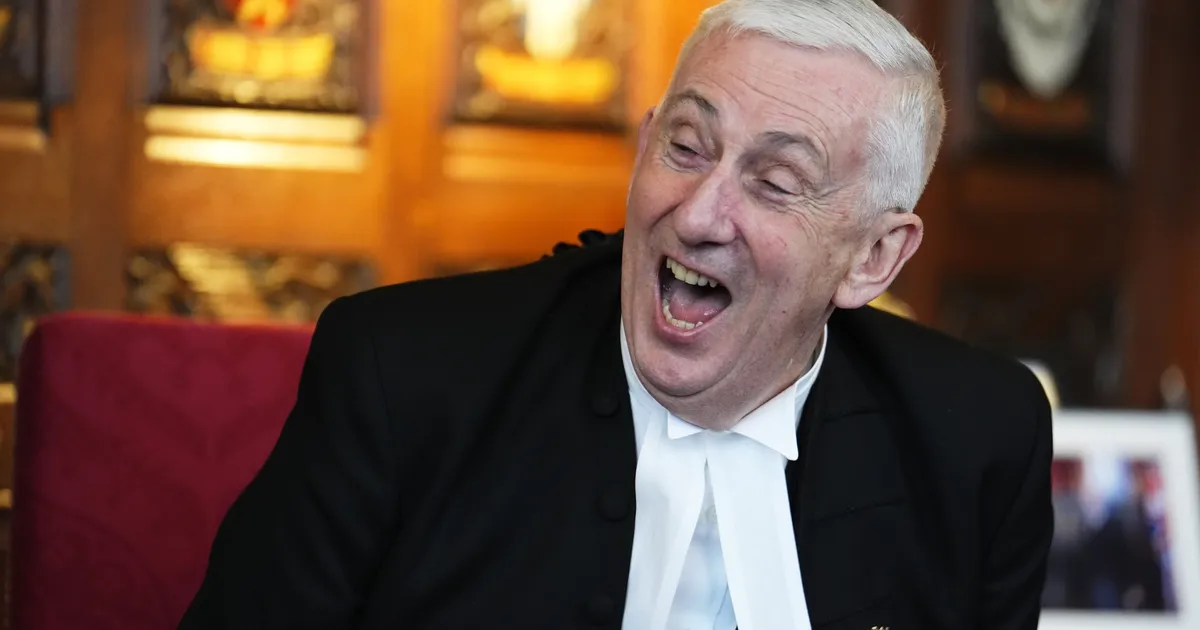
Reform UK deputy leader Richard Tice described Commons Speaker Lindsay Hoyle as “brilliant” just hours after his party colleague Zia Yusuf branded him “a coward”.

The pair appeared to be at odds over Hoyle’s approach to keeping MPs safe in the wake of the death of Ann Widdecombe.

The former Tory minister, who became a Reform spokeswoman, was found dead at her home in Devon on Thursday.

A 28-year-old man has been arrested on suspicion of murder and counter-terrorism police are now leading the investigation.

Advertisement

Widdecombe’s death has led to claims by Reform politicians that not enough is being done by the authorities to keep them safe.

Yusuf, the party’s home affairs spokesman, said on Sunday parliament, the government and the police do not “care at all” about their MPs’ safety.

That sparked an angry response from Commons officials, who insisted “all MPs are offered appropriate security measures”.

It is also understood that Lindsay Hoyle spoke directly to Lee Anderson, Reform’s chief whip, about Yusuf’s remarks.

Advertisement

But in an angry rant on X on Monday, Yusuf hit back: “Lindsay Hoyle, the Speaker of the House, has no jurisdiction over me. I am not afraid of him.

“He is a bully who did not even reply to a letter from a female Reform MP pleading for assistance with security until after I revealed it. If this is not true then I invite him to deny it on the record rather than try and bully the very people he has let down.

“Instead he briefs the press like a coward. He is a disgrace to his office.”

But in an interview with BBC’s Newsnight programme hours later, Richard Tice paid tribute to the Speaker’s attempts to protect MPs.

He said: “I had discussions with the Speaker in early January, including a letter when I said I feared something terrible and potentially fatal might happen.

Advertisement

“And the Speaker has been brilliant. His resolute determination about ensuring the security of all MPs is robust. But I’m afraid under him, we have found failings, we have found wantings.”

Meanwhile, Reform leader Nigel Farage has accepted an offer by home secretary Shabana Mahmood to meet the body responsible for organising security for public figures.

Reform has said it is now paying for round-the-clock security for their MPs.

Listen to Commons People, the podcast that makes politics easy. Every week, Kevin Schofield and Kate Nicholson unpack the week’s biggest stories to keep you informed. Join us for straightforward analysis of what’s going on at Westminster.

Advertisement

Source link

Continue Reading
Click to comment

You must be logged in to post a comment Login

Leave a Reply

Politics

Should Andy Burnham face the House of Commons before summer recess?

Published

on

Should Andy Burnham face the House of Commons before summer recess?

Ruxandra Serban explains that the gap between Andy Burnham taking office and facing Parliament will be the longest of any incoming Prime Minister in history and considers what this means for democratic accountability.

The Labour Party is now certain to elect Andy Burnham as its new leader on 17 July, and he is set to become Prime Minister on 20 July. The House of Commons is scheduled to go into recess on 16 July, so Burnham will not address MPs as Prime Minister until they return at the beginning of September. This would mean almost seven weeks in office before making a statement or answering Prime Minister’s Questions (PMQs). While this is not a constitutional problem, it definitely raises questions about democratic accountability.

There is no constitutional rule requiring a newly appointed Prime Minister to appear before the House of Commons immediately after being appointed. Once appointed by the monarch, a Prime Minister assumes office straight away and is expected to fulfil their parliamentary responsibilities such as attending PMQs when the House next sits. Indeed, had Keir Starmer remained in office, Parliament would also have normally been in recess during the summer, with regular scrutiny resuming in September.

But Andy Burnham is likely to appoint new ministers, announce new priorities and begin setting the direction of the government in the coming weeks. He has already signalled an ambitious policy agenda. During the summer recess MPs would have no opportunity to question the Prime Minister directly, ask ministers Urgent Questions, or hold debates on the government’s new agenda.

Advertisement

From a historical perspective, this delay would be unusual. Since 1945, ten Prime Ministers have entered office between general elections. In most cases, they did so while the House of Commons was sitting and addressed MPs soon after. Theresa May in July 2016 and Boris Johnson in July 2019 both took office shortly before the summer recess, but still made statements in the Commons before the last sitting day. Three other postwar Prime Ministers also entered office shortly before recesses but nevertheless addressed the House shortly before the House adjourned: Anthony Eden in April 1955, James Callaghan in April 1976, and Liz Truss in September 2022.

Johnson became Prime Minister on 24 July 2019 and made his first statement and answered questions in the Commons the following day, which was the last sitting day before recess. Amid the political tensions related to Brexit in the summer of 2019, Sarah Wollaston MP, at the time Chair of the Liaison Committee, argued that the recess should be postponed to allow MPs more time to scrutinise the new government. Her proposal was unsuccessful, but it demonstrated that concerns about a newly appointed Prime Minister avoiding parliamentary scrutiny are politically important. Parliamentary experts argue such controversies could be avoided by giving MPs more control over when the House of Commons sits.

Only two post-war Prime Ministers first took office while the House was not sitting. Harold Macmillan succeeded Anthony Eden on 10 January 1957 and first answered questions in the Commons about two weeks later on 22 January. Alec Douglas-Home became Prime Minister on 19 October 1963 while the Commons was not sitting, and without being an MP. After winning a by-election, he first spoke in the Commons four weeks later on 14 November, after the House returned on 12 November. But even these exceptional cases involved shorter delays than would occur if Burnham did not appear at the despatch box until September.

Looking beyond the UK

Advertisement

Among countries that share historical links with the UK and institutional similarities, there is no constitutional requirement for immediate parliamentary scrutiny when a new Prime Minister takes office between elections. In Australia, New Zealand, and Canada, Prime Ministers can also assume office while parliament is adjourned by being replaced as party leaders.

Chris Hipkins became Prime Minister of New Zealand in January 2023 during the summer adjournment and first faced the House of Representatives when it returned in mid-February. Scott Morrison became the Prime Minister of Australia on 24 August 2018 after a Liberal Party leadership spill. The House was not sitting and did not return until 10 September, meaning Morrison was in office for just over two weeks before facing parliament.

These recent examples show that a delay between appointment and parliamentary scrutiny is not unusual in countries that share a similar relationship between Prime Ministers and parliament. At the same time, they did not involve a gap as long as the one that may arise in the UK this summer.

Many European parliamentary democracies follow a different model in which a new Prime Minister cannot take office without parliamentary approval. In countries such as Germany, Italy, Spain and Ireland, a new head of government takes office following parliamentary approval through an investiture vote. This also applies to changes of Prime Minister between elections. In these systems, parliament is directly involved in the process of government formation, so a situation in which a new Prime Minister could go for a while before facing parliament does not occur in practice.

Advertisement

Should anything be done?

One possibility would be for the House of Commons to sit for an additional day before the summer recess so that Andy Burnham could make a statement and answer questions, as in the case of Boris Johnson. This would require government support, as the parliamentary calendar is largely determined by the government and recess dates are approved by the House of Commons on motions put by the government which cannot be debated or amended.

So far, there has been limited political controversy over this, aside from calls from the Leader of the Opposition, Kemi Badenoch, and from the Shadow Leader of the House, Jesse Norman, for recess to be delayed. According to the House of Commons Standing Orders, Select Committees can sit during recess, so another possibility would be for the Liaison Committee to hold an evidence session with the new Prime Minister during the summer, providing at least some parliamentary scrutiny before the normal schedule of questions resumes.

Andy Burnham has signalled that he wants to reset the relationship with his backbenchers and change parliamentary culture. But the gap that will arise as a result of the clash between the Labour Party internal procedures and the parliamentary calendar nevertheless raises questions about the control that MPs have over when the House of Commons is sitting, and about the expectations around the relationship between the Prime Minister and Parliament.

Advertisement

By Dr Ruxandra Serban, Lecturer, School of Social Sciences, Birbeck University.

Source link

Advertisement
Continue Reading

Politics

No.10 Hits Out At Trump’s Plan To Slap 20% Toll On Ships Using Strait Of Hormuz

Published

on

No.10 Hits Out At Trump's Plan To Slap 20% Toll On Ships Using Strait Of Hormuz

Downing Street has condemned Donald Trump’s plan to impose 20% tolls on ships using the Strait of Hormuz.

The US president said the move was a “matter of fairness” because America will be responsible for keeping it open.

The economically-critical waterway was closed by Iran after America and Israel began their bombing campaign against the country at the end of February.

Writing on his Truth Social platform on Monday, Trump said: “The Hormuz Strait is OPEN, and will remain OPEN, with or without Iran.

Advertisement

“We are reinstating the THE IRANIAN BLOCKADE, so named because it is only stopping Iran’s ships or customers from entering or leaving.

“All other countries will have fair and open use of the Strait.”

He added: “The USA will be, from this point forward, known as ‘THE GUARDIAN OF THE HORMUZ STRAIT’, but as such, and as a matter of FAIRNESS, will be reimbursed, at the rate of 20% on all cargo shipped, for any and all costs necessary to do the job of providing safety and security to this very volatile section of the World.”

Asked for the PM’s reaction to Trump’s announcement, a No.10 spokeswoman said the Strait was “a critical route for trade and energy supply”.

Advertisement

She added: “We’ve always said that the Strait should be reopened in line with international law and without tolls which could disrupt global trade.”

Liberal Democrat foreign affairs spokesman Calum Miller said: “Donald Trump’s plan to slap a 20% tax on shipping through the Strait of Hormuz is nothing short of state-backed highway robbery.

“Ambushing global trade at one of the world’s most vital chokepoints is an act of economic extortion.

“Extracting tolls like this is a flagrant violation of international law.”

Advertisement

Listen to Commons People, the podcast that makes politics easy. Every week, Kevin Schofield and Kate Nicholson unpack the week’s biggest stories to keep you informed. Join us for straightforward analysis of what’s going on at Westminster.

Source link

Advertisement
Continue Reading

Politics

Buzz Off! 7 Ways To Send Wasps Packing

Published

on

Buzz Off! 7 Ways To Send Wasps Packing

You’re sipping an ice cold spritzer in your garden when the familiar sound of buzzing reaches your ears. Before you know it, there’s a yellow jacket crawling over your glass without a care in the world.

How can you deal with such pesky invaders – especially when you’re likely to be spending much more time outdoors this summer?

Walter Murphy, pest control expert at PriceYourJob, previously shared his advice with HuffPost UK on how to safely get rid of wasps when you’re eating and drinking outside.

1. Don’t swat them

Advertisement

It might feel like the most natural reaction, but if a wasp decides to gatecrash your lunch, the worst thing you can do is start flapping your arms in an attempt to swat it away.

“These movements can excite or enrage the wasp, making it more likely to sting you,” said Murphy.

So, what should you do instead? The best thing to do is to stay as still and calm as possible, he suggested.

And don’t try to swat them, either. “If you kill one wasp, you may think you have solved the problem. However dead and dying wasps emit pheromones that attract other wasps to the area, so you are potentially worsening the situation,” he added.

Advertisement

2. Avoid bright colours

As well as being guided to food by their sense of smell, wasps are drawn towards bright colours – so you might want to keep your fluorescent garms locked in your wardrobe for another day.

It’s best to avoid wearing bright clothing or planting colourful flowers in your garden, as this could attract hordes of wasps, said Murphy.

HuffPost UK previously reported that wasps are drawn to brighter shades like yellows, blues and whites (classic flower colours). They’re not attracted to darker shades like black and brown – and they can’t seem to see the colour red at all.

Advertisement

Advertisement

Source link

Continue Reading

Politics

Kamala Harris and the fall of corporate liberalism

Published

on

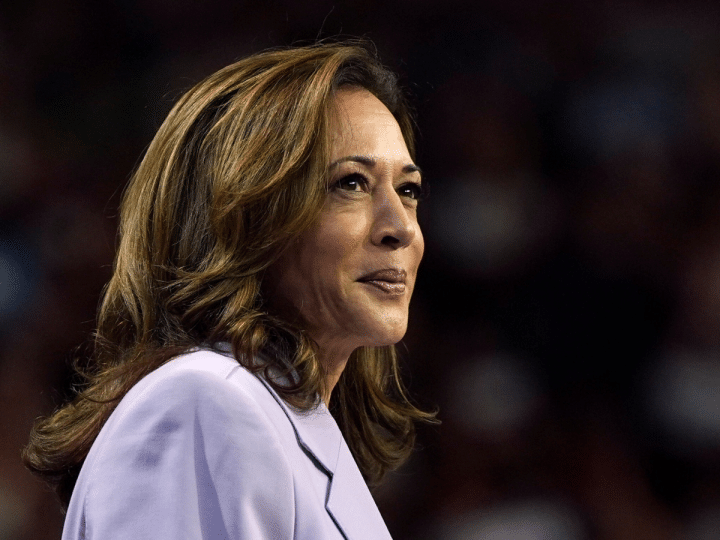
Kamala Harris smiling with a closed mouth in a smart suit looking into the distance, looking relaxed and assured

Kamala Harris smiling with a closed mouth in a smart suit looking into the distance, looking relaxed and assured

In a move that reeks of hypocrisy, the former US vice president, Kamala Harris, has reportedly held a private call with the New York City Mayor — the candidate she refused to back.

After Zohran Mamdani’s sweeping endorsement wins in the New York districts, Harris allegedly reached out to beloved Zohran Mamdani and discussed the future of the Democratic Party. 

Axios also added that she had established contact with several Palestinian advocacy groups in the past year, including members of the Uncommitted movement

This interaction puts into perspective the failures of the Democratic Party and corporate liberalism as a whole. Meanwhile, Harris’ olive branch gesture smacks of insincerity. 

Advertisement

Kamala Harris and Mamdani’s history

Before the New York City election, Harris had vehemently refused to endorse Mamdani for mayor. While her not-so-secret phone call may appear to bridge the political gap, it’s duplicitous. 

However, peering beneath the bonnet, one will find a hefty catalogue of hypocritical actions and utterances from Harris.

During the 2024 election, Kamala and her supporters focused their energies on the pro-Palestine camp and other minority groups pushing for better policies. They were treated with contempt, vilified and sidelined from the political debate. 

At the time, Biden’s presidency had also drawn ire from many due to his staunch support of Israel and its genocidal conduct. Kamala would follow suit, expressing her “pride” in supporting an occupying force. 

Advertisement

Dozens of activists and voters spoke out, urging Kamala to stand by what’s right. And in response, Kamala accused them of wanting a Donald Trump presidency.

Even when Palestinian-Americans endorsed Kamala’s candidacy, she continued to silence them, as we saw during the 2024 Democratic National Convention. If anything, Harris has consistently weaponised fear of a Trump presidency — acting as if she was owed the public’s vote regardless of her unpopular policies.

Even when she lost the election, she continued to blame Palestinians and leftists, stating: 

The issue was not binary, but the outcome of this election certainly was…

Advertisement

Kamala Harris lost because representation politics couldn’t mask her terrible campaign

Kamala Harris makes a U-turn

Her latest attempt to establish inroads with Palestinian activists and a democratic socialist critic of Israel, reeks of a power play. 

It seems obvious now with Mamdani gaining increasing popularity that left-leaning policies haven’t lost their appeal in capitalist America. This is the likely motive for Harris’ U-turn and changing her alliances in preparation for a potential 2028 presidential run. 

Harris didn’t lose in the 2024 presidential election because of “white leftists”. She lost due to her lack of conviction, plummeting popularity, and ‘Israel-first’ stance. Plus, her political flip-flopping. 

Advertisement

She has persistently backed practices and policies that deliver the greatest benefit to her. During her time in politics she’s switched from being as left-leaning as Bernie Sanders then later boasted about her endorsement from war criminal, Dick Cheney

During a CNN interview, Harris spoke of the importance of “differing” political views, stating that “it would be to the benefit of the American public to have a member of my Cabinet who was a Republican”. 

That’s the same political camp whose authoritarian agenda Harris has criticised — the same individuals backing a Christo-fascist state.

Odd, given that Harris has described republican Trump as a “petty tyrant” and urged ordinary Americans to “reject the schemes of wannabe dictators”. 

Advertisement

In other words, Harris appears capable of throwing anybody’s rights under the bus to maintain political relevance. This ultimately speaks to a greater issue in the Democratic Party and moderate liberalism in general.

Democrats vs Themselves

Outside of Kamala Harris, the Democrats’ reaction to Mamdani’s so far successful campaign and administration reveals the true issues of the party and corporate liberalism. Despite the NYC mayor being one of the most popular Democratic politicians to-date, his party seems strangely against him

Mamdani’s soaring popularity, and that of the Democratic Socialist Party (DSA) has frequently been criticised and downplayed by the Democrats. Many of the obstacles preventing the DSA from enacting its most popular policies comes from within its own house, not from the Republican Party. 

Despite claiming to be powerless in response to Trump’s fascist-leaning administration, the Democrats have shown they can block any anti-capitalist policies.

Advertisement

The contradiction is clear as day.

Many voters saw Democrats spend the 2024 election campaign warning that Trump posed a serious threat to democracy, only to then accept his return to power without any serious challenge. Combined with the party’s ability to block left-wing policies while appearing unable to stop the right, this fuelled speculation among some that the Democratic Party functions as a form of “controlled opposition”.

Some have even speculated that the Democratic Party represents “controlled opposition”.

I think the explanation is much simpler.

Advertisement

Establishment liberals

Republicans and corporate Democrats, and — by extension — conservatives and establishment liberals, ultimately serve the same interests.  Lest we forget, the American Israel Public Affairs Committee (AIPAC) has funded and lobbied millions of dollars to both the Republican and Democratic party. 

Despite both parties claiming separate ideologies and political priorities, they pander to corporate donors and by extension, capitalism as a whole. This is because both conservatism and corporate liberalism work to preserve the bigoted, capitalist system.

The priorities of parties like the Democrats, and even the UK’s Labour, is to maintain corporate power, which requires support and funding from the Israeli ethno-state. Massive companies can then accumulate power and usher in  bigoted laws that cement this status-quo. 

In many ways, the Democratic establishment is fighting a battle inside its own party, to quash openly socialist policies that threaten the capitalist hierarchy in America.

Advertisement

The people want change

Statistical evidence indicates that the majority of NYC residents who voted for Mamdani had previously voted for Trump, which implies another underlying possibility. While the concept of voting for a far-right politician and then a democratic socialist mayor may seem absurd, it offers a glimpse into Americans’ hearts and minds, who appear to want change.

The data not only shows that 66% of democratic voters have positive views on socialism. Polling also suggests the majority of Gen Z do also —and that’s no mistake. 

My generation having to start adulthood in the trenches of late-stage capitalism has made us more prone than ever at recognising how corporations and greedy elites are controlling our lives, and finances. But even those who don’t recognise this are suffering as a result of wealth inequality. This is why moderate liberalism has lost its luster. It exists to preserve a system that even the average citizen recognises is broken. 

Liberal centrism is pushing more people away and increasing those who yearn for radical change. The political right has capitalised on these frustrations, appealing to those feeling disillusioned. 

Advertisement

Parties on the left need to change

People are sick of the Israel-first agenda, and corporate bootlicking politicians who won’t change a thing. If Mamdani’s campaign in New York City teaches us anything, it’s that elected politicians must uphold their promises of radical change. The Democratic Party is no exception. 

If we on the left want to fight against the rising conservatism in the Western world, we must not only provide the truth about the system crushing people, but promise a true positive change.

If progressives want to continue on, the next step is clear. We must disregard establishment and corporate liberalism, when we can, and speak to a strong and conviction-driven political movement.

The Democrats prove that, even with divisive or opposable views, we will gain more favour than having no convictions at all.

Advertisement

Featured image via Julia Nikhinson/ AP Photo

By Olaitan Mos-Shogbamimu

Source link

Advertisement
Continue Reading

Politics

The 6 Best Primers To Keep Your Makeup Intact In The Heat, Tried And Tested

Published

on

The 6 Best Primers To Keep Your Makeup Intact In The Heat, Tried And Tested

We hope you love the products we recommend! All of them were independently selected by our editors. Just so you know, HuffPost UK may collect a share of sales or other compensation from the links on this page if you decide to shop from them. Oh, and FYI — prices are accurate and items in stock as of time of publication.

If you’ve been on earth for, well, the past couple of months, you’ll know the struggle of trying to put even an inch of makeup on your face in the heat.

Not only do I find myself sweating before I even begin doing my makeup, but by the time I’ve left the house, there are already significant patches missing.

Advertisement

That is, unless I remember to put my primer on that day – and this year, I’ve been on a mission.

While I usually wear the same makeup everyday and hope for the best, I’ve made it my sole purpose to find a primer that actually keeps everything intact this year, and I think I’ve finally done it.

With the help of the rest of the HuffPost team, I’ve hunted down 6 of the best primers to shop right now, and there’s one for every kind of skin type or makeup look you could want.

Best primers to shop now

Advertisement

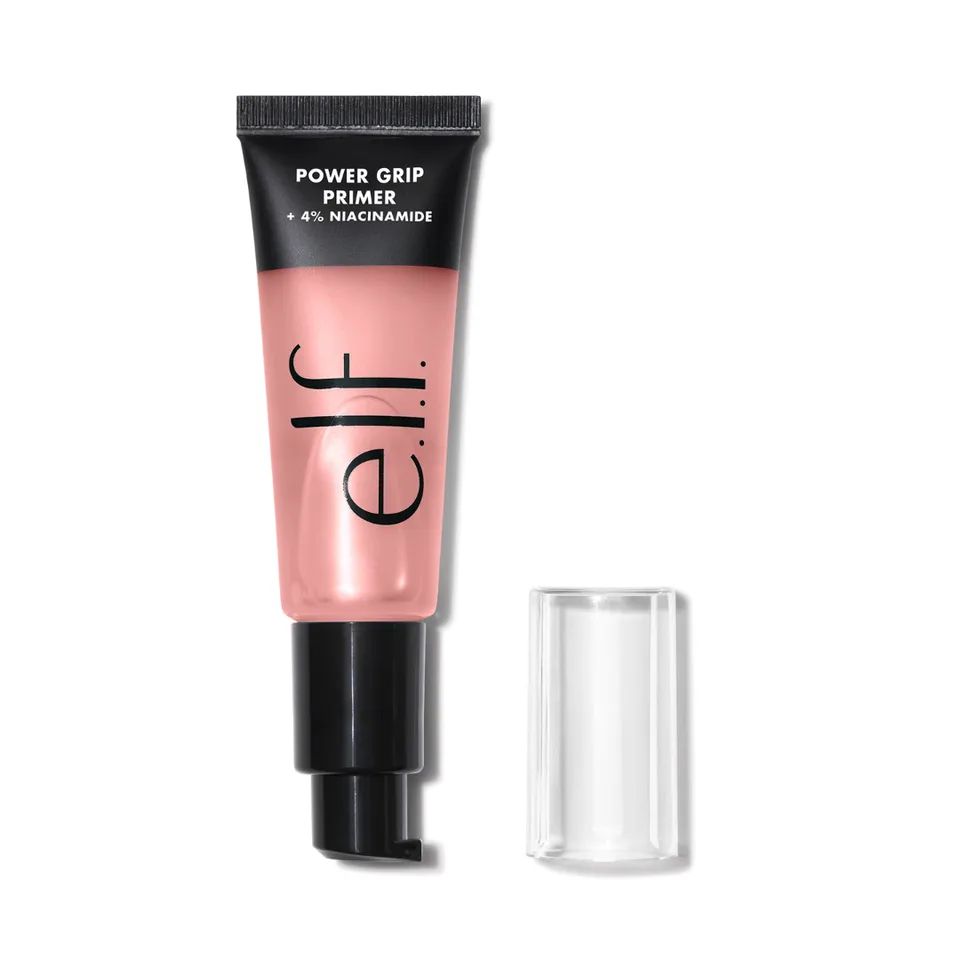
e.l.f. Power Grip Primer + 4% Niacinamide

Best for extra grip

If you’re a glowy makeup kinda person, the last thing you want is for your primer to leave you looking dull in the name of staying power.

According to our audience editor, Hannah, this e.l.f. is the best of the best for keeping your makeup intact as you sweat – and it’s suitable for all skin types.

Not only is it extremely grippy, but this formula is loaded with niacinamide to add a dose of brightness to your skin.

Advertisement

Our top tip? Follow the instructions and wait the 30 seconds for it to dry before continuing with your face.

Hannah Ballantyne/HuffPost

Hannah Ballantyne/HuffPost

Hannah Ballantyne/HuffPost

Beauty Pie Super Healthy Skin Sunscreen + Primer

Best SPF primer

Let us put you on to a hack that will save a whole step in your skincare routine: SPF primer. We’re busy gals, so there’s nothing better than a two for one skincare product that actually works.

And this primer certainly ticks all the boxes. As well as helping to protect against inflammation and sun damage (confirmed; our parenting editor has never had a burn while wearing it) it also adds an injection of grease-free glow to your skin. Best of all, it doesn’t clog pores.

Advertisement
Natasha Hinde/HuffPost

Illamasqua Mini Beyond Veil

Look Fantastic

Best for glowy skin

Want to look like la luna in the darkness? Well, this primer from Illamasqua will do the job, according to our lifestyle writer Amy, who swears by this for natural-looking radiance that catches the light even at night.

It might come in a small pot, but a little goes a long way, because you only need a little to cover your whole face, and it sits sheer on the skin.

Amy Glover/ HuffPost

Makeup Academy Pro/Base Grip Fix

Best budget primer

I don’t even want to think about the total cost of my makeup bag – shudder. Even though I always try to get things on a budget, the makeup always ends up piling up, which is why saving on primer is always a good idea.

Advertisement

This one comes highly recommended from our audience editor, who again says it provides lasting grip even during the sweatiest of days – and for just £5.50. No complaints here.

Hannah Ballantyne/ HuffPost

Hannah Ballantyne/HuffPost

Hannah Ballantyne/ HuffPost

Benefit Porefessional Pore Primer

Best for matte skin

After that 90s matte effect? Benefit has you covered – literally, because this primer spreads like butter across the skin. Without the grease of course, because it leaves your skin looking as uniform and shine-free as a sheet of A4 paper.

Not to mention the fact it doesn’t crease, and it’s ideal for long hot days when you’re not convinced your base layer isn’t going to slide right off your skin. I’ve been using this for years and it’s not failed me yet; I even use it under shimmery eyeshadow because I feel like it provides a strong foundation to keep everything in place.

Advertisement
Honey Jane Wyatt/HuffPost

Honey Jane Wyatt/HuffPost

Honey Jane Wyatt/HuffPost

Vieve Super Skin Nova

Best hydrating primer

There’s a reason this primer has five stars: it’s hydrating enough to keep your skin quenched for up to 48 hours. Loaded with ingredients like ceramide, arginine, and panthenol, it doubles as a moisturiser and primer, and feels like literal velvet as you smooth it across the skin.

I have rosacea, so I often get red flakiness around my nose and cheeks, but using this primer keeps my skin feeling and looking fresh all day, and makes my pores disappear almost entirely.

It’s also full of light-reflecting pigments, so I always reach for it on those days when my skin looks dull and I need a little pick me up.

Advertisement
Honey Jane Wyatt/HuffPost

Honey Jane Wyatt/HuffPost

Honey Jane Wyatt/HuffPost

Source link

Continue Reading

Politics

Polling shows public see the Green Party as the anti-establishment party

Published

on

Zack Polanski and Hannah Spencer of the Greens, as well as Andy Burnham, Kemi Badenoch, and Nigel Farage

Zack Polanski and Hannah Spencer of the Greens, as well as Andy Burnham, Kemi Badenoch, and Nigel Farage

According to new polling from Ipsos, the British public see the Green Party as the true anti-establishment party:

Advertisement

Green Party: for the people

The above polling tells us a few interesting things:

  • Pretty much no one thinks the Tories are a party of ‘the people’ – only 13% of voters. The Tories still attract around 20% of the national vote share, which is interesting, because it shows many Tory voters don’t give a sh*t about ‘the people’ (who could have guessed?).
  • Voters think the Liberal Democrats are more anti-establishment than Reform UK.
  • More voters think Labour are pro-establishment than pro-people.

Reform UK’s polling is particularly interesting, because the party explicitly sells itself as ‘anti-establishment’. As we’ve reported, Reform UK is basically just the Tories with a harder stance on migration, which is why all the former Tory donors have flocked to it.

Advertisement

While Reform’s loyal supporters have bought the ‘anti-establishment’ shtick, the broader public has not. This explains why more national voters want Count Binface to win than Nigel Farage in the Clacton by-election. Reform has certainly built up a base of support, but in doing so it’s polarised the rest of the electorate against it, leaving the party vulnerable to tactical voting.

Reform certainly manages to attract a lot of attention with its anti-establishment crusading. The problem is the pushback that comes with this attention:

“For the people”

Reacting to the polling, Zack Polanski said:

Advertisement

The party for the people. And the planet.

As we’ve reported, the Green Party does actually have policies which would benefit the broader public, including:

Reform UK, meanwhile, are offering little besides endless whining about Black and Brown people – all to distract from infinite tax cuts for their mates.

Featured image via the Canary

By Willem Moore

Advertisement

Source link

Continue Reading

Politics

The Washington Mirage and the Scars of Southern Lebanon

Published

on

lebanon

lebanon

While diplomats in Washington smile for triumphant group photos, the reality on the ground in southern Lebanon reveals an unbridgeable chasm between political theater and human devastation.

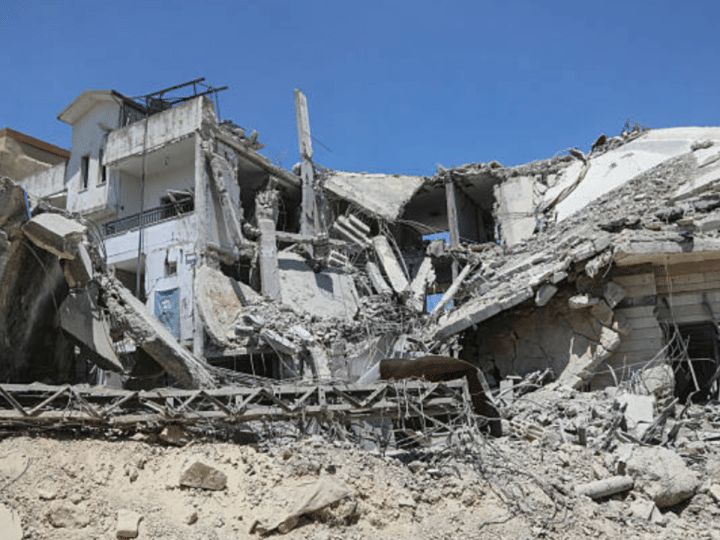
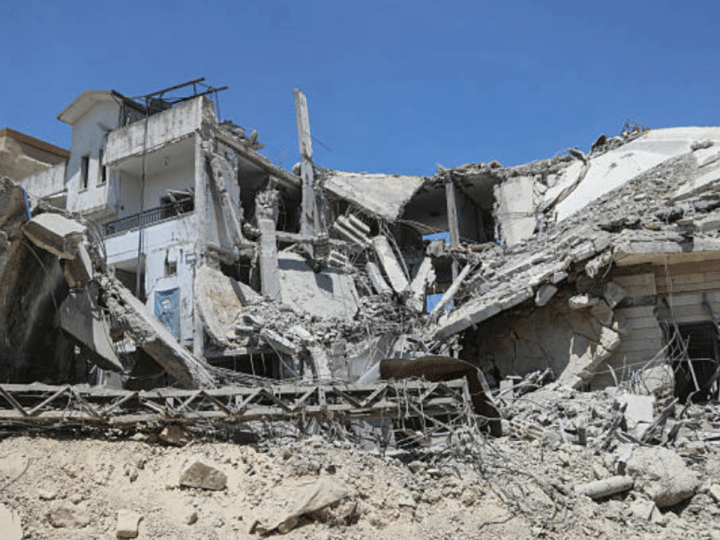
Covering the frontline return of families to the border region, I see no celebration; only the hollowed-out expressions of a traumatized population navigating a conditional surrender. Entire villages have been erased into toxic, ordnance-littered rubble, and a systematic ecocide has left ancient olive groves and agricultural fields poisoned and charred.

By completely omitting accountability and Israeli reparations, the Washington-backed agreement ignores this profound structural violence, leaving an abandoned community entirely alone to rebuild their lives on an active minefield.

Israel’s refusal to retreat

This devastation is not a past event, but an ongoing campaign. Israeli violations continue unabated, with military forces actively demolishing residential neighborhoods in towns behind the designated “yellow line” – a wide area Israel has occupied and continues to destroy, under the vague promise of a future withdrawal.

Advertisement

History shows that Israel never relinquishes land peacefully, and the developments on the ground suggest a far more permanent calculus, similar to that from the period between 1982 and 2000.

Navigating this terrain requires moving through an active zone of erasure, where the line between ceasefire and ongoing aggression is blurred to the point of irrelevance. In border hubs like Khiam, Bint Jbeil, and Aitaroun, the silence is broken not by the sounds of reconstruction, but by the continuous, controlled detonations of Lebanese homes.

Simultaneously, the occupying military is constructing fortified bases on strategic high ground, including the infamous hilltop of the former Khiam prison and in Maroun Ras. These systematic actions prove that the true objective remains the permanent displacement of the population rather than any localized security arrangement.

Lebanon’s treacherous ‘agreement’

For the returnees I speak with in towns bordering the “yellow line”, the physical loss of their homes is compounded by an overwhelming sense of systemic and deliberate abandonment by the Lebanese government. They are forced to watch the structural undoing of their society in real time, fully aware that both the international community and their own local government have signed off on a framework that legitimizes their dispossession. The framework celebrated abroad has merely institutionalized the occupation’s violence. This omission is not a diplomatic oversight; it is a structural choice that sanitizes mass expulsion under the guise of international statecraft.

Advertisement

Furthermore, the agreement codifies an asymmetric standard of sovereignty that fundamentally compromises Lebanon’s territorial integrity. While the terms demand immediate compliance and restrictions on Lebanese self-defense, they simultaneously grant a unilateral, tacit mandate for continued Israeli tactical oversight. We see the real-world manifestation of this imbalance every day. By prioritizing political optics and the security demands of the attacking force over the fundamental human safety of the local population, the diplomatic framework leaves southern Lebanon under a shadow of perpetual vulnerability, transforming what should be a sovereign homeland into a heavily monitored, conditional buffer zone.

The privatisation of survival

To walk through the ruins of these villages is to witness the absolute privatization of survival. With no international frameworks for reconstruction and a state apparatus heavily restricted by the very terms it signed, the crushing weight of recovery falls entirely on the shoulders of individuals who have already lost everything.

I watch elderly men and young families clearing heavy, toxic concrete chunks with their bare hands, salvaging shattered pieces of furniture from homes split wide open. There is rarely any heavy machinery convoys or specialized cleanup crews arriving to neutralize the unexploded ordnance, which has already caused several civilian deaths – like the man who had a booby trap explode in his excavator in Mansoury in the first week of July, killing him instantly – there is only the quiet, desperate determination of a community left completely to its own devices.

This reliance on local resilience is born out of necessity, not choice, and it highlights a profound, long-standing neglect by the Lebanese state. Yet, despite the invisible toxins in the air and the active demolitions still echoing from neighboring ridges, the influx of returning families continues.

Advertisement

This stubborn reclamation of space is an act of defiance against a framework designed to displace them permanently. They are moving back into garage skeletons, pitch-black basements, and makeshift tents pitched next to cratered fields, choosing to live on a minefield rather than accept the permanent exile engineered for them in distant capitals.

A dangerous diplomacy

Ultimately, the agreement brokered in Washington – Tel Aviv’s closest ally – exposes a dangerous truth about modern diplomacy: a “peace” that demands no accountability, no reparations, and no structural justice is simply a pause in overt violence.

By shielding the occupying force from the financial and legal consequences of its scorched-earth campaign, the international community has codified a deeply unjust precedent. This deal does not resolve a crisis; it merely locks the region into a state of manufactured vulnerability, ensuring that the threat of renewed aggression remains a permanent fixture of daily life.

As dusk falls over the border, the stark contrast of this conflict remains as sharp as ever. Thousands of kilometers away, the group photos from the signing ceremonies have already been archived and celebrated as a diplomatic triumph.

Advertisement

On the ground, however, a returning family sits outside the shell of their home, boiling water over an open fire amid the chalky rubble. Their horizon is defined by blackened olive stumps and the looming shadow of conditional sovereignty. They have reclaimed their land, but they have been forced to build their future on a toxic, unexploded foundation and left alone to survive a peace that’s been signed as a surrender.

Featured image via the Canary

By Mohamad Kleit

Source link

Advertisement
Continue Reading

Politics

Madonna Reacts As Confessions II Becomes Number One Album In USA And UK

Published

on

Madonna's Confessions II On Track To Reach Number One In UK Albums Chart

“Thank you to everyone who has been a part of this and who has helped make this dream come true. Especially my fans,” she continued. “The goodwill and positivity has been incredible. I’m still pinching myself. I can’t believe it’s number one all around the world.”

Madonna added: “My dream was to make people dance this summer!! To bring people JOY! Dreams do come true. Thanks and love!”

Even more excitingly, Confessions II cut Danceteria was revealed to be Madonna’s first solo top 40 in more than a decade (though in that time, she did chart with collaborations with other artists, while her 1985 number one Into The Groove also returned to the charts earlier in 2026 following a resurgence in popularity on TikTok).

Confessions II is also the Like A Prayer singer’s first album to give her multiple top 40 hits since 2008’s Hard Candy.

Advertisement

Source link

Continue Reading

Politics

I Got Sober, My Husband Still Drinks. This Is What We Tell Our Kids

Published

on

The author's two small children

I quit drinking when I was 26, when my firstborn was 18 months old, but before I got pregnant with my second child.

I wasn’t drinking every day, but every time I started drinking, I couldn’t stop. Hangovers would leave me crushed with nausea and anxiety for days at a time, until the next failed attempt to moderate.

There was no rock bottom or arrest, no DUI or ruined relationship that signalled the need to quit. It was a personal choice I made, based on how my relationship with alcohol was affecting me and my mental health. Eventually, it became clear that alcohol no longer deserved a place in my life.

My kids have never seen me drunk or hungover. My oldest was too young to remember what it looked like for me to fail horribly at moderation, commit to sobriety and then fail again, then learn how to be sober. They only know me as their mother who doesn’t drink alcohol.

Advertisement

My husband is a “normal” drinker, which is to say that he is able to drink without it having an overwhelmingly negative effect on his mental health. He was supportive when I told him of my decision to quit.

Still, when I quit drinking, we had to navigate some changes in our relationship. First of all, if I wasn’t drinking anymore, what in the world were we supposed to do on date night? We met in college and drinking is, quite literally, what we did.

Did the beginning of my recovery signal the end of our marriage? Once we were able to confirm that it didn’t, we had honest conversations around what I needed from him as a partner to feel secure and respected in my sobriety.

I never expected my husband to quit with me, and I’m pretty sure he never even entertained the idea that he might. My husband continuing to drink was never triggering for me.

Advertisement

We set up a few boundaries regarding alcohol in the house (no signage on the walls, no glassware in the kitchen, move it to the garage) and got on the same page regarding how alcohol and sobriety would be discussed in our home, and with our kids, who are now 5 and 2.5.

Because my husband still drinks regularly, we acknowledge alcohol in our house without villainising it. My kids know they can always drink out of my water bottle or have a sip of my cran & seltzer at the pool, but their dad’s drink might not always be fair game.

“Daddy’s drink has alcohol in it,” I tell them. We also talk openly and honestly about why there isn’t alcohol in my drink. “Mommy doesn’t drink anymore because it’s not good for her.”

Over three years of trial and error, we’ve found these boundaries to be the most helpful for me and my sobriety, the most impactful in our family, and hopefully the most beneficial for our children.

Advertisement

First, we don’t advertise alcohol. The very first thing I did when I quit drinking was remove any beer, wine, whiskey or shot glasses from the kitchen cabinets and take down my wine-themed decor. All alcohol-themed decor or knick-knacks (magnets, cups, signage, etc.) were taken down. This quickly extended to clothing as well. (The “natural light” onesie we were gifted barely got halfway out the bag before my resolute “No.”) I also had my husband move all the alcohol out of the fridge in the kitchen and into the garage fridge.

One of the biggest “parenting turn-offs” for me is when I see parents posting pictures or videos of their kids involving alcohol. I’ve seen babies holding beer bottles, and I’ve seen tweens “practicing” beer pong.

Since removing myself from alcohol culture, I see this as problematic since, in my sober opinion, it normalises and glamorises drinking culture as aspirational. Beyond not taking pictures of the kids with alcohol in them, we also put down our own drinks (NA or not) when we take pictures without the kids.

Last summer we were at the lake with some family. It was the classic lake-day-with-kids setup – a semicircle of chairs, coolers stuffed with water, juice boxes, snacks, and drinks (both alcoholic and NA), and an explosion of sand toys in the middle. My husband asked his mother to get him a beer out of the cooler. She pulled out a can and asked my two-year-old to “hand this to your daddy, please”.

Advertisement

My husband held our family boundary on my behalf when he quickly said “No need to involve her,” and reached across the circle to take the beer can from his mom himself.

The author's two small children

Photo Courtesy Of Sydney Allen

The author’s two small children

We are mindful of how we talk about drinking. For instance, beer is beer, not “daddy juice”. Last year, a neighbour referred to a High Noon as “juice” to my son. I shook my head, and said, “It’s beer.” (I know a High Noon is technically vodka, not beer. But to my five-year-old, any alcohol is “beer”. And it definitely isn’t juice.)

At dinner that night, I explained that some adults think it’s fun or silly to call beer “adult juice”. He couldn’t understand – and quite frankly, neither can I – why another mom would say something was juice (something he can have) if it was beer (something he can’t).

I was lucky to not be exposed to problematic drinking behaviour or obvious alcoholism growing up. But alcohol and drinking culture was the norm. Both my parents drank; there was always beer in the fridge for dad and wine in the cabinet for mom. My developing mind concluded that drinking alcohol is standard for adults.

Advertisement

It does the kids no good for us to ignore alcohol, but it would also do them no good – and it would be a disservice to my own sobriety – if we approached alcohol with the same nonchalant attitude that I witnessed when I was younger.

My husband and I try to be aware of how we (and others) talk about alcohol as a coping mechanism or a treat. “I need a drink” has turned into “I would like to have a drink.” Alcohol isn’t something “for adults,” but rather something you have to be an adult to do.

We don’t allow alcohol to affect our plans as a family. The whole family should not be waiting on my husband to finish a drink at a restaurant or pour a drink at home. Our children should not feel like they are waiting on adults to get settled with a drink before they can be tended to.

Hangovers, infrequent as they may be, also don’t affect our plans. My husband is well aware of the expectation that we have a full day, no matter what time he went to bed the night before. This seems to mostly be motivation enough not to drink himself into a hangover.

Advertisement

We are honest with our kids about the ways alcohol affects our bodies. When my kids ask why I don’t drink if daddy does, I often say, “I used to, but it made my heart hurt.” I didn’t identify as an alcoholic before I quit drinking, so I didn’t find it helpful to say I had an illness or that my body works differently.

In sobriety, I’ve begun to identify as an addict, which I will explain to my kids when they’re older. When it is age appropriate, I will explain that I had no “off-switch” with alcohol. This led me to experience an all-consuming anxiety and guilt each time I drank.

Beyond my body’s personal reaction to alcohol, we are open with our kids about the fact that alcohol is a drug. It is not healthy nor a “good” thing to do, but many adults still choose to drink it. It is, mostly, a personal choice.

My goal with this approach is not to convince my children that they should or should not drink alcohol. My goal is to give them the education, the self-confidence and the critical thinking skills to make the decision they know will be best for themselves.

Advertisement

Yes, alcohol is bad for you. But drinking alcohol doesn’t make you a bad person. Many people drink alcohol, but that doesn’t warrant the celebration it often gets in homes across the nation.

Growing up steeped in drinking culture – even the normalisation of alcohol – can make it difficult to see through the fog. I just want my kids to grow up and know there is another option, because their mom showed them.

Do you have a compelling personal story you’d like to see published on HuffPost? Find out what we’re looking for here and send us a pitch at pitch@huffpost.com.

Advertisement

Source link

Continue Reading

Politics

Christopher Nolan Admits Using Actors’ Real Seasickness In The Odyssey

Published

on

Matt Damon in The Odyssey

The cast and crew of The Odyssey have made no secret of the fact that shooting Christopher Nolan’s new epic was an especially grueling experience.

And in a new interview with The Telegraph, the Oscar-winning filmmaker has shared just how much his actors were put through their paces on set.

While making The Odyssey, Nolan opted to shoot on location using practical effects as much as possible, rather than relying on sound stages and CGI.

As a result, the shoot took the director and his troupe of actors to Scotland’s Moray Coast, where they shot a scene on board a recreation of a 115-foot Norse warship in the middle of a storm.

Advertisement

The conditions led to many of the shoot’s extras experiencing seasickness, which gave the Oppenheimer filmmaker an idea.

“Excuse me,” the outlet quoted him as saying. “But would you mind if we get the vomiting on camera?”

“Credit to them, they said, ‘Absolutely, bring it on’,” he recalled. “They were really game for it.

“And that day ended up being fabulous as well as miserable; it yielded some of my favourite shots in the film.”

Advertisement
Matt Damon in The Odyssey

Matt Damon leads The Odyssey as its central hero, Odysseus, with the film follows his journey home to Ithaca at the end of the Trojan War.

Last month, the Ocean’s Eleven star opened up about just how gruelling the shooting could get, telling GQ: “The joke on the crew was we didn’t have a single easy location. Every time we’d go somewhere, we’d be like, ‘Well, Iceland will be easier’. And then it’s raining sideways and it’s fucking freezing. Iceland was like, ‘Yeah, easy? Hey, hold my beer.’”

Even though the last days of filming took place on a lot in Los Angeles, Matt admitted that even this came with its problems.

“Sure enough, we showed up [to the set in LA] and Chris has two jet engines blowing so much water at us,” he explained. “So it was kind of a fitting end.

“Even the controlled environment was cold, wet, and a little bit miserable.”

Advertisement

Meanwhile, his co-star Robert Pattinson agreed that he had “never seen people look so exhausted” before beginning his work on The Odyssey, which finally sales into cinemas on Friday 17 July.

Source link

Advertisement
Continue Reading

Trending

Copyright © 2025