Connect with us
DAPA Banner
DAPA Coin
DAPA
COIN PAYMENT ASSET
PRIVACY · BLOCKDAG · HOMOMORPHIC ENCRYPTION · RUST
ElGamal Encrypted MINE DAPA
🚫 GENESIS SOLD OUT
DAPAPAY COMING

Politics

MPs call for special administration of Thames Water

Published

on

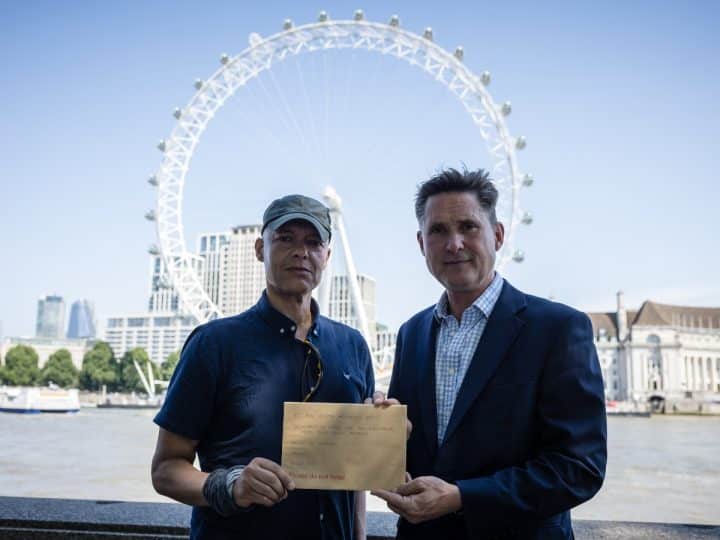
MPs Clive Lewis and Charlie Maynard in front of the Thames and London Eye, holding an open letter concerning Thames Water

MPs Clive Lewis and Charlie Maynard in front of the Thames and London Eye, holding an open letter concerning Thames Water

MPs gathered on the banks of the Thames on 13 July, calling for Thames Water to go into special administration.

They’re among the 112 MPs who have signed an open letter to the environment secretary and Ofwat. It calls for Thames Water to be placed into special administration without delay.

The company, which has a debt pile of nearly £20bn, is on the brink of collapse. Since June 2025, Thames Water’s creditors, a group of US hedge funds, have been negotiating with Ofwat to formally take over the utility.

As part of the proposed deal, the creditors want to waive fines until 2030. And they want to suspend or ‘significantly modify’ pollution and performance targets. The creditors also want to raise bills for households beyond the level currently set by Ofwat.

Advertisement

Thames Water deal is unfair

Last month, environment secretary Emma Reynolds wrote to Ofwat objecting to the current terms of the deal. She stated that it poses unfair costs to consumers. But the water regulator itself has yet to reject the deal.

This comes as the utility approaches the 16 July deadline for submitting its financial results. If the deal doesn’t happen, Thames Water’s precarious finances might trigger a ‘going concern’ warning from the auditor. This could place the utility in special administration.

Prime minister-in-waiting Andy Burnham has previously said that Thames Water ‘should’ be nationalised. And he has put forward a potential 10-year plan for public ownership of the water industry.

53 Liberal Democrats have signed the open letter, along with 46 Labour MPs, six independents (at the time of signing), all five Greens and one MP each from Plaid Cymru and the Conservative Party.

Advertisement

It argues that allowing Thames Water, which was responsible for a third of the worst pollution incidents in 2025, to set its own rules would create a dangerous precedent for all of England’s privatised water companies.

It also argues that special administration will allow the government to write off a greater proportion of Thames Water’s debts. And this would secure a better deal for the public purse.

Sophie Conquest, lead campaigner at We Own It, said:

Right now, this government and Ofwat are at a crossroads. They can choose to line the pockets of US hedge funds with our money. Or, they can put households and the environment first.

This is a decision which will affect every single household in England. Signing off on this deal would be to sign off on a whole new low in standards across the water sector.

Advertisement

That’s why 109 MPs, from across the country and from across political parties, have added their names to the open letter calling for special administration.

The environment secretary’s objection to the creditors’ proposal on the grounds of its unfairness for consumers is absolutely right.

The next logical step is to put Thames Water out of its misery, and place it in special administration, where we can slash the debts, and put households and the environment first.

Andy Burnham has promised to secure greater public control of life’s essentials. There is no clearer test of whether he will keep that promise than what happens next to Thames Water.

Advertisement

Featured image via We Own It

By The Canary

Source link

Advertisement
Continue Reading
Click to comment

You must be logged in to post a comment Login

Leave a Reply

Politics

‘Intolerable whiff of racism’: Spanish soccer’s never-ending problem

Published

on

‘Intolerable whiff of racism’: Spanish soccer’s never-ending problem

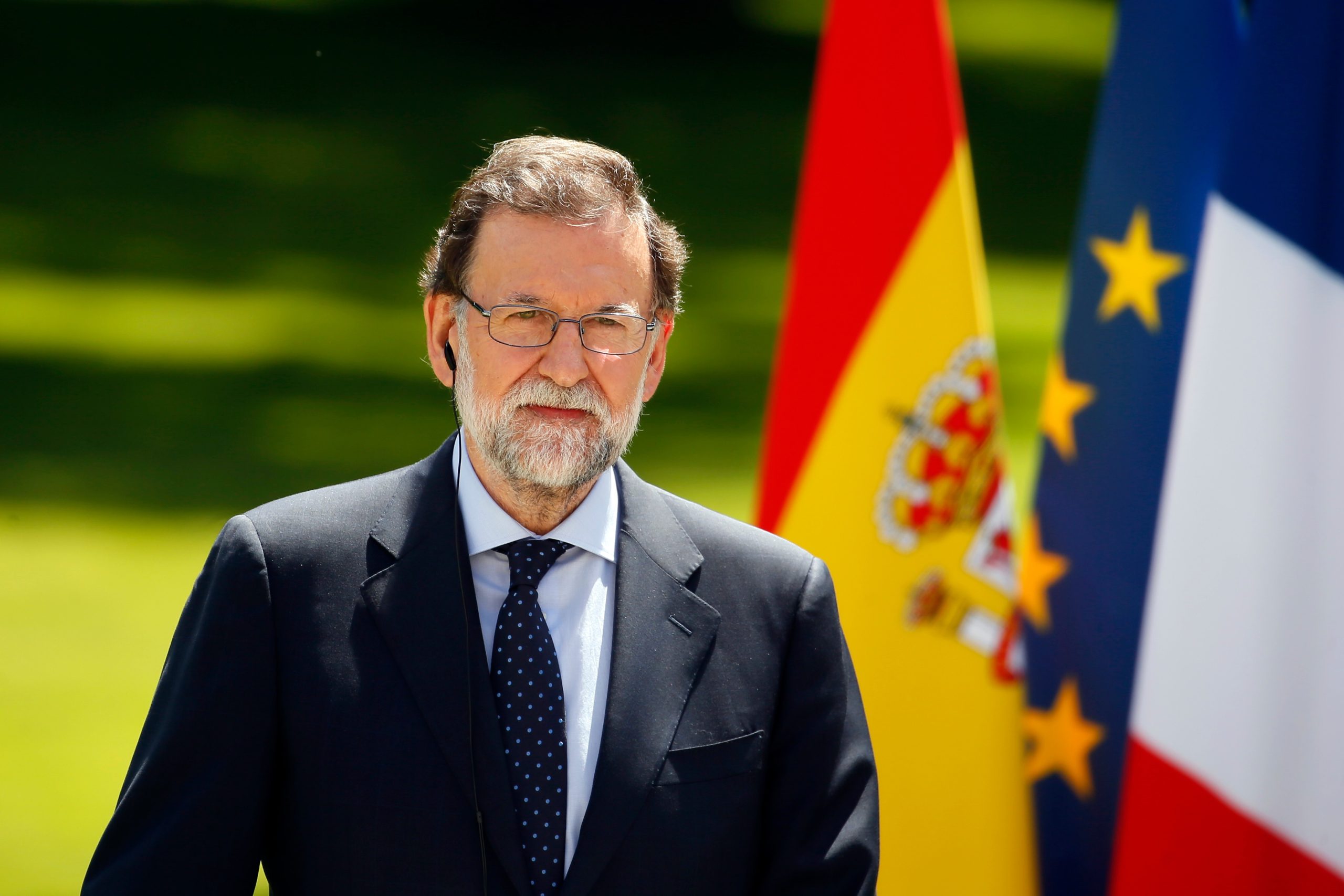
MADRID — A soccer-racism row involving a former prime minister has triggered renewed scrutiny of a perennial Spanish problem.

Mariano Rajoy, who governed Spain between 2011 and 2018 as leader of the conservative People’s Party, described the French team in a column he wrote for El Debate news site as a “very high-level squad. Of course, without Frenchmen,” in reference to the African heritage of some of the players.

The remarks sparked a fierce backlash from across the border ahead of tonight’s World Cup semifinal between Spain and France in Dallas.

On Monday, French Foreign Minister Jean-Noël Barrot said, “France has no skin color. Any contrary claim stems from stupidity, racism or a combination of the two.”

Advertisement

Several other French politicians also criticized Rajoy, while the French soccer federation president, Philippe Diallo, wrote on social media that the remarks “carry an intolerable whiff of racism.”

Even the spokesperson for the far-right National Rally party, Julien Odoul, said: “Mr. Rajoy is a racist. Simply, his statements are scandalous, shameful, and regrettable. Everyone should condemn them.”

Spain’s socialist Prime Minister Pedro Sánchez also took France’s side against his predecessor.

“There are those who still measure belonging by surname, place of birth, or skin color,” he wrote on social media. “Spain belongs to those who love it and work for it. Not to those who shame it with xenophobic comments. France, we will see you in the semi-final. May the best team win and may racism lose.”

Advertisement

Rajoy’s comments have reignited a debate that has dogged Spanish soccer for decades, even as it has morphed into a World Cup superpower. While high-profile cases involving stars like Samuel Eto’o and Vinícius Júnior have prompted tougher punishments and greater public condemnation, racist abuse from the stands — and broader questions about race, identity and belonging in Spain — have proved harder to eradicate. The latest controversy underscores how soccer reflects Spanish tensions that extend beyond the pitch.

In 2004, Spain fans made monkey noises at Black English players during a game in Real Madrid’s Bernabéu Stadium. Weeks earlier, Spain’s then-coach Luis Aragonés had been caught on microphone calling French star Thierry Henry a “black shit.”

In 2006, Barcelona’s Cameroonian forward Samuel Eto’o refused to continue playing a league game in Real Zaragoza’s La Romareda Stadium after home fans repeatedly directed monkey chants at him. Eto’o’s stand was seen as a reckoning for racism in Spanish soccer, although many believed the €9,000 fine handed to Real Zaragoza was laughable.

In the years since, there have been a number of similar incidents. Most notoriously, in 2023, Real Madrid’s Brazilian forward Vinícius Júnior stopped playing and confronted Valencia fans who had been shouting racist abuse at him in their Mestalla Stadium. The controversy drew a show of outrage and solidarity for the player from the Brazilian government.

Advertisement

Racist abuse by fans had become increasingly common in the 1990s as Spanish soccer drew more players from abroad, including Africa and South America. At approximately the same time, Spain was also starting to see a large influx of immigrants, many of them from those same continents.

In a 2024 research paper on racism in Spanish soccer, the Funcas think tank, an independent institution focused on economic and social analysis, found that many radical fans were unhappy about the arrival of nonwhite players in La Liga.

“What is happening in football reflects what is happening, sooner or later, in broader society,” one fan was quoted as saying in the document.

“If there isn’t a solution, we’ll be invaded by a legion of foreigners and Spain will lose its identity,” the fan added.

Advertisement

Although Spanish authorities have clamped down on radical fan groups since the turn of the century, many of those sentiments have not gone away.

However, the Júnior episode shows that Spain’s soccer institutions take racist abuse more seriously than they did 20 years ago. Three Valencia fans were given eight-month jail sentences for their role in the Mestalla incident. Four fans of Real Madrid’s cross-town rival Atlético de Madrid were also given jail terms for hanging an effigy of Júnior from a bridge before a game.

The Rajoy racism case has surprised many because he is viewed as a moderate and yet his comments chime with the sentiments of the far right.

Political commentator Marc Bassets from the left-leaning El País warned in an op-ed that the kind of opinions voiced by Rajoy are too often tolerated or trivialized. He said the broader political context is significant, including the far-right Vox party’s introduction of a Spaniards-first “national priority” policy in regions where it governs alongside Rajoy’s PP.

Advertisement

“In times of ‘national priority’, the white noise of casual racism that can be seen in society risks becoming even more casual,” Bassets said.

At a press conference Monday, Spanish football star Lamine Yamal hit back at Rajoy.

“If football has a purpose, it is to unite society, and there is no better example [of that] than us and France,” Yamal said, describing both national teams as models of integration.

Source link

Advertisement
Continue Reading

Politics

Polanski backs Fire Union as climate-stoked wildfires ravage UK

Published

on

Zack Polanski, climate crisis

Zack Polanski, climate crisis

It’s getting harder and harder for climate deniers to refute what’s happening to the planet. Well – that’s not true – these people are liars who will literally say anything. It is getting harder for them to convince anyone they’re correct, though.

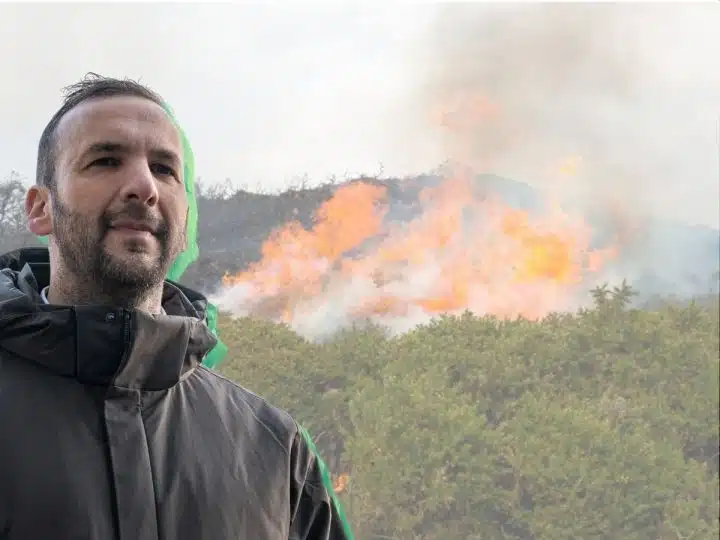
The latest example of the climate catastrophe making itself obvious is the record-breaking heat we’ve experienced, and the inevitable wildfires which followed. The Fire Brigades Union have spoken out about how the situation affects them, with Greens leader Zack Polanski supporting them:

Raging

To head off some potential pushback, climate change isn’t what’s starting the fires; it’s what’s allowing them spread so rapidly and extensively. Climate change makes extreme drought more likely, and with drought comes the conditions needed for raging wildfires.

Advertisement

In the clip above, Steve Wright of the Fire Brigades Union says:

There’s wildfires all across the UK at the moment; a major incident in North Wales… we’ve seen our members on the front line in East and West Sussex; we’ve seen them on the front line attending fires in London, Derbyshire, all across the UK at the moment, and this is a an ever-increasing risk that firefighters are dealing with.

We’ve been raising the alarm for a number of years… they are ferocious fires. They are resource heavy. You need firefighters on the ground quickly to deal with them, but as you’ve already highlighted these are impacting in communities. The smoke from these fires travel long distances, and the one in North Wales is all across Merseyside… really worrying times…

we’re making the case that there needs to be further investment so communities are better prepared – there’s more resilience in our communities, and to respond to these incidents.

Resources

When asked if firefighters have the resources they need, Wright answered:

Advertisement

Well, no, is the honest answer. We’ve lost 12,000 firefighters since 2010. And there has been investment in new equipment, new policies, and procedures of how we train and deal with wildfires, but you need firefighters to deal with these incidents… And that is an issue that we’re finding all across the UK.

In 2022, remember – what we thought was the real hot summer – when we saw whole streets in London burning. It was the busiest day for London Fire Brigade since the Blitz. But major incidents are now being called regularly.

When asked what the primary cause of these fires is, Wright said:

Well, there’s lots of ways that fires will start. I think the issue that we see now is that wildfires grow at the ferocity… they do now because of the dry land. We haven’t had rain for a couple of weeks in most areas, and fires are able to grow exponentially and out of control, whereas in the past they wouldn’t have grown as quickly as they do…

also we have slower response times in the fire service now; slower response times than we had in the mid-1990s. So it’s taken us longer to get to these incidents; less firefighters on the ground to deal with them. So it’s a combination of issues.

Climate action, now

While some politicians still deny it’s happening, the impacts of climate change are increasingly obvious. Fires are just one such example, and unless the government supports our firefighters, lives will be lost.

Advertisement

Beyond that, we need to remain committed to the global push to ensure this planet and its people have a future. The alternative is this all goes up in flames.

Featured image via the Canary

By Willem Moore

Source link

Advertisement
Continue Reading

Politics

Mahmood’s anti-asylum bill is “horrifying”. Burnham just voted for it

Published

on

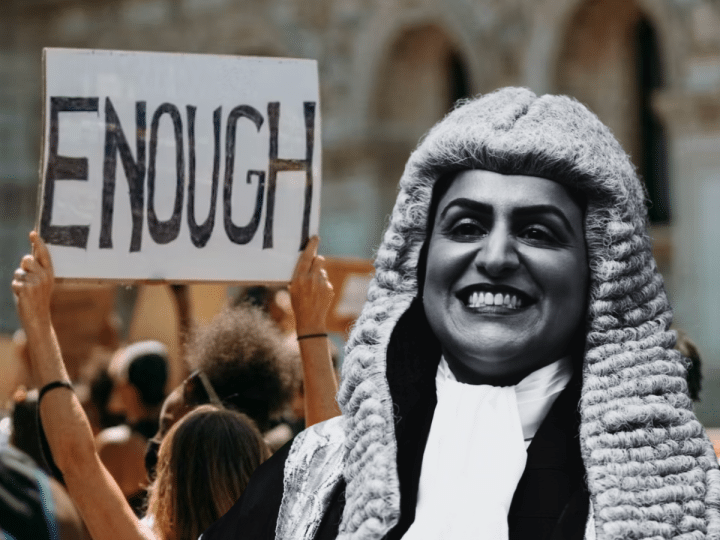
Labour MPs agree that Shabana Mahmood is a racist prick

Labour MPs agree that Shabana Mahmood is a racist prick

The Starmer regime’s war on human rights continues with the passage of Shabana Mahmood’s punitiveImmigration and Asylum Bill‘ through Parliament.

Burnham rallies behind Mahmood

The bill’s provisions demonise asylum seekers and wage war on human rights and Britain’s obligations under international law. Presumptive next prime minister Andy Burnham supposedly represents change — at least that’s the claim — but it’s not borne out by events so far.

And the same goes in this case, as Burnham voted yesterday in support of Mahmood’s racist new law.

Budget bigotry

Among its multiple abusive provisions, Mahmood plans to have asylum appeals decided by people without legal qualifications. Legal experts and human rights groups have pointed out how dangerous this move to prioritise speed over justice really is. Mahmood sneeringly dismissed the warnings, saying:

Advertisement

To those who say that such decisions can be taken only by a judge, I need point only to the complex and weighty decisions taken each and every day by those without law degrees… A person does not have to be a judge to have good judgment.

That might be so, but a person does need legal qualifications to know what is lawful.

The bill also removes or severely narrows the application of human rights law to asylum claims, slashes ‘modern slavery’ protections for people trafficked into slavery and doubles the amount of time refugees must be in the country before being able to claim permanent residency or apply for citizenship.

Doesn’t work

The United Nations Refugee Agency has pointed out that similar changes in Australia did the opposite of what Mahmood says she wants. Instead of speeding up the asylum system, the changes increased backlogs and created big delays. This has not deterred Mahmood from her attempt to pander to the racist right. It did not deter Burnham from supporting it.

The bill passed its second reading. Yet again, Burnham is indicating that he will be ‘continuity Starmer’ in a less drab package.

Advertisement

Featured image via the Canary

By Skwawkbox

Source link

Advertisement
Continue Reading

Politics

Trump’s Iran war plunges the Global South into a state of siege

Published

on

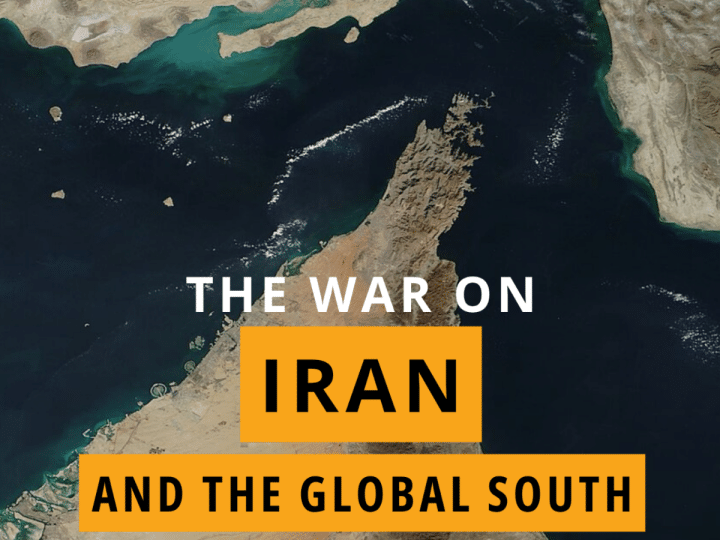
The war on Iran and the Global South

The war on Iran and the Global South

In a scathing new report, the International Development Economics Associates Limited (IDEAs) has documented the heavy toll Global South continues to pay for a war it did not create — as corporations cash in.

The report describes a state of siege across the Global South region, with countries facing mounting economic pressure as the fallout from the US-Israeli war of aggression against Iran spreads.

Global South picks up the tab

The report stated that operations of Epic Fury waged by the US, and Roaring Lion waged by the colonial-settler state Israel have led to substantial hardship for countries throughout the global south.

real and financial effects being felt across the three continents of Africa, Asia and Latin America and the Caribbean, due to the contraction of energy supply and rise in energy prices.

While defense contractors, oil giants, and Wall Street banks reaped record profits, countries across Asia, Africa, and Latin America watched their economies crumble, their food supplies dwindle, and their people succumb to a crisis thousands of miles away of Trump and Netanyahu’s making.

The report criticises these Western corporations: their actions have intensified economic challenges particularly for many nations in the south, many of which are deeply affected by global policies.

There have been a few winners able to exercise their economic power to benefit from an otherwise damaging set of developments. Defence companies have seen exponential and sustained gains. Lockheed Martin, Northrop Grumman and RTX Corporation are some of the major beneficiaries of the war, with Lockheed Martin’s stock price increasing nearly 40% since the beginning of 2026. The US remains the world’s largest military spender and arms exporter and it has proposed a $1.5 trillion defence budget for the financial year 2027, the largest in history and a 50% increase relative to financial year 2026.

The war has also boosted profits of global giants in the energy sector. According to estimates from diverse sources, Shell, BP and TotalEnergies reported extra earnings of between $3.3 bn and $4.75 bn in the first quarter of 2026. US Commercial banks have also reaped huge sums of profit in a short period of time.

As central facilitators of global finance, major Wall Street banks are capitalising on the current volatility through a surge in trading activity.

Advertisement

Hedge funds and operators in prediction markets also emerged as significant profit takers. In the first few weeks of the war, hedge funds increased their net-long positions on Brent crude.

Asia feels the sting

The report states that challenges facing Asia are a microcosm of issues affecting the South on a global scale.

the impact of the ongoing war will be particularly severe on countries in the Asian continent due to their geographical proximity with Iran and the Gulf countries.

Nations like Pakistan, the Philippines, and Vietnam face dire consequences, who, as is explained in the report, represent significant populations within the global south socioeconomic landscape.

Advertisement

both source between 85-90 percent of their oil from the Middle East, [and] are likely to face dire effects.

They added that across Asia: countries have brought into force various kinds of austerity measures such as energy rationing… moving to a four-day work week… and requiring airlines to switch to emergency operations mode.

It notes that China is relatively unscathed as it:

took the precaution of building considerable reserves equivalent to several months of [oil] imports, allowing it to weather a temporary shock and smooth the effects of a price spike.

The report warns that the overriding risk for countries in the south is a balance-of-payments crisis as the fallout from the war deepens and influences global conditions.

The forgotten victims of the Global South

It also stated that the war has hit Gulf-based migrant workers hard.

Advertisement

They note that migrant workers — estimated at 25 million across the Gulf — comprise between 76 and 96 percent of the labour force, describing them as the “backbone of these economies” and demonstrating how the movement of people from the south impacts global economies.

The report details how: migrants from the south, particularly, have been disproportionately affected by the conflict.

migrant workers are frequently situated in labour camps or exposed areas (such as construction sites, ports, and airports) that are less protected from military attacks.

Employers are also reportedly using the war as a pretext for withholding wages, denying exit, or dismissing workers without compensation in contravention of existing laws.

Economic shocks ripple into Africa

Meanwhile, Africa is being pummeled by the “5Fs” — fuel, freight, fertilizer, food, and finance. As the IDEAs’ report notes, African countries despite not being directly involved:

Advertisement

are, in direct or indirect ways, exposed to its devastating effects due to the continent’s structural external vulnerabilities.

rising energy prices do not necessarily translate into a net gain for African exporters, given the potential slowdown in global growth and the simultaneous rise in import costs.

[The war] can have lasting impacts on global fertilizer production and trade… compromis[ing] food security in African countries, especially Eastern African ones.

They added that:

For Africa, the war against Iran aggravates an already precarious African debt situation. Twenty-two sub-Saharan African countries figure among those with the highest ratios of external interest or principal payments to revenues, and collectively account for 44 percent of total interest payments of all low-income countries (LICs) projected over 2024 to 2027 (IMF, 2025).

These vulnerabilities mirror struggles seen throughout the Global South more broadly, and devastatingly.

Latin America and the Caribbean feel the squeeze

Energy-importing economies, particularly in Central America and the Caribbean, are likely to face worsening external balances and inflationary pressures, as well; these regions are key components of the global south.

Advertisement

The countries most exposed to rising international prices are those most heavily reliant on energy imports, including the Dominican Republic, Chile, Nicaragua, Uruguay, and El Salvador, the report adds.

Epic Fury (United States) and Roaring Lion (Israel) leave behind an economic trail of misery, Lockheed Martin, BP, and other corporate giants reap the rewards — and the Global South pays the price.

Featured image via the International Development Economics Associates Limited (IDEAs)

By Nandita Lal

Advertisement

Source link

Continue Reading

Politics

The drama spoiling a city’s World Cup moment

Published

on

The drama spoiling a city’s World Cup moment

DALLAS, Texas — The World Cup was supposed to be Dallas’s moment to shine. The city is famously image-conscious, and the powers-that-be trumpeted the fact that more Cup matches were scheduled here than any other host city. It seemed like a coup for a town whose football team (the other kind of football) bills itself as “America’s team.”

But off the pitch, Dallas leaders have spent the spring and summer fighting a series of political fights, many of them centered around sports. It’s a cautionary tale to the many European tourists who have marveled at America’s glittering sporting venues, but are unaware of the complex economic and political forces that have shaped them, for better and for worse.

Before the soccer tournament even started, the city’s pro basketball team had announced it was leaving its downtown arena. Then the hockey team decamped for a new arena in the suburbs.

Dallas Mayor Eric Johnson was booed when he attended a World Cup Fan Fest. Along the way, the city was forced to furlough non-essential workers because of a budget shortfall, so the public libraries were closed for a day last week.

Advertisement

“There’s a lot of — the only word I can think of is — drama,” City Councilmember Paula Blackmon said.

To be clear, the World Cup matches aren’t being played in Dallas. They’re 15 miles west, in Arlington, Texas. The Texas Rangers play baseball a few blocks away.

But Dallas proper could still stake a claim as a professional sports hub. The Dallas Mavericks (basketball) and the Dallas Stars (hockey) have spent the last 25 years at American Airlines Center, a retro-styled arena just north of the central business district, which is served by its dedicated light rail stop. That arena’s future has been at the heart of the fighting.

Last fall, the city began discussing the idea of tearing down its City Hall to make way for a new sports arena. The building is showing its age — or its neglect — and city officials estimate it’ll take hundreds of millions of dollars to repair it.

Advertisement

Some in Dallas questioned whether the teams need a new arena, since the American Airlines Center — which is 1.6 miles from City Hall — seems to work just fine. Others objected to tearing down the building since its architect, I.M. Pei, is kind of a big deal.

The conflict divided the city council into two factions — the majority in favor of tearing down the building, the minority trying to preserve it. Blackmon and another council member, both of whom favor preserving the old City Hall, sued the city in June trying to block a vote on tearing down the building.

To some extent, the fight has been a proxy for the broader fight over how to preserve downtown Dallas. AT&T, the telecom giant which has had its corporate headquarters in Dallas since 2008, announced this spring it’s moving to the suburbs, citing rising crime, homelessness and government dysfunction. Even the luxury retailer Neiman Marcus, the most Dallas of institutions, is closing its downtown store.

Former Dallas Mayor Laura Miller, who got into politics after a career as an investigative reporter, said the fracas over the sports arena is a symptom of the city’s dysfunctional government. Dallas has a weak mayor and its city council has been divided for decades, which gives developers — and sports teams — the upper hand in negotiating with the city.

Advertisement

Miller is famous locally for turning down the Dallas Cowboys when team owner Jerry Jones asked for a publicly-financed stadium inside the city in the early 2000s.

The Cowboys — like the Mavericks and Stars before them — promised to help redevelop neglected parts of the city. Miller argued that the city was better off putting its funds into basic services like public safety and infrastructure — and pointed to a string of broken promises from the sports teams and other big developers.

“It’s kind of Dallas’ Achilles heel, because Dallas will just do anything to quote unquote ‘save the teams,’ even though all the teams are all within a 30-minute drive of all of our homes,” she said.

Dallas’s local organizing committee for the World Cup declined to comment for this story, as did a spokesperson for the Mavericks. A spokesperson for the Stars didn’t respond to requests for comment. Johnson, the Dallas mayor, also declined several interview requests.

Advertisement

Most of the fighting has been invisible to World Cup fans, who will flock to town Tuesday for the region’s final World Cup match, which is the semi-final between France and Spain. But the outcome of the city council fight could affect Dallas for decades to come.

Source link

Continue Reading

Politics

Anaesthesia Explained: People Are Just Realising Why Anaesthesia Doesn’t Actually Send You ‘To Sleep’

Published

on

Anaesthesia Explained: People Are Just Realising Why Anaesthesia Doesn't Actually Send You 'To Sleep'

The last time I was at the dentist (four fillings ― I blame my baking problem), I remember thinking to myself, “how was I bored while people were drilling into my teeth?”

Local anaesthesia (the type that numbers your gums during dental work) binds to sodium channels in your nerve cells which stops them from transmitting impulses, I later learned through amazed online searches.

But to be honest, I’d always thought of general anaesthesia ― “going to sleep” ― as local anaesthesia’s cruder cousin. It simply knocked you out, I reasoned.

That was until I saw a video from anesthesiologist Dr Anthony Kaveh.

Advertisement

In a recent YouTube Short, he explained: “Anaesthesia is NOT sleep.”

What happens instead?

According to Dr Kaveh, “we give you medication that turns off your brain, making you completely unconscious so you can’t perceive pain.”

He continued, “then we give you some medications that paralyze your body if needed; then we also give some medications to wipe your memory so that you’re less anxious, and so that we minimise the risk of PTSD under anaesthesia.”

Advertisement

Healthcare providers and researchers at the Mayo Clinic confirm on their site that general anaesthesia is not a medication, but rather a few medications.

Though it brings on a “sleep-like state,” they say, “your brain doesn’t respond to pain signals or reflexes” under those conditions.

As for the memory-wiping element, the University of Illinois Chicago says that some medications in general anaesthetic prevent your brain from forming new memories while affected.

They point to research published in the British Journal of Anaesthesia which found that you can even separate the other effects of anaesthesia from its amnesic therapies in mice.

Advertisement

“Many people thought the loss of memory [associated with anaesthesia] was due to the fact that you were asleep, or de-aroused,” Dr Fettiplace, lead author on the study, told the university. “But this is not the case.”

Some scientists even think anaesthesia could have a potential use in helping to “wipe” or lessen bad memories or associations for people with PTSD and phobias.

People were pretty surprised

Plenty of commenters under Dr Kaveh’s video wrote that they found the information a little scary.

Advertisement

“This is actually more horrifying,” one commenter wrote; “sounds so much more scary when you describe it that way, another said.

But as yet another YouTube user pointed out, “People say ’omg that sounds horrifying’; but I’ve been under anaesthesia multiple times, it’s fantastic.”

The NHS points out that general anaesthetic is usually safe and effective.

However here’s another rabbit hole for you to go down: “It’s not clear exactly how [general anaesthetic] works, but it’s known that all anaesthetics stop the nerves from passing signals to the brain,” they add.

Advertisement

Source link

Advertisement
Continue Reading

Politics

Animal activists drop giant banner on the Thames demanding foie gras import ban

Published

on

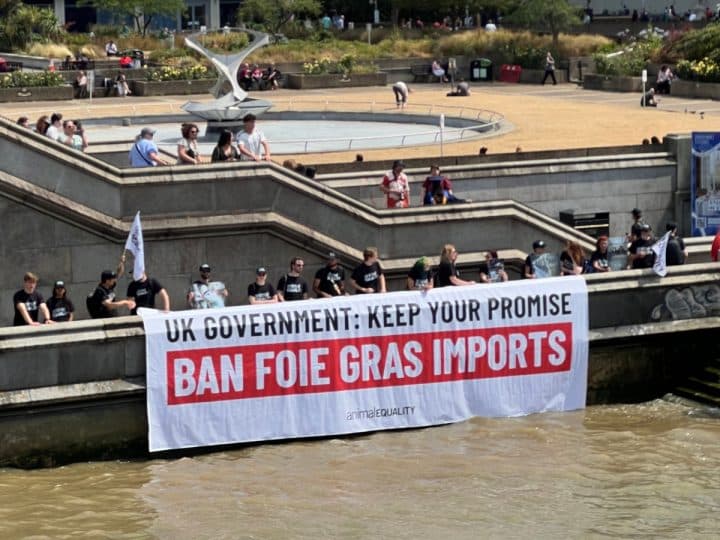
Campaigners display a banner reading UK Government Keep Your Promise Ban Foie Gras Imports

Campaigners display a banner reading UK Government Keep Your Promise Ban Foie Gras Imports

Pressure on the government to ban the importation of foie gras is intensifying. Activists from animal protection organisation Animal Equality have unfurled a giant banner on Victoria Embankment.

It says “KEEP YOUR PROMISE: BAN FOIE GRAS IMPORTS”, in direct view of parliament. The action follows the launch of 150 billboards and ads running across south east England sharing the same message. These are likely to reach 30 million passers-by.

Foie gras is produced by force-feeding ducks and geese via a metal pipe inserted down the throat, multiple times a day. This cause their livers to swell up to ten times their natural size.

The practice is so cruel that it has been illegal to produce in the UK for 20 years. Yet the UK continues to import the product. This allows restaurants to profit from suffering that would be a criminal offence if it took place on UK soil.

Advertisement

Just days before the last General Election, the government promised to ban foie gras imports. A senior Labour Party representative watching an Animal Equality investigation into a French foie gras farm reacted:

…great big pipes down those animals’ throats, and they’re just forcing that food in. Oh, they’re terrified. Disgusting. Look at the tiny little cages they’re in as well. That is just shocking. It is beyond disgusting. They’re force-feeding these terrified animals to fatten their livers.

Continuing, he added:

Vote for change. A vote for Labour is a vote for animals.

Foie gras ban at risk

Years on, that promise remains unfulfilled, and campaigners now fear the ban is at risk due to ongoing EU-UK Sanitary and Phytosanitary trade negotiations which aim to ease trade.

Abigail Penny, executive director of Animal Equality UK, said:

Advertisement

The government made a promise to the British public and we have not forgotten. Every day this ban is delayed is another day that ducks and geese are violently force-fed – a practice that deliberately induces organ failure and is so cruel it is a crime to carry out in the UK.

The government’s negotiators must not trade away animal welfare commitments. Ministers would do well to remember who they represent; with nearly nine in ten Brits in favour of a ban, they have a clear mandate. The government must keep its word.

Public opinion is overwhelmingly behind a ban. The latest YouGov polling shows that almost nine in ten (87%) of the UK public support banning foie gras imports. This makes it one of the most widely supported animal welfare reforms across the UK. Animal Equality’s petition calling for a ban has surpassed 329,000 signatures.

At a recent parliamentary roundtable, hosted by Labour MP Irene Campbell, Dr Huw Golledge, chief executive and scientific director of Science for Animal Welfare, said:

The disease is not a side effect. Causing the disease is the purpose of the production system. Anyone looking objectively at the evidence would conclude that this is something that should not continue.

Featured image supplied

Advertisement

By The Canary

Source link

Continue Reading

Politics

French soccer team arrives in Dallas on an ICE deportation jet

Published

on

French soccer team arrives in Dallas on an ICE deportation jet

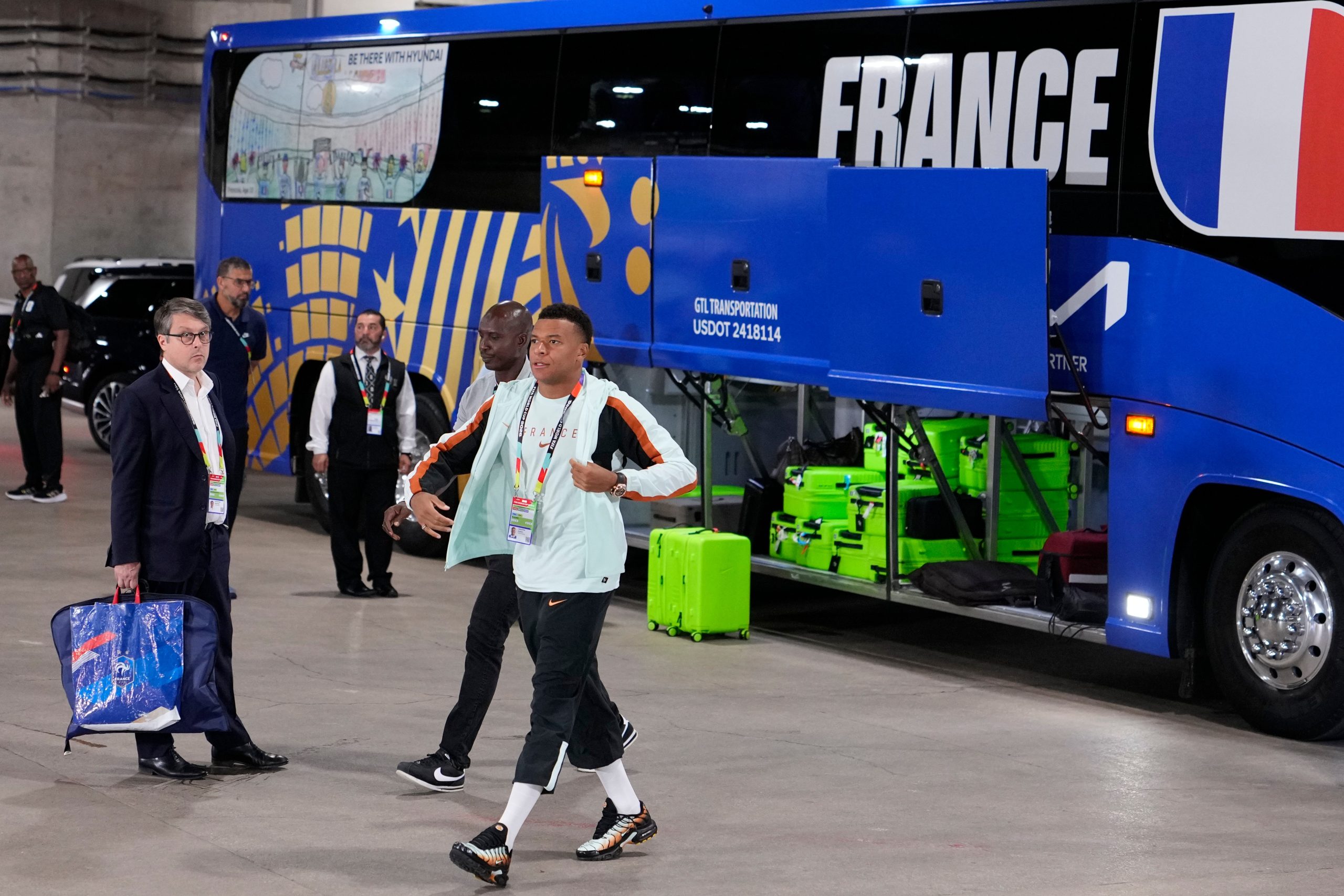
The French national team arrived in Dallas on Sunday aboard an Airbus A320 jet. The day before, the same jet had been used for an ICE deportation flight to Nicaragua.

The French team has traveled on GlobalX charter flights to travel during the World Cup, as The Guardian first reported Thursday. GlobalX, a Miami-based charter airline, has maintained its traditional business while also operating a growing number of deportation flights since the Trump administration launched its mass deportation campaign.

This dual use has created a stark contrast, with planes used to carry deportees shackled to their seats soon returning to routine charter service. Although many Americans back deporting unauthorized immigrants, U.S. President Donald Trump’s aggressive deportation campaign has drawn extensive backlash over its forceful tactics and violent clashes with protesters.

POLITICO tracked the jet that carried Les Bleus to Dallas and asked researchers with ICE Flight Monitor, which tracks deportation flights, whether it had been used for Immigration and Customs Enforcement deportations. The team posted Monday a video of players deboarding in Dallas from a jet with a “Global Crossing Airlines” insignia, the legal name of GlobalX.

Advertisement

“Under the second Trump administration, this particular plane conducted 323 ICE flights,” said Savi Arvey, director of policy for refugee and immigrant rights at Human Rights First, which oversees ICE Flight Monitor.

After departing Nicaragua on Saturday, the GlobalX jet flew on to Harlingen, Texas, an ICE deportation hub, and then Boston, the French team’s training base, according to data provided by ICE Flight Monitor. About 15 hours after landing in Boston, it departed for Dallas with the team aboard.

Representatives for the French football federation and GlobalX did not immediately respond to a request for comment.

Less than an hour after landing in Dallas, the GlobalX jet flew to Harlingen to conduct another deportation flight to Mexico.

Advertisement

Meanwhile, the Spanish national team arrived in Dallas aboard an American Airlines jet. The airline has not operated any ICE deportation flights.

Source link

Continue Reading

Politics

Diners Are Just Learning Where Black Pepper Comes From

Published

on

The plant close-up

There are few things more taken for granted in my humble kitchen than my seemingly never-ending supply of black pepper.

Ideal as a topper for salads, scrambled eggs or even just a plate of chips, black pepper is present in most of the meals I prepare. However, I’d never once considered where it actually comes from.

In fact, much like pasta and tea bags, I assumed it just came as part of having a kitchen, tbh.

Advertisement

Where black pepper actually comes from

According to McCormick Science Institute: ”Black pepper is native to Malabar, a tropical region on the Western Coast of Southern India (part of the Indian state of Kerala).

“The pepper vine is a perennial ivy-like climber which adheres itself to a support tree or man-made structure.”

The plant close-up

Schwartz explained: “The black peppercorn is a small berry picked just as it ripens from green to red: the centre is a white seed which contains more piperine and gives the pepper its heat and bite, while the black husk is the flesh of the fruit and gives the fruity, floral aromatic character.”

However, the spice experts added that while black pepper is best when it’s been crushed by pestle and mortar or a peppermill, you need to act quickly to maintain that punchy flavour.

Advertisement

They said: “Once crushed, the punchy, volatile oils concealed inside each corn soon evaporate.

“Be sure to add towards the end of cooking, or at the table – which can add a certain amount of finesse when serving. A natural companion to steak in particular, its natural flavour is enhanced by heat, and its distinct, woody aroma is instantly recognisable to many.”

I’ll never take my trusty black pepper for granted again.

Advertisement

Source link

Continue Reading

Politics

Strait Back To Square One

Published

on

Strait Back To Square One

!function(n){if(!window.cnx){window.cnx={},window.cnx.cmd=[];var t=n.createElement(‘iframe’);t.display=’none’,t.onload=function(){var n=t.contentWindow.document,c=n.createElement(‘script’);c.src=”//cd.connatix.com/connatix.player.js”,c.setAttribute(‘async’,’1′),c.setAttribute(‘type’,’text/javascript’),n.body.appendChild(c)},n.head.appendChild(t)}}(document);(new Image()).src=”https://capi.connatix.com/tr/si?token=19654b65-409c-4b38-90db-80cbdea02cf4″;cnx.cmd.push(function(){cnx({“playerId”:”19654b65-409c-4b38-90db-80cbdea02cf4″,”mediaId”:”29629cc9-8282-4b43-aa67-4574ef3829e6″}).render(“6a565f79e4b0d0cec7cd9196”);});

Source link

Continue Reading

Trending

Copyright © 2025