

Business
ACCC warns AI could lift insurance costs in risk-prone areas




Stripe, Advent offer to buy PayPal for over $53 bln- Reuters

Andrew Forrest’s Fortescue has purchased five properties in Port Hedland for $4.9 million from him and his former partner Nicola’s private investment group.

Liberal leader Basil Zempilas has confirmed his party will preference One Nation as high as second on how-to-vote cards at the Secret Harbour by-election next month.
Business
SK Hynix ADR Soars Sharply 24% as Leveraged ETFs, Options Debut Fuel Rebound From Monday’s Crash
SK Hynix’s newly listed American depositary shares surged 23.85%, or $36.33, to $188.68 in Tuesday afternoon trading, erasing much of the losses from Monday’s historic single-day plunge and pushing the stock to a fresh high since its Nasdaq debut just four days earlier.
Tuesday’s rally capped one of the more volatile stretches in recent memory for a newly public company. SK Hynix’s American depositary receipts opened trading Friday, July 10, at $170 and closed their debut session up nearly 13% at $168.01, part of a $26.5 billion offering that marked the largest-ever U.S. listing by a foreign company. The stock then plunged Monday alongside a broader rout in Korean markets, with the underlying Seoul-listed shares falling 15.4% in the stock’s worst single-day decline on record, dragging the ADR down as much as 9% and triggering a market-wide trading halt on South Korea’s Kospi index. By Tuesday, the stock had reversed sharply higher, climbing well above its earlier debut levels.
Several factors converged to drive Tuesday’s rebound. A cooler-than-expected June consumer price index report in the United States helped fuel a broader risk-on mood across markets, with the Nasdaq 100 rising roughly 1% and lifting sentiment across the chip and memory sector generally. South Korea’s Kospi staged its own V-shaped recovery Tuesday, aided in part by comments from SoftBank CEO Masayoshi Son at the annual SoftBank World conference in Tokyo, where he predicted the artificial intelligence sector would require $5 trillion in annual investment by 2040 and dismissed concerns about an AI bubble.
The more immediate catalyst behind Tuesday’s sharp move, according to multiple market analysts, was the launch of new leveraged, single-stock exchange-traded funds tied directly to SK Hynix. GraniteShares launched both a 2x Long SK hynix Daily ETF, trading under the ticker SKUU, and a corresponding 2x Short version, SKDD, while ProShares rolled out its own 2x long single-stock fund, ProShares Ultra SK hynix, trading as SKHU. The introduction of those geared products, combined with the start of options trading on SKHY shares on U.S. exchanges Tuesday, pulled in heavy trading volume that amplified the stock’s underlying moves in both directions.
Daniel Kirsch, head of options at Piper Sandler, said the newly available options market was likely to draw significant short-term speculative activity. “Traders are expected to aggressively position for short-term trades betting on further gains in SK Hynix ADR this week,” Kirsch said, adding that demand for short-dated call options was likely to heat up further, with contracts expiring this Friday potentially attracting a rapid influx of retail investors. The most actively traded options contract as of Tuesday afternoon was a $185 strike call, with volume around 2,900 contracts, followed closely by a $145 strike put, while August calls with a $200 strike price also drew significant interest, with volume exceeding 1,500 contracts.
Analysts at research firm TradingKey cautioned that Monday’s rout stemmed more from technical correction and liquidity dynamics than from any fundamental deterioration in SK Hynix’s underlying business. “SK Hynix’s current decline stems more from technical corrections and liquidity shocks following excessive earlier gains, and the medium-term supply-demand dynamics of HBM have not undergone any directional shift,” the firm wrote, referring to high-bandwidth memory, the specialized chip category that has powered much of SK Hynix’s recent growth as a key supplier to Nvidia and other artificial intelligence infrastructure customers. UBS reiterated a buy rating on the stock in early July, raising its price target on the Korean shares to 3.2 million won and projecting SK Hynix’s 2026 operating profit would reach 32.7 trillion won, roughly 27% above the broader market consensus.
Not every analyst has turned uniformly bullish following the recent volatility. A separate analysis from FX Leaders cautioned that the ADR remains technically vulnerable, noting that a sustained rebound would require SKHY to reclaim and hold above the $162 to $168 range to restore confidence in the post-listing rally, while a break below the $149 to $150 zone, near the original IPO price, could open the door to further declines toward $145 or $140 if broader chip-sector weakness resumes. “Until the ADR premium narrows or Q2 earnings confirm that expectations remain achievable, investors may continue treating rallies with caution,” the firm wrote.
That premium has become a notable point of focus among analysts tracking the stock. According to Bloomberg, the premium for SK Hynix’s American depositary receipts over their Korean-listed shares had swelled to nearly 50% just three days after the stock’s U.S. trading debut, a gap some market strategists attribute to the ADR’s smaller, thinner float relative to the much larger pool of shares traded in Seoul, along with strong U.S. retail demand for direct exposure to the AI memory theme.
Tuesday’s rally lifted sentiment across the broader memory chip sector. Micron Technology shares rose roughly 5%, extending a rally that had already pushed Micron stock up 229% year to date through Monday’s close, following the company’s fiscal third-quarter results, which showed revenue of $41.46 billion and adjusted earnings of $25.11 per share. Micron CEO Sanjay Mehrotra pointed to the “strategic value of memory in the AI era” in describing the results. SanDisk shares rose about 4% and Western Digital gained roughly 1%, while the Roundhill Memory ETF, a sector-focused fund with heavy weightings in Samsung Electronics, SK Hynix and Micron, climbed about 6%.
Analysts have generally cautioned that the combination of a newly listed stock, a comparatively thin float and the sudden introduction of leveraged trading products creates conditions ripe for outsized volatility in either direction. Investors considering exposure to SK Hynix at current levels have been advised by several market commentators to treat the leveraged single-stock ETFs specifically as short-term speculative trading tools rather than buy-and-hold investments, given the compounding and volatility decay risks disclosed by the funds’ own issuers, which note that investors can lose money even if the underlying stock rises over periods longer than a single trading day, and that a full loss of principal is possible within one session.
With SK Hynix’s formal second-quarter earnings report still pending and major cloud providers including Microsoft scheduled to report their own results later this month, analysts said the coming weeks are likely to offer a clearer signal on whether Tuesday’s sharp rebound reflects renewed confidence in the underlying AI memory demand story or simply another leg of the extreme volatility that has characterized the stock since its record-setting Nasdaq debut just four trading days ago.

The coffee chain is tapping artificial intelligence to develop in-house alternatives to systems by Microsoft and IBM that track inventory and manage equipment, Bloomberg News reported last week, after reviewing an internal presentation. According to the article, the Seattle-based company has been working for several years to replace Oracle’s point-of-sale system.
This will be disturbing news in Bengaluru and Hyderabad: Maintaining these very technologies for large multinationals like Starbucks is the bread and butter for the 6 million coders employed by India’s outsourcing industry.
The AI adoption craze is looming over what’s promising to be another lackluster earnings season for IT services exporters. Last week, Tata Consultancy Services Ltd., the biggest among them, reported 0.4% growth in revenue over the previous three months after stripping out currency fluctuations, the slowest expansion in a year. While the company has shed 3% of its workforce in the past year to about 594,000, the spending on third-party specialist contractors to bridge the firm’s own skills gaps ate into revenue. Net profit margin shrank.
At smaller rival HCL Technologies Ltd., sales in the three months to June slipped 0.5% quarter-on-quarter after holding exchange rates constant. The management kept its annual revenue growth guidance of 1% to 4% unchanged, but it still ended up shrinking its employee base by nearly 3,300 people — the sharpest contraction in close to two years. For HCL Tech, too, a rise in subcontractor costs mitigated the wage savings.

 Bloomberg
For 25 years, India’s software services firms have locked global corporate clients into lucrative contracts to implement and maintain packaged software. Before the arrival of AI tools, it wouldn’t have been cost-effective for a firm like Starbucks, whose business is beverage, to take an IBM system out of its shrink wrap and map it to every piece of kitchen equipment, maintenance schedules, and local technicians across a labyrinthine network of 40,000-plus stores globally. That’s the kind of stuff around which Indian IT vendors have built a $250 billion exports powerhouse.
Similarly, making sure that a multinational can safely add a new local payment method — or correctly reflect a discount or tax change — has been a lucrative annuity for Indian programmers. They specialize in testing for various scenarios that could make the cash registers go down even for a minute. Largely hidden from public view, they keep global supply chains working 24×7 by managing the data pipelines that sync third-party inventory tools with an enterprise’s own resource planning software.To be sure, these long-term, multimillion-dollar orders haven’t completely dried up. TCS shares jumped Monday after the company disclosed that it would be expanding the role it has played in managing the infrastructure and applications for ABB. The new mandate is to design and run the Zurich-based engineering giant’s network as a modern, AI-driven service. HCL Technologies recently won a 5.5-year, $1.14 billion contract to build an AI-driven operating model for a large European engineering and manufacturing conglomerate it didn’t name.
Still, the pricing of large outsourcing deals in the age of AI remains under a question mark. After all, clients will fully expect their suppliers to use fewer humans — and more AI — to keep their tech infrastructure running smoothly. Accordingly, they will pay them less than before.
As for customers embedding artificial intelligence in their own workflows, they’ll probably pay the upfront cost of gathering the unstructured data scattered around their firms and labeling everything correctly. But after a quarter or two, AI agents will use the cleaned-up data to write their own code. The annuity business will have a slow fade, with lumpy AI-related work helping to mask the decline for some time.
BloombergWorse, as clients like Starbucks open their own direct engineering hubs in places like Bengaluru and Nashville — using AI to let small, in-house teams do the work of large code-writing armies — the middleman’s markup becomes an obvious target for cost-cutters.
While the stock market is still giving a thumbs up to any order wins, the NSE IT Index finished June 10% lower than five years ago. Even during the worst of the Global Financial Crisis, pessimism didn’t run this deep. Maybe the gloom is overdone, and US clients will eventually curb their enthusiasm for AI. They may come to realize that even as their token budgets go through the roof, their corporate data and workflows are slipping out of their control and going to frontier AI labs.
However, it’s also possible that investors have read the tea leaves right, and it’s the outsourcing firms that are yet to wake up and smell the coffee.
Business
AI chip startups FuriosaAI, Nuvacore, d-Matrix pursue major funding rounds at higher valuations- The Information

AI chip startups FuriosaAI, Nuvacore, d-Matrix pursue major funding rounds at higher valuations- The Information

Higher diesel prices lifted unit costs across Rio Tinto’s expansive Pilbara operations, although the miner reported no material disruption to production across its core commodities.

Alcoa and its Japanese industry partners have approved development of a gallium production facility in WA’s South West after gaining support from the Australian and US governments.
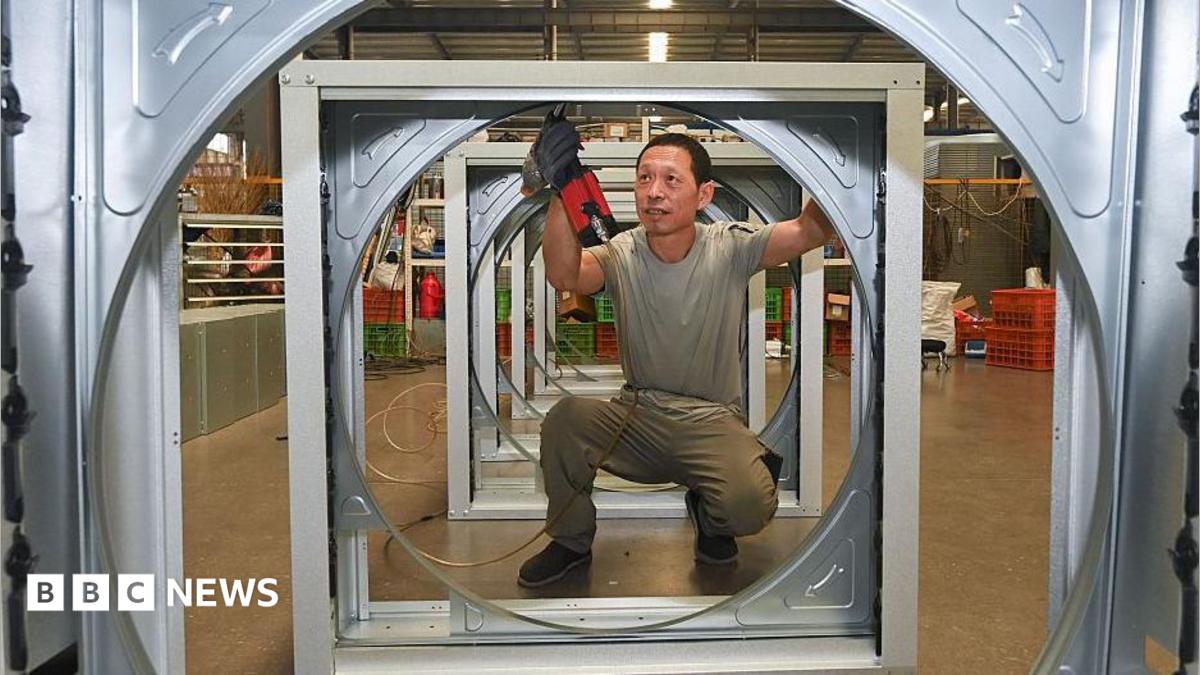
China’s economic growth slowed sharply between the start of April and end of June as weak demand domestically and the impact of the Iran war on oil prices overshadowed the country’s strong exports.
Official gross domestic product (GDP) figures showed that the world’s second largest economy grew in the second quarter of the year by 4.3%, below Beijing’s annual target.
The announcement comes a day after government data showed that China’s exports jumped by 27% in June compared to a year earlier.
In March, China cut the target to a range of 4.5%-5%, its lowest economic expansion goal since 1991 – a move some analysts say gives officials more flexibility in managing the economy.
The figures mark the first full quarter of GDP data since the start of the Iran war on 28 February and comes after a rise of 5% in the first quarter.
Separate data released on Wednesday highlighted the economic challenges Beijing is facing at home – including a long-running property market slump and weak consumer spending.
New home prices contracted again, although the 0.1% fall in June was at a slightly slower pace than the previous month.
But retail sales rose by 1% in June, improving from a 0.6% decrease in May.
Customs data for June, which was released on Tuesday, showed that China’s tech exports were boosted by soaring global demand for semiconductors to power artificial intelligence (AI) data centres.
Surging demand for Chinese electric vehicles (EVs) also gave a major boost to China’s exports – with monthly car exports topping one million for the first time.
Founder of Constellation Research Inc. Ray Wang discusses the volatile A.I. tech rally and Meta’s shifting compute strategy on ‘Making Money.’
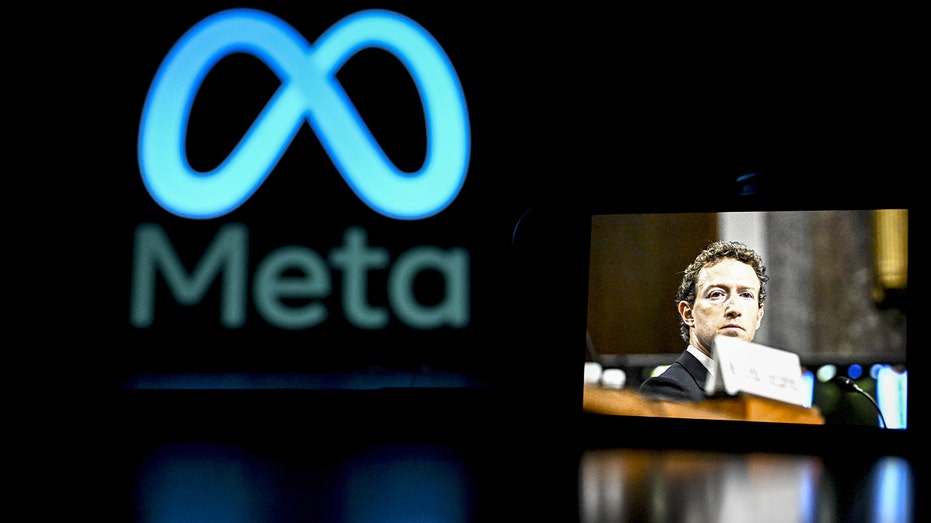
A group of 26 Meta employees sued the tech giant over accusations that it used AI-powered software to choose people for mass layoffs, disproportionately targeting workers with disabilities or those who took medical, parental or family leave.
The lawsuit, filed in federal court in Oakland, California, on Monday, alleges that the company relied on factors such as internal AI systems, keystroke and activity-monitoring data, AI token-usage dashboards and algorithmically assisted performance rankings when making job cuts earlier this year.
Many of these factors “by design, cannot be accumulated by an employee who is on protected medical or family leave, or whose output is reduced by a disability,” the lawsuit reads, adding that the company did not factor in protected leave when taking employees’ scores into account and “did not pause the system for the individualized, leave- and accommodation-neutral review that the law requires.”
The plaintiffs are among the 8,000 employees, or about 10% of its workforce, who Meta said in May would be impacted by layoffs, and they were told their jobs would be eliminated starting July 22.
FOUR STATES SEEKING $1.4 TRILLION IN PENALTIES IN CHILD SOCIAL MEDIA ADDICTION TRIAL, META SAYS
A group of 26 Meta employees sued the tech giant alleging it used AI-powered software to choose people for mass layoffs. (David Paul Morris/Bloomberg via Getty Images / Getty Images)
They claim that Meta violated state and federal laws — including the Family and Medical Leave Act, the Americans with Disabilities Act, the Pregnancy Discrimination Act and the Pregnant Workers Fairness Act — that prohibit discrimination or retaliation against workers who take medical leave, have disabilities or are pregnant.
The workers also say the company failed to test its AI systems for bias, which they allege violated newly adopted laws in California and New York City.
The plaintiffs, who come from six states, including California and New York, as well as Washington, D.C., are seeking a preliminary ruling from the court to block Meta from completing the layoffs while they pursue their claims in private arbitration.
The employees argue that Meta’s agreements require employees to arbitrate workplace disputes individually, but do not apply to requests for temporary relief.

The plaintiffs are among the 8,000 employees, or about 10% of its workforce, that Meta said in May would be impacted by layoffs. (Photo Illustration by Onur Dogman/SOPA Images/LightRocket via Getty Images / Getty Images)
They said the lawsuit asks just to preserve the status quo and keep them employed pending arbitration.
“Once these terminations are finalized, the harm to Plaintiffs cannot be undone by money damages alone,” the lawsuit reads, citing the loss of employer-subsidized health coverage during pregnancy, postpartum recovery and active medical treatment.
Meta has pushed back on the allegations outlined in the lawsuit, saying that it does not use AI when determining who to cut from its workforce.
“These claims lack merit and are not based on facts. Workforce management and organizational decisions were and are made by people, not AI,” a Meta spokesperson told Fox Business.
META SHUTS DOWN AI TOOL AFTER BACKLASH OVER PUBLIC INSTAGRAM ACCOUNTS
Meta said that it does not use AI when determining who to cut from its workforce. (Arda Kucukkaya/Anadolu via Getty Images / Getty Images)
GET FOX BUSINESS ON THE GO BY CLICKING HERE
About half of the plaintiffs had taken leave for caregiving or pregnancy-related reasons.
Eight employees are women who had taken maternity or pregnancy-related leave, four are men who had taken parental leave and one is a woman who had taken leave to take care of a family member and later bereavement leave.
The plaintiffs argued that Meta’s “algorithmically assisted selection process, by systematically recording such absences as reduced performance, falls more heavily on women than on men” because women disproportionately take pregnancy and caregiving leave.

Man City legend’s comments on Youri Tielemans are what Manchester United needed to hear

OpenAI’s first hardware device will be a HomePod

Why Did the Beggar Run Away When I Offered Money? #funny #comedy #shorts


-

 Fashion6 days ago
Loro Piana Fall 2026 Enters Houston’s Art Scene
-

 Fashion4 days ago
Weekend Open Thread: Nutriplenish Leave-In Conditioner
-
 Sports5 days ago
2026 Genesis Scottish Open Thursday TV coverage: Round 1
-

 Sports5 days ago
Super Eagles star Moses Simon opens up on Liverpool transfer regret
-

 Tech6 days ago
Character.AI enters the microdrama arena with its own productions, but there’s a twist
-

 News Videos8 hours ago
XRP BOMBSHELL… XRP OMBOARDED FOR TRANSACTIONS!!!
-

 Tech23 hours ago
Get Your ESP32 Sunny Side Up With This Solar Dev Board
-

 Tech7 hours ago
Dark Secrets Emerge When Jailbreaking LLMs
-

 News Videos6 days ago
Crypto Just Entered Its Most Important 6-Month Candle (Could Decide Everything!)
-

 Business7 days ago
ASX 200 Slides Over 0.6% as Rare Earths and Lithium Stocks Tumble Amid Global Semiconductor Sell-Off Today
-
 NewsBeat6 days ago
Major update after Huntingdon train attack as man enters plea
-

 News Videos2 days ago
how to make coin bank box with cardboard #scienceproject #money #diy #shorts
-

 Business7 days ago
SpaceX Shares Slide Nearly 6% Amid Post-IPO Volatility and Starship Test Focus
-

 Sports7 days ago
39-year-old Djokovic wins five-hour thriller to enter Wimbledon semis | Other Sports News
-

 Tech6 days ago
Level Infinite Launches Gangstar Mirage City in India with Pre-Registrations
-
 Tech1 day ago
Cloudflare Precursor Watches Your Mouse and Keyboard To Decide If You Are Human
-

 Tech6 days ago
Entra passkey enrollment vishing targets Microsoft 365 users
-

 Crypto World6 days ago
DeFi Dashboard Zapper to Shut Down After 7 Years
-

 Business7 days ago
Maase Inc Shares Jump 16% as Speculative China-Based AI Pivot Stock Extends Its Volatile 2026 Rally Today
-

 Sports7 days ago
Tough task staring Gilas in the eyes entering second round of Qualifiers
You must be logged in to post a comment Login